Showing posts with label Henry Threadgill. Show all posts

Tuesday, June 6, 2023

Henry Threadgill, Book & Music – "You're Going to Have to Serve Your Time"

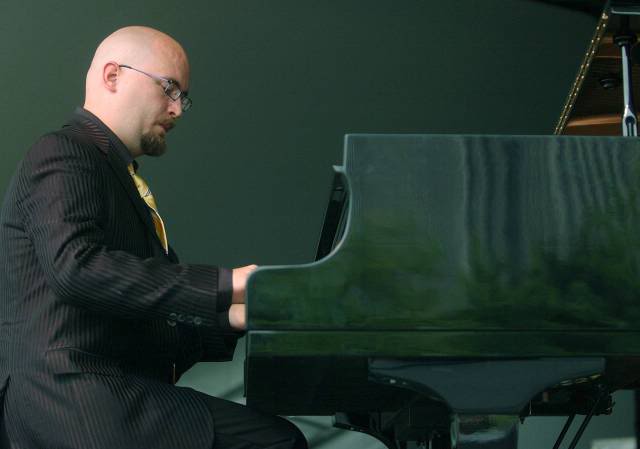
If memory serves correctly, I first encountered the music of Henry Threadgill in Cutler's Record Shop in New Haven, CT, on seeing the first Air Lp, "Air Song" (Why Not Records imported from Japan), on the Jazz "New Releases" section of the wall.  Intrigued, I discovered that the trio (saxophonist, flutist, and composer Threadgill, bassist Fred Hopkins, and drummer Steve McCall) hailed from Chicago and were members of the Association for the Advancement of Creative Musicians (AACM). By this time, I had heard the Art Ensemble of Chicago, Anthony Braxton, and Muhal Richard Abrams, fascinated as well as puzzled by this music that often eschewed typical jazz forms to look for new sounds and mixtures.

Photo: John Rogers
Threadgill, like a good number of his contemporaries, had served in the Armed Forces and come back to a changed United States. The Vietnam War was still raging, President Nixon had alienated a good portion of the country, and the inner city neighborhoods in major cities across the US had never recovered from the riots that had occurred before and after the 1968 assassination of Dr. Martin Luther King.  What some people heard as anger in this hybrid form of Black Music was really a major advancement in approaches to composition and improvisation by many Black composers and musicians.  By the mid-1970s, many AACM musicians had been to Europe but came back to move to New York City.  

Henry Threadgill tells his story in his new memoir "Easily Slip Into Another World: A Life in Music" (Penguin Random House). Written with Brent Hayes Edwards, the composer/musicians takes the reader through his early years with bows to many members of his family and the various neighborhoods he lived in.  We learn of his voracious appetite for learning and how he slowly but steadily learned piano, saxophone, and flute as well as to learn how to compose. Threadgill certainly played many different styles of music, from Gospel to R'n'B to Jazz to funk as so on but was open to classical music. He also was quite curious, fixating on learning how to fly and making people disappear, neither of which he was successful at.  His time in the Armed Forces, especially the months he spent in Vietnam were harrowing but taught him much about the world, about community, and so much more.  Coming back to Chicago and to the AACM pushed him to create his own music just as his contemporaries were doing (and many still do).  We read of how he created Air with Fred Hopkins and Steve McCall as well as the groups that followed.  

I was lucky enough to experience Air, hubkapaphone (that's a story unto itself) and all, in concert in Battell Chapel in New Haven.  It was the Summer after Nessa Records of Chicago had issued "Air Time", the trio's first American release.  The music moved in multiple directions with melodies coming from all three musicians, rhythms stopping and starting seemingly at will––McCall was an amazing percussionist, Hopkins a brilliant bassist with a true melodic bent, and Threadgill's tart alto sax sound pushed and pulled at the fabric of the material.  One can still echoes of that sound in the music Threadgill creates today.

That said, the book illuminates how the composer organizes his groups, how he mixes and matches disparate sounds, how he's more fascinated by "flow" than by "rhythm", how he and his groups deconstruct and rebuild the compositions throughout every performance.  Henry Threadgill is more interested in performance than recording, fascinated by how the musicians he plays with and/or conducts deal with time and with the flow of the intervals inside the music.  When you return to listen to any one of his myriad recordings after reading this book, you'll hear his music with different ears, hearing the "architecture" of each song as well as the influence of the blues on the Sextett albums, the world music components of the Make a Move ensemble, and how ZOOID mixes composition and improvisation so that one can not tell where one starts and the other ends. 

In a year that has seen new biographies of Sonny Rollins and Chick Webb. "Easily Slip Into Another World: A Life in Music" is a "must-read" for music lovers.  The book goes a long way to shed light on the continually creative mind of Henry Threadgill, never dwelling on either awards or disappointments but telling a story that displays great humanity in spite of any and all roadblocks.  


In addition to the new book, there is a new Threadgill album.  "The Other One" (Pi Recordings), recorded live in May of 2022 at Roulette Intermedium in Brooklyn, NY, features the 12-member Henry Threadgill Ensemble composed of musicians who are members of ZOOID, the Double Up Ensemble, and several newcomers to the Threadgill universe.  The ensemble plays "Of Valence", a three-movement composition influenced by percussionist Milford Graves' study of the human heartbeat and its integration into music.  "Movements I" and "III" are broken into nine sections with the ninth being the "Finale" (in both).  Meanwhile "Movement II" is 16:24 long with distinct sections but not broken up like the others.  Even though the instrumentation is different than any other of his groups, you can the various trademarks of the Threadgill oeuvre: the long, winding, melody lines, the deep tones of tuba and cello for the bottom, rhythms that suggest swing, blues, African music, and more.  What's different is the short sections that curtail long solos but do listen to how the composer/conductor moves the sounds through the band and how they come together.

Photo: Jeenah Moon/NYTimes
Listen to "The Other One" all the way through because that will help bring the music into focus. There's an excerpt below but it's like reading a short quote from a long book. Listening to music, especially "concert" music, is usually a cumulative experience. We remember moments of the pieces, the emotions we felt, perhaps an impressive solo or the rhythms that made us tap our feet.  All three "Movements" of "Of Valence" start quietly before other instruments are added. The composer does that to pique our interest––where will the music go next, who's taking the next solo, etc.?  There are many moments of strong musicianship here from violinist Sara Caswell, clarinetist Noah Becker, pianist David Virelles, percussionist Craig Weinrib, and the bravura of work of Jose Davila (tuba) and Christopher Hoffman (cello).  That's not to discount the work of the others (all personnel listed below).  The Henry Threadgill Ensemble, its leader, and his music shines brightly on "The Other One"! 

For more information including listening to and purchasing this music, go to  https://henrythreadgill.bandcamp.com/album/the-other-one

Personnel:

Henry Threadgill – composer & conductor
Alfredo Colón – alto saxophone
Noah Becker – alto saxophone, clarinet
Peyton Pleninger – tenor saxophone
Craig Weinrib – percussion, electronics
Sara Caswell – violin
Stephanie Griffin – viola
Mariel Roberts – cello
Christopher Hoffman – cello
Jose Davila – tuba
David Virelles – piano
Sara Schoenbeck – bassoon
Adam Cordero – bassoon


Here's a taste of "The Other One":


Friday, November 19, 2021

The Majesty of Chicago and An Exemplary Trio

Photo: Dominick Huber

TUM Records continues its recorded celebration of Wadada Leo Smith in his 80th year on this plane of existence with two new albums.  Earlier this year, the Finnish label issued the solo three-disk set "Trumpet" plus a duo-trio three disk set "Sacred Ceremonies" that featured the trumpeter in musical conversations with maser percussionist Milford Graves and bassist Bill Laswell. Both albums are filled with captivating performances, sonic poems, a multiplicity of ideas, and a musical language that leads to new possibilities in an ever-changing world.

One can say the same about the two recordings TUM is releasing a month before Wadada's birthday (which is December 18). The first, "The Chicago Symphonies", consists of four separate works, "Gold - No. 1", "Diamond – No. 2", "Pearl - No. 3", and "Sapphire - No. 4: The Presidents and Their Visions for America" performed by the Great Lakes Quartet.  "Nos. 1 -3" features Wadada with Jack DeJohnette (drums), Henry Threadgill (alto saxophone, flute), and John Lindberg (bass) while "No. 4" has Jonathon Haffner (alto and soprano saxophones) instead of Mr. Threadgill.  The first three symphonies are dedicated to particular musicians that the composer met when he moved to Chicago in 1967 after five years in the Army.  Wadada joined the AACM where he met Muhal Richard Abrams, Anthony Braxton,  Amina Claudine Meyers, Leroy Jenkins, Joseph Jarman, and Mr. Threadgill plus many others –– all these were expanding the possibilities of Black Music; many of them still do. 

Photo: Dominick Huber
Of all the myriad albums Wadada has issued in the past decade+, "Chicago Symphonies" bears witness to the influence of the people he came in contact with.  It's nearly impossible to hit the highlights as every track stands out but know this –– these are master musicians at play.  Mr. Threadgill's tart alto saxophone or the rounds tones of his flutes stand out while Mr. DeJohnette deftly drops into musical conversations with his three compatriots, playing with a freedom that not only displays his creativity but how intelligently he shapes each piece.  Mr. Lindberg's thick, often cello-like, bass tones and creative lines not only offer a sense of structure but he also shows he can step forward with his sparkling arco (bowed) bass work.  Wadada's trumpet pierces through the pieces while his muted work bears witness to the influences of Lester Bowie and Miles Davis. 

Photo: Dominick Huber
"Symphony No. 4: The Presidents..." is dedicated to Presidents Abraham Lincoln and Barack Obama.  The text from "The Gettysburg Address" and President Obama's "Speech at the 50th Anniversary of the Selma to Montgomery Marches" are included with the physical albums and can also be found on the TUM website (address below). The six-part piece was recorded in 2018, over three years after the other Symphonies. As with the works dedicated to the many Chicago musicians, there are moments of urgency, joy, darkness, and unity that touch the mind and soul of the listener.  The emotion that one feels just reading the texts and the titles of the movements help to prepare the listener for the depth and breadth and, yes, the emotional strength of these musical performances. 

The music and stories of "Chicago Symphonies" will keep you captivated throughout the four albums and all 165 minutes of music. Wadada Leo Smith's Great Lakes Quartet is in splendid form with the "Fourth Symphony" serving as this listener's introduction to saxophonist Jonathon Haffner (hope to hear much more) whose first gig with the GLQ was in 2017.  Listen closely!


Here's the opening movement of the "Golden Symphony" dedicated to Amina Claudine Myers:


Photo: R.I Sutherland-Cohen
Album # two, "A Love Sonnet for Billie Holiday", has Wadada in a trio setting with Mr. DeJohnette and Vijay Iyer (piano, Fender Rhodes, Hammond B-3, electronics).  Mr. Iyer first played with the trumpeter over 20 years ago; the pianist understands how Wadada's music moves, his role in shaping the pieces, and how to "converse" in the composer's unique musical language.  An interesting aspect to this program is that all three of the participants contributed compositions: there is even one totally improvised piece.  The music is lively, dramatic, at times stunning, and always on the move.

The title track opens the album (do listen below): it's a fascinating journey, from the four minute drum solo that develops over the first four minutes to the rousing three-way conversation in the middle of the nearly 12-minute piece to the emotional "blues" of the final 90 seconds.  An atmospheric Rhodes piano is heard at the onset of Mr. Iyer's "Deep Time No. 1".  If you listen closely, the voice of Malcolm X's speech "By All Means Necessary" can be heard (at times, electronically altered) while the trio moves around led by Wadada's muted trumpet, the soft piano chords and Mr. DeJohnette's rapid-fire trips around his cymbals. There are moments when the track suggests the influence of Miles Davis circa "Filles de Kilimanjaro" and "In a Silent Way".

Photo: Maurice Robertson
The other three tracks include "The A.D. Opera: A Long Vision with Imagination, Creativity, and Fire, a Dance Opera" (dedicated to pianist, composer, and Wadada collaborator Anthony Davis), Mr. DeJohnette's affecting "Song for World Forgiveness" (wonderful musical interaction), and the trio improvisation "Rocket" that closes the album.  That final cut hearkens back to "Yo Miles!", Wadada's electric project with guitarist Henry Kaiser. Here's the Hammond organ leading the raucous trumpet and the frisky beat of the drums.  It's quite a finish to quite an album.

The cooperative trio of Wadada Leo Smith, Jack DeJohnette, and Vijay Iyer recorded "A Love Sonnet for Billie Holiday" on November 22, 2016 just three days short of its release date of 11/19/21.  Yet, the music sounds contemporary, fresh, and brimming with intelligence, wit, and an animated sense of adventure.  One could not ask for more (other than a second recording and a tour from this trio)!


Dig into the title track:

Tuesday, September 21, 2021

Just Like That


Photo: NEA
Henry Threadgill, composer, arranger, saxophonist, flutist, 2021 NEA Jazz Master, and Pulitzer Prize winner (2016), and bandleader, is in the midst of an amazing career.  An early initiate into the AACM (Association for the Advancement of Creative Musicians), he has steadfastly gone his own way for the past five-plus decades.  Mr. Threadgill has led numerous ensembles of varying sizes but the longest running of them all is Zooid. The quintet –– Mr. Threadgill, Liberty Ellman (guitar, mixing and mastering), Jose Davila (tuba, trombone), Christopher Hoffmann (cello), and Elliot Humberto Kavee (drums) –– has had a fairly stable lineup since 2001 when Pi Recordings issued the ensemble's debut album "Up Popped the Two Lips".  At that time, Dafnis Prieto was the drummer and Dana Leong the cellist. Kavee joined for 2009's "This Brings Us To, Vol. 1", an album that also featured Stomu Takeishi on acoustic bass guitar. Cellist Hoffman joined for 2012's "Tomorrow Sunny/ The Revelry, SPP" playing alongside Takeishi whose departure created the current lineup. The group's 2015 album, "In For a Penny, In For a Pound", led to Mr. Threadgill receiving the Pulitzer for music.

Now there is "Poof", five new originals from Mr. Threadgill, all of which contain the unique Zooid sound. In a recent WBGO podcast during which hosts Nate Chinen and Greg Bryant picked six albums to pay attention to this Autumn, Chinen said that "Zooid sounds like no other band on the planet."  Absolutely right –– it's also true that none of the ensembles Mr. Threadgill has organized over his career has sounded alike or like anything else.  There is no mistaking the leader's tart tone, long phrases, short riffs, and his ability to climb in and out of the flow.  The composer blurs the lines between composition and improvisation so that one flows into the other throughout any given song.  Ellman's mix is so clear that even when everyone is playing at the same time, you hear voice clearly.  

Mr. Threadgill's use of space, silence, and sonic juxtaposition is just so impressive.  When the guitarist goes into his solo on "Poof on Street Called Straight", everyone else drops out. When the ensemble returns, the alto sax leads the way with cello, guitar, and tuba playing counterpoint.  Davila switches to trombone on "Beneath The Bottom" and he too gets an unaccompanied solo.  The deliberate pace of the early part of the song continues for more than half of the piece until the group breaks into a quicker tempo for the continuation of Davila's solo.  Hoffman plucks out the bass line, Kavee locks in with him, and the piece takes on a modern "funky" feel.

Zooid 2015
"Poof" closes with "Now and Then", an uptempo mover and shaker during which Mr. Threadgill's piercing alto sound is only hear for the five seconds at the onset of the song and again for the last 30 seconds. In between, the quartet, led by Ellman's rollicking guitar, Davila's dancing tuba, and Hoffmann's cello counterpoint, take a high-energy aural journey.  Quite impressive.

Honestly, either you surrender to the amazing music of Henry Threadgill or you tip-toe around it. He asks a lot of his musicians and of his audience.  "Poof" is the best Henry Threadgill album since the last one and we are excited to see and hear where this Music Master goes next!

For more information, go to www.arts.gov/honors/jazz/henry-threadgill.  To purchase this and other albums by Zooid as well as other Henry Threadgill recordings, go to
https://henrythreadgill.bandcamp.com/album/poof.


Hear "Beneath the Bottom":


Wednesday, May 16, 2018

Music With Deep Roots & Feelings

Photo: Ssirus Pakzad
Alto saxophonist and composer Román Filiú, born in Santiago de Cuba and now a resident of New York City, has created quite a busy career.  He performs and records with Henry Threadgill's Ensemble Double Up and with drummer Dafnis Prieto. He has also worked with fellow saxophonist David Murray, pianists Gonzalo Rubalcaba, Marta Sánchez, and Chucho Valdés plus drummer-composer Doug Hammond.  His first album as a leader , "Blowin' Reflections", was issued in 2006 on the Spanish Bost Espacio Creativo label while his second, "Musae", was issued in 2012 on Prieto's Dafnison Music imprint.  Both featured fiery playing as well as intelligent compositions that mined the composer's heritage while illustrating how he continually looks forward.

"Quarteria" (Sunnyside Records) literally translates to "house of residence" and "small housing units" - the title also refers to the place where Filiú grew up.  Joining him on this musical adventure is Ralph Alessi (trumpet), Dayna Stephens (tenor sax), David Virelles (piano), Matt Brewer (bass), Craig Weinrib (drums), and Yusnier Sanchez (percussion) plus Maria Grand (tenor sax on two tracks).  The musicianship is superb throughout as Filiú creates an extended suite that show the diversity of his influences (Cuban dance music, classical studies, Afro-Caribean music).  Note the clean tones of the front line, the articulate piano lines, the powerful bass, drums, and percussion but also pay attention to the extended melody lines, the harmonies, and the solos that grow organically from the composer's settings.

Photo: Antonio Porcar Cano
From the opening throbbing rhythms of "Fulcanelli", the listener enters into a musical world at once familiar yet challenging.  Listen to how the melody for the reeds and trumpet is constructed and how the opening solo (Filiú) dips and swerves around the Monkian piano chords and hopscotch rhythms. Virelles, who also hails from Santiago de Cuba, takes a most delightful turn before Stephens engages him in a fascinating musical conversation.  Weinrib, who plays alongside the leader in Ensemble Double Up (as does the pianist), leads the group into "Grass", at first playing a melodic line: then he continues to play around and through the phrases and interactions of the others.  "Choral" is a beautiful ballad with a haunting melody line filled with harmonic turns, Both saxophonists take handsome solos before Virelles's contemplative turn (listen to Brewer's excellent counterpoint during the piano spot).

Filiú composed three "Danzas" for the album.  "#5" comes first and is a short (1 minute) yet thoughtful piano solo that leads into "#1" , a piece that jumps out of the speakers led by the excellent percussion and drums.  The dancing rhythms rumble beneath the soloists, reacting to the dynamics of the players while spurring them forward.  Alessi builds his potent solo not only on the melody line but on the rhythms below him.  Separating "#1" from "#3" is the short but succinct "Glass", an uncomplicated melody line but a powerful piano spotlight. The final "Danza" begins with a fine bass solo before the tolling piano chords lead the rest of the group in.  Here, the trumpet solo darts forward ahead of the beat before Stephens comes in, echoing the percussion.  Virelles takes a fiery solo, weaving atonal chords with rushing single-note runs in a stunning fashion.

Photo: Larisa Lopez
Saxophonist Maria Grand adds her tenor sound to "For Horns and Bells", a short yet lovely piece with a melody reminiscent of John Coltrane's "Central Park West"; in particular, the arrangement reflects the version Jack DeJohnette recorded with his Special Edition in 1980. She also can be heard on the following track, "Tursten", adding her attractive sound to the collective melody line before taking her solo, The rhythm section simmers below her as they do beneath Filiú - the pace picks up, a momentary montuno, right before the close.

"Quarteria" attracts the listener with its intelligent melodies, intricate harmonies, and captivating rhythms.  The sound of this music is so clear, never cluttered, with inventive solos and interactions.  Román Filiú, along with his excellent ensemble, has created an exciting program, music that resonates with one's feet, heart, and soul.

For more information, go to www.romanfiliumusic.com.

Take a listen to the opening track:


Maria Grand creates a unique program on her full-length debut recording. "Magdalena" (Biophilia Records) contains story-songs, instrumental excursions that feature the excellent rhythm section of Rashaan Carter (acoustic and electric bass) and Jeremy Dutton (drums), a pair of duets with guitarist Mary Halvorson, a duet with pianist (and label head) Fabian Almazan, and powerful contributions from pianist David Bryant. The tenor saxophonist wrote all the pieces (including the lyrics) on the album and contributes most of the vocals,

Ms. Grand, a native of Switzerland. moved to New York City in 2011 (at the age of 19) to study and work with Billy Harper, Doug Hammond, the late Von Freeman, and Steve Coleman.  She has recorded with Coleman on his most recent Pi recordings, "Synovial Joints" and "Morphogenesis."

The album opens with "La Immortal", a rubato work that features spoken-word artist Jasmine Wilson (a vocalist and poet) - the words celebrate the feminine aspect of creation while the saxophone, piano (Bryant), and rhythm section skitter beneath the voice. Almazan's piano rumbles, flows, and thunders below Ms. Grand's voice on "Imani/Walk On By", a tribute to vocalist Imani Uzuri. The two tracks with Ms. Halvorson, "Last Year" and "Sing Unborn", both deal with personal relations, although the latter tune is written to Ms. Grand's unborn children.  The blend of guitar and voice has a mysterious quality heightened by the tension in the melody line as well as the sustain and studio echo.

Photo: Gilmatic
For this listener, it's the three-part, 19-minute "T" suite that stands out.  On "T 1: Isis", Ms. Grand winds her way through the melody while Carter's electric bass provides a thick counterpoint and Dutton pounds, rattles, and dances underneath.  "T II: Maria", according to the liner notes represents the "Virgin Birth" of Jesus to Mary and Joseph. After a powerful solo saxophone intro, the rhythm section enters, Carter on acoustic bass and Dutton setting a medium pace Ms, Grand to move seamlessly over.  There are moments on this recording, this being one of them, when you can hear the influence of Steve Coleman and Greg Osby, especially n the way the bass and drums frame the saxophone as well as the adventurous melody lines in the solo. "T III: Magdalena" floats in on acoustic bass and splashing cymbals supporting a formal, Indian-influenced, melody.  The piece opens to a wide-ranging bass solo and when the drugs and saxophone return, the mood returns to the contemplative state of the first part of the track.  However, Dutton is more active, more intense, as a counterpoint to the rolling saxophone lines.  That tension is quite effective and is broken right at the end by a short, bouncy, melody that closes the piece.

Bryant's roiling piano work stands out five tracks on which he joins the band but especially on the trio of pieces that are back-to-back-to-back. "Pyramid Sphere" opens in a funky mood and the pianist immediately launches into a solo. Built off the melodic phrases that open the track, Bryant engages in a a lively give-and-take with the bass and drums. Ms. Grand picks up on that energy, entering into her solo in a playful mood.  A strident piano chord introduces the next track, "Where Is E", and one expects by the saxophone-piano duo, the piece will be a ballad. The pace is slow, with a blues feel, yet moves in unexpected directions (note the excellent bass work).  The final song of the three, "Demonium", has a funky feel, a cross of The Meters with Steve Coleman. Dutton is the focal point here, creating a tension-filled skittish rhythm that influences how Ms. Grand and Bryant respond.

The album closes with the other spoken-word piece, "Ejes y Deseos", which features rapper Amani Fela. With an airy background, a powerful bass line, and several melodic interchanges between the saxophone and piano, the song is a positive close to a program. Among the lines are the opening couplet "May all the creation the children of love/feel the burn of happiness" and the closing couplet "Infinite connection through the hearts/Real life energy shared in the minds of thousands."  There are moments when Ms. Grand's lyrics sound precious but the music beneath the voice has power and a strength that gives the words more depth.

"Magdalena" is a fascinating recording, very different from one might expect of someone so young. Her teachers and mentors obviously heard elements in the music created by Maria Grand to allow her to take flight.  Her voices, singing and saxophone, are already beginning to move away from her mentors: it should be fascinating to hear and see how this artist changes as she grows.

For more information, go to www.mariakimgrand.com.

Here is one of the Trio tracks:

Monday, May 14, 2018

Henry Threadgill Always Moving Inward & Outward

Not one but two new recordings and ensembles playing the music  of Henry Threadgill have been released this month on Pi Recordings.  Aficionados of the Chicago native, Pulitzer Prize winning, composer, saxophonist, and flutist, received an early New Year's gift when "Dirt...And More Dirt" was issued online 12/31/17. It's the first recording by 14 or 15 Kestra: Agg, a 15-member ensemble that features three alto saxophonists (including the composer), two drummers, two pianists, two trumpeters, two trombonists, tuba, bass, cello, and guitar. The program consists of two suites, the six-part "Dirt" and the four-part "And More Dirt", both inspired by artworks (Walter de Maria's "Earth Room" and the sculptures of Stephen De Staebler).

The music builds off of the work of Threadgill's Zooid ensemble (cellist Christopher Hoffman, guitarist Liberty Ellman, drummer Elliot Humberto Kavee, and the stunning tuba player Jose Davila) not only with the more expansive sonic palette but with even greater dynamic variations.  If you are familiar with Threadgill's music, the pieces often have choppy rhythm parts, usually move from melody to another melody, matching disparate sounds, going in unexpected directions, and rarely concerned with solos.  In those ways, the music on these albums may remind some of the work of Lawrence "Butch" Morris (1947-2013) as well as the large ensemble writing of Muhal Richard Abrams (1930-2017).

You need to hear this music without the prejudices of a reviewer or critic. Sit down and listen, then listen again. Play it loud. Pay attention. Look at the cover image taken by long-time colleague Jules Allen. How does the music relate to the image?  Listen again and take notice of the conversations between musicians. Be open.  The music Henry Threadgill composes, arranges, and plays is unlike any other. Like Morris and Abrams, like Wadada Leo Smith, George Lewis, Nicole Mitchell, Roscoe Mitchell, all members or former members of the AACM, Threadgill's music is unique.

Personnel:
Henry Threadgill - alto saxophone, flute, bass flute
Chris Hoffman - cello
Liberty Ellman - guitar
Jose Davila - tuba
Ben Gerstein – trombone
Jacob Garchik – trombone
Jonathan Finlayson - Bb trumpet, F trumpet
Stephanie Richards –Bb trumpet
Curtis Robert Macdonald – alto saxophone
Roman Filiú - alto saxophone, alto flute
David Bryant - piano
David Virelles – piano
Thomas Morgan - bass
Elliott Humberto Kavee – drums, percussion
Craig Weinrib - drums, percussion


Take a listen:


"Double Up, Plays Double Up Plus" is the second recording by Threadgill's Ensemble Double Up, that made its debut on the 2016 Pi Recording "Old Locks and Irregular Verbs." The "Plus" on the new album refers to the fact that the group is now an octet adding a third pianist to the lineup of saxophonists Curtis MacDonald and Roman Filiú, Jose Davila (tuba), Christopher Hoffman (cello), and Craig Weinrib (drums). Vijay Iyer and David Virelles were the pianists on the first album - Virelles returns but now is joined by Luis Perdomo and David Bryant.  In the past, Threadgill rarely included piano in his music but it is fascinating to hear his he uses the instrument in the ensembles reviewed here.  Listen to "Clear and Distinct From the Other A", notice how all the voices are utilized either in duos or trios, how the piano moves in and out, in one instance making room for Virelles's harmonium and also playing a short passage with just piano and harmonium.  When the rhythm section, notice the interaction between drums, cello, and tuba - that trio's forward motion is often dizzying and pushes the various soloists to dig deeper.

Photo: Dragan Tasic
The program also features "Clear and Distinct From the Other B" which may be the same composition but approached in a different manner. Both performances open with solo piano and then different combinations of musicians create fascinating interactions. There is more focus on the piano on "B" with several moments of powerful solo playing.

This two cuts are followed by "Clear and Distinct" - again, the piece opens with a solo voice and here it is Davila's stunning tuba playing (includes several moments of multiphonics). One by one, other instruments enter and the focus shifts to a long piano statement. In fact, all three pianists solo and support each other on this track. Again, the rhythm section shines. The interaction of tuba and cello (especially Hoffman plucks the strings) is a treat to listen to.

Pulitzer.org
What stands out for this listener is how playful this music is. Not that the music isn't "serious" but Threadgill has composed melodies and created arrangements that open up to allow the ensemble the freedom to move. Solos abound as do "groups-within-the-group" interactions (listen to "Game is Up" below) and, because these musicians have a great understanding of what the composer needs of and from them, the results are so pleasing.

"Double Up, Plays Double Up Plus" has elements of the music that Henry Threadgill has created for nearly five decades. And, the addition of piano has opened up the aural landscape even more for a composer who continues to create compelling music on so many levels.

For more information, go to www.henrythreadgill.com.

Monday, January 1, 2018

New Year & More New Music

In a delightful surprise move, Pi Recordings pre-released the new album from Henry Threadgill on New Year's Eve (yes, last night). The recording features yet another new ensemble for the Pulitzer Prize winning composer and reed master, the 15-member 14 or 15 Kestra: Agg. Not sure what the name means but you can be sure that Mr. Threadgill has created music that blurs the lines between composition and improvisation, underpinning it all with the amazing flow from an expanded rhythm section. His Zooid group - cellist Chris Hoffman, drummer Elliot Humberto Kavee, acoustic guitarist Liberty Ellman, and the stunning tuba master Jose Davila - are all here augmented by members of his Ensemble Double Up - pianists David Virelles (also harmonium) and David Bryant, alto saxophonists Curtis Macdonald and Roman Filiu (who also plays alto flute), and drummer Craig WeinribFilling out the group are trombonists Jacob Garchik and Ben Gersteintrumpeters Stephanie Richards and Jonathan Finlayson, plus bassist Thomas Morgan. The 15th musician is Mr. Threadgiill who appears on alto saxophone, flute, and alto flute.

The album won't be officially released until Spring so you have to go to henrythreadgill.bandcamp.com/album/dirt-and-more-dirt to purchase it now as a download.  If you are a fan of Henry Threadgill, you'll go there and you will be more than pleased.  It's a treat and a challenge, just like the New Year itself. Go and give a listen. It just might ward off the chill that has covered the United States over the past week or so.  Worth a try!


I've been driving around the past few months with the new CD by Carn Davidson 9 in my player. "Murphy" (self-released) is the nonet's second recording and continues the concept of the group's 2012 debut album; three reeds, four brass plus bass and drums, no chordal instruments.  Led by William Carn (trombone, compositions) and Tara Davidson (alto sax, soprano sax, flute, clarinet, compositions), this band is a real community with arrangements by members.  Most of the band from the debut album is back including Kelly Jefferson (tenor sax, soprano sax, clarinet), Perry White (baritone sax, bass clarinet), Jason Logue and Kevin Turcotte (trumpet, flugelhorn), and bassist Andrew Downing - joining the band are Alex Duncan (bass trombone) and Ernesto Cervini (drums).

The eight pieces (four each for the co-leaders) make intelligent use of the various voices.  Many of the melodies are carried by the sections, with counterpoint from the others, all driven by the delightful rhythm section. On Carn's "Glassman", vocalist Emilie-Claire Barlow because part of the band with her wordless vocals alongside the brass and clarinets.  The beginning is rubato so the flow comes from the melody. When the rhythm section enters, Ms. Barlow's voice moves in and out of the arrangement during the solos.  "Murphy's Law" has a delightful melody section that leads to a lovely and lengthy solo from White (on baritone sax): only near the close do the sections come in to dance around underneath him.

Lloyd Smith - Ottawa Citizen
There's a lovely classical feel in the reeds and brass melody that opens "Second Act (for Ron)". When the rhythm section enters, the melody is moved forward by the soprano sax, clarinet and flute. Listen to how the voices intertwine, interact, and work below the fine soprano saxophone solo.  There is a symphonic feel to the arrangement (by Carn for his composition). Make sure to check out the excellent work by bassist Downing especially in the final third of the piece.  "Reason, Season, Lifetime" dances in on a short riff from the saxophones, a riff that is repeated several tines throughout the piece. Check out how Jefferson's tenor solo picks up on the "dancing" motif now carried on by the rhythm section.  The other "voices" do a sweet job framing the solo, moving in and out behind the tenor (trumpeter Logue's arrangement).  Ms. Davidson has the other solo, her soprano sax lines slipping and sliding atop the rhythms while the sections match her energy as the intensity level matches up.

The title track closes the album. Named for the for the co-leaders's cat, "Murphy!" (the exclamation point is added as a descriptor) is, at times, playful, slower, jumping around, feisty, but never aloof...you know, cat-like.  There is even a touch of electronics on the tenor sax solo (could also represent the many personalities of a cat) and it's Cervini's exciting solo that brings the song and album back to its playful opening melody.  Not quite a cat chasing its tail mor like one dashing through the house for reasons unknown to humans.

"Murphy" is a delight from start to finish. Even if you are allergic to cats, this music will make you smile, dance, relax, and, honestly, feel better.  Carn Davidson 9 is a true "family" ensemble (listen to "Family Portrait" to hear how all the voices come together to move the narrative forward), one that creates music you'll want to listen to over and over.


For more information, go to www.taradavidson.ca or to www.williamcarn.com.


Thursday, May 21, 2015

Idiosyncratic Audio

Listen to the music of Henry Threadgill from 40 years ago, when the trio known as Air made its first recording.  His saxophone and flute, the majestic bass of Fred Hopkins (1947-1999) and the brilliant percussion of Steve McCall (1933-1989) sounded like few other trios (compare their recordings to the work Sonny Rollins created in the 1950s) - the evidence of Threadgill's Chicago upbringing can be heard in the occasional hints of blues that enter the pieces but the freedom, the unexpected twists that don't sound dated or forced even today, their intuitive interactions (both live and on record) excited many people willing to travel down the trails they blazed.

Threadgill formed Zooid at the turn of the 21st Century building the sextet/quintet around the incredible tuba work of Jose Davila and the expressive guitar of Liberty Ellman.  By the time of the group second Pi recording "This Brings Us To, Vol 1." (2009), drummer Elliot Humberto Kavee joined the ensemble with cellist Christopher Hoffman coming the 6th member (original cellist Dana Leong was on the band's initial release but left before #2.)

"In For a Penny, In For a Pound" is the new Pi release and, with the departure of bassist Stomu Takeishi, the group is once more a quintet. The 2-CD set features 6 tracks with each disc starting with a short track (the first disk is the title track, subtitled "opening" while the second disk starts with "Off The Prompt Box" subtitled "exordium", meaning "the beginning.") The other 4 tracks are much longer, episodic compositions dedicated to the different instruments (with the exception of the reeds) in which the quintet breaks into smaller formations at various times.  Threadgill is fine voce throughout, his squiggly alto lines or colorful flute playing (he plays both concert and bass flutes) weaving in and out of the sound spectrum.  "Ceroepic (for drums and percussion)" opens with the impressive melodic interaction, the alto sax in the lead, Davila playing counterpoint while both the guitar and cello plays the foundational bass lines.  Kavee's drums people the work forward as the solos unwind, first Threadgill then Hoffman.  After the fine cello solo, the piece and heads off into quiet territory, with just cello, guitar and percussion in the mix. After several several changes in direction, Threadgill's flute takes the lead for a turn before handing off to Davila, now on trombone.  Despite the subtitle, there is never a drum solo in the spotlight although Kavee is crucial to the movement in several sections. Meanwhile the following cut, "Unoepic (for cello)" does start with the instrument the piece is named for but soon everyone joins in.

Meanwhile, this music features all the elements we have come to expect in Threadgill's music.  Rhythms that push but do not represent any particular "style", solos that grow right out of the melodies and great interactions.  On "...Prompt Box", listen to how each musician plays rhythm especially and notice how the leader steps out after the opening theme, not to return. The interaction of guitar and cello at the onset of the last cut, "Unoepic (for guitar)", sets the stage for several duo dialogues (alto sax and drums, cello and drums) yet, over the course on nearly 18 minutes, there are moments when the musicians solo over drums, tuba and guitar or guitar, cello and drums and so forth. Threadgill's alto erupts out of a drum solo, exchanging phrases with cello and guitar, then stepping out for a thoughtful and somewhat abstract solo.

At 80 minutes, "In For a Penny, In For a Pound" is much to digest and would not fit easily on one disk.  That said, this suite is most certainly interconnected, with themes moving in and out of separate tracks. While there are solos throughout, the rhythm section does not just "comp" or simply keep "time" but are vitally important to the movement and direction of each piece.  When you listen, pay attention to what Liberty Ellman, Christopher Hoffmann and Jose Davila are playing when the there are solos. Melodies and rhythms intermingle, all while the music continues to move forward.  On the CD jacket, Henry Threadgill gives "my endearing thanks and respect" to both Sonny Rollins and Ornette Coleman, musicians, soloists, bandleaders and composers who paved the way for his vision and his music.  Yet, we can be thankful that there is no one like Henry Threadgill. At 71, he's going strong (his work with Wadada Leo Smith and Jack DeJohnette on new recordings is wonderful), seeming to grow stronger with every recording and every ensemble.  For more information, go to www.pirecordings.com/artist/henry_threadgill.

Composer and pianist Kris Davis, over the past 12 years since her debut CD appeared on Fresh Sound New Talent ("Life Span"), has grown in ways one might not have expected.  Her solo piano recordings reveal an artist always searching for new ways to express herself, the Trio dates find her and rhythm section avoiding cliches, and her work with Ingrid Laubrock and Tyshawn Sorey in Paradoxical Frog is indescribably audacious.  Her arrangements for Tony Malaby's 2011 recording "Novela" (where she worked with 4 reeds, 3 brass, drums and piano, set the stage for her new project "Infrasound" an octet that features 4 clarinetists (Ben Goldberg, Oscar Noriega, Joachim Badenhorst, and Andrew Bishop), guitarist Nate Radley, organist Gary Versace, drummer Jim Black, and her piano. There is a video on Ms. Davis' website that tells the story behind the group and recording (watch it here)  - the octet had not worked together as a unit until the night before its first gig and went into the recording studio the day after the gig!

That written, her new recording - "Save Your Breath" (Clean Feed Records) -  is a tribute to the talent of the musicians, to her arrangements, to her music that allows the ensemble to explore textures and rhythms, to the way silence and noise are a part of the mix and to how the lower reeds (bass clarinets and contrabass clarinets) are utilized.  Opening with "Union Forever", which slowly moves towards a melody not unlike the chorus of "The Battle Cry Of Freedom" but not before introducing all the musicians.  Black is often the spark plug, punching and jabbing, goosing the band forward.  After the band drops out, a lonely clarinet plays above tolling piano chords. Davis' arrangement also has the organ moving in and out the mix, Versace's burbling lines adding a different flavor to the music.  Is that accordion on the introduction of "Always Leave Them (Wanting More)", it's ethereal high notes drifting above the piano and increasingly powerful drums. Radley's guitar serves a similar purpose to the accordion, weaving in and out of the sounds from the reeds and the powerful piano chords. Slowly, the piece builds with the drums and piano in a fiery interchange while the clarinets keen quietly.  Suddenly, the piece falls into a soulful rhythm for Noriega's powerful solo. "Whirly Swirly", which first appeared on Ms. Davis' 2014 Trio CD "Waiting For You To Grow", is a vehicle for Radley's hard-edged solo, over a bass line from Versace and rampaging drums.  The piece stops on a dime and becomes extremely quiet, organ swirls and clarinet phrases nearly inaudible unless you sit still.  When the band returns, Badenhorst's roaring clarinet is front-and-center over a chordal pattern not unlike a Black Sabbath tune.

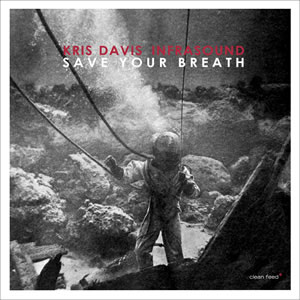
The title song closes the program. The longest track (14:50), the sound rarely rises above a whisper, the instrumentalists stepping up and then fading out. Yet it's not an afterthought or an epilogue.  Look at the cover photo - the music describes what to must be like to be underwater, to be standing on the ocean floor connected to the world above by ropes, breathing air from a tank, the only sounds being your breathing and whatever is going on in your mind.  Each voice in the ensemble contributes to this adventure and it's makes for absorbing listening.

"Save Your Breath" has moments of great beauty and harsh noises ("The Ghost of Your Previous Fuckup" offers much of the latter without ignoring the former), often moving with great force and determination.  Considering the time the octet had to rehearse, perform, and record, this is incredibly fine music.  I can imagine how pieces could get stronger with more performances (alas, only 2 European dates on Ms. Davis' website) but this recording is mighty good.  For more information, go to www.krisdavis.net.

Here's a taste of this fine recording:

Monday, February 21, 2011

CD of This Week + Reading + Firehouse 12 Spring 2011 + Threadgill Galore

Noneto Ibérico - Alexis Cuadrado (BJU Records) - Composer/bassist/co-founder of BJU Records Cuadrado's new CD (which I previewed in January - read it here) goes into general release on March 1 (digitally) or March 15 (physically).  If you like large ensemble music, Spanish rhythms, excellent arrangements, strong improvisations, and variety, buy this and you should not be disappointed. Besides the leader, the nonet includes saxophonists Perico Sambeat (doubles on flute) and Loren Stillman, trumpeter Avishai Cohen (doubles on flugelhorn), trombonist Alan Ferber, guitarist Brad Shepik, the sterling keyboard work of Dan Tepfer, percussionist Marc Miralta, and drummer Mark Ferber plus the Flamenco handclaps of Israel Suarez, Tomas Moreno and Blas Cordoba (on 4 of the 8 tracks.)

While the music is based on traditional Flamenco song forms, the results are a striking blurring of styles.  After a handsome bowed bass solo that opens "Very Well" (the first track on the disk) and the richly toned alto sax solo from Sambeat, one gets pulled in by the fandango rhythm and the rising melody line. The tension is palpable yet the way the reeds and horns are arranged give the piece warmth. Listen to the drive and forward motion on "Sólo El Sol Sale Siempre Solo" (Solea), another piece that opens slowly and, in this instance, with angular saxophone lines from Stillman and Shepik's distorted guitar lines. There's a blues feeling in the bass line (which is doubled, at times, by Tepfer's acoustic piano.) The "heaviness" of that work stands in sharp contrast to the dancing melody lines of "Tocar Y Parar" (Alegrias), the saxophones moving easily over the handclaps and Mark Ferber's sharp drum work.  The solo section features fine solos from Tepfer and Cohen - they both "swing" but not in an American context but in the declarative Spanish sense (Cohen's growth as a soloist over the past few years in impressive.)  The longest track, "Por la Minima" (Bulerias) clocking in at 17:36), opens with insistent guitar chords, chattering electric piano lines, and a rhythm section in a different tempo.  The tension that interaction creates does not subside when the reeds and brass enter and Cuadrado creates a swift line for one to play off the falling phrases of the other. Halfway through the piece, Sambeat rises out of the insistent chords with a sharply defined solo.  There's a lot to absorb at this point, from the saxophonist's rising intensity to the splendid drum work to the staccato horn lines to the burbling piano.

I'd be happy to talk about the rest of the tracks but you should discover the musical treats for yourself.  The musicianship is as impressive as the expansive compositions; there are harder edges mixed with softer, intensely romantic, flourishes (the ballad "A Tientas" (Tientos) strikes me as a cross between Chico O'Farrill and Gil Evans.) This project, created thanks to a grant from Chamber Music America/"New Works" with support from the Catalan Center at NYU, photographer Dixi Carrillo, and released with the help from investors through Kickstarter, is really quite special.  To find out more, go to www.alexiscuadrado.com.
Here's "Te Sigo (Seguiriya)" courtesy of BJU Records and IODA Promonet:
Te Sigo (Seguiriya) (mp3)

Pianist/composer Ethan Iverson, best known for his work with The Bad Plus, is also a fine writer.  His blog, "Do The Math", is a real pleasure to read for many reasons, especially his interviews and musical observations.  Lately, he's been writing (copious amounts) about the hub-bub over the new book by trumpeter Randall "Randy" Sandke.  (Check it by going to http://dothemath.typepad.com.) Titled "Where the Dark and the Light Folks Meet: Race and the Mythology, Politics, and Business of Jazz" (Scarecrow Press), the book looks at the relationships in jazz that go right back to the turn of the 20th Century especially between Black and Caucasian musicians. Did African Americans get too much credit for the creation of the music? I first read of the controversy on saxophonist/critic Chris Kelsey's fine blog (http://chriskelsey.com/blog/) when he took umbrage to critic Howard Mandel's highly critical response to the book.  Both Kelsey and Iverson write well, with reasoned arguments.  Kelsey pointed me to the Richard Sudhalter's "Lost Chords: White Musicians and Their Contributions to Jazz, 1915-1945" (Oxford University Press), an exhaustive and often exhausting tome that covers similar ground to Sandke's book (which, in all fairness, I have yet to get to read.)
Nevertheless, both musicians are worth reading.

That's Nick Lloyd standing in front of Firehouse 12, 45 Crown Street in New Haven, CT. (photo courtesy of Improvised Communications.) The recording studio/performance space has just announced its Spring 2011 Concert series and it looks just wonderful.  13 shows on 13 consecutive Friday evenings and it all begins on March 18th with guitarist Adam Rogers' Trio featuring bassist Matt Brewer and drummer Clarence Penn for 2 shows (8:30 and 10 p.m.)  Subsequent shows feature the Donny McCaslin Group (3/25), the Jeremy Pelt Quintet (4/01), the Ullmann/Swell Quartet (4/08), the Daniel Levin Quartet 4/15), Shane Endsley and The Music Band (4/22), Amir ElSaffar's Two Rivers (4/29), the Tom Rainey Trio with Ingrid Laubock and Mary Halvorson (5/06), the Rob Brown Quartet (5/13), Anthony Braxton Septet: Echo Echo Mirror House (5/20), the Ben Wolfe Quartet (5/27), Gretchen Parlato with pianist Taylor Eigsti (6/03) and the Scott Colley Trio (6/10). Now, that's a lot of good music.  Prices are reasonable, there's a good watering hole in the basement (though, no drinks in the performance space) and the sound is exceptional.  To find out more and/or buy tickets, go to www.firehouse12.com.

Finally, saxophonist/flutist/composer/conceptualist Henry Threadgill seems to be all over the media lately.  He's on the cover of the March 2011 issue of JazzTimes (and, inside, is the subject of a fine article by David R. Adler - read it here) while Jason Crane devoted a recent episode of "The Jazz Session" to critic Hank Shteamer and the liner notes he wrote to the Mosaic boxset "The Complete Novus & Columbia Recordings of Henry Threadgill & Air." You can hear the episode by clicking here.
In April of 2010, Crane sat down with Mr. Threadgill to chat about many things Zooid and much more - it's also worth a listen, which you can do by clicking here.