Much has befallen (emphasis on "fall') since the previous post. Now I have two fractures to heal! Still listening to plenty of music but writing is slow and cumbersome. Here's a sampling of what I was working on between the two accidents.
Unless you have paid no attention to Black American Music over the past decade-plus, the name Luke Stewart should be quite familiar. The bassist has worked with David Murray, Wadada Leo Smith, Nicole Mitchell, the late Jaimie Branch, Marshall Allen, and so many more. He leads several different ensembles including the Exposure Quartet, Heart of the Ghost, and the Remembrance Quintet as well as co-leading Irreversible Entanglements. He also leads Silt Trio, an ensemble featuring tenor saxophonist Brian Settles, and drummers Trae Crudup or Chad Taylor. The Trio's 2020 debut, the self-released "No Trespassing" did not carry the Silt Trio monicker, has Crudup on drums, and sounds like a totally improvised set. 2022's Cuneiform release, "The Bottom", features Taylor and showsw three voices working as one, not beholden to any one style and also displaying Stewart's ear for melody – the songs are not "blowing tunes" but composition and free improvisation often reside in the same pieces.
Silt Trio's new recording "Unknown River" (Pi Recordings) is made up of four tracks recorded in Tempo House studios in Baltimore, MD, and three recorded live in Trinosophes, a cafe/ performance space in Detroit, MI. The studio tracks open the album with Crudup in the drum chair (he's also worked with saxophonist James Brandon Lewis). Listen below to "Seek Whence", the opening track – the bass and drums lay down a "tight" groove and the underappreciated Settles delivers the melody then creates a solo that is his response to both that melody and the rhythmic drive. "Baba Doo Way" follows and it's easy to see where the tune got its title. Doesn't take long for the Trio to move up and away from the melody into a frenetic, at times, improvisation that shows how deeply they listen to each other plus the strength of the bass lines to allow Crudup to explore poly-rhythmic pathways.
Photo: Luciano Rossetti
The three live tracks open with "Amilcar" and Taylor announces his presence from the get-go with the powerful solo that introduces the track. Two minutes in, Stewart joins in, his powerful bass work introducing Settles and a thunderous solo, arguably his most exciting and impressive of the album. Stewart taes the peace to its finish with a throbbing solo which leads into the nearly 13-minute opus "Dudu". The bowed bass, the steady beat, and Settles playing slow melody lines creates a drone. Three minutes in and there's a shift in dynamics, the tempo picks up, the tenor and bass lines flutter and skitter around each other as the drums sit out. As Settles and Stewart continue their improvisatory dance, Taylor returns and the intensity begins to climb. Soon, the three musicians are firing on all cylinders withg Settles riding the rhythmic headwinds created by the bass and drums.
"Unknown Rivers" may refer to the numerous underground water sources that fill our lakes, bays, reservoirs, and oceans or, more to the point, to the rivers of music that course through the musicians bodies as they are creating in real time. Luke Stewart Silt Trio creates fascinating music on this, their third album, and one imagines they must thrive in the concert/ club setting. If you're a fan of saxophone trio music, this album ranks up there with Sonny Rollins' "Freedom Suite", with Air's "Air Time", andMatana Roberts, Josh Abrams, & Chad Taylor's "Sticks and Stones", arguably my favorites.
There's a delightful new recording from percussionist-composer Samuel Torres. Titled "A Dance for Birds", Torres has created a nine-movement suite of music for the Latin Chamber Ensemble that features the members of his Sextet plus the Bergamot String Quartet.
Here's the video for "The Song" with graphics created by Colombian visual artist Diego Pombo:
Ernesto Cervini is one busy person, leading several ensembles, playing as a sideman, running his publicity company, touring, and helping to raise a young family. One of his ensembles is the sextet Turboprop and their new recording is, arguably, its best. "A Canadian Songbook" (TPR Records) is a seven-song program featuring two interpretations of two Canadian "pop" songs, two Cervini originals, one from Turboprop trombonist William Carn, and one each from friends Allison Au and James Hill.
Here's the group's take on The Barenaked Ladies "When I Fall":
Turboprop is:
Tara Davidson - Alto Saxophone Joel Frahm - Tenor Saxophone William Carn - Trombone Adrean Farrugia - Piano Dan Loomis - Bass Ernesto Cervini - Drums
Critics and reviewers were quite surprised and, ultimately, very pleased last July when drummer, composer, and conceptualist Tyshawn Sorey issued "Mesmerism" (Yeros7 Music––now reissued on Pi Recordings)), a piano trio album of four "standards" plus one piece each by Muhal Richard Abrams and Paul Motian. Sorey had wanted to include pianist Aaron Diehl (Cecile McLorin Salvant) in a project plus long-time friend and collaborator, bassist Matt Brewer (SF Jazz Collective, Ambrose Akinmusire); this project was the exact right. Later in 2022, Pi Recordings released "The Off Off Broadway Guide to Synergism", also a Trio album but with Russell Hall on bass and guest Greg Osby on alto saxophone. That triple (!) album is a must-listen.
Back to the Trio format on the new Pi Recordings album, "Continuing". Bassist Brewer has returned so one should consider this to be the official follow-up to "Mesmerism". The program consists of four tunes, one each by Wayne Shorter, Ahmad Jamal, and Harold Mabern (who had been a mentor to Sorey) plus the 1946 Matt Dennis/ Earl Brent classic "Angel Eyes". The overall program reminds this listener of a smoky nightclub gig, the early morning third set, as the music is steeped in the blues and the musicians let the songs move at a leisurely pace (save for the closing cut). Listen below to Mr. Shorter's "Reincarnation Blues" which he wrote for and recorded with Art Blakey & the Jazz Messengers in 1961. Sorey, Brewer, and Diehl create a slower take than the original. The piano solos are mighty impressive especially the dazzling second one (starting around 7:30 into the 10:25 cut). Brewer's solo, earlier in the piece, rolls atop the drums displaying a handsome melodic side.
Photo: John Rogers
Diehl captures the spirit of the composer on Mr. Jamal's "Seleritus" (first recorded and released in 1959)––the longest track on the album (15:43), the interactions of the piano and bass are what first stands out. The more you listen, the bounce in the rhythms Sorey plays stand out more. What also is intriguing is that the piece never really resolves; instead, the music fades out with Diehl's percussive block chords. "Angel Eyes" follows, proceeding gently over Brewer's chordal tones and Diehl's deliberate reading of the melody. Sorey enters at the 3:09 mark of the 13+-minute track, playing as quietly and gently as he can (his brushes whisper on the cymbals). Brewer's bass solo is a gem from start to finish as is Diehl's. The airiness is this performance is dramatic but not forced.
"Continuing" goes out with a bang as the Trio gets funky on Harold Mabern's "In What Direction Are You Headed". Originally recorded by Lee Morgan in 1971 for what turned to be "The Last Session". By the middle of the song, one feels as if we are in midst of a church service as Brewer locks into a nine-note riff while Sorey "stomps" out the beat. They continue in their groove even as Diehl joins in on low and high notes. The pianist does reintroduce the theme right before the album makes its rousing exit.
Pour yourself a libation, turn the lights down low, and listen as if the musicians were in your living room. All in all, this Tyshawn Sorey Trio is a real knockout!!
Jazz artists, since the beginning of its move into the public eyes and ears, like to perform the popular music of the day. Each generation of musicians looks to "pop music" to attract an audience and as a way to get those people to also listen to their original music. This is a concept that works well in the piano trio format. For its 2017 debut, the Hazelrigg Brothers, pianist George and bassist Geoff, whose main gig is designing, development, and manufacturing of high-end recording equipment, recorded "Songs We Like", a nine-song album of tunes they grew up listening to including the Police's "Spirits In the Material World". It should not come as a surprise that for their second Trio album (John O'Reilly, Jr is the drummer) that they would opt to record the entirety of the Police's 1983 "Synchronicity", that trio's fifth and final album. That recording spawned several Top 10 hits including "King of Pain", "Wrapped Around Your Finger", and "Every Breath You Take".
On "Synchronocity" An Interpretation of the Album by The Police" (Outer Marker Records), the Brothers play all the songs (even the cassette-only––those were the days––"bonus track") in the order they appear on the original Police Lp. Because the majority of the original songs have such strong melodies (at least, the ones composed by bassist/ vocalist Sting do), the Trio do not try re-invent the (musical) wheel. Therefore, the excitement of the opening title track is evident here as well thanks to the powerful rhythms they create. Geoff's bass is the lead instrument on the "Walking In Your Footsteps" and "Every Breath You Take"––the piano solo on the former tune has a tinge of the late Vince Guaraldi's sound while the latter builds dramatically from the opening until the bass reclaims the theme in the middle.
The bassist also leads the trio into "King of Pain" which, to these ears, is the highlight of the album. How the trio shares the melodic and rhythmic phrases and sections as well as the excellent dramatic movement of the melody stand out. That's followed by the excellent take of "Wrapped Around Your Finger"––again, it's the subtle rhythmic moves of the bass and drums that draws the listener into the emotional richness and poetry of the piano parts.
Some may argue that the Hazelrigg Brothers trio don't take many chances on their reinterpretation of The Police "Synchronicity" but, to their credit, they make Andy Summer's song "Mother" much more interesting replacing its manic vocal lines and by emphasizing the Kurt Weill aspects in the instrumental. Overall, if you grew up with this music, you should enjoy this album. If you are new to the material, enjoy the songs with the finely-etched melody lines and the excellent musicianship that abounds on this heartfelt tribute.
If memory serves correctly, I first encountered the music of Henry Threadgill in Cutler's Record Shop in New Haven, CT, on seeing the first Air Lp, "Air Song" (Why Not Records imported from Japan), on the Jazz "New Releases" section of the wall. Intrigued, I discovered that the trio (saxophonist, flutist, and composer Threadgill, bassist Fred Hopkins, and drummer Steve McCall) hailed from Chicago and were members of the Association for the Advancement of Creative Musicians (AACM). By this time, I had heard the Art Ensemble of Chicago, Anthony Braxton, and Muhal Richard Abrams, fascinated as well as puzzled by this music that often eschewed typical jazz forms to look for new sounds and mixtures.
Photo: John Rogers
Threadgill, like a good number of his contemporaries, had served in the Armed Forces and come back to a changed United States. The Vietnam War was still raging, President Nixon had alienated a good portion of the country, and the inner city neighborhoods in major cities across the US had never recovered from the riots that had occurred before and after the 1968 assassination of Dr. Martin Luther King. What some people heard as anger in this hybrid form of Black Music was really a major advancement in approaches to composition and improvisation by many Black composers and musicians. By the mid-1970s, many AACM musicians had been to Europe but came back to move to New York City.
Henry Threadgill tells his story in his new memoir "Easily Slip Into Another World: A Life in Music" (Penguin Random House). Written with Brent Hayes Edwards, the composer/musicians takes the reader through his early years with bows to many members of his family and the various neighborhoods he lived in. We learn of his voracious appetite for learning and how he slowly but steadily learned piano, saxophone, and flute as well as to learn how to compose. Threadgill certainly played many different styles of music, from Gospel to R'n'B to Jazz to funk as so on but was open to classical music. He also was quite curious, fixating on learning how to fly and making people disappear, neither of which he was successful at. His time in the Armed Forces, especially the months he spent in Vietnam were harrowing but taught him much about the world, about community, and so much more. Coming back to Chicago and to the AACM pushed him to create his own music just as his contemporaries were doing (and many still do). We read of how he created Air with Fred Hopkins and Steve McCall as well as the groups that followed.
I was lucky enough to experience Air, hubkapaphone (that's a story unto itself) and all, in concert in Battell Chapel in New Haven. It was the Summer after Nessa Records of Chicago had issued "Air Time", the trio's first American release. The music moved in multiple directions with melodies coming from all three musicians, rhythms stopping and starting seemingly at will––McCall was an amazing percussionist, Hopkins a brilliant bassist with a true melodic bent, and Threadgill's tart alto sax sound pushed and pulled at the fabric of the material. One can still echoes of that sound in the music Threadgill creates today.
That said, the book illuminates how the composer organizes his groups, how he mixes and matches disparate sounds, how he's more fascinated by "flow" than by "rhythm", how he and his groups deconstruct and rebuild the compositions throughout every performance. Henry Threadgill is more interested in performance than recording, fascinated by how the musicians he plays with and/or conducts deal with time and with the flow of the intervals inside the music. When you return to listen to any one of his myriad recordings after reading this book, you'll hear his music with different ears, hearing the "architecture" of each song as well as the influence of the blues on the Sextett albums, the world music components of the Make a Move ensemble, and how ZOOID mixes composition and improvisation so that one can not tell where one starts and the other ends.
In a year that has seen new biographies of Sonny Rollins and Chick Webb. "Easily Slip Into Another World: A Life in Music" is a "must-read" for music lovers. The book goes a long way to shed light on the continually creative mind of Henry Threadgill, never dwelling on either awards or disappointments but telling a story that displays great humanity in spite of any and all roadblocks.
In addition to the new book, there is a new Threadgill album. "The Other One" (Pi Recordings), recorded live in May of 2022 at Roulette Intermedium in Brooklyn, NY, features the 12-member Henry Threadgill Ensemble composed of musicians who are members of ZOOID, the Double Up Ensemble, and several newcomers to the Threadgill universe. The ensemble plays "Of Valence", a three-movement composition influenced by percussionist Milford Graves' study of the human heartbeat and its integration into music. "Movements I" and "III" are broken into nine sections with the ninth being the "Finale" (in both). Meanwhile "Movement II" is 16:24 long with distinct sections but not broken up like the others. Even though the instrumentation is different than any other of his groups, you can the various trademarks of the Threadgill oeuvre: the long, winding, melody lines, the deep tones of tuba and cello for the bottom, rhythms that suggest swing, blues, African music, and more. What's different is the short sections that curtail long solos but do listen to how the composer/conductor moves the sounds through the band and how they come together.
Photo: Jeenah Moon/NYTimes
Listen to "The Other One" all the way through because that will help bring the music into focus. There's an excerpt below but it's like reading a short quote from a long book. Listening to music, especially "concert" music, is usually a cumulative experience. We remember moments of the pieces, the emotions we felt, perhaps an impressive solo or the rhythms that made us tap our feet. All three "Movements" of "Of Valence" start quietly before other instruments are added. The composer does that to pique our interest––where will the music go next, who's taking the next solo, etc.? There are many moments of strong musicianship here from violinist Sara Caswell, clarinetist Noah Becker, pianist David Virelles, percussionist Craig Weinrib, and the bravura of work of Jose Davila (tuba) and Christopher Hoffman (cello). That's not to discount the work of the others (all personnel listed below). The Henry Threadgill Ensemble, its leader, and his music shines brightly on "The Other One"!
It's that time of year when critics and reviewers create their "Best-of" lists. I am no different but I look at this group of recordings as music that informs, changes, and enhances my life and teaching. Here is the group of albums from the past year that helped me through illnesses, sadness, joy, and much change.
Miguel Zenón - "Musica De las Américas" (Miel Music) – It's no secret how much I admire the music and work of Miguel Zenón. With his long-time ensemble, composed of Luis Perdomo (piano), drummer Henry Cole, and Hans Glawischnig (bass and truly the "glue" of the band). This new album celebrates the music of Central and South America as well as the Caribbean, showing how various elements have entered into the music of the United States (and beyond). Along with the latest album by rapper Bad Bunny ("Un Verano Sin Ti"), whose music celebrates the rhythms that inspire reggaeton, the album has deep grooves, evocative melodies, and the inventive musicianship one has come to expect from Señor Zenón and company. Percussionists Paoli Mejías, Victor Emmanueli, Daniel Díaz, and the five member Los Pleneros de La Cresta each appear on one track during the eight-song program.
Enjoy the fiery "Opresión y Revolución":
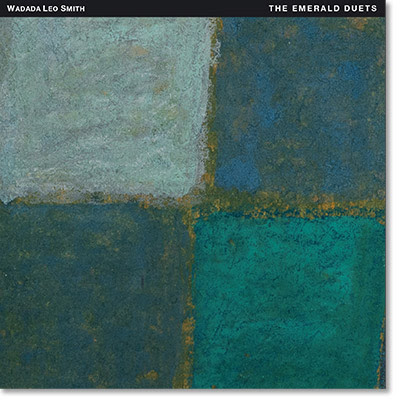
Wadada Leo Smith w/ Pheroan akLaff, Andrew Cyrille, Han Bennink, and Jack DeJohnette - "The Emerald Duets" (TUM Records) – Trumpeter, composer, conceptualist, historian, and philosopher Wadada Leo Smith celebrated his 80th birthday on December 18, 2021 (meaning he just turned 81 yesterday, as I write this). The Finnish-label TUM Records celebrated that momentous occasion by issuing two multi-disc box sets by Mr. Smith, the seven-CD "String Quartets: Nos. 1-12" and the five-CD "The Emerald Duets". Both are amazing but I expect it will take many more months to truly take in the scope of the string music. Whereas five albums with drummers captured me immediately. All the sessions stand out (this is the first time Mr. Smith played with Mr. Bennink) but the two CDs feature Mr. DeJohnette, a long-time musical compatriot. The drummer plays piano as well as percussion; it's not hard to fall under the spell of this music.
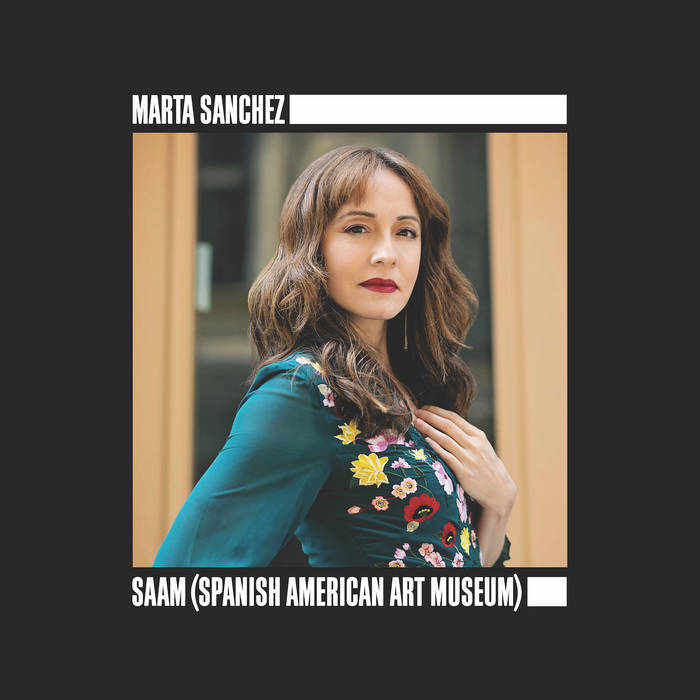
Marta Sanchez - "SAAM (Spanish American Art Museum") (Whirlwind Recordings) – Pianist and composer Sanchez had a tumultuous time during the Pandemic as her mother passed early on. She found time to write new music for her group – saxophonists Roman Filiu and Alex LoRe, bassist Rashaan Carter, and drummer Allen Mednard – and it's her most mature and realized program. The music sings throughout the album plus there are fine solos from all involved. Subtle, emotional, and intelligent, "SAAM" draws from myriad influences, is never imitative, and draws in the listener on the strength of the melodies. One track, "Marivi", features Ms Sanchez, Mr. Carter, and Mr. Mednard with Camilla Meza (vocal, guitar), Ambrose Akinmusire (trumpet), and Charlotte Greve (synths).
Listen to "Dear Worthiness":
Tyshawn Sorey Trio + 1 (with Greg Osby) - "The Off-Off Broadway Guide to Synergism" (Pi Recordings) - Another impressive year for drummer, composer, and educator Sorey, filled with debuts, impressive gigs, and two great albums. This live three-album set of standards, jazz classics, and more, is a splendid exploration of melody, improvisation, and interplay featuring Mr. Sorey with the impressive pianist Aaron Diehl, bassist Dana Hall, and the very welcome alto saxophonist Greg Osby. Three long sets (75 + minutes) yet the music never gets dull or stale because the musicians are free of any expectations other than play the melody, improvise, and follow your creative flow. The week before I wrote about the album, I listened to, at least, one set a day, especially on my daily walk. The addition of Mr. Osby, whose musicianship is impressive throughout, is such a delight!
Hear "Solar":
Noam Lemish – "12" (TPR Records) – This album, from the pianist, composer, and educator Noam Lemish, was one of the more impressive releases of the last six weeks. The Israeli-born, American-educated, and Canadian resident, had recorded several albums with oudist Amos Hoffman, duets with percussionist (and one of his teachers) George Marsh, plus several solo piano explorations. Here, he leads a 12-piece ensemble comprised of many fine Canadian musicians, supplying them with fine, often episodic, pieces with impressive arrangements. There's humor, pathos, wit, and emotion throughout the album (one of the initial releases on Three Pines Records, a new Canadian label led by Amy and Ernesto Cervini). This album gets better each time I listen––give it a whirl!
Here's the delightful "Beethoven's 7th Visit to Romania":
PUBLIQuartet – "What Is American" (Bright Shiny Things) – I don't write about classical music very much but this album (plus the Johnny Gandelsman album in Part 2) truly caught my attention. The PUBLIQs––violinists Curtis Stewart and Janina Norpoth, violist Nick Revel, and cellist Hamilton Berry––often blend European and American classical music but also have a expressive modernist bent. One of the group's ongoing projects, dubbed "Mind| The| Gap|", features arrangements of music by Nina Simone, Ornette Coleman, Tina Turner, Ida Cox, Alice Coltrane, and others into stew that really alters the way you listen to a string quartet. This album features music by Antonin Dvorák, Vijay Iyer, Roscoe Mitchell, Rhiannon Giddens, and others––it certainly does make you think about "what is American"!
Give a listen to "Improvisations on "Law Years" and "Street Woman" (composed by Ornette Coleman):
Trish Clowes – "A View With a Room" (Greenleaf Music) – Composer and saxophonist (tenor and soprano) Trish Clowes signed with Dave Douglas's Greenleaf Music this year and gifted listeners with "A View With a Room". Featuring her long-time band My Iris––guitarist Chris Montague, pianist and organist Ross Stanley, and drummer James Maddren––the music may, at times, remind you a bit of the quieter music of Jimmy Guiffre but, to this listener, Ms. Clowes has really created her own sound. The band interaction is impressive and the music makes you want to return to the album often. They have not toured the US yet––if they do, I would recommend you spend a night in their company.
Here's the delightful "Amber":
Somi – Zenzile: The Reimagination of Miriam Makeba (Salon Africana) – The vocalist and composer Somi has truly blossomed into a world-class artist, celebrating the sound of the African continent even as she updates it. Here, she pays tribute to the great Miriam Makeba (1932-2008), creating one of the most uplifting programs you will ever hear. In fact, Somi also created a play, "Dreaming Zenzile", around Ms. Makeba that debuted off-Broadway earlier in 2022. The album sounds so good, with such delicious rhythms, attractive vocals, and an impressive guest list including Ladysmith Black Mambazo, Angelique Kidjo, amd Gregory Porter (listen below) plus others. World music at its best–give a listen.
Here's the sensuous "Strawberries" featuring Gregory Porter:
Kate Wyatt – "Artifact" (Self-released) – The Montreal, Canada-based pianist Kate Wyatt, a native of British Columbia, has been active on the creative music in her native country for over two decades. "Artifact" is her debut recording as a leader and well worth the wait. Featuring drummer Jim Doxas, bassist Adrian Vedady (her husband), and trumpeter Lex French (on the Music Faculty of McGill University) the quartet explores this music with vigor, sensitivity, and emotional depth. Ms. Wyatt is a fine player but always makes sure you hear the other members of the group. One can hear a nod in the direction of the Kenny Wheeler, as much in the "open" sound and wit in the composition as well as in Dr. French's trumpet work. Impressive debut and one hopes there's more coming soon.
Listen to the lovely "A Flower Is a Lovesome Thing":
Sachal Vasandani with Romain Collin – "Still Life" (Edition Records) - This is the second collaboration for the vocalist with pianist Collin––like its 2021 predecessor "Midnight Shelter" (also on Edition Records), these performances are intimate, often spare, quiet, yet with an emotional intensity that draws in the listener from the beginning and does not let go until the last note fades. In fact, each time I listened, I played the album all the way through. When I spoke to the duo this past summer, they said that Mr. Vasandani stood right next to the piano during the recording session––the intimacy of the recording process translate to the music. Such a smart selection of tunes, from folk music to jazz standards to "pop" tunes to originals. Late night or early morning, this music is a comforting friend..
Listen to the emotional and heartbreaking "(I) Can't Make You Love Me":
Since the beginning of November, Connecticut has been blessed with a delightful week of Indian Summer (soon to depart in favor of the chill of late Autumn). The balmy temps (68-77) have allowed this writer to walk every day and to listen to music as I dodge the remaining leaves. The two albums have been in rotation each day!
Earlier this year, drummer and composer Tyshawn Sorey issued a trio album––"Mesmerism" featured bassist Matt Brewer and the splendid young pianist Aaron Diehl on an exciting and thoughtful exploration of "standards". In early March of this year, Sorey brought Diehl, bassist Russell Hall (Joey Alexander), and special guest Greg Osby (alto saxophone) to New York City's The Jazz Gallery for a five-night engagement. The band did not rehearse and, pretty much, chose the music on the bandstand. And, they recorded every set!
The results can be heard on "The Off-Off Broadway Guide to Synergism", a fantastic three-CD package from Pi Recordings. The 19-tracks are split up into three sets, each album approximately 75 minutes long. Five of the tracks are repeated in subsequent sets (Mr. Osby's "Please Stand By", Ornette Coleman's "Mob Job", Thelonious Monk's "Ask Me Now", Johnny Green's "Out of Nowhere", and "Three Little Words" composed in 1930 by Harry Ruby and lyricist Bert Kalmar). It's truly a delight to hear where these four players go with the music. The "Set 1" take of "Three Little Words" starts with a long, impressionistic, piano solo, so slow and gentle that it takes a moment before you the drums and bass have entered. Mr. Osby plays with the melody as if rolling a fine wine across his palette. Slowly and steadily, the alto solo builds with the insistence of the rhythm section. The leader, who does not solo on the set, engages in conversations with the other musicians. Diehl paints a fascinating solo first with the introspection he showed at the onset of the track and it becomes great fun to hear where he takes the piece goosed forward by Sorey and shadowed by Hall whose solo later in the track is quite playful and percussive.
If you love improvisatory music, there is not a dull moment in this music. There's the beauty of Andrew Hill's "Ashes" (which Mr. Osby first recorded in 2000 on his "The Invisible Hand" album that featured the composer plus guitarist Jim Hall) as well as the saxophonist's unaccompanied introduction to Billy Strayhorn's "Chelsea Bridge"––listen below and notice the playful background work of bassist Hall and the beautiful work of Diehl. The pianist, at times, reminds this listener of Jaki Byard as well as Mr. Hill. The Trio + 1 swings mightily on both versions of "Mob Job" with the bass and drums leading the way. The second take of "Out of Nowhere" (originally recorded by Bing Crosby in 1931) opens with an expansive solo piano meditation before Mr. Osby enters with over the rippling piano, whispering cymbals, and bass counterpoint. At the five-minute mark, the band kicks into a higher gear (but not out of control) with the alto and piano in conversation while the rhythm section dances about in support.
Photo: Jonathan Chimene
Every time one digs into the music of "The Off-Off Broadway Guide to Synergism", he or she can get carried away at the inventiveness of Tyshawn Sorey, Aaron Diehl, Russell Hall, and Greg Osby. The playfulness of the musicians on tracks such as "Jitterbug Waltz" (the track where one hears the inspiration of Jaki Byard in Diehl's piano solo) and the rip-roaring "Solar" is infectious and you can only imagine what is what being in the audience (unless you were). There are moments in each set where this quartet has the energy of the classic John Coltrane Quartet of the early-to-mid 1960s, the group with McCoy Tyner, Jimmy Garrison, and Elvin Jones. It's truly a delight to hear Greg Osby play with such imagination, power, and so melodically. Treat yourself to this great album!
Here's the Trio + Mr. Osby on Billy Strayhorn's "Chelsea Bridge":
Clarinetist Anat Cohen first assembled the three musicians who would join her to form Quartetinho (pronounced "quar-te-Chin-yo and meaning "little quartet") before the pandemic stopped the world in its tracks. James Shipp (vibraphone, glockenspiel, analog synth, percussion), Vitor Gonçalves (piano, accordion, Fender Rhodes), and Tal Mashiach (acoustic bass, guitar) join Ms. Cohen (who also plays bass clarinet) for their self-titled debut album (Anzic Records). If you have followed the clarinetist's career, you know that she has had a long love affair with Brazilian music, recording with guitarist Marcello Gonçalves as well as Trio Brasileiro and the Choro Ensemble.
For its debut album, the "little quartet" treats the audience to an 11-song program that includes original pieces from the leader, Shipp, and Mashiach plus two pieces by Egberto Gismonti and one each from Antonio Carlos Jobim, the contemporary Brazilian composer Maria Do Carmo Barbosa De Melo (the lively "Boa Tarde Povo"), and Antonin Dvorāk's "Going Home". The smashing arrangement of the last tune listed features accordion, vibes, bowed bass, and bass clarinet––it's a beautiful arrangement which during Ms. Cohen's solo takes a turn towards the blues. Shipp's solo also takes the "blues route" with his sweetly expressed lines over the supportive bass and accordion swells. Mashiach's "The Old Guitar" is a lovely ballad that leaves solo space for the leader as well as Gonçalves' sweet accordion sounds. The album opener, Shipp's "Baroquen Spirit", starts slowly with just clarinet, vibes, and a synth drone––the melody blends an Americana feel with a touch of classical music.
Photo: Shervin Lainez
That first track leads directly into Egberto Gismonti's lyrical "Palhaço"––there are moments during Ms. Cohen's solo that, thanks to the bass line, piano chords, and the dancing vibes, the music resembles a Joni Mitchell song. Also check the splendid piano solo (with Mashiach's supportive bass) that leads to the close of the piece. The other Gismonti piece, "Frevo", jumps atop the rippling clarinet and piano melody before the clarinetist takes a sly solo over Shipp's delightful percussion and the throbbing bass notes. The piano solo is also a treat.
Ms. Cohen contributes three originals to the program. "Birdie" is a melancholy melody played over a medium tempo with the Fender Rhodes offering shimmering chords (see the video below). Next up is "Canon" which starts with a richly melodic bass solo (there's a touch of flamenco in Mashiach's playing). The bassist then articulates the handsome melody supported by Shipp's vibes. Ms. Cohen joins on bass clarinet while Gonçalves joins on piano. "Louisiana" pops right along on the thick bass notes, the dancing piano chords, and the "jump-blues" in the vibes solo. Everybody solos but at 3:30, the music hardly overstays its welcome.
The album closes on Mashiach's "Vivi and Zaco" which he introduces on 7-string guitar. The accordion and vibes enters when the guitarist expands on the heartfelt melody. The piece has a lovely flow that often speeds up and slows down at the end of the verse. Before the piece ends, everyone has shared the melody line. It's a sweet close to an elegant group of songs.
"Quartetinho" is yet another jewel in the crown Anat Cohen is creating with her music. Her heart is so enmeshed in her music and her love for playing shines through every performance. With this quartet, culled from her Tentet, she has given listeners yet another reason to listen deeply.
Pianist and composer David Virelles, born and raised in Cuba, moved to Canada in the early 2000s at the behest of musician. Jane Bunnett. While attending college, he recorded with the flutist and came into contact with saxophonist Steve Coleman. On the strength of a grant from the Canada Council for the Arts. Virelles moved to New York City to study with Henry Threadgill, going on to record with the saxophonist/ composer as well as artists such as Mr. Coleman, Chris Potter, Paul Motian, Wadada Leo Smith, Mark Turner, and many others. As a leader, he's recorded for both ECM and Pi Recordings.
It's on the latter label where you'll find "Nuna", a 16-track, mostly solo (percussionist Julio Barretto appears on three of the tracks), extravaganza. Unlike his previous Pi recording (the digital-only "Transformación del Arcoiris"), Virelles plays acoustic piano throughout save for the opening "Spacetime" on which he adds the percussion instrument marimbula. The music ranges from Cuban folk melodies to melodic excursions to rhythmic fantasies to free-form improvisations to trance-like journeys. Composed and recorded during the pandemic, the music flows like a giant stream from start to finish. And that's the best way to listen––start with "Spacetime" and don't stop until the ringing chords of "Casa" fade away. It's quite a musical adventure, one that never overstays its welcome and is so rewarding.
"Nuna", like all of the music David Virelles has created as a solo artist, is fascinating. His formal training as well as his study of Black Music from playing with so many fine creators, has expanded his vision so that the pianist cannot be pigeon-holed into one genre. Nor should he be. Open your ears and mind, dear listener, and you will be rewarded.
Born in Oakland, CA, in February 1955, tenor saxophonist and bass clarinetist David Murray seemed to come fully formed on the Black Music scene in the mid-1970s. Before moving to New York City, he had played with pianist Horace Tapscott. Before being one of the four co-founders of the World Saxophone Quartet in 1977, he released three Lps in 1976 including the brilliant "Flowers for Albert" (India Navigation Records) and the equally powerful Trio recording "Low Class Conspiracy" (Adelphi Records). He was prolific through the 1980s and 90s with a series of splendid Octet recordings on Black Saint and quartet dates on DIW plus his work with the WSQ. Murray was never tied to one genre––he could play "free", "in the pocket", in intimate duo sessions, with a big band, in different Caribbean "modes", rearranging the Grateful Dead music for big band and more.
In 2020, the saxophonist created his BRAVE NEW WORLD TRIO (pictured above) with bassist Brad Jones and drummer Hamid Drake. The results of their collaboration can now be heard on "Seriana Promethea" (Intakt Records). The title track opens the eight-song program on a surprisingly and delightfully funky note with Jones' powerful bass lines and Drake's dancing drums underneath the happy-go-lucky bass clarinet lines. The next track, "Necktar", ups the ante with hard-edged rhythms, swinging and solid bass lines while the leader romps on tenor sax. "Metouka Sheli (Ballad for Adrienne)" is a soulful ballad that brings to mind the trio Air (with Henry Threadgill, Fred Hopkins, and Steve McCall) especially in Murray's fluttering tone and how the rhythm section moves through the piece. The album's sole cover tune is "If You Want Me to Stay", a 1973 hot for Sly & The Family Stone––the trio pushes the rhythm forward harder than the original but dig how Jones captures the insistent feel of the bass lines. Drake kicks with abandon while the tenor saxophone shouts and "testifies".
The album closes "Am Gone Get Some", a rollicking jaunt pushed by the drums underneath the far-ranging "walking" bass and the leader's scampering tenor solo. The liner notes reported that the trio recorded in Zurich, Switzerland, after a series of European gigs and it really shows in the group's tightness, support, and desire to push each other further. No cliches here, no "comping" to fill out the songs, just three musicians at their height of their powers having a great time making music. I look forward to more experiences from David Murray and his BRAVE NEW WORLD TRIO––in the meantime, "Seriana Promethea" is a true delight!
In 2015, guitarist, composer, and conceptualist Miles Okazaki built a new ensemble which, ultimately, took its name Trickster from its 2017 eponymous debut Pi Recordings. Utilizing the brilliant rhythm section, bassist Anthony Tidd and drummer Sean Rickman, from Steve Coleman's Five Elements plus pianist Craig Taborn (replaced in 2018 by Matt Mitchell). The music couldn't help but be affected by the guitarist's many appearances with Coleman's group. But, the music has matured.
Okazaki's latest album with the quartet, "Thisness" (Pi Recordings), has a different feel from its three predecessors. Besides piano, Mitchell plays Fender Rhodes and Prophet–6 synthesizer and the four original pieces are the longest (all between 9:27 and 10:04). The song titles were adapted from the Sun Ra poem "The Far Off Place"; the music does have an exploratory feel throughout. Also, to get the full effect of the music, listen through headphones or in a room with really sensitive speakers. There is a lot going on over the course of these songs, overdubs of several guitars and keyboards that one will want to hear to get the full sonic picture. The mix of the thick bass tones, the powerful percussion, the strong piano chords, and Okazaki's fascinating acoustic and electric guitar work keeps one's interest throughout. The music feels "in the moment", spontaneous each time you listen.
"In Some Far Off Place" opens the album in subdued fashion. This listener is reminded of several ballads of Jimi Hendrix (as well as John Lennon's "Julia" later on) in the early moments as the leader's overdubbed guitars move gracefully through the aural landscape. Listen closely, there are wordless vocals that show up now and then. Halfway through, the music changes direction, becoming more rhythmical (noticeable in the guitar solo and work of the rhythm section. Synth washes can be heard and then the tempo picks up with much more urgency. It's never overwhelming even as the guitars move around in the mix. The various trails of the music intersect as the band moves forward––kick back, enjoy the journey.
Musical magic can be heard on each track. The rock-solid rhythms beneath the guitar and rippling piano phrases on "Years in Space", the song powered by Tidd's hard-hitting bass lines clearing the path for the soloists while Rickman hits the snare, it pops! "I'll Build a World" literally jumps off the starting line but pay attention to the calming Fender Rhodes underneath the rapid-fire melody lines. As the piece develops, the pace slows for a moment for a piano solo while Rickman (listed as co-writer) dances beneath. Halfway through, the drummer instigates a musical call-and-response with the guitar and piano––such an invigorating interaction.
"And wait for you" truly kicks in on the strength of the funkified drums and pumping bass lines. The electric guitar and Fender Rhodes dance atop Tidd's solo phrases until Okazaki plays a rhythm figure that could easily have been created by Nile Rodgers (Chic) or Leo Nocentelli (The Meters). The guitar solo moves back and forth into the groove until music changes directions for an acoustic piano solo that turns into an interaction between guitar phrases from several overdubbed guitars.
"Thisness" is an album to play on repeat. Not only does the music sound alive but also, on subsequent listens, one begins to understand the pathways in these compositions. This music is never static; like a river, its current can be swift but the eddies are enthralling. Miles Okazaki continues to mature as a composer and musician while the Trickster ensemble is a wonderful vehicle for both his playing and conceptual adventures.
Hear Miles Okazaki & Trickster perform "I'll Build a World":
1970 was quite the year for Soft Machine. The trio of Mike Ratledge (Hohner pianet, Lowrey Holiday Deluxe organ), Robert Wyatt (drums, vocals), and Hugh Hopper (electric bass) continued its move towards electric jazz-fusion by adding Elton Dean (alto saxophone, saxello) and Lynn Dobson (soprano and tenor saxophones, flute, harmonica, vocals) as well as, for a very short time in late 1969, trombonist Marc Charig (as far as I know, there are no live recordings with him). The new quintet's music sounded influenced as much by Miles Davis's move towards fusion on "In A Silent Way" as by American composer Terry Riley's mixture of electric instruments and improvisation on "A Rainbow in Curved Air".
There are a slew of bootleg "live" albums of the band in 1970 but now Cuneiform Records has officially released "Facelift France and Holland". Both sets, the first recorded on January 17, 1970 at the Concertgebouw, Amsterdam, the second on March 2, 1970, at the Théâtre de la Musique in Paris, feature the Quintet in full flower. Both the CD and vinyl versions have the full video of the later show. The 2-CD + DVD and the 2-Lp + DVD (this package won't be available until 12/31/2022) as well as the digital version are programmed with the March concert first. The later show is longer (71:15) than the earlier one (44:36) but fans won't mind. The sound quality on the January concert recording is fairly impressive (editing at the end of the first track is sloppy though) while the March show sounds a bit more distant at times (CD buyers get a third disc with a previously unreleased soundboard recording of the March program.
As for the music, four of the songs played in these concerts would appear on the Soft Machine's Columbia Records June 1970 debut "Third". Those tracks include "Facelift", "Slightly All The Time", "Moon In June", and "Out-Bloody-Rageous". The older album's "Facelift" does feature the Quintet as it was recorded on January 4, 1970, two weeks before the Paris concert version. It's fun to hear the bigger group. Both Dobson and Dean play with abandon as does Wyatt. While his playful vocals would soon disappear from the band's repertoire as would he the following year. He was the right drummer for this music bringing the zany yet rhythmically strong performances this music called for. The sounds that Ratledge gets out of the organ are often other-worldly, blending well with the soprano sax and the saxello (a Bb soprano sax). Hopper's electric bass lines help the music from flying totally out of control while his "fuzz" bass really thickens the sounds,.
Pieces such as "Mousetrap" and "Eammon Andrews" blend jazz and rock while the afore-mentioned "Facelift" and "Slightly All the Time" are prime examples of "electric jazz". If you are curious about this most fertile time of jazz-fusion, "Facelift France and Holland" gives a particular English take. The Soft Machine would go on to influence distinctively British bands like Hatfield & The North, National Health, and Gilgamesh. Wyatt started Matching Mole after his departure continuing to mine his unique vocal style to adventurous music. Ratledge, Hopper, and Dean would add drummer John Marshall, guitarist Allan Holdsworth, and reeds/keyboard player Karl Jenkins who would take over the group in 1976. Still, this fascinating release illustrates just how impressive an ensemble the group was in 1970.
The group still exists with Marshall on the drums, Holdsworth's replacement John Etheridge, young reeds player Theo Travis, and the newest member bassist Fred Thelonious Baker who joined in January 202 (replacing Roy Babbington who had replaced Hopper in the mid-1970s). To find out more and get a history of the band, go to www.softmachine.org.

 Posts
Posts