Much has befallen (emphasis on "fall') since the previous post. Now I have two fractures to heal! Still listening to plenty of music but writing is slow and cumbersome. Here's a sampling of what I was working on between the two accidents.
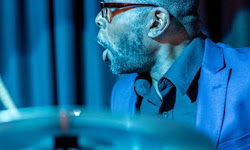
Unless you have paid no attention to Black American Music over the past decade-plus, the name Luke Stewart should be quite familiar. The bassist has worked with David Murray, Wadada Leo Smith, Nicole Mitchell, the late Jaimie Branch, Marshall Allen, and so many more. He leads several different ensembles including the Exposure Quartet, Heart of the Ghost, and the Remembrance Quintet as well as co-leading Irreversible Entanglements. He also leads Silt Trio, an ensemble featuring tenor saxophonist Brian Settles, and drummers Trae Crudup or Chad Taylor. The Trio's 2020 debut, the self-released "No Trespassing" did not carry the Silt Trio monicker, has Crudup on drums, and sounds like a totally improvised set. 2022's Cuneiform release, "The Bottom", features Taylor and showsw three voices working as one, not beholden to any one style and also displaying Stewart's ear for melody – the songs are not "blowing tunes" but composition and free improvisation often reside in the same pieces.
Silt Trio's new recording "Unknown River" (Pi Recordings) is made up of four tracks recorded in Tempo House studios in Baltimore, MD, and three recorded live in Trinosophes, a cafe/ performance space in Detroit, MI. The studio tracks open the album with Crudup in the drum chair (he's also worked with saxophonist James Brandon Lewis). Listen below to "Seek Whence", the opening track – the bass and drums lay down a "tight" groove and the underappreciated Settles delivers the melody then creates a solo that is his response to both that melody and the rhythmic drive. "Baba Doo Way" follows and it's easy to see where the tune got its title. Doesn't take long for the Trio to move up and away from the melody into a frenetic, at times, improvisation that shows how deeply they listen to each other plus the strength of the bass lines to allow Crudup to explore poly-rhythmic pathways.
Photo: Luciano Rossetti
The three live tracks open with "Amilcar" and Taylor announces his presence from the get-go with the powerful solo that introduces the track. Two minutes in, Stewart joins in, his powerful bass work introducing Settles and a thunderous solo, arguably his most exciting and impressive of the album. Stewart taes the peace to its finish with a throbbing solo which leads into the nearly 13-minute opus "Dudu". The bowed bass, the steady beat, and Settles playing slow melody lines creates a drone. Three minutes in and there's a shift in dynamics, the tempo picks up, the tenor and bass lines flutter and skitter around each other as the drums sit out. As Settles and Stewart continue their improvisatory dance, Taylor returns and the intensity begins to climb. Soon, the three musicians are firing on all cylinders withg Settles riding the rhythmic headwinds created by the bass and drums.
"Unknown Rivers" may refer to the numerous underground water sources that fill our lakes, bays, reservoirs, and oceans or, more to the point, to the rivers of music that course through the musicians bodies as they are creating in real time. Luke Stewart Silt Trio creates fascinating music on this, their third album, and one imagines they must thrive in the concert/ club setting. If you're a fan of saxophone trio music, this album ranks up there with Sonny Rollins' "Freedom Suite", with Air's "Air Time", andMatana Roberts, Josh Abrams, & Chad Taylor's "Sticks and Stones", arguably my favorites.
There's a delightful new recording from percussionist-composer Samuel Torres. Titled "A Dance for Birds", Torres has created a nine-movement suite of music for the Latin Chamber Ensemble that features the members of his Sextet plus the Bergamot String Quartet.
Here's the video for "The Song" with graphics created by Colombian visual artist Diego Pombo:
Ernesto Cervini is one busy person, leading several ensembles, playing as a sideman, running his publicity company, touring, and helping to raise a young family. One of his ensembles is the sextet Turboprop and their new recording is, arguably, its best. "A Canadian Songbook" (TPR Records) is a seven-song program featuring two interpretations of two Canadian "pop" songs, two Cervini originals, one from Turboprop trombonist William Carn, and one each from friends Allison Au and James Hill.
Here's the group's take on The Barenaked Ladies "When I Fall":
Turboprop is:
Tara Davidson - Alto Saxophone Joel Frahm - Tenor Saxophone William Carn - Trombone Adrean Farrugia - Piano Dan Loomis - Bass Ernesto Cervini - Drums
It's back in the writer's chair for me again. The fracture in my left arm is healing and it does not hurt to type. So much music has collected on my desk and desktop since the beginning of April, and much of this music is stellar!
When flutist, composer, and arranger Jamie Baum assembles her Septet+, she always has an important story to tell. The group's fifth album (including the first album, 2003's "Moving Forward, Standing Still" released on OmniTone Records which is credited only to the Septet) and fourth for Sunnyside Records, "What Times Are These", is most definitely a Pandemic-inspired recording. Ms. Baum came off the road in March of 2020 and, like her contemporaries, her performance slate was wiped clean. As the early weeks of the shutdown wore on, she found that Bill Moyers has created a site –– billmoyers.com/spotlight/poetry-for-the-pandemic-2/ –– where the composer found a treasure chest of poems that spoke to the conditions of the day. She collected a group of poems and began composing melodies and arranging the pieces for her larger ensemble. The results, a 10-piece program, are impressive for its wide focus, the excellent music, and the various voices (Ms. Baum, Mr. Finlayson, Aubrey Johnson, KOKAYI, Sara Serpa, and Theo Bleckmann) who bring the words (and sounds) to life.
Photo: Lisa Hagen Glynn
There's so much to digest here. Start with the music. The album opens "In The Light of Day", Luis Perdomo's insistent one-note surrounded by percussion until the French horn of Chris Komer plays a melody before leading Jeff Hirschfield and the rest of the ensemble in. Ms. Baum takes the first solo followed by the crisply-executed notes of the trumpet. Then, the next cut, "To Be of Use", introduces the poetry of Marge Piercey (born 1936) –– the leader reads the text while Sam Sadigursky's clarinet and Perdomo's piano dance beneath her. After the poem, the music slowly tiptoes in before a change in tempo introduces a melody that leads to a powerful guitar solo from Brad Shepik. Listen below and pay attention to the excellent electric bass work of Ricky Rodriguez as well as the overall arrangement.
Perhaps the most surprising track is "Sorrow Song" that blends a poem by Lucille Clifton (1936-2010) with the Hip Hop-influenced rhythms and words of KOKAYI. While the original poem is from 1988, the words are sadly relevant today with the thousands of children dying In Israel and Gaza. While the rhythms and powerful voice pull you in, there are also strong solos from Ms. Baum, guitarist Shepik, and drummer Hirschfield, the last solo framed by the singer and the wordless vocal of Aubrey Johnson. I would be remiss not to mention the excellent vocal work of Sara Serpa and Theo Bleckmann, both in helping the listener understand the intention of the poetry and in the sensitivity of their vocal work.
All seven poems are by women (besides two from Ms. Piercey and one from Ms. Clifton, there are two pieces from Adrienne Rich plus one each from Tracey K. Smith and Naomi Shihab Nye) –– the Moyers' website offered Ms. Baum multiple choices but the ones on the album are the ones that fit her music the best. What fascinating music and intelligent arrangements! Take your time with this 75-minute program, savor the performances, find your experiences or those of your loved ones or even a reason to change how you live your life in the words, and imagine a better world built upon this music.
Jamie Baum - flutes, spoken word Jonathan Finlayson - trumpet, spoken word Sam Sadigursky - alto saxophone, clarinet, bass clarinet Chris Komer - French horn Brad Shepik - guitar, singing bowls Luis Perdomo - piano, Fender Rhodes Ricky Rodriguez - bass, electric bass guitar Jeff Hirshfield - drums Theo Bleckmann, KOKAYI, Sara Serpa, Aubrey Johnson - vocals Keita Ogawa - percussion
Slowly but steadily, pianist and composer Marta Sanchez is making her music heard. The native of Madrid, Spain. Ms. Sanchez began her career in her native country leading a trio and quartet plus working as a sideperson in various projects. A Fulbright Scholarship brought her to New York City in 2011 to study at NYU. Soon, she organized her own Quintet, recording three albums for Fresh Sound New Talent and 2022's brilliant "SAAM (Spanish American Art Museum)" for Whirlwind Recordings. Her latest recording, and first for Intakt Records, is "Perpetual Void" –– the 11-song program, all composed by the pianist, feature her interactions with the rhythm section of bassist Chris Tordini (Steve Lehman, Tyshawn Sorey) and drummer Savannah Harris (Aaron Parks, Joel Ross). I saw the Trio perform in late March of this year at Firehouse 12 in New Haven, CT (see picture below) and can tell you that they are a dynamic ensemble in person.
Photo: The Author
Judging by the song titles ("Prelude to a Heartbreak", "The Absence of People You Long For", and "Prelude to Grief"), one might think the music is dark and foreboding or a set of mournful ballads. But, in an interview with Ms. Sanchez, she denied that she was writing from a "dark place" or that the music was a form of catharsis. What much of it is is powerful, rhythmic, and demanding of your attention. "3:30 AM" does refer to a bout of insomnia the composer had been dealing with yet the music flies with a joy and power that belies any harsh feelings. Because the music has several hairpin changes, the Trio has to really be paying close attention to each other and it shows here. Mr. Tordini and Ms. Harris are locked in from the beginning of the song and have a dynamic interaction before the piece returns to is opening theme. Listen below to "The Absence of People You Long For", pay attention to each instrument and their relationship to the melody and rhythm. No matter where you drop the needle on the album, the Trio is engaged and the music is open for the listener to engage with the musicians.
"Perpetual Void" does throw a new spotlight on the music and musicianship of Marta Sanchez as it's her first international release in a trio setting. Technically, she's an excellent pianist yet her melodies often "sing" while her solos show power and delicacy when called for. Her work on this album with Chris Tordini and Savannah Harris stands out and one hopes they continue to move in new directions.
Saxophonist and composer David Murray (born in 1955) seemingly burst on to the Black Music Scene in the mid-1970s and has been a major voice ever since. From his work with the World Saxophone Quartet to his Octet to bands led by James "Blood" Ulmer, Jack DeJohnette and others, his fiery and bluesy playing never fails to excite audiences around the world. Over the past several years, he's been working with a quartet that features pianist Marta Sanchez, bassist Luke Stewart, and drummer Russell Carter. After a late Fall 2023 European tour, the Quartet finally got the opportunity to go intoHardstudios in Winterthur, Switzerland, in November –– the results can be heard on "Francesca" (Intakt Records). If you're a David Murray fan, rest assured. This is an impressive collection of tunes, all but one of the eight tracks a Murray original.
The title track opens the program. Dedicated to Murray's wife, Dr. Francesca Cinelli Murray, the music is a fast waltz with the warmth of the saxophonist's emotions heard in the opening melody and wide-ranging solo that follows. Ms. Sanchez colors the background as the rhythm section push the music forward. Listen below to "Ninno", play it loud and feel how the music dances atop Carter's drums and Stewart's bouncing bass lines. Feel the swing elements, listen to how the pianist supports and responds to the saxophone's melodies, then sit back for Murray's powerful tenor solo. Ms. Sanchez does not try to match the leader's intensity but she really dsigs into her solo blending melody and rhythms with her partners. One imagines this is the kind of music that brings an audience to its feet when played in concert.
Photo: Martine Barrat
Murray's bass clarinet playing is featured on two tracks. "Shenzen", named for a Chinese city north of Hong Kong, has a quiet opening and a handsome melody. The mellow bass clarinet sound is supported by drummer Carter's mallet-driven drum work, a dancing bass line, and Ms. Sanchez's impressionistic piano chords and counter-melodies. The piano solo contains tinges of McCoy Tyner in the glistening high notes runs. Later in the program, the leader pays tribute to A.A.C.M. founder and collaborator Muhal Richard Abrams with his interpretation of pianist Don Pullen's "For Richard". The waltz-line rhythms leave room for fine solos by Murray, Ms. Sanchez, and Stewart , all with smart interactions from Carter.
The album closes with two more powerful examples of this fine ensemble's ability to blend melody, rhythms, and dynamic variations to create an inviting and exciting sound. "Free Mingus" has yet another fine melody line but be sure to pay attention to how the bass and drums push the song forward. Stewart's lines push and pull at the frames of the song but never lose their way while Carter's drums suggest funk, swing, and more. Ms. Sanchez's solo is quite impressive and the bass spot shows just how melodic and expressive Stewart is. The final track, "Cycles and Seasons", is, at times, bouncy and bright as well as powerful and cyclonic. Murray's tenor displays his trademark swagger and power as well as how he locks in with the rhythm section.
Over the course of five decades of transcending genres and creating powerful Black Music, David Murray remains at the pinnacle of Creative Music. He's been mentoring young musicians for many years but this quartet, comprised of young veterans, is, arguably, his best working group in many years. Play this album often and marvel at how tight yet "loose" this music can be, then hope he brings this Quartet to a venue near you so that you can "feel" these sounds moving through your body and mind!
Saxophonist, composer, and educator Adam Larson, born in Normal, IL, now lives and works in Kansas City at the University of Missouri/KC. After graduating from the Manhattan School of Music (Bachelor's and Master's degrees), he stayed in New York City leading his own ensembles and recording five albums for labels such as Inner Circle Music, Ropeadope Records, and on his own label. They showed him as a fine soloist and a good writer –– he also played a slew of gigs as a sideman with various leaders.
Larson makes his debut on Outside In Music leading a trio that features bassist Clark Sommers and drummer Dana Hall. "With Love From Chicago" contains 10 pieces, three by the leader, four by bassist Sommers, and one each by Thelonious Monk, Chicago-based tenor saxophonist John Wojciechowski, and J. Russel Robinson. What stands on initial listenings is how "tight" and "loose" the group interactions are, how delightfully melodic bassist Sommers can be, how powerful drummer Hall (plus he can swing mightily), and how comfortable the leader is being challenged by his rhythm section. The album opens with Larson's "Angolan Babysitter" –– Hall's polyrhythmic attack pushes the saxophonist to play with abandon but make sure to listen to how Sommers bounces his melodic phrases off the drums. Sommers' bluesy "The Time You Forgot You Knew" has a handsome melody with strong counterpoint from the composer all underpinned by the drummer's headlong push forward.
The Trio does a sprightly reading of Monk's "We See", playing with the time signature, breaking up the melody, playing with the piece ways that the composer would probably enjoy. J. Russel Robinson's "Portrait of Jenny" (a hit for the Nat "King" Cole Orchestra in 1949) is an oft-recorded standard; here, the Trio plays the tune oh-so-slowly with Hall's brushes and Sommers melodic bass lines supporting the heart-felt performance of the melody.
"With Love From Chicago" is one of those musical experiences that would sound great in a club but, thanks to engineer Ken Christianson at Pro Musica in Chicago, the music leaps out of the speakers and into the room. At times under headphones, it feels like you're in the midst of the recording studio between the drums and bass –– their music hits you in the chest. The saxophonist responds by absorbing the "hit" and pouring its intensity into his solo forays. This is the first trio recording Adam Larson has released; his exciting thematic explorations and his powerful musicianship plus the joyful, intense, musical, rhythmical playing of Clark Sommers and Dana Hall makes one hope this is the first of many collaborations!
Pianist, composer, and educator Pete Malinverni, a native of Niagara Falls, New York, moved southeast to NYC in the 1980s where he is the midst of a long and very busy career. He has played alongside the last drummer Mel Lewis, saxophonists Joe Lovano and Steve Wilson, and vocalist Karen Allyson (among others). The pianist has issued 16 albums as a leader plus appeared on many more. He's also plays in religious settings at theDevoe Street Baptist Church in Brooklyn (Minister of Music for eighteen years), the Westchester Reform Temple in Scarsdale, NY (Pianist and Conductor) and the Pound Ridge Community Church (Director of Music. He is now the Chair of Jazz Studies at Purchase College/ State University of New York.
The pianist's latest album is "On The Town –– Pete Malinverni Plays the Music of Leonard Bernstein" (Planet Arts Recordings) and it's a delight from start to finish. Malinverni first met the Maestro when the pianist had a solo gig at Bradley's in New York City and Bernstein (1918-90) walked in. Malinverni started playing the composer's "Lucky To Be Me" from the 194e4 musical "On The Town". Bernstein was thrilled and struck up a conversation which tickled the younger musician so much. Still, it took nearly 30 years for Malinverni to play a program dedicated to the composer's music. he did just that in 2018 as part of Bernstein's Centennial Birthday celebration for a program that featured a larger ensemble with four reeds. For "On The Town", the pianist is playing with one of his closest associates, bassist Ugonna Okegwo, as well as drummer Jeff Hamilton.
Photo: Matt Baker
The 10-song program features nine Bernstein piece plus Malinverni's "A Night on The Town" that closes the album. The pianist picked songs associated with the composer's as well his own adapted home, New York City. Therefore, it should come as no surprise that the album's opener is "New York, New York" from the joyous "On The Town". Okegwo and Hamilton swing with a purpose while Malinverni romps through the melody like a pair of sailors on shore leave. There's a lovely version of "Somewhere" which, after the handsome solo piano opening, takes on a bluesy persona. The happy-go-lucky feel of "I Feel Pretty" not only highlights the melody but also plays up the girlish enthusiasm of Maria who sings the tune in "West Side Story". Note the fine contrapuntal bass lines and the delightful swing of the drums. Hamilton states the melody (and some) in the opening moments of "Cool" and then the trio romps forward. There's a feel of Paul Desmond's feel of "Take Five" throughout the trio's rendition of "Some Other Time" (from "On The Town") and more blues in that 1944 show's heartfelt ballad "Lonely Town".
Throughout the album, one gets to bask in the glow of the sounds from pianist Pete Malinverni. Even when creating a solo, he creates melodic variations on the music of Leonard Bernstein. The pianist's original at the end of the program may remind some listener of the trio music of Herbie Nichols but you also traces of the person Malinverni is celebrating. "On The Town" will make you tap your feet, smile widely, and even sing along and that's very "cool".
Bassist and composer Luke Stewart, who splits his time between Washington, D.C. and New York City, is one of the busiest creative musicians currently catching the attention of critics and listeners around the US and the world. He leads various groups including the Exposure Quintet and is an integral member of Invisible Entanglements as well as Heroes Are Gang Leaders plus he's worked with saxophonist James Brandon Lewis, Moor Mother, and guitarist Anthony Pirog. His latest project, Luke Stewart's Silt Trio, features drummer Chad Taylor and tenor saxophonist Brian Settles.
The trio's debut album, "The Bottom" (Cuneiform Records), may remind some of the work saxophonist/ flutist Henry Threadgill created with bassist Fred Hopkins and drummer Steve McCall in trio Air. Not so much in the playing styles of the musicians but in how the trio approaches the music as a three-way conversation, how melodies arise from rhythmic patterns, and how solos develop from inside the music. The opening "Reminiscence" is hypnotic minimalism at its sweetest; built off of Taylor's repetitive pattern played on the mbira, Stewart's bass lines bounce off that pattern while Settles enters playing a melody of long tones in the higher (alto) range of his tenor. Other pieces develop slowly, especially in the cases of "Angles" and "Circles", both group improvisation. The former tune, the longest on the program at 11:39, rises up out of a short melodic saxophone phrase which gives way to Stewart's bowed bass alongside Taylor's chattering drum. The piece moves slowly forward until it finally falls into a rhythm with less than 90 seconds to go. "Circles" is just the opposite; a fiery romp that does not let up for a second until right it comes to a close at 3:04.
Taylor and Stewart lock in on "Roots", creating hypnotic and powerful waves of rhythm for Settles to ride atop. The driving rhythm is infectious but never overwhelms the more sublime tenor sax sounds. Yet, the performance keeps driving forward even as the music slows to its finish.
"The Bottom" closes on a bluesy "Dream House". its easy-rolling tempo created by Taylor's tap-dancing brushes. Settles initially plays in a whimsical style (apropos of the rhythm) but opens up as his solo unwinds. Pay attention to Stewart's powerful contrapuntal lines which feed off both the sax and drums as well as his melodic solo supported by the gentle shuffling drums.
With the creation of his Silt Trio and the release of "The Bottom", bassist, composer, and conceptualist Luke Stewart shows yet another side to his ever-maturing explorations into Black Creative Music. He approached the album as he would a live set; you should as well. Sit back, listen deeply, and enjoy the ride.
Drummer Taru Alexander is the son of tenor saxophonist Roland Alexander (1935-2006) who, thanks to his father, has been playing music since he was three years old. The younger Alexander had a slew of mentors, studying with drummers such as Walter Perkins and Andre Strobert at the age of nine. He joined his father's band at 13, studied at the La Guardia Music & Art High School with Justin DiCioccio (later of the Manhattan School of Music), and made his recording debut on Soul Note Records (at the age of 16) with the Fred Ho Afro-Asian Ensemble. The drummer went on to play with pianist Rodney Kendrick, trumpeter Roy Hargrove, saxophonists Michael Marcus, Salim Washington, and Kenny Garrett, and many more.
"Echoes of the Masters" (Sunnyside Records) looks to be Taru Alexander's second recording as a leader. He's organized a top-notch quartet including James Hurt (piano), Antoine Roney (tenor saxophone), Rahsaan Carter (acoustic bass), and, on one track, vocalist Hanka G. Ms. G (who leads a quartet that features Alexander on drums) provides lyrics and her powerful voice to the Thelonious Monk/ Coleman Hawkins classic "I Mean You"; the band builds off her energetic style, pushed by the leader to create short, sweet, and succinct solos. Not surprisingly, there are two pieces by the senior Alexander including the exuberant "Change Up" that opens the six-song program and "Kojo Time" whose opening notes sound like "reveille". The latter tune features a powerful statement from Roney pushed by the thunderous drums and Carter's splendid dancing bass lines. Hurt follows, riding the waves from beneath him to create a stunning solo. The bassist and then the drummer solo next –– the piece never loses its steam as both players dig deeply.
Roney shines again on the quartet's dancing take of McCoy Tyner's "Peresina", the polyrhythmic approach of the leader really pushing the soloist. Alexander is quite active but never intrusive reminding this listener of Billy Higgins, Jeff "Tain" Watts, and Rudy Royston. His understanding of dynamic tension shines throughout the album but none more exemplary than on the high octane drive of "Deception". From the pen of bassist Buster Williams, the rhythm section sets a furious pace and both Roney and Hurt respond positively.
Wayne Shorter's "Pinocchio" closes the program. First recorded by Miles Davis for his "Nefertiti" album, pianist Hurt opens the track with a short, introspective, solo before the rest of the band jumps in with a pace akin to "Deception". Pay close attention to how Alexander converses with the soloists, egging them onward with his powerful, enthusiastic, percussion.
Recorded in July of 2020 (in the first full wave of the pandemic), "Echoes of the Masters" is a brave musical shout-out to the healing power of music. While the program times out at under 36 minutes, the results are quite satisfying and makes one hope that this is the beginning of a fruitful period for drummer/ bandleader Taru Alexander.

 Posts
Posts