In late February of 2021, bassist and composer Mario Pavone enters a studio in Tampa, FL, to record an album with his son Michael (guitar), Mike DiRubbo (alto saxophone), and long-time associate Michael Sarin (drums). The bassist knew he was losing his long battle with cancer plus he had been deeply saddened by the 2020 loss of his granddaughter Isabella. Pavone organized a book of new compositions, sent them to trumpeter/ arranger Dave Ballou to prepare for a recording session. The bassist and arranger agreed that the pieces would be recorded by two different quartets, the first with the three Michaels and the second (recorded four weeks later)with Pavone's Dialect Trio (pianist Matt Mitchell and drummer Tyshawn Sorey with Ballou as guest performer), an album titled "Blue Vertical" and released by Out of Our Heads Records (my review is here).
"Isabella" (Clean Feed Records), like "Blue Vertical", is a powerful collection of original pieces filled with strong melodies and excellent musicianship. Most Pavone fans will buy both albums and compare them yet each stands on its own merits. Michael Pavone has had a busy sideman career playing with the likes of saxophonist Dewey Redman and and vocalist Bobby McFerrin; the only album that I can find where he is the leader is a 2001 Trio date with his father and drummer Marcello Pellitteri that appeared on Playscape Recordings. His sound is clean, not unlike, at times, John Abercrombie and his father's close friend Michael Musillami–– check him out on "2/3rds Radial", you'll hear the former while on the hard-rocking "Philosophy Series", there is the influence of the latter. Saxophonist DiRubbo has also worked and recorded with the bassist in numerous occasion; his bright sound and rapid-fire lines enlighten pieces such as "Good Treble" and "Twardzik".
As for Michael Sarin, he and bassist Pavone have a relationship that stretches back three decades to the drummer's debut with the Thomas Chapin Trio. He really shines on all these pieces, driving hard when needs be or supporting with his whisper-soft brushes work (check him out on the title track). You can hear how he leaves room for the bass –– if you have listened to any of Pavone's recordings, you know what a powerful and creative player he is. There is no diminution in his bass work on either album but he is more present in the mix on "Isabella" and that could be due to the fact the guitar is quieter than the piano on "Blue Vertical".
"Isabella" is a delightful collection with great playing and subtle, witty, interplay from Mario Pavone and the three Michaels. If you already own "Blue Vertical" which has a similar program, it's educational as well as entertaining to listen to both recordings. Since his passing, I have been listening to the many and varied recordings from Mario Pavone's career and these two final albums are right up there with his best efforts.
Saxophonist Joel Frahm, a graduate of the prestigious Hall High School Jazz Program in West Hartford, has a delightful career playing alongside bassist Ben Allison, fellow Hall High grad Brad Mehldau, Andrew Hill, Betty Carter, Matt Wilson, Dafnis Prieto (in his Big Band), and so many more. He joined drummer Ernesto Cervini's Quartet in 2008 and is also a member of Cervini's sextet Turboprop. Frahm has not released an album as a leader since 2011's "Live at Small's", a quartet date with guitarist Kurt Rosenwinkel. His new album, "The Bright Side" (Anzic Records), came about after a Turboprop workshop in Toronto, Canada, when Cervini and bassist Dan Loomis decided to book gigs with the saxophonist as a trio
The new recording, recorded in 2019, consists of original works, seven from the leader, two from Loomis, and one from Cervini. The 10-song program opens with Frahm's "Blow Poppa Joe" which jumps right out of the gate with powerful tenor sax work (a la Sonny Rollins), thunderous drums, and splendid counterpoint from the bass. The first two notes of the next track, "Waiting for Benny", sound like we're in for an old television theme song ("The Andy Griffith Show") but quickly moves into a medium-paced romp over which Frahm's tenor soars, dances, his phrases twisting and turning with glee. There's also a delightful bass solo (Loomis can be quite melodic in the spotlight) over Cervini's whispering brush work. The drummer then "trades 4s" with his mates. The leader brings out his soprano sax for Loomis's "Silk Road", an emotionally rich ballad with a mysterious feel, gentle playing, and, again, intelligent interplay. There's a moment in the final 90 seconds when it sounds as if the music is turning in a "free" direction before the soprano tamps down the intensity. The bassist's other contribution is the hard-bopping "X Friends", a smoker with delightful solos from Frahm and the drummer.
Cervini contributes "The Beautiful Mystery" which is truly a beautiful ballad, moves ever-so-slowly but never drags. Opening with Loomis's rich bass overtones, the saxophonist enter with the somber melody while the composer moves around the cymbals and floor tom. Again, listen for the bass counterpoint as it is quite impressive.
If you have ever seen Joel Frahm live in person, you know he's got quite the sense of humor. The title track closes the album, its rhythm patterns based on Lou Reed's delightful groove on his "Walk on the Wild Side". The rhythm section dances right along with the soulful sax riffs.
"The Bright Side" has many "bright moments" throughout as the program displays the saxophonist's joyful sound. Over the years, he's developed into a fine composer and soloist. And he's quite "in the groove" with Dan Loomis and Ernesto Cervini who he has played with for over a decade. Sit down, pour a cool glass of your favorite libation, and allow this fine album
5/15/2021 –– Just last week, Downbeat published an online article about bassist and composer Mario Pavone and his fight with cancer. It was reported today that Mr. Pavone died at the age of 80. As one of the finest musicians to hail from the state of Connecticut who traveled the world with musicians such as the late Thomas Chapin, trumpeter Bill Dixon, and saxophonist Anthony Braxton as well as his long-time friend, guitarist Michael Musillami. Short in stature, Mr. Pavone had a "big" sound, writing fascinating music for his many ensembles, and always moving forward. He sought out like-minded musicians to play his music, musicians such as saxophonists Jimmy Greene and Tony Malaby, pianists Craig Taborn, Peter Madsen, Matt Mitchell, and Angelica Sanchez, trumpeter Dave Ballou, and drummers Michael Sarin, Matt Wilson, Tyshawn Sorey, and Gerald Cleaver. He also served on the faculty of the Litchfield Jazz Festival Jazz Camp.
Photo: Litchfield Jazz/Youtube
I had the joy of seeing Mario play on numerous occasions. He came through Middletown CT (where I live) on numerous occasions. Once, when he and Michael Sarin were playing with Thomas Chapin, I talked with them about playing such small venues (on this occasion, a basement that attracted 15 paying customers). Mario laughed, saying the Trio had just returned from the Northsea Jazz Festival where they played for overflow crowds of up to 20,000. Not as intimate as the CT gig but much more exciting. No matter the size of the audience, Mario played with great fire and intelligence, his compositions stretching the borders of creative music and challenging the musicians and the audience.
Photo: Lindsey Victoria
He recorded many of his albums for Playscape (Mr. Musillami's label) and for Clean Feed; his discography is filled with albums that never seem dated or filled with cliches. The music language Mario Pavone created in the studio and on concert stages was inspired by the masters of Black American Music, people such as Messrs. Dixon and Braxton as well as John Coltrane, Paul Bley, Wadada Leo Smith, Muhal Richard Abrams, Marty Ehrlich, and others. Yet, he rarely sounded like any of those artists; even now, you can listen to any of his albums and hear something you had missed before.
Time takes all our friends and family and we should be glad for the time we did have with them. It was always a joy to be in the presence of Mario Pavone, especially when he was on the bandstand. He will be missed!
Guitarist and composer Miles Okazaki has proven to be quite an adept person in the Contemporary Music scene. His 2018 recording of "Work (the Complete Compositions of Thelonious Monk"), which is a solo guitar exploration of the man's oeuvre, was fascinating and still reveals new layers each time one returns to it. Now, he's back with his Trickster quartet – Matt Mitchell (piano, Fender Rhodes, Prophet-6), Anthony Tidd (electric bass), and Sean Rickman (drums) – his "electric" adventure into and out of inner worlds and myths (if you want to understand the music's back story, go to www.milesokazaki.com/albums/the-sky-below-2019/ and read the "liner notes.")
Listening to this group's second recording "The Sky Below" (Pi Recordings), even without the notes, is a fascinating experience. There are links to the "jazz-fusion" of the 1970s, e.g. Chick Corea's electric Return To Forever as well as to the sounds saxophonist-conceptualist Steve Coleman has been making with the M-Base Collective for the past three+ decades. The Coleman connection also includes his current rhythm section of Tidd and Rickman, chosen for its ability to lay down the foundations plus be part of the melodic explorations. Listen to the three-way dialogue on the opening cut "Rise and Shine" between Okazaki, Mitchell (who replaces Craig Taborn from the first album), and Tidd, how each musicians has a complimentary melody to what the other is playing. When Rickman's expressive drums are added, the piece takes off in a different direction. Notice how Tidd sets the pace on "Dog Star", how the melody is built off his bass line, and how the different keyboards of Mitchell move in and around Okazaki.
The blend of acoustic guitar and drums at the onset of "Seven Sisters", with the leader handling the melody (and the bassist the foundation) while Rickman s the "lead" voice is impressive. The piece picks up intensity when the drums fall into the beat and Mitchell engages in a dialogue with Okazaki's electric guitar (note the acoustic piano is locked in with the bass while it's the Prophet-6 interacting with the leader). The subtlety in the arrangements, even as the music moves from a roar to a whisper, stands out.
There is so much to take in as you listen to "The Sky Below"; note the use of layering keys and guitars and how the activities of the rhythm section add so much to how the music stands out. Miles Okazaki, who has been touring Europe with his "Works" music as well as being part of Mary Halvorson's Quartet playing the music of John Zorn, produces music with Trickster that will not only challenge the listener but make them move their feet!
Pianist and composer Marta Sánchez, born and raised in Madrid, Spain nonliving in New York City, is, like many of her contemporaries, a very busy musician. She first came to the US and to New York in 2011 on a Fulbright Scholarship – she studied at New York University and soon formed her Quintet. Ms. Sánchez had led a trio and quartet while living in Spain, recording several albums as well as working as a sideman for numerous projects. Her US group included the rhythm section of bassist Sam Anning and drummer Jason Burger plus saxophonists Roman Filiu (alto) and Jerome Sabbagh (tenor). They released their first album in early 2015 on Fresh Sound New Talent. By 2017 when the second album was issued (also on FSNT), the rhythm section now included bassist Rick Rosato and drummer Daniel Dor.
The Quintet, now with tenor saxophonist Chris Cheek instead on Sabbagh, now has its third album. "El Rayo de Luz" (FSNT). On the second album, "Danza Impossible", Ms. Sanchez created much of the program to have the feel of dancing, swaying, and that trend is continued on the new recording. Thete is also a touch of mystery to the stories the band tells on these eight songs. The mix of Filiu's alto and Cheek's tenor also gives the music, especially on the opening "Cascadas", a sense of urgency. Pay attention to how easily the rhythm section moves as well as to how Ms. Sánchez "colors" in the background. Her solo starts quietly and, while it does pick up in intensity, it's also a pleasure to hear how she expands the melody and her thoughts throughout the improvisation. The next track, "Parmesano", continues in that same vein but now Dor is responding to the soloists and pushing them forward.
Photo: Tayla Nebesky
"Nenufar" is a handsome ballad that on which Ms. Sánchez creates a lovely long solo. Cheek continues along a similar road that the pianist created until Filiu reenters and the song moves to its close. The combination of the saxes on the circular phrase that opens the title track is so seductive that the pianist and bassist pay a version of it. As the piece expands, the saxes move in and around each other, coming to together for unison and harmony lines. As the dogs moves into the solo section, note the work of Rosato and Dor, the simple bass patterns (simple in that there are few notes) and the dancing cymbal work over the insistent piano creating a rhythm cushion for Fillies exploratory solo. The bassist gets a short spotlight that is so melodic that it adda to the music rather than slows it down.
By the time the band and the listener reach the final track, one realizes how special this music is. Though the cut is titled "Unchanged", one cannot help but be changed by the music Marta Sánchez and the Quintet play here. There's traces of Wayne Shorter and Guillermo Klein in the rhythms and melodies but neither the composer nor the musicians imitate anyone. The Quintet are familiar with the material that Ms. Sánchez created for them; one can tell they truly listen to each other and are comfortable taking chances. Try and see this ensemble live!
Since first coming to critical notice in 1990, Avram Fefer (alto, tenor, soprano, and baritone saxophones, clarinet, bass clarinet, flute, alto flute) has created music that can melt your speakers as well as pieces the can melt your heart. Fefer studied at Harvard, Berklee College, and the New England Conservatory of Music. In his 20s, he moved to Paris, France, playing with numerous US ex-patriates such as Archie Shepp and Sunny Murray as well as groups from Senegal and the Arab world. He has worked with David Murray's Big Band, Go: Organic Orchestra, Greg Tate's Burnt Sugar, and bassist Michael Bisio. His debut as a leader was issued by Cadence Jazz Recordings and featured bassist Eric Revis who has graced a number of his bands and recordings.
His new recording, "Testament" (Clean Feed Records), is his 15 or 16th album was a leader. It's credited to the Avram Fefer Quartet and features Revis, drummer Chad Taylor (who's been a member of Fefer's trio for over a decade), and guitarist Marc Ribot. The eight tracks from the swinging "Dean St. Hustle" that opens to the album to drummer Taylor's prayer-like tribute to the late African bassist "Song For Dyani" (the only track on the album not composed by Fefer). A West African feel permeates "Wishful Thinking", a piece that features splendid drumming by Taylor and foundational bass work from Revis. The Quartet takes its time to get through the melody but then Fefer take off on a lengthy and playful solo, pushed forward and higher by the rhythm section. Ribot takes over and digs right into a loud solo that rides over the powerful beats. Fefer reenters for a wild moment dropping back to the bass and drums and the opening theme.
The title track roars forward on the interaction of the sax and guitar while Taylor thunders under them and Revis gets in on the melody. The music never gets into a rhythmic flow which allows everyone to "attack" the piece. After the tenor sax solo, Ribot tears the speakers to shreds while Revis and Taylor go on a sonic rampage (the drummer must be in great shape as he never lets down through the entire song and that includes his interactions with the bassist that leads to the final moments of the song). The final piece, "Essaouria", is named for the Moroccan coastal city on the Atlantic Ocean. Taylor and Ribot set the sensual mood with Revis's insistent bass line moving the piece forward. Fefer's handsome melody sings out, not forced with the guitar chords ringing alongside. The intensity picks up during the sax solo yet the rhythm section takes its time. Ribot's solo is quite rhythmical, having fun interacting with Taylor and Ribot. The music flows, often floats, and keeps its cool throughout.
"Testament" is an excellent collaboration between the four masters who make up the Avram Fefer Quartet. Fefer, Marc Ribot, Eric Revis, and Chad Taylor play with fire, conviction, and plenty of joy. This, too, is a band worth seeing live but the album truly captures the essence of this powerful music. Play it loud!!
You'll note that all three of the music samples above come from Bandcamp.com. You can buy the music and be assured that the artist gets a higher share of the profit than from other streaming services (especially if you use Spotify).
Preparing to review trumpeter Kenny Warren's debut album for Whirlwind Recordings, I discovered he is indeed one busy musician. The Colorado native has issued several recordings called "Laila & Smitty" that is true "Americana" in that the music blends a plethora of influences. Warren is a member of the Balkan/Gypsy Funk band Slavic Soul Party as well as Brian Plunka's Arabic Jazz ensemble Nashaz. Spending time listening to Warren in these different settings, one can hear that the trumpeter has no fear of stretching his boundaries while remaining true to his sound. He's as comfortable appearing in duos with pianist Bobby Avey and saxophonist Tony Malaby as he is with being part of the Angela Morris & Anna Webber Big Band.
The new recording, "Thank You For Coming to Life", features his working Quartet of JP Schlegelmilch (piano), Noah Garabedian (bass), and Satoshi Takeishi (drums). Actually, listening to the material Warren has supplied his ensemble with, let's call this unit his "playing" band. Longtime friend and schoolmate Schlegelmilch plays here with great power as well as with subtlety, helping to frame the compositions. Hearing Takeishi drive the band is such a treat as it gives Garabedian room to move, to follow the pianist or play off what the soloist is doing. The material is multidirectional, the songs episodic, with plenty of room for the players to stretch out, and the joy is they never outstay their welcome.
"Stones Change" opens with trumpet only introducing and one can already hear the rhythmic possibilities. All four musicians play the melody before the piece moves out in the piano solo; listen to his deftly Schlegelmilch (formerly with Old Time Musketry) handles the variable rhythms beneath. Then Warren and Garabedian only play the theme before the rest of the band returns and the trumpeter moves into his high-flying solo. The drummer really kicks the piece forward and, when the foursome returned to the thematic material one hear the Bertolt Brecht influence on the melody line.
The magic continues on "Huge Knees", which, at 12:09, is the longest track on the album. Starts out on fire then shifts into an impressionistic "free" section for the piano solos. Note the active and attractive bass work and his the band quietly supports the solo. The intensity picks up under the trumpet solo but closes quietly leading into a fine bass spotlight. Accompanied by the pianist and quiet percussionist, Garabedian gets to the heart of the melody. The final three minutes changes direction and intensity several times, dizzying at times yet delightful always.
Several weeks ago, I wrote about how pianist Tal Cohen's "Gentle Giants" recording reminded me so much of Wynton Marsalis's "Black Codes From The Underground"; not in its sound as much as its attack and the musicians fresh take on the "tradition." Here as well. It's in Kenny Warren's willingness to really explore the "heart" in each song, to avoid cliche, and to treat this as a recording of a "working band" and not a "star turn." The deeper you get into the album and the music, one hears the playfulness of Clifford Brown as well as the seriousness of Booker Little. Whether it's the New Orleans rhythms of "Cheese Greater" , the somber ballad "Iransaurus Rex", or the handsome, medium-tempo, melodic closer, "Every Moment Is Born Lives and Dies", every thing about this music is real, honest, and enjoyable. The Kenny Warren Quartet "Thank You For Coming to Life" does truly come to "life"; take this music into your life! For more information, go to kennywarren.tumblr.com/bio.
Here's the Quartet in action with the opening track:
The music that bassist and composer Eric Revis creates is often complex, often challenging, confrontational, and endlessly rewarding. For his new Clean Feed album, "Sing Me Some Cry", he works with a like-minded quartet including Kris Davis (piano). Ken Vandermark (tenor saxophone, clarinet) and Chad Taylor (drums) all of whom he has recorded with before but never in this formation. The bassist has a big yet clean tone, is melodic in his approach to how he he frames each composition, and also creates challenging landscapes for his ensemble. The music is, at times, fairly "free", and never dull.
The title track opens the album, an eerie sampled voice and a short bass phrase. Slowly, Revis's longer phrases introduce the percussion, then Vandermark's clarinet and Ms. Davis's active piano fills conjure up images of storms blowing through open windows. Scattered sounds move in and out of the spectrum, not necessarily scaring the listener but letting us know we are in a different world (or, at least, different part of the world. "Good Company" follows, opening with Taylor's powerful as well as musical drum solo. He lays down a modified "Bo Diddley" beat and Ms. Davis riffs atop each until Vandermark (on tenor) introduces the melody. The sax is shadowed by the bass until the rhythm settles into a funky rumble. The long piano solo includes sly references to Thelonious Monk and Eddie Palmieri. The tenor sax, over a rollicking and raucous rhythm section (save for Revis who keeps the music going forward), is delightfully powerful.
Uptonbass.com
There's so much to enjoy here, from the terrific drumming of Taylor (listen to how he leads and supports on "PT 44") to how Ms. Davis utilizes the entire piano inside and out (plunking away on "Obliogo" or creating a sonic and funky playground on "Rumples", a piece by guitarist Adam Rogers). For all the hard-edged music, there is also moments of controlled quiet. "Solstice...The Girls (Max & Xixi)", yet another piece that rolls in, though this time gently, on the African rhythms from Taylor's drums, accentuated by Revis plucking way down on the bass. Vandermark's sensuous clarinet through the rhythm with Ms. Davis's piano interjections. There's a haiku quality to the piece. Vandermark's muscular nor carries on quite a conversation with the drums on "Drunkard's Lullaby" (talk about staggered rhythms) - the playful change of tempos do not make this "lullaby" any more restful.
Jazzspeaks.org
The closing track, "Glyph", opens with a statement from the bass and the distant sound of Ms. Davis rolling around the keys and Vandermark adding pithy counterpoint. They rise into the foreground and then fall back (save for the piano), all the while Revis continues to build his solo. The bassist finishes his solo all by himself, there's a short silence, and the group falls into a quiet ballad, led by Ms. Davis's sparkling piano. Once Vandermark enters, he plays a plaintive melody on tenor and the piece comes to a gentle close.
"Sing Me Some Cry" keeps the listener alert, paying attention because one is never quite sure where this music will. Four master musicians, master improvisors, all doing their best to create a unified statement through the ever-maturing music of Eric Revis. Unified yes, yet exploratory as well, melodic and rhythmically rich, this album is a keeper!
One of the joys of listening to new recordings is having your expectations thrown out with the bath water (so to speak). "Mannequins" (Skirl Records) is the work of drummer, vibraphonist, and composer Kate Gentile, a native of Buffalo, NY, who has been part of the busy New York City music scene since her move there in 2011. In the past half-decade, Ms. Gentile has worked Anthony Braxton, Marty Ehrlich, John Zorn, and many others. The quartet that gives the album its name includes Jeremy Viner (tenor sax, clarinet), Adam Hopkins (bass), and long-time collaborator Matt Mitchell (piano, Prophet 6, electronics). One can hear the influence of Henry Threadgill and Tim Berne in the linear and episodic nature of the longer pieces yet one also hears the rhythmic influence of the composer/drummer John Hollenbeck. The thematic pattern at the onset of "SSGF" subtly combines Western and Asian Indian influences. Mitchell picks up on that in the opening moments of his solo, then you notice the entire time he's playing is an interaction with the drummer.
The playful nature of the six short pieces (all under three minute with two barely 60 seconds long) that are interspersed throughout the program allow us to hear the drummer as a sound manipulator. For example, "hammergaze" features the leaders on various percussion instruments filtered through the Prophet 6 while "sear" is a melodic fragment with bowed bass, a short melodic passage, and percussive sounds. "xenomorphic" is multi-tracked bass with bowed bass in the middle surrounded by by three or four versions of the same fragmented melody. Two of the short pieces, "cardiac logic" and "stars covered in metal" would seem candidates for The Claudia Quintet with the latter track very much n the vein King Crimson. "Full Lucid" opens with a forceful tenor sax solo then percussion joins in. When Mitchell's keyboards enter, they create a trance-like background that soon becomes the foreground - near the end, the rest of the quartet enters with a melody playing it out to the close.
The dramatic use of sonic space is a vital element of the album. Pieces such as "unreasonable optimism" constantly change shape and intensity levels, sounding like free improvisation. When you listen again, you hear that there are melodic "triggers" that push the musicians in a new direction. It's a compositional and arrangement tool that minimalists such as Steve Reich in that you do not feel the music shifting but, like the constant flow of a river, this music is ever-shifting. "wrack" lurches forward on the power of Mitchell's left hand in tandem with Hopkins bass line, both pushed by the insistent drumming. Viner digs into his tenor solo, his lines scurrying over the rhythms then notice how the drums and bass move freely below the piano solo without the music losing direction. One imagines that this music is even more powerful in a concert setting.
There's nearly 73 minutes of music on "Mannequins" and, considering how closely one should listen, there are times when that seems overwhelming. But when the listener goes back, she/he hears more, the patterns become clearer, the brilliance of the shifting rhythms stand out (excellent sound quality) and you realize how much of a true group effort this is. Kate Gentile is no genteel drummer - that's fine. She is an exciting composer and musician to pay attention to now and for years (and projects) to come.
There are a number of very good reasons that the new album by saxophonist Dayna Stephens is titled "Gratitude". First and foremost, he is finally over the worst of the effects of Focal Segmental Glomerulosclerosis (FSG), a kidney disease that has affected him for the past two decades. Thanks to a donation from his aunt Lauren Annette Bullock (a performing artist based in California), Stephens is back in good health. Also, the album is the first to be issued on his own label, Contagious Music. In many ways, the album is a continuation of 2014's "Peace" (Sunnyside) in that it is produced by Matt Pierson, features the same musicians (pianist Brad Mehldau, bassist Larry Grenadier, guitarist Julian Lage, and drummer Eric Harland), recorded (mostly) in the same studio in Rhineback, NY, and the material leans heavily in the direction of ballads. This time, however, the songs are composed by Stephens contemporaries with the exception of Billy Strayhorn's "Isfahan."
npr.org
The album opens with "Emilie", a lovely piece from Olivier Manchon, with a sweet melody first introduced by piano and tenor saxophone (Stephens also plays baritone sax, EWI Wind synthesizer, and synth bass on the album). The music skitters along on the dance of the rhythm section with the leader rising above them with long, flowing, lines. "In A Garden", from pianist Aaron Parks, is next. This is such a gracious ballad, the quiet guitar chords and spare accompaniment frame a lovely melody that Stephens takes his time to work through. First solo is from Grenadier and is a reminder of how melodic a player he can be.
There are moments throughout the album that are reminiscent of the recent work by Charles Lloyd (the gentleness of the tenor playing) yet Stephens is certainly his own person. On Pat Metheny's Impressionistic ballad "We Had a Sister", he utilizes the EWI for the melody and solo before Mehldaus splendid solo. The Wind Synthesizer often sounds harsh but here paints a lovely and emotional portrait. The use of baritone saxophone on "Isfahan" is inspired. With only guitar and bass as support, Stephens gives the Strayhorn ballad from Ellington's "Far East Suite" a jaunty but not overdone feel. There is a pleasing "Americana" feel to Lage's "Woodside Waltz" (Mehldau plays "tack" piano) and the leader plays a sweet solo. Electronics play an important part on the last track, two different songs titled "Clouds" (the first from Massimo Biolcati, the second from Louis Cole) - the synthesizer dances alongside Harland's excellent drum work as the tenor sax plays the melodies. As the piece moves forward into the section composed by Cole, the tenor pairs with the EWI to play the plaintive melody. It's an effective and gentle way to close out the program.
Piotr Wyleżoł image
Stephens original composition "The Gratitude of Timbre" is a lovely ballad, the only original piece on this album (unlike the previous recording, which had none). Notice how the band (minus Mehldau) pushes the piece forward, pointing ahead to a future with such possibilities and excitement. Dayna Stephens has never shied away from a challenge, performing and teaching even as he constantly needed dialysis. "Gratitude" is a "thank-you note" to all those who supported him mentally and fiscally, to the many musicians who he has worked and played with, and to the power of music and faith. For more information, go to daynastephens.net.
Here's the opening track:
One often feels the need to put labels on music, especially to "understand" the intentions of the composer and performers. If you take a close look at "Nerve Dance" (Clean Feed Records), the new release from the Michaël Attias Quartet, you see an ensemble makeup that has been central to jazz since the days of bebop - the leader on alto saxophone, pianist Aruán Ortiz, bassist John Hébert, and drummer Nasheet Waits - and they make music that hearkens back to the Keith Jarrett groups of the late 1970s and 80s. There is great group interactions, intelligent compositions that blur the lines between melody and improvisations, and an dynamism that has its roots both in the AACM and European "free music" scene.
Putting labels aside for the time-being, what one hears on "Nerve Dance" is delightful and challenging interplay that speaks to the elasticity of forms. Nasheet Waits is amazing throughout, his drumming on several tracks, including the opening "Dark Net", showing the influence of hip hop. His melodic work on "Nerve and Limbo", especially in the first half, captures an intensity that one hears in Andrew Cyrille - he is central in not only moving the piece forward but in illuminating the melody. His rhythm section mate, John Hébert, also has a wonderful melodic side, noticeable on Attias's "Moonmouth" as well as his own "Rodger Lodger" - his counterpoint to the theme stands out and is continued throughout solos. He also is quite a dancer as he displays his impressive moves on "Scribble Job Yin Yang", flying above the deep piano notes of Ortiz. The pianist is a splendid accompanist. His chordal splashes on "La Pèse-Nerfs" (taking its title from the journals of Antonin Artaud) helps the piece move out into "freer" territory, echoing the cymbal splashes of Waits. Aruán Ortiz can be gentle as well. His deliberate pace as he moves through the melody of Hèbert's "Nasheet" allows the piece to grow up and out. Later on, when the music is more forceful, his interaction with the drummer is energetic yet thoughtful.
allaboutjazz.com
Alto saxophonist and composer Attias is a fine improvisor but also an intelligent composer and arranger. The orchestrations on pieces such as "Moonmouth" and "La Part Maudite" gives each member of the ensemble equal weight in the sound, whether it's the piano, bass, and drums playing the melody on the latter track or how the voices move around each other on the former. "Dream In a Mirror", at 9:51, is the longest track. Waits open the piece with a powerful solo that folds back into itself time and again before Hébert take an equally long and majestic solo. With two short taps on the cymbal, the piano enters with the drums and plays the melody alongside the bassist. The intensity picks up with the entrance of the alto sax. The rhythm section creates quite a storm while Attias pushes them forward with an equally power solo.
Yes, "Nerve Dance" by The Michaël Attias Quartet may only appeal to listeners who enjoy contemporary jazz but, to give this music any one label, does it a disservice. Exploratory music is better, played by an ensemble who challenge each other and themselves to avoid cliches, to play honestly and in the moment. The band did a short tour around the release of the CD and, hopefully, you can get to hear them live. In the meantime, this album is mighty impressive.
Bryan and the Aardvarks look to the heavens for "Sounds From the Deep Field", the ensemble's second album and first for Biophilia Records. It's no surprise that band in on Fabian Almazan's new and progressive label as the pianist has been in the band since its inception. Bassist and composer Bryan Copeland leads the group which, besides Almazan (who also plays synths), features Chris Dingman (vibraphone), Jesse Lewis (guitars), and Joe Nero (drums) - on this album, they are joined by vocalist Camila Meza and Dayna Stephens (EWI Wind synthesizer). Like the other 2017 Biophilia releases, the music is only available as a download. There is an option where you can purchase the cover and the download. Click on this link to find out more.
Copeland's influences for this album include the work of Carl Sagan, the explorations of NASA's satellites as they move away fromearth, and, musically, the progressive "rock" of artists such as Hatfield and The North plus progressive jazz of Tony Willams, Bill Bruford's Earthworks, Chick Corea, Jason Moran, and others. This ensemble does not imitate any of those artists mentioned but, to my ears, uses their visions to create their own. Notice how the opening track, "Supernova", moves to power of the chords provided by Lewis and Dingman, with Ms. Meza's wordless vocals as an extra instrument, and Almazan's far-ranging solo. The "openness" of "Eagle Nebula" is created by the swirling sounds of the vibes and piano while Nero and Copeland frame the composition. Lewis and Ms. Meza build the melody throughout the first half of the track before they drop out with the rhythm section. Dingman and Almazan move around each other, as if floating in space, until the rhythm section returns to help the piece to its rousing conclusion. Copeland composed "Soon I'll Be Leaving This World" as an elegiac piano spotlight for Almazan; he has the first 90 seconds to himself before the drums enter, then drop out for the bass to continue to lay the foundation. When the rest of the band enters (reminiscent of Procol Harum's "Salty Dog"), the pianist continues to lead the way with a dazzling array of long. flowing, lines that move way and back into the band. Everyone drops out and Alamazan takes the piece to its close on an ever-softening lilting melody.
Ms. Meza also sings Copeland's lyrics on several tracks. "The Sky Turned To Grey", a song about earthly storms and how they effect us. Lewis creates a power solo over the roiling piano chords and solo rhythms; that "powerful" sounds continues when the solo ends and the voice returns to push the song to its climax. The opening notes of the lovely ballad "Magnetic Fields" suggests Kurt Weill's "September Song" - the lyrics are more hopeful, a search for meaning in such a vast universe. The music opens up for a fine vibes solo over a a rhythm that suggests a waltz.
The music is not all "spacey". Hard-edged funky drums lead the way into "Strange New Planet" (this is a tune where the "prog-rock" influence is most noticeable). Lewis and Dayna Stephens's EWI take the melody lines while Dingman offers counterpoint. The leader's powerful bass lines lock in with the drums to keep the song "rocking". There's an even harder "reprise" of the track, the short "LV 426" several tracks later. Despite the title of the album's final track, "To Gaze Out The Cupola Module", the piece jumps right out of the speakers, powered by Nero's "smashing" drums. Almazan's electronic keyboard shares the solo space with the vibes, trading off phrases as the song rockets forward.
"Sounds From the Deep Field" has many glorious moments for listeners to bathe in. Whether it's Fabian Almazan's powerful piano playing, Chris Dingman's supportive, melodic, trance-like vibraphone, Jesse Lewis's arching guitar lines, Camila Meza's earthy yet dignified vocals, the strong support and drive of drummer Joe Nero, plus the leader's foundational work (listen to how his high notes still manage to underpin "Tiny Skull Sized Kingdom"), this music captures one's imagination. Would it work so well without the beautiful artwork, the views of the heavens taken by NASA's Hubble Telescope team, or the words of Carl Sagan? They certainly help but it's Bryan Copeland's vision for this music that leads the way and it's an entrancing way to follow.
Listen to the music of Henry Threadgill from 40 years ago, when the trio known as Air made its first recording. His saxophone and flute, the majestic bass of Fred Hopkins (1947-1999) and the brilliant percussion of Steve McCall (1933-1989) sounded like few other trios (compare their recordings to the work Sonny Rollins created in the 1950s) - the evidence of Threadgill's Chicago upbringing can be heard in the occasional hints of blues that enter the pieces but the freedom, the unexpected twists that don't sound dated or forced even today, their intuitive interactions (both live and on record) excited many people willing to travel down the trails they blazed.
Threadgill formed Zooid at the turn of the 21st Century building the sextet/quintet around the incredible tuba work of Jose Davila and the expressive guitar of Liberty Ellman. By the time of the group second Pi recording "This Brings Us To, Vol 1." (2009), drummer Elliot Humberto Kavee joined the ensemble with cellist Christopher Hoffman coming the 6th member (original cellist Dana Leong was on the band's initial release but left before #2.)
"In For a Penny, In For a Pound" is the new Pi release and, with the departure of bassist Stomu Takeishi, the group is once more a quintet. The 2-CD set features 6 tracks with each disc starting with a short track (the first disk is the title track, subtitled "opening" while the second disk starts with "Off The Prompt Box" subtitled "exordium", meaning "the beginning.") The other 4 tracks are much longer, episodic compositions dedicated to the different instruments (with the exception of the reeds) in which the quintet breaks into smaller formations at various times. Threadgill is fine voce throughout, his squiggly alto lines or colorful flute playing (he plays both concert and bass flutes) weaving in and out of the sound spectrum. "Ceroepic (for drums and percussion)" opens with the impressive melodic interaction, the alto sax in the lead, Davila playing counterpoint while both the guitar and cello plays the foundational bass lines. Kavee's drums people the work forward as the solos unwind, first Threadgill then Hoffman. After the fine cello solo, the piece and heads off into quiet territory, with just cello, guitar and percussion in the mix. After several several changes in direction, Threadgill's flute takes the lead for a turn before handing off to Davila, now on trombone. Despite the subtitle, there is never a drum solo in the spotlight although Kavee is crucial to the movement in several sections. Meanwhile the following cut, "Unoepic (for cello)" does start with the instrument the piece is named for but soon everyone joins in.
Meanwhile, this music features all the elements we have come to expect in Threadgill's music. Rhythms that push but do not represent any particular "style", solos that grow right out of the melodies and great interactions. On "...Prompt Box", listen to how each musician plays rhythm especially and notice how the leader steps out after the opening theme, not to return. The interaction of guitar and cello at the onset of the last cut, "Unoepic (for guitar)", sets the stage for several duo dialogues (alto sax and drums, cello and drums) yet, over the course on nearly 18 minutes, there are moments when the musicians solo over drums, tuba and guitar or guitar, cello and drums and so forth. Threadgill's alto erupts out of a drum solo, exchanging phrases with cello and guitar, then stepping out for a thoughtful and somewhat abstract solo.
At 80 minutes, "In For a Penny, In For a Pound" is much to digest and would not fit easily on one disk. That said, this suite is most certainly interconnected, with themes moving in and out of separate tracks. While there are solos throughout, the rhythm section does not just "comp" or simply keep "time" but are vitally important to the movement and direction of each piece. When you listen, pay attention to what Liberty Ellman, Christopher Hoffmann and Jose Davila are playing when the there are solos. Melodies and rhythms intermingle, all while the music continues to move forward. On the CD jacket, Henry Threadgill gives "my endearing thanks and respect" to both Sonny Rollins and Ornette Coleman, musicians, soloists, bandleaders and composers who paved the way for his vision and his music. Yet, we can be thankful that there is no one like Henry Threadgill. At 71, he's going strong (his work with Wadada Leo Smith and Jack DeJohnette on new recordings is wonderful), seeming to grow stronger with every recording and every ensemble. For more information, go to www.pirecordings.com/artist/henry_threadgill.
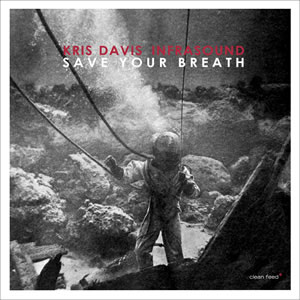
Composer and pianist Kris Davis, over the past 12 years since her debut CD appeared on Fresh Sound New Talent ("Life Span"), has grown in ways one might not have expected. Her solo piano recordings reveal an artist always searching for new ways to express herself, the Trio dates find her and rhythm section avoiding cliches, and her work with Ingrid Laubrock and Tyshawn Sorey in Paradoxical Frog is indescribably audacious. Her arrangements for Tony Malaby's 2011 recording "Novela" (where she worked with 4 reeds, 3 brass, drums and piano, set the stage for her new project "Infrasound" an octet that features 4 clarinetists (Ben Goldberg, Oscar Noriega, Joachim Badenhorst, and Andrew Bishop), guitarist Nate Radley, organist Gary Versace, drummer Jim Black, and her piano. There is a video on Ms. Davis' website that tells the story behind the group and recording (watch it here) - the octet had not worked together as a unit until the night before its first gig and went into the recording studio the day after the gig!
That written, her new recording - "Save Your Breath" (Clean Feed Records) - is a tribute to the talent of the musicians, to her arrangements, to her music that allows the ensemble to explore textures and rhythms, to the way silence and noise are a part of the mix and to how the lower reeds (bass clarinets and contrabass clarinets) are utilized. Opening with "Union Forever", which slowly moves towards a melody not unlike the chorus of "The Battle Cry Of Freedom" but not before introducing all the musicians. Black is often the spark plug, punching and jabbing, goosing the band forward. After the band drops out, a lonely clarinet plays above tolling piano chords. Davis' arrangement also has the organ moving in and out the mix, Versace's burbling lines adding a different flavor to the music. Is that accordion on the introduction of "Always Leave Them (Wanting More)", it's ethereal high notes drifting above the piano and increasingly powerful drums. Radley's guitar serves a similar purpose to the accordion, weaving in and out of the sounds from the reeds and the powerful piano chords. Slowly, the piece builds with the drums and piano in a fiery interchange while the clarinets keen quietly. Suddenly, the piece falls into a soulful rhythm for Noriega's powerful solo. "Whirly Swirly", which first appeared on Ms. Davis' 2014 Trio CD "Waiting For You To Grow", is a vehicle for Radley's hard-edged solo, over a bass line from Versace and rampaging drums. The piece stops on a dime and becomes extremely quiet, organ swirls and clarinet phrases nearly inaudible unless you sit still. When the band returns, Badenhorst's roaring clarinet is front-and-center over a chordal pattern not unlike a Black Sabbath tune.
The title song closes the program. The longest track (14:50), the sound rarely rises above a whisper, the instrumentalists stepping up and then fading out. Yet it's not an afterthought or an epilogue. Look at the cover photo - the music describes what to must be like to be underwater, to be standing on the ocean floor connected to the world above by ropes, breathing air from a tank, the only sounds being your breathing and whatever is going on in your mind. Each voice in the ensemble contributes to this adventure and it's makes for absorbing listening.
"Save Your Breath" has moments of great beauty and harsh noises ("The Ghost of Your Previous Fuckup" offers much of the latter without ignoring the former), often moving with great force and determination. Considering the time the octet had to rehearse, perform, and record, this is incredibly fine music. I can imagine how pieces could get stronger with more performances (alas, only 2 European dates on Ms. Davis' website) but this recording is mighty good. For more information, go to www.krisdavis.net.
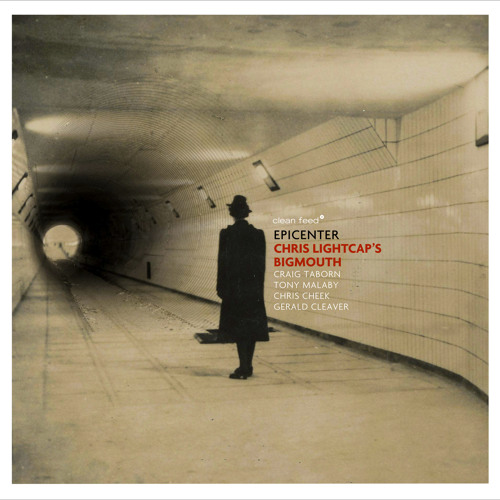
Bassist/composer Chris Lightcap is a busy musician, currently working in the groups of violinist Regina Carter, guitarist Joe Morris, drummer Matt Wilson, saxophonist Chris Cheek and pianist Craig Taborn. The last 2 mentioned are also members, along with tenor saxophonist Tony Malaby and drummer Gerald Cleaver of the bassist's quintet, Bigmouth. He named the group after the title of his 2003 Fresh Sound New Talent recording which featured a song of the same name. "Epicenter" (Clean Feed Records) is the ensemble's new recording, Lightcap's 4th as a leader since 2000, all of which feature a 2-saxophone lineup (the 3rd CD added alto saxophonist Andrew D'Angelo for several tracks). Malaby and Cleaver have been in the group since its inception with Taborn joining as the 5th member in 2005 and Cheek replacing Bill McHenry before 2010's "Deluxe" recording (also on Clean Feed).
photo by Nada Zgank
The majority of the music on the new recording is the result of a commission (and grant) from Chamber Music America. The composer created a suite titled "Lost and Found New York" - it's a musical documentary of his move to New York and his experiences over the past 15+ years. The 8-song program (interesting how all 4 of the bassist's recordings have 8 tracks) opens with the forceful "Nine East", its insistent electric piano figures dancing beneath the whirling saxophones. As the soloists step up, Lightcap keeps that musical figure alive while Cleaver pushes forward. The bassist then overdubs several acoustic guitars for "White Horse", the horns and organ moaning in the background while the melody moves around them. The title track opens to reveal a melody influenced by Ornette Coleman then into a muscular bass solo, an exciting piano solo and then both Malaby and Cheek solo. There's is only a short ensemble before the piece reaches its conclusion. The evocative "Arthur Avenue" speaks of warm summer nights strolling the streets while "Down East" (and its 1950's style 2-handed piano chords) has the saxophonists wailing like r'n'b players "walking the bar". The rhythm section lays down a seductive rhythm for "Stillwell"; after the electric piano introduces the chordal structure, the saxes plays a melody that sounds inspired by Adulah Ibrahim's soulful South African music. Slowly, the intensity picks up through the various solos until the drums bring the listener down to silence. There's tenderness in the quiet figures played by the saxophonists behind the rhythm section on "Stone By Stone", like a persistent gentle breeze. The music steadily opens up but never loses that tender quality.
The program closes with a raucous reading of Lou Reed's "All Tomorrow's Parties", a nod to the halcyon days of the late 1960s and a city that does not exist anymore. Taborn pounds the keys of the acoustic piano, the saxophones play the plaintive melody, the bass throbs next to the pounding of the drums. The music fades on the insistent piano chords, jangling like the composer's guitar often sounded but nodding to the trance-like figures of the early music of Terry Riley.
The music on "Epicenter" is built on the strength of the elemental drum patterns (which open up and settle down so organically), the strong melodic bass lines, the incredible motion of the keyboards and the praying, braying and soothsaying nature of the 2 tenor saxophones. Chris Lightcap's Bigmouth opens wide, pulling at the listener to pay attention and enjoy how his songs describe his adopted home. For more information, go to chrislightcap.com.
Here's the title track:
The new CD from tenor saxophonist Doug Webb, "Tripl3 Play" (Posi-Tone Records, is a treat from the handsome opening notes to the hair-raising riffs that bring the program to a close. In between, Webb and fellow tenor men Walt Weisskopf and Joel Frahm swing, bluster and carouse their way through a set that literally roars out of the speakers. A good portion of the excitement can be attributed to how the trio interact and push each other into a fiendish yet friendly competition. Also, one must give a lot of credit to the rhythm section of Brian Charette (organ) and force-of-nature that is drummer Rudy Royston for how they make sure the fires are always stoked.
There's nary a ballad to be found in the 60-minute run. In fact, the music goes from swinging to burning and beyond. Tunes such as "Avalon", "Giant Steps" and the title track hit the ground running and never let up. There's also a heady dollop of blues on tracks such as Randy Aldcroft's "Your Place or Mine" and Lou Donaldson's "Alligator Boogaloo." Try to sit still listening to Lanny Morgan's "Pail Blues" or Weiskopf's "Three's a Crowd" - impossible! Webb makes sure everybody gets heard therefore the solos are often short. Yet, the results are not inconsequential. Sure, this is a "blowing session" yet there is great respect for the music, for the tradition and for keeping the listener satisfied. To find out more about the saxophonist, go to www.dougwebb.us.
Here's the opening track:
California native John O'Gallagher (alto saxophone) is a busy musician, working and recording with drummers Owen Howard and Jeff Williams, trumpeter Ralph Alessi, pianist Frank Carlsberg and a host of big bands. "The Honeycomb" (Fresh Sound New Talent) is his 9th as a leader and a return to the trio format, the 4th CD he has released with just bass and drums. These 8 tracks feature the magnificent voices of Johannes Weidenmuller (bass) and Mark Ferber (drums); they are equal partners in this venture, often engaging in conversations as he moves through a solo. The opening cut, "Uroboros" (named for the mythical serpent that eats its own tail) is one of several pieces that may remind you of the work that another brilliant alto saxophone, Henry Threadgill, produced with Steve McCall (drums) and Fred Hopkins (bass) in Trio Air. The music twists and turns, with both the saxophonist and drummer using the bouncing bass lines as a springboard for their inventions. "Petulant Snoot" comes in on quiet bass lines and splashing cymbals with a melody that suggest blues. After several times through that melody, the energy picks up and O'Gallagher rides the fiery drums and the foundational yet freewheeling bass lines. Yet, this is no ordinary "blowing session" in that every track has both a well-constructed melody and a well-defined foundation. The fun of the listening experience is hearing how the musicians work within and outside of the structure. "Kerberos" (named for a computer authentication protocol) has an incredibly funky beat, spilling forward on the power of the drums and alto sax. Even the excellent bass solo picks up on that energy.
"Go Where You Are Watching" is a quiet piece, with fine brush work throughout, plus a saxophone solo section where Weidenmuller not only sets the pace but also plays counterpoint. O'Gallagher's lines are longer here, tones are sustained and there are delightful moments (just a few) when the sax and bass play the same notes. The title track has a slippery rhythm, starts slowly and then takes off like a race car, the saxophone solo a blizzard of rapid-fire lines that fly over the propulsive rhythm section (Ferber matches the leader's energy!)
By the time one reaches the final track, the powerful "Turducken", the seduction is complete. Those people who love creative music, enjoy how musicians create a group sound while maintaining their own "voice", how pieces can have structure and "freedom" built into its performance, should really enjoy "The Honeycomb." The music created by the John O'Gallagher Trio absolutely shines and is a powerful reminder that the best recordings are the ones where you hear the musicians "play" and not work. To find out more, go to www.johnogallagher.com.

 Posts
Posts