There are many listeners of contemporary music no matter the genre are usually looking for spiritual uplift. Listeners say they love technical prowess or "new" sounds but what makes us return to music is how it moves us. Music is a "full-body experience" – for this listener, it usually starts with moving my feet, then enters into my brain, and finally into my heart. If it feels "real nice", play it twice. That's why I like the music of John Coltrane, of McCoy Tyner, Muddy Waters, Howlin' Wolf, Bill Withers, Bruce Hornsby, Bonnie Raitt, and others. And Anthony Branker. His music often makes one think, his titles lead one to investigate Black experiences and history, and his rhythms often bring you up out of your seat. Over the course of 10 albums, all released by Origin Records, he's assembled some of the best musicians, given them music to sink their creative teeth, and a created a lot of memorable performances.
Given the overt political nature of a good number of his albums (2013's "Uppity", 2014's, "The Forward (Towards Equality) Suite", and 2023's "What Place Can There Be for Us"), Dr. Branker's 10th album (and third with his group Imagine), "Songs My Mom Liked" takes a different tack. His 88-year old mother (she turns 89 on June 27) has been dealing with the ongoing effects of cognitive dementia. Dr. Branker has been driving her to appointment and elsewhere playing his albums in the car. His mother responded so positively to certain songs that he began to collect a group of them, rearranging them for this septet that features Fabian Almazan (piano), Linda May Han Oh (bass), Rudy Royston (drums), Pete McCann (guitar), Phillip Dizack (trumpet), Donny McCaslin (tenor and soprano saxes), and Aubrey Johnson (voice). Nine of the 12 songs are from Dr. Branker's earlier albums and none recorded by this particular group.
With different "voices" and approaches to the material, this program is brimming with energy, imagination, and joy. Right out of the gate, "Praise" jumps out of the speakers powered by the rhythm section with Royston's drums front and center. This is McCaslin's first recording with Dr. Branker and he shines throughout the program. Listen below to "Sketches of Selim" to hear how he and trumpeter Dizack interact and build off each other's solo. Fabian Almazan also brings a heightened sense of urgency to each one of his solos while his work as part of the rhythm section is a delight. The rollicking "The House of the Brotherhood of Black Heads" takes off at a blistering pace with Ms. Oh and Royston furiously pushing the group forward. Each of the soloists (Dizack, Almazan, and McCaslin) rides the rhythmic waves, sometimes behind the beat but mostly enjoying the frenetic drive. Later in the program, "To Be Touched (By the Spirit)" gives the listener an insight to one of the composer's touchstone influences; the power and glory of McCoy Tyner. Almazan's incredible solo stands out flowing out atop Royston's stunning drum work and the foundational bass playing. McCaslin comes roaring out out of the piano solo feeding the percussive fire even as his lines raise higher and higher. A richly melodic and percussive bass solo leads the band back to a quick reiteration of the main theme.
Aubrey Johnson is heard on "Three Gifts (From a Nigerian Mother to God", her lovely wordless solo reading of the theme opens the piece before Dizack and the band enter to repeat the theme. She can be heard in the background singing in unison with McCaslin's tenor. She drops out for the solos but returns to sing the melody and, later, counterpoint, in the background.
One of the other highlights is the trio version of "Imani (Faith)" with Ms. Oh and Royston laying down a reggae beat for McCaslin's tenor to soar and roar atop. The bass solo stands out for its melodic reach and bluesy intent.
Pete McCann performs on a couple of tracks including "When We Said Goodbye", where he states the handsome melody while producing a rippling solo supported by the responsive rhythm section. McCaslin builds off the energy of the guitar solo for his own splendid spot.
The album closes with the one song not composed by Dr. Branker. "If..." was composed by his daughter Parris at the age of 11! The proud father arranged the piece for the group with McCann replacing Dizack. It's a high tempo, high spirited conclusion to a most excellent program.
"Songs My Mom Liked" is a treat from start to finish. The excellent septet of musicians transform the 12 songs in the program into living representations of Dr. Anthony Branker's spirit, beliefs, and desire to communicate through music. There are moments where one hears the spirit of Art Blakey's Jazz Messengers, the fire of Max Roach, the cool burn of Miles Davis, the spirituality of John Coltrane and McCoy Tyner, and the Caribbean roots of his family (Trinidad and Barbados). These songs are glorious prayers to the power of belief, love, family, hope, and music. All of Dr. Branker's albums are recommended, all are excellent: "Songs My Mom Liked" is, arguably, the best he and his groups have yet produced.
Zacc Harris is a MInneapolis, MN-based guitarist and composer who is active as a leader, co-leader (Atlantic Quartet), sideman, and educator. His sextet, the Zacc Harris Group, has just issued its second album, "Small Wonders" for Shifting Paradigm Records. The ZHG consists of the leader (electric guitar, compositions), Brandon Wozniak (tenor sax), Bryan Nichols (piano), Chris Bates (bass), JT Bates (drums), and the newest member John Raymond (trumpet, flugelhorn) who joined some years after the debut album. On initial listenings, one can hear the influences of Pat Metheny and Lyle Mays; when one digs deeper, you can hear the "openness" of the late Kenny Wheeler's sound as well. Pieces such as "Sundials"(listen below) and "Civil Dawn" bear witness to those influences (splendid trumpet work on the latter plus a stunning unaccompanied piano solo) while "A Beautiful Life" with its tender melody, point to new directions. Nichols's piano work is integral to keeping the music flowing throughout the album. Raymond's flugelhorn stands out on "Glass Houses" as does Wozniak's tenor sax stroll through the gardens created by the rhythm section. Meanwhile, the rhythm section burns red-hot on the hard-bop romp "The Void" plus create a New Orleans-groove on "Apple Jacks". The latter tune opens up so the tenor and trumpet can have a sweet exchange and the guitarist have a series of playful interactions with the rhythm section.
The nine-song program closes with the lovely ballad "Maya's Song". Dedicated to Harris's daughter, the music feels as if it was composed while the guitarist was watching his daughter sleeping, imagining her dreams, and hoping for a peaceful future. The piano accompaniment is a perfect counterpoint to the leader's lines. Nichols's solo also has a dream-like quality accentuated by the quiet brushwork and simple yet effective bass lines.
"Small Wonders" is big on melody, intelligent arrangements, and powerful as well as thoughtful solos. Check out the Zacc Harris Group ––much to enjoy!
There is not a lot of information on the webpage of guitarist and composer Chris Olson, who along with bassist Chris Bates and drummer Jay Epstein make up the trio know as Framework. Their new album, "Cognitive Dissonances", is the trio's first for Shifting Paradigm and its first recording in over a decade. Featuring 11 Olson originals, the music covers a wide swath of musical territory. Opening and closing with two takes of "New Anthem", the attentive listener can hear how the trio develops material. Version one refers a bit to Jimi Hendrix in the opening seconds and then falls into the melody Americans sing at the ballparks, stadiums, hockey rinks, and elsewhere. Bowed bass and splashing percussion support the melody, played mostly using chords by the guitar. The "alternate take" that closes the program is fairly similar, not as noisy but still played somewhat like a dirge.
In between those two tracks is a fascinating collections that spotlight the excellent group communication, Olson's fine melodies, and his spirited guitar playing. Bates and Epstein are right in there with the guitarist, pushing and prodding him needs be or strictly building the foundation to frame his melodies and improvisations. "Hitchens" rolls forward with guitars coming out of both sides of the speakers while the melody is in the middle of the sound spectrum. "Dawkins" gives bassist Bates a chance to step out and he leads the group forward on the strength of his thick tone and melodic prowess. There's a wistful quality to the guitar work on the ballad "Changes We Can Believe In" but a bit of grunginess makes its way into Olson's guitar tone before the bass solo returns to the opening feel.
Framework can swing ("Bluetrois"), can deliver a delightfully melodic waltz ("Pre-Conceived Notion"), and they can create aural waterfalls ("Tortured Thoughts") –– some of the song titles don't necessarily easily fit the songs but the trio's musicality will win you over. "Cognitive Dissonance" does not describe how good and ultimately satisfying this music is (well, it does go a long way to describe the mood of "New Anthem"). Titles aside, this is quite an enjoyable album!
Many musicians used the pandemic to create new work, to hone new skills, and to find new ways to express themselves in a most uncomfortable. It's possible Scott Reeves (valve trombone, alto flugelhorn, electronics) did all those things but he also went through his archives. When he did, Reeves listened with fresh ears to a 2005 live gig he recorded at City of College of New York with Russ Spiegel (guitar), Mike Holober (piano, electric piano), Howard Britz (bass), and Andy Watson (drums). Now, pleased by the overall quality of the musicianship and sound, the musician/ composer passed
the tapes on to his label, Origin Records, and they released the album as "The Alchemist". The music does not at all sound dated –– in fact, the music feels fresh and often exciting. One can hear a link from several pieces to the music Miles Davis created for "Nefertiti" and "Filles de Kilimanjaro".
The Davis influence is evident on the opener, "New Bamboo". The ringing tones of the Fender Rhodes mixed with the electronically altered trombone also hearkens back to Herbie Hancock's later Blue Note recordings. Reeves switches to alto flugelhorn, Holober to acoustic piano, for "Shapeshifter", a medium tempo flowing piece that includes a potent drum solo. "Without a Trace" is a lovely ballad with a soft melody played by guitar and trombone. The leader's solo is wistful, as if you can hear him ruminating about a person who has gone. Spiegel produces a handsome solo but pay attention to howe Holober, on acoustic piano, responds. Britz, who is also an accomplished pianist, plays a short yet melodic solo. "Remembrances" is another fine ballad with fine solos from Reeves (flugelhorn), Spiegel, and Holober. "The title track grooves atop the percolating electric piano and the raucous drums. Trombone and guitar play the head that opens to Holober's playful solo and a hard-edged trombone spot.
That playfulness is also evident on the funky take of the standard "All or Nothing at All". The feel modulates from funk to straight-ahead and back to funk. It's a delight hearing the Quintet playing around. That's true throughout "The Alchemist" –– Scott Reeves and company sound like they having such a great time and the audience shows its appreciation for every solo and song!
Nowadays, music comes from everywhere, from artists around the world. Two of the three groups reviewed below are transatlantic in composition while one is from a group of musicians based in Chicago but with international experience.
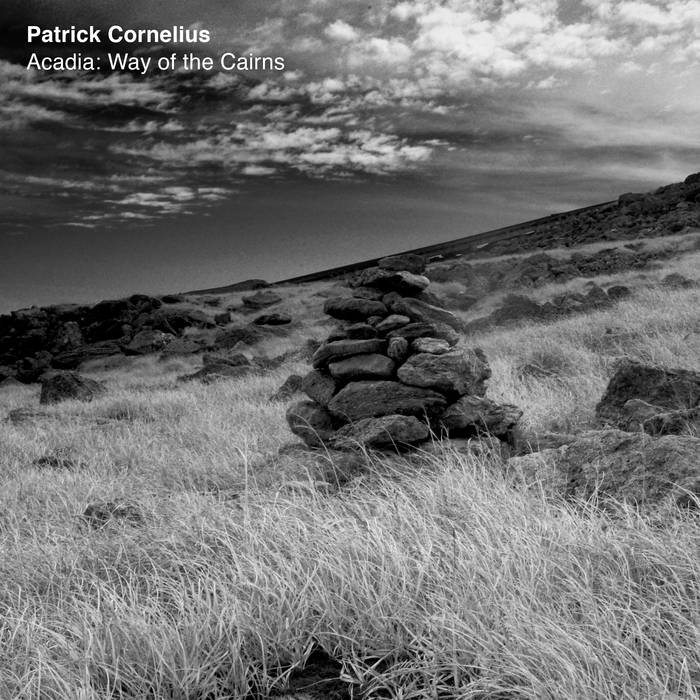
It's been 12 years since alto saxophonist and composer Patrick Cornelius recorded with the Transatlantic Collective. Composed of Cornelius, bassist Michael Janisch, Estonian pianist Kristjan Randalu, and drummer Paul Wiltgen (from Luxembourg, that band spent the better part of four years recoding and touring. Janisch and Cornelius stayed in touch; in fact, the Wisconsin-born bassist, head of Whirlwind Recordings (and now a resident of London England), has released three of Cornelius's albums as a leader. The saxophonist reached out to his three friends with a new project, music inspired by Maine's Acadia National Park; they gathered in England, rehearsed, played several gigs, entered the studio, and emerged with a new album. The result is "Acadia: Way of the Cairns" (Whirlwind), a delightful suite (seven pieces by Cornelius, one each for Randalu and Wiltgen) that sparkles and shines from beginning to end. The group has now been dubbed Acadia after this project,
First thing one should notice is how clean and clear the sound––you can hear all four musicians without an issue. Janisch's bass playing is particularly strong; he is the first soloist on the opening title track, his melodic lines and thick tone set the pace for the band. The skipping rhythms of "Blueberry Mountain" are propelled forward by Wiltgen with a touch of hip hop in his attack. Note how Cornelius dances over the rhythm section plus Randalu's short but dazzling solo that starts low in his left hand, gleefully darting up the keyboard. The rhythmic attack on this tune as well as the opening moments of "On The Precipice" features echoes of pianist Keith Jarrett's European Quartet with Jan Garbarek, Jon Christensen, and Palle Danielson. The powerful "Darkest Night" is in the middle of the program, introduced by the circular piano lines with the bass introducing the main melody before Cornelius introduces the second part of the theme. The saxophonist's exciting solo is underpinned by the heft of the piano chords.
Randalu introduces his composition "Valse Hésitante" with a lilting melody before the saxophonist joins in counterpoint. There's a touch of Erik Satie in the gentle melody as well as the opening phrases of the piano solo. Check out the formal sound of the saxophone solo, almost as if this was a recital. The drummer's contribution, "Ten Years Later", might refer to the band's extended hiatus. The ballad, which closes the program, is a finely constructed piece in which all four musicians move the melody forward. Cornelius steps out for a short, soulful, solo that closes on a bluesy return to the original melody.
"Acadia: Way of the Cairns" moves with purpose, style, energy, and soul. Patrick Cornelius writes to the strengths of his musical partners and they respond in kind. This music pulls the listener, leaving one satisfied but ready to dig right back in. That's what the best music does!
Greg Osby (United States: soprano and alto saxophones) and Florian Arbenz (Switzerland: drums, percussion) have played together for over 22 years, playing concerts in Europe and the United States. "Reflections of the Eternal Lines" (Hammer Recordings) is their first duo recording but they have recorded together before with the drummer's cooperative trio VEIN. This album was inspired by the paintings of Swiss artist Stephan Spicher, whose workshop was the host for the recording. The pieces, composed by the drummer, run the gamut from the hard driving "Groove Conductor" to the dancing rhythms of "Wooden Lines" to the quiet kalimba/ soprano sax piece "The Passage of Light" (which has the feel of a ballad by Billy Strayhorn). The mysterious "Chant" rumbles forward on the sounds of a gong, orchestra bells, and cymbals while Osby creates a lovely melody.
Black American Music has had a number of fine saxophone/ drums duos; examples include John Coltrane and Rashied Ali ("Interstellar Space"), Max Roach with both Anthony Braxton and Archie Shepp (for Hat Hut Records), plus Dewey Redman and Ed Blackwell. "Reflections of The Eternal Line" will remind you of those albums yet has its own beauty and mystery. The duo of Greg Osby and Florian Arbenz recorded alongside Stephan Spicher (see and hear below), each artist inspired by the others. Sit down, turn the speakers up loud (or wear head phones), and the sounds create paintings in your mind. What an aural treat!
The city of Chicago, Illinois, reverberates throughout "Forward", the new album by trumpeter/ flugelhornist Chad McCullough. It's his debut on Outside In Music and features a stellar cast of Windy City regulars including pianist Rob Clearfield, bassist Matt Ulery, and drummer Jon Deitemyer plus, on three of the six tracks, Ryan Cohan (keyboards, programming, co-producer). The program, all McCullough originals, features three quartet pieces and three that add Cohan to the mix. First time through, one can hear the influence of the late Kenny Wheeler, especially in the open-ended nature of the music and performances––Cohan's synthesized strings actually add to the airiness, giving an ethereal feel to "Oak Park", a symphonic grandeur to "Grave at the Gavel or Grace at the Gallows", and a winter-like atmosphere to "Water Tower Sunset."
Like Wheeler, McCullough does not dominate this music, allowing the rhythm section to set the tone of each piece. If you have paid any attention to Rob Clearfield, you'll know he's one of the most lyrical pianists on the scene. Not only does he create a solid foundation for the trumpet to ride on but he also creates space for Ulery and Deitemeyer to move independently––you'll hear that on pieces such as "Gentle" and the fast-paced "Focal Point." On the latter piece, the rhythm section plays with great energy and purpose––Clearfield dominates the first several minutes, engaging in a musical conversation with the bass and drums that is exhilarating. McCullough picks up on that energy, creating his own dialogue with the group.
Photograph: Roberta Ciprus
If you have any familiarity with the city of Chicago, several of the songs will create a mental picture of the city. "Oak Park" is where Frank Lloyd Wright, "November Lake" will remind you of the breezes off Lake Michigan that make you catch your breath, and "Water Tower Sunset" will posit one in the bustle of North Michigan Avenue.
What impresses most about "Forward" is how the music, whether the pace be slow or fast, is so alive with ideas, melody, and sense of purpose. At this time, when music is one of the few ways to "travel" safely, Chad McCullough has created a journey that is emotionally uplifting and ultimately satisfying.
Here's a taste of "Grace at the Gavel or Grace at the Gallows":
Chad McCullough, with Jon Deitemyer, Matt Ulery, pianist Paul Bedal, and synth artist Paul Mutzabaugh, played an "Album Release Concert" in mid-October (two weeks ago, as of this writing) at the Fulton Street Collective in Chicago. Below is an excerpt of the full show, the lively "Focal Point":
It's an honor being asked to participate in a Critics Poll, fun going back and listening to albums that you really enjoyed writing about, and downright nerve-wracking trying to pick 10, especially in a year where so many good recordings crossed my desk.
2016 was a very busy year in my life and a quick glance at the number of posts over the past 12 months is evidence that I did not have as much time to sit, to listen, to contemplate, and to write. Connecticut is a small state with a decent amount of venues for live music but, due to numerous obligations, I rarely took the opportunity to just bask in the glory of watching and listening to musicians create, interact, to give of themselves, to transport listeners beyond the mundane and into worlds of endless possibilities. The albums listed below (and in subsequent posts) are the ones that made days special, that made me think, helped me see the "real" world in a different light, and gave me great joy.
As one gets older, it's often tough to find joy when the world is in such upheaval. Music not only gives us a haven from the daily insanity but, like poetry, theater, books, film, sports and more, also sheds light on the issues we should not, cannot, and often ignore.
Here's Part One:
Camila Meza - "Traces" (Sunnyside Records) - This recording, issued in late Winter, is utterly delightful. Not only is Ms. Meza a fine vocalist but this recording illustrates what a good guitarist, arranger, and band member she can be. Her group - Shai Maestro (keyboards), Matt Penman (bass), Kendrick Scott (drums), Bashiri Johnson (percussion), Jody Redhage (cello) and guest vocalist Sachal Vasandani - creates sounds that make each one of these songs stand out. In February, I wrote "Chances are good you will not hear a better CD this year." That statement, for me, still stands. (Ms. Meza is also a member of trombonist Ryan Keberle's group Catharsis whose 2016 album appears in Part Two of this list).
Billy Hart & The WDR Big Band - The Broader Picture (ENJA/Yellowbird) - Arranged and conducted by Christopher Schweizer, this album is a knockout from beginning to end. Mr. Hart, who is most often heard in quartets ands quintets, is right at home pushing and prodding a large ensemble, especially one as talented as the WDR Big Band. This album gives us the opportunity to hear the drummer's compositions in a different light and, golly, do they ever sound good. Great drumming, impressive compositions, sparkling arrangements, and powerful solos, all add to a splendid album.
Here's a nice long track to enjoy:
Anthony Branker & Imagine - Beauty Within (Origin Records) - Dr. Branker is a composer and arranger who has been involved with music as a musician, conductor, and educator for over three decades. His CV is deeply impressive (read it here) and his music keeps getting stronger. It's political and topical in the manner of Charles Mingus and Max Roach and this particular quintet of musicians - Fabian Almazan (piano, Pete McCann (guitars), Ralph Bowen (tenor and soprano saxophones), Linda Oh (bass), and Rudy Royston (drums) - play with such fire and finesse that this music is alive and powerful, lovely and emotionally strong.
Greg Ward & 10 Tongues - Touch My Beloved's Thoughts (Greenleaf Music) - The story of how this music came to life is quite fascinating (read it here); suffice to say, it's origins lay in saxophonist and composer Ward listening to Charles Mingus's "The Black Saint and the Sinner Lady" (1963). Ward's work for 10 musicians, created for a concert of music and dance, is filled with blues, sparkling solos, and intelligent arrangements that spark comparison to Mingus's work in its scope but does not imitate it. Especially impressive is the piano playing of Dennis Luxion and the rhythm section of Jason Roebke (bass) and Marcus Evans.
Patrick Cornelius Octet - While We're Still Young (Whirlwind Recordings) - Saxophonist, flutist, composer, and arranger Cornelius created this fine recording as a musical response to the stories of A.A. Milne that he was reading to his children at bedtime. With an impressive band - John Ellis (tenor sax, bass clarinet), Jason Palmer (trumpet), Nick Vayenas (trombone), Miles Okazaki (guitars), Gerald Clayton (piano), Peter Slavov (bass), and Kendrick Scott (drums) - and a smart group of compositions, this album features music that is contemplative yet swings, with musicians telling "stories" that flow thanks to the fine ensemble arrangements and individual solos. My review (read it here) includes quotes from both Cornelius and co-producer Kyle Saulnier. For more information, go to www.patrickcornelius.com. Here's one of the delightful tracks:
These are just five of my favorites - more to come in the next several weeks. Enjoy!
Alto saxophonist, composer and arranger Greg Ward, perhaps best known for his work with drummer Mike Reed's People, Places & Things band, has created a soundtrack for a new dance piece choreographed by Onye Ozuzu. The two artists, both based in Chicago, were invited to create a new, inter-disciplinary, work for the 2015 "Made In Chicago: World Class Jazz" series held in Millennium Park. Role Schmidt, executive director of the Chicago performing arts center Link’s Hall, had heard "The Black Saint and The Sinner Lady", the 1963 classic from Charles Mingus, and thought the 39-minute piece would be perfect for a new adaptation Once Ward heard the Mingus music, he felt that a new work created on the various musical concepts Mingus used would be better for his vision. Although the earlier work features an 11-member ensemble, Ward wrote his music for 10 instruments. Nevertheless, both pieces are written for dance (although the older work was not created for a specific dance troupe) and need the wider palette of sound.
Chicago Reader
The new work, titled "Touch My Beloved's Thoughts" (Greenleaf Music, is credited to Greg Ward & 10 Tongues. He's assembled a talented ensemble that features Tim Haldeman (tenor saxophone), Keefe Jackson (tenor and baritone saxes), Ben LaMar Gay (cornet), Russ Johnson (trumpet), Norman Palm (trombone), Christopher Davis (bass trombone) plus the rhythm section of Dennis Luxion (piano), Jason Roebke (bass) and Marcus Evans (drums). Both the choreographer and the composer are influenced by Mingus's choice of source material, his use of blues, folk music and world music (today, we might dub this music "Americana") and his fearless nature. "Black Saint..." shows the influence that Charlie Parker, Max Roach, and Dizzy Gillespie had on Mingus's composing (he admits so much in his copious liner notes) but one must also note the effect that Duke Ellington had on the bassist.
One should listen to "Touch My Beloved's Thoughts" all the way through each time. One can marvel at the arrangements, how the composer/arranger shares the melody among the participants, how the solos naturally rise out of the music, how each musician's voice counts, and how the ensemble gels in front of a live audience (the music was recorded at Constellation in Chicago). You do not need to see the dancers to enjoy the way the songs connect. Ward's alto soars on the opening cut, "Daybreak", yet he makes sure to step back to the ensemble so that the phrase that the reeds and brass play can lead in to "Singular Serenade", a handsome piano spotlight for Luxion (whose career includes recording and tours with trumpeter Chet Baker.) The pianist is also featured on the next track, "The Menacing Lean", an up-tempo bolero where he not only solos but has several interactions with the brass.
allaboutjazz.com
The blues is so very important to the music. Tracks such as "With All Your Sorrow, Sing a Song of Jubilance", with its heartfelt bass trombone solo from Davis (he carries the melody as well), the sweeping sectional work, powerful piano fills, and the gentle touch of the bass and drums. Ben LaMar Gay's muted cornet solo on "Dialogue of the Black Saint", which comes after Roebke's powerful bass solo and the heated opening theme, is wonderfully impressionistic; you can almost see the dancers bending and moving with his exciting work.
The program moves in many directions all the way, building to the powerful final track, "Gather Round, the Revolution Is At Hand" with its martial drumming, bouncy bass line, and excellent solos from Russ Johnson as well as Ward. The leader traverses over fascinating territory while also sharing variations of the melody with the piano and the other reeds plus the counterpoint of the brass and the powerful drumming of Evans (a longtime member of flutist Nicole Mitchell's Black Earth Ensemble). It's a stunning close to a splendid work of art.
Though this is only his third album as a leader and first with a large ensemble, Greg Ward shows a distinctive voice as a composer (also, he has written for dance troupes before). Yes, there's a Mingus connection to "Touch My Beloved's Thoughts" but, because Ward utilizes some similar approaches, this piece does not feel overly derivative. In fact, this music sounds quite fresh.
Scott Reeves, composer, arranger, flugelhorn and trombone player, is a Professor of Music on the faculty of the City College of New York. He's also worked with the big bands of Dave Liebman, Chico O'Farrill, Oliver Lake, and Bill Mobley. He has released four albums as a leader, all with ensembles of seven or less. "Portraits and Places" (Origin Records) is how fifth recording and serves as an introduction to the Scott Reeves Jazz Orchestra, a 17-piece ensemble with five reeds, five trumpets or flugelhorns (Reeves plays alto flugelhorn), four trombones, plus piano, bass, and drums. Reeves wrote the bulk of the material in his time with the BMI Jazz Composer's Workshop, working with such fine arrangers as Manny Albam, Mike Abene, Jim McNeeley, and Mike Holober.
In the liner notes to the new album, Reeves gives thanks to most of the people listed above plus Duke Ellington, Kenny Werner, Bob Brookmeyer, David Baker, Gil Evans, and Thad Jones. When you listen to this 8-song program, you'll hear many of this influences, especially Thad Jones. His 50-year old (and going strong today as The Vanguard Jazz Orchestra) ensemble that he started with drummer Mel Lewis was a proving ground for McNeely and Werner as well as a return to form for Brookmeyer. In his music, Reeves has fun with the various sections of his Orchestra, writing melodies that often leap from one to another. You'll hear that on "3 'n' 2", a barn-burner that serves as a showcase for the strong tenor sax work of Tim Armacost and the bright tone of Bill Mobley's trumpet. But listen to the powerful drumming of Andy Watson (Jim Hall, Toshiko Akiyoshi), the chordal contributions of pianist Jim Ridl, and the foundational bass work of Todd Coolman. The blues is a big part of this music. The album opens with "The Soulful Mr. Williams" (composed of the late pianist James Williams), a medium-tempo stroll with references to "A Love Supreme" from the leader on his alto flugelhorn solo and in the chordal structure. Yet, listen to how sections call-and-response before Ridl's dancing piano solo. The blues is also the powerful force behind the final track, the aptly-titled "Last Call." Here, the solos go to the low tones of bass trombonist Max Seigel (Roy Hargrove Big Band, Lincoln Center Jazz Orchestra) and baritone saxophonist Terry Goss (NY Jazz 9) plus the plunger talents of trumpeter Seneca Black (LCJO).
origin.com
The centerpiece of the recording is the three-part "L & T Suite." Dedicated to Reeves' wife Janet (a pianist), the leader weaves in thematic quotes from different composers, three of whom, Igor Stravinsky, Aaron Copland and Bela Bartok, whose work was written for a ballet - the fourth influence is Leonard Bernstein whose thematic material is from his "Symphony no. 2." Each section does have great "movement", with "Wants to Dance" moving on the strength of Watson and featuring a stunning solo from alto saxophonist Steve Wilson. "#2" or "A Trombonist's Tale" is slower, has a gentle sway heard in the sectional work as well a delightful solo from Matt McDonald (trombone, of course). The final "movement" - "Hip Kitty" - belongs to the romping reeds, powerful brass, and the bluesy piano of Ridl.
Vocalist Sara Serpa appears on two tracks, the thoughtful yet uptempo "Osaka June" with fine solos from Wilson (soprano sax) and Ridl in the midst of glorious section writing. Ms. Serpa's reedy voice is paired with the brass and it's a pleasing juxtaposition. She does get minute or so in front of the band but soon steps aside for the solos. Her soft voice stands on the pleasing arrangement of Antonio Carlos Jobim's "Aquas de Marco", singing unison with the flutes and, after the fine piano solo, is shadowed by the clarinets, returning near the end to help those flutes take the piece out.
"Portraits and Places" not only does the legacy of Thad Jones justice but continues to build upon it. If anything, the original compositions and arrangements of Scott Reeves have more structure, more of a role in the themes of the compositions, and, at many times during the album, a playful sweep and a joy about them. Open the windows and let this music fly.

 Posts