Showing posts with label Dr. Anthony Branker. Show all posts

Saturday, June 29, 2024

Inspiration, Imagination, & Intent


There are many listeners of contemporary music no matter the genre are usually looking for spiritual uplift. Listeners say they love technical prowess or "new" sounds but what makes us return to music is how it moves us. Music is a "full-body experience" – for this listener, it usually starts with moving my feet, then enters into my brain, and finally into my heart.  If it feels "real nice", play it twice.  That's why I like the music of John Coltrane, of McCoy Tyner, Muddy Waters, Howlin' Wolf, Bill Withers, Bruce Hornsby, Bonnie Raitt, and others. And Anthony Branker. His music often makes one think, his titles lead one to investigate Black experiences and history, and his rhythms often bring you up out of your seat. Over the course of 10 albums, all released by Origin Records, he's assembled some of the best musicians, given them music to sink their creative teeth, and a created a lot of memorable performances.  

Given the overt political nature of a good number of his albums (2013's "Uppity", 2014's, "The Forward (Towards Equality) Suite", and 2023's "What Place Can There Be for Us"), Dr. Branker's 10th album (and third with his group Imagine), "Songs My Mom Liked" takes a different tack.  His 88-year old mother (she turns 89 on June 27) has been dealing with the ongoing effects of cognitive dementia. Dr. Branker has been driving her to appointment and elsewhere playing his albums in the car. His mother responded so positively to certain songs that he began to collect a group of them, rearranging them for this septet that features Fabian Almazan (piano), Linda May Han Oh (bass), Rudy Royston (drums), Pete McCann (guitar), Phillip Dizack (trumpet), Donny McCaslin (tenor and soprano saxes), and Aubrey Johnson (voice).  Nine of the 12 songs are from Dr. Branker's earlier albums and none recorded by this particular group.

With different "voices" and approaches to the material, this program is brimming with energy, imagination, and joy. Right out of the gate, "Praise" jumps out of the speakers powered by the rhythm section with Royston's drums front and center. This is McCaslin's first recording with Dr. Branker and he shines throughout the program. Listen below to "Sketches of Selim" to hear how he and trumpeter Dizack interact and build off each other's solo. Fabian Almazan also brings a heightened sense of urgency to each one of his solos while his work as part of the rhythm section is a delight. The rollicking "The House of the Brotherhood of Black Heads" takes off at a blistering pace with Ms. Oh and Royston furiously pushing the group forward. Each of the soloists (Dizack, Almazan, and McCaslin) rides the rhythmic waves, sometimes behind the beat but mostly enjoying the frenetic drive.  Later in the program, "To Be Touched (By the Spirit)" gives the listener an insight to one of the composer's touchstone influences; the power and glory of McCoy Tyner. Almazan's incredible solo stands out flowing out atop Royston's stunning drum work and the foundational bass playing. McCaslin comes roaring out out of the piano solo feeding the percussive fire even as his lines raise higher and higher.  A richly melodic and percussive bass solo leads the band back to a quick reiteration of the main theme.

Aubrey Johnson is heard on "Three Gifts (From a Nigerian Mother to God", her lovely wordless solo reading of the theme opens the piece before Dizack and the band enter to repeat the theme.  She can be heard in the background singing in unison with McCaslin's tenor. She drops out for the solos but returns to sing the melody and, later, counterpoint, in the background.  

One of the other highlights is the trio version of "Imani (Faith)" with Ms. Oh and Royston laying down a reggae beat for McCaslin's tenor to soar and roar atop.  The bass solo stands out for its melodic reach and bluesy intent.

Pete McCann performs on a couple of tracks including "When We Said Goodbye", where he states the handsome melody while producing a rippling solo supported by the responsive rhythm section.  McCaslin builds off the energy of the guitar solo for his own splendid spot.

The album closes with the one song not composed by Dr. Branker. "If..." was composed by his daughter Parris at the age of 11! The proud father arranged the piece for the group with McCann replacing Dizack. It's a high tempo, high spirited conclusion to a most excellent program.

"Songs My Mom Liked" is a treat from start to finish. The excellent septet of musicians transform the 12 songs in the program into living representations of Dr. Anthony Branker's spirit, beliefs, and desire to communicate through music.  There are moments where one hears the spirit of Art Blakey's Jazz Messengers, the fire of Max Roach, the cool burn of Miles Davis, the spirituality of John Coltrane and McCoy Tyner, and the Caribbean roots of his family (Trinidad and Barbados). These songs are glorious prayers to the power of belief, love, family, hope, and music.  All of Dr. Branker's albums are recommended, all are excellent: "Songs My Mom Liked" is, arguably, the best he and his groups have yet produced.

For more information, go to www.anthonybranker.com/ – the site needs to be updated but there is still plenty to learn. To hear more and to purchase the album, go to https://anthonybranker1.bandcamp.com/album/songs-my-mom-liked-2.

Listen to "Sketches of Selim":

Wednesday, January 3, 2024

The Music that Made 2023 Special (Part 1)

 Last year was, overall, a great year for music and a stressful one for this writer. No need to go into details as my paucity of postings since the summer speaks volumes.  Nevertheless, there were numerous recordings that absolutely captivated my brain; the best of them are listed below (and in a subsequent posting).

Buselli-Wallarab Jazz Orchestra – "The Gennett Suite" (Patois Records) – Have to say this album captivated me from the opening notes to the final fade.  The BWJO tells the story of Bloomington, Indiana-based Gennett Records that, in the 1920s, was the first label to record King Oliver with Louis Armstrong, Hoagy Carmichael, Bix Beiderbecke plus Ferdinand "Jelly Roll" Morton.  Arranger Mark Wallarab does a splendid job making the music sound fresh (Carmichael's "Stardust" is a real gem) and the band, made up mostly of musicians from the Midwest, in particular Indianapolis and Chicago, plays with fervor, joy, and love.  Listen closely and you'll hear echoes of Duke Ellington, Chick Webb, Thad Jones-Mel Lewis Orchestra, and more; that makes sense as those artists and many others built their music around any and all of the artists featured on this album.

For more information, go to https://bwjazzorchestra.com

Here's Joseph "King" Oliver's "Davenport Blues":


Anthony Branker & Imagine – "What Place Can Be For Us" (Origin Records) – As I wrote when the album was released "As you should be able to tell by the title, the themes of this new collection are inclusion, immigration, belonging, citizenship, and the never-ending racism that permeates the United States."  Dr. Branker, currently on the Music Faculty of Rutgers University, continues to impress with his ability to blend music and story to illuminate the Black experience in America.  With a cracking band including Fabian Almazan (piano), Linda May Han Oh (bass), Pete McCann (guitars), Philip Dizack (trumpet), Walter Smith III (tenor sax), Remy Le Boeuf (alto and soprano saxes), Donald Edwards (drums), and the voice of Alison Crockett, Dr. Branker's music sparkles, shivers, roars, soothes, and shines throughout.  What he and the musicians should keep the involved listeners on their toes in this election.  

For more information, go to www.anthonybranker.com. To hear and to purchase the album, go to https://anthonybranker1.bandcamp.com/album/what-place-can-be-for-us-a-suite-in-ten-movements

Here is "Sundown Town":


James Brandon Lewis Red Lily Quintet – "For Mahalia, With Love" (Tao Forms) – Tenor saxophonist Lewis returns to the Red Lily Quintet –– Kirk Knuffke (cornet), Chris Hoffman (cello), William Parker (bass), and Chad Taylor (drums) –– the same group that recorded "Jesup Wagon", his tribute to Dr. George Washington Carver.  For this brilliant recording, Lewis not only pays tribute to the great 20th Century gospel artist but also to his grandmother who instilled the love of music into the young boy who was amazed by her love of the music.  Lewis and the RLQ do not play it safe, taking inspiration not only from the gospel material but from the power of improvisation as well as the work of Archie Shepp, John Coltrane, Albert Ayler, and other great tenor players who felt the fire emanating from the church music.  

For more information and to purchase the album, go to  https://jamesbrandonlewis.bandcamp.com/album/for-mahalia-with-love

Here's "Swing Low":


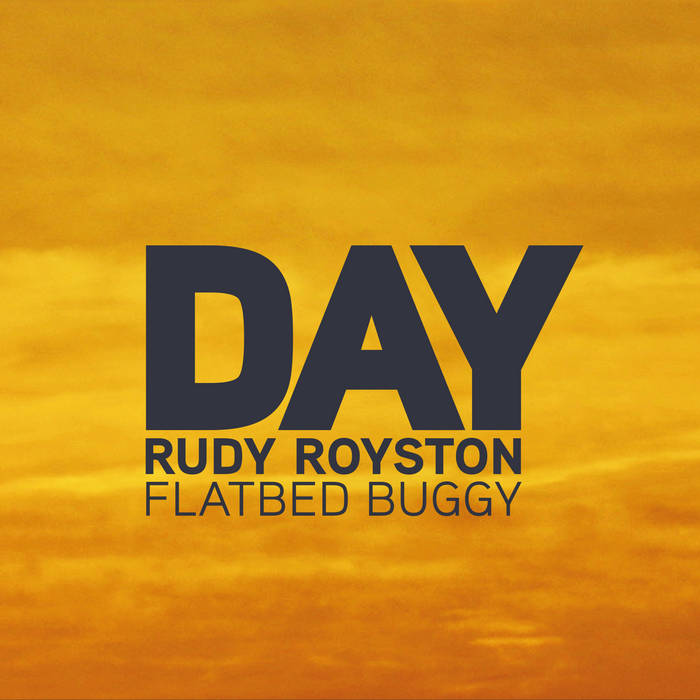
Rudy Royston Flatbed Buggy – "Day" (Greeenleaf Music) – The second gem to be recorded by drummer/ composer Royston and his simpatico ensemble composed of John Ellis (bass clarinet and clarinet), Hank Roberts (cello), Gary Versace (accordion), and Joe Martin (bass), the 10-song album is more of an "interior" album than the Quintet's 2018 debut. While still inspired by his childhood in Texas, the new album is built upon compositions that the drummer created during the pandemic with these musicians in mind. Whi]lew the music is quite impressive, the sound of this ensemble really stands out. Each instrument is distinct in the mix, each musician contributes to the success of the music, and it's a true joy to listen to these people play!  

For more information, go to  https://rudyroyston.bandcamp.com/

Listen to "Thank You for This Day":


Tyshawn Sorey Trio – "Continuing" (Pi Recordings) – Jazz piano trio fans, take notice –– here's an ensemble that has much to offer.  Drummer and conceptualist Sorey plays in so many types of settings that one might consider his albums with pianist Aaron Diehl and bassist Matt Brewer as a move back toward the mainstream. Who cares?  This is a fascinating program; four long performances of pieces by Ahmad Jamal, Harold Mabern, Wayne Shorter, and the classic standard "Angel Eyes" by Matt Dennis, each one with standout performances. Diehl shines throughout (gives this person a MacArthur Genius Grant so he can realize his full potential –– it certainly worked for Sorey) while Brewer and drummer are solid without being intrusive.  In fact, Sorey gives his bandmates plenty of solo space, rarely stepping out but always keeping the music moving forward.  The Mabern piece, "In What Direction Are You Headed", seriously kicks and is an excellent tribute to one of Sorey's mentors.  


Here's Mr. Shorter's "Reincarnation Blues":


More to follow!

Friday, March 3, 2023

"....Soul Grown Deep Like The River"


Dr. Anthony Branker is quite an accomplished person with a list of achievements that would fill this page. I spoke to him in 2017 at the time Origin Records released "Beauty Within", his seventh album of original compositions (and six issued by the Seattle, WA-based label). At that time, he had recently stepped down as the head (and founder) of the Jazz Studies Program at Princeton––he currently is Adjunct Professor at the Mason Gross School of Music at Rutgers University. I am impressed by his ability to tell stories, truths about issues such as racism, equality, spirituality, and more, writing music that sounds familiar yet can be challenging, swings yet sings. The son of Caribbean immigrants, Dr. Branker once played his music (he was a trumpet player) in venues around the world. Dr. Branker has also conducted ensembles for Terence Blanchard and Wynton Marsalis as well as orchestras in Israel, Germany, Japan, Estonia, and in the United States. 

His eighth album, "What Place Can Be For Us: A Suite In 10 Movements" (Origin), is the second recording with his Imagine ensemble, an octet built around guitarist Pete McCann, pianist Fabian Almazan, and bassist Linda May Han Oh plus Walter Smith III (tenor saxophone), Remy Le Boeuf (alto and soprano saxophones), Philip Dizack (trumpet, flugelhorn), Donald Edwards (drums), and on two tracks, Alison Crockett (vocal and spoken word). As you should be able to tell by the title, the themes of this new collection are inclusion, immigration, belonging, citizenship, and the never-ending racism that permeates the United States.  Ms. Crockett is featured on the opening track, "The Door of No Return", an episodic that blends the squalling guitar of Pete McCann, the telegraph notes from the piano, and the words of poet Beatriz Esmer. There is a powerful solo from Smith III as well as well as brilliant background arrangements.  The words hearken back to The Middle Passage (many more Black Africans were enslaved in Brazil than anywhere else on the American continent).  

Ms. Crockett returns for "I, Too, Sing America" from Langston Hughes 1926 collection "The Weary Blues".  It's a powerful work with fine piano work and a commanding solo from Smith III yet be sure to listen to how the alto sax and trumpet play a drone beneath the tenor sax and the heartfelt vocal. 

Elsewhere, there's the nervous energy of McCann's guitar solo and the wistful alto sax solo from Le Boeuf on "Indivisible", the melancholy reminiscence of "Sundown Town" with far-ranging solos from Almazan and Dizack, and the "prog-rock meets hard bop" riff on "Sanctuary City" and the crackling guitar of McCann and keening tenor sax.   


It's hard not to think of boats filled with refugees on "We Went Where Wind Took Us" but the music has more of a hopeful feel as well as fine solos from Ms. Oh and Almazan.  After a lovely solo piano introduction, "The Trail of Tears to Standing Rock" reminds us all of how the Andrew Jackson Presidency pushed Native Americans onto lands where their crops could not grow; not that succeeding US Presidents made the situation any better, creating reservations that keep them held down. Now when they fight the oil pipeline that will split their land up and subsequently cut them off from or contaminate their water supply, their protests still fall on deaf ears.  

As you should be able to tell, Dr. Anthony Branker does not shy away from controversy; instead he channels his concerns, beliefs, and his fears into music that often vibrates with urgency, compassion, commitment, and impressive musicianship.   Don't you shy away from  "What Place Can Be For Us: A Suite In 10 Movements"––instead, embrace its activism, its message, and its power.

For more information, go to www.anthonybranker.com/.  To hear more and to purchase the album, go to

Here's the ensemble playing and presenting the words of poet Langston Hughes on "I, Too, Sing America":


Vocalist and educator Christine Correa came to the United States from her native Bombay, India, in 1979––she came to attend the New England Conservatory of Music in Boston, MA, which is where she met two people who became very important in her life, pianist Ran Blake and pianist Frank Carlberg who is a frequent collaborator as well as her husband.  Ms. Correa is currently on the faculties of Columbia University’s Louis Armstrong Jazz Performance Program, Teacher’s College at Columbia University and the New School as well as the Director of the Maine Jazz Camp. She's recorded five duo albums with Ran Blake, 10 albums (in groups of various sizes) with Mr. Carlberg, and, at least, a half-dozen with other artists but never an album under own name.

Until now.  "Just You Stand and Listen With Me" (Sunnyside Records) is a tribute to two recordings drummer Max Roach recorded with his then-wife, the vocalist Abbey Lincoln, 1961's "We Insist! Freedom Now Suite" (Candid Records) and "Percussion Bitter Suite" (Impulse! Records).  For her album, Ms. Correa utilizes the musical voices of Sam Newsome (soprano saxophone), Andrew Boudreau (piano), Kim Cass (bass), and Michael Sarin (drums).  The 11-song program opens with the opening cut from "We Insist!", "Driva' Man", a fiery slave song with lyrics by Oscar Brown, Jr.  Ms. Correa's vocal is underpinned by the strolling rhythm section bolstered by the angular piano chords. Newsome's soprano solo is soaring and free-wheeling while Sarin's narrative drums over the walking bass also stands out.

Brown, Jr. adapts Paul Lawrence Dunbar's poem "When Malindy Sings"––the poet wrote his piece in "original" dialect but this adaptation is no "Uncle Remus". The music really swings with kudos to Boudreau for a fine solo.  Ms. Lincoln wrote the words for "Mendacity"; her lyrics could have been written today. Here's an example; "The campaign trail winds on and on/In towns from coast to coast/The winner ain't the one who's straight/But he who lies the most." Sarin's drums are quite expressive while Newsome again serves as response to Ms. Correa's call. Listen below!


There's so much to take on this brilliant album. Ms. Correa's duet with drummer Sarin in the first 90 seconds of "All Africa" is a stunning introduction to the body of the song in which the vocals name various tribes of the African Continent. The soprano sax solo over the drums is powerful, very moving and expressive. The wordless vocals on "Tears for Johannesburg" speaks to the treatment of the oppressed black citizens under South Africa's apartheid regimes. The ensemble moves in and out of time throughout plus there are excellent solos from Newsome and bassist Cass.

The album closes with Brown, Jr./Roach's "Freedom Day", a piece that is, at times, frolicsome, free, impulsive, pulsing with urgency, and in the end, questioning if we are really "free" (certainly the Black population of the United States has rarely been truly free to be).   

From start to finish, "Just You Stand and Listen With Me" is quite powerful.  Christine Correa not only celebrates the amazing and controversial music of Max Roach, Abbey Lincoln, and Oscar Brown, Jr. but also asks questions about whether her adopted country–the United States–can ever truly be the place where "All Men (and Women) Are Created Equal".  

For more information, go to https://christinecorrea.com/. To hear more and to purchase the album, go to https://sunnysiderecords.bandcamp.com/album/just-you-stand-and-listen-with-me-2

Hear Ms. Correa singing Abbey Lincoln's words on "Mendacity":


Tuesday, August 9, 2016

Passion and Belief

I have been wanting to talk to composer and educator Anthony Branker since 2013 and the release of "Uppity", an album that addressed racism, religion, and hope.  Credited to "Word Play" and released on the Origin label, the music included "Ballad for Trayvon Martin", "Dance Like No One is Watching", "Across the Divide", "Let's Conversate" and the title track.  At the time, I was teaching a course that dealt with music as social commentary and how music, theater, and poetry often reflects the time in which it is/was created.

But, I never had the opportunity to talk with Dr. Branker, at that time the director of the Program in Jazz Studies at Princeton University, leader of the improvising ensembles, and teacher of a number of different courses (he has since stepped down and Rudresh Mahanthappa will take over the program in the Fall of this year.)  His debut album, "For the Children" (Sons of Sound Productions), was recorded in 1980 when he was a senior in the Music Department at Princeton (featuring a young Stanley Jordan on guitar) but not released until 2005.  Just 4 months later, Sons of Sound released "Spirit Songs" featuring a sextet known as Ascent including Ralph Bowen (tenor and soprano saxophones) and Ralph Peterson (drums). Dr. Branker, who played trumpet for many years but had to stop due to health issues in 1999, contributed all the compositions and arrangements.

Anthony Branker's new album, "Beauty Within," has just been released by Origin Records (his 7th for the label, three each by Ascent and Word Play) and I could not resist the urge to speak with him. Not only because the music is so exciting, thoughtful, powerful, and hopeful but also because he's named this group Imagine and the music speaks to his dreams.  The quintet that plays this music lives up to its name by taking the music off the printed page and giving it vitality as well as a commanding presence. (The interview - really a conversation - will air August 21 at 12 noon on WLIS and WMRD in Old Saybrook and Middletown CT respectively - online at www.wliswmrd.net and on the TuneIn Radio app).

timba.com/Tom Ehrlich
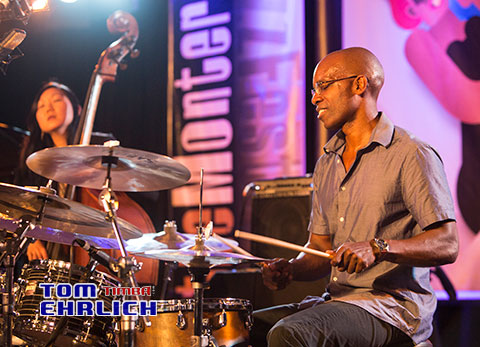
Ralph Bowen is here (as he has been on all of Dr. Branker's albums since 2006. Joining him is Pete McCann (guitar), Fabian Almazan (piano), and the amazing rhythm section of Linda Oh (bass) and Rudy Royston (drums), both of whom (pictured left) work with Dave Douglas Quintet and have appeared on each other's albums. It's hard to single out any one track as all nine contain music to recommend them.  The opening cut, "Joy", starts with the guitar and the tenor saxophone playing what becomes the melody and then, one by one, Royston kicks in, Ms. Oh sets the foundation and Almazan supplies the chords.  Bowen takes off on his solo flight and he really sets theme for the album, moving up through his horn's range while Royston pushes him forward amidst the impressionists sounds of guitar and piano and the underpinning of the bass.  There are moments of tenderness and reflection in the mix as well.
allaboutjazz.com
Ms. Oh leads the quintet on the title track with a quiet yet poetic bass solo.  Almazan (pictured left) and Bowen play the theme with McCann supplying the chords. Pay attention to how Royston works below the soloists, painting pictures with cymbal washes, fleet movements across his set, and stop-on-a-dime turnarounds.  Some might say his work is distracting but it works to motivate his bandmates.  The bassist's solid bottom sound gives the drummer the freedom to be creative and adventurous. And he takes advantage of that freedom throughout most of the album.

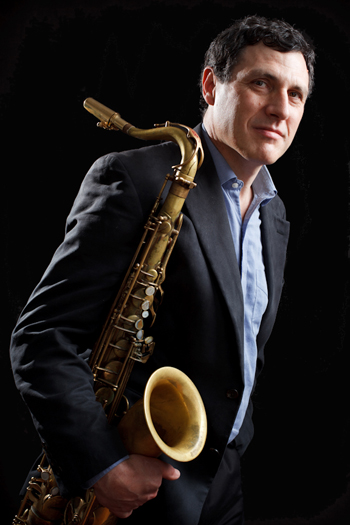
Also impressive is the powerful work of Ralph Bowen (pictured left).  He has such a presence on his reeds.  Listen to how he wraps his soprano sax around McCann's modified guitar on "People Everywhere", a high-energy song that also features a sparkling piano solo.  His soulful tenor over the gospel piano chords on "(God's) Wisdom" is cliche-free and quite tuneful. Bowen maneuvers the tricky rhythmic landscape on "(We Are) What We Are Not Yet", switching from soprano to tenor after the piano solo and before McCann's excellent spot.  The tenor solo on "Many Roads Beneath the Sky"  starts in a reflective and soon catches fire, thanks to Royston's insistent jabbing.

One track led me to GOOGLE.  "Loving Day (June 12)" is named for the day in 1967 when the Supreme Court of the United States struck down the anti-miscegenation laws in 16 states.  The case before the court, "Loving vs Virginia" pitted an interracial couple (Mildred and  Richard Loving) who had married and were arrested and forced to move out of Virginia. The couple brought the case to then-Attorney General Robert F. Kennedy and, several years later, the Supreme Court unanimously voted the law unconstitutional. Do you need to know that to enjoy the music?  No, but the story informs the music and musicians, adding more power to an already powerful composition.

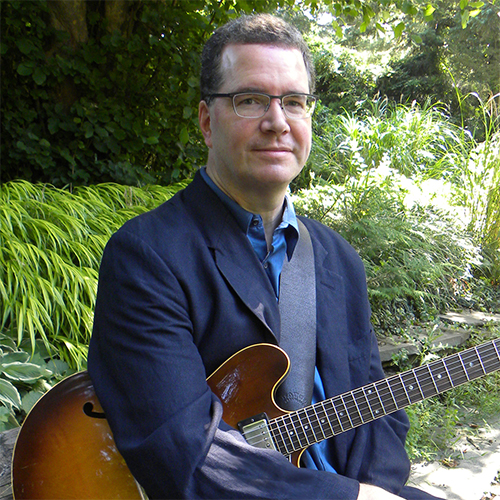
There's even more to discover on "Beauty Within" - you can sit each time you listen and concentrate on one or two musicians, hearing how each one works so well with the others. Listen for the impressive piano work of Fabian Almazan, for the razor-sharp solos of Pete McCann (pictured left), the singing tones of Ralph Bowen, the fundamental as well as melodic work of Linda Oh, and the glorious drumming of Rudy Royston.  Their life experiences, individual voices, and collective talent make the music of Anthony Branker glisten with confidence and soul.

For more information, go to www.anthonybranker.com and/or to originarts.com/recordings/recording.php?TitleID=82719.