Showing posts with label Remy Le Boeuf. Show all posts

Wednesday, March 13, 2024

Large Ensemble 2024 (Part 2): Melody Stands Out + Monk Inspires

Three more large ensemble recordings, each with its own outstanding qualities. 

Several years ago, I interviewed trombonist and composer Marshall Gilkes upon the release of his 2022 album, "Cyclic Matters".  In the midst of the discussion, he mentioned he had back in Germany to record a new  album with the WDR Big Band, the 17-piece ensemble in Cologne Germany.  He had spent four years (2010-13) in the trombone section –– the month after his stint was up, the Band invited him back for a "farewell concert" which resulted in the 2015 album, "Köln", a 10-song program that soared from the opening moment. The album won a GRAMMY nomination and led to the 2018 follow-up, "Always Forward".  Gilkes told me that he writes to the strength of each member of the band and that they love how his arrangements make them sound.  Upon receiving the invitation to create a third program for the WDR, Gilkes thought about all that had happened in the world since his 2017 trip that produced the second album.  The Pandemic, wars, democracies under siege, yet music and the arts still manages to thrive, to grow, to bring people together, to bend into new shapes for people to explore.

The results of Gilkes' thinking and writing can be heard on "LifeSongs" (WDR/ Alternate Side Records).  To these ears, it's the high point of the composer/ arranger's work with the Big Band.  The music is rich with melody and possibilities, the section arrangements often sing brightly, and the soloists are on the top of their game.  This music has soul, has heart, and imagination at its center.  The opening "Fresh Start" is just that!  A rollicking, Gospel-like melody and arrangement, with the leader's trombone in front but the real joy can be found in the interaction of soloists and the various sections.  "Back in the Groove" follows, a healthy portion of latge 60s-early 70s soul music in the melody and response over a thunderous rhythm section. Alto saxophonist Jonas Hörlen builds his solo off the main melody, riding the powerful piano of Billy Test, the solid bass of John Goldsby, and the slamming drums of Hans Dekker.  The proceedings cool down for the piano solo but Test moves quickly into overdrive with a joyous romp with the brass and reeds "testifying" right alongside him.

Listen to "Cora's Tune" below.  Pay attention to how Gilkes structures the melody, creates his fine solo, and how he utilizes the WDR sections to add excitement, and then creates a lovely trombone chorale in the midst of the piece.  Yet the music does not sit still, it changes, evolves, swings, and soars to its conclusion. Several tracks later, vocalist Sabeth Pérez joins the Band for a sweet take on the traditional lullaby "All The Pretty Horses". One can hear the influence of Maria Schneider (Gilkes is a long-time member of the MSO) in the arrangement. 

Delights abound in this program. "Middle Ground" follows, opening with a Brass chorale b efore picking up steam. The influences of Blues and Gospel can be hear in the melody lines as well as the section writing.  In the middle of the piece, the trombones take off into an exciting Latin rhythm, the sound splayting across the spectrum. The band kicks in and the 'bones trade 4s until the entire ensemble dances back into the melody, fading intoi the background for a return to Brass chorale. Then, it's into "San Filtro",  a multi-sectioned piece that, at times, reminds this listener of Chick Corea's "My Spanish Heart".  The leader's trombone is front-and-center throughout whether playing the main melody, soloing, or leading yet another splendid brass chorale.  You'll want to shout "hurrah" at the bravura closing section.

And there's more. I would be remiss not to mention the lovely version of Rodgers & Hammerstein's "This Nearly Was Mine" (from "South Pacific").  The song serves as a vehicle for an exquisite flugelhorn solo from Andy Haderer.  Those of you who buy the digital version (link below) get two more tracks, an extra 14 minutes of music (including the stomping "Taconic Turns").  No matter which version you purchase, "LifeSongs" is a soul satisfying, emotionally rich, and musically delightful program.  Marshall Gilkes truly shines in this setting as do his friends in the WDR Big Band –– if you dig Big Band, jump on this!

For more information, go to www.marshallgilkes.com.  To hear more and to purchase the album, go to  https://marshallgilkes.bandcamp.com/album/lifesongs.

Personnel:

Marshall Gilkes composer, arranger, trombone, conductor

Johan Hörlén • alto saxophone, flute, clarinet Pascal Bartoszak • alto saxophone, flute, clarinet,
Ben Fitzpatrick • tenor saxophone, clarinet, Paul Heller • tenor saxophone, clarinet
Jens Neufang • baritone saxophone, bass clarinet
Andy Haderer • trumpet, piccolo trumpet, flugelhorn, Wim Both • trumpet, flugelhorn
Rob Bruynen • trumpet, flugelhorn, Ruud Breuls • trumpet, flugelhorn
Ludwig Nuss • trombone, Raphael Klemm • trombone, Peter Hedrich • trombone
Andy Hunter • trombone (one track)
Mattis Cederberg • bass trombone, tuba
John Goldsby • bass 
Billy Test • piano 
Hans Dekker • drums
Sabeth Pérez • vocals on "All the Pretty Horses"


Give a listen to "Cora's Tune":


As a special treat, here's the video for "Sugar Rush", the final track on the CD:


On his first two Big Band recordings (2019's "Assembly of Shadows" and 2021's "Architecture of Storms"), saxophonist, composer, and arranger Remy Le Boeuf showed a pleasing knack for well-defined melodies, smart arrangements, and for creating space for soloists to interact with the music and the musicians.  There were moments, especially on the second release, that the music had a "pop music" sensibility, with melodies that cried out for lyrics (one song did have a guest vocalist) –– nothing seemed "dumbed down" for mass consumption but the songs sounded like they could have fit easily into contemporary radio airplay.

On his third Big Band effort (the ensemble has taken on the name of its first album: Assembly of Shadows), "Heartland Radio" (SoundSpore Records), the title track opens the album with a decided backbeat and a hummable melody (ah, but the glorious section harmonies!).  Listen below to "Stop & Go" –– the rhythm section plays beats reminiscent of the work by the British band New Order but the main melody and chorus would not sound out of place on a Gamble & Huff production of the 1970s.  The music also sounds great pouring out of car speakers when one is driving down the road (this writer's prerogative), especially guest guitarist Max Light's solo.  "New Beginnings" bears traces of the work of Burt Bacharach; one can his influence on the handsome melody and arrangements, in the tempo changes, and in the great trumpet solo (uncredited).  

Vocalist Julia Easterlin joins the group for "Barbara" (lyrics by poet Sara Pirkle). The Bacharach influence can be felt a bit here as well but Le Boeuf's arrangement is all his own (his section writing is splendid).  The leader also created an arrangement for "Little Song"; composed by trumpeter Nadje Noordhuis for her Newvelle Records album "Full Circle", the melody is a rich blend of sadness and longing that is emphasized here by the sweeping brass lines and gueat Danielle Wertz's wordless vocal.  The leader's alto saxophine is out in front through the middle of the track, his solo soaring like a bird freed in the wild.  

"Heartland Radio" (so named for the leader's journey across the United States to Denver, Colorado, where he is now on the music faculty of the University of Denver) comes to a close with "Walking on Water". There's a gospel feel to the both the melody and arrangements as well as a powerful saxophone solo with the gentle alto sax coda bringing the listener to the final long chord. Remy LeBoeuf said that the music on the album was inspired by the sounds he heard driving to his destination. These excellent sounds attest to the fact that the composer/ arranger had a fertile and thriving imagination. 

For more information, go to www.remyleboeuf.com.  To purchase the album, go to  https://remyleboeuf.bandcamp.com/album/heartland-radio.

Personnel:

Gregory Robbins – conductor

Vocals
Julia Easterlin (vocal on one track)
Danielle Wertz (vocal on one track)

Remy Le Boeuf / Alto Sax, Flute, Alto Flute
Alejandro Aviles / Flute, Alto Sax
Lucas Pino / Tenor Sax, Clarinet
John Lowery / Tenor Sax, Clarinet
Carl Maraghi / Bari Sax, Bass Clarinet

Trumpets
Tony Kadleck, Tony Glausi, Philip Dizack,  Mike Rodriguez

Trombones
Mike Fahie, Alan Ferber, Javier Nero
Jennifer Wharton (bass trombone)

Guitar
Alex Goodman
Max Light (one track)

Piano
Martha Kato

Bass
Dan Montgomery


Drums
Peter Kronreif

Keyboards
Pascal Le Boeuf (first two tracks)

Get into the groove with "Stop & Go":


Pianist, composer, arranger, and now conductor Frank Carlberg has spent the better part of his life engrossed in and studying the music and recordings of Thelonious Monk.  Many of his recordings are inspired by and feature music of the composer –– in 2019, Carlberg put together his Large Ensemble to record and issue "Monk Dreams, Hallucinations and Nightmares" on his Red Piano Records label. I loved that album and love it even more now. Carlberg has the knack of making Monk's music sound fresh and contemporary while still shoeing respect for the composer.

Now we have "Elegy for Thelonious" (Sunnyside Records). I have an image of Carlberg in his room slicing up pieces of Monk tunes, pinning particular phrases to the wall, and creating original arrangements around.  In the recording studio, he places the fragments, his arrangements, and some sections he composed in front of the musicians and says "Let's play!"  And they do.  That's not to say that recording is unfocused or cacophonous. Not at all.  What it is is fun, creative adventures taking on the guise of fun.  What a band Carlberg has in front of him.  Besides the impressive arrangements and re-arrangements, the secret weapon in this music is drummer Michael Sarin. Throughout the seven-song program, he's the linchpin as well as the glue that keeps the Ensemble from descending into chaos.  Listen below to "Spooky Rift We Pat", an engaging mashup of "Tea For Two" and Monk's "Skippy". Christine Correa leads off with a deconstruction of a verse from the standard; then the ensemble enters and we're off to the races. After a playful solo from tenor saxophonist Adam Kolker and a lively diversion with trumpeter David Adewumi, the whole ensemble returns and different voices rise out of the din. All the while, Sarin is driving the bus, making sure no one loses their way.

The fun continues on "Out of Steam", a funky tune replete with synth washes from Leo Genovese and vocals from the leader's daughter Priya Carlberg.  The different figures the leader has the reeds and brass play behind the powerful alto sax solo from Nathan Reising stand out because they are often brash and bratty.  

The centerpiece of the recording is the title track. The music is not so solemn as there's muted trumpet squawks and clarinet trills behind Ms. Correa's recitation of poet Yusef Komunyakaa's "Elegy for Thelonious". A few moments later, the two vocalists sing the chorus from the hymn "Abide with Me" (a piece – composed by 19th Century English church organist William H. Monk, no relation, which the American Mr. Monk recorded on 1957's "Monk's Music").  Along the way, there are fine solos from trombonist Brian Drye, cornettist Kirk Knuffke, and Jeremy Udden on lyricon.  The music gets cluttered by the end of the vocals but the brass exclamations and solid drumming keeps the music on keel.  

Every one of the seven tracks on "Elegy for Thelonious" is worth writing about – for instance, Hery Paz's solo on "Brake Tune" is stunning as is trumpeter John Carlson's smoking take on "Wrinkle on Trinkle". The Frank Carlberg Ensemble is filled with great musicians, great soloists, and Carlberg gives them plenty of room to shine while his section writing is exemplary throughout.  I mentioned drummer Michael Sarin earlier but his rhythm section partner, bassist Kim Cass, deserves similar kudos. What a treat!!

For more information, go to www.macdowell.org/artists/frank-carlberg. To hear more and to purchase the album, go to https://sunnysiderecords.bandcamp.com/album/elegy-for-thelonious.

Personnel:

Frank Carlberg - conductor, composer
Sam Hoyt, John Carlson, David Adewumi - trumpet
Kirk Knuffke – cornet
Brian Drye, Chris Washburne, Tyler Bonilla, Max Seigel - trombone
Nathan Reising, Jeremy Udden, Adam Tolker, Hery Paz, Andrew Hadro - woodwinds
Leo Genovese - piano, keyboards
Kim Cass - bass
Michael Sarin - drums
Christine Correa, Priya Carlberg - voice


Take a listen to "Spooky Rift We Pat":

Friday, March 3, 2023

"....Soul Grown Deep Like The River"


Dr. Anthony Branker is quite an accomplished person with a list of achievements that would fill this page. I spoke to him in 2017 at the time Origin Records released "Beauty Within", his seventh album of original compositions (and six issued by the Seattle, WA-based label). At that time, he had recently stepped down as the head (and founder) of the Jazz Studies Program at Princeton––he currently is Adjunct Professor at the Mason Gross School of Music at Rutgers University. I am impressed by his ability to tell stories, truths about issues such as racism, equality, spirituality, and more, writing music that sounds familiar yet can be challenging, swings yet sings. The son of Caribbean immigrants, Dr. Branker once played his music (he was a trumpet player) in venues around the world. Dr. Branker has also conducted ensembles for Terence Blanchard and Wynton Marsalis as well as orchestras in Israel, Germany, Japan, Estonia, and in the United States. 

His eighth album, "What Place Can Be For Us: A Suite In 10 Movements" (Origin), is the second recording with his Imagine ensemble, an octet built around guitarist Pete McCann, pianist Fabian Almazan, and bassist Linda May Han Oh plus Walter Smith III (tenor saxophone), Remy Le Boeuf (alto and soprano saxophones), Philip Dizack (trumpet, flugelhorn), Donald Edwards (drums), and on two tracks, Alison Crockett (vocal and spoken word). As you should be able to tell by the title, the themes of this new collection are inclusion, immigration, belonging, citizenship, and the never-ending racism that permeates the United States.  Ms. Crockett is featured on the opening track, "The Door of No Return", an episodic that blends the squalling guitar of Pete McCann, the telegraph notes from the piano, and the words of poet Beatriz Esmer. There is a powerful solo from Smith III as well as well as brilliant background arrangements.  The words hearken back to The Middle Passage (many more Black Africans were enslaved in Brazil than anywhere else on the American continent).  

Ms. Crockett returns for "I, Too, Sing America" from Langston Hughes 1926 collection "The Weary Blues".  It's a powerful work with fine piano work and a commanding solo from Smith III yet be sure to listen to how the alto sax and trumpet play a drone beneath the tenor sax and the heartfelt vocal. 

Elsewhere, there's the nervous energy of McCann's guitar solo and the wistful alto sax solo from Le Boeuf on "Indivisible", the melancholy reminiscence of "Sundown Town" with far-ranging solos from Almazan and Dizack, and the "prog-rock meets hard bop" riff on "Sanctuary City" and the crackling guitar of McCann and keening tenor sax.   


It's hard not to think of boats filled with refugees on "We Went Where Wind Took Us" but the music has more of a hopeful feel as well as fine solos from Ms. Oh and Almazan.  After a lovely solo piano introduction, "The Trail of Tears to Standing Rock" reminds us all of how the Andrew Jackson Presidency pushed Native Americans onto lands where their crops could not grow; not that succeeding US Presidents made the situation any better, creating reservations that keep them held down. Now when they fight the oil pipeline that will split their land up and subsequently cut them off from or contaminate their water supply, their protests still fall on deaf ears.  

As you should be able to tell, Dr. Anthony Branker does not shy away from controversy; instead he channels his concerns, beliefs, and his fears into music that often vibrates with urgency, compassion, commitment, and impressive musicianship.   Don't you shy away from  "What Place Can Be For Us: A Suite In 10 Movements"––instead, embrace its activism, its message, and its power.

For more information, go to www.anthonybranker.com/.  To hear more and to purchase the album, go to

Here's the ensemble playing and presenting the words of poet Langston Hughes on "I, Too, Sing America":


Vocalist and educator Christine Correa came to the United States from her native Bombay, India, in 1979––she came to attend the New England Conservatory of Music in Boston, MA, which is where she met two people who became very important in her life, pianist Ran Blake and pianist Frank Carlberg who is a frequent collaborator as well as her husband.  Ms. Correa is currently on the faculties of Columbia University’s Louis Armstrong Jazz Performance Program, Teacher’s College at Columbia University and the New School as well as the Director of the Maine Jazz Camp. She's recorded five duo albums with Ran Blake, 10 albums (in groups of various sizes) with Mr. Carlberg, and, at least, a half-dozen with other artists but never an album under own name.

Until now.  "Just You Stand and Listen With Me" (Sunnyside Records) is a tribute to two recordings drummer Max Roach recorded with his then-wife, the vocalist Abbey Lincoln, 1961's "We Insist! Freedom Now Suite" (Candid Records) and "Percussion Bitter Suite" (Impulse! Records).  For her album, Ms. Correa utilizes the musical voices of Sam Newsome (soprano saxophone), Andrew Boudreau (piano), Kim Cass (bass), and Michael Sarin (drums).  The 11-song program opens with the opening cut from "We Insist!", "Driva' Man", a fiery slave song with lyrics by Oscar Brown, Jr.  Ms. Correa's vocal is underpinned by the strolling rhythm section bolstered by the angular piano chords. Newsome's soprano solo is soaring and free-wheeling while Sarin's narrative drums over the walking bass also stands out.

Brown, Jr. adapts Paul Lawrence Dunbar's poem "When Malindy Sings"––the poet wrote his piece in "original" dialect but this adaptation is no "Uncle Remus". The music really swings with kudos to Boudreau for a fine solo.  Ms. Lincoln wrote the words for "Mendacity"; her lyrics could have been written today. Here's an example; "The campaign trail winds on and on/In towns from coast to coast/The winner ain't the one who's straight/But he who lies the most." Sarin's drums are quite expressive while Newsome again serves as response to Ms. Correa's call. Listen below!


There's so much to take on this brilliant album. Ms. Correa's duet with drummer Sarin in the first 90 seconds of "All Africa" is a stunning introduction to the body of the song in which the vocals name various tribes of the African Continent. The soprano sax solo over the drums is powerful, very moving and expressive. The wordless vocals on "Tears for Johannesburg" speaks to the treatment of the oppressed black citizens under South Africa's apartheid regimes. The ensemble moves in and out of time throughout plus there are excellent solos from Newsome and bassist Cass.

The album closes with Brown, Jr./Roach's "Freedom Day", a piece that is, at times, frolicsome, free, impulsive, pulsing with urgency, and in the end, questioning if we are really "free" (certainly the Black population of the United States has rarely been truly free to be).   

From start to finish, "Just You Stand and Listen With Me" is quite powerful.  Christine Correa not only celebrates the amazing and controversial music of Max Roach, Abbey Lincoln, and Oscar Brown, Jr. but also asks questions about whether her adopted country–the United States–can ever truly be the place where "All Men (and Women) Are Created Equal".  

For more information, go to https://christinecorrea.com/. To hear more and to purchase the album, go to https://sunnysiderecords.bandcamp.com/album/just-you-stand-and-listen-with-me-2

Hear Ms. Correa singing Abbey Lincoln's words on "Mendacity":


Tuesday, December 28, 2021

The Rest of the Music that Moved, Soothed, Educated, and Inspired in 2021!

Yes, it's a long list but my belief is that the albums I have chosen are all worth listening to, that they speak to our current world situations, that the music can give us strength to more forward.  Will this complete the job for 2021? Lord no, but all of these are albums I received to review and not ones that I purchased.  Do check these out if you haven't already!  Happy & Healthy New Year!!

Amir El Saffar River of Sound – "The Other Shore" (Outnote Music/ Outhere Records) – Trumpeter, santurist (the santur is a dulcimer), vocalist, composer, and arranger ElSaffar formed River of Sound six years ago to continue his explorations into Maqam, jazz forms, and more.  This 17-piece ensemble (plus guests) includes strings, different percussion instruments, guitar, piano, oud, reeds, brass, and the leader's fascinating wordless vocals.  This is music to savor, to get lost in, to marvel at the possibilities, and float away.  


Miguel Zenón & Luis Perdomo – "El Arte Del Bolero" (Miel Music) – This splendid live duo recording finds the alto saxophonist and his long-time quartet pianist playing six Latin "standards", caressing each melody and imbuing each song with emotional solos.  While some might say that this is good "evening" music, these tunes sure sound great early in the morning when the natural world is awakening.  


Artifacts – "...and then there's this" (Astral Spirits) – Artifacts (flutist Nicole Mitchell, cellist Tomeka Reid, and drummer Mike Reed), all members of Chicago's AACM, paid tribute to their elders on its 2015 debut from which they took their name. Here, they mostly concentrate on original music. One might be surprised how funky much of this music sounds yet there is depth, interplay, powerful melodies, and a sense of playfulness that transcends genres and generations.  


Matthew Shipp – "Codebreaker" (TAO Forms) – 2021 was yet another amazing year for pianist Shipp but this solo piano session ranks among his best ever.  While one can still hear the fire that characterizes his earlier album, Mr. Shipp has been exhibiting a delightful melodic streak of late. His ability to create music that eschews genres and cliches remains one of the strongest factors in Matthew Shipp's creative world.


Joe Lovano & Dave Douglas Sound Prints – "Other Worlds" (Greenleaf Music)  – The music on "Other Worlds" is a delightful mix of well-developed melodies and sparkling solos with a rhythm section (pianist Lawrence Fields, bassist Linda May Han Oh, and drummer Joey Baron) second to none.  Messrs. Lovano and Douglas say their inspiration for the quintet remains the visionary work of Wayne Shorter. No better choice for a blueprint but the music on this release is even more than that. Also, great music to get lost in!


Jared Schonig – "Two Takes Volumes 1 (Big Band) & Volume 2 (Quintet)" (Anzic Records) – Drummer and composer Schonig, one of the busier players on the NYC scene pre-Pandemic, has released a most impressive debut recording; in fact, two recordings.  The Big Band session features eight original compositions , each one arranged by a different (and fairly famous) resident of the Big Apple. The Quintet album features trumpeter Marquis Hill, alto saxophonist Godwin Louis, pianist Luis Perdomo, and bassist Matt Clohesy –– with the exception of the three "Drum Interludes" and an electronically processed "Introduction..." intro to the opening track, the repertoire is the same as on the Big Band disk.  Both are worth owning with the edge going to the exhilarating Quintet date.


Jihye Lee Orchestra – "Daring Mind" (Motema Music) – Ms. Lee, who had a good career in her native South Korea as a singer-songwriter, came to the United States to study at Berklee College of Music and discovered a new voice as a composer of large ensemble.  Her self-funded debut album, "April" was issued in 2017, receiving praise from many fellow musicians and arrangers. "Daring Mind" is a delightful blend of melodies, harmonies, and rhythms that takes musical influences from her native country, mixes that with a healthy dose of Western influences plus Ms. Lee's natural curiosity and creates new and quite fascinating.

Go to https://jihyemusic.com/

Miho Hazama/ Danish Radio Big Band – "Imaginary Visions" (Edition Records) – In 2019, Ms. Hazama took on a new assignment as Chief Conductor of the Danish Radio Big Band and this album bears the first fruits of that new relationship.  She s following in the footsteps of such notable composers, arrangers, and conductors as Thad Jones, Bob Brookmeyer, and Jim McNeely and if this first album with the DRB is any indication, her tenure should be quite productive and enjoyable for fans of large ensemble music.


Dave Holland – "Another Land" (Edition Records) – Master bassist Holland is in the midst of a long and amazing career. This album, which features guitarist Kevin Eubanks and drummer Obed Calvaire, roars, whispers, and rushes forward in a glorious blend of sounds. The opening cut, "Grave Walker", is the funkiest music the bassist has created since his days with Miles Davis's "electric" ensemble.  And the title track is a lovely reminder that guitarist Eubanks can draw one in on the strength of his melodies and improvisations.  I can listen to this music all day and revel in its creativity and joy!


Sam Pilnick's Nonet Project – "The Adler Suite" (OutsideIn Music) – Composer, arranger, saxophonist, educator, and bandleader Pilnick looked to the stars for inspiration as he write the material for his Nonet Project.  Based in Chicago, he spent a number of days composing while visiting the Adler Planetarium and the results are an expansive set of compositions for his little Big Band.  The repertoire display Pilnick's wonder and curiosity and, hopefully, is the beginning of a long, productive, career creating music that transports the listener beyond the mundane.


Tim Hagans & the NDR Big Band – "A Conversation" (Waiting Moon Records) – Like the Amir ElSaffar album listed above, the music on composer, arranger, and trumpeter Tim Hagan's new recording takes its time to unfold. The liner notes tell the reader that the arranger broke the Big Band into a number of different "chat rooms" (my words, not Hagan's) so that the various instrumentalists in each would react and respond to each other. It's a fascinating concept that takes the listener a while to grasp; meanwhile, the intelligent melodies and smashing arrangements draws one in to the music.  


Remy Le Bouef's Assembly of Shadows – "Architecture of Storms" (Soundspore Records) – The second large ensemble album from composer, arranger, and alto saxophonist Remy Le Bouef features nine tracks recorded before the pandemic in 2019 and three recorded in Spring 2021. The composer's splendid ear for melodies and smart harmonies that one heard on 2019's "Assembly of Shadows" album are here as well as is his intelligent arrangements plus sense of rhythmic drive.  This time around, the leader solos on five of the nine tracks and it's a distinct to hear his alto soaring about the ensemble.  


Last but not least....

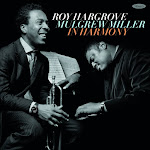
Roy Hargrove & Mulgrew Miller – "In Harmony" (Resonance Records) – Resonance Records is truly the gift that keeps on giving. Producer and coordinator Zev Feldman scouts the world to find live recordings that are either long out-of-print, concerts recorded for radio, and connoisseur recordings committed to tape by zealous fans.  This splendid two-CD set reminds us how great both these musicians were, how the music created through their sadly short lives was so vital, and how sorely many of us miss them. As always, the liner notes are thorough and entertaining, the sound quality excellent, and the music a pure delight!

Friday, November 1, 2019

Large & Larger Ensemble Music Autumn 2019 (Pt 1)

Even without a new release from the Maria Schneider Orchestra (coming in 2020), 2018 and 2019 have been banner years for large ensemble music. Over the next two posts, we'll explore eight albums released in the last several months or coming out in the next few weeks.

Born in Urbana, Illinois, and raised in Milwaukee, WI, trumpeter Brian Lynch began playing at a young age and apprenticed in the band of pianist Buddy Montgomery.  Before moving to New York City from San Diego, CA, in late 1981, Lynch also played with saxophonist Charles McPherson.  Once he got to the Big Apple, he started to work in groups led by Horace Silver and Toshiko Akiyoshi and in the final edition of Art Blakey's Jazz Messengers as well as spending 20+ years as a member of the Phil Woods Quintet. Lynch has a simultaneous career playing Latin Music, starting in 1982 with Angel Canales, with vocalist Hector LaVoe, and a long-standing gig with Eddie Palmieri.  He's conducted workshops throughout the world plus has been on the faculties of NYU, Long Island University, and currently serves on the faculty of the Frost School of Music at the University of Miami.

Lynch has recorded numerous albums for labels such as Criss Cross, Sharp Nine, Venus Records, Cellar Live, and since 2009, has released six albums on his own Holistic MusicWorks label.  His new albums combines his love of Latin music, big band jazz, and, especially, reading.  "The Omni-American Book Club: My Journey Through Literature In Music" (HMW) takes its name from a 1970 essay by Albert Murray (1916-2013) and features a 19-piece band plus guests (see "Personnel" below) playing nine pieces (plus two "extended version") composed and arranged by Lynch.  Each song is dedicated to two writers, activists, and/or educators – the extensive liner notes talk about each dedicatee and the particular  book or books that inspired Lynch.)

Photo: Andrea Canter
It is nearly impossible to choose which songs to focus on since each one stands out.  Drummer Dafnis Prieto is in the "driver's seat" for the opener "Crucible For Crisis" (for David Levering Lewis and W.E.B. DuBois) – the music will make you jump out of your chair (or just shake the windows of the car as you speed down the highway. There are powerful solos from Prieto, flutist "Maraca" Valle, and Lynch over the delightful rhythm section plus pay close attention to how the drummer pushes his fellow musicians to the boiling point as they bring the song to a close.  "The Trouble With Elysium" (for Naomi Klein and Mike Davis) turns the spotlight on David Liebman and his expressive soprano saxophone.  Kyle Swan is the drummer here and he keeps the rhythms percolating as does pianist Alex Brown; Liebman gets into a musical conversation with tenor saxophonist Gary Keller that nearly steals the show. Regina Carter and Lynch take the lead on "Affective Affinities" (for Ned Sublette and Eric Hobshawn), the only true ballad on the album. Especially delightful is when the two mesh their musical voices and then, as the rhythm section kicks the music up a notch or two, the violinist and trumpeter start trading quick solo lines.  As baritone saxophonist Mike Brignola leads the reeds back in, Ms. Carter flies above the band, dancing all the way.

There's so much music (nearly two hours over two CDs) on "The Omni-American Book Club", such a good ensemble, impressive writing, first-class soloists, and a reminder American music has deep roots in the numerous communities around the country and the world. The blend of blues, jazz, funk, Latin, Afro-Cuban, and more is so attractive plus the distinctive trumpet sounds and attack of Brian Lynch is powerful and so alive.  Highly recommended!!

For more information, go to hollisticmusicworks.com/announcing-brian-lynchs-first-big-band-album-the-omni-american-book-club/.

Here's the album opener:


Personnel:

Brian Lynch Leader, Trumpet, Compositions and Arrangements 

Tom Kelley: Alto Sax (lead), Soprano Sax, Flute 
David Leon: Alto Sax, Flute, Clarinet 
Gary Keller: Tenor Sax, Soprano Sax, Flute, Clarinet 
Chris Thompson-Taylor: Tenor Sax, Clarinet 
Mike Brignola: Baritone Sax, Bass Clarinet 


Dante Luciani: Lead Trombone 
Carter Key: Trombone 
Steven Robinson: Trombone 
John Kricker: Bass Trombone 

Michael Dudley: Lead Trumpet 
Jean Caze: Trumpet 
Jason Charos: Trumpet 
Alec Aldred: Trumpet 

Alex Brown: piano 
Lowell Ringel: bass 
Boris Kozlov: electric bass (three tracks) 
Kyle Swan: drums (six tracks) 
Hilario Bell: drums (four tracks) 
Murph Aucamp: percussion 
Little Johnny Rivero: percussion (two tracks)


Guest Artists:

Dafnis Prieto: drums ("Crucible for Crisis")
Orlando "Maraca" Valle: flute ("Crucible for Crisis")
Donald Harrison: alto saxophone ("The Struggle Is In Your Name" - two versions)
Regina Carter: violin ("Affective Affinities")
David Liebman: soprano saxophone ("The Trouble With Elysium")
Jim Snidero: alto saxophone ("Tribute To Blue (Mitchell)")


Saxophonist and composer Remy Le Boeuf is having a particularly productive 2019.  In May, Outside In Music issued his debut album as a leader "Light as a Word" (a quintet date) and five months (November 1), SoundSpore Records is releasing "Remy Le Boeuf's Assemble of Shadows", his first venture into large ensemble writing and arranging.  If you are a fan of Maria Schneider's elegant melodies and intellectual as well as emotional arrangements, this is an album for you.  With 18 "regular" band members plus two special guests (see "personnel" below), the music draws you in and does not let go, in fact resonates long after the final track fades away.

The seven-song program opens with two longer pieces, "Strata" and "Honeymooners" before launching into the "Assembly of Shadows Suite", a five-part, 28-minute, story in sound. When you spend time with this music, several elements stand out.  First, the melodies are excellently constructed, with themes and counterpoint shared by various members of the ensemble.  Even the "I: Introduction" to the "Assembly of Shadows Suite", which clocks in at 83 seconds, the entire band, with the exception of the drums, plays melody lines.  There are moments throughout the Suite that hearken back to the music of Aaron Copland. Like Maria Schneider's music, the solos grow out of the melody and do not overstay their welcome.  While Le Bouef is the leader, his voice is often just part of the ensemble. Play special attention to the work of guitarist Alex Goodman; note his solo on the title track and he is supported first by just the rhythm section the by the delightful splay of colors from the reeds and brass.  Trumpeter Phillip Dizack steps out of the brass section for the next solo and his clear times and well-articulated notes stay out against the background.

Make sure to pay attention to the lovely cover photo (Levi Mandel) – to these eyes and ears, it's the visual interpretation of the music.  The stunning intensity of "IV: Transfiguration", a striking piece of music, has the mood of sitting on the top of a hill and watching the sun rise.  The light tone of the leader's alto sax paired with the thicker sound of the baritone sax (Carl Maraghi) plus the section arrangements hearken back to Claude Debussy and Duke Ellington.    That mood is carries over to "V: A Light Through the Leaves" most certainly inspired by standing at a distance away from the stand of trees and watching the morning (or evening) sun move through the trees.

If you're looking for a big band "blowing" session, "Remy Le Boeuf's Assemble of Shadows" is not for you. However, if it is music with heart, soul, emotion, sensitivity, and delightful melodies, listen here.  That's not to say there aren't impressive solos (check out Le Boeuf's soprano spotlight on "Honeymooners" – don't miss the section near the end that sounds like Wayne Shorter's solo on Steely Dan's "Aja"). It's important to note that two of the three producers are composer and arranger Mike Holober plus author/Navy veteran/bassist/investment banker Kabir Sehgal (who is the co-producer of the Brian Lynch Big Band and the Samuel Torres album). Brilliant sound, brilliant music, this album will delight you over many listens.

For more information, go to remylebouef.com.

Here's the opening track:


Personnel:

Conductor: Gregory Robbins 
Woodwinds: Remy Le Boeuf (Alto Sax, Soprano Sax, Flute, Alto Flute), 

Anna Webber (Flute on one track), 
Ben Kono (Tenor Sax/Clarinet), 
Vito Chiavuzzo (Flute, Alto Sax), 
John Lowery (Tenor Sax/Clarinet), 
Carl Maraghi (Bari Sax/Bass Clarinet) 
Trumpets: John Lake, Tony Glausi, Philip Dizack, Matt Holman 
Trombones: Eric Miller, Natalie Cressman, Isaac Kaplan, Jennifer Wharton,  and Nick Depinna (trombone overdubs on three tracks) 
Guitar: Alex Goodman 
Piano: Martha Kato 
Bass: Matt Aronoff 
Drums: Peter Kronreif 
Percussion: James Shipp 


"Alegria" is the Spanish word for joy and happiness – it can also mean recklessness. It is also the title of the fourth album by master percussionist Samuel Torres and, judging by the music, the first two meanings are most apropos. 10 musicians, most of whom live and perform in New York City, make up the band.  Sounds like they're having the time of their lives.  Right out of the gate, "Salsa, Jazz Y Choke" dances forward on the power of Torres and drummer Pablo Bencid.  "Choke" is modern take on salsa that became famous in 2008, a mix of traditional rhythms with the more modern sound of house music and reggaeton.  The rhythm is so infectious throughout the song which features strong solos from trombonist Marshall Gilkes and pianist Luis Perdomo plus a short but powerful break from the leader.

Photo: Diego Almanza
The rhythmic adventure rarely lets up throughout the album.  "Barretto Power"; this track, a blend of Latin and "boogaloo"influences (from New York City). explodes out of the speakers with great excitement, egged on by the electric bass of Ruben Rodriguez and the two percussionists.  Ivan Renta's baritone solo is a fiery statement and Bencid's thundering drums helps take the tune out.  The one exception to the rhythmic adventures is "Bolero Para Raquel", a lovely ballad with shivering sax fills, long trumpet lines, and a handsome solo from tenor saxophonist Joel Frahm.  Back to the rhythm as the title tune bounces forward, has a hummable melody, and truly makes you want to dance.  A fleet yet sweet alto solo from Will Vinson precedes a delightfully exploratory solo from Perdomo.  The pianist feeds off the rhythm section and rolls along above the brass and reeds interjections.

The album closes with "Anga", another lively dance tune set to a fiery Afro-Cuban rhythm.  The trumpets ride above the reeds on the theme leading the way for trumpeter Alex Norris to take the first solo followed by the raucous baritone sax of Renta who trades phrases with trombonist Gilkes.  Not surprisingly, after their impassioned dialogue, the leader gets the final solo over the dancing piano and electric bass, adding a call-and-response with the brass and reeds before Torres brings the piece to a rousing close.

Looking for party music, sophisticated party music?  Enjoy lively solos amid intelligent and creative arrangements?  Grab a copy of "Alegria" and let Samuel Torres and his nine associates rock the house.  The neighbors might complain but the dancers understand!

For more information, go to www.samueltorres.com.

Personnel:

Michael Rodriguez + Alex Norris (trumpet, flugelhorn)
Marshall Gilkes (trombone)
Will Vinson (alto and soprano saxophones)
Joel Frahm (tenor and soprano saxophones)
Ivan Renta (baritone saxophone, bass clarinet, flute)
Luis Perdomo (piano, Fender Rhodes)
Ruben Rodriguez (electric bass)
Pablo Bencid (drums)
Samuel Torres (congas, bongos, kalimba, log drum, cajon, maracas, djembes, talking drums, güiro, timbal, tambourine, clave, shaker,shakes, EFX, all compositions and arrangements)

Here's the band playing the title track (recorded live this week – 10/29/19 – at Dizzy's Coca-Cola in NYC):


"Ragmala" (Meta Records/BRM) is a sprawling, entertaining, and fascinating three LPs/ two CD set that combines the talents of two large ensembles, Go: Organic Orchestra and Brooklyn Raga Massive.  The album, a hair under two hours long, is the brainchild of percussionist/conductor and composer (he composed 18 of the tracks and co-wrote the other two) Adam Rudolph. His 20-song program unites 38 musicians plus two guests to play music that peacefully obliterates the borders between American music, North and South Indian musics, and North African music. There are moments that blend sitar and tanpura (an Indian stringed instrument used to create a drone) with the driving drums of Hamid Drake plus tablas, mrdangam, and African drums.  Add to that trumpets, trombone, French horn, saxophones, bassoon, clarinet, a string section, harp, guitars, electric bass, flutes, and voice and the music suddenly becomes indescribable.  Classical? Jazz? World Music?  yes, and more.

Photo: Adrien Tillman
What Rudolph and company have created is a world symphony, one that reminds listeners the blues and jazz that grew out of New Orleans and other Southern regions as well as the Carnatic music of India have its roots in the emotional interactions of religions, worship, and families. Also, the rhythms that percolate throughout the album, whether they be thunderous drums or the flow of the voices, bring us together no matter our race, beliefs, and politics.

There are so many amazing moments on this recording, moments when the ensembles loud as if they are channeling Miles Davis music post "Bitches Brew", long, hypnotic drones interrupted by swatches of brass, reeds, violins, and drums of all shapes and sizes. There are moments that hearken back to discovering Ravi Shankar and ragas in the 1960s or Terry Riley in the 1970s. Start at the beginning of "Ragmala" and let it flow. Enjoy the interruptions when the vocal music changes the mood, when all the voices rise to a fever pitch then dissipate down to a whisper.  Kudos to Adam Rudolph who makes the collaboration come alive, offering so many possibilities for further musical and cultural opportunities. You'll not hear a large ensemble like Go: Organic Orchestra & Brooklyn Raga Massive many times in your life – this music must make for an amazing aural adventure in a concert hall.  It certainly makes for a fascinating album/ CD experience.

For more information, go to metarecords.com/go.html as well as www.brooklynragamassive.org.


Personnel:

Jay Ghandi - bansuri 
Arun Ramamurthy - violin 
Trina Basu - violin 
Samarth Nagarkar - vocal 
Neel Murgai - rhythm sitar, overtone singing 
Sameer Gupta - tabla 
David Ellenbogen - electric rhythm guitar 
Abhik Mukherjee - sitar 
Bala Skandan - mridangam 
Mari Tanaka - tampura 

Kaoru Watanabe - c flute, fue, noh kan 
Michel Gentile - c flute 
Sylvain Leroux - chromatic tambin, tambin, c flute 
Ze Luis - c and alto flute 
Mariano Gil - bass flute 

Avram Fefer - tenor saxophone, bass clarinet 
Sean Sonderegger - bass and contrabass clarinet, soprano saxophone 
Sara Schoenbeck - bassoon 
Ivan Barenboim - b flat clarinet 

Charles Burnham - violin 
Julianne Carney-Chung - violin 
Sana Nagano - violin 
Gwen Laster - violin 
Richard Carr - violin 
Stephanie Griffin - viola 
Leco Reis - contrabass 

Graham Haynes - cornet, flugelhorn, kudu horn, bamboo vaccine 
Stephen Haynes - cornet, flugelhorn, solo alto, pocket trumpet, didgeridoo, conch, kudu horn 
Peter Zummo - trombone, didgeridoo, conch, kudu horn 
Libby Schwartz - french horn 

Mia Theodoratus - harp 
Marco Cappelli - electric and acoustic guitars 
Alexis Marcelo - keyboards 
Damon Banks - electric bass 

Harris Eisenstadt - bata (iya, itotele, okonkolo) 
Rogerio Boccato - caxixi, mineiro, temple blocks, bells, wood box surdo 
Hamid Drake - drum kit, okonkolo 
Adam Rudolph - iya, itotele 

Special Guests 
Hassan Hakmoun - sintir, vocal 
Abderahim Hakmoun - qarqaba, vocal