Showing posts with label Miho Hazama. Show all posts

Monday, June 24, 2024

Challenges, Changes, and New Avenues for Expression


Photo: Shervin Lainez
In 2021, in the midst of the Pandemic, composer and producer Ryan Truesdell was worried about the future of the Big Band, a genre he has been quite committed to for a long time.  He changed his focus and decided to commission a number of big band composers to write pieces for string quartet.  Truesdell then worked with cellist Jody Redhage Ferber to help him think through the project and to advise on which musicians to invite into the studio to record what turned out to be 17 new pieces for string quartet plus, in several instances, additional instrumentation. He did not give the composers any restrictions but did invite them into the studio to work with the musicians who were interpreting their work.

The results of the experiment can be heard on "Ryan Truesdell Presents: Synthesis: The String Quartet Sessions" released through ArtistShare. Besides recording three of of his own string quartet pieces, the producer, who is the Manager of the Bob Brookmeyer Music Estate, used a work that the St. Louis Symphony had commissioned from the late trombonist-composer (1929-2011) but never recorded. Anyone who listens to contemporary Big Band music will recognize Jim McNeely, John Clayon, Christine Jensen, John Hollenbeck, Alan Ferber, Dave Rivello, and, perhaps, Miho Hazama but Truesdell also invited younger composers such as Joseph Borsellino III, Nathan Parker Smith, Vanessa Perica, and Asuka Kakitani. Producer and arranger extraordinaire Oded Lev-Ari debuts a new work as does bassist Rufus Reid, who premieres his "String Quartet #1". 

Photo: Leo Mascaro
How should one approach "Synthesis", a three-CD set containing nearly three hours of music? One obvious answer is with "open ears and an open mind" but that's too easy. You literally have to set aside that these composers, many of whom you've heard in large instrumental ensembles are working with a much different palette. As stated above, there are a few additions to the Quartet; clarinetist Anat Cohen is the main soloist on Truesdell's "Suite for Clarinet and String Quartet", bassist Jay Anderson joins a Quartet on Truesdell's "Heart of Gold", composer Borsellino III uses pre-recorded synth tracks on his "Paper Cranes", and Hollenbeck adds marimba, drums, and piano (not all on the same movements) to different movements of his seven-part "Grey Cottage String Quartets" that closes the album.  The Brookmeyer piece was written for and is performed by a string trio.

Photo: Leo Mascaro
There are pieces that have impressive rhythmic flow (the album opener "Where Can You Be" by Mr. Parker Smith Ms. Hazama's "Chipmunk Timmy's Funny Sunny Day", and Ms. Jensen's "Tilting World") and others that have moments where time is suspended or fractured (the "#1 Movement" of Mr. Reid's "String Quartet #1", Mr. Lev-Ari's "Copycat" movement of "Playground", and Mr. Rivello's "1. "Sorry" section of "Two Reflections for String Quartet". Several of the works jump out on first listening including Mr. McNeely's "Murmuration and Adagio", the leader's lovely "Dança de Quarto" and his four-part "Suite for Clarinet and String Quartet", and Ms. Kakitani's "Melt".

Photo: Dina Regine
This project owes much of its success to the brilliant musicians who interpreted the variety of styles, genres, ideas, and desires of the composers.  Violinist Sara Caswell appears on every track while cellist Redhage Ferber appears on all but two (she's replaced by Noah Hoffeld). The second violin chair features either Joyce Hammann or Lady Jess (who tours with Beyoncé as well as with her husband Jay-Z). Violist Lois Martin performs on the majority of the album save for the three times she is replaced by Orlando Wells.  

Perhaps that's the best way to enter into this glorious project: just listen to the musicians. Throw aside expectations and comparisons. Dive in, test the musical waters – take your time but also make the time to go back and really allow the music to move you out of the everyday and into its special worlds. 

As stated above, "Ryan Truesdell Presents: Synthesis: The String Quartet Sessions" is only available through ArtistShare.  Go to www.synthesissqs.com/ for more information. To learn more about Ryan Truesdell, go to https://ryantruesdell.com/.

Here's a little morsel:


Tuesday, December 28, 2021

The Rest of the Music that Moved, Soothed, Educated, and Inspired in 2021!

Yes, it's a long list but my belief is that the albums I have chosen are all worth listening to, that they speak to our current world situations, that the music can give us strength to more forward.  Will this complete the job for 2021? Lord no, but all of these are albums I received to review and not ones that I purchased.  Do check these out if you haven't already!  Happy & Healthy New Year!!

Amir El Saffar River of Sound – "The Other Shore" (Outnote Music/ Outhere Records) – Trumpeter, santurist (the santur is a dulcimer), vocalist, composer, and arranger ElSaffar formed River of Sound six years ago to continue his explorations into Maqam, jazz forms, and more.  This 17-piece ensemble (plus guests) includes strings, different percussion instruments, guitar, piano, oud, reeds, brass, and the leader's fascinating wordless vocals.  This is music to savor, to get lost in, to marvel at the possibilities, and float away.  


Miguel Zenón & Luis Perdomo – "El Arte Del Bolero" (Miel Music) – This splendid live duo recording finds the alto saxophonist and his long-time quartet pianist playing six Latin "standards", caressing each melody and imbuing each song with emotional solos.  While some might say that this is good "evening" music, these tunes sure sound great early in the morning when the natural world is awakening.  


Artifacts – "...and then there's this" (Astral Spirits) – Artifacts (flutist Nicole Mitchell, cellist Tomeka Reid, and drummer Mike Reed), all members of Chicago's AACM, paid tribute to their elders on its 2015 debut from which they took their name. Here, they mostly concentrate on original music. One might be surprised how funky much of this music sounds yet there is depth, interplay, powerful melodies, and a sense of playfulness that transcends genres and generations.  


Matthew Shipp – "Codebreaker" (TAO Forms) – 2021 was yet another amazing year for pianist Shipp but this solo piano session ranks among his best ever.  While one can still hear the fire that characterizes his earlier album, Mr. Shipp has been exhibiting a delightful melodic streak of late. His ability to create music that eschews genres and cliches remains one of the strongest factors in Matthew Shipp's creative world.


Joe Lovano & Dave Douglas Sound Prints – "Other Worlds" (Greenleaf Music)  – The music on "Other Worlds" is a delightful mix of well-developed melodies and sparkling solos with a rhythm section (pianist Lawrence Fields, bassist Linda May Han Oh, and drummer Joey Baron) second to none.  Messrs. Lovano and Douglas say their inspiration for the quintet remains the visionary work of Wayne Shorter. No better choice for a blueprint but the music on this release is even more than that. Also, great music to get lost in!


Jared Schonig – "Two Takes Volumes 1 (Big Band) & Volume 2 (Quintet)" (Anzic Records) – Drummer and composer Schonig, one of the busier players on the NYC scene pre-Pandemic, has released a most impressive debut recording; in fact, two recordings.  The Big Band session features eight original compositions , each one arranged by a different (and fairly famous) resident of the Big Apple. The Quintet album features trumpeter Marquis Hill, alto saxophonist Godwin Louis, pianist Luis Perdomo, and bassist Matt Clohesy –– with the exception of the three "Drum Interludes" and an electronically processed "Introduction..." intro to the opening track, the repertoire is the same as on the Big Band disk.  Both are worth owning with the edge going to the exhilarating Quintet date.


Jihye Lee Orchestra – "Daring Mind" (Motema Music) – Ms. Lee, who had a good career in her native South Korea as a singer-songwriter, came to the United States to study at Berklee College of Music and discovered a new voice as a composer of large ensemble.  Her self-funded debut album, "April" was issued in 2017, receiving praise from many fellow musicians and arrangers. "Daring Mind" is a delightful blend of melodies, harmonies, and rhythms that takes musical influences from her native country, mixes that with a healthy dose of Western influences plus Ms. Lee's natural curiosity and creates new and quite fascinating.

Go to https://jihyemusic.com/. 

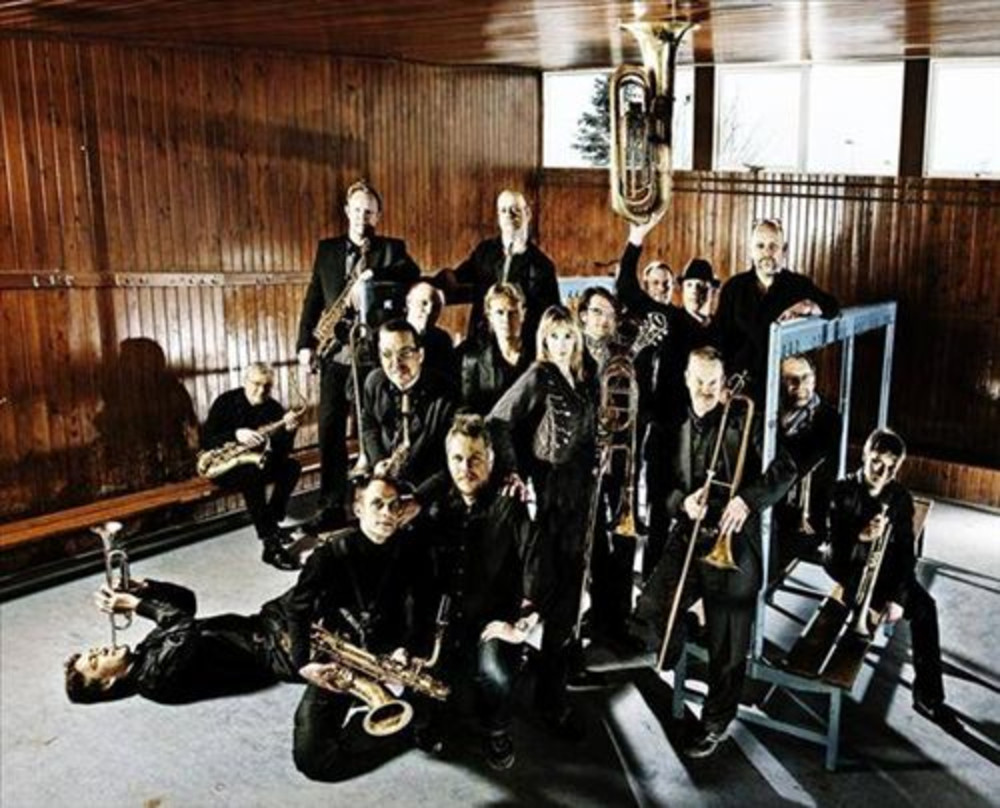
Miho Hazama/ Danish Radio Big Band – "Imaginary Visions" (Edition Records) – In 2019, Ms. Hazama took on a new assignment as Chief Conductor of the Danish Radio Big Band and this album bears the first fruits of that new relationship.  She s following in the footsteps of such notable composers, arrangers, and conductors as Thad Jones, Bob Brookmeyer, and Jim McNeely and if this first album with the DRB is any indication, her tenure should be quite productive and enjoyable for fans of large ensemble music.


Dave Holland – "Another Land" (Edition Records) – Master bassist Holland is in the midst of a long and amazing career. This album, which features guitarist Kevin Eubanks and drummer Obed Calvaire, roars, whispers, and rushes forward in a glorious blend of sounds. The opening cut, "Grave Walker", is the funkiest music the bassist has created since his days with Miles Davis's "electric" ensemble.  And the title track is a lovely reminder that guitarist Eubanks can draw one in on the strength of his melodies and improvisations.  I can listen to this music all day and revel in its creativity and joy!


Sam Pilnick's Nonet Project – "The Adler Suite" (OutsideIn Music) – Composer, arranger, saxophonist, educator, and bandleader Pilnick looked to the stars for inspiration as he write the material for his Nonet Project.  Based in Chicago, he spent a number of days composing while visiting the Adler Planetarium and the results are an expansive set of compositions for his little Big Band.  The repertoire display Pilnick's wonder and curiosity and, hopefully, is the beginning of a long, productive, career creating music that transports the listener beyond the mundane.


Tim Hagans & the NDR Big Band – "A Conversation" (Waiting Moon Records) – Like the Amir ElSaffar album listed above, the music on composer, arranger, and trumpeter Tim Hagan's new recording takes its time to unfold. The liner notes tell the reader that the arranger broke the Big Band into a number of different "chat rooms" (my words, not Hagan's) so that the various instrumentalists in each would react and respond to each other. It's a fascinating concept that takes the listener a while to grasp; meanwhile, the intelligent melodies and smashing arrangements draws one in to the music.  


Remy Le Bouef's Assembly of Shadows – "Architecture of Storms" (Soundspore Records) – The second large ensemble album from composer, arranger, and alto saxophonist Remy Le Bouef features nine tracks recorded before the pandemic in 2019 and three recorded in Spring 2021. The composer's splendid ear for melodies and smart harmonies that one heard on 2019's "Assembly of Shadows" album are here as well as is his intelligent arrangements plus sense of rhythmic drive.  This time around, the leader solos on five of the nine tracks and it's a distinct to hear his alto soaring about the ensemble.  


Last but not least....

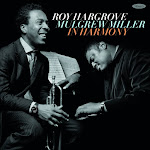
Roy Hargrove & Mulgrew Miller – "In Harmony" (Resonance Records) – Resonance Records is truly the gift that keeps on giving. Producer and coordinator Zev Feldman scouts the world to find live recordings that are either long out-of-print, concerts recorded for radio, and connoisseur recordings committed to tape by zealous fans.  This splendid two-CD set reminds us how great both these musicians were, how the music created through their sadly short lives was so vital, and how sorely many of us miss them. As always, the liner notes are thorough and entertaining, the sound quality excellent, and the music a pure delight!

Sunday, October 4, 2020

Large Ensembles: Poetry, Politics, & Presence

Photo: Luke Awtry
Composer, arranger, and multi-instrumentalist Kyle Saulnier created the Awakening Orchestra 15 years ago not only to play his original music (and some astute covers) but also to create conversations around the political situation in the United States and the world.  18-members strong, Saulnier has assembled an aggregation of veteran and young musicians from both the New York and Boston musical community, sprinkled in the occasional guest vocalists and a guest soloist––together, they make music that blends many genres to create a sound that soars, roars, cries, and sighs.

"volume II: to call her to a higher plain" (Biophilia Records) is the Orchestra's third recording ("vol. I: this is not the answer" in 2014 on Innova Recordings and "Interlude: Atticus Live–the Music of Jesse Lewis" in 2016)––the music was composed, workshopped, and performed over the past five years. Like all of the recent releases on Biophilia, the 15-song, 116+ minute program has an artistic, origami-foldout cover and is available only as a digital download.

The album is broken into two parts;  "Part 1: the pessimist's folly" includes "prelude & fanfare: the Patriot", an adaption of Nine Inch Nails "burn", an orchestral arrangement of Bill Frisell's "Throughout", and the four-part "i can see my country from here (Symphony No. 2 for the Awakening Orchestra"). "Part II: the optimist's folly" includes an orchestra adaptation of Molly Drake's "I remember", the five part title track which carries the subtitle "Concerto for Violin and Awakening Orchestra", the two part "the (desc/diss)ent", and closes with an instrumental adaptation of Eric Whitacre's chorale "lux arumque".

Photo: Guinara Khamatova
When faced with this much content, it's better to dive right in and start from track one. Sit and listen: this music changes moods often so after the "prelude & fanfare" prepare you for a big band experience, the first sounds you hear on "burn" is Michael McAliister's electric guitar. After his intro, vocalist Nathan Hetherington leads the way––there's a break in the middle where various instrumental vices from the Orchestra play before the intensity ratchets up for a powerful guitar. After a handsome reading of Frisell's piece, "Throughout", featuring excellent solos from bassist Joshua Paris, trombonist Michael Fahie, and trumpeter Seneca Black, the listener enters the musical world of "Symphony No. 2..."

Photo: Richard Velasco
The two long multi-section pieces (one is 41+ minutes, the other 33+ minutes) are quite involved, episodic; the "Symphony.." based on the comparison of the ideas of the French Revolution and how the United States democratic republic seems to have abandoned its ideals in the 21st Century and "Concerto..." is a work based on the 1980 book by Alvin Toffler "The Third Wave" and, the piece like the album, takes its name from a quote from Senator George McGovern.  For the latter piece, the composer wrote the violin parts for his wife Brooke Quiggins Saulnier––the blend of her playing, classically and folk music inspired, with the ensemble adds more shades to the music. Note her work with soloists Samuel Ryder (soprano), John Yao (trombone), Pablo Masis (trumpet), and Vito Chiavuzzo (alto saxophone)––sometimes. the violin is a color in the background, it's counterpoint during a solo, she sets up the solos. Ms. Saulnier is the primary voice on the "Cadenzas" that come after the first and third parts of the "Concerto..."

Photo: Luke Awtry
I't's hard to not attempt to describe each piece of music on this album as each song stands out for its melody, for its emotion, its interplay, the fie solos, and the arrangements. Still, after the tour-de-force of the "Concerto...", the final two tracks should not be missed.  "the (desc/diss)ent" features splendid work from the rhythm section, intelligent section writing plus powerful solos by Nadje Noordhuis (trumpet)––kudos to drummer Will Clark for keeping up his part of the conversation during the solo––followed by a give-and-take with Remy Le Boeuf (soprano sax) and Felipe Salles (tenor sax), also with Clark as a partner. Just past the halfway make of the 13-minute, Ms. Noordhuis steps out for an unaccompanied minute before Michael Caterisano (vibraphone) ushers her back in and slowly, the ensemble reenters.  The soulful trumpet solo takes the song to its close with just high trumpet notes over subdued electric piano.

"volume II: to call her to a higher plain" closes with the Whitacre chorale.  Arranged for the eight brass players, the lovely sounds echo as the melody rises, a spiritual finish to a spirited program.  Kyle Saulnier wants the listener to understand the gravity of the political and social issues that plague the United States but he refuses to lose hope.  There are moments throughout the album where the music asks questions and others where the music and the Awakening Orchestra seems to hold our hands, saying "be strong."

For more information, go to www.kylesaulnier.com and www.awakeningorchestra.com. To purchase the album, go to https://awakeningorchestra.bandcamp.com/album/volume-ii-to-call-her-to-a-higher-plain.

Here's the Nine Inch Nails song:


Personnel:

Kyle Saulnier: compositions, arrangements

Reeds:
Remy Le Boeuf, Vito Chiavuzzo, Samuel Ryder, Andrew Gutauskas, and Felipe Salles

Trumpets:
Daniel Urness, Seneca Black, Nadje Noordhuis, and Pablo Masis

Trombones:
Michael Fahie, John Yao, Samuel Burtis, and James Rogers

Rhythm Section:
Michael Caterisano, Michael MacAllister, Aaron Kotler, Joshua Paris, and Will Clark

Guests:
Seth Fruiterman; voice
Julie Hardy; voice
Nathan Hetherington; voice
Brooke Quiggins Saulnier; violin


(Reader, take note––I have known Mr. Saulnier for around six-seven years as we were both teaching at Quinnipiac University in Hamden CT. He's spoken to my classes about contemporary music and we have talked about his writing process and the issues one has trying to get his/her music heard. He's since moved on but we stay in touch. Our discussions barely scratched the surface of how hard he has worked to get this music performed and recorded.  Kudos to Biophilia Records and to Nick Lloyd plus Greg DiCrosta for their efforts in bringing this project to fruition.)


Tenor and soprano saxophonist and composer Marius Neset, a native of Bergen, Norway, has been living in Copenhagen, Denmark, since he began his collegiate career there in 2003. While in school, he met numerous artists and performers, including British keyboard master Django Bates who featured him in his student band at the Rhythmic Music Conservatory.  Upon graduation, Neset began playing in various ensembles (including one with Professor Bates) throughout Europe including several that he lead or co-led.  His debut as a leader, "Suite for Seven Mountains", was issued in 2008 on Edition Records––the saxophonist went on to record several more albums for the British label before signing with the German ACT Music label in 2014, recording his debut album  for them , "Lion" with the Trondheim Jazz Orchestra.  


In 2019, Neset decided to move back "home" to Norway but, before leaving, he created a program to record with the Danish Radio Big Band with its newly-appointed chief conductor Miho Hazama.  "Tributes", his sixth album as a leader for ACT, features five new original compositions, one ("Bicycle Town") in two parts and another ("Children's Day") in three parts.  The program opens with "Bicycle Town", Neset introducing the song with a circular line that suggests Sonny Rollins without imitating the great master. He goes it alone for several minutes, expanding the melody and his sound until the reeds of the Big Band begins to flutter around him. The playful flutes and the bouncing baritone sax are soon joined by the low brass and eventually the rest of the band.  The music now has a funky feel suggesting Weather Report, especially Joe Zawinul's more rhythmic songs. 


Photo: Nicolas Koch Futtrup
The tune comes to a quick close leaving Neset playing a spiraling line to the close. "...Part 2" is introduced with a new circular line before electric bassist Kaspar Valdsholt digs into his solo.  When the entire band joins, they play a familiar line from "...Part 1" and Neset produces a powerful solo. "Tribute" follows and is a classically-inspired work with a lovely melody––soprano saxophonist Hans Ulrik steps out of the ensemble for a sweet solo.  In fact, his voice dominates the middle of the song before Neset's arrangement for the reeds and brass creates a delightful dance.

The two pieces in the middle of the program, "Farewell" and "Leaving the Dock", would not sound out of place on a Maria Schneider album.  The former starts with a lovely melody for the soprano sax (Neset, this time) supported by the brass, reeds, and piano. The music gently ripples forward as the soprano rises over the ensemble: in this instance, Neset sounds like Wayne Shorter, especially in his most fluid phrasing.  The slow fade leads directly into the next song. One can feel the waves lapping the side of the boat as trumpeter Mads la Cour introduces the melody with the leader and various other reeds shadowing his line. Pianist Henrik Gunde steps out for a thoughtful and poetic solo with the band sitting out for the first few choruses and then offering occasional support. The close of the piece suggests the boat, now on the open sea, looking homeward.

The album closes with the three-part "Children's Day". After its formal opening, "...Part 1" is a delightful and playful piece that suggests the Caribbean with a rollicking solo section for guitarist Per Gade and Neset. The somber theme also opens "...Part 2"––this time, the piece is a ballad with solos by Valdsholt (acoustic bass) and an excellent spotlight for trumpeter Gerard Presencer that covers a lot of time and ideas.  No formality or somber feel as "...Part 3" rides in on hand percussion and thumping bass. Neset dances through his sweet solo with the sections jumping in from time to time. The tenor sax leaps in and out of the sections short phrases before moving into the next part of his solo. The rhythms and the solo are irrepressible and irresistible pushing the band to a rousing climax.  

"Tributes" certainly does not sound like a sad goodbye to Denmark for Marius Neset.  He celebrates his growth as a person and musician, hails his friendships, refers to his musical partnerships, shows how his twin influences of jazz and classical are easily intertwined in this 50-minute program.  A big bow to the work of the Danish Radio Big Band and conductor Miho Hazama (herself an excellent composer-arranger). Music can be and should be a joy to listen to: this recording certainly is!

For more information, go to www.mariusneset.info.

Personnel:

Marius Neset; tenor saxophone, compositions

Danish Radio Big Band:

Miho Hazama, conductor

Trumpets:
Erik Eilertsen, Thomas Kjærgaard, Dave Vruels, Mads LaCour, and Gerard Presencer

Trombones:
Vincent Nilsson, Peter Dahlgren, Annette Saxe, and Jakob Munck Mortensen

Saxophones:
Peter Fuglsang, Nicolai Schultz, Hans Ulrik, Karl-Martin Almqvist, and Anders Gaardmand

Rhythm Section:
Per Gade: guitar
Søren Frost; drums
Kaspar Valdsholt: bass
Henrik Gunde: piano


Here's Marius Neset and the DR Big Band in concert with a song that's not on the album:


Monday, February 18, 2019

Large Ensemble Music February 2019

Over the past decade, composer and arranger Miho Hazama, a native of Tokyo, Japan, had developed into one of the jazz world's most in-demand artists. She has arranged and conducted for numerous Japanese Big Bands and pop recordings as well as making her mark in the United States and Europe in the past several years - she has worked with Owen Broder, Theo Bleckmann, the Danish Radio Big Band, and the WDR Big Band among many others.

In August of 2018, Sunnyside Records released "The Monk: Live at Bimhuis", her arrangements of classic Thelonious Monk songs. Now. less than six months later, the label has issued "Dancer in Nowhere" credited to Miho Hazam m_unit, her 13-piece ensemble (plus guests) that features a rhythm section plus vibraphone, three reeds and two brass, and a string quartet, the same instrumentation she has employed for her two previous large ensemble releases.  The original music this group plays is fascinating, not beholden to any one particular style or influential mentor.  One hears snippets of "pop" music, swing, hard-bop, Ellington-Strayhorn, theatrical music, and more.  That written, this music is certainly not static.  Like many of her contemporaries, the solos rise intelligently out of the melody lines and arrangements not just because the song needs a solo.

On the opening "Today, Not Today", note how natural the strings sound not only on their own but when mixing with the reeds and brass (trumpet and French horn). On "RUN", listen to how Ms. Hazama utilizes Jake Goldbas's powerful drumming to not only push the piece forward but also create the initial intensity in the music.  The interaction of the ensemble during the flute solo (Ryoji Ihara) creates quite a tension which increases during Steve Wilson's wonderful alto saxophone flight of fancy.

This is the rare recording where every song stands out. "Somnabulant"opens with the wordless vocals of guest Kavita Shah supported by the string quartet.  Then, the trumpet and reeds enter and the music drops into a slow ballad tempo over which guest Jason Rigby plays a lovely tenor solo.  Other instrumental voices are introduced as the music moves forward.  Ms. Shah and pianist Billy Test work together in the center section - when the drums reenter, it's to support the powerful guitar solo of Lionel Loueke.  The rest of the ensemble enters to support and then be influenced by the wailing blues lines from the guitarist.  Later in the program, Ms. Hazama creates an exciting arrangement of John Williams's "Olympic Fanfare and Theme", the only non-original on the eight-song program. The way the various voices are blended during the second half of the piece is fascinating.

Charles R. Hale Productions
The album closes with the title track.  There are several different storylines as the music progresses, moving from a quiet, even peaceful melody to a powerful series of interactions where the various sections interpret the melody and the harmonies (plus Nate Wood takes over the drum seat). Jason Rigby's robust tenor solo leads the group to the finish line.

"Dancer In Nowhere" is impressive and expressive from the opening note to the final fade.  Miho Hazama has grown up before our very ears. Her music is contemporary yet timeless and we are the beneficiaries of her brilliance.

For more information, go to www.mihohazama.com.

Here's the opening track:


Personnel:

Miho Hazama - conductor, composer 
Steve Wilson - alto, soprano sax, flute 
Ryoji Ihara - tenor sax, clarinet, flute 
Jason Rigby - tenor sax, clarinet (4 & 8) 
Andrew Gutauskas - baritone sax, bass clarinet 
Jonathan Powell - trumpet, flugelhorn 
Adam Unsworth - French horn 
Tomato Akeboshi - violin 
Sita Chay - violin 
Atsugi Yoshida - viola 
Meaghan Burke - cello 
James Shipp - vibraphone, guiro, shekere 
Billy Test - piano 
Sam Anning - bass 
Jake Goldbas - drums 
Kavita Shah - voice (4 & 6) 
Lionel Loueke - guitar (4) 
Nate Wood - drums (8)


The Wing Walker Orchestra, an 11-piece ensemble organized by composer, arranger and bass clarinetist Drew Williams, has issued its debut album. "Hazel" (ears and eyes Records) is composed of the seven-part "Hazel Suite", two more Williams originals, and a reworking of tUnE-yArDs "Look Around".  The "...Suite" is inspired by the graphic "space opera" series "Saga" created by Brian K. Vaughan and illustrated by Fiona Staples. As a listener, you do not need know that because the music stands on its own.  The seven pieces utilizes all the voices in the ensemble; many of the songs ride on the powerful rhythms created by drummer Nathan Ellman-Bell.  The initial five tracks are fairly short but the music hits its stride on parts VI and VII.  The pounding drums and the clarinet melody leads the ensemble into "VI: Heists (or Your Majesty)", a piece that really pushes hard. The "low" instruments, trombones and tenor sax, continue the theme as the rest of the group begins to chime in.  "VII: Ignition (or Hazel)" is much slower, the tolling piano note keeps the rhythm section as the brass and reeds quietly play longer notes. The intensity picks up once the bass drum replaces the piano note yet the music never changes tempo - although the piano plays tolling chords as the piece fades - nor is there a defined melody line.  

The balance of the album is just as engaging.  "Look Around" is a smart arrangement of the original with trombone and alto saxophone replace Merrill Garbus's vocals. The ensemble really kicks into middle section which features a muscular trombone solo. "We've Seen These Walls Crumble" is a soulful ballad which, at times (especially at the beginning and in the final third), reminds this listener of The Band (Americana jazz?). The rubato middle section starts off very quietly and features a conversation by the two trumpeters (John Blevins and Danny Gouker). The final track on the CD (the digital download has a bonus track), "High", has a delightful feel with a playful bass clarinet solo from Williams, several tempo changes, a high-powered guitar solo from Jeff McLaughlin, and an exciting lead-up to the finish, once more powered by Ellman-Bell with help from  bassist Adam Hopkins.

Some of the thematic material on "Hazel" may remind listeners of the writing of Darcy James Argue.  However, unlike many modern large ensembles, the reed section of the Wing Walker Orchestra does not double or triple on other instruments.  Nevertheless, over its six years of existence, the ensemble has developed its own personality and one hopes this is just the first installment in a series of fine recordings with the promise of tours. 

For more information, go to www.wingwalkermusic.com.    

Give a listen:


Personnel:

Brad Mulholland - alto saxophone & clarinet 
Eric Trudel - tenor saxophone 
Drew Williams - bass clarinet 
John Blevins - trumpet 
Danny Gouker -trumpet 
Karl Lyden - trombone 
Nick Grinder - trombone 
Jeff McLaughlin - guitar 
Marta Sánchez - piano 
Adam Hopkins - acoustic bass 
Nathan Ellman-Bell - drums 


Guitarist, composer, and arranger Chris Jentsch has, over the course two decades, released seven albums, the majority with larger ensembles.  The latest is "Topics In American History" (self-released on Blue Schist Records) and features the Jentsch Group No Net, a splendid ensemble recored live in concert;  the band features a group of Brooklyn-based musicians conducted by JC Sanford. The seven-song program covers, in its own special way, 460+ years of history Starting with "1491", just before the European ships ventured to the Caribbean; it's obvious this is an abstract history clarified by the liner notes. Still, the various voices of the ensemble, the strong rhythm section, and the intelligent arrangements help the listener to understand how the events referred to in the song titles helped to the shape the present day

Photo: Gina Renzi

The Copland-esque "prairie" ramble that opens "Manifest Destiny" gives way to a handsome melody (excellent colors from the reeds, brass, and guitar in the background) leads to solos by bassist Jim Whitney, onto a delightful conversation between the leader and the clarinet of Mike McGinnis who then steps out for a powerful solo before Jason Rigby creates a lovely soprano sax solo.
Before the songs closes, other voices step out for monetary solo and duo lines pushed forward by drummer Eric Halvorson.


Just as the pioneers discovered new territories, the listener can do that with these songs.  There are touches of darkness in "Dominos", a piece inspired by the Red Scare of the 1950s (Cold War and McCarthyism).  The leader takes a long impassioned solo followed by an equally powerful solo from Rigby, here on tenor sax. Throughout the album, the arrangements leave space for the various voices to interact and nobody is ignored.

Photo: Gayle Cornish
The album closes with "Meeting At Surratt's", a reference to Mary Surratt's boarding house where the group that plotted to assassinate President Abraham Lincoln met. She was hanged for her association with the conspirators although the evidence against her was weak. The song, introduced with martial drumming, has a traditional feel and a melody line led by the tenor saxophone. After Rigby creates a fascinating tenor sax statement, the leader steps out for a robust solo, his lines rising above the ensemble and leading them to the finish.  

"Topics In American History" is filled with good melodies and excellent musicianship.  Every solo stands out as do the arrangements around the melody and the verses.  Jentsch Group No Net, the brainchild of Chris Jentsch, tells us stories worth paying attention to.

For more information, go to chrisjentsch.com.

Personnel:

Chris Jentsch - electric guitar
Michael Gentile - flutes
Mike McGinnis - clarinets
Jason Rigby - tenor saxophone, soprano saxophone
David Smith - trumpet, flugelhorn
Brian Drye - trombone
Jacob Sacks - piano
Jim Whitney - acoustic bass
Eric Halvorson - drums, percussion
JC Sanford - conductor