In 2021, in the midst of the Pandemic, composer and producer Ryan Truesdell was worried about the future of the Big Band, a genre he has been quite committed to for a long time. He changed his focus and decided to commission a number of big band composers to write pieces for string quartet. Truesdell then worked with cellist Jody Redhage Ferber to help him think through the project and to advise on which musicians to invite into the studio to record what turned out to be 17 new pieces for string quartet plus, in several instances, additional instrumentation. He did not give the composers any restrictions but did invite them into the studio to work with the musicians who were interpreting their work.
The results of the experiment can be heard on "Ryan Truesdell Presents: Synthesis: The String Quartet Sessions" released through ArtistShare. Besides recording three of of his own string quartet pieces, the producer, who is the Manager of the Bob Brookmeyer Music Estate, used a work that the St. Louis Symphony had commissioned from the late trombonist-composer (1929-2011) but never recorded. Anyone who listens to contemporary Big Band music will recognize Jim McNeely, John Clayon, Christine Jensen, John Hollenbeck, Alan Ferber, Dave Rivello, and, perhaps, Miho Hazama but Truesdell also invited younger composers such as Joseph Borsellino III, Nathan Parker Smith, Vanessa Perica, and Asuka Kakitani. Producer and arranger extraordinaire Oded Lev-Ari debuts a new work as does bassist Rufus Reid, who premieres his "String Quartet #1".
Photo: Leo Mascaro
How should one approach "Synthesis", a three-CD set containing nearly three hours of music? One obvious answer is with "open ears and an open mind" but that's too easy. You literally have to set aside that these composers, many of whom you've heard in large instrumental ensembles are working with a much different palette. As stated above, there are a few additions to the Quartet; clarinetist Anat Cohen is the main soloist on Truesdell's "Suite for Clarinet and String Quartet", bassist Jay Anderson joins a Quartet on Truesdell's "Heart of Gold", composer Borsellino III uses pre-recorded synth tracks on his "Paper Cranes", and Hollenbeck adds marimba, drums, and piano (not all on the same movements) to different movements of his seven-part "Grey Cottage String Quartets" that closes the album. The Brookmeyer piece was written for and is performed by a string trio.
Photo: Leo Mascaro
There are pieces that have impressive rhythmic flow (the album opener "Where Can You Be" by Mr. Parker Smith Ms. Hazama's "Chipmunk Timmy's Funny Sunny Day", and Ms. Jensen's "Tilting World") and others that have moments where time is suspended or fractured (the "#1 Movement" of Mr. Reid's "String Quartet #1", Mr. Lev-Ari's "Copycat" movement of "Playground", and Mr. Rivello's "1. "Sorry" section of "Two Reflections for String Quartet". Several of the works jump out on first listening including Mr. McNeely's "Murmuration and Adagio", the leader's lovely "Dança de Quarto" and his four-part "Suite for Clarinet and String Quartet", and Ms. Kakitani's "Melt".
Photo: Dina Regine
This project owes much of its success to the brilliant musicians who interpreted the variety of styles, genres, ideas, and desires of the composers. Violinist Sara Caswell appears on every track while cellist Redhage Ferber appears on all but two (she's replaced by Noah Hoffeld). The second violin chair features either Joyce Hammann or Lady Jess (who tours with Beyoncé as well as with her husband Jay-Z). Violist Lois Martin performs on the majority of the album save for the three times she is replaced by Orlando Wells.
Perhaps that's the best way to enter into this glorious project: just listen to the musicians. Throw aside expectations and comparisons. Dive in, test the musical waters – take your time but also make the time to go back and really allow the music to move you out of the everyday and into its special worlds.
As stated above, "Ryan Truesdell Presents: Synthesis: The String Quartet Sessions" is only available through ArtistShare. Go to www.synthesissqs.com/ for more information. To learn more about Ryan Truesdell, go to https://ryantruesdell.com/.
My original plan was not to isolate the recordings made by women into a separate post but these albums are so good that I could not resist.
Jo Lawry – "Acrobats" (Whirlwind Recordings) – What a real treat is this most delightful of Trio albums. Here, Ms. Lawry's voice is supported, pushed, prodded, cushioned by the excellent playing of bassist Linda May Han Oh and drummer Allison Miller. The title track, composed by fellow Australian Gian Slater, perfectly describes not only the lives of musicians in the 21st Century but also the exploratory nature of this program. The majority of the program is made of "standards" but there is absolutely nothing standard about this album. This listener found himself exclusively listening to the album over the course of a full week. Never too late to take the leap into this album!!
Nicole Zuraitis – "How Love Begins" (OutsideIn Music) – The genesis of singer, songwriter, and pianist Zuratis's fifth album as a leader was a meeting with bassist Christian McBride in 2018 who heard her playing in a New York City piano bar and said "we should do something together". The results of the duo working out the details amidst the Pandemic slowdown are a pure delight. Ms. Zuraitis's vocal work is the most assured of her career and co-Producer McBride makes sure we also hear what a fine pianist she is. With her husband Dan Pugach on drums, the sound is filled out by guitarist Gilad Hekselman, Maya Kronfeld on keys, and Mr. McBride's bass pushing the proceedings forward, this program is quite strong and quite listenable.
Magos Herrera – "Aire" (Sunnyside Records) – 2023 was the year this listener truly discovered the brilliant and adventurous Mexican-born vocalist Magos Herrera. I had heard of her before but this year, a deeper dive was called for. What a supple, emotional, and often stunning voice –– when she inhabits the song, you may not understand the words but, pay attention, you'll get the message. Surrounded by her "working" trio of guitarist Vinicius Gomes, bassist Sam Minaie, and drummer Alex Kautz plus a slew of guests (including an "orchestra" conducted by Eric and Colin Jacobsen), this music sounds alive, full of possibility, aware of the sufferings of the heart but open to hope. The 12-song program includes classic songs, originals, brilliant arrangements, and that marvelous voice.
Edward Simon, Featuring Magos Herrera – "Femeninas" (ArtistShare) – Right around the same date "Aire" was issued came the new ArtistShare project from pianist Edward Simon. Subtitled "Songs of Latin American Women", the program is that and more. Ms. Herrera joins Simon, bassist Reuben Rogers, drummer Adam Cruz, and percussionist Luis Quintero (plus guest Romero Lubambo playing guitar on several tracks) performing a 11-song program of works associated withJoyce Moreno (Brazil), Elizabeth (Chile), Chabuca Granda (Perú), Violetta Parra (Chile), Marta Valdés (Cuba), Rosa Passos (Brazil), and Georgina Hassan (Argentina). The excellent arrangements, the splendid musicianship, and the wonderful vocals makes this a "project for the ages".
Watch Mr. Simon and Ms. Herrera perform two pieces from the "Femeninas" project:
Gretchen Parlato & Lionel Loueke – "Lean In" (Edition Records) – This is an intimate collection of songs from two fine musicians who have known each other several decades. Basically a duo album (there are several guest contributors) but the focus of the music is on the interplay of the voice and guitar. Both leaders brought music to the sessions yet the program feels and sounds organic. Mr. Loueke's guitar work is superlative throughout as are Ms. Parlato's vocals –– it's amazing how rhythmical this music is, how percussive the guitar work can be, and how sweet the results are. Let's hope this is just the first Editions Recording of this splendid duo.
Over the past month, I have listened to four different albums featuring vocalist, composer, and activist Magos Herrera. 2018 saw the release of "Dreamers" (Sony Music/Mexico), her brilliant collaboration with Brooklyn Rider while December 2020 was the release date for "Con Alma: An Operatic Tableau on Isolation" (National Sawdust Tracks), Ms. Herrera's album with Italian-born composer Paola Prestini. The newer albums are reviewed below.
For those who don't know Magos Herrera, she's a native of Mexico City who came to the United States in 1992 to study at The Musicians Institute in Los Angeles. She continued her studies in Boston, MA, before returning to Mexico. Her first four albums as a solo artist were recorded in her home city. In 2008, Ms. Herrera moved to New York City and, one year later, released "Distancia" on Sunnyside Records––two years later, she followed up with "México Azul" for the same label. Since then, she was 1/2 of the duo Magos & Limón (Spanish guitarist Javier Limón) that recorded two albums for Sony Music. What stands out for this listener includes her persuasive contralto voice, how she inhabits each song whether she's singing in Spanish, Portuguese, or English, and how she obliterates "borders" in her music (is she a jazz singer, a classical chanteuse, or a folk artist? Yes, all that and more.
"Aire" is her 11th album as a leader, her third for Sunnyside, the first release for that label in 12 years. With her regular working trio of Vinicius Gomes (acoustic guitar), Sam Minaie (bass), and Alex Kautz (drums and percussion) plus guest Ingrid Jensen (trumpet and flugelhorn on two tracks), Dori Caymmi (voice on "Samba em Preludio"), and Gonzalo Grau (percussion on three tracks). The Knights, the 21-member chamber orchestra (see personnel below) also appear on 10 of the 12 tracks playing arrangements by Mr. Grau, by Argentinean pianist Diego Schissi, and the great Brazilian composer and arranger Jaques Morelenbaum ("Samba em Preludio"). The material includes five originals by Ms. Herrera as well as compositions by Chilean folklorist Violetta Parra (1917-1967), by Ariel Ramírez & Félix Luna, by Guinga & César Pinheiro, by Danilo Moraes & Paulo Cesar de Carvahlo, and by Vinicius de Moraes & Baden Powell.
Photo: Shervin Lainez
There's so many reasons to listen to "Aire", not the least of which is how strong these songs are and how the vocalist works with both the trio and the orchestra. Whether it's the dancing rhythms of the title track that opens the album (Grau's arrangement is both lavish and supportive) or the gentle swaying of "Samba em Preludio" (the blend of 79-year old Caymmi's handsome voice with the supple quality of Ms. Herreras voice is charming and touching), the music touches the heart. Quiet guitar introduces Violetta Parra's "Gracias a la Vida" but note how Schissi's arrangement first introduces the reeds and then the strings move around under the voice. Add Ingrid Jensen's occasional trumpet responses to the vocal rises above the orchestra and the piece has a "magical-realism". Guinga's "Passarinhadeira" (finch) is just voice and guitar––Ms. Herrera sings so gently over Gomes's finger-picked acoustic guitar that one must lean into the song. Schissi's handsome string writing behind the wordless vocal on the short "Papalote Intro" leads the listener into Ms. Herrera's original piece. Gomes's delightful guitar solo follows the theme with The Knights' caressing sounds swimming around beneath him. They do the same for Ms. Herrera's wordless vocal improvisation.
The album closes with "Healer", a piece dedicated to and featuring the voice Maria Sabina(1894-1985), the Mexican shaman, in the opening moment. Ms. Sabina not only used herbs, peyote, and mushrooms but also the voice to heal people. Ms. Herrera uses her voice to deliver the message of healing through music and the celebration of life. The blend of percussion, voices, guitars, and The Knights brings "Aire" to a magical and delightful close.
Magos Herrera has created a panacea to the fear and worries of the past few years, music to escape the myriad voices of argument and disagreement of people who use words to hurt and stress their superiority. Can music heal our souls? Ms. Herrera believes so and this magnificent album serves as her proof!
Colin Jacobsen, Christina Courtin, Abi Fayette, Alex Fortes, Kristi Hellberg, Nannte Iwata, Yaira Matyakubova - violin
Mario Goto, Celia Hatton - viola
Gabriel Cabezas, Jia Kim - cello
Grey Fulmer - bass
Alex Sopp - flute
Michelle Farah - oboe
Agnes Marchione - clarinet
Edward Burns - bassoon
Karl Kramer-Johansen - horn
Micah Killian - trumpet
Dave Nelson - trombone
Megan Conley - harp
Blair McMillen - piano
license
Listen to "Choro de Lua":
Venezuelan-born pianist and composer Edward Simon first met Magos Herrera in 2017 when he, his trio members (bassist Joe Martin anddrummer Adam Cruz) and the vocalist performed together in a 2017 tribute concert honoring the great Argentine vocalist Mercedes Sosa (1935-2009). That planted the seed in the pianist's mind to create a follow-up to his 2016 Sunnyside Records album "Latin American Songbook". This time, Simon with Herrera and the Trio, would focus on Latin American women composers and performers. In addition, the ensemble (with bassist Reuben Rogers replacing Martin and now including and guest percussionist Luis Quintero) worked on a commission that Simon received from the Chamber Music's New Jazz Works––"Latino Soy" is a three-movement piece, two movements featuring lyrics sung and spoken by Ms. Herrera.
"Femeninas: Songs of Latin American Women" (artistShare) is an 11-song, 63-minute, program that pays tribute to artists such as Joyce Moreno (Brazil), Elizabeth (Chile), Chabuca Granda (Perú), Violetta Parra (Chile), Marta Valdés (Cuba), Rosa Passos (Brazil), and Georgina Hassan (Argentina). Opening with Ms. Moreno's "Feminina", the music jumps out of the speakers on the lively rhythms created by the trio plus the crisp acoustic guitar of Romero Lubambo (one of his two appearances on the album). After Ms. Herrera delivers the lyrics, composed as a question to a Mother as to what "female" means, Rogers takes a delightful, melodic, solo and Quintero adds a short solo. That leads into Ms. Morris's lovely ballad "Décimas"–Simon's arrangement does not stray too far from the original until he pushes the tempo in the second half of the piece. Again, Roger's melodic bass lines stand out not only as foundational but in counterpoint to the vocal.
Simon's suite, "Latino Soy", takes up 1/3rd of the album's running time. "Naked Sky" features original English lyrics by Ms. Herrera. The music slowly builds up behind the vocal into a fast bolero––Cruz's drumming and brush work stand out as do the richly melodic solo Simon creates. "Buleria" is even quicker, with the feel of flamenco (Simon's piano captures the feel of a guitarist). The break in the middle for drums, handclaps, and percussion sets up a powerful with Ms. Herrera's wordless vocal soaring above the ensemble. Here, the overdubbing creates a responsive chorus that is hypnotic, mesmerizing. The final section, "Mujer Remolino", takes its title from one of the nicknames of the shaman Maria Sabina (see above)––the words translate to "Whirlwind Woman". The medium-tempo piece opens up to a long, twisting, rhythmical, piano solo. After a break where Ms. Herrera joins in on wordless vocal, she then begins to read the words of one of the Mexican shaman's healing ceremonies.
Other highlights include the stunning "Gracias de la Vida" ("Here's to Life") from the pen of Ms. Parra. After the voice and piano move through the verses, Cruz enters to "converse" with Simon during his solo. Rogers joins them for the final verse of the song. The song then breaks into double-time, a dramatic close to quite a dramatic piece. Lubambo returns for Ms. Passos "Dunas" (lyrics by Fernando de Oliviera), a delicious Bossa Nova with a pleasing solo from Simon.
The program closes with "Hacia Donde" ("where" or "wherever"), a lovely ballad composed by Ms. Valdés (born 1928) for voice and piano. One may not understand Spanish but you cannot miss the pensive mood of the singer and the gentle, "formal", piano in the background that carries that introspective and emotional mood throughout the performance.
When you sit and listen through "Femeninas" several times, you can really hear how the pairing of Magos Herrera and Edward Simon is magic. One feels, actually intuits, that they have worked together for many years. Yet, that's just part of the magic of this project. The rhythm section is powerful, able to "groove" and support in equal measure. Simon's piano work is clear, his phrases articulate, and his arrangements intelligent and respectful. Ms. Herrera's voice is so wondrous, her ability to express emotions and transport listeners beyond the mundane explains why every project she is involved with is worth investigating.
John Hollenbeck, a composer, arranger, bandleader, drummer, percussionist, Professor, and now a label owner (more below), received a commission in 2010 from the Frankfurt Radio Big Band and began a project he called "Songs I Like a Lot"(Sunnyside Records). He enlisted vocalists Kate McGarry and Theo Bleckmann plus pianist Gary Versace. The album was issued in 2011 featuring songs by Jimmy Webb, Ornette Coleman, Queen, and more. Four years later, the entourage reassembled (Uri Caine taking over the piano choir for all but one track) and issued "Songs We Like a Lot" (also Sunnyside). That album included songs by Burt Bacharach/ Hal David, Cyndi Lauper, and others including two Hollenbeck originals. At that time, Hollenbeck said that the project would be a trilogy with fans around the world sending in suggestions for the final installment.
For this album, Ms. McGarry and Mr.Bleckmann built a list of the Top 20 vote getters and, without the drummer's input, chose seven songs. Not surprisingly, the new album is titled "Songs You Like a Lot" and is issued on Hollenbeck's newly-formed Flexatonic Records label (available through Bandcamp with all profits going to Black Lives Matter). Everyone is back with Versace on all eight tracks. The eight-song program (one Hollenbeck original) ranges from the traditional folk song "Down To The River to Pray" to The Bee Gee's "How Deep Is Your Love" plus James Taylor's "Fire and Rain", "Pure Imagination" (from the original "Willie Wonka and The Chocolate Factory" movie, and a fascinating deconstruction of the Brain Wilson classic "God Only Knows", titled here "Knows Only God."
Starting with The Beach Boys tune (that closes the album), Hollenbeck the arranger switches sentences around, speeds up the tempo, uses Versace's organ to shadow the vocals, and the reeds and brass for fluttering colors, powerful blasts, and thumping beats. On initial listens, the song is off-putting but subsequent listens unveil brilliant new harmonies and reveals the emotions. The fiery ending is a gas. The performance is truly a tour-de-force!
Photo: Bill Douthart
No matter how you feel about The Bee Gees, Hollenbeck reinvents "How Deep Is Your Love" with the reeds playing Steve Reich-like figures along with the guitar. Both vocalists embrace the melody and lyrics with great emotion but never overdue. Ms. McGarry and Mr. Bleckmann sing one of the choruses in unison, the latter's falsetto absolutely beautiful. Steffen Webber's powerful tenor saxophone solo kicks the band up a notch. The lone trumpet of Axel Schlosser kicks off Peter Gabriel's "Don't Give Up", sounding like a tribute to the composer's songs for Genesis. When the voices come in (Ms. McGarry has the Gabriel part while Mr. Bleckmann takes the place of Kate Bush), the song changes directions. Note the lovely deep brass and organ plus the sweet soprano sax right before the soulful/ gospel section sung by Ms. McGarry. The ending is a hoot, a "revival meeting" powered by the playful electric bass of Hans Glawischnig and the repetitive "Don't Give Up."
The opening track, the traditional "Down to The River...", is a piece you will play over and over. There is so much going on yet the piece never feels cluttered. Listen for the vocal harmonies, the fine solos (acoustic bass, piano, and Martin Scales on guitar), how the melody and background changes each time through the simple homily/ verse culminating in full band sound that resembles the Shaker Hymn rearranged by Aaron Copland for his "Appalachian Spring."
Each album in the trilogy, all available digitally through Flexatonic Records (link is below), is filled with intelligent arrangements, brilliant vocals, impeccable musicianship, and the overall emotion that music, whether familiar or not, can bring the listener a sense of wonder, feelings of joy, and hope for better times. Kudos to John Hollenbeck, brava to Kate McGarry, Theo Bleckmann, Gary Versace, and the Frankfurt Radio Big Band––savor all these sounds.
Theo Bleckmann · voice Kate McGarry · voice Gary Versace · piano, organ
Frankfurt Radio Big Band
Heinz-Dieter Sauerborn · alto/soprano saxophone, clarinet, flute Oliver Leicht · alto/soprano saxophone, clarinet, flute, piccolo Ben Kraef · tenor/soprano saxophone, flute Steffen Weber · tenor/soprano saxophone, clarinet, flute, alto flute Rainer Heute · bari/bass saxophone, Bb/bass/contra-bass clarinet, flute
Frank Wellert · trumpet/flugelhorn Thomas Vogel · trumpet/flugelhorn Martin Auer · trumpet/flugelhorn Axel Schlosser · trumpet/flugelhorn
Christian Jaksjø · trombone Felix Fromm · trombone Shannon Barnett · trombone Manfred Honetschläger · bass trombone
Martin Scales · guitar Hans Glawischnig · bass Jean Paul Höchstädter · drums Special guest: Claus Kiesselbach · mallet percussion, timpani
Photo: D'Addario Woodwinds
Massachusetts native, saxophonist, flutist, composer, arranger, and educator Dave Pietro moved to New York City in 1987. Over the past 33 years, he has worked with the Maria Schneider Orchestra, Darcy James Argue Secret Society, and spent 1994-2016 as the lead alto saxophonist in the Toshiko Akiyoshi Jazz Orchestra. His list of sideman gigs ranges from jazz acts to pop/ rock singers to studying and performing East Indian music with tabla master Sandip Burman. Pietro has issued seven CDs as a leader, the most recent "New Road: Iowa Memoirs" crowd-financed through ArtistShare. For that album, he convened a group that included Alex Sipiagin (trumpet, flugelhorn), Gary Versace (piano), Johannes Weidenmueller (bass), and Johnathan Blake (drums) with perciusionist Rogerio Boccato contributing on percussion.
Those same musicians, plus trombonist Ryan Keberle, reconvened in June of 2019 to record Prieto's new ArtistShare album "Hypersphere." The title refers to multi-dimensional sphere of four or more dimensions––if you are curious, click here. These musicians are all first-class improvisors and Prieto writes to their strengths. But, this is not merely a "blowing" album. The leader writes intelligent, well-constructed, melodies with smart harmonies plus the music often gives the rhythm section the opportunity to determine the flow. Listen to how he makes the six or seven piece ensemble (Boccato appears on six of the nine tracks while Keberle plays on five) sound like a 10 or 12 piece band with his fine voicings and overlapping melodies on many of the themes. When he and Sipiagin blend their voices (as they do on the title track and on "Incandescent"), the songs remind this writer somewhat of the Andrew Hill especially on his 1999 Palmetto album "Dusk". Blake, who now plays alongside the saxophonist, Versace, and Keberle in the Maria Schneider aggregation, is a powerhouse throughout the recording. Just listen to how he and Weidenmueller combine to push the ensemble forward on "Quantum Entanglement" as well as on the opening track "Kakistocracy."
Photo: Jimmy & Dena Katz
The opening of "Boulder Snowfall" features overdubbed flute. Following the intro, Pietro takes off on a long, delightful, solo that uses the song's melody as a touchstone. Versace's richly melodic solo starts as a duet with bassist Weidenmueller that soon adds Blake to the mix––the three rides the rhythmic waves for several minutes. The chiming sounds of an electric piano leads the ensemble into "Tales of Mendacity" which is a musical comment on the attack on truth going on all around us. The blend of Blake's martial drumming and the gently chiming electric piano underneath Pietro's flowing solo is a highlight of the first half leading into Sipiagin's dancing solo.
The album closes with "Orison", an archaic word for "prayer". After a handsome solo bass intro,
Boccato's bells and hand percussion plus Blakes's exploration around the drum kit underpin the lovely three-way melody. Keberle steps into his short, yet, heartfelt solo, joined half-way through in conversation by Sipiagin's flugelhorn––Pietro on soprano sax and Versace's acoustic piano join the those voices until the four parts join together in melody while the drums create a righteous storm.
"Hypersphere" is intelligent, often powerful, music, an album that blends strong compositions with excellent musicianship without sounding technical or emotionless. Dave Pietro, the composer, is responding to the world around, to the crazy shifts in politics and, in hindsight, in global health, reminding us we are stronger when working together than standing apart.
Over the course of her career (which is well into its third decade), composer, arranger, and conductor Maria Schneider has compiled an amazing track record. Nine albums, eight with her Orchestra plus one with soprano Dawn Upshaw, have garnered her six GRAMMY Awards, numerous nominations, and a devoted audience, many willing to give money to support her endeavors. Ms. Schneider was one of the first creators to sign with ArtistShare and has been working with that organization since the release of 2004s "Concert In The Garden".
Cover art: Aaron Horkey
The seeds of her new project with the 18-member Maria Schneider Orchestra, the two-disc "Data Lords", were sown in 2014 when the composer collaborated with David Bowie on his song "Sue (Or In a Season of Crime"––the track appeared on a 2014 compilation and was later re-recorded for Bowie's final album "Blackstar". The first disk, titled "The Digital World", take its edginess not only from the musical experimentation with Bowie but also from Ms. Schneider anger and frustration with the "data farmers", those companies who gather information from users, usually without anyone's permission. For the past decade, the composer has been warning of companies and websites that take your music, use it without your permission, and/ or pay a pittance for that use. Artists, especially those who are not as famous or who make music that appeals to world-wide audiences, get ripped off on a daily basis, their music shared without compensation. Ms. Schneder has appeared before the US Congressional Subcommittee on Intellectual Property speaking on the topics of "digital rights", copyright infringement, and more.
Photo: David Bazemore
The five songs of "The Digital World" have a darkness fed by the frustration Ms. Schneider feels. The growl and roar of Ben Monder's guitar is heard throughout those songs, put to good use on "A World Lost" and "Don't Be Evil". The dark sectional writing, the eerie sounds created by Gary Versace on accordion, and the powerful drumming of Johnathan Blake (his debut with the MSO), the electronics added to the trumpets of Mike Rodriguez and Greg Gisbert, feels new in Ms. Schneider's world. "...Evil", aimed at a failed ad campaign of Google, deconstructs and then reconstructs the melody of "Taps" throughout, giving the music a feeling of dread as well as a political edge. The sounds of Morse code permeates "CQ CQ Is Anybody There", a piece dedicated to the composer's father who was a devoted ham radio operator. The satisfaction that the elder Mr. Schneider got from talking to people around the world does not translate to the music. Underpinned by the bass of Jay Anderson and drummer Blake, the music intimates that the "connections" we make on the Internet are not truly equal to the ones we make "off-line". We may have 500 friends on FaceBook but are no match for sitting down and chatting through the ether with someone a world away. The dissonance of Gisbert's electronically-modified trumpet, the staccato of the Morse code, the rat-a-tat of the percussion, keep the listener on edge while serving up its dire warnings.
Photo: Siimon
Disk two, "Our Natural World", relates to earlier "pastoral" works of the MSO while still breaking new ground. "Sanzenin" is a musical tour of an ancient Buddhist temple (found in Japan) posits Versace and his accordion on front of the ensemble (pay close attention to Anderson's excellent bass playing) as one takes a walk through the gardens. The joyful sounds of "Stone Song" adds a healthy touch of levity to the "serious" music and is, arguably, the most fun piece of music the composer and Orchestra have produced to date––the interaction of Versace's accordion with the soprano sax of Steve Wilson is endearing. "Look Up" is a gentle command that we take refuge in the night skys, in the myriad stars and lights we see. Solos by Frank Kimbrough (piano) and Marshall Gilkes (trombone) stand out as do Blake's drums and the "floating" sounds of the reeds and brass. KImbrough leads the way into "Bluebird" which, after its powerful, soaring, opening melody turns into a spotlight for Wilson's delightful alto sax solo and a superb flight of improvisational fancy from Versace (note the wondrous section writing that serve as the accordionist's dancing partner).
Photo: Kyra Kverno
Two pieces inspired by poet Ted Kooser, "Braided Together" and the album closer "The Sun Waited For Me", are multi-faceted gems. The former begins slowly but, thanks to Blake's impressive drumming, picks up in intensity as Dave Pietro (alto saxophone) creates his powerful statement. The latter, which was previously recorded by Ms. Schneider with Ms. Fleming on "Winter Morning Walks" as "How Important It Must Be" (the final piece in the medley based on Mr. Kooser's poems), featured the soprano voice interacting with the clarinet of Scott Robinson––here, Gilkes's trombone takes the melody while Donny McCaslin (tenor saxophone) is the primary solo voice. The impressive work of the various reeds, brass, and accordion open the door for McCaslin's handsome and wide-ranging solo.
Photo: Whit Lane
One cannot just take in all that "Data Lords" contains in one sitting or use the albums as background music. In conversation with Maria Schneider, one can feel the excitement she must enjoy when bringing new music to her ensemble, a group that still contains a number of musicians (eight) who appeared on her 1994 debut "Evanessence". The job of the attentive listener is to hear the music with fresh ears each time you listen. The Maria Schneider Orchestra, like the Duke Ellington Orchestra, like the best works of Gil Evans, Bob Brookmeyer, and Thad Jones/ Mel Lewis, has a sound all its own. The music comes alive in the creative minds of the musicians, never sounds stale or clichéd, while Ms. Schneider works so hard with the engineers and the mastering person to make this music sound so deep and full. If you're not one of those many, many, people who gave money to bring this music to life through ArtistShare, I have no need to convince you that "Data Lords" is splendid. If you've never heard the MSO, it's time to get these sounds into your life!
Maria Schneider (composer, conductor) Steve Wilson (alto and soprano saxophones, clarinet, flute and alto flute) Dave Pietro (alto saxophone, clarinet, flute, alto flute, and piccolo) Rich Perry (tenor saxophone) Donny McCaslin (tenor saxophone, flute) Scott Robinson (Bb, bass, and contra-bass clarinet, baritone saxophone, and muson) Tony Kadleck (trumpet, flugelhorn) Greg Gisbert (trumpet, flugelhorn) Nadje Noordhuis (trumpet, flugelhorn) Mike Rodriguez (trumpet, flugelhorn) Ryan Keberle (trombone) Keith O'Quinn (trombone) Marshall Gilkes (trombone) George Flynn (bass trombone) Gary Versace (accordion) Ben Monder (guitar) Frank Kimbrough (piano) Jay Anderson (bass) Johnathan Blake (drums, percussion)
Owen Broder, saxophonist, clarinetist, flutist, and composer, has just released his first album as a solo artist. "Heritage: The American Roots Project" (artistShare) is a fascinating and rewarding combination of different tunes from traditional American forms such as bluegrass, spirituals, early blues, and more with improvised music. Broder has assembled quite the octet of musicians; besides his woodwinds, there's the expressive violin of Sara Caswell, the formidable brass of Scott Wendholt (trumpet, flugelhorn) and Nick Finzer (trombone) as well as the rhythm section of James Shipp (vibraphone, percussion), pianist Frank Kimbrough, bassist Jay Anderson, and drummer Matt Wilson. Several tracks features the voices of Kate McGarry, Wendy Gilles, and Vuyo Sotashe. Composers include the leader, Miho Hazama, Ryan Truesdell (also the producer), and Aphonso Horne. Each composer supplied arrangements for their works while Ms. Hazama and Truesdell each arranged a traditional piece as did Jim McNeely and Bill Holman.
photo by Sasha Israel
The program is a treat from beginning to end. Opening with Broder's "Goin' Up Home" with it's haunting melody that suggests a blend of bluegrass and an Appalachian folk song, the piece begins with, of all things, vibraphone before the violin and trombone introduce the melody. The band enters and the melody is repeated yet listen to the hypnotic background created by the piano and vibes. Shipp steps out for the first solo over a fiery hard-bop rhythm while the other instruments add harmonies and short counter-melodies. Finzer solos over the droning violin with the vibes snd piano now adding counterpoint. Holman's "Jambalaya" is a delight-filled deconstruction and reconstruction of the song that was a big hit for Hank Williams (who took credit for the song that was co-written with pianist Moon Mullican - the pianist had based his song on another piece which contained melodic elements of a 1937 song titled "Alons Kooche Kooche" composed by Julius "Papa Cairo" Lamperez. Click on this link to find out more). This rendition swings with a "cool" feel, featuring fine solos from Ms. Caswell and Wendholt.
Ms. McGarry and Ms. Gilles share the lead vocals on "Wayfaring Stranger" (arranged by Truesdell. The opening is quite dramatic, the piano and bass leading the songs in while the bass clarinet moans quietly below. The vocal harmonies are lovely, with Ms. Gilles moving in and around the lead, at times singing in unison or either above and below Ms. McGarry's melody line. The song also features a long, melodic, bass solo from Anderson. Vuyo Sotashe takes the lead on Horne's "The People Could Fly": the melody is based on a line the composer heard from a storyteller, the rhythms delightfully South African, and the story an African American folktale. It's a rollicking good time. The assembled voices (wordless) support the opening melody on the final track "A Wiser Man Than Me." Broder's expressive baritone sax leads the way through this New Orleans-inspired gospel tune, a sweet coda to a fine program. And don't those unaccompanied voices sound sweet closing out the piece.
"Heritage" the American Roots Project" comes at a time when young people's belief in the "American Experiment" is at its lowest ebb in years. This music serves as a reminder that we are truly a nation of immigrants, that artists and musicians are inspired by the various cultures encountered in their daily and working life, and that imagination and improvisation can help open eyes to new possibilities.
Owen Broder is also a member of the quintet Cowboys And Frenchmen whose second album, "Bluer Than You Think" (Outside In Music) was issued in October 2017. Broder plays alto and baritone saxophones and is joined in the front line by fellow alto saxophonist Ethan Helm (who doubles on soprano sax). They each contribute three of the seven tunes with one from friend, trombonist, and conceptual artist Chris Misch-Bloxdorf (whose work you can find under the nom-de-plume Artie do Good). The rhythm section includes pianist Chris Ziemba, bassist Ethan O'Reilly, and drummer Matt Honor. The band came together in 2014, taking its name from a short film by David Lynch ("Twin Peaks"), with the intent to blend "traditional American folk and pop music with elements of contemporary R&B and modern jazz" (www.cowboysandfrenchmen.com).
The music does defy expectations. There's the tension-filled "Beasts" (with a Steve Reich-like rhythm and the feel of a piece by the Claudia Quintet), the funky, swaggering, "Companion Plan" (listen to how the bass, piano, and drums create an atmosphere that may remind some of Steely Dan, and "Wayfarer", the quintet take on "Wayfaring Stranger" (the baritone sax taking the lead here before it joins the alto sax for a hypnotic melody). Ziemba's piano solo on the last track has elements of Jewish liturgical music as his lines sway and slither over the over the bass and drums. "Clear Head", the song written by Misch-Bloxdorf, opens with the soprano and alto saxes playing a pleasing melody with support from drummer Honor. Then it drops into a rapid-fire beat, falling back to half-time and then rubato. There are several tempo variations as the soprano sax delivers a rousing solo. Helm's ballad "Lilies Beneath a Bridge" has a handsome melody played by the alto saxes that are just slightly off-kilter creating a doppler effect. Ziemba's sweet yet bittersweet piano solo is a highlight but so pay attention to the rhythm section supports and prods him forward.
"Bluer Than You Think" is one of the more playful, diverse, surprising, and pleasing albums of the past year. Tradition takes a back seat to invention and experimentation while most of the pieces have intelligent and lovely melodies. Several of the tracks show the influence of The Bad Plus (especially the powerful "C&F Jam", though the piano solo has a lot of Keith Jarrett as well). All told, Cowboys And Frenchmen deserve your attention with its challenging and rewarding music.
Here's a track to whet your appetite:
The Side Door Jazz Club in Old Lyme reopens its door this Saturday night (1/02/16) and the first concert for the New Year is going to be quite the show. Trumpeter Wallace Roney brings a fine Quintet, an ensemble that includes the great drummer Lenny White and impressive pianist Anthony Wolsey. Rounding out the group will be bassist Rahsaan Carter and the fine young saxophonist Benjamin Solomon. Mr. Roney has been a force on the contemporary music for 3 decades and has long outgrown the label of being a clone of Miles Davis. His ballad work is exemplary plus he knows hows to drive a band. For the last 10 years or so, he has been leading various sized ensembles and recording with them on the High Note label.
The Wallace Roney Quintet takes the stage at 8:30 p.m. For more information and a look at The Side Door's impressive upcoming schedule, go to thesidedoorjazz.com. You can also call them at 860-434-0886.
******************************************
Since I began teaching in 2010, the last 4 months (or the Fall semester) has become a blur of classes, papers, presentations and grading. While I still write, the time I usually spend reviewing has dried up. I still listen to plenty of music and, over the next several weeks of posting, I will catch up on recordings that have captured my attention and deserve yours.
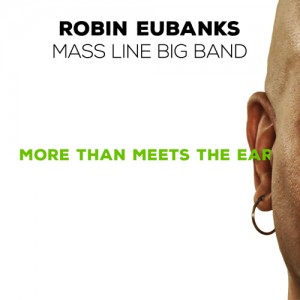
Trombonist, composer and arranger Robin Eubanks has been a vital member of the creative musician for over 3 decades. Along with his brothers Kevin (guitar) and Duane (trumpet), he makes music that cross various genres and border. He is an integral member of several of bassist Dave Holland's ensembles (including his big band) and is in his 8th season with the SF Jazz Collective. "More Than Meets The Ear" (ArtistShare) is the initial recording of his Mass Line Big Band, a 17-member ensemble (plus 2 guests) that, thanks to support from Oberlin College (he's on the music faculty), the Arthur and Charlotte Zitrin Foundation and ArtistShare participants, explores arrangements of music Eubanks composed for Holland and SF Jazz.
If you know anything about his music, you'll know he loves odd time signatures and over to make them swing. The crisp arrangements and twisting melody lines leave plenty of room for solos and, while trombonist takes the spotlight on all 9 cuts, he is generous in the solo room for others. The rhythm section includes Glenn Zaleski (piano), Boris Kozlov (acoustic and electric bass) and the exciting Nate Smith (drums). There are 5 reed players including Antonio Hart (lead alto), Alex Cummings (alto and soprano), Marcus Strickland (tenor), Bobby LaVell (tenor) and Lauren Sevian (baritone, bass clarinet). The late Lew Soloff (in one of his last recording sessions) leads the trumpet section which also features brother Duane,Alex Sipiagin, and Aaron Janik while lead trombonist Jason Jackson presides over the section that also includes James Burton, Jennifer Wharton (who doubles on tuba), and Douglas Purviance (bass 'bone). Organist Mike King appears on 2 tracks, the sweet ballad "Bill and Vera" and the lowdown "Blues for Jimi Hendrix." On the latter track, as well as on several others, the leader plays his electronic trombone, an effect which, for me, is a bit overdone. Percussionist David Silliman also appears on a number of tracks and is especially effective on "A Seeking Spirit" and "Mental Images."
The arrangements throughout the program stand out for their start use of timbre, harmonies, and how the section blend their voices. "Yes We Can - Victory Dance", a piece Eubanks wrote after the election of Barack Obama, is so infectious. Latin rhythms set the pace, the celebratory melody weaves in and out of the sections while Smith and Silliman keep the piece bouncing forward. That "bounce" also enlivens "A Seeking Spirit", pushed forward by the montuno Zaleski plays and the conversational melody lines. Zaleski also stands out on the handsome, medium tempo, ballad "Full Circle", with a pretty solo that unwinds over the strong play of Kozlov (acoustic) and Smith. The band then kicks the piece into overdrive for the blazing tenor solo from Strickland. Soloff has his moment on the final track, the sprightly "Cross Currents", and he responds with his customary clarity and fire. Ms. Sevian follows and delivers a sweet baritone sax solo before Smith creates quite a powerful solo over a very smart arrangement.
After a number of listens, one can hear how the music Robin Eubanks has created for his Mass Line Big Band is more akin to the work of Arturo O'Farrill than to Maria Schneider. Rhythms are so important to this music; one not only hears that in the brilliant work of Nate Smith but in the lines Eubanks campuses for his sections. "More Than Meets The Ear" is truly exciting music.
For more information, go to robineubanks.com.
Here's a bit of video about the project:
Composer, arranger, conductor and sometimes pianist Miho Hazama leads a most interesting large ensemble. Dubbed Munit, tt's a 13-member group with a rhythm section but, instead of the typical saxophones and horns, there are 3 reed players and 2 brass plus a string quartet and vibraphone. Ms. Hazama's second CD, "Time River" (Sunnyside), is built along the same lines as her 2013 debut "Journey To Journey", expansive melodies (often multi-sectioned) with intelligent use of the strings. The new CD features a 3-person reed section (Cam Collins on alto sax and clarinet, Ryoji Ihara on tenor and soprano saxes plus flute, and Andrew Gatauskas on baritone sax and bass clarinet) and 2 brass players (Matthew Jodrell on trumpet and flugelhorn, and Adam Unsworth on French horn) plus the splendid string of violinists Joyce Hammann and Sara Caswell, violist Lois Martin and cellist Meaghan Burke. The rhythm section includes pianists Sam Harris (3 tracks), Alex Brown (4 tracks) and Ms. Hazama (2 tracks) plus Sam Anning (acoustic bass) and Jake Goldbas (drums). Rounding out the ensemble is vibraphonist James Shipp, an integral component of the music on the majority of tracks. Special guest Gil Goldstein's sweet accordion sounds take the lead on "Under The Same Moon" which opens up in its second half to include an exciting soprano sax solo from Ihara. The arrangement displays the influence of Maria Schneider, especially in the voicings for the brass and reeds.
The other special guest is Joshua Redman, who plays tenor and soprano saxes on the title track. The longest cut on the recording (at 10:26), the swirling melody lines open up to strong solos from Jodrell (flugelhorn) and Redman (with a tenor spot that, at its onset, reminds this listener of Wayne Shorter's take on Steely Dan's "Aja"). After the solo section, the ensemble returns then drops out to leave Redman and pianist Harris to have quite the conversation. The rest of the musicians return in full force as Redman soar above them (note the brilliant work of Goldbas as he pushes the music forward).
Other highlights include the perceptive arrangement of A Perfect Circle's "Magdalena" (the only non-original in the program). The piece swings lustily for the baritone solo of Gutauskas and rocks hard in support of the fiery tenor solo of Ihara. The interplay of vibes, strings and the rhythm section between the solos is really well-organized. The stop-and-start rhythms of "Dizzy Dizzy Wallflower" frames fine solos from Collins (alto sax) and Jodrell (trumpet) yet pay attention to the interludes which occur throughout, keeping the band and listeners on their toes. There's an mysterious yet comforting feel to "Alternate universe, was that real?", the swirling reeds and strings beneath the melody.
The 2 tracks, "Introduction" and "Fugue", with the leader on piano stand out as the reeds, brass and bass sit out. Goldbas support the strings as they dance through the melody lines and Ms. Hazama propels the music forward. There are numerous striking moments, such as the impressive drum openings and when the strings literally fling the melody line one-by-one near the close of "Fugue".
I did not hear Ms. Hazama's debut CD so "Time River" serves as my introduction to this young composer and arranger. If the first recording, which features many of the same musicians, is even close to the quality of the new one, Miho Hazama should have a wonderful career. This music is involving from beginning to end with musicians that give their all to this fine music.

 Posts
Posts


,%20photo%20by%20SHERVIN%20LAINEZ.JPG)


.jpg)