Showing posts with label Theo Bleckmann. Show all posts

Friday, July 26, 2024

April is the Coolest Sound


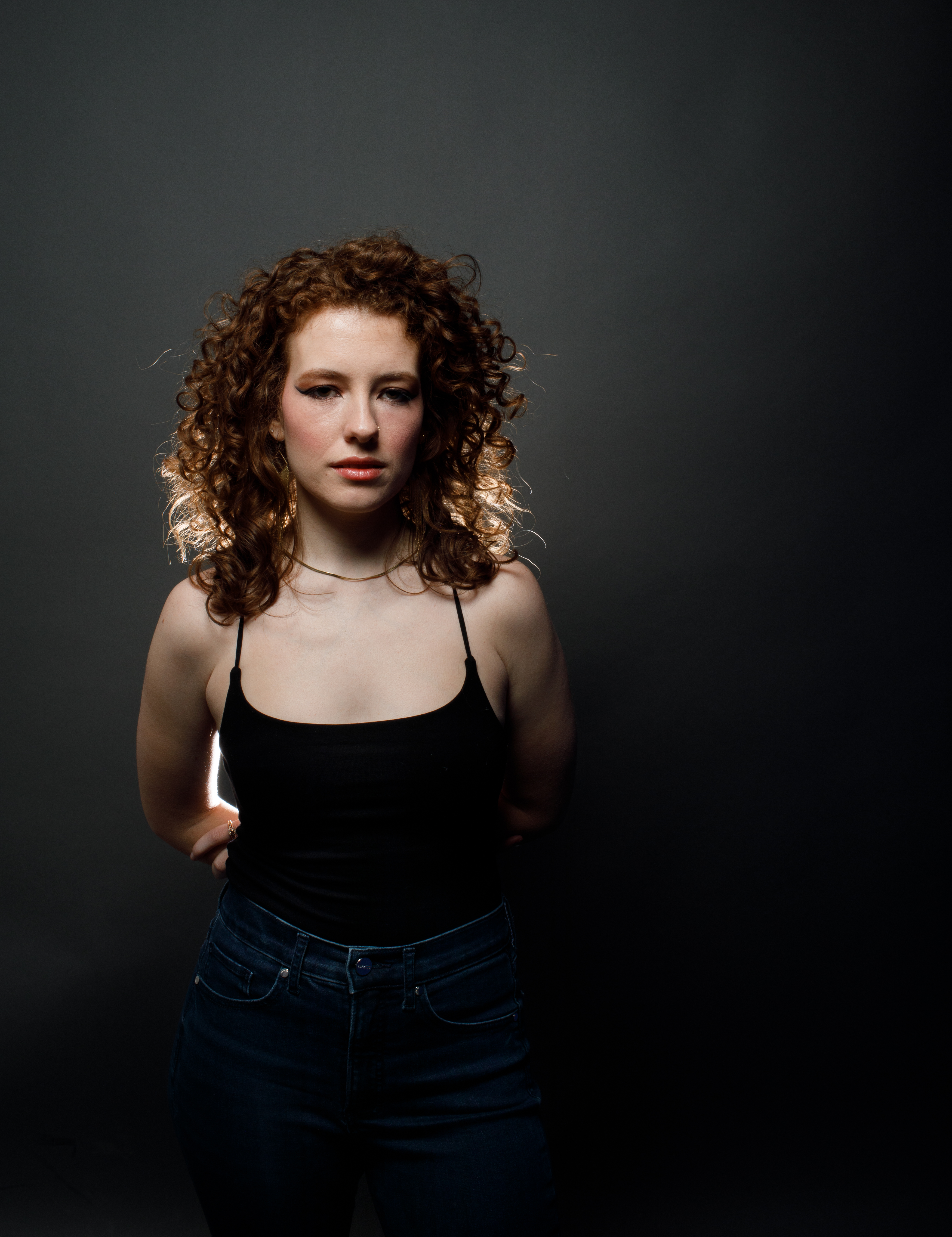
Photo: Desmond White
Every once in a while, you receive a recording and you say "how have I missed this artist? – surely this is not her first album".  As far as I can tell, April Varner, a native of Toledo, Ohio, is a true newcomer. Yes, she won the 2023 International Ella Fitzgerald Jazz Vocal Competition and before that had self-released a 4-song EP, "Hummingbird", in 2022 but, for the most, she's been flying under the "critical" radar.  Her bio reads that it wasn't until she attended Indiana University that began Ms. Varner made her transition to jazz.  Soon, she was the head of the IU vocal jazz ensemble and in her senior year, became the vocalist in the Du Vido Septet, the IU Brazilian Jazz ensemble.  After graduation, Ms. Varner moved to New York City where in 2022, she earned her Master's Degree in Vocal Jazz Voice Performance under the tutelage of Theo Bleckmann. Since then, she has studied with Tierney Sutton, Kurt Elling, Russell Malone, and Sachal Vasandani (among others) as well as performing in clubs and concert venues around the United States and in venues in France.

"April by April Varner" (Cellar Music) is her first album. Produced by Ulysses Owens II, not only does the 11-song program cover a lot of musical territory but also does so with each song having "April" in its title. The really smart idea works because of her choice of material. Yes, there are standards, such as "I'll Remember April" and "April In Paris" but there are also several originals.  Her choice of covers range from Paul Simon & Art Garfunkel's "April Come She Will" to Prince's "Sometimes It Snows In April" to Glen D. Hardin's "April Again" (first recorded by Dean Martin!) to her original lyrics to Pat Metheny's "Joy Of April".  Ms. Varner joins voices with Theo Bleckmann on an emotionally rich reading of Frank Ocean's "Dear April".  Not only do the the two voices interact but Bleckmann, who is the co-producer on the track, overdubs numerous voic es that serve as a chorus, as counterpoint, and as whispers in the distance. 

As important as the material is, the excellent musicians who support her throughout the majority of the songs are just as integral to the album's success. Pianist Caelan Cardello, bassist Reuben Rogers, and drummer Miguel Russell are not just her "backup band" but also key contributors to the success of the performances. They lay down a "wicked" Latin rhythm on "I'll Remember April" which also includes Dayna Stephens (tenor saxophone) and Bennie Benack III (trumpet).  In the middle of the song, Ms. Varner and Mr. Benack III step out for a vocal exchange that's a rapid-fire scat interaction. Listen below to Mr. Metheny's "Joy of April" which features her trio plus one of her mentors, Russell Malone on guitar.  Note how high and clear she sings through her lyrics – always clearly, never strident – and her "solo" is the middle is a joy, as is the fine tenor solo from Mr. Stephens.  Ms. Varner caresses Prince's lyrics on the sad elegy "Sometimes It Snows In April": the rhythm section is right there with her. Russell's gentle cymbal work, Rogers' melodic bass work, and Cardello doing double on acoustic and electric guitar. Their sterling accompaniment gives Ms. Varner the right support so her soulful, emotional, vocal stands out.

The album closes like it began, with a fine original from the leader. "Who Let April Back In My Dreams" rains down on the listener like a gentle Spring shower.  The voice draws you into the story, into the dream of unrequited love, and the music helps you settle.  It's a smart close to a splendid debut.

"April by April Varner" should introduce the fine young singer and composer to a wider audience.  Don't be put off by the 11 "April" songs: embrace the fact that each song is a universe of delights in itself. Also note that April Varner has a lovely, lively, voice that never sounds like anyone but herself.  You might hear some Ella, perhaps Sarah Vaughan, and, on the Frank Ocean tune, hints of Sachal Vasandani in her delivery, but it all gets mixed in seamlessly. This is quite a delightful album and one hopes for many more over the decades!

For more information, go to https://aprilvarner.com/. To hear more and purchase the album, go to  https://aprilvarner.bandcamp.com/album/april

Listen here to the "Joy of April":


Monday, February 1, 2021

Big Band Bud, Bleckmann with Brass


The life story of Earl "Bud" Powell (1924-1966) is not easy to read.  A child prodigy, he was in the forefront of the Bebop movement in the 1940s but a run-in with the police left him battered, bruised, and unconscious. From that time on, at various stages of his musical career, Powell would be institutionalized.  Yet, his musical output rarely suffered.  It was as if a switch would turn on when he sat down to the keyboard.  He could be a dazzling stylist, was an adventurous composer, and, up to the final years of is life, Powell was often a splendid soloist.  Unlike his contemporary Thelonious Monk, his compositions and his recordings have not garnered the same scrutiny, examination, and tributes. Enter Ethan Iverson.  The busy musician, composer, writer, and  performer began a comprehensive study of Powell's ouevre and began writing a piece for quintet and orchestra.  The result is "Bud Powell In the 21st Century" (Sunnyside Records) recorded live on the final days of December 2018 at Umbria Jazz Winter #26.  

The 16-piece ensemble includes Ingrid Jensen (trumpet), Dayna Stephens (tenor saxophone), Ben Street (bass), Lewis Nash (drums), and Iverson (piano, conduction) plus the brass and reed sections of the Umbria Jazz Orchestra. The program includes seven Powell compositions, one by Monk ("52nd Street Theme"), plus eight Iverson originals, several based on motifs that the composer based on Powell's improvisations. The album opens with the two-part title track ––  "Chorale" has a somber theme but when you listen to the reed and brass interjections, it may remind you of the sounds of Powell's "Parisian Thoroughfare" while "Continuity" jumps out on the strength of Iverson's dancing piano lines. That leads to a delightful romp from Stephens as the backing sections call-and-respond. 

The Bud Powell pieces ("Celia", "Tempus Fugit", "Bouncing With Bud", "Wail", "Dance of the Infidels", "I'll Keep Loving You", and "Un Poco Loco") all stand out. "Celia" swings sweetly and the arrangement with the trumpets playing the theme over Nash's splendid drumming is a treat.  The drummer leads off "Tempus Fugit" with a militaristic take before breaking into a powerful rhythm and we're off. The reeds play the theme, the brass answers, and the musicians romp away.  Sparkling solos from Iverson and Ms. Jensen add more sizzle to this sauce.  The bebop jump of "Dance of the Infidels" has the tenor and trumpet play the theme while Street and Nash build a swinging foundation.  "I'll Keep Loving You" opens with a long, lovely, French Horn feature for Giovanni Hoffer who, after the solo intro, leads the ensemble through the lovely melody (pay attention to the short "breaths" of the reeds during the verses).   

The final two tracks, "Nobile Paradiso" and "Un Poco Loco", are the longest pieces on the program (11:08 and 6:21) and both have great power. The former, an Iverson original, takes ideas from Powell and wraps them in a gentle swing rhythm, bouncy piano, and delightful, melodic, counterpoint from the brass and reeds. The latter track, one of Powell's most covered originals, has a forceful rhythm track –– it's a forceful example of the "conduction" method where Iverson cues the different musicians to step out of the ensemble and make short musical statements.  Over the course of the tune, the reeds play first and, after a brief respite, the brass get their moment. It's fascinating to hear the musicians play off each other, climaxing in a glorious cacophony above Nash's splashing cymbals.  The return to the theme is downright enjoyable!
Don't know much about Bud Powell?  Go find his classic Blue Note recording "The Amazing Bud Powell Vol. I" (you'll end up wanting more but start here) and then come back and listen to "Bud Powell In the 21st Century".  Not only does Ethan Iverson pay his respects, he does what all forward thinking musicians; he breathes new life into the ideas, themes, and musicianship of the originals.  Everyone plays great and the music shines!

For more information and to purchase the album, go to https://sunnysiderecords.bandcamp.com/album/bud-powell-in-the-21st-century.  

Here's a taste:


Personnel:

Ingrid Jensen - trumpet
Dayna Stephens - tenor saxophone
Ethan Iverson - piano, conduction (two tracks)
Ben Street - bass
Lewis Nash - drums
Giovanni Hoffer - French horn (on "Un Poco Loco")
Daniele Tittarelli - alto saxophone
Manuele Morbidini - alto saxophone, conduction (six tracks)
Pedro Spallati - tenor saxophone
Rossano Emili - baritone saxophone
Mirco Rubegni - trumpet
Francesco Lento - trumpet
Francesco Fratini - trumpet
Massimo Morganti - trombone
Roberto Rossi - trombone
Federico Pierantoni - trombone
Rosario Liberti - bass trombone


Here's a fascinating combination. "This Land" (Westerlies Records) posits the expressive voice of Theo Bleckmann in a collaboration with the brass quartet The Westerlies (trumpeters Riley Mulherkar and Chloe Rowlands plus trombonists Andy Clausen and Willem de Koch) .  Original material mixed with compositions by Woody Guthrie (four of his pieces), Bertolt Brecht, Joni Mitchell, Phil Kline, a gospel tune and one traditional make the listener sit and think about the power of music to illuminate the human condition.  The expansive musical arrangements allow the brass to "paint the scene" alongside the vocals and the songs often soar. 

Opening with Ms. Mitchell's "The Fiddle and the Drum" (composed in 1969), the song's anti-war message, originally sung by a Canadian looking across the border, reverberates in this time of internal unrest.  Bleckmann's vocal has just the right emotion and does not sound accusatory while the horns rise and fall behind.  While the title track sounds like it could be a Woody Guthrie tune, the music comes from trombonist Clausen who set the words of the late Kashmiri poet Agha Shahid Ali (1941-2001). Note how Bleckmann uses electronics to create a vocal wind behind the strident horns.  The vocalist contributes "Another Holiday", a song inspired by the mass shooting at Pulse nightclub in 2016. Without mentioning the horrific event, the lyrics speak of how the world passes by as events unwind, as one's family grows up in uncertain times. The horns move from bell-like figures to drones as Bleckmann's electronically modified voices float through the sound.  

While each song is notable, there are several beyond the ones mentioned already that really stand out. The traditional "Wade in the Water" is given a dark, mysterious, feel by the horns as they push the vocal to the background.  "In the Sweet By and By", a Gospel tune from the 19th, is linked with Joe Hill's "The Preacher and The Slave" (the satirical lyrics comes from the latter).  The "oom-pah" waltz adds to the comic effect as do the "Salvation Army" trumpets behind the penultimate verse.  Bleckmann translates the lyrics of Bertolt Brecht's "Das Bitten der Kinder", an anti-war song, that is first presented as a recitation and then sung in the original German with the brass playing the role of a string quartet (Bleckmann first recorded the piece in 2008 on the Winter & Winter album "Berlin: Songs of Love & War, Peace & Exile")

All the Woody Guthrie pieces ("Two Good Men", "Tear The Fascists Down", "The Jolly Banker", and "I Ain't Go No Home in This World Anymore") are instrumentals with only one over 51 seconds long (the rollicking "...Men").  They serve as joyful slices of Americana.

The album closes with Phil Kline's "Thoughts and Prayers" (from his "Florida Man" song cycle) – the piece is an elegy for the victims of the Parkland, FL, mass shooting and was originally composed for Bleckmann.  The title reminds us that that's the most politicians have offered after the multitude of gun tragedies that have occurred over the past decade.  

"This Land" is powerful music in these crazy days. Conceived and recorded before the pandemic but in the midst of the Trump administration, the music reminds that the United States has always been somewhat off-center. Theo Bleckmann and The Westerlies make all 15 tracks worth listening to time and again.  

For more information, go to westerliesmusic.com.  To hear more and to purchase the album, go to  https://thewesterliesmusic.bandcamp.com/album/this-land.


Here's an important musical statement from the album:


Thursday, August 13, 2020

Songs We Sing, Songs We Play

Photo: Mercedes Jelinek
John Hollenbeck, a composer, arranger, bandleader, drummer, percussionist, Professor, and now a label owner (more below), received a commission in 2010 from the Frankfurt Radio Big Band and began a project he called "Songs I Like a Lot"(Sunnyside Records).  He enlisted vocalists Kate McGarry and Theo Bleckmann plus pianist Gary Versace. The album was issued in 2011 featuring songs by Jimmy Webb, Ornette Coleman, Queen, and more.  Four years later, the entourage reassembled (Uri Caine taking over the piano choir for all but one track) and issued "Songs We Like a Lot" (also Sunnyside). That album included songs by Burt Bacharach/ Hal David, Cyndi Lauper, and others including two Hollenbeck originals. At that time, Hollenbeck said that the project would be a trilogy with fans around the world sending in suggestions for the final installment.

For this album, Ms. McGarry and Mr.Bleckmann built a list of the Top 20 vote getters and, without the drummer's input, chose seven songs.  Not surprisingly, the new album is titled "Songs You Like a Lot" and is issued on Hollenbeck's newly-formed Flexatonic Records label (available through Bandcamp with all profits going to Black Lives Matter).  Everyone is back with Versace on all eight tracks. The eight-song program (one Hollenbeck original) ranges from the traditional folk song "Down To The River to Pray" to The Bee Gee's "How Deep Is Your Love" plus James Taylor's "Fire and Rain", "Pure Imagination" (from the original "Willie Wonka and The Chocolate Factory" movie, and a fascinating deconstruction of the Brain Wilson classic "God Only Knows", titled here "Knows Only God."

Starting with The Beach Boys tune (that closes the album), Hollenbeck the arranger switches sentences around, speeds up the tempo, uses Versace's organ to shadow the vocals, and the reeds and brass for fluttering colors, powerful blasts, and thumping beats.  On initial listens, the song is off-putting but subsequent listens unveil brilliant new harmonies and reveals the emotions. The fiery ending is a gas.  The performance is truly a tour-de-force!

Photo: Bill Douthart
No matter how you feel about The Bee Gees, Hollenbeck reinvents "How Deep Is Your Love" with the reeds playing Steve Reich-like figures along with the guitar. Both vocalists embrace the melody and lyrics with great emotion but never overdue. Ms. McGarry and Mr. Bleckmann sing one of the choruses in unison, the latter's falsetto absolutely beautiful.  Steffen Webber's powerful tenor saxophone solo kicks the band up a notch.  The lone trumpet of Axel Schlosser kicks off Peter Gabriel's "Don't Give Up", sounding like a tribute to the composer's songs for Genesis.  When the voices come in (Ms. McGarry has the Gabriel part while Mr. Bleckmann takes the place of Kate Bush), the song changes directions. Note the lovely deep brass and organ plus the sweet soprano sax right before the soulful/ gospel section sung by Ms. McGarry.  The ending is a hoot, a "revival meeting" powered by the playful electric bass of Hans Glawischnig and the repetitive "Don't Give Up."


The opening track, the traditional "Down to The River...", is a piece you will play over and over.  There is so much going on yet the piece never feels cluttered. Listen for the vocal harmonies, the fine solos (acoustic bass, piano, and Martin Scales on guitar), how the melody and background changes each time through the simple homily/ verse culminating in full band sound that resembles the Shaker Hymn rearranged by Aaron Copland for his "Appalachian Spring."

Each album in the trilogy, all available digitally through Flexatonic Records (link is below), is filled with intelligent arrangements, brilliant vocals, impeccable musicianship, and the overall emotion that music, whether familiar or not, can bring the listener a sense of wonder, feelings of joy, and hope for better times.  Kudos to John Hollenbeck, brava to Kate McGarry, Theo Bleckmann, Gary Versace, and the Frankfurt Radio Big Band––savor all these sounds.

For more information, go to https://johnhollenbeck.com.  To purchase the music from Flexitonic, go to https://johnhollenbeck.bandcamp.com/album/songs-you-like-a-lot.

Here's the Peter Gabriel song:


Personnel:

John Hollenbeck composer, arranger, conductor 

Theo Bleckmann · voice 
Kate McGarry · voice 
Gary Versace · piano, organ 

Frankfurt Radio Big Band 

Heinz-Dieter Sauerborn · alto/soprano saxophone, clarinet, flute 
Oliver Leicht · alto/soprano saxophone, clarinet, flute, piccolo 
Ben Kraef · tenor/soprano saxophone, flute 
Steffen Weber · tenor/soprano saxophone, clarinet, flute, alto flute 
Rainer Heute · bari/bass saxophone, Bb/bass/contra-bass clarinet, flute 

Frank Wellert · trumpet/flugelhorn 
Thomas Vogel · trumpet/flugelhorn 
Martin Auer · trumpet/flugelhorn 
Axel Schlosser · trumpet/flugelhorn 

Christian Jaksjø · trombone 
Felix Fromm · trombone 
Shannon Barnett · trombone 
Manfred Honetschläger · bass trombone 

Martin Scales · guitar 
Hans Glawischnig · bass 
Jean Paul Höchstädter · drums 
Special guest: Claus Kiesselbach · mallet percussion, timpani 


Photo: D'Addario Woodwinds
Massachusetts native, saxophonist, flutist, composer, arranger, and educator Dave Pietro moved to New York City in 1987. Over the past 33 years, he has worked with the Maria Schneider Orchestra, Darcy James Argue Secret Society, and spent 1994-2016 as the lead alto saxophonist in the Toshiko Akiyoshi Jazz Orchestra. His list of sideman gigs ranges from jazz acts to pop/ rock singers to studying and performing East Indian music with tabla master Sandip Burman.  Pietro has issued seven CDs as a leader, the most recent "New Road: Iowa Memoirs" crowd-financed through ArtistShare. For that album, he convened a group that included Alex Sipiagin (trumpet, flugelhorn), Gary Versace (piano), Johannes Weidenmueller (bass), and Johnathan Blake (drums) with perciusionist Rogerio Boccato contributing on percussion.

Those same musicians, plus trombonist Ryan Keberle, reconvened in June of 2019 to record Prieto's new ArtistShare album "Hypersphere."  The title refers to multi-dimensional sphere of four or more dimensions––if you are curious, click here.  These musicians are all first-class improvisors and Prieto writes to their strengths.  But, this is not merely a "blowing" album. The leader writes intelligent, well-constructed, melodies with smart harmonies plus the music often gives the rhythm section the opportunity to determine the flow. Listen to how he makes the six or seven piece ensemble (Boccato appears on six of the nine tracks while Keberle plays on five) sound like a 10 or 12 piece band with his fine voicings and overlapping melodies on many of the themes.  When he and Sipiagin blend their voices (as they do on the title track and on "Incandescent"), the songs remind this writer somewhat of the Andrew Hill especially on his 1999 Palmetto album "Dusk".  Blake, who now plays alongside the saxophonist, Versace, and Keberle in the Maria Schneider aggregation, is a powerhouse throughout the recording.  Just listen to how he and Weidenmueller combine to push the ensemble forward on "Quantum Entanglement" as well as on the opening track "Kakistocracy."

Photo: Jimmy & Dena Katz
The opening of "Boulder Snowfall" features overdubbed flute. Following the intro, Pietro takes off on a long, delightful, solo that uses the song's melody as a touchstone. Versace's richly melodic solo starts as a duet with bassist Weidenmueller that soon adds Blake to the mix––the three rides the rhythmic waves for several minutes.  The chiming sounds of an electric piano leads the ensemble into "Tales of Mendacity" which is a musical comment on the attack on truth going on all around us.  The blend of Blake's martial drumming and the gently chiming electric piano underneath Pietro's flowing solo is a highlight of the first half leading into Sipiagin's dancing solo.

The album closes with "Orison", an archaic word for "prayer".  After a handsome solo bass intro,
Boccato's bells and hand percussion plus Blakes's exploration around the drum kit underpin the lovely three-way melody.  Keberle steps into his short, yet, heartfelt solo, joined half-way through in conversation by Sipiagin's flugelhorn––Pietro on soprano sax and Versace's acoustic piano join the those voices until the four parts join together in melody while the drums create a righteous storm.

"Hypersphere" is intelligent, often powerful, music, an album that blends strong compositions with excellent musicianship without sounding technical or emotionless.  Dave Pietro, the composer, is responding to the world around, to the crazy shifts in politics and, in hindsight, in global health, reminding us we are stronger when working together than standing apart.

For more information, go to www.davepietro.com. To purchase the album, go to https://www.artistshare.com/Projects/Experience/361/515/1/Dave-Pietro-Hypersphere?v=2 or to https://davepietro.bandcamp.com.

Listen to the evocative ballad "Boulder Snowfall":