What a treat to immerse oneself in a big band recording! To hear how the different sections work together and independently, how the solos are built upon such elegant and intelligent foundations, how melody leads to counterpoint, how rhythm leads to interaction, how the composer and arranger utilizes all these voices to tell his or her story, all this and more is exciting to these ears. The sound of the big band in jazz has grown from the primitive yet really sophisticated work of Edward Kennedy "Duke" Ellington and Fletcher Henderson in the 1920s and 30s, from the "territory" dance bands of Benny Moten and Count Basie, the high-powered swing of Benny Goodman and Chick Webb, the smoother sounds of the Dorsey Brothers (together and separately) and Glen Miller and beyond. The work of Gil Evans with and without Miles Davis in the 1950s and 60s as well Gerry Mulligan and Bob Brookmeyer paved the way to the work of Maria Schneider, John Hollenbeck, Alan Ferber, Ryan Truesdell (in his case, Gil Evans) and a number of younger voices such as Darcy James Argue, Ayn Inserto, and more.
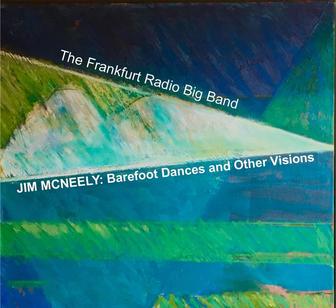
Jim McNeely (born 1949) grew up (musically) in the 1970s, working with the likes of the Thad Jones/Mel Lewis Orchestra, Phil Woods, and Stan Getz. After Thad Jones moved to Europe, he began working with the Mel Lewis Orchestra and soon discovered how much he loved arranging and writing for big bands. Mentored and employed as a pianist by Bob Brookmeyer, McNeely learned much and soon began working with big bands such as the Vanguard Jazz Orchestra, the Carnegie Hall Jazz Band, the Danish Radio Big Band, and, since 2008, has been the chief conductor of the Frankfurt Radio (HR) Big Band. That group is featured on his new album "Barefoot Dances and Other Visions" (Planet Arts), a stunning and highly enjoyable seven-song suite that speaks to the composer's relationship with these musicians and their myriad abilities.
What composer McNeely envisioned was a song cycle that pulled together a number of story-lines, from the celebration of Mr. Brookmeyer that opens the album, the playful and ebullient "Bob's Here", to the somber, wistful yet a bit bouncy ballad "A Glimmer of Hope" to the wondrous swing of "Redman Rides Again" (a tribute to the arranging style and adventurous nature of Don Redman (1900-1964) - the stunning interaction on the last track mentioned between the clarinets of Heinz-Deiter Sauerborn, Stefan Weber, and Rainier Heute with the electronically manipulated clarinet of Oliver Leicht is flat-out brilliant.
When you listen to program, notice the brilliant foundations laid down by bassist Thomas Heidepriem, how the electric guitar work of Martin Scales is so important to both the power and direction of certain pieces, the amazing work of the brass and reeds, and how drummer Jean Paul Höchstäder is the linch-pin for so much of the music - his power, his push, his fills - just the way he dances underneath trombonist Günter Bollman and the rest of the band on the title track is life-affirming. As you work your way back through the music, you'll hear soloists such as trombonist Peter Fell, tenor saxophonist Tony Lakatos, and trumpeter Axel Schlosser maneuver through the arrangements to create memorable solos.
With exception of his work with the Vanguard Jazz Orchestra (also released on Planet Arts as well as New World Records), "Barefoot Dances and Other Visions" is only other large ensemble work by Jim McNeely to be issued on an American label. This is music that should be heard - like the best work of the afore-mentioned composers and arrangers (Ellington, Brookmeyer, Schneider), the music builds off the past but is clearly of its day. This is also music that speaks of the creativity of the American musical experience, when freedom, creativity, talent, and the curiosity to see how one can continue to move forward collide to create art. Plus, it's great fun from the opening minute right to the end!
For more information, go to www.jim-mcneely.com and to www.hr-bigband.de/english/index.html. The latter site has several concert videos (not of the music on the new CD but of collaborations with bassist Dave Holland and vocalist Gretchen Parlato). Personnel: THE BAND Heinz-Dieter Sauerborn--Alto Sax, Soprano Sax, Flute, Alto Flute, Bass Flute, Clarinet Oliver Leicht--Alto Sax, Clarinet, Flute, Alto Clarinet, Alto Flute Tony Lakatos--Tenor Sax, Flute, Alto Flute Steffen Weber--Tenor Sax, Flute, Clatinet, Bass Flute Rainer Heute--Baritone Sax, Bass Clarinet, Alto Flute Frank Wellert--Trumpet, Flügelhorn Thomas Vogel--Trumpet, Flügelhorn Martin Auer--Trumpet, Flügelhorn Axel Schlosser--Trumpet, Flügelhorn Günter Bollman--Trombone Peter Feil--Trombone Christian Jaksjø--Trombone, Valve Trombone Manfred Honetschläger--Bass Trombone Martin Scales--Guitar Peter Reiter--Piano Thomas Heidepriem--Bass Jean-Paul Höchstädter—Drums
The Diva Jazz Orchestra, founded in 1992 by Stanley Kay after he conducted a band with Sherry Maricle as its drummer, is celebrating its birthday and continued existence with the "25th Anniversary Project", a smashing new recording produced and released through ArtistShare. Instead of focusing on earlier works or standards, music director Ms. Maricle asked members of the all-women group to submit new works. She brought two pieces to the project and eight other members have one each. A number of these musicians and composers have busy careers outside the band but they have brought their best to this effort.
By this time, most people have gotten over the novelty of the "all female big band" and can concentrate on how good this music (besides, when one is listening to a recording, can you tell if it's a woman or a man playing - and does it matter at all?) The program opens with the rollicking "East Coast Andy" composed and arranged by baritone saxophonist Leigh Pilzer (also a member of the Smithsonian Jazz Masterworks Orchestra) - the song is a spunky romp a la the Basie Orchestra with fine solos from the composer and trumpeter Jami Dauber. Clarinetist/tenor saxophonist Janelle Reichman blends Eastern European sounds and chords with a lively Latin rhythm on "Middleground" (co-arranged with bassist Noriko Ueda) - it's a delight to hear how the sections add to the melody section before pianist Tomoko Ohno dances over the rhythm section. Then, Ms. Reichman takes off with the reeds and brass playing counterpoint. All the while, the bass and drums keep the piece percolating.
Every track as its standout moments. There is the delightful double trumpets solo (Leisl Whitaker and Barbara Laronga) on "Jami's Tune" and the powerful tenor saxophone statement by Erica von Kleist on "Darkness of the Matter" (composer Sara Jacovino adds a hardy trombone solo as well). Ms. Maricle's lovely ballad "Forever in My Heart" features a handsome melody by Rachel Therrien on flugelhorn plus intelligent fills from the reeds and brass (excellent baritone sax work from Ms. Pilzer underneath). The drummer also contributed the final track, aptly titled "The Rhythm Changes", which has a dazzling opening theme that breaks into exciting solos from trumpeter Laronga and alto saxophonist Mercedes Beckman. Both bassist Ueda and drummer Maricle take short solos with the reeds and brass adding occasional "shout" phrases or bluesy riffs - the scramble at the end of the piece that leads back into the opening melody takes the album on a triumphant note.
Diva Jazz Orchestra may be 25 years old but this album sounds fresh and on target. There's neither a weak tune nor boring solo in the 65-minute program. Yes, you can hear echoes of Count Basie, touches of Duke Ellington, a bit of Woody Herman but they are just that - echoes. What truly stands out is how strong this music, how much fun the musicians are having as an ensemble, and how positive the listening experience is. Happy "25th Anniversary Project"! Here's to many more.
Trumpeter David Weiss leads two of the most dynamic bands playing these days and nights. As a player, he takes a bit of a back seat in The Cookers(the septet with Billy Hart, George Cables, Billy Harper, Eddie Henderson, Cecil McBee, and Donald Harrison) - Weiss is much more prominent in Point of Departure, a quintet (plus guests) that takes its name from an Andrew Hill composition (and album). This group mines music from the late 1960s and early 70s from composers like Hill, Tony Williams, Wayne Shorter, and two men closely associated with the Detroit music scene of that time, pianist Kenny Cox and trumpeter Charlie Moore. Those two musicians, who recorded as the Cox and The Contemporary Jazz Quintet, had a big effect of Weiss and he has recorded a number of their pieces with Point of Departure.
"Wake Up Call" (Ropeadope) is the ensemble's fourth CD. The 9-song program is broken into three sections, "I. Prologue", "II. Unfinished Business", and "III. New Beginning". Judging by the power of the music, I believe that Weiss is telling his audience that these songs, many of them from the raucous years of the late 1960s, are indicative of the turmoil in this country at that time and how they reflect these troubled times. Besides Weiss on trumpet (and Fender Rhodes on 2 tracks), Point of Departure is composed of Matt Clohesy (bass), Ben Eunson (guitar), Myron Walden (tenor sax on 6 tracks), J.D. Allen (tenor sax on 3 tracks), Nir Felder (guitar on 3 tracks), Travis Reuter (guitar on 6 tracks) and, for my money, the most important element in the group, drummer Kush Abadey. The drummer, who first came to critical notice at the age of 16 when he joined Wallace Roney's group, has worked with Terence Blanchard, Chris Potter, Tomasz Stanko and many others.
The album opens with "Sanctuary", a John McLaughlin songs from the Mahavishnu Orchestra'a 1973 album "Birds Of Fire." The music starts slowly but soon Abadey plus guitarists Eunson and Reuter are creating a roiling rhythm for Walden's intense solo. "..Unfinished Business" begins with Wayne Shorter's "Two Faced", a song first recorded by the Miles Davis Quintet in 1968, appearing on 1976's "Water Babies". At 12:22, it's the longest track and takes its time to build up steam - there are strong solos from Weiss and Allen, both fairly long and both feeding off the energy of the rhythm section. Two songs from Charles Moore follow, the funky uptempo "Multidirection"(reminiscent, at times, of "Theme from Shaft") and the delightful ballad "Noh Word." On the latter track, Allen's soulful solo rolls into Felder's, a more impressionistic take over the powerful drums.
The third, and longest, section, "New Beginning" opens with Joe Henderson's "Gazelle" (recorded in 1970) - the piece rides the rampaging drums (listen to Abadey under Walden's fiery tenor solo) and percussive guitar. Cox's "Sojourn" has an understated power, pushed by the rhythm section and the counterpoint of the guitars. Perhaps the most fascinating cut in the program is "Sonhos Esquecodos" from Brazilian composer Lelo Nazario (recorded in 1982 as a member of Grupo Um). Sandwiched between two pieces by Tony Williams, the song has a long rubato beginning (yet listen to the power of Abadey) with trumpet and saxophone playing the melody (actually sounds like a tune Weather Report may have produced in its early years). Once the piece settles into a groove, Reuter's hard-edged solo ratchets up the intensity.
"Wake Up Call" is intense music, so much so that even the quieter moments have great power. Listen to this music for its messages, for the solos, for the amazing work of Kush Abadey and Matt Clohesy, for the smart two-guitar work, and for its power. David Weiss & Point of Departure wants you to get off your feet and let the music created here push you to action.
Tenor and soprano saxophonist Jason Rigby, from Cleveland, Ohio, is a busy musician and educator. He leads or co-leads four groups and is currently an Assistant Professor of Jazz/Commercial Saxophone at Towson University in Maryland. His third album as a leader, "One: Detroit - Cleveland Trio" (Fresh Sound New Talent), features the rhythm section of bassist Cameron Brown and drummer Gerald Cleaver, both of whomhail from the Motor City and recorded with Rigby on his 2009 FSNT album "The Sage." In fact, Brown was also on Rigby's 2006 debut for Fresh Sound, "Translucent Space."
Right from the opening moments, "One" is a treat for lovers of saxophone trio music. "Dive Bar" is a duet for tenor and drums - Cleaver opens the piece with a short introduction, a thunderous setting for Rigby to enter with a melody not unlike the initial theme of Sonny Rollins's "Freedom Suite." The power of the drums and the writhing saxophone lines sink their hooks into the ears of the listener and do not let go for seven minutes. Brown leads the trio in on ""Dorian Gray" with a three-note bass line then joins Rigby to play the theme. The tension created by the rhythm section gives the tenor plenty of room to play around. Rigby is a strong player but not a "shouter" or ""screamer", there's a subtlety to his lines that give a song like "Live By The Sword" its focus yet his phrases hint at the work of Albert Ayler - listen to Brown and Cleaver as they freely navigate underneath. Both musicians stoke the fires of this music without losing control or direction.
Yet, there are quieter moments with strong melodic flourishes. The Richard Rodgers - Lorenz Hart standard "You are Too Beautiful" (composed in 1931 for Al Jolson) starts off quietly with Rigby emphasizing the melody and building his solo from the theme. Pay attention to the great counterpoint of Brown and the sweet brush work of Cleaver. The saxophonist goes solo on the Gershwin's "Embraceable You", creating a mini-symphony and taking his time to reference the melody. He breaks out the soprano sax for Herbie Hancock's "Speak Like a Child", playing the melody against Brown's excellent counterpoint and Cleaver's splendid cymbal playing. Rigby's solo is mesmerizing, short phrases repeated, bouncing off the low notes of the bass, twisting around the poly-rhythms of the drums, and slowly picking up in intensity but never boiling over.
"One" is a good title. Yes, this is a trio recording but the musicians approached the session of one mind; to play hard, smart, and together. One can hear plenty of "freedom", with the sax, drums, and bass seemingly going in three directions at the same time but never at cross purposes. Listen to the music of Jason Rigby: The Detroit - Cleveland Trio with open ears and you will be rewarded many times over.
One of the joys of listening to the music of saxophonist, composer, conceptualist, and producer David Binney is that you can always "expect the unexpected." You know that he always works with top-notch rhythm sections and pianists plus brings in people to join him on the front line who are leaders in their own right. The "unexpected" parts of this equation are his compositions, arrangements, and improvisations, all of which he does with great intelligence and passion.
His new album, "The Time Verses", is his ninth as a leader or co-leader to appear on the Criss Cross label (based in The Netherlands). This is the sixth Binney release on the label to feature drummer Dan Weiss, fourth to feature bassist Eyvind Opsvik, and third with pianist Jacob Sacks. These musicians, who appear together on Binney's 2010 "Aliso" album) are Binney's "regular" band and, on numerous Tuesdays over the past seven years, the ensemble that has played alongside him at New York City's 55 Bar. Like Duke Ellington, Miles Davis, John Coltrane, and other artists who maintained "working bands", Binney composes to the strengths of his musicians and knows they are up to the challenges he creates for them.
The recording is a suite of long pieces and short interludes that follows the composer through a "day in his life", a day that includes a gig at "Fifty Five" (celebrated in song near the end of the day and the program). The album opens with "Dawn", a short (.26 seconds) synthesizer "sound sculpture" that leads directly into "Walk" which puts into music a person's thoughts while walking through a city. The drums and bass set a good pace but soon the piece takes a turn, still moving forward on the strength of the melody line. A child's voice pops up during Opsvik's arco bass solo and the quartet then moves in a new direction for Binney's lengthy and fascinating solo.
Vocalist Jen Shyu joins the quartet for "Seen"; she sings her lyrics written for an instrumental that Binney composed years ago but had yet to record. It's a lovely ballad with solos from Opsvik (a very melodic bassist) and a powerfully emotional turn from the leader. The gentle vocal helps to calm the emotions as the music comes to rest. Later in the program, alto saxophonist Shai Golan adds his musical voice (for just a moment) to the thematic section of "Where Worlds Collide", a episodic composition with numerous time changes and shifts plus splendid solos from Binney and Sacks. But, make sure to listen to the melodic and powerful drumming of Weiss.
The music that one hears on "The Time Verses" contains many emotions, compositions that invite joyful interactions as well as thoughtful solos, and beautifully constructed melodies. Since his recording debut in 1989, David Binney has matured greatly as a person musician, composer, arranger, producer, and bandmate. Arguably, he is one of the finer contemporary composers in the creative music community. His albums bear repeated listenings , challenging the eager listener on multiples levels.
Speaking of sonic delights, one should partake in a deep drinking in of "Trickster", the new album from guitarist and composer Miles Okazaki and his first for Pi Recordings (although he has participated on numerous recordings for the label). On initial listen, you cannot help but hear the influence of saxophonist Steve Coleman, not only because the guitarist has worked with the MacArthur Fellow for the past eight years alongside the rhythm section of Anthony Tidd (electric bass) and Sean Rickman (drums) but also the majority of these original pieces, like his mentor's compositions, build their melodies off of the powerful rhythms. "Mischief" displays a Brazilian Bossa Nova influence while the fiery "Black Bolt" has the intensity of Ornette Coleman's electric music. The work of pianist Craig Taborn shines throughout, each of his solos goes in unexpected direction, and he also helps to create the foundation for the pieces. Listen to how he and Rickman lock in on the high-powered "The West."
NYTimes.com
Several of the pieces have a palpable tension; whether it's the gun-shot snare drums on "The Calendar" or the prog-rock funk of "Box In a Box", the music has an edge. The guitarist dances atop the bouncy rhythm section (at times, reggae-like) on the latter track. Also, check out how Taborn creates his solo off those serious rhythms. "Eating Earth" take its time to develop, the slow melody unfolding from guitar and piano lines with Tidd's deep bass notes setting an ominous tone. When the drummer enters, the bassist creates a thick yet nervous bass line for Taborn to slowly maneuver the melody, Okazaki's quiet plucking acting as a second percussionist.
The ultra-funky "Caduceus" close the program, dancing in on a bass line that would not sound out of place on a Bootsy Collins records followed by a funky guitar lick - the piano counterpoint opens the door for the drums and the quartet literally hurtle forward. The clarity of Tidd's notes mixed with the crackling work of Rickman gives Okazaki and Taborn a deep cushion to trade choruses.
"The Trickster", like the origami figures that grace the album cover art, has many folds and shapes, the music drawing from many influences. Play it loud, let the low notes of Anthony Tidd's bass rattle your speakers, the drums of Seth Rickman shakes the windows, Craig Taborn's piano notes fly around your head, and the percussive attack of Miles Okazaki dig into your chest. And, you can dance to it!
It's an honor being asked to participate in a Critics Poll, fun going back and listening to albums that you really enjoyed writing about, and downright nerve-wracking trying to pick 10, especially in a year where so many good recordings crossed my desk.
2016 was a very busy year in my life and a quick glance at the number of posts over the past 12 months is evidence that I did not have as much time to sit, to listen, to contemplate, and to write. Connecticut is a small state with a decent amount of venues for live music but, due to numerous obligations, I rarely took the opportunity to just bask in the glory of watching and listening to musicians create, interact, to give of themselves, to transport listeners beyond the mundane and into worlds of endless possibilities. The albums listed below (and in subsequent posts) are the ones that made days special, that made me think, helped me see the "real" world in a different light, and gave me great joy.
As one gets older, it's often tough to find joy when the world is in such upheaval. Music not only gives us a haven from the daily insanity but, like poetry, theater, books, film, sports and more, also sheds light on the issues we should not, cannot, and often ignore.
Here's Part One:
Camila Meza - "Traces" (Sunnyside Records) - This recording, issued in late Winter, is utterly delightful. Not only is Ms. Meza a fine vocalist but this recording illustrates what a good guitarist, arranger, and band member she can be. Her group - Shai Maestro (keyboards), Matt Penman (bass), Kendrick Scott (drums), Bashiri Johnson (percussion), Jody Redhage (cello) and guest vocalist Sachal Vasandani - creates sounds that make each one of these songs stand out. In February, I wrote "Chances are good you will not hear a better CD this year." That statement, for me, still stands. (Ms. Meza is also a member of trombonist Ryan Keberle's group Catharsis whose 2016 album appears in Part Two of this list).
Billy Hart & The WDR Big Band - The Broader Picture (ENJA/Yellowbird) - Arranged and conducted by Christopher Schweizer, this album is a knockout from beginning to end. Mr. Hart, who is most often heard in quartets ands quintets, is right at home pushing and prodding a large ensemble, especially one as talented as the WDR Big Band. This album gives us the opportunity to hear the drummer's compositions in a different light and, golly, do they ever sound good. Great drumming, impressive compositions, sparkling arrangements, and powerful solos, all add to a splendid album.
Here's a nice long track to enjoy:
Anthony Branker & Imagine - Beauty Within (Origin Records) - Dr. Branker is a composer and arranger who has been involved with music as a musician, conductor, and educator for over three decades. His CV is deeply impressive (read it here) and his music keeps getting stronger. It's political and topical in the manner of Charles Mingus and Max Roach and this particular quintet of musicians - Fabian Almazan (piano, Pete McCann (guitars), Ralph Bowen (tenor and soprano saxophones), Linda Oh (bass), and Rudy Royston (drums) - play with such fire and finesse that this music is alive and powerful, lovely and emotionally strong.
Greg Ward & 10 Tongues - Touch My Beloved's Thoughts (Greenleaf Music) - The story of how this music came to life is quite fascinating (read it here); suffice to say, it's origins lay in saxophonist and composer Ward listening to Charles Mingus's "The Black Saint and the Sinner Lady" (1963). Ward's work for 10 musicians, created for a concert of music and dance, is filled with blues, sparkling solos, and intelligent arrangements that spark comparison to Mingus's work in its scope but does not imitate it. Especially impressive is the piano playing of Dennis Luxion and the rhythm section of Jason Roebke (bass) and Marcus Evans.
Patrick Cornelius Octet - While We're Still Young (Whirlwind Recordings) - Saxophonist, flutist, composer, and arranger Cornelius created this fine recording as a musical response to the stories of A.A. Milne that he was reading to his children at bedtime. With an impressive band - John Ellis (tenor sax, bass clarinet), Jason Palmer (trumpet), Nick Vayenas (trombone), Miles Okazaki (guitars), Gerald Clayton (piano), Peter Slavov (bass), and Kendrick Scott (drums) - and a smart group of compositions, this album features music that is contemplative yet swings, with musicians telling "stories" that flow thanks to the fine ensemble arrangements and individual solos. My review (read it here) includes quotes from both Cornelius and co-producer Kyle Saulnier. For more information, go to www.patrickcornelius.com. Here's one of the delightful tracks:
These are just five of my favorites - more to come in the next several weeks. Enjoy!
During a particularly tough emotional time last year, I did not spend much time listening to music (not a good thing for a reviewer.) The album I did listen to a lot was "Vista Accumulations", pianist and composer Matt Mitchell's stunning double album for Pi Recordings. Not because the music was soft and reflective (much of it is not) but because of the way the Quartet - Mitchell, Chris Speed (tenor saxophone, clarinet), Chris Tordini (bass), and Dan Weiss (drums) - moved through the pianist's compositions, how they interacted with each other, and how the music was built upon a framework of myriad influences yet sounded like itself (above all else).
This Friday (October 28), the Matt Mitchell Quartet will come to New Haven to perform in the Fall 2016 Concert Series at Firehouse 12, 45 Crown Street. They will perform 2 sets - 8:30 and 10 p.m. - featuring the music from "Vista Accumulations." Another one of the reasons the album sounds so good is how alive the music sounds. I imagine the Quartet sounds even better in person.
For ticket information, go to firehouse12.com or call 203-785-0468. To fond out more about this very busy musician - he is a member of Tim Berne's Snakeoil, Rudresh Mahanthappa's Bird Calls, the Dave Douglas Quintet, and works with artists such as , saxophonist Darius Jones, John Hollenbeck, and multi-reed artist Anna Webber (see below) - go to www.mattmitchell.us.
Here's the Quartet in action:
**********************************
As stated above, Mr. Mitchell works with Anna Webber, the saxophonist, flutist, and composer from British Columbia, Canada. Along with another one of the collaborators mentioned above, drummer and percussionist John Hollenbeck, they make up Anna Webber's Simple Trio, named for the ensemble's "SIMPLE" CD released by Skirl Records. Skirl has just released the Trio's second effort "Binary" and it's a powerful followup to the group's debut album. The saxophone-piano-drums trio is an interesting blend not often heard bit it works wonderfully with these musicians. The 12 tracks, all composed by Ms. Webber, blend short and long pieces, most with a sense of urgency that pins the listener to the chair. Half the tracks are short (none over 3:35 and four under 2 minutes) "Rectangles" which could be group improvisations. Several, including "Rectangles 3a" and "Rectangles 3c", are powerful statements, built upon the insistent rhythms the trio creates. Yet "Rectangles 1a" that closes the program is a very quiet but still jarring tenor sax-led ballad.
Peter Hum
The other six tracks include three over 9 minutes. "Impulse Purchase", the longest at 14:30, is a multi-sectioned piece that opens with solo tenor sax playing a breathy circular melody until Mitchell joins playing counterpoint and a shape begins to emerge. Hollenbeck joins in and the piece begins to morph. It's great fun to follow the trio as the music shifts in intensity, the pianist's powerful chords creating a storm beneath the saxophone which, of course, does not last as the musicians seem to tug and fuss with the melodic and rhythmic center. The high-energy "Underwhelmed" (ironic title) jumps right out of the gate to the strength of the drums and the pianist's two-handed attack (notice how Hollenbeck plays the melody at times and how Ms. Webber can create such percussive saxophone riffs). The tenor and piano play gleefully atop the energetic beat. The fragmented nursery-rhyme feel at the onset of "Tug O' War" features a circular melody played by all three (Ms. Webber on flute). Inevitably, the music changes direction, becomes quiet, even introspective (great brush work in the background) until the pace changes and the trio reprise the opening but that settles down quickly. The title track opens as a ballad but the trio keeps pushing at each other until the music reaches a boiling point (powerful tenor sax work from the leader).
fullyaltered.com
Listen - that's what you need to do - "Binary" is filled with music that has an urgency that gets under your skin. Anna Webber's music is anything but "Simple", especially in the hands, hearts and minds of John Hollenbeck and Matt Mitchell. There are moments when the musical interactions remind this listener of Trio Air (Henry Threadgill, Steve McCall, and Fred Hopkins) and one is tempted to write that this music is influenced by the AACM of the 1970s. Yet, one can hear 21st Century rhythms in the work of the drummer and, occasionally, a minimalist bent. All that to say that this is one stunning recording. Play it loud, let the house shake and the music reverberate, let "Binary" push you away from complacency into action.
Here's the opening track (and the obligatory "kitten" video!):
Guitarist Michael Musillami and bassist Rich Syracuse are both veterans of the music, putting in decades of travel, recording, practice, and teaching. Yet, they did not begin playing together until 2015. The guitarist has spent the last 2 decades at the helm of Playscape Recordings, touring with his trio of Joe Fonda and George Schuller, augmenting them with guest soloists. The bassist is best known for his long associations with baritone saxophonist Nick Brignola and pianist Lee Shaw.
Musillami and Syracuse just released their debut album, "Of The Night: the Music of Wayne Shorter" (Playscape) and it's quite a charmer. It's the second excellent recording of Mr. Shorter's music released in the last few months - Denny Zeitlin's "Early Wayne" being the other - and illustrates just how influential a composer the saxophonist is. Miles Davis gets plenty of credit for the music he created in the 1950s and 60s (deservedly) but one feels that the compositions of Mr. Shorter will inspire musicians for generations to come. Why? Because of the open quality of the pieces. Listen to 13 minute "Footprints" that opens the duo's album. Notice how the guitar and bass converse, how they play with and support each other and also play counterpoint to each other. The expansive melody line and the chordal blueprint opens up so many exploratory avenues for these musicians and they do waste any opportunities.
That's what happens throughout the recording. The duo explores these works from different angles, such as the Mediterranean-sounding ballad "Black Nile" (from 1964's "Night Dreamer" Lp), the fulsome bass chords allowing the guitarist to lift off from the melody. "Iris" (first recorded by the Davis Quintet on "E.S.P") is a lovely ballad, the dialogue including a handsome guitar solo over as slow, rolling. rhythm. Mr. Shorter composed "One By One" for the Art Blakey Jazz Messengers in the early 1960s - here, the powerful hard-bop piece gets a bluesy overhaul, the swinging "walking" bass lines pushing the guitarist to let loose but he stays "cool" and under control. "Virgo" (also from the "Night Dreamer" Lp) is a slow blues that closes "Of The Night." The slow tempo allows both musicians to create melodic solos that tale their time to develop. Musillami makes the most of his time, creating an emotionally rich and impressionistic solo that stretches over four minutes. Syracuse's solo is 1/3rd the length, mostly in the upper register of the bass, yet does not feel tacked on or obligatory but more like an energetic response to the guitar solo.
"Of the Night" has the feel of a late-night session but one that the participants had been thinking about for a while. Michael Musillami and Rich Syracuse are certainly veterans but they play with the joy and energy of musicians half their age. Doesn't hurt that their explorations take place in the world of Wayne Shorter, a composer and musician whose music has inspired players and listeners for over five decades, music that opens so wide it allows for many different interpretations. This is a delightful album that will yield many hours of listening pleasure.
The Firehouse 12 Fall Concert Series began last week (yes, it was still officially summertime) and continues this Friday September 23 (the first full day of Autumn) with the Taylor Ho Bynum 7-tette. This ensemble, featuring Bill Lowe (tuba, bass trombone), Ken Filiano (bass, electronics), Nicole Mitchell (flute), Tomeka Reid (cello), Jim Hobbs (alto saxophone), and Tomas Fujiwara (drums), is an offshoot of the cornetist's Plus-Tet that has a brand new album coming next week recorded earlier this year in front of a live audience (most of whom contributed to a campaign to support the album). This will be THBynum's first gig in the Elm City since that evening.
arts.gov
If you've seen Bynum's groups in action, you'll know to expect the unexpected, from avant-garde to Latin-flavored romps to straight-ahead swing and more, often within the same piece. The interaction of loud and soft, high sounds and low tones, the various groups-within-the-group, is great fun for listeners who love the challenge that this music presents.
There are two sets - 8:30 and 10 p.m. (separate admission for both) - and you can find out more by going to firehouse12.com or calling 203-785-0468. To fond out more about Mr. Bynum and his projects, go to taylorhobynum.com.
c/o JazzTimes
Two more great nights of music at The Side Door Jazz Club in Old Lyme. On Friday evening (9/23), the Brubeck Brothers (bassist and trombonist Chris and drummer Daniel) bring their Quartet to the venue. The group has been in existence over four decades but quite active since their father Dave passed in 2012. Not only do they play Dad's music but also are both fine composers (as our brothers Matt - cello - and Darius - piano) in their own right.
Joining Chris and Daniel onstage will be Mike DiMicco (guitar) and Chuck Lamb (piano). The group's repertoire covers a wide swath of American music (no surprise considering its heritage) and will surprise and please with its variety. Doors open at 7:30 p.m. and the music starts an hour later. For tickets and more information, go to thesidedoorjazz.com.
newpittsburghcourieronline
Saturday night, the Door opens (actually re-opens) for the Freddie Hendrix Quartet. The trumpeter is back, almost a year to the day he last performed at the venue but it's been quite a busy year. Not only was his debut album issued on Sunnyside Records this January but he has also performed with the George Gee Swing Orchestra plus the Big Bands of Christian McBride, Jimmy Heath, Caleb Brumley plus the Vanguard Orchestra, Arturo O'Farrill's Latin-Jazz Orchestra and the David Gibson Quintet (plus dozens of other gigs).
Hendrix is a delightful player, swings with glee, and has a sweet tone (listen below). His regular touring group includes Brandon McCune (piano), Chris Berger (bass), and Chris Beck (drums). Music begins at 8:30 p.m. For more information, call 860-434-0886. To learn more about the drummer, his web address is www.freddiehendrix.com.
Click on the link to hear the title track of his debut album:
Bassist, arranger, and composer Matt Ulery, whose trio of critically acclaimed albums of Greenleaf music (issued from 2012-14) contained an often dazzling array of styles and musicians, continues that trend with his new album, "festival" (Woolgathering Records). Released on his own label, the recording is credited to Matt Ulery's Loom / Large and features two different ensembles, one his regular quintet (Loom), the other a 14-piece orchestra (Large, including violin soloist Zach Brock), performing three distinct programs.
The album opens with the only non-original composition on the album, an orchestral reading of Jimmy Rowles' classic "The Peacocks." Ulery's classy arrangement features Brock playing the melody and the major solo. Ulery takes a short solo over the easy brush work of drummer Jon Deitmeyer (with the trombones adding a quiet chorus) before pianist Rob Clearfield steps out front for a moment before the Orchestra returns to the main melody. Large also appears on the following track, "Hubble", a wondrous journey through several changes in dynamics that also has intelligent use of the strings, reeds and brass, sending out melodic signals throughout the universe of the song. The forceful 4/4 rhythm, the quiet interludes, strong solos from Clearfield and Brock, and the excellent arrangements for the sections makes this such an impressive work.
The remaining 13 tracks feature the bassist's quintet performing two quite different programs. Besides Deitmeyer and Clearfield, Loom includes the splendid trumpeter Russ Johnson and clarinet work of Geof Bradfield. On the first six tracks, the ensemble dances and instrumentally sings its way through Ulery's melodic repertoire. It's absorbing to hear the emotionally powerful "A Family, A Fair" with its rippling piano solo and the fascinating dialogue between the trumpet and clarinet near the end. Listen to how Ulery employs all five "voices" on "Canopy", how the bass and drums also work the melody into their playing and how Clearfield's elemental piano chords holds the piece together. Johnson's work is exemplary throughout, his clear, crisp, articulation ands how he glides through the registers on pieces such as "Middle West" (with the bass clarinet as counterpoint and support) plus his forceful yet flowing journey through "Ecliptic."
Geoff Hand/Chicago Tribune
The last five tracks are shorter, no less melodic, but with a distinct Americana feel. Clearfield moves to pump organ while Ulery moves to tuba and adds his voice to "The Silence is Holding." There is a bit of Salvation Army Band as if imagined by Robbie Robertson feel to these tracks yet they have genuine power, often generous melodies and a gentle swing. Johnson's growling trumpet enlivens "Horseshoe" while he and Bradfield (bass clarinet) have a fanciful dialogue through "Constituent." Ulery gets to play some impressive bottom on the latter over the martial drumming of Dietmeyer. The final track, "Slow It Down", sounds like a cross between "Edelweiss" (from "The Sound of Music") and a Shaker hymn. It's a lovely, heartfelt, way to close this wide-ranging program, a gentle kiss on the cheek before you enter dreamland (or, perhaps, exit a land of dreams.)
Matt Ulery has created his own sound, hearing a confluence of sounds and styles unlike any contemporary composer. It strikes this listener a decade and seven albums into his career that melody is his guiding principal and this his instruments are the people such as Jon Deitmeyer, Rob Clearfierld, Zach Brock, eighth blackbird, Marquis Hill (trumpet), Russ Johnson, and others who he interpret his wondrous messages. "festival" is a treat, three albums on one disc, 74+ minutes, and well worth your time and attention.
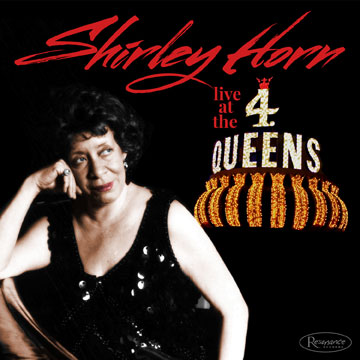
From 1960 to the early days of the 2000s, pianist and vocalist Shirley Horn (1934-2005) was a captivating member of the music scene. She recorded a slew of albums for labels such as SteepleChase, Mercury, and ABC-Paramount but it was move to Verve Records in 1987 that really brought her international recognition. With her trio of bassist Charles Ables and drummer Steve Williams, she was a favorite of so many lovers of melody and swing. An impressive pianist, it was her voice that attracted so many fans. She rarely wasted a syllable plus each word carried a lot of weight - bless her, she knew how to swing and Ms. Horn could carry one away with her ballad.
All of that is apparent on "Shirley Horn: Live at the 4 Queens", an album recorded for broadcast in the long-departed Las Vegas nightclub for radio station KNPR. Now brought to our attention by George Klabin and Zev Feldman for Resonance Records in a package that includes the company's usual group of essays from fans , critics, and participants. The program, recorded a year after she signed with Verve, opens and close with instrumentals that show one just how much fun Ms. Horn has with Ables and Williams as well as how fine an instrumentalist she was. Randy Weston's "Hi-Fly" swings in on solid chords and sprightly brush work. There's a touch of Ellington and "Fats" Waller in her splendid solo. The other non-vocal track is Oscar Peterson's "Blues For Big Scotia" and the Trio has a delightful time swinging this up-tempo blues.
The seven vocal tracks range from Jobim's entrancing "Meditation" and samba-with-a-blues kick version (and vice versa) of "The Boy From Ipanema" to a lengthy take on Rodgers & Hart's "Isn't It Romantic" that opens up for all three musicians to solo. Ms. Horn was well-known for her ballads ad the two on this album do not disappoint. "Lover Man" moves quite slowly, reminding us that the song is a real blues lament. There's a hint of Billie Holiday in her vocal but pay attention to how Ms. Horn's frames and comments on her vocal. Lil and Louis Armstrong's "Just for a Thrill" is the other ballad in this set and the performance is indescribably delicious (and there's a touch Mr. Armstrong's signature "growl" at the onset of the song). Words cannot do justice - you must hear it for yourself.
Do just that - listen to "Live at The 4 Queens". Think of this polished musician, vocalist, and entertainer, a polished, professional, and talented person in the midst of what was known as "Sin City" at the time. Wherever she was, Shirley Horn was herself, no one else, and we are all the luckier for the time she was here, for the many albums she recorded and all those fine gigs in clubs, concert halls, and auditoriums.
The final concert in the Spring 2016 Concert Series at Firehouse 12 in New Haven brings the Jay Rosen Clarinet Madness to the recording studio/performance venue. Rosen, a drummer and composer, has been a vital member of the creative music scene for nearly three decades having worked with artists such as reed master Vinny Golia, trumpeter Paul Smoker, violinist Billy Bang and many others. He's a member of Trio X, an improvising trio that also features saxophonist and trumpeter Joe McPhee and bassist Dominic Duval. Their series of albums for the CIMP label are recommended listening.
For this gig, Rosen is joined by long-time associates Perry Robinson and Michael Marcus. Both clarinetists are also veterans of the scene with Robinson (77 years old) first recording in the 1960s and Marcus (63) in the late 1980s. Both have extensive credentials ranging from intimate duos and trios to big bands.
Clarinet Madness will play two sets - 8:30 and 10 p.m. - with separate admissions. For more information, go to firehouse12.org or call 203-785-0468. Originally, this concert was to be the last of this season but there is to be a coda - more on that later in the week.
allaboutjazz.com
Trumpeter, composer, and educator Duane Eubanks is the youngest of three brothers, all of whom are making their mark of the contemporary music scene. Older brothers Kevin and Robin are busy leading their own ensembles; both have been integral members of bands led by bassist Dave Holland as has Duane (Holland's Big Band). Slowly but sure, Duane has built a career as a bandleader, worked with artists such as the late Mulgrew Miller, Orrin Evans, and drummer Jeff Williams as well as with Alicia Keys, Wu Tang Clan, and Mos Def. His new Sunnyside release, "DE3: Live at Maxwell's", is an impressive triumph finding him in a trio setting with drummer Eric McPherson and bassist Dezron Douglas, both musicians with solid connections to Hartford, CT (studying at the Jackie McLean Institute at The Hartt School with the bassist also a Hartford native.)
Duane Eubanks brings a Quintet to The Side Door Jazz Club this Friday (6/10) that not only features young Mr. Douglas and Mr. McPherson but also the fine tenor saxophonist Abraham Burton (he, too, studied with Mr. McLean) and pianist Allyn Johnson (an excellent musician from the Washington D.C. area). This is shaping up to be quite a fine night of music at the Old Lyme venue.
The Door opens at 7:30 p.m. and the band takes the stage at 8:30. For more information, go to thesidedoorjazz.com. To learn more about the trumpeter, go to www.duaneeubanks.com.
Here's the group in the studio (Marc Cary on the piano) from 2015:
On Saturday, Jan & Ken welcome back the Eric Wyatt Quartet. The saxophonist and composer first played in Old Lyme in July 2014 celebrating the release of his Posi-Tone CD, "Borough of Kings." Mr. Wyatt has been mentored by Sonny Rollins ( a family friend as well as being the great saxophone master) and worked with saxophonist Kenny Garrett, trumpeter Jeremy Pelt, drummer EJ Strickland, and many more.
Joining him will be pianist Benito Gonzalez (who's also featured on the album), bassist Essiet Essiet, and drummer Chris Beck. Expect the music to be powerful (there's a live performance of John Coltrane's "Pursuance" on Wyatt's website that will tear the speakers off the wall) as well as sensitive and blues-drenched. The man plays with conviction and soul so expect to be moved when the Quartet hits the stage.
For more information and reservations, call 860-434-0886. To learn more about the saxophonist, go to www.ericwyatt-music.com.
Here's the Quartet (different rhythm section) live at Small's in 2015:
*******************************************
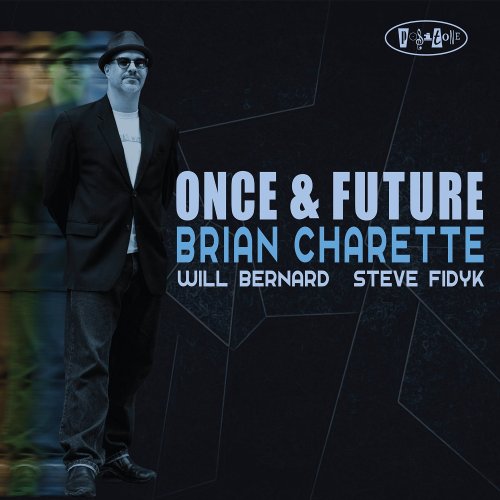
Organist Brian Charette (also quite a fine pianist) has a new album whose concept came during a break at a recording session where he found a copy of his book "101 Hammond B-3 Tips" resting atop the studio's organ. Looking back through the instructional guide where he had written about the "giants of the Hammond Organ", Charette decided his next album would include works by many of this giants as well as nods to the new "Lions" of the instrument.
"Once & Future" is his fourth Trio CD for Posi-Tone and features guitarist Will Bernard and drummer Steve Fidyk. Out of the 14 tracks, three are originals, one is a standard ("At Last" from the pens of Mack Gordon and Harry Warren), and the rest come from either organists or jazz greats - there's even a mighty funky version of James Brown's "Ain't It Funky Now" which would sound out of place on an album by The Meters. There's the hard-edged funk of Larry Young's "Tyrone" that he recorded on his debut for Blue Note "Into Something". A little more of "swing-funk" is heard of "Hot Barbecue" which Jack McDuff recorded in 1965. Fidyk's cymbal work is pretty impressive as is Bernard's chunky riffs and sparkling solo. The legendary Jimmy Smith wrote "Mellow Mood" for his collaboration with guitarist Wes Montgomery who contributed "Road Song" to their project. Charette and company play the tunes back-to-back; the former has a bit of a mysterious sound in the opening that flows throughout the organ solo while the latter is a medium-tempo groove with a pleasant melody and excellent solos from Charette and Bernard (this is his second recording with the organist's trio).
There are a pair of splendid cuts back-to-back in Bud Powell's "Dance of the Infidels" and Woody Shaw's "Zoltan" (as recorded by Larry Young in 1966). Both tracks swing with delight, the former jumping atop the excellent bass lines of Charette while the latter retains the marching band introduction from the original before Fidyk's fine cymbals sets the pace for the organ and guitar.
The leader's three contributions include's the program's closing track, the blues-soaked shuffle "Blues For 96." The sounds the organist gets from his various drawbar settings changes from track to track as well as during the song. What stands out is that not only does each song have its own personality but also that Charette, Bernard, and Fidyk never lose their focus or push the proceedings but let each song unfold organically. And, they are having fun.
"Once & Future" is a pleasure to sit down and listen to. Everyone plays well, the program is smartly chosen, and, with a little digging, you discover organists you have never heard (for instance, Freddie Roach and Leon Spencer). Hats off to Brian Charette for another fine disk. Now, see if you can convince producer Marc Free to record your Sextette!
As a reviewer, I get plenty of music to fill my days and nights. But, I grew up in the 1960s, falling in love with the music of The Beatles, The Who and The Rolling Stones but also The Coasters, The Drifters, The Four Tops, Booker T & The MGs, and Otis Redding. First William Bell song I ever heard was "You Don't Miss Your Water ('Til Your Well Runs Dry)" off of Redding's "Otis Blue" Lp. I sought Mr. Bell's recordings (on Stax Records) and, while he don't have grit and "oomph" of Otis, his smooth voice and articulation stood out from the "Soul Shouters" (closer to Sam Cooke than Wilson Pickett). He composed a number of good-sized hits including "Born Under a Bad Sign" for Albert King (this version still sends chills up and down my spine) and "Everybody Loves a Winner" for Delaney and Bonnie.
photo by David McLister
After Stax collapsed in the 1970s, Bell continued writing and recording songs, having hits on both "pop" and "r'n'b" charts. Artists such as Billy Idol, Linda Ronstadt, Rod Stewart, and Etta James recorded his songs Bell has never given up performing and, over the past few years, he has been quite busy with movie appearances, most notably in the documentary "Take Me To The River" where he is heard alongside Snoop Dogg. In 2013, he was part of a large contingent of musicians and vocalists who appeared "In Performance at the White House: Memphis Soul" - click here to watch the entire show.
Now, thanks to Concord Records, Stax is back in business and the label's latest release is "This Is Where I Live" by William Bell. Produced by John Leventhal (Rosanne Cash), the music is that wondrous mix of gospel, blues, country and soul that Bell has created for nearly 60 years. Listening to the new album and checking out the recent videos, he's got quite a voice at the age of 77. It's got a bit more grit which he uses to great effect on the remake of "Born Under a Bad Sign" (snappy new arrangement from the producer). The ballads, such as "All Your Stories" and "The House Always Win", recall his earlier songs but display the wisdom of maturity. There are cuts that are so funky yet so melodic - "Mississippi - Arkansas Bridge" and "People Want to Go Home" - you just start to tap your foot and, before the songs ends, you're singing along.
photo by D. McLister
If you like classic soul music, never lost your fervor for the sounds of Stax/Volt, and enjoy a well-constructed song with a real story (not just lines that leads to a catchy hook), "This Is Where I Live" will more than satisfy your cravings. It's such a treat that William Bell is back on the radio, back on record, still writing songs from the soul, filled with that irresistible Memphis beat. As I write above, plenty of music comes out of my mailbox and into my in-box every month, but I purchased this recording and it is worth 10 times what I paid. Go home to William Bell and, despite all the madness around s every day, the world will feel less frightening.

 Posts
Posts