Showing posts with label Linda May Han Oh. Show all posts

Saturday, June 29, 2024

Inspiration, Imagination, & Intent


There are many listeners of contemporary music no matter the genre are usually looking for spiritual uplift. Listeners say they love technical prowess or "new" sounds but what makes us return to music is how it moves us. Music is a "full-body experience" – for this listener, it usually starts with moving my feet, then enters into my brain, and finally into my heart.  If it feels "real nice", play it twice.  That's why I like the music of John Coltrane, of McCoy Tyner, Muddy Waters, Howlin' Wolf, Bill Withers, Bruce Hornsby, Bonnie Raitt, and others. And Anthony Branker. His music often makes one think, his titles lead one to investigate Black experiences and history, and his rhythms often bring you up out of your seat. Over the course of 10 albums, all released by Origin Records, he's assembled some of the best musicians, given them music to sink their creative teeth, and a created a lot of memorable performances.  

Given the overt political nature of a good number of his albums (2013's "Uppity", 2014's, "The Forward (Towards Equality) Suite", and 2023's "What Place Can There Be for Us"), Dr. Branker's 10th album (and third with his group Imagine), "Songs My Mom Liked" takes a different tack.  His 88-year old mother (she turns 89 on June 27) has been dealing with the ongoing effects of cognitive dementia. Dr. Branker has been driving her to appointment and elsewhere playing his albums in the car. His mother responded so positively to certain songs that he began to collect a group of them, rearranging them for this septet that features Fabian Almazan (piano), Linda May Han Oh (bass), Rudy Royston (drums), Pete McCann (guitar), Phillip Dizack (trumpet), Donny McCaslin (tenor and soprano saxes), and Aubrey Johnson (voice).  Nine of the 12 songs are from Dr. Branker's earlier albums and none recorded by this particular group.

With different "voices" and approaches to the material, this program is brimming with energy, imagination, and joy. Right out of the gate, "Praise" jumps out of the speakers powered by the rhythm section with Royston's drums front and center. This is McCaslin's first recording with Dr. Branker and he shines throughout the program. Listen below to "Sketches of Selim" to hear how he and trumpeter Dizack interact and build off each other's solo. Fabian Almazan also brings a heightened sense of urgency to each one of his solos while his work as part of the rhythm section is a delight. The rollicking "The House of the Brotherhood of Black Heads" takes off at a blistering pace with Ms. Oh and Royston furiously pushing the group forward. Each of the soloists (Dizack, Almazan, and McCaslin) rides the rhythmic waves, sometimes behind the beat but mostly enjoying the frenetic drive.  Later in the program, "To Be Touched (By the Spirit)" gives the listener an insight to one of the composer's touchstone influences; the power and glory of McCoy Tyner. Almazan's incredible solo stands out flowing out atop Royston's stunning drum work and the foundational bass playing. McCaslin comes roaring out out of the piano solo feeding the percussive fire even as his lines raise higher and higher.  A richly melodic and percussive bass solo leads the band back to a quick reiteration of the main theme.

Aubrey Johnson is heard on "Three Gifts (From a Nigerian Mother to God", her lovely wordless solo reading of the theme opens the piece before Dizack and the band enter to repeat the theme.  She can be heard in the background singing in unison with McCaslin's tenor. She drops out for the solos but returns to sing the melody and, later, counterpoint, in the background.  

One of the other highlights is the trio version of "Imani (Faith)" with Ms. Oh and Royston laying down a reggae beat for McCaslin's tenor to soar and roar atop.  The bass solo stands out for its melodic reach and bluesy intent.

Pete McCann performs on a couple of tracks including "When We Said Goodbye", where he states the handsome melody while producing a rippling solo supported by the responsive rhythm section.  McCaslin builds off the energy of the guitar solo for his own splendid spot.

The album closes with the one song not composed by Dr. Branker. "If..." was composed by his daughter Parris at the age of 11! The proud father arranged the piece for the group with McCann replacing Dizack. It's a high tempo, high spirited conclusion to a most excellent program.

"Songs My Mom Liked" is a treat from start to finish. The excellent septet of musicians transform the 12 songs in the program into living representations of Dr. Anthony Branker's spirit, beliefs, and desire to communicate through music.  There are moments where one hears the spirit of Art Blakey's Jazz Messengers, the fire of Max Roach, the cool burn of Miles Davis, the spirituality of John Coltrane and McCoy Tyner, and the Caribbean roots of his family (Trinidad and Barbados). These songs are glorious prayers to the power of belief, love, family, hope, and music.  All of Dr. Branker's albums are recommended, all are excellent: "Songs My Mom Liked" is, arguably, the best he and his groups have yet produced.

For more information, go to www.anthonybranker.com/ – the site needs to be updated but there is still plenty to learn. To hear more and to purchase the album, go to https://anthonybranker1.bandcamp.com/album/songs-my-mom-liked-2.

Listen to "Sketches of Selim":

Thursday, January 4, 2024

The Music That Made 2023 Special (Pt 2) – Let's Hear it for the Ladies

 My original plan was not to isolate the recordings made by women into a separate post but these albums are so good that I could not resist. 

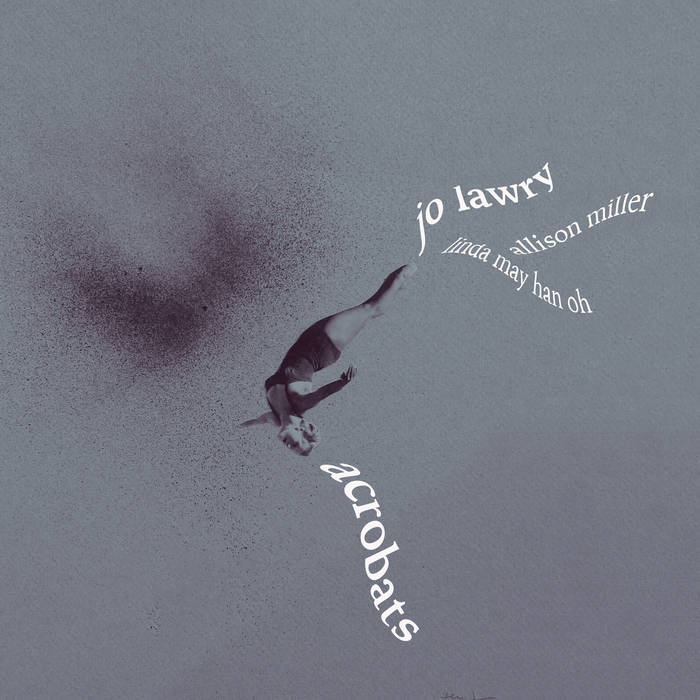
Jo Lawry – "Acrobats" (Whirlwind Recordings) –  What a real treat is this most delightful of Trio albums.  Here, Ms. Lawry's voice is supported, pushed, prodded, cushioned by the excellent playing of bassist Linda May Han Oh and drummer Allison Miller.  The title track, composed by fellow Australian Gian Slater, perfectly describes not only the lives of musicians in the 21st Century but also the exploratory nature of this program.  The majority of the program is made of "standards" but there is absolutely nothing standard about this album.  This listener found himself exclusively listening to the album over the course of a full week.  Never too late to take the leap into this album!!

For more information, go to https://www.jolawry.net/. Check out and/ or purchase the album by going to https://jolawry-whirlwind.bandcamp.com/album/acrobats

Here's the Trio "Taking a Chance on Love":


Nicole Zuraitis – "How Love Begins" (OutsideIn Music) –  The genesis of singer, songwriter, and pianist Zuratis's fifth album as a leader was a meeting with bassist Christian McBride in 2018 who heard her playing in a New York City piano bar and said "we should do something together".  The results of the duo working out the details amidst the Pandemic slowdown are a pure delight. Ms. Zuraitis's vocal work is the most assured of her career and co-Producer McBride makes sure we also hear what a fine pianist she is.  With her husband Dan Pugach on drums, the sound is filled out by guitarist Gilad Hekselman, Maya Kronfeld on keys, and Mr. McBride's bass pushing the proceedings forward, this program is quite strong and quite listenable.


Listen to "Let Me Love You":


Magos Herrera – "Aire" (Sunnyside Records) – 2023 was the year this listener truly discovered the brilliant and adventurous Mexican-born vocalist Magos Herrera.  I had heard of her before but this year, a deeper dive was called for.  What a supple, emotional, and often stunning voice –– when she inhabits the song, you may not understand the words but, pay attention, you'll get the message.  Surrounded by her "working" trio of guitarist Vinicius Gomes, bassist Sam Minaie, and drummer Alex Kautz plus a slew of guests (including an "orchestra" conducted by Eric and Colin Jacobsen), this music sounds alive, full of possibility, aware of the sufferings of the heart but open to hope.  The 12-song program includes classic songs, originals, brilliant arrangements, and that marvelous voice.

For more information, go to www.magosherrera.com. To hear more and to purchase the album, go to https://magosherrera.bandcamp.com/album/aire.  

Here's the title track:


Edward Simon, Featuring Magos Herrera – "Femeninas" (ArtistShare) – Right around the same date "Aire" was issued came the new ArtistShare project from pianist Edward Simon.  Subtitled "Songs of Latin American Women", the program is that and more. Ms. Herrera joins Simon, bassist Reuben Rogers, drummer Adam Cruz, and percussionist Luis Quintero (plus guest Romero Lubambo playing guitar on several tracks) performing a 11-song program of works associated with Joyce Moreno (Brazil), Elizabeth (Chile), Chabuca Granda (Perú), Violetta Parra (Chile), Marta Valdés (Cuba), Rosa Passos (Brazil), and Georgina Hassan (Argentina).  The excellent arrangements, the splendid musicianship, and the wonderful vocals makes this a "project for the ages".  

For more information, go to www.edwardsimon.com/projects/femeninas

Watch Mr. Simon and Ms. Herrera perform two pieces from the "Femeninas" project:


Gretchen Parlato & Lionel Loueke – "Lean In" (Edition Records) – This is an intimate collection of songs from two fine musicians who have known each other several decades. Basically a duo album (there are several guest contributors) but the focus of the music is on the interplay of the voice and guitar. Both leaders brought music to the sessions yet the program feels and sounds organic.  Mr. Loueke's guitar work is superlative throughout as are Ms. Parlato's vocals –– it's amazing how rhythmical this music is, how percussive the guitar work can be, and how sweet the results are.  Let's hope this is just the first Editions Recording of this splendid duo.

For more information, go to  https://gretchenparlato.bandcamp.com/album/lean-in
 

Listen to the delightfully sweet "Nonvignon":


Pt. 3 will include the rest of the list but, for now, there's much to explore here.

Saturday, June 17, 2023

Ms.Oh and the Future


Photo: Shervin Lainez
Before the pandemic, bassist and composer Linda May Han Oh was a very busy person, not just working on her own projects but also performing and/or recording with Pat Metheny, drummer Johnathan Blake, Vijay Iyer as well as with her husband, pianist Fabian Almazan (plus a number of other recording sessions).  Then, the world closed down in March of 2020 and the gigging stopped.  Ms. Oh and Mr. Almazan moved to Perth, Australia, (where the bassist was raised and retains citizenship) to have their first child. The time spent with their baby gave Ms. Oh the time to think her role as a musician in a splintered world, what was important to her, and how could her music has a positive effect on the dialogue swirling around divisive issues such as health-care, climate change, war, and other issues. The music can also be heard as a meditation on time, how we use ours and how time is ever-moving as it moves us.


Upon their return to the United States, put together a quintet that features her husband, drummer Obed Calvaire, tenor saxophonist Mark Turner, and vocalist Sara Serpa.  They entered Brooklyn Recording on June 13 2022 with 10 new original works.  "The Glass Hours" is powered by the powerful melodies, exciting rhythms, and the spirited interactions of the quintet.  Opening with "Circles", the theme is addressed by the wordless vocal, tenor sax, and the potent bass while the pianist and drummer push the music forward. Pay close attention to the rhythm section––Calvaire plays with great presence throughout but especially under the soloists. The handsome bass solo that opens "Chimera" gives way to a thunderous piano solo supported by the drums and bass––that falls into a sense of stasis as the voice, sax, bass, and piano play circular figures while Calvaire dances through his solo.


Photo: Shervin Lainez
"Jus Ad Bellum" is a rubato ballad that addresses man's need to go to war. Ms. Serpa's passionate vocal is underpinned by the war-like drums and scurrying piano lines. The tenor sticks close to the vocal until the forceful bass solo.  The layered voices (including Ms. Oh's) during the drum spot remind this listener of the work of Steve Reich. Watch the video below of "The Imperative", see how the band listen and respond to each other, and note the fluidity in Ms. Oh's bass lines––she is so melodic as well as percussive.  Everyone contributes, each with their own cogent statement as well as their work in the ensemble. 


This material can be thorny, the sound thick at times but the music never falls apart. Notice how the excellent mix (Dave Darlington) ensures that the listener is in the midst of the band, that no one instrument is lost in the crisp sound, Not only is Ms. Oh the foundation of the music but she's the main driver (that frees up Calvaire to respond to the soloists and be part of the melody).  Mr. Almazan benefits from this as well with how he plays underneath the ensemble and how he approaches his own solos (he's certainly one of the most fluid of musicians).  And Ms. Serpa? Because the majority of the time she's singing, there are no words, just syllables. On a piece such as "Phosphorus", she teams with Turner to not only present the melody but also weave their lines in and around each other.  On this track, Ms. Oh's switches to electric bass, dancing along with her husband on the energetic piano solo. 

"The Glass Hours" closes with "Hatchling" (which one imagines is dedicated to her son)––Ms. Oh is on electric bass again so it's the sax, voice, and piano that present the melody then break it into melodic fragments.  The piece moves into a long rubato section before the piano and voice build off the bounce of the bass and drums to playfully strut and dance to the close!  

Linda May Han Oh has become one of the most sought-after bassists in the world. With good reason; how she articulates her notes and her melodic development within a song can be dizzying at times, yet she never overplays or, better, never "showboats".  This album, her sixth, is worth diving into deeply1

For more information, go to https://lindamayhanoh.com/.  To hear more and purchase the album, go to  https://lindamayhanoh.bandcamp.com/album/the-glass-hours

Here's the opening track, "Circles":


Watch the group in the studio perform "The Imperative":


Thursday, April 27, 2023

Listening to The Brothers


Photo: Shervin Lainez
The Le Boeuf Brothers, Pascal (piano, compositions) and Remy (alto and tenor saxophones, compositions), first came to critical attention in 2009 when they self-released their debut album "House Without a Door".  The identical twins have both managed to carve out solo careers as performers, composers, arrangers, and educators. Pascal leads a Trio and works with vocalist Allan Harris and saxophonist Jeff Coffin while Remy leads a large ensemble known as Assembly of Shadows. He received several GRAMMY nominations for his work with that ensemble and Pascal just (in mid-April) was rewarded a Guggenheim Fellowship.  Their co-lead group has issued four albums including 2013's "Remixed" and 2016's "Imaginist" with the JACK Quartet.

"Hush" (SoundSpore Records) is the brothers' first release in seven years. Featuring Dayna Stephens (tenor saxophone), Linda May Han Oh (bass), and Christian Euman (drums, cymbals, brushes), the majority of the 19 tracks (only three are over five minutes duration) live up to the recording's title.  Euman uses brushes on the majority of the songs––in fact, it's the quiet nature of the music and the emotional richness of the melodies that pulls in the listener.  Due to the brevity of many of the cuts, there are few solos yet the poetry in the melody often stands out.  Pieces such as "Soot", "Please Scream Inside Your Head", and "State of Conflict" are much more beautiful than their titles suggest. Take the first track listed (listen below); despite the name, the music is gentle with the melody played by a breathy alto saxophone underpinned by gentle piano chords and low bass notes plus just the hint of mallet work.  As the piano moves up front (for just one short chorus), there is no pressure or tension, just an exquisite sense of peace.


Watch the video below for "Wedding Planning", certainly the most spirited piece on the recording. Still, Euman is still using brushes but note how it's Pascal's piano and Ms. Oh's wonderfully articulated bass lines that move the music forward.  The alto solo is quite joyful and there are moments when the rhythm section gleefully swings!

Really, you need to take the time to listen to this music. There are hints of Debussy and Satie in the melodies as well as folk music and Americana, Sondheim and Bacharach; that's it, just "hints".  Melody and interaction are the watchwords of "Hush", music that eschews technical displays and long solos for haiku-like melodies and soft timbre.  The Le Boeuf Brothers want you to respond to this music by gathering it in, sharing with friends, and returning to the quiet sounds many times. 

For more information, go to www.leboeufbrothers.com.  To hear more and purchase the album, go to  https://leboeufbrothers.bandcamp.com/album/hush.

As promised, "Wedding Planning":


Friday, March 3, 2023

"....Soul Grown Deep Like The River"


Dr. Anthony Branker is quite an accomplished person with a list of achievements that would fill this page. I spoke to him in 2017 at the time Origin Records released "Beauty Within", his seventh album of original compositions (and six issued by the Seattle, WA-based label). At that time, he had recently stepped down as the head (and founder) of the Jazz Studies Program at Princeton––he currently is Adjunct Professor at the Mason Gross School of Music at Rutgers University. I am impressed by his ability to tell stories, truths about issues such as racism, equality, spirituality, and more, writing music that sounds familiar yet can be challenging, swings yet sings. The son of Caribbean immigrants, Dr. Branker once played his music (he was a trumpet player) in venues around the world. Dr. Branker has also conducted ensembles for Terence Blanchard and Wynton Marsalis as well as orchestras in Israel, Germany, Japan, Estonia, and in the United States. 

His eighth album, "What Place Can Be For Us: A Suite In 10 Movements" (Origin), is the second recording with his Imagine ensemble, an octet built around guitarist Pete McCann, pianist Fabian Almazan, and bassist Linda May Han Oh plus Walter Smith III (tenor saxophone), Remy Le Boeuf (alto and soprano saxophones), Philip Dizack (trumpet, flugelhorn), Donald Edwards (drums), and on two tracks, Alison Crockett (vocal and spoken word). As you should be able to tell by the title, the themes of this new collection are inclusion, immigration, belonging, citizenship, and the never-ending racism that permeates the United States.  Ms. Crockett is featured on the opening track, "The Door of No Return", an episodic that blends the squalling guitar of Pete McCann, the telegraph notes from the piano, and the words of poet Beatriz Esmer. There is a powerful solo from Smith III as well as well as brilliant background arrangements.  The words hearken back to The Middle Passage (many more Black Africans were enslaved in Brazil than anywhere else on the American continent).  

Ms. Crockett returns for "I, Too, Sing America" from Langston Hughes 1926 collection "The Weary Blues".  It's a powerful work with fine piano work and a commanding solo from Smith III yet be sure to listen to how the alto sax and trumpet play a drone beneath the tenor sax and the heartfelt vocal. 

Elsewhere, there's the nervous energy of McCann's guitar solo and the wistful alto sax solo from Le Boeuf on "Indivisible", the melancholy reminiscence of "Sundown Town" with far-ranging solos from Almazan and Dizack, and the "prog-rock meets hard bop" riff on "Sanctuary City" and the crackling guitar of McCann and keening tenor sax.   


It's hard not to think of boats filled with refugees on "We Went Where Wind Took Us" but the music has more of a hopeful feel as well as fine solos from Ms. Oh and Almazan.  After a lovely solo piano introduction, "The Trail of Tears to Standing Rock" reminds us all of how the Andrew Jackson Presidency pushed Native Americans onto lands where their crops could not grow; not that succeeding US Presidents made the situation any better, creating reservations that keep them held down. Now when they fight the oil pipeline that will split their land up and subsequently cut them off from or contaminate their water supply, their protests still fall on deaf ears.  

As you should be able to tell, Dr. Anthony Branker does not shy away from controversy; instead he channels his concerns, beliefs, and his fears into music that often vibrates with urgency, compassion, commitment, and impressive musicianship.   Don't you shy away from  "What Place Can Be For Us: A Suite In 10 Movements"––instead, embrace its activism, its message, and its power.

For more information, go to www.anthonybranker.com/.  To hear more and to purchase the album, go to

Here's the ensemble playing and presenting the words of poet Langston Hughes on "I, Too, Sing America":


Vocalist and educator Christine Correa came to the United States from her native Bombay, India, in 1979––she came to attend the New England Conservatory of Music in Boston, MA, which is where she met two people who became very important in her life, pianist Ran Blake and pianist Frank Carlberg who is a frequent collaborator as well as her husband.  Ms. Correa is currently on the faculties of Columbia University’s Louis Armstrong Jazz Performance Program, Teacher’s College at Columbia University and the New School as well as the Director of the Maine Jazz Camp. She's recorded five duo albums with Ran Blake, 10 albums (in groups of various sizes) with Mr. Carlberg, and, at least, a half-dozen with other artists but never an album under own name.

Until now.  "Just You Stand and Listen With Me" (Sunnyside Records) is a tribute to two recordings drummer Max Roach recorded with his then-wife, the vocalist Abbey Lincoln, 1961's "We Insist! Freedom Now Suite" (Candid Records) and "Percussion Bitter Suite" (Impulse! Records).  For her album, Ms. Correa utilizes the musical voices of Sam Newsome (soprano saxophone), Andrew Boudreau (piano), Kim Cass (bass), and Michael Sarin (drums).  The 11-song program opens with the opening cut from "We Insist!", "Driva' Man", a fiery slave song with lyrics by Oscar Brown, Jr.  Ms. Correa's vocal is underpinned by the strolling rhythm section bolstered by the angular piano chords. Newsome's soprano solo is soaring and free-wheeling while Sarin's narrative drums over the walking bass also stands out.

Brown, Jr. adapts Paul Lawrence Dunbar's poem "When Malindy Sings"––the poet wrote his piece in "original" dialect but this adaptation is no "Uncle Remus". The music really swings with kudos to Boudreau for a fine solo.  Ms. Lincoln wrote the words for "Mendacity"; her lyrics could have been written today. Here's an example; "The campaign trail winds on and on/In towns from coast to coast/The winner ain't the one who's straight/But he who lies the most." Sarin's drums are quite expressive while Newsome again serves as response to Ms. Correa's call. Listen below!


There's so much to take on this brilliant album. Ms. Correa's duet with drummer Sarin in the first 90 seconds of "All Africa" is a stunning introduction to the body of the song in which the vocals name various tribes of the African Continent. The soprano sax solo over the drums is powerful, very moving and expressive. The wordless vocals on "Tears for Johannesburg" speaks to the treatment of the oppressed black citizens under South Africa's apartheid regimes. The ensemble moves in and out of time throughout plus there are excellent solos from Newsome and bassist Cass.

The album closes with Brown, Jr./Roach's "Freedom Day", a piece that is, at times, frolicsome, free, impulsive, pulsing with urgency, and in the end, questioning if we are really "free" (certainly the Black population of the United States has rarely been truly free to be).   

From start to finish, "Just You Stand and Listen With Me" is quite powerful.  Christine Correa not only celebrates the amazing and controversial music of Max Roach, Abbey Lincoln, and Oscar Brown, Jr. but also asks questions about whether her adopted country–the United States–can ever truly be the place where "All Men (and Women) Are Created Equal".  

For more information, go to https://christinecorrea.com/. To hear more and to purchase the album, go to https://sunnysiderecords.bandcamp.com/album/just-you-stand-and-listen-with-me-2

Hear Ms. Correa singing Abbey Lincoln's words on "Mendacity":


Monday, February 20, 2023

Musical Treats for February

 What a joy to be surrounded with such great music––here are two of the more delightful releases of 2023! 

Photo: Erika Kapin
Australian-born vocalist Jo Lawry may be best known for working with Sting, Paul Simon, Fred Hersch, and Peter Gabriel but she's been recording her own albums for the past 15 years.  She spent nearly two decades living, working, and teaching in New York City (her teaching appointments were at the Manhattan School of Music and at the Boston-based New England Conservatory).  Ms. Lawry, who is married to saxophonist Will Vinson, moved back to Australia  in 2021 to lead the Equity in Jazz program at Sydney Conservatorium of Music, a program designed to encourage and support women and gender diverse musicians into a career in jazz through dedicated leadership, music development and mentorship.   She's released three albums as a leader with the most recent being 2018's "The Bathtub and The Sea." 


For her latest venture, "Acrobats" (Whirlwind Recordings), Ms. Lawry joins forces with bassist Linda May Han Oh and drummer Allison Miller to create a fascinating program that ranges from standards to two special pieces either written by an Australian composer (the title track comes from the pen of Gian Slater) or made a big hit on the Aussie scene (John Farnham's anthemic "You're the Voice").  Don't be put off by the spare instrumentation as the music is so intimate, delightful, emotional and adventurous that the 43-minute goes by way too quickly.  When you listen to this music, you'll hear how melodic all three artists.  Both Ms. Han Oh and Ms. Miller certainly know how to swing; right from the voice/bass opening moments of the opening track, Frank Loesser's "Traveling Light" (from "Guys and Dolls", one hears the delightful give-and-take of Ms. Lawry with the rhythm section.

Photo: Erika Kapin
The title track (listen below) illustrates Ms. Miller's splendid hand drumming as well as why Ms. Han Oh is a first-call bassist as she supplies both counterpoint and rhythmic support.  Dig the delightful the voice/drums duo on Cole Porter's "You're The Top"; taken at a breakneck pace, the vocalist dances atop the rapid-fire brush work.  Later in the program, Ms. Han Oh and Ms. Lawry take a delightful stroll through Al Hoffman and Dick Manning's "Takes Two to Tango" (first made famous in 1952 in separate versions by Pearl Bailey and Louis Armstrong).  This version is slower and slinkier than the two versions from seven decades ago yet retains the humor and sassiness that the lyrics embody.

There is nary a weak track on "Acrobats".  While her previous album tilted towards folk and pop, it's really great to hear Jo Lawry as a jazz singer (her scat feature on Lennie Tristano's "317 East 32nd Street" is a treat as is the sparkling bass solo).  Adding Linda May Han Oh and Allison Miller to this project is a stroke of genius––you'll not hear a better trio album this year!!


Let's hear the album's title track:


For his third album on Edition Records, tenor saxophonist Chris Potter recorded several nights of his February 2022 gig at the legendary Village Vanguard.  Six songs from the multi-night engagement make up the program for "Got The Keys to the Kingdom: Live at The Village Vanguard." For the gig, Potter put together an ensemble featuring Craig Taborn (piano), Scott Colley (bass), and Marcus Gilmore (drums).  The set is bookended by two long blues/gospel tunes with the first being Mississippi Fred McDowell's "You Gotta Move."  The leader goes it along for the first 30 seconds then introduces the blues groove that the rest of the ensemble picks up on.  They run the first three verses with Potter adding more energy each time until they break into a short bridge and the saxophone solo commences.  It's a tour-de-force, filled with ideas and turns-of-phrases, reminiscent of a Sonny Rollins-like playfulness. Taborn is next and he digs into the song's blues groove.  After a quick return to the theme, Gilmore gets the spotlight and, with the help of Colley's short background figure, kicks the heck out of his drums.

Besides the blues, there are two tracks with Brazilian roots, the handsome folk tune "Nazani Na" (transcribed by Heitor Villa-Lobos and Edgar Roquette-Pinto from an Amazonian Indian folk tune) and "Olha Maria", composed by Antonio Carlos Jobim, Chico Buarque, and Vinicius De Moraes).  The latter piece opens as a nearly-three minute conversation for Potter and Colley before the pianist and drummer enter.  There is also a lovely take on Billy Strayhorn's "Blood Count", a piece he composed in the hospital awaiting treatment for esophageal cancer that would claim his life several months later. When recorded by the Ellington Orchestra, the solo on the piece was poignantly played by Johnny Hodges. Here, the quartet not only interprets the distress of the composer's condition but his fight as well.  It's quite a beautiful piece.  That's followed by Charlie Parker's "Klactoveedsestene", a jaunty dance for all involved.  

The album closes with the title track, a gospel tune first recorded by Washington Phillips in 1929.  Again, I hear the influence of Sonny Rollins in the rollicking rhythms, the playful interactions of the group, and Potter's powerful solo.  Gilmore and Colley push him hard while Taborn feeds him aggressive chords.  The pianist gets the next solo, dancing, strutting, bouncing, feeding off the lively bass and drums. A return to the opening theme then Gilmore begins his magnificent 3:30 solo that reaches its climax with the audience roaring its approval. The entire quartet takes the piece out on that high-energy level.  

"Got The Keys to the Kingdom" is a delight from start to finish. If you love high-energy creative, the album has numerous examples. If you need a heartfelt ballad that explores many emotions, that's here as well. Rhythmic adventures? Yes! Great solos? Yes!  Chris Potter and his excellent ensemble shine throughout–don't miss this splendid live album! 


Here's Chris and the band on Charlie Parker's "Klactoveedsedstene":


Sunday, October 23, 2022

Playing, Praying, & Time Passages

Two very different projects are reviewed below; initially, what is interesting is how both projects dealt with time. 

Over the course of 2018-9, pianist, composer, and educator Noah Baerman spent a lot of time and energy putting together a project to honor his former student and collaborator Claire Randall who died in 2016 as a result of domestic violence.  That project, "Love Right", is a 17-song program featuring dozens of vocalists and musicians with as many styles of music as songs.  At the final recording session in late September 2019, producer Baerman found himself with two hours of unused studio time.  He and long-time collaborator, bassist Henry Lugo, put together a seven-song program; 90 minutes later, they had "Alter Ego" (RMI Records). 


What stands out in this music is the obvious communication between the two friends and how the music makes one feel so comfortable and never bored.  It's a fascinating septet of songs ranging from the opening "My Romance" (from Richard Rodgers and Lorenzo Hart) to the title track (composed by one of Baerman's influences, the late James Williams) to two pieces associated with Duke Ellington (Juan Tizol's "Caravan" and the great bandleader's "Prelude to a Kiss").  There is no feeling of being rushed or any intent to dazzle the listener with show of technical bravado––no, these songs make one listen closely, to absorb the handsome melodies and/or tap your feet. One. cam sense the duo is stretching out, having fun, shaking off the stress caused by the scope and intense emotions of the "Love Right" project.  

One can hear the blues influence of another one of the pianist's influences, Phineas Newborn, Jr. in pieces such as "Prelude..." and the funky take of Stevie Wonder's "Creepin'"(listen below).  Lugo, who has developed over the past decade into an excellent and melodic soloist, is solid and playful throughout (his "dancing" solo on "My Romance" is a highlight). 

The program closes with Tom Waits "I Want You" (a piece composed in 1971 but not released for over a decade) and it'a a delightful choice.  The music blends gospel and "pop" influences giving the duo the opportunity to expand upon the original ballad, imbuing the music with a hopeful feel.

"Alter Ego" is a lovely portrait of two friends doing what they love to do, playing music in the moment, and hoping to soothe frayed souls.  Noah Baerman and Henry Lugo have created a little gem that sounds good any time of day, any day of the year.  

For more information and to purchase the album, go to 
https://noahbaerman.bandcamp.com/album/alter-ego

Hear the duo go "Creepin'":


Over the three-plus decades of trumpeter and composer Dave Douglas's career, he has led several notable ensembles ranging from the Tiny Bell Trio to Charms of the Night Sky to the "Magic Triangle" quartet to Keystone to the first Quintet (including Donny McCaslin, Uri Caine, James Genus, and Clarence Penn) to Brass Ecstasy to Sound Prints (the quintet he co-leads with Joe Lovano. In 2011, Douglas organized a new Quintet with saxophonist Jon Irabagon, pianist Matt Mitchell, bassist Linda May Han Oh, and drummer Rudy Royston when he wrote and arranged the music for "Be Still", a group of hymns and folk songs the trumpeter played for his mother's funeral (the resulting album featured the vocals of Aoife O'Donovan). In 2015, the Quintet released "Brazen Heart", a collection of originals tunes and two hymns dedicated to the trumpeter's older brother Damon who had passed earlier that year. 

While creating the music that became the album "Secular Psalms" (released in April of this year), Douglas was also reading the 15 Psalms that make up "Songs of Ascents", a series of prayers sung by Jewish pilgrims on their way to the temple in Jerusalem on the three "Pilgrimage" holidays (Passover, Shavuot, and Sukkot).  The trumpeter was so moved that he began writing a new program of music that he thought would be perfect for the new Quintet (now a decade old). Once he had all the music, the world was in the early stages of the Pandemic. So, starting in May of 2020, Douglas recorded all his parts (including solos); he then sent the pieces to Irabagon (tenor, soprano, and soprillo saxes) for his contributions. From there, the music went to pianist Mitchell, then to Ms. Oh for her bass parts, and to Royston for his percussive touches. Once the drummer finished, the tapes returned to Douglas and engineer Tyler McDiarmid (who also mixed and mastered the project)

It's amazing how alive and collaborative this album sounds. For the project, titled "Songs of Ascent: Book 1 – Degrees" (Greenleaf Music), Douglas has created such splendid melodies while his musical partners on these journeys play with such sensitivity and intelligence that the music jumps out of the speakers (as if the band was in the same studio and not separated by distance and time––the project took over 12 months to complete).  Listen below to "Peace Within Your Walls"; note the well-constructed melody, the brilliant interactions of the trumpet and tenor saxophone, and listen to how the rhythm section is supportive and inventive. 

Photo: John Abbott
And the music has fire as well. The album opener, "Never Let Me Go" (the one composition not based on one of the Psalms), introduces the inspired interaction that comes from the musicians being comfortable with each and willing to challenge each other. "A Fowler's Snare" smokes from the opening note, hinting at being a free-for-all with a rollicking melody played by everyone save for Royston.  Both Douglas and Irabagon solo as the rhythm section threatens to fall apart. Ms. Oh's bass solo pulls the music together for a moment before launches back into the theme. "Lift Up My Eyes" moves from its "playing a scale" opening into a twisting and roiling exhibition of power. The final track, "Mouths Full of Joy", has a similar opening (listen to the fiery drumming), before the leader steps out for a hard-edged solo supported by Mitchell's angular piano chords. Irabagon's tenor spot is playful as Royston takes apart the rhythm.  Mitchell steps out next as the drums seem to explode beneath him while Ms. Oh keeps the the rhythm section from flying away. 

"Songs of Ascent" Book 1 – Degrees" stands out as yet another musical triumph for Dave Douglas. Even if you don't know the story behind the recording, this project is so alive, so musical, so collaborative, so fascinating.  Besides the leader, every other member of the Quintet is a leader in her and his right yet they come together as a coherent musical unit, supporting and stimulating each other. The Dave Douglas Quintet will be touring Europe in early 2023 and one hopes those live shows are archived for all of us to hear the five musicians sound playing this music together on stage. In the meantime, find this recording and dig in.

For more information, go to https://davedouglas.com/. To hear more and purchase the album, go to https://davedouglas.bandcamp.com/album/songs-of-ascent-book-1-degrees

Hear "Peace Within Your Walls":


There is a "Book 2 - Steps", eight more Douglas originals written for the Quintet and the music is just as impressive. However, the only way to listen to the album is to become a subscriber to Greenleaf Music. There are three tiers to choose ranging from $75 to $175–each level gives you access to all the recordings on the label through Bandcamp.com as well as special "live sets", alternate takes, and unreleased material.  The more you spend the more perks you get.  There is also access to monthly "Subscribers Sessions", right now on ZOOM only, in which you can meet and interact with musicians who record for the label and special segments of Douglas's "A Noise From The Deep" podcast now in its 10th year of interviews. 

As a subscriber myself, it's well worth the investment–you get access to some of the most fascinating music being released today. To find out more, go to https://greenleafmusic.com/subscribe/.   

Wednesday, May 5, 2021

Inner & Outer Spaces

Two delightful new albums both influenced by the adventurous soundscapes of Wayne Shorter.

Photo: Geoff Countryman
Joe Lovano (tenor saxophone) and Dave Douglas (trumpet) created their co-led quintet Sound Prints in 2011 to celebrate the musical and artistic contributions of Wayne Shorter.  Both were members of the SFJazz Collective when that ensemble celebrated Mr. Shorter's music for its 2008 season.  Douglas's 1997 Arabesque album "Stargazer" was the trumpeter's first dedication to the saxophonist/ composer on record –– while the album only featured three songs by Mr. Shorter, the majority of Douglas's original pieces illustrate how he took the influences and adapted them without mimicking one of his musical mentor.

"Other Worlds" (Greenleaf Music) is the third album by Sound Prints and the first to feature all compositions by Lovano or Douglas.  The rhythm section supporting the two leaders remains the same: pianist Lawrence Fields, bassist Linda May Han Oh, and drummer Joey Baron. The band went into the studio a day after finishing a week-long run at The Village Vanguard in New York City; those gigs took place in January of 2020, six weeks before the club, the city, and the world closed down.  The familiarity with the material makes this 70-minute program move organically forward with exquisite playing from all involved. You can hear the influence of both Mr. Shorter and of Miles Davis's classic quintet of the the mid-1960s on Lovano's "Life on Earth", especially in the piano support and Baron's driving drums a la Tony Williams.   Lovano's "Sky Miles" is less a tribute to the trumpeter as it is a hard-driving, hard bop tune in which the band plays with the tempo, speeding up and slowing down which, at times, is dizzying.  Listen to the rhythm section during the solos as there are moments when the pianist, bassist, and drummer are each going in different directions and other times when all five musicians are in sync. 

Photo: Merrick Winter
Overall, this music should not surprise fans of the two leaders. Neither one is afraid of showing their influences or for pushing into areas in which both the musicians and the listeners are challenged.  And this band can swing. Fields's piano support on "Pythagoras" allows the soloists to soar and Baron to explore.  On that track, the pianist and drummer offer support in the style of Jimmy Garrison and McCoy Tyner in John Coltrane's Quartet. "Antiquity to Outer Space" (composed by Douglas) could be a title of a Sun Ra album but here is a multi-sectioned that opens up to allow each musician to express him- or her- self. Fields, who has worked with Lovano and Christian Scott aTunde Dejuah, sparkles throughout the album and, especially, on this track.  The two duets –– Douglas with Ms. May Han Oh and Lovano with Baron –– are quite inventive.  The trumpeter's handsome ballad, "The Transcendentalists", contains a handsome melody as well as strong solo statements from Lovano and Douglas (muted trumpet) as well as Fields (why doesn't he have an album out under his own name?) 

"Other Worlds" is an album well worth exploring! Joe Lovano & Dave Douglas Sound Prints is a group one needs to hear and (soon, one hopes) to see.  Yes, they play "in the tradition" but it's a very big, very wide, "tradition", a universe still ripe for traversing!

For more information, go to https://greenleafmusic.com/artists/soundprints/other-worlds/. To hear more and to purchase the album, go to https://soundprints.bandcamp.com/album/other-worlds


Photo: Anna Yatskevich
Trumpeter and composer Alex Sipiagin has been quite a busy musicians since moving to New York City from his native Russia in 1990. He's played in numerous ensembles, ranging from the Mingus Big Band & Orchestra to the Gil Evans Orchestra, to several groups led by bassist Dave Holland to Dave Sanborn to Michael Brecker to Elvis Costello and many others. Sipiagin has taught at New York University with residencies in both Amsterdam and Basel, Switzerland.  His discography includes 11 albums on Criss Cross Jazz plus recordings on SunnySide Records, TCB-The Sound of Montreux, 5Passion, and others. His new album, "Upstream" (his debut as a leader on Posi-Tone Records), serves as a farewell to the United States as, since the October 2020 recording, the trumpeter and his wife have spent time in Singapore and have plans to settle in Northern Italy

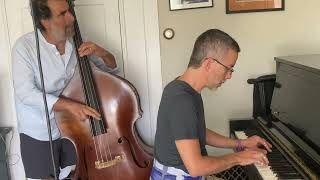
The new album is the latest in Posi-Tone Marc Free's "pandemic" recordings.  With the "house" rhythm section composed of Art Hirahara (piano, Fender Rhodes), Boris Kozlov (acoustic and electric basses), and Rudy Royston (drums) (the same trio recorded on Alexa Tarantino's "Firefly" and Behn Gillece's "Still Doing Our Thing", the two Posi-Tone releases before this one), Sipiagin's trumpet powers and sings its way through  the nine-song program.  The leader composed five of the tracks, two are from bassist (and fellow Russian) Kozlov, plus one each from pianist Hirahara and a lovely reading ofWayne Shorter's "Miyako".  That last piece listed, a gentle ballad first played by the composer on his 1969 Blue Note release "Schizophrenia", spotlights Sipiagin's fine flugelhorn work.  The leader composed "Rain", another flugelhorn ballad, as he was waiting for his wife to be released from the hospital. Perhaps that is why the music sounds so emotionally strong as well as wistful.  Pianist Hirahara contributed album's other splendid ballad; "Echo Canyon" moves forward on a rising melody lines with supple flugelhorn pushed forward by Royston's active but respectful drums. The composer's powerful solo energizes Sipiagin, whose soaring solo is punctuated by the drummer's press rolls and splashing cymbals.

Photo: Anna Yatskevich
Throughout the recording, Rudy Royston plays like he's been released from solitary confinement  The album's opening track, "Call", may initially remind you of one of Wayne Shorter's open-ended pieces but the fire rising up from the drummer sets this piece apart.  Listen how Kozlov and Royston set a torrid pace that really pushes both the trumpeter and pianist to respond emphatically.  Later in the program, "SipaTham" (the title combines the composer's name with that of his wife Melissa Tham) is a response to the pandemic and how the world outside the couple's home is changing rapidly.  The give-and-take of the trumpet and piano, powered by the rhythm section, stands out.  The bassist's funky "Magic Square", was first played by Sipiagin and Kozlov when both were in school in Moscow in the 1980s.  The electric bass and the powerful drumming has the feel of Chick Corea's electric Return to Forever and Lennie White's dynamic power.  How Royston's explosive drumming did not blow the mute out of the trumpet I'm not sure, but the drum solo just might shake the speakers off the wall!
The title track closes the album on a high.  After Hirahara'a Fender Rhodes intro, the song flies forward on the strength of the drums and Kozlov's thunderous electric bass.  The piece features solos by the leader, Hirahara, and Royston whose brash solo sounds as if he's trying to chase away the pandemic with his hands and feet!  "Upstream" has plenty of power and beauty in its 55 minutes. Alex Sipiagin has made numerous albums with great rhythm sections (Kozlov appears on several as do drummers Antonio Sanchez, Eric Harland, Jeff "Tain" Watts, and Johnathan Blake) –– this recording is among the best!  

To learn more about the trumpeter, go to www.alexsipiagin.com/ (needs to be updated).  

Click here to hear "Sight":