Showing posts with label Jon Irabagon. Show all posts

Sunday, October 23, 2022

Playing, Praying, & Time Passages

Two very different projects are reviewed below; initially, what is interesting is how both projects dealt with time. 
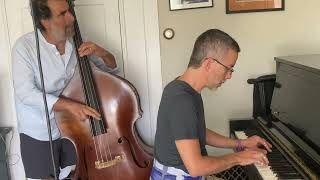
Over the course of 2018-9, pianist, composer, and educator Noah Baerman spent a lot of time and energy putting together a project to honor his former student and collaborator Claire Randall who died in 2016 as a result of domestic violence.  That project, "Love Right", is a 17-song program featuring dozens of vocalists and musicians with as many styles of music as songs.  At the final recording session in late September 2019, producer Baerman found himself with two hours of unused studio time.  He and long-time collaborator, bassist Henry Lugo, put together a seven-song program; 90 minutes later, they had "Alter Ego" (RMI Records). 


What stands out in this music is the obvious communication between the two friends and how the music makes one feel so comfortable and never bored.  It's a fascinating septet of songs ranging from the opening "My Romance" (from Richard Rodgers and Lorenzo Hart) to the title track (composed by one of Baerman's influences, the late James Williams) to two pieces associated with Duke Ellington (Juan Tizol's "Caravan" and the great bandleader's "Prelude to a Kiss").  There is no feeling of being rushed or any intent to dazzle the listener with show of technical bravado––no, these songs make one listen closely, to absorb the handsome melodies and/or tap your feet. One. cam sense the duo is stretching out, having fun, shaking off the stress caused by the scope and intense emotions of the "Love Right" project.  

One can hear the blues influence of another one of the pianist's influences, Phineas Newborn, Jr. in pieces such as "Prelude..." and the funky take of Stevie Wonder's "Creepin'"(listen below).  Lugo, who has developed over the past decade into an excellent and melodic soloist, is solid and playful throughout (his "dancing" solo on "My Romance" is a highlight). 

The program closes with Tom Waits "I Want You" (a piece composed in 1971 but not released for over a decade) and it'a a delightful choice.  The music blends gospel and "pop" influences giving the duo the opportunity to expand upon the original ballad, imbuing the music with a hopeful feel.

"Alter Ego" is a lovely portrait of two friends doing what they love to do, playing music in the moment, and hoping to soothe frayed souls.  Noah Baerman and Henry Lugo have created a little gem that sounds good any time of day, any day of the year.  

For more information and to purchase the album, go to 
https://noahbaerman.bandcamp.com/album/alter-ego

Hear the duo go "Creepin'":


Over the three-plus decades of trumpeter and composer Dave Douglas's career, he has led several notable ensembles ranging from the Tiny Bell Trio to Charms of the Night Sky to the "Magic Triangle" quartet to Keystone to the first Quintet (including Donny McCaslin, Uri Caine, James Genus, and Clarence Penn) to Brass Ecstasy to Sound Prints (the quintet he co-leads with Joe Lovano. In 2011, Douglas organized a new Quintet with saxophonist Jon Irabagon, pianist Matt Mitchell, bassist Linda May Han Oh, and drummer Rudy Royston when he wrote and arranged the music for "Be Still", a group of hymns and folk songs the trumpeter played for his mother's funeral (the resulting album featured the vocals of Aoife O'Donovan). In 2015, the Quintet released "Brazen Heart", a collection of originals tunes and two hymns dedicated to the trumpeter's older brother Damon who had passed earlier that year. 

While creating the music that became the album "Secular Psalms" (released in April of this year), Douglas was also reading the 15 Psalms that make up "Songs of Ascents", a series of prayers sung by Jewish pilgrims on their way to the temple in Jerusalem on the three "Pilgrimage" holidays (Passover, Shavuot, and Sukkot).  The trumpeter was so moved that he began writing a new program of music that he thought would be perfect for the new Quintet (now a decade old). Once he had all the music, the world was in the early stages of the Pandemic. So, starting in May of 2020, Douglas recorded all his parts (including solos); he then sent the pieces to Irabagon (tenor, soprano, and soprillo saxes) for his contributions. From there, the music went to pianist Mitchell, then to Ms. Oh for her bass parts, and to Royston for his percussive touches. Once the drummer finished, the tapes returned to Douglas and engineer Tyler McDiarmid (who also mixed and mastered the project)

It's amazing how alive and collaborative this album sounds. For the project, titled "Songs of Ascent: Book 1 – Degrees" (Greenleaf Music), Douglas has created such splendid melodies while his musical partners on these journeys play with such sensitivity and intelligence that the music jumps out of the speakers (as if the band was in the same studio and not separated by distance and time––the project took over 12 months to complete).  Listen below to "Peace Within Your Walls"; note the well-constructed melody, the brilliant interactions of the trumpet and tenor saxophone, and listen to how the rhythm section is supportive and inventive. 

Photo: John Abbott
And the music has fire as well. The album opener, "Never Let Me Go" (the one composition not based on one of the Psalms), introduces the inspired interaction that comes from the musicians being comfortable with each and willing to challenge each other. "A Fowler's Snare" smokes from the opening note, hinting at being a free-for-all with a rollicking melody played by everyone save for Royston.  Both Douglas and Irabagon solo as the rhythm section threatens to fall apart. Ms. Oh's bass solo pulls the music together for a moment before launches back into the theme. "Lift Up My Eyes" moves from its "playing a scale" opening into a twisting and roiling exhibition of power. The final track, "Mouths Full of Joy", has a similar opening (listen to the fiery drumming), before the leader steps out for a hard-edged solo supported by Mitchell's angular piano chords. Irabagon's tenor spot is playful as Royston takes apart the rhythm.  Mitchell steps out next as the drums seem to explode beneath him while Ms. Oh keeps the the rhythm section from flying away. 

"Songs of Ascent" Book 1 – Degrees" stands out as yet another musical triumph for Dave Douglas. Even if you don't know the story behind the recording, this project is so alive, so musical, so collaborative, so fascinating.  Besides the leader, every other member of the Quintet is a leader in her and his right yet they come together as a coherent musical unit, supporting and stimulating each other. The Dave Douglas Quintet will be touring Europe in early 2023 and one hopes those live shows are archived for all of us to hear the five musicians sound playing this music together on stage. In the meantime, find this recording and dig in.

For more information, go to https://davedouglas.com/. To hear more and purchase the album, go to https://davedouglas.bandcamp.com/album/songs-of-ascent-book-1-degrees

Hear "Peace Within Your Walls":


There is a "Book 2 - Steps", eight more Douglas originals written for the Quintet and the music is just as impressive. However, the only way to listen to the album is to become a subscriber to Greenleaf Music. There are three tiers to choose ranging from $75 to $175–each level gives you access to all the recordings on the label through Bandcamp.com as well as special "live sets", alternate takes, and unreleased material.  The more you spend the more perks you get.  There is also access to monthly "Subscribers Sessions", right now on ZOOM only, in which you can meet and interact with musicians who record for the label and special segments of Douglas's "A Noise From The Deep" podcast now in its 10th year of interviews. 

As a subscriber myself, it's well worth the investment–you get access to some of the most fascinating music being released today. To find out more, go to https://greenleafmusic.com/subscribe/.   

Friday, July 29, 2022

Off-Kilter Yet On Point

Photo: Peter Koloff

Trombonist and composer John Yao is a busy musician and teacher. He leads several different ensembles including a hard-hitting 17-member big band, he has played in and continues to play in numerous ensembles including Terraza 7 Big Band, the Vanguard Jazz Orchestra, and Manuel Valera's New Cuban Express Big Band. Yao has issued five albums as a leader or co-leader including two with his Quintet, one with the Big Band, and one with the piano-less quintet known as Triceratops.  That group has a unique front line––besides the trombonist/composer stands Jon Irabagon (tenor and soprillo saxophones) and Billy Drewes (alto and soprano saxophones). Their 2019 debut album, "How We Do" (See Tao Records) featured the rhythm section of Peter Brendler (bass) and Mark Ferber (drums); my review stated "the eight-song program is a delight from start to finish" and upon listening again recently, I stand by that review (read here).  

Triceratops second album, "Off-Kilter" (See Tao), finds the original lineup intact save for Robert Sabin who is now the bassist.  The sound of the band has not changed with the blend of the reeds with the trombone creating fascinating interplay. What stands out for this listener is that Yao's compositions (he composed eight of the nine pieces on this album with Billy Drewes contributing the other). His melodies are so strong, well-developed, and not just quick themes for blowing over. Take "Crosstalk" with its interweaving lines for the front line, bopping beat, and the solid walking bass line.  Listen below to "Labyrinth" and how the playful intro gives way to a delightful blues with a few side-trips (into tempo changes, speed-ups, slow-downs). The quintet keeps one on the edge of your seat to see where the music is going  next. A piece such as "The Morphing Line" has the feel of Dave Holland's Prime Directive especially in the flexibility of the rhythm section (Ferber is fantastic throughout the program).  It's not imitative, just uses Holland's sound as a springboard. 

The title track closes the album. The music moves at a high speed and the solo peels off from the melody.  Drewes' alto spot leaps above the rumbling bass line and the rapid-fire drumming.  The solo concludes with a return to the opening theme and––no surprise––the tempo downshifts for a moment so that the front line can play a short chorale with Ferber adding to the melody.  Then, a rapid ascending bass line leads the band back to the original tempo and the opening melody with cut-outs for a call-and-response with Ferber.  

"Off-Kilter" is right on target, modern music for adventurous minds.  John Yao's Triceratops is quite alive, playing with fire, with joy, spirited interactions that jump out of the speakers.  Throughout the program, the blend that Billy Drewes and Jon Irabgon get with the leader is fun to listen to and, at times, quite exciting.  Give this music a good, close, listen and the rewards will be plentiful!

For more information, go to www.johnyao.com.  To hear more and to purchase this and other albums by Mr. Yao, go to https://johnyao.bandcamp.com/album/off-kilter

Hear the mysterious yet playful "Labyrinth":

Wednesday, November 20, 2019

T-Bone Album Specials

John Yao (pictured left) is one busy person. Besides leading both a big band and a quintet, the Illinois native has worked and continues to work in several large ensembles including the Vanguard Jazz Orchestra and the Afro-Latin Jazz Orchestra.  Yao has arranged for numerous groups and college ensembles plus now teaches in the greater New York City area.  He also gives workshops and currently has a monthly residence at Terraza 7 in Jackson Heights, New York.

Yao's quintet, now dubbed "Triceratops" (you'll understand why in a moment) has a new recording. "How We Do" (See Tao Records).  The long-extinct beast that gives the band its name is known for its three big horns; the "front line" includes Yao with Billy Drewes (alto saxophone, soprano saxophone) and long-time associate Jon Irabagon (tenor saxophone - he's appeared on each one of the trombonist's four albums).  The solid and exciting "back line" features bassist Peter Brendler and drummer Mark Ferber.

The eight-song program is a delight from beginning to end. Yao composed seven of the tracks, Irabagon contributes the the swinging "Tea for T" that closes the album, and, throughout, one can hear how much fun this group has playing together.  The opener, "Three Parts As One", features a melody and harmonies that the three horns share. Once the rhythm section lays down the pulsating rhythms, Drewes (on alto) solos first, supported by Irabagon and Yao before getting a chorus by himself over the bass and drums. Irabagon is up next, maneuvering around the slinky beats. Drewes and Yao reenter to lead him back to the theme before the trombonist rises out of the mix.  The music has the feel of Dave Holland's Quintet with Chris Potter and Robin Eubanks, an ensemble which at its best could bring a crowd to its feet with their great interactions.

Photo: Peter Koloff
After that track, the band digs into "Triceratops Blues", a tune whose title tells a lot of what you need to know.  The leader's smooth-as-butter tone gives his solo a delightful sound; that leads into a fine spotlight for Ferber support only by Brendler's melodic and foundational bass lines.  The title track is a episodic and playful set of interactions in which the rhythm section leads the way through melodic changes and tempo shifts.

For my money, there's not a weak moment to be heard in the 49-minute program.  The music swings, saunters then struts (dig "Doin' The Thing"), soothes (the lovely "Circular Path", a track that features an emotional soprano sax solo with counterpoint from trombone), and closes with sly pizazz of the afore-mentioned "Tea for T."  John Yao's Triceratops makes the kind of music that will never go extinct – it's fun, interactive, and crackles with creativity!

For more information, go to www.johnyao.com.

Here's the delightful opening cut:


Photo: Sara Pettinella
Over the past five+ years, trombonist, composer, and educator Michael Dease has built up a fine discography at Posi-Tone Records.  His seventh album for the label, "Never More Here", takes its title from the fact the jazz Dease and his fine cohorts make is always "in the moment"; even if the majority of the program comes from people whose physical lives may have come to a close, their music lives on.  Nine of the 10 tracks feature the core group of Renee Rosnes (piano) and Lewis Nash (drums) with bassist Gerald Cannon (replaced on three of the nine cuts by Rufus Reid), adding the talents of Steve Wilson (alto sax, soprano sax, or flute on five cuts), Jocelyn Gould (guitar on three tracks), and trumpeter Randy Brecker on one song.  The Dr. Billy Taylor classic "I Wish I Knew (How It Would Feel To Be Free)" finds the trombonist in the company of pianist Luther Allison, alto saxophonist Markus Howell, bassist Endea Owens, tenor saxophonist Diego Rivera, drummer Jason Tiemann, and arranger David Gibson.

The program includes pieces by Dr. Taylor, Jackie McLean, Jimmy Heath, John Lewis, Eddie Daniels, Eric Alexander (the barn-burning "Frenzy"), two by Dease's inspiration JJ Johnson, plus an original each from Ms. Rosnes and the leader.  The pianist's "Mirror Image" leads off the album, a classy work where the front line works as one then independently.  Dease takes the first solo supported delightfully by the rhythm section, especially Mr. Nash's splendid dancing cymbals.  The composer follows with a fine spot followed by Wilson, on alto sax, who swings with great delight.  Mr. Heath's "Harmonic Future" (a tune that he debuted in the 1990s) swings with a passion as does Wilson on soprano and Dease on tenor sax!

Photo: Sara Pettinella
There's lot to dig into here.  The sweet medium-tempo ballad, "For Hofsa", composed by Mr. Mclean has a lilting feel while Mr. Daniels's "Slow Dance" moves with grace of a slow Bossa-nova. Here, the gentle rhythm guitar blends well with the Ms. Rosnes's light touch. Look for the fine alto flute work of Wilson and more smooth trombone from the leader. Dease leads the way of Mr. Johnson's bluesy "Shortcake" – without Wilson, guest artist Rufus Reid contributes a delightfully melodic solo. The trombonist gets a long spotlight in the middle of the tune before Ms. Rosnes dances in front.  The other JJ Johnson tune, the classic "Lament", is a lovely ballad with  Dease leading the way playing with such emotion and love for this music.

John Lewis's bebop masterwork "Milestones", composed for Miles Davis's All-Stars with Charlie Parker, brings the program to a close on a springy set of steps. The composer played on the 1947 version; the original is not played at that frantic pace that other bebop tunes of the day were. It certainly fits Miles style of playing and there is no solo from Bird.  On the Dease album, the pace is similar but the beat is a bit looser, more buoyant.  Delightful solos all around from Ms Rosnes, the trombonist, Wilson (alto sax), Brendler, and Ferber.  It's certainly a sweet take on a classic.

"Never More Here" is a fine edition to the discography of Michael Dease.  It feels just right on a cold Autumn evening – check it out!

For more information, go to www.michaeldease.com.

Here's that opening track:


JC Sanford is a trombonist, composer, arranger, conductor, and a native of Minnesota.  Not only does he lead several different-sized ensembles, he conducts a number of large ensembles for people such as Andrew Rathbun, John Hollenbeck, Alan Ferber, and others. Sanford studied with the legendary Bob Brookmeyer and is currently on the faculty of Gustavus Aldophus College in Saint Peter, Minnesota.

In April 2019, Shifting Paradigm Records released the trombonist's "Triocracy", a 2014 session with reed players Andy Laster and Chris Bacas.  Now, the label presents the JC Sanford Quartet and its debut recording, recording in February of this year. Perhaps the first album named for a disorder of the eye, "Keratoconus" features the leader on trombone and seven of the eight compositions as well as Zacc Harris (guitar), Chris Bates (electric and acoustic bass), and JT Bates (drums, percussion).  The title track opens the CD in a heavy-metal fashion, a thundering 93 seconds of distortion and all pedals-to-the-metal.  Sanford, who loves a good transition/ joke as much as any person, follows that with "Umm, Yeah", a lovely reduction for a large ensemble piece.  The handsome melody is introduced by Chris Bates (on arco bass) supported by gentle guitar lines and soft drumming. Sanford also plays the melody through before Harris steps out for a handsome solo.  The music is always moving, fairly gently, pushed forward by the rhythm section (listen to JT Bates pushing the leader forward on his solo ratcheting up the energy before the sounds calm down to a handsome bass solo.

The Quartet plays in and with many different styles throughout the album.  The funky opening of "Bates Brothers Boy Band" leads into a romp that is part Bossa Nova and part Motown.  Notice how the tune and the time dissolves on several occasions, leading to fine solos from the leader, bassist, and drummer.  "JT-Rex" is a showcase for the drummer with Sanford adding melodic fragments. The bass and guitar join in on those snippets but this is JT Bates time to shine – dig the crazy and stomping last 10 seconds coda. "Zaccfarben" is the guitarist's piece; the title blends his first name with the German word for "colors."  The performance lives up to its name with numerous shifts in melody, going in and out of rhythm, various dialogues between the musicians usually with Harris leading the way.

"Selfish Shellfish" takes the program out in a quirky and quite thumping fashion. The Bates Brothers rhythm section set the pace, one that leads to a rapid-fire bass solo and a John Bonham-style drum solo. The song ends with the Quartet vocally riffing on the title and a bit more.

Keratonus, the progressive eye disease, is not contagious but "Keratonus", the JC Sanford Quartet album, is often quite infectious. Much of the music is filled with humor plus the feeling that these four musicians are having a great time making music.  Even the one "standard", "All The Things You Are", moves in a jaunty manner.  Life is short, why not have fun? Umm, Yeah!

For more information, go to www.jcsanford.com.

Here's a taste and the opportunity to purchase the album:

Monday, May 21, 2018

The Healing Power of Making Music

Jon Irabagon is a very busy creative musician.  He was an original member of bassist Moppa Elliott's Mostly Other People Do The Killing, has worked/recorded with guitarist Mary Halvorson and trumpeter Dave Douglas, plays in the Maria Schneider Orchestra as well as with drummer Barry Altschul and bassist Joe Fonda in the 3Dom Factor.  His ever-expanding discography now has entries with pianist Matt Mitchell and drummer Andrew Bain.  Several years ago, Irabagon started his own label, Irabbagast Records, which not only issues his recordings but also has released CDs by trumpeter Brandon Lee and the Uptown Jazz Tentet. Just in the past six months, Irabagon has toured/performed with the John Yao Quintet, the Uri Caine Gershwin Project, the Mike Pride Trio, and the Donald Vega Quintet (and a many others).


Several years ago, the saxophonist (he plays tenor, soprano, and sopranino ) formed a quartet with Luis Perdomo (piano), Yasushi Nakamura (bass), and Rudy Royston (drums).  Their 2015 Irabbagast recording, "Behind The Sky", featured Tom Harrell (trumpet, flugelhorn) with much of the material composed while Irabagon was mourning the loss of several family members. In the Fall of 2016, the group reassembled to tour South America with trumpeter Tim Hagans in tow.  They played in Buenos Aires, Argentina, and then entered Estudio Doctor F and recorded the group's second album, "Dr. Quixotic's Traveling Exotics", a six-song program of Irabagon originals that finds the ensemble often in high gear and always in high spirits.  One can certainly hear how much fun the quintet is having as five of the pieces last more than 10 minutes.  Yet, there is no fat in this music: what you get are well-drawn compositions, powerful solos, great interactions, and a splendid rhythm section.

The opening track, the devilishly-titled "The Demon Barber of Fleet Street" (not from the Stephen Sondheim musical "Sweeney Todd"), opens with a circular melody played solo by Irabagon (he plats exclusively tenor sax on this album) - when the band comes in (Hagans sits this one out), the melody leads up to a muscular bass solo and then into a drum solo during which the music speeds up. We are then treated to rabble-rousing piano solo before the leader calms down the band for a moment with the original melody.  Royston lays down a powerful hard-rock beat underneath the tenor sax solo while Perdomo and Nakamura keep the foundation.  Hagans joins the band on the second track, "Emotional Physics/The Things".  The elemental melody, played by tenor sax, keeps the pace while the trumpeter flies above the band. The most amazing part takes place around 80 seconds ito the piece when the quintet breaks into a fascinating rhythm for a short while before breaking for a short bass solo.  Then into a section where the bluesy, introspective, tenor sax leads the group in a  different direction. Royston creates a storm underneath as Perdomo creates musical waterfalls. A quick tenor sax transition and the band swings back into high gear that leads to a delightful piano solo. The forward motion in the last several minutes is, at times, dizzying: even when the group "calms" down, there is such power in this music.

"Pretty Like North Dakota" is the ballad on the album. Moving forward atop on the strength of Perdomo's piano lines, the blend of muted trumpet and tenor sax along with the sensitive cymbal work and the bass counterpoint gets its emotional depth from the melody and its suspended rhythm (rubato).  The rhythm section drops into a slow tempo for the powerful trumpet solo. When the band stops, Perdomo reintroduces the original piano figures and Irabagon steps out for his smartly built solo.

The closing track, "Taipei Personality", opens with a very funky drumbeat, a rhythm Royston keeps up mostly all the way through (his bass drum "hits shake the speakers).  On most of the songs (on this tune as well), there are sections where Hagans and Irabagon engage in conversations or play short melodic figures while one member of the rhythm section solos.

More like Monty Python's Flying Circus than Sgt. Pepper's Lonely Hearts Club Band, "Dr. Quixotic's Traveling Exotics" has musical twists-and-turns that take the eager listener out of the ordinary into a variety of special places.  Yes, there is power in this music, the power of being an ensemble, with traveling together, with working onstage and in the studio, the power of music to bring joy to its creators as much as it does to the audience. Jon Irabagon hits new personal heights with this music, creatively and artistically.

For more information, go to jonirabagon.com.

Here's the opening track:


In June of 2016, guitarist, composer, and owner of Playscape Recordings Michael Musillami suffered a brain hemorrhage. As the doctors did tests, a brain tumor was discovered. The subsequent surgery was successful and the musician was sent home to begin his recovery.  He used the rehabilitation time to compose the music that  makes up "Life Anthem", the new album from the Michael Musillami Trio + 2. The Trio - Joe Fonda (bass) and George Schuller (drums) - started its life in 2002. For this recording, the band's ninth and sixth with guests, Musillami added the musical voices of Kirk Knuffke (cornet) and Jason Robinson (tenor and soprano saxophones, alto flute).

The album is a musical diary of the composer's physical trials, opening and closing with two versions of the title track.  The first is played by Knuffke: with his crystal clear tone, the music sounds like a call to prayer, a plea for attention. That leads into "I Hear Sirens In the Distance", a tension-filled quintet piece filled with long tones, moaning brass and reeds, and Musillami's slippery, short, even fragmented guitar lines that equate to the mysterious trouble he was going through waiting for the ambulance.

Along the way, there is more musical tension on "MRI Countdown" and the troubling "Slow Bleed." The composer's attitude begins to turn on "Dr. Mohammed Khaled, Neurosurgeon", a driving piece highlighted by the pounding drums, a powerful interaction between Knuffke and Fonda, and a long guitar statement - now, the leader's guitar work is more assured, not frenetic, but bending towards hope.  Fonda's solo bass spotlight, "I'm Beginning To Feel Life's Pulse Again", is a 2:00 delight that leads to the medium-tempo quintet meditation "June Recovery."  The road is not always smooth as one hears in "ICU Blues" and one imagines that "Visions" is the composer's response to having little to do but be still and recuperate. The latter tune, the longest on the 15-song album at 12:48, may have inspired by Musillami's dreams about being back on the bandstand.  His playing now has increased fire and the guitarist is enjoying the push he feels from the rampaging rhythm section. But, the pace slows for Knuffke's solo over the bass and drums followed by Robinson's blowsy tenor sax spotlight.  During the saxophonist's solo, the beat returns to an exciting level, going for an explosive climax.

Photo: Yixiao Guo
The album features a trio short improvisations ( "I Hear Sirens..." is, mostly, improvised but contains composed cues), the afore-mentioned "Slow Bleed", the hesitant "Night Walker", and the handsome "Family" (which is guitar, alto flute, and, late in the piece, bowed bass).

The final two tracks are short but ever so positive.  "Think Of Something Beautiful" is an up-tempo romp one expects to break into a series of solos but, instead, leads into the group rendition on the title track. Here. the music has restored power amidst the feeling of thankfulness and joy for the leader's return to playing and being with his musical friends.

Michael Musillami's story has a happy (and healthy) ending. "Life  Anthem" takes the listener on quite a journey with compositions that are, arguably, the finest of the guitarist's (nearly) three-decade career. With his long-time rhythm section as well as two new companions, Trio +2 is a formidable ensemble worthy of your attention.

For more information, go to www.michaelmusillami.com.

Here's a live Trio version of "MRI Countdown" from April of this year: