Showing posts with label Joe Fonda. Show all posts

Thursday, January 20, 2022

Tributes & Remembrances with Masterful Interactions


One of the great joys of listening to creative music is how many of the artists that came of age in the 1960s and 70s are still with us and are still pushing forward.  OGJB –– Oliver Lake (alto saxophone), Graham Haynes (cornet, electronics), Joe Fonda (acoustic bass), and Barry Altschul (drums, percussion) –– first came together as a quartet in 2015 to do several tours. They recorded "Bamako" in 2016 and it was issued in 2019 on TUM Records. Right after that debut album was issued, the quartet went back into the studio and the results can be heard on "Ode To O", the group's second recording for the Finnish label.

The 10-song program includes three compositions by Altschul, two apiece from Lake and Haynes, one by Fonda, and two collective improvisations.  The drummer's title track is dedicated to Ornette Coleman while "Da Bang" is a tribute to the late violinist Billy Bang. The former piece opens the album in a swinging mode but check out the well-developed melody. Haynes takes the first solo and he dances along with the powerful bass lines and rambunctious drums. The latter track opens with a fine drum soliloquy that dips and swerves, talks and turns, before Fonda drops into a rapid-fire walking bass and the quartet dances forward.  Lake's "Justice" includes a deliberate melody line over the rampaging rhythm section.  The music feels akin to the "protest" music that Charles Mingus created in his powerful songs. Lake and Haynes solo together with the saxophonist squalling while the cornetist shouts back at him. The saxophonist composed "Bass Bottom", another tune with a deliberate melody line but this time it's Fonda funky bass lines and solo over the simple drum pattern that pushes the song forward.

Photo: Enid Farber
The opening moment of Haynes' "The Other Side" feels inspired by Richard Strauss's "Thus Spake Zaruthustra"; it's slow development of the theme gives way to the composer's solo which also includes  his use of electronics to distort the sound of cornet. Fonda's "Me Without Bela" owes its inspiration to the bassist's love of Mr. Bartok's string quartet but when the song moves out into its second half, Fonda drops into a hypnotic and funky rhythm which pushes Altschul and the front line into a fascinating push and pull. The coda of the song is quite engaging and surprising, an abridged version of the opening of the piece.

Check out the two improvisations, especially "OGJB#3" with its playful electronics. Playful is a good word for "Ode To O"; the album is full of playing by four musicians who listen to and inspire each other as well as inspire the listener. Such goos music deserves to be heard both on album and in person.

For more information, go to https://tumrecords.com/058-ode-to-o/. 

Here's the title track:


On the first day of February 2021, three musicians entered Studios Ferber in Paris, France, all three associated at one time in their careers with pianist Cecil Taylor (1929-2018). Drummer Andrew Cyrille spent 11 years (1964-75) with the groundbreaking artist, recording on his two Blue Note albums, his work with and for the Jazz Composers Orchestra, and several other Taylor albums. Bassist William Parker also spent more than a decade as a member of the pianist's ensemble, recording 13 albums from the mid-1980s into the early 1990s.  Flugelhornist and trumpeter Enrico Rava performed as a member of Taylor's Orchestra of Two Continents (1984) and his European Orchestra (1988), recording one album with each band.

The 10-song program opens with "Improvisation No. 1", a burst of energy from the opening moments. For those listeners who only know the 82-year young Rava from his ECM recordings, his flugelhorn work is a joy to hear. He rides the rhythmic waves, playfully tossing out lines yet never overplaying. Meanwhile, Parker creates a throbbing bottom from Cyrille to play around with.  "Ballerina" is the first of two Rava compositions; the title does not prepare one for the rapid-fire rhythms and blazing flugelhorn riffs. Even the unaccompanied cymbal and drums solo burst out with unbridled energy.  Later in the program, Rava's "Overboard" opens with a short flugelhorn spot that resembles the melody of Ornette Coleman's "Lonely Woman".  Parker's powerful bass lines atop Cyrille's rolling drums stands out as well.

Photo: Luciano Rossetti
Cyrille's "Top, Bottle, and What's in the Middle" opens with solo flugelhorn, then bass, and then drums, hence the title. Yet, that's how the tune moves forward, each member of the trio getting a short solo in that order.  The drummer also contributes "Enrava Melody" –– Rava plays the melody in with Parker offering counterpoint until the composer enters to set the pace for the music to jump forward.  

The album also includes two "Blues For Cecil".  "No. 1" is a funky urban blues that Rava gleefully moves through while Parker shows his "gutbucket" side. The trio goes "free" for a moment before Cyrille's martial, drumbeat pushes the bassist out front for yet another powerful solo.  Listen to Cyrille dancing, bobbing and weaving throughout the second half –– such joy!  "No. 2" opens as a ballad with Rava displaying his blues "chops" while the bassist plays such deep low notes.  

Photo: Luciano Rossetti
"2 Blues for Cecil" closes with the program's only standard, Rodgers & Hart's "My Funny Valentine".  Rava caresses the melody while Cyrille moves gracefully around his cymbals and Parker offers gentle support.  The three musicians created this beguiling tribute to Cecil Taylor not by imitating but by playing who they are as musicians and as human being. Mr. Taylor always expected the very best from his ensemble and Andrew Cyrille, William Parker, and Enrico Rava responded during their time working with him.  This delight-filled album is their gift to us!

For more information, go to https://tumrecords.com/059-2-blues-for-cecil/music.

Give a listen:


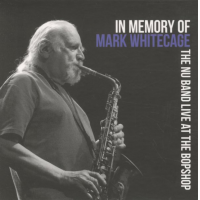
Born in 1937, Mark Whitecage (alto saxophone, clarinet, Díne flute) lived a jazz life. He started playing while still a boy, his father exposing him to the music and sound of Lester Young, Charlie Parker, Ben Webster, and many other "boppers".  By the time he arrived in New York City in the early 1970s, his approach to music had changed. Whitecage hooked up with multi-instrumentalist Gunter Hampel and they toured constantly spending a lot of time criss-crossing Europe. He led a number of his own bands through the 1980s and 90s recording a number of albums as a leader and sideman for CIMP Records. He joined The Nu Band in 1999, a quartet organized by drummer Lou Grassi and trumpeter Roy Campbell, Jr. (featuring bassist Joe Fonda) and was a member up until his passing in March of 2021 at the age of 83.

In January of 2018, The Nu Band performed at the Bop Shop in Rochester, NY. "In Memory of Mark Whitecage" (NotTwo Records) captures 63 minutes of that evening's performance.  After Roy Campbell passed in 2014, the rest of the group asked trumpeter Thomas Heberer to join them and he's been a member ever since.  The exciting seven-song program features songs by each member. The program opens with Whitecage's "Prayer for the Water Protectors"; the composer's Díne flute rolls on unaccompanied for the first two minutes before Grassi's tribal drums and Heberer's growling trumpet move behind him. Fonda's bowed bass lines quietly underpin the music. The saxophonist's "Five O'Clock Follies" opens with a short saxophone intro (opening lines sound a bit like "How are Things in Glocca Morra" from "Finian's Rainbow") and heads right into a rhythm that befits the name of the venue.  Everybody takes a solo, the audience and the band have fun.

The next two cuts are both composed by the trumpeter. "One For Roy" pays tribute to the late trumpeter and co-founder of The Nu Band. The music goes in and out of tempo plus features a great conversation between the alto sax and trumpet.  "The Closer you Are the Further It Gets" is the album's longest piece and it, too, does not adhere to a strict rhythm. Yet, listen to how Fonda and Grassi converse underneath the soloists. They stay quite busy and finally push a rhythm onto the soloists which Whitecage obliterates with his wild duo with Grassi.  

After a pair of Fonda's pieces, the free then rollicking "Christoff and Ornette" and the hard-driving "Minor Madness" (great solos all around), the album closes with Grassi's elegy "Dark Dawn in Aurora".  Opening with a long and powerful solo from Fonda, the band enters on a martial beat and then into strong solos from Heberer and Whitecage (again, he duets with the drummer) before returning back to the theme with the added spice of the trumpeter dancing atop the saxophone melody until the close.

In the liner notes to "In Memory of Mark Whitecage", Joe Fonda writes about his 40-year relationship with the saxophonist first as a young musician soaking up all the stories then as an equal on the bandstand.  Lou Grassi looks back at the 20 years of Whitecage's membership in The Nu Band while Thomas Heberer first met the man as a 24-year old new to America before joining him on the bandstand 25 years later.  The energy, the creativity, the sheer joy of making music even as he entered his 80s, Mark Whitecage made and left his mark on creative music.

For more information, go to http://joefonda.com/the-nu-band.html. 

Here's The Nu Band and "Five O'Clock Follies":


Monday, July 5, 2021

A Duo & A Trio


Photo: Josephine Zeitlin
Pianist Denny Zeitlin first became interested in synthesizers in the early 1970s and used them extensively in 1978 when created the soundtrack for the first remake of "Invasion of the Body-Snatchers".  He has used them now and again over the decades, upgrading his equipment along – in 2013, the good Doctor (he's a practicing psychiatrist) reunited with drummer George Marsh who he has known since joining Zeitlin's Trio in the late 1960s. The percussionist, who moved from the East Coast to the West in 1968, may be best known for his work with mandolinist David Grisman, the Jerry Hahn Brotherhood, Mose Allison, and so many more.  He set his drums up in Zeitlin's studio and the duo began to play electric-acoustic acoustic improvisations. In 2015, Sunnyside Records released the duo's first album, "Riding the Moment" followed in 2017 by "Expedition." 

"Telepathy" (Sunnyside) is an apt title for their third album.  Taken from sessions over a five-year period (pre-Pandemic), the 14-track, 76+ minute, program is an aural funhouse. Zeitlin, who continually upgrades his keyboard setup, blends his grand piano with numerous synths, hardware, and electronic keyboards –– meanwhile, Marsh plays his acoustic drum, adding percussion every now and then.  There is no script, no sheet music, and, believe it or not, the vast majority of these tracks are first takes.  For those of us who grew up in the 1960s and 70s, you can imagine Zeitlin sitting in the middle of the studio surrounded by his numerous "toys". He easily moves from one to another; listen to the joyful "Highlands", the track that opens the proceedings. It's a funky jig complete with acoustic piano, keyboard bass, various synths and dancing drums. Several minutes in, all but the drums drop out and Zeitlin begins what sounds like a guitar solo (no, it's a keyboard patch).  

In the space of one song, one might think he/ she is listening to Chick Corea or Keith Emerson or Joe Zawinul.  Zeitlin has his own sound and is always searching. Listen to the duo romp on "Quicksilver" (dig the pianist's left hand in the first minute as well Marsh's delightful brushes work in the next minute. Thunderous drums and rumbling piano chords open "Black Hole" before the music goes in different directions. In the middle of "Moonflower", a "virtual choir" rises out of the rhythm section and it seems so right.  "If Only" is an atmospheric ballad-cum-conversation played by synths and drums while "The Ascent" has, at times, a frenzied feel that is alleviated by the hypnotic piano melody in the middle. As the music rolls forward, the pianist moves freely between keyboards that hints at a full breakout but the listener hears a gentle finish. The program closes with a bow to the halcyon days and nights of San Francisco in the 1960s with the hard rocking "Fillmore Dreams" with wailing synth "guitar" and thundering drums as well as a taste of the blues.  

It's easy to get totally wrapped up in the many and varied keyboard sounds but do pay attention to Marsh's inventive drum work.  Even though the two musicians cannot see each other due to the way the studio is set up, the music never gets "lost" or bogged down in repetition.  Because these pieces are improvised, there are many moments the listener feels like he is in the middle of the telepathic action.  Yes, "Telepathy" is the correct title for this album but it could easily be called "Great Fun" or "The Sandbox Sessions".  Denny Zeitlin and George Marsh keep your attention throughout the album by letting their the minds free to wander the sonic universe.  Feeling stress?  Put this music on good and loud; your housemate and/or neighbors might complain but you can't help but feel good as the music dances around you.

For more information, go to www.dennyzeitlin.com/. To hear more and purchase the album, go to https://dennyzeitlin.bandcamp.com/album/telepathy. 

Hear the delight-filled opening track:


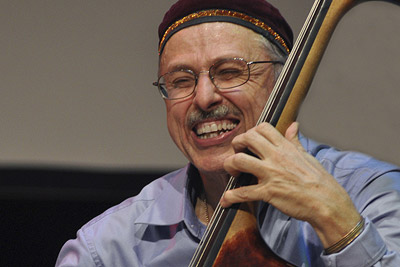
I have known bassist Joe Fonda for over four decades.  He lived in my hometown for a number of years, often played at local venues, produces a yearly show (an Improvisors Forum) with The Buttonwood Tree (Middletown, CT), and has toured the nationally and internationally with so many different artists ranging from Barry Altschul to Anthony Braxton to Billy Bang to Jaimoe (of The Allman Brothers Band) to Michael Musillami to Satoko Fujii.  He leads or co-leads a number of ensembles and, before the pandemic, was one of the busiest musicians in the Creative Music world.

Fonda has performed and recorded with pianist Carlo Morena for over three decades producing four albums with either Jeff Hirschfield or George Schuller on drums. under the name Step In Trio (from a 2000 album of the same name). In March of 2019, Fonda and Morena came to Firehouse 12 in New Haven, CT, with drummer Felix Lecaros Herrera as the third member of the trio.  The dChilean native also works with saxophonist Eden Bareket and has recorded with guitarist Nicolás Vera. The result of the New Haven gig is "Voila la Tendresse" (Not Two Records). The seven song, 70+ minute, program is filled with intuitive playing and intelligent interplay, emotional depth, and really fine compositions (all but one by the pianist).  Because Morena and Fonda have such a long and rich history plus they entrust Herrera with being the foundation each song, this Trio sounds anything but "typical". 

The title track opens the album on a lyrical note, the piano melody pushed forward by the dynamic drumming and bass counterpoint.  The bassist gets the first solo, a delightful statement that is both lyrical and percussive supported by the driving drums and piano.  There is a touch of dissonance at the onset of Morena's long solo – there is such power and excitement as the Trio ramps up the intensity (at times like Keith Jarrett's work with Gary Peacock and Paul Motian).  About 10 minutes in, Morena's left hand drops into a modified "boogie-woogie"; Fonda and Herrera follow happily and the groove is irrepressible right to the final seconds (Morena tosses in a few choice Thelonious Monk quotes in the final moments).

Photo: Guido Nardi
Fonda opens "Japan" with a long solo that gain blends lyrical and percussive with a hypnotic feel at times. Four+ minutes in, the pianist and drummer enter pushing the music into a Bill Evans-style atmosphere with a gentle stop & start in the rhythm; yet, notice how the music moves into a different area more related to the rhythmic pulses of the piece than an Evans improvisation.  Rumbling piano and bluesy bass licks introduce "Dog With No Name",  tune that moves from Gershwin-style flourishes to raucous blues to bass solos short and long. a swinging piano romp  that gets a bit off-center by the powerful drumming. The one non-original is "I Love Music" composed in 1974 by Emil Boyd – it's a sweet solo piano piece that carrie a lot of emotion.

The program comes to its close with "Chorale", a piece that builds slowly from the piano-bass-brushes opening into a powerful piano solo that pushes the rhythm, especially Lecaros Herrera (pictured) to lock in with Morena for a thunderous climax. Still, it's the pianist who puts the song and the album to bed with a short series of light-fingered descending lines.

Step In – Carlo Morena, Joe Fonda, and Felix Lecaros Herrera – have produced an excellent alum in "Voila la Tendresse".  The music engages the Trio which, in turn, captivates the audience.  Powerful, lyrical, rhythmic, emotional music that deserves your close attention – highly recommended!

To purchase the album, go to https://joefonda.bandcamp.com/releases.  For more information about the bassist and his many projects, go to http://joefonda.com/. 

Give a listen to "Japan":

Monday, May 21, 2018

The Healing Power of Making Music

Jon Irabagon is a very busy creative musician.  He was an original member of bassist Moppa Elliott's Mostly Other People Do The Killing, has worked/recorded with guitarist Mary Halvorson and trumpeter Dave Douglas, plays in the Maria Schneider Orchestra as well as with drummer Barry Altschul and bassist Joe Fonda in the 3Dom Factor.  His ever-expanding discography now has entries with pianist Matt Mitchell and drummer Andrew Bain.  Several years ago, Irabagon started his own label, Irabbagast Records, which not only issues his recordings but also has released CDs by trumpeter Brandon Lee and the Uptown Jazz Tentet. Just in the past six months, Irabagon has toured/performed with the John Yao Quintet, the Uri Caine Gershwin Project, the Mike Pride Trio, and the Donald Vega Quintet (and a many others).


Several years ago, the saxophonist (he plays tenor, soprano, and sopranino ) formed a quartet with Luis Perdomo (piano), Yasushi Nakamura (bass), and Rudy Royston (drums).  Their 2015 Irabbagast recording, "Behind The Sky", featured Tom Harrell (trumpet, flugelhorn) with much of the material composed while Irabagon was mourning the loss of several family members. In the Fall of 2016, the group reassembled to tour South America with trumpeter Tim Hagans in tow.  They played in Buenos Aires, Argentina, and then entered Estudio Doctor F and recorded the group's second album, "Dr. Quixotic's Traveling Exotics", a six-song program of Irabagon originals that finds the ensemble often in high gear and always in high spirits.  One can certainly hear how much fun the quintet is having as five of the pieces last more than 10 minutes.  Yet, there is no fat in this music: what you get are well-drawn compositions, powerful solos, great interactions, and a splendid rhythm section.

The opening track, the devilishly-titled "The Demon Barber of Fleet Street" (not from the Stephen Sondheim musical "Sweeney Todd"), opens with a circular melody played solo by Irabagon (he plats exclusively tenor sax on this album) - when the band comes in (Hagans sits this one out), the melody leads up to a muscular bass solo and then into a drum solo during which the music speeds up. We are then treated to rabble-rousing piano solo before the leader calms down the band for a moment with the original melody.  Royston lays down a powerful hard-rock beat underneath the tenor sax solo while Perdomo and Nakamura keep the foundation.  Hagans joins the band on the second track, "Emotional Physics/The Things".  The elemental melody, played by tenor sax, keeps the pace while the trumpeter flies above the band. The most amazing part takes place around 80 seconds ito the piece when the quintet breaks into a fascinating rhythm for a short while before breaking for a short bass solo.  Then into a section where the bluesy, introspective, tenor sax leads the group in a  different direction. Royston creates a storm underneath as Perdomo creates musical waterfalls. A quick tenor sax transition and the band swings back into high gear that leads to a delightful piano solo. The forward motion in the last several minutes is, at times, dizzying: even when the group "calms" down, there is such power in this music.

"Pretty Like North Dakota" is the ballad on the album. Moving forward atop on the strength of Perdomo's piano lines, the blend of muted trumpet and tenor sax along with the sensitive cymbal work and the bass counterpoint gets its emotional depth from the melody and its suspended rhythm (rubato).  The rhythm section drops into a slow tempo for the powerful trumpet solo. When the band stops, Perdomo reintroduces the original piano figures and Irabagon steps out for his smartly built solo.

The closing track, "Taipei Personality", opens with a very funky drumbeat, a rhythm Royston keeps up mostly all the way through (his bass drum "hits shake the speakers).  On most of the songs (on this tune as well), there are sections where Hagans and Irabagon engage in conversations or play short melodic figures while one member of the rhythm section solos.

More like Monty Python's Flying Circus than Sgt. Pepper's Lonely Hearts Club Band, "Dr. Quixotic's Traveling Exotics" has musical twists-and-turns that take the eager listener out of the ordinary into a variety of special places.  Yes, there is power in this music, the power of being an ensemble, with traveling together, with working onstage and in the studio, the power of music to bring joy to its creators as much as it does to the audience. Jon Irabagon hits new personal heights with this music, creatively and artistically.

For more information, go to jonirabagon.com.

Here's the opening track:


In June of 2016, guitarist, composer, and owner of Playscape Recordings Michael Musillami suffered a brain hemorrhage. As the doctors did tests, a brain tumor was discovered. The subsequent surgery was successful and the musician was sent home to begin his recovery.  He used the rehabilitation time to compose the music that  makes up "Life Anthem", the new album from the Michael Musillami Trio + 2. The Trio - Joe Fonda (bass) and George Schuller (drums) - started its life in 2002. For this recording, the band's ninth and sixth with guests, Musillami added the musical voices of Kirk Knuffke (cornet) and Jason Robinson (tenor and soprano saxophones, alto flute).

The album is a musical diary of the composer's physical trials, opening and closing with two versions of the title track.  The first is played by Knuffke: with his crystal clear tone, the music sounds like a call to prayer, a plea for attention. That leads into "I Hear Sirens In the Distance", a tension-filled quintet piece filled with long tones, moaning brass and reeds, and Musillami's slippery, short, even fragmented guitar lines that equate to the mysterious trouble he was going through waiting for the ambulance.

Along the way, there is more musical tension on "MRI Countdown" and the troubling "Slow Bleed." The composer's attitude begins to turn on "Dr. Mohammed Khaled, Neurosurgeon", a driving piece highlighted by the pounding drums, a powerful interaction between Knuffke and Fonda, and a long guitar statement - now, the leader's guitar work is more assured, not frenetic, but bending towards hope.  Fonda's solo bass spotlight, "I'm Beginning To Feel Life's Pulse Again", is a 2:00 delight that leads to the medium-tempo quintet meditation "June Recovery."  The road is not always smooth as one hears in "ICU Blues" and one imagines that "Visions" is the composer's response to having little to do but be still and recuperate. The latter tune, the longest on the 15-song album at 12:48, may have inspired by Musillami's dreams about being back on the bandstand.  His playing now has increased fire and the guitarist is enjoying the push he feels from the rampaging rhythm section. But, the pace slows for Knuffke's solo over the bass and drums followed by Robinson's blowsy tenor sax spotlight.  During the saxophonist's solo, the beat returns to an exciting level, going for an explosive climax.

Photo: Yixiao Guo
The album features a trio short improvisations ( "I Hear Sirens..." is, mostly, improvised but contains composed cues), the afore-mentioned "Slow Bleed", the hesitant "Night Walker", and the handsome "Family" (which is guitar, alto flute, and, late in the piece, bowed bass).

The final two tracks are short but ever so positive.  "Think Of Something Beautiful" is an up-tempo romp one expects to break into a series of solos but, instead, leads into the group rendition on the title track. Here. the music has restored power amidst the feeling of thankfulness and joy for the leader's return to playing and being with his musical friends.

Michael Musillami's story has a happy (and healthy) ending. "Life  Anthem" takes the listener on quite a journey with compositions that are, arguably, the finest of the guitarist's (nearly) three-decade career. With his long-time rhythm section as well as two new companions, Trio +2 is a formidable ensemble worthy of your attention.

For more information, go to www.michaelmusillami.com.

Here's a live Trio version of "MRI Countdown" from April of this year:

Monday, June 5, 2017

A Most Interesting Tribute

rollingstone.com
Upon hearing of the death of Gregg Allman, I was transported back to the night I first heard The Allman Brothers Band in concert.  Their first Lp had been released on Atco/Capricorn in late 1969 and they immediately went on tour supporting the J. Giels Band. Saw them at an old concert hall in Springfield, Massachusetts.  When they hit the stage, there may have been 30 people in the audience but the ABB rocked as if the house was full.  Gregg sat behind his Hammond B-3 organ, belting vocals, his brother Duane and Dickey Betts trading solos that roared through the auditorium while the rhythm section - drummers Jai Johanny Johanson and Butch Trucks plus bassist Berry Oakley - pounded away and played heart-thumping bass. I was covering the event for our campus newspaper so I got to go backstage to visit the band as the headliner was setting up. They were excited about how well the set went and that they were getting press coverage - they were fine Southern Gentlemen, offering my girlfriend and I beers. I talked about the Blues with Gregg for a few minutes, amazed that someone just 16 months older than me could sound a 60-year old bluesman.  He laughed and pointed to the cigarette in his and try beer in his hand, stating that these were "two reasons I can shout."  Got a minute to chat with a few others before they headed out to the tour bus - never did stay to hear the J Giels Band (though I did see them the following year).

After Duane died in 1971, I lost interest in the band (although I wore out the grooves on "Live at The Fillmore East").  Gregg carried on with the band until 1975, started a solo career that had its ups-and-downs (his 2011 collaboration with T-Bone Burnett, titled "Low Country Blues", is an excellent recording), rejoining the group in 1989, an ever-shifting lineup that lasted another 25 years.

Drummer Tiziano Tononi (pictured left) is one of the last people I expected to record a tribute to The Allman Brothers Band but his new album "Trouble No More...All Men Are Brothers" (Long Song Records) is a loud and loving tribute to the group with a focus on the earlier recordings mixed in with a pair of Dickey Betts songs and three originals.  Tononi has assembled quite a group - what's interesting on first glance about Southbound is that there are no guitars or keyboards (save for Carmelo Massimo Torre who plays accordion) and the lead instruments are Emanuele Parrini (violin, viola) and Emanuele Passerini (tenor and soprano saxophones) plus Piero Bittolo Bon (alto sax, bass clarinet, flutes). The rhythm section features Joe Fonda (electric and acoustic bass) and Pacho (congas, bongos, and percussion).  The majority of the tracks also feature the voice of Marta Riviglia, who has worked with all sorts of ensembles from symphony orchestra to jazz quartets to duos and more (and working a lot with electronics).

If all you know of Tiziano Tononi is the work he has done with tenor saxophonist Daniele Cavallanti (on albums dedicated to Ornette Coleman, Roland Kirk, and Don Cherry, among others with original works), this music will probably surprise you as well. The album opens with an explosive reading of "Whipping Post" which has such an exciting forward motion created by the bass and drums)  - there's also a tumultuous soprano sax solo (the "reprise" shows up after the second track and is more diffuse).  On tracks such as "It's Not My Cross to Bear", "Don't Want You No More", and Willie Cobb's "You Don't Love Me", it's a treat to hear the drummer lock in Fonda and play such high-energy blues (the latter song feature a smashing interchange between viola and accordion!)  Bittolo Bon opens "...Cross to Bear" with a rip-roaring alto sax solo followed by Ms. Riviglia digging into the lyrics shadowed by Parrini hard-edged violin. Passserini's tenor plays a hardy solo in the middle before the bands quiets down for a delightful accordion spotlight. Listen to the ensemble rip through "Hot 'Lanta" featuring burning solos from Parrini, Passerini (soprano), and Bittolo Bon (bass clarinet) fired up by the blazing drums, congas, and the hard-edged bass playing.

Arguably the best track on the album is the Eastern-sounding take of "Midnight Rider" (video below), replete with droning accordion, lively bongos, urdu drums, double-tracked vocals, and haunting bass flute solo.  The exotic sounds carry over to the drummer's original piece "For Berry O." but here it's just gongs, shaken percussion, cymbals, steel drums, accordion, congas, and drum set but no voice, strings, or reeds.  Another original work in "Requiem For Skydog", a deep blues dedicated to Duane Allman that features solos from alto and tenor saxophones plus violin as well as impressive acoustic bass melodies.

Mr. Cavallanti shows up on a rousing take of King Curtis's "Soul Serenade" joined by the squalling soprano sax. The best part may be Cavallanti's unaccompanied coda, the only time the main melody of the song is played.

The only misstep (to me) is the final track, "You Don't Love Me (glorious ending)" with Ms. Riviglia riffing on the lyrics in a duet with herself while the band initially wails away. Everyone drops out but the vocalist and the leader, then the voice departs and it's just the drums taking the album to its conclusion.   However, "Trouble No More...All Men Are Brothers" (subtitled "A Tribute to the Spiritual Unity of The Allman Brothers Band") is quite an exciting project. Starting with the powerful rhythms, adding Marta Riviglia's expressive vocals punctuated by the reeds, strings, and accordion, Tiziano Tononi and Southbound give their all to honor a band that has quite an effect on the United States and beyond.

For more information, go to www.longsongrecords.com.

As promised, "Midnight Rider."

Monday, May 16, 2016

Mid-May Musical Events in CT + Post Modern Music + Plenty of Joe

The Katie Bull Group Project, a splendid quintet led by the composer, dancer, and vocalist whose lyrics bend towards poetry and whose voice is a powerful instrument, returns to Connecticut this Friday to perform at Firehouse 12 in New Haven. Her ensemble - Landon Knoblock (piano, synths), Jeff Lederer (tenor and soprano saxophones), Joe Fonda (bass), and George Schuller (drums & hat) - does a splendid job illustrating Ms. Bull's lyrics with sounds funky and free. This group lit multiple fires under an audience at The Buttonwood Tree in Middletown when it played there in March of this year.

The KBGP plays 2 sets - 8:30 and 10 p.m. - for more information, go to firehouse12.org or call 203-785-0468.  To learn about Ms. Bull and all of her endeavors, go to www.katiebull.com.

photo by Willy Schuyken
Mr. Fonda (pictured left) will also be part of The French-American Connection appearing Saturday evening at The Buttonwood.  Representing the United States will be the bassist plus drummer Harvey Sorgen and representing France will be Christophe Rocher (clarinet, bass clarinet) - expect an evening of inspired improvisations, rhythmical adventures, with unexpected twists-and-turns as is the wont of musicians playing on the spur-of-the-moment.

The trio will take the stage - floor, in this instance - at 8 p.m.  For more information, go to buttonwood.org or call 860-347-4957.


Chris Stukke
The Side Door Jazz Club welcomes saxophonist and flutist Don Braden on Friday May 20.  Mr. Braden, currently the director of the Litchfield Jazz Camp and Interim Director of the Harvard University Monday Night Jazz Band, has toured and/or recorded with the likes of the late Betty Carter, Wynton Marsalis, and Roy Haynes.  He leads several different ensembles including the Organix Quartet that will grace the Old Lyme performance venue. Joining Mr. Braden will be Jared Gold (organ), Dave Stryker (guitar), Steve Johns (drums), an impressive ensemble that will play original works, standards and jazz classics with swing and panache. To find out more, go to www.donbraden.com.

Doors open at 7:30 p.m. and the musicians take the stage at 8:30.  For more information, call 860-434-0886.

Here's a sample of the Organix Quartet from 2015's "Luminosity" CD, an album which features the saxophonist, guitarist Stryker, organist Kyle Koehler and drummer Cecil Brooks III:


jazzdagama.com 
Pianist and composer Kevin Harris brings his Project quartet to The Side Door on Saturday night. Harris, a graduate of Morehead State University and the New England Conservatory of Music (where he studied with Fred Hersch, Cecil McBee and, Danilo Perez among others), teaches at the Berklee School plus has a busy  time leading his own band as well as playing with groups led by saxophonist Jerry Bergonzi and drummer Steve Langone.

For the Old Lyme gig, he brings an exciting band including Jason Palmer (trumpet), Peter Slavov (bass) and the redoubtable Ralph Peterson, Jr. (drums).  The music starts at 8:30 p.m.  To learn more about the pianist, go to www.kevinharrisproject.com.   For reservations and more information, go to thesidedoorjazz.com.

Here's the band - Harris, drummer Langone, and trumpeter Palmer plus saxophonist Hery Paz and electric bassist Fernando Huergo from an April 2016 gig at Berklee:


Also on Saturday night, The Artists Collective, 1200 Albany Avenue in Hartford, welcomes pianist Larry Willis and his Quintet.  Willis continues to be one of the busiest musicians on the planet. A native of Harlem, he has worked with so many greats of Black American Music including Dizzy Gillespie, Nat Adderley, and saxophonist Jackie McLean with whom he made his recording debut - McLean is also the founder of the Artists Collective.  Willis spent 7 years touring and recording with Blood, Sweat & Tears a well as recording with trumpeter Hugh Masakela (he and the trumpeter attended the Manhattan School of Music at the same time in the early 1960s.

For the show in Hartford, which begins at 8 p.m., Willis has assembled quite a group including Gary Bartz (alto and soprano saxophone), Steve Davis (trombone), Blake Meister (bass), and Billy Willams (drums).  For tickets and more information, call the Collective at 860-527-3205 or pick them up at Integrity 'n' Music, 506 Silas Deane Highway in Wethersfield.

*****************************************************
Daniele Cavallanti (tenor saxophone, ney flute) and Tiziano Tononi (drums) have been a musical couple for nearly four decades, an integral of the Italian creative music scene.  Besides their own projects (especially their group Nexus), both are founding members of the Italian Instabile Orchestra.  They have recorded projects dedicated to Don Cherry, Rahsaan Roland Kirk, Ornette Coleman, and John Coltrane. They have collaborated with a slew of internationally known musicians including trumpeter Enrico Rava, bassist Mark Dresser, saxophonist Dewey Redman, drummer Andrew Cyrille, and many others. Yet, with all these great recordings, the duo has never recorded in the United States.

Until now, that is.  On June 15 and 16, just a few days after Ornette Coleman passed, Cavallanti and Tononi entered Douglass St. Studios in Brooklyn, NY, with Herb Robertson (cornet), Steve Swell (trombone, flute), and Joe Fonda (bass) -  a quintet dubbed The Brooklyn Express - to record the seven tracks that make up "No Time Left!" (Long Song Records). With the exception of the opening cut "Brooklyn: Monday Soundcheck", the songs are dedicated to musicians that the leaders have to looked to for inspiration.  Tononi's "New York Funeral Blues...(for Ornette C.)" is self-explanatory, the music a slow dirge/drag with moaning cornet, wailing saxophone and keening trombone, closing with Cavallanti's powerful solo coda.  Other musicians celebrated are Gil Evans ("Untitled # 1"), a pace that changes tempos and intensity several times, and South African ex-patriate bassist/composer Harry Miller.  Cavallanti's "Song For Harry Miller" builds up from the powerful interactions of the drummer and Fonda into a fiery piece with solos from the bassist, composer (on tenor), trombonist and, finally, Tononi.  The longest piece (20:29) is "Slap, Tones & Drones (for Bill Dixon)" certainly lives up to its name with a noisy, rubato, opening, that lasts nearly half the piece before giving way to a short tenor/drums interchange and then a powerful drum solo.  The bass and drums slide into a rambunctious beat that fires up the saxophonist one more time. The final track dedicated to a musician who has passed is the funky "I See You Now, Jim! (for Jim Pepper)". - listen to the grooves Fonda lays down and that Tononi picks up on and accentuates, I doubt you'll be able to sit still.

There is 1 track, "Cyrille, The Inspirer", that is dedicated to a living master (and one of Tononi's teachers).  Credited to the quintet and producer Fabrizio Perissinotto, the music goes in several directions in its 12:14 After a noisy beginning, the music take a number of surprising turns including  a section where Cavallanti, Swell, and Fonda have a conversation on flutes. Also surprising is the fact that though the piece is dedicated to a drummer, there is not a drum solo.

"No Time Left" has many moments that lift the listener off his chair, with powerful solos and exciting interactions created by five people who embody the meaning of creative musicians.  Take The Brooklyn Express to the end of the line and get back aboard - this is quite the ride.

For more information, go to www.longsongrecords.com/en/discography/no-time-left/.

Moppa Elliott, bassist, composer, label owner, educator, proud Pennsylvania native, and chief-cook-and-bottlewasher for Mostly Other People Do the Killing, has now created his first solo album. "Still, Up In The Air" (Hot Club Records) is truly a solo recording. Elliott recorded the seven tracks in St. Stephen's Episcopal Pro-Cathedral in Wilkes-Barre, PA.  The different "Sequences" - no titles, just numbers - display Elliott's impressive technique, as he plucks, picks, plays arco (bowed), and col legno (striking the bass with his bow), creates overtones and harmonics.

This music is an acquired taste. There are melodies but many of them have a circular feel. Elliott often creates a fragmented melody line and then continually builds upon and returns to it, often emphasizing the percussive sounds created by pizzicato and col legno, moving quickly back-and-forth from long tones to short sounds sort quick phrases.  In actuality, if you have the patience, this is music to be experienced in one sitting as it is tough to differentiate between the "Sequences."  There is so much happening in this program yet, for this listener, the tracks all seem to run together.  It's not boring but the sounds bore into one's head, blurring reality like a dream, with the power of a poem that takes the reader out of the ordinary.

"Still, Up In The Air" is mood music in the sense that you need to be in the right frame of mind to take this journey into the creative process of bassist Moppa Elliott.  In the words of John Lennon, "Turn off your mind, relax, and float down stream."  Where will Elliott's music take you?

Here's the opening track:

Sunday, November 8, 2015

Dave Douglas 5 Returns + CT Composer & Improvisers Fest x 10

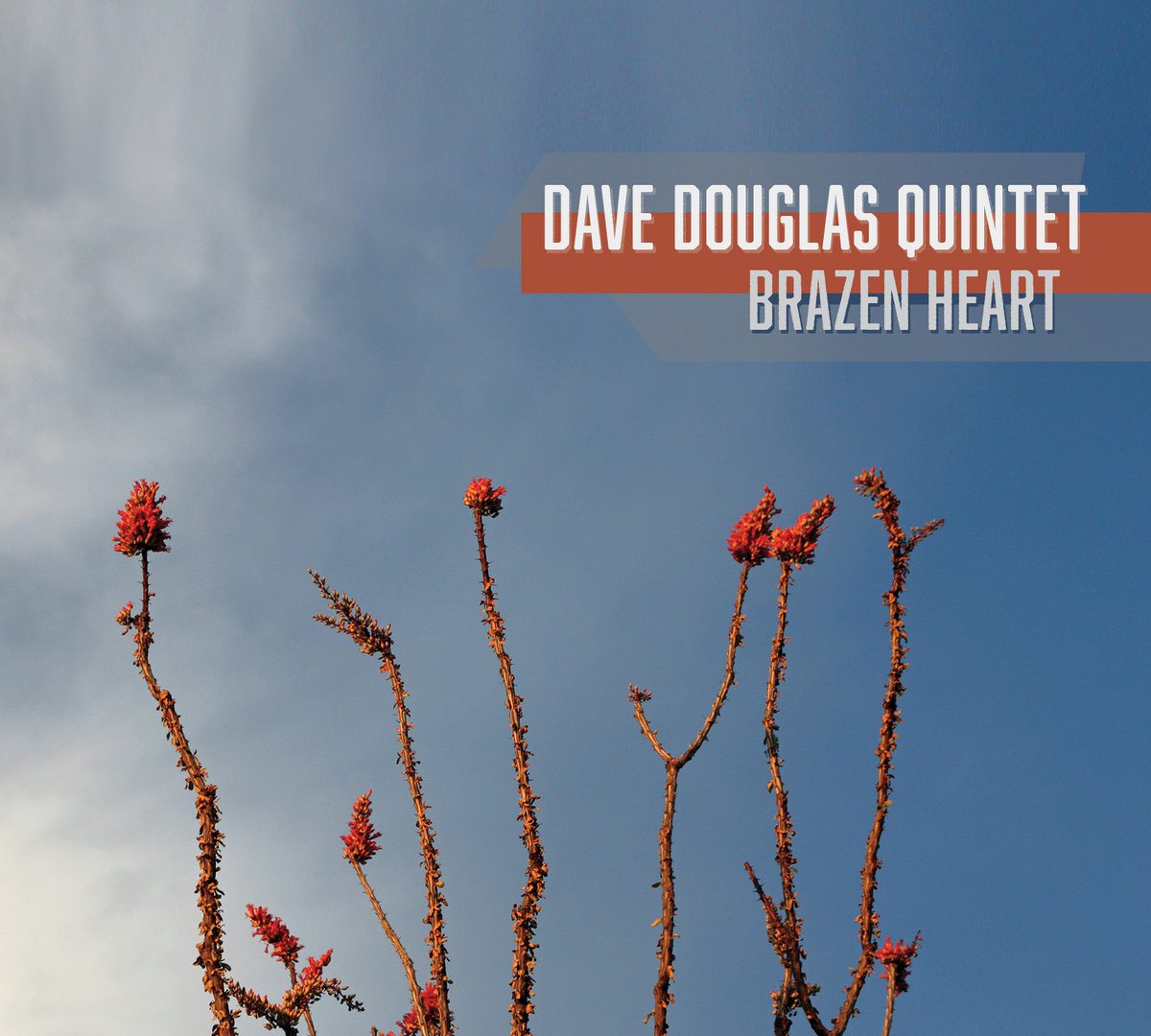
Trumpeter, composer, and bandleader Dave Douglas is back in CT this weekend with his latest Quintet to perform at The Side Door Jazz Club this Friday November 13.  Mr. Douglas is surrounded by the youthful foursome of Rudy Royston (drums), Linda Oh (bass), Jon Irabagon (tenor saxophone) and Matt Mitchell (piano), all leaders on their own.  They're out touring in support of "Brazen Heart" (Greenleaf Music), their 3rd release in 3 years.  It's an
excellent recording, dedicated to the memory of the leader's late brother (who passed earlier this year after the CD was recorded), soulful, honest, yet with a playful streak on many cuts.  The band is so comfortable together, their interactions exciting, and the material filled with opportunities for splendid interplay and strong improvisations.

The doors open at 7:30 p.m. with the first set commencing at 8:30. The Side Door is a great setting for this band and this band is a great fit for the setting.  Call 860-434-0886 or go to thesidedoorjazz.com for more information and reservations.


Tum Records
Bassist Joe Fonda presents his 10th Connecticut Composers & Improvisers Festival this Saturday at The Buttonwood Tree, 605 Main Street in Middletown. The evening begins at 7:30 p.m. with a set from Allan Chase (saxophones) and his partner Dominique Eade (vocals).  He teaches at the Berklee School and she at the New England Conservatory; both have had exemplary careers as musicians and educators.

At 8:30, Fonda joins forces with composer/pianist/bandleader Satoko Fujii.  Ms. Fujii is one of the busiest musicians on the planet, leading several small ensembles and also several large bands (with one each in New York City, Berlin, Germany, and Tokyo, Japan.  While she is known for her open-ended compositions, the pianist is also a brilliant improviser. This is the first time this duo has played together - in fact, they'll meet for the first time when they arrive at The Buttonwood.

The third and final set of the evening (9:30) belongs to saxophonist Jimmy Greene.  The Bloomfield, CT, native serves on the music faculty of Western Connecticut State University while continuing to keep a busy itinerary of weekend gigs.  Usually, Mr. Greene has a top-notch group but, for the festival, he'll be on his own sans rhythm section, just the man, his tenor and soprano saxophones and his creativity.

Kudos to Joe Fonda, one of the more active musicians in creative musicians, for keeping this Festival coming to Middletown every year.  Also, thanks for keeping the spirit of the music alive and making available to all listeners young and old.  For ticket information and reservations, go to www.buttonwood.org or call 860-346-4957.


Tuesday, June 30, 2015

Independent Music Makers Live and On Record

Independence Day 2015 is upon us and what better way to celebrate  than to honor America's contribution to the world of music, jazz.  The Side Door Jazz Club in Old Lyme brings in 2 masterful pianists leading 2 fine Trios.  Friday evening, Johnny O'Neal continues his comeback, recovering from a long and successful battle with H.I.V.  The pianist/vocalist, who hails from great music town of Detroit, MI, made his debut in New York City in the early 1980s, playing in Art Blakey's Jazz Messengers, Milt Jackson's group and with Clark Terry.  After being attacked in New York City, O'Neal moved out, spending many years on the road. In the midst of his illness, he played the role of Art Tatum in the biopic "Ray" (2004), a role he was well-suited for as O'Neal is a master at  the keys.

He has returned to live and perform in NYC. As you can see by the photo above, Johnny O'Neal also is a vocalist and a fine one at that. He's bringing bassist Luke Sellick and drummer Charles Goold (son of tenor saxophonist Ned Goold) along for the ride.  Expect to knocked by the Trio's virtuosity and Mr O'Neal's warm personality.

Here's a track from his 2014 "Live at Smalls":


photo by Emra Islek
On Saturday night, the fireworks will be coming out of the piano when the Aaron Goldberg Trio comes to The Side Door. Mr. Goldberg has a great career as both a sideman and a leader, working with the likes of Joshua Redman, Freddie Hubbard and Nicolas Payton while releasing 5 CDs as a leader.  His latest disk, "The Now", was issued this past January on Sunnyside Records and features the pianist/composer with bassist Reuben Rogers and drummer exraordinaire Eric Harland.  Goldberg is such a fine melodic player but also has an adventurous side.

For the gig in Old Lyme, the rhythm section includes bassist Matt Penman (SF Jazz Collective, James Farm) and drummer Mark Whitfield, Jr (son of guitarist Mark Whitfield). Doors open at 7:30 p.m. and the Trio takes the stage at 8:30.  For ticket information and reservations, go to thesidedoorjazz.com or call 860-434-0886.  To learn more about Aaron Goldberg, go to www.aarongoldberg.com.

Here's a track from the new CD:


Bassist Joe Fonda will be at The Buttonwood Tree in Middletown on Friday July 3rd, serving as the rhythm section for The Nu Band, a quartet that also features alto saxophonist Mark Whitecage, trumpeter Charles Heberer, and special guest Erhard Hirt (guitar). The ensemble, formed in 1999 by Whitecage and drummer Lou Grassi, uses composition as a springboard for interactive collaborations and solos.

For this performance, there is no drummer listed so the music should have more of a chamber feel. However, if you know Joe Fonda, he can lay down some pretty serious rhythms. To find out out more about Nu, go to joefonda.com/the-nu-band. For more information about the gig, go to www.buttonwood.org. One caveat - The City of Middletown Fireworks Festival takes place on the evening of July 3, so build in extra time to get to the venue.

*************************************
Over his career, which now hands nearly 3 decades, trumpeter, composer and conceptualist Dave Douglas has not been averse to taking risks. He has recorded in trio, quartet and quintet settings, worked with strings, with a brass quartet plus drums, interpreted the music of Joni Mitchell, Mary Lou Williams and Wayne Shorter as well as gospel and Americana, plus built of body of compositions whose quality rivals that of any composer in the creative music idiom.

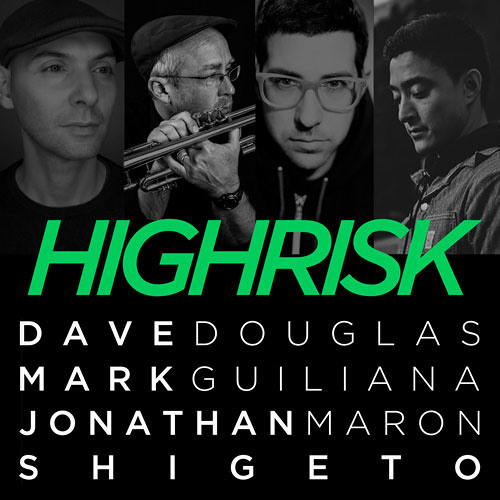
He's recorded with electronic instruments before (for example, 2003's "Freak In") and taken political stands (2001's "Witness").  For his new CD, "High Risk" (Greeneaf Records), he matches his angular trumpet work and thoughtful compositions with the exciting rhythm section of Mark Guiliana (drums, electronics drums) and Jonathan Maron (electric bass, synth bass) plus adds the electronic manipulations of DJ Shigeto (aka Mark Saginaw) to create a most fascinating program.  The album is "dedicated to the entire community of people working towards global climate action" and the final track, "Cardinals", was "written in the wake of the events in Ferguson, Missouri in 2014."

From the outset, the music gets and keeps one's attention, with the sparkling work of Giuliana and deep notes from Maron (Groove Collective, Josh Roseman, Maxwell) pushing the music forward.  The somber trumpet melody of "Molten Sunset" is colored by the bubbling synth figures surrounding it and the amazing snare work below.  The bluesy funk of "Etiquette" sound like the backdrop of a Tom Waits piece but Douglas's trumpet leans more towards the funky side.  The title track is an atmospheric ballad with Maron's thick tones shadowing the trumpet melody - listen to the bass counterpoint and the percussion attack during the leader's driving solo. The afore-mentioned "Cardinals" opens with throbbing percussion, moaning synths and a lively bass melody. The trumpet enters, playing a elegiac melody.  The pace stays steady even as the snare drum enters and then departs.  Douglas stays in an introspective mode throughout and, with the wash of synths around him, the music has the air of a moist summer's night moving into a cloud-streaked morning sky.

"High Risk" is powerful music, especially in the light of its dedication and inspiration.  Dave Douglas and his cohorts do not play it safe and one imagines this music opens up even more in live performances. Music continues to address political and social issues(as artists have for centuries) and that helps to give this album extra depth.  For more information, go to www.greenleafmusic.com/davedouglas/.

Here's the opening track from "High Risk":