Composer, arranger, and pianist Emilio Solla was born and raised in Argentina, has lived and worked in cities such as Buenos Aires, Barcelona, Spain, and, in 2006, relocated to New York City. He's has composed works for small ensembles, for symphony orchestras, and has worked with artists such as Paquito D'Rivera, Arturo O'Farrill, and Edmar Castañeda. Like many of his contemporaries, Solla's music has been influenced by Astor Piazzaolla but his travels have added many different layers to his music. His earlier albums came out on Fresh Sound New Talent; since 2014, he's been issuing his own recordings on his Avantango Records labels.
Solla's latest audio adventure is the first by his 17-piece Tango Jazz Orchestra. Titled "Puertos: Music From International Waters", the eight original compositions pay tribute to port cities around the world. They ranges from the dancing tribute to Havana, Cuba ("Sol La, al Sol" - to La Habana) to New York City ("Four For Miles") to the suave yet exciting "Chacafrik" (in honor of Benguela, Angola). Just about all the music is built from the drums up (kudos to Ferenc Nemeth for his creative contributions) and the section arrangements really favor long passages with fine harmonies and counterpoint. Pay attention to how Solla moves the different sections through melodies; an excellent example is "Andan Luces" (to Cádiz) where the melody lines are played by the piano, reeds, and accordion. The various solos jump off from the melodies – in the middle of the piece, the rhythm section gets to shine with solos from bassist Pablo Aslan and a long one from the leader.
The lovely ballad "La Novena" (to Buenos Aires) has a gentle, swaying, tango rhythm played by the piano and bass (Nemeth is quiet the first two minutes) while the melody is shared by soprano and baritone saxophones. The flute accompaniment rises above the soloist while the horns sit below; that leads into a fine solo from Labro (on bandoneon). That track is followed by "Buenos Aires Blues" but the rocking, hard-hitting, piece is actually dedicated to New Orleans, LA. Each one of the soloists gets a different feel beneath his solo; the rhythm section is somewhat below Noah Bless's trombone spot but picks up the intensity when trumpeter Alex Norris steps forward. After the sax section plays a boppish section, baritonist Terry Goss takes over and the music calms down. It's Aslan's bowed bass supporting Labro's delightful accordion solo. Piano and drums return while Labro dances on. Nemeth takes the piece back to the intro and on to the end.
Edmar Castaneda's harp leads the way on "Allegrón" (to Cartagena) sharing the lead lines with the soprano saxophone of Alejandro Aviles. The harpist's duet with Franco Pinna (bombo legüero) is highly rhythmical – note the interactions of the sections that lead the way to the splendid soprano solo.
"Puertos: Music From International Waters" shimmers with excitement, both melodic and rhythmical, as well as beauty. The songs that Emilio Solla created for the Tango Jazz Orchestra (several that have been recorded in smaller ensembles) have room for each musician to shine and for the arrangements that pique the listener's interest and make you return time and again. Do listen and listen closely – this album is definitely worth your time!
Alejandro Aviles: soprano and alto saxophones, flutes;
Todd Bashore: flutes and clarinet;
Tim Armacost: tenor saxophone, alto flute and clarinet;
John Ellis: tenor saxophone, soprano saxophone, clarinet and flute;
Terry Goss: baritone saxophone and bass clarinet;
Alex Norris: trumpet and flugelhorn;
Jim Seeley: trumpet and flugelhorn;
Jonathan Powell: trumpet and flugelhorn;
Noah Bless: trombone;
Mike Fahie: trombone;
Eric Miller: trombone;
James Rodgers: bass trombone;
Julien Labro: bandoneon and accordion;
Emilio Solla: piano and conducting;
Pablo Aslan: bass;
Ferenc Nemeth: drums.
Guests –
Samuel Torres: congas (“So La Al Sol”);
Arturo Prendez: percussion & Arturo O’Farrill: piano (“Llegara, Llegara, Llegara”);
Franco Pinna: bombo legüero & Edmar Castañeda: harp (“Allegron”).
Here's a track for your listening pleasure:
Two of the producers for Solla's album plus the one below are Kahbir Sehgal and Paul Averginos – they certainly have great ears!
Photo: Warren Le Fever
Joe McCarthy, drummer, educator, and band leader, organized the New York Afro Bop Alliance Big Band when he moved to the Big Apple in 2008. He has taught at schools around the United States plus played with the several ensembles associated with the United States Naval Academy Band. A graduate of the University of North Texas (famed for its large ensembles), McCarthy worked with numerous artists including Paquito D'Rivera, Slide Hampton, Arturo O'Farrill, and Linda May Han Oh. He's also published a book/DVD called "Joe McCarthy Afro Cuban Big Band Play-Along Series" that is used by several different University music programs.
The New York Alliance Afro Bop Big Band issued its debut album in 2008 on Heads Up Records with guest Dave Samuels (vibraphone, marimba) – at that time, the ensemble was known as the Afro Bop Alliance. They added "Big Band" to the name on the ensemble's 2016 release "Revelations" that came out on McCarthy's own label. ZOHO Records is the home of album #3 titled, simply "Upwards" and now they've added "New York" to the name. A glance below at the personnel and you'll see that the band is made up of first-call NYC musicians. The rhythm section is anchored by the leader, bassist Boris Kozlov (on electric much of the album), pianist Manuel Valera (who provided the two of the songs and several of the arrangements), and master percussionist Samuel Torres. It is noticeable from the start that those four musicians who set the band in motion.
Listen below to "Caravan." Torres and McCarthy create a dynamic opening in a call-and-response that sets the table for the delightful take on the Juan Tizol - Duke Ellington classic. If the rhythms don't move you, the excellent solos and intelligent arrangement will have you moving your feet. The band has great fun with Valera's arrangement of John Lewis's "Afternoon in Paris", the percussion pushing the band as they put a bop feel on the Latin rhythms.
As Torres and McCarthy dig into a heady groove, Valera's "Isabelita" has a lovely melody with excellent section writing. Strong solos from the composer, Kozlov, and trumpeter Dave Smith push the piece forward. "Five for Elvin", composed by vibraphonist Samuels for the large ensemble's first album, is a tour-de-force, effortlessly changing speeds and tempos, with more fine section work plus percussion that really moves along with Valera's dancing piano riffs.
The album closes with guitarist Vinny Valentino's emotional ballad "Positano." Note how the brass and horns provide a sweet cushion for the melody and the guitar solo that follows. Tenor saxophonist Ben Kono raises the intensity with a powerful yet still melodic solo followed by Kozlov's excellent acoustic bass solo. "Upwards" is proof that when you give excellent musicians strong material and fine arrangements, they can make music that sings, soars, caresses, and, yes, dances. Check out The New York Afro Bop Alliance Big Band – the name is quite a mouthful but the music is mighty tasty!
Saxophones: Matt Hong, Kristy Norter, Ben Kono, Dave Riekenberg, Eden Bareket
Trombones: Sara Jacovino, John Yao, Sam Blakeslee, Jen Hinkle
Trumpets: Nick Marchione, Raul Agraz, Bryan Davis, Dave Smith
Manuel Valera (piano) Vinny Valentino (guitar) Boris Kozlov (acoustic & electric bass)
Samuel Torres (percussion) Joe McCarthy (drums, leader) Here's "Caravan":
Pianist, composer, and arranger Satoko Fujii first convened the Orchestra New York in 1996. At that time, the ensemble contained 15 members including the pianist. For 2017's stunning "Fukushima", the group was pared down to 13 and Ms. Fujii replaced her piano with the guitar of Nels Cline. The 2020 edition welcomes back original member saxophonist Briggan Kraus and subtracts trombonist Joey Sellers (also an original member). What is always present on the Orchestra NY's recordings is the sense of adventure, the sounds that range from quiet contemplation to roaring madness but never collapsing into total anarchy.
The ONY's 11th release, "Entity" (Libra Records), features five originals from Ms. Fujii ranging in length from 10:08 to 16:17. The composer's style has always brought together disparate sounds composed for strengths of the individual members while achieving an often startling group sound. Ms. Fujii's pieces often feel like short stories, conversational, off-hand, more about the sound than the rhythm. That said, it's the chattering drums of Ches Smith that opens the album on the title song. Listen to how she paints around his solo, how the "skronky" sound of Nels Cline is the perfect accompaniment as Smith dances around the cymbals. The brass and reeds make quick appearances over the first four minutes, pushing and shouting at the guitar and drums until Smith kicks the piece into a funky beat picking up speed. That lasts less than a minute before the drummer and guitarist go off on another conversational jag – when their comrades come back in, the music picks up speed again and Cline goes dashing/squalling off over the roar. It all stops save for one trombone then both trombones moving around each other in slow motion. Yet, there's more; the trumpets, guitar, bass, and drums reenter then the reeds and the music explodes again, a roaring tenor saxophone attempting to be heard over the din.
"Flashback" opens with the entire ensemble at full volume (save for Cline who roars in and out), the brass and reeds sharing the theme for the first several minutes – then, the noise stops and is replaced by quiet sounds from muted trumpet and burbling bass. The group moves in and out of the picture, getting loud, then dropping back to two voices interacting. On first listen, one does not know what to expect. When you return to the music, you listen for how the different elements speak to the overall direction of the music. Yet, stop trying to make sense and just let the sounds enter you. For the first two pieces, that's not an easy experience – most listeners want order, logic, when they listen. Here, you have to create that order. The emotions are certainly here, you'll find them.
Photo: Peter Gannushkin
"Gounkaiku" is the album's longest track, a splendid sonic tour-de-force with a poetic opening section, fascinating interactions, strong solos, amazing work from bassist Stomu Takeishi and drummer Smith, with excellent section writing and execution. Like the other tracks, the song is episodic, moving from sections to full band to quiet sounds, to noise. Cline and Takeishi's guitar/ bass guitar noises and Smith's active percussion drive the final few minutes with separate voices stepping forward from the brass and reeds.
Photo: Bryan Murray
"Entity" invites the listener to dig in, to listen as Satoko Fujii moves the different pieces of her Orchestra New York through the mazes and open fields of the music. The various voices are often heard in duo, trio, quartet, settings, then full ensemble. Solos rise over and flit under the sections or stand alone. Written material and improvisation move effortlessly together, spin apart, come together again throughout the program. Iridescent melodies, such as the opening moments of the final track "Everlasting", collide with meanderings of different soloists, keeping the listener off-guard time and again. Like the world we all live, this music takes the beauty of a sunrise and mixes it with the chaos of human experiences, creating a musical experience that resonates long after the sounds have evaporated.
With the recent commemoration of the 50th anniversary of the assassination of Dr. Martin Luther King, Jr, readers, viewers, and listeners have been reminded of the tumultuous year that was 1968. Many of the big cities in the United States reeled from days and weeks of riots but few were scarred the way Baltimore, MD. was. Like other other cities, industry and businesses moved away taking jobs that were the backbone of people trying to raise their standard of living. While its closest neighbor. Washington D.C., bounced back after a decade or so, the Charm City has had a much slower recovery
Todd Marcus, a native of Northern New Jersey, is both a musician (clarinet, bass clarinet) and community activist. He has lived in Baltimore, MD, in 1997, settling in or near the Sandtown-Winchester/Upton sections, learning about Black music and begin to serve the community through the Intersection of Change non-profit organization that, over the years, has created progress that serve battered women, offers arts and business classes plus created a farm that not only grows food for the community but offers employment to people returning from incarceration.
As a musician, Marcus has worked with Baltimore native Gary Bartz, pianist Orrin Evans, Bennie Maupin, and many others. As a leader, he has issued three albums, one with a nonet, another with two quartets, and the very impressive 2015's "Blues for Tahrir" with his Jazz Orchestra. His latest disk, "On These Streets" (Stricker Street Records), is an expansive program (inspired by the progress that's been made in the communities after the shooting of Freddie Gray) that features interviews and commentary from the neighborhood where he works plus music played by a core group of George Colligan (piano), Kris Funn (bass), and Eric Kennedy (drums, vocal) plus guests Warren Wolf (vibraphone on 5 tracks, drums on one) and Paul Bollenbeck (electric guitar on four tracks). The program is composed of all Marcus originals save for the gospel song "I Surrender All" (a late 19th Century hymn composed by Judson W. Van DeVenter with music by Winfield S. Weeden). That last track spotlights the soulful vocal of drummer Kennedy while Wolf moves to drums.
The majority of the music is up-tempo, celebrating the energy, the creativity, and the tension that infuses the streets where Marcus and his rhythm section live (Colligan was born in New Jersey but raised in Columbia, MD, while Bollenbeck's professional career received as boost when he moved to Washington, D.C.) The title track opens the album in a funky, mid-60s Herbie Hancock style - the leader, who plays bass clarinet throughout the album, takes the first solo ad the rhythm section takes its cue from him, pushing forward intently. Collegian is the perfect partner on this project as he can add such powerful chords as well as create hard-edged solos. Wolf joins on "An Intersection of Change" and his voice blends nicely with the clarinet and piano. He's also can be heard on the lovely ballad "It Still Gets Still" where he supports the piano and adds meditative colors to the background plus takes a very melodic solo. Bollenbeck shines on "PTSD In The Hood", his soaring solo rising over the power supplied by the rhythm section (Kennedy's drums really spur the guitarist dig in). Marcus's fiery solo over the rollicking drums and chords from the vibes, piano, and "wah-wah" guitar.
The last two tracks on the disk truly shine. "Covered In Snow" comes late in the program yet the attractive ballad has a fine melody plus excellent solos from Colligan and Marcus, - make sure to check the interactions between the leader and Wolf's vibes. The funky "NJ' 88", a tribute to Marcus's birth state, is a treat from start to finish. Fun, Marcus, Wolf, and Colligan solo with abandon while Kennedy keeps the groove going.
Perhaps the joy one hears throughout this album tells the listener that there is progress "On These Streets" of Baltimore. Though there is much work to do, Todd Marcus must have faith that what he and many other dedicated residents have contributed to bring a sense of security and renewed possibility to the hard-hit neighborhoods. Listen to the voices, listen to the music, and look for hope and possibility.
Pianist and composer Matthew Shipp is a fascinating conceptualist, creating music that touches on so much of the history of Twentieth and Twenty-First Century creative music. On his new double-CD, "zerO" (ESP Disk), you can hear talk about his concepts, the weight that he gives as both a composer and musician to the concept of "zero", and much more. As you sit listening to the 11 piano solos that make up "zer0", the music transports the listener beyond the "everyday" to a sound universe that combines thick rhythm lies with dancing solos, robust chords, and melodies that often have a circular feel. Of the eight (approximately) solo piano recordings Shipp has produced over the past 20+ years, this is definitely one of the best-sounding productions.
I do not plan to discuss specific tracks on this album. Start at the first note and stay still after the final notes fall silent. Shipp's rumination takes in the sound of the blues in is many-faceted state of grace yet does not seem rooted to an specific style or sound. His sense of dynamic variation and melodic phrases, his forward motion, the mix of chords and single-note lines pique the listeners interest so it would make sense to go back and listen again. You'll pick out how the pianist shifts rhythms and makes complete statements out of fragmented phrases.
"zer0" is one more step forward for pianist Matthew Shipp. Yes, you can hear concepts that he has used throughout his career. His music does "speak truth to power" with the same urgency of fellow pianists Jason Moran and Vijay Iyer, not to afraid to "look back" constantly and infuse his music with the abundance of "voices" that preceded him: it's how he created his own "voice' and how he continues to grow as an artist and person.
In her year of celebrating her 60th Birthday, Satoko Fujii is planning to release an album per month, with each disk featuring a different ensemble or a solo effort for the pianist-composer. "Ninety-Nine Years" (Libra Records) is the second album from her "Orchestra Berlin", a dectet (their debut featured 12 musicians) that blends three reeds (ten saxophonists Matthias Schubert and Gebhard Ullmann plus baritone saxophonist Paulina Owczarek), three trumpets (Richard Koch, Lina Allemano, and Natsuki Tamura), trombonist Matthias Muller, bassist Jan Roder, and two drummers (Michael Grenier and Peter Orins). If you're a fan of Ms. Fujii's large ensemble music, you already know she likes to create different groupings within each song and that sounds and textures rule the music.
After a rousing opening song, "Unexpected Incidents" (which, after a long percussion intro, breaks into a rollicking, raucous, tune), the title track goes in several directions in its 13-minutes. Opening with a slow yet powerful bass solo, the piece seems to open up and slow down at will with the baritone sax, basses, and percussion in the center of the music. There is a long saxophone solo (with only light percussion and high-pitched bowed bass underneath) that finally erupts into a powerful closing section, mournful but with a wailing tenor saxophone over the ensemble. Dedicated to Ms. Fujii's mother-in-law (who passed just months before her 100th birthday), the piece is a combination of mourning and celebration.
Highlights abound. "On the Way" combines various drums interludes with a funky brass dominated melody before a hilarious trumpet solo (chattering, squalling). The band returns, seemingly one-by-one, to a delirious, percussion-fueled (sounds very "second-line New Orleans) finish. "Oops"also has a bit of the "kitchen sink" approach, with ensemble melodies, a powerful sax solo that starts out unaccompanied and continues over a "slow drag" section, and hardy trumpet solo over just the bass and drums. That solo veers off into "free" territory before the dark ensemble melody returns. The album closes with "Follow The Idea", yet another piece that goes in numerous directions: the proceedings sound improvised with all sorts of "strutting" from the reeds and brass amid the various "conversations."
"Ninety-Nine Years" is striking (no pun intended) music, surprising at times but never dull or filled with cliches. Satoko Fujii continues to create fascinating music, music that asks much of the musicians, challenges audiences, and is highly rewarding.
2018 is the year pianist, composer, and arranger Satoko Fujii turns 60 years old and will release an album every month (one may remember Wynton Marsalis doing something similar in 1999, albeit not for his 60th). This month will see the release of a solo piano recital. Before we talk about anything brand new, I should look at two of her more exciting 2017 albums. Early November saw the latest release (and 10th since 1997) by her 13-member Orchestra New York. Titled "Fukushima" (Libra Records), the music is a reaction to the nuclear disaster triggered by an earthquake in 2011. There were several deaths as well as tens of thousands of people displaced from their homes (in some instances, for more than nine months). The after-effects of the disaster were felt throughout Japan and the Far East.
The impressive ensemble - saxophonists Oscar Noriega, Ellery Eskelin, Tony Malaby, and Andy Laster, trumpeters Dave Ballou, Herb Robertson, and Natsuki Tamura, trombonists Joey Sellers, Joe Fielder, and Curtis Hasselbring, plus guitarist Nels Cline, electric bassist Stomu Takeishi, and drummer Ches Smith - do an amazing job bringing this musical five-section story to life. There are moments when the music is mournful, confrontational, angry, quiet, loud, and emotionally powerful. Section "1" opens with breath, as if the wind was passing through trees or over the landscapes of the city. Slowly, one hears various voices rise out of the ensemble, trumpet, sax, percussion - Cline's "tolling" guitar lines ushers in a new section where various voices move in and around his sound. The group hits its stride at the beginning of "2" when the rhythm section pushes forward a powerful sure of sound and different soloists rise and fall around them. The whole group then plays a powerful counterpoint to Laster's squalling baritone solo - yet, pay attention to Cline, Smith, and especially Takeishi (the bassist really roars underneath).
One is tempted to write about every section of this 57-minute adventure but the best advice is to start at the beginning and listen all the way through. Then, repeat. What stands out for you? Is the power of the "sound"? Is it how the electronics of the guitar and bass push the music into different territories for a large ensemble? Is it the gorgeous coda that is section "5"? Chances are that it is all of the above and more. Ms. Fujii gives voice to the victims, making the power of her music and musicians speak for those who suffered (the majority of section "4" is filled with short solo or duo statements, making the point that all voices should be heard - the full band "blues" that closes the section is extremely powerful as well, giving even more gravitas to "5".
"Fukushima", a tragedy translated into music by Satoko Fujii, is quite a stunning work. The musicians of Orchestra New York left their egos at the door for the sake of the narrative. Yes, the title of the album adds the weight of expectations to the music but serves as a reminder that composers and musicians live in the "real" world as much as they do in the world of creativity. Here, those worlds collide and, I believe, we are better for it.
Earlier in 2017, the Japanese label Cortez Sound (named for the Cortez Jazz Cafe in Mito, Japan, approximately 80 miles to the northeast of Tokyo) issued its first album. "Invisible Hand" is a two-CD recording of the solo piano music of Satoko Fujii. There are 10 tracks, 87 minutes of music, much of which is improvised. As with "Fukushima", the listener is advised to sit and listen, leaving (if possible) one's expectations aside. The music covers a great deal of territory, from flowing Keith Jarrett-like melodies to the title track that starts inside of the piano and does not have a true "melody" until 2/3rds of the way through its 13+ minutes. "Floating" is an amazing piece with prepared piano; the power of the pianist's single note phrases and occasional chords plus the marimba-like "prepared" sounds have a meditative feel - watch how the mood and direction changes midway through. This is such a fascinating exploration of possibilities.
In the brief liner notes included in the package, Ms. Fujii writes that she "played total improvisation in the first set, mixed with some written pieces in the second set." The joy of this music is that the listener cannot really hear the difference. The power of pieces such as "Spring Storm" and "Green Cab" is in the pictures that the pianist paints on (and in) her keyboard (the latter track has a delightful "stride piano" section that may remind some of the work of Myra Melford, who as recorded with Ms. Fujii).
Yes, Satoko Fujii is "flooding" the market with her music and yes, it can be overwhelming. For this listener (who has heard several dozen of her albums with various groups), "Invisible Hand" is one of my favorites. It's true that I like the occasional "clutter" of her different large ensembles and her fascinating accordion work with the Gato Libre quartet: however, this two-disk set is quite entertaining and emotionally satisfying.
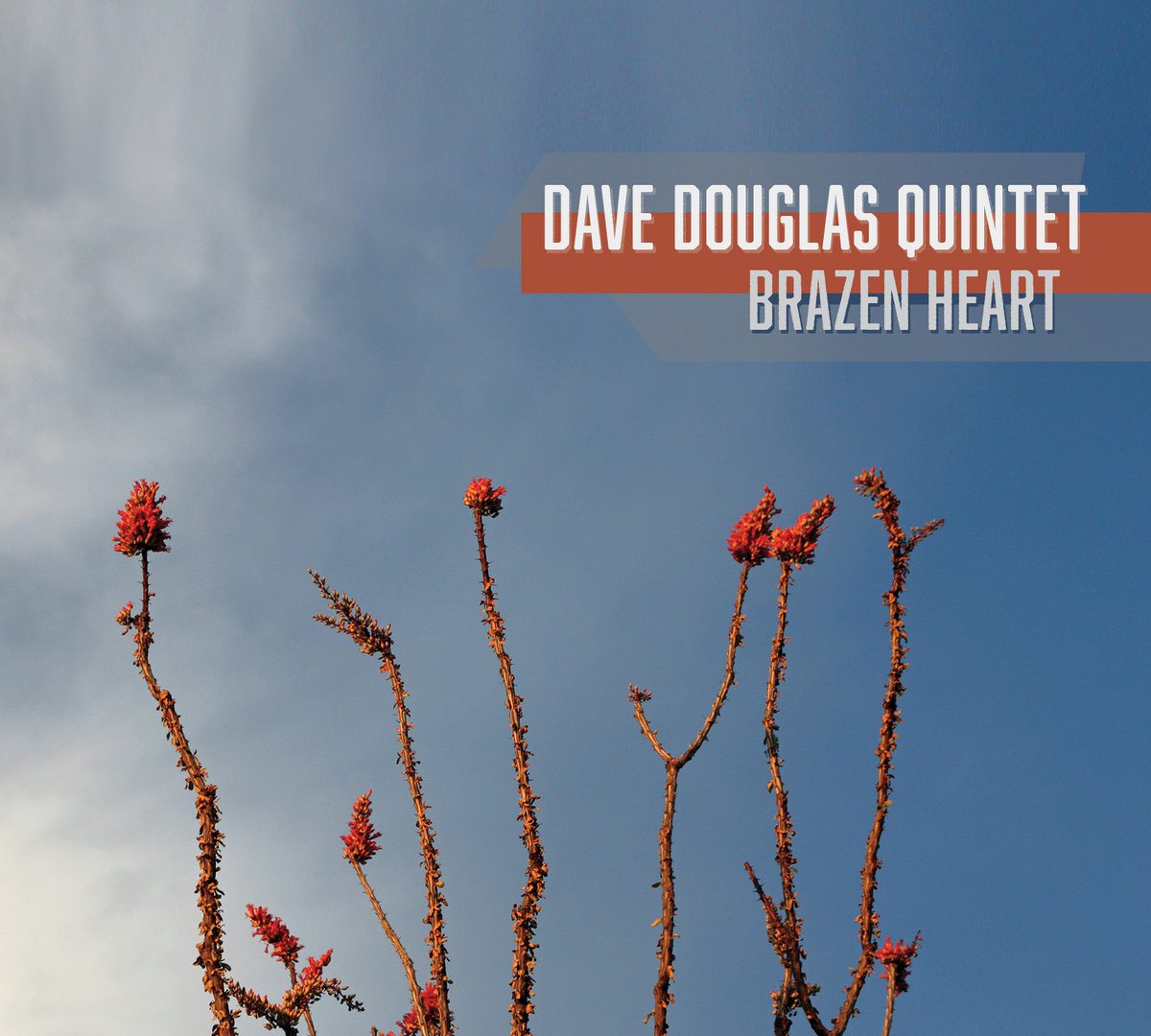
Trumpeter, composer, and bandleader Dave Douglas is back in CT this weekend with his latest Quintet to perform at The Side Door Jazz Club this Friday November 13. Mr. Douglas is surrounded by the youthful foursome of Rudy Royston (drums), Linda Oh (bass), Jon Irabagon (tenor saxophone) and Matt Mitchell (piano), all leaders on their own. They're out touring in support of "Brazen Heart" (Greenleaf Music), their 3rd release in 3 years. It's an
excellent recording, dedicated to the memory of the leader's late brother (who passed earlier this year after the CD was recorded), soulful, honest, yet with a playful streak on many cuts. The band is so comfortable together, their interactions exciting, and the material filled with opportunities for splendid interplay and strong improvisations.
The doors open at 7:30 p.m. with the first set commencing at 8:30. The Side Door is a great setting for this band and this band is a great fit for the setting. Call 860-434-0886 or go to thesidedoorjazz.com for more information and reservations.
Tum Records
Bassist Joe Fonda presents his 10th Connecticut Composers & Improvisers Festival this Saturday at The Buttonwood Tree, 605 Main Street in Middletown. The evening begins at 7:30 p.m. with a set from Allan Chase (saxophones) and his partner Dominique Eade (vocals). He teaches at the Berklee School and she at the New England Conservatory; both have had exemplary careers as musicians and educators.
At 8:30, Fonda joins forces with composer/pianist/bandleader Satoko Fujii. Ms. Fujii is one of the busiest musicians on the planet, leading several small ensembles and also several large bands (with one each in New York City, Berlin, Germany, and Tokyo, Japan. While she is known for her open-ended compositions, the pianist is also a brilliant improviser. This is the first time this duo has played together - in fact, they'll meet for the first time when they arrive at The Buttonwood.
The third and final set of the evening (9:30) belongs to saxophonist Jimmy Greene. The Bloomfield, CT, native serves on the music faculty of Western Connecticut State University while continuing to keep a busy itinerary of weekend gigs. Usually, Mr. Greene has a top-notch group but, for the festival, he'll be on his own sans rhythm section, just the man, his tenor and soprano saxophones and his creativity.
Kudos to Joe Fonda, one of the more active musicians in creative musicians, for keeping this Festival coming to Middletown every year. Also, thanks for keeping the spirit of the music alive and making available to all listeners young and old. For ticket information and reservations, go to www.buttonwood.org or call 860-346-4957.

 Posts
Posts