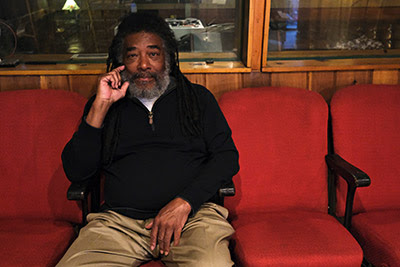
Wadada Leo Smith is quite the musical adventurer with a fertile mind and desire to continue to grow as a composer, arranger, and musician even as he moves through his ninth decade in this world.
Photo: Jimmy Katz
Mr. Smith has found a willing partner with the Finnish record company TUM. The label has been in business since 2003; In 2011, the label has released the trumpeter/ composer's "Dark Lady of The Sonnets", the first of 11 recordings on TUM (so far), four of which have been multiple disk sets. Every package has original art on the cover, contains a book of liner notes filled with information about the artists as well as an essay by the composer/ performer about his inspiration for the music. Many of the compositions bear dedications to artists, musicians, statesmen, or the individual work has a question or comment attached. Mr. Smith's makes one think, makes one contemplate issues and events outside the performance of the music. Like his other AACM brethren Henry Threadgill, Anthony Braxton, the late Muhal Richard Abrams, and Roscoe Mitchell (you can throw Oliver Lake and Julius Hemphill into the mix, both graduates of the Black Artists Group (BAG) out of St. Louis, Mo), he is a true original, a champion of Black Creative Music, and a tireless conceptualist.
TUM Records has now issued a seven-CD set titled "Wadada Leo Smith: String Quartets NOs. 1 - 12". The music is performed by the RedKoral Quartet (pictured below) as well as a sprinkling of guests on various movements. The musicians in the Quartet––Shalini Vijayan (first violin, Mona Tian (second violin), Andrew McIntosh (viola), and Ashley Walters (cello)––first met when Mr. Smith was on the faculty of CalArts (all but Ms. Walters) and has been featured on the composer's "Ten Freedom Summers" (Cuneiform Records) as well as TUM's "Rosa Parks: Pure Love, An Oratorio in Seven Songs". The 12 string quartets on the new boxed set includes four composed between 1965-2001, four between 2005-2011, and four between 1987-2019. In his introduction to the recordings, the composer talks of myriad influences ranging from the Delta Blues of his youth (Muddy Waters, John Lee Hooker, etc) to Claude Debussy, Anton Webern, Dmitri Shostakovich, and John Lewis to Scott Joplin, William G. Still, George Walker, Florence Price, Tania Leon, and Alvin Singleton. A number of the Quartets consist of one movement while "No. 11" has nine movements and is spread over two of the disks. The vast majority of the pieces and/or the movements carry dedications while "Quartet No. 2" and "4" have none.
Photo: Kot Nockels
The music is spacious, making great use of close harmonies, silence, and long tones. The first 10 of the "Quartets" were recorded in late September and early October 2015 while the last two were recorded over three days in February 2020. Even when extra "voices" are added––for instance, the leader's trumpet and the baritone vocal of Thomas Buckner on "No. 8 ("Opuntia Humifusa")–the piece takes it time. Yes, there are more intense moments but never at the cost of clarity and melody. "String Quartet No. 6 "Taif: Prayer in the Garden of Hijaz" has the most extra voices with the Quartet (Lorenz Gamma replacing second violinist Mona Thian) plus Mr. Smith's trumpet, Anthony Davis (piano), and Lynn Vartan (percussion including cymbals and marimba). The contrast between the three "extras" and the strings is fascinating as is the subtle call-and-response built into the music. Acoustic guitarist Stuart Fox (Professor Emeritus at CalArts) joins the string ensemble for the beautiful "String Quartet No. 7 "Ten Thousand Ceveus Peruvanus Amemvical (In Remembrance of Dorothy Ann Stone)"––the music is contemplative, impressionistic, and emotionally strong.
Photo: Kot Nockels
Disk seven is somewhat of an anomaly in the collection. The RedKoral Quartet now consists of four violists including Mr. McIntosh, Mr. Gamma, Linea Powell, and Adrianne Pope. The 20:33 album contains both movements of "String Quartet No. 12" with the first movement dedicated to "Billie Holiday (1915-1959)" and the second to "Pacifica". There is a darker quality to the music (the viola is bigger and pitched a 5th down from the violin); when the Quartet plays in unison, there is a trance-like feel to the music. Yet, the high notes are well-articulated, both movements have quite a dramatic quality with the former seemingly touching on the mournful side of the great singer's life and the latter filled with long notes soon interrupted by several glissandi up and down. The piece closes with a high-pitched, sustained, unison note which is striking, solemn yet serves as a moment of unity.
To do these 12 quartets justice, you need the time to sit and listen deeply, to pick out the different voices, the different themes, how they move together and apart, and how the experience changes you. Therefore, you should listen more than once as you have to match your breathing to the movement of the music. Easier to do when there's a steady pulse yet most of this music flows in shorter statements and quick turnabouts. Never is it static. That's asking a lot of the contemporary listener, to devote that much of one's time––however, if you do, these "String Quartets 1 - 12" will open numerous doors of perception.
Next to the work created by Wadada Leo Smith's Golden Quartet/ Quintet and his Great Lakers Quartet, my favorites among his many recordings are his trumpet and drum duets. Because his trumpet sound is so strong and expressive, the conversations with drummers are incredibly absorbing. Mr. Smith has done a slew of these recordings since his first one, "The Blue Mountain's Sun Drummer" (Kabell) with Ed Blackwell in 1986. Since then, he's recorded with Soyo Toyozumi (1992 and 1994), Adam Rudolph (2002), Gunter Baby Sommer (2006), Jack DeJohnette (2008), Louis Moholo-Moholo (2011), and Milford Graves (2016). The intimacy and excitement of these collaborations make for an engrossing listening experience. "The Emerald Duets" (TUM) collects five more duet albums, two with Mr. DeJohnette plus one each with Pheroan akLaff, Han Bennink, and Andrew Cyrille. The recording sessions began with Mr. Bennink in 2014, then Messrs Cyrille and akLaff in 2019, and Mr. DeJohnette in January of 2020. In the booklet that accompanies the set, Mr. Smith writes "My own favorite duet music of all time is Louis Armstrong and Earl Hines performing "Weather Bird," and Parts 1 and 2 of "Mu" by Donald Cherry and Edward Blackwell." The spirit of those duets, the bursts of creativity that went into those recordings, how those individual voices merged to forge "new" music, all that and more is in the DNA of these five albums.
The first CD in the box, "Litanies, Prayers and Meditations", features the trumpeter with Pheroan akLaff. The youngest musician in the set (67), he first played with Mr. Smith in 1976; in fact, one of the drummer's first recordings was 1977's "New Delta Akhri" (Kabell Records). Listening to their latest collaboration, one can hear how Mr. akLaff is an engaging musical conversationalist and his cymbal work throughout the 75 minute, 11-track, is impressive. He doesn't play a groove but is part of the thematic material and responds organically to where Mr. Smith goes during the improvisations. Hard to pick out a favorite track but "A Sonic Litany on Peace" stands out on initial listens.
Photo: Enid Farber
While Andrew Cyrille (82) has not worked a lot with the trumpeter, Mr. Smith was featured along with guitarist Bill Frisell on the drummer's 2018 ECM recording "Lebroba". This duet session, titled "Havana, Cuba", consists of eight pieces including tracks inspired by and dedicated to people such as US. Representative Ilhan Omar (Dem. – Minnesota), vocalist Jeanne Lee, and trumpeters Donald Ayler, Tomasz Stanko, and Mongezi Feza (each one a distinctive voice on the instrument) plus a song dedicated to the drummer's homeland of Haiti. The mixture of the expressive trumpet and steady shuffle on "Jeanne Lee in a Jupiter Mood" stands out for its simplicity, the power of the melody, and the gentle yet powerful drive forward while "Haiti, An Independent Nation in 1804 but Not Recognized by Britain, France, Germany, the United States and Others: A Designed Tragedy!" is a powerful rebuke to the racist attitudes of the early 19th Century and today.
Photo: Ton Mijs
As noted above, Mr. Smith's sessions with Han Bennink (80) in 2014 set the stage for the boxed set. It's quite possible this album, subtitled "Mysterious Sonic Fields", documents the first time the two ever recorded together. Nevertheless, the nine tracks cover much musical territory with moments when the trumpeter really gets into the swinging groove the drummer creates (most notably on "Louis Armstrong in New York City and Accra, Ghana"). On "The Call – A Duet between Joseph "King" Oliver and Jelly Roll Morton", the duo hit the ground running and, save for a short respite halfway through, the listener is pulled along in the musical mischief. Bennink's "tap dancing" beneath the muted trumpet on "Johnny Dyani, the Artist Who Imagined a New South Africa. A Celebration" is yet another treat that makes one sit up and listen closely to how the two musicians inspire each other.
The last two CDs in the box feature Wadada Leo Smith with Jack DeJohnette (80). They met in Chicago in the 1960s at a time when the drummer had already made a name for himself playing with Charles Lloyd and was beginning a three-year tenure with Miles Davis. It wasn't until 2000 when the trumpeter invited Mr. DeJohnette to join his Golden Quartet that the two began working and playing together on a regular basis. In 2009, Tzadik Records released "America", their initial recording of duets. Mr. Smith guested on Mr. DeJohnette's 2015 ECM recording "Made in Chicago", a live album that also featured Henry Threadgill, Roscoe Mitchell, and bassist Larry Gray.
Photo: Enid Farber
Disk four, "Freedom Summer, The Legacy", sounds different than the others as it opens with the drummer playing piano on the impressionistic "Sandalwood and Sage". Mr. Smith is most lyrical while Mr. DeJohnette blends sounds and long sustained notes. On the title track, the trumpeter moves to piano playing a deliberate melody as the drummer dances around his trap set. On the third (of five) tracks, "Meditation: A Sonic Circle of Double Piano Resonances", Mr. Smith stays on piano while Mr. DeJohnette moves to Fender Rhodes, creating a meditative koan. The final cut, "Silence, Quietness and Very Still" is also a keyboard duet–notice how this most gentle of pieces creates a feeling befitting its title. Notice how melodic the interaction is as well.
Photo: Enid Farber
Disk Five is dedicated to the five-part "Paradise: The Gardens and Fountains". Back to just trumpet and drums, the music has a clarity of both sound and vision; how assured and lyrical Mr. Smith sounds while Mr. DeJohnette's feel as if they are reaching out of the speakers and touching one's heart. The intimacy of this music, at times, is breathtaking as if you can hear the two musicians breathing and listening to each other. The final part, subtitled "Pomegranates and Herbal Teas", is a short (2:02) trumpet solo that seemingly ends in the middle of a phrase as if Mr. Smith was assuring the listener his musical journey is not complete.
Photo: Jimmy Katz
Three of the four drummers (all but Bennink) perform "The Patriot Act, Unconstitutional and a Force That Destroys Democracy", a composition whose title sets the stage for the dramatic music. If music is indeed a "healing force", it also can expose the wounds of a people and a nation grappling with understand the meanings of equality and justice, of fairness, of standing together in the face of storms and tragedies. Each of the three versions is different as befits the drummer; two feature the trumpet and drums starting together while Mr. DeJohnette opens the third version with a long and powerful solo–when the trumpeter enters, the two musicians take off at a furious pace that slows on occasion for the trumpet or the drums to suggest a different direction or to play a solo or insert a new melodic phrase. At 20:03, the third version is the longest single track on the set but its fire and message is inescapable.
"The Emerald Duets" is "alive" music at its best, a five-CD collection that will reward the eager listener for years to come. Next to "String Quartets Nos. 1 - 12", these "conversations" are immediately more accessible but no less engrossing. Both projects contain exciting music, challenging one's expectations at nearly every turn. Both projects contain moments of pure beauty, making time stand still, making one wish for more time to enters these sonic worlds in the midst of the daily hustle. Through his music, Wadada Leo Smith offers visions of a master at work and at play––we are the beneficiaries of his creative benefactions.
Pianist, composer, and musical lightning rod Cecil Taylor left New York City in 1970 to spend several years in academia. Taylor was in the forefront of new Black Creative music breaking borders as he integrated numerous musical genres in his bubbling cauldron of creativity. But, for various reasons, he had played in concert in several years. John Coltrane had died in 1967, Miles Davis soon turned towards fusion, and rock music had eroded any popularity jazz had attained in the early part of the tumultuous decade. Taylor went off to teach at the University of Wisconsin and to Antioch College (in Ohio), a job that gave him to compose everyday. He returned to New York City in November 1973 and presented a concert at Town Hall –– the evening featured two performances by his quartet –– Jimmy Lyons (alto saxophone), Sirone (formerly Norris Jones, on bass), and Andrew Cyrille (drums) –– plus a tour-de-force solo piano piece.
In 1974, Taylor's Unit Core Records released "Spring of Two Blue-Js", an Lp with the two versions of the title piece (one solo, one with the quartet). Both pieces are available again on the digital-only "Cecil Taylor: The Complete, Legendary, Live Return Concert at The Town Hall, NYC, November 4 1973" (Oblivion Records) –– however, now one gets to hear the opening set never before released, the 88-minute "Autumn/Parade". The extensive (and fascinating) liner notes will tell you much about the people who captured the concert in its entirety, about Taylor's career, and reprints the original program. However, it's the discovery of the unreleased material that is the revelation. Taylor devotees will not be surprised by the ferocity of the music or the relentless attack of saxophonist Lyons; if one thinks only of this music assaults your ears and mind, pay attention to the quieter moments, to how the music develops from melodic statements, how the rhythm section not only supports but remains in dialogue throughout.
Photo: Fred McDarrah/Getty Images
If you listen closely to the pianist, you will hear how his propulsive lines have logic and rhythm built in that serve as the foundation for Lyons to rise above. Under headphones, one can also hear how integral Cyrille is to the music––he's not cowed by nor trying to catch up to Taylor or Lyons but is right there with them. Yes, it is overwhelming to sit through "Autumn/Parade". While there are several respites in the sonic attack, curious first-time listeners should start with "Spring of Two Blue-Js" (solo piano) moving on the Quartet version before diving into nearly relentless tsunami that is the newly discovered material.
"Cecil Taylor: The Complete, Legendary, Live Return Concert at The Town Hall, NYC, November 4 1973" is a truly amazing document. Think of the context. Late 1973, the Watergate Scandal is about to break into the news, the Vietnam War was 16 months away from its conclusion, and jazz had disappeared from "commercial" airwaves. Does this music reflect its time? The splintered melodies, the headlong rushes forward, the rhythmic push/pull, and the furious shouting in the center of the audio maelstrom, all add up to answer the question.
Since 2013, saxophonist and composer Javon Jackson has been the Director of the Jackie McLean Jazz Studies Division of the Hartt School at the University of Hartford (CT) as well as a Professor of Jazz saxophone. Since he started, Jackson has brought numerous Black thinkers, writers, and artists to campus including Dr. Cornel West, Dr. Angela Davis, Sonia Sanchez, and Nikki Giovanni (pictured with Professor Jackson). After the poet received an Honorary Degree at a campus event, they heard music playing in the auditorium by Hank Jones and Charlie Haden (a gospel piece from their 1994 collaboration "Steal Away"). The poet went home and two days later wrote to Ms. Giovanni asking of she would pick out 10 gospel tunes for his next album.
The poet complied and the results can be heard on "The Gospel According to Nikki Giovanni" (Solid Jackson Records). Jackson gathered his "touring" quartet –– bassist David Williams, pianist Jeremy Manasia, and drummer McClenty Hunter –– and they recorded the repertoire suggested by Ms. Giovanni. Recognizable tunes such as "Sometimes I Fell Like a Motherless Child", "Swing Low Sweet Chariot", "Mary Had a Baby, Yes Lord", and "Wade In The Water" share space with less often recorded spirituals such as "I Opened My Mouth to the Lord" , "Lord, I Want to Be a Christian", and the deeply soulful "I've Been Buked". "Wade In The Water" features Ms, Giovanni's poem "A Very Simple Wish" (see below) spoken by Christina Green. Many of these pieces remind this listener of the ballad work of the classic John Coltrane Quartet, especially when Jackson rises above Manasia'a powerful piano chords, Williams solid, functional, bass lines, and Hunter's thoughtful yet powerful drum kit play. The Quartet does not force the music into strange places; instead, they play it fairly straight with a few delightful exceptions. "Swing Low..." takes its rhythms from Sonny Rollins classic "St. Thomas" while the album opener "Didn't My Lord Deliver Daniel" is a sprightly blues shuffle replete with a drum solo. The ensemble does a wonderful delivering the spirit on the ballad "I've Been Buked" while the saxophonist and pianist sans rhythm section shine on "Lord, I Want to Be a Christian".
Photo: Shaban Athuman
The one non-gospel is "Night Song"––composed by Charles Strouse and Lee Adams for the 1964 Broadway musical "Golden Boy". Sammy Davis Jr. performed the piece in the play and it was almost immediately recorded by Sara Vaughan, Andy Bey & The Bey Sisters, and by Nina Simone. Ms. Giovanni was good friends with Ms. Simone and she suggested the song for this album. Halfway through the band's performance, the poet becomes the lead singer (her recorded debut) and the song takes on even more gravitas.
During the nearly two years of the pandemic, more and more people have turned to religion and spirituality. Many people also turned to music to stave off their fears and soothe their soul. With "The Gospel According to Nikki Giovanni", Javon Jackson has turned inward and interprets these songs through his love and understanding of where jazz has taken its influences. He and his fellow musicians play with soul and joy; with Nikki Giovanni's help, this album is a subtle yet swinging delight!
i want to write an image like a log-cabin quilt pattern and stretch it across all the lonely people who just don’t fit in we might make a world if i do that
i want to boil a stew with all the leftover folk whose bodies are full of empty lives we might feed a world if i do that
twice in our lives we need direction when we are young and innocent when we are old and cynical but since the old refused to discipline us we now refuse to discipline them which is a contemptuous way for us to respond to each other
i’m always surprised that it’s easier to stick a gun in someone’s face or a knife in someone’s back than to touch skin to skin anyone whom we like
i should imagine if nature holds true one day we will lose our hands since we do no work nor make any love if nature is true we shall lose our eyes since we cannot even now distinguish the good from the evil
i should imagine we shall lose our souls since we have so blatantly put them up for sale and glutted the marketplace thereby depressing the price
i wonder why we don’t love not some people way on the other side of the world with strange customs and habits not some folk from whom we were sold hundreds of years ago but people who look like us who think like us who want to love us why don’t we love them
i want to make a quilt of all the patches and find one long strong pole to lift it up
i’ve a mind to build a new world
want to play
(printed in "The Collected Poetry of Nikki Giovanni 1968-1998" published 2007 Willam Morrow.)
One of the great joys of listening to creative music is how many of the artists that came of age in the 1960s and 70s are still with us and are still pushing forward. OGJB –– Oliver Lake (alto saxophone), Graham Haynes (cornet, electronics), Joe Fonda (acoustic bass), and Barry Altschul (drums, percussion) –– first came together as a quartet in 2015 to do several tours. They recorded "Bamako" in 2016 and it was issued in 2019 on TUM Records. Right after that debut album was issued, the quartet went back into the studio and the results can be heard on "Ode To O", the group's second recording for the Finnish label.
The 10-song program includes three compositions by Altschul, two apiece from Lake and Haynes, one by Fonda, and two collective improvisations. The drummer's title track is dedicated to Ornette Coleman while "Da Bang" is a tribute to the late violinist Billy Bang. The former piece opens the album in a swinging mode but check out the well-developed melody. Haynes takes the first solo and he dances along with the powerful bass lines and rambunctious drums. The latter track opens with a fine drum soliloquy that dips and swerves, talks and turns, before Fonda drops into a rapid-fire walking bass and the quartet dances forward. Lake's "Justice" includes a deliberate melody line over the rampaging rhythm section. The music feels akin to the "protest" music that Charles Mingus created in his powerful songs. Lake and Haynes solo together with the saxophonist squalling while the cornetist shouts back at him. The saxophonist composed "Bass Bottom", another tune with a deliberate melody line but this time it's Fonda funky bass lines and solo over the simple drum pattern that pushes the song forward.
Photo: Enid Farber
The opening moment of Haynes' "The Other Side" feels inspired by Richard Strauss's "Thus Spake Zaruthustra"; it's slow development of the theme gives way to the composer's solo which also includes his use of electronics to distort the sound of cornet. Fonda's "Me Without Bela" owes its inspiration to the bassist's love of Mr. Bartok's string quartet but when the song moves out into its second half, Fonda drops into a hypnotic and funky rhythm which pushes Altschul and the front line into a fascinating push and pull. The coda of the song is quite engaging and surprising, an abridged version of the opening of the piece.
Check out the two improvisations, especially "OGJB#3" with its playful electronics. Playful is a good word for "Ode To O"; the album is full of playing by four musicians who listen to and inspire each other as well as inspire the listener. Such goos music deserves to be heard both on album and in person.
On the first day of February 2021, three musicians entered Studios Ferber in Paris, France, all three associated at one time in their careers with pianist Cecil Taylor (1929-2018). Drummer Andrew Cyrille spent 11 years (1964-75) with the groundbreaking artist, recording on his two Blue Note albums, his work with and for the Jazz Composers Orchestra, and several other Taylor albums. Bassist William Parker also spent more than a decade as a member of the pianist's ensemble, recording 13 albums from the mid-1980s into the early 1990s. Flugelhornist and trumpeter Enrico Rava performed as a member of Taylor's Orchestra of Two Continents (1984) and his European Orchestra (1988), recording one album with each band.
The 10-song program opens with "Improvisation No. 1", a burst of energy from the opening moments. For those listeners who only know the 82-year young Rava from his ECM recordings, his flugelhorn work is a joy to hear. He rides the rhythmic waves, playfully tossing out lines yet never overplaying. Meanwhile, Parker creates a throbbing bottom from Cyrille to play around with. "Ballerina" is the first of two Rava compositions; the title does not prepare one for the rapid-fire rhythms and blazing flugelhorn riffs. Even the unaccompanied cymbal and drums solo burst out with unbridled energy. Later in the program, Rava's "Overboard" opens with a short flugelhorn spot that resembles the melody of Ornette Coleman's "Lonely Woman". Parker's powerful bass lines atop Cyrille's rolling drums stands out as well.
Photo: Luciano Rossetti
Cyrille's "Top, Bottle, and What's in the Middle" opens with solo flugelhorn, then bass, and then drums, hence the title. Yet, that's how the tune moves forward, each member of the trio getting a short solo in that order. The drummer also contributes "Enrava Melody" –– Rava plays the melody in with Parker offering counterpoint until the composer enters to set the pace for the music to jump forward.
The album also includes two "Blues For Cecil". "No. 1" is a funky urban blues that Rava gleefully moves through while Parker shows his "gutbucket" side. The trio goes "free" for a moment before Cyrille's martial, drumbeat pushes the bassist out front for yet another powerful solo. Listen to Cyrille dancing, bobbing and weaving throughout the second half –– such joy! "No. 2" opens as a ballad with Rava displaying his blues "chops" while the bassist plays such deep low notes.
Photo: Luciano Rossetti
"2 Blues for Cecil" closes with the program's only standard, Rodgers & Hart's "My Funny Valentine". Rava caresses the melody while Cyrille moves gracefully around his cymbals and Parker offers gentle support. The three musicians created this beguiling tribute to Cecil Taylor not by imitating but by playing who they are as musicians and as human being. Mr. Taylor always expected the very best from his ensemble and Andrew Cyrille, William Parker, and Enrico Rava responded during their time working with him. This delight-filled album is their gift to us!
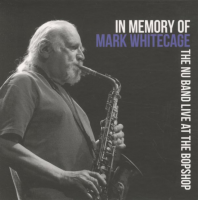
Born in 1937, Mark Whitecage (alto saxophone, clarinet, Díne flute) lived a jazz life. He started playing while still a boy, his father exposing him to the music and sound of Lester Young, Charlie Parker, Ben Webster, and many other "boppers". By the time he arrived in New York City in the early 1970s, his approach to music had changed. Whitecage hooked up with multi-instrumentalist Gunter Hampel and they toured constantly spending a lot of time criss-crossing Europe. He led a number of his own bands through the 1980s and 90s recording a number of albums as a leader and sideman for CIMP Records. He joined The Nu Band in 1999, a quartet organized by drummer Lou Grassi and trumpeter Roy Campbell, Jr. (featuring bassist Joe Fonda) and was a member up until his passing in March of 2021 at the age of 83.
In January of 2018, TheNu Band performed at the Bop Shop in Rochester, NY. "In Memory of Mark Whitecage" (NotTwo Records) captures 63 minutes of that evening's performance. After Roy Campbell passed in 2014, the rest of the group asked trumpeter Thomas Heberer to join them and he's been a member ever since. The exciting seven-song program features songs by each member. The program opens with Whitecage's "Prayer for the Water Protectors"; the composer's Díne flute rolls on unaccompanied for the first two minutes before Grassi's tribal drums and Heberer's growling trumpet move behind him. Fonda's bowed bass lines quietly underpin the music. The saxophonist's "Five O'Clock Follies" opens with a short saxophone intro (opening lines sound a bit like "How are Things in Glocca Morra" from "Finian's Rainbow") and heads right into a rhythm that befits the name of the venue. Everybody takes a solo, the audience and the band have fun.
The next two cuts are both composed by the trumpeter. "One For Roy" pays tribute to the late trumpeter and co-founder of The Nu Band. The music goes in and out of tempo plus features a great conversation between the alto sax and trumpet. "The Closer you Are the Further It Gets" is the album's longest piece and it, too, does not adhere to a strict rhythm. Yet, listen to how Fonda and Grassi converse underneath the soloists. They stay quite busy and finally push a rhythm onto the soloists which Whitecage obliterates with his wild duo with Grassi.
After a pair of Fonda's pieces, the free then rollicking "Christoff and Ornette" and the hard-driving "Minor Madness" (great solos all around), the album closes with Grassi's elegy "Dark Dawn in Aurora". Opening with a long and powerful solo from Fonda, the band enters on a martial beat and then into strong solos from Heberer and Whitecage (again, he duets with the drummer) before returning back to the theme with the added spice of the trumpeter dancing atop the saxophone melody until the close.
In the liner notes to "In Memory of Mark Whitecage", Joe Fonda writes about his 40-year relationship with the saxophonist first as a young musician soaking up all the stories then as an equal on the bandstand. Lou Grassi looks back at the 20 years of Whitecage's membership in The Nu Band while Thomas Heberer first met the man as a 24-year old new to America before joining him on the bandstand 25 years later. The energy, the creativity, the sheer joy of making music even as he entered his 80s, Mark Whitecage made and left his mark on creative music.
I just came back from two long car trips in the space of three days. Happily, the weather was good, I had the opportunity to drive through the Adirondack Mountains, and there were few, if any, road blockages. I packed the car with CDs as well as podcasts I wanted to catch up on (posted to my phone). Over the next two posts, I will recommend a number of those albums.
First, though, I have a podcast to recommend.
I have been listening to trumpeter and composer Dave Douglas's podcast since "A Noise From The Deep" made its debut six-and-a-half years ago (Henry Threadgill was his guest on the premiere). Douglas has a wide array of musicians on the show, ranging from fellow trumpeters (Keyon Herrold, Charles Tolliver, Jaimie Branch, to name just three) to saxophonist Joe Lovano to guitarist Mary Halvorson and many more. The host and guests really dig into the music and, while there is often technical talk, the shows usually are quite fascinating. Podcast #68, a delightful conversation with master percussionist Andrew Cyrille, is the one I listened to on the ride. If you love creative music, you should check out these conversations.
Producer Marc Free has, over the past year or so, been putting groups together that pair Posi-Tone artists who may or may not have worked with each other into an ensemble for a recording session. To the producer's credit, none of the groups – including Lioness, New Faces, and Maximum Enjoyment – have sounded anything less than stellar. I had the opportunity last year to see New Faces, a sextet than includes saxophonist Roxy Coss, trumpeter Josh Lawrence, pianist Theo Hill, bassist Peter Brendler, drummer Vinny Sperrazza – who couldn't make the live gig - and vibraphonst Behn Gillece. Gillece, who has an extensive discography on the label, really stood out for me, increasing my appreciation for both his compositions and musicianship.
Photo: Sara Pettinella
The vibraphonist (pictured left) can now be heard as part of the quintet known as Out To Dinner. Along with trombonist Michael Dease, alto saxophonist Tim Green, bassist Boris Kozlov, and drummer Rudy Royston (need I write more), the band has created "Different Flavors", a 10-song program (five composed by Gillece) that is quite tasty and, ultimately, filling. Opening with the mellow "Day Zero", it's fun to listen to how Royston plays melodically while rushing the band forward. There's a mellow, Horace Silver-flavored, melody which opens up to excellent solos. My car speakers rattled gleefully when Dease's "Skittles" played, a rollicking piece with an impossible tempo (dig Kozlov's "running" bass lines) that must have fun to play and is certainly fun to listen to. Near the close of the piece, the drummer erupts with a volcanic solo and you'll just might scream for joy (I did)!
Photo: Sara Pettinella
It's not all "shock and awe" – Wayne Shorter's "Rio", first recorded by trumpeter Lee Morgan for the album "The Procrastinator" (released posthumously), is a lovely medium-tempo ballad. Dease takes the early lead, supported by the colors of the vibes and Kozlov's counterpoint. When Green's keening a lot joins the melody, it sets the stage for a lyrical solo by the alto player. Royston contributes a handsome ballad; titled "Night Glow", the listener gets treated to the drummer's excellent snare-and-snare work (he has such a crisp sound) plus strong solos from both Green and Dease.
"Different Flavors" closes with Gillece's "Two Down". The opening actually sounds like the perfect ending (listen closely). Thanks to the dancing qualities of the rhythm section, the track rushes forward with a such delightful spirit. The rhythm section swings lustily in support of the alto solo; right near the close, Royston takes a short solo that reminds one why he plays with so many different artists – hard to sit still listening to such a joyous noise. Have no reservations about making a reservation to spend time with Out To Dinner – this music sounds and tastes really good!
Here's a delightfully funky track:
For his fifth album as a leader (and first for Ropeadope Records), tenor saxophonist and composer Adam Larson, a native of Normal, IL, returns to the studio with long-time collaborators Fabian Almazan (piano, electric piano, synth) and Jimmy Macbride (drums). Joining them for "Listen With Your Eyes" is electric bassist Matt Clohesy. The music they produce hearkens back to Larson's previous albums, especially in the sructure of the songs and the leader's fine solos, but now one can hear the influence of rock music in the power created by the rhythm section as well the heavier approach of groups such as Chick Corea's electric Returns To Forever (not as manic as RTF's mid-70 recordings .
Larson's album opens with "Sleepers", a powerful piece with a rising chord pattern, acoustic piano, thick bass notes, and exciting drum work. First few times through, the saxophone work reminded me of Donny McCaslin – that's fine because, as one becomes more familiar with the music, the influences drop away. "False Pageantry" follows; with its "heavier" beat, electric keys, and rhythmic melody line, the music charges forward with Macbride in the lead amidst Almazan's "chirping" keyboards and Larson's hard-edged solo. "Bright" appears later in the program, a soulful melody with a jaunty rhythm and listen to the thick bass notes bouncy behind he electric piano solo. The title track opens like a variation of the standard"Stout-hearted Men" but, instead of being a brace call to arms, the song asks for the attention of all your senses, not just your hearing. After a fine bass solo, Almazan's powerful statement leads the tenor saxophonist into his most emotional solo on the album.
"Listen With Your Eyes" comes to a close with what starts a another slab of funk. Macbride's solid drums open the piece but the melody and chordal patterns do not the piece settle into a pattern. Almazan, as usual, shines on his solo while Larson really digs into his spotlight. The more you listen to this new album by the Adam Larson Band, the more the excellent musicianship and intelligent melodies win you over. Open your mind and "Listen With Your Eyes."
The album "drops" on September 5 – in the meantime, here's a tune:
Photo: Francis Wolff
Pianist, composer, and arranger Tadd Dameron (1917-1965) had a short but mostly productive life. A native of Cleveland, Ohio, Dameron lived in a musical household and, in the early 1930s, came into contact with the music of Duke Ellington's Orchestra as well as the Orchestra of Fletcher Henderson. By the age of 21, he was writing arrangements for several bands in his hometown. Soon, he was "on the road" with several different bands but did not create his own "style" until discovering "be-bop" as a member the Jimmie Lunceford Orchestra. By the end of the decade, Dameron was writing for the Dizzy Gillespie Big Band and touring with his own group
(one that included the trumpeter Fats Navarro). In the 1950s, he wrote and arranged for Clifford Brown and Sarah Vaughan plus made a number of albums including two with saxophonist John Coltrane. Narcotics addiction landed him in prison. After he served his time, Dameron wrote for numerous (including Benny Goodman) and recorded several more albums. A series of heart attacks slowed him down and cancer took him at the age of 48.
While doing research for his book "Dameronia: The Life and Music of Tadd Dameron" (2012, University of Michigan Press), saxophonist and educator Paul Combs (born 1946) discovered unrecorded and unpublished compositions by Dameron. He created a program for quintet around a number of the pieces. With the help of researcher and general manager Ken Poston of KSDS-FM in San Diego, CA, Combs first performed this program on the 100th anniversary of Dameron's birth. Summit Records got involved and helped underwrite the production of "Unknown Dameron: Rare and Never Recorded Works of Tadd Dameron" – the 12 tracks on the album include three from the live concert and three more each from three subsequent studio dates over 15 months.
The musicians on the recording include pianists Bill Cunliffe (on the concert tracks), Ken Cook, Melanie Grinnell, and Kamau Kenyatta. Trumpeter Derek Cameron appears on nine tracks while bassist Rob Thorsen and percussionist/sound engineer Richard Sellers are on half the album. Other musicians involved are bassists Jeff Denson and Alex Frank, percussionist Alex Aspinall, and vocalist Danielle Wertz. What stands out for this listener (one who is not well-acquainted with Todd Dameron's music) is just how melodic the majority of these compositions. The spirited nature of the up-tempo tracks ("The Search", from the Gillespie repertoire, 1962's "Moon From The East", written for Benny Goodman, and "The Rampage", composed for Woody Herman in 1956, stand out) while "Never Been In Love" (recorded by bassist Bill Lee and vocalist Muriel Winston) is a fine ballad that should be recorded by modern vocalists. The rest of the piece have a delightful swing (1940's "A la Bridges" dances right along) while the 1945 composition "Zakat" shows that Bop influence that would inform Dameron's music into the 1950s.
You can't call "Unknown Dameron" "easy listening music" but this music is definitely easy on the ears. These spirited performances make one realize just how joyous and melodic the music of Todd Dameron is. Paul Combs not only plays and writes well but also brings the best out of his music. What a delight!

 Posts


 Next to the work created by Wadada Leo Smith's Golden Quartet/ Quintet and his Great Lakers Quartet, my favorites among his many recordings are his trumpet and drum duets. Because his trumpet sound is so strong and expressive, the conversations with drummers are incredibly absorbing. Mr. Smith has done a slew of these recordings since his first one, "The Blue Mountain's Sun Drummer" (Kabell) with Ed Blackwell in 1986. Since then, he's recorded with Soyo Toyozumi (1992 and 1994), Adam Rudolph (2002), Gunter Baby Sommer (2006), Jack DeJohnette (2008), Louis Moholo-Moholo (2011), and Milford Graves (2016). The intimacy and excitement of these collaborations make for an engrossing listening experience. "The Emerald Duets" (TUM) collects five more duet albums, two with Mr. DeJohnette plus one each with Pheroan akLaff, Han Bennink, and Andrew Cyrille. The recording sessions began with Mr. Bennink in 2014, then Messrs Cyrille and akLaff in 2019, and Mr. DeJohnette in January of 2020. In the booklet that accompanies the set, Mr. Smith writes "My own favorite duet music of all time is Louis Armstrong and Earl Hines performing "Weather Bird," and Parts 1 and 2 of "Mu" by Donald Cherry and Edward Blackwell." The spirit of those duets, the bursts of creativity that went into those recordings, how those individual voices merged to forge "new" music, all that and more is in the DNA of these five albums.