Showing posts with label Behn Gillece. Show all posts

Friday, July 12, 2024

The Power of Posi-Tone Thinking

Producer Marc Free and Chief Mixer-Master Nick O'Toole continue to issue high-quality music on the Posi-Tone Records, mixing newer artists with great rhythm section and giving established artists the opportunity to continue to stretch their creative wings. Here are three exciting new albums.

Photo: Anna Yatskevich
Vibraphonist and composer Behn Gillece has, over the past decade-and-a-half, taken part in dozens of sessions for Posi-Tone.  He first came to critical attention as part of duo with saxophonist Ken Fowser – they released four albums from 2009 to 2013.  Gillece released his debut album as a leader in 2015 and since then has recorded five more but also has been part of several ensembles created by Producer Free. Groups such as New Faces, Out to Dinner, and Idle Hands have released albums combining his vibes and some of his compositions with artists such as saxophonists Roxy Coss, Donny McCaslin, and Tim Green plus trombonist Ryan Keberle, drummer Donald Edwards, guitarist Will Bernard, and others.

Since the beginning of the Pandemic in 2020, Free has employed the "regular" rhythm section of pianist Art Hirahara, bassist Boris Kozlov, and either Rudy Royston or Donald Edwards on drums for his recording sessions in New York City.  They have done impressive work on numerous occasions adapting to different styles, harmonic ideas, and rhythms.  Gillece's seventh solo album, "Stick Together", features Messrs. Hirahara, Kozlov, and Royston in a 10-song, 56-minute, program that stands out for the excellent musicianship and intelligent compositions.  On top of all that, this music really swings.  "Almost There" opens the album on a slow pace; then the groove kicks in and the quartet dances forward. One of the joys of listening to these four musicians is that when they are playing, they are "playing".  Royston is disruptive, noisy, but always on the beat.

Listen below to "Four Of a Kind" and you'll see why that's the exact right title. After a quick run-through of the theme, they hit the floor running powered by Kozlov's mighty bass and Royston's wonderful attack.  The vibes solo is infectious which gives Hirahara the jolt for a flying fingers solo. This is the kind of performance that makes an audience rise from their seats and cheer.

The group slows down the pace several times including the lovely "Changing My Day" (the drummer sits out) and the medium-tempo "Dreamscape."  The latter track picks up the pace for a far-ranging vibes solo.  "Cascades Merging" has a similar feel with a slower opening and then a bump in the tempo for the solos.

One of the delightful surprises is the quartet's take on Sam Rivers' "Cyclic Episodes". The tune, which first appears on Rivers' 1962 Blue Note classic "Fuschia Swing Song", really does swing atop the excellent cymbal work and the melodic "walking" bass lines.

"Stick Together" closes with "Lazy September", a duet for vibraphone and piano.  Not only does the song have a handsome melody but also Hirahara's emotional, rhapsodic, piano support.  It's a gentle ending to a pleasing musical experience.  Behn Gillece has created an album that one can return to time and again, enjoying the music on many levels.  

For more information, go to www.behngillece.com.  To hear more and to purchase the album, go to https://behngillece.bandcamp.com/album/stick-together

Swing along with the quartet on "Four of a Kind":


Photo: Ola Baldych
For many of us, our introduction to trumpeter and composer Josh Lawrence was 2017's "Color Theory", his debut recording on Posi-Tone.  He certainly has done a lot in the last decade as member of the Fresh Cut Orchestra, working and recording with TARBABY, Posi-Tone's New Faces, Erykah Badu (among many others), and is now Director of Jazz Studies at Interlochen Center for the Arts and conductor of Interlochen Jazz Orchestra. His recorded output for Marc Free's label shows a musician who has created his own voice, who's not afraid of showing vulnerability in his musical and sonic choices and who has developed into an excellent composer.


His sixth Posi-Tone release, "Measured Response", is a thoughtful, intelligent, and, at times, quite playful collection of songs. Eight of the 10 pieces in the 57-minute program are Lawrence originals plus one song each by John Coltrane ("Wise One") and Charlie Haden ("Song For the Whales").  Unlike many of the label's releases which usually open with "barnburners", "Where Do We Go?" is a slower blues based on a Pandemic vacation trip.  There are excellent solos from the leader and tenor saxophonist Diego Rivera atop the gentle swing created by pianist Art Hirahara, bassist Luques Curtis, and drummer Rudy Royston.  "A Tragic Tango Comedy" follows – reminiscent of tangos composed the late Carla Bley, it's fun to hear Royston and Curtis play with the rhythms and Hirahara's ornamental yet rhythmical piano accompaniment.  The solos are concise and never overtly technical.  

Photo: Ola Baldych
Lawrence's choice of "cover" songs is inspired and inspiring. Charlie Haden's "Song For the Whales" (which the late bassist recorded with the Liberation Music Orchestra on 2016's "Time/Life") is an elegiac piece that utilizes Curtis's bowed bass as "whale song", Hirahara's rippling piano lines like waves over the prayer-like melody played by sax and trumpet, and pounding drums. That melody is actually lovely, moving slowly over the rhythm section.  John Coltrane's "Wise One" (from 1964's "Crescent" Lp) has a similar rubato feel in the opening 80 seconds before the bass and drums kick in for the powerful piano solo. Lawrence is next, caressing the melodic variations as the thundering rhythm section attempts to push him; instead, he leads them back to the opening, taking the piece out on a bluesier note.

Listen below to "Every Choices Comes With An Invoice" (Lawrence borrowed the title from Busta Rhymes) – it's an antithesis to the ballads as the piece explodes out of the gates on rapid-fire bass lines and frenetic drums. Lawrence digs into his solo displaying his own fire and versatility.  Riviera also rises to the challenge the rhythm section lays down. The pianist initially tamps down the fire before he too is inspired by Curtis's flying fingers.  
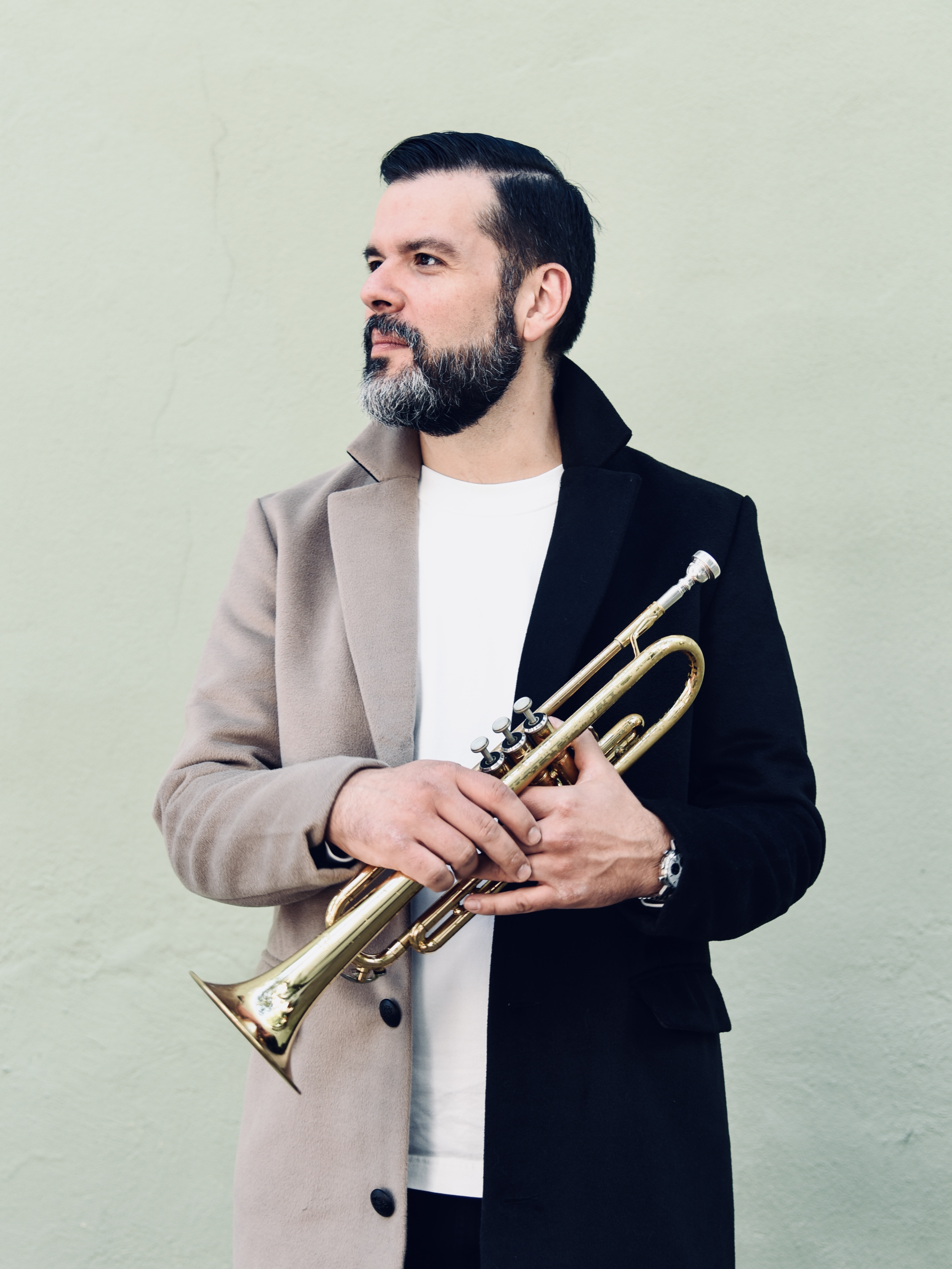
Photo: Ola Baldych
There are moments when the music feels like Miles Davis circa 1960-62 when one listens to songs such as "Flip On A Drip" (a "smoking" piece that really highlights what a good accompanist Hirahara can be) and other pieces ("Between the Lakes") that move towards the sound of the classic Davis Quintet in 1966 and '67. The muted trumpet and solemn melody on "Prelude To a Farewell (For Barry Harris)" pay tribute to one of Lawrence's most important teachers and mentors. The simple beauty of the lines played by trumpet and saxophone give way to a rhapsodic piano solo that also features excellent bass work and soft cymbals. Riviera's tenor spot has a gentle power that speaks to the heart as does Lawrence's short yet poignant turn in the spotlight.  

The album closes with "Texas Tenor", a bluesy ballad that gives Riviera a chance to take center stage. His solid solo hints at Coleman Hawkins and David "Fathead" Newman. Lawrence follows with a romp over the bouncing rhythms.  Because the leader is all about sharing, Hirahara creates a playful, "in your face", solo that brings the quintet back to the bridge and a quick close.  

With "Measured Response", Josh Lawrence and company have created a compelling artistic triumph that also is great fun to play loud.  Lawrence's material brims with creativity which his fellow musicians much to work with. He does not worry about playing "quiet" or giving other soloists more room to shine. This album is well worth diving into often!
 
For more information, go to www.joshlawrencejazz.com/. To hear more and purchase the album, go to https://joshlawrence.bandcamp.com/album/measured-response

Listen to Josh and the band tear it up on "Every Choice Comes With an Invoice":


Photo: Anna Yatskevich
Pianist, drummer, and composer Luther Allison made his recording debut at the age of 19 when he appeared (as the drummer) on trombonist Michael Dease's 2016 Posi-Tone recording "Father Figure".  Since then, he's appeared on several Dease albums plus releases by Diego Rivera (as pianist), Markus Howell (drummer) and on Samara Joy's GRAMMY-winning 2023 "Tight".  The Charlotte, NC, native now lives in New York City where he has performed with bassist Rodney Whittaker, vocalist Jazzmeia Horn, saxophonist Gregory Tardy, drummer Ulysses Horn, and so many others. Allison also teaches at Jazz Summer camps and as a clinican touring all the globe.

To his credit, Allison waited several years and had a plethora of musical and life experiences before recording his debut as a leader.  "I Owe It All To You" is a trio featuring bassist Boris Kozlov and drummer Zach Adelman.  The 10-song, 53-minute, program is a blend of four originals with four songs composed by piano greats James Williams, Mulgrew Miller, Harold Mabern, and Donald Brown plus a song each from Stevie Wonder and Richard Rodgers.  The album opens with the title track which, within the first few moments, one can hear the influences that underlay Allison's style – there's blues, gospel, hard-bop, a touch of Hip Hop, and a quest to create his own voice. The young man is an excellent soloist and the rhythm section makes sure he's a solid foundation to go off on his solo flights.  Just when you think the song is over, there's a slower, sly, gospel coda.
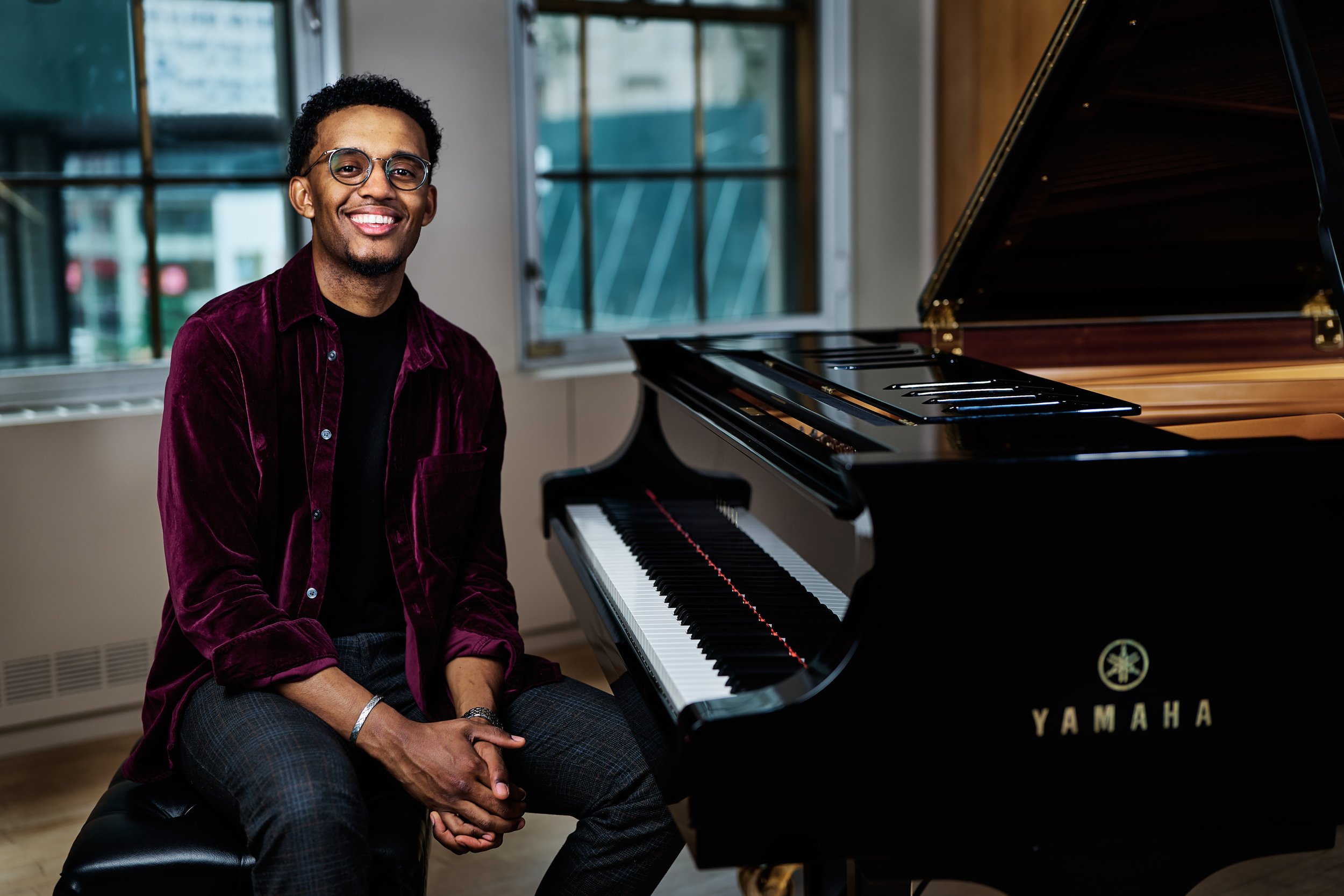
Photo: Roby Davidson Media
Click on the link below and listen to Allison's "Until I See You Again"; the tune has such a lovely melody but to how the tempo changes subtly throughout the solo as well as the fine bass work of Kozlov.  

It's fun to hear where the trio takes the material. The pianist's take on Rodgers's "I Didn't Know What Time It Was" starts out with a funky piano riff and goes through a couple of changes before settling into a swinging groove for the piano solo. Allison's two-handed approach may remind some of the late Harold Mabern, a musician whose blues roots ran deep through his music. It's interesting how the Mabern tune, "There But For the Grace of..." starts so regally before dropping into a delightful fast-paced groove. The trio caresses the melody of the late Mulgrew Miller's "From Day To Day", the longest track in the program at just over seven minutes. That's plenty of time for all three musicians to sparkle.

The album closes with "Lu's Blues", a high-powered blues introduced by a thundering two-handed piano attack before the rhythm section creates a break-neck pace. No problem for Allison who challenges the bassist and drummer to keep up with him. Yes, it'a technically impressive but also impressive how melodic the pianist can be at faster-than-light speed.  

No doubt about it, Luther Allison is a talent to be watched.  His choice of material, his own songs have weight and show his influences without being slavish to any one in particular. It's going to be a joy listening to him grow. Put on track one, sit back, and enjoy this 53-minute ride. I promise it'll make your day better!

For more information, go to www.luthersallison.com.


Listen to the lovely "Until I See You Again":

Thursday, April 8, 2021

Springing and Swinging!

One of the joys of Spring (for some of us) is opening the windows, sitting outside, and listening to music. Here are three viable candidates for backyard (or indoor) enjoyment. 

Photo: Anna Yatskevich
Saxophonist, flutist, composer, and arranger Alexa Tarantino is a busy musician. She plays with DIVA! Jazz Orchestra, with Arturo O'Farrill & His Latin- Jazz Orchestra, with the Steven Feifke Big Band, with vocalist Cecile McLorin Salvant, and others.  Ms. Tarantino is adept on soprano and alto saxophones, flute, alto flute, and clarinet who serves her well in her various musical assignments. She's also an educator serving on the Faculty of Jazz at Lincoln Center as well as the founder and director of the Rockport Jazz Workshop (Rockport, Ma).  Posi-Tone Records producer Marc Free has posited Ms. Tarantino in his "curated" groups such as Lioness, Works for Me, and Something Blue plus paired her with baritone saxophonist Lauren Sevian.  She's issued two CDs as a leader for Posi-Tone and has been a featured soloist in several ensembles.


The third album under her name, "Firefly", finds the young lady in the company of Behn Gillece (vibraphone), Art Hirahara (piano, Fender Rhodes), Boris Kozlov (bass), and Rudy Royston (drums and percussion).  The four gentlemen are Free's choice for his "Lockdown" group as they have became (along with drummer Donald Edwards) his rhythm section during the pandemic recording sessions.   All but two of the 12 tracks on the disk are originals by the leader and group members with a pair of Wayne Shorter tunes ("Iris"and "Lady Day") filling out the program. The album opens with the pianist's "Spider's Dance", a medium-tempo tune with a sweet melody for alto sax and the comforting vibes providing a soft cushion for the song. Gillece contributes the next piece, "Mindful Moments" which finds the leader on flute and Hirahara on Rhodes.  There's a gentle quality to both of these tracks with the latter rising on the easy push from the bass and drums plus the sweet combination of Rhodes, vibes and flute.

Photo: Anna Yatskevich
Ms. Tarantino's piece, "Daybreak", has the funky feel of Marvin Gaye's "What's Goin' On" with the insistent nature of the Motown classic.  Kozlov and Royston do a fine of job of making sure the music has a groove and always moves forward.  "Surge Capacity" leaps out of the speakers on top of rapid "walking" bass lines and frolicking drums. Ms. Tarantino and pianist Hirahara really get fired-up when it's their time to solo plus they enter into a delightful "trading fours" with Royston before all is said and done.  Rhodes and bass introduce the powerful "Rootless Ruthlessness"; when the band enters, the music scurries forward propelled by the rampaging drums and Kozlov's furious bass lines.  When the alto sax solo begins, the band has dropped into slow-motion with Royston all over his drums, Hirahara running his hands up and down the Rhodes, and the bassist sending urgent musical messages. Soon, the music is at break-neck speed and rushing to its climax.  

Ms. Tarantino caresses Wayne Shorter's melody on "Lady Day", the lovely ballad evoking Billie Holiday's unique way of presenting a melody.  Kozlov's lovely bowed bass solo is a highlight as is the leader's ever-so-sweet alto solo.  Shorter's "Iris" is a also a ballad for alto sax and features an impressionistic piano solo, lovely colors from Gillece, and the intelligent work of the bassist and drummer.

 "Firefly" closes with "The Firefly Code", another medium-tempo piece that is dedicated to the resilience of people as well as musicians since the pandemic began.  The sound of the flute supported by the vibes feels comforting plus there is a surprising drum solo that raises the intensity level; listen for the "surprise" ending!  Overall, "Firefly" is an aural treat on which Alexa Tarantino shares the spotlight with her four-piece band. She is generous in sharing the spotlight, the songs do not dawdle with only a pair over six minutes, and the sound quality is clear and cool.  Enjoy! 

For more information, go to https://alexatarantino.com/

Photo: Anna Yatskevich
A month before Ms. Tarantino's September 2020 recording sessions, Behn Gillece took Messrs. Royston, Kozlov, and Hirahara into the studios to record the 10 tracks that make up his fourth Posi-Tone album "Still Doing Our Thing".  The vibraphonist contributed seven originals to the program, several of which have titles that reference the musician's issues with the pandemic. Songs such as "Back to Abnormal", "Don't Despair", "Going On Well", the title track, and Royston's "Glad to Be Back" carry titles that illustrate how these musicians are dealing with having their lives turned upside down. Yet, the overall feeling one gets listening to this music is the joy the musicians have for being able to get together and play.  


One of the most impressive aspects of Gillece's compositions is that while the music does not seem complex, the pieces are well-organized, have strong melodies and rhythmic fire, and are ripe fodder for soloists.  Take the opening track, "Extraction".  The composer introduces the melody; the rhythm section with Hirahara on Rhodes set a wicked pace and the vibraphonist takes off.  Chances are you'll dig the solo but do pay attention how Kozlov and Royston set the torrid pace while the pianist lays down the chordal structure.  The next track, "Rattles", has a similar opening but this time Hirahara and Gillece share the melody while the beat is decidedly funky.  Both the pianist (acoustic) and the leader share the solo space feeding off each other's lines.  The rhythm section is relentless during the solos, pushing, shoving even, as the intensity level rises to the boiling point.

Among the other highlights is the leader's lovely ballad, "Blue Sojourn", which shows the influence of Billy Strayhorn.  The song is a duet for vibes and piano and includes an emotional and lovely solo from Hirahara.  There's plenty of space in the vibes solo giving the notes time to breathe. Kozlov's "Outnumbered" finds the bassist going "electric" supported by the pulsating chords from the Rhodes.  The piece may remind some of Chick Corea's Return To Forever especially in Kozlov's throbbing bass, Royston's "attack-mode" drumming, and the incredible forward motion.  Tenor saxophonist Nicole Glover joins the trio (Royston sits out) for Hirahara's "Event Horizon", her lighter attack a pleasing contrast to the flowing yet percussive piano and vibes.   

Photo: Anna Yatskevich
The album closes with Gillece's soulful musical plea, "Don't Despair".  The ballad has a handsome melody played by the leader and Kozlov (electric bass).  Hirahara is back on Rhodes, the lighter sound of the keyboard meshing well with the rounder bass tones (listen to the excellent music the bassist is creating) and Gillece's soothing vibes chords.  

It's good to know that Behn Gillece, his compatriots, and producer Marc Free are "Still Doing Our Thing".  This music has the power to pull listeners out of their doldrums, giving us hope for when we can get out and see/ hear music in person.  In the meantime, open the windows and let this music flow!

For more information, go to www.behngillece.com.  To hear more and purchase the album, go to. https://behngillece.bandcamp.com/album/still-doing-our-thing

Give a listen to the closing cut:


Saxophonist, educator, and radio show host Tom Tallitsch never fails to impress when it comes to making music, having a great cohort of musicians, and swinging with abandon.  If one has to classify his music, it comes out of the flow of the late 1950s through the mid-1960s Blue Note/Prestige Records sounds.  Much of the music kicks hard but rarely boils over.  Yes, there is a hint of John Coltrane's emotional style in the tenor saxophonist's phrasing and an urgency in his uptempo piece that show the influences of Freddie Hubbard, McCoy Tyner, and Jackie McLean.  He's not a zealot for any particular style but Tallitsch has a melodic streak a mile wide making his songs stand out for their emotional strength and, yes, the fire that comes from really exploring his repertoire.

Earlier this year, Tallitsch issued his 11th album as a leader, "Message", the fourth release on his TT Productions label. Featuring his working band of Mike Kennedy (guitar), Neil Podgurski (piano), Matthew Parish (bass), and Dan Monaghan (drums), the program features nine original pieces by the leader.  The album opens with the appropriately-titled "Let's Go!" which jumps out from the first note and does not relax for seven-plus minutes. Fueled by the thick piano chords, a romping bass, and rock-steady drums, Tallitsch takes the first solo flying over the rhythm section with glee.  Kennedy displays touches of Herb Ellis and John Pizzarelli in his lively spot while you hear hints of McCoy Tyner in Podgurski's lively solo.  Parish's short yet powerful solo leads to the everybody "trading 4's" with Monaghan.  

The leader switches to soprano sax for the medium tempo "Bubble". Meshing his sound with the guitarist on the melody, the tune feels a breath of fresh after a long winter (and the album was recorded in January 2020!)  "Dusk" is a bluesy ballad with Tallitsch's tenor sketching the melody. Podgurski, who works with the Capt. Black Big Band and drummer Chad Taylor's Trio, creates an impressionistic solo supported by the melodic bass and steady drumming. Listen to what guitarist Kennedy adds in the background especially during the leader's delightful solo. Then, there's "Mablestates", a lovely reconstruction/ tribute of and to Benny Golson's classic "Stablemates."  Golson first recorded the piece in 1958 with his Philadelphians; Tallitsch's loving remake is also performed by musicians active in the Philly jazz scene. There's a "cool" feel to the tune and, once again, the leader's sax plays the melody in tandem with the guitar.  

The album's final two tracks are like day and night.  "In The Weeds" is a powerful, hard-bop, filled with fiery work in the rhythm section and strong solos from piano, tenor sax, and guitar. There is a clever change near the end that should make you smile.  "Moon" closes the album, a ballad that is takes its time to unfold. The richness in Tallitsch's tenor sound stands out, an emotional highpoint on the album.  The guitar solo starts quietly before picking up in intensity but Kennedy knows when to back off so as not to upset the gentler nature of the ballad.

This "Message" is clear –– Tom Tallitsch and company make human music, not trying to overwhelm you with technique but reminding us all that there is room in this music for melody, for rhythm, and for intelligent interplay. Give a listen!

For more information, go to www.tomtallitsch.com.  To hear more and to purchase the album, go to  https://tomtallitsch.bandcamp.com/album/message.  

Here's the band in the studio recording the opening track:


Sunday, February 21, 2021

How We Swing, How We Play

Photo: Anna Yatskevich
Several years ago, Posi-Tone Records co-founder Marc Free put together a quintet that resembled the lineup Eric Dolphy assembled for his 1964 classic Lp, "Out to Lunch".  The quintet known as Out to Dinner, composed of saxophone, trumpet, bass, drums, and vibraphone, were mostly artists who had already recorded for Posi-Tone.  Less than a year later (June 2019), producer Free reorganized the group, keeping vibraphonist Behn Gillece and bassist Boris Kozlov while adding tenor saxophonist Nicole Glover, drummer Donald Edwards, and the fine young trumpeter Giveton Gelin.  Alto saxophonist Patrick Cornelius joins the ensemble for three tracks. 

The new album bears the title "Play On". That's the opening track, composed by Gillece, of this 13-song program that features originals from each member of the group plus one song from Stevie Wonder and Lee Morgan.  There's plenty to enjoy from beginning to end.  Gillece's vibes are recorded so well that one feels as if he's playing them in your front room. His moody composition "Something From Nothing" is a fine ballad.  Note how Kozlov's deep bowed bass sounds mesh with the whirling phrases from trumpet and saxophone.  On Wonder's "Visions", it's just Gillece's ringing tones and the bassist's melodic counterpoint and support. There are moments when Gelin reminds this listener of the bluesy tones that made Kenny Dorham was noted for –– check out his delightful solo on his own "Armageddon" and his easy flowing lines on the bassist's "Lew's Loose". 

Edwards contributes three of the more fascinating songs on the album.  "Asami's Playland" is a delightful ballad with the tenor sax of Ms. Glover (pictured left) leading the way –– she and Gelin move out front, first playing the melody, and then conversing with the rhythm section as the piece comes to its conclusion.  Gillece's accompaniment is structural, as it is through much of the program; that gives Edwards the freedom to move the song forward. "The Essential Passion" is a powerful hard-bop piece jumps out of the speakers on the power of the drums and the rapid "walking" bass line.  The soloists –– tenor sax, trumpet, and vibes –– each dance gleefully atop the fiery rhythm section.  The third of Edwards's compositions, "The Dream", opens with the vibes alone setting up a gentle, mysterious, feel that turns soulful with the addition of the bass and drums followed soon after by Ms. Glover and Gelin.  Instead of everyone taking solos, the saxophone and trumpet converse in the song's middle.  

There's not a dull song on the program.  Ms. Glover's high-powered "Rebecca's Dance" is her only contribution to the album but it's a very good one.  Kozlov is integral to the success of the song with the rhythmical intensity of his "groove".  Note how the composer's solo is quite powerful and how the trumpeter dials back the intensity at the top of his solo.  But Edwards (pictured above) gooses Gelin forward and the solo takes flight.  Gillece starts his solo with a abstract of the melody before he too falls into the drummer's forward motion.  The bassist's "Abe Duct" will remind of the funky jazz of  Horace Silver or Bobby Timmons. Gillece's solo gets right into the groove while Gelin opens his equally funky solo with a variation of "Watermelon Man".  Patrick Cornelius adds a dollop of heat as his solo explores the higher range of his alto sax while Ms. Glover starts her short spot somewhat quietly before adding heat of her own. 

"Play On" closes with a high-powered take of Lee Morgan's "Short Count" (from the trumpeter's 1967 album "The Sixth Sense").  Edwards kicks the song into high gear right from the get-go and the song features delightful solos from Ms. Glover,  Cornelius, and Gillece.  It's the kind of high-powered music that begs to be heard in person.  "Out To Dinner" sure is tasty at times plus the music has the right amount of heat.  Dig in!

For more information, to hear more, and to purchase the album, go to https://outtodinner.bandcamp.com/album/play-on


Hear "The Essential Passion":


Photo: Anna Yatskevich
Boris Kozlov and Donald Edwards, along with pianist Helen Sung, make up the rhythm section on "Indigenous", tenor saxophonist Diego Rivera's second album for Posi-Tone Records.  The Michigan native, whose first professional gig was in 1999 with the Jimmy Dorsey Orchestra, has had a busy career working with artists such as Kurt Elling, the Lincoln Center Afro-Latin Jazz Orchestra, and the Rodney Whitaker Quartet (among others). Like label-mate (and trombonist) Michael Dease and bassist Whitaker, Rivera is on the faculty of Michigan State University. And, yes, he is the son of Mexican-American parents and, yes, he is named after the great Mexican muralist  of the 20th Century but instead creates sound paintings.

His new album (his fourth as a leader) features 12 tunes of which seven are Rivera originals. His choice of "cover" tunes is surprising and ambitious. The program opens with Cannonball Adderley's "Marabi" which the alto saxophonist composed for his 1968 album "Accent on Africa." Trumpeter Etienne Charles (also on the faculty of MSU) joins the quartet for this tune (and two others) –– needless to say, the rhythm section creates a delightful bop-cum-South African rhythm and the music takes flight. Everyone plays with great passion but note Ms. Sung's splendid solo, the leader's robust tenor lead, and the crisp trumpet sound.  Rivera switches to soprano for a lovely take of Stevie Wonder's "The Secret Life of Plants" (from the 1973 Lp of the same name) –– his rich tone and searching solo, supported by the strong piano work of Ms. Sung, opens the piece right up.  The lovely "Asta Ta Malakia Sou" ("Let Your Tender Hair"), from the Greek composer Michalis Souyioul (1906-1958) starts as a tender ballad with a strong connection between the tenor sax and piano but picks up in intensity as the piece moves forward until its gentle finish.  Rivera goes back to soprano sax for "Sabor a Mi" ("Taste of Me"), a sweet bolero from Mexican guitarist and composer Alvaro Carillo (1921-1969); Charles is featured on muted trumpet throughout and both he sand the leader create fine solos. 

Photo: Anna Yatskevich
Of the originals, the title track moves with the power of John Coltrane's "Resolution" (from "A Love Supreme"). However, this tune was composed in response to the Trump Administration's treatment of various ethnic groups within the United States as well as the treatment of Native Americans by other administrations. When Edwards and Rivera lock in, sparks fly like they did with Coltrane and drummer Elvin Jones.  The delightful "Sombras Del Pasado" ("Shadows of the Past") romps forward on a Habanerá rhythm –– Kozlov dances underneath the soloists, especially the peppery piano dance.  Charles joins with Rivera in dancing the rhythm in and then out while the rhythm section keeps the fire burning.  The quartet embraces the shuffle rhythms of "BLM Plaza" with the tenor sax playing the melody and leading Ms. Sung in for her fine solo. Rivera and Kozlov follow, both digging the blues feel.  "Purpose" is also a blues but instead of a shuffle rhythm, the song jumps forward at an irresistible pace led by the rapid-fire "walking" bass lines and Edwards rock-solid drumming.  After yet another sparkling piano solo, Rivera jumps out and rides the rhythms.  Before the song returns to its opening section, Edwards moves front-and-center.

The program closes with the lovely ballad "Shir LaShalom" ("Song for Peace"), an anti-war song composed by Yaakov Rotblit (lyrics) and Yair Rosenbloom (melody) –– the piece was first played in 1969 by the Israeli Defense Forces Infantry Ensemble and is said to have been been sing by Israeli Prime Minister Yitzhak Rabin right before he was assassinated in 1995.  Rivera plays a powerful solo, a plea for sanity in insane times, his rich, clear, tones rising over the rhythm section.

"Indigenous" is an impressive statement from saxophonist, composer, and educator Diego Rivera.  The support of and interactions with Helen Sung, Boris Kozlov, and Donald Edwards are excellent throughout as is the playing of Etienne Charles.  Can't go wrong with this powerhouse recording!

For more information, go to diegoriverajazz.com.  To hear more and to purchase the recording, go to https://diegorivera.bandcamp.com/album/indigenous.

Here's the title track:


Tuesday, March 24, 2020

Posi-Tone at 25 (and Still Growing)

Posi-Tone Records, based in Los Angeles, CA, continues to carry on in the jazz tradition of Blue Note, Prestige, Mainstream, and other labels from the 1940s-1960s. Co-owner and producer Marc Free gathers great, often young, talent, gives them guidance, a studio, and the big ears of co-owner/ Chief Engineer Nick O'Toole, smart packaging, and tireless promotion. Over the past 15 years (the label opened for business in 1995 but really rebooted in early 2006), starting with the debut album by pianist Ehud Asherie's"Lockout"), Free and O'Toole have recorded and released albums by organists Jared Gold and Brian Charette, trombonists Steve Davis, Nick Finzer, and Michael Dease, saxophonists Doug Webb, Roxy Coss, Ralph Bowen, and Tom Tallitsch, pianists Orrin Evans, Art Hirahira, and Jon Davis, bassists Ben Wolfe and Peter Brendler, trumpeter Jim Rotondi, and so many others. The label has also debuted projects by Evans's Captain Black Big Band, trumpeter Josh Lawrence, vibraphonist Behn Gillece, pianist Theo Hill, and saxophonist Alexa Tarantino. Over the past several years, Free has been putting together artists from the label's roster and creating a series of "studio" groups starting with 2018's "Straight Forward" by the sextet New Faces that combined the talents of Ms. Coss, Lawrence, Gillette, Brendler, Hill, and drummer Vinnie Sperrazza.

Now, in 2020, Posi-Tone continues to do what the co-owners do best––make good music that swings! Happy Birthday to them!

Photo: Anna Yatskevich
Farnell Newton was born in Miami, FL and then moved to Philadelphia, PA. He is a big man and gets a big sound out of his trumpet. After graduating from Oberln Conservatory of Music, Newton moved to Portland, OR, where he and family still live. Newton has played with lots of people from various genres including Bootsy Collins, Jill Scott, Stevie Wonder, Galactic, and the Portland String Quartet plus he leads his bow funk band, The Othership Connection.  He's self-released a number of different albums and singles on his Portland-based label and signed to Posi-Tone in 2017. His first album for the label, a quintet date titled "Back To Earth", featured his West Coast band on a program that really swung.

"Rippin' & Runnin'" is his second date for Marc Free; this time, Newton is supported by Brian Charette (organ) and Rudy Royston (drums) while his front-line partner is Brandon Wright (tenor saxophone), all veterans of numerous recordings on Posi-Tone.  The eight-song program features four Newton tunes and one each from Wright, Ezra Weiss, Tom Tallitsch, and Duke Ellington.  The music ranges from the greasy funk of Tallitsch's "Gas Station Hot Dog" (check out the organ and drums–oh my!) to the leader's fast-paced title track to Weiss's New Orleans-soaked "The 5 A.M. Strut" (marvelous trumpet work and it's a pleasure to hear Wright strut his stuff). Charette and Royston are a delight throughout (Mr. Producer, give them their own album, please).

Photo: Anna Yatskevich
On such a powerful album, the ballads are bound to standout.  Te leader's "Little Bird Rose" moves ever-so-slowly, its sound and feel more aligned to soul/ r'n'b music than to jazz.  The only solo goes to Charette (just his keys and Royston's quiet brush work) while the trumpet and tenor sax read the theme and reprise it at the end.  The program closes with Ellington's masterful "Come Sunday."  Newton arranges the melody section that he plays the opening two lines alone and then Wright joins in on the last; the sax leads the way into the chorus and the trumpet joins for the last line.  The trumpet solo is pure gospel (with a touch of Louis Armstrong and Lester Bowie) while the tenor solo has shades of the blues throughout.  Perfect close to a fun listen!

"Rippin' & Runnin'" might not heal any diseases but chances are quite good you'll feel a lot better listening to this quartet having so much fun making music. Farnell Newton sounds great and his bandmates are top-drawer––all in all, get in the groove and move to this music!

For more information, go to farnellnewton.com.

Here's one of the delightful Newton originals:


Photo: Anna Yatskevich
To mix old quotations, Idle Hands makes "such sweet music".  There are six sets "Hands" in this Marc Free-organized ensembles; the sextet includes Will Bernard (guitar), Sam Dillon (tenor saxophone), Behn Gillece (vibraphone), Art Hirahara (piano), Boris Kozlov (bass) and Donald Edwards (drums). Like most of Free's "groups", each musician has with recorded for or with the label.  This rhythm section is a true knock-out, Kozlov well-known for his work with the Mingus Big Band while Edwards is best known for his solo albums on Criss Cross plus his  dates with pianist Orrin Evans (the drummer also has worked with the Mingus BB). Hirahara is a stalwart whose Post-Tone albums are quite impressive.  Gillece, who is in several of these label "groups" continues to impress while Dillon is the "kid" here but his elders give him plenty of room to play. Bernard, whose funk-driven albums are delightful, is an excellent voice in this mix.

"Solid Moments" is a good name for the sextet's debut.  The 12-song program features, at least, one original from each member plus  pieces composedly Stevie Wonder and Freddie Hubbard. Of Gillece's two pieces, "Maxwell Street" swings in a slippery, funky, fashion and features strong solos from Dillon, Hirahara, and the composer while his "Barreling Through" opens the album in an exciting fashion with a bopping melody and several tempo changes. Bernard's "Silver Bullet" jumps right along with a fiery solo from Dillon and a "cool" solo from the composer. You'll love the bounce in the ensemble's steps on Edward's "Dock's House" – the music moves is such a sinuous fashion thanks to the rhythm section (after all, the drummer was born in New Orleans). Fine solos all around from Dillon, Bernard, Gillece, and, especially, Hirahira whose fingers are dancing with glee.

Photo: Anna Yatskevich
Two pieces that stand out for this listener are the pianist's (pictured left) "Event Horizon" and Kozlov's handsome ballad "Ashes".  The former rides in on a long melody, well-designed, melody; Dillon gets the first solo with support from the composer's excellent work in the background, Gillece's ringing vibes, and Bernard well-placed chords.  Hirahara's solo piano introduction on the latter track is quite dramatic leading to a gentle, powerful, melody line played by guitar, vibes, and piano.  The rhythm section drops and the piano has a short interaction with the vibes before the band comes back in for Dillon's take on the melody.

Idle Hands are hardly dormant on "Solid Moments"––in fact, they seem to be having an enjoyable time playing together.  This album stands out not only the musicianship but also the overall high quality of the compositions. One hopes that someday this sextet will get to perform in person but, in the meantime, wrap your hands around the album!

Here's the Art Hirahara original:


Photo: Anna Yatskevich
Works For Me, one more group organized and named by Marc Free (after one of his favorite John Scofield recordings), is a fascinating blend of veterans and newcomers, women and men. Featuring Alexa Tarantino (alto and soprano saxophones, flute), Caili O'Doherty (piano), Adi Myerson (bass), Tony Davis (guitar), and Joe Strasser (drums), the quintet explores on its debut a nine-song program including seven originals (three by the bassist plus two each by the pianist and guitarist) as well the opening "Jinrikisha" (Joe Henderson) and the closing "Send One Your Love" (Stevie Wonder).

Ms. O'Doherty composed the title track, a medium-fast piece with fine soprano sax work from Ms. Tarantino, dancing drums, and a graceful melody. The pianist, whose 2015 debut album "Padme" (Sunnyside) was quite impressive, is an excellent soloist as is Davis whose guitar phrases truly push the piece forward.  His tune, "Lake Sebago", has a handsome melody played by Ms. Tarantino on flute – listen to the chordal structure of the piece as it's quite intelligently constructed.  Davis also composed "El Gran Birane", a piece that its roots in contemporary r'n'b yet retains a jazz feel.  Thick piano chords and solid drumming support the guitar solo while Ms. O'Doherty creates her adventurous solo over just bass and drums.   Ms. Tarantino really digs down deep – there are moments when her alto sounds more like a tenor sax – for a short yet pithy pair of choruses.

Photo: Anna Yatskevich
Ms. Myerson's "Your Smile (Keeps Me Sane)" is a lovely ballad with delicate work from the rhythm section plus smart solos from the alto saxophonist and the pianist (pictured left) with the guitar only utilized during the readings of the song's melody.

The quintet delivers a sweet version of Mr. Wonder's "Send One Your Love" (an apropos message for these times). Strasser and Ms. Myerson create a solid cushion for the front line and Davis take full advantage, creating a delightful solo that hints at Wes Montgomery as well as being quite soulful.

"Reach Within" is a good debut with the only caveat that several of the pieces could stretch out a bit more.  That aside, Works For Me is a quintet filled with promise and this writer looks forward to hearing more from each artist over the coming decades.

Here's the title track (composed by Ms. O'Doherty):


Friday, August 16, 2019

Music and More For The Long Drive (Pt 1)

I just came back from two long car trips in the space of three days.  Happily, the weather was good, I had the opportunity to drive through the Adirondack Mountains, and there were few, if any, road blockages. I packed the car with CDs as well as podcasts I wanted to catch up on (posted to my phone).  Over the next two posts, I will recommend a number of those albums.

First, though, I have a podcast to recommend.

I have been listening to trumpeter and composer Dave Douglas's podcast since "A Noise From The Deep" made its debut six-and-a-half years ago (Henry Threadgill was his guest on the premiere). Douglas has a wide array of musicians on the show, ranging from fellow trumpeters (Keyon Herrold, Charles Tolliver, Jaimie Branch, to name just three) to saxophonist Joe Lovano to guitarist Mary Halvorson and many more.  The host and guests really dig into the music and, while there is often technical talk, the shows usually are quite fascinating. Podcast #68, a delightful conversation with master percussionist Andrew Cyrille, is the one I listened to on the ride. If you love creative music, you should check out these conversations.

For more information, go to greenleafmusic.com/anftd-68-andrew-cyrille/.

Producer Marc Free has, over the past year or so, been putting groups together that pair Posi-Tone artists who may or may not have worked with each other into an ensemble for a recording session.  To the producer's credit, none of the groups – including Lioness, New Faces, and Maximum Enjoyment – have sounded anything less than stellar.  I had the opportunity last year to see New Faces, a sextet than includes saxophonist Roxy Coss, trumpeter Josh Lawrence, pianist Theo Hill, bassist Peter Brendler, drummer Vinny Sperrazza – who couldn't make the live gig - and vibraphonst Behn Gillece.  Gillece, who has an extensive discography on the label, really stood out for me, increasing my appreciation for both his compositions and musicianship.

Photo: Sara Pettinella
The vibraphonist (pictured left) can now be heard as part of the quintet known as Out To Dinner.  Along with trombonist Michael Dease, alto saxophonist Tim Green, bassist Boris Kozlov, and drummer Rudy Royston (need I write more), the band has created "Different Flavors", a 10-song program (five composed by Gillece) that is quite tasty and, ultimately, filling.  Opening with the mellow "Day Zero", it's fun to listen to how Royston plays melodically while rushing the band forward.  There's a mellow, Horace Silver-flavored, melody which opens up to excellent solos.  My car speakers rattled gleefully when Dease's "Skittles" played, a rollicking piece with an impossible tempo (dig Kozlov's "running" bass lines) that must have fun to play and is certainly fun to listen to. Near the close of the piece, the drummer erupts with a volcanic solo and you'll just might scream for joy (I did)!

Photo: Sara Pettinella
It's not all "shock and awe" – Wayne Shorter's "Rio", first recorded by trumpeter Lee Morgan for the album "The Procrastinator" (released posthumously), is a lovely medium-tempo ballad.  Dease takes the early lead, supported by the colors of the vibes and Kozlov's counterpoint.  When Green's keening a lot joins the melody, it sets the stage for a lyrical solo by the alto player. Royston contributes a handsome ballad; titled "Night Glow", the listener gets treated to the drummer's excellent snare-and-snare work (he has such a crisp sound) plus strong solos from both Green and Dease.

"Different Flavors" closes with Gillece's "Two Down". The opening actually sounds like the perfect ending (listen closely).  Thanks to the dancing qualities of the rhythm section, the track rushes forward with a such delightful spirit.  The rhythm section swings lustily in support of the alto solo; right near the close, Royston takes a short solo that reminds one why he plays with so many different artists – hard to sit still listening to such a joyous noise. Have no reservations about making a reservation to spend time with Out To Dinner – this music sounds and tastes really good!

Here's a delightfully funky track:


For his fifth album as a leader (and first for Ropeadope Records), tenor saxophonist and composer Adam Larson, a native of Normal, IL, returns to the studio with long-time collaborators Fabian Almazan (piano, electric piano, synth) and Jimmy Macbride (drums).  Joining them for "Listen With Your Eyes" is electric bassist Matt Clohesy.  The music they produce hearkens back to Larson's previous albums, especially in the sructure of the songs and the leader's fine solos, but now one can hear the influence of rock music in the power created by the rhythm section as well the heavier approach of groups such as Chick Corea's electric Returns To Forever (not as manic as RTF's mid-70 recordings .

Larson's album opens with "Sleepers", a powerful piece with a rising chord pattern, acoustic piano, thick bass notes, and exciting drum work.  First few times through, the saxophone work reminded me of Donny McCaslin – that's fine because, as one becomes more familiar with the music, the influences drop away.  "False Pageantry" follows; with its "heavier" beat, electric keys, and rhythmic melody line, the music charges forward with Macbride in the lead amidst Almazan's "chirping" keyboards and Larson's hard-edged solo.  "Bright" appears later in the program, a soulful melody with a jaunty rhythm and listen to the thick bass notes bouncy behind he electric piano solo.  The title track opens like a variation of the standard"Stout-hearted Men" but, instead of being a brace call to arms, the song asks for the attention of all your senses, not just your hearing.  After a fine bass solo, Almazan's powerful statement leads the tenor saxophonist into his most emotional solo on the album.

"Listen With Your Eyes" comes to a close with what starts a another slab of funk. Macbride's solid drums open the piece but the melody and chordal patterns do not the piece settle into a pattern.  Almazan, as usual, shines on his solo while Larson really digs into his spotlight.  The more you listen to this new album by the Adam Larson Band, the more the excellent musicianship and intelligent melodies win you over.  Open your mind and "Listen With Your Eyes."

For more information, go to http://adamlarsonjazz.com.

The album "drops" on September 5 – in the meantime, here's a tune:


Photo: Francis Wolff
Pianist, composer, and arranger Tadd Dameron (1917-1965) had a short but mostly productive life.  A native of Cleveland, Ohio, Dameron lived in a musical household and, in the early 1930s, came into contact with the music of Duke Ellington's Orchestra as well as the Orchestra of Fletcher Henderson.  By the age of 21, he was writing arrangements for several bands in his hometown. Soon, he was "on the road" with several different bands but did not create his own "style" until discovering "be-bop" as a member the Jimmie Lunceford Orchestra. By the end of the decade, Dameron was writing for the Dizzy Gillespie Big Band and touring with his own group
(one that included the trumpeter Fats Navarro). In the 1950s, he wrote and arranged for Clifford Brown and Sarah Vaughan plus made a number of albums including two with saxophonist John Coltrane. Narcotics addiction landed him in prison. After he served his time, Dameron wrote for numerous (including Benny Goodman) and recorded several more albums. A series of heart attacks slowed him down and cancer took him at the age of 48.

While doing research for his book "Dameronia: The Life and Music of Tadd Dameron" (2012, University of Michigan Press), saxophonist and educator Paul Combs (born 1946) discovered unrecorded and unpublished compositions by Dameron.  He created a program for quintet around a number of the pieces.  With the help of researcher and general manager Ken Poston of KSDS-FM in San Diego, CA, Combs first performed this program on the 100th anniversary of Dameron's birth. Summit Records got involved and helped underwrite the production of "Unknown Dameron: Rare and Never Recorded Works of Tadd Dameron" – the 12 tracks on the album include three from the live concert and three more each from three subsequent studio dates over 15 months.

The  musicians on the recording include pianists Bill Cunliffe (on the concert tracks), Ken Cook, Melanie Grinnell, and Kamau Kenyatta.  Trumpeter Derek Cameron appears on nine tracks while bassist Rob Thorsen and percussionist/sound engineer Richard Sellers are on half the album.  Other musicians involved are bassists Jeff Denson and Alex Frank, percussionist Alex Aspinall, and vocalist Danielle Wertz.  What stands out for this listener (one who is not well-acquainted with Todd Dameron's music) is just how melodic the majority of these compositions. The spirited nature of the up-tempo tracks ("The Search", from the Gillespie repertoire, 1962's "Moon From The East", written for Benny Goodman, and "The Rampage", composed for Woody Herman in 1956, stand out) while "Never Been In Love" (recorded by bassist Bill Lee and vocalist Muriel Winston) is a fine ballad that should be recorded by modern vocalists.  The rest of the piece have a delightful swing (1940's "A la Bridges" dances right along) while the 1945 composition "Zakat" shows that Bop influence that would inform Dameron's music into the 1950s.

You can't call "Unknown Dameron" "easy listening music" but this music is definitely easy on the ears.  These spirited performances make one realize just how joyous and melodic the music of Todd Dameron is.  Paul Combs not only plays and writes well but also brings the best out of his music. What a delight!

For more information, go to www.paulcombs.com.

Here's a track: