Showing posts with label Diego Rivera. Show all posts

Friday, July 12, 2024

The Power of Posi-Tone Thinking

Producer Marc Free and Chief Mixer-Master Nick O'Toole continue to issue high-quality music on the Posi-Tone Records, mixing newer artists with great rhythm section and giving established artists the opportunity to continue to stretch their creative wings. Here are three exciting new albums.

Photo: Anna Yatskevich
Vibraphonist and composer Behn Gillece has, over the past decade-and-a-half, taken part in dozens of sessions for Posi-Tone.  He first came to critical attention as part of duo with saxophonist Ken Fowser – they released four albums from 2009 to 2013.  Gillece released his debut album as a leader in 2015 and since then has recorded five more but also has been part of several ensembles created by Producer Free. Groups such as New Faces, Out to Dinner, and Idle Hands have released albums combining his vibes and some of his compositions with artists such as saxophonists Roxy Coss, Donny McCaslin, and Tim Green plus trombonist Ryan Keberle, drummer Donald Edwards, guitarist Will Bernard, and others.

Since the beginning of the Pandemic in 2020, Free has employed the "regular" rhythm section of pianist Art Hirahara, bassist Boris Kozlov, and either Rudy Royston or Donald Edwards on drums for his recording sessions in New York City.  They have done impressive work on numerous occasions adapting to different styles, harmonic ideas, and rhythms.  Gillece's seventh solo album, "Stick Together", features Messrs. Hirahara, Kozlov, and Royston in a 10-song, 56-minute, program that stands out for the excellent musicianship and intelligent compositions.  On top of all that, this music really swings.  "Almost There" opens the album on a slow pace; then the groove kicks in and the quartet dances forward. One of the joys of listening to these four musicians is that when they are playing, they are "playing".  Royston is disruptive, noisy, but always on the beat.

Listen below to "Four Of a Kind" and you'll see why that's the exact right title. After a quick run-through of the theme, they hit the floor running powered by Kozlov's mighty bass and Royston's wonderful attack.  The vibes solo is infectious which gives Hirahara the jolt for a flying fingers solo. This is the kind of performance that makes an audience rise from their seats and cheer.

The group slows down the pace several times including the lovely "Changing My Day" (the drummer sits out) and the medium-tempo "Dreamscape."  The latter track picks up the pace for a far-ranging vibes solo.  "Cascades Merging" has a similar feel with a slower opening and then a bump in the tempo for the solos.

One of the delightful surprises is the quartet's take on Sam Rivers' "Cyclic Episodes". The tune, which first appears on Rivers' 1962 Blue Note classic "Fuschia Swing Song", really does swing atop the excellent cymbal work and the melodic "walking" bass lines.

"Stick Together" closes with "Lazy September", a duet for vibraphone and piano.  Not only does the song have a handsome melody but also Hirahara's emotional, rhapsodic, piano support.  It's a gentle ending to a pleasing musical experience.  Behn Gillece has created an album that one can return to time and again, enjoying the music on many levels.  

For more information, go to www.behngillece.com.  To hear more and to purchase the album, go to https://behngillece.bandcamp.com/album/stick-together

Swing along with the quartet on "Four of a Kind":


Photo: Ola Baldych
For many of us, our introduction to trumpeter and composer Josh Lawrence was 2017's "Color Theory", his debut recording on Posi-Tone.  He certainly has done a lot in the last decade as member of the Fresh Cut Orchestra, working and recording with TARBABY, Posi-Tone's New Faces, Erykah Badu (among many others), and is now Director of Jazz Studies at Interlochen Center for the Arts and conductor of Interlochen Jazz Orchestra. His recorded output for Marc Free's label shows a musician who has created his own voice, who's not afraid of showing vulnerability in his musical and sonic choices and who has developed into an excellent composer.


His sixth Posi-Tone release, "Measured Response", is a thoughtful, intelligent, and, at times, quite playful collection of songs. Eight of the 10 pieces in the 57-minute program are Lawrence originals plus one song each by John Coltrane ("Wise One") and Charlie Haden ("Song For the Whales").  Unlike many of the label's releases which usually open with "barnburners", "Where Do We Go?" is a slower blues based on a Pandemic vacation trip.  There are excellent solos from the leader and tenor saxophonist Diego Rivera atop the gentle swing created by pianist Art Hirahara, bassist Luques Curtis, and drummer Rudy Royston.  "A Tragic Tango Comedy" follows – reminiscent of tangos composed the late Carla Bley, it's fun to hear Royston and Curtis play with the rhythms and Hirahara's ornamental yet rhythmical piano accompaniment.  The solos are concise and never overtly technical.  

Photo: Ola Baldych
Lawrence's choice of "cover" songs is inspired and inspiring. Charlie Haden's "Song For the Whales" (which the late bassist recorded with the Liberation Music Orchestra on 2016's "Time/Life") is an elegiac piece that utilizes Curtis's bowed bass as "whale song", Hirahara's rippling piano lines like waves over the prayer-like melody played by sax and trumpet, and pounding drums. That melody is actually lovely, moving slowly over the rhythm section.  John Coltrane's "Wise One" (from 1964's "Crescent" Lp) has a similar rubato feel in the opening 80 seconds before the bass and drums kick in for the powerful piano solo. Lawrence is next, caressing the melodic variations as the thundering rhythm section attempts to push him; instead, he leads them back to the opening, taking the piece out on a bluesier note.

Listen below to "Every Choices Comes With An Invoice" (Lawrence borrowed the title from Busta Rhymes) – it's an antithesis to the ballads as the piece explodes out of the gates on rapid-fire bass lines and frenetic drums. Lawrence digs into his solo displaying his own fire and versatility.  Riviera also rises to the challenge the rhythm section lays down. The pianist initially tamps down the fire before he too is inspired by Curtis's flying fingers.  
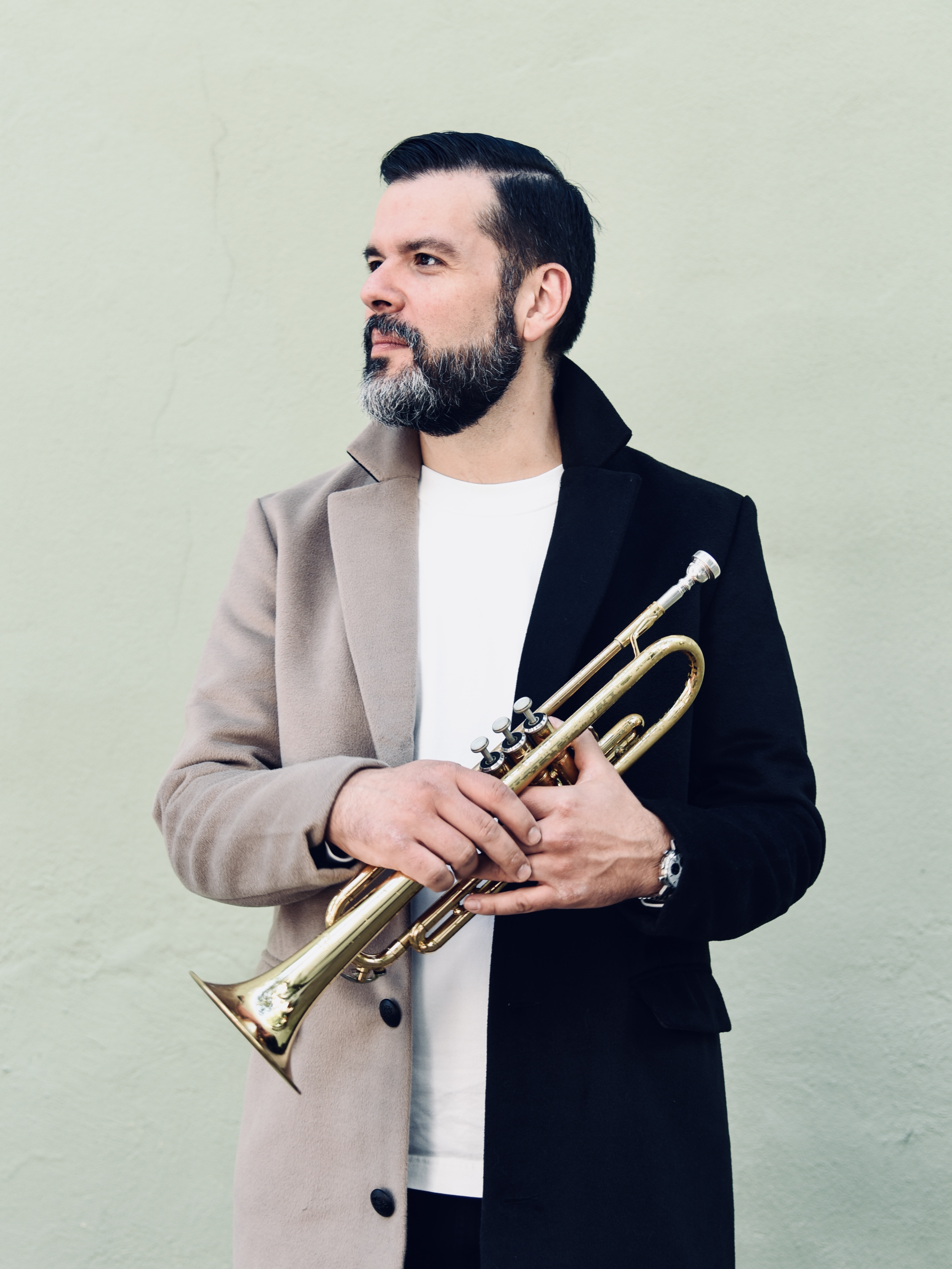
Photo: Ola Baldych
There are moments when the music feels like Miles Davis circa 1960-62 when one listens to songs such as "Flip On A Drip" (a "smoking" piece that really highlights what a good accompanist Hirahara can be) and other pieces ("Between the Lakes") that move towards the sound of the classic Davis Quintet in 1966 and '67. The muted trumpet and solemn melody on "Prelude To a Farewell (For Barry Harris)" pay tribute to one of Lawrence's most important teachers and mentors. The simple beauty of the lines played by trumpet and saxophone give way to a rhapsodic piano solo that also features excellent bass work and soft cymbals. Riviera's tenor spot has a gentle power that speaks to the heart as does Lawrence's short yet poignant turn in the spotlight.  

The album closes with "Texas Tenor", a bluesy ballad that gives Riviera a chance to take center stage. His solid solo hints at Coleman Hawkins and David "Fathead" Newman. Lawrence follows with a romp over the bouncing rhythms.  Because the leader is all about sharing, Hirahara creates a playful, "in your face", solo that brings the quintet back to the bridge and a quick close.  

With "Measured Response", Josh Lawrence and company have created a compelling artistic triumph that also is great fun to play loud.  Lawrence's material brims with creativity which his fellow musicians much to work with. He does not worry about playing "quiet" or giving other soloists more room to shine. This album is well worth diving into often!
 
For more information, go to www.joshlawrencejazz.com/. To hear more and purchase the album, go to https://joshlawrence.bandcamp.com/album/measured-response

Listen to Josh and the band tear it up on "Every Choice Comes With an Invoice":


Photo: Anna Yatskevich
Pianist, drummer, and composer Luther Allison made his recording debut at the age of 19 when he appeared (as the drummer) on trombonist Michael Dease's 2016 Posi-Tone recording "Father Figure".  Since then, he's appeared on several Dease albums plus releases by Diego Rivera (as pianist), Markus Howell (drummer) and on Samara Joy's GRAMMY-winning 2023 "Tight".  The Charlotte, NC, native now lives in New York City where he has performed with bassist Rodney Whittaker, vocalist Jazzmeia Horn, saxophonist Gregory Tardy, drummer Ulysses Horn, and so many others. Allison also teaches at Jazz Summer camps and as a clinican touring all the globe.

To his credit, Allison waited several years and had a plethora of musical and life experiences before recording his debut as a leader.  "I Owe It All To You" is a trio featuring bassist Boris Kozlov and drummer Zach Adelman.  The 10-song, 53-minute, program is a blend of four originals with four songs composed by piano greats James Williams, Mulgrew Miller, Harold Mabern, and Donald Brown plus a song each from Stevie Wonder and Richard Rodgers.  The album opens with the title track which, within the first few moments, one can hear the influences that underlay Allison's style – there's blues, gospel, hard-bop, a touch of Hip Hop, and a quest to create his own voice. The young man is an excellent soloist and the rhythm section makes sure he's a solid foundation to go off on his solo flights.  Just when you think the song is over, there's a slower, sly, gospel coda.
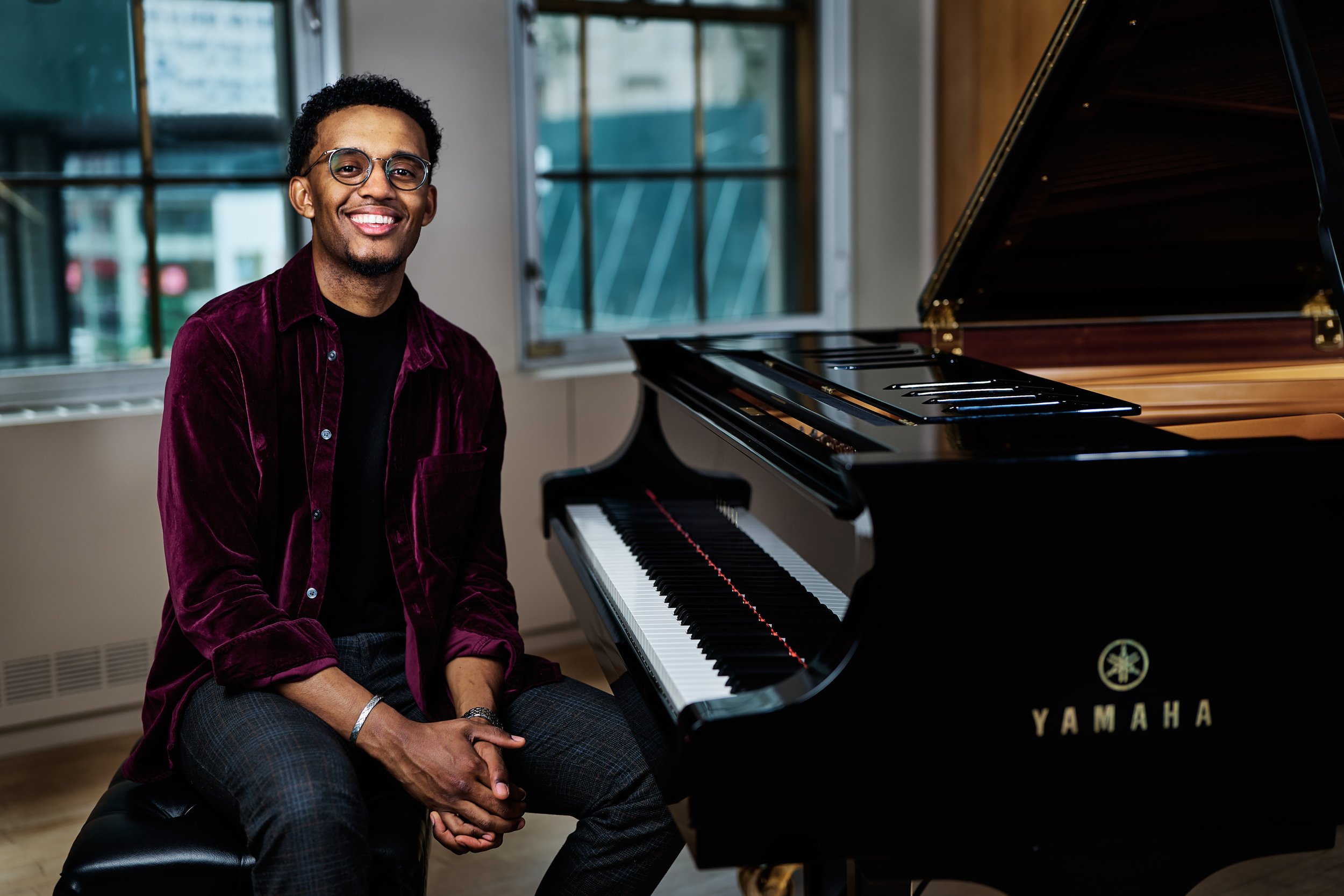
Photo: Roby Davidson Media
Click on the link below and listen to Allison's "Until I See You Again"; the tune has such a lovely melody but to how the tempo changes subtly throughout the solo as well as the fine bass work of Kozlov.  

It's fun to hear where the trio takes the material. The pianist's take on Rodgers's "I Didn't Know What Time It Was" starts out with a funky piano riff and goes through a couple of changes before settling into a swinging groove for the piano solo. Allison's two-handed approach may remind some of the late Harold Mabern, a musician whose blues roots ran deep through his music. It's interesting how the Mabern tune, "There But For the Grace of..." starts so regally before dropping into a delightful fast-paced groove. The trio caresses the melody of the late Mulgrew Miller's "From Day To Day", the longest track in the program at just over seven minutes. That's plenty of time for all three musicians to sparkle.

The album closes with "Lu's Blues", a high-powered blues introduced by a thundering two-handed piano attack before the rhythm section creates a break-neck pace. No problem for Allison who challenges the bassist and drummer to keep up with him. Yes, it'a technically impressive but also impressive how melodic the pianist can be at faster-than-light speed.  

No doubt about it, Luther Allison is a talent to be watched.  His choice of material, his own songs have weight and show his influences without being slavish to any one in particular. It's going to be a joy listening to him grow. Put on track one, sit back, and enjoy this 53-minute ride. I promise it'll make your day better!

For more information, go to www.luthersallison.com.


Listen to the lovely "Until I See You Again":

Sunday, February 21, 2021

How We Swing, How We Play

Photo: Anna Yatskevich
Several years ago, Posi-Tone Records co-founder Marc Free put together a quintet that resembled the lineup Eric Dolphy assembled for his 1964 classic Lp, "Out to Lunch".  The quintet known as Out to Dinner, composed of saxophone, trumpet, bass, drums, and vibraphone, were mostly artists who had already recorded for Posi-Tone.  Less than a year later (June 2019), producer Free reorganized the group, keeping vibraphonist Behn Gillece and bassist Boris Kozlov while adding tenor saxophonist Nicole Glover, drummer Donald Edwards, and the fine young trumpeter Giveton Gelin.  Alto saxophonist Patrick Cornelius joins the ensemble for three tracks. 

The new album bears the title "Play On". That's the opening track, composed by Gillece, of this 13-song program that features originals from each member of the group plus one song from Stevie Wonder and Lee Morgan.  There's plenty to enjoy from beginning to end.  Gillece's vibes are recorded so well that one feels as if he's playing them in your front room. His moody composition "Something From Nothing" is a fine ballad.  Note how Kozlov's deep bowed bass sounds mesh with the whirling phrases from trumpet and saxophone.  On Wonder's "Visions", it's just Gillece's ringing tones and the bassist's melodic counterpoint and support. There are moments when Gelin reminds this listener of the bluesy tones that made Kenny Dorham was noted for –– check out his delightful solo on his own "Armageddon" and his easy flowing lines on the bassist's "Lew's Loose". 

Edwards contributes three of the more fascinating songs on the album.  "Asami's Playland" is a delightful ballad with the tenor sax of Ms. Glover (pictured left) leading the way –– she and Gelin move out front, first playing the melody, and then conversing with the rhythm section as the piece comes to its conclusion.  Gillece's accompaniment is structural, as it is through much of the program; that gives Edwards the freedom to move the song forward. "The Essential Passion" is a powerful hard-bop piece jumps out of the speakers on the power of the drums and the rapid "walking" bass line.  The soloists –– tenor sax, trumpet, and vibes –– each dance gleefully atop the fiery rhythm section.  The third of Edwards's compositions, "The Dream", opens with the vibes alone setting up a gentle, mysterious, feel that turns soulful with the addition of the bass and drums followed soon after by Ms. Glover and Gelin.  Instead of everyone taking solos, the saxophone and trumpet converse in the song's middle.  

There's not a dull song on the program.  Ms. Glover's high-powered "Rebecca's Dance" is her only contribution to the album but it's a very good one.  Kozlov is integral to the success of the song with the rhythmical intensity of his "groove".  Note how the composer's solo is quite powerful and how the trumpeter dials back the intensity at the top of his solo.  But Edwards (pictured above) gooses Gelin forward and the solo takes flight.  Gillece starts his solo with a abstract of the melody before he too falls into the drummer's forward motion.  The bassist's "Abe Duct" will remind of the funky jazz of  Horace Silver or Bobby Timmons. Gillece's solo gets right into the groove while Gelin opens his equally funky solo with a variation of "Watermelon Man".  Patrick Cornelius adds a dollop of heat as his solo explores the higher range of his alto sax while Ms. Glover starts her short spot somewhat quietly before adding heat of her own. 

"Play On" closes with a high-powered take of Lee Morgan's "Short Count" (from the trumpeter's 1967 album "The Sixth Sense").  Edwards kicks the song into high gear right from the get-go and the song features delightful solos from Ms. Glover,  Cornelius, and Gillece.  It's the kind of high-powered music that begs to be heard in person.  "Out To Dinner" sure is tasty at times plus the music has the right amount of heat.  Dig in!

For more information, to hear more, and to purchase the album, go to https://outtodinner.bandcamp.com/album/play-on


Hear "The Essential Passion":


Photo: Anna Yatskevich
Boris Kozlov and Donald Edwards, along with pianist Helen Sung, make up the rhythm section on "Indigenous", tenor saxophonist Diego Rivera's second album for Posi-Tone Records.  The Michigan native, whose first professional gig was in 1999 with the Jimmy Dorsey Orchestra, has had a busy career working with artists such as Kurt Elling, the Lincoln Center Afro-Latin Jazz Orchestra, and the Rodney Whitaker Quartet (among others). Like label-mate (and trombonist) Michael Dease and bassist Whitaker, Rivera is on the faculty of Michigan State University. And, yes, he is the son of Mexican-American parents and, yes, he is named after the great Mexican muralist  of the 20th Century but instead creates sound paintings.

His new album (his fourth as a leader) features 12 tunes of which seven are Rivera originals. His choice of "cover" tunes is surprising and ambitious. The program opens with Cannonball Adderley's "Marabi" which the alto saxophonist composed for his 1968 album "Accent on Africa." Trumpeter Etienne Charles (also on the faculty of MSU) joins the quartet for this tune (and two others) –– needless to say, the rhythm section creates a delightful bop-cum-South African rhythm and the music takes flight. Everyone plays with great passion but note Ms. Sung's splendid solo, the leader's robust tenor lead, and the crisp trumpet sound.  Rivera switches to soprano for a lovely take of Stevie Wonder's "The Secret Life of Plants" (from the 1973 Lp of the same name) –– his rich tone and searching solo, supported by the strong piano work of Ms. Sung, opens the piece right up.  The lovely "Asta Ta Malakia Sou" ("Let Your Tender Hair"), from the Greek composer Michalis Souyioul (1906-1958) starts as a tender ballad with a strong connection between the tenor sax and piano but picks up in intensity as the piece moves forward until its gentle finish.  Rivera goes back to soprano sax for "Sabor a Mi" ("Taste of Me"), a sweet bolero from Mexican guitarist and composer Alvaro Carillo (1921-1969); Charles is featured on muted trumpet throughout and both he sand the leader create fine solos. 

Photo: Anna Yatskevich
Of the originals, the title track moves with the power of John Coltrane's "Resolution" (from "A Love Supreme"). However, this tune was composed in response to the Trump Administration's treatment of various ethnic groups within the United States as well as the treatment of Native Americans by other administrations. When Edwards and Rivera lock in, sparks fly like they did with Coltrane and drummer Elvin Jones.  The delightful "Sombras Del Pasado" ("Shadows of the Past") romps forward on a HabanerĂ¡ rhythm –– Kozlov dances underneath the soloists, especially the peppery piano dance.  Charles joins with Rivera in dancing the rhythm in and then out while the rhythm section keeps the fire burning.  The quartet embraces the shuffle rhythms of "BLM Plaza" with the tenor sax playing the melody and leading Ms. Sung in for her fine solo. Rivera and Kozlov follow, both digging the blues feel.  "Purpose" is also a blues but instead of a shuffle rhythm, the song jumps forward at an irresistible pace led by the rapid-fire "walking" bass lines and Edwards rock-solid drumming.  After yet another sparkling piano solo, Rivera jumps out and rides the rhythms.  Before the song returns to its opening section, Edwards moves front-and-center.

The program closes with the lovely ballad "Shir LaShalom" ("Song for Peace"), an anti-war song composed by Yaakov Rotblit (lyrics) and Yair Rosenbloom (melody) –– the piece was first played in 1969 by the Israeli Defense Forces Infantry Ensemble and is said to have been been sing by Israeli Prime Minister Yitzhak Rabin right before he was assassinated in 1995.  Rivera plays a powerful solo, a plea for sanity in insane times, his rich, clear, tones rising over the rhythm section.

"Indigenous" is an impressive statement from saxophonist, composer, and educator Diego Rivera.  The support of and interactions with Helen Sung, Boris Kozlov, and Donald Edwards are excellent throughout as is the playing of Etienne Charles.  Can't go wrong with this powerhouse recording!

For more information, go to diegoriverajazz.com.  To hear more and to purchase the recording, go to https://diegorivera.bandcamp.com/album/indigenous.

Here's the title track: