I just came back from two long car trips in the space of three days. Happily, the weather was good, I had the opportunity to drive through the Adirondack Mountains, and there were few, if any, road blockages. I packed the car with CDs as well as podcasts I wanted to catch up on (posted to my phone). Over the next two posts, I will recommend a number of those albums.
First, though, I have a podcast to recommend.
I have been listening to trumpeter and composer Dave Douglas's podcast since "A Noise From The Deep" made its debut six-and-a-half years ago (Henry Threadgill was his guest on the premiere). Douglas has a wide array of musicians on the show, ranging from fellow trumpeters (Keyon Herrold, Charles Tolliver, Jaimie Branch, to name just three) to saxophonist Joe Lovano to guitarist Mary Halvorson and many more. The host and guests really dig into the music and, while there is often technical talk, the shows usually are quite fascinating. Podcast #68, a delightful conversation with master percussionist Andrew Cyrille, is the one I listened to on the ride. If you love creative music, you should check out these conversations.
Producer Marc Free has, over the past year or so, been putting groups together that pair Posi-Tone artists who may or may not have worked with each other into an ensemble for a recording session. To the producer's credit, none of the groups – including Lioness, New Faces, and Maximum Enjoyment – have sounded anything less than stellar. I had the opportunity last year to see New Faces, a sextet than includes saxophonist Roxy Coss, trumpeter Josh Lawrence, pianist Theo Hill, bassist Peter Brendler, drummer Vinny Sperrazza – who couldn't make the live gig - and vibraphonst Behn Gillece. Gillece, who has an extensive discography on the label, really stood out for me, increasing my appreciation for both his compositions and musicianship.
Photo: Sara Pettinella
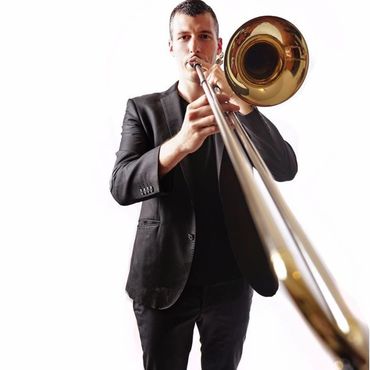
The vibraphonist (pictured left) can now be heard as part of the quintet known as Out To Dinner. Along with trombonist Michael Dease, alto saxophonist Tim Green, bassist Boris Kozlov, and drummer Rudy Royston (need I write more), the band has created "Different Flavors", a 10-song program (five composed by Gillece) that is quite tasty and, ultimately, filling. Opening with the mellow "Day Zero", it's fun to listen to how Royston plays melodically while rushing the band forward. There's a mellow, Horace Silver-flavored, melody which opens up to excellent solos. My car speakers rattled gleefully when Dease's "Skittles" played, a rollicking piece with an impossible tempo (dig Kozlov's "running" bass lines) that must have fun to play and is certainly fun to listen to. Near the close of the piece, the drummer erupts with a volcanic solo and you'll just might scream for joy (I did)!
Photo: Sara Pettinella
It's not all "shock and awe" – Wayne Shorter's "Rio", first recorded by trumpeter Lee Morgan for the album "The Procrastinator" (released posthumously), is a lovely medium-tempo ballad. Dease takes the early lead, supported by the colors of the vibes and Kozlov's counterpoint. When Green's keening a lot joins the melody, it sets the stage for a lyrical solo by the alto player. Royston contributes a handsome ballad; titled "Night Glow", the listener gets treated to the drummer's excellent snare-and-snare work (he has such a crisp sound) plus strong solos from both Green and Dease.
"Different Flavors" closes with Gillece's "Two Down". The opening actually sounds like the perfect ending (listen closely). Thanks to the dancing qualities of the rhythm section, the track rushes forward with a such delightful spirit. The rhythm section swings lustily in support of the alto solo; right near the close, Royston takes a short solo that reminds one why he plays with so many different artists – hard to sit still listening to such a joyous noise. Have no reservations about making a reservation to spend time with Out To Dinner – this music sounds and tastes really good!
Here's a delightfully funky track:
For his fifth album as a leader (and first for Ropeadope Records), tenor saxophonist and composer Adam Larson, a native of Normal, IL, returns to the studio with long-time collaborators Fabian Almazan (piano, electric piano, synth) and Jimmy Macbride (drums). Joining them for "Listen With Your Eyes" is electric bassist Matt Clohesy. The music they produce hearkens back to Larson's previous albums, especially in the sructure of the songs and the leader's fine solos, but now one can hear the influence of rock music in the power created by the rhythm section as well the heavier approach of groups such as Chick Corea's electric Returns To Forever (not as manic as RTF's mid-70 recordings .
Larson's album opens with "Sleepers", a powerful piece with a rising chord pattern, acoustic piano, thick bass notes, and exciting drum work. First few times through, the saxophone work reminded me of Donny McCaslin – that's fine because, as one becomes more familiar with the music, the influences drop away. "False Pageantry" follows; with its "heavier" beat, electric keys, and rhythmic melody line, the music charges forward with Macbride in the lead amidst Almazan's "chirping" keyboards and Larson's hard-edged solo. "Bright" appears later in the program, a soulful melody with a jaunty rhythm and listen to the thick bass notes bouncy behind he electric piano solo. The title track opens like a variation of the standard"Stout-hearted Men" but, instead of being a brace call to arms, the song asks for the attention of all your senses, not just your hearing. After a fine bass solo, Almazan's powerful statement leads the tenor saxophonist into his most emotional solo on the album.
"Listen With Your Eyes" comes to a close with what starts a another slab of funk. Macbride's solid drums open the piece but the melody and chordal patterns do not the piece settle into a pattern. Almazan, as usual, shines on his solo while Larson really digs into his spotlight. The more you listen to this new album by the Adam Larson Band, the more the excellent musicianship and intelligent melodies win you over. Open your mind and "Listen With Your Eyes."
The album "drops" on September 5 – in the meantime, here's a tune:
Photo: Francis Wolff
Pianist, composer, and arranger Tadd Dameron (1917-1965) had a short but mostly productive life. A native of Cleveland, Ohio, Dameron lived in a musical household and, in the early 1930s, came into contact with the music of Duke Ellington's Orchestra as well as the Orchestra of Fletcher Henderson. By the age of 21, he was writing arrangements for several bands in his hometown. Soon, he was "on the road" with several different bands but did not create his own "style" until discovering "be-bop" as a member the Jimmie Lunceford Orchestra. By the end of the decade, Dameron was writing for the Dizzy Gillespie Big Band and touring with his own group
(one that included the trumpeter Fats Navarro). In the 1950s, he wrote and arranged for Clifford Brown and Sarah Vaughan plus made a number of albums including two with saxophonist John Coltrane. Narcotics addiction landed him in prison. After he served his time, Dameron wrote for numerous (including Benny Goodman) and recorded several more albums. A series of heart attacks slowed him down and cancer took him at the age of 48.
While doing research for his book "Dameronia: The Life and Music of Tadd Dameron" (2012, University of Michigan Press), saxophonist and educator Paul Combs (born 1946) discovered unrecorded and unpublished compositions by Dameron. He created a program for quintet around a number of the pieces. With the help of researcher and general manager Ken Poston of KSDS-FM in San Diego, CA, Combs first performed this program on the 100th anniversary of Dameron's birth. Summit Records got involved and helped underwrite the production of "Unknown Dameron: Rare and Never Recorded Works of Tadd Dameron" – the 12 tracks on the album include three from the live concert and three more each from three subsequent studio dates over 15 months.
The musicians on the recording include pianists Bill Cunliffe (on the concert tracks), Ken Cook, Melanie Grinnell, and Kamau Kenyatta. Trumpeter Derek Cameron appears on nine tracks while bassist Rob Thorsen and percussionist/sound engineer Richard Sellers are on half the album. Other musicians involved are bassists Jeff Denson and Alex Frank, percussionist Alex Aspinall, and vocalist Danielle Wertz. What stands out for this listener (one who is not well-acquainted with Todd Dameron's music) is just how melodic the majority of these compositions. The spirited nature of the up-tempo tracks ("The Search", from the Gillespie repertoire, 1962's "Moon From The East", written for Benny Goodman, and "The Rampage", composed for Woody Herman in 1956, stand out) while "Never Been In Love" (recorded by bassist Bill Lee and vocalist Muriel Winston) is a fine ballad that should be recorded by modern vocalists. The rest of the piece have a delightful swing (1940's "A la Bridges" dances right along) while the 1945 composition "Zakat" shows that Bop influence that would inform Dameron's music into the 1950s.
You can't call "Unknown Dameron" "easy listening music" but this music is definitely easy on the ears. These spirited performances make one realize just how joyous and melodic the music of Todd Dameron is. Paul Combs not only plays and writes well but also brings the best out of his music. What a delight!
Leo Sidran has a great, informative podcast called "The Third Story"; he recently ran a delightful interview with trombonist, composer, and bandleader Ryan Keberle. Among the many points made in the discussion was that (and I am paraphrasing Keberle here) the trombone is enjoying new-found popularity, especially with trombonists (such as him) leading their own groups and not just big bands. Below are reviews of three new recordings that prove his point.
When trombonist and composer Nick Finzer entered the studio to record his third album as a leader, the United States was embroiled in a contentious Presidential election, a time when the country was facing serious choices about its mission and future. The album, "Hear & Now" (Outside In Music), is a musical reaction to those events and the malaise that the composer saw spreading over the country. Pieces such as "We The People", "The Silent One", "Race To The Botton", and "Dance of Persistence" display Finzer's concerns as does the urgency of the musical performances. The power in the music comes as much from those song titles, much the way Charles Mingus provoked his audiences, forcing us to think of the conditions all around.
The sextet for the session includes Lucas Pino (tenor saxophone, bass clarinet), Alex Wintz (guitar), and Glenn Zaleski (piano) plus the powerful rhythm section of Dave Baron (bass) and Jimmy Macbride (drums). The blend of trombone and reeds makes for an excellent contrast on pieces such as "Again and Again" where the bass clarinet plays the harmony behind the melody while the rhythm section simmers underneath, the piano serving as a go-between. Wintz's guitar rises up for the first solo, slowly the intensity rises, reminiscent of Herbie Hancock's music on his Blue Note recordings "Speak Like a Child" and "The Prisoner." Then Finzer and Pino solo together, pushing the piece forward before stepping aside for Macbride's short, powerful solo. Subtle overdubbing creates a reed and brass choir at the onset of Duke Ellington's "Single Petal of a Rose" (the only non-original piece in the program); it's quite beautiful and leads into the emotional piano solo over the whisper-soft bass and drums. Zaleski's solo opening on the final track, "Love Wins", introduces the poetic ballad. Pino's swirling bass clarinet and Wintz's impressionist chords frame Finzer's handsome melody as Baron's spare bass notes serves as the foundation while Macbride dances over his cymbals and drum kit.
The blend of power and gentleness, of reeds, strings, and piano atop an exemplary rhythm section makes "Hear & Now" stand out. One can not ignore the agenda Nick Finzer has on this album, showing how music can reflect the times, how jazz has always been and remains protest music, how the stance of the musicians can call the audience to action, and how much we need to be pro-active in these days of "reaction without reflection." The musicians are not revolutionary in the way that the late Fred Ho and the late Charlie Haden were but this music fights against complacency and blanket acceptance, calling for "presence, vision, passion, inspiration, reflection, dialogue, evolution, action, and change", the words printed on the inner sleeve of the album. Pay attention!
Glenn Zaleski also shows up on the new release from trombonist, trumpeter, and composer Nick Vayenas. "Flow Motion" (self-released) is Vayenas's fourth album as a leader (since 2008) - he's such a busy sideman, working with Michael Bublé, Josh Groban, Lady Antebellum, Patrick Cornelius, and Kendrick Scott (on whose label he released his debut CD, "Synesthesia." Besides Zaleski, the sextet on the recording includes Dayna Stephens (tenor saxophone), Peter Slavov (bass), Colin Stranahan (drums), and the afore-mentioned Cornelius (alto saxophone).
photo by Angela Sowon Vayenas
Although there is a track titled "Anarchy", the majority of the material seems to have no political agenda. That particular track swings with a vengeance, featuring strong solos from the alto saxophonist, the leader, and Stranahan. Zaleski's work in the background is notable for its strength and subtlety, which is true throughout the entire program. In fact, it's his short but rich chordal work that leads off the title track that leads off the album. The song swings with a gentle yet firm rhythm - Vayenas plays in a buttery style, quite melodic, setting the tone for Stephen's handsome solo and the pianist's earthy explorations. The rhythm section moves the music forward in a playful manner, especially the drummer whose accents are a delight.
Vayenas switches to trumpet for "Premonition", sharing the melody with the tenor sax. The piano chords, at times, suggest McCoy Tyner but, like the opening track, there is a gentleness to the proceedings. The leader's tone on trumpet is clear, his notes crisp, and his attack adds intensity to the track. The influence of Herbie Hancock is evident on "The Final Frontier"; again, the trumpet takes the lead and Vayenas's bluesy solo spurs the rhythm section to react with stops-and-starts as well as keeping the flow moving.
Another highlight is "Velvet Mystery", a handsome ballad whose melody is carried by the mellow trombone and breathy tenor sax. Zaleski creates an impressionistic opening solo that opens up to Vayenas's heart-felt improvisation - he's "writing a story", inviting the listener to get lost along the way to come out on a reiteration of the main melody that's now has a quiet intensity, not so much as a mystery. The final track, "Change", is also a ballad with only trombone and piano. The opening features Vayenas on melody and Zaleski on counterpoint with the pianist taking the first solo. Various melodic fragments show up before the trombone reenters. His "singing" lines over the chordal accompaniment intimate a "classic" ballad and serves as a lovely closing to the album.
"Flow Motion" is an album to get lost in. The program never forces its way into your brain yet invites you to relax, settle down - even the funky "Red Stripe" has a good natured gentility. The music Nick Vayenas and crew creates on the album is truly for early morning reveries and late-night meditations.
"Tight Rope", a funky, hard-edged, tune opens "Presence" (See Tao Recordings), the fourth recording from trombonist and composer John Yao. The Chicago native has worked in numerous ensembles including the Afro-Latin Jazz Orchestra, the Vanguard Jazz Orchestra, the Brooklyn Big Band, and the Jeff Fairbanks Orchestra. His previous album, ""Flip-Flop", was created for his 17-piece Instrument but the new recording is with his Quintet, a return to the smaller-group ensemble of his 2012 Innova recording.
This group includes Jon Irabagon (soprano and sopranino saxes), Randy Ingram (piano, Fender Rhodes), Peter Brendler (bass), and Shawn Baltazor (drums); the music Yao gives to them play to their strengths. Irabagon, whose noted for his tenor work, is limited to the higher range reeds here yet it's a smart juxtaposition to the trombone. Plus, he has developed into such a fine player. Listen to the elegiac "M. Howard" (the album is dedicated to the memory of one of the leader's best friends and how the soprano melody lifts up as it sings. The lovely, melodic bass solo (Brendler is one of the most sensitive players on the scene) leads into an intense piano solo that also rises, this time over the rhythm section and the horns. Yao then steps out, the intensity picks up even more, and one hears his sorrow transformed into (musical) action.
I like the audacity of "Fuzzy Logic", the opening moments featuring trombone, bass, and sopranino on melody while the drummer and piano create a raucous scene. As the piece moves into its fiery stop-start pace, Yao and Ibragon wail away, Ingram provides counterpoint to their intense soloing and the rhythm section gives chase. There's also an intensity to "Nightfall" but with a melodic flair. Ingram's forceful solo inspires the rhythm section as well as Yao to really get deeper into the music. The title track is calmer, even more melodic, a work for quartet sans saxophone, becoming a spotlight for trombone and piano. The bass and drums stay active, producing dancing rhythms for the soloists. The closing track, "Bouncy's Bounce", does have a jaunty feel. Pay attention to Brendler as he moves from the melody to his solid walking bass line. Notice also how Irabagon takes the title to heart, his playful solo dancing - yes, even bouncing - above the rhythm section. Yao starts out quieter but soon gets into the playful spirit, goosed by Baltazor's active bass drum and interjections.
Such good music, such strong compositions, such a good ensemble, "Presence" has all the ingredients to please and challenge an active listener. John Yao created this life-affirming music in the aftermath of a sudden loss. Many of us turn to art, to music, in times of stress. This album by The John Yao Quintet gives one hope in the face of tragedy, inspiring us to continue to move forward.
I have not been able to resist playing the new CD by composer and multi-reed player Ben Kono (pictured left) since it first arrived last week. "Crossing" (1918 Records) will be available in early March and, if you are a fan of music that transcends labels and genres, this program is hard to resist. The ensemble features drummer and conceptualist John Hollenbeck (Kono plays in JH's Large Ensemble), bassist John Hébert, pianist Henry Hey and guitarist Pete McCann - the music they perform (all original pieces) is intriguing, tone poems that slip easily into the mind, sounds that challenge and soothe the listener. Over the course of the 9 pieces, Kono plays oboe, English horn, flute, alto flute, clarinet, bass clarinet, tenor saxophone and shakuhachi; yet, the CD never feels like a technical tour-de-force ("see what I can do" sort-of show.)
In the case the name looks familiar, Kono has worked in the reed section of Darcy James Argue's Secret Society, the Ed Palermo Big Band, Gotham Winds, and the Schumacher/Sound Assembly. He's performed in Broadway "pit bands" and with artists as diverse as Hugh Jackman, Patti Austin, Liza Minnelli, Michel Legrand, and the Tommy Dorsey Orchestra.
More to come on this most excellent recording. In the meantime, go to www.benkono.com where you can learn much more and hear pieces from "Crossings."
I reviewed the new CD by Jerome Sabbagh (pronounced "Sah - bog") several months ago. "I Will Follow You" (Bee Music) features the saxophonist with guitarist Ben Monder and drummer extraordinaire Daniel Humair in a series of original pieces and free improvisations. The musical adventures grow on the listener and what might sound disjointed at first blush takes on shape with repeated listens.
Jason Crane chats with Sabbagh on the latest "The Jazz Session" podcast. Listen here to learn how 3 musicians who had never played together before created their own world from trust, experimentation and talking to each other.
Wayne Shorter played in New York City this week with his cohorts of the past decade, they being Danilo Perez (piano), John Patitucci (bass) and Brian Blade (drums.) In honor of the event and the 10th anniversary of the Quartet, Shorter recorded a far-ranging interview with WBGO's Josh Jackson for "The Checkout" and, believe me, the chat is so worth checking out. To do so, click here.
On the same program, Jackson chats with Either/Orchestra founder, composer, arranger, saxophonist and social secretary Russ Gershon. The E/O is celebrating its 25th anniversary and has performed concerts in its native Boston, MA and, now, New York City, that feature the current 10-person lineup and a plethora of alumni (including Miguel Zenon, Matt Wilson, John Medeski and others.) The band does not tour much outside of the Boston area - click here to listen to the interview.
Gershon also had a good, long, sit-down with Jason Crane - give it a listenhere.
Finally, when you visit "The Checkout" and "The Jazz Session" and enjoy the contents, understand that these journalists and musicians work very hard - they need more than moral support and applause (good things to get, indeed.) Be monetarily supportive when and where you are able.
I've mentioned "The Checkout", Josh Jackson's weekly 60 minutes of jazz performances, interviews and more, on numerous occasions. Invariably, Jackson's chats with musicians are so interesting, really getting into the mind of the creators and helping listeners get a handle on the creative process.
This week's show (listen at www.wbgo.org/thecheckout/) features a fine interview and studio session with pianist Bruce Barth and saxophonist Steve Wilson as well as an interview with percussionist/composer Dan Weiss and an excerpt of a live recording from keyboard artist Craig Taborn (listen to his Quintet's entire set from NPR's "A Blog Supreme" by clicking here.) The Barth/Wilson duo is truly a joy to listen to; their interaction, built from over 20 years of friendship and playing together, sparkles with creativity. Delightful!
Jazz fans in the Connecticut area have had the privilege of hearing and seeing guitarist Michael Musillami for the better part of the past 30 years. he's worked and recorded with bassist Mario Pavone, saxophonist Thomas Chapin and others as well as leading his own groups. His Trio, with bassist Joe Fonda and drummer George Schuller, has been together for 10 years and keeps growing. Musillami's record label, Playscape, has issued a plethora of fine CDs by artists such as Pavone, pianists Peter Madsen and Ted Rosenthal, multi-reed player Tom Christensen and others.
Hear Michael Musillami in conversation with Jason Crane on "The Jazz Session" podcast or streaming on the website (link below) - for the guitarist/composer, 2009 was a sorrowful year with the death of his son Evan. Musillami discusses that tragic event and how the creation of his new CD, "Old Tea", was cathartic and necessary. Crane, as usual, asks excellent questions and the interview is more of a chat than an inquisition. You can hear the show and support Jason Crane by going to http://thejazzsession.com/2010/07/01/the-jazz-session-181-michael-musillami/.

 Posts
Posts