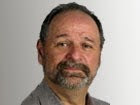
Zacc Harris is a MInneapolis, MN-based guitarist and composer who is active as a leader, co-leader (Atlantic Quartet), sideman, and educator. His sextet, the Zacc Harris Group, has just issued its second album, "Small Wonders" for Shifting Paradigm Records. The ZHG consists of the leader (electric guitar, compositions), Brandon Wozniak (tenor sax), Bryan Nichols (piano), Chris Bates (bass), JT Bates (drums), and the newest member John Raymond (trumpet, flugelhorn) who joined some years after the debut album. On initial listenings, one can hear the influences of Pat Metheny and Lyle Mays; when one digs deeper, you can hear the "openness" of the late Kenny Wheeler's sound as well. Pieces such as "Sundials"(listen below) and "Civil Dawn" bear witness to those influences (splendid trumpet work on the latter plus a stunning unaccompanied piano solo) while "A Beautiful Life" with its tender melody, point to new directions. Nichols's piano work is integral to keeping the music flowing throughout the album. Raymond's flugelhorn stands out on "Glass Houses" as does Wozniak's tenor sax stroll through the gardens created by the rhythm section. Meanwhile, the rhythm section burns red-hot on the hard-bop romp "The Void" plus create a New Orleans-groove on "Apple Jacks". The latter tune opens up so the tenor and trumpet can have a sweet exchange and the guitarist have a series of playful interactions with the rhythm section.
The nine-song program closes with the lovely ballad "Maya's Song". Dedicated to Harris's daughter, the music feels as if it was composed while the guitarist was watching his daughter sleeping, imagining her dreams, and hoping for a peaceful future. The piano accompaniment is a perfect counterpoint to the leader's lines. Nichols's solo also has a dream-like quality accentuated by the quiet brushwork and simple yet effective bass lines.
"Small Wonders" is big on melody, intelligent arrangements, and powerful as well as thoughtful solos. Check out the Zacc Harris Group ––much to enjoy!
There is not a lot of information on the webpage of guitarist and composer Chris Olson, who along with bassist Chris Bates and drummer Jay Epstein make up the trio know as Framework. Their new album, "Cognitive Dissonances", is the trio's first for Shifting Paradigm and its first recording in over a decade. Featuring 11 Olson originals, the music covers a wide swath of musical territory. Opening and closing with two takes of "New Anthem", the attentive listener can hear how the trio develops material. Version one refers a bit to Jimi Hendrix in the opening seconds and then falls into the melody Americans sing at the ballparks, stadiums, hockey rinks, and elsewhere. Bowed bass and splashing percussion support the melody, played mostly using chords by the guitar. The "alternate take" that closes the program is fairly similar, not as noisy but still played somewhat like a dirge.
In between those two tracks is a fascinating collections that spotlight the excellent group communication, Olson's fine melodies, and his spirited guitar playing. Bates and Epstein are right in there with the guitarist, pushing and prodding him needs be or strictly building the foundation to frame his melodies and improvisations. "Hitchens" rolls forward with guitars coming out of both sides of the speakers while the melody is in the middle of the sound spectrum. "Dawkins" gives bassist Bates a chance to step out and he leads the group forward on the strength of his thick tone and melodic prowess. There's a wistful quality to the guitar work on the ballad "Changes We Can Believe In" but a bit of grunginess makes its way into Olson's guitar tone before the bass solo returns to the opening feel.
Framework can swing ("Bluetrois"), can deliver a delightfully melodic waltz ("Pre-Conceived Notion"), and they can create aural waterfalls ("Tortured Thoughts") –– some of the song titles don't necessarily easily fit the songs but the trio's musicality will win you over. "Cognitive Dissonance" does not describe how good and ultimately satisfying this music is (well, it does go a long way to describe the mood of "New Anthem"). Titles aside, this is quite an enjoyable album!
Many musicians used the pandemic to create new work, to hone new skills, and to find new ways to express themselves in a most uncomfortable. It's possible Scott Reeves (valve trombone, alto flugelhorn, electronics) did all those things but he also went through his archives. When he did, Reeves listened with fresh ears to a 2005 live gig he recorded at City of College of New York with Russ Spiegel (guitar), Mike Holober (piano, electric piano), Howard Britz (bass), and Andy Watson (drums). Now, pleased by the overall quality of the musicianship and sound, the musician/ composer passed
the tapes on to his label, Origin Records, and they released the album as "The Alchemist". The music does not at all sound dated –– in fact, the music feels fresh and often exciting. One can hear a link from several pieces to the music Miles Davis created for "Nefertiti" and "Filles de Kilimanjaro".
The Davis influence is evident on the opener, "New Bamboo". The ringing tones of the Fender Rhodes mixed with the electronically altered trombone also hearkens back to Herbie Hancock's later Blue Note recordings. Reeves switches to alto flugelhorn, Holober to acoustic piano, for "Shapeshifter", a medium tempo flowing piece that includes a potent drum solo. "Without a Trace" is a lovely ballad with a soft melody played by guitar and trombone. The leader's solo is wistful, as if you can hear him ruminating about a person who has gone. Spiegel produces a handsome solo but pay attention to howe Holober, on acoustic piano, responds. Britz, who is also an accomplished pianist, plays a short yet melodic solo. "Remembrances" is another fine ballad with fine solos from Reeves (flugelhorn), Spiegel, and Holober. "The title track grooves atop the percolating electric piano and the raucous drums. Trombone and guitar play the head that opens to Holober's playful solo and a hard-edged trombone spot.
That playfulness is also evident on the funky take of the standard "All or Nothing at All". The feel modulates from funk to straight-ahead and back to funk. It's a delight hearing the Quintet playing around. That's true throughout "The Alchemist" –– Scott Reeves and company sound like they having such a great time and the audience shows its appreciation for every solo and song!
It's endlessly fascinating what music can do for the curious/ avid listener. On one hand, we have a great pianist spending time away from the city to play through the scourge of the pandemic. On the other, a stunning sextet of musicians joined on three tracks by one of the forefathers of British "art rock" exploring a variety of approaches to creative music with words that have many meanings.
Sixteen years ago, pianist Fred Hersch and his life partner Scott Morgan celebrated their union by building a house in the Pennsylvania woods. It is the place they go to escape the craziness of New York City and to rest in the midst of their very busy schedules. When the pandemic closed down all opportunities to play to a live audience, Hersch began releasing a "Song of the Day" on his Facebook page; after a month, he decided to do a short concert once a week but that only lasted for two weeks. In August of this year, the pianist left Morgan in the city, traveled to their second dwelling, and spent a week recording "Songs From Home" (Palmetto Records). With help from fellow pianists Benoit Delbecq (co-producer and mixing engineer) and Dan Tepfer plus two piano technicians (Greg Graham and Chris Solliday), the music will certainly warm your heart and soul.
Anyone who follows Fred Hersch knows his programs are always an eclectic mix of standards, "pop" tunes", Thelonious Monk, and originals. "Songs From Home" is different as there's no Monk and only one original. It's a mix of standards, jazz works, and delightful interpretations of Joni Mitchell (listen below), Jimmy Webb, and Lennon & McCartney. The album opens with an introspective take on "Wouldn't It Be Loverly" (from "My Fair Lady")––one could say that this performance is a comment on the lockdown and the desire to get back to some semblance of "normal". Webb's "Wichita Lineman", one of the finest songs he composed, is filled with love, longing, a prayer for people separated by their jobs. The one Hersch original "West Virginia Rose" is paired with the traditional "The Water is Wide"; the first melody has the feel of a Randy Newman ballad while the traditional is filled with hope. Kenny Wheeler's handsome "Consolation (a Folk Song)" follows and, like many of the late Canadian-born trumpeter's pieces, has a lovely and expansive melody. Duke Ellington's "Solitude" is an apt choice for this program. One can picture the pianist at the keyboard sifting through memories as he slowly plays the memorable melody..
Fred Hersch turned 65 on October 21; the program closes with a jaunty reading on "When I'm Sixty-Four" (he certainly was at the time). Playful and expansive, the performance reminds us all we have much to be thankful for. Yes, times are troublesome, the pandemic rages on, but music is wonderful medicine for the trouble soul. "Songs From Home" may be viewed by some as a response to the pandemic. So be it. To these ears and heart, it's a timeless, highly emotional, and deeply satisfying album that resonates long after the final note rings out.
Listen to Fred Hersch play Joni Mitchell's "All I Want":
Photo: Reuben Radding
One should always expect the unexpected when listening to the many different recordings, ensembles, and pairings that guitarist/ composer Mary Halvorson posits herself in. Code Girl started as a quintet to create settings for the poems she had been writing. With long-time associates Tomas Fujiwara (drums, percussion) and Michael Formanek (acoustic bass), the guitarist built a front line with vocalist Amirtha Kidambi and trumpeter Ambrose Akinmusire. The quintet's self-titled debut album was issued in early 2018 garnering critical acclaim for its mysterious blend of improvisational music, "progressive rock", the often-impressionistic lyrics, and the spellbinding vocals.
The group's second album, "Artlessly Falling" (Firehouse 12 Records), finds Akinmusire replaced by Adam O'Farrill plus the addition of Maria Grand (tenor saxophone, vocals) and, on three of the eight pieces, the voice of Robert Wyatt. Mr. Wyatt first came onto the British music scene in the mid-1960s as the drummer of Soft Machine, a quartet that created a beguiling mix of jazz, rock, minimalism, and more. When that group splintered, he helped form Matching Mole and embarked on a solo career, his soft vocals blending with his embrace of "free jazz." After an accident in 1973 left him paralyzed from the waist down, Wyatt regrouped creating a series of albums featuring his idiosyncratic compositions, often-political lyrics, and voice. He came out of retirement to record his vocals for Code Girl, fitting seamlessly into the beguiling, swirling, sounds.
Among the first sounds you hear on the album opener, "The Lemon Trees", are the sweet harmonies of Ms. Kidambi and Ms. Grand. Quiet brush work and simple, foundational, bass notes plus O'Farrill sharp trumpet lines serve to introduce Wyatt's first vocal. He sings one verse before the trumpeter creates a his own "sing-song" solo. Fujiwara steps out next with a pounding solo before the sextet falls back into the song, Wyatt now double-tracked. "Last Minute Smears" follows with lyrics taken directly from Judge Brett Kavanaugh's testimony during his Senate confirmation hearing. The dark ballad, replete with martial drumming and breathy tenor sax solo, is not farcical but does condemn the process with its own words.
Wyatt (pictured left) returns for "Walls and Roses"; he starts off the piece then Ms. Halvorson kicks the piece into a more "hard rock" direction dropping for Ms. Kibambi's verse. After one more "guitar shredding", Wyatt returns and then Ms. Grand sings a verse. The different voices, tempo and dynamic changes, keep the listener engaged. His third and final appearance comes on "Bigger Flames", an Impressionistic "word painting" with slightly askew strummed guitar chords and trumpet/ saxophone counterpoint. Despite being recorded in England, Wyatt sounds as if he sitting in front of the band.
Photo: James Wang
Tracks such as "Mexican War Streets (Pittsburgh)", "Muzzling Unwashed", and "A Nearing" show the influence of not only Wyatt but also the "freer" side of the late bassist Jack Bruce. The rhythm section is insistent throughout those songs, pulling the ensemble forward urgently. Note how the voices fit seamlessly into the mix of instruments. There are moments in "Mexican War..." that feel influenced by by both Kurt Weill and Black Sabbath! The lyrics speak to the history and the present in a city ever-changing. Formanek's percussive then melodic unaccompanied bass sets the tone for "A Nearing" which also stands out for Ms. Kidambi splendid vocal as well as O'Farrill's interactions with Ms. Halvorson, his inventive lines, and how he negotiates the dynamic rhythm section. Ms. Grand also creates a potent solo that is impressive for her in the maelstrom created by the guitar and drums.
Photo: James Wang
The album closes with the title track. Ms. Halvorson's modulated guitar accompanies Ms. Kidambi with the rhythm section swirling up a storm. Soon, one notices the trumpet and tenor saxophone creating their own swirling lines in their respective corners of the sound spectrum. Note the change near the end when the rhythm section kicks into a forward gear. The vocalist holds her own in the sonic storm singing right up to the abrupt ending. One should go right back and listen again as there is too much to take in in one sitting.
Mary Halvorson's Code Girl creates its own genre, taking from so many streams of contemporary music. Is it Jazz, is it Rock, Progressive, Art-Rock? Ms. Halvorson's lyrics are all in different poetic forms e.g the title song is a sestina and the opening track a double tanka. Call "Artlessly Falling" whatever you want but don't dare ignore it. The music and words are much too beguiling and thought-provoking to be typecast.

 Posts