Showing posts with label Firehouse 12 Records. Show all posts

Wednesday, July 7, 2021

Mr. Braxton Requests....

Reed master, composer, arranger, conceptualist, and interpreter Anthony Braxton is soft-spoken, gentle, and delightfully scholarly. However, when he composes new works or interprets "standards", he is fearless. Mr. Braxton has two new major projects that have just been released; the first is a 12-disk set of original pieces composed for sextet, septet, and nonet using his ZIM Musical System, the other a 13-CD set of standards recorded on a European tour in early 2020 utilizing a trio based in Great Britain. 

Photo: Michael G. Stewart
Honestly, the best way to understand the original music of Anthony Braxton is to read his liner notes.  At times, they seem fantastical but his words do explain how his music is composed and how it can be played.  "12 Comp (ZIM) 2017" (Firehouse 12 Records) features 12 album length compositions recorded in four different venues  ranging from Wake Forest University (North Carolina) to Firehouse 12 Studios (New Haven, CT) to Montreal, Quebec, to CafĂ© Oto (London, England). ZIM music is based in "Gradient Logics" including "it gets faster or slower", "Friendships in time", "A Change of Goals" as well as a "Five Part Decision Construct...Unique to ZIM Territories."  Needless to say, there is a lot going on yet this music rarely feels cluttered (unless it's supposed to).  And the music is played by musicians who have either studied with Mr. Braxton or have played his music often. Also, like all music, it's about relationships of musicians with each other, of instruments responding to and supporting each other. In the final analysis, do you need to understand what the author is saying to enjoy the experience?  Mr. Braxton's music has always counted on the listener who is willing to dive in, to reject pre-conceptions, and to make up his or her mind.  It is easy to walk away shaking your head. The song titles (see the cover photo below) don't help, don't tell you what to think, and that's a good thing.


Note there are no drums, there is no percussion, no piano or string bass in the personnel (listed below). Dan Peck's tuba and Tomeka Reid's cello rarely create a foundation; instead they are both part of the conversation.  No matter the size of the ensemble, the instruments come in and go out of the sound spectrum. Besides Peck and Ms. Reid, Adam Matlock's accordion really adds a fascinating voice to the mix.  Taylor Ho Bynum's sound is quite recognizable especially when he steps out front. The addition of two harpists creates different and lighter shades throughout but also provide a percussive feel to several pieces.

Mr. Braxton plays numerous reeds throughout as both a member of the ensemble and a lead voice which is voice is prominently featured on each disk; but, so is Matlock's, Bynum's, Peck's, and others. Those familiar with the music Anthony Braxton creates know to expect the unexpected –– those unfamiliar with the majority of his work, do not expect a "jazz" album.  Just listen and make up your own mind.

To hear the music and to purchase the set, go to https://firehouse12records.com/album/12-comp-zim-2017.
 
Personnel:

Anthony Braxton - reeds, compositions
Taylor Ho Bynum - brass
Dan Peck - tuba
Jacquline Kerrod - harp
Shelley Burgon - harp (on "Compositions 402, 412, 408-410")
Tomeka Reid - cello (on "Compositions 402, 408-410, 413-416")
Adam Matlock - accordion, aerophones (all tracks except "Composition 402")
Jean Cook - violin ("Compositions 418-420") 
Stephanie Richards - trumpet ("Compositions 
418-420")
Ingrid Laubrock - saxophones (
"Compositions 418-420")
Brandee Younger - harp ("Compositions 
413-416")
Miriam Overlach - harp (
"Compositions 418-420")

Look and listen to "Composition 409":


Photo: Fabio Lugaro
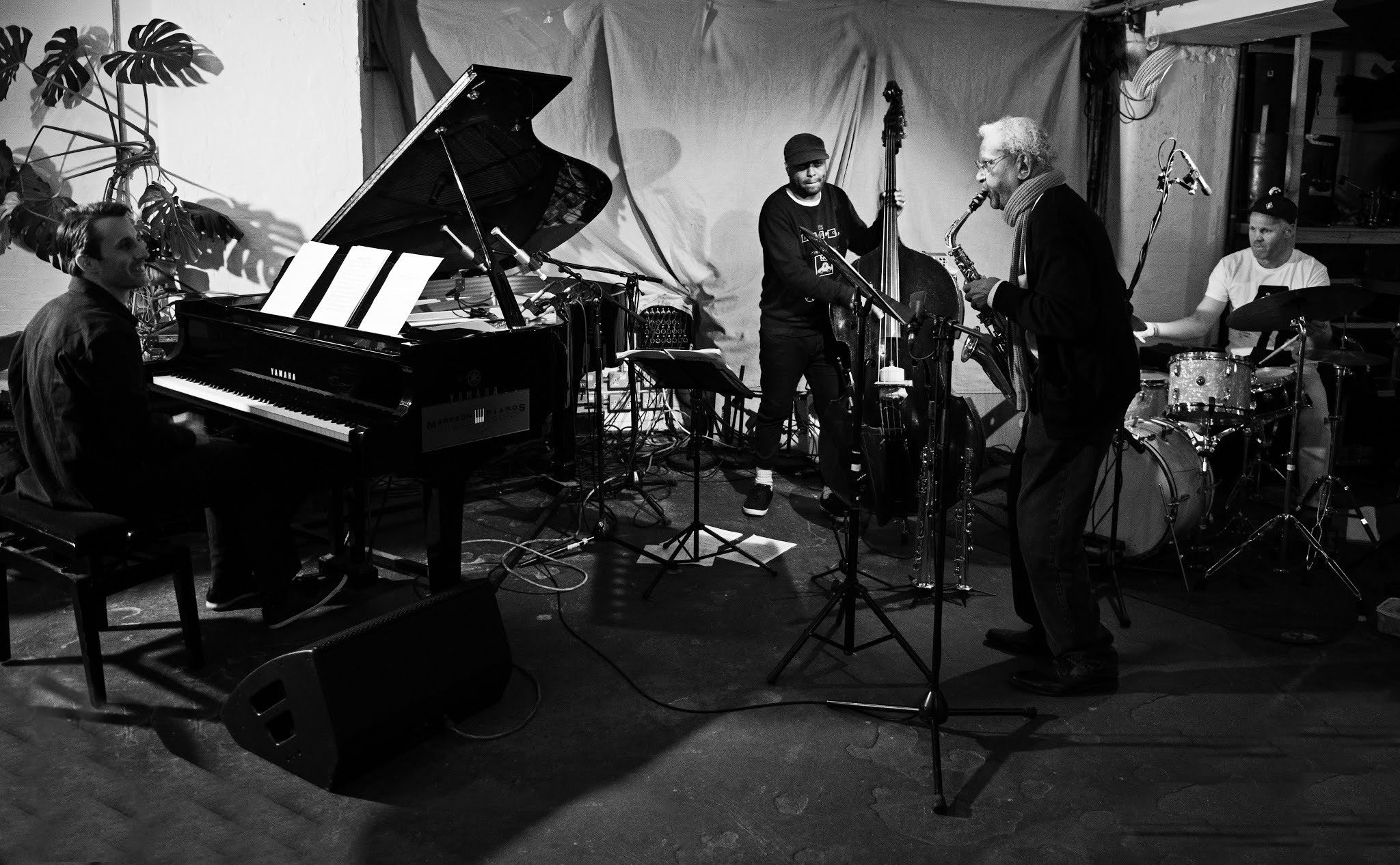
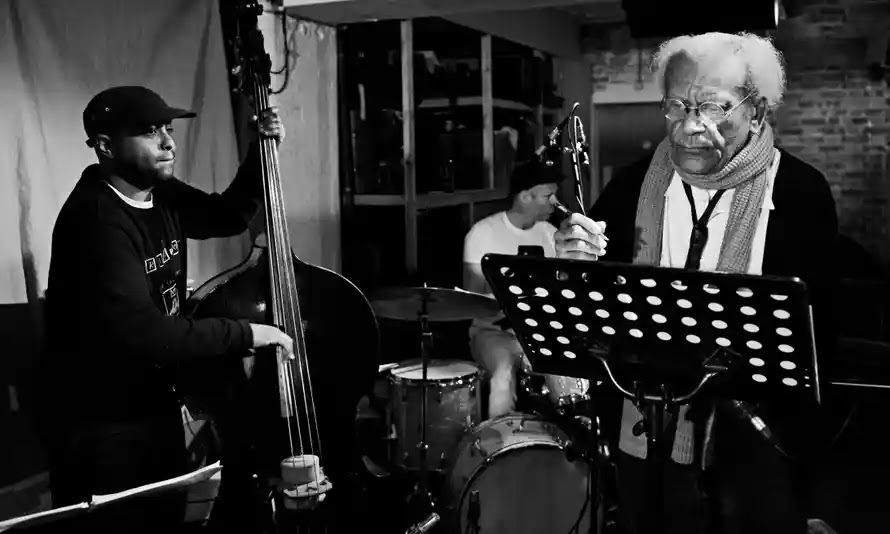
Mr. Braxton has always a tender spot for "standards" and he has recorded a number of albums, usually in a quartet format to display that affection.  Between January 15 and 25/2020, the latest Standards Quartet did a quick tour of the European Continent playing in Warsaw, Poland, Wels, Austria, and London, England.  Mr. Braxton limited his reed arsenal to sopranino, soprano, and alto saxophones, sharing the stage with three British musicians including pianist Alexander Hawkins, bassist Neil Charles, and drummer Stephen Davis. Each date was recorded; New Braxton House Records has just issued "Quartet (Standards) 2020", a 13-CD set featuring 67 performances and no tune repeated! This batch of songs includes pieces from John Coltrane, Charles Mingus, Cole Porter, Burt Bacharach, Paul Desmond, Dave Brubeck, Andrew Hill, and others as well as the theme songs from the movie "High Noon" and television's "The Carol Burnett Show", plus four songs from Paul Simon.

Yes, that Paul Simon.  Mr. Braxton and Mr. Hawkins interpret "Old Friends" as an alto sax - piano duo.  While the saxophonist captures the pathos in the melody, the pianist waxes rhapsodic and the disparity in approaches works nicely. There's a fairly straight-ahead reading of "59th Street Bridge Song (Feelin' Groovy)"; as hard as Hawkins tried to push Braxton a bit further out, the leader stays mostly in a lyrical vein.  If you know the tune, you won't be turned away by this rendition. The alto saxophonist displays his blues chops on "Still Crazy After All These Years".  The Quartet go a bit "free", a lot gospel, and kick it into higher gear a la a Prayer Meeting.  Hawkins' frenetic piano solo changes the mood and mode on "Bridge Over Troubles Water" yet Mr. Braxton makes certain that the soulful melody is heard at the opening and the close. 

Photo: Edu Hawkins
Over the course of the 67-song program, there are many highlights and I do not want to spoil the delight of any listener hearing this music for the first time.  Among my favorites?  Duke Ellington's "Prelude To A Kiss" is both melodic and adventurous with strong solos from the leader (on alto) and Hawkins but also pay attention to the delightful bass counterpoint and the dancing drums.  If you need a chuckle, the opening of "Who's Afraid of the Big, Bad, Wolf" has a child-like sopranino melody that leads to a humorous give-and-take with all four musicians stopping and starting (as if they were playing hide-and-seek.  The ensemble's take on Paul Desmond's "Take Ten" moves away from the "cool" take the composer recorded in 1963 and gives it a John Coltrane Quartet feel with driving piano chords and a thunderous rhythm section. Thelonious Monk's "Off Minor" is also fun and adventurous as is "Pannonica" especially when Mr. Braxton's soprano sax joins bassist Charles in the opening moments.

Photo: Edu Hawkins
Given the live recording milieu (although one never hears an audience response),  it's not surprising there are moments that do not hang together but those are few and far between.  Overall, "Quartet (Standards) 2020" will give you many hours of listening enjoyment. Neil Charles and Stephen Davis are excellent throughout, Alexander Hawkins displays how he is an exciting, inventive, and supportive pianist, and the 74-year old Anthony Braxton sounds as if he is having such a great time.  Yes, 13 CDs is a lot but you do not have to listen to all 67 cuts, all 11 1/2+ hours, in one sitting. Unless, of course, you're that kind of Anthony Braxton fan.  This is a great package to set on "random play" and see what comes up.  It's captivating to hear Mr. Braxton play "in the tradition" especially as he has been instrumental (no pun intended) in expanding the universe of Creative Music.  Go ahead, dive in!

Personnel:

Anthony Braxton - saxophones
Alexander Hawkins - piano
Neil Charles - bass
Stephen Davis - drums

To hear more and purchase the set, go to https://newbraxtonhouse.bandcamp.com/album/quartet-standards-2020. To find out more about the amazing world of Mr. Braxton and the work of the Tri-Centric Foundation, go to https://tricentricfoundation.org/anthony-braxton-bio.  

Hear "Out of Nowhere":


Tuesday, November 3, 2020

Looking at the World Through Very Different Glasses

It's endlessly fascinating what music can do for the curious/ avid listener. On one hand, we have a great pianist spending time away from the city to play through the scourge of the pandemic. On the other, a stunning sextet of musicians joined on three tracks by one of the forefathers of British "art rock" exploring a variety of approaches to creative music with words that have many meanings.

Sixteen years ago, pianist Fred Hersch and his life partner Scott Morgan celebrated their union by building a house in the Pennsylvania woods. It is the place they go to escape the craziness of New York City and to rest in the midst of their very busy schedules. When the pandemic closed down all opportunities to play to a live audience, Hersch began releasing a "Song of the Day" on his Facebook page; after a month, he decided to do a short concert once a week but that only lasted for two weeks. In August of this year, the pianist left Morgan in the city, traveled to their second dwelling, and spent a week recording "Songs From Home" (Palmetto Records).  With help from fellow pianists Benoit Delbecq (co-producer and mixing engineer) and Dan Tepfer plus two piano technicians (Greg Graham and Chris Solliday), the music will certainly warm your heart and soul.

Anyone who follows Fred Hersch knows his programs are always an eclectic mix of standards, "pop" tunes", Thelonious Monk, and originals.  "Songs From Home" is different as there's no Monk and only one original.  It's a mix of standards, jazz works, and delightful interpretations of Joni Mitchell (listen below), Jimmy Webb, and Lennon & McCartney.  The album opens with an introspective take on "Wouldn't It Be Loverly" (from "My Fair Lady")––one could say that this performance is a comment on the lockdown and the desire to get back to some semblance of "normal".  Webb's "Wichita Lineman", one of the finest songs he composed, is filled with love, longing, a prayer for people separated by their jobs.  The one Hersch original "West Virginia Rose" is paired with the traditional "The Water is Wide"; the first melody has the feel of a Randy Newman ballad while the traditional is filled with hope. Kenny Wheeler's handsome "Consolation (a Folk Song)" follows and, like many of the late Canadian-born trumpeter's pieces, has a lovely and expansive melody. Duke Ellington's "Solitude" is an apt choice for this program. One can picture the pianist at the keyboard sifting through memories as he slowly plays the memorable melody..  

Fred Hersch turned 65 on October 21; the program closes with a jaunty reading on "When I'm Sixty-Four" (he certainly was at the time). Playful and expansive, the performance reminds us all we have much to be thankful for. Yes, times are troublesome, the pandemic rages on, but music is wonderful medicine for the trouble soul. "Songs From Home" may be viewed by some as a response to the pandemic. So be it. To these ears and heart, it's a timeless, highly emotional, and deeply satisfying album that resonates long after the final note rings out. 

For more information, go to fredhersch.com.  

Listen to Fred Hersch play Joni Mitchell's "All I Want":


Photo: Reuben Radding
One should always expect the unexpected when listening to the many different recordings, ensembles, and pairings that guitarist/ composer Mary Halvorson posits herself in.  Code Girl started as a quintet to create settings for the poems she had been writing. With long-time associates Tomas Fujiwara (drums, percussion) and Michael Formanek (acoustic bass), the guitarist built a front line with vocalist Amirtha Kidambi and trumpeter Ambrose Akinmusire.  The quintet's self-titled debut album was issued in early 2018 garnering critical acclaim for its mysterious blend of improvisational music, "progressive rock", the often-impressionistic lyrics, and the spellbinding vocals.

The group's second album, "Artlessly Falling" (Firehouse 12 Records), finds Akinmusire replaced by Adam O'Farrill plus the addition of Maria Grand (tenor saxophone, vocals) and, on three of the eight pieces, the voice of Robert Wyatt. Mr. Wyatt first came onto the British music scene in the mid-1960s as the drummer of Soft Machine, a quartet that created a beguiling mix of jazz, rock, minimalism, and more. When that group splintered, he helped form Matching Mole and embarked on a solo career, his soft vocals blending with his embrace of "free jazz."  After an accident in 1973 left him paralyzed from the waist down, Wyatt regrouped creating a series of albums featuring his idiosyncratic compositions, often-political lyrics, and voice. He came out of retirement to record his vocals for Code Girl, fitting seamlessly into the beguiling, swirling, sounds.

Among the first sounds you hear on the album opener, "The Lemon Trees", are the sweet harmonies of Ms. Kidambi and Ms. Grand. Quiet brush work and simple, foundational, bass notes plus O'Farrill sharp trumpet lines serve to introduce Wyatt's first vocal.  He sings one verse before the trumpeter creates a his own "sing-song" solo. Fujiwara steps out next with a pounding solo before the sextet falls back into the song, Wyatt now double-tracked.  "Last Minute Smears" follows with lyrics taken directly from Judge Brett Kavanaugh's testimony during his Senate confirmation hearing.  The dark ballad, replete with martial drumming and breathy tenor sax solo, is not farcical but does condemn the process with its own words. 

Wyatt (pictured left) returns for "Walls and Roses"; he starts off the piece then Ms. Halvorson kicks the piece into a more "hard rock" direction dropping for Ms. Kibambi's verse. After one more "guitar shredding", Wyatt returns and then Ms. Grand sings a verse.  The different voices, tempo and dynamic changes, keep the listener engaged. His third and final appearance comes on "Bigger Flames", an Impressionistic "word painting" with slightly askew strummed guitar chords and trumpet/ saxophone counterpoint. Despite being recorded in England, Wyatt sounds as if he sitting in front of the band.

Photo: James Wang
Tracks such as "
Mexican War Streets (Pittsburgh)", "Muzzling Unwashed", and "A Nearing" show the influence of not only Wyatt but also the "freer" side of the late bassist Jack Bruce. The rhythm section is insistent throughout those songs, pulling the ensemble forward urgently. Note how the voices fit seamlessly into the mix of instruments. There are moments in "Mexican War..." that feel influenced by by both Kurt Weill and Black Sabbath!  The lyrics speak to the history and the present in a city ever-changing.  Formanek's percussive then melodic unaccompanied bass sets the tone for "A Nearing" which also stands out for Ms. Kidambi splendid vocal as well as O'Farrill's interactions with Ms. Halvorson, his inventive lines, and how he negotiates the dynamic rhythm section. Ms. Grand also creates a potent solo that is impressive for her in the maelstrom created by the guitar and drums.

Photo: James Wang
The album closes with the title track. Ms. Halvorson's modulated guitar accompanies Ms. Kidambi with the rhythm section swirling up a storm.  Soon, one notices the trumpet and tenor saxophone creating their own swirling lines in their respective corners of the sound spectrum.  Note the change near the end when the rhythm section kicks into a forward gear. The vocalist holds her own in the sonic storm singing right up to the abrupt ending. One should go right back and listen again as there is too much to take in in one sitting. 

Mary Halvorson's Code Girl creates its own genre, taking from so many streams of contemporary music. Is it Jazz, is it Rock, Progressive, Art-Rock?  Ms. Halvorson's lyrics are all in different poetic forms e.g the title song is a sestina and the opening track a double tanka.  Call "Artlessly Falling" whatever you want but don't dare ignore it. The music and words are much too beguiling and thought-provoking to be typecast.  

For more information, go to www.maryhalvorson.com.  To hear more and to purchase the recording, go to https://maryhalvorson.bandcamp.com/album/artlessly-falling

Go to the link below to hear the opening track:

Tuesday, October 1, 2019

Sounds Familiar, Strange, Loud, & Quiet

Photo: NEA
I have known Taylor Ho Bynum since his student days at Wesleyan University. He earned both his BA (1998) and Master's Degree (2005) there, all the while playing with various members of the faculty including Bill Lowe and Anthony Braxton.  After graduation, he played with numerous musicians and group but especially with pianist-conceptualist Cecil Taylor, trumpeter-conceptualist Bill Dixon, and with numerous ensembles led by Professor Braxton.  In fact, Bynum was the Executive Director of Braxton's Tri-Centric Foundation from its founding in 2010 until 2018.  He currently is teaching at Dartmouth College and leading the jazz and creative music ensemble. Bynum is a founding partner of Firehouse 12 Records, one of several labels that issue his music.

His latest record, "The Ambiguity Manifesto", is his sixth for the label, each one featuring a different ensemble.  The new one features his 9-tette, composed of two brass, two reeds, two basses (one electric, the other acoustic), a cellist, drummer, and guitarist. All seven pieces are Bynum originals and, as usual, the music goes in many different directions, often in the same piece.  Those of you familiar with Bynum's recordings for Firehouse may be surprised by the James Brown-style drumming that opens the album – to these ears, it also sounds somewhat like Julius Hemphill's "Hard Blues."  The song, titled "neither when nor where" utilizes that funky beat to introduce the different instruments.  Tomeka Reid's cello lines shows the influence of Abdul Wadud and it's fun to hear Jim Hobbs' alto sax in counterpoint to  Ingrid Laubock's tenor sax.  In the bridge, Bill Lowe's trombone dances over the sympathetic reeds.  Tomas Fujiwara is rock steady behind the drum while the rest of the band frolic.

The material ranges from the free-wheeling "anter ally" to the circus-like noise of "enter (g)neither" which at 18+ minutes gives the different voices of the ensemble a chance to converse together. Mary Halvorson's guitar lines have quite a percussive feel and supported by Professor Lowe's tuba is quite playful. The section where the guitar interacts with Ken Filiano's acoustic bass and Stomu Takeishi's electric bass leads into a slow marching beat where the music feels like a slow merry-go-round – note the smooth sounds from the leader, a bluesy feel even.  A lot goes on and all of it is absorbing.

Photo: Peter Gannushkin
The last two tracks, "enter ally" and "unreal/real (for old music)", are "freer" in their structures yet there are still multiple conversations going on in each song.  The former gets a bit noisy in the middle especially when the effects-laden guitar rolls in with the droning tuba. Since the piece is continually evolving, one must listen several times to absorb the soundscapes created.  The final track opens with the leader's cornet sputtering and wheezing alongside the rippling soprano sax (Ms. Laubrock) with the bowed cello, chattering guitar , and thrumming acoustic bass leading in the trombone, drums and alto sax.  Listen closely for the clucking electric bass and alto sax and the tenor sax – in the wink of an eye, the music falls into a gentle martial beat while the other voices either create sonic effects or play melodies.  Hobbs alto sax leads the ensemble forward as Fujiwara creates a straight-forward rhythm.  Roll with it and you'll be surprised where the 9-tette takes you.

"The Ambiguity Manifesto" does not beat the listener over the head but does take one on quite a journey.  Taylor Ho Bynum seems to relish composing for a larger palette (his Firehouse 12 albums range from sextet to septet to octet to nonet to 15 members) – this album shows his continued growth as well as his need to be part of the band and not in front all the time.  There's no plans to tour the band as of its September 27th release date but the Sextet appears at Firehouse 12 on November 8, 2019.

For more information, go to taylorhobynum.com.

Here's the opening track:


Three of the four musicians pictured below – Mary Halvorson, Tomas Fujiwara, and Tomeka Reid – are on the album above plus are members of Ms. Reid's Quartet. They, along with bassist Jason Roebke, have just released a new album.

The Tomeka Reid Quartet recorded and released its eponymous debut album for Thirsty Ear in 2015.  Since then, Ms. Reid has relocated to Queens, New York, and has entrenched herself in the contemporary music scene. She plays with Anthony Braxton and Nicole Mitchell and was featured on the latest Art Ensemble of Chicago album. Ms. Reid also is part of Hear in Now, a string trio with violinist Mazz Swift and bassist Silvia Bolognesi not to forget her collaborations with Roscoe Mitchell.   Ms. Halvorson and Mr. Fujiwara works together in the trio Thumbscrew (with bassist Michael Formanek) as well as with Taylor Ho Bynum, Chris Speed, and Ben Goldberg.  Mr. Roebke is a fixture on the Chicago music scene – he studied with Roscoe Mitchell and plays in or leads numerous groups.

"Old New" (Cuneiform Records) is, if anything, even more exciting than the fascinating debut from four years ago.  What stands out (what doesn't?) is how many of these pieces – all composed by the leader – are so rhythmic.  The title track comes bursting out of the speakers with an urgency and pace sure to raise the temperature.  Reminiscent of of the opening track of saxophonist Julius Hemphill's 1977 Black Saint Lp "Raw Materials and Residuals" (with drummer Famadou Don Moye and cellist Abdul Wadud), Roebke and Fujiwara lock in and push the music forward.  Ms. Reid creates a powerful solo (with Ms. Halvorson adding playful counterpoint) and she wails away.  The melody line, which is repeated at the end of the piece, is a delightful blend of plucked notes and melodic, flowing, lines.

Photo: Jasmine Kwong
The energy continues to flow on the following track "Wabash Blues." Again it's Mr. Roebke's muscular bass and Mr. Fujiwara's powerful drumming that leads the way.  In fact, the drummer gets the spotlight right after Ms. Halvorson's solo, one that's filled with her trademark "bent notes" and rippling phrases.  "Niki's Bop" follows, ushered in by the dancing New Orleans-style drumming and contains a boppish melody line played unison by guitar and cello that will have bobbing your head.  They stretch the lines out for over a minute before Ms. Reid and Ms. Halvorson dance/solo together.  Dedicated to flutist Nicole Mitchell, the music make sone want to get up and dance.

Photo: Jasmine Kwong
The recording has so many moments that turn your head with their inventiveness and the Quartet's splendid interactions.  For instance, "Sadie" swings with glee with Ms. Reid playing pizzicato throughout – the "boppish" quality of the song brings to mind the groundbreaking cello work of Oscar Pettiford as well as the "baby bass" playing of Percy Heath and Ron Carter. Ms. Halvorson's raucous guitar playing gives the piece a more modern bent.  Listen to her "shred" on "Edelin", roaring above the solid rhythm section.  The cello solo has a power of its own, filling up the "bottom" of the sound with deep notes.

"Old New" closes with "RN",  a piece with a handsome melody yet there is a pleasing rhythm to push the music along.  Mr. Roebke actually solos before the band can introduce the melody;  before long, Ms. Reid's lovely flowing lines produce a magical solo as does Ms. Halvorson although she fills her solo with echoing phrases that feel like bubbles about to burst.  There's a "singing" quality to the track tha promises new directions for the future of the Tomeka Reid Quartet.  This program is a delight-filled group of performances that shine, swing, rock, sway, explode, and push their way into your ears and mind.  And, it's an excellent effort from start to finish – give a listen, give 10 listens!

For more information, go to www.tomekareid.net.

Here's the title track:


There is something about the music of Thelonious Monk that allows it to be very much his own yet totally open to interpretation by others.  Pianist Michael McNeill, who have been active inBuffalo, NY, but currently resides in Saluda, VA, is a member, composer, and arranger for several groups including the Buffalo Jazz Octet plus a trio with drummer Phil Haynes and bassist Ken Filiano. He's also a member of the cooperative trio with bassist Denny Ziemann and drummer John Bacon.  It is with that rhythm section that McNeill has recorded "Refractions" (Jazz Dimensions Records), a seven-song program comprised of Monk tunes, all of which are pretty well-known.

The trio approaches the music from numerous directions. Whereas the album opener, "Ugly Beauty", has an abstract impressionistic, rubato, opening, "Hackensack" swings delightfully from the opening note.  Once the former piece "opens up" into its rhythm, the music remains exploratory but retains the handsome melody, especially thanks to the fine piano solo.  The latter is the longest piece on the disc, replete with delightful interactions between the piano and drums plus a long, wonderfully melodic, solo from the bassist.  The trio takes "Light Blue" as a ballad with rich solos from McNeill and Ziemann – "Reflections" is taken even slower with the bass and piano caressing the melody, both musicians basing their solos off the opening verse.  "Let's Cool One" has that "sit back and relax" groove. McNeill creates a delightful, two-handed, solo filled with spirit while Bacon's spotlight is playfully minimalistic.

The last two tracks start with a solo piano reading of "Monk's Mood."  McNeill gives the handsome melody a Gershwin-like spin, accentuating the harmonic possibilities and leaving just the right amount of breathing room to let the notes ring n the listener's ears. After a short melodic bass intro, "Straight No Chaser" jumps into an energetic rhythm and swings forward on the power of the piano solo and Bacon's propulsive drums.  Pay attention to Ziemann's solo latter in the piece: he's plays both melodically and rhythmically, managing to steer clear of clichĂ©s throughout (plus his dialogues with Bacon really kicks nicely.

Though Thelonious Monk has gone nearly four decades (and had retired from playing 11 years before his passing), his music continues to reverberate loudly through contemporary music.  On "Refractions", the trio of John Bacon, Michael McNeill, and Danny Ziemann honor his legacy by not playing it safe, but playing with joy and with an exploratory spirit.

For more information, go to michaelgraymcneill.com.

Here's the "long" song:

Monday, July 1, 2019

Time for Three Fours!

Nature Work is both the name of a quartet of talented (and busy) musicians and the title of that ensemble's debut album out now on Sunnyside Records.  The front line features the bass clarinet of Jason Stein and the alto saxophone of Greg Ward (currently the MVP of the music world having shown up on, at least, five albums released in the first half of 2019);  The stalwart rhythm section is composed of bassist Eric Revis (Branford Marsalis Quartet) and drummer Jim Black (Human Feel, AlasNoAxis, the Jim Black Trio, and former member of Tim Berne's Bloodcount).  The foursome, formed in 2017, creates a fascinating aural landscape on its nine-song program playing a repertoire of originals by Stein (four tracks) and Ward (five tracks).

This is modern music. Groups lacking a chordal instrument can get its influences from Ornette Coleman and Henry Threadgill. A group with two reeds can look at the work of Sonny Rollins.  Nature Work  certainly has those sounds in its hip pockets.  To these ears, each one of these musicians brings his individual strengths and, together, the players figured out its group sound.  Listen to Black and Revis push, prod, and power its way through Stein's "Hem The Jewels", the duos slippery rhythms supporting muscular solos from both Stein and Ward.  There is a funky feel to the saxophonist's "Opter Fopter", with the call-and-response conversation between the reeds swooping over Revis's powerful lines and Black's sledge-hammer drumming. That latter track pushed the limits of both my house and car speakers.

Yes, the music can be noisy but it's never off the rails.  The frenetic rush of the opening several minutes of Stein's "Porch Time" resolves into a rollicking up-tempo scramble held together by the reeds. If you've never heard Jason Stein play (he's recorded numerous labels including Delmark Records, Not Two Records, Leo Records, Northern Spy, and others), he has developed his own sound.  Ward's alto work can be sweet and sassy but he also displays power  and a vulnerability that makes his playing stand out.  The album has few soft spots but the saxophonist's "Cryptic Ripples" gives the quartet a rare opportunity to be introspective – the conversation between the reeds starts with both players in a melodic yet exploratory mood (Ward's high notes literally sing).  And, one should not be surprise when the band kicks the tempo into a much higher gear (one expects that from Black).

I hope Nature Work plays live in a venue near you, one with good sound.  In the meantime, its debut album stands out on the originality of the material and the excellent playing from every person in the quartet.  Find it, buy it, play it loud, and play it over and over.

For more information, go to www.jasonsteinmusic.com/nature-work/.

Here's the track that opens the album:


Here's a link to a live concert recorded in 2018 in Austria – www.youtube.com/watch?v=d0krnew5O3k.

Photo: RI Sutherland-Cohen
The four gentlemen pictured on the left make up The OGJB Quartet.  Formed in 2015 by reed master Oliver Lake (alto & soprano saxophones, recitation), Graham Haynes (cornet, dousn'gouni), Joe Fonda (bass), and Barry Altschul (drums, percussion, mbira), the quartet contains two generations of master improvisers, instrumentalists who have the abilities to create music that goes in myriad directions, that blend ancient rhythms with modern sensibilities in styles that hearken back to the early days of the AACM and B.A.G. (Black Artists Groups), the work of the Art Ensemble of Chicago, of Anthony Braxton's various groups, the World Saxophone Quartet, and so much more.

18 months after the group formed, they entered System Two Studios in Brooklyn, NY, to record their debut album.  "Bamako" (TUM Recordings) contains 10 tracks with compositions from each musician plus the two group improvisations that close the program. Altschul's "Be Out S'Cool" was first recorded by the composer on 1980's "Brahma" (Sackville Records) with trombonist Ray Anderson and bassist Mark Helias; he's featured on several other albums by groups he's led or co-led over the decades.  Why not?  It's so delightfully open-ended and allows all participants to have great fun.  Lake's "Is It Alright" was first performed and recorded as a duo with bassist William Parker – dedicated to the late trumpeter Roy Cambell, the piece is notable for the powerful drumming, playful bass work, and the interplay of alto sax and cornet.

Photo: RI Sutherland-Cohen
The album opens with Fonda's rousing and lengthy (nearly 15 minutes) "Listen to Dr. Cornel West".  The group takes its cues from the powerful bass work of the composer. I have known Joe F. for over 40 years and am amazed (and so pleased) how he's become such a great musician.  Haynes's solo lopes along over six minutes, covering a lot of musical territory, never rushing, riding the changes that the rhythm section negotiate beneath him.  The cornetist composed the title track – he plays the dousn'gouni while Altschul adds hand percussion and mbira. Lake recites an excerpt on his poem "Broken in Parts", the section dedicated to drummers from the Native American tradition.  Note Fonda's floating bowed bass work, the ethereal quality of the sound a perfect fit for this piece.

"Bamako" closes with the two group improvisations with "OGJB #2" programmed before "#1."  It's great fun to hear where the musicians lead each other, how they come together, pull apart, and move around each other without either the quartet or the listener getting lost.  That's the fun of this music. The sounds continually challenge the eager listener.  Masterful yet playful music from The OGJB Quartet.

For more information, go to www.joefonda.com/ogjb-quartet-lake-/-haynes-/-fonda-/-altschul.html.

Here's the opening track:


50 years ago, Anthony Braxton recorded and Delmark Records released "For Alto". a two-Lp set of pieces for alto saxophone created by the Chicago native. Since that landmark recording, he has released scores of albums with ensembles of all sizes, from duos to four symphony orchestras (all playing at once with the listener in the middle).  He's played standards, marching band music, created operas, worked with choirs, and much more.  His amazing output has many transcendent moments spread across five decades including numerous other solo albums.  Plus, he has influenced dozens of musicians/composers through his teachings and workshops.

This writer's favorite Anthony Braxton albums are his duos with musicians such as Max Roach, Mario Pavone, John Lindberg, Muhal Richard Abrams, and Abraham Adzenyah plus his quartet/quintet recording with musicians such as Kenny Wheeler, Ray Anderson, Marilyn Crispell, and Barry Altschul.  His new album on Firehouse 12 Records, "Quartet (New Haven) 2014", features a fascinating lineup – it's actually more of a surprising lineup in that besides Mr. Braxton (sopranino, soprano, alto, baritone, bass, and contrabass saxophones) and long-time associate and former student Taylor Ho Bynum (cornet, flugelhorn, piccolo and bass trumpets, trumpbone), the ensemble is completed by guitarist Nels Cline and drummer Greg Saunier (Deerhof).  The album is comprised of four CDs, each one with an improvisation dedicated to a popular recording artist of the mid-to-late 1960s. That includes Jimi Hendrix, Janis Joplin, James Brown, and Merle Haggard. Don't read that list and expect that this group is channeling, copying, or paying music by those people.  Remember, this is Anthony Braxton, he makes music like no one else (his "standards" albums often feature recognizable versions of the originals but his original music never has - and never will - sound like anyone but Mr. Braxton.


Photo: Eriq Robinson
Four tracks, nearly four hours of improvisations, and a fascinating journey all the way through.  Cline, who has done his share of experimentation over the decades, is right at home moving in and out of these various soundscapes. So is Saunier, whose main gig is propelling the experimental rock quartet Deerhof.  The drummer also leads or co-leads several other bands plus has worked with various artists including guitarist Marc Ribot, Sean Lennon, and harpist Joanna Newsom.  He and Cline often make a fine rhythm section plus the drummer has the power to drive the entire band.

Instead of writing about each track, listen to the track below (courtesy of Firehouse 12 Records) – it's nearly an hour long but, if you love "free" improvisations, you'll never get bored. A mix of quartet, trio, duo, and solo conversations, the quartet roars, purrs, screams, is contemplative, plays with great abandon, and, truly, sounds like they are having so much fun.  If you're an Anthony Braxton aficionado, you'll really enjoy these excursions. If you are curious because of the participation of Nels Cline and Greg Saunier, be prepared for the wild musical adventures.  Kudos to co-producers Taylor Ho Bynum and Nick Lloyd for making "Quartet (New Haven) 2014" a reality!

Give a listen:


Here's a link to Rolling Stone and Hank Shteamer's fine article about and interview with Mr. Braxton and this album: www.rollingstone.com/music/music-features/anthony-braxton-interview-nels-cline-quartet-new-haven-844843/.


Thursday, December 20, 2018

Catching Up In December (Pt 1)

The Fall semester gets away from me and I miss new releases that deserve to be reviewed. Through the Holidays, that oversight shall be partially remedied (writers have to sleep, too!)

Photo: Jimmy Katz
Several days before I was aware of the existence of this album, I wondered what had become of Don Byron. His recordings of the 1990s and 2000s had been full of amazing sonic adventures, from klezmer to blues to gospel to r'n'b and elsewhere.  While his recording output has slowed down, Mr. Byron has been appearing in concert halls, in workshops on college campuses, and elsewhere in the US and Europe.  Pianist Aruán Ortiz reached out and the duo began a collaboration that has resulted in their first album together, "Random Dances and (A)Tonalities" (Intakt Records). The program is a collection of originals, several classical pieces, and one composition each from Duke Ellington and Geri Allen.

Notice in the picture above that Mr. Byron is holding a tenor saxophone.  He employs the instrument on three tracks; his delightful exploratory "Joe Btfspik", Ortiz's wide-ranging and classically inspired "Numbers", plus the playful take of the Ellington/ Bubber Miley classic "Black and Tan Fantasy".  That last piece, from 1927, has long been a staple of the jazz canon and the duo is faithful to the melody and the rhythm but certainly stretch out in the solo sections.  The humor is subtle but the swing is powerful, especially in Ortiz's left hand.  The clarity of the mix allows for both instruments to stand out without either musician dominating the piece.

Photo: Guenther Groeger
There is a smashing version of Ms. Allen's "Dolphy's Dance". Both musical lock in on the themes and then take a wild ride during the solo section that has each person's lines swirl around the other, occasionally coming together then veering away.  Mr. Byron's solo reading of J.S. Bach's "Violin Partita No, 1 in B-Minor, BWV1002, II. Double" is stunning, the melody unfolding graciously but not as fast as several of the violin versions I referenced. Yet, the clarinet tone gives the music fascinating and different shades. The piece segues quickly into Mr. Byron's "Delphian Nuptials" - the original melody seems like a variation of Bach's melody but moves quite differently especially when Ortiz's melodic and flowing piano lines enter.  The album closes with an improvisation titled "Impressions on a Golden Theme" - the wide-open sound allows the music to develop slowly while the musicians move around through mutually created melody.

"Random Dances and (A)tonalities" grabs your attention from the opening lilt of "Tete's Blues" to the quiet fade of "Impressions..."  This is music that Aruán Ortiz and Don Byron developed slowly before committing to the recording. It never feels pedantic or "safe" - these are two musicians who can and will play anything not to show off but to get inside the music and find the humanity within. Splendid!

Here's the Ellington/Miley piece:


Just the name of this band - Myra Melford's Snowy Egret - is evocative of a particular sound. The quintet's second album - "The Other Side of Air" (Firehouse 12 Records) - also alerts the listener that the music will go in unexpected directions. Over her career that now spans nearly three full decades, the pianist and composer has created ensembles of musicians who help her shape the music. Snowy Egret consists of Ron Miles (cornet), Liberty Ellman (guitars), Stomu Takeishi (acoustic bass guitar), and Tyshawn Sorey (drums), each person a master of his instrument and sound.  Ms. Melford, with her multi-faceted compositions, gives material that explores all the different music she has studied performed, and inhabited.

Photo: ABC/Australia
If you are a long-time listener to Ms. Melford's music, I need not tell you what to expect. What amazes this listener is her ability to continually mature, to making music that sounds like on one else's yet is part of the creative music continuum.  As a player, her piano swings, whispers, thunders, caresses, pounds, and dances.  Her music is often episodic, starting with melodic or rhythmic idea, moving on to others, rarely turning back. There is the serene beauty of "Chorale" alongside the herky-jerky dance of "Motion Stop Frame" (a piece that goes from quiet to powerfully loud within seconds).  There's the "free" explorations of "Living Music" (listen to how the drums and the piano interact coming out of Ron Miles' solo!) to the emotional melody and performances of "Turn and Coda", the piece that closes the album.

Myra Melford creates music that makes one think deeply As you surrender to the myriad sounds created on any of her albums, you often enter into a universe that is welcoming yet challenging. With Snowy Egret, she works alongside musicians of equal musical status, interpreters and creators of the highest order.  Recorded in the Firehouse 12 studios in New Haven CT by Nick Lloyd (who also mixed and mastered the album), "The Other Side of Air" crackles and sparkles while opening new pathways for us to follow.

For more information, go to www.myramelford.com.

Here's the fascinating opening track:


If you go to firehouse12records.com/album/12-from-25, you'll also find "12 From 25", a recording that compiles performances from Ms. Melford's week of residency at The Stone in March of 2015.  Snowy Egret is there as well as her duos with Marty Ehrlich, Ben Goldberg, and Allison Miller, her original trio with bassist Lindsay Horner and drummer Reggie Nicholson plus several more. Clocking in at over 90 minutes, this is a fascinating overview of her career. It's well worth your attention.


While Holiday albums (for me) usually go in one ear and out the other, when  Duchess - Amy Cervini, Melissa Stylianou, and Hilary Gardner - sings, I always pay attention.  The trio's latest recorded effort, "Harmony for the Holidays" (Anzic Records), is the three ladies addition to a crowded field.  Their trademark harmonies are in place, Oded Lev-Ari's are, as usual, intelligent, and the six songs (it's an EP and only available digitally) steer away from religious themes and towards creating a warm glow and making one smile (as well as sing along).   The ladies are accompanied by their cracker-jack band - pianist Michael Cabe, guitarist Jesse Lewis, bassist Matt Aronoff, and drummer Charles Ruggero - and the results are fun all the way through.

Opening with "Christmas Island", a Lyle Moraine song made famous by the Andrew Sisters in 1946, the ladies move on to "Santa Baby" (ah yes, the tune made famous by Eartha Kitt) and then to "Silver Bells" (first recorded in 1950 by Bing Crosby and Carol Richards).  It's a real treat to hear the trio share the lead vocals and when they harmonize, especially on "....Bells", one feels calm. The mist contemporary song of the program, "A Christmas Compromise", was first recorded in 2011 by co-writer Inara George and is the story of the tug-of-war celebrating Christmas creates in a mixed marriage.  Back to the tried-and-true for Frank Loesser's bluesy "What Are You Doing New Year's Eve" and the sweet blend of voices.  The "horn" section of Anat Cohen (clarinet), Nadje Noordhuis (trumpet), and Nick Finzer (trombone) join the band for the closing "Mele Kalikimaka", a delightful eggnog of Hawaiin and New Orleans influences first made famous by Bing Crosby and those Andrew Sisters in 1950.

This is an album to keep playing on repeat throughout the Holidays. Even grumpy old writers take heart from hearing Duchess blend its voices to bring good joy for all (and nary a hint of snark).

For more information, go to www.duchesstrio.com.

Here's one of the gems:

Sunday, April 1, 2018

Two X Five : Spring Music

One reads so much about the influence of John Coltrane on the sounds of jazz over the past five decades (since his passing) but many believe that his contemporary and still-quite-alive fellow saxophonist Wayne Shorter (who will turn 85 in late August of this year) has had and still has just an important of an influence.

Saxophonist Joe Lovano and trumpeter Dave Douglas created a quintet, Sound Prints, to explore Shorter's influence and music.  The  band's second recording is called "Scandal" (Greenleaf Music) and features the same rhythm section - pianist Lawrence Fields, bassist Linda May Han Oh, and drummer Joey Baron - as its 2015 self-titled debut live recording for Blue Note.

Photo: Merrick Winter
Because both leaders are so oft-recorded, one should know what to expect when they get down to making music. Both play with fire, both with abandon (check out the trumpet solo on "Full Sun" as well as the tenor sax solo on Shorter's "Fee Fi Fo Fum") yet the music would not be so impressive without the excellent rhythm section.  Baron, who first recorded with Douglas when both were members of John Zorn's Masada in the early 1990's, is the perfect drummer for this outfit.  He captures the excitement that Tony Williams brought to the Miles Davis Quintet of the mid-1960s yet also plays with such a high touch (listen to his brush and cymbal work on Douglas's "Ups and Downs" as well as the Latin-tinged fire of Lovano's "The Corner Tavern").  Ms. Oh, who has worked alongside Douglas for the past seven years, is solid and inventive plus her solos are delightfully melodic.  Pianist Fields has worked and recorded with Lovano, drummer Jeff "Tain" Watts, trumpeter Christian Scott Atunde Ajuah, and drummer Terri Lyne Carrington.  On the title track, his background work beneath the solos is quite inventive and engaging. When he steps, as he does on Shorter's "Juju" and Douglas's slyly funky "Mission Creep", Fields not only swings but shows great power and thought.  Listen to his intelligent backing on Lovano's "Full Moon"; it's impressionistic and not cliched as well as the lovely opening minutes of the final track, Douglas's "Libra."

"Scandal" is easy to recommend to fans of Joe Lovano and Dave Douglas. The music blends their myriad influences whether it be Clifford Brown, Booker Little, Miles Davis, Sonny Rollins or the afore-mentioned John Coltrane and the group's inspiration Wayne Shorter.  Sound Prints will appeal to fans who have followed creative music for many years and to younger listeners who want to understand how creative musicians push through the borders created by genres.  Try to see/hear this band in person so that you can see creativity, interaction, and intelligence in action.

For more information, go to greenleafmusic.com/scandal/.

Here's the band in action in the studio:


Over the past decade, guitarist, composer, and conceptualist Mary Halvorson has played in numerous settings, from several of Anthony Braxton's groups to alongside drummer Weasel Walter to Marc Ribot's Young Philadelphians to duets with fellow guitarist Noel AkchotĂ© and pianist Sylvie Courvoisier to a trio with pianist Jason Moran and cornettist Ron Miles (BANGS) to her fellow Wesleyan grad (and Braxton student) Taylor Ho Bynum.  She has co-led groups with bassist Stephan Crump (Secret Keeper) and violist Jessica Pavone plus led her own trio, quintet, septet, and octet.  One of her other ensembles is Thumbscrew, a trio that features drummer Tomas Fujiwara and bassist Michael Formanek.  Ms. Halvorson has developed a unique voice, one that allows to fit in many different settings as well as being a stand-out soloist.


Her new album for Firehouse 12 Records features a quintet composed of Messrs. Formanek and Fujiwara plus trumpeter Ambrose Akinmusire and the fascinating voice of Amirtha Kidambi.  The group and its 2-CD set bear the name Code Girl: it's the guitarist's first album on which she writes both songs and lyrics.  It's a riveting combination of sounds, the powerful work of Akinmusire combined with Ms. Halvorson percussive yet melodic style and the fascinating work of Ms. Kidambi who has worked with saxophonist Darius Jones and leads the contemporary experimental band Elder One.  The rhythm section keeps the music flowing, swinging at times, and, in the case of Formanek, quite melodic in his support and counterpoint.

If you are familiar with Ms. Halvorson's music, you know that she has no fear so one will hear swatches of "free jazz", "hard bop", and "prog rock" without falling totally into categories.  "Possibility of Lightning" has so much going on, from its nearly impenetrable lyrics (excellently articulated) to the fuzz guitar solo to the playful interaction of trumpet and guitar.  Ms. Kidambi can be added instrument as she shows with her march-like attack throughout the song. There's a calm beauty to "Storm Cloud", just voice and guitar on the opening verse.  Formanek's bowed bass comes in for the next verse and here one hears a sound reminiscent of the late bassist Jack Bruce's more experimental work.  Even when the trumpet and drums enter, the music remains calm and focussed.

There are compelling moments throughout the 90+ minute program.  In the opening minutes of "The Unexpected Natural Phenomenon", one can hear the influence of Gil Evans-Miles Davis's "Sketches of Spain" in the how the music moves and the airiness of the background.  After Ms. Kidambi sings through the verses, she breaks into a wordless vocal that suggests the work of Jeanne Lee. That inventive direction leads to fiery solos from both Ms. Halvorson and Akinmusire plus listen to the powerful drums beneath the trumpet solo that leads to the Fujiwara's thunderous solo. Dig the bass drum, low bass notes, and Ms. Halvorson's quiet chords at the opening of "Drop The Needle", a tune with a double-tracked vocal and more of the Jack Bruce feel.  The verse in the middle of the song, the one that goes "one might drop the needle/ an entire song transcends/ repeat a twirling hypnotic/ melody in descending order", may be the best description of the album.  

"Code Girl" makes more sense the more you listen.  Music is a "code", it speaks to all of us in different ways and we respond to various sounds, solos, lyrics, and emotions.  Mary Halvorson is a sound master (bless those "bent" notes) and has created a new, fruitful, fertile, direction for her music.   One can really tell that she, Tomas Fujiwara, Michael Formanek, Ambrose Akinmusire, and Amirtha Kidambiare are each so emotionally involved in this music.  It may initially sound different but, once you invest yourself in this program, there are numerous musical rewards.

For more information, go to www.maryhalvorson.com.
Here's the opening track: