Showing posts with label Palmetto Records. Show all posts

Tuesday, January 11, 2022

Sixteen Strings Attached


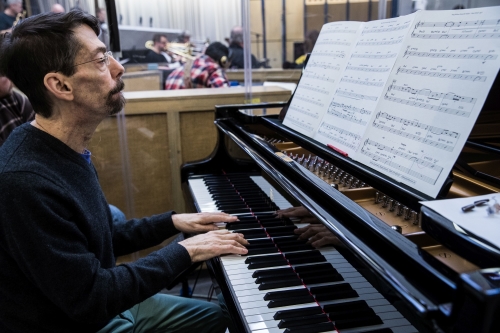
Over the past decade+, pianist Fred Hersch has released solo piano records, several duo sessions as well as a number of trio albums plus a 2019 date with the WDR Big Band.  He continues to explore different facets of his instrument as well as different ways to approach his original music. During the first lockdown of the pandemic, Hersch showed up online playing solo piano in his Pennsylvania home but was already writing charts for piano, bass, and drums joined by a string quartet. In August 2021, the pianist, composer, and arranger entered the studio with bassist Drew Gress, drummer Jochen Rueckert, the Crosby Street String QuartetJoyce Hamman and Laura Seaton (violins), Lois Martin (viola), and Jody Redhage (cello) – plus, on one track, percussionist Rogerio Boccato.  The results of their two days recording can be heard on "Breath by Breath" (Palmetto Records).

For this project, Hersch composed "The Sati Suite", an eight-part musical adventure based on the pianist's longtime practice of "insight meditation".  The "Suite" opens with "Begin Again", its handsome melody moving atop a Latin-flavored rhythm reminiscent of the late Chick Corea's love of Spanish music.  The string quartet is part of the piece not just background.  The first one-third of the next track, "Awakened Heart", belongs to the strings; with its handsome melody and counterpoint, the music transitions into the composer's solo piano.  The strings return to play a short coda.  The quartet also gets the opening of the title track to themselves before the drums enter and bassist Gress begins his solo. The piano enters, the strings exit, but Gress continues for another 90 seconds. Hersch takes over the solo spotlight pushed forward by the bass and Rueckert's splendid brushes work. 

Hersch, who has had a number of excellent trios over his career, continues that tradition here.  Gress, who was a member in the 1990s and the first decade of the 2000s, is back – Rueckert is new to the ensemble and his gentle touch is perfect for this material. He creates such a fascinating atmosphere on pieces such as "Rising, Falling" as well as joining with Gress to really push "Worldly Winds" (listen below) forward.  

The ninth and final track is "Pastorale (Hommage A Robert Schumann)", an original that the pianist featured on 2011's "Alone At the Vanguard" and on 2019's "Begin Again" with the WDR Big Band. And why not?  It's one of Hersch prettiest pieces with counterpoint from the bass, a playful middle section with pizzicato strings, a powerful section for the piano, strings, and rhythm section leading back to the piano and bass, then solo piano to the finish (with the string quartet on the last note).  

"Breath by Breath" is yet another triumph for Fred Hersch.  With his Trio and the string quartet, one can fall into this music from the the opening notes to the very end. For the avid listener, the reward is that you can go back time and again because these songs are so melodic and the arrangements so intelligent. Enjoy!

Go to www.facebook.com/fredherschmusic/videos/619069642762378 to hear Fred Hersch talk about this album.

Hear "Worldly Winds"


Photo: Steve Splane
Guitarist and composer Dave Stryker is nothing if not prolific.  In the 1990s and early 2000s, he recorded two dozen albums for Steeplechase Records and, since 2014 for his own label. Stryker has performed in jazz groups, blues groups, big bands, and now, his latest album, "As We Are" (Strikezone Records), finds him fronting a jazz quartet and joined by a string quartet.  It's a "dream" ensemble.  The rhythm section features John Patitucci (bass), Brian Blade (drums), and Julian Shore (piano, all arrangements) with violinists Sara Caswell and Monica K Davis plus violist Benni von Gutzeit and cellist Marika Hughes.  

After a short (70 seconds) "Overture" for the string quartet, the band kicks in to Stryker's "Lanes" (six of the nine tracks are composed by the leader, one he co-wrote with Shore, one piece by Shore plus Nick Drake's "River Man"). With the shimmering strings on top, the rhythm section sets a frisky pace and the guitarist plays a delightful solo. Blade steps out for a spotlight that leads into an excellent solo statement from the pianist.  The funky "Hope" has a bouncy feel with the strings moving around the guitarist's melody lines.  Shore, Stryker, and Patitucci each solo and the string quartet  arrangement over the final two minutes is excellent.  Shore is featured on the opening melody of Stryker's "Saudade", a lovely slow Brazilian-inspired piece with deep cello accompaniment from Ms. Hughes in the opening moments.  The guitarist's solo kicks up the energy while the piano spotlight gently rides the waves from the rhythm section and strings. The final minute pays tribute to Tom Jobim with the quiet piano melody above the gentle guitar chords. "As We Were" may be the most mature ballad that Stryker has composed; the richness of the melody, the guitarist's evocation in the last chorus of his solo plus the excellent use of the strings, all make this track stand out on the album

Sara Caswell
The oft-recorded "River Man" is extremely soulful, especially the emotional work of the leader and the generous colors plus harmonies added by the string quartet.  Ms. Caswell steps out in front for a powerful solo that captures many of the qualities composer Nick Drake imbued the song with, particularly the wonder and the solitude.  Stryker builds off that solo: with his ability to infuse much of what he plays with the blues, the song stays at an emotional high throughout.  The violinist is also a featured voice on the final track, the guitarist's "Soul Friend".  This is more of a straight-ahead blues but make sure to listen to how Shore's arrangement utilizes all the strings.  Stryker's long solo over the driving drums is a sheer delight but stick around for Patitucci's bluesy spotlight with the strings adding counterpoint.

Dave Stryker strikes gold again on "As We Are".  He met Julian Shore two decades ago at the Litchfield Jazz Camp in CT when the pianist was a precocious and quickly maturing 14-year old.  The guitarist's memories of those encounters plus listening to Shore's albums convinced Stryker that the now 35-year old musician was the right person to arrange these pieces.  Adding Messrs. Patitucci and Blade to the mix as well as the smashing string quartet makes this recording stand out among new releases.  

For more information, go to www.davestryker.com/wp/.  To hear more and to purchase the album, go to  https://davestryker.bandcamp.com/.

Hear "Lanes": 

Tuesday, November 3, 2020

Looking at the World Through Very Different Glasses

It's endlessly fascinating what music can do for the curious/ avid listener. On one hand, we have a great pianist spending time away from the city to play through the scourge of the pandemic. On the other, a stunning sextet of musicians joined on three tracks by one of the forefathers of British "art rock" exploring a variety of approaches to creative music with words that have many meanings.

Sixteen years ago, pianist Fred Hersch and his life partner Scott Morgan celebrated their union by building a house in the Pennsylvania woods. It is the place they go to escape the craziness of New York City and to rest in the midst of their very busy schedules. When the pandemic closed down all opportunities to play to a live audience, Hersch began releasing a "Song of the Day" on his Facebook page; after a month, he decided to do a short concert once a week but that only lasted for two weeks. In August of this year, the pianist left Morgan in the city, traveled to their second dwelling, and spent a week recording "Songs From Home" (Palmetto Records).  With help from fellow pianists Benoit Delbecq (co-producer and mixing engineer) and Dan Tepfer plus two piano technicians (Greg Graham and Chris Solliday), the music will certainly warm your heart and soul.

Anyone who follows Fred Hersch knows his programs are always an eclectic mix of standards, "pop" tunes", Thelonious Monk, and originals.  "Songs From Home" is different as there's no Monk and only one original.  It's a mix of standards, jazz works, and delightful interpretations of Joni Mitchell (listen below), Jimmy Webb, and Lennon & McCartney.  The album opens with an introspective take on "Wouldn't It Be Loverly" (from "My Fair Lady")––one could say that this performance is a comment on the lockdown and the desire to get back to some semblance of "normal".  Webb's "Wichita Lineman", one of the finest songs he composed, is filled with love, longing, a prayer for people separated by their jobs.  The one Hersch original "West Virginia Rose" is paired with the traditional "The Water is Wide"; the first melody has the feel of a Randy Newman ballad while the traditional is filled with hope. Kenny Wheeler's handsome "Consolation (a Folk Song)" follows and, like many of the late Canadian-born trumpeter's pieces, has a lovely and expansive melody. Duke Ellington's "Solitude" is an apt choice for this program. One can picture the pianist at the keyboard sifting through memories as he slowly plays the memorable melody..  

Fred Hersch turned 65 on October 21; the program closes with a jaunty reading on "When I'm Sixty-Four" (he certainly was at the time). Playful and expansive, the performance reminds us all we have much to be thankful for. Yes, times are troublesome, the pandemic rages on, but music is wonderful medicine for the trouble soul. "Songs From Home" may be viewed by some as a response to the pandemic. So be it. To these ears and heart, it's a timeless, highly emotional, and deeply satisfying album that resonates long after the final note rings out. 

For more information, go to fredhersch.com.  

Listen to Fred Hersch play Joni Mitchell's "All I Want":


Photo: Reuben Radding
One should always expect the unexpected when listening to the many different recordings, ensembles, and pairings that guitarist/ composer Mary Halvorson posits herself in.  Code Girl started as a quintet to create settings for the poems she had been writing. With long-time associates Tomas Fujiwara (drums, percussion) and Michael Formanek (acoustic bass), the guitarist built a front line with vocalist Amirtha Kidambi and trumpeter Ambrose Akinmusire.  The quintet's self-titled debut album was issued in early 2018 garnering critical acclaim for its mysterious blend of improvisational music, "progressive rock", the often-impressionistic lyrics, and the spellbinding vocals.

The group's second album, "Artlessly Falling" (Firehouse 12 Records), finds Akinmusire replaced by Adam O'Farrill plus the addition of Maria Grand (tenor saxophone, vocals) and, on three of the eight pieces, the voice of Robert Wyatt. Mr. Wyatt first came onto the British music scene in the mid-1960s as the drummer of Soft Machine, a quartet that created a beguiling mix of jazz, rock, minimalism, and more. When that group splintered, he helped form Matching Mole and embarked on a solo career, his soft vocals blending with his embrace of "free jazz."  After an accident in 1973 left him paralyzed from the waist down, Wyatt regrouped creating a series of albums featuring his idiosyncratic compositions, often-political lyrics, and voice. He came out of retirement to record his vocals for Code Girl, fitting seamlessly into the beguiling, swirling, sounds.

Among the first sounds you hear on the album opener, "The Lemon Trees", are the sweet harmonies of Ms. Kidambi and Ms. Grand. Quiet brush work and simple, foundational, bass notes plus O'Farrill sharp trumpet lines serve to introduce Wyatt's first vocal.  He sings one verse before the trumpeter creates a his own "sing-song" solo. Fujiwara steps out next with a pounding solo before the sextet falls back into the song, Wyatt now double-tracked.  "Last Minute Smears" follows with lyrics taken directly from Judge Brett Kavanaugh's testimony during his Senate confirmation hearing.  The dark ballad, replete with martial drumming and breathy tenor sax solo, is not farcical but does condemn the process with its own words. 

Wyatt (pictured left) returns for "Walls and Roses"; he starts off the piece then Ms. Halvorson kicks the piece into a more "hard rock" direction dropping for Ms. Kibambi's verse. After one more "guitar shredding", Wyatt returns and then Ms. Grand sings a verse.  The different voices, tempo and dynamic changes, keep the listener engaged. His third and final appearance comes on "Bigger Flames", an Impressionistic "word painting" with slightly askew strummed guitar chords and trumpet/ saxophone counterpoint. Despite being recorded in England, Wyatt sounds as if he sitting in front of the band.

Photo: James Wang
Tracks such as "
Mexican War Streets (Pittsburgh)", "Muzzling Unwashed", and "A Nearing" show the influence of not only Wyatt but also the "freer" side of the late bassist Jack Bruce. The rhythm section is insistent throughout those songs, pulling the ensemble forward urgently. Note how the voices fit seamlessly into the mix of instruments. There are moments in "Mexican War..." that feel influenced by by both Kurt Weill and Black Sabbath!  The lyrics speak to the history and the present in a city ever-changing.  Formanek's percussive then melodic unaccompanied bass sets the tone for "A Nearing" which also stands out for Ms. Kidambi splendid vocal as well as O'Farrill's interactions with Ms. Halvorson, his inventive lines, and how he negotiates the dynamic rhythm section. Ms. Grand also creates a potent solo that is impressive for her in the maelstrom created by the guitar and drums.

Photo: James Wang
The album closes with the title track. Ms. Halvorson's modulated guitar accompanies Ms. Kidambi with the rhythm section swirling up a storm.  Soon, one notices the trumpet and tenor saxophone creating their own swirling lines in their respective corners of the sound spectrum.  Note the change near the end when the rhythm section kicks into a forward gear. The vocalist holds her own in the sonic storm singing right up to the abrupt ending. One should go right back and listen again as there is too much to take in in one sitting. 

Mary Halvorson's Code Girl creates its own genre, taking from so many streams of contemporary music. Is it Jazz, is it Rock, Progressive, Art-Rock?  Ms. Halvorson's lyrics are all in different poetic forms e.g the title song is a sestina and the opening track a double tanka.  Call "Artlessly Falling" whatever you want but don't dare ignore it. The music and words are much too beguiling and thought-provoking to be typecast.  

For more information, go to www.maryhalvorson.com.  To hear more and to purchase the recording, go to https://maryhalvorson.bandcamp.com/album/artlessly-falling

Go to the link below to hear the opening track:

Saturday, September 12, 2020

Stepping Out From the Rhythm Section

Bassist and composer Eric Revis (pictured left) has got serious pedigree. He's graduated from the school of Betty Carter, has also worked with Steve Coleman, Jason Moran, Lionel Hampton, Andrew Cyrille, and Orrin Evan and Nasheet Waits in the collective trio Tarbaby.  Revis has spent the past 23 years in the rhythm section of the Branford Marsalis Quartet playing alongside Jeff "Tain" Watts and his successor Jason Faulkner. A prolific composer, he has contributed songs to the Marsalis Quartet repertoire and received several prestigious grants and fellowships.

His eighth album as a leader, "Slipknots Through a Looking Glass", is his first for Kris Davis's Pyroclastic Records label. The recording features Ms. Davis on piano plus his "working" quartet of Chad Taylor (drums, mbira), Darius Jones (alto saxophone), and Bill McHenry (tenor saxophone with afore-mentioned Faulkner on drums for two tracks. The resulting music (nine Revis originals, one each from both the saxophonists, and one credited to the bassist, drummer, and pianist) runs the gamut from funk to fiery blowouts to subtle ballads, and never a dull moment. The program opens with "Baby Renfro" (listen below), a serious slab of funk underscored by Faulkner's drums, Ms. Davis's "rhythm guitar-like" piano, and and the leader's thick bass lines.  The overdubbed saxes play a robotic rhythmic line plus there are several slowdowns but most of the piece romps forward.

Photo: Jati Lindsay
Faulkner also appears on "Earl and the Three-Fifths Compromise", a slinky piece that features a circular (and hypnotic) bass line, impressionistic piano chords, and a lengthy conversation feature the two saxophones.  It's Taylor's drums that set the torrid pace "Shutter" on which both McHenry and Jones tear a hole in the ozone layer with their powerful, frantic, and raucous solos.  Ms. Davis dances all over the keyboard while Revis rips out a thunderous walking bass line. "Vimen" opens with a bass and drums dialogue before the pianist joins the fray laying down a series of angular lines blended before Jones scrambles atop the rhythm section and leaps into action. When it's his turn, McHenry takes a softer approach but slowly builds towards a powerful climax.

The title track is split in three short parts, all of which features the bassist in both speakers, quiet piano in the background, and a high-pitched but barely intelligible squeals as white noise. The "second" "Slipknots..." leads into "House of Leaves" which unfolds over four minutes of jagged, rubato, interaction before dropping into a slow funky groove and turning into a moody, introspective, work.

The most intriguing song "SpÆ", an improvised work for bass, mbira, and treated piano that flows from Revis's opening pattern and quiet piano figures and the percussive mbira into a more steady pace. Also a three-part work, the music flows from section to section seamlessly. The trance-like effect of the overdubbed mbira takes over the final moments slowing down with the bass to the fade.  McHenry's lovely ballad "When I Become Nothing" features the band moving forward together with only Ms. Davis moving around the two saxophones.  While not a conventional ballad, the music has a subtle beauty and a yearning quality.

"Slipknots Through a Looking Glass" continues the impressive body of music that Eric Revis has produced over the past two+ decades.  The sound quality of the recording is quite impressive as you can clearly hear all the voices, even when there is a lot of noise.  This is neither simple music nor "art-for-art's-sake" but true creative Black American Music.

For more information, go to https://ericrevis.com.  To purchase the album, go to https://ericrevispyroclastic.bandcamp.com/album/slipknots-through-a-looking-glass.

Here's the deliciously funky "Baby Renfro":


Who better than drummer, composer, educator, and impressive human being Matt Wilson to bring a smile to one's face in the midst of the pandemic.  From a distance––a socially responsible distance––he and his musical cohorts (reed man Jeff Lederer, cornetist Kirk Knuffke, and bassist Chris Lightcap) have conspired to give a musical "Hug!" (Palmetto Records). And, darned if we don't need a big one (hug, that is) plus a reason to smile through our collective fears and worries.

It's been six years since the MWQ released an album of its own––the members all appeared on Wilson's 2016 "Beginnings of a Memory" album as part of his Big Happy Family ensemble. The band's 2014 recording, "Gathering Call", also featured pianist John Medeski but "Hug!" is just the four musicians making their own fun.  The 11-song program opens with Gene Ammon's rollicking "The One Before This", a joyous "blues shout" that features solid bass work, crashing drums and cymbals, and stand-out solos from Lederer (tenor sax), Knuffke, Lightcap, and the leader.  Everybody gets loose so the audience can sit back and rest assured the music will be top-notch!

Off they go into a collection that features pieces by Abdullah Ibrahim ("Jabaloni"), Charlie Haden ("In The Moment"), Dewey Redman ("Joie de Vivre"), five Wilson originals, one riotous collaboration with Sun Ra ("Space Force March/Interplanetary Music"), and a Wilson favorite from his youth, Roger Miller's "King of the Road". If you are a long-time Wilson fan, his choice of material shouldn't surprise but the Miller tune stands out for its delightful....well...."joie de vivre".  Lederer's clarinet leads the way, Knuffke gets a short solo, Lightcap contributes the foundational bass line while Wilson's subtle percussion sets an ambling pace––his "tap dancing solo near the close will are you smile even wider.

Photo: John Abbott
Another surprise is the presence of the voice of President Donald Trump. He's there to announce the Space Force initiative as the band contributes a Charles Ivesian background and then break into the "Space Force March" as the President serves as counterpoint to the musical mayhem. The Quartet then segues into Sun Ra's "Interplanetary Music" (hear the original) and creates a pastiche of bouncy blues riffs with a touch of New Orleans.  They sing Sun Ra's lyrics while the President interjects his "Space Force" words.

There are plenty of other highlights.  Wilson's "Every Day With You" is a lovely ballad, heartfelt, emotional, and richly melodic. "Sunny & Share", also an original, may be a tribute to the 1960s hitmakers but, in reality, it's a raucous and rapid melody line punctuated by short solos from each member of the band.  The title tune (listen below) may just bring Herb Alpert and the Tijuana Brass to mind. Complete with a string accompaniment (all parts arranged and performed by Matt Combs, a Nashville, TN-based fiddler), the piece is quite sweet and deserving of its title.

Photo: John Abbott
"Hug!" closes with the aptly-titled "Hamba Kahle (Goodbye)"––the title is from the Zulu language and the music hearkens back to the sounds of Abdullah Ibrahim.  The solid drumming, the dancing electric bass line, the sweet melody line (from the drummer), and the gentle fade all serve to close the album on a hopeful note.  Having attended numerous performances by Matt Wilson either in a leadership role or as a sideman, his music and playing are often imbued with joy.  He can be silly, and irrepressibly so at times, but he is always serious about making good music. The music of the Matt Wilson Quartet obliterates borders, ignores genres, and embraces melody and improvisation. You should partake of this bounty!

For more information, go to www.mattwilsonjazz.com.

Here's the title track:


Saturday, October 19, 2019

A Gift of Trio Music to Celebrate 10 Years

In 2008, pianist Fred Hersch began to deal with bad reactions from the medications he was taking for his AIDS-related issues.  In the beginning of that year, he became psychotic and paranoid, holing up in his New York City apartment.  The doctors changed his medications and, by the end of March, he was feeling better. He was able to record with his Pocket Orchestra in May but several weeks after that gig, the pianist fell into a coma where he remained for over two months. His recovery took the better part of eight months, many of which were spent away from the piano.  When he was feeling better, he organized a new trio, an ensemble that features bassist John HĂ©bert and drummer Eric McPherson.  That trio celebrates its 10th anniversary in 2019 and its label, Palmetto Records, has decided to release the Trio's albums in a six-CD box set titled "10 Years / 6 Discs".

Over the decade, I have reviewed five of the six albums released here, the only not covered was the Trio's debut "Whirl." That album, recorded in January of 2010 (less than year after Mr. Hersch began playing again), set the tone for the next decade (save for the fact there's not a piece by Thelonious Monk, one of the pianist's musical mentors).  Yet, one can hear the wonderful interactions of the rhythm section, the wonderful and adventurous solos from the pianist that hint at classical music – he has such a fine left hand and HĂ©bert's attentive and melodic bass work gives the leader plenty of inventive space. Pay attention to McPherson as well, his sensitivity and swing, how he "decorates" ballads with his brush work, ands intelligent use of cymbals.

Photo: John Abbott
Many writers compare Fred Hersch to Bill Evans and/or Keith Jarrett; yet, I've been listening to Mr. Hersch since his early albums since his early albums with Art Farmer and  Jane Ira Bloom.  One can hear that he is a close listener, attentive to the needs of the person leading the group or acting an equal partner in a duo setting.  Plus he can swing with the best of them (there are times he reminds this writer of Hank Jones – perhaps it's his ability to play songs from different genres and make them his own, whatever, they are both such intelligent musicians.

"10 Years / 6 Discs" is the perfect gift for someone who wants to hear contemporary jazz at its finest.  there's not a weak moment among the albums and few, if any cliches. It's very hard to pick one album over the other.  The Fred Hersch Trio is one of the best "piano trios" on the scene today and one always hopes to hear mote from them.  Buy the album and go see them live. In fact, no matter who Fred Hersch is playing with (or even playing solo), go see him – his music will make you smile, sigh, give you hope, and make you move your feet.

For more information, go to fredhersch.com.

Here's the Trio in action from 2017 with "Skipping", a song that appeared on both "Whirl" and the Trio's 2018 "Live in Europe" albums:


Monday, June 3, 2019

Living Large Ensembles (Pt 1)

Pianist, composer, and educator Fred Hersch has amassed an amazing discography over the past three-plus decades but rarely has he played with a large ensemble (outside of the "Leaves of Grass" Ensemble of eight instrumentalists and two vocalists plus the 12-member ensemble that produced "My Coma Dreams").  He has done some work with symphony orchestras, string ensembles, and vocal choirs.

Enter arranger Vince Mendoza and the WDR Big Band.  The Band, based in Cologne, Germany, is famous throughout Europe for its rigorous schedule and the great musicians, arrangers, and collaborations with people from all around the world. Mendoza has worked and recorded with the ensemble on several occasions. "Begin Again" (Palmetto Records) finds the arranger and band working with Hersch, culling with songs from throughout his career as well as debuting a new piece.  The title track is that new composition and it opens the album in a gentle swinging manner.  Like the easy majority of Hersch compositions, the melody is smartly crafted - in fact the composer leads the Band in to the body of the piece with is trademark gracefulness. The first solo belongs to alto saxophonist Johan Hörlen whose handsome lines rise above the intelligent section writing. Then Hersch steps out and creates a splendid musical portrait. Make sure to listen for the Cuban-style solo piano break and the smart, playful, drumming of Hans Dekker.

It's impossible to pick one stand-out track because....well...because they all stand out!  The fiery interactions of the sections is a highlight of "Havana" while the dark harmonies and eerie sounds that permeate ""Out Someplace (Blues for Matthew Shepard)" place the listener out in the hills of Wyoming as the young man, tortured and tied to a barbed wire fence, fights for his life.  The music has echoes of the impressionistic ballads of Duke Ellington.  Compare that to the classically-inspired "Pastorale" and its uplifting atmosphere (including the splendid solo piano opening and the "chorale" Mendoza creates for the reeds). Should you want to dance around the room, play "Forward Motion" good and loud. The propulsive nature of the melody and Dekker's powerful drumming is a recipe for body movements.  Dig the great two-way conversation that trumpeter Ruud Breuls and trombonist Andy Hunter have before the tenor  saxophonist of Paul Heller explodes.

The program closes with "The Orb", a tune from "My Coma Dreams" dedicated to Hersch's life partner Scott Morgan.  The lovely ballad, which is a piano solo for two-thirds of its 5:12, closes with a lovely arrangement for the reeds with the brass as a counterpoint.  It's a perfect end to a brilliant album.

Fred Hersch creates works that often feel orchestral even if he is playing solo or with his trio.  Plus, he plays with such fluidity, the phrases flowing forward with grace and intelligence. With the addition of Vince Mendoza's fine arrangement and the smashing work of the WDR Big Band, "Begin Again" is masterful and delightful!

For more information, go to fredhersch.com.

Give a listen to this handsome ballad:


Personnel: 
Fred Hersch: composer, piano; 
Vince Mendoza: arranger, conductor; 
Wim Both: trumpet; Rob Bruynen: trumpet; Andy Haderer: trumpet; Ruud Breuls: trumpet; 
Johan Horlen: alto sax; Karolina Strassmayer: alto sax; Olivier Peters: tenor sax; Paul Heller: tenor sax; Jens Neufang: baritone sax; 
Ludwig Nuss: trombone; Andrea Andreoli: trombone; Andy Hunter: trombone; Mattis Cederberg: bass trombone, tuba; 
Paul Shigihara: guitar; 
John Goldsby: bass; 
Hans Dekker: drums.


Starting a big band is a daunting challenge. Even if you have great material, you need to find the right musicians who are sensitive to the nuances and possibilities of the music.  And, you have to figure how to pay them, find rehearsal space, and, if you are truly blessed, venues to perform.  For example, the Vanguard Jazz Orchestra grew out of the Thad Jones-Mel Lewis Orchestra, an ensemble that would meet every Monday night at the Village Vanguard in New York City (and still does in its 54th year!).

The Terraza Big Band, the brain-child of saxophonist Michael Thomas and bassist Edward Perez, took it name from Terraza 7, a bar and performance venue in Jackson Heights/Elmhurst, Queens, NYC.  The venue is a lively music spot with performances of all styles of music nearly every night of the week plus it hosts weekly workshops.  Messrs. Thomas and Perez began rehearsing their band once a month (on the first Thursday) starting in the summer of 2015, slowly but surely building a repertoire and a steady lineup. Look below  – you'll recognize a number of those musicians not just as sidemen but also as solo artists. When the leaders felt the time was right to record, they commenced a Kickstarter, raised more than enough money and went into the studio.

The results of the work of this 18-piece band can be heard on "One Day Wonder" (Outside In Music). Right from the first notes of Thomas's "Zed", you can hear a well-oiled music machine. The hard grooves of the rhythm, the call-and-responses from the reeds and the brass plus the fine counterpoint, all point to music that is smartly composed and intelligently arranged.  No one voice stands out (though drummer Jimmy Macbride is the lynchpin). Alex Wintz steps out for the first solo over the highly-responsive rhythm section.  The music sounds so bright, extremely well-recorded, it feels as if the listener is sitting in front of the ensemble.  Listen to the clarity of the soloists on "Without Doubt", how Luis Perdomo's piano solo is so crisp as are the delightful turns from saxophonist Troy Roberts and trumpeter Dave Neves.  But, also pay attention to the foundation of the piece, how bassist Perez roams around the bottom as Macbride explores along with the soloists while the piano chords hold the music together.

The bassist brought one of his older pieces to the band.  "Pasar el Tiempo, Aunque Fugaz, Contigo" sizzles with the fire of Tito Puente and Arturo O'Farrill with a melody line built from the percussion (Macbride and Samuel Torres really shine). Perez also contributes "Flights of Angels" - again, the melody/theme is provided by the reeds and brass sections which lead to fine solos from the bassist and guitarist Wintz.  Perez's Latin (musical) roots are on display on the burning "Me Lo Dijo Mi Primo." The rhythm section is absolutely on fire setting the stage and pace for a fiery, expansive, solo from John Ellis (tenor sax) – when he interacts with the brass in the middle of the solo, the music gets even hotter.


Meanwhile co-leader Thomas's "Longing" is not only another intelligent melody but yet again, the music opens up to fine solo, this time from the baritone sax of Andy Gutauskas and the trombone of John Fedchock (the most experienced member of the Band).  The album closes with Thomas's "Think Tank", a funky work that explores the different voices within each section plus a whirling dervish of a soprano sax solo from the composer.

In a year whether have been a plethora of fine big band and large ensemble albums, "One Day Wonder" stands out.  The music that co-leaders Edward Perez and Michael Thomas have created and curated for this band is uniformly excellent; the musicians that have assembled shine throughout and they all contribute.  One hopes that the Terraza Big Band continues to thrive and grow in the coming years and beyond.

For more information, go to www.terrazabigband.com/home.

Here's the title track:


Personnel:

Miho Hazama - conductor
Michael Thomas, Roman FiliĂş, Troy Roberts, John Ellis, Andy Gutauskas - saxophones
Sam Hoyt, Alex Norris, Josh Deutsch, David Neves - trumpets
John Fedchock, Nick Vayenas, Matt McDonald, Jennifer Wharton - trombones
Alex Wintz - guitar
Luis Perdomo - piano
Edward Perez - bass
Jimmy Macbride - drums
Samuel Torres - percussion


Wednesday, April 3, 2019

Hands, Hearts & Souls

Percussionist and educator Alejandro Coello, a native of LĂ©on, Spain, has made quite a mark on the European music scene. By the age of 23, he was on the faculty of the University Franz Liszt in Weimar, Germany as well as performing in concert halls with classical, electronic, and jazz ensembles.  In 2017, he played with guitarist Diego Barber, drummer Eric Harland, and bassist Ben Williams on the guitarist's Sunnyside release, "One Minute Later", a splendid collection of songs influenced by the writing of Federico Garcia Lorca. Coello has also recorded with classical guitarist Ricardo Gallen as part of the Ensemble Iberoamericano.

Coello's debut as a leader, "Percussion Theory" (Sunnyside Records), finds him in the company of drummer Simon Phillips (on three tracks), classical artist Xavier Casal (alto saxophone, baritone saxophone - three tracks), and guitarist Barber (one track.  Art Government Percussions, a nine-member ensemble that Coello created with professionals and his own students, appears on four tracks.  The music is flat-out fascinating, quite melodic and adventurous, and such a intelligent of sounds.  The leader wrote all the material save for the album closer "Kilian's Mountain", which Barber composed and first recorded on his "Tales" sessions with pianist Craig Taborn (2014 release on Sunnyside).

And what an eclectic program this is.  Check out the sample below.  "9th Street Espresso" is a playful dance, filled with mallet instruments, Casal's airy alto sax, Coello's percussive piano, and Phillip's rock-solid drumming.  Following is the more introspective "Xochitl": this time the alto sax, vibraphones, and marimbas are supported by the leader's percussive piano. The piece is episodic with an expanding melody and light sounds from the alto sax yet, in the middle of the song, notice the bells chiming in the background like church in the distance on a clear Sunday morning.  "Denial State (Music for a Short Film)" is a soundtrack Coello composed and re-recorded for this album. Casal's alto sax leads the way over the vibes and marimba plus Coello's occasional "The Sorcerer's Apprentice"-like piano figure.  The music opens up in the middle with the percussion floating on the edges of the sound spectrum and the more powerful alto sax. Barber joins Coello on "Malpaises", the percussive and rhythmic guitar figure in a conversation with the leader's marimba.  The nylon string guitar and the wooden marimba combine to create a lovely sound sculpture.

"Percussion Theory" is quite the aural journey.  At times, there are hints of Oregon, of Steve Reich,   electronica, Brazilian rhythms, and so much more.  Alejandro Coello, a mature musician and composer at 27, is opening doors into a sound world that seemingly has no barriers.  Where he goes should be a continual journey of discovery!

For more information and education, go to alejandrocoello.com.

Listen:


Vocalist and composer Ashley Daneman first came to my attention with the release of 2015's "Beauty Indestructible." What stood out on initial listenings, and still does, is the 'presence"of her voice in every song and how it feels singing to you and you alone.  Growing up listening to both Ella Fitzgerald and Joni Mitchell, Ms. Daneman developed a supple voice. She knows how to use repetition in her lyrics and vocal rhythms to get her point across without being overbearing.

Her new album "People Are Fragile" (Flood Music) features a dynamite group of musicians, many of whom ply their trade in Chicago.  The drum duties are split between Quinlan Kirchner and Makaya McCraven while Rob Clearfield (piano, Wurlitzer, organ) and Andrew Vogt (electric bass) appear on all but two tracks. Pianist Rufus Ferguson appears on the two Gospel traditionals, "Sometimes I Fell Like a Motherless Child" and "Deep River"  - both are quite moving performances, especially the latter track with the vocalist's multi-overdub choir in full voices.   Matt Gold adds guitar or pedal steel to five tracks while percussionist Kevin Bujo Jones joins the band on DuBose Heyward/George Gershwin's "My Man's Gone Now."

What was attractive about her previous recording - her voice, songs, and musicality - are stronger here, especially her vocals.  In the promotional material, Ms. Daneman cites the influences of Joni Mitchell and Laura Mvula:  that is most obvious in how the vocals are stacked, the melody lines, and her voice "moves on tracks such as the opener "I Alone Love the Unseen in You", "Pictures in the Atmosphere", "The Feeling of Heavy", and "When You Break."  On that last track, it's also the openness of the music, the combination of keyboard, pedal steel, and the elastic bass lines. Like Ms. Mitchell, these songs and the voice sound as if they were written for the individual listener, as if the composer was looking into your heart, your mind, your life.  And you hear the afore-mentioned Laura Mvula in the delivery of different lines on various tracks. Plus, there are also traces of Lizz Wright in the ways Ms. Daneman sings about spirituality.

The simple joys, the religiosity, and the appreciation of creativity that made "Beauty Indestructible" so enjoyable, are expanded upon here. There's the "Johnny Cash" rhythm on the Gospel-inflected "Shake It All Down" (great brush work from Kirchner as well as Gold's exciting guitar). That song is placed before the "sturm und drang" of "Daddy's Gonna Die Soon", a short (1:39) and angry scree which leads into the soulful prayer "Deep River."  By the time you reach the final track "Recall", you will be moved by the love, by the mystery of the composer's experiences, whether it be childbirth, her life as a professional musician, her deep belief, and her observations of what looks like a world gone mad.

"People Are Fragile" is a true observation of our modern "lives". One can easily be broken by tragedy, by inequality, racism, sexism, rage, and, more and more, indifference.  But Ashley Daneman offers the listener solace, a respite from madness (save for the anger that permeates "Daddy's Gonna Die Soon" which, I'm sure, must have been cathartic for the performer), and the knowledge that one is not really alone in this world (unless you so choose).  Listen to this songs, be open to the messages, and enjoy the voices and wonderful musicians.

For more information, go to www.ashleydanemanmusic.com.


Pianist, composer, and educator David Berkman is a fascinating person and musician. He has traveled the world, playing and teaching, while also supporting and/or recording with artists such as bassist Cecil McBee, trumpeter Tom Harrell, and the Vanguard Jazz Orchestra - his list of sideman gigs could fill several pages.  he is a charter member of the New York Standards Quartet (NYSQ) with recordings on Whirlwind Recordings and Challenge Records.  For the past two decades, Berkman has led recording sessions, mostly for Palmetto Records plus a self-released solo piano album and a live Quartet session on SmallsLIVE.

Besides the NYSQ, Berkman also leads a trio and a sextet.  The latter is actually composed of two trios:  the rhythm section of Berkman (piano), Chris Lightcap (bass), and Kenneth Salters (drums) and the three-person reed section of Dayna Stephens (tenor saxophone, EWI), Billy Drewes (alto sax, clarinet), and Adam Kolker (soprano sax, bass clarinet).  The sextet's 2015 debut album featured the same reed section plus Brian Blade (drums) and Linda May Han Oh (bass).

"Six of One" is the group's second recording for Palmetto Records and adds percussionist Rogerio Boccato plus tenor saxophonist (and NYSQ member) Tim Armacost. The 10-song program features all Berkman originals, only one previously recorded tune ("Blue Poles" from 2000's "Communication Theory").  From the opening moments of "Blowing Smoke", the band is fully involved.  The majority of the songs have well-developed melodies which gives the soloists a lot to work with. Lightcap and Salters really makes the music swing.  The following cut, "Cynical Episode" (yes, a political statement) is driven by Kolker's bass clarinet and Salters's exciting drum work. Stephens steps on EWI before turning over the spotlight to Berkman who really gets pushed forward by the drums (also, dig the double bass lines from Lightcap and the EWI plus Bocatto's solo right at the close of the piece).

The delightful "Billy" was composed for Mr. Drewes and he gets to play the melody as well as the first solo.  The alto saxophonist gets to dance over the rhythm section before yielding to the composer for his piano spot and Stephens on tenor sax. Kolker (soprano), Drewes (alto sax), and Armacost (tenor sax) each get the spotlight on the appropriately titled "Kickstopper" - listen as well to how the rhythm section swings the devil out of this tune. The next two tracks, "Shitamacri" and "Restoration", have a Japanese connection with both songs inspired by areas of Tokyo (where the pianist goes just about every summer). The former track blends the two clarinets with Stephens's tenor juxtaposing quiet sections with more driving sounds.  The latter opens with solo piano (quite bluesy actually with a hint of Billy Joel): Kolker (soprano) and Stephens sharing the melody line and having a "conversation" as they solo togeth

Since his 1998 debut ("Handmade"), David Berkman has shown a knack for writing excellent ballads.  On this album, it's "Sincerely." Armacost and Drewes (alto) share the solo spotlight also playing the lovely countermelody at the close of the piece.

If you are a fan of intelligent, well-played, and smartly-arranged music, "Six of One" is definitely one for you. David Berkman is not only a fine composer but also an excellent pianist.  Enjoy!

Here's the opening track:

Monday, April 30, 2018

Listening to Trios (Pt 1)

If I count correctly,  "Fred Hersch Trio: Live in Europe" (Palmetto records) is the 12th trio album has released since 1984.  The pianist seems to have transcended the genre with his only equal, the now-defunct trio of Keith Jarrett, Jack DeJohnette, and Gary Peacock.  In some ways, the Hersch Trio - bassist John HĂ©bert and drummer Eric McPherson has been the rhythm section since 2009 - has, arguably, passed the Jarrett Trio for its inventive and playful approach.  The new album, recorded on the penultimate date of the Hersch Trio's second 2017 European tour, came about through serendipity.  Recorded in a 1930's-built hall in Brussels, Belgium, the pianist did not know the group was being captured on tape until after the concert.  Upon learning of the recording's existence and listening back to the show, Hersch knew this music had to be released.

Photo: John Abbott
The word "playful" is a perfect description of the first four tracks. The album opens with a sprightly reading of Thelonious Monk's "We See", a performance that owes as much to the Marx Brothers as any other group.  The interaction of the three musicians is joy personified. Even when HĂ©bert and McPherson fall into a swiftly swinging tempo, Hersch goes in many different directions. Next is "Snape Maltings" which is actually a town in England 105 to the Northeast of London (and not related to "Harry Potter"), shows the dynamic range of the Trio as the melody moves from one instrument to the next with delightful elasticity.  The following song, "Scuttlers", is not a misspelling of the famous Boston, MA, night club but a musical interpretation of the songs of crabs "scuttling" along the beach. Kudos to McPherson who truly captures the sound of crabs on his trap set (pun intended). The fun continues as the Trio revisits "Skipping, a Hersch original they recorded on the first album they did together, 2009's "Whirl." It's a aural treat to hear where the group takes the sweet melody.

The album also includes three tribute songs (all composed by Hersch).  There's the lovely ballad, "Bristol Fog" (for the late pianist John Taylor), and the sweet, sashaying, tune "The Big Easy" (dedicated to New Orleans resident, author Tom Piazza (the novel "City of Refuge", "Understanding Jazz: Ways to Listen", and the major write for the HBO series "Treme"). Sandwiched between those two tracks is the rambunctious "Newklypso", dedicated to  Sonny Rollins. It's a treat to hear the pianist dancing atop the delightful rhythm section.

The final three tracks include two compositions of Wayne Shorter ("Miyako" from 1969's Blue Note Lp "Schizophrenia" and "Black Nile" from 1964's "Night Dreamer"). The former is a medium-tempo ballad with a splendid piano solo over the fine work of the bass and drums.  The latter jumps out of the gate with a strong drum solo before the Trio pushes the piece forward - if you ever had a doubt about Hersch's "bop chops", listen here and listen closely. The "encore" tune is a piano solo stroll through "Blue Monk" - the composer Monk has been a great influence on the musician Hersch as he takes the classic tune through a delightful transformation without losing the heart of the original (dig the stride section which says a lot about Monk's inspirations).

"Live In Europe" is an excellent addition to the other recordings by the Fred Hersch Trio - the program rivals 2014's "Floating" as one of this ensemble's best.  If you love the music this group makes, you'll buy the album with or without my recommendation. If you have never heard Messrs. Hersch, HĂ©bert, and McPherson live or on CD, wait no longer - this is glorious music and deserves your attention!

For more information, go to www.fredhersch.com.

Here's a live take on the tune for Mr. Rollins from earlier in 2017:


It's hard to believe that the trio of Larry Goldings (Hammond B-3 organ), Peter Bernstein (guitar), and Bill Stewart (drums) first played together in 1991. All three musicians have had busy careers:  Goldings has appeared on a slew of albums and has toured with the likes of James Taylor, John Mayer, Maceo Parker, and Jim Hall. Bernstein first hit the jazz road with saxophonist Lou Donaldson in 1990 and has toured and recorded with drummer Jimmy Cobb and Joshua Redman. He's released a number of excellent albums for Criss Cross, SMALLS Live, and Smoke Sessions.  Stewart has a had a very busy career, also working with Maceo Parker as well as Seamus Blake, Pat Metheny, and John Scofield. He has led groups that have recorded for Blue Note, ENJA, and Pirouet.

"Toy Tunes" is the trio's 12th album in its career and their second for the German-based Pirouet Records. From the opening moments of "Fagen" (Goldings tune for the Steely Dan co-founder) to the gently swinging "Maybe" (from the musical "Annie"), it's clear that these three musicians are on the same wave-length.  There's no clutter, you can hear each instrument clearly, and melody is king.  Besides the "Annie" tune, the trio also take a delightful ramp through "I'm In The Mood For Love", pushed forward by Stewart's splendid brush work beneath the guitarist and organist sharing the melody before Bernstein takes off on a delightful solo.  Goldings has active bass pedal feet and really shows his swinging side on this track.

To their credit, this trio is not afraid to take a few chances.  Carla Bley's "And Now The Queen" is a challenging piece that heads out but never loses its way (Bernstein's guitar work brings Mary Halvorson to mind).  The title track is a Wayne Shorter tune from his Blue Note days that was to released by the label until 1980 and is on the "Et Cetera" album.  The tune has a pleasing melody played by the guitarist with his partners creating an easy swing beneath him.  Stewart's "Calm" may remind some of John Abercrombie's "Timeless" - not so much for the melody but for the atmosphere the organ and brushes create for the guitar lead to travel over.

On initial listening, "Toy Tunes" sounds a bit tame yet, if you sit and really listen, you will be rewarded. Larry Goldings, Peter Bernstein, and Bill Stewart are masterful artists and the musical portraits they create/play bring to mind Larry Young (in his Blue Note days).  This is fun, funky, classy music that has surprising depth and warmth.

For more information, go to www.larrygoldings.com.


Drummer and composer Jeff Cosgrove is a fearless musician/improviser.  He lives in rural Maryland, performs mostly in the Washington D.C. , Virginia, and West Virginia areas.  He has played and recorded with musicians such as violist Mat Manieri, saxophonist Noah Preminger, pianists Matt Shipp and Frank Kimbrough, plus saxophonist Jeff Lederer and bassist Martin Wind. Check out his page at Bandcamp for a slew of live recordings.

His latest release, "Hunters & Scavengers" (self-released), features the dynamic duo of Scott Robinson (tenor and baritone sax) and Ken Filiano (bass). With Cosgrove's muscular drumming leading the way, this trio powers through 10 pieces, all but one (Ornette Coleman's "Lonely Woman") credited to the three participants.  There are moments when the pace is blistering, such as the aptly titled "Don't Look (Just Run)"; its fire is created by the manic bowed bass and strong cymbal work while Robinson's sax plays whirling figures.

Cosgrove's roiling drums join in dialogue with Robinson's tenor sax for the first 2/3rds of "Patterned Behavior", reminding this listener of dialogues that John Coltrane created with Rashied Ali on "Interstellar Space." Here, the duo never gets as frenetic as that duo: when Filiano joins in, the music gets a bit more heated yet never loses its forward motion.  The bassist's arco work is other-wordly on "Simple Justification", moaning and keening while Robinson creates an emotional melody and Cosgrove drives.  Soon, Filiano steps out for a powerful pizzicato solo, his full tone and melodic sensibility helping to mold the piece, push his companion in a different direction.

There's a noisy playfulness (and a bit of electronic manipulation on the bass) to "Song of The Cuddlefish" - it's one of the pieces that you have to listen to several times to hear how the three instruments move in towards each other and then away, responding to each other's power as well as the subtle gestures each musical makes.  The trio can be gentle, as they demonstrate on "Rays of Dawn." The piece unfolds slowly, no one rushes, there is intelligent of silence, longer tones from both Robinson and Filiano while the leader slides his brushes over the snare drum and cymbals.

Jeff Cosgrove gathers master musicians, does not impinge on what artists such as Scott Robinson and Ken Filiano do best, and adds his own special spices to create quite the tasty stew.  There is power, intelligence, and delight at play in this music. It's challenging music for sure but the challenges reap many rewards.

For more information, go to motiansickness.bandcamp.com or jeffcosgrovemusic.com.

Here's a taste of this Trio's music: