Showing posts with label sax-bass-drums trio. Show all posts

Monday, March 7, 2022

Celebrating a Debut & The Music and Story of Miriam Makeba

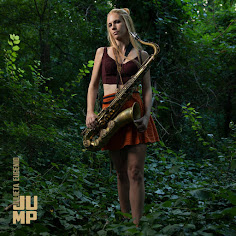
Photo: Anna Yatskevich
Tenor saxophonist and composer Julieta Eugenio was born, raised, and educated in Argentina.  After graduating from the Manuel de Falla Conservatory, Ms. Eugenio came to the United States in 2013 to study at the Aaron Copland Conservatory at Queens College in New York City where she earned her Master's degree. She's gone on to play with pianists David Kikoski and Johnny O'Neal, drummer Leon Parker, with the SIJ Trio, and the Eyal Viner Big Band.  Along the way, the saxophonist met bassist Matt Dwonszyk who introduced her to drummer Jonathan Barber––the rhythm section are both from Hartford, CT.  In the beginning of the pandemic, the bassist invited Ms. Eugenio to come to the Hartford to get away from the big city. They hiked the hills and parks around Connecticut's capitol city and, in the evenings, jammed with the drummer, giving birth to her Trio and her debut album. 

"JUMP" (Greenleaf Music) is the album. The hour-long program features eight originals from the leader plus two standards "Flamingo" (composed by Ted Grouya and Edmund Aderson, first recorded by Herb Jeffries and the Duke Ellington Orchestra in December of 1940) and "Crazy He Calls Me" (penned by Carl Sigman and Bob Russell in 1949, recored by numerous people including Billie Holiday and Dinah Washington).  Ms. Eugenio is well-served by her rhythm section––both Dwonszyk and Barber are totally involved in the music, pushing, prodding, being both melodic and propulsive. It's notable from the opening seconds of the first track as both the well-constructed melody and the percussive attack stand out. The bassist's counterpoint is on-point while the drummer dances with glee as Ms. Eugenio's solo unfolds.  


There are moments when this Trio will remind the listener of the work that Sonny Rollins did in the 1950s with bassist Wilbur Ware and drummers Elvin Jones or Pete LaRoca ("A Night at The Village Vanguard")––check out the ballad "For You" or the fun take of the classic "Flamingo" (the rhythm section is a true treat!)  Pieces such as the high-powered "La Jungla" sound more modern (pay attention to the depth of Ms. Eugenio's tone) or the slinky drive of "Another Bliss" (Barber's drum work stands out for his inventive support while Dwonszyk's bass work sings under the sax solo.) The bassist's "fat" tone and buoyant lines lead Ms. Eugenio in on "Crazy..." and the two stroll through the piece together without Barber. The bass solo is a particular treat, especially for its musicality.  

"JUMP" is a splendid debut for Julieta Eugenio laying the groundwork for a career that one hopes is filled with delightful music and interactions.  She's absorbed her lessons and now needs to hit the road which should make her music stronger and help her make her musical voice more singular. Yet, what a great start!

For more information, go to www.julieta-eugenio.com. To hear more of "JUMP" and to purchase the album, go to https://julietaeugenio.bandcamp.com/

Hear "La Jungla": 


A new album from vocalist Somi is always a welcome audio adventure.  Born in Illinois to parents who emigrated to the US from Rwanda and Uganda, Somi first came to critical notice with her 2007 debut "Red Soil In My Eyes", an album which featured her fascinating voice with Afro-Beat, Afro-Pop, and more, reminding some reviewers of the music of Kate Bush and Peter Gabriel.  Somi spend 18 months in Nigeria which led to 2014's "The Lagos Music Salon", an album that still sounds fresh with its blend of jazz, r'n'b, African rhythms, and spoken-word intervals. Social commentary, Hip Hop, funk, and American pop music entered her music with the 2017 release of "Petite Afrique" while 2020's "Holy Room: Live at Alte Oper with the Frankfurt Radio Big Band" stands out for her ability to adapt all her musical influences with a large ensemble. 

March 4, 2022, was the 90th birth anniversary of the international star Miriam Makeba and also the day that Somi  released "Zenzile" (Salon Africana), her tribute to the great singer. The recording takes its name from Ms. Makeba's first name (pronounced "Zen-zee-lay") and its material is taken from the varied segments of her career.  Pieces such as "Pata Pata" were huge hits yet Somi's version uses the song as a vehicle for a recorded interview with Ms. Makeba with only a string quartet for support.  The vocal portion features four singers plus Somi and is filled with sounds and silence. Ms. Makeba first recorded "Mbombela (Train Song)" with Harry Belafonte in 1965 in New York City––Somi's danceable take features the voice choir plus a funky band (check out the delightful organ work of Cobhams Asuquo and guitar of Herve Samb).  Angelique Kidjo joins the leader on "JIKELE MAWENI (The Retreat Song)" as do more voices, a horn section, and a lively rhythm section.

There are so many highlights (and no weak moments) in the 17-song program. Click below to hear Somi with Ladysmith Black Mambazo in a faithful recreation of "Nonqonqo", also from the 1965 album Ms. Makeba made with Belafonte. Gregory Porter joins the vocalist on "Strawberries", a song from Ms. Makeba's 1962 album "The Many Voices of Miriam Makeba"––on the modern version, the voices ride atop a piano-bass-drums-percussion quartet plus the the occasional female chorus. The music is so sensual, the lyrics evocative of a warm summer night.  Somi's magnificent, emotionally-rich, vocal on "Khuluma" is stunning. She's joined by South African vocalist Msaki; their voices wind around each other plus there is a power in their that makes one sit up and pay attention.

"Zenzile" closes with "Mabhongo", a song from Ms. Makeba's 1988 album "Sangoma" (a return to recording for the singer). With choruses of male and female voices for support plus the plaintive piano of Ndudozo Mahkathnini, the song opens like a prayer and, as Somi and the pianist step to the fore, the music displays a gentle beauty that touches the heart and the soul.

"Zenzile" is a stunning accomplishment as it brings the music of and the person who was Miriam Makeba to life once again. The messages in her songs are timeless and Somi makes sure you hear the rhythms and word––you need to hear both, you need to take the messages inside and don't let it go. In this time of forced migrations and totalitarian attacks, there is hope, sadness, love, joy, and positivity in this music.  Pay attention!

For more information, go to www.somimusic.com.  

Up in the right-hand corner of this (and all) columns is a link to "The Jazz Session"––in Episode #589, host Nicky Schrire converses with Somi and you will learn a lot about the album as well as the production of "Dreaming Zenzile" that Somi created and premiered before the pandemic (2019) that is scheduled to open Off-Broadway later this year.

Here's Somi with Ladysmith Black Mambazo on "Nonqonqo":


Personnel:

Special guests include Ladysmith Black Mambazo, Angelique Kidjo, Gregory Porter, Seun Kuti, Thandsiwa Maswai, Msaki, Nduduzo Mhakathini

Herve Samb (guitars)

Nate Smith (drums)

Michael Olatuja (bass)

Keith Witty (bass, percussion)

Toru Dodo (piano)

Mino Cinelu (percussion)

Cobhams Asuquo (organ, upright piano, percussion)

Phindi Wilson (vocal chorus)

Bongi Duma (vocal chorus)

Nhalanhla Ngobeni (vocal chorus)

Vuyo Sotashe (vocal chorus)

Lakecia Benjamin (alto saxophone)

Jeremy Pelt (trumpet)

Myron Walden (soprano saxophone & tenor saxophone)

Mazz Swift (violin 1)

Juliette Jones (violin 2)

Jessica Troy (viola)

Marika Hughes (cello)


Tuesday, February 8, 2022

Short, Sweet, & Hot!

When I first started collecting 45 rpm "singles" back in the 1960s, every once in a while, one of my favorite artists would drop a four-song 45. Those packages were extremely popular in Great Britain. Nowadays, the "industry" still insists calling a CD with 3, 4. or 5 cuts, an "EP" –– go figure!

Photo: David Crow
Saxophonist, composer, and educator Rudresh Mahanthappa first organized the Hero Trio with bassist François Moutin and drummer Rudy Royston in 2019 with their debut CD released in June of 2020 by Whirlwind Recordings. Needless to say, the pandemic put an end to the Trio's tour plan for that year and, as it turns out, the next year as well.  Undeterred, Mahanthappa brought the rhythm section into the studio in November of 2021 and they laid the tracks for their next release, an EP titled "Animal Crossing". Like the debut, the material comes from myriad sources –– in this instance, the four tracks include pieces by Pat Metheny, Chuck Mangione, George Michael, and Kazumi Totaka. Who is Kazumi Tokata?  He's the composer of the recording's title track which is the theme for a popular video game that the leader's young children have played a lot since the beginning of the pandemic. 

If you know the band's debut recording, you understand this is a band that loves to hit hard, loves to push each other, and to have great fun. The title track leaps out of the speakers but, to the song's credit and the band's sensitivities, they don't mess with the "sweet" video game melody.  When they get to Mahanthappa's solo, the music takes off. Moutin's powerful and melodic bass lines, often in counterpoint to the saxophonist's phrases, plus Royston's frenetic dancing all around his kit is a real treat. The trio tears into Metheny's "Missouri Uncompromised" (from the guitarist's debut ECM album "Bright Size Life") –– they don't ignore the handsome melody yet it's such a treat to hear what the rhythm section does throughout the piece.  Mangione's "Give It All You Got" (from the flugelhornist's 1980 "Fun and Games" Lp), is rearranged from its original "funky" take and has more of a ballad feel.  Excellent solos from the leader and the bassist stand out.  

Photo: David Crow
The final track is a rapid-fire, wild ride, through George Michael's "Faith".  While Mahanthappa plays the melody, listen below to what Moutin and Royston are doing.  The bassist plays very quickly yet maintains his melodic counterpoint while Royston brings the "thunder".  The shortest piece of the four at 4:29, the music still amazes for the trio's ability to be so powerful and still respect the melody.

"Animal Crossing", the EP, is a blast.  The Rudresh Mahanthappa Hero Trio certainly can fly but also knows how to glide.  When the world reopens, make sure to go see them (they're touring in Europe in March).  Their music just might save the world!

For more information, go to www.rudreshm.com/.  To listen to and to purchase the music, go to https://rudreshmahanthappa-whirlwind.bandcamp.com/album/animal-crossing-ep

Have some "Faith":

Saturday, February 5, 2022

Trios of Threes plus A Four (Feb '22)


Saxophonist, composer, and educator Adam Larson, born in Normal, IL, now lives and works in Kansas City at the University of Missouri/KC.  After graduating from the Manhattan School of Music (Bachelor's and Master's degrees), he stayed in New York City leading his own ensembles and recording five albums for labels such as Inner Circle Music, Ropeadope Records, and on his own label. They showed him as a fine soloist and a good writer –– he also played a slew of gigs as a sideman with various leaders.

Larson makes his debut on Outside In Music leading a trio that features bassist Clark Sommers and drummer Dana Hall.  "With Love From Chicago" contains 10 pieces, three by the leader, four by bassist Sommers, and one each by Thelonious Monk, Chicago-based tenor saxophonist John Wojciechowski, and J. Russel Robinson.  What stands on initial listenings is how "tight" and "loose" the group interactions are, how delightfully melodic bassist Sommers can be, how powerful drummer Hall (plus he can swing mightily), and how comfortable the leader is being challenged by his rhythm section.  The album opens with Larson's "Angolan Babysitter" –– Hall's polyrhythmic attack pushes the saxophonist to play with abandon but make sure to listen to how Sommers bounces his melodic phrases off the drums.  Sommers' bluesy "The Time You Forgot You Knew" has a handsome melody with strong counterpoint from the composer all underpinned by the drummer's headlong push forward. 

The Trio does a sprightly reading of Monk's "We See", playing with the time signature, breaking up the melody, playing with the piece ways that the composer would probably enjoy. J. Russel Robinson's "Portrait of Jenny" (a hit for the Nat "King" Cole Orchestra in 1949) is an oft-recorded standard; here, the Trio plays the tune oh-so-slowly with Hall's brushes and Sommers melodic bass lines supporting the heart-felt performance of the melody.  

"With Love From Chicago" is one of those musical experiences that would sound great in a club but, thanks to engineer Ken Christianson at Pro Musica in Chicago, the music leaps out of the speakers and into the room. At times under headphones, it feels like you're in the midst of the recording studio between the drums and bass –– their music hits you in the chest.  The saxophonist responds by absorbing the "hit" and pouring its intensity into his solo forays. This is the first trio recording Adam Larson has released; his exciting thematic explorations and his powerful musicianship plus the joyful, intense, musical, rhythmical playing of Clark Sommers and Dana Hall makes one hope this is the first of many collaborations!

For more information, go to www.adamlarsonjazz.com.  

Hear the opening track:


Photo: Matt Baker
Pianist, composer, and educator Pete Malinverni, a native of Niagara Falls, New York, moved southeast to NYC in the 1980s where he is the midst of a long and very busy career. He has played alongside the last drummer Mel Lewis, saxophonists Joe Lovano and  Steve Wilson, and vocalist Karen Allyson (among others).  The pianist has issued 16 albums as a leader plus appeared on many more. He's also plays in religious settings at the Devoe Street Baptist Church in Brooklyn (Minister of Music for eighteen years), the Westchester Reform Temple in Scarsdale, NY (Pianist and Conductor) and the Pound Ridge Community Church (Director of Music. He is now the Chair of Jazz Studies at Purchase College/ State University of New York.

The pianist's latest album is "On The Town –– Pete Malinverni Plays the Music of Leonard Bernstein" (Planet Arts Recordings) and it's a delight from start to finish.  Malinverni first met the Maestro when the pianist had a solo gig at Bradley's in New York City and Bernstein (1918-90) walked in. Malinverni started playing the composer's "Lucky To Be Me" from the 194e4 musical "On The Town".  Bernstein was thrilled and struck up a conversation which tickled the younger musician so much. Still, it took nearly 30 years for Malinverni to play a program dedicated to the composer's music.  he did just that in 2018 as part of Bernstein's Centennial Birthday celebration for a program that featured a larger ensemble with four reeds.  For "On The Town", the pianist is playing with one of his closest associates, bassist Ugonna Okegwo, as well as drummer Jeff Hamilton

Photo: Matt Baker
The 10-song program features nine Bernstein piece plus Malinverni's "A Night on The Town" that closes the album.  The pianist picked songs associated with the composer's as well his own adapted home, New York City. Therefore, it should come as no surprise that the album's opener is "New York, New York" from the joyous "On The Town".  Okegwo and Hamilton swing with a purpose while Malinverni romps through the melody like a pair of sailors on shore leave.  There's a lovely version of "Somewhere" which, after the handsome solo piano opening, takes on a bluesy persona.  The happy-go-lucky feel of "I Feel Pretty" not only highlights the melody but also plays up the girlish enthusiasm of Maria who sings the tune in "West Side Story". Note the fine contrapuntal bass lines and the delightful swing of the drums.  Hamilton states the melody (and some) in the opening moments of "Cool" and then the trio romps forward.  There's a feel of Paul Desmond's feel of "Take Five" throughout the trio's rendition of "Some Other Time" (from "On The Town") and more blues in that 1944 show's heartfelt ballad "Lonely Town". 

Throughout the album, one gets to bask in the glow of the sounds from pianist Pete Malinverni. Even when creating a solo, he creates melodic variations on the music of Leonard Bernstein.  The pianist's original at the end of the program may remind some listener of the trio music of Herbie Nichols but you also traces of the person Malinverni is celebrating.  "On The Town" will make you tap your feet, smile widely, and even sing along and that's very "cool".

For more information, go to www.petemalinverni.com.  

Hear "New York, New York":


Bassist and composer Luke Stewart, who splits his time between Washington, D.C. and New York City, is one of the busiest creative musicians currently catching the attention of critics and listeners around the US and the world. He leads various groups including the Exposure Quintet and is an integral member of Invisible Entanglements as well as Heroes Are Gang Leaders plus he's worked with saxophonist James Brandon Lewis, Moor Mother, and guitarist Anthony Pirog.  His latest project, Luke Stewart's Silt Trio, features drummer Chad Taylor and tenor saxophonist Brian Settles.  

The trio's debut album, "The Bottom" (Cuneiform Records), may remind some of the work saxophonist/ flutist Henry Threadgill created with bassist Fred Hopkins and drummer Steve McCall in trio Air.  Not so much in the playing styles of the musicians but in how the trio approaches the music as a three-way conversation, how melodies arise from rhythmic patterns, and how solos develop from inside the music. The opening "Reminiscence" is hypnotic minimalism at its sweetest; built off of Taylor's repetitive pattern played on the mbira, Stewart's bass lines bounce off that pattern while Settles enters playing a melody of long tones in the higher (alto) range of his tenor.  Other pieces develop slowly, especially in the cases of "Angles" and "Circles", both group improvisation. The former tune, the longest on the program at 11:39, rises up out of a short melodic saxophone phrase which gives way to Stewart's bowed bass alongside Taylor's chattering drum. The piece moves slowly forward until it finally falls into a rhythm with less than 90 seconds to go.  "Circles" is just the opposite; a fiery romp that does not let up for a second until right it comes to a close at 3:04.

Taylor and Stewart lock in on "Roots", creating hypnotic and powerful waves of rhythm for Settles to ride atop. The driving rhythm is infectious but never overwhelms the more sublime tenor sax sounds. Yet, the performance keeps driving forward even as the music slows to its finish.

"The Bottom" closes on a bluesy "Dream House". its easy-rolling tempo created by Taylor's tap-dancing brushes.  Settles initially plays in a whimsical style (apropos of the rhythm) but opens up as his solo unwinds. Pay attention to Stewart's powerful contrapuntal lines which feed off both the sax and drums as well as his melodic solo supported by the gentle shuffling drums.  

With the creation of his Silt Trio and the release of "The Bottom", bassist, composer, and conceptualist Luke Stewart shows yet another side to his ever-maturing explorations into Black Creative Music.  He approached the album as he would a live set; you should as well. Sit back, listen deeply, and enjoy the ride.

For more information, go to https://thelukestewart.com/About-1.  To hear more and to purchase the album, go to https://cuneiformrecords.bandcamp.com/album/the-bottom

Here's a taste of "Roots":


Drummer Taru Alexander is the son of tenor saxophonist Roland Alexander (1935-2006) who, thanks to his father, has been playing music since he was three years old. The younger Alexander had a slew of mentors, studying with drummers such as Walter Perkins and Andre Strobert at the age of nine. He joined his father's band at 13, studied at the La Guardia Music & Art High School with Justin DiCioccio (later of the Manhattan School of Music), and made his recording debut on Soul Note Records (at the age of 16) with the Fred Ho Afro-Asian Ensemble.  The drummer went on to play with pianist Rodney Kendrick, trumpeter Roy Hargrove, saxophonists Michael Marcus, Salim Washington, and Kenny Garrett, and many more.

"Echoes of the Masters" (Sunnyside Records) looks to be Taru Alexander's second recording as a leader. He's organized a top-notch quartet including James Hurt (piano), Antoine Roney (tenor saxophone), Rahsaan Carter (acoustic bass), and, on one track, vocalist Hanka G.  Ms. G (who leads a quartet that features Alexander on drums) provides lyrics and her powerful voice to the Thelonious Monk/ Coleman Hawkins classic "I Mean You"; the band builds off her energetic style, pushed by the leader to create short, sweet, and succinct solos. Not surprisingly, there are two pieces by the senior Alexander including the exuberant "Change Up" that opens the six-song program and "Kojo Time" whose opening notes sound like "reveille".  The latter tune features a powerful statement from Roney pushed by the thunderous drums and Carter's splendid dancing bass lines. Hurt follows, riding the waves from beneath him to create a stunning solo.  The bassist and then the drummer solo next –– the piece never loses its steam as both players dig deeply.

Roney shines again on the quartet's dancing take of McCoy Tyner's "Peresina", the polyrhythmic approach of the leader really pushing the soloist.  Alexander is quite active but never intrusive reminding this listener of Billy Higgins, Jeff "Tain" Watts, and Rudy Royston.  His understanding of dynamic tension shines throughout the album but none more exemplary than on the high octane drive of "Deception". From the pen of bassist Buster Williams, the rhythm section sets a furious pace and both Roney and Hurt respond positively.  

Wayne Shorter's "Pinocchio" closes the program. First recorded by Miles Davis for his "Nefertiti" album, pianist Hurt opens the track with a short, introspective, solo before the rest of the band jumps in with a pace akin to "Deception".  Pay close attention to how Alexander converses with the soloists, egging them onward with his powerful, enthusiastic, percussion.

Recorded in July of 2020 (in the first full wave of the pandemic), "Echoes of the Masters" is a brave musical shout-out to the healing power of music. While the program times out at under 36 minutes, the results are quite satisfying and makes one hope that this is the beginning of a fruitful period for drummer/ bandleader Taru Alexander.

For more information, go to www.tarualexander.com.  You can listen to and purchase the album by going to https://sunnysiderecords.bandcamp.com/album/echoes-of-the-masters

Here's "Deception" (turn it up loud!):

Friday, March 26, 2021

The Joys of Spring (Part 1)

Lots and lots of new music to absorb and enjoy. This is the beginning of a series of short reviews of new release.

Photo: Volha Talatynik
Organist, composer, pianist, and arranger Brian Charette has kept himself busy during the pandemic making videos of his songs surrounded by keyboards in his apartment. When I spoke to him last year, he was waiting for SteepleChase Records to release his third recording with his "reeds" sextet.  "Power From the Air" has just been issued and it's well worth the wait.  Charette plays organ throughout, composed eight of the 10 tracks, is joined by drummer Brian Fishler in the rhythm section; the "Air" comes from Ital Kriss (flute), Mike DiRubbo (alto saxophone), Karel Ruzicka (bass clarinet), and Kenny Brooks (tenor saxophone).

If you are familiar with the organist's music, you know that he likes to "swing" but also can be very funky.  His piece "As If To Say" rolls forward on a burbling organ bass line before dropping into a hard-bop free-for-all. The saxes and flute play a trance-like repetitive line while the organ introduces the melody.  The solos are short but powerful.  That's followed by Earle Hagen's classic "Harlem Nocturne" –– dig the slight dissonance in the reeds arrangement. The four-piece section really dig into the bluesiness of the piece yet also take a slight "free" turn before Charette's restating of the theme. The other "standard" is Ray Noble's "Cherokee" which jumps delightfully with the reeds playing a slightly altered arrangement of the main theme.  The leader takes a splendid joyride through the changes with Fishler's dancing drums as his co-pilot. Ruzicka dances through his solo followed by DiRubbo, Brooks, and Kriss – they make time to "trade 4s" with Fishler.  

Photo: Volha Talatnick
The melody for the funky and soulful "Want" is shared by the reeds before the drummer gets "down and dirty for the organ solo.  Back to the original rhythm for Kriss's delightful flute solo, DiRubbo's funky spotlight, Brooks short but pithy solo that leads into Ruzicka's tour-de-force that srars low in the bass clarinet's range and rises throughout. The album closes with "Low Tide", the only track other than "Harlem Nocturne" that has a ballad feel. There's a lot going on in this piece and the music builds in intensity throughout right up to the drums-fueled ending.

"Power In The Air" is yet another feather in the chapeau of Brian Charette.  The performances bristle with energy and creativity, the organ work is strong, and the drumming contains an energetic snap.  Give this album several close listens and it will work its way into your soul and your feet.  

For more information, go to www.briancharette.com.

Here's the ensemble live in 2019 from Dizzy's @ Lincoln Center in February 2019:


The trio of Kelly Jefferson (tenor and soprano saxophones), Artie Roth (acoustic bass), and Ernesto Cervini (drums, percussion, bass clarinet), a.k.a. TuneTown, are three of the busiest and creative musicians on the contemporary Canadian scene.  Together since 2016, the trio released its debut in late Summer of 2019.  That recording displayed myriad influences as well as the trio's delight in creating its own sound.  By the time that album was issued, they had already recorded their follow-up. 


"Entering Utopia" (Three Pine Records) follows a similar format with originals from both Cervini and Roth, several group improvisations, and two standards.  All three musicians are leaders, all are excellent musicians and improvisors, so this music breathes with excitement and adventure.  The opener "Hello, Today" opens with Cervini hand-held percussion followed by a bluesy theme from Jefferson.  When Roth joins, the drummer turns to the drums set, kicking his bandmates forward. Everybody solos but the last half of the track show hows closely the musicians listen to each other. Cervini's "Layla Tov" ("Good Morning" or "Good Night" in Hebrew) opens with the bass and tenor sax holding one note while Cervini plays a melody on glockenspiel.  The bassist introduces the main melody which Jefferson then picks up on soprano. Roth's solo is quite melodic with just brushes-on-snare for accompaniment.  The soprano solo that follows is emotionally rich, melodic, and heartfelt.  Interspersed through the piece are the sounds of the drummer's family at the beach (the baby's infectious laughter is contagious).

Charlie Parker's "Cheryl" opens with a slow bass solo but soon the trio step out with Jefferson's tenor rising above the rampaging rhythm section.  Cervini's "Billyish" is a good companion piece, it's boppish head leading to a thundering drum solo before Jefferson's tenor steps out. Roth's thick bass sound gives the other two players a strong foundation to get creative.  "Flood, Deluge" is the longest of four group improvisations on the album –– Roth's droning then frantic arco bass sounds spark his companions to create their own paths in the song's maze-like construction. The bassist's "Memories Remain" is a lovely ballad during which the tenor sax and bass intertwine the melody through the opening several minutes.  Roth's highly melodic bass solo is supported by quiet brushes work and Jefferson's breathy tenor notes.  The bass counterpoint behind Jefferson's lovely solo is stunning (and pay attention to how the drummer also gets in on the melody.

Roth's short (30 seconds) multi-tracked bass feature, titled "Looking Glass", serves as an introduction to "Blue Gardenia", the album's final track.  Composed in 1953 by Lester Lee and Bob Russell for the Fritz Lang movie of the same name, the piece was performed by Nat "King" Cole. Several years later, Dinah Washington had a big hit with the song, so big that he became one of her "signature songs" through to the end of her career (1963).  Cervini plays the melody on bass clarinet with Roth's strummed bass as the only accompaniment until Jefferson enters on tenor to play harmony and counterpoint. The two reeds wind around each other throughout with Roth creating a comfortable cushion for their tuneful interactions.

"Entering Utopia" is a delightful musical vacation trip. Our three tour guides play with fervor, emotion, and plenty of joy plus the sound of the performances is powerful, clean, and clear.  TuneTown is an apropos name for this fine trio!

For more information, go to tunetownjazz.com.  To hear more and to purchase the album, go to. https://tunetownjazz.bandcamp.com/album/entering-utopia

Here's the trio performing "Billyish":


Pianist and composer Paul Bedal is another one of the fascinating artists that reside in Chicago.  After earning his undergraduate degree in Studio Music and Jazz Performance from the University of Miami, he returned to the Windy City to earn his Master's Degree in Film Composition form Columbia College Chicago.  He's co-led a band with saxophonist Caroline Davis, played and recorded with trumpeter Paul Dietrich as well as bassist Matt Ulery. The pianist issued his debut CD, "Chatter", in 2014, a quintet date featuring Ms. Davis and bassist Ulery. Bedal has since signed with the Chicago label BACE Records and issued another quintet album (2018's "Mirrors") plus his first album (2019's "In Reverse") with the quartet of Ulery, alto saxophonist Nick Mazzarella and drummer Charles Rumback

The same lineup returned to the studio in January of 2020 to create Bedal's new recording on BACE, "Cerulean Stars."  The pianist certainly created this music for these musicians with each of the seven compositions playing to their strength.  Both Rumback and Mazzarella have been on the Chicago scene for over a decade and are often heard in "freer" music settings.  Ulery, who is known for his excellent writing for large and small ensembles, is a "foundational" bassist, more concerned with keeping the beat steady and creating a solid bottom. Still, on the opening track "Iris", his counterpoint during the solos is a highlight. The saxophonist leans more in a melodic direction throughout the album yet there are moments, such as during his solo on "Panorama", when he rides the powerful drums and moves away from the melody. That melody, by the way, is quite well-drawn, giving the pianist a great base to create an impressive solo.  Speaking of impressive melodies, the title track comes in on a dancing alto sax song (carries a trace of Randy Newman) then moves forward into Mazzarella's solo with a bounce in rhythm section.  Pay attention to the leader's intelligent fills and short runs underneath then hear how they inform his enchanting solo.  

I have been listening to this music as well as Bedal's previous quartet album on my daily walks. There are moments when the music reminds me of Herbie Hancock's mid-60s Blue Note Lps (post "Watermelon Man") –– you can hear the resemblance in the flow of the material, in how the members of the quartet interact, and the movement of the rhythm section.  As a soloist, Bedal leans more towards Keith Jarrett, Fred Hersch, and occasionally, Bill Evans.  The combination of melody and rhythm on pieces such as "Summer Fade" and "Citrine" offers so much possibility that one would love to hear the band play live. 

"Cerulean Stars" closes with "Free" –– the piece begins slowly and solemnly, in rubato, picks up somewhat in intensity during the sax solo but the rippling piano figure lead the listener to a soft close. This album is a joy from start to finish –– Paul Bedal is a mature composer with his ears attuned to his musicians and not to what's popular or hip. Not to say this music is "square"; no, instead from the opening moments, these songs enter the long and, hopefully, timeless river of Creative American Music, music that is always loving back and forward but never static.

For more information, go to www.paulbedal.com.  To hear more and to purchase Paul Bedal's music, go to https://paulbedal.bandcamp.com/album/cerulean-stars.  

Here's a video of the title track:


Thursday, November 26, 2020

Looking Back, Thinking Forward

 I usually use this space on Thanksgiving Day to write about the state of the world and how music can help us through hard times, giving us hope for a better world.  This year, I am going to forgo my editorializing––chances are good you're talking about the world at your dinner table and/or on ZOOM calls with the family.  You don't need me to go through that.  I just wish you the best and hope that this is a time of good health and quiet reflection.

In the meantime, this month brings a number of fascinating "historical" albums, some with music not released before by Sonny Rollins, Bill Evans Trio 1968, and Wolfgang Lackerschmid/ Chet Baker Quintet with Larry Coryell, Buster Williams, and Tony Williams––let us take a look.

Not surprisingly, there are two new releases from those inquisitive and quite thorough folks at Resonance Records (both vinyl packages will be available on Record Store Day/ Black Friday November 27).  The story behind "Sonny Rollins: Rollins In Holland" is smartly recounted in the 100-page booklet included in the two-CD and three-Lp Vinyl packages which include interviews with the three musicians who create the musical magic. There are great interviews with the person who uncovered the Dutch radio recordings that are the first four tracks on the program. There are also two tracks from a gig at the Go-Go Club in Loosdrecht in The Netherlands on May 5, 1967 (the same day that the radio program was recorded at lunch time).  The largest chunk of playing time belongs to five tracks recorded two days earlier in Arnheim, The Netherlands.

Mr. Rollins is in fine form throughout although he seems reined on the 30-minute radio program. He gives equal time to his rhythm section––bassist Ruud Jacobs and drummer Han Bennink––none of the four tracks are longer than seven minutes. Both of the sidemen were considered the finest players on their instruments in the country and were thrilled to be working with the saxophone legend. Bennink, 25 years old at the time, had already joined the Instant Composers Pool but had absorbed the playing of Kenny Clarke and Max Roach before falling under the spell of Sunny Murray.  The drummer, along with the 29-year old Jacobs, had worked together as a unit numerous backing American musicians such as Wes Montgomery, Johnny Griffin, and Ben Webster. Both loved the records that Mr. Rollins had made in the 1950s, especially the trio sessions for Blue Note and Riverside Records. 

Photo courtesy of Michael Maggid
Fans of this recordings, especially "Freedom Suite" and "Live at The Village Vanguard", will love the Arnheim tracks. The sound under headphones is quite good (kudos go to label head George Klabin and Fran Gala for their splendid sound restoration) as you can really hear riding the powerful work on the rhythm section on pieces such as "Four" and "Three Little Words".  There are moments where the sound fades but the trio never does. Mr. Rollins, two months away from losing his good friend John Coltrane and a year away from a six-year recording sabbatical, sounds as if he's having great fun, especially on the live cuts. Jacobs, whose 29th birthday fell on the first day of recording, and Bennink plays with abandon, which is just what Dr. Rollins hoped for. .

There have been bootleg recordings from these live dates circulating around the world for over five decades.  Zev Feldman and Resonance Records have put together a splendid package with plenty of photographs from the days was in The Netherlands plus the interviews are a true pleasure to read.  And, much of this music is sublime. "Live In Holland" adds yet another shining example of how great Sonny Rollins sounds in concert––have fun counting all the quotes from other songs he throws in, especially in the last 10 minutes of "Four". 


Check out this overview from Resonance:


Up until 2016, the only recorded instance of the Bill Evans Trio with Eddie Gomez (bass) and Jack DeJohnette (drums) was the GRAMMY Award-winning Verve Lp "Bill Evans at the Montreux Jazz Festival."  Four years ago, Resonance Records released "Some Other Time: The Lost Session from the Black Forest", a studio album the Trio recorded the same week as their Montreux Festival appearance. One year later, the label released "Another Time: The Hilversum Concert", a live concert recorded in the studios of the Netherlands Radio Union (NRU) a week after Montreux.  Both albums showed the Trio at the height of their creative abilities. The group then spent a month in residence at Ronnie Scott's in London.  DeJohnette told Zev Feldman at Resonance Records he had recordings he had made at the time but the sound was fair at best.  Feldman initially passed on the tapes, hoping to find other enthusiasts who may have taped a show or two.

The story of how the drummer and the label executive discovered a glitch in the playback, fixed it, and the magic of the music was revealed is told in the 44-page booklet that accompanies "Bill Evans: Live at Ronnie Scott's".  The 2-CD, 2-Lp, arrives just in time for Record Store Day November 27 and if this 20-song program (in the form of two sets) doesn't warm your tired bones, nothing will. The band sounds so together, so relaxed, and so ready to stretch out that their musicality shines through.  There are few surprises in the choice of repertoire but pieces such as "Alfie", "Waltz for Debby", the two versions of "Emily" (from the pen of Johnny Mandel), "Someday My Prince Will Come", and "'Round Midnight" sparkle with delightful solos and interactions, smart harmonies and delicate musicianship.  The one rarity is "For Heaven's Sake", a song composed by Don Meyers, Elise Bretton and Sherman Edwards for the Claude Thornhill Orchestra in 1948 but made famous by Billie Holiday in 1958 on her "Lady In Satin" album (the last released in her lifetime).  Evans first recorded the piece on "Evans 64" with bassist Gary Peacock and drummer Paul Motian and once again in December 1968 at The Village Vanguard with DeJohnette's replacement Marty Morell (released on "The Secret Sessions 1966-1975" assembled from tapes recorded without permission by Evans super-fan Mike Harris.  

To my ears, "Live at Ronnie Scott's" is the best representation of the creative work of bassist Eddie Gomez of the now-four albums from this Trio. His amazing melodic sense stands out and you can really hear how he inspires the pianist and drummer.  Yes, I know that there seems to be several thousand Bill Evans albums on the market but you do not need to be a completist to enjoy "Bill Evans: Live at Ronnie Scott's"; you need to love music that is emotional and melodically rich with many moments of rhythmic swing.  Thanks go to Jack DeJohnette for preserving the tapes and Resonance Records for persevering to bring this splendid music to light!


Here's the mini-documentary from Resonance featuring Zev Feldman, Brian Priestley, Jack DeJohnette (interviewed by Chick Corea), and Chevy Chase: 


Photo: Hans Kumpf
Vibraphonist Wolfgang Lackerschmid and trumpeter/ vocalist Chet Baker first began playing in the late 1970s.  They recorded a duo album for the vibraphonist's own Sandra label and, in the aftermath, Baker invited Lackerschmid to be a member of the trumpeter's touring group.  Guitarist Larry Coryell saw the duo play at a Festival in Austria (where Coryell was playing with saxophonist Sonny Rollins) and suggested they play together.  Baker's agent liked the idea and floated the idea of adding a rhythm section which turned out to be the brothers in name only, bassist Buster Williams and drummer Tony Williams

The five musicians went into a Stuttgart, Germany, studio and created "Quintet Sessions 1979" to be released on Sandra.  Thanks to D.O.T. Time Records, the album has a new life in the 21st Century.  The six pieces (the seventh and eighth tracks are a rehearsal and the other an alternate take) include two composed by the guitarist, one each from the Williamses and Lackersachmid plus a lovely take of Jimmy Van Heusen's "Here's That Rainy Day."  Everyone respects Baker's limited technique; still he rises to the occasion throughout with a handsome tone and his fine sense of melody. He only sings on one track, a sweet wordless vocal on Lackerschmid's "Balzwaltz" (but not on the alternate take).  Bassist Williams stands out in the mix, his melodic solos and intelligent counterpoint meshes well with the rest of the group. Listen to how the bassist wraps his thick notes around the lighter trumpet tones without overwhelming Baker.  

The quintet creates a pleasing swing on Buster William's "Toku Do" with solid solos from Baker, Coryell (who is a stalwart throughout the program), the composer, and strong work from the drum set.  There's a funky feel to the opening of Tony Williams's "Mr. Biko" which then drops into a loping swing. The drummer rarely lets loose but his cymbal work is delightful.  The Caribbean/ French feel of the guitarist's "Rue Gregoire Du Tour" shows the influence of Burt Bacharach; one half-expects Dionne Warwick to step out and vocalize.  Instead, we get melodic solos from Baker, the composer (his trademark blazing solos replaced by a fine melodic sense), Lackerschmid, and the bassist.

"Wolfgang Lackerschmid/ Chet Baker: Quintet Sessions 1979" sounds a bit undercooked at times––perhaps it's the addition of two extra tracks that helps to create that illusion. Yet, there is enough good playing on this album, especially from Buster Williams and Larry Coryell, to recommend that you give it a listen.  You can do just that by going to https://dottimerecords.bandcamp.com/album/quintet-sessions-1979 where you can also get more information and purchase the recording.  

Here's a track to check out while you're reading:


Sunday, June 14, 2020

Many Stories of the Past & Present

Pianist and composer Denny Zeitlin has been playing music all his life and professionally for the better part of six decades.  The 82-year old native of Chicago, IL, has lived on the West Coast since 1964 when he moved to study at University of California/ San Francisco and do his internship – yes, Dr. Zeitlin is also a clinical Professor of Psychiatry and also has a private practice. He's scored movies (the 1978 remake of "Invasion of the Body Snatchers"), developed an interest in synthesizers and electronic music, and, while he does not tour much these days, he's maintained his current trio of Buster Williams (bass) and Matt Wilson (drums) since 2001. When you listen to them play, it's easy to hear why the association has lasted over the years – Dr. Zeitlin is a pianist with great facility, loves melody, and creates long, flowing, solos that are poetic and powerful whereas the rhythm section is just as musical and exploratory as its leader. One just knows they never play a song the same way twice.

"Denny Zeitlin: Live at Mezzrow" (Sunnyside Records) was recorded in May 2019 when the good Doctor was back East, a rare occurrence these days.  The nine-song program stretches out over 72 minutes, a collection of seven standards and two originals, and there's not a dull moment throughout. By this time of his career, one knows what to expect from a Denny Zeitlin performance and album; impeccable musicianship, intelligent choice of repertoire, and the delight of interacting with his fellow musicians.  Even his "electronic" duos with drummer/ percussionist George Marsh have those same qualities.  Mr. Williams and Mr. Wilson both come to these performances armed with their love of melody, joy of improvising, and in creating musical conversations with Dr. Zeitlin that are emotionally rich and musically powerful.

As I wrote above, one knows what to expect from this Trio yet we always listen because these albums are creative music at its best. Denny Zeitlin never cheats the listener, never relies on cliches or drastic rearrangements or deconstructions. His career-long adherence to playing the melody then taking those notes and chords so the audience can hear them grow as he (and, in many cases, his cohorts) explores all facets of the song is what the true fan revels in.  The finest pianists do that. People such as Fred Hersch, Geri Allen, Vijay Iyer, Keith Jarrett on back to Thelonious Monk, Bud Powell, Art Tatum, Fats Waller, and Earl Hines always keep or kept digging throughout each song and each performance.  Sit back, listen, and luxuriate in the splendid "Live at Mezzrow".

For more information, go to www.dennyzeitlin.com. To purchase the album, go to https://dennyzeitlin.bandcamp.com/album/live-at-mezzrow.

Here's a piece from the pen of Billy Strayhorn:


Photo: Heather Sten
Vocalist and composer Sara Serpa creates music that is intimate, personal, and exploratory, reaching into the listener's heart and mind to create a connection.  Her partnership with pianist Ran Blake has been an ongoing investigation of standards (with a mix of improvisatory magic) while her work with husband André Matos (guitar) has been a splendid mix of folk material and often gentle sonic explorations.  Ms. Serpa often uses her voice as another instrument in the mix, her wordless vocals evoking emotions that words cannot explain.  One of her more intriguing collaborations is her work with the vocalist quartet Mycale who perform music created by John Zora. She's part of the four-person a capella ensemble (along with Ayelet Rose Gottlieb, Sofia Rei, and Malika Zarra) for its second Tzadik release "Gomory: The Book of Angels Vol. 25" (2015).

For her debut on Biophilia Records, "Recognition", Ms. Serpa created a multi-media presentation based around the family movies her father took when he worked in the Portuguese territory of Angola. The music not only serves as her soundtrack to the silent films – when you purchase the album (see below) you receive a link to the presentation – but also tells the story of European colonialism  in its dying days. Images of planes dropping bombs (open practice runs, one believes), armies marching down the Main thoroughfare with the jarring juxtaposition of Caucasian Generals and Majors leading their troops (nearly all dark-skinned Africans and their cartoon-like white gloves) are manipulated by Ms. Serpa to create a dream-like atmosphere.

Photo: Carlos Ramos
Performing the music is a formidable trio; Zeena Parkins (harp, tuning forks), Mark Turner (tenor saxophone), and David Virelles (piano).  With Ms. Serpa's often over-dubbed wordless vocals, the music holds a mystery all its own. The composition are not in the head-solo-head mode; instead, the quartet creates a mood for each piece. For instance, insistent repeated melodic fragments roil beneath and besides the voices on "Free Labour" giving the piece the feel of a Steve Reich piece. "Beautiful Gardens" uses the words of José Luandino Vieira, an Angolan novelist, from his 1961 novel "A Vida Verdadeira de Domingos Xavier (The Real Life of Domingos Xavier)", with a story line that speaks to the cruelty of the police towards the Black Angolans.  The section that one hears tells about the difference between conditions of the native laborers, the White workers, and the management.  It's not a pretty and the music does not pretend to make it sound better.

"Queen Nzinga" tells quite another story.  The piece, adapted from an excerpt of "Njinga of Angola – Africa's Warrior Queen" (2017), a book by Linda Heywood, celebrates the life of the 17th Century Queen, leader of the Mbundu people, who defied Portuguese rule by opposing slavery throughout her 37-year reign, even leading her people into battle.  After you listen to the story, go back and listen to the brilliant music the trio creates (it's a group improvisation as the other track discussed above), an important role in helping to tell the story.

Add caption
The mixture of the voices on "Absolute Confidence" blends with the crashing piano chords and plucked harp notes while Turner serves as a counterpoint to the singer. There's a classical feel to the intertwine lines from piano, sax, and voice on "Propaganda" and, as the piece moved forward, Virelles steps away and into a solo filled with rippling phrases. The album closes with "Unity and Struggle" with words from from Amílcar Cabral, an agricultural engineer, poet, essayist, and an anti-colonial leader who was assassinated in 1973.  The accompanying music is fascinating as Ms.Serpa creates the melody from reciting Cabral's forceful words. Turner shadows the voice here as well while Ms. Parkins has her own melody line and a short solo.  Turner and Virelles then trade with harpist as the piece and album fade don.

If you are someone who enjoys the voice and music of Sara Serpa, "Recognition" might seem a bit stark and shocking first time through.  Go back, listen to how the voice, the words, the music, all these elements together tell a story of slavery, subjugation, tradition, transition, and more.  Disturbing story and music? Yes. Do artists still need to tell these stories?  Yes.  Do you need to listen? Now more than ever.

For more information, go to www.saraserpa.com.  To purchase the album, go to https://saraserpa.bandcamp.com/album/recognition-2.

Here's one of the fascinating tracks:


Photo: David Crow
Rudresh Mahanthappa, alto saxophonist, composer, and educator, not only possesses great technique but also quite a curious mind. Over the course of his career (now spanning nearly a quarter of a century), he has worked with artists such as Vijay Iyer, Jack DeJohnette, Bunky Green, Steve Lehman, Danilo Pérez,and many others. He's led or co-led numerous sized-ensembles with forays in Carnatic Music, fusion, and through-composed music. He also has a sweet tone, can easily and rapidly move through into his instrument's higher ranges; there are times on his recordings when his saxophone sounds straddle the worlds of jazz and South Indian music.

His latest musical adventure, "Hero Trio" (Whirlwind Recordings), is a loving and often hard-driving tribute to his musical inspirations. With the high-energy rhythm section of bassist François Moutin (bass) and Rudy Royston (drums), Mahanthappa dances, dips, dives, roars, and purrs through a program that differs from anything he's done before – he did not compose any of the music.  Nevertheless, the trio tackle music by Charlie Parker, John Coltrane, Ornette Coleman, Stevie Wonder, Keith Jarrett, Ira Gershwin-Vernon Duke ("I Can't Get Started"), Gene de Paul ("I'll Remember April"), and Johnny Cash.  Yes, Johnny Cash! The Trio dances through "Ring of Fire" (a tune that June Carter Cash and Merle Kilgore and was first recorded by June's sister Anita in 1962 and was a big hit for June's husband Johnny the following year), paying tribute to the original tempo in the beginning and continually toy with it throughout.  Moutin never loses the groove and Mahanthappa dances atop it with glee.

Photo: David Crow
There is plenty of joy in this music. From the rumbling volcano of Parker's "Red Cross" (listen below) to the trio's dancing take of Bird's "Barbados" which is paired with Coltrane's "26-2" to Jarrett's romping "The Windup" (notice that Moutin takes the role of the composer's left hand), one can just imagine the energy in the stdio as the band played. "...April" is initially deconstructed then the alto and bass dive into the melody as Royston creates a percussive storm beneath them. They move back-and-forth to the melody until Mahanthappa uncorks a dazzling solo building off the energy of the drummer.

Photo: David Crow
The music slows down for a pair of tracks,  the down-tempo version of "I Can't Get Started" and Coleman's "Sadness."  Moutin's excellent bow work is displayed on the latter as he and the leader share the melody and improvisation. The piece is performed rubato therefore Royston's role is to dramatically "color" around his colleagues.  On the former, the saxophonist introduces the handsome Vernon Duke melody but note how the tempo is parsed, a martial beat that evokes a darker quality to the piece.  The album closes with a rousing take of Parker's "Dewey Square" with Mahanthappa playing around, through, and in and out of the melody. The rhythm section feeds off of the leader's energy, pulling the music forward in a spirited rush of sound.

2015's "Bird Calls" (ACT Music) was Rudresh Mahanthappa's tribute to one of his musical mentors, using the same rhythm section and adding the musical voices of Matt Mitchell (piano) and Adam O'Farrill (trumpet). "Hero Trio", in its way, "flips the script", taking the original music the saxophonist exposed in his younger days and making it feel new, fresh, invigorated by the sheer joy of playing.  The avid listener will marvel at the delightful sounds created by Messrs. Mahanthappa, Moutin, and Royston – play this music loud and often!

For more information, go to www.rudreshm.com. Go to https://rudreshmahanthappa1.bandcamp.com/album/hero-trio to hear more and purchase the album.

Here's the opening track (one of the three tunes composed by Charlie Parker):