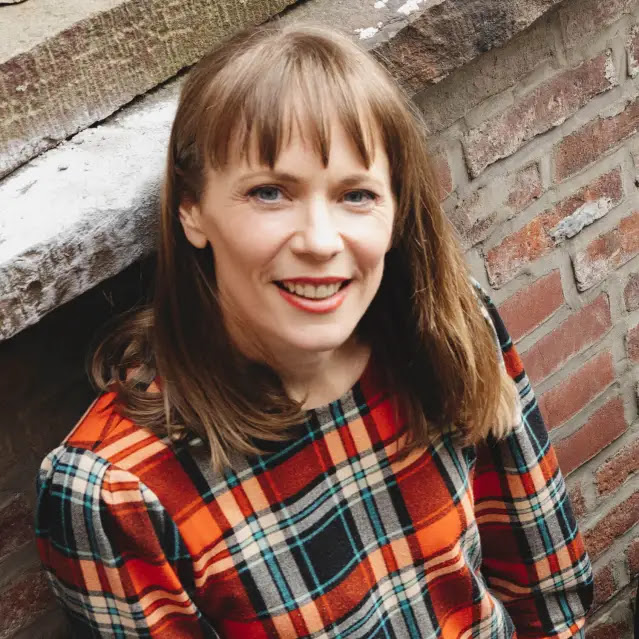
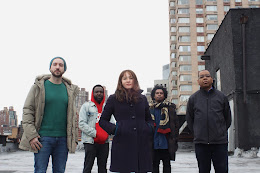
I have been impressed with the music and the saxophone playing of Alex LoRe since 2014 when his debut album, "Dream House", was issued on Greg Osby's Inner Circle Music label. When Allen Mednard replaced Colin Stranahan at the drum set for 2019's "Karol" (issued on Challenge Records), the quartet (also featuring pianist Glenn Zaleski and bassist Desmond White) became known as Alex LoRe & Weirdear. The alto saxophonist and composer, originally from Tarpon Springs, Florida, graduated from the New England Conservatory and earned a Master's Degree from the Manhattan School of Music. Currently, he's a member of pianist Maria Sanchez's Quintet and has played with Lucas Pino's No Net Nonet. LoRe has also authored two instruction books, the latest being "The Goldberg Variations for Saxophone Duets, Trios, & Quartets". During the Pandemic, he upload numerous videos of how he was working on playing JS Bach that are fascinating to watch and listen to.
One can hear a classical influence on several pieces that appear on "Evening Will Find Itself", LoRe's fourth album as a leader and his first for Whirlwind Recordings. Pieces such as "Underground and Back" plus "Silent Ship" feature melody lines that have solid structure and melodic flow. The former track has a formality that loosens as the soloists (bass, piano, and alto sax) push the piece out. Great bow work from bassist Desmond White. The 10-song program features the same band as "Karol" and they work together like a fine-oiled machine (without ever sounding uninspired). "Stripes" opens the album with an opening melody over the rubato rhythm section. The piece opens for an exciting alto sax solo and a splendid turn from Zaleski. White and Mednard really push the music forward without disappearing into chaos. The following track, "Face Unseen" is softer, moving on the gentle brush work and counterpoint of the bass. Note how LoRe's alto moves easily into the higher register of his horn where. at times, it sounds like a soprano sax.
"Green" pays tribute to one of the saxophonist's most important teachers, Bunky Green. Here, the rampaging rhythms push LoRe to display not only his technical prowess but the genuine lyricism that his teacher possessed throughout his career. Mednard's interactions with both the saxophonist and Zaleski during their solos is a delight (do watch the video below to see how the drummer responds in the studio).
There are three shorter (under three minutes) that carry the title "Radiance". They make up half of the final six tracks. Despite their relative brevity, each one contains a complete statement and improvisations. "I" stands out for the piano/sax interactions while "II" features Zaleski pushing the proceedings, an introductory solo from Mednard, and then LoRe enters by playing his own take with variations on the piano theme. "III" closes the album; slower, the saxophone theme is a variation on "I" and "II" that drops away for a bass solo over a funky drum pattern. The piano reenters to comp through the end of the bass solo that leads to LoRe's restatement of the theme.
The music on "Evening Will Find Itself" doesn't just jump right out at you but beckons the listener to enter the proceedings and surrender to the sounds. Alex LoRe sounds fully in control and his original material is the richest of his still-growing career. The musicians of Weirdear shine brightly as partners––not just a back-up group–– in this endeavor. It will be interesting to hear how these songs expand and develop as the quartet tours this year. In the meantime, take a close, deep, listen as the rewards are plentiful.
What a joy to be surrounded with such great music––here are two of the more delightful releases of 2023!
Photo: Erika Kapin
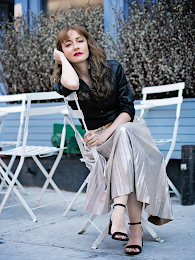
Australian-born vocalist Jo Lawry may be best known for working with Sting, Paul Simon, Fred Hersch, and Peter Gabriel but she's been recording her own albums for the past 15 years. She spent nearly two decades living, working, and teaching in New York City (her teaching appointments were at the Manhattan School of Music and at the Boston-based New England Conservatory). Ms. Lawry, who is married to saxophonist Will Vinson, moved back to Australia in 2021 to lead the Equity in Jazz program at Sydney Conservatorium of Music, a program designed to encourage and support women and gender diverse musicians into a career in jazz through dedicated leadership, music development and mentorship. She's released three albums as a leader with the most recent being 2018's "The Bathtub and The Sea."
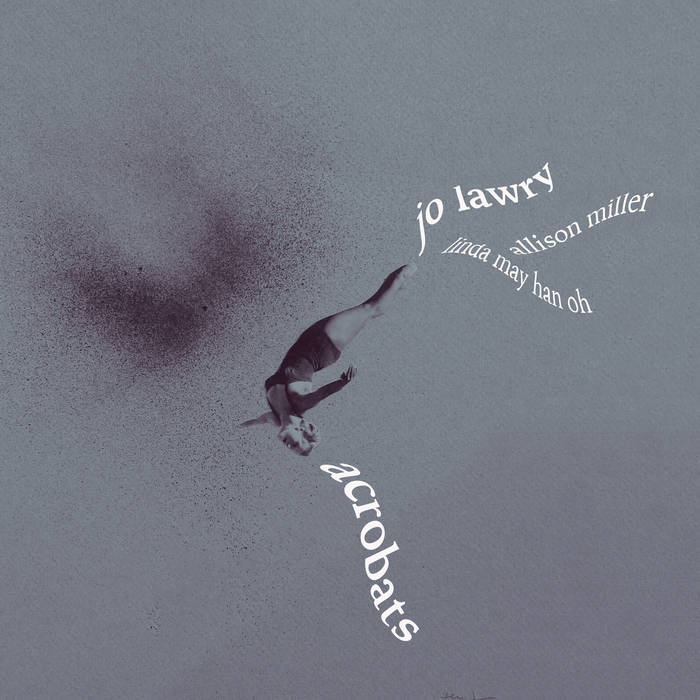
For her latest venture, "Acrobats" (Whirlwind Recordings), Ms. Lawry joins forces with bassist Linda May Han Oh and drummer Allison Miller to create a fascinating program that ranges from standards to two special pieces either written by an Australian composer (the title track comes from the pen of Gian Slater) or made a big hit on the Aussie scene (John Farnham's anthemic "You're the Voice"). Don't be put off by the spare instrumentation as the music is so intimate, delightful, emotional and adventurous that the 43-minute goes by way too quickly. When you listen to this music, you'll hear how melodic all three artists. Both Ms. Han Oh and Ms. Miller certainly know how to swing; right from the voice/bass opening moments of the opening track, Frank Loesser's "Traveling Light" (from "Guys and Dolls", one hears the delightful give-and-take of Ms. Lawry with the rhythm section.
Photo: Erika Kapin
The title track (listen below) illustrates Ms. Miller's splendid hand drumming as well as why Ms. Han Oh is a first-call bassist as she supplies both counterpoint and rhythmic support. Dig the delightful the voice/drums duo on Cole Porter's "You're The Top"; taken at a breakneck pace, the vocalist dances atop the rapid-fire brush work. Later in the program, Ms. Han Oh and Ms. Lawry take a delightful stroll through Al Hoffman and Dick Manning's "Takes Two to Tango" (first made famous in 1952 in separate versions by Pearl Bailey and Louis Armstrong). This version is slower and slinkier than the two versions from seven decades ago yet retains the humor and sassiness that the lyrics embody.
There is nary a weak track on "Acrobats". While her previous album tilted towards folk and pop, it's really great to hear Jo Lawry as a jazz singer (her scat feature on Lennie Tristano's "317 East 32nd Street" is a treat as is the sparkling bass solo). Adding Linda May Han Oh and Allison Miller to this project is a stroke of genius––you'll not hear a better trio album this year!!
For his third album on Edition Records, tenor saxophonist Chris Potter recorded several nights of his February 2022 gig at the legendary Village Vanguard. Six songs from the multi-night engagement make up the program for "Got The Keys to the Kingdom: Live at The Village Vanguard." For the gig, Potter put together an ensemble featuring Craig Taborn (piano), Scott Colley (bass), and Marcus Gilmore (drums). The set is bookended by two long blues/gospel tunes with the first being Mississippi Fred McDowell's "You Gotta Move." The leader goes it along for the first 30 seconds then introduces the blues groove that the rest of the ensemble picks up on. They run the first three verses with Potter adding more energy each time until they break into a short bridge and the saxophone solo commences. It's a tour-de-force, filled with ideas and turns-of-phrases, reminiscent of a Sonny Rollins-like playfulness. Taborn is next and he digs into the song's blues groove. After a quick return to the theme, Gilmore gets the spotlight and, with the help of Colley's short background figure, kicks the heck out of his drums.
Besides the blues, there are two tracks with Brazilian roots, the handsome folk tune "Nazani Na" (transcribed by Heitor Villa-Lobos and Edgar Roquette-Pinto from an Amazonian Indian folk tune) and "Olha Maria", composed by Antonio Carlos Jobim, Chico Buarque, and Vinicius De Moraes). The latter piece opens as a nearly-three minute conversation for Potter and Colley before the pianist and drummer enter. There is also a lovely take on Billy Strayhorn's "Blood Count", a piece he composed in the hospital awaiting treatment for esophageal cancer that would claim his life several months later. When recorded by the Ellington Orchestra, the solo on the piece was poignantly played by Johnny Hodges. Here, the quartet not only interprets the distress of the composer's condition but his fight as well. It's quite a beautiful piece. That's followed by Charlie Parker's "Klactoveedsestene", a jaunty dance for all involved.
The album closes with the title track, a gospel tune first recorded by Washington Phillips in 1929. Again, I hear the influence of Sonny Rollins in the rollicking rhythms, the playful interactions of the group, and Potter's powerful solo. Gilmore and Colley push him hard while Taborn feeds him aggressive chords. The pianist gets the next solo, dancing, strutting, bouncing, feeding off the lively bass and drums. A return to the opening theme then Gilmore begins his magnificent 3:30 solo that reaches its climax with the audience roaring its approval. The entire quartet takes the piece out on that high-energy level.
"Got The Keys to the Kingdom" is a delight from start to finish. If you love high-energy creative, the album has numerous examples. If you need a heartfelt ballad that explores many emotions, that's here as well. Rhythmic adventures? Yes! Great solos? Yes! Chris Potter and his excellent ensemble shine throughout–don't miss this splendid live album!
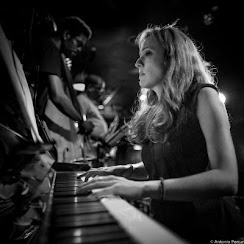
It's been over a decade since pianist and composer Marta Sánchez came to the United States from her native Spain. In her hometown of Madrid, Ms. Sánchez had not only studied classical piano but also filmmaking. She received a Fulbright Scholarship in 2011 to study at New York University, earning a Master's Degree in jazz piano performance. Around the same time, she organized a quintet featuring two saxophonists (one being Cuban-born tenor saxophonist Román Filiú whom she had met when he was studying in Madrid––in fact, they moved to the US around the same time), bass, and drums. Over the course of four years (2015-2019), her quintet recorded three albums for the Spanish-based Fresh Sound New Talent label, garnering a slew of excellent reviews and performances through the Americas and overseas. Then the pandemic hit. In the midst of the international emergency, Ms. Sánchez's mother passed away. Then in 2021, the pianist received a second grant from the MacDowell Colony (her first came in 2017) and was able to spend time to compose and begin to workshop new material.
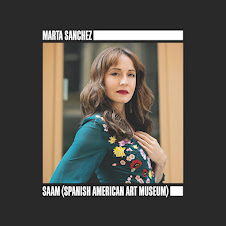
The results of her productive use of the "down" time can be heard on "SAAM (Spanish American Art Museum)", the fourth album by Ms. Sánchez's Quintet and her first for Whirlwind Recordings. With the exception of Filiú (who is heard on this recording on tenor saxophone, unlike the previous three where he played alto sax), this is a new group. The rhythm section includes bassist Rahsaan Carter and drummer Allen Mednard while the alto seat is filled by Alex LoRe. Mednard replaces Daniel Dor and one can hear the difference from the get-go. Dor is really a painter on the drum kit, with a artistic touch on the cymbals while Mednard pushes more, responding to soloists with more power. Carter is not only a fine foundational player but he also has an excellent ear for counterpoint. The composer has consistently showed a fondness for writing melody lines for two saxophonists that are melodic with counterpoint, the two instrumentalists conversing in song.
Photo: YouTube
The music shines throughout the nine-song (all originals) program. The shifting rhythms, with influences from Spain and Black American Music, set up a dynamic tension with the melodies that show aspects of 19th and 20th Century classical music (especially, to this listener's ears, Albéniz and Rodrigo) with tinges of flamenco and other contemporary influences. Yet, pieces such as the title track and "The Eternal Stillness" stand out for their inventiveness (Mednard's "hip hop" drums really shines on the latter tune). "December 11th" (the date that Ms. Sánchez's mother died) has a theme that is probing and a piano solo that that blends emotion and introspection with the desire to move beyond tragedy.
The one exception to the Quintet tracks is "Marivi", a lovely ballad dedicated to the pianist's mother. LoRe and Filiú sit out and we hear the the piano, bass, and drums plus the voice and guitar of Camila Meza, trumpeter Ambrose Akinmusire, and the subtle synth work of Charlotte Greve. The blend of the clear tones and articulation of Ms. Meza with Akinmusire's cool, subtle, sound plus the foundational piano chords and gentle support of Carter and Mednard paints a picture with shades of love, longing, and regret for the physical separation.
"SAAM (Spanish American Art Museum)" is alive with singable melodies and active rhythms. Filiú's move to tenor continues his saxophone mastery; he takes many melodic chances in his solos and it's exciting to hear where he goes (case in point, "If You Could Create It"). LoRe's alto playing continues to impress. One can hear the influence of classical saxophone when he plays in the higher ranges of the alto. noticeable on "The Hard Balance" and the afore-mentioned "The Eternal Stillness". Carter's solo on that track stands out for his power, his melodic ear, and for his interactions with Mednard.
Photo: Antonio Porcar
Ms. Sánchez plays with purpose throughout. Her work beneath the soloists gives them a strong foundation plus it frees Carter and Mednard to push, to pull, to prod, and, at times, to dance. There are moments this writer hears Andrew Hill in her supportive playing, in her chordal choices. Her solos throughout sparkle even in introspection––"If You Could Create It" has both a dancing feel and an introspective side and the pianists moves easily over the bass and drums. Listen to how she sets up the opening track "The Unconquered Vulnerable Areas", moving from the rippling figures into a bass line that she shares with Carter and then into her chordal support of the soloists. She never intrudes but she does guide.
Considering she started out quite strong with her first Quintet album in 2015, Marta Sánchez has continued to grow as a composer, arranger, and pianist. Her music and the excellent muisicians who help create it make you sit up and pay attention. Spend time with "SAAM (Spanish American Art Museum)" and, chances are very good, you will return time and again to savor its rich colors, vibrant and emotional melodies, and its rhythmic delights.
When I first started collecting 45 rpm "singles" back in the 1960s, every once in a while, one of my favorite artists would drop a four-song 45. Those packages were extremely popular in Great Britain. Nowadays, the "industry" still insists calling a CD with 3, 4. or 5 cuts, an "EP" –– go figure!
Photo: David Crow
Saxophonist, composer, and educator Rudresh Mahanthappa first organized the Hero Trio with bassist François Moutin and drummer Rudy Royston in 2019 with their debut CD released in June of 2020 by Whirlwind Recordings. Needless to say, the pandemic put an end to the Trio's tour plan for that year and, as it turns out, the next year as well. Undeterred, Mahanthappa brought the rhythm section into the studio in November of 2021 and they laid the tracks for their next release, an EP titled "Animal Crossing". Like the debut, the material comes from myriad sources –– in this instance, the four tracks include pieces by Pat Metheny, Chuck Mangione, George Michael, and Kazumi Totaka. Who is Kazumi Tokata? He's the composer of the recording's title track which is the theme for a popular video game that the leader's young children have played a lot since the beginning of the pandemic.
If you know the band's debut recording, you understand this is a band that loves to hit hard, loves to push each other, and to have great fun. The title track leaps out of the speakers but, to the song's credit and the band's sensitivities, they don't mess with the "sweet" video game melody. When they get to Mahanthappa's solo, the music takes off. Moutin's powerful and melodic bass lines, often in counterpoint to the saxophonist's phrases, plus Royston's frenetic dancing all around his kit is a real treat. The trio tears into Metheny's "Missouri Uncompromised" (from the guitarist's debut ECM album "Bright Size Life") –– they don't ignore the handsome melody yet it's such a treat to hear what the rhythm section does throughout the piece. Mangione's "Give It All You Got" (from the flugelhornist's 1980 "Fun and Games" Lp), is rearranged from its original "funky" take and has more of a ballad feel. Excellent solos from the leader and the bassist stand out.
Photo: David Crow
The final track is a rapid-fire, wild ride, through George Michael's "Faith". While Mahanthappa plays the melody, listen below to what Moutin and Royston are doing. The bassist plays very quickly yet maintains his melodic counterpoint while Royston brings the "thunder". The shortest piece of the four at 4:29, the music still amazes for the trio's ability to be so powerful and still respect the melody.
"Animal Crossing", the EP, is a blast. The Rudresh Mahanthappa Hero Trio certainly can fly but also knows how to glide. When the world reopens, make sure to go see them (they're touring in Europe in March). Their music just might save the world!
Canadian-born (Montreal, Quebec) Chet Doxas plays tenor saxophone, composes, plays in bands with his drummer brother Jim, and has co-leads the quartet Riverside with trumpeter Dave Douglas. He has played alongside Carla Bley, Rufus Wainwright, the late John Abrecrombie, and Maria Schneider (to name just four) and plays in the Brooklyn, NY-based quartet LandLine. He's got a "classic" tenor saxophone sound meaning one hear the influences of Coleman Hawkins, Lester Young, Ben Webster, Jimmy Giuffre, and others.
Doxas was on tour with Ms. Bley and her partner, bassist Steve Swallow, when they suggested he take one month each per composition for a project he was creating. As the songs took shape, the saxophonist kept hearing a drummer-less trio in his head. He recruited bassist Thomas Morgan and pianist Ethan Iverson and, in September of 2019, they recorded the program that one can hear on Doxas's new Whirlwind recording "You Can't Take It With You". The results are fascinating, playful, adventurous, melodic, and highly interactive.
The title track leads off the album; the first sounds you hear are Morgan's richly melodic bass lines (at times, the melody one hears sounds like the "Sesame Street Theme" before the piano and tenor enter. The music settles in to a bluesy groove which the pianist jumps in and plays a delightful, playful, Thelonious Monk-inspired solo. When the leader comes in for his solo, he starts with fluttering lines that sound Middle-Eastern before diving into a playful solo filled with circular lines, jabs, and feints. Watch out for the false endings.
"Lodestar (for Lester Young)" has a bouncy riff played by sax and bass while the pianist plays inside his instrument creating all sorts of dissonant tones before decided turn towards melody. Doxas's long-held tenor notes connects the song to the next one, "Cheryl and George". Dedicated to the saxophonist's mother and father, the song starts with the tenor leading the way before Doxas and Iverson play together while Morgan solos. After a short break, the trio comes back in and improvise in and around each other.
There's plenty to enjoy here. "The Twelve Foot Blues" (inspired by Mark Twain) is another playful tune whose rhythm has a New Orleans-feel in its danceable bounce. "Soapbox" was built on the rhythms of the speech patterns of late-night politicos. Doxas not only creates melodic lines, he also "speaks" through his sax. "All The Roads" is inspired by a speech by the late Fred Rogers; the music is contemplative asking the listener to think of all the people "who have helped to shape you."
The program closes with "View From a Bird." Composed in response to viewing a painting by Joan Miró (see left), there is a formality yet playful that hints at the influence of Ms. Bley's writing. Iverson's piano lines have a classical feel while Morgan plays counterpoint off the pianist's left hand. As the tenor solo flies above his partners, he does come back to land. The piano solo is delightful (is that James P. Johnson we hear for four bars?)
You can take "You Can't It With You" with you as a recording but make sure to sit and contemplate on what you have heard before going back and listening again. It's obvious Chet Doxas put a lot of thought and work into these 10 pieces, that he chose the right musical partners, and that they too worked hard to make this music sound so good, so effortless, so alive.
Three more albums which feature guitars in different settings are featured in this post––each one has its own strengths and should interest the curious listener.
Will Vinson (saxophones, electric piano), Gilad Hekselman (guitars), and Antonio Sanchez (drums) have created an album for Whirlwind Recordings with the punning title Trio Grande. All three have crossed borders to make New York City their base with Vinson coming from Great Britain, Hekselman from Israel, and Sanchez from Mexico. They are at the top of their game; this album illustrates how each brings different styles and how they have so much fun "playing" with melody, sound, dynamics, and more.
Even though there is no bassist, the first sounds one hears is the keyboard bass on the drummer's "Northbound". The feel and sound of the piece may remind some of Marc Johnson's Bass Desires but with a soprano sax in place of one of the guitars in that group. The joy is in the interplay, the chuckling as well as expansive playing of Hekselman juxtaposed with Sanchez's dancing drums. The opening moment of the guitarist's "Elli Yeled Tov" (Good boy, Elli) sound like a piece by Lionel Loueke, especially the tone of the guitar. Again, it's Sanchez playful drums that capture one's attention as does Vinson's delightful alto sax solo. Vinson's "Oberkampf" is a melancholy ballad with the feel of a Joni Mitchell piece. The soprano sax solo near the end of the piece has a more optimistic feel, lifting the energy of all involved.
Other highlights include Hekselman's super-funky "Scoville" which bops along atop Sanchez's conversational drums. The raucous guitar solo features stop-and-go rhythms which the drummer executes like a race car driver. The drummer's "Firenze" (the Italian name for Florence, Italy) is a handsome ballad, its fine melody lines pushed forward by the alto saxophonist who dashes off into an energetic solo. Sanchez's spare solo is a treat, he interjects silence into the spot while the sax and guitar move melodically behind him.
"Trio Grande" closes with the guitarist's "Will You Let It", a lovely ballad with an emotional melody, a splendid guitar solo which has a touch of Bill Frisell in Hekselman's solo. The sparkling cymbal work surrounds the other instruments with a glowing effect. The really fine aspect of this album from Will Vinson, Gilad Hekselman, and Antonio Sanchez is that the music defies categorization––is it Americana, jazz, rock or is it all that and more? Go with the latter and just listen and enjoy!
I first heard "A Love Supreme" by the John Coltrane Quartet in the summer between my freshman and sophomore years of college, basically 1967, the "Summer of Love". The music was unlike anything I had listened up until then, having cut my teeth on AM radio and enamored of The Beatles and The Kinks. The person who played the album for me had been searching for new music and had been blown away by Coltrane's declaration of spiritual love and devotion. The album was my personal door that opened up within the next few years to Miles Davis, the AACM, Chick Corea, ECM, and beyond. Over the years, there have been versions by Turtle Island String Quartet, the Branford Marsalis Quartet, and others plus various recordings of particular movements––a favorite is Kurt Elling's brilliant take of "Part II: Resolution" that he recorded in 2004.
Drummer John Hanrahan (born December 9, 1966–two years to the day that the Coltrane Quartet recorded the album) had interviewed the group's drummer Elvin Jones in 2003 who led him to Ashley Kahn's incisive history of the album. That whetted the younger drummer's appetite and when he moved back to Chicago, he formed A Love Supreme Quartet. In 2017, Hanrahan met guitarist and conceptualist Henry Kaiser who introduced the drummer to Coltrane's 1966 album "Meditations" which many people, including the guitarist, feel is the "spiritual follow-up" to "A Love Supreme." The newer Lp, recorded nearly a year to the day after "...Supreme", added the musical voices of saxophonist Pharoah Sanders and drummer Rashied Ali to the Quartet––the sessions would the last time Coltrane recorded with Elvin Jones and pianist McCoy Tyner.
Kaiser and Hanrahan formed a quintet with saxophonist
Vinny Golia, electric bassist Mike Watt, and organist Wayne Peet. They went into the studio on February 19, 2019, and recorded the two-CD set "A Love Supreme Electric: A Love Supreme & Meditations" (Cuneiform Records). Subtitled "A Salvo Inspired by John Coltrane", the music captures the power of the original pieces and pushes the volume. Instead of the steadying piano of Tyner, Kaiser's often-raucous guitar is the "second voice" while Peet takes on the pianist's supporting role. His organ work hearkens back to the sounds of the Black Church but with a modernist twist. He does "fill out the sound" nicely. Golia, an impressive musician who's the dean of the New Music scene in Southern California, does not try to play like John Coltrane and, unlike the great master, does play soprano saxophone on several of the suites movements. He sets the tone on the opening "Part 1: Acknowledgement", producing his own fiery sounds. Mike Watt, a veteran of rock bands such as Minutemen and Firehose (currently, he's working with guitarist Mike Baggetta), is a steady presence, making sure his bandmates and listeners do not miss the four-note foundational bass line throughout the opening suite.
Photo: R.R.Jones
Hanrahan (pictured left) opens "Part 3: Pursuance" with a 3 minute-plus solo that really builds in intensity until Golia (on tenor) jumps into the theme before taking off into a powerful solo. Kaiser's off-balance attack and mighty roar comes next, with a call-and-response with the over-amplified Yamaha organ of Peet as Golia's baritone joins in the fray.
"Meditations", the lesser known of the two works, has more dynamic variety yet still has moments that rattle the rafters. Peet's organ has a more prominent place in the performance; his interactions with Watt and Hanrahan, especially on Love", stand out. He joins the fray on "Consequences" connecting with Kaiser and Golia to create a fascinating three-way conversation while the bassist and drummer create a maelstrom. The beat falls out in the middle, the volume drops out, and Golia steps up. "Serenity" opens quietly with Golia's tenor weaving in and out of the curious guitar sounds and Watt's bass serving as counterpoint. Hanrahan's solo is next and it has definite bounce and shape before the quintet crashes into a noisy, free-style, reprise of the opening section of "Meditations" titled "The Father and The Son and The Holy Ghost." The music is harsh with little reprieve but, like the original version, the overall performance can serve as a cleansing.
CD 2 and the program closes with "Acknowledgement reprise", another take of the opening movement of "A Love Supreme." Recorded at the same session, this take features Golia on both tenor and soprano sax plus a fine organ solo. The song ends as the the opening of the program started, witg John Hanrahan striking a gong.
"A Love Supreme Electric" uses the power and the glory of the original performance by the John Coltrane Quartet, expands its sonic blueprint, reminding us of how timeless this music is. The volume of this music may put some listeners off but do listen to these fine artists make this music their own, doing so with respect and wonder.
One can tell from the title of the new album, "Forest Standards Vol.2" (BIG EGO Records), from guitarist and composer David Lord that this is not his debut album. In fact, from his home in Wichita, Kansas, he has recorded solo guitar album under the monicker Francis Moss and with the groups The Wonder Revolution and Miki Moondrops. 2018's "Forest Standards Vol. 1" featured Chad Taylor (drums, mbira) and Devin Hoff (acoustic bass)––Taylor returns for "...Vol.2" but the bass chair now is filled by Billy Mohler plus guitarist Jeff Parker shows up on eight of the 14 tracks.
What's fascinating about this album is that the music moves in unexpected directions; the liner notes (written by Dave Segal of Seattle, WA's newspaper The Stranger) explain that Lord wrote all the tunes in the Lydian mode and how that changes how the pieces resolve. Listen to how Mohler and Taylor create the flow on the opening "Cloud Ear"––Lord and Parker weave their guitar lines in and around each other in a gentle manner. Chad Taylor, who can push a group with the best of them is often understated yet still helps to propel many of the pieces. His rhythmic dance on "Conifer Tuft" has a lightness as well as an urgency. The two guitarists take turns on solos but also support each others. Vibraphonist Sam Hake joins the quartet on several pieces include "Coltricia" where Lord overdubs his guitar lines but opens the middle for the ringing vibes.
There's a gentle yet probing quality to many of the pieces. The fine duet of Parker (electric) and Lord (acoustic), "An Amanita", allows the former to move around the sound spectrum like a wild while the latter keeps the structure of the piece. Hake and Lord handle the melody on "Nectaries" but you should also attention to Taylor's excellent brush work and Mohler's counterpoint as well as the backwards guitar loops at the end of each verse. Even though many of these pieces are short in duration, they are long in attention to melody and detail. Both Parker and Lord overdub multiple guitars on "Mossy Maze Polypore" and the textures mixed with quiet background noises first pull the listener in then make one pay attention to the various sounds.
One's appreciation of "Forest Standards Vol 2" grows each time you listen. This is not music for one impressed by flashy technique but for people who love to hear finely constructed music that embraces melody and experimentation. David Lord and his talented associates want you to take your time with this music––the sonic experience is well worth it!
Nowadays, music comes from everywhere, from artists around the world. Two of the three groups reviewed below are transatlantic in composition while one is from a group of musicians based in Chicago but with international experience.
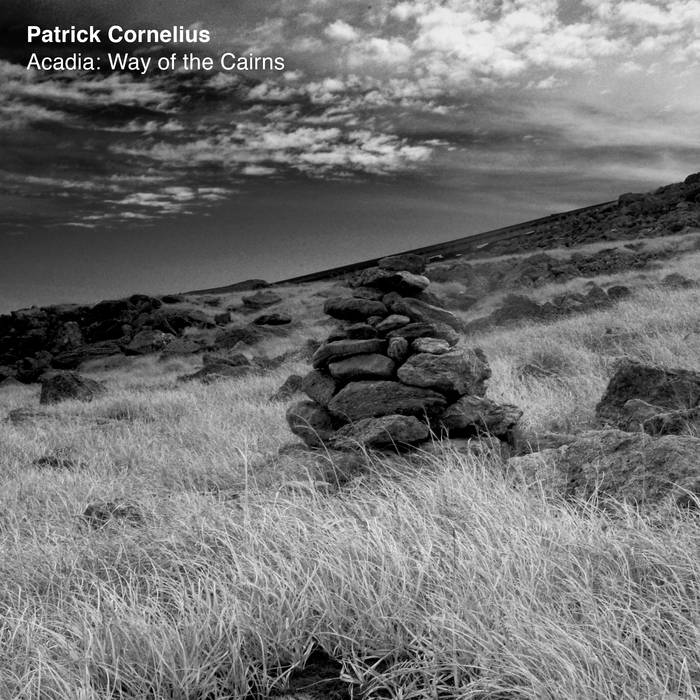
It's been 12 years since alto saxophonist and composer Patrick Cornelius recorded with the Transatlantic Collective. Composed of Cornelius, bassist Michael Janisch, Estonian pianist Kristjan Randalu, and drummer Paul Wiltgen (from Luxembourg, that band spent the better part of four years recoding and touring. Janisch and Cornelius stayed in touch; in fact, the Wisconsin-born bassist, head of Whirlwind Recordings (and now a resident of London England), has released three of Cornelius's albums as a leader. The saxophonist reached out to his three friends with a new project, music inspired by Maine's Acadia National Park; they gathered in England, rehearsed, played several gigs, entered the studio, and emerged with a new album. The result is "Acadia: Way of the Cairns" (Whirlwind), a delightful suite (seven pieces by Cornelius, one each for Randalu and Wiltgen) that sparkles and shines from beginning to end. The group has now been dubbed Acadia after this project,
First thing one should notice is how clean and clear the sound––you can hear all four musicians without an issue. Janisch's bass playing is particularly strong; he is the first soloist on the opening title track, his melodic lines and thick tone set the pace for the band. The skipping rhythms of "Blueberry Mountain" are propelled forward by Wiltgen with a touch of hip hop in his attack. Note how Cornelius dances over the rhythm section plus Randalu's short but dazzling solo that starts low in his left hand, gleefully darting up the keyboard. The rhythmic attack on this tune as well as the opening moments of "On The Precipice" features echoes of pianist Keith Jarrett's European Quartet with Jan Garbarek, Jon Christensen, and Palle Danielson. The powerful "Darkest Night" is in the middle of the program, introduced by the circular piano lines with the bass introducing the main melody before Cornelius introduces the second part of the theme. The saxophonist's exciting solo is underpinned by the heft of the piano chords.
Randalu introduces his composition "Valse Hésitante" with a lilting melody before the saxophonist joins in counterpoint. There's a touch of Erik Satie in the gentle melody as well as the opening phrases of the piano solo. Check out the formal sound of the saxophone solo, almost as if this was a recital. The drummer's contribution, "Ten Years Later", might refer to the band's extended hiatus. The ballad, which closes the program, is a finely constructed piece in which all four musicians move the melody forward. Cornelius steps out for a short, soulful, solo that closes on a bluesy return to the original melody.
"Acadia: Way of the Cairns" moves with purpose, style, energy, and soul. Patrick Cornelius writes to the strengths of his musical partners and they respond in kind. This music pulls the listener, leaving one satisfied but ready to dig right back in. That's what the best music does!
Greg Osby (United States: soprano and alto saxophones) and Florian Arbenz (Switzerland: drums, percussion) have played together for over 22 years, playing concerts in Europe and the United States. "Reflections of the Eternal Lines" (Hammer Recordings) is their first duo recording but they have recorded together before with the drummer's cooperative trio VEIN. This album was inspired by the paintings of Swiss artist Stephan Spicher, whose workshop was the host for the recording. The pieces, composed by the drummer, run the gamut from the hard driving "Groove Conductor" to the dancing rhythms of "Wooden Lines" to the quiet kalimba/ soprano sax piece "The Passage of Light" (which has the feel of a ballad by Billy Strayhorn). The mysterious "Chant" rumbles forward on the sounds of a gong, orchestra bells, and cymbals while Osby creates a lovely melody.
Black American Music has had a number of fine saxophone/ drums duos; examples include John Coltrane and Rashied Ali ("Interstellar Space"), Max Roach with both Anthony Braxton and Archie Shepp (for Hat Hut Records), plus Dewey Redman and Ed Blackwell. "Reflections of The Eternal Line" will remind you of those albums yet has its own beauty and mystery. The duo of Greg Osby and Florian Arbenz recorded alongside Stephan Spicher (see and hear below), each artist inspired by the others. Sit down, turn the speakers up loud (or wear head phones), and the sounds create paintings in your mind. What an aural treat!
The city of Chicago, Illinois, reverberates throughout "Forward", the new album by trumpeter/ flugelhornist Chad McCullough. It's his debut on Outside In Music and features a stellar cast of Windy City regulars including pianist Rob Clearfield, bassist Matt Ulery, and drummer Jon Deitemyer plus, on three of the six tracks, Ryan Cohan (keyboards, programming, co-producer). The program, all McCullough originals, features three quartet pieces and three that add Cohan to the mix. First time through, one can hear the influence of the late Kenny Wheeler, especially in the open-ended nature of the music and performances––Cohan's synthesized strings actually add to the airiness, giving an ethereal feel to "Oak Park", a symphonic grandeur to "Grave at the Gavel or Grace at the Gallows", and a winter-like atmosphere to "Water Tower Sunset."
Like Wheeler, McCullough does not dominate this music, allowing the rhythm section to set the tone of each piece. If you have paid any attention to Rob Clearfield, you'll know he's one of the most lyrical pianists on the scene. Not only does he create a solid foundation for the trumpet to ride on but he also creates space for Ulery and Deitemeyer to move independently––you'll hear that on pieces such as "Gentle" and the fast-paced "Focal Point." On the latter piece, the rhythm section plays with great energy and purpose––Clearfield dominates the first several minutes, engaging in a musical conversation with the bass and drums that is exhilarating. McCullough picks up on that energy, creating his own dialogue with the group.
Photograph: Roberta Ciprus
If you have any familiarity with the city of Chicago, several of the songs will create a mental picture of the city. "Oak Park" is where Frank Lloyd Wright, "November Lake" will remind you of the breezes off Lake Michigan that make you catch your breath, and "Water Tower Sunset" will posit one in the bustle of North Michigan Avenue.
What impresses most about "Forward" is how the music, whether the pace be slow or fast, is so alive with ideas, melody, and sense of purpose. At this time, when music is one of the few ways to "travel" safely, Chad McCullough has created a journey that is emotionally uplifting and ultimately satisfying.
Here's a taste of "Grace at the Gavel or Grace at the Gallows":
Chad McCullough, with Jon Deitemyer, Matt Ulery, pianist Paul Bedal, and synth artist Paul Mutzabaugh, played an "Album Release Concert" in mid-October (two weeks ago, as of this writing) at the Fulton Street Collective in Chicago. Below is an excerpt of the full show, the lively "Focal Point":
This review introduces you to three albums featuring quartets, two with tenor saxophone, piano, bass, and drums plus one with tenor and alto saxophones, bass, and drums. The share the language of of modern Black American Music but come at their music from different directions.
Saxophonist Rich Halley has been making music on the West Coast for over five decades working with small groups that often included trombonist Michael Vlatkovich and Halley's son, drummer Carson. In August of 2018, he flew east to Brooklyn, NY where he recorded "Terra Incognita" with the Matthew Shipp Trio (the pianist, bassist Michael Bisio, and drummer Newman Taylor Baker). Halley's "live wire"compositions and fiery playing fit right in with the experimental bent of the Trio anf their first album together was a smash.
He returned to Brooklyn one year later and, on August 16, went back into the studio with the Trio; the result, "The Shape of Things" (Pine Eagle Music), moves as passionately as the first album. And, just the like the previous release, the four musicians improvised the entire program. Halley may be the leader but everyone stands out. Whether it's Newman Taylor Baker's powerful drums goosing the saxophonist to powerful shouts on the opening "Tetrahedon" or Shipp's lyrical piano opening to "Spaces Between" or Bisio's rapid-fire bass lines on "Oblique Lines" (note the way Halley dances out of his solo while Shipp dances in), this music does not sit still or make compromises. Halley and Baker have another one-on-one conversation to open "Lower Strata"––it starts fairly quietly, does not boil over. In fact, it is Shipp's majestic cascading chords and Bisio's rumbling bass work that raise the intensity. There's even more energy on "The Curved Horizon", the albums longest track at 13:35, especially as Halley and Shipp continually collide in the opening two minutes. Baker and Bisio stoke their fire until the saxophone drops out and Shipp dances forward. After the Trio tamps down the fire but not the intensity, Halley returns and the music explodes
"The Shape of Things" (not to be confused with The Yardbirds' 1966 hit of the same name) is excellent, reminding one of how great improvised music can be a transcending experience. Rich Halley does not compromise, has no need to, his interactions with the Matthew Shipp Trio shows us music still has the power to makes us sit up and take notice!
For his sixth release on Whirlwind Recordings, drummer and composer Jeff Williams has issued his second "live" album and third fronting a quartet. Since moving to England over a decade ago (he splits his time between NYC and UK) and signing with Michael Janisch's label, he has produced music that displays power, wit, musicality, and great "swing". He writes to the strength of his band and they make sure the music sounds vital.
"Road Tales: Live at London Jazz Festival", recorded in November 2018 at London's famed Pizza Express, features the drummer in the company of long-time associate John O'Gallagher (alto saxophone) and two young members of the British Jazz scene Josh Arcoleo (tenor saxophone) and Sam Lasserson (acoustic bass), both members of Williams group since 2015. Sit down, put the music on the stereo, and enjoy the 63-minute, nine song, program of the drummer's original pieces. A mix of old and new compositions, the quartet dances, swings, sways, roars, and makes you listen. Whether it's the bluesy dance of "New and Old", the chatty and boisterous "Borderline" or the quiet ruminations of "Under the Radar" (which features a splendid Arcoleo solo), this music is always moving. "Scrunge" is a funky, hard-hitting, dance tune that nods towards Ornette Coleman and the bluesier side of Julius Hemphill. Williams playful "She Can't Be a Spy" stretches out so both saxophonists can dance atop the drummer's powerful beat. The album closes with "Double Life"––the leader opens the piece by scurrying around his drum set before Lasserson enters to set the pace. The saxophonists introduce the lengthy and twisting melody then both (Arcoleo first) deliver delightful solos egged on by the conversational. drums and powerful bass lines.
"Road Tales" is a delight from start to finish. Take your time to listen to all four musicians but especially the rhythm section and how they interact with each other and how they do not just play "support" beneath the saxophonists. Jeff Williams musically came of age working with Stan Getz and Dave Liebman, at a time when creative music was still absorbing the lessons of Thelonious Monk, Max Roach, John Coltrane, and innovators of the 1950s and 60s. Jeff Williams and company not only honor the tradition but also push it forward. Enjoy!
Over the past decade, Jim (drums) and Chet (tenor saxophone), the Doxas Brothers, have been very busy musicians in their native Canada. Jim has been the drummer in pianist Oliver Jones Trio while Chet has worked with Maria Schneider, Rufus Wainwright, and the late John Abercrombie plus is part of the Brooklyn, NY-based quartet LandLine and has recorded with electronics artist/ sound designer Micah Frank. Together, with Dave Douglas and bassist Steve Swallow, they have released two albums as Riverside for the trumpeter's Greenleaf Music.
Now, the duo has issued its first album, "The Circle", on Justin Time Records. Joining them are bassist Adrien Vedady and pianist Marc Copland both of whom have been playing with Jim for the past several years in a trio setting. When you first listen through the program, you'll hear finely-constructed compositions, excellent musicianship, smart interplay, and a love for both swing and melody. What you will realize second and third time through is the "flow" in each piece. At times, it's the rhythm section (as they do on tunes such as the album opener "Una a la Vez" and several tracks later on "Old Sport". When Copland locks in Vedady and Jim Doxas, they create a foundation that Chet's tenor can move through with ease. Dig the bluesy "A Word From the Wise" where the impressionistic piano support dances around the Coleman Hawkins-inspired tenor sax.
A poetic unaccompanied piano opens "Objets Nécessaires" leading into a melody that sounds like an interpolation of the spiritual "Go Down Moses." Copland's crystalline lines build the piece up to the entrance of the tenor saxophone; the piece seems to explode with the power coming from the two brothers with both the piano and bassist roiling below them. The wistful tenor saxophone melody of the next track, "Joan's Song", also has a folkish feel (and a touch of Sonny Rollins) yet listen to how the pianist colors the piece with his fascinating chordal choices.
The album closes with the blues-soaked Gordon Jenkins composition "Goodbye"––originally composed in 1935 for the Benny Goodman Orchestra, this version features splendid brushes work, breathy tenor sax, fine counterpoint from Vedady, and a fascinating exploration from the pianist. Like the eight tracks before it, "Goodbye" is exemplary of just how deeply these four musicians care about the music, the material, and each other.
"The Circle" is delightful music, played with passion, intelligence, and the desire to connect on a human level. The Doxas Brothers, along with Adrien Vedady and Marc Copland, create a listening experience that combines the "tradition" with creative thinking (and playing)––so sit and listen, waiting for the day when this band can make their magic in a club or small convert venue.

 Posts
Posts