Critics and reviewers were quite surprised and, ultimately, very pleased last July when drummer, composer, and conceptualist Tyshawn Sorey issued "Mesmerism" (Yeros7 Music––now reissued on Pi Recordings)), a piano trio album of four "standards" plus one piece each by Muhal Richard Abrams and Paul Motian. Sorey had wanted to include pianist Aaron Diehl (Cecile McLorin Salvant) in a project plus long-time friend and collaborator, bassist Matt Brewer (SF Jazz Collective, Ambrose Akinmusire); this project was the exact right. Later in 2022, Pi Recordings released "The Off Off Broadway Guide to Synergism", also a Trio album but with Russell Hall on bass and guest Greg Osby on alto saxophone. That triple (!) album is a must-listen.
Back to the Trio format on the new Pi Recordings album, "Continuing". Bassist Brewer has returned so one should consider this to be the official follow-up to "Mesmerism". The program consists of four tunes, one each by Wayne Shorter, Ahmad Jamal, and Harold Mabern (who had been a mentor to Sorey) plus the 1946 Matt Dennis/ Earl Brent classic "Angel Eyes". The overall program reminds this listener of a smoky nightclub gig, the early morning third set, as the music is steeped in the blues and the musicians let the songs move at a leisurely pace (save for the closing cut). Listen below to Mr. Shorter's "Reincarnation Blues" which he wrote for and recorded with Art Blakey & the Jazz Messengers in 1961. Sorey, Brewer, and Diehl create a slower take than the original. The piano solos are mighty impressive especially the dazzling second one (starting around 7:30 into the 10:25 cut). Brewer's solo, earlier in the piece, rolls atop the drums displaying a handsome melodic side.
Photo: John Rogers
Diehl captures the spirit of the composer on Mr. Jamal's "Seleritus" (first recorded and released in 1959)––the longest track on the album (15:43), the interactions of the piano and bass are what first stands out. The more you listen, the bounce in the rhythms Sorey plays stand out more. What also is intriguing is that the piece never really resolves; instead, the music fades out with Diehl's percussive block chords. "Angel Eyes" follows, proceeding gently over Brewer's chordal tones and Diehl's deliberate reading of the melody. Sorey enters at the 3:09 mark of the 13+-minute track, playing as quietly and gently as he can (his brushes whisper on the cymbals). Brewer's bass solo is a gem from start to finish as is Diehl's. The airiness is this performance is dramatic but not forced.
"Continuing" goes out with a bang as the Trio gets funky on Harold Mabern's "In What Direction Are You Headed". Originally recorded by Lee Morgan in 1971 for what turned to be "The Last Session". By the middle of the song, one feels as if we are in midst of a church service as Brewer locks into a nine-note riff while Sorey "stomps" out the beat. They continue in their groove even as Diehl joins in on low and high notes. The pianist does reintroduce the theme right before the album makes its rousing exit.
Pour yourself a libation, turn the lights down low, and listen as if the musicians were in your living room. All in all, this Tyshawn Sorey Trio is a real knockout!!
Jazz artists, since the beginning of its move into the public eyes and ears, like to perform the popular music of the day. Each generation of musicians looks to "pop music" to attract an audience and as a way to get those people to also listen to their original music. This is a concept that works well in the piano trio format. For its 2017 debut, the Hazelrigg Brothers, pianist George and bassist Geoff, whose main gig is designing, development, and manufacturing of high-end recording equipment, recorded "Songs We Like", a nine-song album of tunes they grew up listening to including the Police's "Spirits In the Material World". It should not come as a surprise that for their second Trio album (John O'Reilly, Jr is the drummer) that they would opt to record the entirety of the Police's 1983 "Synchronicity", that trio's fifth and final album. That recording spawned several Top 10 hits including "King of Pain", "Wrapped Around Your Finger", and "Every Breath You Take".
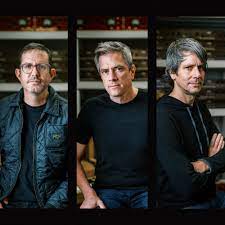
On "Synchronocity" An Interpretation of the Album by The Police" (Outer Marker Records), the Brothers play all the songs (even the cassette-only––those were the days––"bonus track") in the order they appear on the original Police Lp. Because the majority of the original songs have such strong melodies (at least, the ones composed by bassist/ vocalist Sting do), the Trio do not try re-invent the (musical) wheel. Therefore, the excitement of the opening title track is evident here as well thanks to the powerful rhythms they create. Geoff's bass is the lead instrument on the "Walking In Your Footsteps" and "Every Breath You Take"––the piano solo on the former tune has a tinge of the late Vince Guaraldi's sound while the latter builds dramatically from the opening until the bass reclaims the theme in the middle.
The bassist also leads the trio into "King of Pain" which, to these ears, is the highlight of the album. How the trio shares the melodic and rhythmic phrases and sections as well as the excellent dramatic movement of the melody stand out. That's followed by the excellent take of "Wrapped Around Your Finger"––again, it's the subtle rhythmic moves of the bass and drums that draws the listener into the emotional richness and poetry of the piano parts.
Some may argue that the Hazelrigg Brothers trio don't take many chances on their reinterpretation of The Police "Synchronicity" but, to their credit, they make Andy Summer's song "Mother" much more interesting replacing its manic vocal lines and by emphasizing the Kurt Weill aspects in the instrumental. Overall, if you grew up with this music, you should enjoy this album. If you are new to the material, enjoy the songs with the finely-etched melody lines and the excellent musicianship that abounds on this heartfelt tribute.
To the left is a photo of pianist and vocalist Champian Fulton in her natural habitat; that is, playing her infectious, swinging, life-affirming brand of popular music to a happy crowd. The Oklahoma-born Fulton has been recording since 2007. She prefers the Trio setting (can't blame her––she's a fine pianist) although she often adds her flugelhorn playing Father, Stephen Fulton, to the group. She's issued 14 albums, many on her own label but also several for Cellar Live and one for Posi-Tone. Over her career, her vocal style has blossomed so one hear a bit of Ella, Sarah Vaughan, and Dinah Washington.
Her new album, "Meet Me at Birdland" (self-released), has just been issued. The 13-song, 70-minute, experience features Ms. Fulton with her New York trio, bassist Hide Tanaka and drummer (brushes-man extraordinaire) Fukushi Tainaka. This is one tight ensemble and the pianist's chops are on display throughout. Instrumentals such as "Theme for Basie" and the rip-roaring "Happy Camper" give the group room to stretch out while Ms. Fulton's vocals on "Just Friends" and "I've Got a Crush on You" makes one feel like she is singing just for you. Even the oft-recorded "Spring Can Really Hang You Up The Most" sounds fresh and alive.
"Meet Me at Birdland" closes with "It's Been a Long, Long, Time"––voice and piano, no rhythm section, and this bluesy take is a treat. One gets the feeling if Champian Fulton lived in the time of the Harlem "Rent Parties", she'd be living in the penthouse. This collection will most certainly brighten your life.
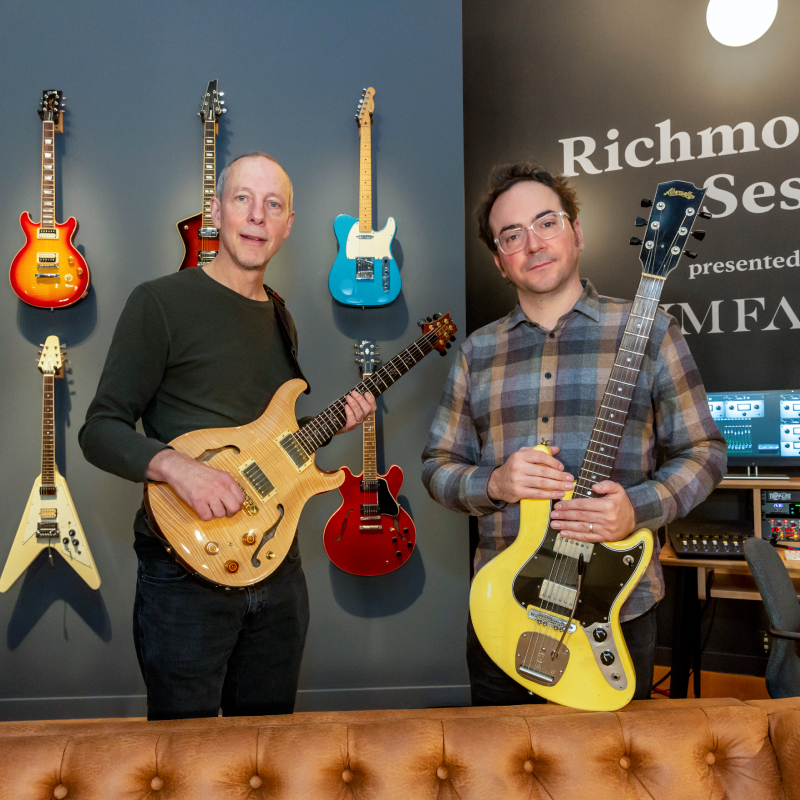
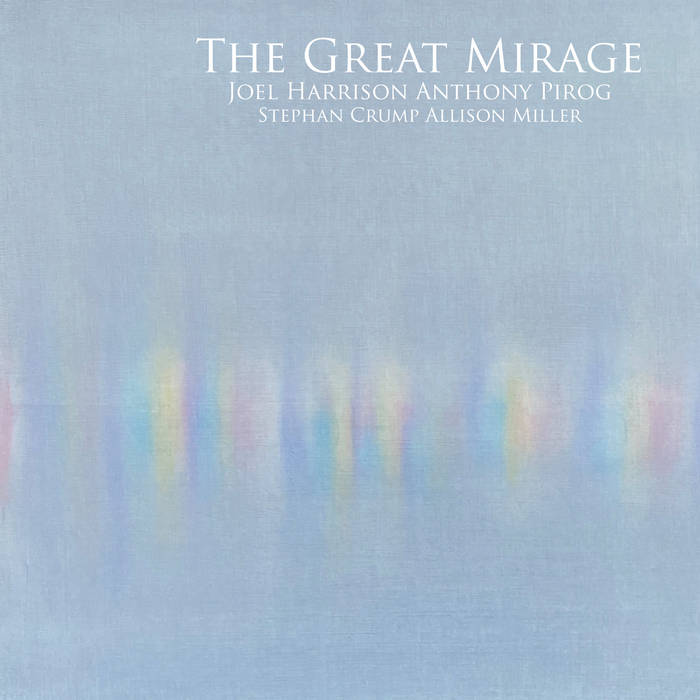
Like your guitar music electric and loud? Or do you like is electric and sensitive? "The Great Mirage" (ASG Recordings) pairs Joel Harrison and Anthony Pirog with the rhythm section of Allison Miller (drums) and Stephan Crump (electric bass) and the results are fascinating. All four players have excellent jazz chops but here they turn their attention to music that could be best described as "Prog Rock meets Electric Fusion". There are moments, such as on the album opening title track and on "Mortgage on My Soul" (composed by Keith Jarrett) that try men's speakers with both guitarists displaying chops that would impress fans of Jeff Beck and Steve Vai. Yet, on "There's Never Enough Time" and "Desert Solitaire", there are moments of beauty and emotional depth.
One should not downplay the work of Ms. Miller and Mr. Crump. On the uptempo pieces, they set the pace – the funky rhythms on "East Hurley" rub against the wailing guitars so nicely. Listen to how gently they keep the pace flowing on Harrison's heartfelt "I'll See You in the Shining World". This particular tune is one whose melody sticks to your soul.
Pirog and Harrison turn acoustic on the 75-second "Last Rose of Summer" with one of them playing dobro. Despite its brevity, the piece stands out.
The album closes with two powerful tracks. First, "Clarksdale" has a hard-edge tempered by the addition of Bruce Katz on the Hammond B-3 organ. Pirog's wailing solo pushes off the rhythm section while Harrison's ringing chords keep the structure. That leads to the rocking "Buffalo Heart"–composed by Harrison, the roaring piece sounds like an homage to Neil Young & Crazy Horse. The guitars roar at each other from thew corners of the stereo mix while the bass and drums throb and thrash in-between them.
"The Great Mirage" is, in some ways, one of those "turn it up to 10" recordings, with piercing guitars that can cleanse one's soul. To the credit of Joel Harrison and Anthony Pirog, these songs have really strong and, for a good number, engrossing melodies. Yes, it's loud, yes, it's mostly electric, but this music also has emotional power and maturity, not just a endless of loop of flashy solos.
Saxophonist, composer, and educator Adam Larson, born in Normal, IL, now lives and works in Kansas City at the University of Missouri/KC. After graduating from the Manhattan School of Music (Bachelor's and Master's degrees), he stayed in New York City leading his own ensembles and recording five albums for labels such as Inner Circle Music, Ropeadope Records, and on his own label. They showed him as a fine soloist and a good writer –– he also played a slew of gigs as a sideman with various leaders.
Larson makes his debut on Outside In Music leading a trio that features bassist Clark Sommers and drummer Dana Hall. "With Love From Chicago" contains 10 pieces, three by the leader, four by bassist Sommers, and one each by Thelonious Monk, Chicago-based tenor saxophonist John Wojciechowski, and J. Russel Robinson. What stands on initial listenings is how "tight" and "loose" the group interactions are, how delightfully melodic bassist Sommers can be, how powerful drummer Hall (plus he can swing mightily), and how comfortable the leader is being challenged by his rhythm section. The album opens with Larson's "Angolan Babysitter" –– Hall's polyrhythmic attack pushes the saxophonist to play with abandon but make sure to listen to how Sommers bounces his melodic phrases off the drums. Sommers' bluesy "The Time You Forgot You Knew" has a handsome melody with strong counterpoint from the composer all underpinned by the drummer's headlong push forward.
The Trio does a sprightly reading of Monk's "We See", playing with the time signature, breaking up the melody, playing with the piece ways that the composer would probably enjoy. J. Russel Robinson's "Portrait of Jenny" (a hit for the Nat "King" Cole Orchestra in 1949) is an oft-recorded standard; here, the Trio plays the tune oh-so-slowly with Hall's brushes and Sommers melodic bass lines supporting the heart-felt performance of the melody.
"With Love From Chicago" is one of those musical experiences that would sound great in a club but, thanks to engineer Ken Christianson at Pro Musica in Chicago, the music leaps out of the speakers and into the room. At times under headphones, it feels like you're in the midst of the recording studio between the drums and bass –– their music hits you in the chest. The saxophonist responds by absorbing the "hit" and pouring its intensity into his solo forays. This is the first trio recording Adam Larson has released; his exciting thematic explorations and his powerful musicianship plus the joyful, intense, musical, rhythmical playing of Clark Sommers and Dana Hall makes one hope this is the first of many collaborations!
Pianist, composer, and educator Pete Malinverni, a native of Niagara Falls, New York, moved southeast to NYC in the 1980s where he is the midst of a long and very busy career. He has played alongside the last drummer Mel Lewis, saxophonists Joe Lovano and Steve Wilson, and vocalist Karen Allyson (among others). The pianist has issued 16 albums as a leader plus appeared on many more. He's also plays in religious settings at theDevoe Street Baptist Church in Brooklyn (Minister of Music for eighteen years), the Westchester Reform Temple in Scarsdale, NY (Pianist and Conductor) and the Pound Ridge Community Church (Director of Music. He is now the Chair of Jazz Studies at Purchase College/ State University of New York.
The pianist's latest album is "On The Town –– Pete Malinverni Plays the Music of Leonard Bernstein" (Planet Arts Recordings) and it's a delight from start to finish. Malinverni first met the Maestro when the pianist had a solo gig at Bradley's in New York City and Bernstein (1918-90) walked in. Malinverni started playing the composer's "Lucky To Be Me" from the 194e4 musical "On The Town". Bernstein was thrilled and struck up a conversation which tickled the younger musician so much. Still, it took nearly 30 years for Malinverni to play a program dedicated to the composer's music. he did just that in 2018 as part of Bernstein's Centennial Birthday celebration for a program that featured a larger ensemble with four reeds. For "On The Town", the pianist is playing with one of his closest associates, bassist Ugonna Okegwo, as well as drummer Jeff Hamilton.
Photo: Matt Baker
The 10-song program features nine Bernstein piece plus Malinverni's "A Night on The Town" that closes the album. The pianist picked songs associated with the composer's as well his own adapted home, New York City. Therefore, it should come as no surprise that the album's opener is "New York, New York" from the joyous "On The Town". Okegwo and Hamilton swing with a purpose while Malinverni romps through the melody like a pair of sailors on shore leave. There's a lovely version of "Somewhere" which, after the handsome solo piano opening, takes on a bluesy persona. The happy-go-lucky feel of "I Feel Pretty" not only highlights the melody but also plays up the girlish enthusiasm of Maria who sings the tune in "West Side Story". Note the fine contrapuntal bass lines and the delightful swing of the drums. Hamilton states the melody (and some) in the opening moments of "Cool" and then the trio romps forward. There's a feel of Paul Desmond's feel of "Take Five" throughout the trio's rendition of "Some Other Time" (from "On The Town") and more blues in that 1944 show's heartfelt ballad "Lonely Town".
Throughout the album, one gets to bask in the glow of the sounds from pianist Pete Malinverni. Even when creating a solo, he creates melodic variations on the music of Leonard Bernstein. The pianist's original at the end of the program may remind some listener of the trio music of Herbie Nichols but you also traces of the person Malinverni is celebrating. "On The Town" will make you tap your feet, smile widely, and even sing along and that's very "cool".
Bassist and composer Luke Stewart, who splits his time between Washington, D.C. and New York City, is one of the busiest creative musicians currently catching the attention of critics and listeners around the US and the world. He leads various groups including the Exposure Quintet and is an integral member of Invisible Entanglements as well as Heroes Are Gang Leaders plus he's worked with saxophonist James Brandon Lewis, Moor Mother, and guitarist Anthony Pirog. His latest project, Luke Stewart's Silt Trio, features drummer Chad Taylor and tenor saxophonist Brian Settles.
The trio's debut album, "The Bottom" (Cuneiform Records), may remind some of the work saxophonist/ flutist Henry Threadgill created with bassist Fred Hopkins and drummer Steve McCall in trio Air. Not so much in the playing styles of the musicians but in how the trio approaches the music as a three-way conversation, how melodies arise from rhythmic patterns, and how solos develop from inside the music. The opening "Reminiscence" is hypnotic minimalism at its sweetest; built off of Taylor's repetitive pattern played on the mbira, Stewart's bass lines bounce off that pattern while Settles enters playing a melody of long tones in the higher (alto) range of his tenor. Other pieces develop slowly, especially in the cases of "Angles" and "Circles", both group improvisation. The former tune, the longest on the program at 11:39, rises up out of a short melodic saxophone phrase which gives way to Stewart's bowed bass alongside Taylor's chattering drum. The piece moves slowly forward until it finally falls into a rhythm with less than 90 seconds to go. "Circles" is just the opposite; a fiery romp that does not let up for a second until right it comes to a close at 3:04.
Taylor and Stewart lock in on "Roots", creating hypnotic and powerful waves of rhythm for Settles to ride atop. The driving rhythm is infectious but never overwhelms the more sublime tenor sax sounds. Yet, the performance keeps driving forward even as the music slows to its finish.
"The Bottom" closes on a bluesy "Dream House". its easy-rolling tempo created by Taylor's tap-dancing brushes. Settles initially plays in a whimsical style (apropos of the rhythm) but opens up as his solo unwinds. Pay attention to Stewart's powerful contrapuntal lines which feed off both the sax and drums as well as his melodic solo supported by the gentle shuffling drums.
With the creation of his Silt Trio and the release of "The Bottom", bassist, composer, and conceptualist Luke Stewart shows yet another side to his ever-maturing explorations into Black Creative Music. He approached the album as he would a live set; you should as well. Sit back, listen deeply, and enjoy the ride.
Drummer Taru Alexander is the son of tenor saxophonist Roland Alexander (1935-2006) who, thanks to his father, has been playing music since he was three years old. The younger Alexander had a slew of mentors, studying with drummers such as Walter Perkins and Andre Strobert at the age of nine. He joined his father's band at 13, studied at the La Guardia Music & Art High School with Justin DiCioccio (later of the Manhattan School of Music), and made his recording debut on Soul Note Records (at the age of 16) with the Fred Ho Afro-Asian Ensemble. The drummer went on to play with pianist Rodney Kendrick, trumpeter Roy Hargrove, saxophonists Michael Marcus, Salim Washington, and Kenny Garrett, and many more.
"Echoes of the Masters" (Sunnyside Records) looks to be Taru Alexander's second recording as a leader. He's organized a top-notch quartet including James Hurt (piano), Antoine Roney (tenor saxophone), Rahsaan Carter (acoustic bass), and, on one track, vocalist Hanka G. Ms. G (who leads a quartet that features Alexander on drums) provides lyrics and her powerful voice to the Thelonious Monk/ Coleman Hawkins classic "I Mean You"; the band builds off her energetic style, pushed by the leader to create short, sweet, and succinct solos. Not surprisingly, there are two pieces by the senior Alexander including the exuberant "Change Up" that opens the six-song program and "Kojo Time" whose opening notes sound like "reveille". The latter tune features a powerful statement from Roney pushed by the thunderous drums and Carter's splendid dancing bass lines. Hurt follows, riding the waves from beneath him to create a stunning solo. The bassist and then the drummer solo next –– the piece never loses its steam as both players dig deeply.
Roney shines again on the quartet's dancing take of McCoy Tyner's "Peresina", the polyrhythmic approach of the leader really pushing the soloist. Alexander is quite active but never intrusive reminding this listener of Billy Higgins, Jeff "Tain" Watts, and Rudy Royston. His understanding of dynamic tension shines throughout the album but none more exemplary than on the high octane drive of "Deception". From the pen of bassist Buster Williams, the rhythm section sets a furious pace and both Roney and Hurt respond positively.
Wayne Shorter's "Pinocchio" closes the program. First recorded by Miles Davis for his "Nefertiti" album, pianist Hurt opens the track with a short, introspective, solo before the rest of the band jumps in with a pace akin to "Deception". Pay close attention to how Alexander converses with the soloists, egging them onward with his powerful, enthusiastic, percussion.
Recorded in July of 2020 (in the first full wave of the pandemic), "Echoes of the Masters" is a brave musical shout-out to the healing power of music. While the program times out at under 36 minutes, the results are quite satisfying and makes one hope that this is the beginning of a fruitful period for drummer/ bandleader Taru Alexander.
Time to write about music thats been filling our house with good sounds this Spring:
Photo: Alan Nihigian
Drummer, trumpeter, composer, historian, educator, and mentor Ralph Peterson Jr. passed away on March 1 of this year after a long battle with cancer. He arrived on the jazz scene in the late 1980s as a member of the Blue Note "Young Lions" group Out of the Blue but soon was making albums as a leader. He had apprenticed at the side of drummer/mentor Art Blakey and was able to channel the explosive qualities of the older musician to create his own sound. Over the decades, Peterson proved to one of the finest "ballad" players –– when I saw him in person, most audience members were impressed by his ability to drive a band with great power but I loved to hear him play soft as a whisper. Over the past decade, Peterson moved between his own groups as well as leading the Messengers Legacy Band which featured members of Blakey's Jazz Messengers. He also taught up-and-coming musicians at Berklee College.
"Raise Up Off Me" (ONYX) is being billed as Ralph Peterson's final album as a leader. Recorded in December 2020 (less than three months before his passing), the program finds him in the company of the Curtis Brothers –– Zaccai (piano, keyboards) and Luques (bass) –– plus guests Eguie Castrillo (conga, timbale, cymbal, and cowbell on one track) and Jazzmeia Horn (vocals on three tracks). The title track opens the album, a group improv featuring the leader on various percussion instruments plus Zaccai on both acoustic and electric pianos. The music is reminiscent of Herbie Hancock's more exploratory of the late 1960s. "Right to Live" (composition by Peterson) features his fiery percussion pushed to the max by the powerful piano and foundational bass work. It's no surprise that the Curtis Brothers became the basis for "Triangular III" and "IV"; you remember the initial "Triangular" with pianist Geri Allen and bassist Essiet Essiet. Both Ms. Allen and Zaccai Curtis knew how to play Peterson's opfetn-complicated music.
The 12-song CD (13 if you buy the "download") is loaded with delightful music. The trio's take on Bud Powell's "Bouncin' With Bud" is playful with excellent interplay among the trio; note the angular "bounce" of the theme and the conversation between the piano and drums during Zaccai's solo. "Blue Hughes", a piece that the drummer composed for Out of the Blue, adds Mr. Castrillo to the mix. The percussion stew that sizzles up from the rhythm section sounds like an orchestra unto itself, really kicking the piano solo forward.
Photo: Emmanuel Afolabi
Ms. Horn first shows up on Peterson's lovely ballad "Tears I Cannot Hide". Her voice, often at the top of her natural range, is soulful and honest while the trio supports with a musical cushion. Pay attention to the drummer and how he uses space, his subtle cymbal work as well. The musicians dance delightfully beneath Ms. Horn's voice on John Hick's "Naima's Love Song" –– Peterson rocks the rhythm, especially under the smashing piano solo. The drummer also contributes a splendid trumpet solo and accompaniment. The vocalist's third contribution (the "bonus track" for the download) is a rollicking take of Betty Carter's "Please Do Something". The three musicians each solo with the drummer "trading 8's" with the vocalist's splendid scat singing. She drops out and Peterson takes over for a rhythmic treat!
If "Raise Up Off Me" is to be Ralph Peterson Jr's final album, he certainly goes out on a high note (a major bunch of them in fact). If you are listening to hear if the drummer is weak or has slowed down, you won't hear anything like that. Neither does one hear sadness, pity, or anger. Joy is the sound emanating from the speakers. Ralph Peterson Jr dealt with numerous issues during too-short lifetime but his music was his strength, his refuge, his contribution to making the world a better place! What a man, what a man!
Jennifer Wharton, a native of Pittsburg, CA, is called a "low brass specialist'. Best known for her work with Darcy James Argue's Secret Society and many other large ensemble, her bass trombone playing is noted for its power and her fine ensemble work. Ms. Wharton also has worked in the pit bands in Broadway productions of "Beautiful: The Carole King Musical", "Porgy & Bess", "9 to 5", and others. Several years, the trombonist decided to give her instrument top billing and formed Bonegasm, a septet with four trombones – yes, a whole section – and a rhythm section. The 'bone players include Ms. Wharton, her husband John Fedchock, Nate Mayland, and Mark Ferber; aiding and abetting them are Michael Eckroth (piano, Fender Rhodes), Evan Gregor (bass), and Don Peretz (drums). The group's self-titled debut appeared on Sunnyside Records in February 2019. The album's liner notes by Jim McNeely played up the name as well as the originality of an artist creating new music for jazz trombone as well as putting the instrument front and center
While the debut is good fun, album # 2 "Not a Novelty" (Sunnyside) is, in many ways, even stronger. That could be because by the time the septet entered the studios, it was September 2020, right in the midst of the pandemic. No one in the band was working regularly, venues had closed down, the theaters on Broadway and beyond silenced; save for teaching students on ZOOM, there were no gigs. Opening with Eckroth's "BonGasmo", the band (with Samuel Torres irrepressible percussion joining) plays with abandon including soloist Mayland. There are only two other originals by band members in the program. Instead there is an eclectic collection of pieces from composers such as Remy LaBouef, Tori Amos, Chris Cheek, Ayn Inserto, Carmen Staaf, Manuel Valera, and Chris Cornell (the former leader of Soundgarden now deceased).
Photo: John Abbott
The Cornell tune, "The Day I Tried to Live", features a "grunge metal" arrangement by Darcy James Argue and a Tom Waits-influenced vocal by
Kurt Elling. He and Ms. Wharton solo together with the vocalist imitating a 'bone player with a cup mute. Ms. Amos's "Twinkle", arranged by Fedchock, is a lovely ballad; spreading the brass around the sound spectrum and giving them sweet harmonies to play while he solos, the music moves forward gently gaining in intensity. Torres shows up once more for the rollicking take of Valera's "La Otra Mano" even getting a solo after both Ferber and Eckroth shake the rafters. "Blue Salt", by Ayn Inserto, features a rocking bass line (doubled on piano) plus a splendid solo from Ms. Wharton and her husband over several different rhythms.
Mark Ferber's "Blue Salts" is definitely a blues, down and somewhat dirty (especially the swagger from the 'bones). Ms. Wharton takes her solo low down while bassist Gregor solos with the band responding in kind. There's even a Frank Zappa feel to the "march" that closes the piece.
No truer words than "Not a Novelty" as the trombonists take center stage and acquit themselves magnificently. The basic difference between the first and second Bonegasm album is that while the material is just as good it's the arrangements that feel stronger. Jennifer Wharton should be proud of this album and this group –– she gets to work and play with her husband and with her friends. Hopefully, the band will get to play in front of live audiences.
Pianist Frank Woeste and trombonist Ryan Keberle first met in 2015 while playing with trumpeter Dave Douglas. The pianist, born in Germany now based in Paris, France, and the trombonist, born in Spokane, WA, now based in New York City, decided to create a project – which they named Reverso – that blended 20th Century music with jazz because they felt that certain elements of the two "genres" have influenced composers and performers right up to the present. They recruited French cellist Vincent Courtois and drummer percussionist Jeff Ballard to work with them. Composer Maurice Ravel (1875-1937) served as the influence for the group's 2018 debut album "Suite Ravel" using his six-part "Le Tombeau de Couperin" as a stepping-off point for both revising the piece for four voiced and creating compositions of their own influenced by the great master.
2020 brings Reverso's second album "The Melodic Line." Released on the leaders's Out Note Records (released through Outhere Music), the ensemble has been pared down to a trio with the subtraction of Ballard. Instead of focussing on one composer, this time the music bears the influence of Les Six, six French composers – Darius Milhaud, Francis Poulenc, Arthur Honegger, Georges Auric, Louis Durey, and Germaine Tailleferre – all of whom were active in the first decades of the 20th Century. Woeste studied the music of Milhaud, finding influences as varied as American jazz and Brazilian music. Meanwhile, Keberle spent his time exploring themusic of Ms. Tailleferre (1892-1983). Even though she lived a long life, her most successful period of writing was between the two World Wars.
The nine-song program kicks off with Woeste's "Blue Feather", a handsome melody pushed along by the composer's piano and the deep tones Courtois's cello. The piece tunes percussive with clapping supporting the piano solo until the cello br=egins counterpoint and the trombone plays a melodic accompaniment. Keberle's "Exemplar" is next; again, it's deep tones of the cello in the introduction that first catch your ear. Then, the trombone and cello share the melody over the spare piano accompaniment. Courtois's lovey solo with piano accompaniment and counterpoint stands out. The trombone solo rises over the melodic piano and pizzicato cello, feeling like the aural equivalent of clouds cutting across the blue daytime sky.
This music is often quite lovely, a fascinating blend of classical, jazz, and folk melodies. There's a funky feel to Woeste's "Absinthe" (especially in the piano's left hand in tandem with the plucked cello while Keberle's "Major Jack" has an anthemic intro that opens up to a long melody line before a sparkling piano solo. The album closes with the pianist's lovely "Clara", yet another example of how the various voices work together to not only support the rich melody but to create a sonic flow under the pizzicato cello solo.
Reverso creates music that pushes, albeit gently, at barriers, eschewing genre, creating memorable melodies in an atmosphere of creativity and trust. The album title – "The Melodic Line" – does give one a good idea of what you're in for. Ryan Keberle and Frank Woeste, along with the quite impressive Vincent Courtois, make music that will excite and soothe your soul. Give a long listen!
Pianist and composer Aaron Diehl still seems like he's the "new guy at the keyboard" but he's been playing professionally for, at least, 15 years. He's worked with a slew of artists, ranging from Wynton Marsalis to Wycliffe Gordon to the New York Philharmonic and the Cleveland Orchestra. His most high-profile gig is with vocalist Cecile McLorin Salvant. Listening to Diehl is such a treat; he loves melodies, is an excellent improviser, and has absorbed myriad influences into his own articulate statements. There are certain reviewers and critics who tend to lump him into the musical "Neo-cons" but, truly, he's his own man. In a trio setting, one hears traces of Bill Evans, Ahmad Jamal, Herbie Hancock, and even a touch of Memphis Slim in his blues playing; plus, his touch is impeccable.
"The Vagabond" is Diehl's third release for Mack Avenue Records and features his current trio of Paul Sikivie (bass) and Gregory Hutchinson (drums - the picture above features the Trio's former drummer, the late Lawrence Leathers). The program features 11 tracks with seven originals from the leader plus pieces by Sir Roland Hanna, John Lewis, Sergei Prokofiev, and Philip Glass (interesting that those four pieces are the final tracks on the album). One should notice how quiet many of these pieces are – Diehl and his rhythm section do not need to "shout" to get their musical points across and that allows the listener to really pay attention. Note the power and classical influences on "Park Slope" as well as the strong bass solo and excellent drum work. The subtle power of "Lamia" is its quiet yet insistent rhythm and Diehl's superb piano melody and solo. The whisper-touch of Hutchinson's cymbal work and Sikivie's simple yet powerful bass work allows the leader to range far afield without losing touch with the thematic material.
Photo: Jaime Kahn
This music really captures one's attention. The title track opens with a melody line that seems to keep rising along with impressive counterpoint from the bassist. Notice how Hutchinson plays beneath the piano solo, toying with the time and accents yet never tripping up his musical partners. There's also a strong classical feel to the lovely ballad "Treasures Past." Diehl opens his solo with such a soft touch and, while he does play a bit harder at times, the real power in the piece is how melodic the trio is.
"Prokofiev's March" is the first of the last four tracks. It's a dazzling display of powerful rhythms, martial-sounding piano chords, and intense forward motion. Sir Roland Hanna's "A Story Told, Seldom Heard" is a lovely ballad with a rich chordal melody and one more impressive bass solo. The unaccompanied piano opening of Lewis's "Milano" leads into a light-hearted, even a bit sentimental, ballad with more gentle cymbal colors and a touching piano solo. The album closes with Glass's "Piano Etude No. 16" in which the rhythm section gets to work with creating solos while Diehl moves the music forward. The power of his chordal work near the end of the piece plus its repetitive nature becomes hypnotic over the course of eight-plus minutes.
"The Vagabond" is an often stunning and soothing 65 minutes of music from Aaron Diehl, made all the more powerful and interesting by the work of bassist Paul Sikivie and drummer/ cymbalist Gregory Hutchinson. Even though each member of the Trio is a master of his instrument, this music is rarely about technique and always about the emotional richness of the compositions and the performances. Take the time to absorb these sounds – it's worth the adventure!
Saxophonist Dayna Stephens (he plays soprano, tenor, and baritone) has been on the creative music scene for the past decade recording eight albums as a leader plus appearing on dates with trumpeter Brian Lynch, guitarist Perry Smith, pianist Theo Hill, and bassist Linda May Han Oh (plus others). Over his career he's also played alongside Fred Hersch, Muhal Richard Abrams, Roy Hargrove, Ambrose Akinmusire, Wayne Shorter, Rufus Reid, John Scofield, Lionel Loueke, and Gretchen Parlato. He's been much more active since a kidney transplant in 2015 saved his life. After recording for Criss Cross Records and Sunnyside Records, Stephens started his own label in 2017 – Contagious Music – where he released "Gratitude", a quartet date with Brad Melhdau, Julian Late, Larry Grenadier, and Eric Harland. His saxophone influences are many and varied; he's also an accomplished bass player but has yet to record on the instrument.
His new album, "Liberty" (Contagious Music), is his first trio date. Featuring Harland and bassist Ben Street, the 11 song program (10 originals plus "Planting Flowers" from Aaron Parks) is filled with intelligent playing, intuitive interactions, fine solos, and Stephens playing with such confidence and joy. "Liberty" can have several meanings; in this setting, especially without a chordal instrument plus the saxophonist is also talking about creating art in a society that is "free" but those freedoms are under fire from may sides. Can Stephens's music help by reminding listeners that we music work together to produce positive results, that we each have a say in the world we want to live in but must be cognizant of the needs of others. No matter what you think the word means, the album "Liberty" is a delight from start to finish.
Photo: Paola Piga
The album, recorded at the Rudy Van Gelder Studios in Englewood Cliffs, New Jersey, has such an immediate sound as if the trio was in the room with you. There's an undercurrent of blues that runs through pieces such as the opener "Ran" and the closer "Wil's Way" (dedicated to organist Wil Blades). Street and Harland set the tone by swinging with a purpose, giving Stephens a delightful cushion of sound to bolster his attack. In his notes, the saxophonist writes that "Faith Leap" is inspired and influenced by John Coltrane's "Giant Steps" – even more inspiring for Stephens is Harland's funky attack and Street's melodic bass lines. The leader turns to baritone saxophone for "TheLost and Found", a handsome ballad that is emotionally strong and shows the leader's impressive range on the big horn. He recorded the song on the tenor sax for his 2007 debut "The Timeless Now", a sextet date that also featured this rhythm section.
Photo: Chris Drukker
Give a listen to "Loosy Goosy" down below and you'll hear the closest connection to the classic Sonny Rollins Trio recordings of the 1957-1958. Stephens is now imitating the great tenor innovator but displays a similar confidence and big sound as the elder did on the recordings. Don't miss the African-influenced "Tarifa" – the city for which the song is named sits at the southernmost end of the Iberian Peninsula, just eight miles from Morocco. Harland's splendid drumming along with Street's foundational bass lines and Stephen's overdubbed saxophones makes this track irresistible.
"Liberty" sounds great, with musical interactions that will not only keep your attention but also make you move your feet and nod your head. Dayna Stephens, along with Ben Street and Eric Harland, has made one of the most memorable albums of the past several years, brimming with ideas, melodies, and rhythms, exuding confidence and pleasure. Dig in – dig it!
For more information, go to daynastephens.net. The album will be released on 2/28/2020.
Here's the afore-mentioned "Loosy Goosy" in the studio:
If you've spent any time paying attention to creative music in the 21st Century, you know that there are a group of pianists who are always pushing the envelope. Artists such as Jason Moran, Myra Melford (who started out in the last decade of the previous century and has never stopped exploring), Craig Taborn, Aruan Ortiz, John Escreet, and Kris Davis. Ms. Davis seemed to spring out of nowhere with her 2003 debut on Fresh Sound New Talent and over the course of 13 albums as a leader or co-leader, she has continually expanded her musical palette. In 2016, Ms. Davis inaugurated her own label Pyroclastic Records with "Duopoly", a series of two duets each with eight artists. "Octopus" followed in early 2018, also an album of duets only this time her dialogue was with fellow pianist Craig Taborn. She also leads a trio with bassist William Parker and drummer Jeff "Tain" Watts (dubbed January Painters), another trio (this one named Borderland Trio) with bassist Stephan Crump and drummer Eric McPherson, plus she has a duo with saxophonist Ingrid Laubrock. One would not go wrong calling Kris Davis a very busy musician.
Her latest recording, "Diatom Ribbons" (Pyroclastic), is a program of 10 compositions (eight by the pianist and one each by Michaël Attias and the late Julius Hemphill) played by various sized ensembles ranging from a duo to septet with several others in between. The one constant partner throughout is drummer Terri Lyne Carrington appearing on every track with other participants including turntablist Val Jeanty (all but two tracks), acoustic snd electric bassist Trevor Dunn, vibraphonist Ches Smith, guitarist Nels Cline, saxophonists JD Allen (only on the first and last tracks) and Tony Malaby (on three tracks) plus two cuts with guitarist Marc Ribot. Esperanza Spalding adds her voice to two tracks, Attias's "The Very Thing" and "Certain Cells". Attias's song has a lilting melody that the drummer underpins with her expressive playing with Malaby's tenor pushing in the background and Jeanty's swooshes and splashes painting quite a backdrop. "...Cells" builds from Gwendolyn Brooks's powerful poem "To Prisoners" and is a tour-de-force for Ms. Carrington's robust drumming.
Photo: Peter Gannushkin
There are moments throughout the album that capture the mind. The voice of composer Olivier Messiaen moves and out of "Corn Crake" as Ms. Jeanty's electronics swirl beneath the rambling piano lines and the rock-steady drumming. Ribot's lines spew out with force on the rocking "Golgi Complex (The Sequel)" (dig how Ms. Carrington and bassist Dunn lock into the groove) then engages in a duel with Cline on the following track "Gogol Complex." That track not only pits the guitarists against each other but pay attention to the power coming from the rhythm section and Ms. Davis's thunderous piano work.
Photo: Daniel Sheehan/Martin Sarrazac
The album closes with Hemphill's "Reflections" (first recorded in 1975 on his second album as a leader "Coon Bid'ness"), a multi-sectioned piece that opens in an introspective mode with the two saxophones playing in unison behind the dancing piano lines and the counterpoint of the drums. Dunn's bowed acoustic bass moans quietly while also producing overtones as the saxophones begin to state the song's theme. A bit past the halfway point, the drums and bass drop into a funky beat, the saxophonists repeat the melody, and a highly processed proper British voice talks about learning. Both Allen and Malaby solo, dancing atop the beat and Ms. Davis's pounding piano chords, the voice jabbering in and out of the background.
One of the more delightful attractions of "Diatom Ribbons" is how Val Jeanty adds her distinctive turntable sounds to the mix. How Kris Davis utilizes her talents makes the album all the more intriguing, an integral part of a program in which all parts are integral – there is no wasted space. Ms. Davis first teamed up with Terri Lyne Carrington and Esperanza Spalding to play a series of concerts to honor the memory and work of Geri Allen. That connection pushed Ms. Davis to create this project, one that will greatly appeal to the curious mind. Dig in, pay close attention.
Saxophonist Samuel Blais came to New York City in the early years of this decade to study with saxophonist and NEA Jazz Master David Liebman. In 2012, Liebman helped the young man create a saxophone quartet in NYC that featured the two of them (on soprano and baritone saxophones) in a partnership with tenor saxophonist Donny McCaslin and alto saxophonist David Binney. They toured in Quebec that year playing compositions by all four members, the first time both Binney and McCaslin had written for this kind of ensemble. The ensemble got back together in May of 2015, entered Red Rock Studio in the Poconos Mountain in Pennsylvania and, over the course of two days, recorded the 10 tracks that make up "Four Visions" (Sunnyside Records)
Interestingly, the four musicians each only play one reed instrument throughout the program although all but Binney play different saxes. That choice gives the music more of a classical feel. The entire is composed of originals by the band members insulting three each by Blais and Binney plus two each by Liebman and McCaslin. On initial listening, one hears the influence of the World Saxophone Quartet, especially the writing of Julius Hemphill. Once you dig into each track, the composers individual voices come out. Liebman's "A Moody Time" starts as a ballad with each voice stepping out of the ensemble for short, solo, lines. Suddenly, the baritone sax falls into a groove and the soprano takes off. The tenor joins the bari while the soprano and alt take the melody and off the quartet goes. Binney's "Dunes" opens with the fours saxes sounding like a church organ but soon the quartet is off on a sonic adventure filled with melodic excursions and lightning-fast tempo changes. "Empty Sunbeams" hs a similar opening but falls into a groove, one tha bears the sound of WSQ.
YouTube
McCaslin contributes the handsome ballad "Buy a Mountain", a piece that hints at the blues, the phrases the members play when they step out echoing Coleman Hawkins, Johnny Hodges, Charlie Parker, Wayne Shorter, and others along the jazz continuum. "Et Voit Le Jour" (translated as "and see the day"), composed by Blais, has room for a handsome baritone solo but be sure to listen to what the other three play behind him. The support for the tenor solo is the same – make sure to listen to how clearly the band articulates the supporting lines.
Julius Keilwerth Saxophones
Liebman's "Inside Bach's Studio" is the longest track (15:53), through-composed yet leaves room for each saxophone to step out for solos. Those "spotlights" are truly solo (sans accompaniment) and rubato yet fit perfectly into the expansive fabric of the composition. There are several moments where one believes the piece is ending only to hear the quartet move into a new written section.
"Four Visions" is the work of four fertile minds brought together by Samuel Blais and Dave Liebman. It's such a treat to hear both Donny McCaslin and David Binney in this setting, creating music that challenges them as much as the listeners. What a treat1
Here's the Quartet in concert playing an expanded version of the piece:
Photo: Harvey Tillis
Bassist, composer, orchestrator, and arranger Matt Ulery has been a busy member of the Chicago music scene since arriving two decades. He studied at both Roosevelt University and Depaul University and played professionally with the likes of Patricia Barber, Kurt Rosenwinkel, and trumpeter Marcus Hill. he first recorded as a leader in 2007 and, since then, has worked with numerous different-sized ensembles, from trios to quintets to nonets to a brass band and a jazz orchestra. His compositions have been performed by groups as diverse as Eighth Blackbird, Axiom Brass, and the New Millennium Orchestra of Chicago. In 2016, Ulery inaugurated his own label, Woolgathering Records, with red;eases by his Loom/Large ensemble, pianist Rob Clearfield, trumpeter Russ Johnson, and saxophonist Tim Haldemann.
Woolgathering Records
His new album, "Delicate Charms", features long-time associates Zach Brock (violin), Greg Ward (alto saxophone), Quin Kirchner (drums), pianist Clearfield, and the leader on bass and all compositions. Ulery worked on the pieces for this lineup over the course of several years and the quintet went to Portugal in late 2018 where they received an ecstatic reaction from the audiences. Immediately on arrival back in Chicago, the group entered the studio. As to be expected, the music is beyond category but one can not miss the composer's love for melody, harmony, and counterpoint. The rhythm section is a major component in the music as well, not just with its use of polyrhythms but their own medic additions. What immediately stands out is the blend of the violin and alto sax – when Brock and Ward play together, the sound is so full and it's hard to tell them apart unless one is under headphones. Listen to the opening moments of the first track "Coping"; with Ulery and Brock bowing while Ward is playing, they sound like a string trio. Then, the violinist takes the melody and Ward plays the counter-melody. And, then they switch throughout the reading of the theme and verses.
Photo: Harvey Tillis
There are numerous delights on this hour-plus program. Ward, who is my choice for 2019 MVP (most valuable player) shines on "Taciturn" – his wide-ranging solo pushes Brock who follows with his own sparkling performance. Meanwhile, the rhythm section is rocking beneath them. Clearfield's piano solo at the onset of "Nerve" (the final track) has a classical feel with overtones of Appalachian folk music. The melody that follows carries on that sound with a melody that pulls at the emotions Pay attention to Kirchner's active drumming as well as to how he puts the rhythm on simmer underneath Ulery's excellent solo. Notice the soulful alto solo where the phrases take flight, reaching towards the skies.
Every track on "Delicate Charms" is worth exploring in depth. Over his career, Matt Ulery has created music that expands inside one's ears and mind, making the listener return to discover all that's in the music. With this album and July's release of "Wonderment" (a trio date with Brock and drummer Jon Deitmeyer), Matt Ulery has produced two of the best recordings of 2019!
The older I get, the more comfort I derive out of music that sounds like the musicians are having a great time playing. Not sure how I can tell other than there are occasions of one band member extorting on the others but one feels the comfort these musicians have taking chances, interacting with one another, and the "dancing" quality that inhabits the music. Drummer Ali Jackson (Lincoln Center Jazz Orchestra), bassist Omer Avital (Third World Love), and pianist Aaron Goldberg (Joshua Redman Quartet) all are busy sidemen as well as leaders – they have known each other for over two decades and, early in the 2010s, decided to form a trio. They took the name Yes! Trio and released their debut album on Sunnyside Records in 2012.
Seven years later, Yes! returns with a new album on a new label (Jazz & People, based in France) but with a renewed spirit and a whole mess of joy. "Groove du Jour" features 10 tracks with four composed by Avital, three by Jackson, one from Goldberg plus "Dr. Jackle" by Jackie McLean and the standard "I'll Be Seeing You." That final track listed is an excellent a=example of the trio's delightful approach – after a quiet beginning, Jackson settles into a slow shuffle beat and the song is permeated by the blues. Listen to the delightful piano solo. The program ranges from the powerful "Escalier", a Jackson composition that opens with the power of a McCoy Tyner that settles into a swinging groove. Avital's "Muhammad's Market" hints at a Middle eastern groove while it rumble forward on the strength of the drums and bouncing bass lines. Jackson's "Claqué" dances in on the funky drums, the high bass melody, and Goldberg's Thelonious Monk-like blues feel.
The album closes with Avital's "Bed-Stuy", yet another delightfully swinging song. Each member the trio gets to "strut his stuff" yet no one steps on anyone's toes. This music is so alive and lively you'll want to get into "Groove du Jour" many times. This is soul-affirming music from Yes! Trio!

 Posts
Posts


 On "Synchronocity" An Interpretation of the Album by The Police" (Outer Marker Records), the Brothers play all the songs (even the cassette-only––those were the days––"bonus track") in the order they appear on the original Police Lp. Because the majority of the original songs have such strong melodies (at least, the ones composed by bassist/ vocalist Sting do), the Trio do not try re-invent the (musical) wheel. Therefore, the excitement of the opening title track is evident here as well thanks to the powerful rhythms they create. Geoff's bass is the lead instrument on the "Walking In Your Footsteps" and "Every Breath You Take"––the piano solo on the former tune has a tinge of the late Vince Guaraldi's sound while the latter builds dramatically from the opening until the bass reclaims the theme in the middle.