Showing posts with label Chad Taylor. Show all posts

Thursday, June 13, 2024

Potpourri

Much has befallen (emphasis on "fall') since the previous post. Now I have two fractures to heal! Still listening to plenty of music but writing is slow and cumbersome. Here's a sampling of what I was working on between the two accidents.

Unless you have paid no attention to Black American Music over the past decade-plus, the name Luke Stewart should be quite familiar. The bassist has worked with David Murray, Wadada Leo Smith, Nicole Mitchell, the late Jaimie Branch, Marshall Allen, and so many more.  He leads several different ensembles including the Exposure Quartet, Heart of the Ghost, and the Remembrance Quintet as well as co-leading Irreversible Entanglements.  He also leads Silt Trio, an ensemble featuring tenor saxophonist Brian Settles, and drummers Trae Crudup or Chad Taylor. The Trio's 2020 debut, the self-released "No Trespassing" did not carry the Silt Trio monicker, has Crudup on drums, and sounds like a totally improvised set. 2022's Cuneiform release,  "The Bottom", features Taylor and showsw three voices working as one, not beholden to any one style and also displaying Stewart's ear for melody – the songs are not "blowing tunes" but composition and free improvisation often reside in the same pieces.

Silt Trio's new recording "Unknown River" (Pi Recordings) is made up of four tracks recorded in Tempo House studios in Baltimore, MD, and three recorded live in Trinosophes, a cafe/ performance space in Detroit, MI. The studio tracks open the album with Crudup in the drum chair (he's also worked with saxophonist James Brandon Lewis). Listen below to "Seek Whence", the opening track – the bass and drums lay down a "tight" groove and the underappreciated Settles delivers the melody then creates a solo that is his response to both that melody and the rhythmic drive.  "Baba Doo Way" follows and it's easy to see where the tune got its title.  Doesn't take long for the Trio to move up and away from the melody into a frenetic, at times, improvisation that shows how deeply they listen to each other plus the strength of the bass lines to allow Crudup to explore poly-rhythmic pathways.

Photo: Luciano Rossetti
The three live tracks open with "Amilcar" and Taylor announces his presence from the get-go with the powerful solo that introduces the track. Two minutes in, Stewart joins in, his powerful bass work introducing Settles and a thunderous solo, arguably his most exciting and impressive of the album. Stewart taes the peace to its finish with a throbbing solo which leads into the nearly 13-minute opus "Dudu".  The bowed bass, the steady beat, and Settles playing slow melody lines creates a drone. Three minutes in and there's a shift in dynamics, the tempo picks up, the tenor and bass lines flutter and skitter around each other as the drums sit out.  As Settles and Stewart continue their improvisatory dance, Taylor returns and the intensity begins to climb. Soon, the three musicians are firing on all cylinders withg Settles riding the rhythmic headwinds created by the bass and drums.

"Unknown Rivers" may refer to the numerous underground water sources that fill our lakes, bays, reservoirs, and oceans or, more to the point, to the rivers of music that course through the musicians bodies as they are creating in real time.  Luke Stewart Silt Trio creates fascinating music on this, their third album, and one imagines they must thrive in the concert/ club setting. If you're a fan of saxophone trio music, this album ranks up there with Sonny Rollins' "Freedom Suite", with Air's "Air Time", and Matana Roberts, Josh Abrams, & Chad Taylor's "Sticks and Stones", arguably my favorites. 

For more information and to purchase the album, go to https://lukestewart.bandcamp.com/album/unknown-rivers

Here's the opening track:


There's a delightful new recording from percussionist-composer Samuel Torres. Titled "A Dance for Birds",  Torres has created a nine-movement suite of music for the Latin Chamber Ensemble that features the members of his Sextet plus the Bergamot String Quartet.  

Here's the video for "The Song" with graphics created by Colombian visual artist Diego Pombo:


Ernesto Cervini is one busy person, leading several ensembles, playing as a sideman, running his publicity company, touring, and helping to raise a young family.  One of his ensembles is the sextet Turboprop and their new recording is, arguably, its best.  "A Canadian Songbook" (TPR Records) is a seven-song program featuring two interpretations of two Canadian "pop" songs, two Cervini originals, one from Turboprop trombonist William Carn, and one each from friends Allison Au and James Hill. 

Here's the group's take on The Barenaked Ladies "When I Fall":


Turboprop is:

Tara Davidson - Alto Saxophone
Joel Frahm - Tenor Saxophone
William Carn - Trombone
Adrean Farrugia - Piano
Dan Loomis - Bass
Ernesto Cervini - Drums


Friday, September 8, 2023

Tribute and Tributaries

In May of 2021, tenor saxophonist and composer James Brandon Lewis released "Jesup Wagon" on Tao Forms (AUM Fidelity). The music on the album told the inspirational story of George Washington Carver (1864-1943), agricultural scientist, inventor, and community organizer (the Southern farming communities). The recording introduced the world to the Red Lily Quintet. Composed of Lewis, Kirk Knuffke (cornet), Chris Hoffman (cello), William Parker (bass), and Chad Taylor (drums, percussion), the ensemble contains multitudes, playing with creativity, invention fire, and wit. The album made a slew of "Best of" lists later that year and deservedly so.

Lewis and the RLQ is back, this time album inspired by the saxophonist's grandmother.  "For Mahalia, With Love" (Tao Forms) is a nine-song program of spirituals made famous by Ms. Jackson (1911-1972) during the four+ decades she toured the United States and the world.  Many people point to the influence of Gospel music on the blues and "soul" music but certainly Black spirituals have influenced a multitude of artists from Louis Armstrong to Duke Ellington to John Coltrane to Archie Shepp to the wonderful albums of Hank Jones and Charlie Haden (there are plenty more).  Lewis and company lean more to the Coltrane type of "testifying" but unlike the 1965 classic "A Love Supreme", there is only one original work on "For Mahalia"–the program opens with "Sparrow", which includes the melody "His Eye Is On The Sparrow" (composed in 1905 by Charles H. Gabriel and Civilla D. Martin) and the leader's "Even the Sparrow".  

Smithsonian/Museum of African History
This music covers a wide swath of territory. From the fiery saxophone shouts on "Calvary" to the swinging final minutes of "Go Down Moses" to the hard-edged driving force of "Wade In The Water" to the joyous power of "Swing Low", this is music that celebrates Ms. Jackson's legacy and builds upon the lessons learned, the lives lost, and the freedoms gained (and now in jeopardy) over the last 400 years.  The music also builds off the messages in the music adapted from the teachings Blacks learned in their churches, the prayers of hope and freedom that flowed into and out of the music. Check out the sly grooves of "Elijah Rock", the splendid bass solo that opens the piece, the long rubato tenor/trumpet call-and-response, and the mid-song drop into tempo; if that does not makes you want to shout "Hallelujah" for its sweet blend of African, Swing, and Caribbean rhythms, I do not know what will

The Red Lily Quintet is an excellent ensemble and the music James Brandon Lewis creates and/or arranges for them gives each person room to move, to influence the direction, to add to the harmonies, to engage in the call-and-response, and more.  The saxophonist's interactions with Knuffke soar, shout praise, and dance on many of the pieces.  Parker and Taylor are...well....they are a rhythm section par excellence in that one creates the foundation and the other the flow plus the fire. There are times when Hoffman's cello gets covered but he's there, sometimes playing counterpoint to the melody, other times counterpoint to the bass lines.  

All told, "For Mahalia, With Love" is a great collection of songs for many and varied reasons, not the least of which is the the ensemble's powerful playing and the excellent settings created by James Brandon Lewis.  Do dip your feet into this mighty stream!

For more information, go to https://jblewis.com/about.  To purchase the recording, go to https://jamesbrandonlewis.bandcamp.com/album/for-mahalia-with-love.  For a limited time, if you purchase the compact disk or vinyl versions of the album, you receive a second disk features Lewis leading the Lutoslawski Quartet in his chamber music piece "These Are Soulful Days", recorded live at its premiere performance in November 2021 at the Jazztopad Festival in Wroclaw, Poland.  

Revive your spirits with "Swing Low":


Photo: Brian Harkin/NYT
Tenor saxophonist Mark Turner has been collecting critical acclaim since he moved to New York City in the early 1990s.  One might say he has a "cool" tone" but you could also argue he's very much his own man.  In late 2019, Turner recorded "Return From the Stars" for ECM with a quartet featuring Jason Palmer (trumpet), long-time collaborator Joe Martin (acoustic bass), and the young, dynamic, drummer Jonathan Pinson.   That group was invited by photographer and label owner Jimmy Katz (Giant Step Arts) to take part in his label's new series. Titled "Modern Masters and New Horizons", the series is curated by Palmer and drummer Nasheet Waits and will include contributions from artists such as vibraphonist Chien Chien Lu, saxophonists Neta Ranaan and Ben Solomon, drummer Eric McPherson and others. 


The first release in the series "Live at The Village Vanguard" and features the Mark Turner Quartet, the same ensemble on the ECM album. Recorded over two nights in June of 2022, the 11-song, 2+ hours, program features material from the earlier studio recording, new pieces written specifically for this ensemble as well as older Turner originals.  What Katz the producer is get out of the artist's way and lets the band do what they do best–play.  Listen to "Return from the Stars" below to hear how tight the band is, how much they listen to each other, and how this music flows.  "Brother, Sister", first recorded in 2014 for ECM with a different quartet (save for Martin), opens with a long, poetic, powerful, solo tenor sax statement––the band comes in seemingly on tiptoes but pay attention to Pinson on the offbeat and Martin's swinging counterpoint.  Palmer gets a shorter unaccompanied solo before the the band reenters. Now the trumpet and sax play long tones while Martin solos.  Notice how the textures change as the music moves forward. 

The newest piece on the album, "Wasteland", is a fascinating ballad that also opens with an unaccompanied tenor sax solo––this time, one hears a plaintive cry, a sense of deep sorrow or, even, loss of hope that leads to a full group elegy. There are long bass notes, Pinson on his toms, a melody line for the sax and trumpet that starts in unison, moves away, and back but in counterpoint now.  When you listen to the song in total, you realize that not only is it an elegy but also serves as a vehicle for the drummer to create short solos in response to and seeming rejection of sorrow.

Photo: Jimmy & Dena Katz
"It's Not Alright With Me" is, at 18:36, the longest track on the album. The playfulness of the melody brings images of the Clifford Brown/Max Roach Quintet. While the rhythms prances and struts, the band takes its time to move through the melody section.  Martin gets the first solo and it's a tour-de-force, quite melodic yet percussive, careering forward at breakneck speed. Turner's solo starts slowly but he rides the waves created by Pinson to create a masterful, hard-edged, dramatic solo.  

The oldest Turner song on the program, "Lennie Groove", is from the leader's second album, 1998's "In This World".  The piece has a nervous, almost jittery, melody line which does fall into a delightfully swinging "groove".  

"Live at The Village Vanguard" is yet another high water mark in Mark Turner's three decade career.  To me, the best to listen to this album is to sit back, put on headphones, pretend you're at one of the tables at the Vanguard, and let the music play.  There's so much music to listen to so take your time and let them play!

As of now, the best place to find out more about the album is to click on this link: https://www.giantsteparts.org/news/2023/4/3/giant-step-arts-launches-modern-masters-and-new-horizons-series-with-the-first-ever-live-album-as-a-leader-by-saxophonist-mark-turner-recorded-at-the-iconic-village-vanguard.  You can buy copies of the CD at Mark Turner's gigs and there will soon be a Bandcamp link to purchase digital copies. This page will be updated as soon as that happens

Here's the opening track, "Return From the Stars":


Monday, June 19, 2023

Juneteenth Music

 This, from Bandcamp.com:

On June 19 (from midnight (PT) June 19 to midnight (PT) June 20), we’ll hold our annual Juneteenth fundraiser, where we donate 100% of our share of sales* to the NAACP Legal Defense Fund to support their ongoing efforts to promote racial justice through litigation, advocacy, and public education.

This annual fundraiser is part of our larger, ongoing commitment to racial equity, and we’ll continue to promote diversity and opportunity through our mission to support artists, the products we develop, those we promote through the Bandcamp Daily and Bandcamp Radio, how we work together as a team, who and how we hire, and our relationships with organizations local to our Oakland space (some of which we’ve highlighted below).

We hope you’ll help us spread the word about the upcoming fundraiser, and thank you for being a part of the Bandcamp community!

Ethan Diamond
CEO & Co-Founder of Bandcamp

Here's a few suggestions:


Trombonist/tubaist, composer, and educator Bill Lowe has created this work partially based on Jean Toomer's groundbreaking 1923 novel "Cane" as well as a musical biography.  The program also includes compositions from Frank Foster whose Big Band the trombonist performed with months after moving to New York City and Bill Barron who was not only a fine composer but a Professor of Music at Wesleyan University when Lowe was a Visiting Artist-in-Residence (Author's note: Professor Lowe taught in the Graduate Liberal Studies Program and was my first teacher when I went there to get my Master's Degree). For this album, Lowe organized the Signifyin' Natives Ensemble featuring Taylor Ho Bynum (cornet, flugelhorn), Hafez Modirzadeh (alto saxophone, percussion), Luther Gray (drums), Ken Filiano (bass), Kevin Harris (piano), and the impressive young vocalist Naledi Masilo.  

Here's "Karintha" one of the three tracks from the "Cane Suite":


Go to https://billlowe.bandcamp.com/album/sweet-cane to hear more and purchase the album.

Here are several more suggestions (both of which I purchased):


The Pan Afrikan Peoples Arkestra – "60 Years" (self-released) – This, hopefully, is the first of numerous retrospectives of the six decades of music created by the PAPA, founded in Los Angeles. CA, by pianist and composer Horace Tapscott. It's a great story of perseverance, creativity, promise, and self-determination.

Listen to "The Ballad of Deadwood Dick" recorded in 1995:


Go to https://panafrikanpeoplesarkestra.bandcamp.com/album/60-years to find out more and to purchase the album.


James Brandon Lewis/Red Lily Quintet – "Jesup Wagon" (TAO Forms) – This impressive album has been out for several years and should be in everyone's collection. Based on the life and work of American botanist George Washington Carver, tenor saxophonist Lewis created the music with an impressive ensemble including long-time associate Chad Taylor (drums, mbira), Kirk Knuffke (cornet), William Parker (bass, gimbri), and Chris Hoffman (cello).  Powerful story, powerful music!

Listen to "Fallen Flowers":


Saturday, February 5, 2022

Trios of Threes plus A Four (Feb '22)


Saxophonist, composer, and educator Adam Larson, born in Normal, IL, now lives and works in Kansas City at the University of Missouri/KC.  After graduating from the Manhattan School of Music (Bachelor's and Master's degrees), he stayed in New York City leading his own ensembles and recording five albums for labels such as Inner Circle Music, Ropeadope Records, and on his own label. They showed him as a fine soloist and a good writer –– he also played a slew of gigs as a sideman with various leaders.

Larson makes his debut on Outside In Music leading a trio that features bassist Clark Sommers and drummer Dana Hall.  "With Love From Chicago" contains 10 pieces, three by the leader, four by bassist Sommers, and one each by Thelonious Monk, Chicago-based tenor saxophonist John Wojciechowski, and J. Russel Robinson.  What stands on initial listenings is how "tight" and "loose" the group interactions are, how delightfully melodic bassist Sommers can be, how powerful drummer Hall (plus he can swing mightily), and how comfortable the leader is being challenged by his rhythm section.  The album opens with Larson's "Angolan Babysitter" –– Hall's polyrhythmic attack pushes the saxophonist to play with abandon but make sure to listen to how Sommers bounces his melodic phrases off the drums.  Sommers' bluesy "The Time You Forgot You Knew" has a handsome melody with strong counterpoint from the composer all underpinned by the drummer's headlong push forward. 

The Trio does a sprightly reading of Monk's "We See", playing with the time signature, breaking up the melody, playing with the piece ways that the composer would probably enjoy. J. Russel Robinson's "Portrait of Jenny" (a hit for the Nat "King" Cole Orchestra in 1949) is an oft-recorded standard; here, the Trio plays the tune oh-so-slowly with Hall's brushes and Sommers melodic bass lines supporting the heart-felt performance of the melody.  

"With Love From Chicago" is one of those musical experiences that would sound great in a club but, thanks to engineer Ken Christianson at Pro Musica in Chicago, the music leaps out of the speakers and into the room. At times under headphones, it feels like you're in the midst of the recording studio between the drums and bass –– their music hits you in the chest.  The saxophonist responds by absorbing the "hit" and pouring its intensity into his solo forays. This is the first trio recording Adam Larson has released; his exciting thematic explorations and his powerful musicianship plus the joyful, intense, musical, rhythmical playing of Clark Sommers and Dana Hall makes one hope this is the first of many collaborations!

For more information, go to www.adamlarsonjazz.com.  

Hear the opening track:


Photo: Matt Baker
Pianist, composer, and educator Pete Malinverni, a native of Niagara Falls, New York, moved southeast to NYC in the 1980s where he is the midst of a long and very busy career. He has played alongside the last drummer Mel Lewis, saxophonists Joe Lovano and  Steve Wilson, and vocalist Karen Allyson (among others).  The pianist has issued 16 albums as a leader plus appeared on many more. He's also plays in religious settings at the Devoe Street Baptist Church in Brooklyn (Minister of Music for eighteen years), the Westchester Reform Temple in Scarsdale, NY (Pianist and Conductor) and the Pound Ridge Community Church (Director of Music. He is now the Chair of Jazz Studies at Purchase College/ State University of New York.

The pianist's latest album is "On The Town –– Pete Malinverni Plays the Music of Leonard Bernstein" (Planet Arts Recordings) and it's a delight from start to finish.  Malinverni first met the Maestro when the pianist had a solo gig at Bradley's in New York City and Bernstein (1918-90) walked in. Malinverni started playing the composer's "Lucky To Be Me" from the 194e4 musical "On The Town".  Bernstein was thrilled and struck up a conversation which tickled the younger musician so much. Still, it took nearly 30 years for Malinverni to play a program dedicated to the composer's music.  he did just that in 2018 as part of Bernstein's Centennial Birthday celebration for a program that featured a larger ensemble with four reeds.  For "On The Town", the pianist is playing with one of his closest associates, bassist Ugonna Okegwo, as well as drummer Jeff Hamilton

Photo: Matt Baker
The 10-song program features nine Bernstein piece plus Malinverni's "A Night on The Town" that closes the album.  The pianist picked songs associated with the composer's as well his own adapted home, New York City. Therefore, it should come as no surprise that the album's opener is "New York, New York" from the joyous "On The Town".  Okegwo and Hamilton swing with a purpose while Malinverni romps through the melody like a pair of sailors on shore leave.  There's a lovely version of "Somewhere" which, after the handsome solo piano opening, takes on a bluesy persona.  The happy-go-lucky feel of "I Feel Pretty" not only highlights the melody but also plays up the girlish enthusiasm of Maria who sings the tune in "West Side Story". Note the fine contrapuntal bass lines and the delightful swing of the drums.  Hamilton states the melody (and some) in the opening moments of "Cool" and then the trio romps forward.  There's a feel of Paul Desmond's feel of "Take Five" throughout the trio's rendition of "Some Other Time" (from "On The Town") and more blues in that 1944 show's heartfelt ballad "Lonely Town". 

Throughout the album, one gets to bask in the glow of the sounds from pianist Pete Malinverni. Even when creating a solo, he creates melodic variations on the music of Leonard Bernstein.  The pianist's original at the end of the program may remind some listener of the trio music of Herbie Nichols but you also traces of the person Malinverni is celebrating.  "On The Town" will make you tap your feet, smile widely, and even sing along and that's very "cool".

For more information, go to www.petemalinverni.com.  

Hear "New York, New York":


Bassist and composer Luke Stewart, who splits his time between Washington, D.C. and New York City, is one of the busiest creative musicians currently catching the attention of critics and listeners around the US and the world. He leads various groups including the Exposure Quintet and is an integral member of Invisible Entanglements as well as Heroes Are Gang Leaders plus he's worked with saxophonist James Brandon Lewis, Moor Mother, and guitarist Anthony Pirog.  His latest project, Luke Stewart's Silt Trio, features drummer Chad Taylor and tenor saxophonist Brian Settles.  

The trio's debut album, "The Bottom" (Cuneiform Records), may remind some of the work saxophonist/ flutist Henry Threadgill created with bassist Fred Hopkins and drummer Steve McCall in trio Air.  Not so much in the playing styles of the musicians but in how the trio approaches the music as a three-way conversation, how melodies arise from rhythmic patterns, and how solos develop from inside the music. The opening "Reminiscence" is hypnotic minimalism at its sweetest; built off of Taylor's repetitive pattern played on the mbira, Stewart's bass lines bounce off that pattern while Settles enters playing a melody of long tones in the higher (alto) range of his tenor.  Other pieces develop slowly, especially in the cases of "Angles" and "Circles", both group improvisation. The former tune, the longest on the program at 11:39, rises up out of a short melodic saxophone phrase which gives way to Stewart's bowed bass alongside Taylor's chattering drum. The piece moves slowly forward until it finally falls into a rhythm with less than 90 seconds to go.  "Circles" is just the opposite; a fiery romp that does not let up for a second until right it comes to a close at 3:04.

Taylor and Stewart lock in on "Roots", creating hypnotic and powerful waves of rhythm for Settles to ride atop. The driving rhythm is infectious but never overwhelms the more sublime tenor sax sounds. Yet, the performance keeps driving forward even as the music slows to its finish.

"The Bottom" closes on a bluesy "Dream House". its easy-rolling tempo created by Taylor's tap-dancing brushes.  Settles initially plays in a whimsical style (apropos of the rhythm) but opens up as his solo unwinds. Pay attention to Stewart's powerful contrapuntal lines which feed off both the sax and drums as well as his melodic solo supported by the gentle shuffling drums.  

With the creation of his Silt Trio and the release of "The Bottom", bassist, composer, and conceptualist Luke Stewart shows yet another side to his ever-maturing explorations into Black Creative Music.  He approached the album as he would a live set; you should as well. Sit back, listen deeply, and enjoy the ride.

For more information, go to https://thelukestewart.com/About-1.  To hear more and to purchase the album, go to https://cuneiformrecords.bandcamp.com/album/the-bottom

Here's a taste of "Roots":


Drummer Taru Alexander is the son of tenor saxophonist Roland Alexander (1935-2006) who, thanks to his father, has been playing music since he was three years old. The younger Alexander had a slew of mentors, studying with drummers such as Walter Perkins and Andre Strobert at the age of nine. He joined his father's band at 13, studied at the La Guardia Music & Art High School with Justin DiCioccio (later of the Manhattan School of Music), and made his recording debut on Soul Note Records (at the age of 16) with the Fred Ho Afro-Asian Ensemble.  The drummer went on to play with pianist Rodney Kendrick, trumpeter Roy Hargrove, saxophonists Michael Marcus, Salim Washington, and Kenny Garrett, and many more.

"Echoes of the Masters" (Sunnyside Records) looks to be Taru Alexander's second recording as a leader. He's organized a top-notch quartet including James Hurt (piano), Antoine Roney (tenor saxophone), Rahsaan Carter (acoustic bass), and, on one track, vocalist Hanka G.  Ms. G (who leads a quartet that features Alexander on drums) provides lyrics and her powerful voice to the Thelonious Monk/ Coleman Hawkins classic "I Mean You"; the band builds off her energetic style, pushed by the leader to create short, sweet, and succinct solos. Not surprisingly, there are two pieces by the senior Alexander including the exuberant "Change Up" that opens the six-song program and "Kojo Time" whose opening notes sound like "reveille".  The latter tune features a powerful statement from Roney pushed by the thunderous drums and Carter's splendid dancing bass lines. Hurt follows, riding the waves from beneath him to create a stunning solo.  The bassist and then the drummer solo next –– the piece never loses its steam as both players dig deeply.

Roney shines again on the quartet's dancing take of McCoy Tyner's "Peresina", the polyrhythmic approach of the leader really pushing the soloist.  Alexander is quite active but never intrusive reminding this listener of Billy Higgins, Jeff "Tain" Watts, and Rudy Royston.  His understanding of dynamic tension shines throughout the album but none more exemplary than on the high octane drive of "Deception". From the pen of bassist Buster Williams, the rhythm section sets a furious pace and both Roney and Hurt respond positively.  

Wayne Shorter's "Pinocchio" closes the program. First recorded by Miles Davis for his "Nefertiti" album, pianist Hurt opens the track with a short, introspective, solo before the rest of the band jumps in with a pace akin to "Deception".  Pay close attention to how Alexander converses with the soloists, egging them onward with his powerful, enthusiastic, percussion.

Recorded in July of 2020 (in the first full wave of the pandemic), "Echoes of the Masters" is a brave musical shout-out to the healing power of music. While the program times out at under 36 minutes, the results are quite satisfying and makes one hope that this is the beginning of a fruitful period for drummer/ bandleader Taru Alexander.

For more information, go to www.tarualexander.com.  You can listen to and purchase the album by going to https://sunnysiderecords.bandcamp.com/album/echoes-of-the-masters

Here's "Deception" (turn it up loud!):

Monday, April 26, 2021

History In the Present Tense

 For the first 2/3rds (or so) of the 20th Century, Black Creative Music was concerned with "today"or "looking to tomorrow, to a better day". With the passing of John Coltrane, the music seemed, in the public eye, to stall only to be rejuvenated the following decade by the work of Chicago's AACM but soon retreated again under the onslaught of new, more commercial, developments such as hip-hop and rap, as well as the rise of the Neo-Conservatives.  Still, many artists in the 21st Century have figured out how to keep one foot in the past, the other in the present, and an eye to the future.

Over the past decade+, tenor saxophonist, composer, and poet James Brandon Lewis has been receiving more and more attention for his creative approaches to Black Music.  He's issued six albums as a leader, two co-lead with drummer/ mbira player Chad Taylor, and is one of the co-founders of the poetry/ music/ performance art ensemble Heroes Are Gang Leaders.  His tone on tenor saxophone hearkens back to John Coltrane and Archie Shepp but his music takes its directions form artists such as Henry Threadgill, the Art Ensemble of Chicago, Julius Hemphill, and Oliver Lake.  After graduating from Howard University in 2006, the Buffalo, NY, native spent several years in Colorado playing gospel music. Lewis did his graduate work at CalArts, studying with Charlie Haden and Wadada Leo Smith (and others) before moving to New York City in 2012.  There, he began playing with pianist Marilyn Crispell, vibraphonist Karl Berger, pianist Eri Yamamoto, and fellow tenor saxophonist Charle Gayle.  His debut CD, "Moments", was self-released in 2010; since then, he's released two albums on Okeh Music, one each on BNS Records and Intakt Music, and, in 2019, Relative Pitch released "An Unruly Manifesto". 

His new album, "Jesup Wagon" (Tao Forms), was recorded during the pandemic and tells the story of Dr. George Washington Carver (1864-1943). Born in the South before the end of the Civil War, Dr. Carver went on study at Iowa State Agricultural College and started at Tuskegee University in Alabama in 1896 becoming the Director of the Agricultural Experimentation Station the following year. Most people know of the work he did with peanuts but he also found over 100 uses for sweet potatoes but was also an artist (the album cover is his painting), a musician (he played piano and accordion), and was an early environmentalist.  Dr. Carver believed that science and art worked hand-in-hand to create a fuller human being. When Lewis was a young student, he was very interested in Science and wrote a paper on Dr. Carver. With the release of the new album, Lewis can not only celebrate the life of an amazing person but also give the listener a bigger picture of his accomplishments.

The album takes its name from from the movable science Experiment Station that Dr. Carver designed in 1906 (pictured left) as a mobile school to help poor Black farmers in Alabama.  Because the vehicle was loaded down, the station moved quite slowly. Still, it moved through the countryside helping as many people as possible.  To tell this story and to have resonate with the sounds of the Deep South, Lewis populates his songs with the sounds of the Red Lily Quintet, a group composed of Kirk Knuffke (cornet), Chad Taylor (drums, mbira), William Parker (bass, gimbri - which is a three-string bass lute), and Chris Hoffman (cello).  This music may remind one of Julius Hemphill's "Dogon A.D." or some of the pieces Henry Threadgill composed for Air and his Sextett.  

The title song opens the album – in fact, Lewis opens the album unaccompanied playing a blues melody, blatting out low notes, squealing now and then. The band enters and we are dancing forward on the hard blues of Knuffke's cornet. Pay attention to the rhythm section, to the plucked cello and thumping bass and, especially to the raucous, hard dancing drums. Parker's gimbri plays a 4-note figure that leads in the drums, cowbell, and hand percussion plus Hoffman's cello for "Lowlands of Sorrow". The song, named for the conditions Dr. Carver found when he arrived at the fields that the sharecroppers used to grow what they could under adverse conditions. Lewis's tumultuous tenor spars with the crisp sounds of the cornet –– their "conversation" over the roiling rhythm section drive the piece to its quiet conclusion. 

This powerful music rarely lets up. From the fugue-like opening of "Arachis" which leads to a rumbling free-blowing mid-section to the dancing rhythms of "Fallen Flowers" (Hoffman's bowed then plucked solo over just drums and bass stands out) to the relentless drive of "Experiment Station", Taylor pushes the band from his drum seat while Lewis's tenor sax roars, Knuffke's cornet crackles, Hoffman's cello shines in counterpoint, and Parker's bass holds the proceedings together.  

Put simply, "Jesup Wagon" is a great album, certainly one of the best releases in the past 18 months. Not only does James Brandon Lewis weave a compelling narrative about the genius that was Dr George Washington Carver but also subtly reminds the listener of the hardships Black people had in the United States through the first half of the 20th Century (and beyond).  Another highlight of the album package is the excellent and comprehensive essay from author Robin D. G. Kelley. This music of the Red Lily Quintet will certainly challenge you but the rewards are great.

For more information, go to www.jblewis.com/.  To listen to and purchase "Jesup Wagon", go to  https://jamesbrandonlewis.bandcamp.com/album/jesup-wagon.


Photo: Irina Rozovsky
Dan Blake (tenor and soprano saxophones), like many of his contemporaries, is a multi-faceted composer. He has recorded and released three albums is the jazz genre plus has composed for the contemporary classical Mivos Quartet as well as a Chamber Orchestra and done several soundtracks for short films.  He studied at the New England Conservatory of Music and Tufts University (working n two degrees simultaneously.  Among the people he studied music with was Steve Lacy, Danilo Perez, Robert Dick, and composer Tania Leon.  He has played and recorded with percussionist Rogerio Boccato, Anthony Braxton, Esperanza Spalding, and keyboard artist Leo Genovese.

His fourth album (second for Sunnyside Records), "Da Fé", features Carmen Staaf (piano, Fender Rhodes), Dmitri Ishenko (acoustic and electric basses), and Jeff Williams (drums) plus Leo Genovese (synths, electric keyboards, Fender Rhodes, acoustic piano).  While Blake's 2016 Sunnyside release "The Digging", was basically a trio album (bassist Ishenko and drummer Eric Harland) that had a "freer" sound, "Da Fé" covers a wider swath of musical territory owing to the work of John Coltrane in the 60s and Wayne Shorter in the 80s through the present day.  Pieces such as "Fish in Puddles" and "Cry In The East" feature strong piano work from Ms. Staaf and the impressive, open-ended, drumming of Williams.  The solid rhythm section gives the Blake's soprano plenty of support to express its feeling of freedom, of soaring through cloudless skies. The addition of Genovese's slippery synth work on "...Puddles" and Blake's overdubbed sopranos during the last 90 seconds adds more heft.

The opening of "Dr. Armchair" explodes with shards of sound from the piano and soprano before Blake and Ms. Staff play the melody.  While the rhythm section keeps a steady beat, the front line go on wild ride.  They move back to and away from melody led by the crashing phrases of the pianist.  Then the song just stops.  There's an urgency to the tenor saxophone on "The Grifter"; as Ms. Staff moves into her solo, the bassist and drummer settle down but the pianist soon pushes to intense interactions.  The tenor solo stays fairly straight-ahead and delightfully melodic until the end when Genovese's synths swoop and the overdubbed tenor .  Blake's overdubbed tenors introduce "The Cliff (Waat)" playing a repetitive figure while the rhythm section push against him and finally join in the fragmented melody.  Soon, several tenors saxes are soloing as is Ms. Staaf while the bass and drums thunder below.  Ishenko's short bass solo quiets the piece down but not for long.

Photo: Christopher Drukker
The title track ("Da Fé" translate to "of faith") rolls in on a steady pulse with Genovese's synths burbling out of the right and left speakers while Blake's soprano chase them in and out of the mix.  Slowly but steadily the piece takes shape especially on the entry of the acoustic piano.  The Shorter influence is quite evident here not so much in the sounds of the soprano sax but with the chattering synthesizers and the long, angular, melody that is played throughout the first half of the 6:30 piece until when Blake takes off on a rambunctious solo shadowed by his recorded loops.  

The "Epilogue – It Heals Itself" is more than an afterthought but a full-throated (Blake on several sopranos and tenors) prayer for a better world.  While the quartet recorded before the Pandemic, both Leo Genovese and Dan Blake spent a day each in the studio adding and overdubbing, filling out the sound changing the density of the music but not the intentions. "Da Fé" illustrates how the saxophonist and composer has matured, how his writing has developed, and how his ideas/ beliefs are clearer to the listener.  Give a listen, give more –– enjoy!

For more information, go to danielblake.net/.  To hear more and to purchase the album, go to https://theaquariansuite.bandcamp.com/album/da-f

Listen to the title track:


Wednesday, April 22, 2020

Sing The Songs of Drummers and Others

Coming to jazz through John Coltrane, Miles Davis, and Dave Brubeck, I did not realize the import of organ trios until doing a deep dive into Jimmy Smith, Jimmy McGriff, Richard "Groove" Holmes, and others in the mid-1970s.  One can understand the influence of gospel music on jazz when he hears a Hammond B-3 organ swelling its way through changes.

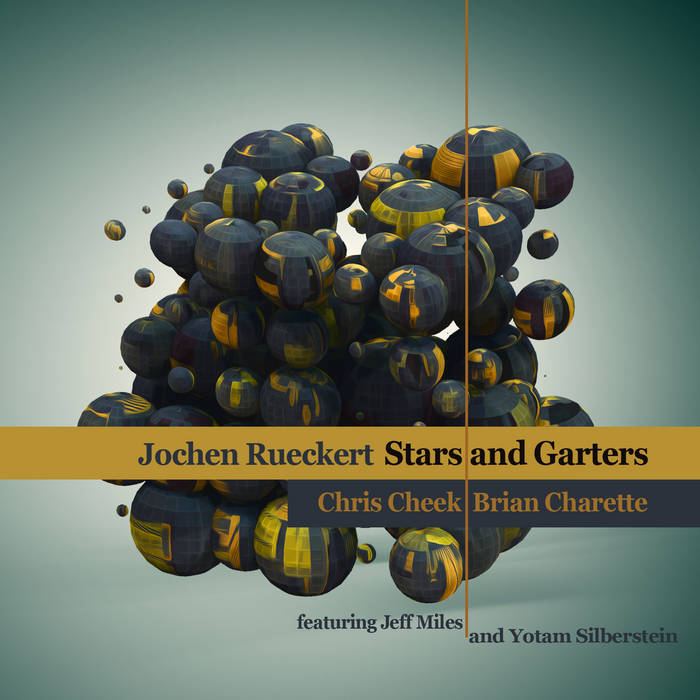
Drummer, composer, and devilish wit Jochen Rueckert has assembled a small group for his latest album "Stars and Garters" (self-released).  The basic band is drums, tenor saxophone (Chris Cheek), and organ (Brian Charette) with guest guitarists Jeff Miles (on three tracks) and Yotam Silberstein (on two tracks)

The 11-song program has its share of swingers, rockers, and ballads. Opening with the easy-grooving "Corey and Trevor" and then moving right into "Finger Finger", one might expect the album to be a late-night set at a downtown bar. Cheek plays with controlled abandon in the style of Hank Mobley, especially on the latter track. Silberstein joins the trio and bounces along atop the dancing drums.  Next the band (with Miles on guitar) rips into "Mind Parasite", a tune by Ryan Power –– it's a rip-roaring rocker that, at high volume, shakes the speakers to their core.  Of course, the next track, "Radioland", is a quiet, Latin-esque, medium-tempo treat with soft burbling organ, delight drumming on the toms, and a pleasing tenor solo.

The title track brings one right back to the 1950s and 60s organ trio. Charette keeps a steady bass line –– when he solos, he and Rueckert have a swinging interaction. They don't rush, don't settle for cliches, they just play.  In another unexpected move, the trio (plus Miles) interprets The Deftones' 1997 tune "My Own Summer", keeping the melody and chord structure but toning does the punk-rock mayhem save for the hard-edged guitar sounds.

"Stars and Garters" closes with one more cover.  "Cannonball" was a hit in the mid-1990s for The Breeders; The trio (plus Silberstein) capture the nervous quality of the original yet also make the piece swing like mad. Even if you don't know the original, this version is a lot of f-u-n!  And we all need a big dose of that these days...actually, just about any time.  Hats to Jochen Rueckert and his gang who knocked the album out in a couple of hours just this past March 5, before the world went into lockdown.

To find out more and to purchase, go to jochenrueckert.bandcamp.com/album/stars-and-garters.

Here's a swinger!:


Drummer Phil Haynes (pictured left) can be heard in a number of different groups, several of which he leads.  His saxophone trio with Dave Liebman as well as a duo with the NEA Jazz Master, Free Country (his radical and fascinating interpretations of Country songs), organ trios, and more plus solo drum programs, all point to a person for whom borders are meant to be crossed if not ignored all together.  Haynes also performs in a piano trio with bassist Drew Gress and pianist Steve Rudolph, an ensemble for whom melody and improvisation, swing and flow, are of the utmost important.

In 2009, the trio recorded its debut album under the three musicians names with the title "Day Dream".  That's now their collective name and their second album, "Originals" (CornerStore Jazz), is just that; 10 new compositions, four by Rudolph and three each by Gress and Haynes. The music and performances are reminiscent of the work of Bill Evans, Fred Hersch, and Frank Kimbrough.  What stands out is both the musicianship and the lyricism –– you can hum these melodies but the joy of the music is hearing how the trio interacts.  Solos grow intelligently out of the melody, easily flowing from composition to improvisation and back.  If you take your time to listen deeply, each song stands out.

There's the Evans-esque beauty of Rudolph's "Wedding Waltz" (listen to how Gress underlines the melody and Haynes color with his cymbals) as well as Gress's mysterious, hypnotic, "Afterwards" with its ascending then descending bass line over a steady 4/4 beat. One of Haynes's three contributions, "Spell", opens with a swinging brushes solo, dramatic piano chords as well as a bluesy bass line. Gress goes right through the melody into his solo and an impressive one it is.  He dances atop the funky rhythm turning the spotlight over to Rudolph who gets in the groove and does not let it go! The drummer also composed "Beloved Refracted" (listen below), a melody built on a two-handed piano theme and powerful interaction between Rudolph and Gress.

"Originals" closes with the bassist's "Let Fly", a bopping tune with both a bluesy feel and a delightful swing.  Day Dream will not put you to sleep –– instead, it's an album that you can listen to in one sitting and then listen again.  Steve Rudolph, Drew Gress, and Phil Haynes are a trio of equals and the music they create together is powerful, music with a heart!

Here's a taste:


Photo: Peter Gasnnushkin
Drummer, composer, and bandleader Chad Taylor (on the left) may be best-known as the co-founder (with trumpeter Rob Mazurek) of the Chicago Underground Duo. The Arizona native grew up in Chicago where he worked with Fred Anderson, Nicole Mitchell, Matana Roberts, Ken Vandermark, and so many others.  Currently, he's working in a duo setting with saxophonist James Brandon Lewis, in guitarist Marc Ribot's ensemble, with trumpeter Jaime Branch, saxophonist Avram Fefer, bass clarinetist Jason Stein, and others.  He's issued three albums under his own name including 2018's solo percussion album "Myths and Morals" (my review here).

Photo: Paul de Lucena
The drummer has a new trio that bears his name, featuring tenor saxophonist Brian Settles (Tomas Fujiwara, Michael Formanek, Jonathan Finlayson) and pianist Neil Podgurski (Tim Warfied, Captain Black Big Band).  The trio has just released its debut album,  "The Daily Biological" (Cuneiform Records) –– Taylor has known his bandmates since the 1990s but they did not coalesce as an ensemble until several years ago. Taylor had moved to Philadelphia four or five years back after splitting time between Chicago and New York City. The pianist has lived in Philly for over two decades while Settles has moved back to his native Washington D.C. so the band is not too far apart.

The album, composed of all originals pieces by the trio members, is startling, music that verges on "free" yet there are times when the beat is so powerful it feels as if the drums could knock you off your feet.  The opening track, "The Shepherd", roars out of the gate driven by Taylor's conversational drums, Settles' powerful tenor (he's the composer), and Podgurski's thunderous attack. Because the drums are so well-miked and up front in the mix and the pianist has such a strong left hand, one does not miss a bassist.  Depending on your speakers, the bass drum thump is quite noticeable.  The pianist's "Resistance" starts quietly, the piano chords and crisp cymbal sound leading to Settles and Podgurski reading the theme.  Settles stays with the poignant theme while the pianist takes a powerful solo with Taylor ramping up the intensity.  The trio calls down for just a second when the saxophonist begins his solo but soon he's being pushed by the drums and insistent piano.

Photo: Paul de Lucena
There is so much to enjoy in the hour+ recording.  "Birds, Leaves, Wind, Trees" is a delightfully impressionistic piece from Podgurski with the trio taking parts throughout.  Settles and Taylor argue like two birds fighting over a crust of bread, then Podguski joins with his notes dropping like rain on the leaves.  "Swamp" kicks butt in the opening moments, stopping for an unaccompanied tenor solo that blends longer lines with fluttering notes and silence. The pianist takes over, engaging in a rapid-fire dialogue with Taylor that builds in intensity until the composer Settles returns to join the pianist in the bass line while the drummer solos through to the fade.

Photo: Paul de Lucena
The final two tracks, penned by Taylor, include the thunderous "Recife", which opens with a muscular drum solo over a repetitive figure by the sax and piano. Then the pianist takes over for a short statement and Settles gets the final minute through to the fade. The program ends with the longest track, the 12-minute "Between Sound and Silence" –– the drummer has the opening minute to himself before Settles jumps in followed shortly by Podgurski.  The piano lines have a nervous feel prodded by the drums as the saxophonist struts and frets atop them.  The music quiets down, Podgurski's searching piano lines move the piece forward, heading towards silence, supported only by a distant rumble of floor toms. When the saxophonist returns, he plays a gentle, gospel-influenced melody, over the tolling piano.  Taylor returns, his drumming raising the intensity level but not pushing the emotions to the background.  The tolling piano continues while Settles searching and Taylor's shimmering cymbal create a stunning final 30 seconds.
"The Daily Biological", if you listen deeply, will change your idea of "power trios."  No over-amped guitars, fuzzy bass lines, no ponderous drums; instead, this is music teeming with ideas, interactions, inventive solos, intelligent writing, and more.  Such an auspicious recorded debut for the Chad Taylor Trio that one can just imagine how great they must sound in a live setting. In the meantime, find this album and let the music play. Play it loud!!

For more information, go to www.chadtaylordrums.net –– purchase the album by going to cuneiformrecords.bandcamp.com/album/the-daily-biological.

Here's one of the great tracks: