Critics and reviewers were quite surprised and, ultimately, very pleased last July when drummer, composer, and conceptualist Tyshawn Sorey issued "Mesmerism" (Yeros7 Music––now reissued on Pi Recordings)), a piano trio album of four "standards" plus one piece each by Muhal Richard Abrams and Paul Motian. Sorey had wanted to include pianist Aaron Diehl (Cecile McLorin Salvant) in a project plus long-time friend and collaborator, bassist Matt Brewer (SF Jazz Collective, Ambrose Akinmusire); this project was the exact right. Later in 2022, Pi Recordings released "The Off Off Broadway Guide to Synergism", also a Trio album but with Russell Hall on bass and guest Greg Osby on alto saxophone. That triple (!) album is a must-listen.
Back to the Trio format on the new Pi Recordings album, "Continuing". Bassist Brewer has returned so one should consider this to be the official follow-up to "Mesmerism". The program consists of four tunes, one each by Wayne Shorter, Ahmad Jamal, and Harold Mabern (who had been a mentor to Sorey) plus the 1946 Matt Dennis/ Earl Brent classic "Angel Eyes". The overall program reminds this listener of a smoky nightclub gig, the early morning third set, as the music is steeped in the blues and the musicians let the songs move at a leisurely pace (save for the closing cut). Listen below to Mr. Shorter's "Reincarnation Blues" which he wrote for and recorded with Art Blakey & the Jazz Messengers in 1961. Sorey, Brewer, and Diehl create a slower take than the original. The piano solos are mighty impressive especially the dazzling second one (starting around 7:30 into the 10:25 cut). Brewer's solo, earlier in the piece, rolls atop the drums displaying a handsome melodic side.
Photo: John Rogers
Diehl captures the spirit of the composer on Mr. Jamal's "Seleritus" (first recorded and released in 1959)––the longest track on the album (15:43), the interactions of the piano and bass are what first stands out. The more you listen, the bounce in the rhythms Sorey plays stand out more. What also is intriguing is that the piece never really resolves; instead, the music fades out with Diehl's percussive block chords. "Angel Eyes" follows, proceeding gently over Brewer's chordal tones and Diehl's deliberate reading of the melody. Sorey enters at the 3:09 mark of the 13+-minute track, playing as quietly and gently as he can (his brushes whisper on the cymbals). Brewer's bass solo is a gem from start to finish as is Diehl's. The airiness is this performance is dramatic but not forced.
"Continuing" goes out with a bang as the Trio gets funky on Harold Mabern's "In What Direction Are You Headed". Originally recorded by Lee Morgan in 1971 for what turned to be "The Last Session". By the middle of the song, one feels as if we are in midst of a church service as Brewer locks into a nine-note riff while Sorey "stomps" out the beat. They continue in their groove even as Diehl joins in on low and high notes. The pianist does reintroduce the theme right before the album makes its rousing exit.
Pour yourself a libation, turn the lights down low, and listen as if the musicians were in your living room. All in all, this Tyshawn Sorey Trio is a real knockout!!
Jazz artists, since the beginning of its move into the public eyes and ears, like to perform the popular music of the day. Each generation of musicians looks to "pop music" to attract an audience and as a way to get those people to also listen to their original music. This is a concept that works well in the piano trio format. For its 2017 debut, the Hazelrigg Brothers, pianist George and bassist Geoff, whose main gig is designing, development, and manufacturing of high-end recording equipment, recorded "Songs We Like", a nine-song album of tunes they grew up listening to including the Police's "Spirits In the Material World". It should not come as a surprise that for their second Trio album (John O'Reilly, Jr is the drummer) that they would opt to record the entirety of the Police's 1983 "Synchronicity", that trio's fifth and final album. That recording spawned several Top 10 hits including "King of Pain", "Wrapped Around Your Finger", and "Every Breath You Take".
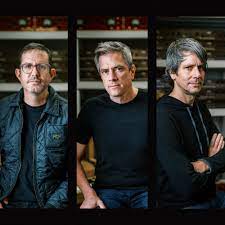
On "Synchronocity" An Interpretation of the Album by The Police" (Outer Marker Records), the Brothers play all the songs (even the cassette-only––those were the days––"bonus track") in the order they appear on the original Police Lp. Because the majority of the original songs have such strong melodies (at least, the ones composed by bassist/ vocalist Sting do), the Trio do not try re-invent the (musical) wheel. Therefore, the excitement of the opening title track is evident here as well thanks to the powerful rhythms they create. Geoff's bass is the lead instrument on the "Walking In Your Footsteps" and "Every Breath You Take"––the piano solo on the former tune has a tinge of the late Vince Guaraldi's sound while the latter builds dramatically from the opening until the bass reclaims the theme in the middle.
The bassist also leads the trio into "King of Pain" which, to these ears, is the highlight of the album. How the trio shares the melodic and rhythmic phrases and sections as well as the excellent dramatic movement of the melody stand out. That's followed by the excellent take of "Wrapped Around Your Finger"––again, it's the subtle rhythmic moves of the bass and drums that draws the listener into the emotional richness and poetry of the piano parts.
Some may argue that the Hazelrigg Brothers trio don't take many chances on their reinterpretation of The Police "Synchronicity" but, to their credit, they make Andy Summer's song "Mother" much more interesting replacing its manic vocal lines and by emphasizing the Kurt Weill aspects in the instrumental. Overall, if you grew up with this music, you should enjoy this album. If you are new to the material, enjoy the songs with the finely-etched melody lines and the excellent musicianship that abounds on this heartfelt tribute.
Since the beginning of November, Connecticut has been blessed with a delightful week of Indian Summer (soon to depart in favor of the chill of late Autumn). The balmy temps (68-77) have allowed this writer to walk every day and to listen to music as I dodge the remaining leaves. The two albums have been in rotation each day!
Earlier this year, drummer and composer Tyshawn Sorey issued a trio album––"Mesmerism" featured bassist Matt Brewer and the splendid young pianist Aaron Diehl on an exciting and thoughtful exploration of "standards". In early March of this year, Sorey brought Diehl, bassist Russell Hall (Joey Alexander), and special guest Greg Osby (alto saxophone) to New York City's The Jazz Gallery for a five-night engagement. The band did not rehearse and, pretty much, chose the music on the bandstand. And, they recorded every set!
The results can be heard on "The Off-Off Broadway Guide to Synergism", a fantastic three-CD package from Pi Recordings. The 19-tracks are split up into three sets, each album approximately 75 minutes long. Five of the tracks are repeated in subsequent sets (Mr. Osby's "Please Stand By", Ornette Coleman's "Mob Job", Thelonious Monk's "Ask Me Now", Johnny Green's "Out of Nowhere", and "Three Little Words" composed in 1930 by Harry Ruby and lyricist Bert Kalmar). It's truly a delight to hear where these four players go with the music. The "Set 1" take of "Three Little Words" starts with a long, impressionistic, piano solo, so slow and gentle that it takes a moment before you the drums and bass have entered. Mr. Osby plays with the melody as if rolling a fine wine across his palette. Slowly and steadily, the alto solo builds with the insistence of the rhythm section. The leader, who does not solo on the set, engages in conversations with the other musicians. Diehl paints a fascinating solo first with the introspection he showed at the onset of the track and it becomes great fun to hear where he takes the piece goosed forward by Sorey and shadowed by Hall whose solo later in the track is quite playful and percussive.
If you love improvisatory music, there is not a dull moment in this music. There's the beauty of Andrew Hill's "Ashes" (which Mr. Osby first recorded in 2000 on his "The Invisible Hand" album that featured the composer plus guitarist Jim Hall) as well as the saxophonist's unaccompanied introduction to Billy Strayhorn's "Chelsea Bridge"––listen below and notice the playful background work of bassist Hall and the beautiful work of Diehl. The pianist, at times, reminds this listener of Jaki Byard as well as Mr. Hill. The Trio + 1 swings mightily on both versions of "Mob Job" with the bass and drums leading the way. The second take of "Out of Nowhere" (originally recorded by Bing Crosby in 1931) opens with an expansive solo piano meditation before Mr. Osby enters with over the rippling piano, whispering cymbals, and bass counterpoint. At the five-minute mark, the band kicks into a higher gear (but not out of control) with the alto and piano in conversation while the rhythm section dances about in support.
Photo: Jonathan Chimene
Every time one digs into the music of "The Off-Off Broadway Guide to Synergism", he or she can get carried away at the inventiveness of Tyshawn Sorey, Aaron Diehl, Russell Hall, and Greg Osby. The playfulness of the musicians on tracks such as "Jitterbug Waltz" (the track where one hears the inspiration of Jaki Byard in Diehl's piano solo) and the rip-roaring "Solar" is infectious and you can only imagine what is what being in the audience (unless you were). There are moments in each set where this quartet has the energy of the classic John Coltrane Quartet of the early-to-mid 1960s, the group with McCoy Tyner, Jimmy Garrison, and Elvin Jones. It's truly a delight to hear Greg Osby play with such imagination, power, and so melodically. Treat yourself to this great album!
Here's the Trio + Mr. Osby on Billy Strayhorn's "Chelsea Bridge":
Clarinetist Anat Cohen first assembled the three musicians who would join her to form Quartetinho (pronounced "quar-te-Chin-yo and meaning "little quartet") before the pandemic stopped the world in its tracks. James Shipp (vibraphone, glockenspiel, analog synth, percussion), Vitor Gonçalves (piano, accordion, Fender Rhodes), and Tal Mashiach (acoustic bass, guitar) join Ms. Cohen (who also plays bass clarinet) for their self-titled debut album (Anzic Records). If you have followed the clarinetist's career, you know that she has had a long love affair with Brazilian music, recording with guitarist Marcello Gonçalves as well as Trio Brasileiro and the Choro Ensemble.
For its debut album, the "little quartet" treats the audience to an 11-song program that includes original pieces from the leader, Shipp, and Mashiach plus two pieces by Egberto Gismonti and one each from Antonio Carlos Jobim, the contemporary Brazilian composer Maria Do Carmo Barbosa De Melo (the lively "Boa Tarde Povo"), and Antonin Dvorāk's "Going Home". The smashing arrangement of the last tune listed features accordion, vibes, bowed bass, and bass clarinet––it's a beautiful arrangement which during Ms. Cohen's solo takes a turn towards the blues. Shipp's solo also takes the "blues route" with his sweetly expressed lines over the supportive bass and accordion swells. Mashiach's "The Old Guitar" is a lovely ballad that leaves solo space for the leader as well as Gonçalves' sweet accordion sounds. The album opener, Shipp's "Baroquen Spirit", starts slowly with just clarinet, vibes, and a synth drone––the melody blends an Americana feel with a touch of classical music.
Photo: Shervin Lainez
That first track leads directly into Egberto Gismonti's lyrical "Palhaço"––there are moments during Ms. Cohen's solo that, thanks to the bass line, piano chords, and the dancing vibes, the music resembles a Joni Mitchell song. Also check the splendid piano solo (with Mashiach's supportive bass) that leads to the close of the piece. The other Gismonti piece, "Frevo", jumps atop the rippling clarinet and piano melody before the clarinetist takes a sly solo over Shipp's delightful percussion and the throbbing bass notes. The piano solo is also a treat.
Ms. Cohen contributes three originals to the program. "Birdie" is a melancholy melody played over a medium tempo with the Fender Rhodes offering shimmering chords (see the video below). Next up is "Canon" which starts with a richly melodic bass solo (there's a touch of flamenco in Mashiach's playing). The bassist then articulates the handsome melody supported by Shipp's vibes. Ms. Cohen joins on bass clarinet while Gonçalves joins on piano. "Louisiana" pops right along on the thick bass notes, the dancing piano chords, and the "jump-blues" in the vibes solo. Everybody solos but at 3:30, the music hardly overstays its welcome.
The album closes on Mashiach's "Vivi and Zaco" which he introduces on 7-string guitar. The accordion and vibes enters when the guitarist expands on the heartfelt melody. The piece has a lovely flow that often speeds up and slows down at the end of the verse. Before the piece ends, everyone has shared the melody line. It's a sweet close to an elegant group of songs.
"Quartetinho" is yet another jewel in the crown Anat Cohen is creating with her music. Her heart is so enmeshed in her music and her love for playing shines through every performance. With this quartet, culled from her Tentet, she has given listeners yet another reason to listen deeply.
Pianist Frank Woeste and trombonist Ryan Keberle first met in 2015 while playing with trumpeter Dave Douglas. The pianist, born in Germany now based in Paris, France, and the trombonist, born in Spokane, WA, now based in New York City, decided to create a project – which they named Reverso – that blended 20th Century music with jazz because they felt that certain elements of the two "genres" have influenced composers and performers right up to the present. They recruited French cellist Vincent Courtois and drummer percussionist Jeff Ballard to work with them. Composer Maurice Ravel (1875-1937) served as the influence for the group's 2018 debut album "Suite Ravel" using his six-part "Le Tombeau de Couperin" as a stepping-off point for both revising the piece for four voiced and creating compositions of their own influenced by the great master.
2020 brings Reverso's second album "The Melodic Line." Released on the leaders's Out Note Records (released through Outhere Music), the ensemble has been pared down to a trio with the subtraction of Ballard. Instead of focussing on one composer, this time the music bears the influence of Les Six, six French composers – Darius Milhaud, Francis Poulenc, Arthur Honegger, Georges Auric, Louis Durey, and Germaine Tailleferre – all of whom were active in the first decades of the 20th Century. Woeste studied the music of Milhaud, finding influences as varied as American jazz and Brazilian music. Meanwhile, Keberle spent his time exploring themusic of Ms. Tailleferre (1892-1983). Even though she lived a long life, her most successful period of writing was between the two World Wars.
The nine-song program kicks off with Woeste's "Blue Feather", a handsome melody pushed along by the composer's piano and the deep tones Courtois's cello. The piece tunes percussive with clapping supporting the piano solo until the cello br=egins counterpoint and the trombone plays a melodic accompaniment. Keberle's "Exemplar" is next; again, it's deep tones of the cello in the introduction that first catch your ear. Then, the trombone and cello share the melody over the spare piano accompaniment. Courtois's lovey solo with piano accompaniment and counterpoint stands out. The trombone solo rises over the melodic piano and pizzicato cello, feeling like the aural equivalent of clouds cutting across the blue daytime sky.
This music is often quite lovely, a fascinating blend of classical, jazz, and folk melodies. There's a funky feel to Woeste's "Absinthe" (especially in the piano's left hand in tandem with the plucked cello while Keberle's "Major Jack" has an anthemic intro that opens up to a long melody line before a sparkling piano solo. The album closes with the pianist's lovely "Clara", yet another example of how the various voices work together to not only support the rich melody but to create a sonic flow under the pizzicato cello solo.
Reverso creates music that pushes, albeit gently, at barriers, eschewing genre, creating memorable melodies in an atmosphere of creativity and trust. The album title – "The Melodic Line" – does give one a good idea of what you're in for. Ryan Keberle and Frank Woeste, along with the quite impressive Vincent Courtois, make music that will excite and soothe your soul. Give a long listen!
Pianist and composer Aaron Diehl still seems like he's the "new guy at the keyboard" but he's been playing professionally for, at least, 15 years. He's worked with a slew of artists, ranging from Wynton Marsalis to Wycliffe Gordon to the New York Philharmonic and the Cleveland Orchestra. His most high-profile gig is with vocalist Cecile McLorin Salvant. Listening to Diehl is such a treat; he loves melodies, is an excellent improviser, and has absorbed myriad influences into his own articulate statements. There are certain reviewers and critics who tend to lump him into the musical "Neo-cons" but, truly, he's his own man. In a trio setting, one hears traces of Bill Evans, Ahmad Jamal, Herbie Hancock, and even a touch of Memphis Slim in his blues playing; plus, his touch is impeccable.
"The Vagabond" is Diehl's third release for Mack Avenue Records and features his current trio of Paul Sikivie (bass) and Gregory Hutchinson (drums - the picture above features the Trio's former drummer, the late Lawrence Leathers). The program features 11 tracks with seven originals from the leader plus pieces by Sir Roland Hanna, John Lewis, Sergei Prokofiev, and Philip Glass (interesting that those four pieces are the final tracks on the album). One should notice how quiet many of these pieces are – Diehl and his rhythm section do not need to "shout" to get their musical points across and that allows the listener to really pay attention. Note the power and classical influences on "Park Slope" as well as the strong bass solo and excellent drum work. The subtle power of "Lamia" is its quiet yet insistent rhythm and Diehl's superb piano melody and solo. The whisper-touch of Hutchinson's cymbal work and Sikivie's simple yet powerful bass work allows the leader to range far afield without losing touch with the thematic material.
Photo: Jaime Kahn
This music really captures one's attention. The title track opens with a melody line that seems to keep rising along with impressive counterpoint from the bassist. Notice how Hutchinson plays beneath the piano solo, toying with the time and accents yet never tripping up his musical partners. There's also a strong classical feel to the lovely ballad "Treasures Past." Diehl opens his solo with such a soft touch and, while he does play a bit harder at times, the real power in the piece is how melodic the trio is.
"Prokofiev's March" is the first of the last four tracks. It's a dazzling display of powerful rhythms, martial-sounding piano chords, and intense forward motion. Sir Roland Hanna's "A Story Told, Seldom Heard" is a lovely ballad with a rich chordal melody and one more impressive bass solo. The unaccompanied piano opening of Lewis's "Milano" leads into a light-hearted, even a bit sentimental, ballad with more gentle cymbal colors and a touching piano solo. The album closes with Glass's "Piano Etude No. 16" in which the rhythm section gets to work with creating solos while Diehl moves the music forward. The power of his chordal work near the end of the piece plus its repetitive nature becomes hypnotic over the course of eight-plus minutes.
"The Vagabond" is an often stunning and soothing 65 minutes of music from Aaron Diehl, made all the more powerful and interesting by the work of bassist Paul Sikivie and drummer/ cymbalist Gregory Hutchinson. Even though each member of the Trio is a master of his instrument, this music is rarely about technique and always about the emotional richness of the compositions and the performances. Take the time to absorb these sounds – it's worth the adventure!
Saxophonist Dayna Stephens (he plays soprano, tenor, and baritone) has been on the creative music scene for the past decade recording eight albums as a leader plus appearing on dates with trumpeter Brian Lynch, guitarist Perry Smith, pianist Theo Hill, and bassist Linda May Han Oh (plus others). Over his career he's also played alongside Fred Hersch, Muhal Richard Abrams, Roy Hargrove, Ambrose Akinmusire, Wayne Shorter, Rufus Reid, John Scofield, Lionel Loueke, and Gretchen Parlato. He's been much more active since a kidney transplant in 2015 saved his life. After recording for Criss Cross Records and Sunnyside Records, Stephens started his own label in 2017 – Contagious Music – where he released "Gratitude", a quartet date with Brad Melhdau, Julian Late, Larry Grenadier, and Eric Harland. His saxophone influences are many and varied; he's also an accomplished bass player but has yet to record on the instrument.
His new album, "Liberty" (Contagious Music), is his first trio date. Featuring Harland and bassist Ben Street, the 11 song program (10 originals plus "Planting Flowers" from Aaron Parks) is filled with intelligent playing, intuitive interactions, fine solos, and Stephens playing with such confidence and joy. "Liberty" can have several meanings; in this setting, especially without a chordal instrument plus the saxophonist is also talking about creating art in a society that is "free" but those freedoms are under fire from may sides. Can Stephens's music help by reminding listeners that we music work together to produce positive results, that we each have a say in the world we want to live in but must be cognizant of the needs of others. No matter what you think the word means, the album "Liberty" is a delight from start to finish.
Photo: Paola Piga
The album, recorded at the Rudy Van Gelder Studios in Englewood Cliffs, New Jersey, has such an immediate sound as if the trio was in the room with you. There's an undercurrent of blues that runs through pieces such as the opener "Ran" and the closer "Wil's Way" (dedicated to organist Wil Blades). Street and Harland set the tone by swinging with a purpose, giving Stephens a delightful cushion of sound to bolster his attack. In his notes, the saxophonist writes that "Faith Leap" is inspired and influenced by John Coltrane's "Giant Steps" – even more inspiring for Stephens is Harland's funky attack and Street's melodic bass lines. The leader turns to baritone saxophone for "TheLost and Found", a handsome ballad that is emotionally strong and shows the leader's impressive range on the big horn. He recorded the song on the tenor sax for his 2007 debut "The Timeless Now", a sextet date that also featured this rhythm section.
Photo: Chris Drukker
Give a listen to "Loosy Goosy" down below and you'll hear the closest connection to the classic Sonny Rollins Trio recordings of the 1957-1958. Stephens is now imitating the great tenor innovator but displays a similar confidence and big sound as the elder did on the recordings. Don't miss the African-influenced "Tarifa" – the city for which the song is named sits at the southernmost end of the Iberian Peninsula, just eight miles from Morocco. Harland's splendid drumming along with Street's foundational bass lines and Stephen's overdubbed saxophones makes this track irresistible.
"Liberty" sounds great, with musical interactions that will not only keep your attention but also make you move your feet and nod your head. Dayna Stephens, along with Ben Street and Eric Harland, has made one of the most memorable albums of the past several years, brimming with ideas, melodies, and rhythms, exuding confidence and pleasure. Dig in – dig it!
For more information, go to daynastephens.net. The album will be released on 2/28/2020.
Here's the afore-mentioned "Loosy Goosy" in the studio:

 Posts
Posts


 On "Synchronocity" An Interpretation of the Album by The Police" (Outer Marker Records), the Brothers play all the songs (even the cassette-only––those were the days––"bonus track") in the order they appear on the original Police Lp. Because the majority of the original songs have such strong melodies (at least, the ones composed by bassist/ vocalist Sting do), the Trio do not try re-invent the (musical) wheel. Therefore, the excitement of the opening title track is evident here as well thanks to the powerful rhythms they create. Geoff's bass is the lead instrument on the "Walking In Your Footsteps" and "Every Breath You Take"––the piano solo on the former tune has a tinge of the late Vince Guaraldi's sound while the latter builds dramatically from the opening until the bass reclaims the theme in the middle.