Showing posts with label clarinet. Show all posts

Tuesday, November 8, 2022

Quartet Joys

 Since the beginning of November, Connecticut has been blessed with a delightful week of Indian Summer (soon to depart in favor of the chill of late Autumn).  The balmy temps (68-77) have allowed this writer to walk every day and to listen to music as I dodge the remaining leaves. The two albums have been in rotation each day!

Earlier this year, drummer and composer Tyshawn Sorey issued a trio album––"Mesmerism" featured bassist Matt Brewer and the splendid young pianist Aaron Diehl on an exciting and thoughtful exploration of "standards".  In early March of this year, Sorey brought Diehl, bassist Russell Hall (Joey Alexander), and special guest Greg Osby (alto saxophone) to New York City's The Jazz Gallery for a five-night engagement. The band did not rehearse and, pretty much, chose the music on the bandstand.  And, they recorded every set!


The results can be heard on "The Off-Off Broadway Guide to Synergism", a fantastic three-CD package from Pi Recordings. The 19-tracks are split up into three sets, each album approximately 75 minutes long. Five of the tracks are repeated in subsequent sets (Mr. Osby's "Please Stand By", Ornette Coleman's "Mob Job", Thelonious Monk's "Ask Me Now", Johnny Green's "Out of Nowhere", and "Three Little Words" composed in 1930 by Harry Ruby and lyricist Bert Kalmar).  It's truly a delight to hear where these four players go with the music.  The "Set 1" take of "Three Little Words" starts with a long, impressionistic, piano solo, so slow and gentle that it takes a moment before you the drums and bass have entered. Mr. Osby plays with the melody as if rolling a fine wine across his palette. Slowly and steadily, the alto solo builds with the insistence of the rhythm section. The leader, who does not solo on the set, engages in conversations with the other musicians.  Diehl paints a fascinating solo first with the introspection he showed at the onset of the track and it becomes great fun to hear where he takes the piece goosed forward by Sorey and shadowed by Hall whose solo later in the track is quite playful and percussive.

If you love improvisatory music, there is not a dull moment in this music. There's the beauty of Andrew Hill's "Ashes" (which Mr. Osby first recorded in 2000 on his "The Invisible Hand" album that featured the composer plus guitarist Jim Hall) as well as the saxophonist's unaccompanied introduction to Billy Strayhorn's "Chelsea Bridge"––listen below and notice the playful background work of bassist Hall and the beautiful work of Diehl. The pianist, at times, reminds this listener of Jaki Byard as well as Mr. Hill. The Trio + 1 swings mightily on both versions of "Mob Job" with the bass and drums leading the way. The second take of "Out of Nowhere" (originally recorded by Bing Crosby in 1931) opens with an expansive solo piano meditation before Mr. Osby enters with over the rippling piano, whispering cymbals, and bass counterpoint.  At the five-minute mark, the band kicks into a higher gear (but not out of control) with the alto and piano in conversation while the rhythm section dances about in support.

Photo: Jonathan Chimene
Every time one digs into the music of "The Off-Off Broadway Guide to Synergism", he or she can get carried away at the inventiveness of Tyshawn Sorey, Aaron Diehl, Russell Hall, and Greg Osby. The playfulness of the musicians on tracks such as "Jitterbug Waltz" (the track where one hears the inspiration of Jaki Byard in Diehl's piano solo) and the rip-roaring "Solar" is infectious and you can only imagine what is what being in the audience (unless you were). There are moments in each set where this quartet has the energy of the classic John Coltrane Quartet of the early-to-mid 1960s, the group with McCoy Tyner, Jimmy Garrison, and Elvin Jones. It's truly a delight to hear Greg Osby play with such imagination, power, and so melodically. Treat yourself to this great album!

For more imagination, go to www.tyshawnsorey.com. To hear more and buy this stunning set, go to https://tyshawn-sorey.bandcamp.com/album/the-off-off-broadway-guide-to-synergism
 
Here's the Trio + Mr. Osby on Billy Strayhorn's "Chelsea Bridge":


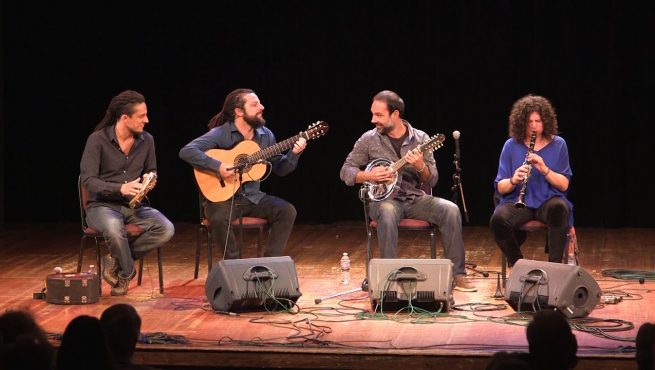
Clarinetist Anat Cohen first assembled the three musicians who would join her to form Quartetinho (pronounced "quar-te-Chin-yo and meaning "little quartet") before the pandemic stopped the world in its tracks.  James Shipp (vibraphone, glockenspiel, analog synth, percussion), Vitor Gonçalves (piano, accordion, Fender Rhodes), and Tal Mashiach (acoustic bass, guitar) join Ms. Cohen (who also plays bass clarinet) for their self-titled debut album (Anzic Records).  If you have followed the clarinetist's career, you know that she has had a long love affair with Brazilian music, recording with guitarist Marcello Gonçalves as well as Trio Brasileiro and the Choro Ensemble.  


For its debut album, the "little quartet" treats the audience to an 11-song program that includes original pieces from the leader, Shipp, and Mashiach plus two pieces by Egberto Gismonti and one each from Antonio Carlos Jobim, the contemporary Brazilian composer Maria Do Carmo Barbosa De Melo (the lively "Boa Tarde Povo"), and Antonin Dvorāk's "Going Home".  The smashing arrangement of the last tune listed features accordion, vibes, bowed bass, and bass clarinet––it's a beautiful arrangement which during Ms. Cohen's solo takes a turn towards the blues.  Shipp's solo also takes the "blues route" with his sweetly expressed lines over the supportive bass and accordion swells.  Mashiach's "The Old Guitar" is a lovely ballad that leaves solo space for the leader as well as Gonçalves' sweet accordion sounds. The album opener, Shipp's "Baroquen Spirit", starts slowly with just clarinet, vibes, and a synth drone––the melody blends an Americana feel with a touch of classical music.

Photo: Shervin Lainez
That first track leads directly into Egberto Gismonti's lyrical "Palhaço"––there are moments during Ms. Cohen's solo that, thanks to the bass line, piano chords, and the dancing vibes, the music resembles a Joni Mitchell song.  Also check the splendid piano solo (with Mashiach's supportive bass) that leads to the close of the piece. The other Gismonti piece, "Frevo", jumps atop the rippling clarinet and piano melody before the clarinetist takes a sly solo over Shipp's delightful percussion and the throbbing bass notes. The piano solo is also a treat.

Ms. Cohen contributes three originals to the program.  "Birdie" is a melancholy melody played over a medium tempo with the Fender Rhodes offering shimmering chords (see the video below).  Next up is "Canon" which starts with a richly melodic bass solo (there's a touch of flamenco in Mashiach's playing). The bassist then articulates the handsome melody supported by Shipp's vibes. Ms. Cohen joins on bass clarinet while Gonçalves joins on piano.  "Louisiana" pops right along on the thick bass notes, the dancing piano chords, and the "jump-blues" in the vibes solo.  Everybody solos but at 3:30, the music hardly overstays its welcome.

The album closes on Mashiach's "Vivi and Zaco" which he introduces on 7-string guitar. The accordion and vibes enters when the guitarist expands on the heartfelt melody. The piece has a lovely flow that often speeds up and slows down at the end of the verse.  Before the piece ends, everyone has shared the melody line.  It's a sweet close to an elegant group of songs. 

"Quartetinho" is yet another jewel in the crown Anat Cohen is creating with her music.  Her heart is so enmeshed in her music and her love for playing shines through every performance.  With this quartet, culled from her Tentet, she has given listeners yet another reason to listen deeply.  

For more information, go to www.anatcohen.com.  To hear more and to buy the album, go to  https://anatcohen.bandcamp.com/album/quartetinho

Here's the Quartet live in the studio playing "Birdie":


Sunday, November 5, 2017

A Reed Master in Person + Big Band Delight

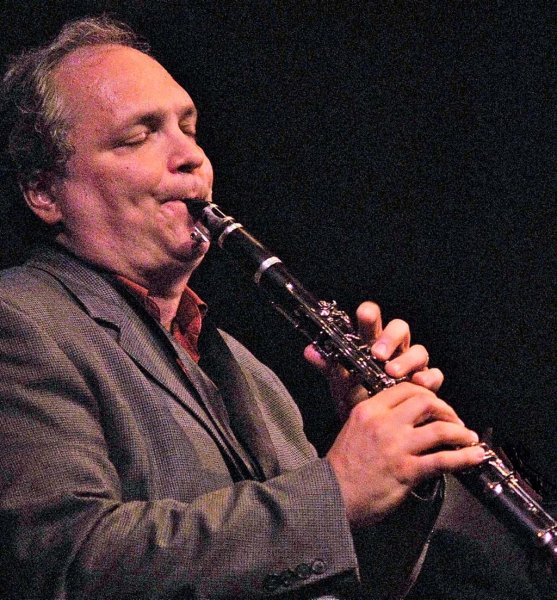
On Saturday night, The Side Door Jazz Club in Old Lyme welcomes the great clarinetist (and darned good tenor saxophonist) Ken Peplowski for an evening that will illustrate why the Cleveland, Ohio, native is considered one of the best "stickmen" around.  He started off his career playing in polka bands in his home city and discovered jazz in his teens.  While still in college, he was invited by Buddy Morrow to join the Tommy Dorsey Orchestra and has been a working musician ever since. His credits include working with Mel Torme, George Shearing, Madonna, Woody Allen, Marianne Faithfull, Benny Goodman, and many others.  He studied tenor saxophone with Sonny Stitt and his style on that instrument reminds many of Coleman Hawkins and Ben Webster.

For the 11/11 gig at The Side Door, Mr. Peplowski brings a trio of musicians he has played and recorded a number of times in recent, including pianist Ehud Asherie, bassist Martin Wind, and the irrepressible drummer Matt Wilson. It's the band that is on his 2016 Capri CD "Enrapture" (my glowing review is here) so one should expect quite the eclectic repertoire, from Duke Ellington to Lennon & McCartney, from Noel Coward to "Fats" Waller.  It's a classy quartet with a splendid repertoire - chances are very good you will be mesmerized even as you are tapping your feet.

For ticket information, go to thesidedoorjazz.com or call 860-434-2600.

Here's the title track from the CD mentioned above:


It's been four years since trombonist and composer Alan Ferber released a big band recording (the impressive "March Sublime") but he's not just been sitting around.  As a leader, he released a Nonet CD in 2016 and as a sideman, he's appeared on a slew of recordings with groups led by Darcy James Argue, Frank Carlberg, Brian Landrus, Miguel Zenon, and Paul Simon (among many others).

Late October saw the release of "Jigsaw" (Sunnyside Records), his second recording featuring his 17-member large ensemble.  It's pretty much the same group that recorded the 2013 album except that trombonists John Fedchock and Jacob Garchik replace Josh Roseman, Ryan Keberle, and Tim Albright (the latter two each appear on for tracks) plus trumpeter Alex Norris is the full-time replacement for Taylor Haskins (full lineup below).  Ferber is a such an intelligent arranger, making such creative choices for his sections, utilizing the great dynamic differences between the trombones and the higher reeds as well as Anthony Wilson's electric guitar.  Note how the medium-tempo ballad "She Won't Look Back" (composed by Wilson) builds off of the bluesy guitar intro and Matt Pavolka's melodic bass solo. There are hints of W.C. Handy's "St. Louis Blues" in the main melody and the supporting brass and reed phrases.  The solos are spread around from Garchik to John Ellis (tenor sax) to Rob Wilkerson (alto sax) to trumpeter Norris, culminating in a hard-edged solo from Wilson that slow fades with various players in counterpoint to the guitar.

There's something a bit awry at the opening of the title track, with the powerful alto sound of John O'Gallagher flying over the pounding counterpoint of Mark Ferber's drum (he's the leader's twin brother) while there is crazy looping noises in the background (could be guitar or synth).  Pavolka's electric bass begins riffing and, soon, the sections enter and they introduce the main melody.  The body of the piece is made up of the interchanges between the sections before O'Gallagher takes off on an amazing journey with the bass and drums using him higher and higher.  Close to the end of the 10-minute piece, the drummer gets his own spotlight with the reeds and brass riffing behind him.

That power and drive is also an important part of "Get Sassy", another bluesy "shout" that opens with trombonists Ferber and Garchik in conversation.  About two minutes in, the entire band enters with a "down and dirty" melody line played by the reeds and guitar (the brass joins in later on counterpoint).  There is a sense of danger in the chorus; soon, Wilson steps out in front for a raucous solo and, then, all the horns enter one by one to play his or her own solo. It's chaotic yet the rhythm section never loses its direction. One imagines when the band plays this piece live, the audience is u and cheering by the close.

The loveliest performance is "North Rampart", a ballad composed by the leader. It opens with a short brass fugue that signals the emotional depth of what will follow. The main melody is played by the reeds and brass with fine harmonies and counterpoint built in. Wilson takes the first solo; theres a "twang" in his sound but the blend of single-note runs and chordal phrases (played over the rhythm section only). John Ellis enters next. The reeds and brass play the emotional melody while the alto saxophonist swoops and darts around them (but make sure to listen to the excellent drumming).  The brass return at the end with Ellis continuing to rise above them.

One could go on and on about how delightful "Jigsaw" is to listen to.  The music is, at times, challenging yet the ensemble is so alive, the sound is so clear, the melodies rich, ripe with possibilities. If you enjoy the large ensemble music of Stan Kenton, Bob Brookmeyer, Gil Evans, and Maria Schneider, then the Alan Ferber Big Band will brighten your life perceptibly.

For more information, go to www.alanferber.com.

Here's the title track:


Personnel:

John O'Gallagher (alto and soprano saxophones), Rob Wilkerson (alto sax), John Ellis (tenor sax, bass clarinet), Jason Rigby (tenor sax, flute), Chris Cheek (baritone sax), John Fedchock (trombone), Jacob Garchik (trombone), Jennifer Wharton (bass trombone), Tony Kadleck (trumpet, flugelhorn), Scott Wendholt (trumpet, flugelhorn), Alex Norris (trumpet, flugelhorn), Clay Jenkins (trumpet, flugelhorn), Anthony Wilson (guitar), David Cook (piano, keyboards), Matt Pavolka (acoustic and electric basses), Mark Ferber (drums, percussion), Alan Ferber (trombone, composer, arranger) + Rogerio Boccato (percussion on two tracks).


Wednesday, April 12, 2017

Ladies Day April 17 Edition (Pt 1)

Whether you believe in a Supreme Being or not, some spiritual entity must have placed Anat Cohen on this earth to play clarinet in a joyous styles and to interpret, as well as to create, Brazilian music.  It is impossible to sit still listening to "Rosa Dos Ventos", the second Anzic Records release to feature Ms. Cohen with Trio Brasileiro. The Trio - Douglas Lora (7-string guitar), his brother Alexandre (drums, pandeiro, percussion), and Dudu Maia (mandolin, bandolim) - have been making music together since 2011, creating original music that stretches the boundaries of Choro, a Brazilian art form that mixes dance rhythms with traditional folk melodies (read more here).

The Israeli-born Cohen first recorded and toured with Trio Brasileiro in 2013. Their debut album, "Alegria da Casa", (released in 2016 on Anzic), blended choro classics with originals. This time around, the songs are all originals. There is much to enjoy in this 12-song program, from the entrancing opening cut "Baião Da Esperança" to the percussive "Das Neves" (Luiz Ungarelli adds congas on this and one other track) to the clarinet-percussion duo on the title track. Pieces such as "Flamenco" and  "O Ocidente Que Se Oriente" move in fascinating directions. The former is built off the lovely melody played by the 10-string bandolim and by Alexandre Lora on the hang (hand drum); when the clarinet enters, the piece takes on a melancholy tone. The latter track takes its title from a poem by Diego Petrarca. Opening with a drone created by the tambura, the melody is played by clarinet and guitar shadowed by the hand drums (tabla drums, I believe).

There is a touch of Lennon & McCartney in the melody and the feel of "Lulubia", the lovely ballad that closes the album.  The Trio takes it slowly while the clarinet faces and whirls around them, the presence of a sprite in the calm and the quiet.  "Rosa Dos Ventos" charms and thrills listeners from start to finish with lively percussion, fully realized melodies and harmonies as well as far-ranging solos.  Anat Cohen & Trio Brasileiro have made a album that feels like Springtime, like the shackles and darkness of winter have been thrown off to be replaced by the gentle sun, cool breezes, and clean air.  For more information, go to anzicstore.com/album/rosa-dos-ventos.

Here is the delightful opening track:


The second album Ms. Cohen is releasing this month features her in duo with Brazilian 7-string guitarist Marcello Gonçalves.  "Outra Coisa" (Anzic Records) translates to "another thing" and finds the duo exploring the music of composer and multi-instrumentalist Moacir Santos (1926-2006). The guitarist chose the pieces from Santos's long career, rearranging the material, often recorded by larger ensembles, for the two instruments.  Needless to say, the music works very well in this intimate setting for many reasons but especially because the melodies are so strong and tell stories.

The 12 tracks feature six "Coisas" (things), all of have different personalities ranging from the classically inspired "..No. 1" to the somber ballad "..No 6" to the sprightly "..No 10" to the handsome ballad "..No 9."  That last tune, in Santos's recording, has the feel of a Billy Strayhorn ballad. You can hear that hear as well, the lovely and crystal clear guitar backing giving Ms. Cohen the foundation to play the sweet melody and male little musical comments on it. Meanwhile, "..10" is a romp for Gonçalves and listener will love how the the clarinet just slides in the middle of the opening verse.  Two other tracks are "Coisas" including the playful title track in which there are moments where it seems the musicians are circling around each other.  Listen to the "heavy" chords of "Nanã (Coisa No. 5)" - this inspired track gets so quiet at times you can almost see the musicians leaning into each other to listen.

There is a strong hint of Delta blues in the opening guitar statement on "Mae Iracema" (translates to "The Honey-lips"). The song opens up to another splendid dance for the duo.   Pieces such as  "Maracatutute" and "Amphibious" move at a delightful pace and give both musicians the opportunity to create smart solos. The album closes with two ballads, the George Gershwin-inspired "Paraiso" (the song would not feel out of place in "Porgy and Bess") which includes a lovely clarinet solo sans guitar followed by the short (1:08) and emotionally rich "Carrossel", a gentle coda to a delightful album.

Delightful is an excellent word to describe "Outra Coisa."  Marcello Gonçalves did a masterful job on the arrangements (if you're curious, check out his duo work with soprano saxophonist Daniela Spellmann) while Anat Cohen is at the top of her form. She combines the joie de vivre of Paquito D'Rivera with the warmth of Jimmy Guiffre.  All things considered, find a quiet corner and dive into this splendid album.

For more information, go to www.anatcohen.com.

Here are the musicians talking about this project:

Saturday, February 20, 2016

Mature Voices, Youthful Voices

There is something about the clarinet that, in the right hands, can transform a room with a phrase.  Ken Peplowski (pictured left) has a set of the "right hands."  His long career includes stints with the Tommy Dorsey Band under the direction of Buddy Morrow, playing tenor saxophone in Benny Goodman's Band (the 1980s), recording with a wide range of artists from Rosemary Clooney to Madonna to Steve Allen to Marianne Faithful. He's recorded for Concord Jazz, Nagel-Heyer. Venus Records (where he recorded 2 albums of the same material, 1 on clarinet, the other on tenor saxophone), and, over the past 6 years, for the Colorado-based Capri Records.


His new Capri CD, "Enrapture", continues his tradition of playing material from famous composers that is not so familiar.  And he does so with a quartet that features the splendid rhythm section of Martin Wind (bass) and Matt Wilson (drums), both whom appeared on the reed players 2013 CD "Maybe September", plus the Israeli-born, Italian-raised, New York City-schooled pianist Ehud Asherie.   The title track comes from the pen of pianist Herbie Nichols (1919-1963), a piece he never recorded but Peplowski found in a book written about the composer by trombonist Roswell Rudd (The Herbie Nichols Project did record the piece for its 2001 "Strange City" release on Palmetto). The lilting melody swings in that medium-tempo groove Nichols often employed and that some people would compare to Thelonious Monk.  The program opens with Duke Ellington's "The Flaming Sword", a very Cuban-inspired piece that appeared on the 1940 "Live at Fargo" Lp. Wilson sets a torrid pace and Peplowski soars atop the ensemble.

Other pleasant surprises includes a lovely clarinet-bass duet on John Lennon & Yoko Ono's "Oh, My Love" - short and bittersweet, the clarinet tone tugs at the heartstrings.  Even prettier (if possible) is "I'll Follow My Secret Heart", a Noel Coward piece from his failed 1934 Broadway musical, "Conversation Piece."  Here, the clarinetist hews close to the melody (one that he learned from a 1962 Frank Sinatra recording).  It's quiet, ever-so-gentle, the clarinet rising gently into the higher registers while Asherie paints the corners and Wind holds the bottom. Another lovely ballad is the Johnny Mercer/Barry Manilow collaboration "When October Goes", a song Peplowski heard Ms. Clooney sing - his handsome tenor sax paired with the floating chords from the piano over the fundamental bass lines and whisper-quiet brush work of Wilson give this such an emotional pull. There's a similar feel to "Cheer Up, Charlie" (from the movie "Willie Wonka and The Chocolate Factory") with the breathy tenor sax moving easily through the melody as Asherie decorates the spaces around the tune.

After the melodies have faded, the solos played and over (and "Fats" Waller's "Willow Tree" is a splendid closing track), what stands out most from "Enrapture" is how much joy there was in the studio on that one day in February of 2015. You can play the CD from beginning to end and then do it again without being bored - the music played by Ken Peplowski and friends is comfortable without being staid and emotional without being sappy. No political agenda, no axes to grind, just good music  played with delight.  For more information, go to kenpeplowski.com.

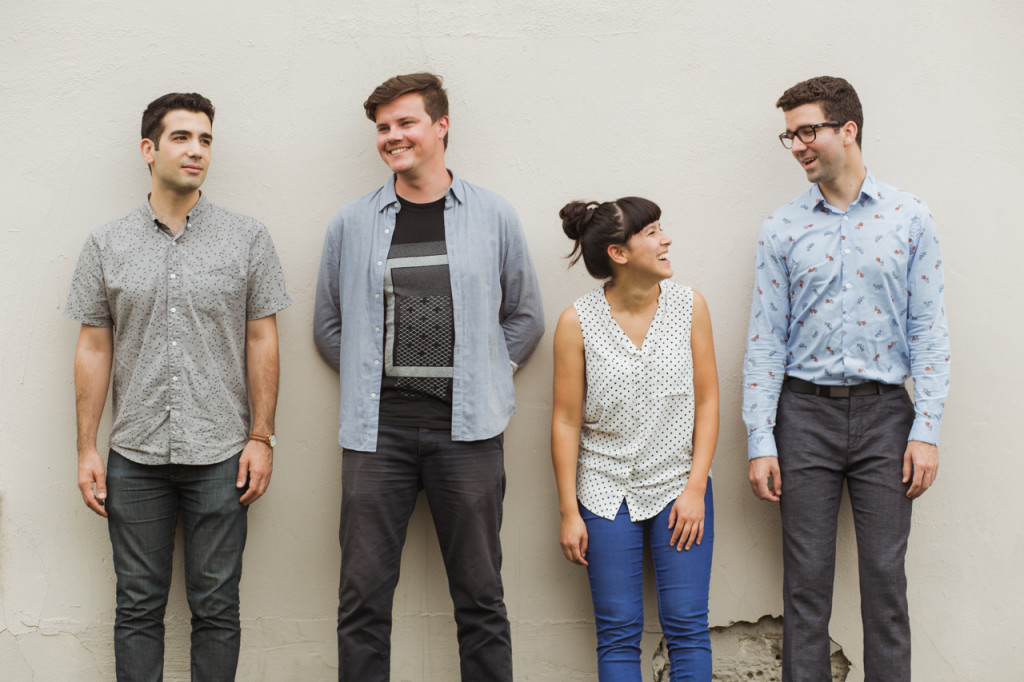
"Forest Grove" (self-released) is the second album from alto saxophonist and composer Allison Au and her Quartet.  Her late 2012 debut "The Sky Was Pale Blue, Then Grey", introduced to the listeners a person more interested in melody than technique as well as working within a group setting than being a lead voice with a supporting cast.  Like that debut, this new recording features Todd Pentney (keyboards, producer), Jon Maharaj (basses), and Fabio Ragnelli (drums).  With a several years and numerous gigs, the group is even tighter and more responsive - plus Ms. Au's new compositions have matured in that the melodies seem richer, longer, and the musicians' interactions and transitions seamless.

Th album (literally) kicks off with "Tides", the alto sax and drums introducing a quick melody yet the rhythm section is not hurried or nervous.  The juxtaposition of exciting sax/drums and the more cautious bass/electric piano creates a playful tension that erupts into several exciting solos.  Ragnelli's drum work will remind some of Eric Harland and Kendrick Scott is how he pushes the band, reacting differently to each soloist. The playful "Aureole" is a romp for all involved, the rhythm section setting a torrid pace, the Hammond B-3 burbling underneath the alto sax solo, and quick but meaty solos.

The addition of wordless vocals from Felicity Williams on 3 tracks gives each song an ethereal feel.  The sweet ballad "Bolero" pairs her in the melody with the saxophone, making the melody float easily forward.  The pairing lasts throughout the song, even behind the fine bass solo. On "The Clearing", the voice again is paired with the alto sax at the onset, then adds counterpoint during Ms. Au's solo.  Ms. Williams' voice rises out of the piano phrases on the final track, the 2-part "They Say We Are Not Here." The piece begins as a pretty ballad that Pentney eventually colors with various keyboards (acoustic piano, synth, and Rhodes).  The quartet plus voice builds to an intense close, there is approximately 30 seconds of silence, then the band reenters on a funky groove, not unlike "Aureole" in its intensity and swing (and blistering Hammond B-3 licks), an encore perhaps, an emotional release maybe, fun absolutely.

"Forest Grove" packs a lot of music into 58 minutes and the enthusiastic listener will discover much to savor throughout.  Whether it's the well-sculpted melodies, the active and complementary rhythm section, the various keyboard sounds, or the lyrical alto saxophone sound of Allison Au, give this music time to soak in - it's well worth the time.

For more information, go to www.allisonau.com.

Listen to the Ms. Au and the band talk about the recording:


One has to admire the chutzpah/cheek of a musical ensemble that names itself Great On Paper.  The 4 musicians that make up the group - Robin Baytas (drums), Kevin Sun (tenor saxophone), Isaac Wilson (piano) and Simon Willson (acoustic bass) - seemingly have no fear. The musicians had met as students in 2011, became a working band in 2013, and recorded their self-titled debut album (issued on Endectomorph Records) in 6 hours at Sears Sound in NYC on March 7, 2015 (they rode the bus down from and back to Boston, MA. And, they got pianist/blogger/composer Ethan Iverson to write the liner notes (there was a previous connection). So.......do they live up to or down from their name?

Great On Paper is good music.  You can hear various influences throughout but in expects that on a debut.  What's fun to hear is that the chutzpah referred to above translates to "no fear" at any point of the 6-song, 37-minute program. One hears post-bop ramblings on "Slimy Toboggan" (there's an image), Kenny Wheeler-like airiness on "Winnings" (one of the joys of Wheeler's music is that it could sound airy even while going "out"), a bebop-inspired "Negative Bird" (influenced by Steve Coleman),and a lengthy swing outing on "I Hear A Rhapsody."  On the last track mentioned, the rhythm section is joyously rambunctious during the piano and tenor sax solos.  That allows both Wilson and Sun to explore melodic and rhythmic paths without losing their way.  Both Baytas and Willson get to solo, with the former dancing about on his high-hat and the latter showing his tuneful side.

Elsewhere, Sun transcribes a work by Olivier Messiaen, "O Sacrum Convivium", taking the original choral piece (from 1937) and giving each instrument its own role. It's a standout work.  The pianist composed "Torsion", which takes its forward motion from the wonderfully propulsive work of Baytas and the strong chordal feeds from Wilson.  His solo really goes in many directions, at times melodic then percussive and always interesting.

Plenty of promise in this program.  Give Great On Paper a chance and their music will grow on you.  I imagine they are a lot of fun to see and hear in person.  To find out more, go to www.endectomorph.com/great-on-paper.html.

Give a listen to the opener, "Winnings":

Tuesday, November 3, 2015

"Dark Reed" Quartets

Over the past decade or so, listeners have been treated to a cadre of impressive clarinetists ranging from Ken Peplowski to Don Byron to Marty Ehrlich to Anat Cohen and more.  The 2 musicians whose recordings are in this review have added much to the repertoire looking back on the history and ahead to the future.

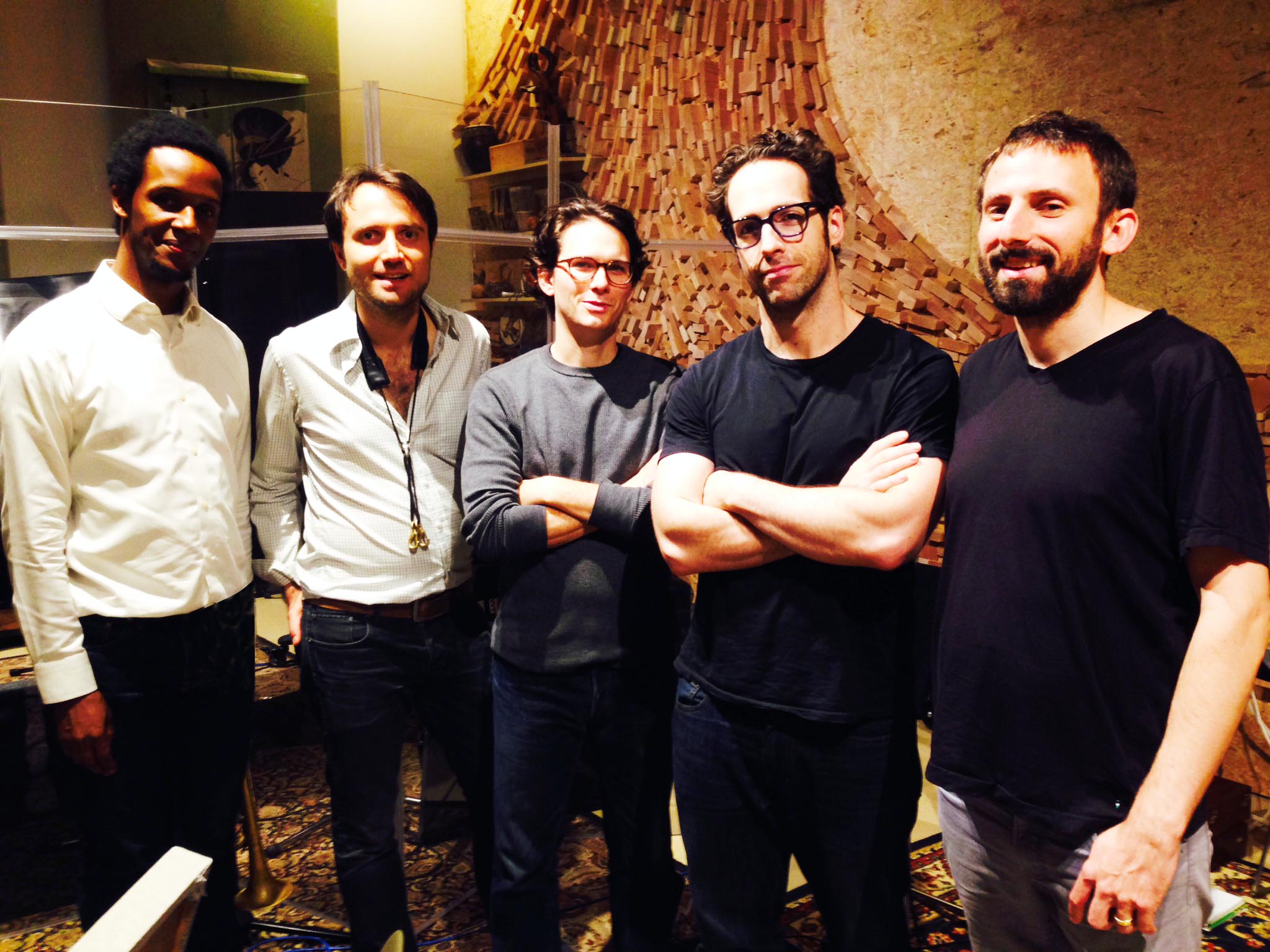
Sam Sadigursky (clarinet, bass clarinet), who has been in the reed section of Darcy James Argue's Secret Society since its inception an has worked in a number of bands that play Central and South American music, has released 5 albums of poetry set to original music (including a  collaboration with French pianist Laurent Coq titled "Crosswords/Mots Croisés").  "Follow The Stick" (BJU Recordings) is his first recording sans vocalists (and the leader's saxophones and flutes) but continues in the composer/musician's exploratory style. Joining him on the adventure is Bobby Avey (piano), Chris Dingman (vibraphone, marimba) and Jordan Perlson (drums, percussion) plus Jason Palmer (trumpet on 4 tracks) and violist Ljova for the lovely "Looks Can Be Deceiving".

courtesy Samurai Hotel
The 76-minute program features 11 original compositions plus a smart rearrangement of "String of Pearls" (a big hit for the Glenn Miller Orchestra in 1941).  Thanks to the forceful work of Perlson and Avey, one does not miss the bass on the bottom. The interaction of Dingman's "orchestral" vibes with the band also gives the music a full sound throughout.   When Palmer joins the band, he creates a strong counterpoint for the clarinet.  He and Sadigursky play the theme on "String of Pearls" first in unison then in harmony then back to unison.The trumpet solo over the funky rhythms is a highlight of the CD. The muted trumpet is the lead voice (the leader/composer sits this one out) on "Math Music" not only playing the theme but also the first solo.

There's a great sense of playfulness on numerous tracks.  The slinky, slow, blues of "Austerity Measures" (the leader on bass clarinet) features skittering brush work, deep notes from Sadigursky and a plaintive piano solo. "3 + 2" has a melody line that blends a blues inflection with the sound of Astor Piazzolla and lively solos from the vibes and clarinet but don't miss the great work of the pianist and drummer. After a quiet piano prelude at the onset of "Deadly Sins", the band enters and Sadigursky leads them through a stop-and-start melody, joined by Dingman, and then the quartet moves in and out of time.  The elasticity of the time and the punch of the rhythm section matches the fire in the clarinet lines.  Perlson's work stands out throughout the album with his creativity and drive pushing the band on pieces such as "Touché" and the raucous "Do The Dance" (dig the reference to Gershwin's "Rhapsody in Blue" during the fiery trumpet and clarinet exchanges) while he is quietly supportive on "Mule".   Dingman also brings a great presence to this music, whether creating a supportive cushion of sound on "Life's Flowering" or with his smart counterpoint on the opening track, "Fast Money".  Bobby Avey's piano, to my ears, is the spark that keeps the music roiling or simmering, his full chords pushing the proceedings. The quiet opening exchange with the vibraphonist on "Heart" is so emotionally strong and that to make the entrance of the bass clarinet more dramatic.

"Follow The Stick" has much to offer the open-minded listener; listen first for the mature melodies and enjoyable harmonies, then notice the interplay and how each instrument pays its part in painting these 12 song portraits. While there are no words on these songs, the emotional content and lyricism speaks volumes.  Sam Sadigursky has developed quite a voice on his clarinets, one worth savoring.
This is music to explore and get lost in time and again.

For more information, go to samsadigursky.com.

Here's a taste of "Life's Flowering":


For his 4th album as a leader, the Israeli-born clarinetist Oran Etkin  (his family moved to the US when he was 4) turns his attention to the music and legacy of one of the first clarinet players to capture the attention of the jazz world.  "What's New? Reimagining Benny Goodman" (Motema Music) looks at a musician who discovered his voice by listening to and then interpreting the music of Louis Armstrong (Etkin's biggest and earliest influence) and Jelly Roll Morton.  Goodman, born in Chicago in 1909 (died in 1986), began his professional career in the 1920s and found fame as a bandleader in the mid-1930s when his Orchestra traveled through the country, ending in Los Angeles, CA, where a gig at the Palomar Ballroom was featured on a national radio broadcast and the Swing Era began.  Goodman's recordings with pianist Teddy Wilson and Lionel Hampton helped break the "color barrier" and, when he went on the road with those great musicians, it seemed to break for good.

 The Etkin recording has the same core instrumentation as the Sadigursky CD with the leader on clarinet, bass clarinet and tenor saxophone plus Sullivan Fortner (piano), Matt Wilson (drums) and Steve Nelson (vibraphone) - vocalist Charenee Wade adds her strong voice to 2 tracks.  The leader composed 3 of the 13 tracks and arranged the entire program.  Opening with the dream-like "Prelude", which is credited to New Orleans-born trumpeter Louis Prima, one hears snippets of klezmer melodies and the composer's "Sing, Sing, Sing" (near the end of this album).  Goodman's first gigs were in the Settlement House in Chicago and, on occasion, some of the cantorial music he heard as a youngster found its way into his music (Ziggy Elman's "And the Angels Sing" - composed for the Goodman Band - was based on a klezmer tune "Frailach in Swing" which itself was based on a a melody from Eastern Europe).

The music ranges from the swing of "Dinah" (love the "fractured" rhythms of Wilson and the "rent party" sound of Fortner) to the bouncing "King Porter Stomp" (Etkin's bass clarinet, the James P Johnson piano lines and fiery drumming makes the song come alive.) Ms. Wade digs deep into the blues for Joe McCoy's "Why Don't You Do Right" with the band joining in to tell the story. Fortner is a force throughout the album but his work is exceptional behind the vocalist here while Etkin wails in counterpoint.  Nelson's vibes add subtle mystery to the piece and Wilson slips and slides in support. She returns later on to deliver the blues on "After You're Gone" with Fortner channeling Teddy Wilson.

The clarinetist's original pieces are connected to the Goodman story in different ways.  The gospel-tinged "When Every Voice Shall Sing" pays tribute to Goodman's work to bring musicians of color into the spotlight.  "Be Good Lady" takes its name from an obvious source and the melody comes from 4 notes that Goodman played from that source.  Nelson's solo over the dancing piano and brilliant high-hat is ingenious and downright delightful as is Fortner's solo that follows.  "Brink" is a playful quartet piece that its cue from 30s swing (sound at times like "Minnie the Moocher") with the irresistible interplay of the musicians flowing out of the speakers.

After an impressionistic opening to "Sing, Sing, Sing", the beating "tom-toms" enter and the song takes off.  Etkin plays at the top of his range while Fortner and Wilson provide him with forceful support.  The uncredited 13th track is the mysterious "Moonglow"; ushered in by tolling piano chords  and single notes from Nelson, Etkin plays the melody on bass clarinet. The quartet takes it easily as if playing beneath a Bayou moon.  The short but wide-ranging vibes solo leads into a two-handed piano treat. the clarinetist returns to take the band and the song out in style, if a bit breathy.

"What's New? Reimagining Benny Goodman" celebrates the past by making it come alive, not treating the material as museum pieces and not being afraid to take chances (the way Goodman did with his music and his life).  Oran Etkin chose his band carefully and they perform masterfully from beginning to end (if you've haven't discovered Sullivan Fortner yet, this is quite a calling card!)  Find it! Dig It! Tell your friends this is what good music is all about!

For more information, go to www.oranetkin.com.

Here's the sweet sounds of "Be Good Lady":

Thursday, May 14, 2015

May Ladies' Day (Part 1)

Over the past decade, Anat Cohen has emerged as one of the major voices in improvisational music.  With other artists such as Don Byron, Ken Peplowski, Mike McGinnis and Darryl Harper, she has returned the clarinet to the forefront. Her musical "ears" are quite big, taking in classic American jazz, big band music, Brazilian choro, and so much more.  Ms. Cohen has dedicated her life to making the world brighter through her performances and, if you have ever seen her in person, she does just that.

"Luminosa" is her 7th recording as a leader, all released on her Anzic Records label.   The album features 7 tracks with her "working" quartet of Jason Lindner (piano, Wurlitzer electric piano, synthesizer), Joe Martin (bass), and Daniel Freedman (drums), 2 with her partners in Choro Aventuroso (accordionist Vitor Gonçalves, 7-string guitarist Cesar Garabini, and pandeiro player Sergio Krakowski), a duo with guitarist Romero Lubambo, and a stunning reading of "Beatriz" featuring Lubambo, Martin on bowed bass and threader on bass clarinet. While over half of the program features pieces written by Brazilian composers (including Lubambo's dancing clarinet-guitar duo"Bachiāo"), there's a mostly acoustic version of Flying Lotus's playful "Putty Boy Strut", a lovely original ballad "Ima", and the "cool jazz" swing of Ms. Cohen's "The Wein Machine" featuring her on tenor saxophone and special guest Gilad Hekselman on electric guitar. Percussionist Gilmar Gomes joins the proceedings on a number tracks including the expansive reading of Milton Nascimento's "Cais", a track made famous by vocalist Elis Regina.

There is an abundance of joyous music on this disk.  From the afore-mentiond "Putty Boy Strut" to Ms. Cohen's flight of fancy on "The Happy Song", it's a treat to her cavort atop the dancing drums and bass.  Of the 2 pieces with her Choro group, the sprightly "Espinha De Bacalhau" (a piece composed in 1937 by Brazilian clarinetist/bandleader Severino Araujo) jumps with glee and includes a funky piano solo from Lindner. Nascimento's romantic samba "Lilia" opens the recording - composed in the early 1970s, the tune is dedicated to the composer's mother. Here, the main Quartet (plus Gomes) stretch out and create a fine uptempo reverie. "In The Spirit of Baden" (a Cohen original) has a pleasing melody and quite a subtle yet exciting rhythm created by Freedman and Gomes. Lubamo's rhythmic guitar adds to the pleasure blending his chordal work with the acoustic piano.

Ms. Cohen's "Ima" ("mother" in Hebrew) is a sweet ballad with a clarinet solo that weaves in and out of the melody line. The gentle tribute shines in the midst of the more energetic tracks.  The Choro quartet also contributes a ballad "Ternura" (composed by Brazilian saxophonist K-Ximbinho, a member of Severino Araujo's Orchestra) - the piece has a lilting melody and Ms. Cohen's clarinet solo has a bluesy edge.

"Luminosa" lives up to its title, the word means "bright, luminous" in Portuguese.  Anat Cohen and her musical cohorts have a mission to bring lightness into our world and succeed...well, brilliantly.  Her spirit and exuberance shines throughout this music, even moreso in person.

For more information, go to anatcohen.squarespace.com.

Here's "Espinha De Bacalhau":


Cristina Pato, a native of the Galicia region in the northwest of Spain, may be best-known in the United States for her work with the Silk Road Ensemble. She is a pianist and vocalist but her main instrument is the Galician bagpipes. "Latina" is her second US release for Sunnyside and it blends her love for the sounds of her native country with world music from other lands including jazz from America.  Featuring her working band of Victor Prieto (accordion), Edward Perez (acoustic bass), and Eric Doob (drums), the music is extremely exciting, with rhythm and sounds that seem to explode out of the speakers.  My first reaction to hearing "wailing" pipes over Doob's furious rhythms on the opening track "Fandango: Prueba De Fuego" (translates as "fireproof") is how much her interactions sound like Jan Hammer on the synthesizers working with Jeff Beck in the 1970s.  That track is the first section of the 6-part "The Latina 6/8 Suite", created for her by bassist Perez, all in the same time signature but inspired or based on rhythms from Sicily, Peru, Colombia and Spain.  "Tanguillo: The High Seas" has a formal feel in its initial presentation but when Ms. Pato, on piano, solos, one can hear Eddie Palmieri in her attack.  Ms. Pato explains the meaning of "Latina" on the final track on the suite "Taranella-Muiñeira: Epilogue" both vocally and with her pipes; the piece really takes off on the strength of the amazing drumming and the interaction of the pipes and accordion.

photo by Xan Padrõn
Prieto, who also hails from Galicia, has worked with the Maria Schneider Orchestra, the Arturo O'Farrill Latin Jazz Orchestra, and the Silk Road Ensemble, is quite a soloist as well, showing off his prowess on "Curralao: Currulao De Crisis" and on his composition, the high-powered as well as very funky "Let's Festa". Listen to the band romps on Emilio Solla's "Llegará, Llegará, Llegará" ("It will come, it will come, it will come") - pushed forward by the powerful accordion and the force of the rhythm section, Ms. Pato burn through her solo, hitting notes at the top of the pipes' range.

A compact 36 minutes, "Latina" will leave you breathless. There's nary a ballad - I can't imagine wanting to leave the dance floor when this music is playing. Cristina Pato not only can play impressively but also uses her music to teach about the wide range of Latin music.  A warning for the faint of heart; watch out for her screams as they as fiery as her incendiary Galician bagpipes.  For more information, go to www.cristinapato.com


Pianist Roberta Piket issued her first solo CD in 2012. Featuring pieces by Wayne Shorter, Sam Rivers, Billy Strayhorn, Thelonious Monk, her mentor Marian McPartland, her father Frederick (who passed when she was 8) plus several originals, it displayed her wonderful ability to "tell stories" in song. "Emanation (Solo: Volume 2)" (Thirteenth Note) is similar in style and repertoire (Ms. McPartland and Monk, joined here by Herbie Hancock, Dizzy Gillespie, Jerome Kern, Howard Dietz/Arthur Schwartz, Sigmund Romberg/Oscar Hammerstein II, and 3 originals, 1 based in a theme by Frederic Chopin) and just as rewarding to listen to.

Her splendid work on Gillespie's "Con Alma" conveys both the flowing rhythm and the handsome melody. Monk's "Ba-Lue Bolivar Ba-lues" has that recognizable quirky melodic style the composer employed, conjuring images of him dancing while the band plays. The music gets decidedly funky on Hancock's "Actual Proof", a piece from his Headhunters days. Ms. Piket stays acoustic but the music is grounded in the dance rhythms that that ensemble specialized in. Her solo takes flight, moving in and around the left hand "funk".

The ballads deserve special mention. "Saying Goodbye" (a original) conveys all the emotions that the title suggests (with a light-hearted turn in the middle of the solo) while Ms. McPartland's "Ambiance"  has a lilting melody and chordal patterns that go in unexpected directions.  The title track blends darker chords with an expressive melody; the music does not flow as much as it seems to be falling forward, nudged by the low notes. There is a sweetness in "Haunted Heart", derived from Ms Piket's light touch on the melody.  The album closes with her "Fantasy on a Theme by Chopin", based on the Polish composer's "Prelude Opus 28 No. 2 in A-minor".  The opening chords and slow movement through the melody brings to mind the work of Erik Satie, the airiness of the approach to the work (despite the "dark" chords at the close), all contribute to the ultimate beauty of the performance.

Roberta Piket does not waste her time or that of the listener by creating an album where she merely displays her formidable technique. Nor are there long tortuous passages; in their stead are well-defined melodies, intelligent harmonies and solos that build upon those harmonies and melodies in logical fashion.  This is music that breathes, that reaches out for the heart and soul of the listener and, on occasion, for the dancing feet. "Emanation" is a fine recording that deserves your close attention.

For more information, go to robertajazz.com.


Tuesday, July 29, 2014

Further Adventures of the Majestic Clarinet

The 7th recording by clarinetist, arranger, and composer Darryl Harper hearkens back to his excellent 2009 HiPNOTIC release "Stories in Real Time", especially in how the leader blends his different ensembles into the mix.  "The Need's Got To Be So Deep" contains 19 tracks played by Harper and various combination of the 19 musicians he gathered for the project. Spread over 2 CDs and 96 minutes,  Harper works in duo settings with pianist Helen Sung and guitarist Freddie Bryant, in a trio and several quartet settings with his long-time rhythm section of Harry "Butch" Reed (drums) and Matthew Parrish (bass) plus pianist Lefteris Korderis, and with his Clarinet Quartet of Alex Spiegelman, Kenny Pexton, and Nicholas Lewis. There is 1 track with a Flute Trio (Jimmy Guiffre's "The Side Pipers")  and 3 with a Woodwind Quartet (performing a work commissioned from Andy Jaffe.)  

What keeps this blend of various ensembles and musical ideas together is the exceptional musicianship and direction of Harper.  Currently on the faculty of Virginia Commonwealth University, the Philadelphia, PA-native has worked onstage with pianist Orrin Evans, Tim Warfield, Uri Caine and Roscoe Mitchell and spent 2 years with violinist Regina Carter who appears here on the  classically inspired 2-part "Dances For Outcasts" with I-Jen Fang (marimba).                                                                                                                                                                                                                                                                      

Both CDs open with compositions by pianist Xavier Davis, with the rocking title track based on a line from a poem by Yusuf Komunyakaa.  Vocalist Marianne Solivan digs deeply into the poet's words, supported by the leader with Korderis, Reed and Parrish. That group (minus Ms. Solivan) also shines on the 4-part "Jazz Clarinet Quartet" composed by Greg Bullen.  Each section - "Variations", "Ballad", "Interlude", and "Spin" - stands out with distinct melodies yet is tied together by its overall sonic quality.

The longest single cut on the CD, "Anthem For Unity", is a lovely duet for Harper and composer/acoustic guitarist Freddie Bryant. The music has a pleasing blend of Brazilian and North American folk music influence plus a touch of the melodic style of Ralph Towner.

The 4 duets with Ms. Sung are distinguished by their strong melodic content, exciting interactions and emotional strength. The pianist's "Prelude and Fugue-Like" is a multi-sectioned tour-de-force while Carla Bley's "Postures" (first recorded in 1961 by Jimmy Giuffre) blends jazz, blues, ragtime and "free" tempi. "Playtime" is just that, a playful musical romp composed by Ayn Inserto for pianist Korderis and  Harper, who performed the piece at the New England Conservatory (where Harper did his Doctoral studies.)

The 3-part "Woodwind Quintet", played by Harper, Michael Rabinowitz (bassoon), John Clark (French horn), the composer's sister Marina (oboe) and daughter Ceora (flute), brings the program to close with a flourish.  Composer Jaffe, who's known for his work as a jazz composer and leader of large ensembles, gives the musicians much to work with.  Part 1, "Bach's Corral", opens on a serious but soon moves into playful territory.  The short second Movement, "Panderinho", is a sweet melody for flute partnered with the oboe and, occasionally, the bassoon with the French horn and clarinet playing rhythm.  The piece hustles to its close, the composer's compositional tongue firmly in his musical teeth.  The longest movement, "Penthex", has a more formal feel but also turns towards jazz with its closing section where each one one of the instruments steps out for a short solo.

"The Need's Got To Be So Deep" says it all for those of us who cannot get enough jazz, cannot hear enough grooves or woody clarinets or singers moaning, saxophones keening or bassists throbbing beneath the ensemble (here's a link to Mr. Komunyakaa's stunning poem that gave Xavier Davis the title for his composition and Harper the title of his album.) Darryl Harper continues to grow in so many different facets of his career, giving the avid listener much to chew on with his latest recording.  This is a gem - pay attention and you'll be rewarded many times over.  For more information, go to www.darrylharperjazz.com.