At first, listeners may be put off by the sounds of "Facets" (Pi Recordings), the new album from the fertile imagination of tenor saxophonist and composer Hafez Modirzadeh. Those of us who live in the United States, Canada, Great Britain, basically north of the Equator, are used to the 12-tone scale whereas elsewhere in the world, you will hear alternative scales, microtones, and more. Often, those sounds puzzle us, sound dissonant (they are, to our ears), and just plain wrong. Yet, stay with what Modirzadeh is doing, listen all the way through, and then go back again.
Chances are good your curiosity will lead you to consult the liner notes by the time you reach the second or third piece. For the 18 songs on "Facets", Modirzadeh has retuned eight specific pitches on the piano. Those changes alter the resonances of the piano but allows the composer and performers (pianists Craig Taborn, Kris Davis, and Tyshawn Sorey play on six tracks each) to create music that grabs our attention and never lets go. There are two songs from Thelonious Monk ("Pannonica" and "Ask Me Now" - listen above) and "Facet 34 Defracted" deconstructs both songs in one piece. "Facet 32 Pearl" is based on "Variation No. 25" from J.S. Bach's"Goldberg Variations". Both Taborn and Sorey play an improvisation and both tracks fit into the scope of Modirzadeh's visions.
Do take the time to bathe in these sounds. Pieces such as "Facet 31 Wake" (Ms. Davis playing solo) is emotionally as it mesmerizing while "Flow Facet" (Ms. Davis solo again) feels like hypnotic Southeast Asian marimba, Chinese folk music, and a touch of boogie-woogie in the left hand. The keening tenor sax creates creates a wordless prayer with the piano (Ms. Davis) on "Facet 28 Nora" while the following track,"Facet 29 Night" is a duo for tenor sax and Sorey's sparse piano chords. The latter track also has a dream-like quality, creating a slow-moving set of mental pictures. Taborn and Modirzadeh create a stop-and-start feel from the outset of "Facet 35 Ode B'kongofon" –– after a moment, the fluttering tenor sax solo flows over the stumbling rhythm. Quiet piano chords (Taborn) usher in the saxophonist on "Facet 39 Mato Paha", a slow-moving tribute to a geological formation in South Dakota (the mountain's name comes from the Lakota tribe and translates to "Bear Butte"). Neither musician hurries, both the trance-like melody to resonate, to sink in.
The music on "Facets" is slow, at times meditative and trance-like, yet the deliberate tempi allow you time to digest and get accustomed to the sounds. Hafez Modirzadeh had previously used retunings on his 2112 Pi album "Post-Chromodal Out!", tying it closer to the Persian melodies of his ancestors than he does here by employing different instrumentation. Both albums are fascinating and both are unique!
Speaking of creating one's own language, saxophonist, trumpeter, composer, and conceptualist Ornette Coleman (1930-2015) hit the ground running in the late 1950s and did not stop once in his long career. Not only did the Texas-born Coleman change saxophone language but also how different rhythms can be utilized in acoustic and electric music. Saxophonist and composer Miguel Zenón was first introduced to Coleman's music as a teenage student in his native Puerto Rico. Later, as a member of the SF Jazz Collective, the ensemble created its inaugural program and tour (in 2004!) around the music of Coleman (arranged by Gil Goldstein). Yet, Zenón remains curious about the music and how it relates to the music he creates as well as the sound of his saxophone.
In May of 2019, Zenón assembled a quartet of musicians that he knew but who had never recorded together for a Coleman 91st Birthday Celebration in Basel, Switzerland. Joining the alto saxophonist was tenor saxophonist Ariel Bringuez (Cuba), bassist Demian Cabaud (Argentina), and Jordi Rossy (Catalan). Without much rehearsal, the band took the stage and the results can be heard of "Law Years: The Music of Ornette Coleman" (Miel Music). Instead of picking really familiar tunes, such as the oft-recorded "Lonely Woman" and "Una Muy Bonita", the quartet explores "Giggin'" (from 1959's "Tomorrow Is The Question", Coleman's second Lp), "Dee Dee" (from 1966's "At The Golden Circle Stockholm"), "Free" (from 1960's "Change of the Century"), "Street Woman" and the title track (from 1972's "Science Fiction"), "Tribes of New York" (from a 2016 release of unissued tracks from the 1960s Atlantic sessions), and "Toy Dance" (from 1968's "New York Is Now").
Photo: Chris Sweda 2016
The quartet have a ball with this music, getting in to the joy of playing Coleman's playful melodies while creating solos that rise out of the pieces organically. Check out "Free" –– I've not heard Bringuez before but he brings the fire as he and Zenón literally fly over the frantic rhythm section. "Giggin'" blends the joy of bebop with the blues; Zenón sounds like he's having a blast as he dances his way through a four-minute solo. Bringuez, who has worked with pianist Chuco Valdes and guitarist Hugo Fernandez, also solos with abandon. The title track opens with a short but powerful bass solo before the quartet lays down the melody. Their approach is reminiscent to that of the Atlantic Records Coleman Lps of the early 1960s. Cabaud, who has worked with the Lee Konitz-Ohad Talmor Big Band and vocalist Sara Serpa (among others) gets a longer spotlight right after the initial verse. Both the alto and tenor solos have tinges of flamenco music as well as moments of "free blowing".
Photo: Nuccio DiNuzzo 2015
The only ballad on the album, "Broken Shadows", shines from the opening moment. The interaction of the saxophonists (Zenón's keening tone and Bringuez's deep "blue" notes), the splendid bowed bass, and Rossy's intelligent cymbal coloring, all blend into a splendid performance.
"Law Years" closes with the medley of "Toy Dance/ Street Woman". The opening chorus and the subsequent solos swing with delight. After a short drum break, the saxophonists return to the opening melody go right into "Street Woman". This song has a darker feel and the rhythms more forceful. Bringuez's solo has a great sense of urgency and provides the power for Rossy's thumping drum solo. The waves of energy that come at you from the speakers as the pieces powers to is close makes you at to go right back to the beginning. Even as the various vaccines bring relief to millions of people all around the world, it might be number of years before musicians get to have a gig as loose and freewheeling as Miguel Zenón did on this May night in 2019. Pour a drink, turn down the lights, turn up the volume, and enjoy!
Bassist and composer Eric Revis (pictured left) has got serious pedigree. He's graduated from the school of Betty Carter, has also worked with Steve Coleman, Jason Moran, Lionel Hampton, Andrew Cyrille, and Orrin Evan and Nasheet Waits in the collective trio Tarbaby. Revis has spent the past 23 years in the rhythm section of the Branford Marsalis Quartet playing alongside Jeff "Tain" Watts and his successor Jason Faulkner. A prolific composer, he has contributed songs to the Marsalis Quartet repertoire and received several prestigious grants and fellowships.
His eighth album as a leader, "Slipknots Through a Looking Glass", is his first for Kris Davis's Pyroclastic Records label. The recording features Ms. Davis on piano plus his "working" quartet of Chad Taylor (drums, mbira), Darius Jones (alto saxophone), and Bill McHenry (tenor saxophone with afore-mentioned Faulkner on drums for two tracks. The resulting music (nine Revis originals, one each from both the saxophonists, and one credited to the bassist, drummer, and pianist) runs the gamut from funk to fiery blowouts to subtle ballads, and never a dull moment. The program opens with "Baby Renfro" (listen below), a serious slab of funk underscored by Faulkner's drums, Ms. Davis's "rhythm guitar-like" piano, and and the leader's thick bass lines. The overdubbed saxes play a robotic rhythmic line plus there are several slowdowns but most of the piece romps forward.
Photo: Jati Lindsay
Faulkner also appears on "Earl and the Three-Fifths Compromise", a slinky piece that features a circular (and hypnotic) bass line, impressionistic piano chords, and a lengthy conversation feature the two saxophones. It's Taylor's drums that set the torrid pace "Shutter" on which both McHenry and Jones tear a hole in the ozone layer with their powerful, frantic, and raucous solos. Ms. Davis dances all over the keyboard while Revis rips out a thunderous walking bass line. "Vimen" opens with a bass and drums dialogue before the pianist joins the fray laying down a series of angular lines blended before Jones scrambles atop the rhythm section and leaps into action. When it's his turn, McHenry takes a softer approach but slowly builds towards a powerful climax.
The title track is split in three short parts, all of which features the bassist in both speakers, quiet piano in the background, and a high-pitched but barely intelligible squeals as white noise. The "second" "Slipknots..." leads into "House of Leaves" which unfolds over four minutes of jagged, rubato, interaction before dropping into a slow funky groove and turning into a moody, introspective, work.
The most intriguing song "SpÆ", an improvised work for bass, mbira, and treated piano that flows from Revis's opening pattern and quiet piano figures and the percussive mbira into a more steady pace. Also a three-part work, the music flows from section to section seamlessly. The trance-like effect of the overdubbed mbira takes over the final moments slowing down with the bass to the fade. McHenry's lovely ballad "When I Become Nothing" features the band moving forward together with only Ms. Davis moving around the two saxophones. While not a conventional ballad, the music has a subtle beauty and a yearning quality.
"Slipknots Through a Looking Glass" continues the impressive body of music that Eric Revis has produced over the past two+ decades. The sound quality of the recording is quite impressive as you can clearly hear all the voices, even when there is a lot of noise. This is neither simple music nor "art-for-art's-sake" but true creative Black American Music.
Who better than drummer, composer, educator, and impressive human being Matt Wilson to bring a smile to one's face in the midst of the pandemic. From a distance––a socially responsible distance––he and his musical cohorts (reed man Jeff Lederer, cornetist Kirk Knuffke, and bassist Chris Lightcap) have conspired to give a musical "Hug!" (Palmetto Records). And, darned if we don't need a big one (hug, that is) plus a reason to smile through our collective fears and worries.
It's been six years since the MWQ released an album of its own––the members all appeared on Wilson's 2016 "Beginnings of a Memory" album as part of his Big Happy Family ensemble. The band's 2014 recording, "Gathering Call", also featured pianist John Medeski but "Hug!" is just the four musicians making their own fun. The 11-song program opens with Gene Ammon's rollicking "The One Before This", a joyous "blues shout" that features solid bass work, crashing drums and cymbals, and stand-out solos from Lederer (tenor sax), Knuffke, Lightcap, and the leader. Everybody gets loose so the audience can sit back and rest assured the music will be top-notch!
Off they go into a collection that features pieces by Abdullah Ibrahim ("Jabaloni"), Charlie Haden ("In The Moment"), Dewey Redman ("Joie de Vivre"), five Wilson originals, one riotous collaboration with Sun Ra ("Space Force March/Interplanetary Music"), and a Wilson favorite from his youth, Roger Miller's "King of the Road". If you are a long-time Wilson fan, his choice of material shouldn't surprise but the Miller tune stands out for its delightful....well...."joie de vivre". Lederer's clarinet leads the way, Knuffke gets a short solo, Lightcap contributes the foundational bass line while Wilson's subtle percussion sets an ambling pace––his "tap dancing solo near the close will are you smile even wider.
Photo: John Abbott
Another surprise is the presence of the voice of President Donald Trump. He's there to announce the Space Force initiative as the band contributes a Charles Ivesian background and then break into the "Space Force March" as the President serves as counterpoint to the musical mayhem. The Quartet then segues into Sun Ra's "Interplanetary Music" (hear the original) and creates a pastiche of bouncy blues riffs with a touch of New Orleans. They sing Sun Ra's lyrics while the President interjects his "Space Force" words.
There are plenty of other highlights. Wilson's "Every Day With You" is a lovely ballad, heartfelt, emotional, and richly melodic. "Sunny & Share", also an original, may be a tribute to the 1960s hitmakers but, in reality, it's a raucous and rapid melody line punctuated by short solos from each member of the band. The title tune (listen below) may just bring Herb Alpert and the Tijuana Brass to mind. Complete with a string accompaniment (all parts arranged and performed by Matt Combs, a Nashville, TN-based fiddler), the piece is quite sweet and deserving of its title.
Photo: John Abbott
"Hug!" closes with the aptly-titled "Hamba Kahle (Goodbye)"––the title is from the Zulu language and the music hearkens back to the sounds of Abdullah Ibrahim. The solid drumming, the dancing electric bass line, the sweet melody line (from the drummer), and the gentle fade all serve to close the album on a hopeful note. Having attended numerous performances by Matt Wilson either in a leadership role or as a sideman, his music and playing are often imbued with joy. He can be silly, and irrepressibly so at times, but he is always serious about making good music. The music of the Matt Wilson Quartet obliterates borders, ignores genres, and embraces melody and improvisation. You should partake of this bounty!
If you've spent any time paying attention to creative music in the 21st Century, you know that there are a group of pianists who are always pushing the envelope. Artists such as Jason Moran, Myra Melford (who started out in the last decade of the previous century and has never stopped exploring), Craig Taborn, Aruan Ortiz, John Escreet, and Kris Davis. Ms. Davis seemed to spring out of nowhere with her 2003 debut on Fresh Sound New Talent and over the course of 13 albums as a leader or co-leader, she has continually expanded her musical palette. In 2016, Ms. Davis inaugurated her own label Pyroclastic Records with "Duopoly", a series of two duets each with eight artists. "Octopus" followed in early 2018, also an album of duets only this time her dialogue was with fellow pianist Craig Taborn. She also leads a trio with bassist William Parker and drummer Jeff "Tain" Watts (dubbed January Painters), another trio (this one named Borderland Trio) with bassist Stephan Crump and drummer Eric McPherson, plus she has a duo with saxophonist Ingrid Laubrock. One would not go wrong calling Kris Davis a very busy musician.
Her latest recording, "Diatom Ribbons" (Pyroclastic), is a program of 10 compositions (eight by the pianist and one each by Michaël Attias and the late Julius Hemphill) played by various sized ensembles ranging from a duo to septet with several others in between. The one constant partner throughout is drummer Terri Lyne Carrington appearing on every track with other participants including turntablist Val Jeanty (all but two tracks), acoustic snd electric bassist Trevor Dunn, vibraphonist Ches Smith, guitarist Nels Cline, saxophonists JD Allen (only on the first and last tracks) and Tony Malaby (on three tracks) plus two cuts with guitarist Marc Ribot. Esperanza Spalding adds her voice to two tracks, Attias's "The Very Thing" and "Certain Cells". Attias's song has a lilting melody that the drummer underpins with her expressive playing with Malaby's tenor pushing in the background and Jeanty's swooshes and splashes painting quite a backdrop. "...Cells" builds from Gwendolyn Brooks's powerful poem "To Prisoners" and is a tour-de-force for Ms. Carrington's robust drumming.
Photo: Peter Gannushkin
There are moments throughout the album that capture the mind. The voice of composer Olivier Messiaen moves and out of "Corn Crake" as Ms. Jeanty's electronics swirl beneath the rambling piano lines and the rock-steady drumming. Ribot's lines spew out with force on the rocking "Golgi Complex (The Sequel)" (dig how Ms. Carrington and bassist Dunn lock into the groove) then engages in a duel with Cline on the following track "Gogol Complex." That track not only pits the guitarists against each other but pay attention to the power coming from the rhythm section and Ms. Davis's thunderous piano work.
Photo: Daniel Sheehan/Martin Sarrazac
The album closes with Hemphill's "Reflections" (first recorded in 1975 on his second album as a leader "Coon Bid'ness"), a multi-sectioned piece that opens in an introspective mode with the two saxophones playing in unison behind the dancing piano lines and the counterpoint of the drums. Dunn's bowed acoustic bass moans quietly while also producing overtones as the saxophones begin to state the song's theme. A bit past the halfway point, the drums and bass drop into a funky beat, the saxophonists repeat the melody, and a highly processed proper British voice talks about learning. Both Allen and Malaby solo, dancing atop the beat and Ms. Davis's pounding piano chords, the voice jabbering in and out of the background.
One of the more delightful attractions of "Diatom Ribbons" is how Val Jeanty adds her distinctive turntable sounds to the mix. How Kris Davis utilizes her talents makes the album all the more intriguing, an integral part of a program in which all parts are integral – there is no wasted space. Ms. Davis first teamed up with Terri Lyne Carrington and Esperanza Spalding to play a series of concerts to honor the memory and work of Geri Allen. That connection pushed Ms. Davis to create this project, one that will greatly appeal to the curious mind. Dig in, pay close attention.
Saxophonist Samuel Blais came to New York City in the early years of this decade to study with saxophonist and NEA Jazz Master David Liebman. In 2012, Liebman helped the young man create a saxophone quartet in NYC that featured the two of them (on soprano and baritone saxophones) in a partnership with tenor saxophonist Donny McCaslin and alto saxophonist David Binney. They toured in Quebec that year playing compositions by all four members, the first time both Binney and McCaslin had written for this kind of ensemble. The ensemble got back together in May of 2015, entered Red Rock Studio in the Poconos Mountain in Pennsylvania and, over the course of two days, recorded the 10 tracks that make up "Four Visions" (Sunnyside Records)
Interestingly, the four musicians each only play one reed instrument throughout the program although all but Binney play different saxes. That choice gives the music more of a classical feel. The entire is composed of originals by the band members insulting three each by Blais and Binney plus two each by Liebman and McCaslin. On initial listening, one hears the influence of the World Saxophone Quartet, especially the writing of Julius Hemphill. Once you dig into each track, the composers individual voices come out. Liebman's "A Moody Time" starts as a ballad with each voice stepping out of the ensemble for short, solo, lines. Suddenly, the baritone sax falls into a groove and the soprano takes off. The tenor joins the bari while the soprano and alt take the melody and off the quartet goes. Binney's "Dunes" opens with the fours saxes sounding like a church organ but soon the quartet is off on a sonic adventure filled with melodic excursions and lightning-fast tempo changes. "Empty Sunbeams" hs a similar opening but falls into a groove, one tha bears the sound of WSQ.
YouTube
McCaslin contributes the handsome ballad "Buy a Mountain", a piece that hints at the blues, the phrases the members play when they step out echoing Coleman Hawkins, Johnny Hodges, Charlie Parker, Wayne Shorter, and others along the jazz continuum. "Et Voit Le Jour" (translated as "and see the day"), composed by Blais, has room for a handsome baritone solo but be sure to listen to what the other three play behind him. The support for the tenor solo is the same – make sure to listen to how clearly the band articulates the supporting lines.
Julius Keilwerth Saxophones
Liebman's "Inside Bach's Studio" is the longest track (15:53), through-composed yet leaves room for each saxophone to step out for solos. Those "spotlights" are truly solo (sans accompaniment) and rubato yet fit perfectly into the expansive fabric of the composition. There are several moments where one believes the piece is ending only to hear the quartet move into a new written section.
"Four Visions" is the work of four fertile minds brought together by Samuel Blais and Dave Liebman. It's such a treat to hear both Donny McCaslin and David Binney in this setting, creating music that challenges them as much as the listeners. What a treat1
Here's the Quartet in concert playing an expanded version of the piece:
Photo: Harvey Tillis
Bassist, composer, orchestrator, and arranger Matt Ulery has been a busy member of the Chicago music scene since arriving two decades. He studied at both Roosevelt University and Depaul University and played professionally with the likes of Patricia Barber, Kurt Rosenwinkel, and trumpeter Marcus Hill. he first recorded as a leader in 2007 and, since then, has worked with numerous different-sized ensembles, from trios to quintets to nonets to a brass band and a jazz orchestra. His compositions have been performed by groups as diverse as Eighth Blackbird, Axiom Brass, and the New Millennium Orchestra of Chicago. In 2016, Ulery inaugurated his own label, Woolgathering Records, with red;eases by his Loom/Large ensemble, pianist Rob Clearfield, trumpeter Russ Johnson, and saxophonist Tim Haldemann.
Woolgathering Records
His new album, "Delicate Charms", features long-time associates Zach Brock (violin), Greg Ward (alto saxophone), Quin Kirchner (drums), pianist Clearfield, and the leader on bass and all compositions. Ulery worked on the pieces for this lineup over the course of several years and the quintet went to Portugal in late 2018 where they received an ecstatic reaction from the audiences. Immediately on arrival back in Chicago, the group entered the studio. As to be expected, the music is beyond category but one can not miss the composer's love for melody, harmony, and counterpoint. The rhythm section is a major component in the music as well, not just with its use of polyrhythms but their own medic additions. What immediately stands out is the blend of the violin and alto sax – when Brock and Ward play together, the sound is so full and it's hard to tell them apart unless one is under headphones. Listen to the opening moments of the first track "Coping"; with Ulery and Brock bowing while Ward is playing, they sound like a string trio. Then, the violinist takes the melody and Ward plays the counter-melody. And, then they switch throughout the reading of the theme and verses.
Photo: Harvey Tillis
There are numerous delights on this hour-plus program. Ward, who is my choice for 2019 MVP (most valuable player) shines on "Taciturn" – his wide-ranging solo pushes Brock who follows with his own sparkling performance. Meanwhile, the rhythm section is rocking beneath them. Clearfield's piano solo at the onset of "Nerve" (the final track) has a classical feel with overtones of Appalachian folk music. The melody that follows carries on that sound with a melody that pulls at the emotions Pay attention to Kirchner's active drumming as well as to how he puts the rhythm on simmer underneath Ulery's excellent solo. Notice the soulful alto solo where the phrases take flight, reaching towards the skies.
Every track on "Delicate Charms" is worth exploring in depth. Over his career, Matt Ulery has created music that expands inside one's ears and mind, making the listener return to discover all that's in the music. With this album and July's release of "Wonderment" (a trio date with Brock and drummer Jon Deitmeyer), Matt Ulery has produced two of the best recordings of 2019!
The older I get, the more comfort I derive out of music that sounds like the musicians are having a great time playing. Not sure how I can tell other than there are occasions of one band member extorting on the others but one feels the comfort these musicians have taking chances, interacting with one another, and the "dancing" quality that inhabits the music. Drummer Ali Jackson (Lincoln Center Jazz Orchestra), bassist Omer Avital (Third World Love), and pianist Aaron Goldberg (Joshua Redman Quartet) all are busy sidemen as well as leaders – they have known each other for over two decades and, early in the 2010s, decided to form a trio. They took the name Yes! Trio and released their debut album on Sunnyside Records in 2012.
Seven years later, Yes! returns with a new album on a new label (Jazz & People, based in France) but with a renewed spirit and a whole mess of joy. "Groove du Jour" features 10 tracks with four composed by Avital, three by Jackson, one from Goldberg plus "Dr. Jackle" by Jackie McLean and the standard "I'll Be Seeing You." That final track listed is an excellent a=example of the trio's delightful approach – after a quiet beginning, Jackson settles into a slow shuffle beat and the song is permeated by the blues. Listen to the delightful piano solo. The program ranges from the powerful "Escalier", a Jackson composition that opens with the power of a McCoy Tyner that settles into a swinging groove. Avital's "Muhammad's Market" hints at a Middle eastern groove while it rumble forward on the strength of the drums and bouncing bass lines. Jackson's "Claqué" dances in on the funky drums, the high bass melody, and Goldberg's Thelonious Monk-like blues feel.
The album closes with Avital's "Bed-Stuy", yet another delightfully swinging song. Each member the trio gets to "strut his stuff" yet no one steps on anyone's toes. This music is so alive and lively you'll want to get into "Groove du Jour" many times. This is soul-affirming music from Yes! Trio!
Listen to the music of Henry Threadgill from 40 years ago, when the trio known as Air made its first recording. His saxophone and flute, the majestic bass of Fred Hopkins (1947-1999) and the brilliant percussion of Steve McCall (1933-1989) sounded like few other trios (compare their recordings to the work Sonny Rollins created in the 1950s) - the evidence of Threadgill's Chicago upbringing can be heard in the occasional hints of blues that enter the pieces but the freedom, the unexpected twists that don't sound dated or forced even today, their intuitive interactions (both live and on record) excited many people willing to travel down the trails they blazed.
Threadgill formed Zooid at the turn of the 21st Century building the sextet/quintet around the incredible tuba work of Jose Davila and the expressive guitar of Liberty Ellman. By the time of the group second Pi recording "This Brings Us To, Vol 1." (2009), drummer Elliot Humberto Kavee joined the ensemble with cellist Christopher Hoffman coming the 6th member (original cellist Dana Leong was on the band's initial release but left before #2.)
"In For a Penny, In For a Pound" is the new Pi release and, with the departure of bassist Stomu Takeishi, the group is once more a quintet. The 2-CD set features 6 tracks with each disc starting with a short track (the first disk is the title track, subtitled "opening" while the second disk starts with "Off The Prompt Box" subtitled "exordium", meaning "the beginning.") The other 4 tracks are much longer, episodic compositions dedicated to the different instruments (with the exception of the reeds) in which the quintet breaks into smaller formations at various times. Threadgill is fine voce throughout, his squiggly alto lines or colorful flute playing (he plays both concert and bass flutes) weaving in and out of the sound spectrum. "Ceroepic (for drums and percussion)" opens with the impressive melodic interaction, the alto sax in the lead, Davila playing counterpoint while both the guitar and cello plays the foundational bass lines. Kavee's drums people the work forward as the solos unwind, first Threadgill then Hoffman. After the fine cello solo, the piece and heads off into quiet territory, with just cello, guitar and percussion in the mix. After several several changes in direction, Threadgill's flute takes the lead for a turn before handing off to Davila, now on trombone. Despite the subtitle, there is never a drum solo in the spotlight although Kavee is crucial to the movement in several sections. Meanwhile the following cut, "Unoepic (for cello)" does start with the instrument the piece is named for but soon everyone joins in.
Meanwhile, this music features all the elements we have come to expect in Threadgill's music. Rhythms that push but do not represent any particular "style", solos that grow right out of the melodies and great interactions. On "...Prompt Box", listen to how each musician plays rhythm especially and notice how the leader steps out after the opening theme, not to return. The interaction of guitar and cello at the onset of the last cut, "Unoepic (for guitar)", sets the stage for several duo dialogues (alto sax and drums, cello and drums) yet, over the course on nearly 18 minutes, there are moments when the musicians solo over drums, tuba and guitar or guitar, cello and drums and so forth. Threadgill's alto erupts out of a drum solo, exchanging phrases with cello and guitar, then stepping out for a thoughtful and somewhat abstract solo.
At 80 minutes, "In For a Penny, In For a Pound" is much to digest and would not fit easily on one disk. That said, this suite is most certainly interconnected, with themes moving in and out of separate tracks. While there are solos throughout, the rhythm section does not just "comp" or simply keep "time" but are vitally important to the movement and direction of each piece. When you listen, pay attention to what Liberty Ellman, Christopher Hoffmann and Jose Davila are playing when the there are solos. Melodies and rhythms intermingle, all while the music continues to move forward. On the CD jacket, Henry Threadgill gives "my endearing thanks and respect" to both Sonny Rollins and Ornette Coleman, musicians, soloists, bandleaders and composers who paved the way for his vision and his music. Yet, we can be thankful that there is no one like Henry Threadgill. At 71, he's going strong (his work with Wadada Leo Smith and Jack DeJohnette on new recordings is wonderful), seeming to grow stronger with every recording and every ensemble. For more information, go to www.pirecordings.com/artist/henry_threadgill.
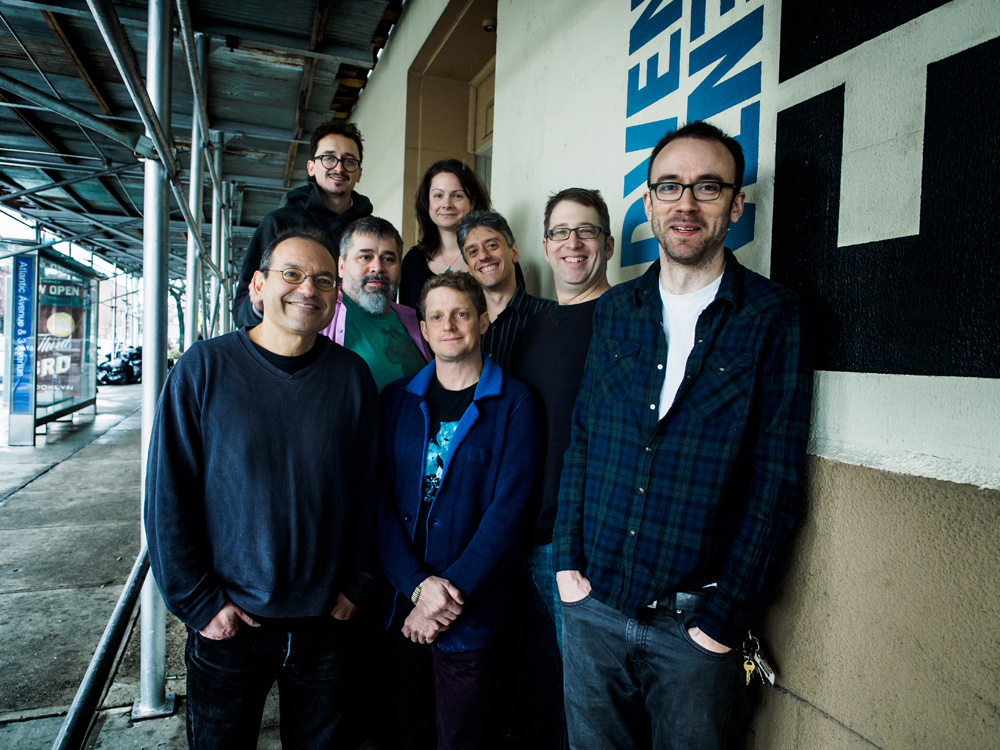
Composer and pianist Kris Davis, over the past 12 years since her debut CD appeared on Fresh Sound New Talent ("Life Span"), has grown in ways one might not have expected. Her solo piano recordings reveal an artist always searching for new ways to express herself, the Trio dates find her and rhythm section avoiding cliches, and her work with Ingrid Laubrock and Tyshawn Sorey in Paradoxical Frog is indescribably audacious. Her arrangements for Tony Malaby's 2011 recording "Novela" (where she worked with 4 reeds, 3 brass, drums and piano, set the stage for her new project "Infrasound" an octet that features 4 clarinetists (Ben Goldberg, Oscar Noriega, Joachim Badenhorst, and Andrew Bishop), guitarist Nate Radley, organist Gary Versace, drummer Jim Black, and her piano. There is a video on Ms. Davis' website that tells the story behind the group and recording (watch it here) - the octet had not worked together as a unit until the night before its first gig and went into the recording studio the day after the gig!
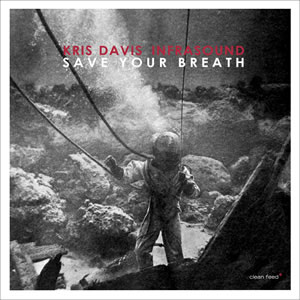
That written, her new recording - "Save Your Breath" (Clean Feed Records) - is a tribute to the talent of the musicians, to her arrangements, to her music that allows the ensemble to explore textures and rhythms, to the way silence and noise are a part of the mix and to how the lower reeds (bass clarinets and contrabass clarinets) are utilized. Opening with "Union Forever", which slowly moves towards a melody not unlike the chorus of "The Battle Cry Of Freedom" but not before introducing all the musicians. Black is often the spark plug, punching and jabbing, goosing the band forward. After the band drops out, a lonely clarinet plays above tolling piano chords. Davis' arrangement also has the organ moving in and out the mix, Versace's burbling lines adding a different flavor to the music. Is that accordion on the introduction of "Always Leave Them (Wanting More)", it's ethereal high notes drifting above the piano and increasingly powerful drums. Radley's guitar serves a similar purpose to the accordion, weaving in and out of the sounds from the reeds and the powerful piano chords. Slowly, the piece builds with the drums and piano in a fiery interchange while the clarinets keen quietly. Suddenly, the piece falls into a soulful rhythm for Noriega's powerful solo. "Whirly Swirly", which first appeared on Ms. Davis' 2014 Trio CD "Waiting For You To Grow", is a vehicle for Radley's hard-edged solo, over a bass line from Versace and rampaging drums. The piece stops on a dime and becomes extremely quiet, organ swirls and clarinet phrases nearly inaudible unless you sit still. When the band returns, Badenhorst's roaring clarinet is front-and-center over a chordal pattern not unlike a Black Sabbath tune.
The title song closes the program. The longest track (14:50), the sound rarely rises above a whisper, the instrumentalists stepping up and then fading out. Yet it's not an afterthought or an epilogue. Look at the cover photo - the music describes what to must be like to be underwater, to be standing on the ocean floor connected to the world above by ropes, breathing air from a tank, the only sounds being your breathing and whatever is going on in your mind. Each voice in the ensemble contributes to this adventure and it's makes for absorbing listening.
"Save Your Breath" has moments of great beauty and harsh noises ("The Ghost of Your Previous Fuckup" offers much of the latter without ignoring the former), often moving with great force and determination. Considering the time the octet had to rehearse, perform, and record, this is incredibly fine music. I can imagine how pieces could get stronger with more performances (alas, only 2 European dates on Ms. Davis' website) but this recording is mighty good. For more information, go to www.krisdavis.net.

 Posts
Posts


 Chances are good your curiosity will lead you to consult the liner notes by the time you reach the second or third piece. For the 18 songs on "Facets", Modirzadeh has retuned eight specific pitches on the piano. Those changes alter the resonances of the piano but allows the composer and performers (pianists Craig Taborn, Kris Davis, and Tyshawn Sorey play on six tracks each) to create music that grabs our attention and never lets go. There are two songs from Thelonious Monk ("Pannonica" and "Ask Me Now" - listen above) and "Facet 34 Defracted" deconstructs both songs in one piece. "Facet 32 Pearl" is based on "Variation No. 25" from J.S. Bach's"Goldberg Variations". Both Taborn and Sorey play an improvisation and both tracks fit into the scope of Modirzadeh's visions.
  Do take the time to bathe in these sounds. Pieces such as "Facet 31 Wake" (Ms. Davis playing solo) is emotionally as it mesmerizing while "Flow Facet" (Ms. Davis solo again) feels like hypnotic Southeast Asian marimba, Chinese folk music, and a touch of boogie-woogie in the left hand. The keening tenor sax creates creates a wordless prayer with the piano (Ms. Davis) on "Facet 28 Nora" while the following track,"Facet 29 Night" is a duo for tenor sax and Sorey's sparse piano chords. The latter track also has a dream-like quality, creating a slow-moving set of mental pictures. Taborn and Modirzadeh create a stop-and-start feel from the outset of "Facet 35 Ode B'kongofon" –– after a moment, the fluttering tenor sax solo flows over the stumbling rhythm. Quiet piano chords (Taborn) usher in the saxophonist on "Facet 39 Mato Paha", a slow-moving tribute to a geological formation in South Dakota (the mountain's name comes from the Lakota tribe and translates to "Bear Butte"). Neither musician hurries, both the trance-like melody to resonate, to sink in.
 In May of 2019, Zenón assembled a quartet of musicians that he knew but who had never recorded together for a Coleman 91st Birthday Celebration in Basel, Switzerland. Joining the alto saxophonist was tenor saxophonist Ariel Bringuez (Cuba), bassist Demian Cabaud (Argentina), and Jordi Rossy (Catalan). Without much rehearsal, the band took the stage and the results can be heard of "Law Years: The Music of Ornette Coleman" (Miel Music). Instead of picking really familiar tunes, such as the oft-recorded "Lonely Woman" and "Una Muy Bonita", the quartet explores "Giggin'" (from 1959's "Tomorrow Is The Question", Coleman's second Lp), "Dee Dee" (from 1966's "At The Golden Circle Stockholm"), "Free" (from 1960's "Change of the Century"), "Street Woman" and the title track (from 1972's "Science Fiction"), "Tribes of New York" (from a 2016 release of unissued tracks from the 1960s Atlantic sessions), and "Toy Dance" (from 1968's "New York Is Now").