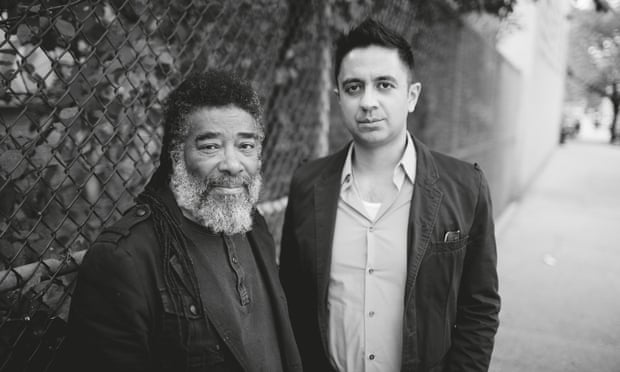
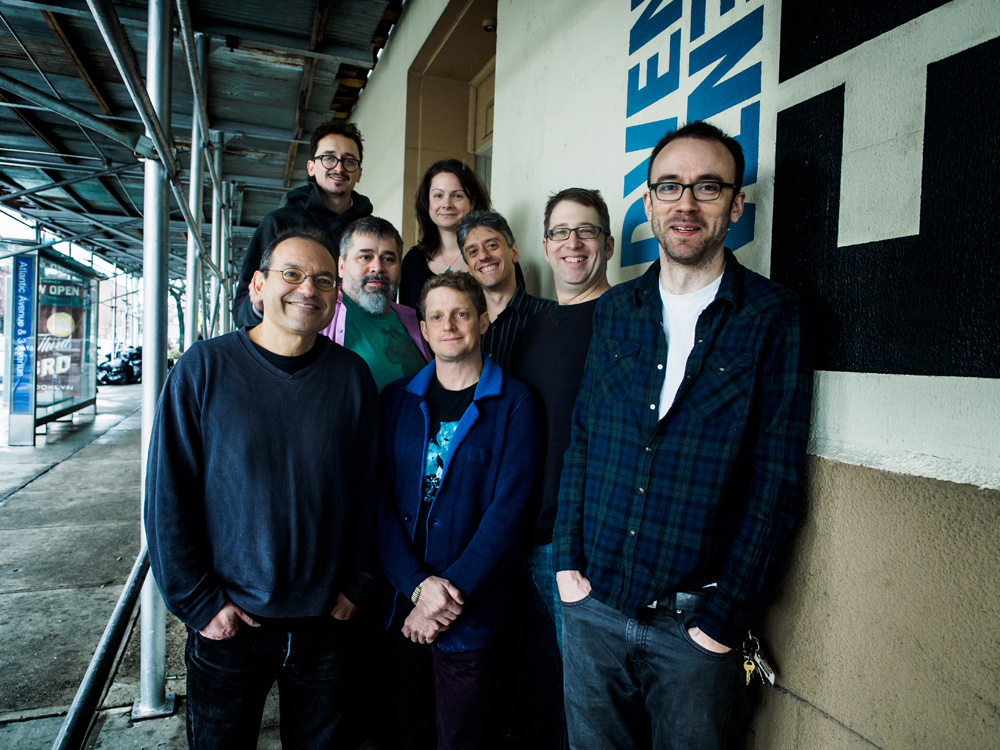
If one takes a close look at the ongoing career of saxophonist, composer, and activist Oliver Lake (pictured left), you'll see a person dedicated to not only celebrating the past but also always moving relentlessly ahead. Coming out of St. Louis, MO, in the 1960s, a co-founding member of the BAG (Black Artists Group), he teamed up with Julius Hemphill, Hamiet Bluiett, and David Murray to form the World Saxophone Quartet, all the while touring and recording with his own ensembles. Like Wadada Leo Smith, Anthony Braxton, Henry Threadgill, and other of his contemporaries, he developed a sound on his chosen instrument - alto saxophone - that immediately tells who he is upon the first notes. His recorded output includes duos, trios, quartets, organ-based ensembles, steel pan groups, big band, and numerous releases with the collective Trio 3 (with Andrew Cyrille and Reggie Workman, an association well into its third decade). Lake works with the trio Tarbaby (Orrin Evans, Nasheet Waits, and Eric Revis) and as a guest artist with other groups.
"Right Up On" (Passin' Thru Records) is his first recording with a string quartet but not his first with strings; he appeared in duo with violinist Leroy Jenkins (1932 - 2007), augmented his "working" quartet with a string quartet on 1979's "Shine!" (Arista-Novus), and released an album in 1997 "Movement, Turns, and Switches" with the Oliver Lake String Project. This new album features FLUX Quartet (violinist Tom Chiu, violinist Conrad Harris, violist Max Mandel, and cellist Felix Fan), who Lake has worked with since 2002 and for whom he composed the majority of the pieces on the recording. Like much of the composer's works, the 9 compositions have written and improvised sections plus the use of graphics and minimal notation.
The music certainly has a contemporary feel but hearkens back to the late quartets of Beethoven and to the string writing of Olivier Messiaen, Aaron Copland, Roy Harris, and George Walker. The lovely sonorities of the title track, the twists-and-turns of "2016" (the pizzicato opening with its stormy feel that opens to a lovely pastoral melody that branches into several other directions, and the fascinating use of dynamic variations on "Sponge" (near silence to keening sounds to percussive effects and a surprising vocal interjection) illustrates how Lake pushes the musicians and challenges the audience. The composer adds his saxophone voice to two tracks. On "Hey Now Hey", he joins the Quartet 1/3rd of the way playfully interacting by pushing his way into the conversation whereas on "5 Sisters" (dedicated to the memory of his mother and her four sisters), the alto leads the way. Listen closely to how the strings respond to the reed sounds and melody lines, to the improvisation, to how the cello adds such depth to the music, and to how the piece ends unresolved (to these ears).
The final track, "Einstein 100!", comes from 2005 and, of course, plays with space and time, with the finite and infinite, with solos and improvisations, and contains moments of delightful counterpoint. It is important to note here that Albert Einstein was an accomplished amateur violinist, often reaching for his instrument in moments if stressful research. Nearly 21 minutes long, the music is dramatic, cathartic, sometimes soothing, occasionally puzzling (why the coughing?), but always searching, probing, looking inward and outward, and never settling for cliche.
Oliver Lake has been a creative force for over five decades and shows no inclination to stop pushing forward. In FLUX Quartet, he has found musicians as daring as he, as willing to go deep into music and out on a limb as he continues to do. Pay attention to"Right Up On"; even as the music challenges your expectations, it will also take you many places.
For more information, go to www.oliverlake.net or to passinthru.bandcamp.com/album/right-up-on.
Here is Oliver Lake with FLUX in concert:
Showing posts with label AACM. Show all posts
Monday, May 22, 2017
Tuesday, February 21, 2017
Muhal, the AACM, & Middletown
For those of us who came off musical age in the 1960s and believed that John Coltrane and Miles Davis were the twin giants of jazz, the people involved with the AACM (Association for Advancement of Creative Musicians) did not come to our attention until the next decade. But the Chicago-based AACM came to life when pianist and composer Muhal Richard Abrams formed his Experimental Band in 1962, an ensemble that included saxophonists Fred Anderson, Roscoe Mitchell, and Joseph Jarman plus drummers Steve McCall and Jack DeJohnette. Abrams, who was mostly self-taught, composed a good amount of the material but everyone mentioned above as well as others started to bring in material to rehearse and then perform.
In 1965, Abrams, fellow pianist Jodie Christian, Kelan Phil Cohran, and several other people signed the letter of incorporation and the AACM began to be a center of learning and performance in Chicago and is still in existence today there as well as in New York City (where many of the musicians moved to in the 1970s and 80s). From those early sessions, groups such as the Art Ensemble of Chicago and Trio Air came into existence as did musical visionaries such as Anthony Braxton, Henry Threadgill, George Lewis, Douglas Ewart, Oliver Lake, Amina Claudine Myers, Nicole Mitchell, Malachi Thompson, and Famadou Don Moye.
On Friday February 24, Muhal Richard Abrams will bring his Quintet to Crowell Concert Hall at Wesleyan University. Joining him will be the fine young trumpeter (and protege of saxophonist Steve Coleman) Jonathan Finlayson, vibraphonist Bryan Carrott, drummer Reggie Nicholson, and bassist John Hébert. The music they will play will have its roots in jazz, there will be many moments of improvisation, there will certainly be swathes of tunes that "swing", yet cliches will be absent and it will often seem as if the musicians are conversing with each other in a language based on their own instrumental voices. It's a language the musicians are familiar with even though it changes each time they play and with every song.
Might not make sense to many of us but Muhal Richard Abrams has been navigating these waters for over 6 decades. The NEA Jazz Master, who turned 86 the past September, challenges himself, his fellow musicians, and his audiences whenever he sits down at the piano.
For more information about the concert, go to www.wesleyan.edu/cfa/. To reserve tickets, call 860-685-3355. To learn more about Mr. Abrams, go to www.muhalrichardabrams.com/. Check out the AACM by going to aacmchicago.org.
Here's Muhal with the late Fred Anderson from 2009:
Here's his Quintet in action from February 2016, same lineup as this Friday's concert except Brad Jones is the bassist.
In 1965, Abrams, fellow pianist Jodie Christian, Kelan Phil Cohran, and several other people signed the letter of incorporation and the AACM began to be a center of learning and performance in Chicago and is still in existence today there as well as in New York City (where many of the musicians moved to in the 1970s and 80s). From those early sessions, groups such as the Art Ensemble of Chicago and Trio Air came into existence as did musical visionaries such as Anthony Braxton, Henry Threadgill, George Lewis, Douglas Ewart, Oliver Lake, Amina Claudine Myers, Nicole Mitchell, Malachi Thompson, and Famadou Don Moye.
On Friday February 24, Muhal Richard Abrams will bring his Quintet to Crowell Concert Hall at Wesleyan University. Joining him will be the fine young trumpeter (and protege of saxophonist Steve Coleman) Jonathan Finlayson, vibraphonist Bryan Carrott, drummer Reggie Nicholson, and bassist John Hébert. The music they will play will have its roots in jazz, there will be many moments of improvisation, there will certainly be swathes of tunes that "swing", yet cliches will be absent and it will often seem as if the musicians are conversing with each other in a language based on their own instrumental voices. It's a language the musicians are familiar with even though it changes each time they play and with every song.
Might not make sense to many of us but Muhal Richard Abrams has been navigating these waters for over 6 decades. The NEA Jazz Master, who turned 86 the past September, challenges himself, his fellow musicians, and his audiences whenever he sits down at the piano.
For more information about the concert, go to www.wesleyan.edu/cfa/. To reserve tickets, call 860-685-3355. To learn more about Mr. Abrams, go to www.muhalrichardabrams.com/. Check out the AACM by going to aacmchicago.org.
Here's Muhal with the late Fred Anderson from 2009:
Here's his Quintet in action from February 2016, same lineup as this Friday's concert except Brad Jones is the bassist.
Sunday, December 11, 2016
Best of 2016 Continued
This group of albums released in 2016 includes a historical document, recording by gentlemen who started making music in the late 1960s and early 70s with the AACM, music that pays tribute, poems set to melodies, and much more!
Alexis Cuadrado - Poètica (Sunnyside Records) - Bassist, composer, and arranger Cuadrado turns his attention to contemporary writers on his latest recording. The poetry of Melcion Mateu (also a native of Barcelona) and Rowan Ricardo Phillips (a NYC native fluent in Catalan) is put to new music performed by the poets alongside Cuadrado, Miles Okazaki (guitars), Andy Milne (piano, keyboards) and Tyshawn Sorey (drums). This music has a harder sound, more of an urban edge, than his previous recordings, and one is thrilled and moved by how the poets and musicians mix their various voices. Urgent, thrilling, striking music that inhabits your mind with each listen.
For more information, go to alexiscuadrado.com.
Jane Ira Bloom - Early Americans (Outline Recordings) - The sound of soprano saxophone, in the right hands, is hypnotizing, sensual, and can paint pictures like no other instrument. Put the rhythm section of Bobby Previte (drums) and Mark Helias (bass) in the studio with Ms. Bloom and magic happens. This album is magical, personal, interactive, and uncategorizable - just let the music play and lose yourself (or, maybe even find yourself) in it.
For more information, go to www.janeirabloom.com.
Here's an uptempo piece:
Matt Wilson - One Big Happy Family (Palmetto Records) - Drummer, composer, mad scientist Wilson leads a number of different ensembles and on this album, he makes music with current and past members. Some tracks include as many as 11 musicians. They came together to make a tribute recording to Wilson's wife Felicia who passed away in 2014. In keeping with the drummer's passionate style, the music ranges from hard-hitting "raves" to folk-inspired and bluesy ballads. The music is also a tribute to the power of people coming together to play and how this act of creativity can stave off the darkness.
For more information, go to www.mattwilsonjazz.com.
Here's a delightful track:
Henry Threadgill Ensemble Double-Up - Old Locks and Irregular Verbs (Pi Recordings) - It's rare that Mr. Threadgill records with pianists yet this septet has two (Vijay Iyer and David Virelles); also rare is that the composer does not play on an album of his compositions but, here, he is just the conductor. This group features the brilliant tuba player Jose Davila and cellist Christopher Hoffman (both members of Mr. Threadgill's Zooid), the "conversational" drumming of Craig Weinrib, and the twin altos of Curtis MacDonald and Roman Filiu. The four-part suite is dedicated to the composer's contemporary Lawrence "Butch" Morris (the composer, cornetist, and conductor) who passed on in 2013. This swirling, whirling dervish, music has numerous moments of delight and others of mystery; even now, nearly 10 months since I first encountered the album, I am surprised by the stunning "Part IV" and his the opening two-piano conversations pulls me into its elegiac spirit and prayer-like feel.
For more information, go to pirecordings.com/albums/pi64.
Wadada Leo Smith - America's National Parks (Cuneiform Records) - Mr. Smith, like Mr. Threadgill, has created his own musical language through his long career, telling stories this country needs to hear about the power of music to transform society as it explores its myriad issues and relationships. This 2-CD collection of songs not only celebrates the natural wonders (such as The Mississippi River and Yosemite) but also people (Eileen Jackson Southern, pioneering Black musicologist) and the city of New Orleans. Mr. Smith leads his Golden Quintet - Anthony Davis (piano), John Lindberg (bass), and its newest members, drummer Pheeroan akLaff and cellist Ashley Walters - his crackling trumpet riding the powerful rhythm section, caressing his fascinating melodies, and allowing moments of beauty to linger. Don't bother to tack labes onto the music of both Henry Threadgill and Wadada Leo Smith - there are few contemporary composers with their vision, compassion, and continuing brilliance.
For more information, go to www.wadadaleosmith.com.
Peter Brendler - Message in Motion (Posi-Tone Records) - Bassist and composer Brendler's second recording for the LA-based Posi-Tone Records employs the same trio of musicians as his 2014 debut - drummer Vinnie Sperrazza, saxophonist Rich Perry, and trumpeter Peter Evans - and covers as much musical territory. Guitarist Ben Monder joins the ensemble on 4 tracks filling out the sound with his chordal magic and special solos. This is another album that sounds better each time one listens as you can concentrate on the intelligence of the arrangements, the breadth of the compositions, and the brilliant inter actions as well as wonderful solos.
For more information, go to www.peterbrendler.com.
Dig the "swing" of "Splayed":
René Marie - Sound of Red (Motema Music) - The word "sassy" has always been associated with the great vocalist Sarah Vaughan yet is equally appropriate for this splendid performer, storyteller, and composer. With songs that touch your heart and others that make you want to dance, these "Sounds" swing, dance, strut, as well as make you aware of the fragility of the human condition. Ms. Marie's longtime rhythm section of bassist Elias Bailey, drummer/co-producer Quentin E. Baxter plus pianist John Chin is on the mark throughout and the various guests add their special magic. In the long run, it's that lively and alive voice that brings you back again and again.
For more information, go to renemarie.com.
Here's Renè Marie and her Trio playing three songs from the album for NPR's "Tiny Desk Concert" series - you can't help notice what a delightful performer she is:
Nick Sanders & Logan Strosahl - Janus (Sunnyside Records) - Pianist Sanders and saxophonist Strosahl have been friends for a decade, ever since meeting in the rehearsal rooms at The New England Conservatory of Music in Boston, MA. For this intimate yet open album of duets, the musicians plays music that swings, sings, soars, and soothes with tunes from the classical world (pre-Baroque and 20th Century modern), the expansive mind of Thelonious Monk, jazz standards, and even a tune inspired by a video game. Respect intermingles with a sense of playfulness and exploration throughout the program; like so many recordings included here, this music sounds better each time I hear it.
For more information, go to nicksandersmusic.com or to www.loganstrosahl.com.
Here's a piece by Olivier Messiaen:
Thad Jones-Mel Lewis Orchestra –
All My Yesterdays (Resonance Records) - I did not pay much attention to this band in its early days as I was in the thrall of The Beatles, The Rolling Stones, and The Who. But, while those groups were stealing the hearts of American teenagers, composer and trumpeter Thad Jones was writing some amazing songs and charts and organizing a Monday night "rehearsal" band with his friend, drummer Mel Lewis, one that began its tenure at the Village Vanguard in February 1966 and still plays there (under the monicker of the Vanguard Orchestra). This package - 2 CDs and a 92-page booklet - includes music from the first set the TJ/MLO ever played in front of a live audience and a gig from six weeks later. If you like big band music, you'll love this album. The music is raw yet polished, exciting, emotional, and downright joyous. Bless George Klabin and Zev Feldman of Resonance Records for bringing this music to light!
For more information, go to www.resonancerecords.org.
Alexis Cuadrado - Poètica (Sunnyside Records) - Bassist, composer, and arranger Cuadrado turns his attention to contemporary writers on his latest recording. The poetry of Melcion Mateu (also a native of Barcelona) and Rowan Ricardo Phillips (a NYC native fluent in Catalan) is put to new music performed by the poets alongside Cuadrado, Miles Okazaki (guitars), Andy Milne (piano, keyboards) and Tyshawn Sorey (drums). This music has a harder sound, more of an urban edge, than his previous recordings, and one is thrilled and moved by how the poets and musicians mix their various voices. Urgent, thrilling, striking music that inhabits your mind with each listen.
For more information, go to alexiscuadrado.com.
Jane Ira Bloom - Early Americans (Outline Recordings) - The sound of soprano saxophone, in the right hands, is hypnotizing, sensual, and can paint pictures like no other instrument. Put the rhythm section of Bobby Previte (drums) and Mark Helias (bass) in the studio with Ms. Bloom and magic happens. This album is magical, personal, interactive, and uncategorizable - just let the music play and lose yourself (or, maybe even find yourself) in it.
For more information, go to www.janeirabloom.com.
Here's an uptempo piece:
Matt Wilson - One Big Happy Family (Palmetto Records) - Drummer, composer, mad scientist Wilson leads a number of different ensembles and on this album, he makes music with current and past members. Some tracks include as many as 11 musicians. They came together to make a tribute recording to Wilson's wife Felicia who passed away in 2014. In keeping with the drummer's passionate style, the music ranges from hard-hitting "raves" to folk-inspired and bluesy ballads. The music is also a tribute to the power of people coming together to play and how this act of creativity can stave off the darkness.
For more information, go to www.mattwilsonjazz.com.
Here's a delightful track:
Henry Threadgill Ensemble Double-Up - Old Locks and Irregular Verbs (Pi Recordings) - It's rare that Mr. Threadgill records with pianists yet this septet has two (Vijay Iyer and David Virelles); also rare is that the composer does not play on an album of his compositions but, here, he is just the conductor. This group features the brilliant tuba player Jose Davila and cellist Christopher Hoffman (both members of Mr. Threadgill's Zooid), the "conversational" drumming of Craig Weinrib, and the twin altos of Curtis MacDonald and Roman Filiu. The four-part suite is dedicated to the composer's contemporary Lawrence "Butch" Morris (the composer, cornetist, and conductor) who passed on in 2013. This swirling, whirling dervish, music has numerous moments of delight and others of mystery; even now, nearly 10 months since I first encountered the album, I am surprised by the stunning "Part IV" and his the opening two-piano conversations pulls me into its elegiac spirit and prayer-like feel.
For more information, go to pirecordings.com/albums/pi64.
Wadada Leo Smith - America's National Parks (Cuneiform Records) - Mr. Smith, like Mr. Threadgill, has created his own musical language through his long career, telling stories this country needs to hear about the power of music to transform society as it explores its myriad issues and relationships. This 2-CD collection of songs not only celebrates the natural wonders (such as The Mississippi River and Yosemite) but also people (Eileen Jackson Southern, pioneering Black musicologist) and the city of New Orleans. Mr. Smith leads his Golden Quintet - Anthony Davis (piano), John Lindberg (bass), and its newest members, drummer Pheeroan akLaff and cellist Ashley Walters - his crackling trumpet riding the powerful rhythm section, caressing his fascinating melodies, and allowing moments of beauty to linger. Don't bother to tack labes onto the music of both Henry Threadgill and Wadada Leo Smith - there are few contemporary composers with their vision, compassion, and continuing brilliance.
For more information, go to www.wadadaleosmith.com.
Peter Brendler - Message in Motion (Posi-Tone Records) - Bassist and composer Brendler's second recording for the LA-based Posi-Tone Records employs the same trio of musicians as his 2014 debut - drummer Vinnie Sperrazza, saxophonist Rich Perry, and trumpeter Peter Evans - and covers as much musical territory. Guitarist Ben Monder joins the ensemble on 4 tracks filling out the sound with his chordal magic and special solos. This is another album that sounds better each time one listens as you can concentrate on the intelligence of the arrangements, the breadth of the compositions, and the brilliant inter actions as well as wonderful solos.
For more information, go to www.peterbrendler.com.
Dig the "swing" of "Splayed":
René Marie - Sound of Red (Motema Music) - The word "sassy" has always been associated with the great vocalist Sarah Vaughan yet is equally appropriate for this splendid performer, storyteller, and composer. With songs that touch your heart and others that make you want to dance, these "Sounds" swing, dance, strut, as well as make you aware of the fragility of the human condition. Ms. Marie's longtime rhythm section of bassist Elias Bailey, drummer/co-producer Quentin E. Baxter plus pianist John Chin is on the mark throughout and the various guests add their special magic. In the long run, it's that lively and alive voice that brings you back again and again.
For more information, go to renemarie.com.
Here's Renè Marie and her Trio playing three songs from the album for NPR's "Tiny Desk Concert" series - you can't help notice what a delightful performer she is:
Nick Sanders & Logan Strosahl - Janus (Sunnyside Records) - Pianist Sanders and saxophonist Strosahl have been friends for a decade, ever since meeting in the rehearsal rooms at The New England Conservatory of Music in Boston, MA. For this intimate yet open album of duets, the musicians plays music that swings, sings, soars, and soothes with tunes from the classical world (pre-Baroque and 20th Century modern), the expansive mind of Thelonious Monk, jazz standards, and even a tune inspired by a video game. Respect intermingles with a sense of playfulness and exploration throughout the program; like so many recordings included here, this music sounds better each time I hear it.
For more information, go to nicksandersmusic.com or to www.loganstrosahl.com.
Here's a piece by Olivier Messiaen:
Sunday, October 9, 2016
"...This Land is Our Land" Outside and In
American music is filled with iconoclasts and storytellers as well as hacks and posers. Wadada Leo Smith belongs to the initial group listed above, having created some of the most fascinating music of the past 5 decades. His trumpet sound hearkens back to Buddy Bolden and Louis Armstrong, a bright sound that often rises above his ensembles.
His latest adventure, "America's National Parks" (Cuneiform Records), is a poetic look at the United States through the land it preserves, one of its greatest rivers, a multi-national and racial port city, and an African-American musicologist who worked to preserve the "folk" music of the country. The 98-minute double album features Smith's Golden Quintet of Anthony Davis (piano), John Lindberg (bass), and its newest members, drummer Pheeroan akLaff and cellist Ashley Walters.
The program opens with "New Orleans: The National Culture Park 1718" - the date is important as that was the year the city was founded by Jean Baptiste Le Moyne de Bienvelle. akLaff's drums are quite prominent in the mix, perhaps reminding some of a funeral procession but also this serve to remind the listener of the importance of the drum in both African and African-American society. In this piece, the drums often serve to change the mood, play counter-melody, and to push the band forward. "Eileen Jackson Southern, 1920-2002: A Literary National Park" is dedicated to one of the pioneers of musicology (find our more by going to www.blackpast.org/aah/southern-eileen-jackson-1920-2002). The music is elegiac, quiet, muted trumpet, yet picks up in intensity as the interactions move forward.
Other compositions pay tribute to Yosemite National Park, Sequoia & Kings Canyon National Parks, YellowstoneNational Park all circa 1890 plus the 31-minute plus "The Mississippi River: Dark and Deep Dreams Flow the River - a National Memorial Park circa 5000 B.C." The final composition is the first piece on the second disk and demands that you listen all the way through. The opening 10+ minutes move at a pace not unlike a Morton Feldman composition; then one hears blues phrases creep into the bass lines but the piece still has a languid tempo. At the halfway mark, the band fall into that earlier blues line, the drums really pushing the trumpeter forward. Several minutes later, Mr. Lindberg and Mr. Davis solo over the frenetic drumming and the pulsing cello. The group drops out for an unaccompanied cello solo and, then one by one, the other musicians return and the piece returns to the pace of the opening 1/3rd but with more intensity.
The release of "America's National Parks" coincides with the 100th anniversary of the establishment of the National Parks Systems and Wadada Leo Smith's 75th birthday (in December). The last five years have been among the most productive and rewarding time of the trumpeter and composer's life. Like a National Park, Wadada Leo Smith is one-of-a-kind, an amazing son of the Mississippi Delta who has created his own musical system, has celebrated his elders while creating his own lasting compositions, and who has traveled the world, collecting and synthesizing the many sounds he has heard and continues to hear. In his own words, this new collection of compositions and performances illustrates that "My focus is on the spiritual and psychological dimensions of the idea of setting aside reserves for common property of the American citizens: those who have passed on before, those who are here in the present, and those who will come in the future." This music celebrates people, cities, nature, rivers, canyons, and, through performances, the art it inspires.
For more information, go to www.wadadaleosmith.com and to www.cuneiformrecords.com/bandshtml/smith.html.
Here's a taste of the opening track:
"Moving Still" (Pi Recordings) is the second album from trumpeter and composer Jonathan Finlayson & Sicilian Defense. The quintet, named for a chess move, features guitarist Miles Okazaki, pianist Matt Mitchell (who seems to be ubiquitous at the moment), bassist John Hébert (also very busy), and drummer Craig Weinrib - only Okazaki was featured on Finlayson's 2013 debut "Moment and the Message" (also on Pi).
Finlayson, who first came to notice at the age of 17 playing in saxophonist and conceptualist Steve Coleman's ensembles at the turn of the new Millennium, is also a busy musician, working with guitarist Mary Halvorson, Steve Lehman, Muhal Richard Abrams and others. His original music incorporates many different styles and you will go crazy looking for his influences as he has well on his way to his own "sound."
One will notice the urgency in much of these performances. Even though the opening three tracks start with unaccompanied statements (by Okazaki, Weinrib, and Mitchell respectively), the music builds in intensity on each track, creating a palpable sense of tension. "All of the Pieces", at 11:16 the longest track, opens the album and, initially belongs to the guitarist with the leader only playing the "head" before Okazaki steps out. He then gives way to Mitchell whose wonderful splintered melodic lines lead to a classically-inspired journey. It's not until the 5-minute mark that Finlayson takes his solo. He builds it off the original melody (the guitarist and pianist playing counterpoint), continuing to refer to the phrases but moving away at the same time. Pounding drums then a funky beat give "Flank and Center" its direction with its percussive melody line split between piano and trumpet while the guitar offers a counterpoint. The clarity of each instrument stands out; the throbbing, deep, bass notes, the splashing cymbals, the roiling piano, the "clicking" guitar phrases, all support a forceful trumpet solo.
The urgency of the early cuts is evident in "Cap vs. Nim" but there is a more "open" feel in the rhythm section and a more melodic approach in Mitchell's impressive piano accompaniment. Only in the latter stages of the trumpet solo does one notice the tension has risen. "Between Moves" opens with a guitar and bass duo, Okazaki strumming and picking while Hébert solos. Mitchell enters in support, with his bass notes setting the pace for the rest of the song. The bowed bass and piano continue with long tones as Finlayson enters and builds upon the piano chords. His solo moves easily over the band, often referring to and musically commenting on what is being played beneath him.
The album closes with "Folk Song", the closest this program comes to a ballad. The other track over 10 minutes (10:48 to be precise), the music unfolds from the opening trumpet melody with a gentle insistence. Again, one can hear each member of the quintet quite clearly, the rhythm section pushing the soloists forward while Mitchell and Okazaki add commentary beneath. The pianist's quiet single-note runs and then solid chords support the guitar solo without overshadowing his circular phrases. After a restatement of the opening theme, Weinrib steps out over the thick low notes of both piano and bass, raising the heat in the music, bringing the album to an exciting finish. The musicians refer to the opening melody but now there is power and fire in the quintet.
"Moving Still" is an apt title to this album, especially as the music continues to reverberate after the final note is played. With a majority of the titles referring to chess, it puts the listener on notice to listen to how the band "moves" through the music and how the music moves through and out of the quintet. Jonathan Finlayson is more of a crafty than slick soloist while his compositions blend melody and rhythm (that's the Steve Coleman influence), interactions and solos, in the most fascinating. This group must be great fun to watch and listen to in a club or concert setting. In the meantime, this recording is a real treasure.
For more information, go to jonathanfinlayson.com or pirecordings.com/album/pi67.
Here's a chess-inspired track:
His latest adventure, "America's National Parks" (Cuneiform Records), is a poetic look at the United States through the land it preserves, one of its greatest rivers, a multi-national and racial port city, and an African-American musicologist who worked to preserve the "folk" music of the country. The 98-minute double album features Smith's Golden Quintet of Anthony Davis (piano), John Lindberg (bass), and its newest members, drummer Pheeroan akLaff and cellist Ashley Walters.
| jazzjournal.co.uk |
| jazzinchicago.org |
The release of "America's National Parks" coincides with the 100th anniversary of the establishment of the National Parks Systems and Wadada Leo Smith's 75th birthday (in December). The last five years have been among the most productive and rewarding time of the trumpeter and composer's life. Like a National Park, Wadada Leo Smith is one-of-a-kind, an amazing son of the Mississippi Delta who has created his own musical system, has celebrated his elders while creating his own lasting compositions, and who has traveled the world, collecting and synthesizing the many sounds he has heard and continues to hear. In his own words, this new collection of compositions and performances illustrates that "My focus is on the spiritual and psychological dimensions of the idea of setting aside reserves for common property of the American citizens: those who have passed on before, those who are here in the present, and those who will come in the future." This music celebrates people, cities, nature, rivers, canyons, and, through performances, the art it inspires.
For more information, go to www.wadadaleosmith.com and to www.cuneiformrecords.com/bandshtml/smith.html.
Here's a taste of the opening track:
"Moving Still" (Pi Recordings) is the second album from trumpeter and composer Jonathan Finlayson & Sicilian Defense. The quintet, named for a chess move, features guitarist Miles Okazaki, pianist Matt Mitchell (who seems to be ubiquitous at the moment), bassist John Hébert (also very busy), and drummer Craig Weinrib - only Okazaki was featured on Finlayson's 2013 debut "Moment and the Message" (also on Pi).
Finlayson, who first came to notice at the age of 17 playing in saxophonist and conceptualist Steve Coleman's ensembles at the turn of the new Millennium, is also a busy musician, working with guitarist Mary Halvorson, Steve Lehman, Muhal Richard Abrams and others. His original music incorporates many different styles and you will go crazy looking for his influences as he has well on his way to his own "sound."
![]() |
| photo by Scott Benedict |
The urgency of the early cuts is evident in "Cap vs. Nim" but there is a more "open" feel in the rhythm section and a more melodic approach in Mitchell's impressive piano accompaniment. Only in the latter stages of the trumpet solo does one notice the tension has risen. "Between Moves" opens with a guitar and bass duo, Okazaki strumming and picking while Hébert solos. Mitchell enters in support, with his bass notes setting the pace for the rest of the song. The bowed bass and piano continue with long tones as Finlayson enters and builds upon the piano chords. His solo moves easily over the band, often referring to and musically commenting on what is being played beneath him.
![]() |
| Everett McCourt image |
"Moving Still" is an apt title to this album, especially as the music continues to reverberate after the final note is played. With a majority of the titles referring to chess, it puts the listener on notice to listen to how the band "moves" through the music and how the music moves through and out of the quintet. Jonathan Finlayson is more of a crafty than slick soloist while his compositions blend melody and rhythm (that's the Steve Coleman influence), interactions and solos, in the most fascinating. This group must be great fun to watch and listen to in a club or concert setting. In the meantime, this recording is a real treasure.
For more information, go to jonathanfinlayson.com or pirecordings.com/album/pi67.
Here's a chess-inspired track:
Wednesday, March 23, 2016
Masters at Play
As for the recording, the music is emotionally rich, at times incredibly quiet with faint low rumblings from Fender Rhodes and other electronics (all played by Iyer) yet there is the clarion call of Smith's trumpet rising up an around the crystal-clear piano lines. There are so many mood shifts in the suite yet none of the music is rushed. Free-wheeling clusters of piano notes jostle with rapid-fire jabs at piano and, in the final section (subtitled "Notes on Water"), the different timbres of the Fender Rhodes help the suite float to a close.
| Nasreen Mohamedi |
Vijay Iyer and Wadada Leo Smith, in creating "a cosmic rhythm with each stroke", not only celebrate the life and work of very impressive many of us have not heard of before but also have produced music that allows the listener to get lost in the sounds and the silences, the quiet volume and harder attack. This is timeless music that works its way into your heart and mind, bringing a sense of wholeness and peace.
For more information, go to www.ecmrecords.com/catalogue/1455090156.
On the heels of 2015's "In for a Penny, In for a Pound", arguably one of the year's 3 best recordings, Henry Threadgill puts down his instrument but not his pen and creates "Old Locks and Irregular Verbs" (Pi Recordings). The 4-part, 47-minute, multi-sectioned composition is his tribute to his dear friend Lawrence "Butch" Morris (1947-2013) played by an septet known as Henry Threadgill Ensemble Double Up including Zooid regulars Jose Davila (tuba) and Christopher Hoffman (cello) plus drummer Craig Weinrib, alto saxophonists Roman Filiu and Curtis MacDonald (also the composer's copyist) and - surprisingly, for a group led by Threadgill - pianists Jason Moran and David Virelles.
| Dragan Trasic |
There is a short full band section then Weinrib plays a melodic then forceful solo that leads directly into "Part Three." Hoffman's powerful bowed solo over the active rhythms of the drums and piano has an intense feel but, when MacDonald enters for his solo, the bottom shifts a bit, both pianists "stroll" through the background while Davila and Hoffman (now pizzicato) parry-and-joust from down below. Virelles plays a long, exciting solo (with Moran commenting now and then) before Filiu takes off on a powerful flight. About 12:30 into the 16:39 section, the band stops altogether, there's a moment of silence, then there's a series of short duets and solos which soon opens to a more rhythmical give-and-take leading into "Part Four." There's a magnificent 2 piano conversation that begins quite melodically before building in intensity. When the rest of the group enters, they play the elegiac melody from a few minutes before. Slowly, the sound surges, builds up again, higher and higher pushing upward then long tines from the saxophones followed by the tuba, fade out to....silence.
| ascap.com |
"Old Locks and Irregular Verbs" is challenging, satisfying, and original music - we live in such strange times yet recordings such as this gives one hope and joy.
For more information, go to pirecordings.com/album/pi64.
Labels:
AACM,
ECM Records,
Pi Recordings,
piano-trumpet duo,
septet music
Tuesday, November 10, 2015
Music of All Shapes & Colors
Pianist and composer Mike Holober spends much of his time as an arranger with a number of large ensembles, from the Westchester Jazz Orchestra to the Gotham Wind Symphony to the HR Big Band of Frankfurt, Germany. As a leader, he has issued 5 CDs over the 12 years, 2 at the head of the Gotham Jazz Orchestra and 2 with his Quintet. The 5th and latest, "Balancing Act" (Palmetto Records), features an octet of world-class musicians playing a program that includes 5 new songs by Holober, 1 by Jason Rigby (who plays tenor sax, clarinet and bass clarinet on the CD), Billy Joel's "Lullaby; Goodnight My Angel", and an inventive re-arrangement of Jerry Ragavoy/Bert Berns hit for Janis Joplin, "Piece of My Heart" (originally recorded by Erma Franklin, Aretha's sister.)
And what a band! The rhythm section includes Brian Blade (drums) and John Hébert (bass) plus a front line of Rigby, Dick Oatts (alto & soprano saxes, flute), Marvin Stamm (trumpet, flugelhorn), Mark Patterson (trombone), and Kate McGarry (voice). Holober utilizes Ms; McGarry as both a singer and as another instrument blending her voice with the reed and brass. Her reading of "Piece of my Heart" is heartfelt, bluesy, angry and defiant, matching the emotions of the arrangement. Stamm's muted solo is a quiet counterpoint to the vocal.
There are moments of contemplation throughout the program including the opening moments of "Canyon." That piece picks up in intensity through the trumpet solo and explodes duty Oatts' fiery alto spot. "Sighs Matter", one of 2 songs with "Sighs" in the title (the opening "Book of Sighs" is the other) is a lovely ballad with a Brazilian influence in the melody, a subtle tinge in the rhythm and in the beautiful soprano sax lines. "Grace at Sea" may remind some of a Maria Schneider piece yet listen to the graceful funk of Blade and Hébert under Patterson's trombone solo plus the solo piano spotlight after the second vocal verse. Speaking of funk, the rhythm section creates an incredible dance on "Idris", blending the influences of James Brown and Bob Brookmeyer in a glorious fashion. Listen for the strong tenor solo as well as Holober's hearty spotlight. Blade gets a solo and honors the memory of the gentleman the song is named for, the late Idris Muhammad.
The album closes with the wistful "When There Were Trains", a remembrance of youth and quieter times. The Brazilian influence re-emerges here in the beat, the harmonies and Oatts' transcendent flute. The composer's original lyrics stand out throughout the program and Ms. McGarry delivers with the game and emotion we have come to enjoy over the past decade.
"Balancing Act" speaks to the challenges of modern life and is adult music of the highest quality. Mike Holober does not speak down to his audience; instead, he respects the idea that the curious listener will enjoy the width and breadth of his project. The songs are intelligent, the arrangements impressive and the musicianship outstanding - find this music and take it into your heart.
For more information, go to www.mikeholober.com.
Here's the lovely last track:
It's the 50th anniversary of the creation of the Association for the Advancement of Creative Musicians, founded by Muhal Richard Abrams, Jodie Christian, Phil Corhan, and Steve McCall in Chicago. Over the 5 decades, the AACM's aim has been to help musicians and composers create "serious original music."
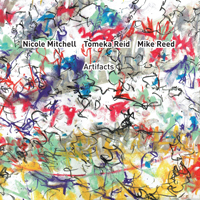
3 younger members, Nicole Mitchell (flute, electronics), Tomeka Reid (cello), and Mike Reed (drums), have recorded a tribute to the organization. "Artifacts" (482 Music) is a fine collection of 10 pieces by 9 composers, most of whom (Abrams, McCall, Leroy Jenkins, Fred Anderson, Amina Claudine Myers, Anthony Braxton, and Roscoe Mitchell) were there at the beginning. The Trio also plays a work by Edward Wilkerson, whose music emerged in the dates 1970s, and one by guitarist Jeff Parker. The latter's composition, "Days Fly By with Ruby" is attached to Anderson's "Bernice", a smart move as the guitarist was mentored by the saxophonist in the 1990s.
The program serves as a reminder of the powerful music that these men and woman created. The powerful drive of Mr. Braxton's "Composition 23B" swings hard, reminding that the composer was influenced by the music of John Coltrane and Miles Davis. The playful dance rhythms of "Jo Jar", Mr. Mitchell's tune for his partner in the Art Ensemble of Chicago, makes one smile as does the energetic reading of Mr. Abrams' "Munkt Munk". Ms. Myers' "Have Mercy On Us" is modern gospel and the trio, after a frenetic opening with electronically distorted flute, fall into a hypnotic rhythm - the distortion of the flute and the churning cello create an intensity matched by Reed's drumming.
The late Steve McCall (1933-1989) is the only composer on he CD with 2 tracks, both associated by his work alongside Henry Threadgill (saxes, flute) and the late Fred Hopkins (bass) in Air. "B.K." has numerous rhythmic changes, a tumultuous cello part, and fiery drumming while "I'll Be Right Here Waiting" is a stunning ballad (certainly the prettiest piece that Air ever performed). The round notes of the flute combined with the thick cello tones and the wonderful colors created by Reed (especially when the music drops out of tempo) is powerful and emotionally rich.
Mr. Wilkerson's delightful march "Light On The Path" closes the program on quite an upbeat note. The way Ms. Mitchell's wraps her dancing flute phrases around the active pizzicato cello while the drummer dances along in abandon will set your feet tapping. The funky drums that support Ms. Reid's cello solo reminds one that the AACM made and still makes music from all elements of the Black experience throughout the world.
The title "Artifacts" may make you think of a museum or an archaeological exploration yet this is far from what Nicole Mitchell, Tomeka Reid and Mike Reed want one to feel about this music. No, these compositions and performances are alive with possibilities; the DNA of the originals is deep inside the musicians and they understand this music was made for the ages. The album serves as both a tribute and a reminder what can be accomplished by a community.
For more information, go to www.482music.com.
"Vista Accumulation" (Pi Recordings), the new album from pianist and composer Matt Mitchell, may remind listeners of the work of Muhal Richard Abrams in its shifting rhythmic patterns and episodic nature. Yet one can hear the influence of Andrew Hill and John Hollenbeck on the 8 tracks spread out over 2 CDs (over 96 minutes of music). Joining Mitchell is his "working group" composed of Chris Speed (tenor saxophone, clarinet), Chris Tordini (bass) and Dan Weiss (drums). Each one is essential to the success of this music as the pianist's pieces are filled with twists and turns, with long melody lines (shared by piano, bass and drums) and intelligent harmonies. Mitchell's powerful left hand, on occasion, works in tandem with Tordini's bass and, at other times frees the bassist to play counterpoint. Weiss, as he has exhibited over the past decade, has this wonderful ability to make music come alive and is often a melodic element as well as a timekeeper. Speed is a perfect partner with the piano, especially when playing clarinet The reedy sound combined with the brightness coming from the keyboard soothes as it cajoles.
Perhaps the most interesting aspects of this recording (in this author's mind) are the movement within the music, how melody drives each piece, and how solos come and grow so organically. Tracks such as "'twouldn't've" and "Hyper Pathos" seem to breathe with the musicians, never sounding forced or contrived. The latter is a good example of how Tordini's bass is so important; not only does he solo (at the end) but his counterpoint to the clarinet is quietly intense and easy to pick up in the spaces left by the piano and drums.
What one should do with such (seemingly) complex music is to concentrate on a particular musician each time you listen. Mitchell's piano is the driving force of this music yet he understands the need to stand back when the material calls for it. His subtle backing of Speed's clarinet solo on "All The Elasticity" not only reacts to the phrases being played and providing counterpoint but also pays attention to the other members of the rhythm section, feeding them chords. Mitchell uses his power in a similar manner to Don Pullen on "Utensil Strength", splintering melodic lines and creating a musical firestorm in his left hands. The propulsive melodic fragment that appears throughout the song serves to change the focus and intensity. On that same track, notice how Weiss moves in and out of the picture; at one point, he is silent for 4 minutes while closer to the end, he's playing the melody and pushing the proceedings. His hip-hop approach at the opening of "Numb Trudge" press at the tolling piano chords trying to coax Mitchell into a melody and, after 2 minutes, Speed enters and plays a theme. When he's done, the song breaks down and the pianist plays a long, abstract, solo that ultimately removes the tension. Once he's done, the other musicians enter and slowly the piece builds up with Speed's clarinet leading the way.
I've played "Vista Accumulation" numerous times in the past 6 weeks and each time I hear something new. What is more evident now is the emotional richness and sincerity of this music, the honesty with which Matt Mitchell and band breath life into the notes and in how they interact with each other. The songs may be long (none under 7:48 and 4 above 12:28) but there is not a dull moment to be heard.
For more information, go to www.mattmitchell.us. To get a taste of this excellent recording, go to matt-mitchell.bandcamp.com/album/vista-accumulation.
| Chamber-music.org |
There are moments of contemplation throughout the program including the opening moments of "Canyon." That piece picks up in intensity through the trumpet solo and explodes duty Oatts' fiery alto spot. "Sighs Matter", one of 2 songs with "Sighs" in the title (the opening "Book of Sighs" is the other) is a lovely ballad with a Brazilian influence in the melody, a subtle tinge in the rhythm and in the beautiful soprano sax lines. "Grace at Sea" may remind some of a Maria Schneider piece yet listen to the graceful funk of Blade and Hébert under Patterson's trombone solo plus the solo piano spotlight after the second vocal verse. Speaking of funk, the rhythm section creates an incredible dance on "Idris", blending the influences of James Brown and Bob Brookmeyer in a glorious fashion. Listen for the strong tenor solo as well as Holober's hearty spotlight. Blade gets a solo and honors the memory of the gentleman the song is named for, the late Idris Muhammad.
The album closes with the wistful "When There Were Trains", a remembrance of youth and quieter times. The Brazilian influence re-emerges here in the beat, the harmonies and Oatts' transcendent flute. The composer's original lyrics stand out throughout the program and Ms. McGarry delivers with the game and emotion we have come to enjoy over the past decade.
"Balancing Act" speaks to the challenges of modern life and is adult music of the highest quality. Mike Holober does not speak down to his audience; instead, he respects the idea that the curious listener will enjoy the width and breadth of his project. The songs are intelligent, the arrangements impressive and the musicianship outstanding - find this music and take it into your heart.
For more information, go to www.mikeholober.com.
Here's the lovely last track:
It's the 50th anniversary of the creation of the Association for the Advancement of Creative Musicians, founded by Muhal Richard Abrams, Jodie Christian, Phil Corhan, and Steve McCall in Chicago. Over the 5 decades, the AACM's aim has been to help musicians and composers create "serious original music."
3 younger members, Nicole Mitchell (flute, electronics), Tomeka Reid (cello), and Mike Reed (drums), have recorded a tribute to the organization. "Artifacts" (482 Music) is a fine collection of 10 pieces by 9 composers, most of whom (Abrams, McCall, Leroy Jenkins, Fred Anderson, Amina Claudine Myers, Anthony Braxton, and Roscoe Mitchell) were there at the beginning. The Trio also plays a work by Edward Wilkerson, whose music emerged in the dates 1970s, and one by guitarist Jeff Parker. The latter's composition, "Days Fly By with Ruby" is attached to Anderson's "Bernice", a smart move as the guitarist was mentored by the saxophonist in the 1990s.
The program serves as a reminder of the powerful music that these men and woman created. The powerful drive of Mr. Braxton's "Composition 23B" swings hard, reminding that the composer was influenced by the music of John Coltrane and Miles Davis. The playful dance rhythms of "Jo Jar", Mr. Mitchell's tune for his partner in the Art Ensemble of Chicago, makes one smile as does the energetic reading of Mr. Abrams' "Munkt Munk". Ms. Myers' "Have Mercy On Us" is modern gospel and the trio, after a frenetic opening with electronically distorted flute, fall into a hypnotic rhythm - the distortion of the flute and the churning cello create an intensity matched by Reed's drumming.
The late Steve McCall (1933-1989) is the only composer on he CD with 2 tracks, both associated by his work alongside Henry Threadgill (saxes, flute) and the late Fred Hopkins (bass) in Air. "B.K." has numerous rhythmic changes, a tumultuous cello part, and fiery drumming while "I'll Be Right Here Waiting" is a stunning ballad (certainly the prettiest piece that Air ever performed). The round notes of the flute combined with the thick cello tones and the wonderful colors created by Reed (especially when the music drops out of tempo) is powerful and emotionally rich.
Mr. Wilkerson's delightful march "Light On The Path" closes the program on quite an upbeat note. The way Ms. Mitchell's wraps her dancing flute phrases around the active pizzicato cello while the drummer dances along in abandon will set your feet tapping. The funky drums that support Ms. Reid's cello solo reminds one that the AACM made and still makes music from all elements of the Black experience throughout the world.
The title "Artifacts" may make you think of a museum or an archaeological exploration yet this is far from what Nicole Mitchell, Tomeka Reid and Mike Reed want one to feel about this music. No, these compositions and performances are alive with possibilities; the DNA of the originals is deep inside the musicians and they understand this music was made for the ages. The album serves as both a tribute and a reminder what can be accomplished by a community.
For more information, go to www.482music.com.
"Vista Accumulation" (Pi Recordings), the new album from pianist and composer Matt Mitchell, may remind listeners of the work of Muhal Richard Abrams in its shifting rhythmic patterns and episodic nature. Yet one can hear the influence of Andrew Hill and John Hollenbeck on the 8 tracks spread out over 2 CDs (over 96 minutes of music). Joining Mitchell is his "working group" composed of Chris Speed (tenor saxophone, clarinet), Chris Tordini (bass) and Dan Weiss (drums). Each one is essential to the success of this music as the pianist's pieces are filled with twists and turns, with long melody lines (shared by piano, bass and drums) and intelligent harmonies. Mitchell's powerful left hand, on occasion, works in tandem with Tordini's bass and, at other times frees the bassist to play counterpoint. Weiss, as he has exhibited over the past decade, has this wonderful ability to make music come alive and is often a melodic element as well as a timekeeper. Speed is a perfect partner with the piano, especially when playing clarinet The reedy sound combined with the brightness coming from the keyboard soothes as it cajoles.
| Hiroyuki Ito/NYTimes |
What one should do with such (seemingly) complex music is to concentrate on a particular musician each time you listen. Mitchell's piano is the driving force of this music yet he understands the need to stand back when the material calls for it. His subtle backing of Speed's clarinet solo on "All The Elasticity" not only reacts to the phrases being played and providing counterpoint but also pays attention to the other members of the rhythm section, feeding them chords. Mitchell uses his power in a similar manner to Don Pullen on "Utensil Strength", splintering melodic lines and creating a musical firestorm in his left hands. The propulsive melodic fragment that appears throughout the song serves to change the focus and intensity. On that same track, notice how Weiss moves in and out of the picture; at one point, he is silent for 4 minutes while closer to the end, he's playing the melody and pushing the proceedings. His hip-hop approach at the opening of "Numb Trudge" press at the tolling piano chords trying to coax Mitchell into a melody and, after 2 minutes, Speed enters and plays a theme. When he's done, the song breaks down and the pianist plays a long, abstract, solo that ultimately removes the tension. Once he's done, the other musicians enter and slowly the piece builds up with Speed's clarinet leading the way.
I've played "Vista Accumulation" numerous times in the past 6 weeks and each time I hear something new. What is more evident now is the emotional richness and sincerity of this music, the honesty with which Matt Mitchell and band breath life into the notes and in how they interact with each other. The songs may be long (none under 7:48 and 4 above 12:28) but there is not a dull moment to be heard.
For more information, go to www.mattmitchell.us. To get a taste of this excellent recording, go to matt-mitchell.bandcamp.com/album/vista-accumulation.
Labels:
AACM,
CD reviews,
octet music,
Pi Recordings,
quartet music,
trio music
Thursday, May 21, 2015
Idiosyncratic Audio
Listen to the music of Henry Threadgill from 40 years ago, when the trio known as Air made its first recording. His saxophone and flute, the majestic bass of Fred Hopkins (1947-1999) and the brilliant percussion of Steve McCall (1933-1989) sounded like few other trios (compare their recordings to the work Sonny Rollins created in the 1950s) - the evidence of Threadgill's Chicago upbringing can be heard in the occasional hints of blues that enter the pieces but the freedom, the unexpected twists that don't sound dated or forced even today, their intuitive interactions (both live and on record) excited many people willing to travel down the trails they blazed.
Threadgill formed Zooid at the turn of the 21st Century building the sextet/quintet around the incredible tuba work of Jose Davila and the expressive guitar of Liberty Ellman. By the time of the group second Pi recording "This Brings Us To, Vol 1." (2009), drummer Elliot Humberto Kavee joined the ensemble with cellist Christopher Hoffman coming the 6th member (original cellist Dana Leong was on the band's initial release but left before #2.)
"In For a Penny, In For a Pound" is the new Pi release and, with the departure of bassist Stomu Takeishi, the group is once more a quintet. The 2-CD set features 6 tracks with each disc starting with a short track (the first disk is the title track, subtitled "opening" while the second disk starts with "Off The Prompt Box" subtitled "exordium", meaning "the beginning.") The other 4 tracks are much longer, episodic compositions dedicated to the different instruments (with the exception of the reeds) in which the quintet breaks into smaller formations at various times. Threadgill is fine voce throughout, his squiggly alto lines or colorful flute playing (he plays both concert and bass flutes) weaving in and out of the sound spectrum. "Ceroepic (for drums and percussion)" opens with the impressive melodic interaction, the alto sax in the lead, Davila playing counterpoint while both the guitar and cello plays the foundational bass lines. Kavee's drums people the work forward as the solos unwind, first Threadgill then Hoffman. After the fine cello solo, the piece and heads off into quiet territory, with just cello, guitar and percussion in the mix. After several several changes in direction, Threadgill's flute takes the lead for a turn before handing off to Davila, now on trombone. Despite the subtitle, there is never a drum solo in the spotlight although Kavee is crucial to the movement in several sections. Meanwhile the following cut, "Unoepic (for cello)" does start with the instrument the piece is named for but soon everyone joins in.
Meanwhile, this music features all the elements we have come to expect in Threadgill's music. Rhythms that push but do not represent any particular "style", solos that grow right out of the melodies and great interactions. On "...Prompt Box", listen to how each musician plays rhythm especially and notice how the leader steps out after the opening theme, not to return. The interaction of guitar and cello at the onset of the last cut, "Unoepic (for guitar)", sets the stage for several duo dialogues (alto sax and drums, cello and drums) yet, over the course on nearly 18 minutes, there are moments when the musicians solo over drums, tuba and guitar or guitar, cello and drums and so forth. Threadgill's alto erupts out of a drum solo, exchanging phrases with cello and guitar, then stepping out for a thoughtful and somewhat abstract solo.
At 80 minutes, "In For a Penny, In For a Pound" is much to digest and would not fit easily on one disk. That said, this suite is most certainly interconnected, with themes moving in and out of separate tracks. While there are solos throughout, the rhythm section does not just "comp" or simply keep "time" but are vitally important to the movement and direction of each piece. When you listen, pay attention to what Liberty Ellman, Christopher Hoffmann and Jose Davila are playing when the there are solos. Melodies and rhythms intermingle, all while the music continues to move forward. On the CD jacket, Henry Threadgill gives "my endearing thanks and respect" to both Sonny Rollins and Ornette Coleman, musicians, soloists, bandleaders and composers who paved the way for his vision and his music. Yet, we can be thankful that there is no one like Henry Threadgill. At 71, he's going strong (his work with Wadada Leo Smith and Jack DeJohnette on new recordings is wonderful), seeming to grow stronger with every recording and every ensemble. For more information, go to www.pirecordings.com/artist/henry_threadgill.
Composer and pianist Kris Davis, over the past 12 years since her debut CD appeared on Fresh Sound New Talent ("Life Span"), has grown in ways one might not have expected. Her solo piano recordings reveal an artist always searching for new ways to express herself, the Trio dates find her and rhythm section avoiding cliches, and her work with Ingrid Laubrock and Tyshawn Sorey in Paradoxical Frog is indescribably audacious. Her arrangements for Tony Malaby's 2011 recording "Novela" (where she worked with 4 reeds, 3 brass, drums and piano, set the stage for her new project "Infrasound" an octet that features 4 clarinetists (Ben Goldberg, Oscar Noriega, Joachim Badenhorst, and Andrew Bishop), guitarist Nate Radley, organist Gary Versace, drummer Jim Black, and her piano. There is a video on Ms. Davis' website that tells the story behind the group and recording (watch it here) - the octet had not worked together as a unit until the night before its first gig and went into the recording studio the day after the gig!
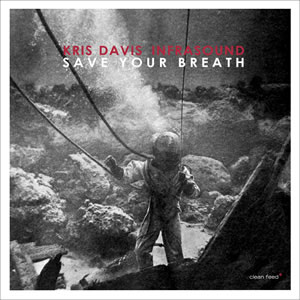
That written, her new recording - "Save Your Breath" (Clean Feed Records) - is a tribute to the talent of the musicians, to her arrangements, to her music that allows the ensemble to explore textures and rhythms, to the way silence and noise are a part of the mix and to how the lower reeds (bass clarinets and contrabass clarinets) are utilized. Opening with "Union Forever", which slowly moves towards a melody not unlike the chorus of "The Battle Cry Of Freedom" but not before introducing all the musicians. Black is often the spark plug, punching and jabbing, goosing the band forward. After the band drops out, a lonely clarinet plays above tolling piano chords. Davis' arrangement also has the organ moving in and out the mix, Versace's burbling lines adding a different flavor to the music. Is that accordion on the introduction of "Always Leave Them (Wanting More)", it's ethereal high notes drifting above the piano and increasingly powerful drums. Radley's guitar serves a similar purpose to the accordion, weaving in and out of the sounds from the reeds and the powerful piano chords. Slowly, the piece builds with the drums and piano in a fiery interchange while the clarinets keen quietly. Suddenly, the piece falls into a soulful rhythm for Noriega's powerful solo. "Whirly Swirly", which first appeared on Ms. Davis' 2014 Trio CD "Waiting For You To Grow", is a vehicle for Radley's hard-edged solo, over a bass line from Versace and rampaging drums. The piece stops on a dime and becomes extremely quiet, organ swirls and clarinet phrases nearly inaudible unless you sit still. When the band returns, Badenhorst's roaring clarinet is front-and-center over a chordal pattern not unlike a Black Sabbath tune.
The title song closes the program. The longest track (14:50), the sound rarely rises above a whisper, the instrumentalists stepping up and then fading out. Yet it's not an afterthought or an epilogue. Look at the cover photo - the music describes what to must be like to be underwater, to be standing on the ocean floor connected to the world above by ropes, breathing air from a tank, the only sounds being your breathing and whatever is going on in your mind. Each voice in the ensemble contributes to this adventure and it's makes for absorbing listening.
"Save Your Breath" has moments of great beauty and harsh noises ("The Ghost of Your Previous Fuckup" offers much of the latter without ignoring the former), often moving with great force and determination. Considering the time the octet had to rehearse, perform, and record, this is incredibly fine music. I can imagine how pieces could get stronger with more performances (alas, only 2 European dates on Ms. Davis' website) but this recording is mighty good. For more information, go to www.krisdavis.net.
Here's a taste of this fine recording:
Threadgill formed Zooid at the turn of the 21st Century building the sextet/quintet around the incredible tuba work of Jose Davila and the expressive guitar of Liberty Ellman. By the time of the group second Pi recording "This Brings Us To, Vol 1." (2009), drummer Elliot Humberto Kavee joined the ensemble with cellist Christopher Hoffman coming the 6th member (original cellist Dana Leong was on the band's initial release but left before #2.)
"In For a Penny, In For a Pound" is the new Pi release and, with the departure of bassist Stomu Takeishi, the group is once more a quintet. The 2-CD set features 6 tracks with each disc starting with a short track (the first disk is the title track, subtitled "opening" while the second disk starts with "Off The Prompt Box" subtitled "exordium", meaning "the beginning.") The other 4 tracks are much longer, episodic compositions dedicated to the different instruments (with the exception of the reeds) in which the quintet breaks into smaller formations at various times. Threadgill is fine voce throughout, his squiggly alto lines or colorful flute playing (he plays both concert and bass flutes) weaving in and out of the sound spectrum. "Ceroepic (for drums and percussion)" opens with the impressive melodic interaction, the alto sax in the lead, Davila playing counterpoint while both the guitar and cello plays the foundational bass lines. Kavee's drums people the work forward as the solos unwind, first Threadgill then Hoffman. After the fine cello solo, the piece and heads off into quiet territory, with just cello, guitar and percussion in the mix. After several several changes in direction, Threadgill's flute takes the lead for a turn before handing off to Davila, now on trombone. Despite the subtitle, there is never a drum solo in the spotlight although Kavee is crucial to the movement in several sections. Meanwhile the following cut, "Unoepic (for cello)" does start with the instrument the piece is named for but soon everyone joins in.
Meanwhile, this music features all the elements we have come to expect in Threadgill's music. Rhythms that push but do not represent any particular "style", solos that grow right out of the melodies and great interactions. On "...Prompt Box", listen to how each musician plays rhythm especially and notice how the leader steps out after the opening theme, not to return. The interaction of guitar and cello at the onset of the last cut, "Unoepic (for guitar)", sets the stage for several duo dialogues (alto sax and drums, cello and drums) yet, over the course on nearly 18 minutes, there are moments when the musicians solo over drums, tuba and guitar or guitar, cello and drums and so forth. Threadgill's alto erupts out of a drum solo, exchanging phrases with cello and guitar, then stepping out for a thoughtful and somewhat abstract solo.
At 80 minutes, "In For a Penny, In For a Pound" is much to digest and would not fit easily on one disk. That said, this suite is most certainly interconnected, with themes moving in and out of separate tracks. While there are solos throughout, the rhythm section does not just "comp" or simply keep "time" but are vitally important to the movement and direction of each piece. When you listen, pay attention to what Liberty Ellman, Christopher Hoffmann and Jose Davila are playing when the there are solos. Melodies and rhythms intermingle, all while the music continues to move forward. On the CD jacket, Henry Threadgill gives "my endearing thanks and respect" to both Sonny Rollins and Ornette Coleman, musicians, soloists, bandleaders and composers who paved the way for his vision and his music. Yet, we can be thankful that there is no one like Henry Threadgill. At 71, he's going strong (his work with Wadada Leo Smith and Jack DeJohnette on new recordings is wonderful), seeming to grow stronger with every recording and every ensemble. For more information, go to www.pirecordings.com/artist/henry_threadgill.
Composer and pianist Kris Davis, over the past 12 years since her debut CD appeared on Fresh Sound New Talent ("Life Span"), has grown in ways one might not have expected. Her solo piano recordings reveal an artist always searching for new ways to express herself, the Trio dates find her and rhythm section avoiding cliches, and her work with Ingrid Laubrock and Tyshawn Sorey in Paradoxical Frog is indescribably audacious. Her arrangements for Tony Malaby's 2011 recording "Novela" (where she worked with 4 reeds, 3 brass, drums and piano, set the stage for her new project "Infrasound" an octet that features 4 clarinetists (Ben Goldberg, Oscar Noriega, Joachim Badenhorst, and Andrew Bishop), guitarist Nate Radley, organist Gary Versace, drummer Jim Black, and her piano. There is a video on Ms. Davis' website that tells the story behind the group and recording (watch it here) - the octet had not worked together as a unit until the night before its first gig and went into the recording studio the day after the gig!
That written, her new recording - "Save Your Breath" (Clean Feed Records) - is a tribute to the talent of the musicians, to her arrangements, to her music that allows the ensemble to explore textures and rhythms, to the way silence and noise are a part of the mix and to how the lower reeds (bass clarinets and contrabass clarinets) are utilized. Opening with "Union Forever", which slowly moves towards a melody not unlike the chorus of "The Battle Cry Of Freedom" but not before introducing all the musicians. Black is often the spark plug, punching and jabbing, goosing the band forward. After the band drops out, a lonely clarinet plays above tolling piano chords. Davis' arrangement also has the organ moving in and out the mix, Versace's burbling lines adding a different flavor to the music. Is that accordion on the introduction of "Always Leave Them (Wanting More)", it's ethereal high notes drifting above the piano and increasingly powerful drums. Radley's guitar serves a similar purpose to the accordion, weaving in and out of the sounds from the reeds and the powerful piano chords. Slowly, the piece builds with the drums and piano in a fiery interchange while the clarinets keen quietly. Suddenly, the piece falls into a soulful rhythm for Noriega's powerful solo. "Whirly Swirly", which first appeared on Ms. Davis' 2014 Trio CD "Waiting For You To Grow", is a vehicle for Radley's hard-edged solo, over a bass line from Versace and rampaging drums. The piece stops on a dime and becomes extremely quiet, organ swirls and clarinet phrases nearly inaudible unless you sit still. When the band returns, Badenhorst's roaring clarinet is front-and-center over a chordal pattern not unlike a Black Sabbath tune.
The title song closes the program. The longest track (14:50), the sound rarely rises above a whisper, the instrumentalists stepping up and then fading out. Yet it's not an afterthought or an epilogue. Look at the cover photo - the music describes what to must be like to be underwater, to be standing on the ocean floor connected to the world above by ropes, breathing air from a tank, the only sounds being your breathing and whatever is going on in your mind. Each voice in the ensemble contributes to this adventure and it's makes for absorbing listening.
"Save Your Breath" has moments of great beauty and harsh noises ("The Ghost of Your Previous Fuckup" offers much of the latter without ignoring the former), often moving with great force and determination. Considering the time the octet had to rehearse, perform, and record, this is incredibly fine music. I can imagine how pieces could get stronger with more performances (alas, only 2 European dates on Ms. Davis' website) but this recording is mighty good. For more information, go to www.krisdavis.net.
Here's a taste of this fine recording:
Labels:
AACM,
Clean Feed Records,
Henry Threadgill,
Kris Davis,
octet,
Pi Recordings,
quintet,
Soundcloud
Subscribe to:
Posts (Atom)