Most music aficionados are aware of multi-instrumentalist Scott Robinson from his long tenure with the Maria Schneider Orchestra. He's a whiz on just about every saxophone that exists including baritone, C-Melody, contrabass sax, and tenor. He also plays clarinet, trumpet, bass marimba, and is a master of the theremin and other electronic devices. His label, ScienSonic Recordings, features a number of albums including a tribute to Sun Ra (with Marshall Allen), duos with Roscoe Mitchell and Frank Kimbrough, and a trio date with reed masters J.D. Parran and Vinny Golia. Robinson has recorded with numerous artists and ensembles ranging from John Pizzarelli to the Bob Mintzer Big Band to Paquito D'Rivera to Bob Brookmeyer to Joe Lovano and David Bowie (plus many, many more).
His latest project for Arbors Jazz, "Tenormore", announces its theme in the album title. Robinson plays tenor saxophone and only tenor saxophone on all 10 tracks. Joining him is Helen Sung (piano, Hammond B-3 on two tracks), Dennis Mackrel (drums), and Martin Wind (string bass, acoustic bass guitar) plus the leader's wife Sharon plays flute on one song. The program, a mix of standards and originals, opens with an unaccompanied reading of The Beatles' "And I Love Her" - the saxophonist plays the four-note introduction way up in the tenor's higher range, sounding very music like a clarion call or even a wake-up call. He caresses the melody save for one dizzying run that goes "out."
Photo: Bud Glick
That tunes leads into "Tenor Eleven" which is, no surprise, an 11-bar blues. It's a "blowing" piece with Mackrel and Wind strutting right along and Ms. Sung providing a cushion for the tenor solo. Later in the program, the quartet dances its way through "Tenor Twelve", a piece that the leader first recorded in 1988. Also an uptempo blues, Ms. Sung plays a standout solo as does Robinson and Wind. Mackrel keeps the music percolating plus engages in a delightful give-and-take with the saxophonist near the close of the song. There's a lot of energy in the studio and it's a pleasure to eavesdrop on the proceedings.
There's a hint of the breathiness of Ben Webster and Coleman Hawkins on several of the ballads. "Put on a Happy Face", usually a sprightly tune, is slowed way down. That's just fine as both Robinson and Ms. Sung explore various emotions in their respective solos, the former sounding a more introspective while the latter seems to dance over the soft but steady rhythm section. While "The Good Life" opens with several minutes of "free" improvisation, Robinson draws the band into the melody with a long note. Note how Wind's sweet tone and Mackrel's fine brush work really create a lighter feel. Ms. Sung's gospel Hammond B-3 sound is the perfect opening for the bassist's piece "Rainy River." Based on a chapter from author Tim O'Brien's short collection "The Things They Carried" (stories from the Vietnam War), Robinson plays the melody then turns the piece over to the composer and the organist. Even if you don't know the stories, this is a powerful performance that speaks to what matters in our lives.
The leader's wife Sharon appears on "The Weaver", an original based a haiku composed by Robinson's father for his son's wedding. One hears Ms. Robinson's flute in the theme section and again at the close. In between, the piece has the feel of mid-70s McCoy Tyner composition only not as insistent. The blend of tenor and flute is quite lovely.
The program closes with a funky reading of Hoagy Carmichael's "The Nearness of You" and the title track. "Nearness" is propelled by Mackrel's "Pretty" Purdie drumming, Wind's dancing lines, and Ms. Sung's sweet Hammond organ playing. "Tenormore" is a fascinating puzzle, with its stop-and-start opening - here again Mackrel is the linchpin. He pushes the piece forward, plays several short interludes, engages in a rousing dialogue with Robinson, dances around his cymbals as Ms. Sung explores the many possibilities that the piece provides. Her solo is quite expansive as well as impressive. The angular closing section, with Robinson's eerie tenor sounds, is serious fun.
This is fun and serious and quite musical. Listen to this music with an open mind as the program is challenging, sweet, exciting, introspective, witty, and filled with great musicianship. Scott Robinson is a treasure!
Here's a generous taste:
Guitarist Bill Frisell and bassist Thomas Morgan played a series of shows at New York City's Village Vanguard in March of 2016. From those dates, ECM Records released "Small Town" in the Spring of 2017. It's Spring once more and now the label presents more music from that date. "Epistrophy" is a delight-filled collection of songs, a program of standards, pop tunes, folk songs, two Thelonious Monk pieces (the title tracks and "Pannonica"), and a James Bond movie theme (John Barry's "You Only Live Twice"). And, because both musicians love melody and love to improvise, the performances are never lackluster but enjoyable from beginning to end.
The two Monk tunes come back-to-back right after a lovely reading of Billy Strayhorn's "Lush Life." That tune features splendid counterpoint from Morgan, something he is quite adept at. The bassist also knows how to "swing" a piece as he demonstrates during Frisell's solo on the title track. "Pannonica" is quite a jaunty piece - as one gets older, it's amazing how Monk had one foot in the blues (so apparent on the "sweet" melody) and the other in jazz.
Frisell, who has embraced "Americana" since the 1990s, has also reached back to his formative years over the past decade. Here, he blends the country standard "Wildwood Flowers" (which also appeared on the earlier album) with "Save the Last Dance For Me" (composed by "Doc" Pomus and Mort Shuman for The Drifters). And, it works. The combination works because both songs have some memorable melodies. Later in the program, the duo creates a slow meditation on "Red River Valley" that opens up into the melody and begins to swing.
The album closes with "In the Wee Small Hours of the Morning", a lovely ballad that is the perfect ending to an enjoyable musical experience. By this point in his career, one seems to know what to expect from Bill Frisell. Yet, this meeting with Thomas Morgan, who has worked with the guitarist on several recordings and tours, has so many emotional and musical highs, it's well worth taking the time to bathe in these sounds.
Here's the title track recorded live at Paste Studios in NYC:
In the 1970s, Wadada Leo Smith wrote music and books while devising a theory of composition and performance that is, to this day, the backbone of the music he creates and champions. Over the past 50 years, he has played alongside members of the AACM, he has traveled the world, celebrated the lives and works of Miles Davis, Rosa Parks, the National/Natural Parks of the United States, reminding listeners of the racism that he first saw in his native Mississippi that still permeates our country, and doing so with his music and the clarion-call of his trumpet.
This coming weekend, Wadada Leo Smith returns to Firehouse 12, 45 Crown Street in New Haven, CT, to presentthe Third Annual CREATE Festival , agathering that will delve deeply into his multi-faceted and unclassifiable music featuring brilliant works for a diverse roster of musicians and ensembles. Taking place Saturday, April 6 and Sunday, April 7, 2019, the festival will include performances by four of Wadada’s own wide-ranging groups as well as unique collaborations and solo performances, alongside an exhibit of Smith’s Ankhrasmation Symbolic Language Art-Scores. Performances take place at 7 p.m. Saturday and Sunday; a lunch dialogue with Wadada and Professor Nina Sun Eidsheim will take place on Sunday at 1 p.m.
The third incarnation opens with a quartet led by guitarist Lamar Smith (the trumpeter's grandson) featuring electronic artist Hardedge, bassist Melvin Gibbs and drummer Pheeroan akLaff. Saturday’s program continues with "The First Light Gold / The Second Light Blue", a piece from "Rosa Parks: Pure Love" performed by solo violinist Mona Tian. From Smith’s latest work to one of his earliest, the composer will take the stage with his quartet NDA to reprise the music from 1979’s "Divine Love", in honor of the 50th anniversary of the ECM record label, which released the album. The quartet will feature vibraphonist Bobby Naughton and multi-reedist Dwight Andrews, both of whom played on the original recording, with longtime collaborator John Lindberg standing in for the late bassist Charlie Haden.The opening evening will conclude with a summit meeting between two explosive trios: Smith’s Najwa, which teams Wadada with Lamar Smith as well as bass icon Bill Laswell, and Harriet Tubman, (pictured above) the audacious avant-funk-jazz-rock trio of bassist Melvin Gibbs, guitarist Brandon Ross, and drummer JT Lewis. The double trio will premiere two pieces from a new suite exploring the concepts of quantum physics and parallel universes, with music transitioning between multiple ensembles as if shifting between alternate dimensions.
Sunday’s line-up begins with "Sweet Bay Magnolia with Berry Clusters", a striking piece Smith composed for the virtuosic cellist Ashley Walters (pictured left),which she’ll perform in a duo with the Japanese Butoh dancerOguri. The dancer will then be joined by Wadada and pipa master/vocalist Min Xiao-Fento essay Smith’s "Lake Biwa; A Full Moon Pure Water Gold", a reimagined version of the title track from Smith’s 2004 release for John Zorn’s Tzadik label. The weekend will culminate with a performance by Smith’s long-running Golden Quintet (pictured below), in which the trumpeter is joined by pianist Erika Dohi, cellist Walters, bassist Lindberg, and drummer akLaff. They'll perform two compositions inspired by iconic figures related to the Civil Rights movement, both composed but not recorded for an upcoming ECM recording that reflects on the idea of tolerance through iconic figures and moments in political, social and musical history. With "JFK in Dallas: Parkland: 11.22.1963", Smith reflects on the assassination of President Kennedy, while "Miriam Makeba: A Magnificent Voice: The Empress of Peace: 1932-2008" celebrates the life of the revered South African singer and activist known as “Mama Africa.”
Tickets are $30 for each of the concerts; $55 for both. The lunch and dialogue is $30 per person, $50 for couples, with limited seating. For information, please call 203-785-0468 or go to http://firehouse12.com/performance-calendar/2019/2/7/wadada-leo-smiths-create-festival-2019. Take a look at the full schedule - this is yet another impressive two days of music.
Saturday April 6th, 7 pm
Lamar Smith’s Band:
Lamar Smith - guitar Melvin Gibbs – electric bass Pheeroan akLaff - drums Hardedge - electronics
"Blue Meditations"
Mona Tian - violin
"The First Light Gold/The Second Light Blue from Rosa Parks: Pure Love"
Wadada Leo Smith’s NDA:
Wadada Leo Smith - trumpet Bobby Naughton - vibraphone Dwight Andrews – bass clarinet, flute John Lindberg - bass
"Tastalun" with soundtrack "Divine Love"
"Spirituals: The Language of Love"
Wadada Leo Smith’s Najwa and Harriet Tubman:
Wadada Leo Smith - trumpet Brandon Ross - guitar Lamar Smith - guitar Melvin Gibbs – electric bass Bill Laswell – electric bass JT Lewis - drums
"Spiritual Horizons" "Lake Tanganyika Nur-Water"
Sunday, April 7th
Exhibit of Ankhrasmation Symbolic Language Art-Scores 1:00pm - 3:00pm
Creative Dialogue with Nina Sun Eidsheim and Wadada Leo Smith on the Ankhrasmation Symbolic Language Art-Scores
Lunch, Coffee and Tea with Wadada Leo Smith and Artists
Concert, 7:00pm:
Ashley Walters – cello Oguri – butoh dance
"Sweet Bay Magnolia with Berry Clusters"
Min Xiao-Fen – pipa Wadada Leo Smith – trumpet Oguri – butoh dance
"Lake Biwa a Full Moon Pure Water Gold"
Wadada Leo Smith’s Golden Quintet:
Wadada Leo Smith - trumpet Erika Dohi - piano Ashley Walters - cello John Lindberg - bass Pheeroan akLaff - drums
"JFK in Dallas: Parkland: 11.22.1963" "Mariam Makeba: A Magnificent Voice: The Empress of Peace: 1932-2008"
CREATE Festival is made possible with generous support from the Doris Duke Foundation in partnership with Creative Capital. Smith received a Doris Duke Artist Award in 2016.
Here are several examples of Wadada Leo Smith's music:
This is from Smith's 2017 release "Najwa" (TUM Records)
The current edition of the Branford Marsalis Quartet has been together for 20 years with the exception of the drummer Jason Faulkner who joined in 2009. Marsalis (tenor saxophone, soprano saxophone), Joey Calderazzo (piano), and Eric Revis (bass) have built up quite a rapport and Faulkner (who is just 27 years old) stepped right into his predecessor's Jeff "Tain" Watts's role with nary a dropped beat.
The BMQ's new album, "The Secret Between The Shadow and The Soul" (Okeh Records), is the first quartet disk in seven years. Five of the seven tunes are originals (two each by Calderazzo and Revis, one by Marsalis) with inspired readings of Andrew Hill's "Snake Hip Waltz" and Keith Jarrett's "The Windup". "....Waltz" (a piece Hill recorded twice in 1975, one with a quartet, the other as a piano solo) is a jaunty piece with playful yet powerful solos from the leader and the pianist plus splendid support from the rhythm section. Faulkner, in particular, sounds as if he is having such a fun time. Revis, who is such a melodic player, joins in on the fun especially on his solo. The Jarrett piece closes the program - if you remember the original with the pianist's "European Quartet" of Jan Garbarek (alto and soprano saxes), Palle Danielsson (bass), and Jon Christensen (drums), this version, once the band moves out of the theme, swings like mad. Calderazzo's solo is inspired from the get-go. Marsalis, on tenor, digs right into his solo, pushed hard by the rhythm section and he rides their powerful waves.
Of the original material, the program opens with Revis's "Dance of the Evil Toys" which scoots along on Faulkner's martial drumming and the composer's rapid-fire circular bass line. The piece changes pace several times, even going "out" for a quick moment, and features strong solos from tenor sax and piano. Revis also contributed "Nilaste", an intimate ballad that pulses with intense work from soprano saxophone and the interactions of the rhythm section. Calderazzo's ballad, "Conversation Among The Ruins" has a lovely full melody for the soprano sax plus strong solos from the composer and excellent brushwork from Faulkner. The pianist's "Cianna" also is a ballad, more uptempo but never rushed. "Life Filtering From the Water Flowers" has a mysterious opening for tenor saxophone before entering into the body of the song. One hears a classical influence in this piece, composed by the leader, especially in Calderazzo's lovely piano unaccompanied piano interlude. When the rhythm section (listen closely how they advance the music) enters, the music takes flight. Marsalis, on tenor sax here, creates a solo with rolling phrases, flowing lines, and powerful emotion.
"The Secret Between The Shadow and The Soul" is a delightful album. Lively, collaborative, at times powerful, other times sensual, the Branford Marsalis Quartet is at the top of its form. Recorded in Australia during a break of the group's 2018 world tour, the music shines and sings, dances and swings.
Pianists and composers Vijay Iyer and Craig Taborn, born a year apart (1971 and 1970 respectively), first recorded together in saxophonist - conceptualist Roscoe Mitchell's Note Factory in 2001. Later that decade, they started working as a duo. Both bring a wealth of experiences and musical knowledge as well as a sense of adventure. They have worked in both acoustic and electric groups but stick to the acoustic piano for their concerts and now for their debut album.
"The Transitory Poems" (ECM Records) was recorded in March of 2018 in the concert hall of the Franz Liszt Academy in Budapest, Hungary. All eight of the pieces on the album are credited to the duo (except for a section of the final track) and four are dedicated to three pianists (Cecil Taylor, Muhal Richard Abrams, and Ms. Geri Allen) plus artist Jack Whitten. All but Taylor had died before the recording was made (he passed in early April of 2018) but the tribute makes sense as he was an influence on both pianists.
Instead of trying to pull the album apart and guessing who played which solo, I would recommend digging in to each piece and listen for melody, harmony, the flow, the rhythms, how ideas are transmitted from one player to the other, and how you will hear more with each listen.
Photo: Monica Jane Frisell
The program opens and closes with the two longest performances. "Life Line (Seven Tensions)" (13:02), while not dedicated to Muhal Abrams, feels like one of his exploratory pieces. Changing tempos, moving from quick, skittering, phrases to rich chords and impressionistic movements, the music holds your attention by moving in unexpected directions, almost at the whim of the performers. The final track, "Meshwork/Libation/When Kabuya Dances" (12:49), is dedicated to Ms. Allen, with an exciting forward motion in the pianist's left hands as the phrases go from longer lines to pounding chords. There's no delineation between the three parts but one can hear subtle changes in the mood as the music shifts into a different modality. If you listen to Ms. Allen's song (played solo), from her 1984 trio Lp "The Printmakers", you can hear how her music informs this medley from the very beginning.
"Clear Monolith" is dedicated to Mr. Abrams - it is fascinating to hear the duo build the piece from its quiet beginning to the blues-soaked middle to the quiet, trance-like, section that follows, ending with an intense dialogue. Mr. Taylor is celebrated on "Luminous Brew." Opening with an ominous rumbling, a quiet melody emerges. Slowly, the intensity begins to pick up while the melody opens wider. A bass line emerges from one piano yet, before too long, both players are expanding the palette. The rolling piano lines come together before the pianists start to trade lines. Suddenly, the music explodes for a moment before coming down for a soft ending.
"The Transitory Poems" is a riveting program from start to finish. Vijay Iyer and Craig Taborn marry their individual styles and create music that is powerful, exploratory, challenging, and beyond category. Find the album and enjoy the journey these two fine pianists create.
When ECM puts the album officially on its website, one should be ablate listen to sound clips. In the meantime, there are a number of videos of the duo with fair-to-middling loud quality.
It's a busy time for pianist, educator, and, now, author Fred Hersch. His latest solo album, "Open Book", will be released by Palmetto Records on September 8th (my review is here). On September 12, his autobiography "Good Things Happen Slowly: A Life In and Out of Jazz" will be published by Crown Archetype (Penguin Random House LLC). Later that week, Jazz at Lincoln Center presents the pianist/composer's "Leaves of Grass" in the Appel Room for four shows over two nights (9/15-16). Joining Hersch for the shows will be a number of of artists who appeared on the 2005 Palmetto album of the same name including vocalists Kate McGarry and Kurt Elling plus trombonist Mike Christianson, saxophonist Tony Malaby, and drummer John Hollenbeck - rounding out the 10-person ensemble will be Bruce Williams (reeds), Nadje Noordhuis (trumpet, flugelhorn), Jody Redhage (cello), and John Hébert (bass). For ticket information, go to www.jazz.org/events/t-6271/Fred-Hersch-Kurt-Elling-Kate-McGarry-Leaves-of-Grass/.
As for the book, I had a hard time putting it down. Hersch, and his collaborator David Hadju, basically, "tell it like was/is." The pianist, who has been candid about his homosexuality and HIV-positive status for nearly twenty-five years, talk about his upbringing, his discovery of music at an early age, his parents troubled marriage, and how hard a time he had as a teenager (lots of marijuana and playing gigs at an early age). Yet, he never feel sorry for himself, is honest about how much he hated to practice piano (especially for his classical music lessons). The best parts of the story deal with his jazz "apprenticeships" with Art Farmer and Joe Henderson, his relationship with Nonesuch Records (not an easy one), his relationship with Scott Morgan, and the illness that nearly killed him in 2008-09. If you have a squeamish stomach, you want to forego the details of the symptoms, the ensuing coma, and the long, amazing, recovery.
npr.org
Yet, the book, like the music Fred Hersch has created over his career, is far from depressing. He's a survivor (several times over) and admits to being a better musician and more appreciative human being. He does not spend a lot of time going in to the mechanics of his music but Is fulsome with his praise of his various rhythm sections, his doctors, his older brother Hank, and his friends. He also does not pull punches with his criticisms and is not shy writing about his drug use as he made his way through the 1970s and 80s. But this is no "show and tell" as Hersch writes about the people who helped him along the way (including Lorraine Gordon at the Village Vanguard). When you listen to his new recording or watch the video of "My Coma Dreams" or sit in a club and watch how he works with his Trio, you realize a number of things including how lucky he is to be alive in the 21st century and just how impressive a musician and creator he is. That latter observation makes us the lucky ones.
I can't remember now the first time I heard the guitar playing of John Abercrombie who passed away on Tuesday August 22. He first came on to the creative music in after a stint at Berklee College of Music, playing first with Johnny "Hammond" Smith. Abercrombie went on to work with drummers Chico Hamilton and Billy Cobham as well as saxophonist Gato Barbieri. He signed to ECM in 1975 with his first releases being "Timeless" featuring drummer Jack DeJohnette and keyboard whiz Jan Hammer. Along the way, he recorded and toured with fellow guitarist Ralph Towner, formed Gateway with DeJohnette and bassist Dave Holland. He also recorded with several different ensembles for the label including his last quartet with pianist Marc Copland, bassist Drew Gress, and drummer Joey Baron. Abercrombie also added his guitar stylings to albums by Charles Lloyd, organist Jeff Palmer, plus trumpeters Enrico Rava and Kenny Wheeler.
It's amazing how few pictures there are of John Abercrombie without a guitar - because above all, he was a player. In his early days, he often experimented with the sound of his guitar but while he could still create mysterious compositions as he aged, his sound got rounder and cleaner, his phrases often surprising yet soothing as well. And, the man could "swing" as he picked one articulate phrase after another.
One of the great"classic" jazz albums of the early 1960s has to "Blues and the Abstract Truth." Featuring the compositions, arrangements, and tenor saxophone of Oliver Nelson (1932-1975), the music showed just how the blues permeated much of modern music anyhow it could "speak" with so many voices. By the time the album was released on Impulse Records, Nelson had built a good career with albums released on Prestige featuring artists such as trumpeter Kenny Dorham and saxophonist Eric Dolphy. That career would skyrocket over the next decade due to the numerous movie soundtracks and television shows the St. Louis, MO, native composed and scored. Yet, he also wrote classical music, much of which deserves to be rediscovered an played by symphony orchestras in the US and abroad.
Kudos to trumpeter, arranger, and conductor John Vanore on his new album. "Stolen Moments" Celebrating Oliver Nelson" (Acoustical Concepts Inc) features an all star 14-member band playing compositions and arrangements from throughout Nelson's career. Pieces such as "Greensleeves", "A Taste of Honey", and "St. Louis Blues" sit easily alongside the title track (a highlight of the "Blues and The Abstract Truth" - the song with that name did not appear on that album but on the followup), "Self Help is Needed" (from 1970's "Black, Brown, and Beautiful"), and "Reuben's Rondo" (from 1975's "Skull Session"). Perhaps the best thing Vanore, who, as a young man studied with Nelson one summer before joining the Woody Herman Band, does is not mess with the music. Though the album credits the leader with "reimagining" Nelson's songs, what he has done is arrange the music for this unique ensemble.
What a band! There is Steve Wilson (alto sax, soprano sax, flute) and Bob Malach (tenor sax, bass clarinet) plus the trumpets and flugelhorn work of Tony Kadleck, Augie Haas Jon Owens, and Dave Ballou as well as the trombonists Ryan Keberle and Dave Taylor (bass 'bone) alongside the French horns of George Barnett and Adam Unsworth. The rhythm section includes pianist Jim Ridl, guitarist Greg Kettinger, bassist Mike Richmond, and drummer Danny Gottlieb. Percussionist Beth Gottlieb joins the ensemble on the slinky, sultry, "El Gato", a tune Nelson wrote for the late saxophonist Gato Barbieri.
Each track has great ensemble work plus an impressive solo or more. Wilson's alto stands out on "Self Help..", "El Gato" (which also features a scorching solo from Malach) plus he creates a beautiful soprano solo on "I Hope in Time a Change Will Come." Keberle shines on "Greensleeves", a tune that packs a lot into 2:39. Ballou is understated then forceful on his long spotlight on "St Louis Blues" followed by a solo that has him swinging out of his shoes on "Blues And the Abstract Truth." After Ridl's sparkling solo on the title track, the leader takes the spotlight for a short but strong trumpet statement.
In a perfect world, people will pick this album up and discover just how much good music Oliver Nelson brought to the world in his short but jam-packed career. John Vanore has done us all - casual listeners and reviewers - a really good turn. "Stolen Moments" should steal your heart, mind, and your ears!
It's been quite an amazing several years for pianist, composer, arranger, and educator Vijay Iyer. His Trio (with bassist Stephan Crump and drummer Marcus Gilmore) made a number of impressive albums including 2015's "Break Stuff"), he's released a soundtrack and a classical recording, joined the faculty of Harvard University, curated a month of concerts in March of 2015 for the Met Bruer Tony and Amie James gallery in New York City, and served as the music director for the 2017 Ojai Music Festival (held 6/8-11). Groups such as the Bang-on-a-Can Allstars, Brooklyn Rider, Imani Winds, and Silk Road Ensemble have recorded his pieces. His 2016 ECM recording with Wadada Leo Smith, "A Cosmic Rhythm With Each Stroke", made numerous Top 10 lists as "Record of the Year."
His latest project, the Vijay Iyer Sextet, combines his Trio mates of Crump and, here, Tyshawn Sorey with alto saxophonist Steve Lehman, tenor saxophonist Mark Shim, and cornetist/flugelhorn player Graham Haynes. The ensemble's new album, "Far From Over" (ECM Records) is a fascinating mixture of sounds, from the forceful title track to the funky "Nope" to the elegiac yet forceful "For Amiri Baraka" (just piano, bass, and drums) to the thunderous "Good On The Ground" (listen to the power of Sorey's drumming and the rhythmical work of the reeds and brass) to the stunning "Threnody" that closes the album. This is music that holds your attention, makes you move your feet as much as it makes you think. The musicianship is impressive throughout yet these songs are not mere exercises of technical prowess.
photo: Lynn Harty
Steve Lehman, who has played with the pianist and drummer in Fieldwork, plays with great fire throughout. His lines slash through the thunderous climax of "Threnody" and take flight over the drums on the album opener "Poles." Mark Shim, who has been a member of Lehman's ensemble, is a smart foil to the last saxophonist's tart tone. He can dig deep or fly high (doing both on the title track) and his powerful interactions with Haynes and Lehman on "Nope" really hit hard. Shim gets the spotlight on "Down to the Wire", connecting to the pianist and Sorey to produce a powerful statement. Cornetist Haynes is a treat as well; his brash electronic treatments on "End of the Tunnel" will remind many of early 1970s Miles Davis. His interaction with the Iyer's Fender Rhodes on "Wake" hearken back to "In A Silent Way" yet he is never imitative. His cornet rises up out of the horn section on "Into Action", creating a fine solo atop Sorey's "fatback" drums, Crump's powerful bass lines, and the excellent piano counterpoint/rhythm.
davidbazemore.com
How good is this rhythm section? Watch the video below to see how hard both Crump and Sorey play, how integral they are to the flow of the music as much as they are to the movement of the melodies and how well they interact with the soloists. Iyer is also a driving force beneath and in front of this music. His solos throughout display his great sense of rhythm - it's also great fun to see where his phrases go when he is deep into his solo. The employment of the Fender Rhodes on several tracks helps change the complexion of the music and the listener's ear.
"Far From Over", the title, can relate to many of the events taking place everyday, whether it's the seemingly endless political gyrations of the United States to the continuing racist, anti-Muslim, and anti-Semitic events taking place in the US and around the world. The music of the Vijay Iyer Sextet has great power, not only to entertain but also to educate, not to only to make us think but also to move. Dig in!
For more information, go to vijay-iyer.com. The album is set to be released on August 25 and be pre-ordered from iTunes, Amazon, and other outlets!
Here's the Sextet in concert from the 2017 Ojai Festival:
newseum.org
Nellie Bly, the pen name of pioneering journalist Elizabeth Jane Cochran (1864-1922), first got involved in the newspaper business when she sent a scathing response to an editorial in the Pittsburgh Dispatch titled "What Girls Are Good For?" (according to the editor, the answer was "staying home). That editor was so impressed by Ms. Cochran's reply that he asked her to write her own editorial in response and, then, gave her a position on the staff. He also gave her the byline of "Nellie Bly", the name of a children's song penned by Stephen Foster. The journalist went on to expose issues in "lunatic" asylums, crooked lobbyists, working conditions in factories, and so much more. Ms. Bly also took up the challenge to travel around the world in less than the "80 Days" that Author Jules Verne had written about. At a time when a woman rarely traveled abroad, especially by herself, Ms. Bly did just that and broke the fictional record by nearly eight days. To fond out more about this extraordinary person, go to www.nellieblyonline.com.
You can also listen to this new recording by the Sam Boshnack Quintet. The trumpeter, vocalist, and composer has created the "Nellie Bly Project" (Artist Recording Collective), a four-piece suite featuring Ms. Boshnack, Beth Fleenor (clarinet, bass clarinet), Alex Chadsey (piano, keys), Isaac Castillo (acoustic and electric bass), and Max Wood (drums). Joining the ensemble are vocalists Valerie Holt and Anne Matthews (both on tracks 1 and 3) and Anne Whitfield (spoken vocal on tracks 2 and 4). All the lyrics and words come from Ms. Bly's columns and essays. While no one would or should argue about the accomplishments of the journalist, Ms. Boshnack's music is also quite impressive. The integration of words and music is well thought-out and the compositions are quite strong.
Listen to the power of the opening track, "Expositions." The power of the rhythm section pushes the melody forward, the bass clarinet and trumpet two strong voices rising above the beat. Chadsey's electric piano softens the attack but he also deliver a fine solo. "After One Is In Trouble" opens with a sound and feel that reminds this listener of the week of the late baritone saxophonist and activist Fred Ho. After a handsome melody is played by trumpet and clarinet, Ms. Boshnack steps out for quite an impressive solo. The rhythm section applies heat and the trumpet flies about them. About a quick tempo shift, drummer Wood take over for a long and involved solo (with different musical voices stepping in along the way). "72 Days" has a wonderful acoustic piano solo before shifting gears with the voices coming in to show Ms. Bly's determination, chanting over and over"I would rather go in debt and successful/than alive and behind time." That mantra leads into an excellent. clarinet solo before Wood kicks in and the band celebrates the success of the trip as they take the song out.
Nellie Bly's story is one of courage, determination, the fight to find the truth and correct wrongs in what seems like an uncaring society. The power in her words and deeds is the fuel for Sam Boshnack; you can hear it in every note of her "Nellie Bly Project", hear it in the impressive melodies, the rhythms, the interactions, and solos of the Quintet. Music is be a powerful tool in education, helping students see more of the world around them and the people who have make great compositions to move this nation and the world forward out what seems to be the eternal "dark ages."
Here's an in-concert performance of the opening movement (Dawn Clements is on piano):
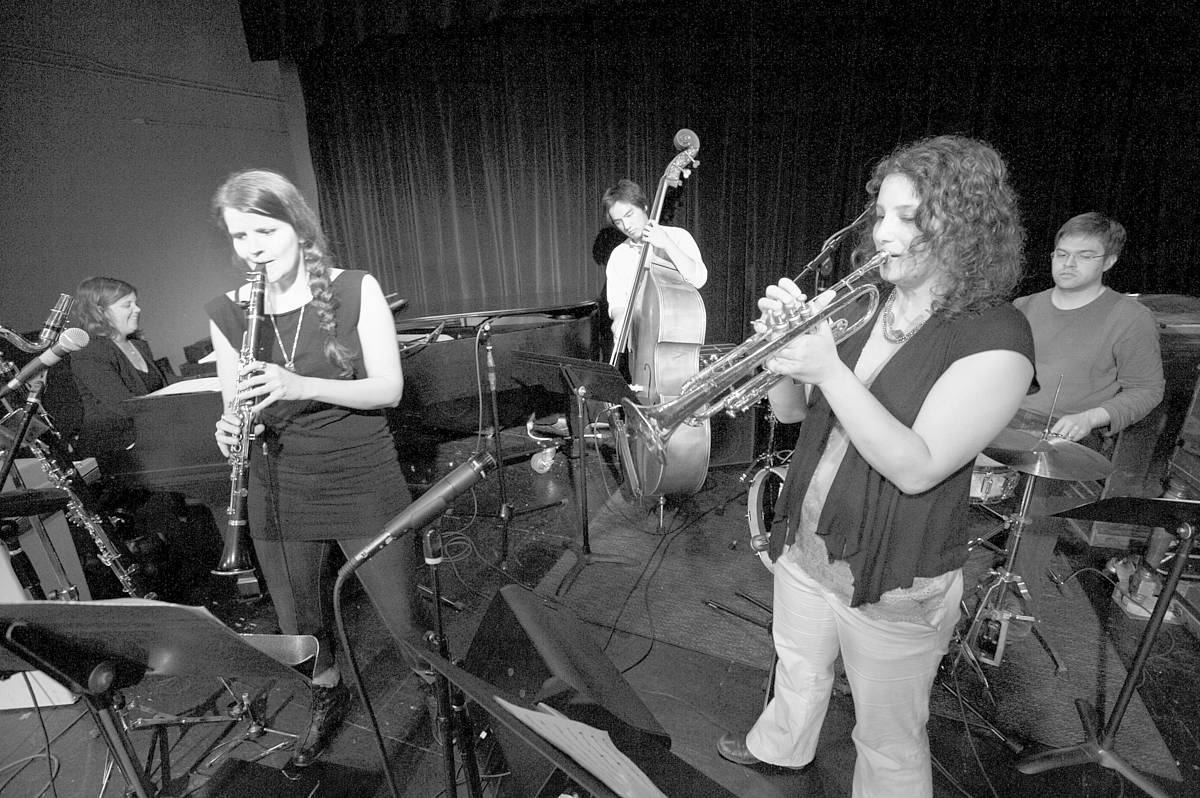
Saxophonist (tenor and soprano) Ralph Bowen has been an active member of the creative music scene since the mid-1980s both as a performer and educator (his teaching credits include serving on the faculties of Rutgers/State University of New Jersey and Princeton University). He has played and/or recorded with Horace Silver, the Art Blakey Big Band, Freddie Hubbard, pianist Michel Camilo, Orrin Evans, Dr. Anthony Branker, and many others. Bowen has recorded as a leader for CrissCross and Posi-Tone Records. His latest album for the latter label (his sixth) is a self-titled quartet date featuring Jim Ridl (piano, Fender Rhodes), Kenny Davis (acoustic and electric basses), and Cliff Almond (drums).
The program is set up like a concert. Opening with the high-octane original "Cache Cache", the piece serves as a "warmup" as the band dances its way through with solos by Ridl, Bowen, and Almond. The alliteration in the song title sets the listener up for "The Phylogeny Suite", a six-part, 42 minute, musical adventure with titles such as "A Rookery of Ravens", "A Leap of Leopards", and so forth. What stands out is not only the fine musicianship but also the intelligence of the material, the well-thought out melodies and the interactions. Almond and Davis are integral throughout, keeping the songs flowing forward and offering great support and, on occasion, powerful counterpoint. And there is such great variety. "A Pandemonium of Parrots" swing lustily while "A Venue of Vultures" (there's an image) has a delightful funky edge. "...Ravens" has a darker edge as well as a great solo from Ridl while there is a gentle edge to "A Flamboyance of Flamingos" (Ridl on Fender Rhodes). Listen also to Bowen's even tone, the clarity of his notes, and how well he builds his solo from the melody. The "...Suite" comes to a close with "A Cast of Crabs", a deeply funky piece with a touch of Steely Dan and a hint of New Orleans (dig Davis's deep notes on the electric bass). Ridl's overdubbed Rhodes solo has a jaunty edge
One could view the final three tracks as the "encores". Up first is "Aye", a sweet ballad from bassist Davis. Again, the "honest" tones that Bowen creates (no effects, light or no vibrato no "harsh" sounds) stand out as he builds his solo over the rich sounding piano chords and gentle rhythm section. Dave Liebman's "Picadilly Lily" is an inspired choice as the band romps through the song with such joy. Listen to the drive emanating from the rhythm section! The album closes with "Search For Peace" - composed by McCoy Tyner and first released on his 1967 Blue Note Records debut "The Real McCoy" (also his first album after leaving the John Coltrane Quartet), this lovely ballad is carried along gently on Ridl's Fender Rhodes work and the melodic work of Almond (Davis is the "foundation" on this piece). One can echoes of Joe Henderson (the tenor saxophonist on the Tyner album) in Bowen's tone yet one is reminded how much the leader of this date has had his own "sound" since his earliest recordings.
"Ralph Bowen" the album and Ralph Bowen the musician will bring the adventurous listener many hours of pleasure. This new recording is, arguably, his best and there's not a weak in the crowd. I'd love to see this group in action but this album is well worth your time.
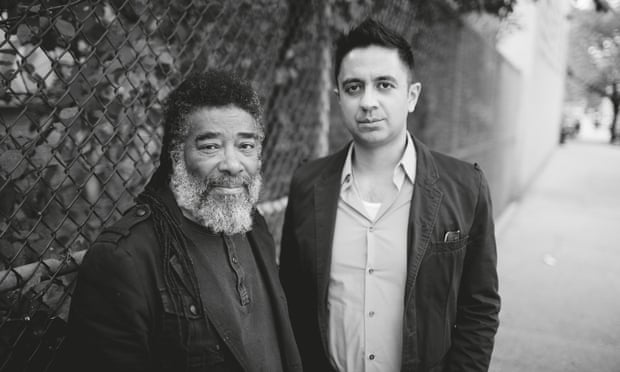
Trumpeter and composer Wadada Leo Smith and pianist Vijay Iyer have worked together in the past with Iyer a member of Smith's Golden Quartet and Quintet. The duo's new ECM release, "a cosmic rhythm with each stroke", is a powerful work with the focus in the 7-part, 52-minute, title track. Co-composed by the duo, the strikingly handsome piece is inspired by and dedicated to the visual artist Nasreen Mohamedi (1937-1990). Currently, the Metropolitan Museum of Art in New York City is celebrating her life and work (check it out here) and Mr. Iyer is currently Artist-In-Residence in the new Met Breuer (as I write this, the Gallery is in the midst of the third week of the performance series curated by the pianist. The Iyer-Smith Duo is scheduled for 3/30-31 and it's already sold out).
As for the recording, the music is emotionally rich, at times incredibly quiet with faint low rumblings from Fender Rhodes and other electronics (all played by Iyer) yet there is the clarion call of Smith's trumpet rising up an around the crystal-clear piano lines. There are so many mood shifts in the suite yet none of the music is rushed. Free-wheeling clusters of piano notes jostle with rapid-fire jabs at piano and, in the final section (subtitled "Notes on Water"), the different timbres of the Fender Rhodes help the suite float to a close.
Nasreen Mohamedi
The program opens with the pianist's "Passage", a perfect lead-in to the suite in that this music sets the tone. The music moves forward on the powerful chordal melody and the trumpet's long tones. The final track, "Marian Anderson", is Mr. Smith's tribute to the great singer and human rights activist. The music does not attempt to imitate the great sounds of Ms. Anderson but creates an abstract portrait of melody lines that rise and fall like breathing, the solid, somber, piano chords giving the trumpet freedom of movement.
Vijay Iyer and Wadada Leo Smith, in creating "a cosmic rhythm with each stroke", not only celebrate the life and work of very impressive many of us have not heard of before but also have produced music that allows the listener to get lost in the sounds and the silences, the quiet volume and harder attack. This is timeless music that works its way into your heart and mind, bringing a sense of wholeness and peace.
On the heels of 2015's "In for a Penny, In for a Pound", arguably one of the year's 3 best recordings, Henry Threadgill puts down his instrument but not his pen and creates "Old Locks and Irregular Verbs" (Pi Recordings). The 4-part, 47-minute, multi-sectioned composition is his tribute to his dear friend Lawrence "Butch" Morris (1947-2013) played by an septet known as Henry Threadgill Ensemble Double Up including Zooid regulars Jose Davila (tuba) and Christopher Hoffman (cello) plus drummer Craig Weinrib, alto saxophonists Roman Filiu and Curtis MacDonald (also the composer's copyist) and - surprisingly, for a group led by Threadgill - pianists Jason Moran and David Virelles.
Dragan Trasic
What's not surprising about this music is the importance of the rhythm section. , ,Hoffman, Davila, and Weinrib really drive the 19+ minute "Part One", giving the music depth and a sense of forward propulsion. The tuba often pairs with the pianists to hold down the bottom. Due to the compositional style of the leader, both alto saxophonists sound like Threadgill which, at times, is off-putting. But the power of the music, the swirl of saxophones, pianos, and the cello as the opening section slows down, the deep lines from the tuba, draws one in. "Part Two" starts with just cello and tuba in an off-kilter call-and-response that soon stops.
There is a short full band section then Weinrib plays a melodic then forceful solo that leads directly into "Part Three." Hoffman's powerful bowed solo over the active rhythms of the drums and piano has an intense feel but, when MacDonald enters for his solo, the bottom shifts a bit, both pianists "stroll" through the background while Davila and Hoffman (now pizzicato) parry-and-joust from down below. Virelles plays a long, exciting solo (with Moran commenting now and then) before Filiu takes off on a powerful flight. About 12:30 into the 16:39 section, the band stops altogether, there's a moment of silence, then there's a series of short duets and solos which soon opens to a more rhythmical give-and-take leading into "Part Four." There's a magnificent 2 piano conversation that begins quite melodically before building in intensity. When the rest of the group enters, they play the elegiac melody from a few minutes before. Slowly, the sound surges, builds up again, higher and higher pushing upward then long tines from the saxophones followed by the tuba, fade out to....silence.
ascap.com
Henry Threadgill has been a vital member of the contemporary music scene for over 5 decades. On occasion, his music disappeared under the onslaught of "smooth jazz" or the Young Lions embrace of hard bop but the composer persevered. Since the beginning of the 21st Century, he's been releasing impressive albums and working with the likes of Wadada Leo Smith and Jack DeJohnette. His 7 albums with Pi Recordings, 5 with Zooid, show his vitality and willingness to continue to grow and explore.
"Old Locks and Irregular Verbs" is challenging, satisfying, and original music - we live in such strange times yet recordings such as this gives one hope and joy.

 Posts
Posts


 The two Monk tunes come back-to-back right after a lovely reading of Billy Strayhorn's "Lush Life." That tune features splendid counterpoint from Morgan, something he is quite adept at. The bassist also knows how to "swing" a piece as he demonstrates during Frisell's solo on the title track. "Pannonica" is quite a jaunty piece - as one gets older, it's amazing how Monk had one foot in the blues (so apparent on the "sweet" melody) and the other in jazz.