It's been quite an amazing several years for pianist, composer, arranger, and educator Vijay Iyer. His Trio (with bassist Stephan Crump and drummer Marcus Gilmore) made a number of impressive albums including 2015's "Break Stuff"), he's released a soundtrack and a classical recording, joined the faculty of Harvard University, curated a month of concerts in March of 2015 for the Met Bruer Tony and Amie James gallery in New York City, and served as the music director for the 2017 Ojai Music Festival (held 6/8-11). Groups such as the Bang-on-a-Can Allstars, Brooklyn Rider, Imani Winds, and Silk Road Ensemble have recorded his pieces. His 2016 ECM recording with Wadada Leo Smith, "A Cosmic Rhythm With Each Stroke", made numerous Top 10 lists as "Record of the Year."
His latest project, the Vijay Iyer Sextet, combines his Trio mates of Crump and, here, Tyshawn Sorey with alto saxophonist Steve Lehman, tenor saxophonist Mark Shim, and cornetist/flugelhorn player Graham Haynes. The ensemble's new album, "Far From Over" (ECM Records) is a fascinating mixture of sounds, from the forceful title track to the funky "Nope" to the elegiac yet forceful "For Amiri Baraka" (just piano, bass, and drums) to the thunderous "Good On The Ground" (listen to the power of Sorey's drumming and the rhythmical work of the reeds and brass) to the stunning "Threnody" that closes the album. This is music that holds your attention, makes you move your feet as much as it makes you think. The musicianship is impressive throughout yet these songs are not mere exercises of technical prowess.
photo: Lynn Harty
Steve Lehman, who has played with the pianist and drummer in Fieldwork, plays with great fire throughout. His lines slash through the thunderous climax of "Threnody" and take flight over the drums on the album opener "Poles." Mark Shim, who has been a member of Lehman's ensemble, is a smart foil to the last saxophonist's tart tone. He can dig deep or fly high (doing both on the title track) and his powerful interactions with Haynes and Lehman on "Nope" really hit hard. Shim gets the spotlight on "Down to the Wire", connecting to the pianist and Sorey to produce a powerful statement. Cornetist Haynes is a treat as well; his brash electronic treatments on "End of the Tunnel" will remind many of early 1970s Miles Davis. His interaction with the Iyer's Fender Rhodes on "Wake" hearken back to "In A Silent Way" yet he is never imitative. His cornet rises up out of the horn section on "Into Action", creating a fine solo atop Sorey's "fatback" drums, Crump's powerful bass lines, and the excellent piano counterpoint/rhythm.
davidbazemore.com
How good is this rhythm section? Watch the video below to see how hard both Crump and Sorey play, how integral they are to the flow of the music as much as they are to the movement of the melodies and how well they interact with the soloists. Iyer is also a driving force beneath and in front of this music. His solos throughout display his great sense of rhythm - it's also great fun to see where his phrases go when he is deep into his solo. The employment of the Fender Rhodes on several tracks helps change the complexion of the music and the listener's ear.
"Far From Over", the title, can relate to many of the events taking place everyday, whether it's the seemingly endless political gyrations of the United States to the continuing racist, anti-Muslim, and anti-Semitic events taking place in the US and around the world. The music of the Vijay Iyer Sextet has great power, not only to entertain but also to educate, not to only to make us think but also to move. Dig in!
For more information, go to vijay-iyer.com. The album is set to be released on August 25 and be pre-ordered from iTunes, Amazon, and other outlets!
Here's the Sextet in concert from the 2017 Ojai Festival:
newseum.org
Nellie Bly, the pen name of pioneering journalist Elizabeth Jane Cochran (1864-1922), first got involved in the newspaper business when she sent a scathing response to an editorial in the Pittsburgh Dispatch titled "What Girls Are Good For?" (according to the editor, the answer was "staying home). That editor was so impressed by Ms. Cochran's reply that he asked her to write her own editorial in response and, then, gave her a position on the staff. He also gave her the byline of "Nellie Bly", the name of a children's song penned by Stephen Foster. The journalist went on to expose issues in "lunatic" asylums, crooked lobbyists, working conditions in factories, and so much more. Ms. Bly also took up the challenge to travel around the world in less than the "80 Days" that Author Jules Verne had written about. At a time when a woman rarely traveled abroad, especially by herself, Ms. Bly did just that and broke the fictional record by nearly eight days. To fond out more about this extraordinary person, go to www.nellieblyonline.com.
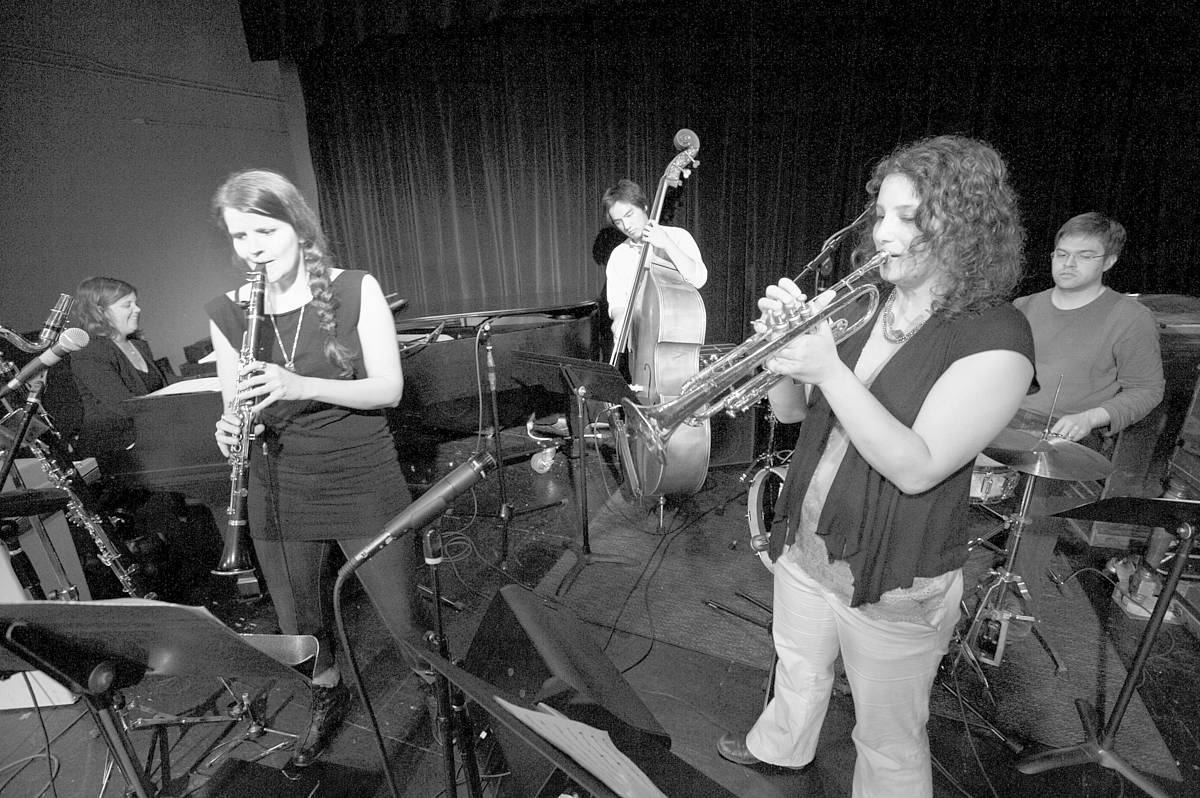
You can also listen to this new recording by the Sam Boshnack Quintet. The trumpeter, vocalist, and composer has created the "Nellie Bly Project" (Artist Recording Collective), a four-piece suite featuring Ms. Boshnack, Beth Fleenor (clarinet, bass clarinet), Alex Chadsey (piano, keys), Isaac Castillo (acoustic and electric bass), and Max Wood (drums). Joining the ensemble are vocalists Valerie Holt and Anne Matthews (both on tracks 1 and 3) and Anne Whitfield (spoken vocal on tracks 2 and 4). All the lyrics and words come from Ms. Bly's columns and essays. While no one would or should argue about the accomplishments of the journalist, Ms. Boshnack's music is also quite impressive. The integration of words and music is well thought-out and the compositions are quite strong.
Listen to the power of the opening track, "Expositions." The power of the rhythm section pushes the melody forward, the bass clarinet and trumpet two strong voices rising above the beat. Chadsey's electric piano softens the attack but he also deliver a fine solo. "After One Is In Trouble" opens with a sound and feel that reminds this listener of the week of the late baritone saxophonist and activist Fred Ho. After a handsome melody is played by trumpet and clarinet, Ms. Boshnack steps out for quite an impressive solo. The rhythm section applies heat and the trumpet flies about them. About a quick tempo shift, drummer Wood take over for a long and involved solo (with different musical voices stepping in along the way). "72 Days" has a wonderful acoustic piano solo before shifting gears with the voices coming in to show Ms. Bly's determination, chanting over and over"I would rather go in debt and successful/than alive and behind time." That mantra leads into an excellent. clarinet solo before Wood kicks in and the band celebrates the success of the trip as they take the song out.
Nellie Bly's story is one of courage, determination, the fight to find the truth and correct wrongs in what seems like an uncaring society. The power in her words and deeds is the fuel for Sam Boshnack; you can hear it in every note of her "Nellie Bly Project", hear it in the impressive melodies, the rhythms, the interactions, and solos of the Quintet. Music is be a powerful tool in education, helping students see more of the world around them and the people who have make great compositions to move this nation and the world forward out what seems to be the eternal "dark ages."
Here's an in-concert performance of the opening movement (Dawn Clements is on piano):
Saxophonist (tenor and soprano) Ralph Bowen has been an active member of the creative music scene since the mid-1980s both as a performer and educator (his teaching credits include serving on the faculties of Rutgers/State University of New Jersey and Princeton University). He has played and/or recorded with Horace Silver, the Art Blakey Big Band, Freddie Hubbard, pianist Michel Camilo, Orrin Evans, Dr. Anthony Branker, and many others. Bowen has recorded as a leader for CrissCross and Posi-Tone Records. His latest album for the latter label (his sixth) is a self-titled quartet date featuring Jim Ridl (piano, Fender Rhodes), Kenny Davis (acoustic and electric basses), and Cliff Almond (drums).
The program is set up like a concert. Opening with the high-octane original "Cache Cache", the piece serves as a "warmup" as the band dances its way through with solos by Ridl, Bowen, and Almond. The alliteration in the song title sets the listener up for "The Phylogeny Suite", a six-part, 42 minute, musical adventure with titles such as "A Rookery of Ravens", "A Leap of Leopards", and so forth. What stands out is not only the fine musicianship but also the intelligence of the material, the well-thought out melodies and the interactions. Almond and Davis are integral throughout, keeping the songs flowing forward and offering great support and, on occasion, powerful counterpoint. And there is such great variety. "A Pandemonium of Parrots" swing lustily while "A Venue of Vultures" (there's an image) has a delightful funky edge. "...Ravens" has a darker edge as well as a great solo from Ridl while there is a gentle edge to "A Flamboyance of Flamingos" (Ridl on Fender Rhodes). Listen also to Bowen's even tone, the clarity of his notes, and how well he builds his solo from the melody. The "...Suite" comes to a close with "A Cast of Crabs", a deeply funky piece with a touch of Steely Dan and a hint of New Orleans (dig Davis's deep notes on the electric bass). Ridl's overdubbed Rhodes solo has a jaunty edge
One could view the final three tracks as the "encores". Up first is "Aye", a sweet ballad from bassist Davis. Again, the "honest" tones that Bowen creates (no effects, light or no vibrato no "harsh" sounds) stand out as he builds his solo over the rich sounding piano chords and gentle rhythm section. Dave Liebman's "Picadilly Lily" is an inspired choice as the band romps through the song with such joy. Listen to the drive emanating from the rhythm section! The album closes with "Search For Peace" - composed by McCoy Tyner and first released on his 1967 Blue Note Records debut "The Real McCoy" (also his first album after leaving the John Coltrane Quartet), this lovely ballad is carried along gently on Ridl's Fender Rhodes work and the melodic work of Almond (Davis is the "foundation" on this piece). One can echoes of Joe Henderson (the tenor saxophonist on the Tyner album) in Bowen's tone yet one is reminded how much the leader of this date has had his own "sound" since his earliest recordings.
"Ralph Bowen" the album and Ralph Bowen the musician will bring the adventurous listener many hours of pleasure. This new recording is, arguably, his best and there's not a weak in the crowd. I'd love to see this group in action but this album is well worth your time.
Preparing to review trumpeter Kenny Warren's debut album for Whirlwind Recordings, I discovered he is indeed one busy musician. The Colorado native has issued several recordings called "Laila & Smitty" that is true "Americana" in that the music blends a plethora of influences. Warren is a member of the Balkan/Gypsy Funk band Slavic Soul Party as well as Brian Plunka's Arabic Jazz ensemble Nashaz. Spending time listening to Warren in these different settings, one can hear that the trumpeter has no fear of stretching his boundaries while remaining true to his sound. He's as comfortable appearing in duos with pianist Bobby Avey and saxophonist Tony Malaby as he is with being part of the Angela Morris & Anna Webber Big Band.
The new recording, "Thank You For Coming to Life", features his working Quartet of JP Schlegelmilch (piano), Noah Garabedian (bass), and Satoshi Takeishi (drums). Actually, listening to the material Warren has supplied his ensemble with, let's call this unit his "playing" band. Longtime friend and schoolmate Schlegelmilch plays here with great power as well as with subtlety, helping to frame the compositions. Hearing Takeishi drive the band is such a treat as it gives Garabedian room to move, to follow the pianist or play off what the soloist is doing. The material is multidirectional, the songs episodic, with plenty of room for the players to stretch out, and the joy is they never outstay their welcome.
"Stones Change" opens with trumpet only introducing and one can already hear the rhythmic possibilities. All four musicians play the melody before the piece moves out in the piano solo; listen to his deftly Schlegelmilch (formerly with Old Time Musketry) handles the variable rhythms beneath. Then Warren and Garabedian only play the theme before the rest of the band returns and the trumpeter moves into his high-flying solo. The drummer really kicks the piece forward and, when the foursome returned to the thematic material one hear the Bertolt Brecht influence on the melody line.
The magic continues on "Huge Knees", which, at 12:09, is the longest track on the album. Starts out on fire then shifts into an impressionistic "free" section for the piano solos. Note the active and attractive bass work and his the band quietly supports the solo. The intensity picks up under the trumpet solo but closes quietly leading into a fine bass spotlight. Accompanied by the pianist and quiet percussionist, Garabedian gets to the heart of the melody. The final three minutes changes direction and intensity several times, dizzying at times yet delightful always.
Several weeks ago, I wrote about how pianist Tal Cohen's "Gentle Giants" recording reminded me so much of Wynton Marsalis's "Black Codes From The Underground"; not in its sound as much as its attack and the musicians fresh take on the "tradition." Here as well. It's in Kenny Warren's willingness to really explore the "heart" in each song, to avoid cliche, and to treat this as a recording of a "working band" and not a "star turn." The deeper you get into the album and the music, one hears the playfulness of Clifford Brown as well as the seriousness of Booker Little. Whether it's the New Orleans rhythms of "Cheese Greater" , the somber ballad "Iransaurus Rex", or the handsome, medium-tempo, melodic closer, "Every Moment Is Born Lives and Dies", every thing about this music is real, honest, and enjoyable. The Kenny Warren Quartet "Thank You For Coming to Life" does truly come to "life"; take this music into your life! For more information, go to kennywarren.tumblr.com/bio.
Here's the Quartet in action with the opening track:
The music that bassist and composer Eric Revis creates is often complex, often challenging, confrontational, and endlessly rewarding. For his new Clean Feed album, "Sing Me Some Cry", he works with a like-minded quartet including Kris Davis (piano). Ken Vandermark (tenor saxophone, clarinet) and Chad Taylor (drums) all of whom he has recorded with before but never in this formation. The bassist has a big yet clean tone, is melodic in his approach to how he he frames each composition, and also creates challenging landscapes for his ensemble. The music is, at times, fairly "free", and never dull.
The title track opens the album, an eerie sampled voice and a short bass phrase. Slowly, Revis's longer phrases introduce the percussion, then Vandermark's clarinet and Ms. Davis's active piano fills conjure up images of storms blowing through open windows. Scattered sounds move in and out of the spectrum, not necessarily scaring the listener but letting us know we are in a different world (or, at least, different part of the world. "Good Company" follows, opening with Taylor's powerful as well as musical drum solo. He lays down a modified "Bo Diddley" beat and Ms. Davis riffs atop each until Vandermark (on tenor) introduces the melody. The sax is shadowed by the bass until the rhythm settles into a funky rumble. The long piano solo includes sly references to Thelonious Monk and Eddie Palmieri. The tenor sax, over a rollicking and raucous rhythm section (save for Revis who keeps the music going forward), is delightfully powerful.
Uptonbass.com
There's so much to enjoy here, from the terrific drumming of Taylor (listen to how he leads and supports on "PT 44") to how Ms. Davis utilizes the entire piano inside and out (plunking away on "Obliogo" or creating a sonic and funky playground on "Rumples", a piece by guitarist Adam Rogers). For all the hard-edged music, there is also moments of controlled quiet. "Solstice...The Girls (Max & Xixi)", yet another piece that rolls in, though this time gently, on the African rhythms from Taylor's drums, accentuated by Revis plucking way down on the bass. Vandermark's sensuous clarinet through the rhythm with Ms. Davis's piano interjections. There's a haiku quality to the piece. Vandermark's muscular nor carries on quite a conversation with the drums on "Drunkard's Lullaby" (talk about staggered rhythms) - the playful change of tempos do not make this "lullaby" any more restful.
Jazzspeaks.org
The closing track, "Glyph", opens with a statement from the bass and the distant sound of Ms. Davis rolling around the keys and Vandermark adding pithy counterpoint. They rise into the foreground and then fall back (save for the piano), all the while Revis continues to build his solo. The bassist finishes his solo all by himself, there's a short silence, and the group falls into a quiet ballad, led by Ms. Davis's sparkling piano. Once Vandermark enters, he plays a plaintive melody on tenor and the piece comes to a gentle close.
"Sing Me Some Cry" keeps the listener alert, paying attention because one is never quite sure where this music will. Four master musicians, master improvisors, all doing their best to create a unified statement through the ever-maturing music of Eric Revis. Unified yes, yet exploratory as well, melodic and rhythmically rich, this album is a keeper!
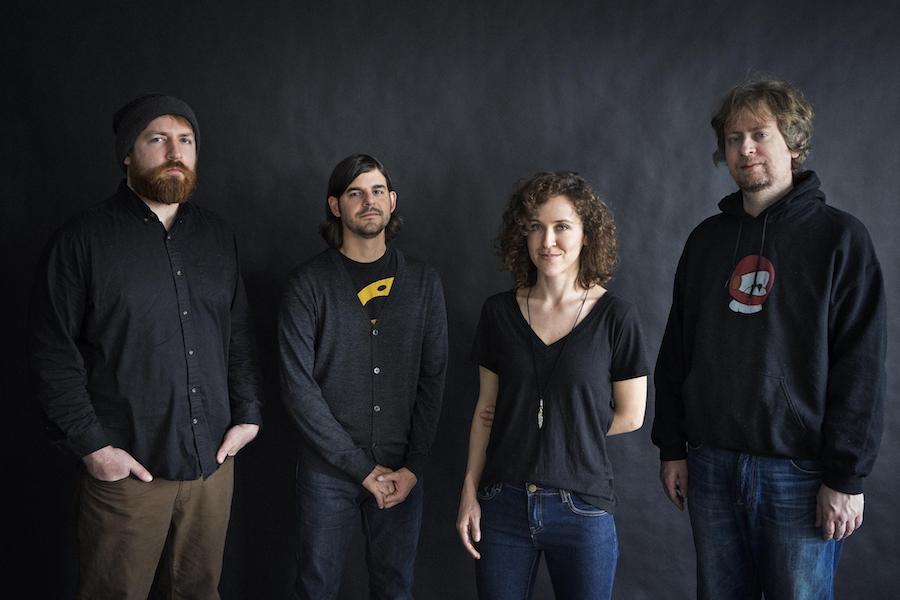
One of the joys of listening to new recordings is having your expectations thrown out with the bath water (so to speak). "Mannequins" (Skirl Records) is the work of drummer, vibraphonist, and composer Kate Gentile, a native of Buffalo, NY, who has been part of the busy New York City music scene since her move there in 2011. In the past half-decade, Ms. Gentile has worked Anthony Braxton, Marty Ehrlich, John Zorn, and many others. The quartet that gives the album its name includes Jeremy Viner (tenor sax, clarinet), Adam Hopkins (bass), and long-time collaborator Matt Mitchell (piano, Prophet 6, electronics). One can hear the influence of Henry Threadgill and Tim Berne in the linear and episodic nature of the longer pieces yet one also hears the rhythmic influence of the composer/drummer John Hollenbeck. The thematic pattern at the onset of "SSGF" subtly combines Western and Asian Indian influences. Mitchell picks up on that in the opening moments of his solo, then you notice the entire time he's playing is an interaction with the drummer.
The playful nature of the six short pieces (all under three minute with two barely 60 seconds long) that are interspersed throughout the program allow us to hear the drummer as a sound manipulator. For example, "hammergaze" features the leaders on various percussion instruments filtered through the Prophet 6 while "sear" is a melodic fragment with bowed bass, a short melodic passage, and percussive sounds. "xenomorphic" is multi-tracked bass with bowed bass in the middle surrounded by by three or four versions of the same fragmented melody. Two of the short pieces, "cardiac logic" and "stars covered in metal" would seem candidates for The Claudia Quintet with the latter track very much n the vein King Crimson. "Full Lucid" opens with a forceful tenor sax solo then percussion joins in. When Mitchell's keyboards enter, they create a trance-like background that soon becomes the foreground - near the end, the rest of the quartet enters with a melody playing it out to the close.
The dramatic use of sonic space is a vital element of the album. Pieces such as "unreasonable optimism" constantly change shape and intensity levels, sounding like free improvisation. When you listen again, you hear that there are melodic "triggers" that push the musicians in a new direction. It's a compositional and arrangement tool that minimalists such as Steve Reich in that you do not feel the music shifting but, like the constant flow of a river, this music is ever-shifting. "wrack" lurches forward on the power of Mitchell's left hand in tandem with Hopkins bass line, both pushed by the insistent drumming. Viner digs into his tenor solo, his lines scurrying over the rhythms then notice how the drums and bass move freely below the piano solo without the music losing direction. One imagines that this music is even more powerful in a concert setting.
There's nearly 73 minutes of music on "Mannequins" and, considering how closely one should listen, there are times when that seems overwhelming. But when the listener goes back, she/he hears more, the patterns become clearer, the brilliance of the shifting rhythms stand out (excellent sound quality) and you realize how much of a true group effort this is. Kate Gentile is no genteel drummer - that's fine. She is an exciting composer and musician to pay attention to now and for years (and projects) to come.

 Posts
Posts


 His latest project, the Vijay Iyer Sextet, combines his Trio mates of Crump and, here, Tyshawn Sorey with alto saxophonist Steve Lehman, tenor saxophonist Mark Shim, and cornetist/flugelhorn player Graham Haynes. The ensemble's new album, "Far From Over" (ECM Records) is a fascinating mixture of sounds, from the forceful title track to the funky "Nope" to the elegiac yet forceful "For Amiri Baraka" (just piano, bass, and drums) to the thunderous "Good On The Ground" (listen to the power of Sorey's drumming and the rhythmical work of the reeds and brass) to the stunning "Threnody" that closes the album. This is music that holds your attention, makes you move your feet as much as it makes you think. The musicianship is impressive throughout yet these songs are not mere exercises of technical prowess.


 You can also listen to this new recording by the Sam Boshnack Quintet. The trumpeter, vocalist, and composer has created the "Nellie Bly Project" (Artist Recording Collective), a four-piece suite featuring Ms. Boshnack, Beth Fleenor (clarinet, bass clarinet), Alex Chadsey (piano, keys), Isaac Castillo (acoustic and electric bass), and Max Wood (drums). Joining the ensemble are vocalists Valerie Holt and Anne Matthews (both on tracks 1 and 3) and Anne Whitfield (spoken vocal on tracks 2 and 4). All the lyrics and words come from Ms. Bly's columns and essays. While no one would or should argue about the accomplishments of the journalist, Ms. Boshnack's music is also quite impressive. The integration of words and music is well thought-out and the compositions are quite strong.