In the pantheon of great American poets, Carl Sandburg (1878-1967) has often gone in and out of favor (there are many folks who consider him a mere disciple of Walt Whitman) but there is little doubt that the Galesburg, Ohio native was an original. The son of Swedish immigrants, he had a number of jobs after college yet also published a three books of poetry before 1908. He married Lilian Steichen that year and began a career as a journalist. At the same time, Sandburg became a Socialist and the influence of that political movement can be seen in a number of his poems. In 1914, Poetry Magazine published a group of his poems which brought him to a wider audience which expanded greatly two years later with the publication of the "Chicago Poems." Before the end of the decade, he had published another collection of poems and a prose essay on the Chicago race riots. He became financially independent in 1926 when the first volume of his five-volume of Abraham Lincoln was published. His collections of American folk songs was also a big hit with the public and helped to bring more attention to indigenous music. Sandburg won several Pulitzer Prizes during his lifetime, also played guitar accompanying himself at readings. He was truly a man of and for the "people." (Check out a group of his poems and read his full biography by going to carl-sandburg.com.
Drummer and composer Matt Wilson has had a life-long interest in the work of Carl Sandburg. Born and raised in Knoxville, Ohio (the town to the west of Galesburg, the drummer's great-great aunt was married to the poet's first cousin - there is a picture in the album's booklet of Matt's father Tom with that cousin (Uncle Charlie). For those who have followed Matt Wilson's career know that his first album as a leader, "As Wave Follows Wave" (1996 on Palmetto Records) is named for a Sandburg poem. In 2001, he received a grant from Chamber Music America to create a program of original songs that featured selected works of Sandburg. He put together a quartet with saxophonist and clarinetist Jeff Lederer, guitarist and vocalist Dawn Thomson, and acoustic bass guitarist Martin Wind. Cornetist Ron Miles joined the group along the way and in October of 2016, the ensemble, now dubbed Honey And Salt (yes, named for a 1962 collection of the poet's works), gathered at engineer Matt Balitsaris's studios on Maggie's Farm, and the results "Matt Wilson's Honey and Salt: Music Inspired by the Poetry of Carl Sandburg" is the drummer's ninth album for Palmetto.
photo by John Abbott
There is so much to like about this project. Purists may be put off by the fact that the music encompasses many different styles, from rockabilly to swing to folk to avant-garde to "cool jazz" and more. Before this project, I had not heard much of the work of Dawn Thomson so her presence is a revelation: she has a fine vocal style, displaying a fine range as well as great emotion plus her guitar is a wonderful voice in the mix, especially her rhythm work and background playing. Jeff Lederer and Ron Miles are a formidable team, the former for his ability to both enliven the proceedings as well as be soothing in the background while the latter has such a warm sound, even his "wilder" excursions have a sense of comfort in them. Martin Wind plays exclusively acoustic bass guitar; it's the first time he's recorded using just that style of bass but the depth of his notes and his active foundational lines plus his counterpoint lines often stand out.
jchriss.com
Then there's the leader. It's so obvious that this project is a labor of love; these compositions are among the best Matt Wilson has composed in his career, illuminating his senses of melody, harmony, interaction, and, of course, fun. He creates a duet with the poet on "Fog" - the poet's voice is heard first, then the drums joins playing the voice patterns of Sandburg. The drummer plays a call-and-response pattern, first, the melody then the interpretation in a wonderful give-and-take. There are several other tracks on which the drummer plays the melody lines.
photo by VH Guidini
The album is broken into three "Chapters" and an "Epilogue" with 18 tracks. Besides Ms. Thomson's vocals and the poet's recorded voice, nine of the tracks feature recitations from the drummer, Jeff Lederer, Christian McBride, John Scofield, Jack Black, Bill Frisell, Rufus Reid, Joe Lovano, and Carla Bley. Frisell reads "Paper 2" which opens the poem read over a light guitar accompaniment before breaking into a raucous, bopping track, with solos from Lederer (a raucous tenor spotlight), Ms. Thomson (a "cool" jazz romp, and Miles (an easy jaunt over the "groovin'" rhythm section. In fact, do listen to how Wind and Wilson push the piece. The poem is repeated this time with the entire quintet offering counterpoint. Two tracks later, Lovano reads "Paper 1" over the same light guitar accompaniment but the piece fades on the recitation. In between, Rufus Reid's sonorous bass voice reads "Trafficker", one of the darker poems in the program (about a worn-out prostitute) - the track opens with Wilson's quiet brushes work, then adds Miles's muted cornet, Wind's bass, and the "midnight blue" tenor sax.
Your initial surprise to the different sounds this quintet makes (Lederer also plays clarinet, bass clarinet, piccolo, and harmonium) should turn into admiration and, finally, to joy. The beauty of pieces such as "To Know Silence Perfectly" (read by Ms. Bley), "Stars, Songs, and Faces", and "I Sang" (both sung by Ms. Thomson) may create quite a positive emotional response. Check out the fiery funk of "Anywhere and Everywhere People" read by McBride as the quintet "rocks out" and the power march of "Choose" (Lederer's piccolo takes a starring role) with its Charles Ives-like leanings will make you smile.
"Matt Wilson's Honey and Salt: Music Inspired by the Poetry of Carl Sandburg" is a smashing achievement. Wonderfully musical, deeply emotional, and so much fun - what more could one want from an artist? Take it on the road and expose more people to the "populist" poetry, the fascinating melodies, and great band that Matt Wilson has put together in this heartfelt project. Listen, listen deeply!
For more information about the project and the upcoming September 2017 tour dates, go to www.mattwilsonjazz.com.
Here's a tune with a "country" twang:
photo by John Dolan
Soprano saxophonist and composer Jane Ira Bloom released "Early Americans" in 2016, a trio date with bassist Mark Helias and drummer Bobby Previte, both of whom she had recorded with extensively. Her new project, "Wild Lines: Improvising Emily Dickinson" (Outline), brings back pianist Dawn Clements who recorded with this ensemble on 2011's "Wingwalker" (the pianist is also featured on Ms. Bloom's 2008 album "Mental Weather" with Helias and drummer Matt Wilson!) Ms. Bloom's latest adventure came about when she discovered that Emily Dickinson (1830-1886) was a pianist and an improviser, a quality the composer could see in the poetry. After receiving a commission from Chamber Music America/Doris Duke New Jazz Works, Ms. Bloom put together the program that one hears on these two CDs. There are 14 original compositions plus a solo soprano saxophone reading of the Rodgers & Hart classic, "It's Easy To Remember."
One might be tempted to start with CD 2 because you hear the lines of Ms. Dickinson's that prompted the compositions. Read by actress Deborah Rush (Broadway and television), most of the pieces are read before the pieces (there are several exceptions). But you really can hear how pieces like "Emily & Her Atoms" and "One Note from One Bird" (excerpt from "The Gorgeous Nothings") are built from the poems and poem fragments. The latter tune does open with one note from the piano before Ms. Rush intones "One note from/ One Bird/ is better than/ a million words/...A scabbard/ Needs/ has - holds/ but one/ sword" - listen to how the quartet expands that one note and those words outward away from its simple center into a musical meadowland with a sweeping melody and roiling drums.
Deborah Rush
Then there's "Singing The Triangle" during which a letter that the poet wrote that tells of her excitement that "G.F. Bailey's & Co. Great Triple Combination/ will exhibit in Amherst!/ On Friday, May 4th, 1866" - the music is a rollicking illustration of excitement, derring-do, and exuberance (one can almost hear the crowd "oohing and aahing" at the high-wire acts. The listener may have expected the music to be fairly somber as befits certain opinions of Ms. Dickinson's poems. Yet, throughout the album, the music bubbles over with glee. "Cornets of Paradise" opens with powerful drums behind Ms. Rush (pictured left) reciting "Over and over, like a Tune/ The Recollection Plays/ Drums off the Phantom Battlements/ Cornets of Paradise/" - the drums drop out and there soprano sax enters wailing high - Ms. Rush continues with "Snatches, from Baptized Generations/ Cadences too grand/ But for the Justified Processions/ At the Lord's Right Hand." There 's a quick snippet of gospel and then the quartet goes into an inspired improvisation before moving back right before the close to a modified barrelhouse blues.
CD 1 features the same instrumental tracks in a different order (save for the final two track on both discs being the exuberant "Big Bill" and the Rodgers & Hart tune). The music is just as exciting without the poetry but this listener really enjoys how Ms. Bloom integrates the lyricism of the poetry with the often flowing lines of the quartet. "Say More", on disc 1, opens with a lovely soprano melodic fragment with Previte's quiet percussion, the occasional bass melody, and Ms. Clement's lyrical piano. The piece moves slowly forward and up away from the opening line. Add Ms. Rush's vocal performance and the lyrics to the music, the piece opens up to new interpretations.
photo: Lucy Gram
"Wild Lines" is a magnificent recording, filled with intelligent and open melodies, inspired interactions, and a collective love of exploration. One should not discount how well the Quartet works together, the powerful and graceful contributions of Mark Helias and Bobby Previte, the excellent piano playing of Dawn Clement, and, of course, the wonder-filled work of Jane Ira Bloom. The artist could have chosen to release either one of these discs as her new album, they're both delightful on their own. Together, "Wild Lines" gives the listener an intimate description of the creative process, how the sounds and meanings of words can be translated to the sounds of music, that the creative process can truly be an infinity of riches. This is a joyful experience for the musicians and for the audience.
For more information, go to www.janeirabloom.com. Release date for the album is September 8, 2017 and is available for pre-order at amazon.com.
Preparing to review trumpeter Kenny Warren's debut album for Whirlwind Recordings, I discovered he is indeed one busy musician. The Colorado native has issued several recordings called "Laila & Smitty" that is true "Americana" in that the music blends a plethora of influences. Warren is a member of the Balkan/Gypsy Funk band Slavic Soul Party as well as Brian Plunka's Arabic Jazz ensemble Nashaz. Spending time listening to Warren in these different settings, one can hear that the trumpeter has no fear of stretching his boundaries while remaining true to his sound. He's as comfortable appearing in duos with pianist Bobby Avey and saxophonist Tony Malaby as he is with being part of the Angela Morris & Anna Webber Big Band.
The new recording, "Thank You For Coming to Life", features his working Quartet of JP Schlegelmilch (piano), Noah Garabedian (bass), and Satoshi Takeishi (drums). Actually, listening to the material Warren has supplied his ensemble with, let's call this unit his "playing" band. Longtime friend and schoolmate Schlegelmilch plays here with great power as well as with subtlety, helping to frame the compositions. Hearing Takeishi drive the band is such a treat as it gives Garabedian room to move, to follow the pianist or play off what the soloist is doing. The material is multidirectional, the songs episodic, with plenty of room for the players to stretch out, and the joy is they never outstay their welcome.
"Stones Change" opens with trumpet only introducing and one can already hear the rhythmic possibilities. All four musicians play the melody before the piece moves out in the piano solo; listen to his deftly Schlegelmilch (formerly with Old Time Musketry) handles the variable rhythms beneath. Then Warren and Garabedian only play the theme before the rest of the band returns and the trumpeter moves into his high-flying solo. The drummer really kicks the piece forward and, when the foursome returned to the thematic material one hear the Bertolt Brecht influence on the melody line.
The magic continues on "Huge Knees", which, at 12:09, is the longest track on the album. Starts out on fire then shifts into an impressionistic "free" section for the piano solos. Note the active and attractive bass work and his the band quietly supports the solo. The intensity picks up under the trumpet solo but closes quietly leading into a fine bass spotlight. Accompanied by the pianist and quiet percussionist, Garabedian gets to the heart of the melody. The final three minutes changes direction and intensity several times, dizzying at times yet delightful always.
Several weeks ago, I wrote about how pianist Tal Cohen's "Gentle Giants" recording reminded me so much of Wynton Marsalis's "Black Codes From The Underground"; not in its sound as much as its attack and the musicians fresh take on the "tradition." Here as well. It's in Kenny Warren's willingness to really explore the "heart" in each song, to avoid cliche, and to treat this as a recording of a "working band" and not a "star turn." The deeper you get into the album and the music, one hears the playfulness of Clifford Brown as well as the seriousness of Booker Little. Whether it's the New Orleans rhythms of "Cheese Greater" , the somber ballad "Iransaurus Rex", or the handsome, medium-tempo, melodic closer, "Every Moment Is Born Lives and Dies", every thing about this music is real, honest, and enjoyable. The Kenny Warren Quartet "Thank You For Coming to Life" does truly come to "life"; take this music into your life! For more information, go to kennywarren.tumblr.com/bio.
Here's the Quartet in action with the opening track:
The music that bassist and composer Eric Revis creates is often complex, often challenging, confrontational, and endlessly rewarding. For his new Clean Feed album, "Sing Me Some Cry", he works with a like-minded quartet including Kris Davis (piano). Ken Vandermark (tenor saxophone, clarinet) and Chad Taylor (drums) all of whom he has recorded with before but never in this formation. The bassist has a big yet clean tone, is melodic in his approach to how he he frames each composition, and also creates challenging landscapes for his ensemble. The music is, at times, fairly "free", and never dull.
The title track opens the album, an eerie sampled voice and a short bass phrase. Slowly, Revis's longer phrases introduce the percussion, then Vandermark's clarinet and Ms. Davis's active piano fills conjure up images of storms blowing through open windows. Scattered sounds move in and out of the spectrum, not necessarily scaring the listener but letting us know we are in a different world (or, at least, different part of the world. "Good Company" follows, opening with Taylor's powerful as well as musical drum solo. He lays down a modified "Bo Diddley" beat and Ms. Davis riffs atop each until Vandermark (on tenor) introduces the melody. The sax is shadowed by the bass until the rhythm settles into a funky rumble. The long piano solo includes sly references to Thelonious Monk and Eddie Palmieri. The tenor sax, over a rollicking and raucous rhythm section (save for Revis who keeps the music going forward), is delightfully powerful.
Uptonbass.com
There's so much to enjoy here, from the terrific drumming of Taylor (listen to how he leads and supports on "PT 44") to how Ms. Davis utilizes the entire piano inside and out (plunking away on "Obliogo" or creating a sonic and funky playground on "Rumples", a piece by guitarist Adam Rogers). For all the hard-edged music, there is also moments of controlled quiet. "Solstice...The Girls (Max & Xixi)", yet another piece that rolls in, though this time gently, on the African rhythms from Taylor's drums, accentuated by Revis plucking way down on the bass. Vandermark's sensuous clarinet through the rhythm with Ms. Davis's piano interjections. There's a haiku quality to the piece. Vandermark's muscular nor carries on quite a conversation with the drums on "Drunkard's Lullaby" (talk about staggered rhythms) - the playful change of tempos do not make this "lullaby" any more restful.
Jazzspeaks.org
The closing track, "Glyph", opens with a statement from the bass and the distant sound of Ms. Davis rolling around the keys and Vandermark adding pithy counterpoint. They rise into the foreground and then fall back (save for the piano), all the while Revis continues to build his solo. The bassist finishes his solo all by himself, there's a short silence, and the group falls into a quiet ballad, led by Ms. Davis's sparkling piano. Once Vandermark enters, he plays a plaintive melody on tenor and the piece comes to a gentle close.
"Sing Me Some Cry" keeps the listener alert, paying attention because one is never quite sure where this music will. Four master musicians, master improvisors, all doing their best to create a unified statement through the ever-maturing music of Eric Revis. Unified yes, yet exploratory as well, melodic and rhythmically rich, this album is a keeper!
One of the joys of listening to new recordings is having your expectations thrown out with the bath water (so to speak). "Mannequins" (Skirl Records) is the work of drummer, vibraphonist, and composer Kate Gentile, a native of Buffalo, NY, who has been part of the busy New York City music scene since her move there in 2011. In the past half-decade, Ms. Gentile has worked Anthony Braxton, Marty Ehrlich, John Zorn, and many others. The quartet that gives the album its name includes Jeremy Viner (tenor sax, clarinet), Adam Hopkins (bass), and long-time collaborator Matt Mitchell (piano, Prophet 6, electronics). One can hear the influence of Henry Threadgill and Tim Berne in the linear and episodic nature of the longer pieces yet one also hears the rhythmic influence of the composer/drummer John Hollenbeck. The thematic pattern at the onset of "SSGF" subtly combines Western and Asian Indian influences. Mitchell picks up on that in the opening moments of his solo, then you notice the entire time he's playing is an interaction with the drummer.
The playful nature of the six short pieces (all under three minute with two barely 60 seconds long) that are interspersed throughout the program allow us to hear the drummer as a sound manipulator. For example, "hammergaze" features the leaders on various percussion instruments filtered through the Prophet 6 while "sear" is a melodic fragment with bowed bass, a short melodic passage, and percussive sounds. "xenomorphic" is multi-tracked bass with bowed bass in the middle surrounded by by three or four versions of the same fragmented melody. Two of the short pieces, "cardiac logic" and "stars covered in metal" would seem candidates for The Claudia Quintet with the latter track very much n the vein King Crimson. "Full Lucid" opens with a forceful tenor sax solo then percussion joins in. When Mitchell's keyboards enter, they create a trance-like background that soon becomes the foreground - near the end, the rest of the quartet enters with a melody playing it out to the close.
The dramatic use of sonic space is a vital element of the album. Pieces such as "unreasonable optimism" constantly change shape and intensity levels, sounding like free improvisation. When you listen again, you hear that there are melodic "triggers" that push the musicians in a new direction. It's a compositional and arrangement tool that minimalists such as Steve Reich in that you do not feel the music shifting but, like the constant flow of a river, this music is ever-shifting. "wrack" lurches forward on the power of Mitchell's left hand in tandem with Hopkins bass line, both pushed by the insistent drumming. Viner digs into his tenor solo, his lines scurrying over the rhythms then notice how the drums and bass move freely below the piano solo without the music losing direction. One imagines that this music is even more powerful in a concert setting.
There's nearly 73 minutes of music on "Mannequins" and, considering how closely one should listen, there are times when that seems overwhelming. But when the listener goes back, she/he hears more, the patterns become clearer, the brilliance of the shifting rhythms stand out (excellent sound quality) and you realize how much of a true group effort this is. Kate Gentile is no genteel drummer - that's fine. She is an exciting composer and musician to pay attention to now and for years (and projects) to come.
Upon hearing of the death of Gregg Allman, I was transported back to the night I first heard The Allman Brothers Band in concert. Their first Lp had been released on Atco/Capricorn in late 1969 and they immediately went on tour supporting the J. Giels Band. Saw them at an old concert hall in Springfield, Massachusetts. When they hit the stage, there may have been 30 people in the audience but the ABB rocked as if the house was full. Gregg sat behind his Hammond B-3 organ, belting vocals, his brother Duane and Dickey Betts trading solos that roared through the auditorium while the rhythm section - drummers Jai Johanny Johanson and Butch Trucks plus bassist Berry Oakley - pounded away and played heart-thumping bass. I was covering the event for our campus newspaper so I got to go backstage to visit the band as the headliner was setting up. They were excited about how well the set went and that they were getting press coverage - they were fine Southern Gentlemen, offering my girlfriend and I beers. I talked about the Blues with Gregg for a few minutes, amazed that someone just 16 months older than me could sound a 60-year old bluesman. He laughed and pointed to the cigarette in his and try beer in his hand, stating that these were "two reasons I can shout." Got a minute to chat with a few others before they headed out to the tour bus - never did stay to hear the J Giels Band (though I did see them the following year).
After Duane died in 1971, I lost interest in the band (although I wore out the grooves on "Live at The Fillmore East"). Gregg carried on with the band until 1975, started a solo career that had its ups-and-downs (his 2011 collaboration with T-Bone Burnett, titled "Low Country Blues", is an excellent recording), rejoining the group in 1989, an ever-shifting lineup that lasted another 25 years.
Drummer Tiziano Tononi (pictured left) is one of the last people I expected to record a tribute to The Allman Brothers Band but his new album "Trouble No More...All Men Are Brothers" (Long Song Records) is a loud and loving tribute to the group with a focus on the earlier recordings mixed in with a pair of Dickey Betts songs and three originals. Tononi has assembled quite a group - what's interesting on first glance about Southbound is that there are no guitars or keyboards (save for Carmelo Massimo Torre who plays accordion) and the lead instruments are Emanuele Parrini (violin, viola) and Emanuele Passerini (tenor and soprano saxophones) plus Piero Bittolo Bon (alto sax, bass clarinet, flutes). The rhythm section features Joe Fonda (electric and acoustic bass) and Pacho (congas, bongos, and percussion). The majority of the tracks also feature the voice of Marta Riviglia, who has worked with all sorts of ensembles from symphony orchestra to jazz quartets to duos and more (and working a lot with electronics).
If all you know of Tiziano Tononi is the work he has done with tenor saxophonist Daniele Cavallanti (on albums dedicated to Ornette Coleman, Roland Kirk, and Don Cherry, among others with original works), this music will probably surprise you as well. The album opens with an explosive reading of "Whipping Post" which has such an exciting forward motion created by the bass and drums) - there's also a tumultuous soprano sax solo (the "reprise" shows up after the second track and is more diffuse). On tracks such as "It's Not My Cross to Bear", "Don't Want You No More", and Willie Cobb's "You Don't Love Me", it's a treat to hear the drummer lock in Fonda and play such high-energy blues (the latter song feature a smashing interchange between viola and accordion!) Bittolo Bon opens "...Cross to Bear" with a rip-roaring alto sax solo followed by Ms. Riviglia digging into the lyrics shadowed by Parrini hard-edged violin. Passserini's tenor plays a hardy solo in the middle before the bands quiets down for a delightful accordion spotlight. Listen to the ensemble rip through "Hot 'Lanta" featuring burning solos from Parrini, Passerini (soprano), and Bittolo Bon (bass clarinet) fired up by the blazing drums, congas, and the hard-edged bass playing.
Arguably the best track on the album is the Eastern-sounding take of "Midnight Rider" (video below), replete with droning accordion, lively bongos, urdu drums, double-tracked vocals, and haunting bass flute solo. The exotic sounds carry over to the drummer's original piece "For Berry O." but here it's just gongs, shaken percussion, cymbals, steel drums, accordion, congas, and drum set but no voice, strings, or reeds. Another original work in "Requiem For Skydog", a deep blues dedicated to Duane Allman that features solos from alto and tenor saxophones plus violin as well as impressive acoustic bass melodies.
Mr. Cavallanti shows up on a rousing take of King Curtis's "Soul Serenade" joined by the squalling soprano sax. The best part may be Cavallanti's unaccompanied coda, the only time the main melody of the song is played.
The only misstep (to me) is the final track, "You Don't Love Me (glorious ending)" with Ms. Riviglia riffing on the lyrics in a duet with herself while the band initially wails away. Everyone drops out but the vocalist and the leader, then the voice departs and it's just the drums taking the album to its conclusion. However, "Trouble No More...All Men Are Brothers" (subtitled "A Tribute to the Spiritual Unity of The Allman Brothers Band") is quite an exciting project. Starting with the powerful rhythms, adding Marta Riviglia's expressive vocals punctuated by the reeds, strings, and accordion, Tiziano Tononi and Southbound give their all to honor a band that has quite an effect on the United States and beyond.
Drummer and composer Billy Mintz ventured into the studio on a late December day in 2015. He gathered his friends John Gross (tenor saxophone), Tony Malaby (tenor and soprano saxophones), Roberta Piket (piano, keyboards, organ), and Hilliard Greene (bass) plus saxophonist Anton Denner (on one track), turned on the tapes and started to play. The results can be heard on "Ugly Beautiful" (13th Note), a 2-CD set that covers a wide swath of musical territory over 17 tracks that includes one alternate take and an extended version of another track. Don't get the idea that this is one long blowing session; instead, it's a prime example of musicians stretching, challenging each other (and the listener), thoughtfully engaging with the notated pieces, and creating improvisations that don't adhere to any formula.
The programming pairs more structured pieces, such as the piano/tenor (Malaby) reading of "Vietnam", with the hard blowing "Dit", whose first version builds on the fire of the rhythm section and opens up to incendiary solos by Gross and Malaby (tenor). The alternate take shows up later on Disc 1 - here, Gross and Malaby solo together then drop out to allow Ms. Piket to play a delightful solo (her solo on the first version is excellent as well if a bit more playful). "Flight" and "Flight" (ballad) are back-to-back, the first version is a swinging romp with stroll solos from the two tenors, piano, and Denner (overdubbed on soprano, alto, and tenor). The ballad takes a different approach with Malaby leading Ms. Piket into a minimalistic reading of the theme. Without the drummer, the group plumbs the emotional depth of the music to great effect. "Cannonball" is a funky piece with a trance-like rhythm emphasized by Greene's throbbing bass and Mintz's gentle dancing sound. Ms. Piket's Hammond B-3 solo is a treat as well. The longest track on the first disc, "Shmear"(11:37), opens with a long drum before moving into a fast-paced riff a la mid-60s Ornette Coleman. Before you get used to that, everyone drops out for a gospel-tinged piano solo. The pace picks with an energetic pace laid down for the bass and drums for a rollicking piano solo. Then, the tenors enter one at a time before engaging each other in a spirited conversation. The disc closes with "Umba", a funky piece for Fender Rhodes, Nord keyboard, and drums.
Disc 2 commences with "Tumba"; the minimalism of "Umba" now is expanded to add organ and acoustic piano to the mix and a harder rhythmic pace. The piece takes a decidedly Native American turn with hand percussion setting the stage for a fascinating soprano sax solo over Ms. Piket's expanding chordal explorations. The exploratory nature of the musicians and these challenging compositions continue to grab attention throughout the side, especially on the Coltrane-influenced tracks "Love and Beauty" (a forceful ballad) and the powerful, medium-tempo, title track. Greene's double-tracked bowed bass introduces "Retribution"; it's slow pace, whispering cymbals, and foreboding organ sounds take their time to get to the handsome melody line played by the tenor and soprano saxophones. To these ears, the melody line has the richness of a cantorial melody from the early 20th Century. Following that, "After Retribution", has a similar pace but now the piano and drums carry a more plaintive melody to the tenor saxophones. The piece ends so quietly, you can hear the quintet breathing as one. The program ends with an extended reading of "Cannonball"; it's as funky as the shorter version, just more room for solos from the saxophonists and Ms. Piket's Hammond B-3.
downtownmusic.net
"Ugly Beautiful" is 2+ hours of music that has so much to recommend purchase by the curious listener. Take your time delving into the program, listen to how these musician/friends interact, how the compositions fit the overarching themes of the project, not the least of which is the joy of making music. Music can take us out of the commonplace - Billy Mintz and company give us much to contemplate, so much to think about.
Check this video of the band at play (and I mean play)!
Trumpeter and educator Carol Morgan has a new album "Post Cool, Vol. 1: The Night Shift" (self-released), and it finds her in the company of the three gentlemen who joined her on the delightful 2011 release "Blue Glass Music." Joining her on the front line is tenor saxophonist Joel Frahm while the rhythm section is the delightful duo of Martin Wind (bass) and Matt Wilson (drums).
The six songs include an original each from the leader and from Frahm plus four standards. Yet, there is nothing standard about the "oldies." The program opens with a pleasant jaunt through Horace Silver's "Strollin'". The tenor solo over the splashy cymbals gives way to a enjoyable trumpet solo. The bassist creates a splendid melodic solo before the entire band go back to the head. Wilson pounds and punches the group through the opening choruses of "A Night In Tunisia" before settling down and working alongside Wind beneath Ms. Morgan's jaunty solo. Check out the "wild" ending and how Frahm wraps his sound around the trumpet melody. Wilson's brush work sets the pace on Tadd Dameron's "On A Misty Night" with solos from the trumpeter and saxophonist that literally dance with glee. The Quartet has fun with "Autumn Leaves", taking its time to get to the melody and then imbuing the blues with a deep blues sensibility. Listen to how Ms. Morgan plays behind the saxophonist through the latter half of his solo before taking off on her own. Frahm returns the favor in the middle of the trumpet spot, adding harmony as well as counterpoint.
Ms. Morgan's "Night" has a samba feel underneath the handsome melody. The interaction of trumpet and saxophone on the thematic material is harmonically rich while the melody is ripe for lyrics. The piece has a "quiet" feel plus a soft and, of course, melodic solo from Wind. When the Quartet returns to the theme, you realize the heart of the song is in the melody that Ms. Morgan created for herself and Frahm. The saxophonist's "Song For Mom" appears on his 2011 "Live at Smalls" CD - he does not tinker with the arrangement using the same medium tempo and solo order. Because there is such a strong melodic line, the soloists have much to work with.
"Post Cool, Vol. 1: The Night Shift" from the Carol Morgan Quartet is subtle, melodic, and fun. Considering the musicians she asked to be part of the project, you should not have expected anything less.
Thelonious Sphere Monk, pianist, composer, and leader, died in 1982 at the age of 64 after a long career that began near the birth of bebop and ended as jazz had splintered into many genres. His influence is as strong today, if not stronger, as it was in his prime (approximately 1950 - 1970). Musicians around the world continue to explore his music, digging into the veins of blues and swing that permeated his small yet seemingly infinite repertoire (less than 60 songs).
"Monk Dreams, Hallucinations and Nightmares" (Red Piano Records) is the first full album recorded by the 18-member Frank Carlberg Ensemble (an earlier version of the ensemble recorded two songs for the Fresh Sound New Talent 2003 album "The Sound of the New York Underground"). After listening to the recording on and off for the past several months, I truly believe you will not hear a better big band album this year (maybe its equal but none better). Why? Well, the band is loaded with first-class musicians (listed below) and Carlberg's pieces (the only Monk work is "Round Midnight") are so intelligent, filled with twists, turns, references to and quotes from the master's work that the music sounds contemporary. The rhythm section - Carlberg (piano, Rhodes), Johannes Weidenmuller (bass), and Michael Sarin (drums) - often stirs the pot but also play in ways that cause the music to move in fascinating directions. So much happens in this music. There's the rambunctious "Dry Bean Stew" that opens the program on a truly playful (listen to how the rhythms shift from march time to swing to post bop to blues and elsewhere). "Rhymes", which, after the opening bass solo, features the voice of Paul Lichter reading the poem "Rhymes with Monk" by Clark Coolidge. Jeremy Udden (alto saxophone) and David Smith (trumpet) add atmospheric counterpoint. "A Darker Shade of Light Blue" pits snippets of Monk's melody with several instruments flitting around, not as counterpoint but like birds outside the window curious at the sound. All but the bass and drums drop out as Brian Landrus solos on bass clarinet until the ensemble returns and the piece takes off with the trumpet of John Carlson rising out over the powerful rhythm section.
Vocalist Christine Correa joins the band on "You Dig!", a piece that takes its inspiration and lyrics from the Monk quote "You've got to dig it to dig, you dig?" Powered by Sarin's rambunctious drums and Weidenmueller's rollicking bass line, the performance an explosive alto sax solo from John O'Gallagher. Ms. Correa is also featured on "Always Night", it too inspired by a Monk quote, "It's always night or we wouldn't need light". As the vocalist sings, trumpeter Carlson dances around her as the band moans and Carlberg's Rhodes pours notes down like rain.
The program closes with Monk's "Round Midnight"; this impressive arrangement could be subtitled "Concerto for Knuffke" as Kirk Knuffke's expressive cornet is the main voice throughout the 11 minutes. Listen to how the leader arranges the "voices" in the different sections, looking for lightness from the reeds and depth from the trombones, to how Sarin dances about beneath the rhythm, which is suggested by the piano and bass. And the solo is just fascinating. Conversational, angry, playful, emotional, sad, all that and powerful as well. There are moments when the piece sounds like Miles Davis working with an arrangement by Gil Evans in that genre disappears and it's really pure music (to these ears).
"Monk Dreams, Hallucinations and Nightmares", despite its title, is an uplifting set of music, a 70-minute program that keeps on giving each time you listen. Frank Carlberg channels the spirit of Thelonious Monk but does not imitate or rearrange his melodies. This is "inspired" music of the highest order and the Frank Carlberg Large Ensemble fires on all cylinders. Wow!
The personnel: Kirk Knuffke, John Carlson, Dave Smith, Jonathan Powell (trumpet, flugelhorn, cornet) Alan Ferber, Brian Drye, Chris Washburne, Max Seigal (trombone, bass trombone) John O'Gallagher, Jeremy Udden, Sam Sadigursky, Adam Kolker, Brian Landrus (saxophones, clarinet, bass clarinet) Christine Correa (voice) Frank Carlberg (piano, Rhodes) Johannes Weidenmueller (bass) JC Sanford (conductor)
+ Paul Lichter (spoken word)
Here's an introduction to the album:
Drummer and composer Vinnie Sperrazza has a new album; "Juxtaposition" is his ninth as a leader or co-leader and first for Posi-Tone Records. While known for his powerful playing, Sperrazza also has a gentle, melodic, side and is not afraid to sublimate his power for the sake of melody. His quartet on this album includes the fine bassist Peter Brendler, the wonderful pianist Bruce Barth, and tenor saxophonist Chris Speed. While Barth is, perhaps, best known for his impressive "swing" as a leader as well as in bands led by Terence Blanchard, Tom Harrell and Luciana Souza and Speed has played in "modern" settings such as the Claudia Quintet, Jim Black's Axis No Axis, and Michael Formanek's Ensemble Kolossus, here they come together to make a cohesive ensemble dedicated to playing material that challenges as much as soothes the listener.
The 12-song program consists of nine originals and one piece each by James Williams, Tony Williams (no relation), and Leonard Bernstein. "This Night, This Song" comes from the Tony Williams Lifetime "Turn It Over"; no vocal here as on the original but Speed's tenor leads the way, caressing the melody while the leader gently drives the piece. Pianist William's "Alter Ego" has a sweet blues-soul feel, nobody's in a hurry, and the solos sing, especially Barth's rolling piano lines. "Somewhere", the beautiful Bernstein melody from "West Side Story", is an emotionally rich ballad with a vulnerable solo from Speed, spare but supportive bass notes and lines, Barth's sparkling piano, and Sperrazza's splendid brush work.
As for the originals, the fun starts with the mid-tempo opener, "Chimes", with its "Big Ben" like opening - it's a good introduction to the sound of this band, with Speed's deliberate sax lines blending well with Barth's chordal playing, sometimes elaborate, sometimes spare (his solo on this tracks is delightfully colored by the blues). Brendler and Sperrazza offer the perfect support, pushing or prodding the soloists and just digging into the groove. "St. Jerome" is a bouncy song, with the piano gleefully riding atop the bouncy bass and dancing drums. Barth and Sperrazza lock in on "One Hour" - their interactions during the piano solo are fiery. The drummer really flies beneath Speed's powerful solo. The drums lead in "Warm Winter", a bop-ish piece with a melody that feels like a Charlie Parker riff. Brander's delightful solo leads into an expansive solo from Barth, one with phrases that swirl like leaves around the driveway.
The ballads Sperrazza created for the project include the country-ish "House on Hoxie Road" (sweet melody and fine brush work) and the impressionistic title track which opens with just Barth and Speed - when the rhythm section enters, the piece moves forward at a slow pace, Brendler acting as counterpoint while Sperrazza skitters around the band. There's an "open" quality to the sound of "Hellenized", no clutter but a gentle swing and smart interaction plus a heartfelt tenor solo. The gentle touch of the brushes guides Speed through the melody of "Solitary Consumer"; the bassist takes the first solo and once again displays his melodic chops. Barth's solo is short and delightfully conversational as it leads into Speed's more melancholy statement.
This album is a treat from start to finish, which is the best way to listen. There are moments when the music feels like a John Coltrane date from the late 1950s and a bit like Thelonious Monk in the deliberate way in which the melody is played on several tracks. The mix of Vinnie Sperrazza, Peter Brendler, Chris Speed, and Bruce Barth works well together, each plays to his strength while also being attentive to the others. Delightful music that calls for repeated listens, that is the joy of "Juxtaposition."
This "Best of" process usually takes four posts to finish; I like to think that's because my tastes are so eclectic. It's true that I like and listen to a lot of different music plus each album reviewed has pieces or themes that really speak to me. Again, this list is in no particular order but notice the number of releases from Sunnyside Records - I'm surprised that François Zalacain does not get more recognition.
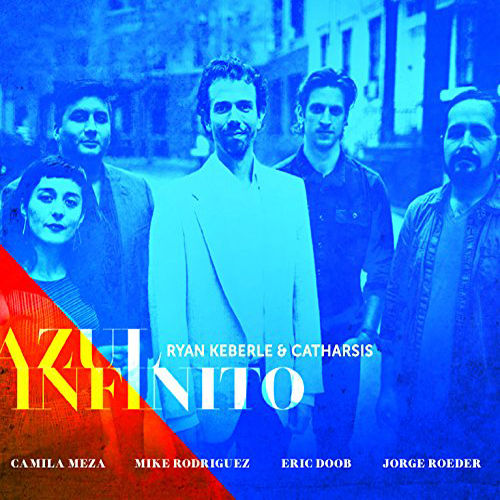
Ryan Keberle & Catharsis - Azul Infinito (Greenleaf Music) - Talk about a band that gets better with age and work, trombonist's Keberle's Quintet - Camila Meza (voice), Michael Rodriguez (trumpet, pandeiro), Jorge Roeder (bass), and Michael Doob (drums) - grows stronger and smarter with every release. This album pays tribute to the various groups the composer played with when he first moved to New York City, many of which played South American music. The presence of Ms. Meza (her second recording with the group) adds an extra voice and this music soars. The interaction of the brass throughout the songs is delightful while the rhythm section makes this music soar and sway.
Jeff Lederer - Brooklyn Blowhards (little (i) music) - Albert Ayler and sea shanteys, a name and a style of music you may have never thought would go together in your lifetime but saxophonist Jeff Lederer, a champion of Ayler's music, is fearless, adventurous, and has a great sense of humor. The Blowhards - Petr Cancura (tenor saxophone), Kirk Knuffke (cornet, slide trumpet), Brian Drye (trombone), Art Bailey (accordion) and the percussion trio of Allison Miller, Stephen LaRosa, and Matt Wilson (trap drums, ship's bell, chum bucket, chain) plus guitarist Gary Lucas (three tracks) and vocalist Mary LaRose (5 tracks) - make this mashup work. Noisy and great fun, play it loud! For more information, go to www.littleimusic.com. Here's the band in action:
Alan Ferber Nonet - Roots and Transitions (Sunnyside Records) - Trombonist, composer, and arranger Ferber leads this smallish "big band" through series of composition inspired by the birth of his first child. The Nonet has been together for five albums (several with expanded personnel) and here includes his twin brother Mark (drums), Matt Clohesy (bass), Bryn Roberts (piano), Nate Radley (guitar), Charles Pillow (bass clarinet), John Ellis (tenor saxophone), Jon Gordon (alto saxophone) and either Scott Wendholt (6 tracks) or Shane Endsley (2 tracks) on trumpet). The music often crackles with excitement but there are track with a quieter, contemplative edge. No matter the type of song, this is an excellent recording. For more information, go to www.alanferber.com. Enjoy this taste:
Adam O'Farrill - Stranger Days (Sunnyside Records) - Trumpeter and composer O'Farrill, son of composer, arranger, and pianist Arturo O'Farrill, released his debut (as a leader) with his brother Zach (on drums, with whom he has released two albums as co-leaders), saxophonist Chad Lefkowitz-Brown and bassist Walter Stinson. Loaded with smart melodies and excellent musicianship, this recording illustrates the trumpeter's commitment to making personal and accessible as well as adventurous music. The interactions between the four young musicians set off sparks throughout the program. For more information, go to www.adam-ofarrill.com. Here's the opening track:
Noah Preminger - Dark Was the Night, Cold Was the Ground (self-released) - Over the past several years, saxophonist Preminger has gotten deeply into the blues, Delta Blues in particular. This group - Preminger plus Jason Palmer (trumpet), Kim Cass (bass), and Ian Froman (drums) - made its debut with 2 long improvisations but this nine-song program shows a band getting comfortable with each other so they can explore this material in melodic and adventurous ways. The interaction of the trumpet and tenor sax sparkles throughout while the rhythm section creates a variety of moods. For more information, go to www.noahpreminger.com.
Sara Gazarek and Josh Nelson - Dream in the Blue (Steel Bird Music) - I wrote the following paragraph about this wonderful album: "Dream in the Blue" invites the listener in, makes him comfortable, makes him cry and smile and tap his feet and think about how the interactions of two talented people can open up so many possibilities. The lilt in and lift of the voice, the idea that a piano can be an orchestra or a solitary sound in a crowded lifetime, the lyrics that stir the heart, all that and more make this recording by Sara Gazarek and Josh Nelson so special." It's such a delightful program of standards and contemporary songs. Plenty of heart, lovely vocals, and intelligent piano, what a treat! For more information, go to saragazarek.com/duo/. Here's a swinging track:
Peter Eldridge - Disappearing Day (Sunnyside Records) - One of more expressive vocalists, a strong composer, solid pianist, and excellent educator, Peter Eldridge makes music for adults. This recording, his fifth as a solo artist, was built from his long-standing duo with bassist Matt Aranoff; the material features standards, pop songs (the version of Paul McCartney's "Jennie Wren" is a stand-out), and originals. Also impressive is his use of backing vocalists (people such as Jo Lawry, Laila Baili, Lauren Kinhan, Janis Siegel, and Alan Hampton all pitch at various times). Great music for early morning, late in the day, or any time you need a boost! For more information, go to petereldridge.com. Here's a poem by Robert Bly set to music by Mr. Eldridge:
Sara Serpa and André Matos - All The Dreams (Sunnyside Records) - Vocalist Serpa and guitarist husband Matos set poems to music, write original material for wordless vocals and guitars, drawing the listener to this world of quiet songs, stories, and intimate interactions. The only other voices on the CD are the synthesizers of Pete Rende and soft percussion of Billy Mintz yet there is no filler or extraneous sounds - everything one hears is in the service of the song. The gentle quality of the music and the performances often give the program a feel of folk music but there are myriad influences.
For more information, go to serpamatos.com. Here's a lovely track set to the words of poet Fernando Pessoa:
Bryan Nichols - Looking North (Shifting Paradigm Records) - Back in July I write the following words about this album: "Looking North" is music that allows the listener to relax, to listen, to create images, to enter a musical world where melody is much more important than technical prowess. This is not music for the car but can be played when the sun shines through the window in the morning or as the moon rises in the late winter afternoon. or after the children go to sleep. If you like solo piano music that forgoes "standards" but has its foundation in folk song, blues, and contemporary music, yet sounds quite original, it's all here in the music of Bryan Nichols." Returning to the program after several months, the music still sounds rich, heartfelt, and so alive. For more information, go to www.bryannichols.org. Here's a lovely ballad from the program, one that sounds influenced by Erik Satie:
Denny Zeitlin - Early Wayne: Explorations of Classic Wayne Shorter Compositions (Sunnyside Records) - Most of the songs on this delightful solo piano journey hearken from Wayne Shorter's tenure with Miles Davis and solo recordings on Blue Note. Dr. Zeitlin explores this music with his usual curious nature, playing with rhythms and moods but with great respect for the melodies. The ballads are emotionally strong, the faster pieces have strong foundations, and the solos within the songs glisten with creativity. Recorded in front of a live audience, this album is a joyous tribute to a man, his music, and his vision as well as a reminder how one can be with respectful and creative. For more information, go to www.dennyzeitlin.com.
Here's a classic Miles Davis Quintet work that is such an aural delight:

 Posts
Posts


 Drummer and composer Matt Wilson has had a life-long interest in the work of Carl Sandburg. Born and raised in Knoxville, Ohio (the town to the west of Galesburg, the drummer's great-great aunt was married to the poet's first cousin - there is a picture in the album's booklet of Matt's father Tom with that cousin (Uncle Charlie). For those who have followed Matt Wilson's career know that his first album as a leader, "As Wave Follows Wave" (1996 on Palmetto Records) is named for a Sandburg poem. In 2001, he received a grant from Chamber Music America to create a program of original songs that featured selected works of Sandburg. He put together a quartet with saxophonist and clarinetist Jeff Lederer, guitarist and vocalist Dawn Thomson, and acoustic bass guitarist Martin Wind. Cornetist Ron Miles joined the group along the way and in October of 2016, the ensemble, now dubbed Honey And Salt (yes, named for a 1962 collection of the poet's works), gathered at engineer Matt Balitsaris's studios on Maggie's Farm, and the results "Matt Wilson's Honey and Salt: Music Inspired by the Poetry of Carl Sandburg" is the drummer's ninth album for Palmetto.