Showing posts with label bassist-led ensemble. Show all posts

Friday, January 7, 2022

From the Bass Upwards & Onwards!

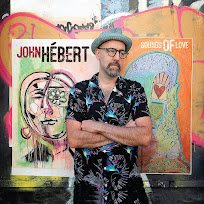
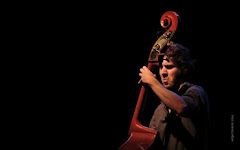
Photo: Antonio Porcar Cano
Bassist John Hébert, a native of New Orleans, LA, has made his home in New York City for the past quarter-century-plus.  He's been the foundation in groups led by Andrew Hill, Lee Konitz, Kenny Wheeler, Paul Motian, Tomasz Stanko, John Abercrombie, Fred Hersch, Mary Halvorson, and so many more.  As a leader, he's issued albums on Firehouse 12 Records, Clean Feed, and Sunnyside.  Hébert has co-led a number of ensembles as well as appearing on a slew of albums in the past decade.  He has a great tone, his bowing is superb, and his compositions intelligent.

His third release for Sunnyside Records, "Sounds of Love", was recorded live in Lugano, Switzerland on March 27, 2013.  Hébert leads a most interesting lineup –– pianist Fred Hersch, alto saxophonist Tim Berne, cornetist Taylor Ho Bynum, and drummer/ percussionist Ches Smith –– in a six-song set that includes four  originals as well as two classics from the pen of the great bassist, Charles Mingus. The longest piece on the program (12:31) is Mingus's "Duke Ellington's Sound of Love" which opens with Hébert in a conversation with Smith. They dance around each other for 90 seconds before the percussionist drops out and the bassist goes on alone for another three minutes. The band, sans Berne, enter with Bynum playing the theme and Hersch harmonizing around him.  The alto saxophonist takes over the theme for several lines before he and Bynum play the theme in harmony.  Hersch steps out for a sparkling solo then Bynum creeps in for a delightful turn, softly twisting his lines around the bass and piano as his cornet moves into and out of the melody.  Berne returns to play the melody while Hersch dances like a sprite beneath him.  

Photo: Western Michigan Univ.
The other Mingus tune, "Remember Rockefeller at Attica",  opens with Bynum squeezing harsh notes out of the cornet with the alto sax in the background.  Smith enters, Bynum exits, there is now even more urgency in the piece as the drummer slowly but steadily builds his solo. Smith pushes the song into the "hard-bop" gear, the rest of the band enters and it's off to the races.  Berne jumps out in front and into a conversation with Hersch and Smith while Hébert keeps the song on track.  Bynum is next, with notes exploding out of the cornet then stepping aside for the piano solo.  If you are used to the more melodic side of Fred Hersch, he can really "get down" when the music calls for it.

This is not to take away from the leader's music. "Constrictor" opens the album with Bynum, his muted cornet shouting at the audience until the rest of the band quietly enters. He keeps rolling while Smith and Hébert scramble beneath him.  Berne enters and the music begins to take shape with a regular pulse. Smith's rollicking drums opens "The Blank-Faced Man" until the bassist's rapid-fire lines actually lowers the intensity. The rest of the band enters as if playing a second prologue untill the bottom falls out for a solemn interaction between alto and bowed bass.  When Hersch reenters, his dream-like reverie plus the overtones coming from the bass lay the foundation for a handsome Gamelan-like melody played by alto sax, cornet, and percussion.

"Sounds of Love" ends with "Frivolocity" – Hersch leads the band with another delightful solo turn before the rhythm takes on a quasi-Caribbean feel.  Playful solos by Smith and Bynum, together and separately, play off the lively stop-start rhythm with a quick turn to a ferocious "walking" tempo. The song goes back and forth rhythmically with a short return to the theme and then out.  

Not sure why this music nearly nine years to an album release but, be that as it may, this is an excellent album.  John Hébert is not only a fine musician but knows how to shape compositions so that they have a personality of their own. It hurts not one bit that his comrades-in-music are also great players and able to move through the music with creativity and wit. 

For more information, go to www.johnhebert.com.  To hear more and to purchase the album, go to https://johnhebertbass.bandcamp.com/album/sounds-of-love

Dig into "Frivolocity":


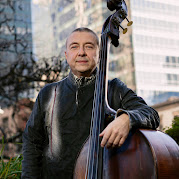
Photo: Anna Yatskevich
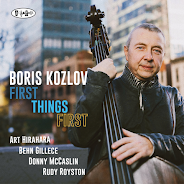
In the midst of Summer 2020, bassist and composer Boris Kozlov went into the studio for Posi-Tone Records producer Marc Free and mixing/mastering engineer Nick O'Toole with pianist/ organist Art Hirahara, drummer Rudy Royston, and vibraphonist Behn Gillece plus guest artist Donny McCaslin (tenor sax, alto flute).  The musicians spent four days recording a slew of songs resulting in albums released in 2021 from the pianist ("Open Sky") and vibraphonist ("Still Doing Our Thing").  Kozlov, who many jazz fans know as a top-notch accompanist on both acoustic and electric bass, now has issued the third album from those sessions –  "First Things First" (Posi-Tone Records) is actually the bassist's first for the label and second as a leader (which amazes this writer as Kozlov has appeared on so many albums). 

McCaslin's "Page One" opens the program. After a sombre piano, bowed bass, and vibraphone entrance, Royston and Kozlov kick the band into high gear with an energy level that rises from the rhythm section up. Gillece's solo, playing off the thick piano chords gleefully rolls forward until Hirahara takes over with his own joyous romp. The leader's finger-snapping solo follows goosed on by Royston's thunderous drums. McCaslin takes the piece out on the original melody. He trades his tenor sax for flute, Kozlov his acoustic for electric bass, for the bassist's "Flow", a lovely ballad sans piano and Royston on hand percussion.  Later in the program, McCaslin returns to the flute with the pianist moving to organ for the leader's "Once a Fog in Brooklyn", a medley of Russian folk tunes Kozlov remembers from his youth. McCaslin returns to tenor for his solo over the pattering drums and burbling organ. The exciting ending has such an uplifting and infectious feel. 
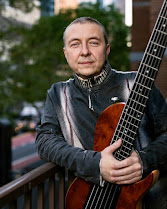
Photo: Anna Yatskevich
There is so much to like on this album. Kozlov's lovely ballad, "Aftermath", with its rippling piano and vibraphone phrases plus emotionally rich tenor sax.  McCaslin's "Second Line Sally" brings the band (minus Gillece) and the listener down to New Orleans.   The burbling organ, popping bass lines, and ever-so-funky drums hearkens back to the music of The Meters while the tenor sax dances out in front. Kozlov's overdubbed electric bass solo is so guitar-like, it's uncanny.  "Warm Sand", with its full piano chords and soft vibraphone, may remind some of Herbie Hancock and Bobby Hutcherson in those artists recordings for Blue Note. Gillece's "Mind Palace" opens quietly with the flute, vibes, and electric bass playing in unison as Royston roils beneath them –– the music goes into a series of fiery stops-and-starts before the tenor sax jumps atop atop the thrashing drums and deep, throbbing, bass lines.  The musical confection is topped by an exciting drum that leads the song to a quick exit.

After listening to "First Things First" several times, a number of thoughts became clear: 1)- what a great ensemble; 2) - how great the music sounds; and 3) - one hopes Boris Kozlov makes albums as good as this one on a regular basis. Dig in and dig this music!

For more information about the bassist, go to https://vpa.syr.edu/people/boris-kozlov/. "First Things First" will be released on 1/21/2022. 
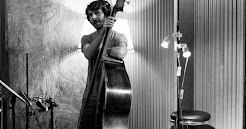
Bassist, composer, and author Gui Divignau, born in France and raised in Brazil, has slowly but steadily making inroads into the US jazz scene.  He first came to North America to study at Berklee College and, upon graduating, headed to Paris and to Portugal before returning to Sāo Paulo to lead his own groups as well as play in others.  He came back to the US to study at New York University where he encountered Drew Gress, Billy Drummond, Billy Drewes, and others plus did private study with Ron Carter.    

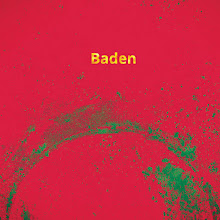
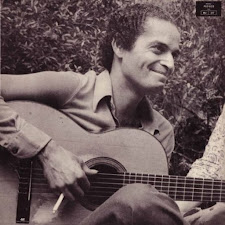
Duvignau's American debut album, "3,5,8", was issued last January by Sunnyside Records. The recording, all original pieces, featured saxophonist Drewes, drummer Jeff Hirschfield, pianist Santiago Liebson, and German guitarist Elias Meister.  For his second Sunnyside release, the bassist pays tribute to one of his Brazilian influences, the guitarist and composer Baden Powell (1937-2000).  "Baden" features Drewes, Hirschfield, and Lawrence Fields (piano, Wurlitzer) plus guests Bill Frisell (electric guitar on four tracks), and mentor Ron Carter (bass on one track).  The 12-song program features nine tunes (including one two-song medley) from Powell, four by Duvignau, and a two-song medley for the leader and Mr. Carter (one by the bassist, the other "Asa Branca" composed by Luiz Gonzaga & Humberto Teixeira).  

Photo: Edgar Tavares
The album opens with three songs from Powell and one of his most prolific co-writers, lyricist Vinicius de Moraes (1913-80).  Guitarist Frisell joins the ensemble for lively samba "Canto de Ossanha" and the more somber ballad "Tristeza e Solidāo" – the latter track, sans Drewes and Fields, may remind the work the guitarist has done with Paul Motian. The first original on the program, "Ao Baden", has a delightful melody and sweet interaction between the acoustic piano and bass before Drewes enters on alto sax. Notice also the fine connection between the bassist and the active brushes work of Hirschfield especially beneath the fine piano solo.  

Photo: Baden Powell 1970s
There's a strong hint of the blues and bossa on "O Astronauta" – you can hear it in the bass lines as well as the Stan Getz-like lines of Drewes on tenor sax.  It's a more "down home blues" presence that is quite evident on the two-song medley ("Bluesa Preta/ Asa Branca"), the duet for Maestro Carter and Duvignau. Both musicians have a lovely tone and articulate their notes so well, it's a pleasure to hear them together. A sense of mystery fills the music of "Canto de lemanjá", an ode to the Afro-Brazilan goddess of the sea, also known as Janaína.  The saxophone plays the gentle melody while the bass and Wurlitzer piano offer counterpoint.  Drewes and Fields solo over Hirschfield's steady beat, pushing the piece forward before the musicians return to the gentle opening.  The bassist imitates the one-string berimbau (overdubbing hand percussion) on the first half of the two-song solo medley that pairs the song with the instrument's name with "Consolaçāo",a song named for the central district of Sāo Paulo. The performance is quite beautiful and moving.

The album closes with Duvinau's piece "For Bill & Baden" which opens with a melody influenced by Thelonious Monk and the blues.  Pay attention to Fields piano below Frisell's delightful solo as well as during Drewes exuberant soprano sax spotlight – the pianist rises above the rhythm section for a fine ramble. It's a sweet close to a very pleasurable listening experience.  

Hopefully, Gui Duvignau, with his explorations of the music of Baden Powell, will pique people's interest into checking out the Brazilian genius.  To his credit, Duvignau truly shares the spotlight with his ensemble through the 74-minute program while still showing off how melodic and supp ortive a musician he is.  "Baden" is quite good!!

For more information, go to www.guiduvignau.com.  To purchase this album, which will be issued on 1/21/2022, and others by the bassist, go to https://guiduvignau.bandcamp.com/

Here's the bassist's "Mata Adentro":

Wednesday, January 20, 2021

The Sunnyside of the Stream (Pt 1)

Upon graduating from Ohio State University in 1986, pianist and composer Russ Lossing moved to New York City. Over the decades, he has played and recorded with drummer Paul Motian, cornetist Kirk Knuffke, saxophonists Loren Stillman and John O'Gallagher plus many others.  As a leader, he has recorded for HATOLOGY, Clean Feed, Fresh Sound, and Sunnyside Records.  His music, while influenced by Thelonious Monk, Andrew Hill, and the afore-mentioned Motian, is wide open, leaving plenty of room for his collaborators to speak their own piece.

"Metamorphism" (Sunnyside Records), though recorded in 2017, sounds fresh and timeless.  Joined by Stillman (alto and soprano saxophones), John Hébert (bass), and Michael Sarin (drums) –– all long-time associates –– most of Lossing's eight original pieces flow with serenity from one to another. Yet, there is intensity in how the musicians move towards and away from each other, how the solos rise up and make the listener aware that the music is not about technique but has emotional depth.  The program opens with a percussive piano figure leading the rhythm section in with each musician playing elements of the melody.  When the alto sax and piano play the main theme, one hears a Middle Eastern-influenced melody. Notice how the rhythm section stops and starts, how they create a dialogue with the piano and sax, especially during the solos. 

Photo: Clara Pereira
The title track, the longest on the recording at 12:25, is dedicated to Paul Motian.  The sparse opening moments recall Lossing's long relationship to the late drummer-composer, the piano presenting the melody before the bass and drums enter. Stillman plays soprano sax here, his long tones rising above the spare accompaniment.  Slowly, steadily, the intensity ramps up with Lossing and Stillman weaving mini-rhapsodies around each other. Listen below to how the melody is moved back out front in the last moments of the performance.  There are moments that the music reminds this listener of the Keith Jarrett American Quartet on the 1970s - 80s (of which the late Mr. Motian was a member).

Photo: Chris Drukker
Another longer track (9:31), "Blue Horizon", is dedicated to Andrew Hill.  The music moves slowly, has a mysterious feel, yet one feels you can hear the band communicating with each other.  The shortest track (2:35), "Pileatus", serves as a spotlight for Sarin's powerful, melodic, drums.  The melody is percussive with the bass, piano, and soprano sax playing in unison. The funky "June Jig" dances forward on the drums and Hébert's rich bass work.  Lossing sits out during the alto solo so one can really hear how Stillman interacts with Sarin and how the bassist complements them. "Canto 24" closes the album; again all four musicians state the theme before the solo section is a series of encounters, responses, reactions, and counterpoint.  As the music moves forward, the quartet is responding to each other in such an organic fashion.

"Metamorphism" is an adventurous collection of pieces that never boils over nor lapses into cliches.  The listener can hear how comfortable the musicians are with each other, allowing themselves to be continually challenged by the compositions of Russ Lossing.  There's little clutter in the sound, the articulated piano notes stand out as do all the "voices" of the quartet.  This album deserves to be listened all the way through each time to appreciate the beauty and the humanity the music contains. 

For more information, go to www.russlossing.com.  To purchase the album, go to https://russlossing.bandcamp.com/album/metamorphism.

Here's the title track:


Born in France but raised in Brazil, bassist and composer Gui Duvignau has led a fascinating life. His first musical interest was "heavy metal" but he soon discovered the bass work of Ron Carter (with the "classic" Miles Davis Quintet), Jimmy Garrison (with the John Coltrane Quartet), Jaco Pastorious, and Charles Mingus.  He also explored the delights of Brazilian composers and performers.  The bassist moved to the United States to attend the Berklee College of Music and on to Portugal and Paris, France for several years.  While living there, the bassist co-led an ensemble with vocalist Sofia Ribeiro; they released an album, "Porto", is 2010. His debut as a leader, "Fissura", was also recorded in France (2014) and issued on a Brazilian label in 2016.  Duvignau then moved to New York City to study at NYU's Steinhardt School of Culture, Education, and Human Development.  There he met Argentinean-born pianist Santiago Leibson who introduced him to drummer Jeff Hirshfield and they created a trio.  
 
His American debut, "3, 5, 8" (Sunnyside Records),  features Leibson and Hirschfield plus, on several tracks, Billy Drewes (tenor saxophone) and German guitarist Elias Meister.  The nine-song program, all composed by the leader, opens with two trio tracks, "Volta" and "'2'".  The former is a ballad with a folk-like melody, moving forward in the style of the late Paul Motian.  Leibson's rippling piano lines rise above the counterpoint of the bass and the conversational drums.  Duvignau leads the way on the latter tune, also one with a folk-like melody, that turns towards swing especially during the delightful piano solo.  Later in the program, the lovely ballad "Une Pensée Pour Paris", is notable for the melodic bass solo, Leibson's emotional piano phrases, and Hirschfield's artistic brushwork.  The delightful "Vem Logo!" ("Coming Soon") is a sweet romp for the trio. Opening with a strong bass solo, the pianist follows with a solo built on a chordal progression that is continually and melodically mutating.  

Photo: Thibault Della Gaspera
Drewes and Meister first join the trio on the atmospheric ballad "Yerevan".  The piece, composed for the bassist's girlfriend, pushes forward on the insistent bass and piano with both the saxophone and guitar echoing the melody line.  Near the close of the tune, Drewes creates a fiery solo with Meister's distorted guitar and the pianist's flowing lines serving as counterpoint.  "Minas", inspired by Duvignau's first home in Brazil, opens with a handsome bass solo –– after a quiet start, Leibson leads the band into a samba rhythm over which the saxophonist creates a powerful, driving, solo. The bassist composed the dancing "Detuned for Drewes" to tap into the saxophonist's playful side and the quartet get into a sweet groove.  Meister stands out on the raucous, blues-drenched, ballad "Somewhat", showing the influences of Ben Monder and Bill Frisell. His guitar lines sting, roar, and moan opening the door for a hard-edged tenor sax solo.  

"3, 5, 8" serves as a delightful introduction to the musical worlds of bassist and composer Gui Duvignau.  While the music he created for his fellow musicians gives the leader plenty of opportunities to solo, he all also leaves room for everyone else to shine.  And they do!  With music this good, one is excited to see where the bassist goes from here.  

To learn more, go to www.guiduvignau.com.  Go to https://sunnysiderecords.bandcamp.com/album/3-5-8 to hear one track and to purchase this music. 


Monday, August 24, 2020

Revealing Stories & Prevailing Winds

Photo: John Marolakos
In the months that have passed since "Dialogues on Race, Vol. I" (self-released) was initially supposed to be issued (March 17, 2020), so much has happened that speaks to the topic. The two-disk set is an expansive treatise on race relations in the United States told using music, spoken word, and poetry composed and curated by bassist Gregg August.  COVID-19 came to this country, with people of color being affected more than others, then the discovery of the killings of Ahmaud Arbery and Brionna Taylor plus the televised execution of George Floyd, and the continuation of a brutally bitter and divisive Presidential campaign. The United States has been violently shaken and those tremors continue.

Depending on which song you listen to, you might think this album is a celebration of Black Culture, of the music that inspires the 21 musicians to play from the heart.  And, it is. Whether it be the somber opening of the first track "Sherbet (just to be certain that doubt stays on our side of the fence)" which breaks into a raucous dance to the swinging middle section of "I Rise" (based on the Maya Angelou poem of the same name) to the dancing rhythms of the final three tracks.  "Sweet Words on Race" (based on a poem by Langston Hughes) is a Latin-flavored "shout" tune,  the foppish "The Bird Leaps" (inspired by Ms. Angelou's "The Caged Bird Sings"), and the most-hands-on-deck jump tune "Blues Finale", this music would not sound like it does without the inspiration of Duke Ellington, Count Basie, Charles Mingus, Thad Jones/ Mel Lewis, Chico and Arturo O'Farrill, and other musical giants.  The pieces mentioned and several others in the 12-song program speak to the power created by this music, how the music takes one out of the everyday and makes your body move.

Photo: Kaelen Burkett
The centerpiece of the album is the commemoration of the life and death of Emmett Till (the 65th anniversary of his death is 8/28/20) plus the celebration of the work his mother Mamie Till Mobley (1921-2003) did throughout her life to shed life on his torture and lynching. There are three "statements" of "Your Only Child": "First Statement" features Frank Lacy singing an excerpt from Marilyn Nelson's "A Wreath for Emmett Till" ("Sonnet V" - read here) while "Second Statement" is a bass solo from the leader, and the "Third Statement" features the seven string players, tenor saxophonist JD Allen, and the voice of Shelly Washington singing the Nelson excerpt. The track that precedes "Third Statement" features the voice of Ms. Mobley––the music is solemn, her voice electronically altered, but the words sear into your brain as it describes when the bereaved mother saw when she opened the coffin.  Her words are graphic, stunning, and serves to remind one that the kind of treatment her 14-year old son received has been happening to Black people since their forced arrival in the United States.

There is plenty of music to be heard when listening to "Dialogues on Race, Vol. I" but you really have to read and listen to the words. Music should entertain us, we often listen to block out the b.s. When you look back at music, no matter what country, no matter what time, composers and performers strove to tell stories and educate their audience (especially music created by the lower and middle classes). The music of Gregg August reflects the sounds of a movement sparked 160 years ago by Frederick Douglass (and his love the possibilities of the Constitution of the United States), stoked by the likes of Zora Neale Houston, Langston Hughes, Amiri Baraka, Ishmael Reed, Marilyn Nelson, and today by Claudia Rankine, Colson Whitehead, Ta-Nehisi Coates, Ibram X. Kendi and many more.  Timely music for unseemly times––listen and pay attention.

For more information, go to www.greggaugust.com.  To listen to more and to purchase the album, go to https://greggaugust.bandcamp.com/album/dialogues-on-race.

Here's the powerful "Letter to America"( based on a poem by Fransisco Alarcón):


Personnel:

John Ellis, soprano saxophone
Bruce Williams, alto saxophone
JD Allen, tenor saxophone
Ken Thomson, bass clarinet
John Bailey, trumpet / flugelhorn
Rafi Malkiel, trombone / euphonium
Marcus Rojas, tuba
Luis Perdomo, piano
Gregg August, bass / composer
Donald Edwards, drums
Mauricio Herrera, congas / shekeréb / castanets (tracks 1, 2, 3, 10)
Frank Lacy, vocals (tracks 3 and 12)
Shelley Washington, vocals (track 9)
Forest VanDyke, vocals (track 7)
Leah Asher, violin (track 9)
Lena Vidulich, violin (track 9)
Yuri Namkung, violin (track 9)
Johnna Wu, violin (track 9)
Wendy Richman, viola (track 9)
Brian Zenone, viola (track 9)
Madeline Lafayette, cello (track 9)
Wayne Smith, narrator (track 2)

Photo: Eric Antoniou
Vocalist, composer, pianist, and reed player, Mehmet Ali Sanlikol, born and raised in Turkey, began his piano studies with his father when he was very young––in fact, he gave his initial piano recitals at the age of 5.  Later on, after his studies with Turkish pianist and composer Aydin Esin, Sanlikol came to the United States to study at the Berklee College of Music where he came in contact with Herb Pomeroy plus went on to work with artists such as Bob Brookmeyer, Billy Cobham, Anat Cohen, Antonio Sanchez, and Dave Liebman. Plus, he created his own label, Dünya Productions, to document his music and other work.  It was NEA Jazz Master Liebman who, in 2017, commissioned Sanlikol to create a piece for his soprano saxophone and large ensemble.

The commission has resulted in "The Rise Up; Stories of Strife, Struggle, and Inspiration" (Dünya), credited to Mehmet Ali Sanlikol & Whatsnext? Featuring Dave Liebman. The music, composed and arranged by Sanlikol, posits the soprano saxophonist in he midst of a 22-piece orchestra (see personnel below). The program features three three-part "Suites", each telling its own story. Suite #1,"Rumi", the "pen name" of 13th Century Sufi  poet Mevlana Celaleddin, opens with a traditional song ("The Sun of Tabriz") that features the ney flute followed by Mr. Liebman's soprano that leads into "A Vicious Murder", the darbuka drum ushering the sections in (a hint of Gil Evans "Sketches of Spain" sounds in the brass and reeds plus a lovely reading of the time by the oboe of Mary Cicconnetti) that opens in a whirling dervish of a soprano sax solo.  The final section, "Rumi's Solitude", takes a deliberate pace with the traditional flute and soprano playing in unison before various voices within the ensemble share the melody. After a handsome soprano solo, everyone drops out as the composer steps up to sing a plaintive melody based on a Rumi poem.  This coda is deeply emotional and highly effective.

The second suite, "Sephardim", is named for the Jews expelled from Spain in during the Inquisition but taken in by the Ottomans where the two cultures began a long and fruitful collaboration.  The combination of Middle-Eastern rhythms with a traditional  Sephardic/ Ladino melody is introduced in the first movement, "Spain, 1492" celebrating the time Jews lived and flourished on the Iberian Peninsula while the next section, "Temmuz" ("July" in Turkish) has a martial beat over which the sections play a recurring pattern of phrases.  The various "voices" rising up out of the ensemble speaks to the urgency of those fleeing Spain on their way to a new home. As the piece continues, the focus changes to illustrate the sounds the refugees heard as they entered the Turkish territories including the Muslim call to prayer. The final section, "A New Land, A New Music", combines the traditional Ladino music heard earlier with the oud and percussion showing how various elements can create new sounds.

The third and final suite is titled "Sinan", the story of an Orthodox Christian boy who was abducted by the Ottomans early in the 16th Century––he adopts the Muslim faith and becomes an architect for several of the world's finest mosques.  One hears a male choir singing the "Kyrie Eleison" but as the voices chant, a marching band enters playing a somber traditional melody, the blare of the reeds and the dissonance of the horns giving the music a dark feel. The next section, titled "Rise Thru The Barracks", swings heartily not unlike a Duke Ellington piece with a rollicking solo from Mr. Liebman. The suite and the album ends with a sweet ballad, "The Owl Song", that builds like one of Maria Schneider compositions until the horns and brass are caressing the melody and the harmony, culminating in a call-and-response with the soprano saxophonist.  The music is forceful but not frantic, more about the melody than the rhythm.

"The Rise Up" is such a fascinating journey, a splendid mixture, with a such a panoply of sounds as well as melodies based on traditional music.  Mehmet Ali Sanlikol played to his strengths as a musician, composer, and arranger, giving Dave Liebman an excellent showcase for his powerful, musical, soprano saxophone. The ensemble, Whatsnext?, features a large number of Boston-area musicians who play with power and elegance.  The stories on this album are timeless and speak to the truths of human existence.  Give this music a good listen!

For more information, go to www.sanlikol.com. To hear more and purchase the album, go to https://dunya.bandcamp.com/album/the-rise-up-stories-of-strife-struggle-and-inspiration.


Personnel:

Mehmet Ali Sanlikol - voice, ney, zurna, ud
Dave Liebman - soprano saxophone
Mary Cicconnetti - oboe, English horn
Rick Stone - alto + soprano saxophones, flute
Mark Zaleski - alto saxophone
Rick DiMuzio - tenor saxophone, clarinet
Aaron Henry - tenor saxophone, clarinet
Melanie Howell Brooks - baritone saxophone, bass clarinet
Rebekah Lorenz - French horn
Mike Peipman, Jeff Claassen, Sam Dechenne, and Jerry Sabatini - trumpet, flugelhorn
Bulut Gülen, Chris Gagne, and Bob Pilkington - trombones
Angel Subero - bass trombone
Bill Lowe - tuba
Utar Artun - piano
Fernando Huego - bass
Bertram Lehmann. drums, tam tam
George Lernis - percussion
Five voice choir led by Spyridon Antonpoulos

Ken Schaphorst - conductor


Here's "A Vicious Murder" from the "Rumi" suite:


Thursday, February 27, 2020

Leading From The Bass

Bassist and composer Dan Loomis (Wee Trio, Joel Frahm Trio) has a story to tell that's a Biblical tale of an old adage "Why do bad things happen to good people?"    The bassist, who is one of the more melodic players on the contemporary scene, retells the story of Job, a righteous man, wealthy, with a big family, who is put to the test by an angel (in the Hebrew Bible, it's an angel while in the New Testament, it's Satan). Job loses everything bu, despite the severity of his losses, never gives up his faith.  In the Old Testament, he does not confront God but, in the New Testament, Job gets an audience with God to whom he reiterates his unbroken faith. His wealth is returned, he creates a new family, and lives a long life.  The Old Testament is filled with stories such as this where a mortal's faith is tested (Abraham's binding of Isaac, Moses and the Israelites in Egypt and wandering through the desert).  

Loomis has taken the true believer's story and created "Job's Trial: A Jazz Song Cycle" (self-released). To tell the story, the bassist has assembled a group that includes the voices of Yoon Sun Choi and Song Yi Jeon, guitarist Jeff Miles, drummer (and close friend) Jared Schonig plus narrator Daniel Breaker ("Shrek: The Musical" and "Hamilton"). Breaker's delightful voice (deep and sonorous, filled with humor and wonder) is heard telling the story during the various  "Interludes" (the 7 tracks all have titles) while the full songs have the vocalists singing Biblical text plus wordless improvisations.  The music ranges from the bouncy "Abundance Overture" to the sweet then raucous "Naked Turn" to the dissonant blues of "Blood Groove" and on to the sweet prayer "Dear Lord" that closes the story and the album.

YouTube
Everyone plays his or her role with relish and joy.  Miles's guitar often creates great swells and harsh sounds while the elasticity of the vocalists not only illuminate the words but also serve as counterpoints to the instrumentals (on "Words Without Knowledge", the voices bring to mind the expansive vocals of Fay Victor).  There is drama and excitement in this music that often comes from Schonig's expressive drum work.  Loomis is such an expressive and melodic bassist; his solos stand out plus his interaction with Miles beneath Breaker's narration is playful.

You do not need to be religious to enjoy "Job's Trials."  Listen with an open mind and open ears. Dan Loomis looks for the truth in this story and translates it in ways we can appreciate, so pay attention!

For more information, go to www.danloomismusic.com.

Give a listen:


Bassist and composer Mark Godfrey, a native of Canada, has been a presence on the Toronto jazz scene since graduating from the much-acclaimed University of Toronto Jazz Program in 2006.  He's received numerous awards through his young career including a 2015 grant that helped him spend extended time in New York City studying with bassists Scott Colley and Matt Brewer.  In 2009, he was co-founder of Pram Trio and released two recordings with that group including 2016's "Saga Thirteen." That same year, Godfrey assembled his own Quartet with Allison Au (alto saxophone), Chris Pruden (piano), and Nick Fraser (drums) – that group issued its debut EP "Prologue" in September of 2018.

Also in 2018, Godfrey added tenor saxophonist Matt Woroshyl to the ensemble and recorded the group's first full-length album.  "Square Peg" (self-released) features 10 original songs for which the bassist creates memorable melodies and many opportunities for the individual members to interact and produce fine solos. The blend of alto and tenor plus the powerful piano over an active rhythm section makes this music exciting from the start.  Listen to how the rhythm section works beneath the soloists, attentive to every move, change in timbre and intensity.  Godfrey is the foundation on every track save for the final cut, "Bucket List", which is a solo bass piece; his solid accompaniment opens the door for Fraser and Pruden to move with each piece, whether supporting the soloist or really pushing them forward.

The program opens with "Black Stars", a piece with a theme that pairs the saxophones playing a melody in harmony. There's a bit of studio wizardry at the end but, before that, the song is impressive for both the melody and flow.  The title track builds off its melody with an ascending bass line, Fraser's dancing cymbal work, and an "airy" sound that is hypnotic. Pruden, who cites Keith Jarrett, Oscar Peterson, and Herbie Hancock as influences, plays with open ears, creating solos that moves in many directions – he does just that here, playing two-fisted. words tentinkling in the highter register of the piano. As the program rolls forward, each member of the ensemble gets the opportunity.  Woroshyl's quiet, soulful, intro to "One Game Away From The Winter" moves into a handsome ballad; the first solo is from Ms. Au and glides easily over the rhythm section. A fine bass solo follows then the two saxophonists weave melodic lines around each other until the gentle finish.  Pruden leads the way into "Driving Westbound", a piece that evokes the open ranges that the Trans-Canada Highway offers as one moves away from the more populated Eastern provinces.

Before the album closes with the afore-mentioned solo bass track, the quintet dances its way through "McDuff", the saxophonists sharing the melody while the piano dances around them and the rhythm section pushes the music forward.  It brings a lot of joy just to sit back and this music wash over you;  "Square Peg" sounds great, the solos are impressive as is the work of the rhythm section (Nick Fraser keeps one's attention throughout as does Chris Pruden).  Mark Godfrey is a strong bassist but more impressive are his compositions.  These songs have intelligent melodies, smartly articulated by saxophonists Allison Au and Mark Woroshyl and that makes one want to reenter this musical atmosphere again and again.

For more information, go to www.markgodfreybass.com.

Mr. Godfrey, who drives a mini-van like the ones on the album cover (got to have room for the double bass), offers up the following track:


Bassist, producer, and engineer Paul Bryan is, perhaps, best known for his production work for Aimee Mann and guitarist Jeff Parker plus playing bass and/or keyboards on recordings by Mighty Sam McClain, Norah Jones, Betty LaVette, Sam Phillips, Meshelle Ndegeocello, and others.  He's toured with Lucinda Williams, Rufus Wainwright, and Ms. Mann.  He's worked extensively with guitarist Parker, producing and engineering his 2016 album "The New Breed" and co-producing, engineering, mixing, and performing on the guitarist's new "Suite for Max Brown" recording.

"Cri$el Gems" (self-released) is Paul Bryan's first album under his own name in nearly 17 years.  Besides Jeff Parker, the band is composed of Lee Pardini (electric piano), Matt Mayhall (drums), Davey Chegwidden (congas), and Jay Bellerose (percussion. Bryan's electric bass is prominent in the mix as are Mayhall's drums but not to the detriment of the other instruments.  The grooves are deep throughout the album yet Bryan's melodies stand out.  Dig the swampy funk of the opener, "Phife"; note how the leader and the drummer lock in and create a cushion of the guitar and piano to improvise.  "Tilt Shift" has a melody line that brings Steely Dan to mind but is a multi-tempo musical adventure that bounces along thanks to Mayhall and Chegwidden. Parker's guitar work shines throughout the program while Pardini is his equal.  There's a touch of Frank Zappa in the sounds and melody of "Lucky Thirteen" – Bryan's solo comes over "ticking" drums and Bellerose's shaken percussion.

YouTube
The 8-song program includes two handsome ballads.  "It's So Easy to Die" is oh-so-slow with a touch of blues. Parker's guitar support has the feel of the work done at Stax Records or in Muscle Shoals, AL, in the 1960s. Pardini caresses the melody and produces a heartfelt solo. After that, the music takes a bit of a left turn as the drummer solos beneath the rippling piano before a shot reprise of the opening.  The album closes with "TV Baby"; this time, Pardini and Parker share the leisurely melody line. Again, it's the pianist who solos and he has a bit of distortion with note-bending as the bass and drums play steadily below him.  Parker's spare chords also stand out, sweet and soulful.

"Cri$el Gems" is a pleasing selection of soulful instruments that are not "smooth jazz" but offers much to listen to and absorb.  If you're a fan of the past several Jeff Parker albums, you'll enjoy his work here as well. Make sure to pay attention to what Lee Pardini and Matt Mayhall bring to the session.  Kudos to Paul Bryan for creating a program that is soul-satisfying!

For more information, go to www.paulbryan.us.

Here's one of the ballads mentioned above:

Tuesday, January 21, 2020

New Ideas for The New Decade

Photo: William Brown
Pianist and composer Theo Hill, a native of Albany NY, continues to mature with every gig and every recording.  A graduate of SUNY/ Purchase, he's been on the New York City scene for the past 16 years performed with numerous ensembles large and small. He's currently the pianist in the Mingus Big Band; thanks to his association with Posi-Tone Records, he has recorded with trombonist David Gibson, saxophonist Sam Dillon, and is a member of the sextet New Faces.  Hill has also recorded with trombonist Frank Lacy, trumpeter Josh Evans, and saxophonist T.K. Blue.  His 2014 recording debut as a leader was "Live at Smalls" featuring a quintet of saxophonists Dayna Stephens and Myron Walden plus bassist Joe Sanders and drummer Rodney Green.

"Reality Check" is Hill's third recording for Posi-Tone.  Featuring an excellent trio of young musicians including Joel Ross (vibraphone), Rashaan Carter (acoustic and electric bass), and Mark Whitfield Jr. (drums).  The 10-song program contains seven originals plus one each each from David Berkman, Stevie Wonder, and Mulgrew Miller.  What one notices on initial listening is the energy level of this music and how well the participants listen to each other as well as interact.  Opening with Berkman's "Blue Poles" (from the pianist's 2000 album "Communication Theory"), the focus is on melody, rhythm, and getting to the heart of the performance. While the rhythm section pushes the vibes and piano forward, the music does not settle into a groove even as Ross charges forward. Before you realize, Carter locks in Ross while Hill feeds them chords and Whitfield Jr. plays with abandon.  It takes a few seconds to notice how the rhythm section drops into a rapid-fire swing for Hill's delightful solo.

Besides acoustic piano, Hill plays Fender Rhodes as well as synthesizer on the album.  His creamy Rhodes sound atop the bubbling rhythm section on "Swell" is a delight while the string sounds produced by the synth on "Afrofuturism" does more than fill out the sound, helping to illustrate the title of the track (be sure to note Whitfield Jr.'s excellent drumming as well as Carter's fine bass accompaniment and counterpoint). After the delightful bass intro to "Aquanaut", the band kicks in to a hearty beat, not unlike pieces by McCoy Tyner (but a touch funkier).  The powerful forward motion of the piece has an urgent quality as do the solos by Hill and Ross.  The quartet's take on Mr. Wonder's "Superwoman" (more Rhodes and synths) is quite handsome – again, listen how the drummer "colors" the proceedings while the electric bass swims beneath the piano.

"Reality Check" also includes Mulgrew Miller's "Pressing The Issue"; the piece is a hard-hitting, high energy, track featuring fiery solos from Ross and Hill, one more track that brings McCoy Tyner to mind. The final tune, "Song of the Wind", is an attractive blend of Rhodes, synth, and vibes that gives the piece an ethereal feel.  Carter's bubbling base lines and Whitfield Jr.'s intelligent brushes leans towards a "fusion" feel yet the interactions are exciting while the solos are probing.  Theo Hill and company have created a soul-satisfying song experience, music with heart and soul as well as plenty of rhythmic fire.  Play it loud and often!

For more information, go to www.theoshill.com.

Photo: Emra Islek
For the past decade+, bassist and composer Harish Raghavan has been the foundation of rhythm sections for artists such as Kurt Elling, Walter Smith III, Eric Harland, pianist Taylor Eigsti, and Ambrose Akinmusire (and others).  The native of Northbrook, IL (just north of Chicago) first studied drumming and took up the bass when he was 16.  He attended college at USC and studied with John Clayton and privately with Robert Hurst.  Upon moving to New York City in 2007, Raghavan started to work on a regular basis and continues to do to this day.

The bassist formed his first band in 2017 and wrote numerous compositions for a quintet.  He went into the studios in December of 2018 with Joel Ross (vibraphone), Micah Thomas (piano), Immanuel Wilkins (alto saxophone), and Kweku Sumbry (drums).  The results can be heard on "Calls For Action", the two-Lp/ one CD set issued in December of 2019 on Whirlwind Records.  While Raghavan is the leader and wrote all 15 of the pieces on the program, this is most certainly a group effort.  His interactions with drummer Sumbry (from Washington D.C.) are stimulating throughout – the bassist frees up up the young percussionist who pushes at the melody lines, interacts with the solos as the leader keeps the music moving forward (check out the lovely ballad "I'll Go and Come Back" for evidence of their work).

Photo: Emra Islek
Ross and Thomas tease out the melody of "Los Angeles" as the bassist strums accompaniment as the drummer dances around his cymbals. Wilkins, a native of the fertile Philadelphia, PA. scene, gets to state that melody. The ballad moves slowly, in a stately fashion, even as Sumbry threatens to explode.  The lovely piano and vibes accompaniment set the tone for Wilkins's handsome solo.  The generous support from the rhythm section pushes the vibraphonist and pianist to create counterpoint while the saxophonist keeps his cool and helps to calm the rest of the band. It's a gorgeous piece.

Then there are the pieces that tear the tops off one's speakers.  "Sangeet" starts quietly, alto sax and bass, stating the folk tune-like melod. As the quintet digs into the piece and Sumbry heats up, the group kicks into a higher gear and really begin a frantic dance.  "4560 Round Top" comes in on a rapid-fire circular melody presented by the front line while Raghavan and Sumbry play rhythms that have a South Indian feel. Listening to Ross dance above them is one of the many album highlights. Thomas and Sumbry combine to push the intensity even higher as the piece races to the finish line.  The drummer takes a long, passionate, solo at the opening of "Junior", setting the pace for a romp – the sax and vibes introduce the rhythmical melody line weaving in and around each other.  The thick bass lines and the skittering drums create a swirling storm never overwhelming those playing solos or melody lines.

It's amazing to read that Harish Raghavan and company created the 15-song, 70-minute, "Calls For Action" in one marathon session on December 15, 2018 – obviously, the group was ready. Such an impressive program, one that sounds great (you can really hear the deep notes of the leader's bass, especially on the three short solo pieces at the beginning, middle, and end of the album); the music also makes one wish to hear this youthful ensemble (all but the 37 year-old bassist are in their mid-20s) in person.  Kudos to engineers Joe Blaney (studio), Andy Taub (mix), and Dave Darlington (master) plus producer Walter Smith III for jobs well done.  Harish Raghavan may have been quite patient in waiting to record as a leader but the wait was well worth it.

For more information, go to harishraghavan.com.

Check out "Los Angeles":


Photo: Aaron Winters
Saxophonist and composer Luke Norris, a native of Long Island, recently completed his studies at the Eastman School of Music in Rochester, NY.  His first two EPs, both issued on Bandcamp, posit him as singer-songwriter playing guitar, drum machines, keyboards, and doing all the vocals.  Meeting guitarist Mike Baggetta as a summer music camp pushed Norris in a new direction and he began writing pieces that combine an acoustic trio (saxophone, bass, and drums) with electric guitar.  Baggetta'a use of looping and other electronic programs for guitar created a sound in the saxophonist's mind that is now realized on "Northernsong" (Ears&Eyes Records).

With the rhythm section of Tyrone Allen (bass) and Daniel Sunshine (drums) plus the guitarist's inventive playing pushes the eight-song program in often mesmerizing territories.  From the opening notes of the opening track, "Sketches in C", one hears music that takes Norris's interest in folk music and makes it move in unexpected ways.  The song has a long, handsome, melody played by tenor sax and guitar, while the bass and drums move freely underneath. Baggetta's shimmering guitar tones give the piece an ethereal feel, especially the quiet looped drone in the background. On the closing track, "Things Ending Begin Again",  the "nervous" drone beneath the lovely melody Norris writes for soprano sax and guitar is somewhat off-putting. Yet, the interaction of the quartet creates a melodic portrait that resonates long after the guitar sounds take the piece out.

The guitarist and rhythm section give Norris a comfortable cushion to go for a fascinating soprano sax adventure on "Bruising Stones."  Allen and Sunshine lock in with Baggetta and really push the piece forward.  When the guitarist creates his solo, the tempo becomes understated but picks up intensity as he creates his handsome solo. "Strong Heritage" is more raucous, Baggetta going for a harder tone yet when the leader (on tenor) starts his solo, the guitarist drops out for a moment, returning to underpin the solo with fiery chording. Baggetta then roars through his solo, Sunshine sounding on the drums as Allen unites with Norris to keep the song on its foundations.

Dig the rocking opening of "Excavate", the guitar and drums connecting once more to create a wall-of-sound.  The contrast with Norris's melodic tenor creates a tension that rarely lets up. The saxophonist leaps into the fray as the piece careers forward, as the rampaging drums and insistent guitar lines urge him on.  Yet. Norris and Allen return to the melody to bring the piece to a place where Baggetta's unaccompanied electric guitar can wind the music down.

"Northernsong" may frustrate some listeners who want their musical experience easily put into a genre or style. The addition of guitarist Mike Baggetta gives the music a more dynamic and wider range of sounds. The more Luke Norris can perform this music and begin to comprehend its myriad possibilities, the more roads he can explore in the future. With this release, he's definitely on his way.

For more information, go to www.lukenorrismusic.com.  

Here's a track to whet your appetite:


Wednesday, June 5, 2019

Music That Soothes, Music That Challenges

Saxophonist and composer Remy Le Boeuf, the identical twin brother of pianist Pascal, has issued his first album as a leader (see below) and is also in the midst of raising funds to record a large ensemble album.  Born and raised in Santa Cruz, CA, Remy studied at the Manhattan School of Music and collaborated/performed with the likes of Jazz at Lincoln Center Orchestra with Wynton Marsalis, Linda May Han Oh, and co-leads a group with his brother – they have recorded three albums (plus an exciting "remix" recording), the latest being 2016's "Imaginist" which features the JACK Quartet plus guests Ben Wendel and Justin Brown.

His debut album, "Light as a Word" (Outside In Music), features quite a quintet. Besides Remy (alto sax, all compositions), one hears Walter Smith III (tenor sax), Aaron Parks (piano, electric piano), Charles Altura (guitar), Matt Brewer (bass, electric bass), and Peter Kronreif (drums).  The blend of the two saxophones is a delight throughout as the themes of certain songs allow them to play in harmony as well as wrap their phrases around each other. Perfect example is "Full Circle", a piece introduced in a classical manner by Parks's solo piano with the leader's alto sax melody leading the rest of the group in.  The solo section opens as conversation between Le Boeuf and Smith III, then the leader steps out. You'll enjoy the clarity of the songs coming from the rhythm section; from the chordal piano accompaniment, the bass working around the theme, and the airy drumming.

Photo: Shervin Lainez
Playful drumming opens "Imperfect Paradise" as the the full band plays the theme – Altura steps out over the electric piano, his energetic solo pushing the intensity levels of the rhythm section.  Parks really digs into his spot giving as good as Brewer and Kronreif give him.  The drummer takes the piece over the theme and that's when you realize that neither saxophonist had a solo.  That choice, among many other aesthetic moves Le Boeuf makes, is a strong hint that this is a group project. Yes, he's the leader but his interactions with his fellow musicians gives this music its coherence and deep emotional quality. His "friendship" gives all the musicians the freedom to add their own voices to his music.

Photo: Shervin Lainez
Several pieces feature "Intros."  "Union" opens with a quiet alto exploration in which Le Boeuf's lovely tone reaches for the sky. The body of the song is a lovey ballad which stays in rubato until the rhythm section gently prods the piece forward. There'a an ebb-and-flow to the rhythm as the alto sax and acoustic piano explore the melody and its variations. Parks provides a soft, Erik Satie-like, opening to "Villa Hermosa (for Jon and Brian)", its introspective feel having a dream-like quality. This song moves up and away from the intro not unlike a song from Pat Metheny and Lyle Mays. The airiness of the interactions have that breathing in and out quality of the former song yet the solos from Parks and then the two saxophonists create a raising intensity that reaches a powerful climax in the final 80 seconds.

There's plenty to explore on "Light as a Word" so do not rush through the program. Enjoy all the interactions and melodies I described above, plus more.  The music created by Remy Le Boeuf and his band will not dazzle you with pyrotechnics but will move you through its great emotional pull as well as the splendid musicianship of all involved.

For more information, go to www.remyleboeuf.com.

Give a listen:


Bassist and composer Alex Fournier studied music in his native Canada at the University of Toronto with Dave Young, Andrew Downing, and Phil Nimmons, all well-established musicians and educators. He went to study at the Peabody Conservatory Jazz Program at Johns Hopkins University in Baltimore, MD. There, he worked with Michael Formanek as well as the classical bass with Paul Johnson.  Since graduating with an advanced degree in Jazz Performance, Fournier has performed with saxophonists Tim Berne and Tony Malaby, drummers Billy Hart and Nick Fraser, and with trumpeter Lina Allemano plus many others.  In 2017, Fournier released "Wet Dog Music", a album of solo compositions for bass.   He also has a duo with electronic musician Edwin Huet dubbed Xiodjiha and a trio known as Money House with guitarist Patrick O'Reilly and drummer Stefan Hegaret.

His longest running ensemble is called Triio, started in 2014 as a quartet (hence the extra i) before expanding to a sextet several years later.  The group features Bea Labikova (alto sax, flute), Aidan Sibley (trombone), Tom Fleming (electric guitar), Ashley Urquhart (piano), and Mark0 (drums).  The group's self-titled and self-released debut album finds the band exploring six of Fournier's compositions. Over the course of 62 minutes, the music moves in and out of tempos, is occasionally very quiet, has moments of dissonance as well as delicate interactions.  Upon initial listenings, I jotted down the names Dave Holland and Mary Halvorson as possible influences. Formanek's intelligently constructed compositions could be an influence as well as the small group work of Anthony Braxton.  Mr. Braxton, whose recorded music can often be impenetrable to this writer, makes so much more sense in a live setting.  When you watch the saxophonist in concert, you can see how he directs the other musicians, how the forms he composes, even the gestures he makes, all translate into such intriguing music.

The program opens with "ESD." The solo piano opening starts out with a percussive feel then begins to roll forward until the rest of the band enters.  There's the Holland/ Ms. Halvorson influence can be heard/felt in the spiky rhythms plus it's fun to hear how Mark0 (last name is Ballyk) powerfully pushes the music forward.  One is never quite sure throughout the album where composition ends and improvisations begins – no big deal. The fascinating thing is to hear where the music goes.  "Giant Dad" starts out quietly yet there are occasional sonic explosions throughout the opening moments.  Flute and trombone play the melody while piano and guitar support them.  The skittish rhythm section often falls into step and jumps away, comes back (check out the combined trombone and guitar solo but pay attention to the bass and drums), and then drops out.  The soft open feel of "Dusk" has a lovely melody first played by the alto and soon shadowed by the trombone.  The spare percussion and bass move stately underneath as the guitar keeps a high-pitched tone going in the background for the first few minutes before dropping out for Sibley's solo.

For his sextet's debut album, Alex Fournier has created pieces that often have several melodies inside them - only one of tracks is under seven minutes with three lasting over 10 minutes. The tracks contain unaccompanied solos, duos, trios, and more. None of them are static yet all of them take time to develop, to expand and contract and, often, expand again. Note the manic excitement of "Fourhundred Dollars": the music roars, how the rhythm section rumbles, the guitar screeches, the pounding piano, yet everyone comes together to carry the piece out.   The songs on this album including the closer, "Permanently Hiccups", have the feel of a chapter book, one that follows different characters as they move through a day, sometimes together in one place, sometimes in a smaller group.  In the case of this six-person "Triio", they all arrive together, all changed by the experience.  If you approach this music that way, you will truly enjoy this adventurous and fascinating musical experience.

For more information, go to www.alexfournierplaysbass.com.

Try the opening track on for size: