Trumpeter Roy Hargrove (1969-2018) and pianist Mulgrew Miller (1955-2013) are both Southern musicians who died far too young. Hargrove, a native of Waco, TX, who came of musical age in Dallas, and Miller, a native of Greenwood, MI, who moved to Memphis, TN, to attend college, were both considered masters of their respective instruments. The trumpeter was still a teenager when he came to the attention of Wynton Marsalis who had him come onstage at a concert. He attended Berklee College of Music then transferred to the New School in New York City. He was soon signed to a recording contract with his debut album released on Novus in 1990. Like many creative jazz musicians, Hargrove's musical world spanned numerous genres including jazz, Latin jazz, r'n'b, Hip Hop, and more – he played on genre-bending albums by Common and D'Angelo plus led and recorded with the Rh Factor, whose funk albums were great for dancing.
Photo: Jean-Francois Laberine
Early in his career, Miller played in bands led by Mercer Ellington, Woody Shaw, Art Blakey, Tony Williams, and Betty Carter – talk about learning the history of Black Music from the inside and the innovators. He went to lead several different sized ensembles, from his Trio to Wingspan, a quintet that released several albums of original material, to his great duos with fellow pianist Kenny Barron and bassist Niels-Henning Ørsted Pedersen. Miller was also Director of Jazz Studies and Performance at William Paterson University in Wayne, New Jersey, a position he led up until his passing on May 29, 2013.
Now, the world is blessed with the arrival "Roy Hargrove Mulgrew Miller - In Harmony" (Resonance Records), a two-Lp, Two-CD, set that features selections from two duo concerts: the first, recorded in New York City on January 25, 2006, and the second at Lafayette College in Easton, PA in November 9, 2007. All but one of the 13 tracks are "standards" from composers and performers such as Dizzy Gillespie, Thelonious Monk, Benny Golson, Antonio Carlos Jobim, Blue Mitchell, plus five more that come from movies and Broadway. Both sets on the album were unrehearsed, the New York City show due to a blizzard that only left time for the musicians to reach the venue before stepping on stage. But, the duo's professionalism and love for playing stands out, making the set a true joy.
This music should be savored. Yes, I understand that many of these songs have been recorded hundreds, perhaps thousands, of time, yet Miller and Hargrove make them shiny and new. CD One opens with Cole Porter's "What Is This Thing Called Love" – taken at a brisk tempo, the duo brings the song onto the dance floor (go ahead, listen to the pianist's left hand and try to sit still). Same for Bronislaw Kaper's "Invitation"; there are so many versions of this song yet notice how the two musicians bring it to life with the dazzling rhythm work of Miller and Hargrove's far-ranging solo. Miller's Memphis roots show up best in his left hand. "Monk's Dream" opens in a "straight-ahead" vein but during the trumpet solo, the pianist momentarily moves into a stride mode which shows up again during the duo's give-and-take in the last two minutes.
The ballads really stand out. The Mack Gordon/Harry Warren-penned "This Is Always" finds Hargrove on flugelhorn. He absolutely caresses the melody and at the end, produces a show-stopping coda (how he utilizes silence to make the listener hang on every note is so impressive). He takes a similar approach on "I Remember Clifford" with a coda that's lovely not sappy, and just the right length.
The final two tracks, "Blues for Mr. Hill" (composed by Hargrove) and Dizzy Gillespie's "Ow!" close the program in a splendid fashion. On the former, the trumpeter gets "down" and raises back up again while the pianist's accompaniment is solid "Gospel". When Miller steps out on his own, one can hear traces of Otis Spann, Memphis Slim, and Phineas Newborn, Jr. Not surprisingly, the final track is a playful "bopper". Miller's piano beneath the trumpet solo (which is playful as can be) is a Jazz "history" lesson. And his solo – you will say "Ow!" as the pianist dances up and down the keys.
Resonance Records does its usual great job on the notes with a history of the two musicians written by Ted Panken plus appreciations from Sonny Rollins, Christian McBride, Common, Jon Batiste, Karriem
Riggins, Ambrose Akinmusire, Keyon Harrold, Chris Botti, Eddie Henderson, Robert Glasper, Victor Lewis, Sean Jones, Kenny Barron, and George Cables. Pull over a chair, dim the lights, turn up the volume (but don't blast it), and let this music transport you. "Roy Hargrove Mulgrew Miller - In Harmony" is a gem that shines with creativity and the sheer joy of playing music!
Drummer, composer, and conceptualist Roy Brooks (1938-2005) hailed from Detroit, MI, a city that produced numerous jazz greats. He had an career which, in his early days, found him on the bandstand with Yusef Lateef and Horace Silver. The drummer moved to New York City in his Silver days and once he left that group, freelanced with numerous artists such as Charles McPherson, Dexter Gordon, and Charles Mingus (among others). In the late 1960s, Brooks led several groups and recorded several albums; a few years later, he joined Max Roach's drum ensemble M'Boom, remaining a member until 1986. Due to erratic behavior caused by bi-polar disorder, Brook's career came to a standstill as he was arrested on several occasions, spending time in prison. Yet, at the height of his creative life, his music and vision pushed the envelope of creative music.
Reel-to-Real Recordings has just issued "Understanding", a two-CD recorded live at The Famous Ballroom in Baltimore, MD, on November 1, 1970. Besides the leader (drums, percussion, saw), the Quintet included Carlos Garnett (tenor saxophone), Harold Mabern (piano), Cecil McBee (bass), and the fiery trumpet of Woody Shaw. The two+ hours program includes two originals by Brooks plus one each by Shaw, Garnett, Miles Davis, and "Billie's Bounce" from Charlie Parker. The first things you'll notice while listening to "Prelude to Understanding" which is the second track on CD one (the first is a short "Introduction"), is Brook's percussive "toys" and Shaw's blistering trumpet. Shaw, seven weeks shy of his 26th birthday, is on fire throughout the program; the first time you hear his "sound", he's tearing the speakers apart. Brooks is spurred by Shaw's approach so, during the lengthy solo, he's keeping right up with the trumpeter. McBee holds down the fort while Mabern "comps" a la McCoy Tyner. Shaw's solo lasts over 11 minutes, has several climaxes, and is a stunning show of his creativity. Mabern follows with a delightful romp, very much influenced by the afore-mentioned Tyner with a few blues-influenced phrases that display his Memphis, TN, upbringing. Garnett sits this one out but both McBee and the leader solo, the latter beginning playing a bowed saw!
Photo: Tom Copi
After "Prelude..." comes Brooks's "Understanding", a tune whose rhythm and melody is comparable to that of Herbie Hancock's "Maiden Voyage". The first solo goes to Shaw (pictured left) and he starts as if he's aiming to blow the roof of the Ballroom off. He does take it down a notch or two for the majority of his spot. Garnett is next and one can't help but hear his sonic resemblance to John Coltrane (in the latter saxophonist's Impulse! days). The Panamanian-born saxophonist moves easily from flowing melodic lines to raucous roars. The band then tears into a fast-paced rendition of the Parker tune. Garnett's gets the first solo, proceeding like a getaway car as the drummer chases him around the bandstand. Shaw follows flying high over the crashing cymbals (Brooks keeps the time perfectly throughout on his ride cymbal). After Mabern's rollicking solo, the trumpet and sax "trade 4s" then "2s" with the leader for several minutes before everyone steps back and gives the drummer spotlight until the fiery close to the first set and disc.
Photo: H Nolan
CD 2 contains three tracks: the 23-minute Shaw composition "Zoltan", the 32:26 Garnett song "Taurus Woman", and Miles Davis "The Theme", the shortest song in the program at 4:32. The energy does not flag on these tracks and the music continues to jump out of the speakers. For those of you who love high-energy live music, "Understanding" will make you smile. You can hear the influence of Max Roach and Elvin Jones in leader Roy Brooks's thunderous performance. Kudos to co-producers Cory Weeds (Cellar Live Records) and Zev Feldman (Resonance Records) plus a standing ovation to Chris Gestrin for the sound restoration. You'll learn a lot from the 36-page booklet which features an overview of Roy Brooks story by the great Detroit journalist Mark Stryker plus interviews with Carlos Garnett, Cecil McBee, Reggie Workman, and Louis Hayes as well as remembrances written by Jahra Michelle McKinley, Executive Director of the Detroit Sound Conservancyandjournalist Herb Boyd, a lifetime friend of Roy Brooks. All proceeds from the sale of the albums will go to the Sound Conservancy in honor of the drummer.
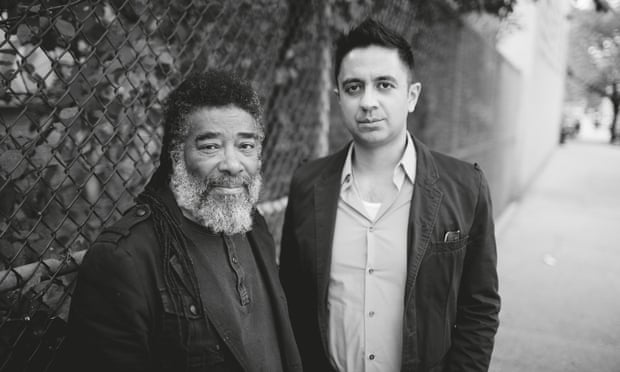
Trumpeter and composer Wadada Leo Smith and pianist Vijay Iyer have worked together in the past with Iyer a member of Smith's Golden Quartet and Quintet. The duo's new ECM release, "a cosmic rhythm with each stroke", is a powerful work with the focus in the 7-part, 52-minute, title track. Co-composed by the duo, the strikingly handsome piece is inspired by and dedicated to the visual artist Nasreen Mohamedi (1937-1990). Currently, the Metropolitan Museum of Art in New York City is celebrating her life and work (check it out here) and Mr. Iyer is currently Artist-In-Residence in the new Met Breuer (as I write this, the Gallery is in the midst of the third week of the performance series curated by the pianist. The Iyer-Smith Duo is scheduled for 3/30-31 and it's already sold out).
As for the recording, the music is emotionally rich, at times incredibly quiet with faint low rumblings from Fender Rhodes and other electronics (all played by Iyer) yet there is the clarion call of Smith's trumpet rising up an around the crystal-clear piano lines. There are so many mood shifts in the suite yet none of the music is rushed. Free-wheeling clusters of piano notes jostle with rapid-fire jabs at piano and, in the final section (subtitled "Notes on Water"), the different timbres of the Fender Rhodes help the suite float to a close.
Nasreen Mohamedi
The program opens with the pianist's "Passage", a perfect lead-in to the suite in that this music sets the tone. The music moves forward on the powerful chordal melody and the trumpet's long tones. The final track, "Marian Anderson", is Mr. Smith's tribute to the great singer and human rights activist. The music does not attempt to imitate the great sounds of Ms. Anderson but creates an abstract portrait of melody lines that rise and fall like breathing, the solid, somber, piano chords giving the trumpet freedom of movement.
Vijay Iyer and Wadada Leo Smith, in creating "a cosmic rhythm with each stroke", not only celebrate the life and work of very impressive many of us have not heard of before but also have produced music that allows the listener to get lost in the sounds and the silences, the quiet volume and harder attack. This is timeless music that works its way into your heart and mind, bringing a sense of wholeness and peace.
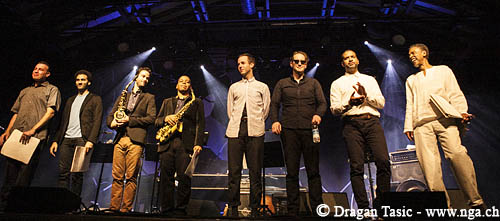
On the heels of 2015's "In for a Penny, In for a Pound", arguably one of the year's 3 best recordings, Henry Threadgill puts down his instrument but not his pen and creates "Old Locks and Irregular Verbs" (Pi Recordings). The 4-part, 47-minute, multi-sectioned composition is his tribute to his dear friend Lawrence "Butch" Morris (1947-2013) played by an septet known as Henry Threadgill Ensemble Double Up including Zooid regulars Jose Davila (tuba) and Christopher Hoffman (cello) plus drummer Craig Weinrib, alto saxophonists Roman Filiu and Curtis MacDonald (also the composer's copyist) and - surprisingly, for a group led by Threadgill - pianists Jason Moran and David Virelles.
Dragan Trasic
What's not surprising about this music is the importance of the rhythm section. , ,Hoffman, Davila, and Weinrib really drive the 19+ minute "Part One", giving the music depth and a sense of forward propulsion. The tuba often pairs with the pianists to hold down the bottom. Due to the compositional style of the leader, both alto saxophonists sound like Threadgill which, at times, is off-putting. But the power of the music, the swirl of saxophones, pianos, and the cello as the opening section slows down, the deep lines from the tuba, draws one in. "Part Two" starts with just cello and tuba in an off-kilter call-and-response that soon stops.
There is a short full band section then Weinrib plays a melodic then forceful solo that leads directly into "Part Three." Hoffman's powerful bowed solo over the active rhythms of the drums and piano has an intense feel but, when MacDonald enters for his solo, the bottom shifts a bit, both pianists "stroll" through the background while Davila and Hoffman (now pizzicato) parry-and-joust from down below. Virelles plays a long, exciting solo (with Moran commenting now and then) before Filiu takes off on a powerful flight. About 12:30 into the 16:39 section, the band stops altogether, there's a moment of silence, then there's a series of short duets and solos which soon opens to a more rhythmical give-and-take leading into "Part Four." There's a magnificent 2 piano conversation that begins quite melodically before building in intensity. When the rest of the group enters, they play the elegiac melody from a few minutes before. Slowly, the sound surges, builds up again, higher and higher pushing upward then long tines from the saxophones followed by the tuba, fade out to....silence.
ascap.com
Henry Threadgill has been a vital member of the contemporary music scene for over 5 decades. On occasion, his music disappeared under the onslaught of "smooth jazz" or the Young Lions embrace of hard bop but the composer persevered. Since the beginning of the 21st Century, he's been releasing impressive albums and working with the likes of Wadada Leo Smith and Jack DeJohnette. His 7 albums with Pi Recordings, 5 with Zooid, show his vitality and willingness to continue to grow and explore.
"Old Locks and Irregular Verbs" is challenging, satisfying, and original music - we live in such strange times yet recordings such as this gives one hope and joy.

 Posts
Posts