If one takes a close look at the ongoing career of saxophonist, composer, and activist Oliver Lake (pictured left), you'll see a person dedicated to not only celebrating the past but also always moving relentlessly ahead. Coming out of St. Louis, MO, in the 1960s, a co-founding member of the BAG (Black Artists Group), he teamed up with Julius Hemphill, Hamiet Bluiett, and David Murray to form the World Saxophone Quartet, all the while touring and recording with his own ensembles. Like Wadada Leo Smith, Anthony Braxton, Henry Threadgill, and other of his contemporaries, he developed a sound on his chosen instrument - alto saxophone - that immediately tells who he is upon the first notes. His recorded output includes duos, trios, quartets, organ-based ensembles, steel pan groups, big band, and numerous releases with the collective Trio 3 (with Andrew Cyrille and Reggie Workman, an association well into its third decade). Lake works with the trio Tarbaby (Orrin Evans, Nasheet Waits, and Eric Revis) and as a guest artist with other groups.
"Right Up On" (Passin' Thru Records) is his first recording with a string quartet but not his first with strings; he appeared in duo with violinist Leroy Jenkins (1932 - 2007), augmented his "working" quartet with a string quartet on 1979's "Shine!" (Arista-Novus), and released an album in 1997 "Movement, Turns, and Switches" with the Oliver Lake String Project. This new album features FLUX Quartet (violinist Tom Chiu, violinist Conrad Harris, violist Max Mandel, and cellist Felix Fan), who Lake has worked with since 2002 and for whom he composed the majority of the pieces on the recording. Like much of the composer's works, the 9 compositions have written and improvised sections plus the use of graphics and minimal notation.
The music certainly has a contemporary feel but hearkens back to the late quartets of Beethoven and to the string writing of Olivier Messiaen, Aaron Copland, Roy Harris, and George Walker. The lovely sonorities of the title track, the twists-and-turns of "2016" (the pizzicato opening with its stormy feel that opens to a lovely pastoral melody that branches into several other directions, and the fascinating use of dynamic variations on "Sponge" (near silence to keening sounds to percussive effects and a surprising vocal interjection) illustrates how Lake pushes the musicians and challenges the audience. The composer adds his saxophone voice to two tracks. On "Hey Now Hey", he joins the Quartet 1/3rd of the way playfully interacting by pushing his way into the conversation whereas on "5 Sisters" (dedicated to the memory of his mother and her four sisters), the alto leads the way. Listen closely to how the strings respond to the reed sounds and melody lines, to the improvisation, to how the cello adds such depth to the music, and to how the piece ends unresolved (to these ears).
The final track, "Einstein 100!", comes from 2005 and, of course, plays with space and time, with the finite and infinite, with solos and improvisations, and contains moments of delightful counterpoint. It is important to note here that Albert Einstein was an accomplished amateur violinist, often reaching for his instrument in moments if stressful research. Nearly 21 minutes long, the music is dramatic, cathartic, sometimes soothing, occasionally puzzling (why the coughing?), but always searching, probing, looking inward and outward, and never settling for cliche.
Oliver Lake has been a creative force for over five decades and shows no inclination to stop pushing forward. In FLUX Quartet, he has found musicians as daring as he, as willing to go deep into music and out on a limb as he continues to do. Pay attention to"Right Up On"; even as the music challenges your expectations, it will also take you many places.
Just read of the passing (here's the obituary) of saxophonist Arthur Blythe, a man whose vibrant alto saxophone playing enlivened many recordings from the mid-1970s to the early years of the 21st Century. The Los Angeles native spent his formative years in San Diego, moving to New York City in the mid-1970s Most people know of his recordings for Columbia Records ("Lenox Avenue Breakdown" still is a delight while "In The Tradition" stands out for many others) but he first came to my attention in 1977 with several releases on the India Navigation label ("The Grip" and "Metamorphosis") plus a smashing 1978 trio recording "Bush Baby" on the Adelphi label. That album featured the saxophonist with tubaist Bob Stewart (who was on the earlier Lps and would record with Blythe throughout his career) and Akhmed Abdullah (congas). That ensemble played Real Art Ways when the venue was located on Asylum Street across from the Civic Center in downtown Hartford. To hear the powerful duo of Blythe and Stewart together was a treat; they so enjoyed their interactions, the music was filled joy, gospel shouts, and "free" excursions.
When talking with Mr. Blythe that weekend, I discovered he had made his performing and recording debut in 1969 as a member of pianist Horace Tapscott's Pan-Afrikkan Peoples Arkestra. The album, "The Giant Is Awakened" (reissued on CD in 2116 by Ace Records, showed the saxophonist, billed here as "Black" Arthur Blythe, already in possession of his "big" tone, the keening cry that was his signature sound, and, at that time, the big influence of John Coltrane. In 1975, the saxophonist shows up on fellow alto player Julius Hemphill's powerful self-released "Coon Bid'ness" (later issued on Arista/Freedom) - that recording also features drummer Barry Altschul, cellist Abdul Wadud, percussionist Daniel Zebulon, and baritone saxophonist Hamiet Bluiett. Blythe would go on to work with the baritone saxophonist when he replaced Hemphill in the World Saxophone Quartet (1990).
It was the Columbia debut in 1979 that really caught people's ears. The dancing feel of "Down San Diego Way", with James Newton's flute soaring over the bass of Cecil McBee and Bob Stewart's expressive tuba plus the roiling percussion of Jack DeJohnette and Guilliermo Franco and the chunky guitar of James "Blood" Ulmer, remains a touchstone. When Blythe enters, right at the top of his alto's range, the song just flies out of the speakers. The funky feeling continues throughout the other three tracks culminating with the mysterious "Odessa." One can hear the influence of Ornette Coleman in the interactions of the rhythm section and Ulmer's chunky guitar fills while the leader wails with abandon.
Blythe would go on to record eight more Lps for Columbia over the next decade, going in many directions, from the straight-ahead "In The Tradition" to the synthesizer-infused "Put A Little Sunshine In It." He went on to record with ENJA and his final four albums appeared on Savant.
As a sideman, Blythe, who was born in 1940, worked with Jack DeJohnette's Special Edition, The Leaders (with bassist McBee, trumpeter Lester Bowie and saxophonist Chico Freeman), McCoy Tyner, Joey Baron, and percussionist Gust William Tsillis. Over the past decade, he had to stop playing due to complications from Parkinson's Disease.
Arthur Blythe will be remembered for his generous sound, his gentle soul, and his exciting music. Below are a few examples of his artistry and his joyous approach to Black American Music.
Mr. Blythe in Jack DeJohnette's Special Edition:
Here are The Leaders from 1989:
From drummer Joey Baron's "Down Home" with Bill Frisell (guitar) and Ron Carter (bass):
When times are busy, uncertain, even a bit scary, music serves as both an antidote to depression and and a kick in the butt. Here are three new recordings that make me smile and give me hope.
Miguel Zenón, in my opinion (humble or not), is one of the finest alto saxophonists in the world. He is a technically dazzling musician who has been able to synthesize the music of his native Puerto Rico with African American creative music in a seamless fashion. Over the past decade, each recording he has released (either for Marsalis Music or his own MIEL Music label), Zenón has displayed this delightful ability to make art out of dance music and vice versa. Yes, his music swings but what it truly does is flow, sometimes rapidly, sometime gently, but the performances make one want to move his or her feet.
For the past 15 years, he has toured and recorded with pianist Luis Perdomo, bassist Hans Glawischnig, and drummer Henry Cole. This group's latest album, "Típico" (MIEL Music), is its first in a decade that just features the quartet. The music is great to get lost in. The fiery "Academia" opens the album and illustrates just how the band has gelled, the rhythm section beneath the leader pushing, listening, prodding, responding to each other, propelling the song on the joy they bring to the performance. The title track bounces on the two-handed piano figure that not only introduces the piece but shows up throughout - listen to the seamless tempo changes, how Cole's cymbal work echoes Zenón's flights of fancy, and Glawischnig not only keeps the pulse but builds the foundation for the band to build off of.
For those who think Zenon's music does not have enough "soul", listen to the lovely ballad "Cantor." Dedicated to composer, vocalist, and pianist Guillermo Klein, Zenon's handsome melody has hints of tango while Perdomo's piano lines beneath seem classically inspired. The quartet does not rush the piece, the melody stretches out until the pianist rises up and takes a solo that is melodically rich. "Sangre De Mi Sangre" (translates to "Blood of my Blood") is dedicated to Zenon's daughter and has a story quality in both its melody lines and the leader's passionate solo. There are moments when the music picks up pace, becomes a dazzling dance before slowing down as a reminder not to be carried away.
The keening alto saxophone leads the way on "Corteza", a delightful adventure in how melody can influence rhythm. Again, the musicians do not rush into the solos but give the listener a fine melody before stepping into the spotlight. The rapid-fire rhythms of "Entre Las Raíces" ("Among Roots") give Zenón the impetus to create an amazing solo, especially when he rides the percussive storm of Cole's drums. The melody line may remind listeners of Rudresh Mahanthappa's melody for his "Bird Calls" ensemble and he updates the speedy riffs Charlie Parker with the influences of his Indian heritage. Zenón and company makes sure one hears the Afro Caribbean roots in their music, molding the melodies from the impassioned rhythms.
"Típico" is a splendid recording and reminds us of how great music can be created when ensembles are familiar with each other and love to challenge themselves to keep growing, keep moving forward. Kudos to Miguel Zenón and his Quartet for creating such delightful music.
Tenor saxophonist and composer Kirk MacDonald is a prolific musician living in Toronto, Canada. He leads a quartet, has guested in numerous bands, and now has issued his third recording with the 19-member Kirk MacDonald Jazz Orchestra. "Common Ground" (Addo Records) features all original works arranged by trumpeter Joe Sullivan (who also has a big band which in based in Montreal). The KMJO has been in existence since 2004, has a fairly large book of Macdonald originals, and boasts two arrangers (trombonist Terry Promane is the other).
The new album, two CDs and 90 minutes long, has a "swing" feel from the get-go, with allusions to the big band recordings of John Coltrane and Thad Jones, at times even Duke Ellington and Count Basie. The title track at 8:33 is the shortest cut on the album, meaning each musician gets time to develop his or her solo. But even on the shorter tracks, the arrangements still give the players enough time to really dig in.
That gives the listener a lot to dig. The rhythm section - Nancy Walker (piano), Lorne Lofsky (guitar), Neil Swainson (bass), and Barry Romberg (drums) - do a great job setting the table throughout the program. When the band is flying, as they do on "You See But You Don't Hear", "Kirk's Blues", and "The Power of Four", you won't be able to stop tapping your feet. Romberg and Swainson, both veterans, know how to drive an ensemble, never getting in the way but continually stoking the fires.
There are also pieces that take their time to get going, plenty of time for the melody to be played fully and the various sections to harmonize. The leader's daughter, Virginia Frigault-MacDonald (20 years old at the time of this June 2015 recording), creates a lovely clarinet spotlight on "Vanda Justina" (listen to the flurry of sounds from the brass as her solo hits its stride); she yields the floor to her father who paints a lovely tenor saxophone portrait over the second half of the 12-minute track. One hear the Thad Jones influence in the melody and arrangement of "You See But..." as well as how the brass and reed sections frame the solos of Luis Deniz (alto sax) and Pat LaBarbera (soprano sax). Listen for the light sound of the flutes (supported by the low notes of Peter Hysen's tuba) carrying the melody of "Shadows" right before Ms. Walker's delightful solo. Her rhythmic inventions are matched by Romberg's playful drumming.
What I like most about "Common Ground" is how each song takes on its own personality after you listen three or four times. There is nothing generic about this music. It's born out of the joy of playing, out of the love of creating as a team, of an ensemble utilizing the musical visions of a fine composer and an intelligent arranger. The music of the Kirk MacDonald Jazz Orchestra should resonate with fans of big band jazz or, for that matter, anyone who likes music.
Complete personnel: Kirk MacDonald, P.J. Perry, Luis Deniz, Pat LaBarbera, Perry White - saxophones, flutes, clarinets Virginia Frigault-MacDonald - clarinet on three tracks Jason Logue, Brian O'Kane, Rob Smith, Kevin Turcotte, Joe Sullivan - trumpet, flugelhorn Alastair Kay, Terry Promane, Kelsley Grant - trombone Peter Hysen - bass trombone, tuba Lorne Lofsky - guitar Nancy Walker - piano Neil Swainson - bass Barry Romberg - drums
Here's a good taste of KMJO:
I've been listening to guitarist Ross Hammond's music, both electric and acoustic, since 2014's "Humanity Suite." His electric excursions are often loud, filled with sonic explosions but also brilliant interactions and challenging directions for both musicians and listeners.
Yet, it's his fascinating acoustic work that really captures my imagination. 2015's solo "Flight" remains one of my favorite albums of the last five years; the different textures and locations make the program sound alive. His 2016 releases, duo albums with tabla masterSameer Gupta and multi-reed genius Vinny Golia, featured improvisations shaped out of common musical ideas and shared languages.
"Follow Your Heart" (Big Weezus Music) is a return to the acoustic solo format. Recorded live in St Paul's Church in Sacramento, CA, Hammond used his 12-string and resonator guitars to create a 9-song program that blends folk and blues elements. Instead of looking for influences, just listen. Close your eyes. There's a timeless quality to pieces such as "Blues for Bob Feathers", one that hearkens back to Woody Guthrie, to Lead Belly; perhaps it's in the simplicity of a single guitar or the trance-like sound of the bass string as it resonates. Notice how the guitarist uses dynamics on "Lake Tahoe Waltz", how the ringing slide notes decay as if being carried away by a gentle breeze, and how the melody has a bittersweet, Country & Western feel. The 12-string sounds as much like an ocean as an orchestra on "Whirlpool", the sounds swirling, swelling, holding our attention, drawing us in, hypnotizing us as much as it heals.
sacbee.com
The album's final track is "I Ain't Scared of Your Jail" which, despite its defiant title as well as its powerful single-note lines, aches more with resignation. Listen to the notes quiver, the shivering sound of the slide on the strings, the darkness of the lower notes - then, go back, listen again, maybe you will hear the mood shift from darkness to, at least, an appreciation of the light, wherever it may come from.
Perhaps it's the frazzled emotional damage caused by the changes one feels in daily life these days as much as the heartfelt music Ross Hammond has created that makes "Follow Your Heart" so powerful. A single voice (in the form of a guitar) echoing through a church is a powerful salve, a form of salvation in hard times. This music, like the blues and folk sounds that inspired it, is human music. Even without words to guide us, these guitar sounds often feel like the "gospel truth."
No personal reflections this time, just continuing my survey of the music that moved me the most over the past 12 months. This part of the list included recordings I did not post reviews for.
Technically speaking, this album came out in late 2014 and technically speaking, it's quite brilliant. Over the past decade, Sam Newsome has concentrated his efforts on the soprano saxophone, releasing a series of solo albums that stand out for their brilliance, audacity, and sheer musicality. So it is with "The Straight Horn of Africa: A Path to Liberation" (Some New Music), 21 tracks, many of them overdubbed, where the saxophonist creates percussion by clicking the keys in ways that suggest drum choirs. It was such fun to return to listen to this music again, fun to have one' breath taken away track after track.
Violinist, composer and arranger Tomoko Omura released "Roots" (Inner Circle Music) early in 2015 and the music resonates with me still. Employing a great ensemble including Glenn Zaleski (piano, keyboards), Colin Stranahan (drums), and Noah Garabedian (bass) plus guitarist Will Graefe on 8 tracks. Ms. Omura reimagines pieces from her native Japan in ways that honor their original intent while giving the new life. And, there is such of a sense of "serious play" on these cuts. For more information, go to www.tomokoomura.com.
The new recording from vocalist and multi-instrumentalist Jen Shyu is a dazzling display of creativity and musicality that also defies categorization. Let's just say you'll not hear a more dynamic and dramatic album than "Sounds and Cries of the World" (Pi Recordings) - you may hear some that are its musical equal (Mycale, Bjork) but not as powerful. She makes brilliant use of her band - Ambrose Akinmusire (trumpet), Mat Maneri (viola), Thomas Morgan(bass) and Dan Weiss (drums) - while making you return time and again to hear how she uses her voice nd instruments. For more information, go to pirecordings.com/album/pi61.
Saxophonist and composer Ochion Volk and his Quartet - pianist Amino Belyamani (Dawn of Midi), bassist Sam Minaie (Tigran Hamasyan), and drummer Qasim Naqvi - released his 2nd CD this year and it's a jewel. The interplay of the musicians (guitarist Lionel Loueke appears on several cuts), the creativity of the compositions and fact that the musicians serve the music and not just show how well they can play, all that and more makes this a standout CD. I would love to hear this band live just to get lost in this creative experience. For more information, go to www.ochion.com.
The latest hit from alto saxophonist Rudresh Mahanthappa has its roots in 2 musical areas, those being the intricate rhythms of South Indian music and the saxophone language developed by Charlie Parker. Performed by a band that boasts the fiery rhythm section of François Moutin (bass) and Rudy Royston (drums - he shows up again below), the agile piano work of Matt Mitchell and the brilliant trumpet playing of Adam O'Farrill, this music is an often joyous blend of dexterity, rhythmic complexity and melodic playfulness.
Speaking of Mr. Royston, his work with tenor saxophonist JD Allen is how listeners first heard his dynamic drumming. After a pair of Quartet recordings, Mr. Allen returned to his Trio (bassist Gregg August is the important third member) he formed in 2007 to create "Graffiti", perhaps the bluesiest and most melodic recording he has released in his career. Yes, there's a bow to the classic Sonny Rollins Trio recordings of the 1950s but this recording serves to remind us of how revolutionary the elder tenor player was in his youth and this style is far from being tired and old.
Going back to listen to "Synovial Joints", the 2015 Pi Recordings album from Steve Coleman and the Council of Balance, I am reminded of how many different styles of music the alto saxophonist, composer and arranger dips into to create his music and just how seamlessly he does it. Utilizing the great rhythm section of Anthony Tidd (electric bass) and Marcus Gilmore (drums) plus the splendid voice of Jen Shyu (see above), trumpeter Jonathan Finlayson, guitarist Miles Okazaki, a string quartet, 3 additional brass players, 3 additional reeds, and 3 percussionists, t is stunning how clean, clear, and insistent this music is.
In a world filled with masterful pianists, Fred Hersch is certainly one of the finest. Whether in front of his Trio or a larger ensemble, his lyricism and creativity is, at many turns, quite amazing. This year, he gave us "Solo" (Palmetto Records) and, once again, the listener is whisked away from the mundane and everyday to bask in the glow of a consummate performer. Whether it's his original music or one of his joyous forays into the land of Thelonious Monk, Mr. Hersch always gives the listener much to chew on.
Speaking of masterful pianists, Myra Melford dropped "Snowy Egret" (both the name of the group and its recording from ENJA) during the year. With a band that includes such great players as Ron Miles (trumpet), Liberty Ellman (guitar), Stomu Takeishi (bass guitar) and Tyshawn Sorey (drums), the composer gave us music that, like Mr. Coleman's and Ms Shyu's, is multi-directional, challenging and quite satisfying. For more information, go to www.myramelford.com.
No one was busier this year than pianist Matthew Shipp, showing up as a sideman on several CDs, co-leading others and releasing, arguably, his most impressive Trio recording in his career. "The Conduct of Jazz" (Thirsty Ear) is contemplative, feisty and filled with, at a number of turns, impressive interplay between the pianist, long-time associate Michael Bisio (bass) and the Trio's new member, drummer Newman Taylor Baker.
The final group of favorites will be posted next week - in the meantime, live life to the fullest by going out to support live music in your community and state!
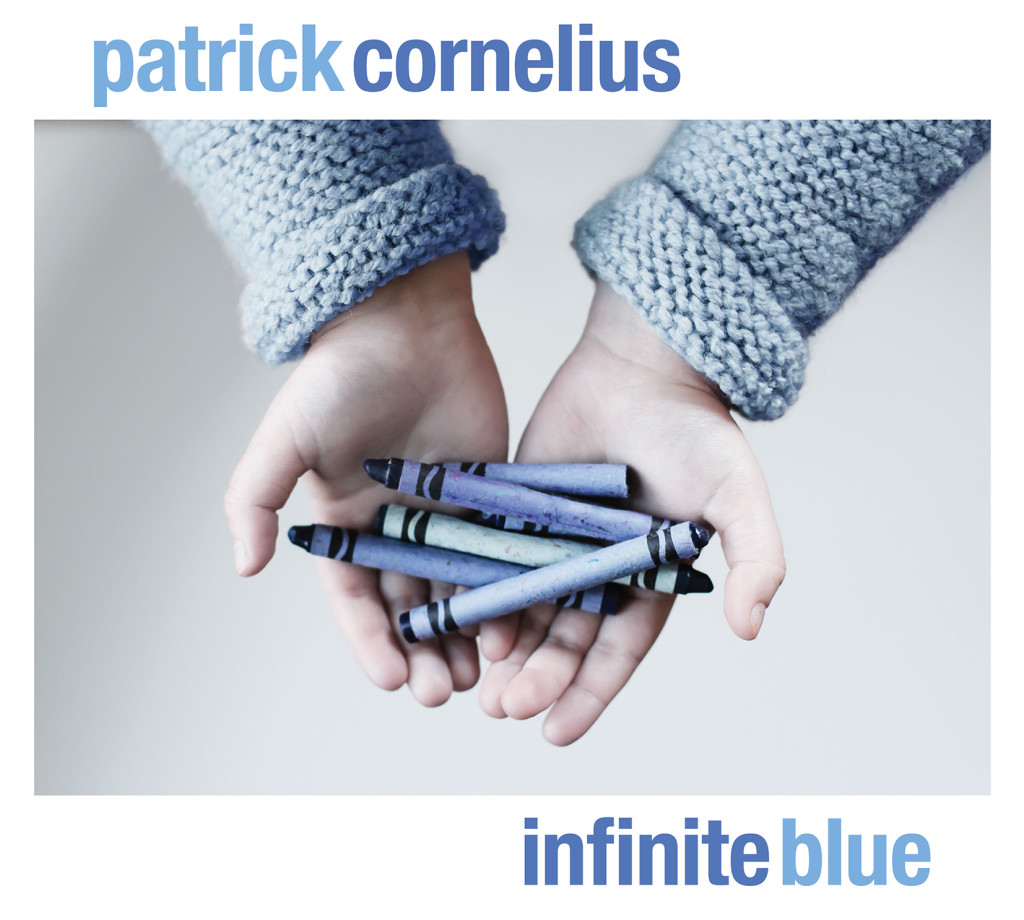
Saxophonist/composer Patrick Cornelius has a new CD, "InfiniteBlue", his second for the London, England-based Whirlwind Recordings. For this release, the native of San Antonio, Texas, works with new friends, pianist Frank Kimbrough, drummer Jeff Ballard, trumpeter Michael Rodriguez (3 tracks) and pianist John Chin (who appears on the final track "Projection", a tune he composed). Also appearing are old friends Nick Vayenas (trombone on 5 of the 9 tracks) and bassist as well as label owner Michael Janisch.
There are several different streams of music on this CD, including some solid hard-bop (for instance, "Puzzler" with its loping bass line, hardy trumpet solo and the leader's bluesy romp) and melodic ballads (such as the title track that sports a short but impressive piano solo, more excellent work from the trumpeter - love Ballard's expressive drums beneath the solo - and an emotionally satisfying alto solo.) The 2-part "Waiting" opens with a fine bass solo and moves into the main theme atop floating piano chords and deliberate work from the bass and drums. The melody is arranged for alto sax, trumpet and trombone; the mix of their sounds has such a soulful character which carries over to the solos. Cornelius plays a series of long notes before moving into longer flowing lines with Kimbrough reacting, prodding, coloring the tune with impressionistic figures. The pianist takes the only other solo and is allowed to stretch out, interacting with Ballard and Janisch, improvising with them.
"Unfinished Business" reminds this listener a bit of the Jazz Crusaders in the soulful blend of trombone and saxophone during the opening theme. Kimbrough dances through his solo, again interacting with Ballard to create an intensity that Vayenas picks up on for his energetic solo. Cornelius's best solo is, arguably, the long, slow, heartfelt one on "In the Quiet Moments." No one rushes, especially not Janisch, whose spare bass notes - not even, at times, bass lines - move deliberately alongside Ballard's soft brush work. The short piano solo is stunning for its melodic and emotional content.
"Infinite Blue" may be the color of the sky on a beautiful spring day or the color of a baby's eyes but for Patrick Cornelius, it's another touchstone in his career. His previous CDs showed his mettle as a musician and this Whirlwind recording displays his continuing growth as a composer and arranger. For more information, go to www.patrickcornelius.com and www.whirlwindrecordings.com.
The OWL Trio takes its name from the 3 musicians who compose the ensemble, Orlando le Fleming (bass), Will Vinson (alto saxophone) and Lage Lund (guitar). Their self-titled debut CD has been released on the Norwegian-based Losen Records. They have been playing together or in various formations for the last decade, even recording with pianist Aaron Parks and drummer Kendrick Scott on Vinson's 2010 "Stockholm Syndrome" CD for Criss Cross and 2008 "Promises" on Nineteen Eight Records (Ari Hoenig on drums.)
This CD finds them in what they call a "Chamber Jazz" setting, playing a program that blends standards with works by John Coltrane ("Dear Lord"), Jim Hall ("All Across the City") and Toninho Horta ("Moonstone") - there are also 3 pieces credited to the Trio. Vinson channels Paul Desmond on the opener, a sweet reading of Duke Ellington's "Morning Glory" (from the Blanton-Webster days in the early 1940s.) Le Fleming sets a walking pace with his solid bass, Lund's background chords and short fills offer pleasing counterpoint (plus a strong solo) and the saxophonist's strolls atop them. The next track, "All Across the City", is a Jim Hall composition with a rich melodic line, taken at a ballad pace. What becomes more obvious as one listens through the program, even the group improvisations, is that melody and emotional content are much more important than technique and flashy solos. Even when they push the tempo up, as on the original "Blues For Jimmy" (dedicated to producer/engineer Jimmy Katz), the music is never frantic, always focussed on the melodic content and interplay. While their take on the Coltrane tune is somewhat slower, the emotions are front-and-center, especially the fine alto playing caresses the melody and it feels more prayer-like. The CD closes on an even gentler note; "Moonstone" unfolds slowly, carefully, with Vinson's higher notes raining down on the rippling guitar lines. The foundation created by the bassist is subtle, often in counterpoint to his partners but never in conflict.
The conversational quality of OWL Trio resonates long after the final notes. The CD is the work of 3 friends, musicians attuned to the strengths each one brings to a program in which melody reigns supreme. Quiet and quite charming, music for one to contemplate and, ultimately, to surrender to. For more information, go to www.owltrio.com.

 Posts
Posts


:format(jpeg):mode_rgb():quality(96)/discogs-images/R-6852063-1427994117-8924.jpeg.jpg)