Lots of music yet so little time –– here begins a series of shorter reviews of the more exciting releases of the past several months.
Commissioned by SF Jazz and the Hewlett Foundation, Miguel Zenón composed "Golden City" for sextet and a three-member trombone section (two of whom double on other brass - see below). A musical history of San Francisco, the piece made it debut at SF Jazz in 2022 and was recorded a year later for the composer's Miel Music label. Zenón makes sure each member of the ensemble has a feature, often at the beginning of the track. The album opens "Sacred Land" – the leader's sweet alto tone plays the intro alone before the brass enter for support and then the whole band arrives. The story moves quickly to "Rush" (yes, the 1800s Gold Rush) to "Acts of Exclusion" (the 1862 law that curtailed the immigration of Chinese works) to "9066" (FDR's Executive Order that authorized the interment of Japanese Americans, the majority of who were already American Citizens). One can sense the urgency and poignancy in the melodies and musicianship.
Photo: Herminio Rodriguez
Not only is the writing excellent but the performances stand out. Drummer Dan Weiss stands out as a master framer of the pieces and as a melodic presence. Pianist Matt Mitchell is the other "builder" of the foundation; along with bassist Chris Tordini, the two give the "front line" great support throughout. Percussionist Daniel Diaz creates rhythmical excitement but also adds colors that are necessary to the success of the music. Guitarist Miles Okazaki is solid in support and his ensemble work plus his solos stand out. The three brass players – Diego Urcola, Alan Ferber, and Jacob Garchik – truly fill out the sound thanks to the splendid arrangements. Perhaps the best part of this project is how Zenón gives so much room to the band that when his "voice" appears, his playing delights in flights of joy, power, sweetness, all while being highly melodic.
There's so much to like on "Golden City" from how Miguel Zenón tells the sprawling story to how the musicians give so much life and heart to the music to the wonderful playing over the course of 69 minutes. Highly recommended!
Miguel Zenón - alto saxophone Matt Mitchell - piano Chris Tordini - bass Dan Weiss - drums Miles Okazaki - guitar Daniel Díaz - congas, tripandero and percussion Diego Urcola - trumpet and valve trombone Alan Ferber - trombone Jacob Garchik - tuba and trombone
Trombonist, composer, and band(s)leader Ryan Keberle is quite busy but he must have jumped at the opportunity to make this album for Marc Free and Posi-Tone Records. He's been doing a lot of smaller group work with Reverso (trio), Collectiv Do Brasil (quartet), and Catharsis (now a quintet) but it's been 14 years since his last Double Quartet album. "Bright Moments" is his first album as a leader on the label and, arguably, it's one of the 10 best Marc Free has ever released. Why? Because Keberle had the opportunity to arrange the songs, all originals, to utilize the talents of a brilliant rhythm section – pianist Art Hirahara, bassist Boris Kozlov, and drummer Rudy Royston – and have his melodies "sung" by the great "voices" of Pat Cornelius (reeds, flute), Diego Rivera (tenor sax, flute), Alex Norris (trumpet, flugelhorn), and Michael Dease (baritone sax). All but one of the songs have appeared on previous albums – the new versions give both the composer and the audience a different perspective.
You can hear the influence of Keberle's immersion into Brazilian music on "Edu" – the music rolls forward on the power of the drums and the deep baritone sounds. The expansive melody is shared by the reeds and brass before Norris steps out for a handsome solo. "Despite the Dream", which the trombonist composed for Catharsis's 2020 "The Hope I Hold". This powerful ballad opens up in the middle as the tempo speeds up and short solos lines are created by Cornelius (alto sax) and Norris. Later, Cornelius and Dease (whose bari work is mighty impressive) take longer solos. "Sisters of Mine" was originally recorded by Reverso. Here, the tribute to the composer's two sibs serves as a vehicle for a lovely tenor solo from Rivera. To get there, the melody is presented by Cornelius (soprano sax), Norris, and Keberle (such a lovely tone). Melody sharing abounds on this album. The bass clarinet (Cornelius), trumpet, and flutes (Rivera and Cornelius) each introduce the melody on "All Ears", which is repeated twice without a solo. Yet, the piece is so satisfying because of how all the voices are utilized to make the piece so successful.
Photo" Anna Yatskevich
"Bright Moments" closes with the oldest piece in the collection. "When I'm Away" is from 2006 and was on the first of Keberle's two Double Quartet albums. The arrangement is similar but the 2024 "voices" includes reeds whereas the older take has a four-piece brass section. Either way, it's a beautiful piece of music and features an excellent from the leader, brilliant backing from the great rhythm section.
If you're a Ryan Keberle fan, this is yet another gem in his growing discography (plus there's a new Catharsis album coming in October). Great music played by a great band – "Bright Moments" indeed!
Ryan Keberle - trombone Alex Norris - trumpet; flugelhorn Michael Dease - baritone saxophone Patrick Cornelius - alto saxophone, soprano saxophone, bass clarinet, and alto flute Diego Rivera - tenor saxophone; flute Art Hirahara - piano Boris Kozlov - bass Rudy Royston - drums
Life is often wild and crazy with all sorts of mayhem right outside your window, on your screens, and in your ears. When the craziness moves indoors and becomes personal, one looks for escapes to give a sense of normalcy. We saw that in the pandemic where virtual concerts, streaming movies, and myriad television shows became even more of the "norm".
On a personal level, my life got crazy this Summer with the need for Open Heart Surgery in July and, just this past week, contracting a case of COVID. I thank the Doctors, Physicians Assistants, and nurses for their care over these past few months. I thank the higher powers for the music that has gotten me through the surgery, illness, and continued recuperation.
Haven't posted much but I have been listened to a lot of great music. Now, I plan to make several posts about the best of those albums (in no particular order).
As far as I am concerned, any new release by Miguel Zenón is cause for joy. Since his debut album as a leader (in 2002), he has grown as a composer, arranger, and alto saxophonist. The native of San Juan, Puerto Rico also spent 14 seasons with the SF Jazz Collective and has recorded with a slew of artists from Kurt Elling to Charlie Haden to Fred Hersch to Antonio Sanchez and many more. His long-tenured quartet includes pianist Luis Perdomo, bassist Hans Glawischnig, and drummer Henry Cole, all of whom save Cole (who joined the ensemble in 2006) is as impressive as any working group playing today!
His latest release on Miel Music, his 15th as a leader or co-leader, is "Musica De Las Americas", a recording that illustrates how "American music" is an on-going fusion of elements from all corners of the American continent (North, Central, South and the Caribbean) and is tied to the rhythms that traveled in slave ships from Africa but also to the indigenous tribes the Spanish discovered when they arrived in the 15th Century. Zenón composed all the pieces, not only giving the listener a stunning listening experience but also infusing this music with history. For instance, the opening track "Tainos y Caribes", tells the tale of two indigenous tribes who live in peace in the Caribbean and northeastern South America respectively who were wiped out within several decades after the arrival of the Conquistadors. The powerful music, built upon the the polyrhythmic attack of Cole plus the thunderous piano and thrumming bass, paints a portrait of vibrant societies.
Photo: Jimmy Katz
Four of the eight tracks feature guest percussionists. The silky smooth "Navegando (Las Estrellas Nos Guian") adds the five-person Los Pleneros De La Cresta who add not only exciting rhythms but also vocals to the story of the Indigenous tribes that traveled the waters of the Caribbean and Atlantic in handmade boats following the stars. Percussionist Paoli Mejias pairs with Cole to create a vibrant backdrop for the powerful "Opresión y Revolución" (listen below), which draws on elements of Haitian Voodoo music to tells its story of uprising and self-rule (though the Haitians have paid an extremely steep price ever since). Victor Emmanuelli brings the Bomba drum (barril) into "Bambula", a song that illustrates how the drum the song is named for created a rhythmic pattern that once can hear in musical styles of Cuba, the Caribbean, Central America, New Orleans, and today's reggaeton. "Antillano" closes the album, celebrating the Antilles with young conga master Daniel Diaz helping to propel the playful bounce and sway of the music.
Throughout "Musicas De Las Americas", Miguel Zenón and the band play with fire, abandon, and joy. They build off each other's lines and emotions to create music that stands out for its spontaneity, celebrating the many and varied cultures of the American continent. This is music played by a band that deserves to be seen and heard in person––go to https://miguelzenon.com/ to find out more and see where this most accomplished ensembles is appearing. You'll also see that the saxophonist is playing with other ensembles over the next few months, all of which looks exciting. If you don't get out to see them, this wonderful new album will brighten your life!
Here's the Quartet with percussionist Paoli Mejias on "Operesión y Revolución":
Photo: Anna Yatskevich
Pianist and composer Pablo Ablanedo moved to the United States from his native Argentina in the early 1990s to attend the Berklee College of Music in Boston, MA. After graduating, he stayed in the US forming an Octet in 1999 filled with New York City-based artists to play his original music. Like his fellow Argentine Guillermo Klein, his music fuses influences from his homeland with the Black Creative Music he has come into contact over his 25+ years since moving. Over the course of four albums, Ablanedo has impressed listeners and reviewers with his ability to make music jumps with originality.
In 2019, Newvelle Records brought Ablanedo back into the studio with most of the musicians who helped to create his 2001 debut album "From Down There" for a follow-up. The results, "Christeza", was issued as part of the label's Fifth Season and now is available as a download from the label's Bandcamp page (see below). Take a look at the personnel––many have gone on in the two decades since uniting for the first album to have international careers as both leaders and sideman. One thing that stands out for this listener is the immediacy of Ablandeo's compositions, whether it's the percussive ballad "La Señal" that opens the eight-song program (the digital version has a "bonus track") or the playful call-and-response of "Karmavaleando" or the gentle swaying of "Winter Variations" (note how the intensity picks up throughout the piece), the melodies and the rhythms are well-defined and build off each other.
While the compositions stand out, there is brilliant musicianship throughout as well. There's a touch of Thelonious Monk in Ablanedo's introduction to "Plaisantriste" which unwinds to a delightful clarinet solo from Anat Cohen. Do also listen to the smashing support of bassist Fernando Huergo, drummer Franco Pinna, and guitarist Ben Monder. Ms. Cohen also stands out on "Ti Mi Do" as does violinist Jenny Scheinman. There's a tinge of Aaron Copland in the deliberate melody line and chords behind the front line and pay attention how the rest of the group enters behind the soloists. The spotlight is on Ben Monder for "Bipolarious"––after the sharp-edged intro, the guitarist dances atop the ever-intensifying rhythm. The title track has a mysterious, rubato, opening as if getting ready to go into "Sketches of Spain", especially when trumpeter Diego Urcola takes the lead; his long-held sparse notes keeps the mystery alive throughout the piece
The digital download closes "Christeza" with a rhythmic take on Kenny Dorham's "Una Mas". The brilliant rhythm section of Pinna and Huergo lead the way with tenor saxophonist Jerome Sabbagh (the only other member of the ensemble on the track) playing the theme as well as a powerful solo. But, it's the bass and drums that makes this track stand out. A delightful finish to a wonder-filled album. Pablo Ablanedo does not record very often but when he does, it's so rewarding to listen. Kudos to the great band, to the composer, leader, and pianist, and to co-producers Elan Mehler and JC Morisseau for such fine modern music!
At first, listeners may be put off by the sounds of "Facets" (Pi Recordings), the new album from the fertile imagination of tenor saxophonist and composer Hafez Modirzadeh. Those of us who live in the United States, Canada, Great Britain, basically north of the Equator, are used to the 12-tone scale whereas elsewhere in the world, you will hear alternative scales, microtones, and more. Often, those sounds puzzle us, sound dissonant (they are, to our ears), and just plain wrong. Yet, stay with what Modirzadeh is doing, listen all the way through, and then go back again.
Chances are good your curiosity will lead you to consult the liner notes by the time you reach the second or third piece. For the 18 songs on "Facets", Modirzadeh has retuned eight specific pitches on the piano. Those changes alter the resonances of the piano but allows the composer and performers (pianists Craig Taborn, Kris Davis, and Tyshawn Sorey play on six tracks each) to create music that grabs our attention and never lets go. There are two songs from Thelonious Monk ("Pannonica" and "Ask Me Now" - listen above) and "Facet 34 Defracted" deconstructs both songs in one piece. "Facet 32 Pearl" is based on "Variation No. 25" from J.S. Bach's"Goldberg Variations". Both Taborn and Sorey play an improvisation and both tracks fit into the scope of Modirzadeh's visions.
Do take the time to bathe in these sounds. Pieces such as "Facet 31 Wake" (Ms. Davis playing solo) is emotionally as it mesmerizing while "Flow Facet" (Ms. Davis solo again) feels like hypnotic Southeast Asian marimba, Chinese folk music, and a touch of boogie-woogie in the left hand. The keening tenor sax creates creates a wordless prayer with the piano (Ms. Davis) on "Facet 28 Nora" while the following track,"Facet 29 Night" is a duo for tenor sax and Sorey's sparse piano chords. The latter track also has a dream-like quality, creating a slow-moving set of mental pictures. Taborn and Modirzadeh create a stop-and-start feel from the outset of "Facet 35 Ode B'kongofon" –– after a moment, the fluttering tenor sax solo flows over the stumbling rhythm. Quiet piano chords (Taborn) usher in the saxophonist on "Facet 39 Mato Paha", a slow-moving tribute to a geological formation in South Dakota (the mountain's name comes from the Lakota tribe and translates to "Bear Butte"). Neither musician hurries, both the trance-like melody to resonate, to sink in.
The music on "Facets" is slow, at times meditative and trance-like, yet the deliberate tempi allow you time to digest and get accustomed to the sounds. Hafez Modirzadeh had previously used retunings on his 2112 Pi album "Post-Chromodal Out!", tying it closer to the Persian melodies of his ancestors than he does here by employing different instrumentation. Both albums are fascinating and both are unique!
Speaking of creating one's own language, saxophonist, trumpeter, composer, and conceptualist Ornette Coleman (1930-2015) hit the ground running in the late 1950s and did not stop once in his long career. Not only did the Texas-born Coleman change saxophone language but also how different rhythms can be utilized in acoustic and electric music. Saxophonist and composer Miguel Zenón was first introduced to Coleman's music as a teenage student in his native Puerto Rico. Later, as a member of the SF Jazz Collective, the ensemble created its inaugural program and tour (in 2004!) around the music of Coleman (arranged by Gil Goldstein). Yet, Zenón remains curious about the music and how it relates to the music he creates as well as the sound of his saxophone.
In May of 2019, Zenón assembled a quartet of musicians that he knew but who had never recorded together for a Coleman 91st Birthday Celebration in Basel, Switzerland. Joining the alto saxophonist was tenor saxophonist Ariel Bringuez (Cuba), bassist Demian Cabaud (Argentina), and Jordi Rossy (Catalan). Without much rehearsal, the band took the stage and the results can be heard of "Law Years: The Music of Ornette Coleman" (Miel Music). Instead of picking really familiar tunes, such as the oft-recorded "Lonely Woman" and "Una Muy Bonita", the quartet explores "Giggin'" (from 1959's "Tomorrow Is The Question", Coleman's second Lp), "Dee Dee" (from 1966's "At The Golden Circle Stockholm"), "Free" (from 1960's "Change of the Century"), "Street Woman" and the title track (from 1972's "Science Fiction"), "Tribes of New York" (from a 2016 release of unissued tracks from the 1960s Atlantic sessions), and "Toy Dance" (from 1968's "New York Is Now").
Photo: Chris Sweda 2016
The quartet have a ball with this music, getting in to the joy of playing Coleman's playful melodies while creating solos that rise out of the pieces organically. Check out "Free" –– I've not heard Bringuez before but he brings the fire as he and Zenón literally fly over the frantic rhythm section. "Giggin'" blends the joy of bebop with the blues; Zenón sounds like he's having a blast as he dances his way through a four-minute solo. Bringuez, who has worked with pianist Chuco Valdes and guitarist Hugo Fernandez, also solos with abandon. The title track opens with a short but powerful bass solo before the quartet lays down the melody. Their approach is reminiscent to that of the Atlantic Records Coleman Lps of the early 1960s. Cabaud, who has worked with the Lee Konitz-Ohad Talmor Big Band and vocalist Sara Serpa (among others) gets a longer spotlight right after the initial verse. Both the alto and tenor solos have tinges of flamenco music as well as moments of "free blowing".
Photo: Nuccio DiNuzzo 2015
The only ballad on the album, "Broken Shadows", shines from the opening moment. The interaction of the saxophonists (Zenón's keening tone and Bringuez's deep "blue" notes), the splendid bowed bass, and Rossy's intelligent cymbal coloring, all blend into a splendid performance.
"Law Years" closes with the medley of "Toy Dance/ Street Woman". The opening chorus and the subsequent solos swing with delight. After a short drum break, the saxophonists return to the opening melody go right into "Street Woman". This song has a darker feel and the rhythms more forceful. Bringuez's solo has a great sense of urgency and provides the power for Rossy's thumping drum solo. The waves of energy that come at you from the speakers as the pieces powers to is close makes you at to go right back to the beginning. Even as the various vaccines bring relief to millions of people all around the world, it might be number of years before musicians get to have a gig as loose and freewheeling as Miguel Zenón did on this May night in 2019. Pour a drink, turn down the lights, turn up the volume, and enjoy!
We have more time to listen to music and it's such a relief from the headlines snd baseless accusations that fill the air every day in the United States.
Nearly twenty years have passed since alto saxophonist Miguel Zenón recorded his debut album as a leader ("Looking Forward" was issued in 2002 on Fresh Sound New Talent –– the personnel included, among others, bassist Hans Glawischnig and pianist Luis Perdomo, both of whom are still members of his Quartet (drummer Henry Cole joined in 2007). Over that time, Zenón has matured greatly as a composer, arranger, and saxophonist. His love of the music from his homeland of Puerto Rico has been evident throughout his discography, exposing many listeners to both the folk music and the popular songs that spans many generations.
In September of 2020, Zenón and Perdomo recorded a concert in the New York City venue the Jazz Gallery that was presented online in November. Both musicians felt that the music was so good that the concert should be shared with a larger audience. "El Arte Del Bolero" (Miel Music) features six songs, all taken from the Puerto Rican songbook of the 1940s-70s. Richly melodic, the program flows forward on the strength of classic Puerto Rican songs, Perdomo's delightful accompaniment and Zenón's singing saxophone. When you listen to the opening "Como Fue", it's easy to get lost in the flowing melody lines, the fine piano work, and the emotional performance. "Alma Adentro" is not only a song that the saxophonist's loved growing up but also served as the title track of a large ensemble album Zenón released in 2011. The unaccompanied alto sax intro sets the stage for a stunning reading of the piece. How both musicians use the occasional silence to create tension is quite amazing.
Photo: Noah Shaye
The music on "El Arte Del Bolero" is perfect for late afternoon and evening listening –– you might even want to twirl your partner around the room. The Venezuelan-born Perdomo brought "Ese Hastio" to the session; it's a piece he first heard on a Ray Barretto album ("Rican-Construction" from 1979). The piece features an excellent sax solo, one that covers a wide range of the alto but never loses touch with the melody. The pianist creates a rapturous solo, so rich in melodic lines and possibilities.
The album goes from one beautiful moment to the next. "La Vidas es un Sueño" ("Life is a Dream"), composed by the Cuban-born guitarist and composer Arsenio Rodriguez (1911-1970). The melody line may remind some of Nat King Cole's classic "Mona Lisa" –– this version expands upon the ballad with fine, emotionally rich, solos.
Photo: Nick Carter
Every time I listen to this music, it makes me smile. Such a pleasure to listen to Miguel Zenón and Luis Perdomo interpret this music, making it their own while keeping in mind how these songs are an integral part of the Latin American culture, the building blocks for the music one hears today from the Caribbean as well as Central and Latin America. "El Arte Del Bolero" will enrich your listening life and help you through darker times.
Guitarist, composer, painter, and educator, Gabriel Vicéns has been playing and studying music since he was 12. Born and raised just outside of San Juan, Puerto Rico, he heard all sorts of music, from his island's native "folklorico" to alternative rock to "pop" music to classical. Vicéns studied at the Conservatory of Music of Puerto Rico, taught music at the Interamerican University of Puerto Rico, and then moved to the United States where he earned a Masters of Music degree from Queens College (NYC). Currently, he's studying for a Doctorate of Musical Arts from Stony Brook University in the program currently run by trombonist Ray Anderson and Daria Semegen. Vicéns is also an accomplished painter, continuing his studies in New York City with Pat Lipsky. Besides jazz, the guitarist also composes classical music, working with Carlos Cabrer and Lois V. Vierk.
Vicéns, who has played and recorded with artists such as drummer Henry Cole, David Sanchez, Luis Perdomo, Miguel Zenón, and Rudy Royston, has issued two albums as a leader: 2011's "Point In Time" and 2015's "Days" (the latter released on Greg Osby's Inner Circle Music). His third recording is imminent (1/15/21). Co-produced by Zenón, "The Way We Are Created" (Inner Circle) finds the guitarist leading a sextet that includes Glenn Zaleski (piano), Rick Rosato (bass), E.J. Strickland (drums), Roman Filiú (alto saxophone), and Victor Pablo (percussion including barril de bomba and panderos de plena). While previous recordings featured percussion, the music for the new CD was written from the rhythms up. The program is exciting, rolling forward on the playing of both Pablo and Strickland as well as the enticing melodies Vicéns created for the various folkloric rhythms.
The shadows of John Abercrombie and early Pat Metheny easily hang over the tone of Vicéns's guitar while the melodies he writes blend myriad influences. The episodic title track opens the album with a blend of American funk (Strickland's drumming is truly in-the-pocket) and the subtle bomba rhythms of Pablo –– it took a few listens to pick out the latter percussionist but note how embellishes the playing of his rhythm section partner. The leader really digs into his solo, alternately dancing with the rhythm section and pushing against them. Filiú's solo is more abstract as it bounces off the strong chordal work of Zaleski. Strickland solos (it's quite powerful) before the sextet heads back to the opening theme.
Highlights include the short hand drum - guitar duet "Caribeno y Pensador", an intimate interaction with melodic guitar fragments over a steady rhythm, which leads into the high-powered "The Upcoming." Zaleski adds a low-end repetitive melody line before Vicéns and Filiú enter to state the theme. The pianist takes the first solo, dancing with the rhythms and setting the stage for the powerful alto sax solo. The propulsive "A City of Many Mysteries" not only highlights how creatively Pablo and Strickland interact but also features some thick, foundational, bass lines from Rosato plus more strong solos. Pablo steps forward on "Retorno", telling a percussion story over the chiming guitar chords. The drums not only "talk" but are also insistently rhythmical. The piece fades into the final track, "The Mystery of S.T.", a rollicking work with a call-and-response theme (guitar and alto sax), rapid fire riffs from Vicéns and Filiú, and splendid drumming plus percussion shaking the speakers.
The temptation to talk about every track is hard to ignore but you should go to https://gabrielvicens.bandcamp.com/album/the-way-we-are-created and listen to the title track (also check the "live" version from 2017 below). That should whet your appetite for all of "The Way We Are Created" –– Gabriel Vicéns has created a thoughtful, exciting, and powerful program, music that should sound and feel quite fine in a live setting (whenever that may come around again). In the meantime, dive headfirst into this delightful disk!
Here's the live take of the opening album track –– the sextet features Vicéns and Filiú plus pianist Sam Harris, bassist Ricky Rodriguez, drummer Rudy Royston, and percussionist Markus Schwartz.
Contemporary jazz played by a quartet that's been together for two decades with one only change in personnel is a rarity these days. Alto saxophonist and composer Miguel Zenón began organizing his Quartet in 1999 with pianist Luis Perdomo, bassist Hans Glawischnig, and drummer Antonio Sánchez – Henry Cole replaced Sánchez in 2005 and that's been the lineup ever since. Of the 12 albums that Zenón has released as a leader or co-leader, nine have featured the Quartet by itself or with guests.
Album #12 (the ninth for the Quartet) is "Sonero: The Music of Ismael Rivera" and is released on Zenón's Miel Music label. Rivera (1931-87) had a career that lasted from the mid-1950s right up to the time of his passing. His most "influential" years were the 1970s when his "stories" about life in Puerto Rico and throughout the Caribbean and parts of Latin America. His vocal and rhythmical advancements and experiments made him extremely popular. Even now, his recordings sell well and his influence is widespread. This album opens with Rivera's voice from a 1966 a cappella recording with music arranged by Zenón for bass, piano, handclaps, and percussion beneath. It gives the new listener a blueprint of what's to come.
Zenón and his cohorts have great fun with this music, rearranging many of the pieces with the alto saxophone as the lead "singer." The rhythm section leads the dancers onto the floor while Perdomo not only supports the leader but plays with great abandon. Pieces such as "El Negro Bembón" and "Colobó" are infectious, both sprinting off at the beginning. The latter tune is played at breakneck speed et manages to still be quite melodic. Zenón, who has always been a splendid soloist, has rarely sounded this joyful. The arrangements, all by the leader, pay homage to the originals yet often take fascinating turns.
Don't miss the ballad "Si Te Contara" with its bolero rhythm, lovely alto tone and solo plus Glawischnig's splendid, rhythmical, bass spotlight. The powerful piano backing and Cole's sympathetic, intelligent, drumming makes the song a highlight. The sweet call-and-response of the alto sax with the bowed bass leads the listener into "Hola" – the song is built up from Perdomo's block chords with Zenón's powerful solo standing out.
"Sonero" closes with "El Nazareno", a song written by Henry D. Williams that tells of a spirit watching over the singer's family in his time of serious addiction. The alto sounds heavier in the beginning of the song while reading the theme yet the pall rises during the solo. Perdomo's piano spot picks up on the positive energy, pushed forward by Cole's powerful drums. After a sparkling unaccompanied alto solo, the band returns and Cole gets the spotlight. His impressive statement is often breath-taking yet he never loses his way or plays outside the theme of the song.
Miguel Zenón continues to mine the rich veins of the music from his native Puerto Rico. He's never been wary of exploring the "popular" and folk musics of the island. "Sonero" is a celebration of Ismael Rivera, illuminating how lively, timely, and timeless his music is. Zenón's is a Quartet you will want to see in person and, depending where you live in the United States or Europe, they'll be on tour with this music for much of the rest of 2019. In the meantime, this album shines brightly in a discography filled with blazing stars!
Here's a video with Miguel Zenón talking about Ismael Rivera and the singer/songwriter's influences on his life and music:
Here's the full version of "Las Tumbas":
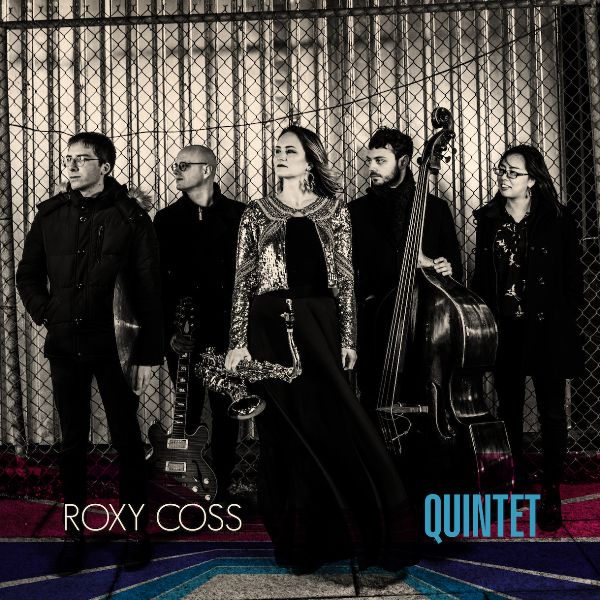
For her fifth album as a leader, tenor and soprano saxophonist Roxy Coss made the decision to select material from her first four albums (her self-released debut, the second on Origin Records, and two recent excellent releases on Posi-Tone Records) plus a new arrangement of the standard "All or Nothing at All." The new album, titled "Quintet", is her first for Outside In Music – the program posits her in the midst of her touring group composed of Alex Wintz (guitar), Rick Rosato (bass), Jimmy Macbride (drums) and newest member Miki Yamanaka (piano, electric piano).
While this is a studio date, the results have the feel of a live gig. Ms. Coss is quite proud of the band and its enthusiasm for her material, how each musician makes it better with their desire to get the song's message across loud and clear. Take "Mr. President" for example – composed in response to the election of the current United States leader (?), the piece begins and ends as a Russian funeral march. The band uses the march as a jumping off point to hit a hard groove with fine solos from the leader and Ms. Yamanaka. "Enlightenment" is a sweet, blues-drenched ballad with a long, luxurious, tenor solo plus a handsome piano spot. "The spotlight falls on bassist Rosato and guitarist Wintz on "You're There" – Macbride, the CT native who is quickly becoming a first-call drummer in New York City, really pushes the soloists on the track with his explosive fills and driving beat.
Photo: Desmond White
The one non-original, "All or Nothing at All", finds Ms. Coss taking the lead on soprano sax. The piece has a delightful Latin feel with a hard-bop release. After the flowing soprano solo, Wintz strums his way into a sweet solo prodded forward by the powerful bass and drums combination. Ms. Yamanaka keeps the chords coming on electric piano as the guitarist hits his stride.
It's Ms. Coss's tenor sax pushing the proceedings on the final track "Females Are As Strong As Hell" – not only does she take a fiery solo but the rest of the Quintet, save for Rosato, get to speak their piece. It's the shortest track on the program (4:43) but it's packed with power from the opening second to the final fade.
"Quintet" sounds great – Roxy Coss uses this release to look back over her career and previous recordings while the use of her "regular" band shows she's ready to move forward with these musicians, create new music with and for them. Play it loud and let the sounds and the incredible spirit wash over and throughout you!
For more information, go to www.roxycoss.com.
Here's the Quintet in action:
For his eighth album as a leader for Pi Recordings (and 10th over all as a leader), alto saxophonist and composer Steve Lehman pairs his long-standing trio mates, bassist Matt Brewer and drummer Damion Reid, with pianist Craig Taborn. The album title, "The People I Love", comes from a quote from vibraphonist Bobby Hutcherson and is particularly relevant in his case and in Lehman's as well. His original material has always been quite challenging but his long relationship with these musicians gives this 10-song program a warmth as well as an adventurousness that sounds exhilarating and emotionally strong.
Three of the pieces are Lehman originals, three are duets with pianist Taborn, one medley that pairs a Lehman composition with one by Jeff "Tain" Watts, plus one each by the electronica duo Auterche, Kurt Rosenwinkel, and the late Kenny Kirkland. The strength of these performances is that no piece sounds out-of-place. The Rosenwinkel piece, "A Shifting Design", was recorded eight months before the rest of the album (September 2018 as opposed to May 2019) – it's a trio blowout of the tune that the composer released in 2001. It skitters along atop the splendid drumming and rapid-fire bass work. Lehman rarely pauses for a breath yet never overplays.
There are moments when Lehman's alto is bouncing around in a manic style – those are the times that the saxophonist's attack remind this listener of fellow alto saxophonist Steve Coleman. Lehman also is an extremely rhythmical player. Note what he does on the original "Ih Calam & Ynnus" and the medley "Echoes/The Impaler". His melody lines seem to explode in sheets of notes and his solo ups the ante. On the former tune, his energy enliven the solos by Taborn and Brewer plus the tension created by the piano's block chords and Reid's chattering drums is palpable. The latter track opens with Lehman, Taborn, and Reid seemingly carrying on different conversations with only Brewer carrying the beat and, even without the listener notice, the music begins to cohere (or, perhaps, we get to used t the jagged rhythms.
The first 1:45 of Lehman's "Beyond All Limits"is a spotlight for Brewer's unaccompanied bass. He sets the pace for the band to follow and they jump on the rhythm he provides. As he does throughout the program, Reid cedes the bottom to the bass until he drops into the rhythm underneath alto solo. The drummer gets friskier beneath Taborn on the pianist's wide-ranging solo.
Kirkland's medium-tempo ballad "Chance" (first recorded for drummer Billy Hart's 1984 "Oshumare" album and then again on the pianist's 1991 debut album as a leader) has quite a different feel. The tension that can be felt on most of the quartet pieces and the one trio piece has dissipated, replaced by emotionally rich solos from both the leader and the pianist with sympathetic brush working intelligent counterpoint from the bassist.
"The People I Love" closes with the third duo track from Steve Lehman and Craig Taborn. "Postlude", like the previous two duos, is short, like haikus in the midst of longer stories. Just as powerful, these reflections stand out from the other tracks but do not interfere with the overall theme of the album, to make music with "the people I love." Steve Lehman continues to mature as a composer and saxophonist, creating music that challenges, educates, and moves the listener.

 Posts
Posts


 You can hear the influence of Keberle's immersion into Brazilian music on "Edu" – the music rolls forward on the power of the drums and the deep baritone sounds. The expansive melody is shared by the reeds and brass before Norris steps out for a handsome solo. "Despite the Dream", which the trombonist composed for Catharsis's 2020 "The Hope I Hold". This powerful ballad opens up in the middle as the tempo speeds up and short solos lines are created by Cornelius (alto sax) and Norris. Later, Cornelius and Dease (whose bari work is mighty impressive) take longer solos. "Sisters of Mine" was originally recorded by Reverso. Here, the tribute to the composer's two sibs serves as a vehicle for a lovely tenor solo from Rivera. To get there, the melody is presented by Cornelius (soprano sax), Norris, and Keberle (such a lovely tone). Melody sharing abounds on this album. The bass clarinet (Cornelius), trumpet, and flutes (Rivera and Cornelius) each introduce the melody on "All Ears", which is repeated twice without a solo. Yet, the piece is so satisfying because of how all the voices are utilized to make the piece so successful.