Showing posts with label The Jazz Session. Show all posts

Monday, March 7, 2022

Celebrating a Debut & The Music and Story of Miriam Makeba

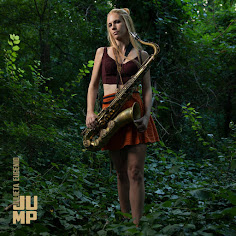
Photo: Anna Yatskevich
Tenor saxophonist and composer Julieta Eugenio was born, raised, and educated in Argentina.  After graduating from the Manuel de Falla Conservatory, Ms. Eugenio came to the United States in 2013 to study at the Aaron Copland Conservatory at Queens College in New York City where she earned her Master's degree. She's gone on to play with pianists David Kikoski and Johnny O'Neal, drummer Leon Parker, with the SIJ Trio, and the Eyal Viner Big Band.  Along the way, the saxophonist met bassist Matt Dwonszyk who introduced her to drummer Jonathan Barber––the rhythm section are both from Hartford, CT.  In the beginning of the pandemic, the bassist invited Ms. Eugenio to come to the Hartford to get away from the big city. They hiked the hills and parks around Connecticut's capitol city and, in the evenings, jammed with the drummer, giving birth to her Trio and her debut album. 

"JUMP" (Greenleaf Music) is the album. The hour-long program features eight originals from the leader plus two standards "Flamingo" (composed by Ted Grouya and Edmund Aderson, first recorded by Herb Jeffries and the Duke Ellington Orchestra in December of 1940) and "Crazy He Calls Me" (penned by Carl Sigman and Bob Russell in 1949, recored by numerous people including Billie Holiday and Dinah Washington).  Ms. Eugenio is well-served by her rhythm section––both Dwonszyk and Barber are totally involved in the music, pushing, prodding, being both melodic and propulsive. It's notable from the opening seconds of the first track as both the well-constructed melody and the percussive attack stand out. The bassist's counterpoint is on-point while the drummer dances with glee as Ms. Eugenio's solo unfolds.  


There are moments when this Trio will remind the listener of the work that Sonny Rollins did in the 1950s with bassist Wilbur Ware and drummers Elvin Jones or Pete LaRoca ("A Night at The Village Vanguard")––check out the ballad "For You" or the fun take of the classic "Flamingo" (the rhythm section is a true treat!)  Pieces such as the high-powered "La Jungla" sound more modern (pay attention to the depth of Ms. Eugenio's tone) or the slinky drive of "Another Bliss" (Barber's drum work stands out for his inventive support while Dwonszyk's bass work sings under the sax solo.) The bassist's "fat" tone and buoyant lines lead Ms. Eugenio in on "Crazy..." and the two stroll through the piece together without Barber. The bass solo is a particular treat, especially for its musicality.  

"JUMP" is a splendid debut for Julieta Eugenio laying the groundwork for a career that one hopes is filled with delightful music and interactions.  She's absorbed her lessons and now needs to hit the road which should make her music stronger and help her make her musical voice more singular. Yet, what a great start!

For more information, go to www.julieta-eugenio.com. To hear more of "JUMP" and to purchase the album, go to https://julietaeugenio.bandcamp.com/

Hear "La Jungla": 


A new album from vocalist Somi is always a welcome audio adventure.  Born in Illinois to parents who emigrated to the US from Rwanda and Uganda, Somi first came to critical notice with her 2007 debut "Red Soil In My Eyes", an album which featured her fascinating voice with Afro-Beat, Afro-Pop, and more, reminding some reviewers of the music of Kate Bush and Peter Gabriel.  Somi spend 18 months in Nigeria which led to 2014's "The Lagos Music Salon", an album that still sounds fresh with its blend of jazz, r'n'b, African rhythms, and spoken-word intervals. Social commentary, Hip Hop, funk, and American pop music entered her music with the 2017 release of "Petite Afrique" while 2020's "Holy Room: Live at Alte Oper with the Frankfurt Radio Big Band" stands out for her ability to adapt all her musical influences with a large ensemble. 

March 4, 2022, was the 90th birth anniversary of the international star Miriam Makeba and also the day that Somi  released "Zenzile" (Salon Africana), her tribute to the great singer. The recording takes its name from Ms. Makeba's first name (pronounced "Zen-zee-lay") and its material is taken from the varied segments of her career.  Pieces such as "Pata Pata" were huge hits yet Somi's version uses the song as a vehicle for a recorded interview with Ms. Makeba with only a string quartet for support.  The vocal portion features four singers plus Somi and is filled with sounds and silence. Ms. Makeba first recorded "Mbombela (Train Song)" with Harry Belafonte in 1965 in New York City––Somi's danceable take features the voice choir plus a funky band (check out the delightful organ work of Cobhams Asuquo and guitar of Herve Samb).  Angelique Kidjo joins the leader on "JIKELE MAWENI (The Retreat Song)" as do more voices, a horn section, and a lively rhythm section.

There are so many highlights (and no weak moments) in the 17-song program. Click below to hear Somi with Ladysmith Black Mambazo in a faithful recreation of "Nonqonqo", also from the 1965 album Ms. Makeba made with Belafonte. Gregory Porter joins the vocalist on "Strawberries", a song from Ms. Makeba's 1962 album "The Many Voices of Miriam Makeba"––on the modern version, the voices ride atop a piano-bass-drums-percussion quartet plus the the occasional female chorus. The music is so sensual, the lyrics evocative of a warm summer night.  Somi's magnificent, emotionally-rich, vocal on "Khuluma" is stunning. She's joined by South African vocalist Msaki; their voices wind around each other plus there is a power in their that makes one sit up and pay attention.

"Zenzile" closes with "Mabhongo", a song from Ms. Makeba's 1988 album "Sangoma" (a return to recording for the singer). With choruses of male and female voices for support plus the plaintive piano of Ndudozo Mahkathnini, the song opens like a prayer and, as Somi and the pianist step to the fore, the music displays a gentle beauty that touches the heart and the soul.

"Zenzile" is a stunning accomplishment as it brings the music of and the person who was Miriam Makeba to life once again. The messages in her songs are timeless and Somi makes sure you hear the rhythms and word––you need to hear both, you need to take the messages inside and don't let it go. In this time of forced migrations and totalitarian attacks, there is hope, sadness, love, joy, and positivity in this music.  Pay attention!

For more information, go to www.somimusic.com.  

Up in the right-hand corner of this (and all) columns is a link to "The Jazz Session"––in Episode #589, host Nicky Schrire converses with Somi and you will learn a lot about the album as well as the production of "Dreaming Zenzile" that Somi created and premiered before the pandemic (2019) that is scheduled to open Off-Broadway later this year.

Here's Somi with Ladysmith Black Mambazo on "Nonqonqo":


Personnel:

Special guests include Ladysmith Black Mambazo, Angelique Kidjo, Gregory Porter, Seun Kuti, Thandsiwa Maswai, Msaki, Nduduzo Mhakathini

Herve Samb (guitars)

Nate Smith (drums)

Michael Olatuja (bass)

Keith Witty (bass, percussion)

Toru Dodo (piano)

Mino Cinelu (percussion)

Cobhams Asuquo (organ, upright piano, percussion)

Phindi Wilson (vocal chorus)

Bongi Duma (vocal chorus)

Nhalanhla Ngobeni (vocal chorus)

Vuyo Sotashe (vocal chorus)

Lakecia Benjamin (alto saxophone)

Jeremy Pelt (trumpet)

Myron Walden (soprano saxophone & tenor saxophone)

Mazz Swift (violin 1)

Juliette Jones (violin 2)

Jessica Troy (viola)

Marika Hughes (cello)


Friday, October 12, 2018

Music for the 21st Century, For Today

I do not receive Blue Note albums to review - I buy the ones I really want.  Over the past decade, trumpeter and composer Ambrose Akinmusire has caught my ear and mind, not only on his own recordings but also his work with David Binney, Walter Smith III, and Wolfgang Muthspiel (to name but three).  His own recordings stand out for the width and breath of his imagination. Yes, he's a fine musician yet it's the 36-year old Oakland California native's compositions and arrangements that truly set him apart.  Akinmusire absorbs all he hears on the bandstand, in concert halls, in practice room, on the radio, and in the streets, adding those myriad sounds to what he reads in books, essays, and in the daily papers.

"Origami Harvest", his fourth album for Blue Note Records, is, arguably, his most ambitious sonic adventure.  The six original compositions feature two members of his Quartet, pianist Sam Harris and drummer Marcus Gilmore, plus vocals from rappers Kool A.D. and LmbrJck_t as well as impressive string work from The Mivos Quartet.  I have yet to hear the entire album - still, judging from the fascinating video below, this is a major work.  Filmed in the streets and from the sky above his native city, the film compiles excerpts from the entire album, with natural images interspersed with impressionistic choreography and the powerful vocals. Experimental? Yes!  Thought-provoking?  Absolutely! Let this music soak in. Art has the power to disrupt even as it entertains.

For more information, go to www.ambroseakinmusire.com.


*********************************
It would be remiss of me not to mention that Jason Crane and The Jazz Session is back.  You can see that in the right-hand corner of this blog.  In a bit of shameless self-promotion, I was fortunate to be interviewed by Mr. Crane as I am a sponsor of his work on Patreon and he asked if I would contribute to his "subscriber Bonus Material" by talking about one of my favorite albums.  Readers of this column how hard it is for me to pick a Top 10 every year (some years, as high as 42) but, for the sake of sanity, I chose two and went with a third, "Freedom Suite" by Sonny Rollins, his ground-breaking recording from 1958 featuring drummer Max Roach and bassist Oscar Pettiford.  I invite you to listen (click on the link) as that post is open to the public and I urge you to be a Patreon subscriber.  There are few interviewers, if any, more engaging than Jason Crane and you'll learn a lot about some fine creative artists.

Thursday, September 20, 2018

Culture, Music, Fusion, & Emotion

Photo: Jimmy Katz
If you have closely followed the career of Miguel Zenón, you'll know it's been quite a journey from his early recordings with the Either/Orchestra and tenor saxophonist David Sánchez as well as his 2002 debut as a leader (the aptly-titled "Looking Forward" which featured, among others pianist Luis Perdomo and bassist Hans Glawischnig, both of whom are still members of Quartet).  Zenón is also a founding member of the SFJazz Collective, an octet organized in 2004 currently in its 15th season (which will be the saxophonist's final one with the ensemble).  Go back and listen to the early recordings and you'll hear he's already has his signature sound and that his original compositions were (and still are) inspired by the folkloric and popular music of his native Puerto Rico.  What has changed from those initial recordings is that his writing has matured in wonderful ways.

His latest project and album, "Yo Soy La Tradición", is his fourth album on his Miel Music label.  Zenón has created a collection of pieces inspired by classic Puerto Rican songs as well as elements of musical styles from different cities and towns on the island.  Scored for alto saxophone and string quartet. Zenón's partners on the project are the Chicago-based Spektral Quartet (violinists Clara Lyon and Maeve Feinberg, violist Doyle Armrest, and cellist Russell Rolen). Recorded during the horrific days when Hurricane Maria struck Puerto Rico (and elsewhere in the Caribbean and United States), the results are an amazing blends of styles, melodies, harmonies, interactions, and rhythms. Rhythms?  String quartet?  O, yes, a number of these works are based on "dance" songs and all five musicians play "percussive" melodic lines and, in the case of the strings, plenty of pizzicato.

Photo: Robert Watson
Five weeks ago, I wrote a preview of the album and there is no need here to go through every track (I included several cuts to listen to - click here).  But, let's look at "Rosario", the song that opens the album. It's based on a Catholic Church tradition in which every segment of the Rosary is presented to the congregation with a musical piece to accompany it.  The piece opens slowly with a melody that has traces of the Shaker Hymn from Aaron Copland's "Appalachian Spring" (the melodic echo appears several times during the performance) with the alto saxophone leading the strings into the music.  They come together and move apart throughout the piece yet it's those strings that add the tension and percussive elements to the piece.  Zenón hands the lead position to viola, violin, and cello as well as keeping a section to himself.  The blend of his saxophone with the strings is impressive throughout and while it seems as if he is the "front man", this music is a true collaboration.

Photo: Brian Jackson/Chicago Tribune
"Yo Soy La Tradición" is brilliant, an entrancing, attractive, intelligent, and often stunning collection of songs that blur the lines between classical, folk, jazz, and popular music. In fact, throw out any and all labels. The insistence on labels only insults the intelligence of the audience.  Instead, focus on how beautiful - yes, beautiful - this music is.  Listen deeply, smile with it, be moved by the passions and the emotions, and enjoy how seamless the arrangements are throughout.  This is not "background music"; instead, this album will resonate for as long as you give yourself fully to the experience.  Kudos to Miguel Zenón and the Spektral Quartet!

For more information, go to miguelzenon.com and to spektralquartet.com.

Enjoy "Promesa":


*******************************************

One more thing. If you look up at the right hand side of the blog, you'll notice that there are new episodes of "The Jazz Session", the excellent series of interviews with musicians conducted by, arguably, one of the best, Jason Crane. You will learn so much from listening to Mr. Crane and his guests and it's fun!  Very good to have him back - there are still so many musicians out there deserving of the Jason Crane approach! For more information, go to thejazzsession.com.

Monday, April 18, 2016

Three Nights at The Side Door + Bassist's Bigmouth + CD Pick

Yet another busy weekend of music at The Side Door Jazz Club in Old Lyme; this time, it starts on Friday, features a drummer who's played the venue numerous times, has a sold-out show on Saturday, and ends on Sunday with a rollicking show from a Marsalis brother.

The drummer is E.J. Strickland and he's leading his quintet Transient Beings into the venue for the first time.  He formed the group in 2012 and the lineup includes vocalist Sarah Elizabeth Charles, 2 guitarists - Nir Felder and Tom Guarna - and electric bassist Rahsaan Carter.  As you can see, this is an "electric" group and, judging by their videos, the music can be electrifying.  Strickland's compositions reflect his philosophy and spiritual bent, with the music always pushing forward.

Doors open at 7:30 p.m. and Transient Beings play its first notes at 8:30.  Call 860-434-0886 for reservations.

Check out the quintet in action:


Vocalist and pianist Karin Allyson returns to The Side Door on Saturday but the show has been sold out for a good while.  Which is really no surprise as Ms. Allyson is one of the most popular and busiest performers on the scene.  She's touring to support her new album, "Many a New Day" (Motema Records); the recording finds her interpreting 14 songs by Rodgers and Hammerstein in the company of pianist Kenny Barron and bassist John Pattitucci.  It's quite a fine album and, perhaps, the video below will ease the pain of the sold-out gig in Old Lyme.

Go to www.karrin.com/events/ to see where she's performing this year.

Here's a video about the new album:


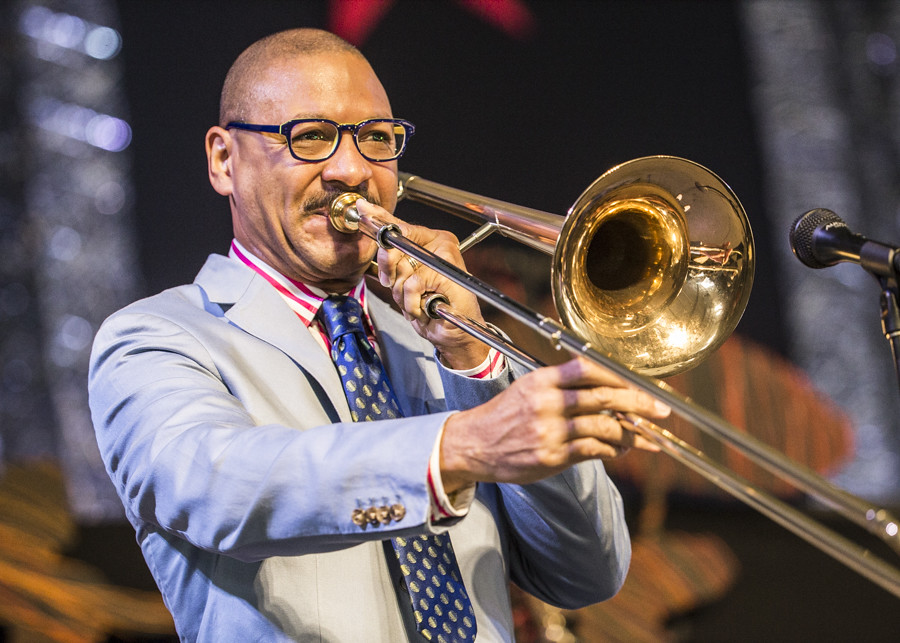
Sunday evening at 8 p.m., Jan and Ken present Delfeayo Marsalis & the 2nd Line Quintet for 2 sets of music that comes from or is inspired by New Orleans. Trombonist Marsalis, the 3rd of the Brothers who are the musicians/sons of pianist Ellis Marsalis, is best known for his production work but he's also been a touring musician and has released five Cds under his own name since 1992 (three in the last 9 years).

For his gig in Old Lyme, he's bringing the rhythm section of Reginald Veal (bass), the great Marvin "Smitty" Smith (drums) plus Roderick Paulin (saxophone) and special guest Cyrus Chestnut (piano).  If that lineup doesn't make you want to get up and dance, best you check your pulse.  The trombonist/leader also knows how to play sweet ballads, music from Eliington and Strayhorn and other masters of jazz.

For tickets, go to thesidedoorjazz.com or call 860-434-0886.  At the website, you can check out the upcoming shows through the middle of June and make your reservations accordingly.

Here's a taste of Poppa Marsalis and his sons swinging and "Struttin'":


Firehouse 12 in New Haven continues its Spring 2016 Concert Series with a visit from bassist and composer Chris Lightcap's Bigmouth. Lightcap, who is currently in the rhythm section of both the Matt Wilson Quartet and Regina Carter's group, has had quite the busy career recording and touring with the likes of vocalist Nicki Parrott, guitarist Joe Morris, Professor Anthony Braxton, and so many others.  The bassist named his quintet Bigmouth after releasing an album with that name in 2005.  The personnel has remained fairly stable over the past decade with Tony Malaby and Chris Cheek (tenor saxophones), Craig Taborn (piano, organ, electric piano) and Gerald Cleaver (drums).  The group's latest Clean Feed album, "Epicenter", was issued in 2015 and made many "Best Of" lists; deservedly so, as the music combines jazz and modern rock influences into a stew that blends the mesmerizing sounds of the saxes with a powerful rhythmic surge and the many keyboard colors that Taborn produces.

Bigmouth will play 2 sets - 8:30 and 10 p.m. - with separate admission to both.  For reservations, go to firehouse12.com or call 203-785-0468.

Give a listen to the opening track of "Epicenter" here:


Also, I recommend you check out Jason Crane's interview with Mr. Lightcap on The Jazz Session. Click on the link up on the right of this column.

********************************************
In 1921, with World War I and the Great Influenza Pandemic of 1918-19 beginning to recede from the national memory, the musical "Shuffle Along" debuted on Broadway.  With an all-Black cast, music and lyrics by Eubie Blake and Noble Sissle, relegated to a distant theater on the edge of The Great White Way, the musical soon captured the hearts of Big Apple audiences with its exuberant and wonderful melodies.  Despite the fact that the show was built on racist stereotypes seen in the various Minstrel shows that been produced in the U.S. since the 1840s, the production brought Black audiences into the theater district, an area where they rarely ventured.  After its 15-month run on Broadway, the show took to the road and was quite successful through 1924.  The show has been revived several times and is now back on Broadway - The New York Times magazine ran a fascinating multi-media article on the show in March of this year - read it here.

Ehud Asherie has his own take on the music, producing a new solo piano CD. Appropriately titled "Shuffle Along" (Blue Heron Music), the young pianist, born in Israel but raised in Italy, explores the Blake tunes with joy and sensitivity.  Several of the tunes - in particular, "I'm Just Wild About Harry" and "Love Will Find a Way" - have long been part of the jazz standard repertoire. Listening to Asherie's performances, it's easy to understand why. The melodies are so well-developed (and hummable), moving with a lilt and grace plus a joie de vivre that belies the African American situation post Reconstruction.

My suggestion is to not only see the musical on Broadway (if you can) but also listen to this delightful recording from Ehud Asherie. He's such an accomplished musician, it's obvious to hear as he dances, sways, struts, and strolls through the melodies of Eubie Blake.  While a Broadway musical is often "blown up" to fill the stage, on a recording, one can revel in the rhythms, harmonies and melodies without having to watch a spectacle. What a treat!

For more information, go to ehudmusic.com.

Here's the opening cut from the CD:

Friday, January 22, 2016

Happy 50th Anniversary Vanguard Jazz Orchestra

It was 50 years ago, on Monday night February 7, 2016, that the Thad Jones/Mel Lewis Jazz Orchestra played its first notes in the famed Village Vanguard in New York City.  College student, jazz aficionado, and recording engineer George Klabin was seated at a smalltime near the stage with a 2-track tape machine and a 4-channel mixing board capturing every sound with 6 microphones place strategically around the various sections of the band.  Messrs. Jones & Lewis used the tapes to get a recording contract while Klabin was allowed to play the music on his radio show on WKCR-FM at Columbia University.

When Thad Jones (pictured left) left the Count Basie Orchestra in 1963 (where he had been a featured soloist on trumpet and flugelhorn as well as an arranger and composer), he had a number of pieces that he had never used. Just a few months before the end of 1965, Jones got in touch with long-time friend and drummer Mel Lewis (who had earned his stripes in the large bands of Stan Kenton and Bill Holman as well as dozens of small-group recordings) to create a rehearsal band to play these pieces.  By February of 1966, they were ready to face an audience and both the Thad Jones/Mel Lewis Jazz Orchestra and a long-standing gig were born.

Klabin's tapes have long been "bootlegged" and never available to the listening public but all that changes on February 19 of this year. That's when Resonance Records, owned and operated as a non-profit by Mr. Klabin, releases "All My Yesterdays: The Debut 1966 Recordings at the Village Vanguard", a 2-CD set that includes not only the best of the cuts from the February 7th gig (several that never appeared on any bootleg) but also music from a Monday night 6 weeks later (March 21).  If you have any of the previous Resonance releases, you'll know that the packages always include several essays, great photos, and stories from participants.  This new CD will have a package that includes a 92-page booklet with numerous essays and never-before-seen photographs.

And, check this out from the press release for the album: "....on Monday, February 8, 2016, the Village Vanguard along with Resonance Records, will commemorate this golden anniversary with a CD release celebration. On this evening, the Vanguard Jazz Orchestra will perform compositions from "All My Yesterdays" to celebrate opening night back in 1966. Although they normally play this material weekly, this evening will serve as a special tribute. Orchestra leaders John Mosca, Douglas Purviance and the Village Vanguard's Lorraine Gordon have joined together with Resonance to celebrate this milestone in American jazz history."  In fact, the VJO will be in residence at the Vanguard from February 1 - 8 so this should quite a week of great music old and new (not that Thad Jones' music ever sounds old.)  

To find out more about performance, go to www.villagevanguard.com/#!schedule/c1enr.  To find out about the upcoming CD, go to www.resonancerecords.org/release.php?cat=HCD-2023.
*****************************************
Take a look in the top right-hand corner of the blog and you'll see that The Jazz Session is...well, it's back in session. Its proprietor, Jason Crane, is now living in State College, PA, where he is the program director and show host on 98.7TheFREQ-FM.  For those of us who have listened over the past 8 years, this is great news. Mr. Crane is an enthusiastic and well-informed interviewer who has helped to bring artists to the attention of an avid audience. Now, go to thejazzsession.com and take joy in his return and the music!

Sunday, September 14, 2014

Old and New Dreamers

Approximately 47 years separate these 2 recordings but one can hear the plethora of threads that underpin Black American music.

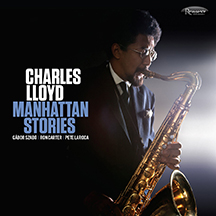
Charles Lloyd, born in Memphis, Tennessee , was educated both in the classrooms of USC and on the bandstand with the Gerald Wilson Big Band as a music director of the Chico Hamilton Quintet. In 1964, he joined Cannonball Adderley's band and performed on that group's "Fiddler on the Roof" CD for Capitol Records.  A year later, he left that group and moved to New York City - he had already released 2 Lps as a leader on Columbia Records, the second of which, "Of Course, Of Course", featured his band mate Gabor Szabo (guitar) who he had worked with in the Hamilton Quintet.

"Manhattan Stories" (Resonance Records) is a 2-CD set recorded in July and September 1965, and finds Lloyd with Szabo, bassist Ron Carter and drummer Pete La Roca Sims.  The September gig, recorded live in Judson Hall, across the street from Carnegie Hall in New York City, took place just 6 months before Lloyd recorded "Dream Weaver", his debut Lp for Atlantic Records and the first to feature the quartet of Keith Jarrett (piano), Cecil McBee (bass) and Jack DeJohnette (drums).  This is his legendary Atlantic group that stayed together (save for Ron McClure replacing McBee) through the end of the decade.

CD 1 is actually the later gig and is taken from the tapes Resonance head George Klabin made as a student at Columbia University. The concert he recorded was part of Charlotte Moorman's Festival of the Avant-Garde. When the engineer and co-producer Zev Feldman sought permission from Lloyd and his wife Dorothea Darr to release the tapes, not only did the saxophonist/flutist agree but gave the duo the tapes that make up the second CD, recorded at the legendary Slugs', 242 East 3rd Street in the East Village. The Saloon/jazz venue closed in 1972, just weeks after trumpeter Lee Morgan was shot to death by his wife.

photo by Lee Tanner
The music is delightful, 3 lengthy tracks on both disks (the longest is "Sweet Georgia Bright" at just under 18 minutes and the shortest is the following track "How Can I Tell You" at just under 12 minutes - both from the Judson Hall show), and filled with references to Lloyd's love of the blues, his study of classical music, Szabo's musical influences (ranging from Indian scales to blues to gypsy melodies).  Kalbin and Fran Gala did a super job restoring the Slugs' tapes, the "bright" mix allowing Carter's tasty bass work to stand out.  La Roca Sims does a splendid job as both the time keeper and interacting with the soloists. Szabo's piece "Lady Gabor", appears on both disks - it's a tune the guitarist brought to the Chico Hamilton ensemble.  Both versions stretch out nicely, Lloyd's flute introducing the melody, taking the first solo which leads (on both versions) to Szabo's raga-like solo.  Carter's counterpoint is notable, creating a drone of his own. The leader's flute playing really stands, especially for its bluesy quality. On the Slugs' CD, Lloyd picks up the maracas to add to the mesmerizing percussion.  Also from Slugs' is the debut reading of "Dream Weaver" - it's fascinating to note the similarities to the long "jams" the Grateful Dead would go on to create in the next several decades in San Francisco and beyond.  When the piece was recorded for Atlantic Records nearly 9 months later, the composer added a new beginning but the basic rhythms were the same (sounding much like a predecessor to "Forest Flower.") Another treat is the totally improvised "Slugs' Blues", created on the spot for the gig.

"Manhattan Stories" may not be aurally pristine but has a spirit, a grit, and fire that one hears in much of the music Charles Lloyd has created over the 5+ decades of his career.  From the beginning, he's been an explorer, always moving forward, going down different paths yet always being himself.
Kudos to Resonance Recordings for this great package (excellent booklet as well). In addition, the label is making a limited edition 10" vinyl version of the "Live at Slugs'" - go to www.resonancerecords.org/release.php?cat=HLT-8016 to find out more.

In late December 2012, composer, trumpeter, and conceptualist Wadada Leo Smith went into Avatar Studios in New York City to "The Great Lakes Suites" (TUM Records).  Joining him was the rhythm section from several of his Golden Quartet recordings, drummer Jack DeJohnette and bassist John Lindberg - to round out the ensemble, he invited Henry Threadgill to play alto saxophone, flute and bass flute. Smith and Threadgill are part of Muhal Richard Abrams' Experimental Band but their history goes back to the late 1960s, to Chicago and the AACM (Association for the Advancement of Creative Musicians) - DeJohnette was involved with that group back at its formation, as well.

photo by Jules Allen
The music Smith has composed for the Quartet plays into each musician's strength. The leader plays with great clarity, focus, a sound that cuts through the speakers with power and articulation.  Threadgill's alto sound can be so tart and clipped while his flute work sings - he is a such a unique player, one never really knows what to expect. Lindberg, at 55 the "baby" of the group (at the time of the recording, both Smith and DeJohnette had already entered their 8th decade while Threadgill was 14 months shy of 70), is one of the most impressive bassists playing in the arco style (using his bow).  DeJohnette plays with extraordinary power and subtlety throughout this music, very much in the "driver's seat"; his creativity is unrivaled, reminding of the work that Max Roach created from the 1950s through the early 2000s.

"The Great Lakes Suites" takes its name from the 5 interconnected freshwater lakes that border the United States and Canada. The 5 tracks named for the Great Lakes are dedicated to Petri Haussila, producer and founder of TUM Records.  The composer added Lake St. Clair to the "Suite", the body of water to the northeast of Detroit that borders Michigan and Ontario Province, connecting Lake Huron to Lake Erie; the lake is used for both recreational and commercial ventures.  "Lake St. Clair" is the cut that closes the program and is dedicated to saxophonist/composer Oliver Lake.

"Lake Michigan" opens the program and is the longest track at 22 minutes. The multi-sectioned rises and falls on the various melodic elements plus the brilliant work of the rhythm section.  Threadgill's alto blends sweetly with the trumpet on the opening and closing themes; elsewhere, the saxophonist's lines weave in and around the other musicians while Smith often serves as both the leader and "town crier", his bright high notes serving as a wake-up call.  There's a serious call-and-response in the opening minutes of "Lake Ontario" for the flute and trumpet plus the bass and drums. Lindberg's furiously bowed bass alongside DeJohnette's "conversational" drums is a magnificent 3-minute adventure before the bass drops out and Smith engages with the drums.  When they finish, it's Threadgill's turn but suddenly the drummer becomes coy, just dropping in a few sounds before the trumpet and bass play a series of long tones. There's a hint of Julius Hemphill's "The Hard Blues" in the opening minute of "Lake Superior" but soon subtlety turns to fire as DeJohnette goes into hyperdrive, pulling his bandmates along (the melody Threadgill and Smith are playing moves slowly atop the fiery percussion.)  The trumpet and alto sax solos serve to remind the listener how creative both musicians can be, pushing against the rhythm section to carve out their own space. Lindberg's pizzicato work supplies as much as heat as his battery mate.

CD 2 has its own pleasures and surprises, none more moving than the stunning unaccompanied bass flute music that opens "Lake Erie" - it's a wonderful mix of sounds, from Native American to South Indian Carnatic music but not beholden to either music. The first to join in is DeJohnette and his work sparks the conversation but he soon steps back to allow Lindberg to interact with Threadgill. The music takes a more dramatic shift when Smith's muted trumpet joins the flute to play a stolid melody. Soon, the trumpet begins a duet with the bass and now the mood has definitely changed, Smith's sonic experiment adding fire where once the meditative flute had been. DeJohnette enter and the intensity level spikes higher. There's much more that happens as the work develops through several more sections, including a marvelously understated drum solo.

If you are fan of Wadada Leo Smith's music, "The Great Lakes Suites" is a must own.  Just to hear these 4 master musicians wend there way through this highly charged yet impressively melodic audioscape gives one hope in uncertain times.  Kudos all around to Wadada Leo Smith, Henry Threadgill, John Lindberg and Jack DeJohnette, to sound engineer Robert Musso, to the liner notes of John Litweiler, to the art work of Markus Kontinnen that graces the covers and others. For more information, go to www.tumrecords.com/041-2-the-great-lakes-suites.

Jason Crane (pictured left) not only turned 41 this week but also returned to radio.  He's now the host of "The Jazz Session" (sound familiar?) Friday morning from 9 - 11 a.m. on The Lion 91.7 FM in State College, PA, the home of the Nittany Lions (ok, Penn State.)  Yes, he is still the host of "The Jazz Session" podcast where his interviews with musicians are notable for the depth of questions (and occasional silliness) and now he gets to play the music he loves to talk about.  If you go to thejazzsession.com/radio-playlists/, you can see just how much territory his fertile imagination and music collection covers.  You can also still sign up to support Jason Crane in his quest to keep "The Jazz Session" in motion.  So, you can listen to his show online (did not see any archives) on Friday or check the great interviews by clicking on the right hand side of this blog post.

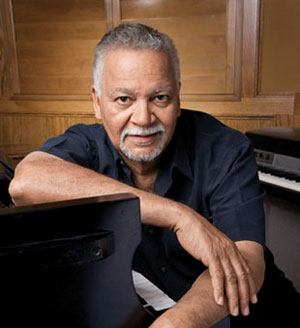
Saddened to read of the recent passing of pianist/composer Joe Sample at the age of 75.  I actually heard The Crusaders before I realized there was a Jazz Crusaders - DJ Don Imus used the band's "Put It Where You Want It' as a theme song, a track from their 1972 debut on Blue Thumb Records.  A funky little ditty, perhaps better known for bassist Wilton Felder's hearty tenor saxophone solo and Larry Carlton's slinky guitar riffs, yet it's the 6-note Fender Rhodes figure Sample plays to open the cut (and throughout) that hooks you from the  word "go!"  Over his career, which spanned 5 decades, he worked with artists as diverse as Eric Clapton, Steely Dan, Joni Mitchell, and Willie Nelson, not to forget his work with Quincy Jones and hits with vocalist Randy Crawford.  Born in Houston, he worked steadily in the Los Angeles studios and and a touring performer before health issues slowed him down as he moved back home in the early 2000s.  Joe Sample recorded many CDs under his own name, the most recent being a live 2008 recording with Ms. Crawford released in 2012. He played with grace and style, rarely if ever showing off.  Joe Sample will be remembered as a good musician and a great man.

Monday, October 21, 2013

Buttonwood and Firehouse Live + on CDs

The John Funkhouser Trio - Mr. Funkhouser (piano, keyboards), Greg Loughman (acoustic bass), and Mike Connors (drums) - return to The Buttonwood Tree, 605 Main Street in Middletown.   This is the band's 3rd appearance in the last 2 years; this time, they are celebrating the release of "Still" (Jazsyzygy Records), the JFT's 3rd release and first in 4 years.

If you have ever seen and heard this ensemble (pictured left) in person, you know how much energy they bring to a live show.  Yes, they each have technique to burn (and, there are moments when they let it rip) but are also extremely musical.  The material on the new CD ranges from a Latin-inspired romp through Thelonious Monk's "Little Rootie Tootie" to a blues-drenched rendition of "House of the Rising Sun" (featuring a long but emotionally rich bass solo from Loughman) to a long and satisfying journey through the Rodgers/Hart standard "My Romance."  There are also 5 Funkhouser originals including the often fiery opener "Indigo Montoya's Great Escape" (named for the pianist's cat) to the multi-sectioned "The Deep"(1 of 3 tracks featuring guitarist Phil Sargent and 1 of 2 featuring the wordless vocals of Aubrey Johnson). Ms. Johnson also appears on "Leda", a ballad that turns up-tempo, propelled by Connors' splendid drum work. The CD closes with the haunting and mysterious title track; it features a fine bass solo, a hint of George Harrison's "Within You, Without You" in the melody line, atmospheric guitar, more splendid drum work and a mesmerizing piano solo.

The John Funkhouser Trio is, often, wildly inventive and great fun to watch and listen to - they can also play with grace and sweetness.  The Buttonwood gig starts at 8 p.m. this Saturday (10/26).  Go to www.buttonwood.org for more information and to reserve a seat (or 2).  To learn more about Mr. Funkhouser and his talented comrades, go to www.johnfunkhouser.com.  

Firehouse 12, 45 Crown Street in New Haven, is in the midst of a fascinating season.  Last week (10/18), the Elm City venue welcomed trumpeter/composer Amir ElSaffar and his splendid quintet (Dan Weiss, John Escreet, Ole Mathisen and Dave Ambrosio - wow, did they rock the performance space!) - this week, the spotlight turns to bassist/composer James Ilgenfritz and his splendid band, a quartet that features Angelika Niescier (saxophone), Andrew Drury (drums) and the amazing Denman Maroney (piano). The band's debut CD, "MIND GAMeS", was issued in 2012 on OutNow Records.  The music created by the quartet is built upon their interactions, their innate ability to act upon and/or react to what each one is playing.  Ilgenfritz is no stranger to challenges, having recorded a solo bass CD of Professor Anthony Braxton's large group compositions.

This adventurous quartet plays 2 sets - 8:30 and 10 p.m. - for ticket information, go to firehouse12.org.
To learn more about James Ilgenfritz and his music, go to www.jamesilgenfritz.com.

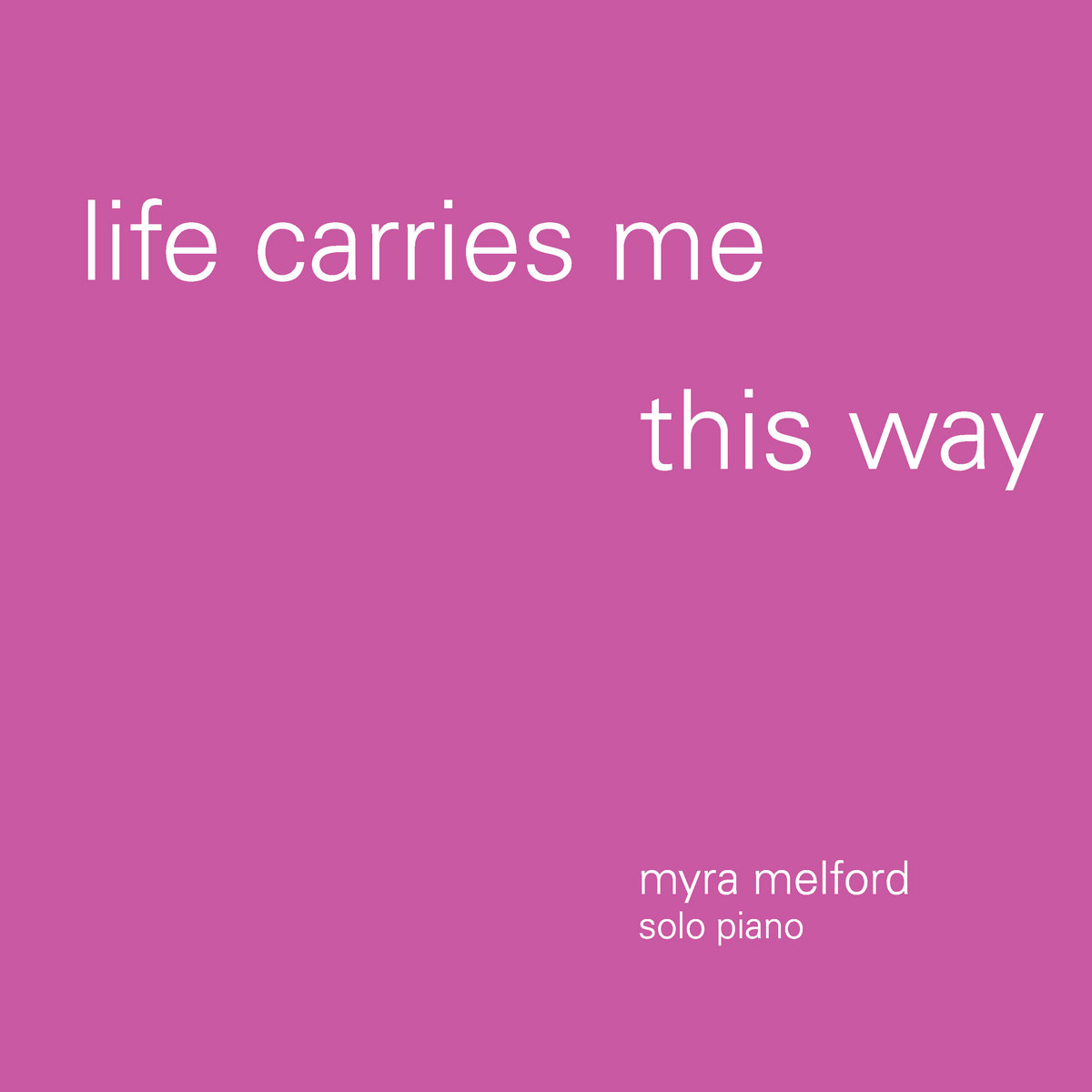
Firehouse 12 Records has just issued "Life Carries Me This Way", a collection of solo piano pieces performed by Myra Melford and inspired by the paintings of her family's life-long friend, Don Reich (1931-2010).  Reich, a native of California and long-time resident of Sacramento, responded to Ms. Melford's request for a stack of drawings and paintings for her to interact with and create a series of compositions.  The pieces took some time to come to life but the results are remarkable.  Some of the credit must go to label head/recording engineer/mixer and mastering engineer Nick Lloyd who also co-created the packaging with his wife Megan Craig.  Each of the paintings that inspired the music is included in the booklet as is a short essay from Ms. Melford and a longer look at the painter from his friend, Charles Johnson, the former art critic for the Sacramento Bee.

Then, there is the music.  Contemplative, rhythmical, challenging, lyrical, often enthralling, every piece makes sense to the listener when looking at the painting that inspired the music. The gentle sounds of "Japanese Music" follows the patterns in the painting, perhaps an overcast day with mist leaving shapes on the windows of the studio.  The angular melodic fragments and changes in rhythm of "Piano Music" may be inspired by the different sections of the painting that inspired it, images and colors that flow into each other.  "Moonless Night", the painting, features unconnected body parts, Picasso-like, while the music is straight-forward, melodic, minimal left-hand accompaniment, slow, stark, with quiet strength. "Still Life", the exquisite melody that closes the program, is breath-taking in its emotion and execution; the music resonates in your heart and mind long after the final notes fade.

You should discover this music for yourself, creating your own responses to the art of both Don Reich and Myra Melford.  If you have paid any attention to her music, you already know Ms. Melford takes no short-cuts, does not play "down" to her audience, but does allow her muse to carry her "this way" and "that way." "Life Carries Me This Way" is, simply put, essential listening, timeless and richly rewarding.  For more information, go to www.myramelford.com and to firehouse12records.com/releases.

********************************
Don't forget to look on the right of this column where you will see that "The Jazz Session" is back in business.  Thanks to his many supporters, host/interviewer Jason Crane is back doing what he has done so well in the past, speaking with many of the people who create the music that many of us live to listen to.  Two shows a month for the foreseeable future and you can still become a supporter.  Click on one of the shows to listen and find out more.  Welcome back, Jason!

Friday, July 19, 2013

Musical Pleasures Big and Small (Part 1) + Helping Jason Crane

Trombonist/composer/arranger Alan Ferber is one busy musician with a list of associations ranging from the Vanguard Jazz Orchestra to Peter Gabriel to Sufjan Stevens to Dr. Dre to John Hollenbeck and many more.  He has released 3 CDs with his Nonet, the last one also featuring a nonet of string players that still sings to me 3+ years after its release (my review is here).

On July 31, Sunnyside Records releases "March Sublime", music for a big band consisting of 17 musicians.  Powered by the leader's twin brother Mark (drums) and bassist Matt Pavolka, the music swaggers, struts, purrs and moves in a variety of directions on the power of Ferber's excellent melodies and harmonies.  5 of the 8 tracks are originals with the 3 remaining including saxophonist Chris Cheek's "So It Seems" (from his 2000 "Vine" CD), Bjork's "Hyper-Ballad" (from her 1995 recording "Post") and "I Get Along Without You Very Well", a song composed by Hoagy Carmichael that was a big hit in 1939 for Red Norvo and His Orchestra (and has been recorded by numerous people since including Chet Baker, Frank Sinatra, Nina Simone, Billie Holiday, and Stacey Kent.)  The CD opens with "Kopi Luwak", a work Ferber composed for the American Brass Quintet - the rapidly-executed piece has both an Eastern European feel and bears the influence of Steve Reich. The voicings for the brass (4 trumpets, 4 trombones) have great strength while Pavolka's rumbling electric bass lines and Mark Ferber's driving drum work offer strong support for the solos of John O'Gallagher (alto saxophone) and Clay Jenkins (trumpet).  The 2-part "Wildwood" is the longest piece on the program;  the rubato "Intro" features the trombone section with the leader up front over the "skitterish" drums, rippling guitar backing (Anthony Wilson) and electric keyboard (David Cook).  The main part of the song is a handsome ballad, the moaning brass and reeds reading the melody.  Ferber moves out of the sectional sounds for a richly melodic - and bluesy - solo giving way to Wilson's finely constructed statement that also has blues at its core yet rises atop the rich acoustic piano chords.  At its climax Ferber returns with a second solo that is more forceful and emotionally rich.

The title track rides in on martial drumming (naturally) and electronically modified trombone before the reeds state the theme with the brass for counterpoint and an underpinning of assorted instruments playing short, repetitive figures.  The piece moves slowly but surely into the solo section for the trombone of Ferber and trumpet of Scott Wendholt.  Everyone quiets down below them save for the chattering piano, occasional guitar lines, and steady rhythm section.
"The Compass", a work originally written for his nonet (and the title of its second CD on Fresh Sounds New Talent), is not so much changed as it is "filled out."  The piece has all the earmarks of a "modern" big band work, from flowing sectional work to a rhythm that constantly shifts as it moves forward to an elongated melody line. John Ellis delivers a fine tenor sax solo followed by a playful statement from  Josh Roseman.  The trombonist starts out using a mute to modify his sound before going "natural" and pushing against the turbulent rhythm section.  The swirling sounds of the acoustic piano and electric guitar suggest a ship in a raging ocean.
"March Sublime" is all that and more.  The overall sound and approach of Alan Ferber reflects the large band sound of his contemporaries John Hollenbeck and Darcy James Argue as well as their musical mentor Bob Brookmeyer (not to forget Maria Schneider whose music channels both Brookmeyer and Gil Evans.)  Each of these people mentioned have developed in his or her own way, allowing their various musical influences to color their work, moving far beyond imitation. Alan Ferber creates music for the adventurous listener, music that allows one to get lost inside it and enjoy all the elements that come together in the individual pieces.  For more information, go to www.alanferber.com.


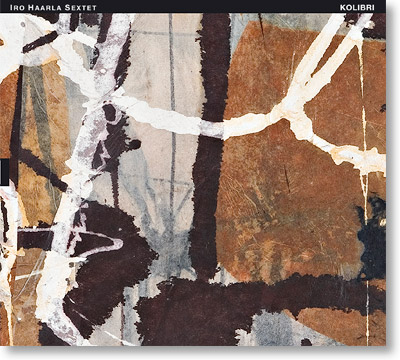
Pianist/composer Iro Haarla may not be well known on this side of the Atlantic Ocean but the native of Finland has a decade that spans over 3 decades, including working with her drummer-husband Edward Vesala (1954-1999) for 18 years before he passed. She has also performed with trumpeter Tomasz Stanko and pianist Christian Wallumrod and joined forces with bassist Ulf Krokfors to form a duo plus a 9-piece ensemble called Loco Motife.  The bassist is a member of Ms. Haarla's Finnish-Norweigian quintet that has recorded 2 CDs for ECM, the latest being 2010's "Vespers."

Ulf Krokfors is also a member of the Iro Haarla Sextet which the pianist organized in 2009 and with whom she has recorded her latest CD, "Kolibri" (TUM Records). Besides the pianist and bassist, the group (all natives of Finland) includes the impressive young trumpeter Verneri Pohjola plus Jari Honigsto (trombone), Kari Heinila (tenor saxophone, flute, alto flute) and Markuu Ounaskari (drums). The 7 tracks, all composed by Ms. Haarla, display a bit of what might expect from a Scandinavian group (what critics and reviewers call the ECM sound) but do in fascinating directions.  For instance, the title track opens with a quiet statement from the pianist yet when the sextet enters, the music picks up its pace with the trombone blending with the flute on the theme. The piece takes its title from the Finnish word for hummingbird so it's fitting that the first solo is Heinila on flute.  Ounaskari's active drums push Pohjola into a hard-edged solo with the minimalist piano and flurry of bass notes as counterpoint.  "Legend of Cranes" has a "noisy" opening with grating notes from the bass amidst the scurrying sounds of the trombone and drums before dropping into an uptempo groove (sounding a bit like Wayne Shorter piece from the late 1960s).  There's a short drum solo leading to a dialogue with Heinila's tenor sax as the trombonist and trumpeter flutter around.    There's a darker mood to "Sad But True"yet the piece is more introspective - the melody feels like a blend of Thelonious Monk and Ornette Coleman. The pianist's solos often have the quality of one from Monk. She doesn't jump all over the keyboard but slowly builds her solos, often peaking then fading back.  The mood of "Procession" is similar, opening with long tones from the horns, picking up in tempo for a long section where the trumpet, trombone and tenor sax weave around each other, come together, move apart, supported by a rhythm inspired by Miles Davis and Gil Evans' "Sketches of Spain."  The playful flute work blends with the more solemn brass on "Spirit Bear", a piece that also features excellent drum work as well as the "Sketches of Spain" influence.

The program closes with a Sextet version of the title track from Ms. Haarla's "Vespers" CD.  While the piece is slow, the mood is lighter, peaceful, meditative, with Pohjola and Heinila (tenor sax) reaching for higher notes while Hongisto plays in the lower register of his trombone.  Krokfors' bass lines work well with the soft drum patter, certainly standing out on his solo in the middle of the piece.  When the pianist re-enters, her phrases feel like a lullaby but the music moves on to a fine trombone solo, closing with the tenor and trumpet helping the song come to an easy ending.

Iro Haarla is the leader of this Sestet but does not step out front for long periods - she often remains part of the ensemble "sound."  While there are plenty of solos, the music on "Kolibri" often feels more like an ongoing conversation, discussions where the musicians have their space but rarely talk over each other.  This recording engages the listener not with fiery rhythms or solos that blast out but with songs that challenge one to put aside his or her work and enjoy the creation.  For more information, go to www.tumrecords.com.
************************************************
As of tonight (July 19), there are 12 days to go in "The Jazz Session" Kickstarter Campaign and Jason Crane is almost 60% of the way to his $6000. goal.  I know, and Mr. Crane understands, how crazy life can be what with job uncertainty plus rising gas and food prices.  However, he's not asking for the moon or even the cost of a predator drone (approximately $4,000,000) but just what you might spend on a 6-pack of good beer, a bottle of wine or a mid-week lunch.  For more information, go to thejazzsession.com.


Tuesday, July 2, 2013

He's Back....+ Monday Nights in Bushnell Park

The news came as a bit of a surprise.  Jason Crane had closed his podcast "The Jazz Session" in October of 2012 hoping to find gainful employment out in the real world (those of us who write  about or broadcast Black American Music know full well it's not a growth industry.  That writ, there are plenty of fine young writers and radio people involved with the music and its people.)

"The best-laid plans...", as they say, don't always pan out and Jason, while he did find a job and did create a new radio program (not to forget the fine poetry he has written in the past 8+ months) is now out of that job.  His missive, which arrived via email, reads (in part):

Why do musicians do what they do?

Answering that question was at the heart of the 417 episodes of The Jazz Session that aired from 2007-2012. My guests included Sonny Rollins, Ron Carter, Maria Schneider, John Abercrombie, Robert Glasper, Marian McPartland, Darcy James Argue and hundreds of others. I loved asking questions that got beyond the mechanics and uncovered the passion, the thought, the inspiration behind the music.
Let's do it again. 
So many of you helped me keep the show going in its first five years. Now I'm asking you to help me produce 12 new episodes -- one per month for a year. The money raised in this campaign will send me to New York for a week to conduct the interviews, and it will help pay for the production costs and the server space for the show. That server space alone is getting very expensive, given the show's 2.5 million downloads (and counting). 

But let's do even more.

The centerpiece of each episode will still be an in-depth interview with a jazz musician. But each episode will also have an extra segment. It might be a jazz book or CD recommendation; a short talk with an author or writer about a particular jazz-related topic; or maybe a look behind the scenes at a special event. One thing is for sure: there will be even more jazz info in each and every episode.

You don't have to wait to hear a new show.

Visit http://thejazzsession.com right now to hear a brand new episode featuring pianist Geoffrey Keezer talking about his new solo piano record. It's my way of saying "thank you" for your support, and I hope it makes you want even more episodes. And no, this doesn't count toward the 12 new shows. So really, you're getting 13. 

If you love jazz ... if you love music ... if you care about documenting history as it happens, please help me bring back The Jazz Session.


Check it out and see what you think.
***********************************

Summer has certainly arrived in Connecticut, especially with the news that the "Monday Night Jazz in Bushnell Park" series is resuming on Monday July 8 and running through August 12.  The arts scene in Hartford has really come back to life in the past year and it's great to see that this series, which began in 1967 and was curated by bassist Paul Brown, continues to bring quality music to the city and region for free!

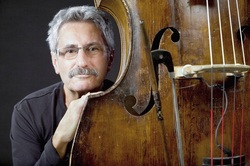
Mario Pavone, the gentleman resting on his bass violin above, kicks off the 2013 series and he's bringing his Orange Double Tenor Septet. The ODTS features Connecticut natives Jimmy Greene and Noah Preminger on saxophones, Dave Ballou on trumpet,  and long-time Pavone associates Peter MacEachern (trombone), Steve Johns (drums) and the great Peter Madsen on piano. Pavone is also appearing this Friday July 5 at Cafe Nine, 250 State Street in New Haven - everyone but Jimmy Greene will appear on that night. (For more information, go to cafenine.com.) The Bushnell Park show kicks off at 6 p.m. with Rahstet, saxophonist Rich McGhee's tribute to Rahsaan Roland Kirk.  

The series continues on July 15 with a double bill featuring the Stanley Cowell Quartet (the pianist is pictured left) with the Nita Zarif Quintet as the opening act. July 22, the series hosts the Jay Hoggard Quintet with the Norman Gage-Kenny Reed Quintet opening the festivities.  July 29 will have a serious Latin feel when the New Cuban Express led by pianist Manuel Valera and featuring saxophonist Joel Frahm come to the Insurance City. The opening act that evening Hartford's own Tropiijazz.  The 2 shows in August feature the Will Calhoun Trio with the Orice Jenkins Septet (8/05) and harpist Brandee Younger's Quintet featuring Hartford native Dezron Douglas on bass with the Shenel Johns opening the evening.  Did I mention this is free?  The rain venue is the Asylum Hill Congregational Church, 814 Asylum Avenue.  For more information, go to www.hartfordjazzsociety.com/mnj-schedule.html.

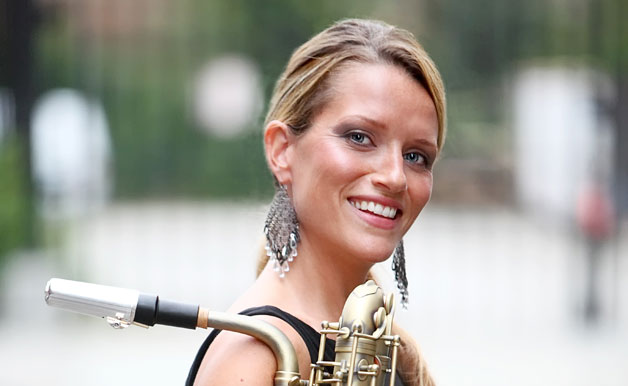
And, if that's not enough live music for you, you can head over to Black-eyed Sally's, 350 Asylum Street, for its "Jazz Mondays" series.  Scheduled to appear in July are the Haneef Nelson Sextet (7/08), the Lauren Sevian Quartet (that's Ms. Sevian above and she's in the Park on 7/15), the Larry Willis Quintet featuring Steve Davis and Mike DiRubbo (7/22) and Radam Schwartz & Organ-ized featuring drummer Ralph Peterson (7/29).  All this is sponsored by the Charter Oak Cultural Center.  For more information, go to www.charteroakcenter.org/index.php/category/jazz-mondays or call the venue at 860-278-7427.