Showing posts with label Taylor Ho Bynum. Show all posts

Wednesday, July 7, 2021

Mr. Braxton Requests....

Reed master, composer, arranger, conceptualist, and interpreter Anthony Braxton is soft-spoken, gentle, and delightfully scholarly. However, when he composes new works or interprets "standards", he is fearless. Mr. Braxton has two new major projects that have just been released; the first is a 12-disk set of original pieces composed for sextet, septet, and nonet using his ZIM Musical System, the other a 13-CD set of standards recorded on a European tour in early 2020 utilizing a trio based in Great Britain. 

Photo: Michael G. Stewart
Honestly, the best way to understand the original music of Anthony Braxton is to read his liner notes.  At times, they seem fantastical but his words do explain how his music is composed and how it can be played.  "12 Comp (ZIM) 2017" (Firehouse 12 Records) features 12 album length compositions recorded in four different venues  ranging from Wake Forest University (North Carolina) to Firehouse 12 Studios (New Haven, CT) to Montreal, Quebec, to Café Oto (London, England). ZIM music is based in "Gradient Logics" including "it gets faster or slower", "Friendships in time", "A Change of Goals" as well as a "Five Part Decision Construct...Unique to ZIM Territories."  Needless to say, there is a lot going on yet this music rarely feels cluttered (unless it's supposed to).  And the music is played by musicians who have either studied with Mr. Braxton or have played his music often. Also, like all music, it's about relationships of musicians with each other, of instruments responding to and supporting each other. In the final analysis, do you need to understand what the author is saying to enjoy the experience?  Mr. Braxton's music has always counted on the listener who is willing to dive in, to reject pre-conceptions, and to make up his or her mind.  It is easy to walk away shaking your head. The song titles (see the cover photo below) don't help, don't tell you what to think, and that's a good thing.


Note there are no drums, there is no percussion, no piano or string bass in the personnel (listed below). Dan Peck's tuba and Tomeka Reid's cello rarely create a foundation; instead they are both part of the conversation.  No matter the size of the ensemble, the instruments come in and go out of the sound spectrum. Besides Peck and Ms. Reid, Adam Matlock's accordion really adds a fascinating voice to the mix.  Taylor Ho Bynum's sound is quite recognizable especially when he steps out front. The addition of two harpists creates different and lighter shades throughout but also provide a percussive feel to several pieces.

Mr. Braxton plays numerous reeds throughout as both a member of the ensemble and a lead voice which is voice is prominently featured on each disk; but, so is Matlock's, Bynum's, Peck's, and others. Those familiar with the music Anthony Braxton creates know to expect the unexpected –– those unfamiliar with the majority of his work, do not expect a "jazz" album.  Just listen and make up your own mind.

To hear the music and to purchase the set, go to https://firehouse12records.com/album/12-comp-zim-2017.
 
Personnel:

Anthony Braxton - reeds, compositions
Taylor Ho Bynum - brass
Dan Peck - tuba
Jacquline Kerrod - harp
Shelley Burgon - harp (on "Compositions 402, 412, 408-410")
Tomeka Reid - cello (on "Compositions 402, 408-410, 413-416")
Adam Matlock - accordion, aerophones (all tracks except "Composition 402")
Jean Cook - violin ("Compositions 418-420") 
Stephanie Richards - trumpet ("Compositions 
418-420")
Ingrid Laubrock - saxophones (
"Compositions 418-420")
Brandee Younger - harp ("Compositions 
413-416")
Miriam Overlach - harp (
"Compositions 418-420")

Look and listen to "Composition 409":


Photo: Fabio Lugaro
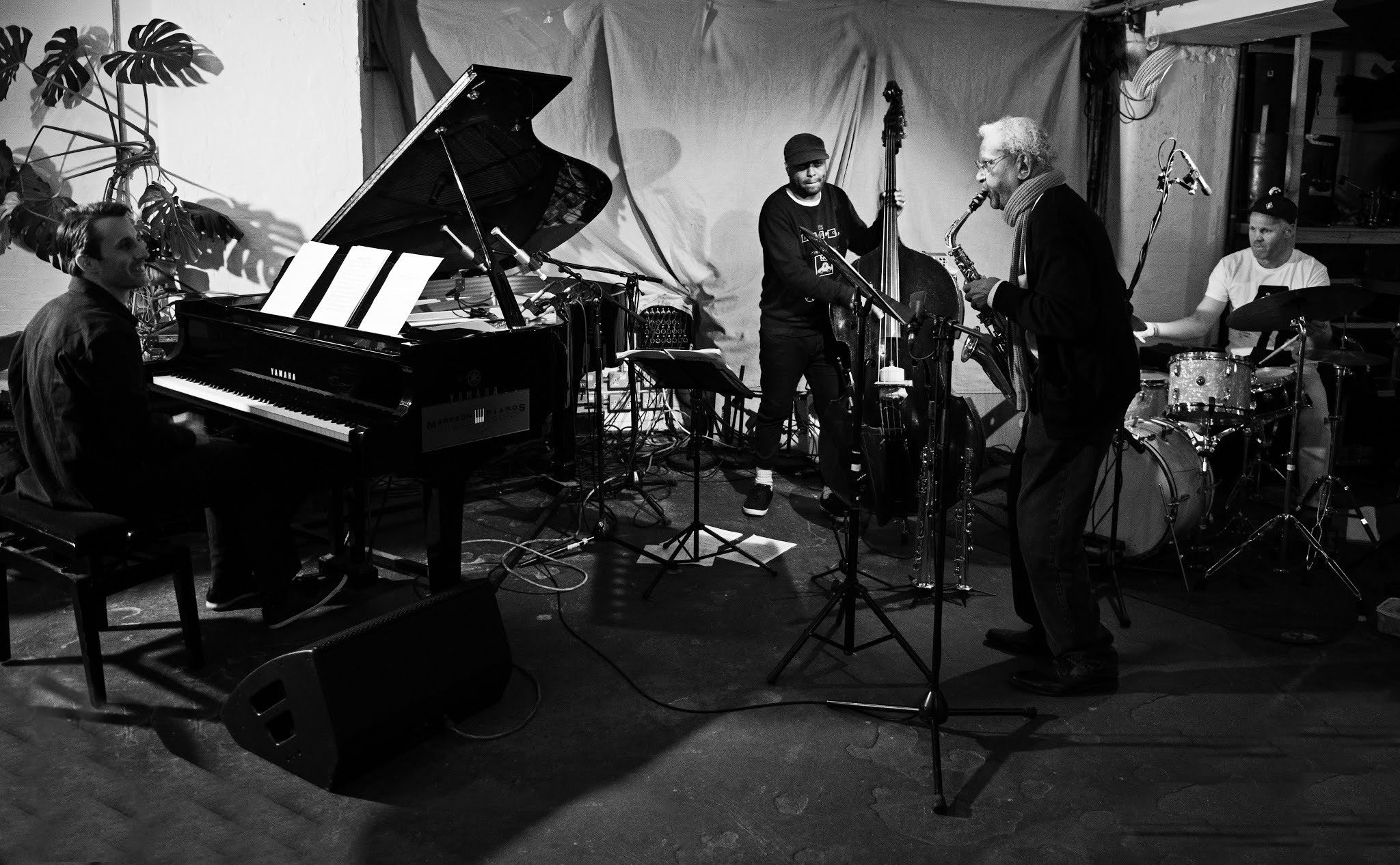
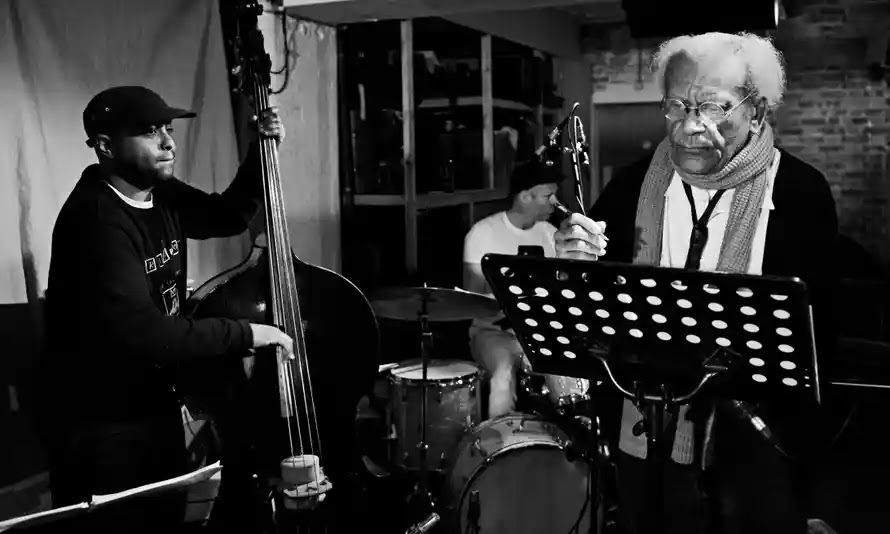
Mr. Braxton has always a tender spot for "standards" and he has recorded a number of albums, usually in a quartet format to display that affection.  Between January 15 and 25/2020, the latest Standards Quartet did a quick tour of the European Continent playing in Warsaw, Poland, Wels, Austria, and London, England.  Mr. Braxton limited his reed arsenal to sopranino, soprano, and alto saxophones, sharing the stage with three British musicians including pianist Alexander Hawkins, bassist Neil Charles, and drummer Stephen Davis. Each date was recorded; New Braxton House Records has just issued "Quartet (Standards) 2020", a 13-CD set featuring 67 performances and no tune repeated! This batch of songs includes pieces from John Coltrane, Charles Mingus, Cole Porter, Burt Bacharach, Paul Desmond, Dave Brubeck, Andrew Hill, and others as well as the theme songs from the movie "High Noon" and television's "The Carol Burnett Show", plus four songs from Paul Simon.

Yes, that Paul Simon.  Mr. Braxton and Mr. Hawkins interpret "Old Friends" as an alto sax - piano duo.  While the saxophonist captures the pathos in the melody, the pianist waxes rhapsodic and the disparity in approaches works nicely. There's a fairly straight-ahead reading of "59th Street Bridge Song (Feelin' Groovy)"; as hard as Hawkins tried to push Braxton a bit further out, the leader stays mostly in a lyrical vein.  If you know the tune, you won't be turned away by this rendition. The alto saxophonist displays his blues chops on "Still Crazy After All These Years".  The Quartet go a bit "free", a lot gospel, and kick it into higher gear a la a Prayer Meeting.  Hawkins' frenetic piano solo changes the mood and mode on "Bridge Over Troubles Water" yet Mr. Braxton makes certain that the soulful melody is heard at the opening and the close. 

Photo: Edu Hawkins
Over the course of the 67-song program, there are many highlights and I do not want to spoil the delight of any listener hearing this music for the first time.  Among my favorites?  Duke Ellington's "Prelude To A Kiss" is both melodic and adventurous with strong solos from the leader (on alto) and Hawkins but also pay attention to the delightful bass counterpoint and the dancing drums.  If you need a chuckle, the opening of "Who's Afraid of the Big, Bad, Wolf" has a child-like sopranino melody that leads to a humorous give-and-take with all four musicians stopping and starting (as if they were playing hide-and-seek.  The ensemble's take on Paul Desmond's "Take Ten" moves away from the "cool" take the composer recorded in 1963 and gives it a John Coltrane Quartet feel with driving piano chords and a thunderous rhythm section. Thelonious Monk's "Off Minor" is also fun and adventurous as is "Pannonica" especially when Mr. Braxton's soprano sax joins bassist Charles in the opening moments.

Photo: Edu Hawkins
Given the live recording milieu (although one never hears an audience response),  it's not surprising there are moments that do not hang together but those are few and far between.  Overall, "Quartet (Standards) 2020" will give you many hours of listening enjoyment. Neil Charles and Stephen Davis are excellent throughout, Alexander Hawkins displays how he is an exciting, inventive, and supportive pianist, and the 74-year old Anthony Braxton sounds as if he is having such a great time.  Yes, 13 CDs is a lot but you do not have to listen to all 67 cuts, all 11 1/2+ hours, in one sitting. Unless, of course, you're that kind of Anthony Braxton fan.  This is a great package to set on "random play" and see what comes up.  It's captivating to hear Mr. Braxton play "in the tradition" especially as he has been instrumental (no pun intended) in expanding the universe of Creative Music.  Go ahead, dive in!

Personnel:

Anthony Braxton - saxophones
Alexander Hawkins - piano
Neil Charles - bass
Stephen Davis - drums

To hear more and purchase the set, go to https://newbraxtonhouse.bandcamp.com/album/quartet-standards-2020. To find out more about the amazing world of Mr. Braxton and the work of the Tri-Centric Foundation, go to https://tricentricfoundation.org/anthony-braxton-bio.  

Hear "Out of Nowhere":


Tuesday, October 1, 2019

Sounds Familiar, Strange, Loud, & Quiet

Photo: NEA
I have known Taylor Ho Bynum since his student days at Wesleyan University. He earned both his BA (1998) and Master's Degree (2005) there, all the while playing with various members of the faculty including Bill Lowe and Anthony Braxton.  After graduation, he played with numerous musicians and group but especially with pianist-conceptualist Cecil Taylor, trumpeter-conceptualist Bill Dixon, and with numerous ensembles led by Professor Braxton.  In fact, Bynum was the Executive Director of Braxton's Tri-Centric Foundation from its founding in 2010 until 2018.  He currently is teaching at Dartmouth College and leading the jazz and creative music ensemble. Bynum is a founding partner of Firehouse 12 Records, one of several labels that issue his music.

His latest record, "The Ambiguity Manifesto", is his sixth for the label, each one featuring a different ensemble.  The new one features his 9-tette, composed of two brass, two reeds, two basses (one electric, the other acoustic), a cellist, drummer, and guitarist. All seven pieces are Bynum originals and, as usual, the music goes in many different directions, often in the same piece.  Those of you familiar with Bynum's recordings for Firehouse may be surprised by the James Brown-style drumming that opens the album – to these ears, it also sounds somewhat like Julius Hemphill's "Hard Blues."  The song, titled "neither when nor where" utilizes that funky beat to introduce the different instruments.  Tomeka Reid's cello lines shows the influence of Abdul Wadud and it's fun to hear Jim Hobbs' alto sax in counterpoint to  Ingrid Laubock's tenor sax.  In the bridge, Bill Lowe's trombone dances over the sympathetic reeds.  Tomas Fujiwara is rock steady behind the drum while the rest of the band frolic.

The material ranges from the free-wheeling "anter ally" to the circus-like noise of "enter (g)neither" which at 18+ minutes gives the different voices of the ensemble a chance to converse together. Mary Halvorson's guitar lines have quite a percussive feel and supported by Professor Lowe's tuba is quite playful. The section where the guitar interacts with Ken Filiano's acoustic bass and Stomu Takeishi's electric bass leads into a slow marching beat where the music feels like a slow merry-go-round – note the smooth sounds from the leader, a bluesy feel even.  A lot goes on and all of it is absorbing.

Photo: Peter Gannushkin
The last two tracks, "enter ally" and "unreal/real (for old music)", are "freer" in their structures yet there are still multiple conversations going on in each song.  The former gets a bit noisy in the middle especially when the effects-laden guitar rolls in with the droning tuba. Since the piece is continually evolving, one must listen several times to absorb the soundscapes created.  The final track opens with the leader's cornet sputtering and wheezing alongside the rippling soprano sax (Ms. Laubrock) with the bowed cello, chattering guitar , and thrumming acoustic bass leading in the trombone, drums and alto sax.  Listen closely for the clucking electric bass and alto sax and the tenor sax – in the wink of an eye, the music falls into a gentle martial beat while the other voices either create sonic effects or play melodies.  Hobbs alto sax leads the ensemble forward as Fujiwara creates a straight-forward rhythm.  Roll with it and you'll be surprised where the 9-tette takes you.

"The Ambiguity Manifesto" does not beat the listener over the head but does take one on quite a journey.  Taylor Ho Bynum seems to relish composing for a larger palette (his Firehouse 12 albums range from sextet to septet to octet to nonet to 15 members) – this album shows his continued growth as well as his need to be part of the band and not in front all the time.  There's no plans to tour the band as of its September 27th release date but the Sextet appears at Firehouse 12 on November 8, 2019.

For more information, go to taylorhobynum.com.

Here's the opening track:


Three of the four musicians pictured below – Mary Halvorson, Tomas Fujiwara, and Tomeka Reid – are on the album above plus are members of Ms. Reid's Quartet. They, along with bassist Jason Roebke, have just released a new album.

The Tomeka Reid Quartet recorded and released its eponymous debut album for Thirsty Ear in 2015.  Since then, Ms. Reid has relocated to Queens, New York, and has entrenched herself in the contemporary music scene. She plays with Anthony Braxton and Nicole Mitchell and was featured on the latest Art Ensemble of Chicago album. Ms. Reid also is part of Hear in Now, a string trio with violinist Mazz Swift and bassist Silvia Bolognesi not to forget her collaborations with Roscoe Mitchell.   Ms. Halvorson and Mr. Fujiwara works together in the trio Thumbscrew (with bassist Michael Formanek) as well as with Taylor Ho Bynum, Chris Speed, and Ben Goldberg.  Mr. Roebke is a fixture on the Chicago music scene – he studied with Roscoe Mitchell and plays in or leads numerous groups.

"Old New" (Cuneiform Records) is, if anything, even more exciting than the fascinating debut from four years ago.  What stands out (what doesn't?) is how many of these pieces – all composed by the leader – are so rhythmic.  The title track comes bursting out of the speakers with an urgency and pace sure to raise the temperature.  Reminiscent of of the opening track of saxophonist Julius Hemphill's 1977 Black Saint Lp "Raw Materials and Residuals" (with drummer Famadou Don Moye and cellist Abdul Wadud), Roebke and Fujiwara lock in and push the music forward.  Ms. Reid creates a powerful solo (with Ms. Halvorson adding playful counterpoint) and she wails away.  The melody line, which is repeated at the end of the piece, is a delightful blend of plucked notes and melodic, flowing, lines.

Photo: Jasmine Kwong
The energy continues to flow on the following track "Wabash Blues." Again it's Mr. Roebke's muscular bass and Mr. Fujiwara's powerful drumming that leads the way.  In fact, the drummer gets the spotlight right after Ms. Halvorson's solo, one that's filled with her trademark "bent notes" and rippling phrases.  "Niki's Bop" follows, ushered in by the dancing New Orleans-style drumming and contains a boppish melody line played unison by guitar and cello that will have bobbing your head.  They stretch the lines out for over a minute before Ms. Reid and Ms. Halvorson dance/solo together.  Dedicated to flutist Nicole Mitchell, the music make sone want to get up and dance.

Photo: Jasmine Kwong
The recording has so many moments that turn your head with their inventiveness and the Quartet's splendid interactions.  For instance, "Sadie" swings with glee with Ms. Reid playing pizzicato throughout – the "boppish" quality of the song brings to mind the groundbreaking cello work of Oscar Pettiford as well as the "baby bass" playing of Percy Heath and Ron Carter. Ms. Halvorson's raucous guitar playing gives the piece a more modern bent.  Listen to her "shred" on "Edelin", roaring above the solid rhythm section.  The cello solo has a power of its own, filling up the "bottom" of the sound with deep notes.

"Old New" closes with "RN",  a piece with a handsome melody yet there is a pleasing rhythm to push the music along.  Mr. Roebke actually solos before the band can introduce the melody;  before long, Ms. Reid's lovely flowing lines produce a magical solo as does Ms. Halvorson although she fills her solo with echoing phrases that feel like bubbles about to burst.  There's a "singing" quality to the track tha promises new directions for the future of the Tomeka Reid Quartet.  This program is a delight-filled group of performances that shine, swing, rock, sway, explode, and push their way into your ears and mind.  And, it's an excellent effort from start to finish – give a listen, give 10 listens!

For more information, go to www.tomekareid.net.

Here's the title track:


There is something about the music of Thelonious Monk that allows it to be very much his own yet totally open to interpretation by others.  Pianist Michael McNeill, who have been active inBuffalo, NY, but currently resides in Saluda, VA, is a member, composer, and arranger for several groups including the Buffalo Jazz Octet plus a trio with drummer Phil Haynes and bassist Ken Filiano. He's also a member of the cooperative trio with bassist Denny Ziemann and drummer John Bacon.  It is with that rhythm section that McNeill has recorded "Refractions" (Jazz Dimensions Records), a seven-song program comprised of Monk tunes, all of which are pretty well-known.

The trio approaches the music from numerous directions. Whereas the album opener, "Ugly Beauty", has an abstract impressionistic, rubato, opening, "Hackensack" swings delightfully from the opening note.  Once the former piece "opens up" into its rhythm, the music remains exploratory but retains the handsome melody, especially thanks to the fine piano solo.  The latter is the longest piece on the disc, replete with delightful interactions between the piano and drums plus a long, wonderfully melodic, solo from the bassist.  The trio takes "Light Blue" as a ballad with rich solos from McNeill and Ziemann – "Reflections" is taken even slower with the bass and piano caressing the melody, both musicians basing their solos off the opening verse.  "Let's Cool One" has that "sit back and relax" groove. McNeill creates a delightful, two-handed, solo filled with spirit while Bacon's spotlight is playfully minimalistic.

The last two tracks start with a solo piano reading of "Monk's Mood."  McNeill gives the handsome melody a Gershwin-like spin, accentuating the harmonic possibilities and leaving just the right amount of breathing room to let the notes ring n the listener's ears. After a short melodic bass intro, "Straight No Chaser" jumps into an energetic rhythm and swings forward on the power of the piano solo and Bacon's propulsive drums.  Pay attention to Ziemann's solo latter in the piece: he's plays both melodically and rhythmically, managing to steer clear of clichés throughout (plus his dialogues with Bacon really kicks nicely.

Though Thelonious Monk has gone nearly four decades (and had retired from playing 11 years before his passing), his music continues to reverberate loudly through contemporary music.  On "Refractions", the trio of John Bacon, Michael McNeill, and Danny Ziemann honor his legacy by not playing it safe, but playing with joy and with an exploratory spirit.

For more information, go to michaelgraymcneill.com.

Here's the "long" song:

Friday, June 1, 2018

Cornet Power & Trumpets Resound

June is a such a busy month.  The Arts world begins to transition to outside the concert hall and into sheds or tents, onto public greens and other open spaces. For those of us who live in Connecticut, June is the month of The International Festival of Arts & Ideas, a two-week explosions of lectures, walking tours, theater, indoor and outdoor concerts, a cornucopia of events that take over the city of New Haven to give audiences an amazing view of what the human mind and body is capable of.

That writ, this post only covers one event from the Festival. Instead, the focus is on two concerts and one recording, all of which feature cornetists or trumpeters.  Here's a quick overview courtesy of www.beginband.com: "The trumpet or cornet is the smallest and highest member of the brass family. As with all brass instruments, the sound is produced by buzzing the lips into a mouthpiece. The difference between a trumpet and cornet is very minor. They both play the same notes and they sound virtually the same. In appearance, the trumpet looks a bit longer and more slender than a cornet. The real difference has to do with the way the tubing of the instrument flares. A cornet is more cone shaped or conical than a trumpet."


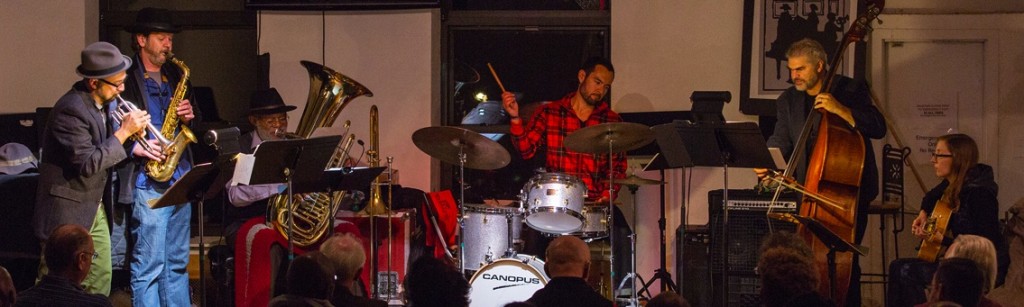
Several weeks ago, cornetist, composer, and all-around great person Stephen Haynes sent an email blast about a new project that has taken several years to bring to fruition.  Knuckleball features Mr. Haynes in a brass quartet plus drummer that makes its debut on Tuesday June 12 at 7:30 p.m. at Real Art Ways, 56 Arbor Street in Hartford.  The quintet (see above) includes three cornetists - Mr. Haynes, Taylor Ho Bynum, and Los Angeles-resident Dan Clucas - plus Ben Stapp (tuba) and Eric Rosenthal (drums and percussion).  Stapp is one of the finer young tuba players, ranking alongside Jose Davila (Henry Threadgill's Zooid) and Dan Peck (Anthony Braxton, Tony Malaby's Novela) as someone who has moved the instrument into the forefront of creative music. Rosenthal, a Wesleyan graduate (as is Bynum), lives in Boston and is a long-time member of the Klezmer group Shirim and its more "radical" offshoot, Naftule's Dream.  Taylor Ho Bynum should need no introduction as he has been active on the CT music scene (as well as the international stage) for the better part of two decades.  One of the founders of Firehouse 12 Records, he has worked and recorded alongside Anthony Braxton since his Wesleyan days (and nights) as well as with guitarist Mary Halvorson, drummer Tomas Fujiwara, the late conceptualist and trumpeter Bill Dixon, and has several duo recordings with drummer Rosenthal as well as Mr. Haynes.  Dan Clucas is a new name to me: one listen to his albums, especially the two solo dates, on his Bandcamp page (danclucas.bandcamp.com) and you'll hear how he should fit right into this mass of brass.  

I understand how audiences might look a bit askance at this lineup, expecting a lot of noise and not much else.  Yet, my experience with the music that these people create has taught me that, yes, it can be challenging but it is created with love, humor, honesty, and respect for each other and the creative process. And, the experience is often better in concert than on recordings (not to knock the recorded output of any creative musician) as you can the performers communicate, sweat, act, react, interact, and take the music to places even they don't expect it to go.  

For more information and reservations, go to www.realartways.org/event/knuckleball/2018-06-12/

Photo: Charles Eshelman
Amir ElSaffar, who was recently heard in New Haven performing at Firehouse 12 with Jamie Baum's Septet+, returns to the city on Sunday June 17 to play a live concert on the New Haven Green as part of the Arts & Ideas Fest.  This time, he's bringing 10 members of his Rivers of Sound Orchestra, adding 13 members of the New Haven Symphony Orchestra, and performing a program of nearly-all new music! Last June, New Amsterdam Records issued ElSaffar's stunning two-CD set, "Not Two", a recording that combined the composer's study of Middle Eastern maqams and the use of stringed instruments such as the oud and the santir (hammered dulcimer) as well as his study of vocal styles and various percussion.  The results (reviewed here), are entrancing, moving, and an aural delight.

This Sunday performance is free and open to the public.  Bring your lawn chairs, blankets, snacks, children, grandparents, and more to luxuriate in this fascinating music.  For more information, go to www.artidea.org/amirelsaffar.

Here's a sample of the sounds:


Trumpeter and composer Adam O'Farrill, the 23-year old son of composer/pianist Arturo O"Farrill and grandson on composer/arranger Chico O'Farrill, has been active on the contemporary music scene from an early age.  He and his older brother, drummer Zack, formed the O"Farrill Brothers Band and released two albums for the ZOHO label, the first in November of 2010 and the other in December of 2012. In 2014, he formed a new quartet with brother Zack, tenor saxophonist Chad Leftkowitz-Brown, and bassist Walter Stinson.  After touring and recording with saxophonist Rudresh Mahanthappa's Birdcall and bassist Stephan Crump's Rhombal, O'Farrill issued his group's debut disk on Sunnyside Records: "Stranger Days" emphasized powerful rhythms, great group interaction, and intelligent melodies, with a sound that captures the listener on the first note.


2018 finds the quartet, now dubbed Adam O'Farrill's Stranger Days, moving to Biophilia Records for its second album "El Maquech".  All the elements that made the group's debut s appealing are evident here and more.  The majority of the new album was recorded in April of 2017 in Montreal, Quebec, Canada, as the group was in the midst of its first tour.  The team of Stinson and Zack O'Farrill truly push the music forward, not just supporting the trumpet and saxophone, but challenging them (as the excellent compositions) to take the music in fascinating directions.  Therefore, pieces such as "Verboten Chant" and "Henry Ford Hospital" kick and strut with rhythmic variations and harmonic interactions.  Plus, such fire!  Listen to how the composer utilizes the front line before heading into solos. On "...Ford..", Leftkowitz-Brown comes blessing out of the "head" with a head of steam.  He and the trumpeter engage in a bit of call-and-response as well as unison "splats" before "O'Farrill steps out for a blazing trumpet solo.

Both "Henry Ford Hospital" and the title track (named for a beetle indigenous to the Yucatan Peninsula in Mexico) were inspired by artist Frida Kahlo (1907-1954). The latter tune is built off a traditional Mexican melody that the trumpeter found on a recording by Orquesta Jaranera Sonora Yucateca. It's fun to compare the two versions: the Orquesta makes the melody dance, especially thanks to the pounding drums and percussion while the newer version is respectful of the melody and rhythm (excellent work by Zack O). After the quartet throughly exposes the melody and harmony, the solos start to move into a "freer" territory.  Even as the bass and drums stick to the rhythm patterns, the trumpet and sax take a number of liberties (notice how the rhythm goes into a short swing section before a spirited restatement of the opening melody).

There are two tracks that also call out to be mentioned.  "Shall We" is a duet for trumpet and drums, a quick frolic that is playful, displaying the love and respect the brothers have for each other and their joy for making music. "Get Thee Behind Me Satan", a spiritual that O'Farrill first heard sung by Ella Fitzgerald in the 2012  Paul Thomas Anderson movie "The Master", is performed as a trumpet solo.  It's fascinating to hear he plays the melody, breaks down the tempo as the music moves along, going into rubato, his breathiness, the echo, and how the young man brings the piece to a close.  It's a visceral shock when, just seconds later, "Henry Ford Hospital" opens with its brash clarion-call of sax and trumpet.

"El Maquech" is not just an impressive sophomore album from Adam O'Farrill's Stranger Days, it's a powerful reminder of creative music keeps growing, taking elements from different cultures, making music that is fresh and challenging.  Enjoy the roar but also pay attention to how the musicians work together, fitting their sounds to the leader's vision.  Don't ignore this album and definitely see this band live!!

In keeping with Biophilia Record's mission statement, the music is issued as a download. If you buy it from the label, you receive in the mail the fascinating origami art work and a download code.

For more information, go to www.adam-ofarrill.com and www.biophiliarecords.com/artist/?id=880174455.

Here's the title track:

Sunday, September 18, 2016

Fall Calls + Fine Music

Scott Friedlander photo


The Firehouse 12 Fall Concert Series began last week (yes, it was still officially summertime) and continues this Friday September 23 (the first full day of Autumn) with the Taylor Ho Bynum 7-tette. This ensemble, featuring Bill Lowe (tuba, bass trombone), Ken Filiano (bass, electronics), Nicole Mitchell (flute), Tomeka Reid (cello), Jim Hobbs (alto saxophone), and Tomas Fujiwara (drums), is an offshoot of the cornetist's Plus-Tet that has a brand new album coming next week recorded earlier this year in front of a live audience (most of whom contributed to a campaign to support the album).  This will be THBynum's first gig in the Elm City since that evening.

arts.gov
If you've seen Bynum's groups in action, you'll know to expect the unexpected, from avant-garde to Latin-flavored romps to straight-ahead swing and more, often within the same piece.  The interaction of loud and soft, high sounds and low tones, the various groups-within-the-group, is great fun for listeners who love the challenge that this music presents.

There are two sets - 8:30 and 10 p.m. (separate admission for both) - and you can find out more by going to firehouse12.com or calling 203-785-0468.  To fond out more about Mr. Bynum and his projects, go to taylorhobynum.com.


c/o JazzTimes

Two more great nights of music at The Side Door Jazz Club in Old Lyme. On Friday evening (9/23), the Brubeck Brothers (bassist and trombonist Chris and drummer Daniel) bring their Quartet to the venue.  The group has been in existence over four decades but quite active since their father Dave passed in 2012. Not only do they play Dad's music but also are both fine composers (as our brothers Matt - cello - and Darius - piano) in their own right.

Joining Chris and Daniel onstage will be Mike DiMicco (guitar) and Chuck Lamb (piano).  The group's repertoire covers a wide swath of American music (no surprise considering its heritage) and will surprise and please with its variety.  Doors open at 7:30 p.m. and the music starts an hour later.  For tickets and more information, go to thesidedoorjazz.com.

newpittsburghcourieronline
Saturday night, the Door opens (actually re-opens) for the Freddie Hendrix Quartet. The trumpeter is back, almost a year to the day he last performed at the venue but it's been quite a busy year.  Not only was his debut album issued on Sunnyside Records this January but he has also performed with the George Gee Swing Orchestra plus the Big Bands of Christian McBride, Jimmy Heath, Caleb Brumley plus the Vanguard Orchestra, Arturo O'Farrill's Latin-Jazz Orchestra and the David Gibson Quintet (plus dozens of other gigs).

Hendrix is a delightful player, swings with glee, and has a sweet tone (listen below).  His regular touring group includes Brandon McCune (piano), Chris Berger (bass), and Chris Beck (drums).  Music begins at 8:30 p.m.  For more information, call 860-434-0886.  To learn more about the drummer, his web address is www.freddiehendrix.com.

Click on the link to hear the title track of his debut album:

Jersey Cat by Freddie Hendrix
************************************************

Bassist, arranger, and composer Matt Ulery, whose trio of critically acclaimed albums of Greenleaf music (issued from 2012-14) contained an often dazzling array of styles and musicians, continues that trend with his new album, "festival" (Woolgathering Records). Released on his own label, the recording is credited to Matt Ulery's Loom / Large and features two different ensembles, one his regular quintet (Loom), the other a 14-piece orchestra (Large, including violin soloist Zach Brock), performing three distinct programs.

The album opens with the only non-original composition on the album, an orchestral reading of Jimmy Rowles' classic "The Peacocks." Ulery's classy arrangement features Brock playing the melody and the major solo.  Ulery takes a short solo over the easy brush work of drummer Jon Deitmeyer (with the trombones adding a quiet chorus) before pianist Rob Clearfield steps out front for a moment before the Orchestra returns to the main melody. Large also appears on the following track, "Hubble", a wondrous journey through several changes in dynamics that also has intelligent use of the strings, reeds and brass, sending out melodic signals throughout the universe of the song.  The forceful 4/4 rhythm, the quiet interludes, strong solos from Clearfield and Brock, and the excellent arrangements for the sections makes this such an impressive work.

The remaining 13 tracks feature the bassist's quintet performing two quite different programs.  Besides Deitmeyer and Clearfield, Loom includes the splendid trumpeter Russ Johnson and clarinet work of Geof Bradfield. On the first six tracks, the ensemble dances and instrumentally sings its way through Ulery's melodic repertoire.  It's absorbing to hear  the emotionally powerful "A Family,  A Fair" with its rippling piano solo and the fascinating dialogue between the trumpet and clarinet near the end.  Listen to how Ulery employs all five "voices" on "Canopy", how the bass and drums also work the melody into their playing and how Clearfield's elemental piano chords holds the piece together.   Johnson's work is exemplary throughout, his clear, crisp, articulation ands how he glides through the registers on pieces such as "Middle West" (with the bass clarinet as counterpoint and support) plus his forceful yet flowing journey through "Ecliptic."

Geoff Hand/Chicago Tribune
The last five tracks are shorter, no less melodic, but with a distinct Americana feel.  Clearfield moves to pump organ while Ulery moves to tuba and adds his voice to "The Silence is Holding." There is a bit of Salvation Army Band as if imagined by Robbie Robertson feel to these tracks yet they have genuine power, often generous melodies and a gentle swing.  Johnson's growling trumpet enlivens "Horseshoe" while he and Bradfield (bass clarinet) have a fanciful dialogue through "Constituent."  Ulery gets to play some impressive bottom on the latter over the martial drumming of Dietmeyer.  The final track, "Slow It Down", sounds like a cross between "Edelweiss" (from "The Sound of Music") and a Shaker hymn.  It's a lovely, heartfelt, way to close this wide-ranging program, a gentle kiss on the cheek before you enter dreamland (or, perhaps, exit a land of dreams.)

Matt Ulery has created his own sound, hearing a confluence of sounds and styles unlike any contemporary composer.  It strikes this listener a decade and seven albums into his career that melody is his guiding principal and this his instruments are the people such as Jon Deitmeyer, Rob Clearfierld, Zach Brock, eighth blackbird, Marquis Hill (trumpet), Russ Johnson, and others who he interpret his wondrous messages.  "festival" is a treat, three albums on one disc, 74+ minutes, and well worth your time and attention.

To find out more, go to mattulery.com.

Here's the Jimmy Rowles' masterwork:


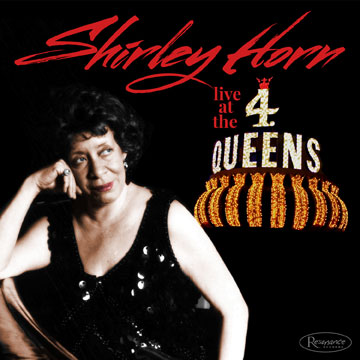
From 1960 to the early days of the 2000s, pianist and vocalist Shirley Horn (1934-2005) was a captivating member of the music scene.  She recorded a slew of albums for labels such as SteepleChase, Mercury, and ABC-Paramount but it was move to Verve Records in 1987 that really brought her international recognition.  With her trio of bassist Charles Ables and drummer Steve Williams, she was a favorite of so many lovers of melody and swing.  An impressive pianist, it was her voice that attracted so many fans.  She rarely wasted a syllable plus each word carried a lot of weight - bless her, she knew how to swing and Ms. Horn could carry one away with her ballad.

All of that is apparent on "Shirley Horn: Live at the 4 Queens", an album recorded for broadcast in the long-departed Las Vegas nightclub for radio station KNPR.  Now brought to our attention by George Klabin and Zev Feldman for Resonance Records in a package that includes the company's usual group of essays from fans , critics, and participants. The program, recorded a year after she signed with Verve, opens and close with instrumentals that show one just how much fun Ms. Horn has with Ables and Williams as well as how fine an instrumentalist she was. Randy Weston's "Hi-Fly" swings in on solid chords and sprightly brush work.  There's a touch of Ellington and "Fats" Waller in her splendid solo.  The other non-vocal track is Oscar Peterson's "Blues For Big Scotia"  and the Trio has a delightful time swinging this up-tempo blues.

The seven vocal tracks range from Jobim's entrancing "Meditation" and samba-with-a-blues kick version (and vice versa)  of "The Boy From Ipanema" to a lengthy take on Rodgers & Hart's "Isn't It Romantic" that opens up for all three musicians to solo.  Ms. Horn was well-known for her ballads ad the two on this album do not disappoint.  "Lover Man" moves quite slowly, reminding us that the song is a real blues lament.  There's a hint of Billie Holiday in her vocal but pay attention to how Ms. Horn's frames and comments on her vocal.  Lil and Louis Armstrong's "Just for a Thrill" is the other ballad in this set and the performance is indescribably delicious (and there's a touch Mr. Armstrong's signature "growl" at the onset of the song).  Words cannot do justice - you must hear it for yourself.

Do just that - listen to "Live at The 4 Queens".  Think of this polished musician, vocalist, and entertainer, a polished, professional, and talented person in the midst of what was known as "Sin City" at the time.  Wherever she was, Shirley Horn was herself, no one else, and we are all the luckier for the time she was here, for the many albums she recorded and all those fine gigs in clubs, concert halls, and auditoriums.

For more information, go to www.resonancerecords.org/release.php?cat=HCD-2015.  Here's a good overview of Ms. Horn's career - go to www.npr.org/programs/jazzprofiles/archive/horn_s.html.


Tuesday, December 29, 2015

Taylor Ho Bynum's Plus-size Ensemble

arts.gov
Been a while since I've checked in with Taylor Ho Bynum, the trumpeter, cornetist, composer, arranger, educator, essayist, head of the Tri-Cenrric Foundation, and all-around good person. During his years at Wesleyan (mid-1990s and mid-2000s), I saw and heard him on numerous occasions as a bandleader, participant, and conceptualist.  I've interviewed him on the radio several times, reviewed his albums, and almost always enjoyed the challenging music he's created over the past 2 decades.

I was thrilled to read that Taylor has a new project that will feature his music played by a very large ensemble, the 15-member PlusTet.  He's currently in the midst of funding the project with plans to record on 1/11-12/2016 - go to www.indiegogo.com/projects/taylor-ho-bynum-s-plustet-dream-band#/ to find out more - and become part of the support group. Depending on what level you choose, you can receive a CD, attend a studio performance/recording session at the Firehouse 12 warehouse space in New Haven, CT, receive additional CDs from THB's impressive output, and even sit and sup with the ensemble prior to the performance.

Check out the list of band members (5 of whom, marked with an *, are seated above THB in the photo), a cross section of  of collaborators past and present; scheduled to record and perform are Nate Wooley (trumpet), Stephanie Richards (trumpet), Vincent Chancey (french horn), Steve Swell (trombone), *Bill Lowe (bass trombone, tuba), *Jim Hobbs (alto sax), Ingrid Laubrock (tenor sax), Matt Bauder (tenor and baritone sax), Jason Kao Hwang (violin, viola), Tomeka Reid (cello), Jay Hoggard (vibraphone), *Mary Halvorson (guitar), *Ken Filiano (bass), and *Tomas Fujiwara (drums).  

You can see from the personnel listed above why Taylor is so excited to play and perform.  Check out the website listed for more information and, to learn more about the young man with the horn, go to taylorhobynum.com.  

Monday, November 14, 2011

A Catastrophe in New Haven (Positive One) + CD Pick + Interview

I posted a review of the new Taylor Ho Bynum Sextet CD this morning and forgot to add that he's playing this Saturday evening (11/19) at 8 p.m. in The Big Room, 319 Peck Street in the Elm City.  The composer/cornetist is appearing with Positive Catastrophe, the 10-member band he co-leads with Abraham Gomez-Delgado (vocals, percussionist).  The band plays a fascinating mix of Latin, progressive jazz and world music (the co-leaders call it "trans-idiomatic") and they do it with panache and great joy.  The other members of the band include Kamala Sankaram (voice, accordion), Mark Taylor (french horn), Reut Regev (trombone), Matt Bauder (tenor saxophone), Michael Attias (baritone saxophone), Pete Fitzpatrick (electric guitar), Alvaro Benavides (electric bass) and Tomas Fujiwara (drums). The New Haven gig is the second in a 4-day jaunt that starts in New York City on Thursday and ends on Sunday in Baltimore. The band is working on new material in preparation for its second CD (to be released on Cuneiform Records in the Spring of 2012.) Seating is limited for The Big Room so send an email to thebigroomnewhaven@gmail.com and reserve your tickets. To find out more about this adventurous group, go to www.cuneiformrecords.com/bandshtml/positive.html.

Israeli-born guitarist Assaf Kehati came to the United States in 2007 to study at the New England Conservatory of Music in Boston, Massachusetts.  There, he had the opportunity to study and play with saxophonist George Garzone, pianist Ran Blake and drummer Billy Hart.  "Flowers and Other Stories" (AK Jazz) is his 2nd release and also the 2nd one to feature his Israeli "working band" of Alon Farber (saxophone), Daniel Sapir (bass) and Udi Shlomo (drums).  Kehati's music is a pleasing blend of jazz and world music influences with an occasional touch of adult-contemporary rock music.  One of the most pleasant aspects of the program is that the compositions and arrangements are so intelligent - this is not just theme-solo-theme music.  Kehati's round tone may remind some of Kurt Rosenwinkel and Pat Metheny; his single-note runs rise pleasingly over the lively and involved rhythm section ("Mr. Mario" shows them at their best, both reacting to and pushing Kehati forward.) There's a melancholy sweetness to "Tali" and Farber's fluid soprano saxophone. Shlomo's drumming has a conversational feel yet is not intrusive.  Kehati's hypnotic guitar chording leads in the 12-minute "The Most Beautiful Flower";  his solo, following Farber's reading of the theme, starts so quietly, little fragments of melody supported by Sapir's long bass tones and the gentle drum work.  As the solo continues, the intensity builds and Kehati's lines get longer until Farber takes over and goes on his own dynamic roller-coaster.  Again, Shlomo's drum work stands out, his propulsion and fire leading to the quiet guitar chords that slowly take the song to its conclusion.

"Don't Attack" is another long piece (just under 10 minutes) that starts as a ballad and again Farber's sweet soprano lays out the melodic theme.  As he moves through his fine solo, the rhythm section begins to intensify their attack and continue the driving support as Kehati digs deeply for his solo.  Sapir's bass work on "The Snow and the Sun" is exemplary, quite melodic even as he is supportive. Here, Farber's tenor saxophone explores a melody that is closer to folk-rock.  The final track, "Invisible Green", is a ballad all the way through.  Farber sits out as the guitarist plays the plaintive theme (reminiscent of Pat Metheny but also one might hear The Beatles in several of the chord patterns) and delivers a solo filled with rippling lines and bell-like tones.

"Flowers and Other Stories" does not hit the listener over the head with pounding rhythms and long, complicated, solos.  Instead, it is thoughtful and thought-provoking music that attracts one with its melodic framework, its dynamic variations and strong instrumental work from all involved.  Music to ponder not to blast through the house.   For more information, go to www.assafkehati.com

Gerald Wilson, composer and bandleader, turned 93 in September of this year.  Mack Avenue released his latest CD, "Legacy", in July and Jason Crane of The Jazz Session conducted a 2-part interview with the master arranger that he posted in late October.  Thanks to the late October snowstorm here in Central Connecticut, our yard is filled tree limbs and scattered branches.  Listening to Mr. Wilson account of how he got started in the world of jazz made the cleanup go a lot easier.  Crane let the Mississippi native dominate the conversation and the story of his time with Jimmy Lunceford as well as how Eleanor Roosevelt coerced the United States Navy to start a jazz band in World War II is both entertaining and priceless.  Go to thejazzsession.com/2011/10/24/the-jazz-session-318-gerald-wilson-part-1/ and enjoy the history (and civics) lesson.