Showing posts with label reeds-piano-bass-drums quartet. Show all posts

Wednesday, July 7, 2021

Mr. Braxton Requests....

Reed master, composer, arranger, conceptualist, and interpreter Anthony Braxton is soft-spoken, gentle, and delightfully scholarly. However, when he composes new works or interprets "standards", he is fearless. Mr. Braxton has two new major projects that have just been released; the first is a 12-disk set of original pieces composed for sextet, septet, and nonet using his ZIM Musical System, the other a 13-CD set of standards recorded on a European tour in early 2020 utilizing a trio based in Great Britain. 

Photo: Michael G. Stewart
Honestly, the best way to understand the original music of Anthony Braxton is to read his liner notes.  At times, they seem fantastical but his words do explain how his music is composed and how it can be played.  "12 Comp (ZIM) 2017" (Firehouse 12 Records) features 12 album length compositions recorded in four different venues  ranging from Wake Forest University (North Carolina) to Firehouse 12 Studios (New Haven, CT) to Montreal, Quebec, to Café Oto (London, England). ZIM music is based in "Gradient Logics" including "it gets faster or slower", "Friendships in time", "A Change of Goals" as well as a "Five Part Decision Construct...Unique to ZIM Territories."  Needless to say, there is a lot going on yet this music rarely feels cluttered (unless it's supposed to).  And the music is played by musicians who have either studied with Mr. Braxton or have played his music often. Also, like all music, it's about relationships of musicians with each other, of instruments responding to and supporting each other. In the final analysis, do you need to understand what the author is saying to enjoy the experience?  Mr. Braxton's music has always counted on the listener who is willing to dive in, to reject pre-conceptions, and to make up his or her mind.  It is easy to walk away shaking your head. The song titles (see the cover photo below) don't help, don't tell you what to think, and that's a good thing.


Note there are no drums, there is no percussion, no piano or string bass in the personnel (listed below). Dan Peck's tuba and Tomeka Reid's cello rarely create a foundation; instead they are both part of the conversation.  No matter the size of the ensemble, the instruments come in and go out of the sound spectrum. Besides Peck and Ms. Reid, Adam Matlock's accordion really adds a fascinating voice to the mix.  Taylor Ho Bynum's sound is quite recognizable especially when he steps out front. The addition of two harpists creates different and lighter shades throughout but also provide a percussive feel to several pieces.

Mr. Braxton plays numerous reeds throughout as both a member of the ensemble and a lead voice which is voice is prominently featured on each disk; but, so is Matlock's, Bynum's, Peck's, and others. Those familiar with the music Anthony Braxton creates know to expect the unexpected –– those unfamiliar with the majority of his work, do not expect a "jazz" album.  Just listen and make up your own mind.

To hear the music and to purchase the set, go to https://firehouse12records.com/album/12-comp-zim-2017.
 
Personnel:

Anthony Braxton - reeds, compositions
Taylor Ho Bynum - brass
Dan Peck - tuba
Jacquline Kerrod - harp
Shelley Burgon - harp (on "Compositions 402, 412, 408-410")
Tomeka Reid - cello (on "Compositions 402, 408-410, 413-416")
Adam Matlock - accordion, aerophones (all tracks except "Composition 402")
Jean Cook - violin ("Compositions 418-420") 
Stephanie Richards - trumpet ("Compositions 
418-420")
Ingrid Laubrock - saxophones (
"Compositions 418-420")
Brandee Younger - harp ("Compositions 
413-416")
Miriam Overlach - harp (
"Compositions 418-420")

Look and listen to "Composition 409":


Photo: Fabio Lugaro
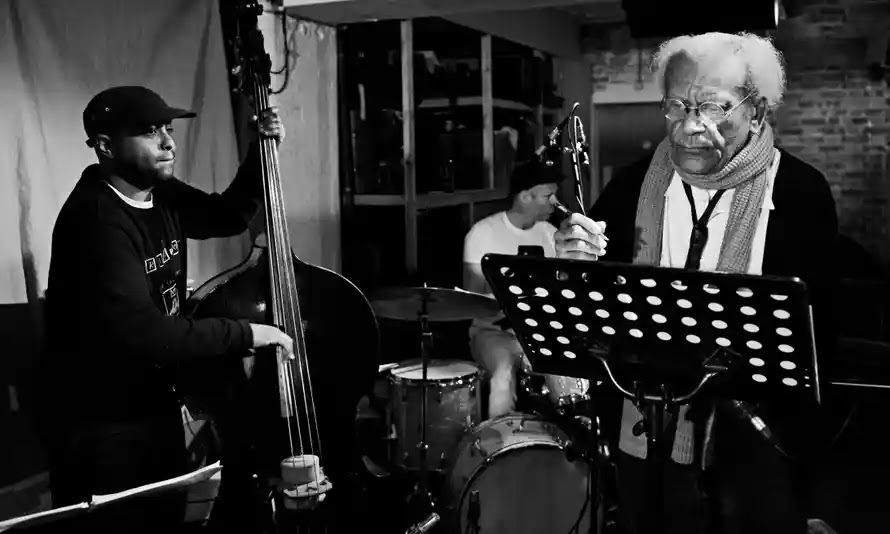
Mr. Braxton has always a tender spot for "standards" and he has recorded a number of albums, usually in a quartet format to display that affection.  Between January 15 and 25/2020, the latest Standards Quartet did a quick tour of the European Continent playing in Warsaw, Poland, Wels, Austria, and London, England.  Mr. Braxton limited his reed arsenal to sopranino, soprano, and alto saxophones, sharing the stage with three British musicians including pianist Alexander Hawkins, bassist Neil Charles, and drummer Stephen Davis. Each date was recorded; New Braxton House Records has just issued "Quartet (Standards) 2020", a 13-CD set featuring 67 performances and no tune repeated! This batch of songs includes pieces from John Coltrane, Charles Mingus, Cole Porter, Burt Bacharach, Paul Desmond, Dave Brubeck, Andrew Hill, and others as well as the theme songs from the movie "High Noon" and television's "The Carol Burnett Show", plus four songs from Paul Simon.

Yes, that Paul Simon.  Mr. Braxton and Mr. Hawkins interpret "Old Friends" as an alto sax - piano duo.  While the saxophonist captures the pathos in the melody, the pianist waxes rhapsodic and the disparity in approaches works nicely. There's a fairly straight-ahead reading of "59th Street Bridge Song (Feelin' Groovy)"; as hard as Hawkins tried to push Braxton a bit further out, the leader stays mostly in a lyrical vein.  If you know the tune, you won't be turned away by this rendition. The alto saxophonist displays his blues chops on "Still Crazy After All These Years".  The Quartet go a bit "free", a lot gospel, and kick it into higher gear a la a Prayer Meeting.  Hawkins' frenetic piano solo changes the mood and mode on "Bridge Over Troubles Water" yet Mr. Braxton makes certain that the soulful melody is heard at the opening and the close. 
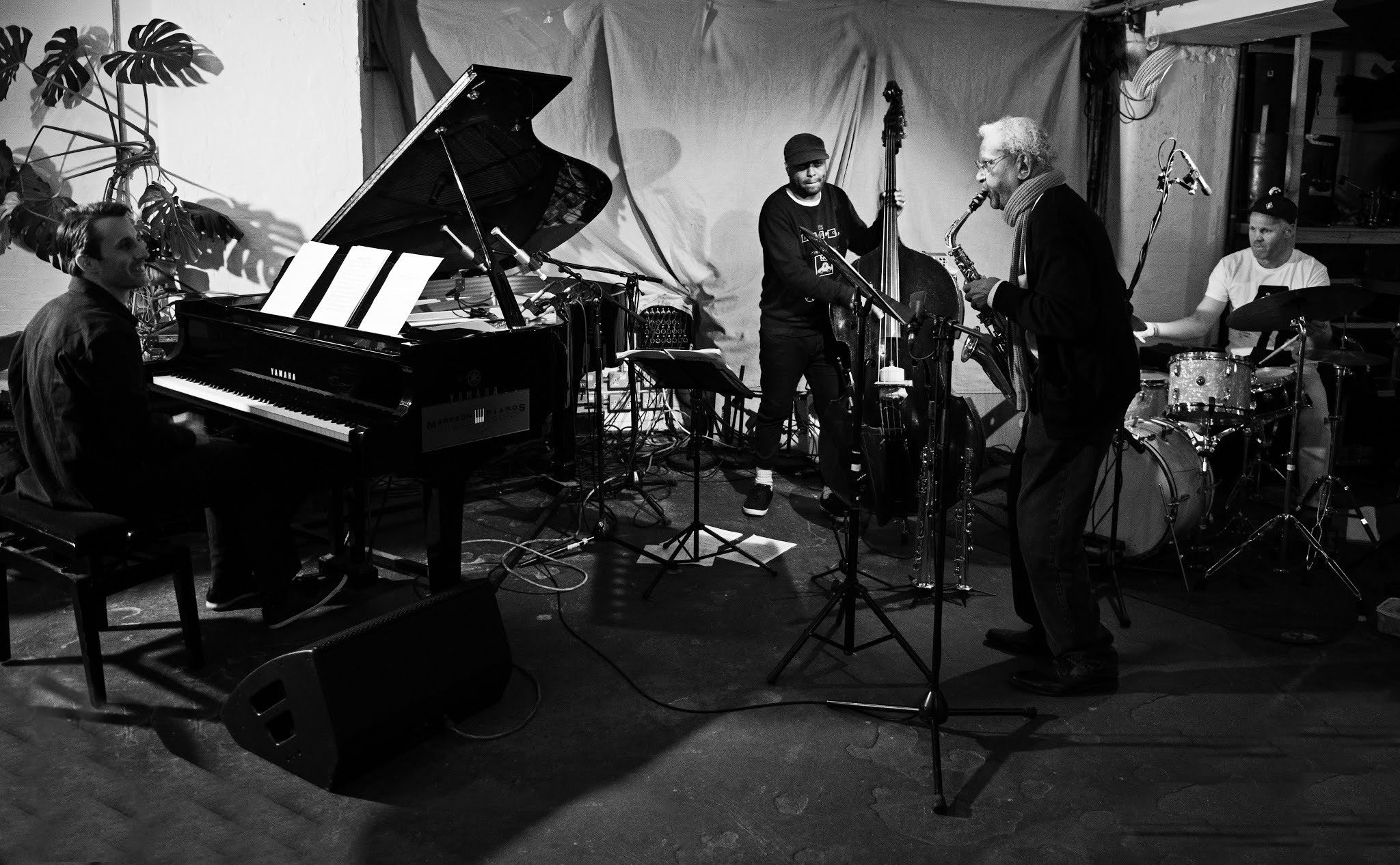
Photo: Edu Hawkins
Over the course of the 67-song program, there are many highlights and I do not want to spoil the delight of any listener hearing this music for the first time.  Among my favorites?  Duke Ellington's "Prelude To A Kiss" is both melodic and adventurous with strong solos from the leader (on alto) and Hawkins but also pay attention to the delightful bass counterpoint and the dancing drums.  If you need a chuckle, the opening of "Who's Afraid of the Big, Bad, Wolf" has a child-like sopranino melody that leads to a humorous give-and-take with all four musicians stopping and starting (as if they were playing hide-and-seek.  The ensemble's take on Paul Desmond's "Take Ten" moves away from the "cool" take the composer recorded in 1963 and gives it a John Coltrane Quartet feel with driving piano chords and a thunderous rhythm section. Thelonious Monk's "Off Minor" is also fun and adventurous as is "Pannonica" especially when Mr. Braxton's soprano sax joins bassist Charles in the opening moments.

Photo: Edu Hawkins
Given the live recording milieu (although one never hears an audience response),  it's not surprising there are moments that do not hang together but those are few and far between.  Overall, "Quartet (Standards) 2020" will give you many hours of listening enjoyment. Neil Charles and Stephen Davis are excellent throughout, Alexander Hawkins displays how he is an exciting, inventive, and supportive pianist, and the 74-year old Anthony Braxton sounds as if he is having such a great time.  Yes, 13 CDs is a lot but you do not have to listen to all 67 cuts, all 11 1/2+ hours, in one sitting. Unless, of course, you're that kind of Anthony Braxton fan.  This is a great package to set on "random play" and see what comes up.  It's captivating to hear Mr. Braxton play "in the tradition" especially as he has been instrumental (no pun intended) in expanding the universe of Creative Music.  Go ahead, dive in!

Personnel:

Anthony Braxton - saxophones
Alexander Hawkins - piano
Neil Charles - bass
Stephen Davis - drums

To hear more and purchase the set, go to https://newbraxtonhouse.bandcamp.com/album/quartet-standards-2020. To find out more about the amazing world of Mr. Braxton and the work of the Tri-Centric Foundation, go to https://tricentricfoundation.org/anthony-braxton-bio.  

Hear "Out of Nowhere":


Monday, September 21, 2020

Michael Moore, Clarinets & Alto Saxophone, Big Band & Quartet

Photo: Francesca Patella
Michael Moore, a native of Eureka, California, has lived in the Netherlands for nearly four decades.  The clarinetist and saxophonist is celebrating his residency and the art he is creating by issuing three new recordings, all quite different, two of which are reviewed below.  It's also the 30th anniversary of his first release on his own Ramboy Records––that initial album, "Trio Clusone", featured the amazing percussion of Han Bennink and the equally exciting work of cellist Ernst Reijseger, two musicians Moore would spend a decade with redefining the sound of a trio.  Over the years, the label has issued 36 recordings that posit Moore in many different sound ensembles.  He's also spent a number of years performing, touring, and recording with the ICP Orchestra but has never fronted a large ensemble....until now.

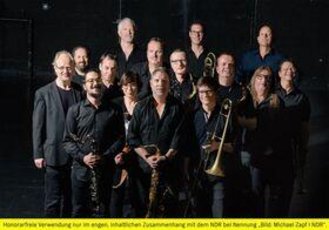
In January 2019, at the invitation of percussionist Marcio Doctor (longtime member of the NDR Big Band),  Moore flew to Hamburg, Germany to spend a week rehearsing and recording with the 18-member large ensemble. The resulting album, "Sanctuary", is a smashing success.  The 10 pieces are all Moore originals pulled from his various Ramboy recordings; the clarinetist also contributed six of the arrangements with two by Henk Meugeert (Dutch composer and arranger) plus one each from Christian Elsässer (German composer and arranger) and Frank Carlberg (American-based Finnish pianist and composer).  Each piece stands outs, not just for Moore's splendid playing but also for the arrangements that frame the melodies and soloists plus excellent support from the NDR players. Drummer Tom Rainey rejoins the band (he has played with the ensemble a number of times before) for the album with trumpeter Tim Hagans picking up the conductor's baton.

The music is so fascinating. The lovely opening of "Brunheiras" opens to a sweet melody yet after the band fills the background, the clarinetist steps aside for a raucous solo from guitarist Sandra Hempel with Rainey driving the band.  "Anomalous Soul", first recorded with pianist Fred Hersch and bassist Mark Helias in 1993, is a handsome ballad with more lovely clarinet and intricate interactions within the rhythm section.  "Fogo von Slack" is a short (2:18) work for the three clarinets of Moore, Fiete Felsh, and Luigi Grasso––there's a classical feel that also has a touch of the work of Jimmy Giuffre.  Felsh (on alto sax) also shines on "Odin" as does the impressive section writing.  Listen all to the simple yet solid rhythm section.  The bluesy "Shotgun Wedding" with its delightful trumpet melody and Moore's smoky alto sax work glides along like a smooth ride on a midnight ride.

Photo: Francesca Patella
Because the music is so good, there is the desire to write about each track. Whether it be the Americana-flavored "Trouble House" or the conversation-laden "Igor" (a tribute to Igor Stravinsky) or powerful yet sweet episodic tribute to the composer's mother (the album's title song) that closes the album, this music has melodic and harmonic power, excellent solos, intelligent arranging, and delightful solos.  "Sanctuary" serves as a refuge to the daily madness, a refreshing bath of sounds to excite your soul.

For more information, go to www.ramboyrecordings.com.

Here's the opening song:


Personnel:
Michael Moore - clarinets, alto saxophone

NDR Big Band:
Felix Meyer, Ingolf Burkhardt, Claus Stötter, Sebastian Stein - trumpet, flugelhorn
Dan Gottshall, Klaus Heidenreich, Stefan Lotterman - trombone
Sebastian Hoffmann - bass trombone
Fiete Felsh - clarinet, alto sax, Peter Bolte - flute, alto sax
Gabriel Coburger, Konstantin Herleinsberger - clarinet tenor sax
Luigi Grasso - baritone sax
Florian Weber - piano

Sandra Hempel - guitars
Ingmar Heller - bass
Tom Rainey - drums

Marcio Doctor - percussion
Tim Hagans - conductor

Michael Moore - clarinets, alto saxophone


Photo: Scheba F M
Michael Moore convened his Fragile Quartet for the first time in 2007. Composed of pianist Harmen Fraanje, bassist Clemens van der Feen, and drummer/percussionist Michael Vatcher (who also has worked with Moore in their Jewels & Binoculars Bob Dylan Tribute trio), the ensemble allows the alto saxophonist and clarinetist to create music that can and does go wherever the music wants to go, many times in unexpected and exciting directions.

For the Quartet's fifth album––Gerry Hemingway has replaced Vatcher––Moore created 13 songs that serve as a travelogue, an appreciation of natural beauty, and meditations on the Greek god Zeus, photographer Saul Leiter (1923-2013) and the painter Paul Klee (1879-1940). "Cretan Dialogues" opens with "...Dialogue #1" a three-song medley ("Lollapalooza", "Fenix Blue", and "The Meliae" (nurses of the infant Zeus)) that goes through a number of changes and melodic ideas.  The interplay is powerful, especially the work of the rhythm section as they chart new courses for the leader's reeds over the course nearly 16 minutes.  "...Dialogues #2" follows ("Europa", "Doldrums", and "Leaving Paleochora"); the first part really swings with a hint of Kenny Wheeler in the melody before van der Feen introduces the second piece with a slow spare yet effective bass solo. that leads to the clarinet melody over Frannje's supportive chordal work.  After a splendid percussion interlude, Hemingway's cymbals and brush work give way to a lovely piano ballad. "Paleochora" is on the southwestern coast of Crete and the music sees to look back at the town while looking forward to another ocean voyage.

Photo: YouTube
The album continues on with a Brazilian-flavored piece "Eugenia Uniflora" (named for the Brazilian Cherry bush) and the handsome ballad "Pussy Willow."  On the latter track, Moore's breathy alto and Hemingway's conversational drumming lead the way.  One of the album's shorter tracks, "A Little Box of Jazz", is also one of its "freer" pieces with all four musicians engaged in the "chat room".  The shortest track "Slowly, Slowly" closes the program–the bowed bass solo over the solemn piano chords and simple percussion serves as a coda to an album that covered a wide stylistic territory without settling in one.

"Cretan Dialogues" is quite the journey, one that moves the soul and heart of the engaged listener.  Michael Moore remains one of the more creative artists you will hear these days. He uses his Ramboy Records as an outlet for his various projects and you'd be wise to take a listen to his often-absorbing, probing, and exciting works.

Here's the tune to the Brazilian Cherry:

The albums reviewed here will be released on October 2 in the United States.. To listen to and purchase Moore's recordings on Ramboy, go to https://michaelmooreramboy.bandcamp.com.