Showing posts with label Wayne Shorter. Show all posts

Monday, March 6, 2023

Wayne Shorter Gave Us Lives


Photo: Robert Ashcroft


Wayne Shorter
(1933-2023) has been a musical presence in Creative Black Music since the late 1950s. Starting out his professional career with trumpeter Maynard Ferguson and then moving to Art Blakey's Jazz Messengers where he helped to shape the sound of Hard-Bop for five years before moving on to the Miles Davis Quintet for the balance of the 1960s and into the early days of 1970.  He and keyboard master Joe Zawinul formed Weather Report in 1970 initially as an avant-garde creative ensemble before turning to more earthly rhythms to become one of the more popular jazz-fusion ensembles in the mid-70s through the mid-1980s.  Shorter had started his solo recording career in 1960 with Vee-Jay Records before moving to Blue Note Records in 1964 and recorded over 10 albums that showed his growth as a composer, tenor and soprano saxophonist, and a leader.  

Photo: Christophe Simon
He moved to CBS/Sony as a member of Weather Report and, in 1975, as a leader with his stunning "Native Dancer", a collection of songs influenced by Brazilian music that featured, among others, Milton Nascimento and Herbie Hancock.  During the 70s and 80s (and beyond), he would add his saxophone to songs on albums created by Joni Mitchell, Steely Dan, Carlos Santana,  and Don Henley (among others). After leaving Weather Report in 1985, the saxophonist released three fusion albums for CBS between 1985-1988 but it was not until signing with Verve Records in 1994 and releasing the ambitious "High Life" that Shorter's career began the renaissance that would last for the rest of his creative life. 

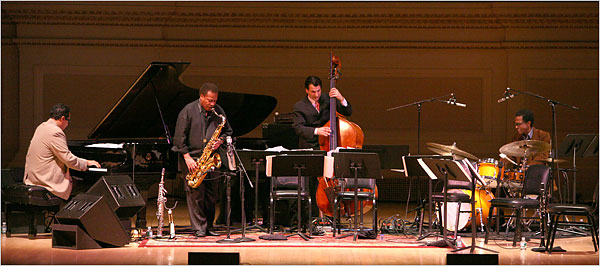
In 2000, Mr. Shorter organized what turned out to his final, and arguably his best, working ensemble.  Danilo Perez (piano), John Patitucci (bass), and Brian Blade (drums) became an extension of the saxophonist's imagination and so in tune with his constant desire to be exploring that the group never rehearsed––they would get on stage and hit.  Over the years, the group would be augmented by orchestras and chamber ensembles, becoming the proving ground that would help lay the groundwork for "Iphigenia", the opera Mr. Shorter created with librettist esperanza spalding, set designer Frank Gehry (and the Quartet) that had its first full production (with the librettist in the lead role) in Boston, MA, in late 2021.  Considered (at that time) as a "work-in-progress"), the show went on to play in Washington, DC, Berkeley, CA, and Los Angeles, CA, working out many of the issues that beset the earliest productions.  
 
Though the physical presence that was Wayne Shorter has departed, those of us who loved his musical and artistic adventures have much to buoy our spirits, what with seven decades of compositions, recordings, and videos. We can still carry on our conversation with the questions his music posed. That need not be an internal dialogue as we have the possibility to teach other people about this most fascinating person.  

Watch the Quartet in action:


Saturday, March 7, 2020

McCoy Tyner 1938-2020

Pianist and composer McCoy Tyner, a native of Philadelphia, PA's amazing music scene, died March 6 2020 at the age of 81.  Thinking about how his presence on the contemporary music scene mirrored my discovery of jazz, it was his collaborations with John Coltrane on "A Love Supreme" and "Impressions" that first turned my ears and mind away from The Beatles and The Rolling Stones, pointing the way to another music, one that also had its roots in African American experience but offered so much more than "She Loves You" and "I Can't Get No Satisfaction". The music created by Mr. Coltrane, Mr. Tyner, Elvin Jones, and Jimmy Garrison (now all passed on) was as powerful to my ears as a large ensemble, each instrument an orchestra unit itself.


But it was 1972's "Sahara", Mr. Tyner's debut album on Milestone Records, that really turned me on the amazing musician he was.  With a quartet that included Sonny Fortune (alto and soprano saxophone, flute), Calvin Hill (bass), and Alphonse Mouzon (drums, percussion, trumpet), the music soared, roared, cried, and celebrated life in all its amazing colors and sounds.  That album started a string of amazing recordings for MIlestone over the next decade, all led by his powerful piano work, filled with percussive chords and lightning-fast runs that pull the listener along on the most amazing journeys.

A favorite from that era, "Song of the New World" (1973), features the Quartet (with Joony Booth replacing Calvin Hill) string orchestra, a brass section, an oboist, and the great Hubert Laws on flute and piccolo:


Mr. Tyner went on to record many more albums for numerous labels, returning to Blue Note and Impulse in the 1990s and on to Telarc in the early 2000s. Eventually, he started the McCoy Tyner Music label (through Half Note Records) – his final "official" recording is "Solo: Live From San Francisco". Recorded in 2007, the album came out in 2009. He dances his way through 11 tracks, from his own pieces to time-proven standards as well as several John Coltrane compositions.  His sound and ear for blending percussive chords with lengthy solo flurries remains pure and the recording is a true delight. Mr. Tyner performed into the 2010s but had quietly retired to his New Jersey home several years ago

McCoy Tyner's influence on other pianists in uncontested and one imagines his approach to the piano will never really fade away. He gave us so many musical gifts and the world is a much better place for his life!

Here's a tune from Mr. Tyner's 1972 Blue Note album "Extensions" (recorded in 1970) featuring Wayne Shorter (tenor saxophone), Gary Bartz (alto sax), Ron Carter (bass), Elvin Jones (drums), and Alice Coltrane (harp):  

Sunday, April 1, 2018

Two X Five : Spring Music

One reads so much about the influence of John Coltrane on the sounds of jazz over the past five decades (since his passing) but many believe that his contemporary and still-quite-alive fellow saxophonist Wayne Shorter (who will turn 85 in late August of this year) has had and still has just an important of an influence.

Saxophonist Joe Lovano and trumpeter Dave Douglas created a quintet, Sound Prints, to explore Shorter's influence and music.  The  band's second recording is called "Scandal" (Greenleaf Music) and features the same rhythm section - pianist Lawrence Fields, bassist Linda May Han Oh, and drummer Joey Baron - as its 2015 self-titled debut live recording for Blue Note.

Photo: Merrick Winter
Because both leaders are so oft-recorded, one should know what to expect when they get down to making music. Both play with fire, both with abandon (check out the trumpet solo on "Full Sun" as well as the tenor sax solo on Shorter's "Fee Fi Fo Fum") yet the music would not be so impressive without the excellent rhythm section.  Baron, who first recorded with Douglas when both were members of John Zorn's Masada in the early 1990's, is the perfect drummer for this outfit.  He captures the excitement that Tony Williams brought to the Miles Davis Quintet of the mid-1960s yet also plays with such a high touch (listen to his brush and cymbal work on Douglas's "Ups and Downs" as well as the Latin-tinged fire of Lovano's "The Corner Tavern").  Ms. Oh, who has worked alongside Douglas for the past seven years, is solid and inventive plus her solos are delightfully melodic.  Pianist Fields has worked and recorded with Lovano, drummer Jeff "Tain" Watts, trumpeter Christian Scott Atunde Ajuah, and drummer Terri Lyne Carrington.  On the title track, his background work beneath the solos is quite inventive and engaging. When he steps, as he does on Shorter's "Juju" and Douglas's slyly funky "Mission Creep", Fields not only swings but shows great power and thought.  Listen to his intelligent backing on Lovano's "Full Moon"; it's impressionistic and not cliched as well as the lovely opening minutes of the final track, Douglas's "Libra."

"Scandal" is easy to recommend to fans of Joe Lovano and Dave Douglas. The music blends their myriad influences whether it be Clifford Brown, Booker Little, Miles Davis, Sonny Rollins or the afore-mentioned John Coltrane and the group's inspiration Wayne Shorter.  Sound Prints will appeal to fans who have followed creative music for many years and to younger listeners who want to understand how creative musicians push through the borders created by genres.  Try to see/hear this band in person so that you can see creativity, interaction, and intelligence in action.

For more information, go to greenleafmusic.com/scandal/.

Here's the band in action in the studio:


Over the past decade, guitarist, composer, and conceptualist Mary Halvorson has played in numerous settings, from several of Anthony Braxton's groups to alongside drummer Weasel Walter to Marc Ribot's Young Philadelphians to duets with fellow guitarist Noel Akchoté and pianist Sylvie Courvoisier to a trio with pianist Jason Moran and cornettist Ron Miles (BANGS) to her fellow Wesleyan grad (and Braxton student) Taylor Ho Bynum.  She has co-led groups with bassist Stephan Crump (Secret Keeper) and violist Jessica Pavone plus led her own trio, quintet, septet, and octet.  One of her other ensembles is Thumbscrew, a trio that features drummer Tomas Fujiwara and bassist Michael Formanek.  Ms. Halvorson has developed a unique voice, one that allows to fit in many different settings as well as being a stand-out soloist.


Her new album for Firehouse 12 Records features a quintet composed of Messrs. Formanek and Fujiwara plus trumpeter Ambrose Akinmusire and the fascinating voice of Amirtha Kidambi.  The group and its 2-CD set bear the name Code Girl: it's the guitarist's first album on which she writes both songs and lyrics.  It's a riveting combination of sounds, the powerful work of Akinmusire combined with Ms. Halvorson percussive yet melodic style and the fascinating work of Ms. Kidambi who has worked with saxophonist Darius Jones and leads the contemporary experimental band Elder One.  The rhythm section keeps the music flowing, swinging at times, and, in the case of Formanek, quite melodic in his support and counterpoint.

If you are familiar with Ms. Halvorson's music, you know that she has no fear so one will hear swatches of "free jazz", "hard bop", and "prog rock" without falling totally into categories.  "Possibility of Lightning" has so much going on, from its nearly impenetrable lyrics (excellently articulated) to the fuzz guitar solo to the playful interaction of trumpet and guitar.  Ms. Kidambi can be added instrument as she shows with her march-like attack throughout the song. There's a calm beauty to "Storm Cloud", just voice and guitar on the opening verse.  Formanek's bowed bass comes in for the next verse and here one hears a sound reminiscent of the late bassist Jack Bruce's more experimental work.  Even when the trumpet and drums enter, the music remains calm and focussed.

There are compelling moments throughout the 90+ minute program.  In the opening minutes of "The Unexpected Natural Phenomenon", one can hear the influence of Gil Evans-Miles Davis's "Sketches of Spain" in the how the music moves and the airiness of the background.  After Ms. Kidambi sings through the verses, she breaks into a wordless vocal that suggests the work of Jeanne Lee. That inventive direction leads to fiery solos from both Ms. Halvorson and Akinmusire plus listen to the powerful drums beneath the trumpet solo that leads to the Fujiwara's thunderous solo. Dig the bass drum, low bass notes, and Ms. Halvorson's quiet chords at the opening of "Drop The Needle", a tune with a double-tracked vocal and more of the Jack Bruce feel.  The verse in the middle of the song, the one that goes "one might drop the needle/ an entire song transcends/ repeat a twirling hypnotic/ melody in descending order", may be the best description of the album.  

"Code Girl" makes more sense the more you listen.  Music is a "code", it speaks to all of us in different ways and we respond to various sounds, solos, lyrics, and emotions.  Mary Halvorson is a sound master (bless those "bent" notes) and has created a new, fruitful, fertile, direction for her music.   One can really tell that she, Tomas Fujiwara, Michael Formanek, Ambrose Akinmusire, and Amirtha Kidambiare are each so emotionally involved in this music.  It may initially sound different but, once you invest yourself in this program, there are numerous musical rewards.

For more information, go to www.maryhalvorson.com.
Here's the opening track:

Saturday, July 2, 2016

Wayne Shorter Music, Denny Zeitlin Piano

Denny Zeitlin is equal parts pianist, sonic explorer, clinical professor of psychiatry and a practicing psychiatrist.  Born in Chicago, he first began playing piano at the age of two (!) and was gigging professionally while in high school. He settled in the San Fransisco Bay area after college and has followed his various pursuits for over five decades.


Robert Ascroft photo
Wayne Shorter, who is 4 years older than Dr. Zeitlin, has been a professional musician for nearly six decades. He first came to critical notice when he joined Art Blakey's Jazz Messengers (1959-64) then moved on to work with Miles Davis and his second classic Quintet (1964-70) on into Davis's "Bitches Brew" period. During his years with the trumpeter, Shorter also recorded a number of highly influential albums for the Blue Note label. He went on to join Weather Report, recorded with Joni Mitchell, Don Henley, and Steely Dan (among), and, since 2000, has led his fabulous Quartet with pianist Danilo Perez, bassist John Patitucci, and drummer Brian Blade. He's also had a long and productive relationship with pianist Herbie Hancock, resulting in numerous recording dates and tours.


With the exception of "Ana Maria" (first recorded for Shorter's 1974 "Native Dancer" Lp) , all the tracks on Denny Zeitlin's new solo piano recording "Early Wayne: Explorations of Classic Wayne Shorter Compositions" (Sunnyside Records) date from the 1960s.  Classics such as 1968's "Nefertiti" (composed for the Miles Davis album of the same name) and 1965's "E.S.P." (also for Miles Davis) give the pianist plenty of room to explore. Shorter's melodies lend themselves to side trips as they are often rich in content.  Sometimes minimalist but never boring, Zeitlin travels through these songs, changing and mixing rhythms, going from rubato to swing and back again in the blink of an eye.  "Miyako" (from the 1967 Blue Note Lp "Schizophrenia") is a lovely ballad,given a gentle treatment yet still filled with melodic twists and turns.  Listen to the fun the pianist has on "Speak No Evil", a rhythmic tour-de-force (love that low boogie-woogie left hand) that leads into his first extended solo. How about that rumbling underneath the melody on "Toy Tune" (from the Blue Note album "Etcetera" recorded in 1965 but not released until 1980) - there's no "toying" around as Zeitlin dances through the melody, the run-away rhythm pushing the song forward but never losing control.

Recorded live in December of 2014, "Early Wayne" serves to remind the listener not only of what an impressive composer Wayne Shorter has been throughout his career but also what a brilliant interpreter Denny Zeitlin has been and remains.  This is music to play over and over as one hears more each time through the program.  Close your eyes and enjoy the shower of notes as they rain down on your mind and soul.

For more information and to listen to three of the 10 tracks, go to sunnysidezone.com/album/early-wayne-explorations-of-classic-wayne-shorter-compositions. You should also check the good Doctor at www.dennyzeitlin.com.  The album is set to be released on July 8


Monday, August 5, 2013

A Big Shorter Tribute + Da Bang Da Man

Wayne Shorter turns 80 years old this month (August 25); the music world has been celebrating all year long.  He continues to perform, to compose, and to issue statements that may make you scratch your head but also force you to think.  He could have disappeared when Weather Report disbanded in 1986 but, instead has continued to be in the public eye for his duo with Herbie Hancock and his great Quartet with Danilo Perez (piano), John Patitucci (bass) and Brian Blade (drums).

In April of 2012, trumpeter/arranger David Weiss brought a 12-piece ensemble to Dizzy's Club Coca-Cola at Lincoln Center in New York City.  Weiss, who has an affinity for Black music of the 1960s (his work with and organization of The Cookers has yielded 3 strong CDs), looked at Wayne Shorter's impressive catalog of compositions and chose a handful for the group over the week of gigs, even composing a tune of his own based on a Shorter phrase. As he has done with his Point of Departure quintet (interpreting music by Andrew Hill, Herbie Hancock, Detroit trumpeter Charles Moore and others), Weiss does not mess with the compositions as much as allow the musicians in his group to solo without the need to imitate the original version of the songs.

That week in New York City gave birth to "Endangered Species: The Music of Wayne Shorter", the CD that Motema Music is releasing to coincide with Mr. Shorter's birthday. Dig this splendid collection of musicians! The rhythm section includes Geri Allen (piano), the mighty Dwayne Burno (bass) and E.J. Strickland (drums). The drummers twin Marcus plays tenor and soprano saxophones in the reed section alongside Tim Green (alto sax), Ravi Coltrane (tenor sax) and Norbert Strachel (baritone sax and bass clarinet).  Weiss plays alongside trumpeters Diego Urcola and Jeremy Pelt while Steve Davis and Joe Fiedler wield the trombones.

As to be expected with the aggregation, there are numerous impressive moments.  Ms. Allen's muscular and musical solo on Weiss's "The Turning Gate" is powered by her partners in the rhythm section while Marcus Strickland's fiery soprano explodes over the brass and reeds on the extended coda.  Pelt shines on "Fall", a piece first recorded by the Miles Davis Quintet for the "Nefertiti" Lp. He starts quietly over impressionistic piano chords, counterpoint from the bass and hardy snare and cymbal work. Ravi Coltrane takes over and his spot pushes the intensity level without boiling over.  Steve Davis, Tim Green, and Ms. Allen get to romp over the joyful work of Burno and EJ Strickland (who also delivers a smashing solo) on "Nellie Bly", a tune pianist Wynton Kelly recorded in 1959 as "Mama G." "Mr. Jin", a piece recorded by Art Blakey & the Jazz Messengers in 1964, features solos by Green and Davis (a fitting choice, as the trombonist was a member of the great drummer's final ensemble.) Green, a young player from Baltimore, plays a very strong solo with much more content than flash.

The program closes with "Prometheus Unbound", a piece that Shorter expanded from his 2003 "Alegria" CD (there it was "Capricorn II") for his work with the Orpheus Chamber Orchestra.  Weiss creates a multi-sectioned arrangement with impressive section work that open to solos by Ms. Allen, Pelt and Marcus Strickland on soprano.  Brother E.J., who shines throughout the program, is downright incendiary, driving the rhythms underneath his brother whose solo displays aspects of the composer's style without imitating him.   The climax of the solo is breath-taking, followed by a blazing and expanded reading of the opening theme.

The width and breadth of Wayne Shorter's music has been consistent over his long career.  Critics have had issues with some of his eclectic and electric excursions but he has always looked for new ways to express himself through music.  David Weiss and this incredible band do more than celebrate the man and his contributions - they make the listener see and hear this music in new, and often exciting, ways. Highly recommended!  For more information, go to www.davidweissmusic.com.

If you click on the following link - www.npr.org - it will direct you to the page that features Wayne Shorter's concert at this year's Newport Jazz Festival.  He appeared with his Quartet as well as with Herbie Hancock and, believe me, it's worth your time to listen.


Violinist/composer Billy Bang (1947-2011) made music that drew its inspiration from many different sources.  He played "free music", he played funk, he translated his horrors as a soldier in Vietnam into several CDs of amazing music, he played with Sun Ra, created a tribute to "Stuff" Smith, co-founded the String Trio of New York and recorded with numerous musicians throughout the world.

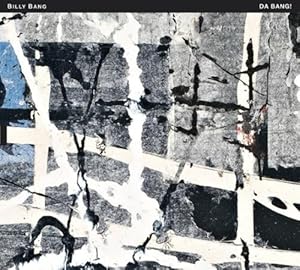
"Da Bang" (TUM Rcords) was recorded in February of 2011, just 2 months before his passing. He was in Finland with his group - Dick Griffin (trombone), Andrew Bemkey (piano), Hilliard Greene (bass) and Newman Taylor-Baker (drums) - to record and perform at the TUMFest.  Bang played with great gusto for both the 2 days in the studio and for the live set; even though it was obvious he was ailing, the music sounds strong.  The program opens with Barry Altschul's funky and fast-paced title track (Bang recorded the song twice with drummer Altschul and bassist Joe Fonda in the FAB Trio) - the leader's fine solo rides the waves of rhythm created by the drums and bass. Griffin, 71 at the time of this recording, delivers a sly, short, solo that gives way to Bemkey's more expansive romp.  "Guinea", a piece that Don Cherry composed for Old & New Dreams, starts with a great unaccompanied violin solo during which Bang explores the various possible of the melody, then strums his strings to imitate the African rhythm patterns the song will go on to explore. When the rest of the group enters, the song drops into a West African rhythm that actually also suggests reggae.  Taylor-Baker's funky solo rings with echoes of Max Roach and Ed Blackwell - he then becomes the only accompaniment as Bang returns for the final reading of the theme. The entire band returns to "dance" the tune out.

Other highlights include the beautiful "Daydreams", a Bang composition that opens with a shimmering solo piano intro that moves into a reading of the main theme by the violin, piano and bass.  Greene's long solo goes in a number of fascinating directions before the Bang and Bemkey return to restate the melody line.  Bang then moves on alone for a strong and often fiery solo statement before the bassist and pianist join back in to finish the piece.  There's a pleasing uptempo take of Ornette Coleman's "Law Years" as well as an extended riff on Miles Davis's "All Blues" with Bemkey channeling Bill Evans on the opening choruses and Griffin getting "down and dirty" for his solo.

The CD closes with the Quintet's take on Sonny Rollins's "St. Thomas" - they get into the "Island" groove and the piece has an upbeat, joyous, feel.  It's a great way to close out the program, on an "up" note.  Even at his most dramatic, Billy Bang's music, especially in the last decade of his life, had strength and emotional depth.  "Da Bang" comes in quite an impressive package, from the bright cover painting of Finnish artist Jukka Makela (titled "Hip-hop Blue") to the poetry of Amiri Baraka, Quincy Troupe, Sebastian Badin-Greenberg and Steve Dalachinsky that was read at the September 2011 Memorial Service for Bang in New York City.  Writer Bill Shoemaker contributes a good biography of the violinist/composer and TUM label head Petri Haussila writes about his relationship with the artist. Even without the wonderful packaging, "Da Bang" is worth your time.    For more information, go to tumrecords.com/034-da-bang.