Showing posts with label Miles Davis. Show all posts

Monday, March 6, 2023

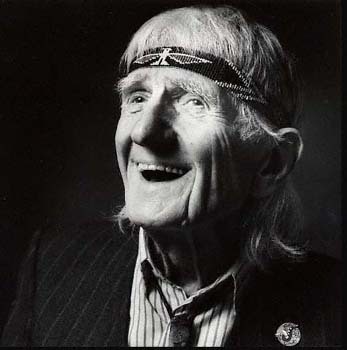
Wayne Shorter Gave Us Lives


Photo: Robert Ashcroft


Wayne Shorter
(1933-2023) has been a musical presence in Creative Black Music since the late 1950s. Starting out his professional career with trumpeter Maynard Ferguson and then moving to Art Blakey's Jazz Messengers where he helped to shape the sound of Hard-Bop for five years before moving on to the Miles Davis Quintet for the balance of the 1960s and into the early days of 1970.  He and keyboard master Joe Zawinul formed Weather Report in 1970 initially as an avant-garde creative ensemble before turning to more earthly rhythms to become one of the more popular jazz-fusion ensembles in the mid-70s through the mid-1980s.  Shorter had started his solo recording career in 1960 with Vee-Jay Records before moving to Blue Note Records in 1964 and recorded over 10 albums that showed his growth as a composer, tenor and soprano saxophonist, and a leader.  

Photo: Christophe Simon
He moved to CBS/Sony as a member of Weather Report and, in 1975, as a leader with his stunning "Native Dancer", a collection of songs influenced by Brazilian music that featured, among others, Milton Nascimento and Herbie Hancock.  During the 70s and 80s (and beyond), he would add his saxophone to songs on albums created by Joni Mitchell, Steely Dan, Carlos Santana,  and Don Henley (among others). After leaving Weather Report in 1985, the saxophonist released three fusion albums for CBS between 1985-1988 but it was not until signing with Verve Records in 1994 and releasing the ambitious "High Life" that Shorter's career began the renaissance that would last for the rest of his creative life. 

In 2000, Mr. Shorter organized what turned out to his final, and arguably his best, working ensemble.  Danilo Perez (piano), John Patitucci (bass), and Brian Blade (drums) became an extension of the saxophonist's imagination and so in tune with his constant desire to be exploring that the group never rehearsed––they would get on stage and hit.  Over the years, the group would be augmented by orchestras and chamber ensembles, becoming the proving ground that would help lay the groundwork for "Iphigenia", the opera Mr. Shorter created with librettist esperanza spalding, set designer Frank Gehry (and the Quartet) that had its first full production (with the librettist in the lead role) in Boston, MA, in late 2021.  Considered (at that time) as a "work-in-progress"), the show went on to play in Washington, DC, Berkeley, CA, and Los Angeles, CA, working out many of the issues that beset the earliest productions.  
 
Though the physical presence that was Wayne Shorter has departed, those of us who loved his musical and artistic adventures have much to buoy our spirits, what with seven decades of compositions, recordings, and videos. We can still carry on our conversation with the questions his music posed. That need not be an internal dialogue as we have the possibility to teach other people about this most fascinating person.  

Watch the Quartet in action:


Tuesday, May 14, 2019

New Music: Solo, Duo, & Trio

I have had the pleasure to write about Dr. Denny Zeitlin and his music numerous times over the past decade. We have spoken several times and I remain amazedly by his energy, his devotion to his music, his practice, and his students (he teaches Clinical Psychology at the University of California/ San Francisco and sees patients in the "City by the Bay" as well as in his current hometown of Kentfield, CA). His professional music career started in the early 1960s, playing acoustic before getting deeply involved with synthesizers (still is, to this day). He may be best-known for his absolutely scary soundtrack to the 1978 movie "Invasion of the Body Snatchers."  Several generations of "Sesame Street" viewers learned to count to 10 with the music he created for the then-Public Television program.

Over the past five years, Zeitlin has played yearly solo piano concerts at the Piedmont Piano Company in Oakland CA. He has the pick of the pianos in the showroom. In 2016, Sunnyside released his December 2014 presentation "Early Wayne", the compositions Wayne Shorter - now the label presents "Remembering Miles".  Recorded in December 2016, the concert features an overview of Mies Davis's amazing career, from early songs such as "Milestones (1947 Version" to "Tomaas" from the trumpeter's 1986 "Tutu" collaboration with bassist Marcus Miller.  Left to his own devices, the pianist makes each song sparkle with inventiveness and spirit, melody and emotion.  You may not recognize "Flamenco Sketches" on first listen but it's easy to hear how the piece takes shape. Zeitlin has great fun deconstructing Cyndi Lauper's "Time After Time" (check out the rhythmical and playful left hand).

Photo: Josephine Zeitlin
Hard to pick out a favorite track but one of the more interesting ones is the afore-mentioned "Tomaas."  The 1986 recording is quite funky (a la Chic) whereas here, Zeitlin plays inside the piano and has also prepared strings - it's as if he's duetting with slide guitarist. But, when the slinky bass line comes in, the music changes direction, starting to roll forward and the melody line emerges.  Now the right and left hands are in a call-and-response and the listener hears the original funky nature.

The album closes with two songs that have their origins in the 1950s.  "The Theme" comes from a 1955 Art Blakey & The Jazz Messengers session - you may have it played on several of Davis's live albums (he used the tune int the 60s). Put simply, the music swings. The rolling bass lines and the percussive attack of the left hand is a delight.  "Weirdo", from a 1954 Blue Note quartet session (bassist Percy Heath, pianist Horace Silver, and Mr. Blakey on drums) gives the pianist a lot to play with; it's bluesy quality, the rolling gait, and flowing solo lines.

Denny Zeitlin is a master.  His love for this music comes shining through the notes he plays and how he rearranges the songs so you hear them anew. "Remembering Miles" is not only a tribute to the game-changing Mr. Davis but also to the elasticity and longevity of jazz.  Splendid recording, sweet sound, and great music - can't be that combination.

For more information, go to www.dennyzeitlin.com.

Take a stroll through this Benny Golson tune:


The duo of Alex Harding (baritone saxophone, bass clarinet) and Lucian Ban (piano) has been together two decades.  They first recorded on the CIMP label in 2002, releasing one album as a duo and two as a Quintet (including 2006's delightful "Tuba Project").   They have recorded with the electronic musician Silent Strike and with soprano saxophonist Sam Newsome on "The Romanian-American Jazz Suite."  Harding has worked with Julius Hemphill's Saxophone Sextet, with the Sun Ra Arkestra, and with fellow baritone saxophonist Hamiet Bluiett's Baritone Group. He has appeared on recordings by David Lee Roth (!) and Greg Osby.   Ban has led groups with violist Mat Manieri, saxophonists Evan Parker and Abraham Burton plus earlier this year, released a duo album with clarinetist Alex Simu.  The pianist has also issued several recordings that reframe the music of Romanian composer George Enescu.

"Dark Blue" (Sunnyside Records) is their first duo album since 2002's "Somethin' Holy". The music ranges from exploratory  ballads such as the title song and Harding's solo tribute to the late Bluiett ("H.B.") to the meditative, Erik Satie style "Chakra" and the more "open" "Tough Love."  On baritone, Harding likes to mine the lower tones as well as use the "keys" to play percussion. His bass clarinet work has a lilt ("Esto") as well as a bite to it ("The Invisible Man").  Ban is never intrusive, providing excellent support plus rhythmic excitement (a touch of Chick Corea on "Black Sea") and a sense of melodic wonder as he does on his solo piece "Low Country Blue".

Photo: Cornel Brad
The duo's use of silence and interaction on "Monkey See", how Harding uses the piano as a springboard as well as to speak to, and how Ban keeps the music flowing with his phrases and spare bass lines, all combine to keep one's attention.  Listen to them "testifying" on the gospel-influenced "Not That Kind of Blues" - the melody suggests Herbie Hancock's "Watermelon Man". Ban puts a lot of boogie-woogie into the piano backing as Harding roars, struts, and dances on top of the rollicking keys.


Photo: Ziua de Cluj
"Hymn" closes the 11-song program on a hopeful yet solemn note.  Ban's lovely introduction opens to let Harding's melodic and breathy baritone melody. The pianist composed the song and you can hear his hope and love for a better world come out in the performance.

Alex Harding and Lucian Ban bring there friendship, musicianship, and intelligence to the forefront on "Dark Blue".  The music surrounds the listener, invites him or her in, and keeps their attention throughout. Take a chance on this album - there are many rich moments in the music.

For more information, go to www.lucianban.com or jazzbarisax.com/harding.php.

Here's the title track:


Trombonist JC Sanford may be more recognizable these days as a conductor than as a composer/performer.  He is a protégé of Bob Brookmeyer, creating two big band albums (one with composer David Schumacher): the last several years, he has been busy conducting the large ensembles of John Hollenbeck, guitarist Joel Harrison, trombonist Alan Ferber, pianist Frank Carlberg, and the late Alice Coltrane.  He also leads several smaller groups including a quartet (the JC 4) and the three-piece band known as Triocracy. That latter group, which features Andy Laster (alto sax, baritone sax, clarinet) and Chris Bacas (tenor sax, soprano sax, clarinet), came together in the mid-200os, recorded its debut album in November of 2014.  Sanford, who won two grants in the past year, used a portion of the money to finally release  the recording.

Photo: Ryo Sasaki
"Pyramid Scheme" is finally available thanks to the Minneapolis, Minnesota-based Shifting Paradigm Records.  The 13 tracks include seven pieces from Sanford, three short improvised pieces, and one song each from Billy Joel, Stevie Wonder, and George Frederic Handel. Though the program is just a shade over 44 minutes long, there's a lot to take in.  The title track opens with the three musicians playing the theme, goes into another short section, back to the theme, and then, the separate voices begin to go there own way away from and back to the theme.  There's a hint of Julius Hemphill in the bluesy "Everything We've Always Wanted" starting with the bouncy baritone sax line, the trombone counterpoint, and Bacas's tenor sax solo. There's a different  kind of bounce to "Bagheera's Dance", a piece based on the trombonist's love of the Disney classic cartoon based on "The Jungle Book." Sanford created a melody out of the baritone saxophonist's last name to create "Outlaster" which breaks into a funky dance for the soprano sax, trombone, and the baritone sax.

"And So It Goes", the oft-recorded Billy Joel (at least this year it is), gives the trio the opportunity to each play the lovely melody as well as create counterpoint for the lead player.  The harmonies Sanford orchestrated for his horn, the tenor and alto saxes, sound lush and gentle.  Handel's "Sarabande" (from the third movement of his "Concerto for Oboe in G minor") also contains lovely three-part harmony as well as a fine soprano line. The Wonder song, "You and I" (from 1972's "Talking Book" album), has an expansive melody line that the trio plays in harmony.  Laster's tenor solo is played alone, a finely etched interpolation of the melody.

As for the improvisations, they range from the bumble-bee freneticism of "Quick Change (#5)" to the odd call-and-response of "Time Parameters (#3)" and it's nervous trombone, fluttery soprano sax, and noisy alto sax.  "Something Chordal (#4)" is exactly what it purports to be, the three musicians creating long tones and the occasional group chord.  That track is quite handsome and even more striking for the fact it's totally improvised.

"Pyramid Scheme" may have taken four-and-a-half years from the studio sessions to the final product but the music sounds contemporary.  JC Sanford's Triocracy debut is an often exhilarating blend of sounds and styles of composition with and without improvisations.  And it's fascinating to sit and listen to.

For more information, go to www.jcsanford.com and/or www.shiftingparadigmrecords.com.

Here's a track to tickle your fancy:

Wednesday, February 16, 2011

Gil Evans at 100

Among the great recordings that helped initiate my ears to the joys of jazz was Miles Davis's "Sketches of Spain."  First issued in 1960, the recording paired the mercurial trumpeter with arranger/composer Gil Evans (pictured left) on a program of Spanish music from the pens of Manuel de Falla and Joaquin Rodrigo (as well as one of Evans' compositions.)  Evans utilized a large orchestra with as many as 14 brass players, 5 reed players, a harpist, acoustic bass and kit drummer.  "Beautiful" and "haunting" are good words to describe the results of their collaboration - Davis and Evans would go on to release "Miles Ahead", "Quiet Nights",  and "Porgy and Bess" - they had first worked together in 1949 on Davis's groundbreaking "Birth of the Cool" but their 4 releases on Columbia found great popular success.

All that leads into an email I received earlier today (reproduced below.)  This looks and sounds like an exciting adventure, one that should appeal to fans of Evans' unique approach to jazz and contemporary music.  

THE GIL EVANS CENTENNIAL PROJECT

Newly Discovered, Un-Recorded Works by Gil Evans Brought to Life
February 2011 Launch - March 13, 2011 Kick-off Concert in NYC
CD Release on May 13, 2012, Evans' 100th Birthday
"It's been a dream of mine to hear new Gil Evans works unearthed because I learn so much every time I hear his music. I don't know anybody who knows Gil's music better than Ryan and I can't wait to hear this music realized." - Maria Schneider


Next year will be the 100th anniversary of Gil Evans' birth, and the Centennial Countdown begins on February 16, 2011 when composer/producer Ryan Truesdell launches The Gil Evans Centennial Project (GilEvansProject.com) with the assistance of fans, friends, and musical colleagues, powered by an ArtistShare® experience.

While many centennial milestone celebrations involve collections and selections of greatest hits from the past, this centennial celebration brings to light newly discovered compositions. Most people know of Gil Evans' work with Miles Davis, but combining all of Evans' work with Davis accounts for only a few years out of a five-decade career. "Gil was an amazingly prolific composer and arranger. I saw thousands of pages of music manuscript, more tunes than I could count. As I went through this music, I started to realize that so many of these were never recorded or were heard live only a few times," explains Truesdell, the first person outside the Evans' family to have been granted full access to the musical archives.  As Miles Evans says: "I'm very excited about this project, and I'm behind Ryan Truesdell 100%.  He's a very talented young man, an excellent musician who has taken the time, and has the talent, to pull this off." 

Having sifted through stacks of music, some full scores, some just sketches, Truesdell has selected works that will give participants and listeners a look at Evans' musical world before and after his collaborations with Miles Davis. Among the works to be recorded for the first time are a number of pieces dating back to Evans' work in the late 1940s with the Claude Thornhill Orchestra, a few works written for singers including one originally arranged for an Astrid Gilberto album but never used, and never-before-heard works for a 24-piece ensemble that includes oboes, bassoons, French horns and percussion. This project will bring Evans out of the shadows, show him to be the pioneer that he was, and shine a new light on his legacy as a 20th century composer and orchestrator.

The Gil Evans Centennial Project provides an opportunity for fans and aficionados, students and professional musicians, to all join together in bringing the music of Gil Evans to life. What could be a better birthday present?

Fan-funded projects, a concept pioneered by ArtistShare®, not only support works of artistry, they provide participants with a behind-the-scenes view of the creative process. Through online audio, video, and journal entries, project participants will share the journey as Truesdell finds Evans' music, documents and compares the scores and sketches, applies deductive reasoning to prepare tempi, style and approach, and rehearses the band. Along the way, interviews with experts such as Evans' biographer Stephanie Crease, composer Maria Schneider, members of the Evans family, musicians who worked with Evans, and others who have been deeply influenced by his work will provide depth and historical context by sharing their experiences and insights. The project will continue with the recording, mixing and final release of the CD on May 13, 2012, Evans' 100th birthday.

On March 13, 2011, just one week shy of the anniversary of Evans' death, special guests Phil Woods, Andy Bey and Frank Kimbrough will join the Eastman School of Music Chamber Jazz Ensemble conducted by Truesdell for a New York City kick-off concert. The 7 PM performance at St Peter's Church will be preceded by both a 3:30 PM afternoon panel discussion moderated by Stephanie Crease with Howard Johnson, Helen Merrill, Maria Schneider and Ryan Truesdell, and the Church's weekly 5 PM Jazz Vespers that will feature the music of Gil Evans with guest soloists Frank Kimbrough, Helen Merrill, Howard Johnson, and Steve Wilson as part of "Prez Fest 2011 - Celebrating Gil Evans."

Truesdell, who was co-producer of Maria Schneider's award-winning album Sky Blue, is not only spearheading the project, but he will personally conduct the orchestra in live and recorded performances and produce the CD. A full range of participant levels is available from the $12.95 Download Participant to the $25,000 Executive Producer. Of special note is the $125 Composer Participant level that includes access to six audio lessons analyzing specific aspects of Gil's scores. Additionally, a brand new participant offer is still being designed that would enable schools, organizations, or even local communities to bring Truesdell to town where he would hold master classes and/or workshops as well as conduct a local ensemble in a concert of Evans' music, just as he did during the out-of-town preview concert that took place on February 17th at the Eastman School of Music in Rochester, NY.

Participation in The Gil Evans Centennial Project is available exclusively through ArtistShare®, a company noted for its groundbreaking approach to connecting fans with the creative process.

To participate, go to: http://www.artistshare.com/projects/project_experience.aspx?ProjectID=376&artistID=279&salesTypeID=6

"It's never too late to fall in love with Gil Evans" - Stephanie Crease

"[Gil] never wasted a melody, he never wasted a phrase. Students will discover him. They'll have to take his music apart layer by layer. That's how they'll know what kind of genius he was."- Miles Davis


ABOUT RYAN TRUESDELL
Composer - Producer - Educator

Ryan Truesdell is a composer of diverse musical tastes and influences with a healthy reverence for jazz tradition and an ever-broadening sonic palette. He received his Masters degree in Jazz Composition from the New England Conservatory and immersed himself in a broad range of musical styles while studying composition with Bob Brookmeyer and Lee Hyla. He composes and arranges music for an eclectic variety of ensembles ranging from small ensembles to big bands, wind ensembles to string quartets. Recent commissions include arrangements for trumpeter Ingrid Jensen with the U.S. Air Force Band of the Pacific, new music for pianist Frank Kimbrough with the University of Minnesota's Jazz Ensemble, and a new piece for Bob Brookmeyer's 80th birthday concert at the Eastman School of Music. Ryan was also awarded the First Music commission from the New York Youth Symphony's Jazz Band Classic, and conducted its premiere at the Allen Room at Jazz at Lincoln Center in 2009.

As a producer, Ryan has already distinguished himself as a valuable resource in the studio.  In 2004, he served as production assistant for Maria Schneider's record, Concert in the Garden, which won a Grammy award for Best Large Jazz Ensemble.  He co-produced Schneider's next recording in 2007, Sky Blue, which has received unanimous praise including "Jazz Album of the Year" from the Village Voice Critics Poll, a Choc Award from Jazz Magazine in France, and a five-star review from DownBeat in 2007 (one of only two albums to receive that honor). Sky Blue was also nominated for two Grammy Awards, and won the category of "Best Instrumental Composition" (Cerulean Skies).  Most recently, Ryan traveled to Hamburg, Germany to produce a recording with Bob Brookmeyer and the Norddeutscher Rundfunk (NDR) Big Band, including both new and old works from Bob's catalog.

Ryan is an active guest clinician and conductor, working with musicians at a number of schools and organizations including Lawrence University (Appleton, WI), University of Minnesota, Twin Cities (Minneapolis, MN), Eastman School of Music (Rochester, NY), and the New York Youth Symphony's Jazz Band Classic (New York, NY).

For more information, visit www.ryantruesdell.com