Showing posts with label Guitar trio. Show all posts

Tuesday, October 10, 2017

Musicians From Israel (Pt 1)

As I am writing this post, radio stations throughout the US and elsewhere are celebrating the 100th birthday of Thelonious Monk.  None of the albums reviewed below have Monk compositions yet his music has influenced musicians from around the world for the last 70+ years. Ethan Iverson wrote an excellent appreciation for The New Yorker and you can - and should - read it by clicking here.
********************************************
It's amazing how many musicians from Israel have taken up residence in the United States. Among the first to be noticed was bassist Avishai Cohen who first came to critical notice when he joined pianist Chick Corea's group in 1996.

Clarinetist-saxophonist Anat Cohen came to the United States to study at Berklee College around the same time bassist Avishai Cohen (no relation - her brother Avishai is a much-heralded trumpeter) joined Corea's Origin sextet.  Moving to New York City in 1999, she joined DIVA Jazz Orchestra as well as several Brazilian ensembles plus David Ostwald's Gully Low Jazz Band, an ensemble dedicated to the music of Louis Armstrong.  In 2005, she started Anzic Records and had released eight albums as a leader, four as the Three Cohens (with her brothers Avishai and saxophonist Yuval), two each with the Choro Ensemble and Trio Brasileiro, and a duet with Brazilian guitarist Marcello Gonçalves. She has also recorded as a side person with numerous bands plus tours in a duo setting with pianist Fred Hersch.

The eighth Anzic album is "Happy Song" and features a fascinating Tentet playing quite a repertoire mostly arranged by Oded Lev-Ari (he's also the co-producer with Ms. Cohen). The ensemble for this recording includes Rubin Kodheli (cello), Nadje Noordhuis (trumpet, flugelhorn), Nick Finzer (trombone), Owen Broder (baritone saxophone, bass clarinet), James Shipp (vibraphone, percussion), Vitor Gonçalves (piano, accordion), Sheryl Bailey (guitar), Tal Mashiach (bass), and Anthony Pinciotti (drums).

 The material ranges from klezmer (the album's centerpiece is the 12:26 "Anat's Doina", a medley of three traditional melodies) to Brazil (a sweet arrangement of Egberto Gismonti's "Loro") to several impressive standards (Owen Murphy's snappy "Oh Baby" from 1924, made famous by Bix Beiderbecke and Gordon Jenkins's "Goodbye" composed in 1935 and a tune that became Benny Goodman's sign-off tune).  The program opens with two originals from Ms. Cohen, the funky title track followed by the handsome ballad "Valsa Para Alice", a piece she recorded with Trio Brasileiro on their 2016 collaboration "Algeria Da Casa."  Lev-Ari's original contribution is "Trills and Thrills", a seven-minute sonic adventure that opens in rubato until Ms. Cohen plays the lovely melody and the piece opens up with contributions from all building to a powerful, blues-drenched finish. The album's final track is "Kenedougou Foly", a high-spirited romp composed by Malian balafon artist Néba Solo (the 2006 album that features this song is well worth examining) - arranged by Ms. Cohen, each member of the Tentet adds his or her personal touch and the joyous piece is worth playing at very high volume. Special kudos to Messrs. Shipp and Pinciotti for their impressive work driving the band.  It should remind some close listeners of the work of Pierre Dørge's Jungle Orchestra.

This album does live up to its name. There are solemn moments but the album opens and closes on such "highs" that one walks...no, dances away from the speakers.  From the delightful Milton Glaser cover painting to Ms. Cohen's highly expressive clarinet playing to the intelligent and inventive arrangements and the "knockout" ensemble, Anat Cohen's Tentet's "Happy Song" is a treat to hear over and over.

For more information, go to www.anatcohen.com.

Here's the title track:


Bassist and composer Or Bareket had an international upbringing. He was born in Jerusalem, raised in Buenos Aires, Argentina, and then in Tel Aviv, Bareket (whose brother Eden is a baritone saxophonist) is now based in New York City.  His debut album as a leader (he's worked or recorded with drummer Ari Hoenig, pianist Aaron Goldberg, plus vocalists Cyrillé Aimee and Camila Meza), "OB1" (Fresh Sounds New Talent), features guitarist Shachar Elnatan, pianist Gadi Lehavi, and drummer Ziv Ravitz.

The album opens with a bluesy guitar intro that leads into "Patience", a song that has a jump and an irrepressible forward motion that gets interrupted every now and then with melodic interludes.  Sound engineer Luis Bacque does an amazing job of capturing the band's sound, you can clearly hear the quartet's interactions as well as the intimate relationship of the drums and bass. Bareket's sound and attack remind this listener of the playing of Eric Revis; they are both so melodic yet can be percussive when need be.

What stands out throughout the program is how melodic these songs are. Influences from Middle-Eastern music, traditional Israeli music, and the innovations of 1960s Blue Note Recordings move in and out of pieces such as "Snooze" and "Misdronoth"; One hears a more traditional melody on the piano-bass duo "Elefantes I" et the piano backing has a classical feel, especially when Lehavi plays beneath the bass solo.  Still, the fun is allowing the music to just roll over you, to listen closely, then at a distance, and to hear how the music often moves seductively.

Percussionist Keita Ogawa and accordionist Vitor Gonçalves join the group for "La Musica Y La Palabra", a lovely tango composed by pianist and vocalist Carlos Aguirre.  The leader and accordionist have several lovely moments when they play the same phrases.  It's a haunting melody and Bareket deserves much praise for filling the piece with long solos but for embracing the melody with short solos that rise organically out of the thematic material.

The album closes with "Shir Lelo Shem (Song with No Name)" - composed by one of the earliest Israeli-born "rockers" Shalom Hanoch (born 1946), Bareket plays it solo, sticking to the handsome melody with several short solo excursions.  His notes are well articulated and he never lets technique stand in for emotion.

"OB1" is a memorable debut that stands out as much for the excellent musicianship as for its thoughtful melodic content.  One hopes Or Bareket continues his quest for what he has created here bodes well for his future as both a musician and composer.

For more information, go to www.orbareket.com.


One of the essential components of jazz has how the blues has been integrated into the music. Sometimes, you can hear it in the chord progressions, sometimes in the anguished cries or gleeful shouts of the musicians, and sometimes it's how the composer and/or musician approaches the material and performance. "Antidote" (AIMA Records) is the fourth album from Jerusalem native Rotem Sivan and the first since the guitarist/composer a seven+ year relationship with his girlfriend ended and new person entered his life.  Recorded with his "working" band of Haggai Cohen Milo (bass) and Colin Stranahan (drums), the album is, not surprisingly, an emotional roller-coaster.

photo by Tomasz Handzlik
The opening track, "Shahar", has a lighter feel. Built upon a powerful bass line and splendid brush work, the guitarist flies over the rhythms.  The title track follows. It's a bit darker, there are a touch of electronics in the background, and the melody is accompanied by whistling and wordless vocals. Milo's bowed bass work helps the dark mood as does the short, highly amplified, break.  But there is hope in the melody.

Vocalist Gracie Terzian joins the trip for a funky, danceable, version of "Somewhere Over the Rainbow" - the touch of hip hop in the rhythm section and the "chill" vocal gives the music less of a wistful feel and feels more positive.  The other non-original is Bob Dylan's "Make You Feel My Love" which turns out to be a vehicle for Milo's wonderfully melodic bass.  Sivan takes several choruses but does not stray far from the melody until his powerful solo. Urged on by conversational drums of Stranahan, the guitarist does step out and continues to ride the percussive wave until the piece fades out. Interesting to note - several cuts earlier, Sivan's hard-edged "Sun Song" sounds like variations on the Dylan song.

The bluesiest track is the ballad "Aloof", a piece with a country twang in the melody and another excellent bass solo.  Milo, who has worked with pianists Omer Klein and Jarrett Cherner plus has worked with numerous choreographers, knows how to shape a solo.  The counterpoint he creates for the drum solo on "For Emotional Use Only" includes low notes that resonate on the bottom.  The song goes through several sonic changes before the guitarist turns up his amp and rips off a powerful solo.

Rotem Sivan channeled his heartbreak and bewilderment into his music and, thanks to his trust and love for his bandmates, came up with his "Antidote."  Instead of burying himself in long self-indulgent solos, these 11 tracks come in at 38 minutes yet one does not feel short-changed.  Give it a listen at rotemsivan.bandcamp.com/album/antidote-full-album.

To learn more about the guitarist, go to www.rotemsivan.com.

Here's one of the tracks:

Saturday, May 21, 2016

Such Sweet Thunder

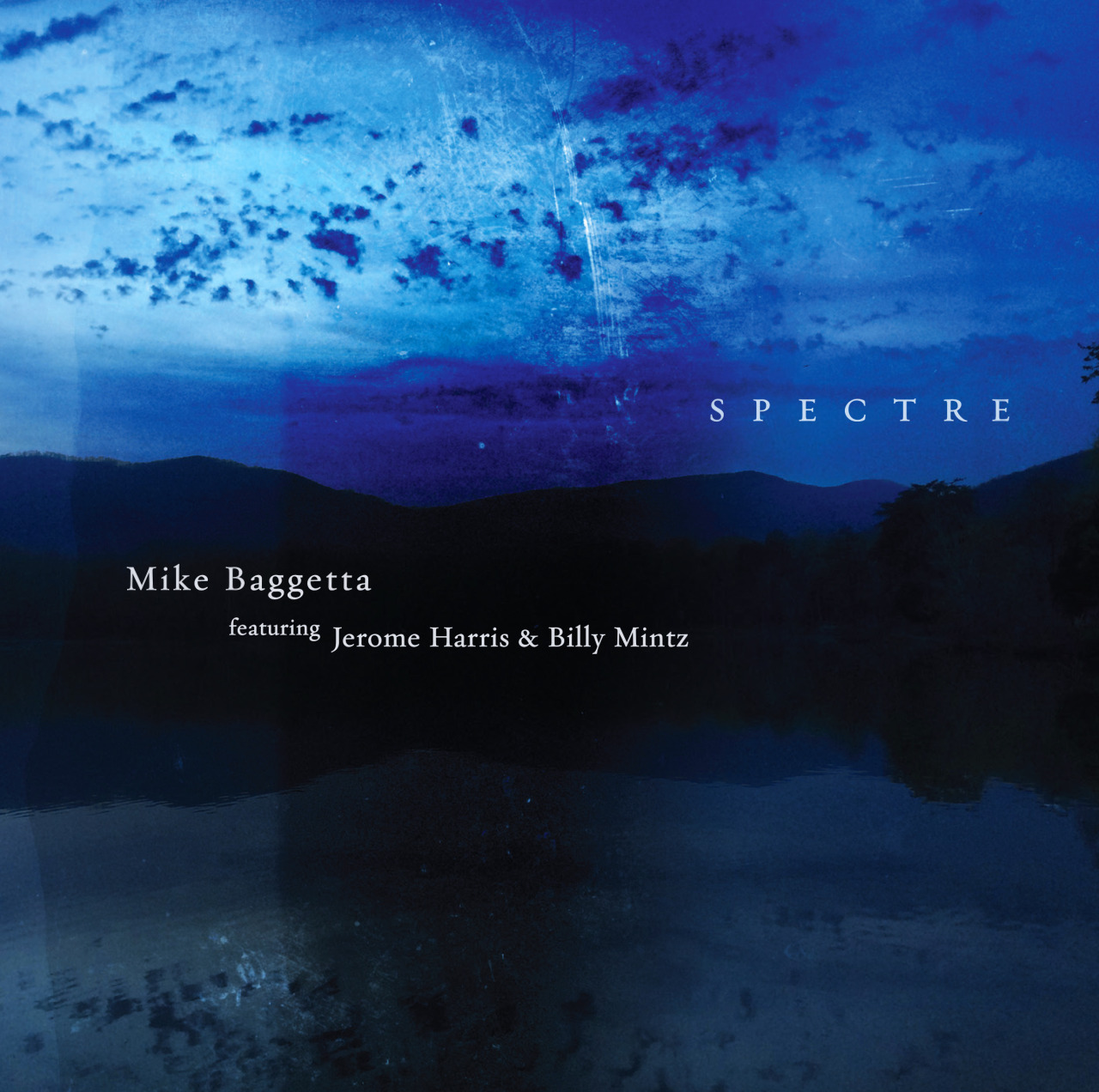
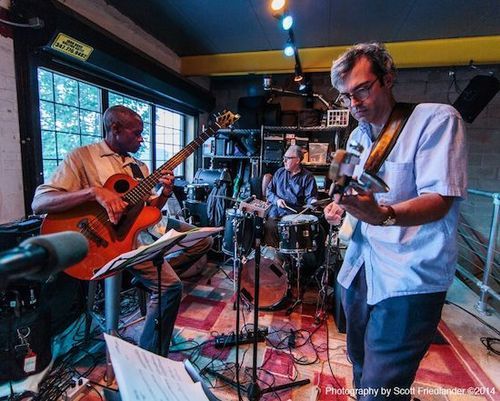
Having seen guitarist Mike Baggetta play in a solo setting, duo with trumpeter Kris Tiner in their TIN/BAG ensemble, and in his long-running quartet with saxophonist Jason Rigby, drummer George Schuller, and bassist Eivind Opsvik and Cameron Brown, I was excited to see "Spectre" (Fresh Sound New Talent) arrive as a trio date.  With the acoustic bass guitar sounds of Jerome Harris, the drum work of Billy Mintz, and the leader's guitars plus live processing, one would expect this music to go in many directions, and it certainly does. Five of the nine tracks are Baggetta originals, there is one track credited to all three ("Second Prelude", the opening cut), a heavy-metal inspired cut, "Nasty" composed by Mintz, Wayne Walker and Webb Pierce's country classic "Leavin' On Your Mind" (a big hit for Loretta Lynn in 1963), and Ornette Coleman's "War Orphans" (with versions recorded by Paul Motian, Bobo Stenson, and Charlie Haden's Liberation Music Orchestra.)

With the exception of the afore-mentioned "Nasty" and the guitar solo on Baggetta's "The Only Blues", this music is often quiet, filled with pauses and silences, the three musicians interacting in the studio having a conversation that draws the listener in. A piece such as "Passage", a Baggetta original that stretches out for over 10 minutes, the looping guitar lines, the wonderful melodic work of Harris and Mintz's splendid brushes, keeps one involved all the way through.  The first few times, you wonder where it's going; when you return again, listen closely to how this music moves, how each player is important to the direction and the sound, and how just how well the guitarist integrates the electronics.

downtownmusic.net
Don't confuse softer volume with lack of intensity when listening to this trio.  Baggetta's other-worldly sounds, with phrases that may remind some of the "bent" country sounds of Bill Frisell or the expressive Jeff Beck, blend well with the musicality of Harris and colorings of Mintz.  The three-part title suite sounds improvised, as does the majority of the album, but when you return to the music, a logic and sense of purpose appears.  The album closes with the Ornette Coleman work, the guitarist alone with looping, creating a stark yet emotionally rich atmosphere that makes "War Orphans" all the more poignant.

The dark blues of the album cover are a good signpost as to what to expect when one listens to "Spectre." There is a spaciousness to the music that one often feels as if he were standing on a mountain top surveying the universe.  Mike Baggetta turned to fellow guitarist David Torn for the mastering; his sense of sonic landscapes influences the project as each participant's sound is given equal weight as one falls under the spell of this music.  Dig in, dig deeply, and you will be moved, challenged, and ultimately satisfied.

For more information, go to mikebaggetta.com.

Here's a taste:

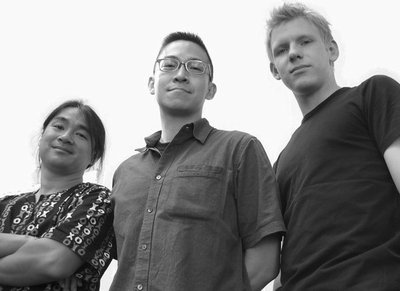
As a young person growing up in the Seattle, WA, area, trumpeter and composer Cuong Vu was greatly influenced by guitarist Pat Metheny. Vu spent several years in the early 2000s touring and recording with the guitarist's band. He has also worked with pianist Myra Melford, saxophonist Chris Speed, guitarist Joel Harrison and vocalist Laurie Anderson (among others). As a leader, Vu has recorded several albums for Knitting Factory and ArtistShare plus his Vu-Tet album on Origin Records. He's been working with the rhythm section of Stomu Takeishi (electric bass) and Ted Poor (drums) for over a decade (and three recordings), musicians who give as good as they get and more.

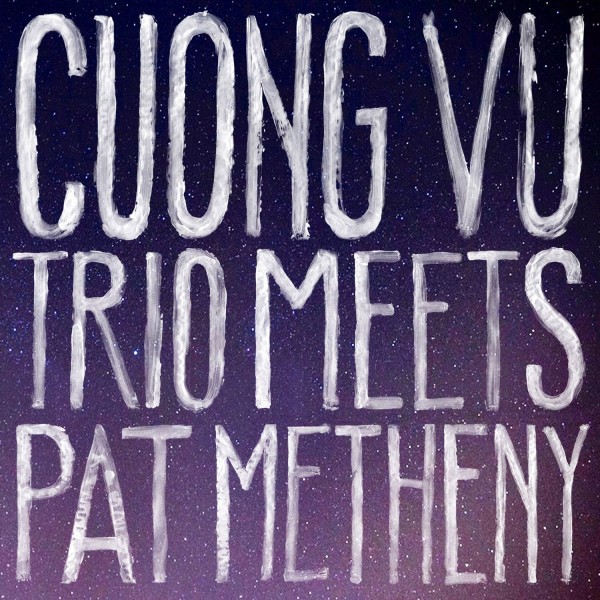
"Cuong Vu Trio Meets Pat Metheny" (Nonesuch Records) is a bit of a misnomer. This project does not feel like a "jam session"; instead, the seven tracks are a group effort.  Takeishi's fundamental bass lines, Poor's thrashing drums, Vu's forceful trumpet, and Methany's powerful guitar work seem like a natural fit. The program starts quietly, "Acid Kiss" arriving on a soft trumpet melody then slowly and steadily picks up in intensity, Vu's searing sound underpinned by squealing guitar, until the music seems to explode. Right near the end, the trumpet and guitar blend so closely the two musicians sound like one. There's plenty of fire on "Not Crazy (Just Giddy Upping)" with its post-modern electric/electronic bop.  Vu's trumpet solo moves up and down, in and out, reaching for sounds in the manner of the late Kenny Wheeler (especially reaching reaching for non-melodic sounds.)

If you have followed Pat Metheny's music and career over the past 40+ years, you know how much he likes to experiment with sounds and textures.  His brass-like sounds on songs such as "Let's Get Back" or his wailing solo on "Tiny Little Pieces", the latter over the rampaging rhythm section, prove he's not rating on his laurels.  On the latter track, his feedback and loops play right into Vu's coarse, raspy, trumpet sound, as if they were inside each other's minds.  Metheny gets bluesy and references John McLaughlin during "Telescope" (his composition), moving from supple melodic runs to roaring flurries of notes.  Both he and Vu take it down a few notches for the handsome "Seeds of Doubt" the guitar flowing atop Poor's active drums and cymbals and Takeishi's spot-on counterpoint.

There are moments on "Cuong Vu Trio Meets Pat Metheny" when the listener is reminded of electric Miles Davis and how that trumpeter, especially in the live setting, really pushed his band to go further with the music.  Then, there are cuts such as "Tune Blues" (composed by saxophonist Andrew D'Angelo), where the quartet swings hard but with a bluesy flair, electronics aside (save for Metheny).  The music is a bit off-center, Poor pounding away with Takeishi keeps the rhythm moving forward.  You should actually listen to this recording several times in a row start to finish, concentrating on different musicians each time.  When you can stand back and let the sound fill the house, your room, or the car, even your headphones, this music has the power to take you far beyond the ordinary.

For more information, go to www.cuongvu.com.

Friday, March 25, 2016

Spring Sounds (Take 1)

Guitarist Julian Lage is a musician one might be tempted to call a "journeyman" if he was 58 instead of 28.   Since first coming to critical notice at the age of 8 in the documentary film "Jules at Eight" (check a clip out here), he's had an amazing career including playing at the GRAMMYs at the age of 12, playing and touring with vibraphonist Gary Burton at the age of 16 and so much more.  His discography features duets with Fred Hersch, Nels Cline, and Chris Eldridge, a solo acoustic guitar date, 2 with his Quintet, and, now there is "Arclight" (Mack Avenue).  On this album, Lage plays only electric guitar in the company of Scott Colley (bass) and Kenny Wollesen (drums, percussion, vibraphone).  It's a concise program, 11 songs in 37 minutes, and lacks for nothing.

GETTY Images/Jack Vartoogian
From the rumbling blues-rock of "Fortune Teller" to the avant-swing of "Activate" to the sweet ballad sounds of "Ryland", the album is filled with melodies, notable for its interactions, and although neither Colley nor Wollesen get a solo, they are an integral part of the brilliance of the music.  7 of the tracks (including the 3 listed above) are Lage originals plus there are 4 intelligent "covers.  There's the Django Reinhardt inspired swing of Gus Kahn/Charles Daniels 1927 "Persian Rug" (splendid brush work from Wollesen), the lovely ballad"Nocturne" from the  British composer, bandleader and journalist Spike Hughes (1908-1987), an interactive take of Irving Kahal/Sammy Fain's "I'll Be Seeing You" (Colley and Lage each take turns playing the melody while the drummer pushes them forward) and a ripping reading of W.C. Handy's "Harlem Blues", adapted from a 1920s arrangement by bandleader Willard Robison. The final track is one of several that remind this listener of the trio work of Bill Frisell, Kermit Driscoll, and Joey Baron from the 1990s.

This album has such fascinating sound choices. In the midst of the rocking "Prospero", Lage's ripping guitar lines share the melody with the vibraphone.  Sounds like a marimba on the opening of the appropriately-named "Stop Go Start" which brings to mind the exotica of Martin Denny as interpreted by Kip Hanrahan.  Colley's rich bass lines take the lead melody on "Presley" before Lage enters and the piece takes off on the power of the guitar solo over Wollesen's charging drum work.

If you enjoy the guitar work of Mr. Frisell, Brad Shepik, John Scofield, and Jeff Parker (among others), "Arclight" is for you. While Julian Lage does not sound like any of those guitarists, his rapport with Scott Colley and Kenny Wollesen will remind you of other guitar trios, ones in which all members have equal say in the presentation.And, it's great fun.  For more information, go to www.julianlage.com.

Here's the rollicking "Harlem Blues":


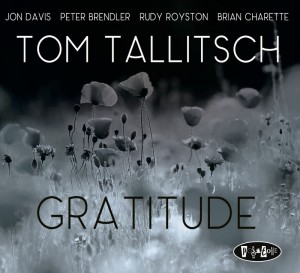
From the opening seconds of the first track "Terrain", it's easy to understand why the new Tom Tallitsch CD, titled "Gratitude" (his 4th for PosiTone Records), is so enjoyable.  The music sounds like vintage John Coltrane, circa 1975, powerful yet accessible and played by a band that is on fire.  The tenor saxophonist surrounds himself with such great players including pianist Jon Davis, bassist Peter Brendler, and drummer Rudy Royston (organist Brian Charette shows up on 2 of the 11 cuts). My affection for the amazing work of Mr. Royston is no secret and the bassist, one of the more melodic and focussed musicians, is very impressive. Davis, who worked with bassist and composer Jaco Pastorius, is a two-fisted delight, supportive and adventurous.

Tallitsch provides his band with a number of strong vehicles, not only for his rich, blues-drenched, sax but also making sure to give everyone a chance to shine.  Listen to how Brendler and Royston drive "Refuge", their acceleration pulling the sax and pain with them. As is his won't, the leader does not overplay.  He tends to caress melodies instead of roaring through.  The group's take on John Lennon's "Because" starts slowly and sweetly, building during the saxophone solo and hitting its stride during Davis's strong solo.  The bass counterpoint is also quite nice. Charrette shows up on the other 2 "covers", "Gold Dust Woman" (by Stevie Nicks) and "Thank You", one of the few slow tunes on "Led Zeppelin II" (composed by Robert Plant and Jimmy Page).  The folky quality of the original version can be felt on the latter track; with the addition of the organ, one hears the influence of The Band.  The tenor solo near the close of the tune hews closely to the melody and one can hear the gratitude from the lyrics.
sbarts.com
Several of the cuts are really barn-burners.  Beside the CD opener, "Alternate Side" fires on all cylinders without overheating.  Tallitsch really digs into his solo, romping atop the active cymbal work and the fast-paced "walking" bass lines. A big dollop of funk is the basis for "Rust Belt" - Brendler's thick foundation and Royston's snappy snare work set the tone with the leader and pianist playing with great delight.  Turn it up and watch the speakers shake. More of that Coltrane/McCoy Tyner power enlivens "Oblivion", the tension created by the rhythm section is thick but enjoyable.

The soulful sounds of the title track serve as a good reminder that the best music is about melody, rhythm, intelligent interplay, and emotion. Jon Davis's splendid solo on "Gratitude" has so much soul as does the excellent bass work of Peter Brendler; when Tom Tallitsch enters, he plays with such ecstasy goosed on by the impeccable playing of Rudy Royston.  This music sounds so good - engineer Nick O'Toole has such a knack for capturing rhythm sections while not ignoring the front line - and it feels quite good as well. With "Gratitude", Tom Tallitsch has, arguably, created the best recording of his career.  Keep them coming!

For more information, go to www.tomtallitsch.com or www.posi-tone.com/gratitude/gratitude.html.

Have a listen to the Stevie Nicks tune:

Monday, February 1, 2016

Lionel Loueke 3 + Whitfield Family in CT + Progressive 'Bones

Guitarist, vocalist, composer and producer Lionel Loueke came to the United States in the late-1990s to study at the Berklee College of Music in Boston, MA.  He had left his home in Benin, West Africa, several years earlier to study in Paris, France.  Almost immediately after arriving in the US, he met bassist Massimo Biolcati and drummer Ferenc Nemeth, forming a musical ensemble that remains intact to this day. They first toured and recorded as Gilfema, releasing several fine albums. Mr. Loueke has also worked with Terence Blanchard, Herbie Hancock, and vocalist Gretchen Parlato as well as producing the debut recording of vocalist Kavita Shah.

Now dubbed the Lionel Loueke Trio,  they will performing this Friday (February 5) at The Side Door Jazz Club in Old Lyme.  Loueke's new Blue Note CD, "Gaïa" was issued in late October of 2015 to excellent reviews and the music shows the band at its best.  Recorded "live" in the studio with the 3 musicians in the same room, no headphones, no overdubs, it's certainly the most visceral music the band has produced.  Listeners used to the earlier recordings may be surprised the crackle and snap of this new music.  The rhythmic drive of the trio is incredible, making impossible to sit still.

While the new recording has its softer moments, the Trio really "rocks out" on several tracks. In person, one can hear the years of friendship and musical interactions step to the fore, making the music come alive. They'll take the stage at 8:30 p.m. - for ticket information, go to thesidedoorjazz.com or call 860-434-0886.

On Saturday night, The Whitfield Family Band returns to The Side Door for 2 exciting sets. Led by guitarist Mark Whitfield, who has played with the likes of Dizzy Gillespie, Art Blakey, Herbie Hancock and Chris Botti, and recorded 14 albums as a leader, the WFB also includes Mark Jr. (drums), son and brother Davis (piano) and Yashushi Nakamura (bass). The music they grow plays is a reflection of Dad's career -  he has never been afraid to cross genres, from easy listening to funk to straight-ahead jazz to hard bop.

The doors open at 7:30 p.m. with the first notes ringing out an hour later.  Call 860-434-0886 for reservations.

************************************************
Here are 2 more recordings from 2015 that you should be aware of; both are the product of trombonist/composers and both have a decidedly "progressive" edge.

O, what to make of "Ye Olde" (Yester Eve Records), the 3rd album  of trombonist, composer, and arranger Jacob Garchik?  It comes 3 years after his fascinating solo extravaganza, "The Heavens: The Atheist Gospel Trombone Album" and features 3 guitarists - Jonathan Goldberger, Mary Halvorson, and Brandon Seabrook - plus drummer Vinnie Sperrazza. The 14-song, 37-minute album tells the mythical story of the village of Flatbush in the year 1014.
That written, the music Grachik created for his quintet has its roots in the progressive "rock" of the 1970s and 80s. groups such as Led Zeppelin, Black Sabbath, and King Crimson as well as artists such as Lou Reed and David Bowie. The results are loud yet rhythmically strong with the trio of plectrists adding many layers of sound to Garchik's overdubbed choir of trombones blended with his alto and tenor horns.

Sperrazza pushes, coaxes and bludgeons (at times) the music forward, his forceful drums bringing to mind the work of John Bonham and Bill Bruford.  There's a playful quality to the project (as one might expect from the subject matter) and, if one takes the time to really listen, Garchik writes excellent melodies and the arrangements for the guitars give each musician an important voice in the songs.

"Ye Olde" is wonderfully off-kilter music and that's a compliment.  Jacob Garchik has a playful edge to his music and we are the beneficiaries.  For more information, go to jacobgarchik.com.


Mr. Garchik is also a member of The Four Bags, a group that features reedman Michael McGinnis, guitarist Sean Moran, and trombonist Brian Drye (Garchik mainly plays accordion for the ..Bags).  Brian Drye leads his own quartet, Bizingas, and their 2nd CD "Eggs Up High" (NCM East) came out (or escaped) in November 2015. Drye wrote all the tunes, playing trombone, synthesizer, organ and piano, and created the arrangements for Jonathan Goldberger (guitar), Ches Smith (drums, drum machine, rada drum,  electronics) and the ubiquitous Kirk Knuffke (cornet).  Mr. Goldberger's role in this band is quite similar to his work on the Garchik recording - his highly amplified riffs dance around the hearty drumming, weaving in and out of the brass players (check his blistering work on "Once").

Yes, this is "fusion" music but it goes in so many unexpected directions.  After a rollicking synth and drums opening, trombone and trumpet play the theme of "Hawaii" in half-time (the handsome melody bears resemblance in several lines to Bob Dylan's "Lay Down Your Weary Tune").  "Plant-based" opens with synth drums, hand percussion and solid piano chords.  This time, the melody find its way through the guitar effects and opens to a long solo from Drye (on trombone) and into a section that would not spend out of place on Weather Report's "Mysterious Traveler." Knuffke creates a excellent solo, against the grain of the piano chords.

downtownmusic.net
"Along" wildly dances atop a forceful beat, raucous guitar and organ chords.  On the opposite, "Shane" enters on a handsome piano melody which opens to Knuffke's countermelody. His solo has soft, burry, edges that have an emotional edge. Surprisingly, the drums and guitar enter with but 1:25 left in the song joining the corner and piano in replaying the melody. Funk a la James Brown mixed with DEVO is what the opening minute of "Slip" sounds like.  Goldberger enters and the piece begins to really explode cornet and trombone dueling over rapid-fire drums.  A burping synth drum beat leads the trombone in on "Pedal" - Drye's melody line is quite handsome and he is supported, at various times, by a guitar counterpoint. Smith returns, this time on "live" drums and the song dances forward.

Nearly 5 years passed between the first and second Bizingas albums - if you heard the self-titled debut, you'd hear that Brian Drye wanted this band to rock harder than The Four Bags but have a similar sense of direction(s).  If you like music where anything is possible, from heart-felt melodies to full-blown guitar shredding, burbling synths to impressionistic brass arrangements, "Eggs Up High" is a mighty tasty meal.

For more information, go to bizingas.com.

Here's a live version of "Plant-based":

Monday, August 17, 2015

These Ladies are Live (and More)!

The Side Door Jazz Club in Old Lyme presents vocalist and composer Marianne Solivan in concert this Friday (8/21) at 8:30 p.m.  Ms. Solivan, born in Queens, NY, but raised in Venezuela, New Jersey and Massachusetts, studied at the Berklee College of Music and the New England Conservatory of Music.  She moved back to New York City in 2007 and, slowly but steadily, has been working and garnering critical attention.  She's worked with trumpeters Jeremy Pelt and Roy Hargrove plus recorded with clarinetist Darryl Harper, releasing her first solo CD, "Prisoner of Love" in 2012 and her second, "Spark", in 2014, both on HipNOTIC Records.  What you will hear is a singer well-versed in blues and jazz, one who inhabits her songs with great spirit, never "phoning it in."

Her Quartet includes Hartford-natives Dezron Douglas (bass) and Sharp Radway (piano) plus Darrell Green (drums). Doors open at 7:30 p.m.  For tickets and more, call 860-434-0886.  To find out more about this fine vocalist, go to www.mariannesolivanmusic.net.

Here's some music to whet your appetite:


On Saturday, percussionist Steve Kroon returns to the Old Lyme venue with his fine Sextet. Born in Harlem and raised in Queens, NYC, Kroon grew up in a household filled with Latin music. Along the way to his career, he studied with percussionist Dom Um Romao (Weather Report).  He toured and recorded with vocalist Luther Vandross for 2 decades plus spent time in bands led by bassist Ron Carter and Diana Krall.  He's recorded 5 CDs as a leader, the latest being 2014's "On the #1".

He's bringing his fine Sextet, an ensemble that features Craig Rivers (saxophone, flute), Igor Atalita (piano, keyboards), Waldo Chavez (bass), Diego Lopez (drums) and the fine vibraphonist Bryan Carrott (Ralph Peterson's Fo'Tet, Don Byron's Quartet). They'll take the stage at 8:30 p.m. and I expect your feet will be tapping a few seconds into the first song.  To find out more about Mr. Kroon and his music, go to www.stevekroon.com.

For tickets and more information about The Side Door, go to thesidedoorjazz.com.

The 2015 New Haven Jazz Festival takes place this Saturday from 6 - 9 p.m. on the New Haven Green.  Organized by Jazz Haven (click the name to find out more), this year's Fest is titled "Celebrating Women in Jazz" and features 2 fine performers.


After a short opening set by the Jazz Haven All Star Youth Band (they are well worth getting to the Green by 6 p.m. to hear), vocalist, composer, and pianist (not to forget she has a degree in Bachelor's Degree in Civil Engineering) Isabella Mendes takes the stage at 6:45.  Ms. Mendes, born in Sao Paulo, Brazil, moved with her family to the United States when she was 15, settling in New Haven. She attended the Educational Center for the Arts (ECA) in the Elm City before heading off to college.

Returning to New Haven after college, she started both her engineering and musical career (reality is that you have to have a "day job" to be a musician). Ms. Mendes came to critical and popular notice as a member of Sambaleza and that's the excellent band performing with her in New Haven. The ensemble includes Joe Carter (guitar), Jeff Fuller (bass), Adriano Santos (drums, percussion) and the excellent reed player Paul Lieberman (saxophones, flute, percussion) plus special guest vocalist George Lesiw. Chances are quite good they'll play music from her fine new CD (released just last month) "Blame Destiny."

To find out more and hear tracks from the new album, go to isabellamendes.com.

At 8 p.m., vocalist and pianist Karrin Allyson takes the stage with her Quartet (see below) and she, too, is celebrating the release of a new recording.  Ms. Allyson, who has spent the past 2 decades plus on the Concord Jazz label moves to Motema Music for her next project, "Many A New Day - Karrin Allyson Sings Rodgers & Hammerstein". Recorded with pianist Kenny Barron and bassist John Pattituci, the album (scheduled for release on 9/18) features 14 songs from one of the greatest teams to write for Broadway.

Still, the vocalist has a large repertoire to choose from and an excellent Quartet to support her endeavors, Joining her onstage will be Ted Firth (piano), Sean Smith (bass), Mark McLean (drums) and Randy Napoleon (guitar).  Don't be surprised if she plays plenty of music from Brazil and the Caribbean as well as a number of jazz standards.

To fond out more about Ms. Allyson, go to www.karrin.com.

And, to find out more about this free Festival and the upcoming New Haven Jazz Week, go to jazzhaven.org/festival-schedule/.

Here's the title track of the new CD:

*************************************************

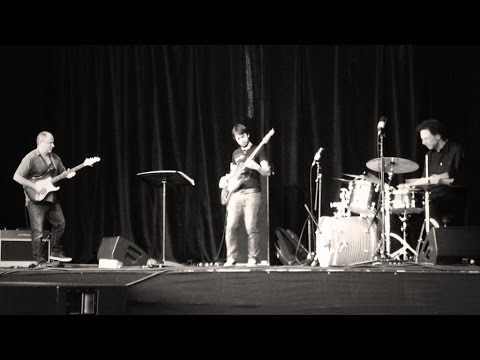
One of my all-time favorite guitar trios is Gateway, the convergence of John Abercrombie, Jack DeJohnette and David Holland.  They recorded 2 Lps in the 1970s and 2 CDs in the 1990s, all of which are worth (to my mind) poring over for hours on end. I was reminded - and pleasantly, at that - of Gateway while listening to the trio of Marc-Andre Drouin (bass), Wayne Eagles (guitar) and Ian Froman (drums) who have released their debut recording, "trio\DEF" on the TetraArtist label.  Drouin, a Montreal, Quebec resident first met Eagles in 2013 at a workshop at Carleton University in Ottawa, Ontario, where the guitarist has been on the faculty since 1992. Eagles was eager to play with the bassist and drummer Lee Fish and they hooked up after the conference. When offered a slot at the 2014 Ottawa Jazz Festival, Fish was not available and Eagles contacted his friend Froman, an Ottawa native now living in New York City.  They worked together ever since.

Ottawa Jazz Fest
The trio's music blends jazz, blues and rock influences in a seamless and playful manner.  "OmniMouse" opens the proceedings in a quiet manner, the band feeling its way into the song. When the drums and bass lock into the groove, the guitarist flirts with a melody before playing the central theme.  His solo flit and darts over the easy rhythms, Froman's cymbals decorating the proceedings as Drouin creates a mysterious yet sweet bass line. The sweeping brushwork creates an intimate setting on the ballad "NEME" and the "clucking" single-note runs intermingle  with chordal sections on Eagles' fine solo. Drouin's melodic electric bass work brings Steve Swallow on this tracks and throughout the album, especially on the solos. The other ballad on the program, "JDJ" opens with chords and the bass tone reminiscent of that other Canadian guitar-bass-drums trio, Rush.  Eagles' handsome melody  takes its time to unfold but it's one of the best on the CD.  The band brings the heat on "At Most" and on the final track.  The former builds to 2 climaxes, first after the blazing bass solo and the second during Froman's solo near the close of the track. The latter cut (and the last on the album), "Or Not", is a treat, complete with snaky guitar lines, rumbling and walking bass lines plus fiery drumming.

trio\DEF, while reminding this listener of Gateway (especially their 90's albums), is successful in its own right. Still, like Abercrombie, Holland and DeJohnette, this music is definitely interactive, pulling you in and keeping you listening.  It's a relatively short program (7 tracks in under 41 minutes) but, overall, is quite satisfying.

For more information, go to www.triodef.com.

Here's the trio in action:


Friday, July 10, 2015

Guitar Time

It's been a busy several years for guitarist and composer Joel Harrison. The Washington D.C.-native has released a series of impressive albums, each different and each special.  For Sunnyside, he recorded a tribute to Paul Motian arranged for a string quintet and 2 guitars (2011), a septet recording with its roots in classical music (2012), and a recording with a 19-piece orchestra (2013). For Cuneiform, he released a quintet recording with trumpeter Cuong Vu, Italian bassist Lorenzo Feliciati, and drummer Dan Weiss (2012) plus a Blues-Rock guitar fest with bassist Michael Bates and drummer Jeremy "Bean" Clemons (2014).   Also in 2014, he released an album for the London-based Whirlwind Recordings label that paired the guitarist with sarod player Anumpam Shobhakar, keyboard virtuoso Gary Versace and Mr. Weiss on drums (plus guests).

His second release for Whirlwind is titled "Spirit House"; the music features trumpeter Vu, Paul Hanson (acoustic and electric bassoon) plus the special rhythm section of Kermit Driscoll (acoustic and electric basses) and Brian Blade (drums, vocals). The album opens with "An Elephant In Igor's Yard", a noisy blend of bassoon, Vu's articulated trumpet lines and Harrison's hard-edged sound.  The work of the rhythm section stands out, with Driscoll's melodic electric bass lines flying around over the propulsive drums.  There's a sense of hope and wistfulness heard on the ballad "Johnny Broken Wing"  -after the long solo looped guitar intro with its hint at the melody, the bass and drum move in and the handsome melody takes center stage. The solemn trumpet-bassoon opening of "Some Thoughts on Kenny Kirkland", the pianist who passed in 1998, leads to Blade's vocal telling the composer's story of hearing Kirkland playing a solo on the radio. Harrison's solo wails and cries over the overdubbed brass and bassoon.  The other vocal track, "Look At Where You Are", features Harrison taking the lead and Blade supplying the harmony on lyric that celebrate a life now passed.  The long notes of the trumpet in the middle lead back to the vocal that now shares the sonic space with the moaning bassoon and harsh trumpet washes.

Much of this music is reflective with long melodies and thoughtful solos.  "Sacred Love" moves quickly forward on the driving drums but the melody is slow and measured.  Vu's solo, at the beginning, interacts with Harrison's guitar squalls before he moves on his own.  The guitar sound may remind one of Pete Cosey on Miles Davis's "On The Corner." Hanson's bassoon work runs the gamut, from hard-bop to classical to blues inflections.  He also creates interesting settings with his electronics.  How he weaves around the trumpet, guitar, bass and drums on the title track and rides atop Driscoll's active acoustic bass lines on "Old Friends", sounding like a baritone saxophone.   That latter track also includes a very funky drum solo before returning to the somber melody.

"Spirit House" was recorded in 2013 after the Quintet had toured the West Coast. The music is, at turns, solemn, playful, wistful, impressionistic but never boring.  Joel Harrison never lets technique get in the way of melody, even when the music takes a turn for the noisy (the close of the trumpet and bassoon solos on "Left Hook", for instance). Give a close listen and you will be pleased, even moved.

For more information, go to joelharrison.com.

Here's the opening track:


Several months back, I waxed on about guitarist Ross Hammond's acoustic recording "Flight" (review here). I noted that he's mostly known as an electric guitarist and he returns to an electrified mode for his new release knows as "Lowburn" (digital only, link below). The 2 tracks - "Basic Fundamentals" and "Making Friends Wherever We Go" - features the guitarist with the rhythm section of Jon Bafus (drums) and Steuart Liebig (electric bass) recorded live, the first track in March of this year while the latter was recorded last November.  The Trio entered the venue, plugged in, tuned up, and just played.  The results are raucous, hard-edged, rhythmically adventurous, and challenging for a casual listener.  However, if you turn it the music up loud and let it roar, you cannot help but be impressed with the musicians' energy (Bafus rarely lightens up...well, maybe for a minute or 2 on "Basic Fundamentals").

"Lowburn" fires on all cylinders for the better part of 65 minutes.  One hears allusions to Ornette Coleman's electric music, James "Blood" Ulmer as well, along with the more rock stylings of Hüsker Dü and other punk-rock bands, even a hint of the Nels Cline Singers.  This is fearless music that bows to few conventions.  It is, at times, exhausting for my aging ears but ultimately exhilarating.

To find out more and to purchase a digital download, go to rosshammond.bandcamp.com.

Composer and arranger Michael Gibbs, born in 1937 in Zimbabwe (when the country was known as Rhodesia), first came to the United States in 1959 to study at the Berklee School of Music in Boston. Before settling in Great Britain in 1964, he had studied at Tanglewood, the Boston Conservatory and the Lenox School of Music with the likes of the recently passed Gunther Schuller, Aaron Copland, George Russell and others. He went to work with Stan Getz, John McLaughlin, Pat Metheny, Joni Mitchell, Peter Gabriel, and a host of others in the pop, jazz and classical worlds.

Bill Frisell first met in Gibbs in 1975 in the guitarist's first year at Berklee (the arranger was artist-in-residence). When Frisell moved to Belgium in 1978, he subbed for Gibb's guitarist on a tour of the U.K. and met the bassist Eberhard Weber. The two musicians hit it off and Frisell made his first ECM recordings as a member of Weber's band.

 "Michael Gibbs & The NDR Big Band Plays A Bill Frisell Set List" (Cuneiform Records) is fascinating recording of Gibbs with one of his "recording" ensembles plus Frisell (pictured left) and drummer Jeff Ballard.  The program blends Frisell originals with pieces from Thelonious Monk (a guitar/drums duo on "Misterioso"), Gil Evans, Benny Goodman/Count Basie, Lee Konitz and John Lennon. Frisell and Ballard lead the band in on "You've Got To Hide Your Love Away", taking their time to introduce the melody. Soon, the brass and reed have taken the melody and the guitarist moves around them, playing counterpoint on the chorus.  Mr. Konitz's "Subconscious-Lee" is a delightful romp with the guitarist showing a touch of Les Paul in his swinging riffs.  And, does he ever swing on "Benny's Bugle", riding the riffs of the brass and popping percussion (Mario Doctor on bongos alongside Ballard.)   There's a touch of dissonance at the opening of Evans' "Las Vegas Tango" but one can hear the classic Miles Davis sound in the arrangement plus strong solos from pianist Vladyslav Sendecki, trombonist Klaus Heidenreich and Frisell (who really rises above the ensemble.)  The guitarist unleashes his "loops" on the second half of his compositional medley "On The Lookout/Far Away."  Gibbs captures Frisell's playful side on "Freddy's Step" the short track that closes the CD.  He opens the piece for alto saxophonists Fiete Felsch, Lutz Büchner, and Peter Bolte to get short solos (4 bars at most).  It's a treat, one that the audience at Überjazz Festival in Hamburg, Germany, really enjoys. Felsch returns on "Monica Jane" to produce a bluesy yet vibrant solo on one of Frisell's languid ballads, given a nice bit of swagger in the brass section.  

Michael Gibbs and Bill Frisell back together, albeit for the first time since the late 1970s. Along with Jeff Ballard and the NDR Big Band, they produce a lot of pleasing sounds. Most of the uptempo piece are playful, the arrangements frame and support the pieces well, and Frisell's guitar work, while a bit tamped down at times, still shines on the majority of tracks.  

For more information, go to cuneiformrecords.com/bandshtml/gibbs.html.

Here's a taste of the collaboration:

Tuesday, February 10, 2015

The Intimacy of the Small Ensemble

Australian-born saxophonist (alto and baritone) Lisa Parrott moved to the United States since 1993 and she has pretty busy ever since.  She's a copyist for several big bands, a member of DIVA Jazz Orchestra and the Artie Shaw Orchestra, and has appeared on numerous CDs including 7 with her sister Nicki (bass and vocals).

"Round Tripper" (Serious Niceness Records) is really her debut as a leader - the title refers to the fact she often returns home to teach and to play. Joining her are the splendid rhythm section of Chris Lightcap (bass) and Matt Wilson (drums) plus she shares the "front line" with fellow countryman Carl Dewhurst (guitar) and co-producer Nadje Noordhuis (trumpet and flugelhorn on 2 tracks). Ms. Parrott's choice of material is inspired.  The program opens with Carlos Ward's "Rosa Takes a Stand (for Rosa Parks)", a celebratory romp with Wilson in Ed Blackwell-mode.  Then, listen to how melodic (a la Backwell) he is on Bernie McGann's "D. Day." (If you have heard the late Mr. McGann - he passed in 2013 - check out his 2001 Rufus recording "Bundeena").  In fact, Ms. Parrott's generous playing and warm tone on alto reminds this listener of that player.  Her baritone work is facile, quite swinging and certainly inventive.  She attacks Ornette Coleman's "Round Trip" with great vigor, the hardy "bari" tones rising over the rousing bass lines and fiery drums.  Her deep sounds on "Do You Think That I Do Not Know" (based on a poem by the 20th Century Australian Poet Laureate Henry Lawson with music by the Parrott sisters) blend nicely with Ms. Noordhuis's husky flugelhorn tones.  Wilson's brush work is, as one has to come to expect, is exemplary.  Trumpet and alto mesh with guitar on the closing "Waltzing Matilda" (the saxophone harmony on the opening verse is quite lovely).  The quintet extends the piece to 8:34 (by 3 minutes, the longest track on the disk) and take their time with the solos.  Lightcap, Wilson and Dewhurst create a medium-tempo groove and the piece floats along with crackling solos until its gentle close.

The sound quality on "Round Tripper" (kudos to Mike Marciano at Systems Two in Brooklyn, NY) is mighty impressive - everyone sounds so clear and it gives the music a sense of intimacy.  Let's hope that this excellent album is the first of many Lisa Parrott makes as a leader.  For more information, go to www.lisaparrott.com.


"Naked" is the 3rd CD issued by Israeli-born guitarist Assaf Kehati and his first with his Trio comprised of Ehud Etun (bass) and Ronen Itzik (drums).  In the 3 years since his previous recording, the guitarist has played his music with drummer Billy Hart, saxophonists Will Vinson, Donny McCaslin and Seamus Blake plus Anat Cohen. His new songs have stronger melodies, with personal  narratives that engage the listener.  The program opens with "Song for Saba" (composed when the guitarist heard the news of his grandfather's passing), a slow tribute with a country feel in the melody line.  Bassist Etun's counterpoint work stands out as does Itzik's expressive brush work. There is a joyful playfulness in the twists-and-turns of "Nathan Bo Rega" while "The Horses' Fight" has a Brazilian feel in the exciting drums and bouncing bass lines.  Kehati's ringing guitar tones (he likes to hold notes out) move like stallions across the fields and the rhythm section boldly push him forward.  The title track opens on a melody line not unlike a Lennon-McCartney ballad and the song goes on to be a beautiful performance, emotionally rich with a few climaxes built in but really embracing a more melodic approach. The longest track (11:25), "Beneath the Almond Tree", starts quietly with just guitar - Itzik  then creates Middle-Eastern rhythms that sweep the song along.  Etun's bass solo has a flamenco feel, especially as he dances down the neck of his instrument. When he finishes, the drummer kicks into a swing tempo for a powerful guitar solo and then takes his own thunderous solo, returning to the Israeli-influenced melody to take the piece out.

The Trio also tackle 2 standards and one Ornette Coleman classic.  "Long Ago and Far Away" swings with a vengeance without abandoning the melody while "Someday My Prince Will Come" is a sweet ballad.  The latter track moves right into a bass solo after the first verse. Listen to how the guitarist and drummer frame the solo. One can hear the many nights on the bandstand that the trio has played this song and how they breathe new life into this chestnut. Coleman's "When Will The Blues Leave" swings gently, its carefree demeanor giving the impression that the blues has most certainly "left".

"Naked" refers to the honest approach than the Assaf Kehati Trio brings to this music.  Not afraid to show emotions such as joy and sadness, the musicians create a program that draws the listener in from the opening guitar notes to the final fade.  This is music that deserves to seen and heard. For more information, go to www.assafkehati.com.

Sunday, September 28, 2014

Big Band Rocks & a Trio Rocks

I imagine that reviewers like surprises as much as the next person - one gets dozens of CDs or mp3s a month and the job is to be as fair as one can be.  Every once in a while, a batch of CDs arrive featuring musicians one does not remember hearing of or reading about and the music stands out. Two such examples of happy surprises are found in this post.

Adam Meckler, trumpeter, composer and resident of St. Paul, Minnesota, has just issued the debut CD of his Orchestra; "When The Clouds Look Like This" (Meckler House Music) features his 18-piece ensemble on 6 originals - I do not recognize any of the names of the musicians but they did not stop from really enjoying this music.  Several of the tracks - in particular "Sparkly Eyes" and "Open Your Eyes" - have the feel of the music created by the team of Gamble & Huff in Philadelphia in the the 1970s as well as Philly favorite Thom Bell. The songs have singable melodies and rhythms one can dance to yet the arrangements are smart and the solos short and sweet.  The section work is what stands out, the way Meckler arranges the brass to support or echo the reeds, how the solos rise out of the swirling lines and the fine rhythm section.  The opening track, "Busta Jones" (presumably dedicated to the funk bassist), opens with drummer Adrian Suarez playing simple pattern for nearly 2 minutes before the brass butt in. While the music does not reach the rhythmic drive that Mr. Jones was noted for, there is a splendid piano solo (Joe Strachan) plus a fluid trombone spotlight (Nick Syman).

Guest Jana Nyberg (Meckler writes, arranges and plays with her band and is her husband) adds voice and flute to the whimsical title track (which also features wordless vocals by trumpeter Cameron Kinghorn, a good name for a brass player.)  This is the one time on the CD that one can hear the influence of another Minnesota composer/band leader, Maria Schneider. There is a long rubato section that features different instruments and the voices that leads to a full-blown climax. It's a work evocative of a late summer evening but, unlike the rest of the pieces, the music actually loses its way.  That said, it's fun to hear how the composer/arranger gets the music back on track.

By the time you reach the final track, "Beautiful Beatrice", you'll be seduced by the generous quality of the music. It swings, bounces at times, more akin to the jazz-rock of Al Kooper's Blood, Sweat & Tears and the hard-edged swing of the Thad Jones & Mel Lewis Orchestra. Best of all, this music is fun. "When The Clouds Look Like This" is an auspicious debut for the Adam Meckler Orchestra (Meckler has released 1 small group CD as well) - let's hope we get to hear much more music from the aggregation. For more information, go to www.adammeckler.com.

Here's one of the tracks for your enjoyment:


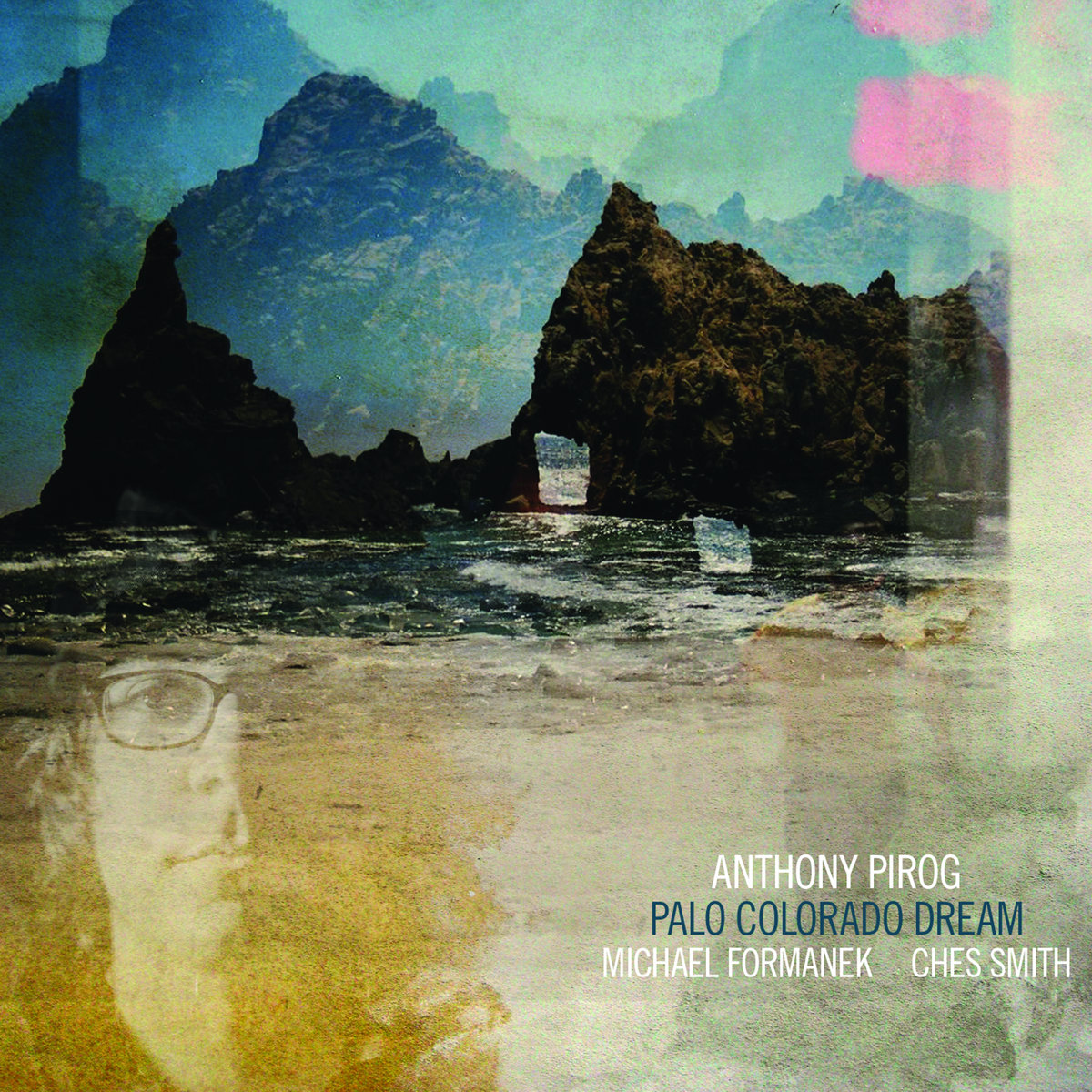
The rhythm section that works with guitarist and composer Anthony Pirog on "Palo Colorado Dream", the young man's debut on Cuneiform Records, is only one of the impressive aspects of this recording.  Anytime you get the opportunity to work with bassist Michael Formanek and drummer Ches Smith, you know as a composer and performer, their support will always be there, and creative sparks will certainly fly. What also stands out is that many of the pieces have sturdy melodies that capture one's attention.

The "spaciness" of the unaccompanied yet overdubbed title track (which opens the album) will remind some of the work of Bill Frisell. Smith thumps his way through "Motian" (also shadowing the guitar with his vibraphone), taking the first solo - the bassist gets the second solo and his thick lines reverberate through the speakers.  Pirog's short unaccompanied solo is filled with whirring noises and various effects.  Veteran Formanek manages to hold his own in the mix, his circular phrases pulsating up through crashing cymbals and roar of Pirog's electric guitar on "Song In 5", a tune that shows the influence of Marc Ribot.  One might immediately expect pyrotechnics on a piece titled "The New Electric";  instead, the piece is a handsome ballad that slowly builds to a fiery crescendo, the repetitive lines creating a trance-like atmosphere before the guitarist's solo forces its way through the wall-of-sound created by the rhythm section and overdubbed "loops" plus programmed electronics. "I'm Not Coming Home" is also a ballad, this time with the leader on classical guitars, Smith using brushes and Fromanek offering counterpoint to the finely-spun melody lines.

Anthony Pirog can make his guitars bellow or whisper. He composes pieces that start moving in one direction then veer off their path towards a different destination.  He understands the strengths of Michael Formanek and Ches Smith, letting them loose when the music calls for it (the closing track, "Vicious Cricket", is a great example of how freely the rhythm section can move in Pirog's structure).   In case you wondered, "Palo Colorado" is in the Big Sur area of California. Pirog, who studied at the Berklee School in Boston and NYU, lived in the region when he was a boy but grew up outside of Washington, D.C.  His "Dream" is worth exploring.  For more information, go to www.anthonypirog.com.

Here's one track from the CD: