Showing posts with label Bill Frisell. Show all posts

Wednesday, April 19, 2023

To Listen is to Wonder, To Dream


Photo: Dave Stapleton
Ben Wendel, born in British Columbia, raised in Los Angeles, and now living in Brooklyn NY, is a multi-faceted musician. He plays tenor and soprano saxophones, bassoon, synths, and percussion, composes, arranges, produces, and more. He was founding member of the instrumental ensemble Kneebody and he has worked with artists such as Snoop Dogg, Linda May Han Oh, Eric Harland, Prince, and many others.  He's issued eight albums as a leader plus produced sessions for Gerald Clayton, Dan Tepfer, and Dave Cook.  Wendel has played on sessions led by Moonchild, keyboardist Tigran Hamasyan, percussionist Adam Rudolph, and pianist Taylor Eigsti (among others).  He currently is adjunct faculty at the New School in New York City and conducts masterclasses around North America.  His recordings cover a plethora of styles from from jazz-fusion to "straight-ahead" to exploratory but with an ear towards strong melodic lines.


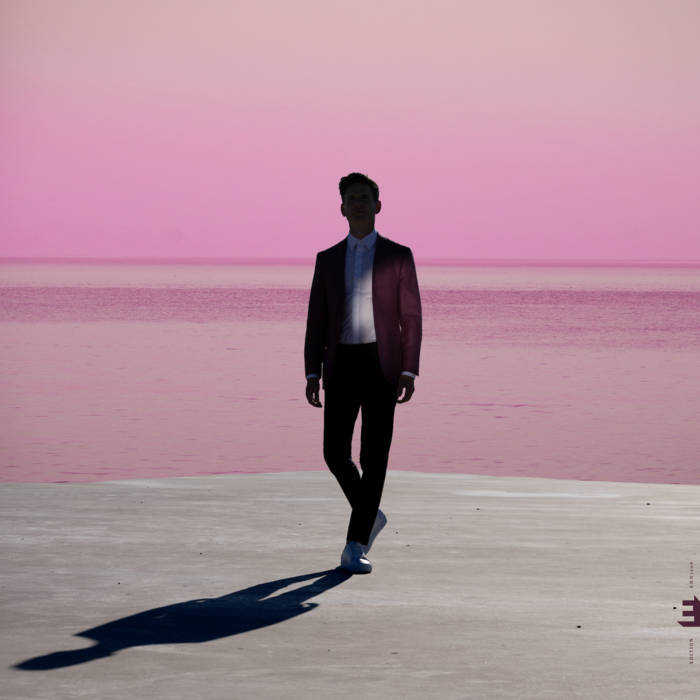
His new album "All One" is Wendel's second for Edition Records––it's basically a solo album with guests but what a lineup. The six-program song opens with "I Loves You Porgy".  The Ira & George Gershwin classic from "Porgy and Bess" features Wendel on saxes, bassoon, and synth bass supporting Cécile McLorin Salvant whose emotionally stunning vocal stands out.  His arrangement for the reed orchestra (all parts played by Wendel) is a delight from start to finish. Later in the program, Jose Jamés inhabits "Tenderly" (music by Walter Gross, lyrics by Jack Lawrence)––the 1946 tune has been recorded by Sarah Vaughan, Rosemary Clooney, Nat "King" Cole, Louis Armstrong & Ella Fitzgerald, Eric Dolphy, and many others. Wendel's arrangement is stunning not only when the reeds support the voice but how he "paints" the background behing the handsome tenor sax solo.   

Photo: Dave Stapleton
Trumpeter Terence Blanchard joins Wendel for the powerful and wide-ranging "Wanderers" (composed by the leader: listen below)––the orchestral arrangement reminds this listener of Julius Hemphill but note how the piece "opens" in the middle and takes on the feel of a progressive big band. Guitarist Bill Frisell leads the reeds through the handsome aural-scape of his piece "Throughout".  Wendel's arrangement creates layers of sound, some in the front of the mix, others farther back plus the cushion he creates for the guitarist is quite lovely.  Ther Wendel original "Speak Joy" opens with synth bass, bassoons murmuring in both speakers, the lovely flute sounds of Elena Pinderhughes moving the melody forward.  Lower tones dominate the background for the flute and soprano sax solos; there's a splendid moment when the two lead instruments unite and play the melody in unison as overdubbed flutes and saxes swirl behind them.

"All One" closes with the third of three Wendel originals, the atmospheric "In Anima".  Here, the acoustic piano of Tigran Hamasyan joins the synths to create a melancholic and trance-like background for a tenor sax (with effects) solo that threatens to veer off. That leads to a piano solo that builds off the rhythmic pattern and sets the stage for a return to the original melody. Now, it's played by bassoons that are joined by the tenor sax which then steps forward to bring the piece and the album to its gentle close.

"All One" is Ben Wendel's "pandemic" album. Recorded over a period of 18 months (between the Fall of 2020 through March 2022), some artists remotely at home, others in studios, the music never sounds stiff or overly arranged but it's also not a series of jams.  Each track stands out yet the "through-line" is that continued creative endeavors can survive and thrive in the face of an uncertain future. At times playful, other times quite serious, there is tenderness, resolve, joy, love, and even ferocity that makes the listener dig in for repeated listenings. Highly recommended!

For more information about Ben Wendel, go to www.benwendel.com. To hear and to purchase the album, go to https://benwendel.bandcamp.com/album/all-one

Hear "Wanderers" with Terence Blanchard:

Thursday, March 10, 2022

Ron Miles 1963-2022

When you listen to Black American Music for over 50 years, over that time one discover musicians whose music you automatically gravitate to. Sometimes it's the sound of their instrument or how their music immediately draws you in or the company they keep or the messages in their music.

Photo: Thomas J. Krebs
For this writer, Ron Miles was one such person. Since first hearing him alongside guitarist Bill Frisell in the mid-1990s, I have been attracted by how his sound and melodic approach fits into the ensembles he plays with and how that translates into the music he creates with for his own recordings.  Plus, he was a great mentor for his students––Miles has been on the Music Faculty of the Metropolitan State University of Denver since the late 1990s.  He and his family had moved to Denver, CO, from Indianapolis when he was 11. Unlike many jazz musicians who go to New York City or Los Angeles, Miles, as his family grew, stayed close to home.   

Still, his association with Bill Frisell lasted throughout the last quarter century-plus. Miles appeared on six of the guitarist's album while Frisell shows up on five of his.  It's a delightful musical relationship; they push and pull against each other at times but most of the time they engage in a musical dialogue that belies influences and embraces melody.  Miles also worked alongside Matt Wilson, Denver-based saxophonist Fred Hess, clarinetist Ben Goldberg, Joshua Redman, and drummer Ginger Baker among many others––he always managed to sound like himself in every situation.

Photo: Alan Nahigan?WSJ
His two most recent albums as a leader, "I Am a Man" (Yellowbird/Enja) and "Rainbow Sign" (Blue Note) feature the quintet of Miles, Frisell, Jason Moran, Brian Blade, and Thomas Morgan combine so many different elements such as folk music, spirituals, blues, social commentary, and more.  The group created music one could get lost inside, feel challenged yet come out of the experience satisfied.  

It was this quintet that reopened the Village Vanguard in October of 2021.  Now, less than five months, Ron Miles has succumbed to a rare heart ailment (Polycythemia Vera). His music, his mentorship, his family, all live on. He set such a great example of how to be a human being, illustrating how a musician can be part of the local community and the global community without giving up his identity.  Still, he died much too young.

 Here is music to keep you company:


Here's a fascinating trio of Otis Taylor, Jason Moran, and Ron Miles:


Here's Ron Miles with Joshua Redman, Brian Blade, and Scott Colley paying tribute to Dewey Redman and the group Old & New Dreams:


Friday, July 10, 2015

Guitar Time

It's been a busy several years for guitarist and composer Joel Harrison. The Washington D.C.-native has released a series of impressive albums, each different and each special.  For Sunnyside, he recorded a tribute to Paul Motian arranged for a string quintet and 2 guitars (2011), a septet recording with its roots in classical music (2012), and a recording with a 19-piece orchestra (2013). For Cuneiform, he released a quintet recording with trumpeter Cuong Vu, Italian bassist Lorenzo Feliciati, and drummer Dan Weiss (2012) plus a Blues-Rock guitar fest with bassist Michael Bates and drummer Jeremy "Bean" Clemons (2014).   Also in 2014, he released an album for the London-based Whirlwind Recordings label that paired the guitarist with sarod player Anumpam Shobhakar, keyboard virtuoso Gary Versace and Mr. Weiss on drums (plus guests).

His second release for Whirlwind is titled "Spirit House"; the music features trumpeter Vu, Paul Hanson (acoustic and electric bassoon) plus the special rhythm section of Kermit Driscoll (acoustic and electric basses) and Brian Blade (drums, vocals). The album opens with "An Elephant In Igor's Yard", a noisy blend of bassoon, Vu's articulated trumpet lines and Harrison's hard-edged sound.  The work of the rhythm section stands out, with Driscoll's melodic electric bass lines flying around over the propulsive drums.  There's a sense of hope and wistfulness heard on the ballad "Johnny Broken Wing"  -after the long solo looped guitar intro with its hint at the melody, the bass and drum move in and the handsome melody takes center stage. The solemn trumpet-bassoon opening of "Some Thoughts on Kenny Kirkland", the pianist who passed in 1998, leads to Blade's vocal telling the composer's story of hearing Kirkland playing a solo on the radio. Harrison's solo wails and cries over the overdubbed brass and bassoon.  The other vocal track, "Look At Where You Are", features Harrison taking the lead and Blade supplying the harmony on lyric that celebrate a life now passed.  The long notes of the trumpet in the middle lead back to the vocal that now shares the sonic space with the moaning bassoon and harsh trumpet washes.

Much of this music is reflective with long melodies and thoughtful solos.  "Sacred Love" moves quickly forward on the driving drums but the melody is slow and measured.  Vu's solo, at the beginning, interacts with Harrison's guitar squalls before he moves on his own.  The guitar sound may remind one of Pete Cosey on Miles Davis's "On The Corner." Hanson's bassoon work runs the gamut, from hard-bop to classical to blues inflections.  He also creates interesting settings with his electronics.  How he weaves around the trumpet, guitar, bass and drums on the title track and rides atop Driscoll's active acoustic bass lines on "Old Friends", sounding like a baritone saxophone.   That latter track also includes a very funky drum solo before returning to the somber melody.

"Spirit House" was recorded in 2013 after the Quintet had toured the West Coast. The music is, at turns, solemn, playful, wistful, impressionistic but never boring.  Joel Harrison never lets technique get in the way of melody, even when the music takes a turn for the noisy (the close of the trumpet and bassoon solos on "Left Hook", for instance). Give a close listen and you will be pleased, even moved.

For more information, go to joelharrison.com.

Here's the opening track:


Several months back, I waxed on about guitarist Ross Hammond's acoustic recording "Flight" (review here). I noted that he's mostly known as an electric guitarist and he returns to an electrified mode for his new release knows as "Lowburn" (digital only, link below). The 2 tracks - "Basic Fundamentals" and "Making Friends Wherever We Go" - features the guitarist with the rhythm section of Jon Bafus (drums) and Steuart Liebig (electric bass) recorded live, the first track in March of this year while the latter was recorded last November.  The Trio entered the venue, plugged in, tuned up, and just played.  The results are raucous, hard-edged, rhythmically adventurous, and challenging for a casual listener.  However, if you turn it the music up loud and let it roar, you cannot help but be impressed with the musicians' energy (Bafus rarely lightens up...well, maybe for a minute or 2 on "Basic Fundamentals").

"Lowburn" fires on all cylinders for the better part of 65 minutes.  One hears allusions to Ornette Coleman's electric music, James "Blood" Ulmer as well, along with the more rock stylings of Hüsker Dü and other punk-rock bands, even a hint of the Nels Cline Singers.  This is fearless music that bows to few conventions.  It is, at times, exhausting for my aging ears but ultimately exhilarating.

To find out more and to purchase a digital download, go to rosshammond.bandcamp.com.

Composer and arranger Michael Gibbs, born in 1937 in Zimbabwe (when the country was known as Rhodesia), first came to the United States in 1959 to study at the Berklee School of Music in Boston. Before settling in Great Britain in 1964, he had studied at Tanglewood, the Boston Conservatory and the Lenox School of Music with the likes of the recently passed Gunther Schuller, Aaron Copland, George Russell and others. He went to work with Stan Getz, John McLaughlin, Pat Metheny, Joni Mitchell, Peter Gabriel, and a host of others in the pop, jazz and classical worlds.

Bill Frisell first met in Gibbs in 1975 in the guitarist's first year at Berklee (the arranger was artist-in-residence). When Frisell moved to Belgium in 1978, he subbed for Gibb's guitarist on a tour of the U.K. and met the bassist Eberhard Weber. The two musicians hit it off and Frisell made his first ECM recordings as a member of Weber's band.

 "Michael Gibbs & The NDR Big Band Plays A Bill Frisell Set List" (Cuneiform Records) is fascinating recording of Gibbs with one of his "recording" ensembles plus Frisell (pictured left) and drummer Jeff Ballard.  The program blends Frisell originals with pieces from Thelonious Monk (a guitar/drums duo on "Misterioso"), Gil Evans, Benny Goodman/Count Basie, Lee Konitz and John Lennon. Frisell and Ballard lead the band in on "You've Got To Hide Your Love Away", taking their time to introduce the melody. Soon, the brass and reed have taken the melody and the guitarist moves around them, playing counterpoint on the chorus.  Mr. Konitz's "Subconscious-Lee" is a delightful romp with the guitarist showing a touch of Les Paul in his swinging riffs.  And, does he ever swing on "Benny's Bugle", riding the riffs of the brass and popping percussion (Mario Doctor on bongos alongside Ballard.)   There's a touch of dissonance at the opening of Evans' "Las Vegas Tango" but one can hear the classic Miles Davis sound in the arrangement plus strong solos from pianist Vladyslav Sendecki, trombonist Klaus Heidenreich and Frisell (who really rises above the ensemble.)  The guitarist unleashes his "loops" on the second half of his compositional medley "On The Lookout/Far Away."  Gibbs captures Frisell's playful side on "Freddy's Step" the short track that closes the CD.  He opens the piece for alto saxophonists Fiete Felsch, Lutz Büchner, and Peter Bolte to get short solos (4 bars at most).  It's a treat, one that the audience at Überjazz Festival in Hamburg, Germany, really enjoys. Felsch returns on "Monica Jane" to produce a bluesy yet vibrant solo on one of Frisell's languid ballads, given a nice bit of swagger in the brass section.  

Michael Gibbs and Bill Frisell back together, albeit for the first time since the late 1970s. Along with Jeff Ballard and the NDR Big Band, they produce a lot of pleasing sounds. Most of the uptempo piece are playful, the arrangements frame and support the pieces well, and Frisell's guitar work, while a bit tamped down at times, still shines on the majority of tracks.  

For more information, go to cuneiformrecords.com/bandshtml/gibbs.html.

Here's a taste of the collaboration:

Wednesday, June 26, 2013

Questions for JP Schlegelmilch

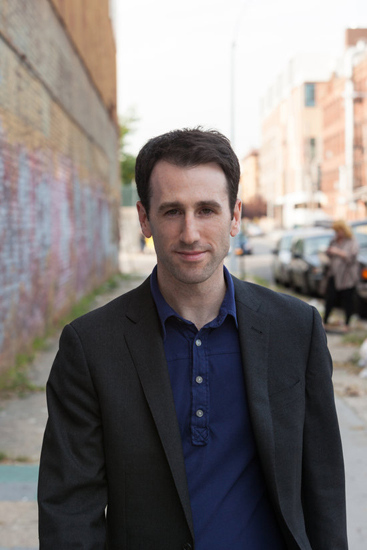
Several months ago, I had the joy to review "Throughout", the new solo piano recording from J.P. Schlegelmlch (pictured left).  The pianist arranged 10 pieces composed by Bill Frisell, helping listeners realize several aspects of the guitarist's music, i.e. 1) - his piece have a bit more complexity than meets the ear and 2) - one can hear numerous influences in the music.

As for the interpreter, Schlegelmilch is a busy musician, working with several ensembles including Old Time Musketry, Two of Anything, Minerva, and NOOK.

JP took the time to answer questions that I posited and those answers are what follow. My thanks to him.


Personal musical history: I started playing classical piano at age six and began exploring jazz, rock, and improvisation in high school. Since then I've been trying to connect the dots between these formative musical experiences, working towards an aesthetic that embraces all of them. I would say that "Throughout" is more of a "jazz" album than my other recent projects. 

Accordion in your arsenal: When I moved to Brooklyn I started hearing the accordion in all kinds of contexts from experimental improvisors like Andrea Parkins and Ted Reichman to traditional virtuosos like Slavic Soul Party's Peter Stan. There is also a big interest in Balkan folk music among the Brooklyn jazz community which can be heard in the work of musicians like Chris Speed.  I used to play saxophone and sometimes I miss playing a wind instrument, so in some ways the accordion helps me get closer to that. I think the accordion has so many possibilities and I'm just starting to scratch the surface in my approach to the instrument. 

Discovering Bill Frisell: The first Frisell music I heard was the "Live" album of his trio with Joey Baron and Kermit Driscoll. I had just started school at Berklee and had very little knowledge of modern jazz, my listening was still focused on the 50's and 60's. Hearing the total freedom that Frisell's trio had in terms of moving between different musical styles blew my mind. It had the energy of rock music, great melodies, exciting group interplay, and weird electronic sounds. All of this spoke to me on a deep level. Later, as I discovered more of Frisell's work, particularly the studio album "This Land", I gained even more respect and admiration for him as a composer, his unique voice as a guitarist, and his choices in putting together ensembles. 

The new CD: I recorded the music on "Throughout" in two sessions during December 2011 and March 2012. Before that I played a handful of solo piano shows focusing on this material, which were the first solo performances I had ever done. 

Live "Throughout": I played a CD release concert in March at Cornelia St Cafe in New York where I performed most of the music on the album. I think I will continue to keep some of these pieces in my repertoire when playing solo while also branching out into new material. 

(Link to video of "Hangdog" from Cornelia St concert)


More of this type of exploration: I don't have any other repertoire projects planned at the moment, I'm going to be focusing more on my own compositions. My next solo project will involve combining acoustic piano with electronic sounds using a keyboard, effects, and a sampler. 

To find out more and hear selections from the CD , go to jpschlegelmilch.com.