Sunday, April 29, 2012

Creative May Weekend of Live Music in CT + CD Picks

Titanium Lounge, 412 Main Street, in Middletown, started a Friday night Jazz Series last month and have done a quiet job of bringing quality musicians to my home town (Harold Mabern was here several weeks back and I heard nothing about it - shucks!  I could be more proactive.)  On Friday May 4, they present the Noah Baerman Trio at 8 p.m.  Special guest for the date will be drummer Yoron Israel (in place of the Trio's fine percussionist Vinnie Sperazza) - bassist Henry Lugo completes the Trio.  Mr. Israel was in town a few months ago as part of pianist Laszlo Gardony's Trio and impressed the audience with his timing, his unerring rhythm and ability to both propel the music as well as add subtle textures (especially his colorful cymbal work.) Plenty of musical sparks should fly as this threesome digs into the repertoire.  For more information, call 860-788-2419 or go to www.noahjazz.com. 


Firehouse 12, 45 Crown Street in New Haven, continues its Spring 2012 Concert series on 5/4 with an appearance by the Darius Jones Quartet.  Led by alto saxophonist/composer Jones (a native of Virginia), the Quartet has just issued a new CD titled "Book of Mæ'bul (Another Kind of Sunrise" (Aum Fidelity) - the music, all Jones originals, displays his continuing maturity as a composer, moving away from the blues-based pieces of his earlier recordings into a territory he can honestly call his own.  And, he's got quite a fine band including pianist Matt Mitchell, bassist Sean Conly (subbing for Trevor Dunn) and drummer Ches Smith (making the first of 2 appearances at The Firehouse in May - he returns with guitarist Mary Halvorson on May 18.)  This music is involved, poly-rhythmical, with melodies that pull the listener in and improvisations that make one sit up.  The band's interplay is impressive; they listen, react, push and support each other.  The Darius Jones Quartet plays 2 sets - 8:30 and 10 p.m. - for more information, call 203-785-0468 or go to firehouse12.com.  To find out more about Mr. Jones and his music, go to www.aumfidelity.com/darius_jones.html.


On Saturday evening May 5, Jazz Haven presents the T.S. Monk Sextet in concert at 6 p.m. in Woolsey Hall, 500 College Street in New Haven. Proceeds from the ticket sales goes to support the New Haven Public Schools TAG (Talented and Gifted) Program.  T.S Monk is the son of jazz legend Thelonious Monk and was introduced to drums at the age of 10 by Max Roach. After performing with his father in his late teens, his initial recordings as a leader were in the rhythm 'n' blues vein.  After the elder Monk passed, his son established the Thelonious Monk Institute of Jazz, an organization that has helped nurture numerous careers and educate thousands of young people around the country (to find out more, go to www.monkinstitute.org - you'll be impressed by the scope of its offerings.) In the early 1990s, T.S. Monk returned to the world of jazz, organizing a sextet and recording a series of CDs, first for Blue Note Records then moving to N-Coded Music and now has his own Thelonious label.

Not sure who's in the band for the New Haven gig but you know the music and musicianship will be first-class.  For more information about the concert, go to JazzHaven.org. 


Sunday evening (May 6), Connecticut native Noah Preminger proves "you can come home again"...well, at least for one night, to play a gig and stay with your parents; he brings an accomplished Quartet to 41 Bridge Street in Collinsville.  The Canton native (a stone's throw or 2 away from the venue) has had quite a busy year, touring and recording with the Rob Garcia Quartet, and the Dan Cray Quartet as well as touring in support of his 2011 Palmetto Records release, "Before the Rain."  For this performance, the band includes the splendid young pianist Dan Tepfer (on Fender Rhodes this night) Australian native Matt Clohesy (bass) and Colin Stranahan (drums).  Preminger has been working on new material and I expect the audience will hear a majority of those pieces.  For ticket information, go to www.41bridgestreet.com - to learn more about the saxophonist, go to www.noahpreminger.com.


There are those who will read the title of the new CD by saxophonist Jerome Sabbagh and think twice before listening.  Pass this fine CD by and you'll miss quite a fine sonic experience. "Plugged In" (BEE Jazz) could refer to 1/2 the instrumentation on the recording, in particular Jozef Dumoulin's Fender Rhodes and Patrice Blanchard's electric bass. Yet, if you have followed Sabbagh's career, you know that 3 of his previous 4 recordings feature guitarist Ben Monder, an electric player much of the time. This quartet, rounded out by the excellent New York-based drummer Rudy Royston, creates music that blends myriad influences (early Weather Report, Return to Forever, progressive rock) and makes music that feels and sounds fresh.  Of the 14 tracks (7 each composed by either Sabbagh or Dumoulin), only 1 is longer than 7 minutes. Yet the music does not feel rushed or incomplete.  Sabbagh's lighter tone rides over the keyboard washes, propelled by Blanchard's thick bass tones and Royston's active drumming.  Magical moments include the tenor sax rising out of the unison reading of the theme (with Dumoulin) on "UR" as well as Royston's activity on "Walk 6".  "Ronny" is a soft ballad for Fender Rhodes and tenor saxophone, soft music with substantial melody. Blanchard's ultra-funky bass over Royston's soft percussion sets the stage for "Kasbah", a strong melody from Sabbagh - the sensuous rhythms and the well-developed melody moves the piece forward, especially when the drummer kicks into a higher gear.

Yes, this is most definitely "Plugged In" music but stretch your definition of that term to include that this quartet is "plugged in" to the group concept of listening, supporting, reacting and challenging each other. Jerome Sabbagh does not change his sound to fit this music; instead, these songs and these musician create a different sound palette for his melodic playing.  While several of these tracks have more of a "minimalist" feel, every track has a melody line that is fully realized and not just hinted at.  So, turn up "Plugged In" and ride the sound waves.  For more information, go to either www.beejazz.com/en/album/pluggedin/ or www.jeromesabbagh.com. 


Drummer-vibraphonist-composer-arranger Joe Chambers grew up in a family where music was quite important.  He listened to a lot of jazz growing up near Philadelphia although his first gigs as a musician was with a local r'n'b band. Yet, it was Miles Davis and Max Roach who really turned his head.  After graduating from the Philadelphia Conservatory of Music, his first recording session was "Breaking Point", trumpeter Freddie Hubbard's 7th Lp for Blue Note.  Within the year, Chambers had recorded with Donald Byrd, Andrew Hill, Bobby Hutcherson, Wayne Shorter and Sam Rivers while touring with Sonny Rollins, Herbie Hancock and Dizzy Gillespie.  In the 1970s, the drummer released solo albums on Muse and worked with the percussion ensemble M'Boom.

Fast forward over 3 decades, Joe Chambers is now Professor of Jazz at University of North Carolina/Wilmington and began recording again for the Savant label.  "Moving Pictures Orchestra: Live at Dizzy's Club Coca-Cola" is his 3rd for the label and certainly the most ambitious.  17 musicians (including the leader) plus vocalist Nicole Guiland perform the 5-part "Moving Pictures Suite" and 5 other works including a splendid reading of Max Roach's "Mendacity" (quite topical in this contentious election year) and a smooth-and-slinky take on Count Basie's "Theme From M Squad."  The ensemble is a sharp collection of veteran and younger musicians assembled by trumpeter David Weiss.  Not only do they bring Chambers' fine compositions and arrangements to life but the solos are uniformly strong. And this is music that covers a lot of territory, from the blues to mainstream jazz to Latin music to Afro-Cuban and beyond; yet, there are no cliches, no trite arrangements.  The program closes with the 4th "Movement" of the "Suite" titled  "Clave de Bembe Parts I and II" - the interplay of the rhythm section (Chambers, bassist Dwayne Burno, and master percussionist Steve Berrios) throughout "... Part I" is downright incendiary and that fire carries over to "..Part II" and pianist Xavier Davis's fiery solo that covers more than 1/2 the tune.  The blend of the flutes (Tim Green and Sherel Cassity) with the blazing brass creates handsome colors as the piece winds down.

Ms. Guiland (who also co-leads a group with keyboard player Casey Benjamin) appears on 2 tracks, the afore-mentioned "Mendacity" (she also recorded the tune of Chamber's 2010 "Horace to Max" CD) and "Lonesome Lover", also composed by Max Roach (with lyrics by Abbey Lincoln.) To her credit, she does not attempt to sound like Ms. Lincoln on either tracks and both tunes are quite fine. Other highlights include the Latin-tinged arrangement of Joe Henderson's "Power To The People" featuring excellent solos from Craig Handy (soprano sax), Conrad Herwig (trombone) and Tim Green (alto saxophone).  Green also digs in for a hearty alto sax solo on "Irena" ("2nd Movement"), also notable for the gutsy trumpet of Greg Gisbert (and listen for the smart horn arrangements behind his solo). 

Joe Chambers turns 70 years old in June of this year and, with this excellent collection, sounds as if he is in the prime of his creative life.  He really drives this big band, giving them arrangements that play to the strengths of each musician while his "Moving Pictures Suite" is a tour de force. Sure would have nice to be in the audience on September 16, 2011, when this band hit the stage.  Thankfully, there is this recorded document. To find out more about Joe Chambers, go to www.josephachambers.com.

Wednesday, April 25, 2012

Piano Trios Con Brio (Part 1)

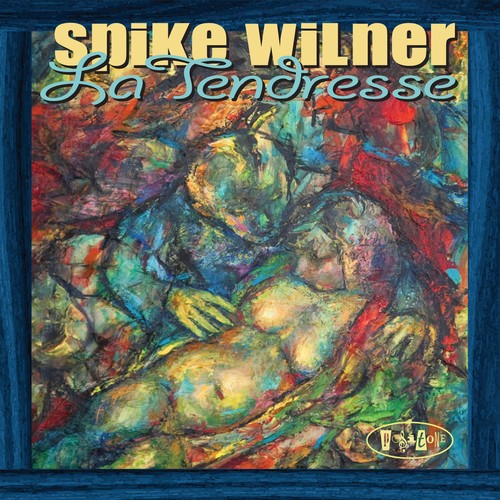
As the great critic Whitney Balliett once posited, jazz is the "sound of surprise" - in the case of "La Tendresse" the new CD from pianist Spike Wilner (PosiTone), the sense of surprise comes from Wilner's approach to the standards that comprise 2/3rds of the program.  Aided and abetted by Hartford native Dezron Douglas (bass) and Joey Saylor (drums), the pianist creates a delightful program.  After listening to his solo take on Harold Arlen's "If I Only Had a Brain", I jotted down the name of Jaki Byard on my pad.  Wilner's lively left hand and delicate phrasing as well as his trilling manner is ever-so-fine. Scott Joplin's "Solace" does not stray far from its New Orleans roots, quite reminiscent of bravado piano work of "Jelly Roll" Morton.  The rhythm section sounds a touch formal until you pay closer attention to Douglas's melodic lines and Saylor's light and, yes, lilting drum work.  Wilner's piano lines shimmer on the Trio's reading of Duke Ellington's "Le Sucrier Velours" (from "The Queen's Suite.") He displays an active left hand throughout the program and that frees up the bassist to play counter melodies.  His take on Thelonious Monk's "Crepuscule With Nellie"commences as a solo piano piece with Wilner concentrating on the melody, then drops into a slow blues shuffle after the rhythm section enters (Saylor is a real spark-plug on this track), coming back to the original melody for a playful close. 

Besides "If I Only Had A Brain", there are several other solo piano pieces and each is as impressive as the other.  The Wilner original "Lullaby of the Leaves" is a blues worthy of James P. Johnson, melodic not strident. Wilner's take on "I'm So Glad We Had This Time Together" (composed by Joe Hamilton for his wife Carol Burnett's television show) shows a wistful side, staying close to the melody and not forcing a steady rhythm on top of the sweet melody.

The title track that opened the program on a hard-driving, mainstream, romp (actually going a bit "outside" for a few moments), is a somewhat misleading introduction  to the CD.  It;s the most "modern" sounding music the band plays (that's not a criticism; it's an intense piece, at times, played at a level the rest of the songs do not approach.)  Yet, by the time you reach the last track, appropriately titled "Happy Ending", a rip-roaring finish with solos by all 3 musicians, one should be be quite pleased with this musical journey. Spike Wilner's music goes in multiple directions and it really is a fun journey, one worth repeating many times.  To find out more about Spike Wilner, click here - it will take you to his page on the Smalls Jazz Club website.

Here is a taste of this delightful CD, courtesy of PosiTone and IODA Promonet:
Happy Ending (mp3)

Listening to Rudresh Mahanthappa talking with Josh Jackson on the April 17th edition of "The Checkout" ( do listen here), a lightbulb went off in the (fairly) dim recesses of my brain.  The alto saxophonist talked about the influence of "prog-rock" in the jazz of the 21st Century.

Moving on to "The Calling" (Palmetto Records), the fine new release (his second as a leader) from pianist/composer Romain Collin, I hear the influence of groups such as Radiohead, Rush, and other progressive bands on the rhythms created by drummer Kendrick Scott and certain chordal patterns of the pianist.  Long melodic passages, shorter tracks without solos, the interaction of Collin with Scott and bassist Luques Curtis (like Dezron Douglas, a native of Hartford, CT) is more comparable to the model of The Bad Plus and the Brad Mehldau Trio than to the music of Bill Evans or, for that fact, McCoy Tyner. Collin has a melodic streak a mile wide and his use of "programmed" sounds feels natural, not forced.  The sonic textures behind the rippling piano solo on "Greyshot" (created by guest Adrian Daurov, cello) are haunting and cinematic. Not that this music is all "sturm und drang" -  try the tricky rhythms of "Pennywise The Clown".  Yes, this is danceable, playful, music and the interaction of Collin and Scott is priceless (don't forget to pay attention to Curtis's solid contributions beneath his cohorts.) For me, Kendrick Scott is the perfect drummer for this music because he never settles for the tried-and-true.  His percussive playfulness on the opening of "Airborne" gives the music its wings while his actions during the varying dynamic settings the pianist creates illustrate that he is a drummer who listens yet is proactive (not reactive.) Listen to him drive "Runner's High", pushing the pianist and bassist without cluttering the sound, creating billows of cymbal splashes - the intensity in this music is incredible, especially since, much of the time, it's not played at a high volume.

The CD closes with "One Last Try", a solo piece with the air of nocturne composed by Claude Debussy.  Collin concentrates on the melody, never relying on excessive technical garnishes or overplaying. The music is emotionally satisfying and honest.  There are other tracks that display a classical influence, an influence that is not heavy-handed or artificial. 

Romain Collin, a native of France and graduate of the Berklee School of Music as well as the Thelonious Monk Institute, has created quite a fine program with "The Calling." Thanks to Kendrick Scott and Luques Curtis for helping to give his music wings, for pushing the pianist forward and framing his melodies in a manner that feels fresh and without cliche.  Kudos also go to producer Matt Pierson who provided Collin with the freedom and guidance to cultivate his music.  To learn more about the pianist, go to romaincollin.com. Also, check him out in conversation with Jason Crane - click on the link at the top right of this post or go to thejazzsession.com.   Finally, to hear the CD, go to palmetto-records.com/album.php?album=183.


Monday, April 23, 2012

Live, Local, Let's Go! (Special Addition)

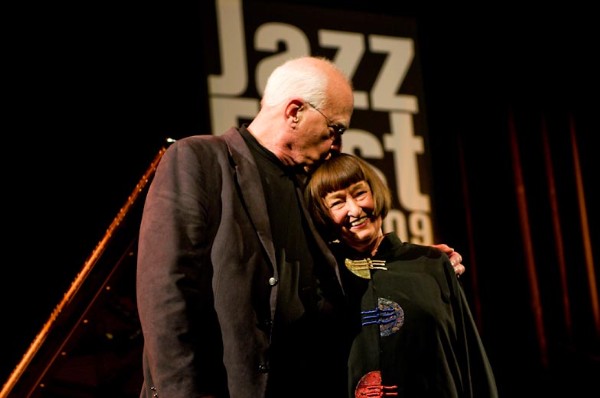
Somehow, I forgot this wonderful concert to add to the listing I posted yesterday. Saturday April 28, the Artists Collective, 1200 Albany Avenue in Hartford, presents the great vocalist Sheila Jordan in concert with the Steve Kuhn Trio. Ms. Jordan, who turned 83 this past November, began singing as a young girl growing up in rural Pennsylvania. After moving back to her native Detroit, Michigan, in her teens, she discovered the music of Charlie Parker and began singing with a local vocal trio (material akin to the music sung by Lambert, Hendricks and Ross.)  After moving to New York City in the early 1950s, she married the pianist Duke Jordan (who had worked with Parker extensively during the saxophonist's truncated career.)  Ms. Jordan did not make her recording debut until 1962 when she recorded "You Are My Sunshine" for pianist/arranger George Russell's "Outer View" Lp.  Later that same year, Blue Note Records issued her debut album, "Portrait of Sheila." 

Over the next decade-and-a-half, she spent much of her time raising her daughter yet found time to perform in clubs and churches as well as working with trombonist Roswell Rudd.  In the late 1970s, she began working, recording and touring with pianist Steve Kuhn - their 2 recordings for ECM helped to bring Ms. Jordan to a wider audience. She also displayed an affinity for performing in duos with bassists.  She's recorded with Arild Andersen, Steve Swallow, Cameron Brown (a collaboration that continues to the present day) and Harvie S.

 Mr. Kuhn, who is 10 years younger than Ms, Jordan, recorded a pair of ECM Lps with the vocalist that were released in 1979 and 1981 respectively. They reconnected in 1998 and again in 2002 for CDs released on HighNote Records.  Stee Kuhn is one of those rare musicians who at home as both as artist and accompanist. You can hear that the 2 have worked well together over the years; it is most evident in how they feed off each other's energy and how her lines complement his and vice versa.

Joining them will be bassist Steve LaSpina and drummer Billy Drummond.  For more information about tickets, call 860-527-3205 or go artistscollective.org.  To learn more about Sheila Jordan, go to her site at www.sheilajordanjazz.com - here's a link to a recent interview on NPR's "Piano Jazz"; www.npr.org/2011/10/07/120888194/sheila-jordan-on-piano-jazz.  On Tuesday April 24, Chuck Obuchowski of WWUH-91.3 FM will speak to Ms. Jordan about her career as well as the upcoming gig in Hartford.

For more on Steve Kuhn, go to www.stevekuhnmusic.com.He, too, appeared on"Piano Jazz" - the show, from 2007, features the pianist in conversation and duets with the original host, Marian McPartland. Here's the link; www.npr.org/templates/story/story.php?storyId=19054709. The following year, Mr. Kuhn spoke with Jason Crane on "The Jazz Session" - listen by going to
thejazzsession.com/2009/08/28/the-jazz-session-76-steve-kuhn/.

Sunday, April 22, 2012

Live, Local, Let's Go!

The Uncertainty Music Series, held in various locations in New Haven, continues on Wednesday, April 25, with a concert featuring the duo of Colin Fisher (guitar, saxophone, drums) and Brandon Valdivia (drums, percussion, electronics).  They go by the name of Not The Wind Not The Flag and they will perform at 9 p.m. in Elm Bar, 372 Elm Street.  NTWNTF makes music that pushes and pulls at convention, can be noisy and improvisational and will often surprise the listener.  They will add Adam Matlock (accordion) and series curator Carl Testa (bass) for a different set as an unnamed quartet.  For more information, go to uncertaintymusic.com. 


The Improvisations Concerts series at Real Art Ways, 56 Arbor Street in Hartford, continues on Thursday April 26 with an evening of solos, duos, trios and quartet music.  The series, curated by Stephen Haynes (trumpets) and Joe Morris (bass, guitar), has been an exciting addition to the resurgent live music scene in the Capitol City.  For "Improvisations VII", Messrs. Haynes & Morris welcome Kyoko Kitamura (voice) and Rick Rozie (acoustic bass).  Mr. Rozie, principal bassist with The Hartford Symphony as well as a member of the faculty at the Hartt School and the Jackie McLean Institute, has successfully maintained a career that moves from the classical to the improvisatory.  With his brother Lee "Mixashawn" Rozie, he co-led the Afro-Algonquin ensemble and also played with pianists Anthony Davis and Muhal Richard Abrams, vibraphonist Jay Hoggard and flutist James Newton.  Ms. Kitamura, who performs with reed player Michael McGinnis in the experimental ensemble ok|ok and sings with Professor Anthony Braxton's "Trillium E" ensemble, recently self-released "Armadillo in Central Park", a collection of quirky songs that will make you laugh as you scratch your head in amazement.  This should be a fascinating evening of improvisational adventures.  For more information, go to www.realartways.org or call 860-232-1006.  To find out more about the series, go to www.facebook.com/pages/Improvisations/324014434279441.

The following evening (4/27), Mr. Morris brings his guitar to Firehouse 12, 45 Crown Street, as a member of the Noah Kaplan Quartet. Mr. Kaplan (tenor and soprano saxophones), a California native and graduate of the New England Conservatory of Music, will play music from "Descendents" (Hatology), a CD recorded at the Firehouse  in November of 2008 with Mr. Morris, Giacomo Merega (electric bass) and Jason Nazary (drums.) The recording is a spirited blend of serious compositions and strong improvisations, angular riffs, an interactive rhythm section and more.  The blend of burbling electric bass and Nazary's creative percussion often works as counterpoint to the saxophonist's probing melodic lines and the guitarist's quiet yet insistent phrases.  The NKQ will play 2 sets -- 8:30 and 10 p.m. --  for more information, go to firehouse12.com.  For a good overview of Noah Kaplan and his different musical adventures, go to noah-kaplan.com.

On Saturday evening April 28, the always nattily-attired Jay Hoggard (vibraphone) presents his Quartet in concert at 8 p.m. in Crowell Concert Hall, Wyllys Avenue, Middletown.  Mr. Hoggard, a Wesleyan graduate and member of the Music faculty, will present the world premiere of the multi-part suite "Sonic Hieroglyphs from Wood, Metal, and Skin", dedicated to the inspiration of Wangari Maathai, the late Nobel Peace Prize recipient from Kenya.  Quartet members include long-time associates James Weidman (piano) and Yoron Israel (drums) plus bassist Santi De Briano.  Joining them will be Professor Anthony Braxton and Marty Ehrlich (reeds), Kwaaku Kwaakye Martin Obeng (percussion) and Brandee Younger (harp.) Knowing Professor Hoggard's love of percussion and African music as well as his deep knowledge of jazz traditions, this should be an exciting evening of music.  For ticket information, go to www.wesleyan.edu/cfa or call 860-685-3355. 

Thursday, April 19, 2012

Jazz Through (Mostly) Israeli Eyes & Souls (Part 2)

The quartet of Avishai Cohen (trumpet), Yonatan Avishai (piano), Omer Avital (acoustic bass) and Daniel Freedman (drums) call themselves Third World Love. They first came together in 2002 in Barcelona to play one gig and had such a good time they decided to become a band.  Over the past decade, they recorded 3 CDs, one each for Fresh Sounds New Talent, Smalls Records and Anzic.  "Songs and Portraits" is the band's second release for Anzic. Recorded in New York City in 2009, the music is a dizzying blend of influences, from Middle Eastern rhythms and melodies to Latin sounds to mainstream jazz.  Each band member contributes, at least, 1 composition with Avital composing 3 (plus the unaccompanied intro to "Sefarad"), Freedman 2, and Cohen and Avishai each with 1 (pianist Avishai credited for the arrangement of the traditional Yemenite song, "Im Ninalu.")  O, the rhythms they create, from the swirling sounds of "The Abutbuls" to the hard swing of "Song For a Dying Country" to the West African drive of Freedman's "Song for Sankoum." The latter is a "shoutout" to Senegalese drummer Sankoum Sissoko, has an irresistible drive (love Avishai's piano over the simple drumming in the first few minutes) plus several tempo changes. Cohen's clarion-call trumpet ushers in a ripping solo while Avital's percussive bass line paired with the solid drum work dances the piece forward.  Freedman also composed the lovely ballad "Alona" - it also appears on his new Anzic CD (reviewed in Part 1 - read it here) as a fine vehicle for tenor saxophonist Mark Turner. Here, it belongs to the sweeping piano lines and handsome trumpet. Pianist Avishai's "A Night in Zebulon" has an Ellington-type melody line;  it goes "out" a bit after the fine trumpet solo with Freedman's powerful drums and strong cymbal moving around the splashing piano chords. Yet, his piano solo is tender and melodic.  Avital's "Sefarad" (the ancient Hebrew name for Spain) has a fine melody, the Iberian influence showing in the trumpet and bass solos as well as Freedman's sympathetic drumming. 

On "Songs and Portraits" one can really hear a band at work and play. They listen, they respond, nudge each other in new directions, never hogging the spotlight, always sharing.  Third World Love makes music that is creatively and emotionally strong.  Powerful stuff that is worth your full attention - for more information, go to www.thirdworldlove.com. 

Pianist-composer Ari Erev, a native of Israel, is one of the busiest musicians in his homeland, playing jazz at festivals, concert halls, on stage and television.  "A Handful of Changes" (self-released), his second CD, finds him in several different settings, from duo to quartet to quintet to sextet.  His rhythm section features Eitan Itscovich (drums) and either Arie Volinez (electric bass, acoustic bass on 7 tracks) or Tal Ronen (acoustic bass on 3 tracks) as well as percussionist Gilad Dobrecky (6 tracks).  Joining him on 8 tracks is the seemingly ubiquitous Joel Frahm (tenor saxophone, soprano saxophone) while Ofer Shapiro plays alto saxophone and clarinet on 1 track each.  The generous program (11 tracks, 75+ minutes) ranges from straight-ahead jazz pieces to classical works to standards to creative interpretations of 2 works by Israeli composer Alexander "Sasha" Argov (1914-1995), a noted composer of popular Israeli songs.  Pianist Erev openly acknowledges the influence of Bill Evans (he leads a trio dedicated to the late American pianist) and it shows on Argov's lovely "Me'ever La'Tkhelet" (Beyond the Blue), a waltz with Ronen's excellent bass work. Shapiro's lyrical clarinet playing enlivens the other Argov piece, "Kshe'Or Dolek Ba'Halonekh" (Light In Your Window) 

Elsewhere, Erev combines Chopin's "Prelude in E-minor Opus 28, No.4" with Cole Porter's "So In Love", the transition between the melodies aided by a pronounced Latin beat.  Frahm's work is exemplary throughout, especially the duet reading with Erev on the standard "For All We Know" and his fiery soprano on Erev's "Step by Step" (Volinez's electric bass work is also quite fine.)   "Irit's Wave", a lovely waltz dedicated to the pianist's wife,  prominently features Frahm's masterful tenor work - he is both powerful and melodic during his long, well-thought out solo.  Shapiro (alto saxophone) and Frahm (soprano) share the lead on "Precious Present", a bouncy piece with a decided Brazilian feel.

With such a long program, it can be hard to keep one's interest but Erev does a fine job of shifting tempos and rhythms, using different combinations of musicians, and providing a good melodic foundation.  His debut CD "About Time", released in 2008, was his tribute to Bill Evans - "A Handful of Changes" shows Ari Erev developing his own approach to jazz, smartly adding new voices to the mix.  To find out more, go to arierev.com. 

Levon Helm

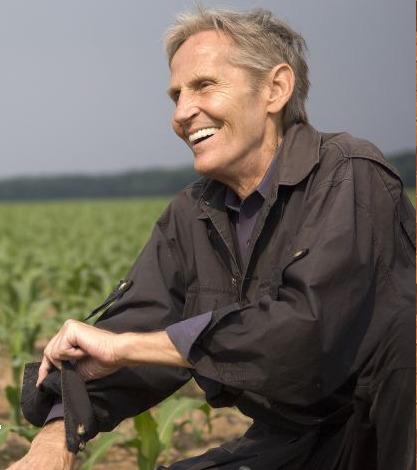
People die every day but some weeks are crazier than others.  Dick Clark, who brought pop music to the forefront of television for over 3 decades via "American Bandstand", and Teddy Charles, jazz vibraphonist and pianist who also became famous as a charter boat skipper, both passed on Wednesday April 18.  Today, we received news that drummer/mandolinist/vocalist Levon Helm (pictured) lost his long battle with cancer. 

Any rock music fan who came of age in the late 1960s know about The Band.  5 musicians, led by composer/guitarist Robbie Robertson, came together to work with Bob Dylan in Woodstock, New York - after Dylan's motorcycle accident in 1966 and subsequent retreat to the country, Robertson, Helm, bassist Rick Danko, pianist/drummer/vocalist Richard Manuel and keyboard whiz Garth Hudson worked with the iconic composer as his "house" band, recording scores of demos (many released as "The Basement Tapes") and pulling their own music together.  "Music From Big Pink", The Band's debut Lp, was issued in 1968, combining Canadian-native Robertson's love of Americana with several unreleased Dylan tunes.  Robertson wisely combined the voices of Helm (with his Arkansas country twang) with Danko's ethereal falsetto and Manuel's strong tenor (he wrote several of the songs), often alternating verses ("The Weight" being a prime example.) Their second Lp, "The Band", is universally (and properly) treated as a classic, with songs such as "The Night They Drove Old Dixie Down", "Jemima Surrender" and "King Harvest Has Surely Come" that shine to this day.  Helm's joyous vocal and mandolin work (Manuel switched to drums) on "Rag Mama Rag"  and rollicking work on "Up On Cripple Creek" never fails to make me smile.

The quintet continued to tour and record through the mid-70s, culminating in the concert that became "The Last Waltz" (1976).  Due to a contractual obligation, they reunited in 1977 for "Islands" and then broke up forever.  Helm toured and recorded with Danko then reformed The Band (without Robertson) in 1983.  Manuel committed suicide in 1986 (he had become an alcoholic in the 70s which really damaged his handsome voice) yet the group soldiered on until Danko's death in 1999.  During that time, Helm worked in a number of movies (including "Coal Miner's Daughter") and recorded several solo albums. He suffered from throat cancer in the early part of the new century but recovered his voice to record several excellent CDs over the past 5 years. 2009's "Electric Dirt" and its 2011 followup, "Ramble at the Ryman" both won GRAMMYs.  But, the cancer returned and, sadly, took the 71-year old musician and entrepreneur.

Levon Helm was not the most technical drummer but was just right for music he loved so much.  His reedy voice, filled with personality and honest emotion, could drill lyrics right into the brain. Happy music, sad music, blues, country or folk, Levon Helm did not seem to have a false bone in body - he lived the songs he sang.  "King Harvest" takes us all away; yet, we are never ready when someone who made music come alive as Levon Helm did passes.  Yes, he will be missed but we do have his music.

Wednesday, April 18, 2012

Jazz Through (Mostly) Israeli Eyes & Souls (Part 1)

Bassist-composer Omer Avital has been at the forefront of the Israeli-American jazz connection since the early 1990s. Possessor of a mighty sound, he is, at times, quite melodic as well as rhythmical. "Suite of the East" (Anzic Records) features fellow Israelis Avishai Cohen (trumpet) and Omer Klein (piano), the latter 26 years old at the time and about to launch his international career.  Joining them is drummer Daniel Freedman and tenor saxophonist Joel Frahm (proving yet again he can play in just about setting.) Recorded in 2006 after a week-long residency at Small's, this music bristles with electricity and improvisational fire. Avital's imagination is fueled by the sounds and sights of his native land; most of these songs have rhythms and melodies one would find in Israeli folk tunes (where the myriad influences include music brought to the country from Yemen, Morocco, Jordan and elsewhere.)  The opening track, "Free Forever", builds from the opening moment atop Klein's McCoy Tyner-esque piano chords. When the sax and trumpet enter, the energy level jumps higher; yet,everything grows quiet for Frahm's melodic exploration which slowly builds to a pulsating climax. The title track opens with a solo piano excursion that is ruminative and thoughtful.  When the rhythm section, the counterpoint from the bass and the splashing cymbals move through the melody until Frahm enters with the handsome melody - the next section introduces the trumpet and Cohen weaves in and around the tenor part.  Next section starts with a short bass statement before dropping into a funky beat for the piano, then the brass and reed to play call-and-response.

"Song for Peace" is the longest track (14:49) - notice how Avital splits the melody line between tenor sax and trumpet, having them move towards each other until there is harmony.  The sensuous rhythm  pulls the listener in, mesmerizing even as becomes quiet for the trumpet solo. Freedman begins to push against the "quiet", accentuating the martial feel in his snare and beat on his ride cymbal.  Cohen responds without "boiling over", bringing the level down for the opening of Klein's long and involved solo. 

There is not a weak cut or even weak moment on "Suite of the East."  There are pieces, such as "Sinai Memories", where the melodies played by both the bass and piano are so filled with emotion.  And, the CD closes with "Bass Mediation (on the possibility of peace in the Middle East", a solo piece for Avital that is both highly musical and also filled with great longing.  Perhaps one gets the feeling from the title but here Avital is most like Charles Mingus, another musician who channeled his anger, his dreams and hopes, into his music. Not sure why this session took 6 years to see the light of day but its arrival is most welcome.  For more information, go to www.omeravital.com.


Daniel Freedman, Omer Avital's rhythm section partner in Third World Love, has issued his 2nd CD as a leader (his self-titled debut was issued in 2001 on Fresh Sounds New Talent).  "Bamako By Bus" (Anzic Records), produced by the drummer/composer in 2009, features an "all-star" lineup including Lionel Loueke (guitars, vocal), Avishai Cohen (trumpet), Jason Lindner (keyboards), Abraham Rodriguez (percussion, vocals), Pedrito Martinez (percussion, vocals), Yosvanny Terry (vocals, percussion), Mauro Refosco (percussion), Davi Viera (percussion), Mark Turner (tenor saxophone), Joshua Levitt (ney flute) and Meshell Ndegeocello (bass) with Avital sharing bass duties on 1 track.   This is the sort of program that will drive jazz purists crazy because the music has myriad influences.  Yet, if you follow Freedman's career, you know he's worked Angelique Kidjo, Anat Cohen, Pharoah's Daughter, Charles Owens Quartet, and Sting, therefore the variety in this music should come as no surprise.  Loueke is featured on 4 tracks, including the highly rhythmical "All Brothers" (composed by Avishai Cohen and Freedman) - Ms. Ndegeocello's bass work is mesmerizing atop the fiery drumming  of Freedman and Viera.  The trumpet solo reflects the percussive nature of the piece while Loueke's vocal and guitar playing is exemplary. "Darfur/Oasis" pairs Loueke's guitar with the ney flute of Levitt along with both acoustic bass (Avital) and electric - the second half of the tune features Lindner's sparkling Fender Rhodes sound.  Turner appears on 2 tracks paired on the front line in each instance with Cohen's trumpet.  "Alona" is a ballad with a dramatic overture that leads to a soft yet intensely heartfelt melody played by Turner who build his fine solo slowly.  Cohen, whose playing has matured greatly over the last decade, takes the tune out with a short but strong statement. They pair up again on "Sa'aba"; here, the tune rises on the funky rhythms but without overheating. Turner can certainly be quietly "intense" as can Cohen. "Rumba Pa'NYC" is a drum workout that features Rodriguez, Martinez, and Yosvanny Terry on vocals and percussion - in fact, along with Freedman's trap set, they are the only performers on the first half of the track.  Linder, Ms. Ndegeocello and Cohen enter and the piece really catches fire.

Daniel Freedman wrote or co-wrote and/or arranged all the pieces on "Bamako By Bus" yet rarely takes the spotlight.  The variety of styles as well as the excellent rhythm section (not to forget the fine solo work) makes this music so highly enjoyable.  For more information, go to www.danielfreedman.net.