Tuesday, March 1, 2011

Choice Words About Many CDs (Part 1)

Sometimes it can be easier to recommend music than to write longer reviews, especially when time is tight.  These disks are so good that I can't resist a paragraph (or 2) about them.

The "swing" beat is irresistible on the opening track of "This Could be the Start of Something Big", the debut release by Andy Farber and his Orchestra (Black Warrior Records). Farber leads this 18-piece ensemble through its paces on the 14 tracks.  Jon Hendricks vocalizes and scats in front of the band on the title track (along with his daughter Aria and Kevin Fitzgerald Burke) and the results are so joyous one cannot help but smile.  Hendricks also "cuts a rug" on "Roll 'Em Pete", taken at a pace that would break lesser singers.  The ballads are heart-felt and smartly arranged, especially the group's take on Mel Brooks' "High Anxiety" (featuring a fine trumpet break from Kenny Rampton.) Most of the solos are short (kudos to the clarinet work of Dan Block) yet filled with ideas and the blend of originals and standards classy. If you like the sophisticated sounds of Duke Ellington and the bluesy qualities of the Count Basie Band, Andy Farber's aggregation will make you smile.  To find out more, go to www.andyfarber.com. 

Chantale Gagné, a native of Quebec, Canada, has created a CD of music that sparkles, shimmers and grows even better with subsequent listens.  "Wisdom of the Water" is comprised of 9 tracks played by the pianist and her fine band that features vibraphonist Joe Locke, bassist Peter Washington and drummer Lewis Nash.  Just seeing those names on cover lets you know this will be class music.  Ms. Gagné is a facile pianist but one who never favors technique over substance. Yes, several tracks really swing, such as "Squinky Pete" and the trio take (no vibes) on "I Shall Not Be Moved", but it's her fine, lyrical, playing and interactions with the band that impresses one the most.  Her work shines on "The Light We Need", especially where she meshes her sound with Locke as well as her sweet solo. Two solo pieces are also included, the short and bouncy "Roseline" and the lovely ballad "Lullaby For Winter" (with its melody reminiscent of light snow falling).  Listen once and you'll like this music immediately;  play it again and you'll be hooked, smitten by the clean, clear, sounds (and the splendid work of the rhythm section).  For more information, go to www.chantalegagne.com.  

Trombonist/composer Wayne Wallace had a very good 2010 - his fine recording "Bien Bien" was nominated for a GRAMMY ( his 3rd such honor) and received numerous positive reviews.  The new year brings "To Hear From There", his 7th release for the Bay Area-based Patois Records and it's another first-rate set of tunes.  The Quintet, comprised of Murray Low (piano), David Belove (electric bass), Paul van Wageningen (trap set) and Michael Spiro (percussion), are equal partners in the proceedings and you can tell - this music is so alive.  Wallace's trombone sound is rich and full and his solos swing, strut and croon.  When he mixes his phrases with Belove's active bass lines, the music really takes off.  The program blends strong originals with intelligent "covers" such as "The Peanut Vendor" (fine throaty vocal from guest Bobi Céspedes and splendid montuno piano from Low) and Juan Tizol's "Perdido" (Kenny Washington adds his distinctive voice on this swinging take.) There's neither a weak nor dull moment among the 11 tracks, Wallace's buttery trombone lines are addictive, Low's piano work sparkles and the rhythm section sizzles and smokes.  If "¡Bebo Ya Llego!" doesn't make you smile and want to dance, call your doctor immediately.  If the lovely take of J.J. Johnson's "Lament", doesn't melt your soul, there may be no hope. Seriously, Latin Jazz does not get better than this.  For more information, go to either www.patoisrecords.com or www.walacomusic.com. 

The joy of jazz is that there are always new artists to discover.  Saxophonist Benjamin Drazen graduated from the New England Conservatory of Music in the mid-1990s and returned to his native New York City.  He's played funk, Latin music, r'n'b and lots of jazz.  His debut recording "Inner Flights" shows up on the Posi-Tone Records label, quickly becoming the home for good, straight-ahead, jazz. Drazen, joined by pianist Jon Davis, bassist Carlo De Rosa and drummer Eric McPherson, has created a program that blends hard-bop with the searching aspects of John Coltrane's music.  The sound is clean and uncluttered, his alto and soprano sax playing filled with swift, clearly articulated lines with a supporting cast that is solid, creative, and in sync. Pianist Davis, best known for his work with the late Jaco Pastorious as well as the Joris Teepe Band and Beatle Jazz, is a fine player;  his solos on pieces like "This Is New"  and "Monkish" are fresh and entertaining.  His accompaniment on the contemplative ""Prayer for Brothers Gone" and sweetly turned "Polka Dots and Moonbeams" is welcome and free of cliche.  Drazen is playful on "Jazz Heaven", filled with twists, bent notes and rapid-fire phrases. He shows his fiery side after moving to soprano on the Coltrane-inspired title track (also featuring excellent support from McPherson and hardy bass work from De Rosa.) 
One gets the feeling Benjamin Drazen waited some time before stepping out on his own, building a solid repertoire and working on his mechanics. It's been worth the wait for this music has well-shaped melodic and harmonic ideas without feeling forced or immature.  "Inner Flights" is a promising beginning to Drazen's solo career as a leader; let's hope for many more flights.  For more information, go to www.benjamindrazen.com or go to www.posi-tone.com. 
Take a sonic ride to "Jazz Heaven" courtesy of Posi-Tone Records and IODA Promonet;
Jazz Heaven (mp3)


PS - I have added music to my reviews of Alexis Cuadrado's "Noneto Iberico" and Ralph Bowen's "Power Play" -check it out here and here.

Monday, February 28, 2011

Ten Fingers, Two Hands, One Fertile Mind

Alone at The Vanguard - Fred Hersch (Palmetto Records) - It's been 3 years since pianist/composer Hersch became so ill that he went into a coma for 2 months;  when he emerged, he was unable to eat or drink, had to endure a tracheotomy and dialysis plus he lost the ability to play piano.  Hersch has since recovered most, if not all, of his faculties and, as one can hear from this recording from December of 2010, his playing is fine. (In May of this year, Hersch's "My Coma Dreams", a multi-media depiction of his experiences, will have its premiere at Montclair State University.)
This program, actually the last set on the last night of a 6-night stay at the Village Vanguard, is, in a word, wonderful. Combining 4 original pieces with one each by Eubie Blake, Thelonious Monk, and Sonny Rollins plus a work from Brazilian composer Jacob de Bandolim as well as the standard "In the Wee Small Hours of the Morning", this is music to savor either alone or with a close friend.  It's not so much that this is "romantic" music (though it has its moments), it's contemplative, probing, and, in the end, filled with the joy of a musician inflight full  - the music would be lost on a group of people unless they were sitting in a club or concert space.  Every piece is required listening, from the bluesy riffs of "Down Home" (dedicated to guitarist Bill Frisell - during the solo, listen for the quote from "If I Only Had a Brain" ) to the melodic and harmonic elegance of "Pastorale" (dedicated to Robert Schumann.) Blakes' "Memories of You" has a contemplative, melancholy, feel while Rollins' "Doxy" starts quietly, formal in the stately presentation of the melody line before the pianist takes the piece through shifts of mood and dynamic variations. 
Fred Hersch has long been one of the musicians I turn to when in need of rejuvenation. Not because the music is revolutionary or "swings like mad" or, on the other hand, mindless and loud. There is a clarity of vision in his music, he's not afraid to take other composer's work and find his own interpretation while his original compositions are thoughtful and well-organized, always leaving room for exploration. If you have never explored his recording "Leaves of Grass" (Palmetto, 2005), which utilizes Walt Whitman landmark work from the 19th Century, find it and dig deeply into its complex yet approachable world.  Meanwhile, "Alone at the Vanguard", as I wrote above, is wonderful listening.  For more information, go to www.palmetto-records.com.  To find out more about "My Coma Dreams", go to www.fredhersch.com. 

Tuesday, February 22, 2011

Youth, Poetry, Big Band + Shipp Shapes

My Garden (Poems By Charles Bukowski) - Nicholas Urie (Red Piano Records) - Much has been made of composer/arranger Urie's age (he'll be 25 in July) and that's the last you'll read about it in this review. His debut recording, "Excerpts From An Online Dating Service", was brash in its lyrical content, with arrangements that emphasized the talents of the fine musicians in the large ensemble.

One could say the same about this recording, except the results are even more impressive.  Urie takes the poetry of Charles Bukowski (1920 - 1994) and dresses the words with music that often rumbles, sparkles and moves in unexpected directions.  The 12 musicians assembled for the recording includes the wonderful rhythm section of Frank Carlberg (piano, Rhodes), John Hebert (bass) and Michael Sarin (drums).   Add to that impressive trio the reeds of Jeremy Udden (soprano sax), Douglas Yates (alto sax, clarinet), Kenny Pexton (tenor sax) and Brian Landrus (bass clarinet) plus the trumpet section of Albert Leusink, Ben Holmes and John Carlson with trombonists Alan Ferber and Max Siegel - this is one formidable band.  Christine Correa, who has truly become one of the finest lyric interpreters in contemporary music handles the majority of the vocals.

Throughout the program, Urie's arrangements for the horns capture the ear.  2 short pieces, "Lioness" and "Lean", have funky beats underneath while Yates flies atop the ensemble on bass clarinet and alto sax respectively.  The latter is quite fiery with typical Bukowski humor in the lyrics - "Drinking beer doesn't make you fat/ It makes you lean/ Against bars, tables, chairs and poles."
"Round and Round" moves outward from the words "You have my soul/And I have your money" with a circular melody line that opens into an exciting Carlberg solo on Rhodes over the driving accompaniment of Hebert and Sarin.  When the horns reenter, they too play a circular riff that opens into Kenny Pexton's boisterous solo.  Near the end, Correa's overdubbed vocals add to the clamorous effect.  "My Garden" finds the vocalist in a quieter mode supported by the excellent work of trumpeter Carlson (muted for the beginning of the piece and open bore on his solo) and trombonist Ferber.  Their solos expand upon the somber irony in the lyrics, the entirety of which is "In the sun and in the rain/ and in the day and in the night/ Pain is a flower/ Pain is flowers/ Blooming all the time." The horn arrangement under the vocal for the final verse utilizes various members of the ensemble shadowing Correa - you may miss it first time through but the Erik Satie-like feel of the section works quite well. In the midst of "For Crying Out Loud", there is a solo section for Carlson and Udden that is highly effective for the contrast in their lines and tone. Also effective is Yates' alto sax behind the vocal later in the piece as well as Sarin's martial drumming and Hebert's bowed bass lines that lead the piece out.

On my initial journey through this program, I thought I heard the influence of Charles Mingus in Nicholas Urie's music, especially in the way he moves the horn lines around behind the vocals.  It's there on 1 or 2 tracks but not dominant throughout.  What does remain after"Finality" rides out on the elongated chord played by the brass and reeds is that the fact that "My Garden" is overflowing with ideas, strong playing and singing, plus the feeling that Nicholas Urie is going to be a major voice in creative music for decades to come.  For more information, go to www.nicholasurie.com or http://redpianorecords.com. 


Art of the Improviser - Matthew Shipp (Thirsty Ear) - Here are 2 distinct sessions by pianist Shipp, both recorded live, the first from April 2010 recorded in Troy, New York, featuring bassist Michael Bisio and drummer Whit Dickey; the second a solo session from Le Poisson Rouge in New York City. One hears so many streams in Shipp's music. The Trio session, one continuous 52 minute set, has traces of Andrew Hill's music on the first 2 tracks.  "The New Fact" moves from the full chords of the chorus to the thorny swing of the solo sections. Bisio matches the pianist's energy with insistent bass lines while Dickey colors with his excellent cymbal.  The piece shifts about 1/2 way through its 12+ minute run for a long bass solo that leads directly into the next piece "3 In 1" with a melody line that sounds like variations of "Rock-a-Bye Baby." Shipp mines the melody and chord changes for all their worth while Dickey drives incessantly from below.

The remaining 3 tracks include a pair of older pieces, "Circular Temple #1" and "Virgin Complex" plus a rousing reading of Billy Strayhorn's "Take The A Train."  The first track listed starts slowly with impressionistic piano lines over swirling cymbals and fine bowed bass. As the piece moves forward, the intuitive interplay of the trio captures the listener's attention. At the end, the music slows down as Shipp reaches into the piano to pluck the strings before diving headlong into the Strayhorn classic.  There are moments where the thunderous chords resemble the sound of the train moving through the tunnel or a train idling in the station.  Bisio's "walking" bass lines and Dickey's drive provide the propulsion for Shipp's musical travels.  Disk 1 closes with "Virgin Complex", replete with the composer's rich two-handed piano phrases; when mixed with Bisio's bowed bass lines, the sound becomes a drone that rises and falls, coming to a close quietly and peacefully.

Disk 2 is Shipp solo and it is a 39 minute journey through his fertile imagination.  Opening with the contemplative and thickly-chorded "4 D", the program moves on to explore the possibilities of "Fly Me to The Moon" (quite impressionistic) and beyond to the "bruising" chords and melodic explorations of "Whole Tone."  The final 3 tracks of the CD all were featured on Shipp's 2005 solo CD, "One."  "Module", at times, utilizes the sustain pedal to create a storm of sound that Shipp relieves with short burst of single-note lines. That leads into the bluesy/boppish riff of "Gamma Ray" which the pianist uses a touchstone as he moves away into explorations of the chord changes, rhythmic and dynamic variations, yet always returning to the insistent theme.  "Patmos" closes the disk, seemingly serving as an epilogue, again displaying Shipp's style of evolving melody lines and dynamic shifts.  As with his 2010 solo CD, "4 D", this is a set to enjoy over and over because there is so much to absorb.

Taken together, "The Art of the Improviser" shows Matthew Shipp at his best as a leader, as a composer, and as a member of an ensemble.  He creates music that draws one in on the strength of his ideas and his ability to translate them onto the keyboard.   For more information, go to www.matthewshipp.com.  

Monday, February 21, 2011

CD of This Week + Reading + Firehouse 12 Spring 2011 + Threadgill Galore

Noneto Ibérico - Alexis Cuadrado (BJU Records) - Composer/bassist/co-founder of BJU Records Cuadrado's new CD (which I previewed in January - read it here) goes into general release on March 1 (digitally) or March 15 (physically).  If you like large ensemble music, Spanish rhythms, excellent arrangements, strong improvisations, and variety, buy this and you should not be disappointed. Besides the leader, the nonet includes saxophonists Perico Sambeat (doubles on flute) and Loren Stillman, trumpeter Avishai Cohen (doubles on flugelhorn), trombonist Alan Ferber, guitarist Brad Shepik, the sterling keyboard work of Dan Tepfer, percussionist Marc Miralta, and drummer Mark Ferber plus the Flamenco handclaps of Israel Suarez, Tomas Moreno and Blas Cordoba (on 4 of the 8 tracks.)

While the music is based on traditional Flamenco song forms, the results are a striking blurring of styles.  After a handsome bowed bass solo that opens "Very Well" (the first track on the disk) and the richly toned alto sax solo from Sambeat, one gets pulled in by the fandango rhythm and the rising melody line. The tension is palpable yet the way the reeds and horns are arranged give the piece warmth. Listen to the drive and forward motion on "Sólo El Sol Sale Siempre Solo" (Solea), another piece that opens slowly and, in this instance, with angular saxophone lines from Stillman and Shepik's distorted guitar lines. There's a blues feeling in the bass line (which is doubled, at times, by Tepfer's acoustic piano.) The "heaviness" of that work stands in sharp contrast to the dancing melody lines of "Tocar Y Parar" (Alegrias), the saxophones moving easily over the handclaps and Mark Ferber's sharp drum work.  The solo section features fine solos from Tepfer and Cohen - they both "swing" but not in an American context but in the declarative Spanish sense (Cohen's growth as a soloist over the past few years in impressive.)  The longest track, "Por la Minima" (Bulerias) clocking in at 17:36), opens with insistent guitar chords, chattering electric piano lines, and a rhythm section in a different tempo.  The tension that interaction creates does not subside when the reeds and brass enter and Cuadrado creates a swift line for one to play off the falling phrases of the other. Halfway through the piece, Sambeat rises out of the insistent chords with a sharply defined solo.  There's a lot to absorb at this point, from the saxophonist's rising intensity to the splendid drum work to the staccato horn lines to the burbling piano.

I'd be happy to talk about the rest of the tracks but you should discover the musical treats for yourself.  The musicianship is as impressive as the expansive compositions; there are harder edges mixed with softer, intensely romantic, flourishes (the ballad "A Tientas" (Tientos) strikes me as a cross between Chico O'Farrill and Gil Evans.) This project, created thanks to a grant from Chamber Music America/"New Works" with support from the Catalan Center at NYU, photographer Dixi Carrillo, and released with the help from investors through Kickstarter, is really quite special.  To find out more, go to www.alexiscuadrado.com.
Here's "Te Sigo (Seguiriya)" courtesy of BJU Records and IODA Promonet:
Te Sigo (Seguiriya) (mp3)

Pianist/composer Ethan Iverson, best known for his work with The Bad Plus, is also a fine writer.  His blog, "Do The Math", is a real pleasure to read for many reasons, especially his interviews and musical observations.  Lately, he's been writing (copious amounts) about the hub-bub over the new book by trumpeter Randall "Randy" Sandke.  (Check it by going to http://dothemath.typepad.com.) Titled "Where the Dark and the Light Folks Meet: Race and the Mythology, Politics, and Business of Jazz" (Scarecrow Press), the book looks at the relationships in jazz that go right back to the turn of the 20th Century especially between Black and Caucasian musicians. Did African Americans get too much credit for the creation of the music? I first read of the controversy on saxophonist/critic Chris Kelsey's fine blog (http://chriskelsey.com/blog/) when he took umbrage to critic Howard Mandel's highly critical response to the book.  Both Kelsey and Iverson write well, with reasoned arguments.  Kelsey pointed me to the Richard Sudhalter's "Lost Chords: White Musicians and Their Contributions to Jazz, 1915-1945" (Oxford University Press), an exhaustive and often exhausting tome that covers similar ground to Sandke's book (which, in all fairness, I have yet to get to read.)
Nevertheless, both musicians are worth reading.

That's Nick Lloyd standing in front of Firehouse 12, 45 Crown Street in New Haven, CT. (photo courtesy of Improvised Communications.) The recording studio/performance space has just announced its Spring 2011 Concert series and it looks just wonderful.  13 shows on 13 consecutive Friday evenings and it all begins on March 18th with guitarist Adam Rogers' Trio featuring bassist Matt Brewer and drummer Clarence Penn for 2 shows (8:30 and 10 p.m.)  Subsequent shows feature the Donny McCaslin Group (3/25), the Jeremy Pelt Quintet (4/01), the Ullmann/Swell Quartet (4/08), the Daniel Levin Quartet 4/15), Shane Endsley and The Music Band (4/22), Amir ElSaffar's Two Rivers (4/29), the Tom Rainey Trio with Ingrid Laubock and Mary Halvorson (5/06), the Rob Brown Quartet (5/13), Anthony Braxton Septet: Echo Echo Mirror House (5/20), the Ben Wolfe Quartet (5/27), Gretchen Parlato with pianist Taylor Eigsti (6/03) and the Scott Colley Trio (6/10). Now, that's a lot of good music.  Prices are reasonable, there's a good watering hole in the basement (though, no drinks in the performance space) and the sound is exceptional.  To find out more and/or buy tickets, go to www.firehouse12.com.

Finally, saxophonist/flutist/composer/conceptualist Henry Threadgill seems to be all over the media lately.  He's on the cover of the March 2011 issue of JazzTimes (and, inside, is the subject of a fine article by David R. Adler - read it here) while Jason Crane devoted a recent episode of "The Jazz Session" to critic Hank Shteamer and the liner notes he wrote to the Mosaic boxset "The Complete Novus & Columbia Recordings of Henry Threadgill & Air." You can hear the episode by clicking here.
In April of 2010, Crane sat down with Mr. Threadgill to chat about many things Zooid and much more - it's also worth a listen, which you can do by clicking here.

Wednesday, February 16, 2011

Gil Evans at 100

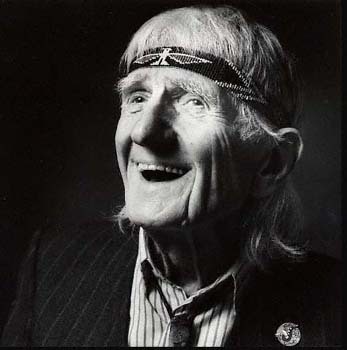
Among the great recordings that helped initiate my ears to the joys of jazz was Miles Davis's "Sketches of Spain."  First issued in 1960, the recording paired the mercurial trumpeter with arranger/composer Gil Evans (pictured left) on a program of Spanish music from the pens of Manuel de Falla and Joaquin Rodrigo (as well as one of Evans' compositions.)  Evans utilized a large orchestra with as many as 14 brass players, 5 reed players, a harpist, acoustic bass and kit drummer.  "Beautiful" and "haunting" are good words to describe the results of their collaboration - Davis and Evans would go on to release "Miles Ahead", "Quiet Nights",  and "Porgy and Bess" - they had first worked together in 1949 on Davis's groundbreaking "Birth of the Cool" but their 4 releases on Columbia found great popular success.

All that leads into an email I received earlier today (reproduced below.)  This looks and sounds like an exciting adventure, one that should appeal to fans of Evans' unique approach to jazz and contemporary music.  

THE GIL EVANS CENTENNIAL PROJECT

Newly Discovered, Un-Recorded Works by Gil Evans Brought to Life
February 2011 Launch - March 13, 2011 Kick-off Concert in NYC
CD Release on May 13, 2012, Evans' 100th Birthday
"It's been a dream of mine to hear new Gil Evans works unearthed because I learn so much every time I hear his music. I don't know anybody who knows Gil's music better than Ryan and I can't wait to hear this music realized." - Maria Schneider


Next year will be the 100th anniversary of Gil Evans' birth, and the Centennial Countdown begins on February 16, 2011 when composer/producer Ryan Truesdell launches The Gil Evans Centennial Project (GilEvansProject.com) with the assistance of fans, friends, and musical colleagues, powered by an ArtistShare® experience.

While many centennial milestone celebrations involve collections and selections of greatest hits from the past, this centennial celebration brings to light newly discovered compositions. Most people know of Gil Evans' work with Miles Davis, but combining all of Evans' work with Davis accounts for only a few years out of a five-decade career. "Gil was an amazingly prolific composer and arranger. I saw thousands of pages of music manuscript, more tunes than I could count. As I went through this music, I started to realize that so many of these were never recorded or were heard live only a few times," explains Truesdell, the first person outside the Evans' family to have been granted full access to the musical archives.  As Miles Evans says: "I'm very excited about this project, and I'm behind Ryan Truesdell 100%.  He's a very talented young man, an excellent musician who has taken the time, and has the talent, to pull this off." 

Having sifted through stacks of music, some full scores, some just sketches, Truesdell has selected works that will give participants and listeners a look at Evans' musical world before and after his collaborations with Miles Davis. Among the works to be recorded for the first time are a number of pieces dating back to Evans' work in the late 1940s with the Claude Thornhill Orchestra, a few works written for singers including one originally arranged for an Astrid Gilberto album but never used, and never-before-heard works for a 24-piece ensemble that includes oboes, bassoons, French horns and percussion. This project will bring Evans out of the shadows, show him to be the pioneer that he was, and shine a new light on his legacy as a 20th century composer and orchestrator.

The Gil Evans Centennial Project provides an opportunity for fans and aficionados, students and professional musicians, to all join together in bringing the music of Gil Evans to life. What could be a better birthday present?

Fan-funded projects, a concept pioneered by ArtistShare®, not only support works of artistry, they provide participants with a behind-the-scenes view of the creative process. Through online audio, video, and journal entries, project participants will share the journey as Truesdell finds Evans' music, documents and compares the scores and sketches, applies deductive reasoning to prepare tempi, style and approach, and rehearses the band. Along the way, interviews with experts such as Evans' biographer Stephanie Crease, composer Maria Schneider, members of the Evans family, musicians who worked with Evans, and others who have been deeply influenced by his work will provide depth and historical context by sharing their experiences and insights. The project will continue with the recording, mixing and final release of the CD on May 13, 2012, Evans' 100th birthday.

On March 13, 2011, just one week shy of the anniversary of Evans' death, special guests Phil Woods, Andy Bey and Frank Kimbrough will join the Eastman School of Music Chamber Jazz Ensemble conducted by Truesdell for a New York City kick-off concert. The 7 PM performance at St Peter's Church will be preceded by both a 3:30 PM afternoon panel discussion moderated by Stephanie Crease with Howard Johnson, Helen Merrill, Maria Schneider and Ryan Truesdell, and the Church's weekly 5 PM Jazz Vespers that will feature the music of Gil Evans with guest soloists Frank Kimbrough, Helen Merrill, Howard Johnson, and Steve Wilson as part of "Prez Fest 2011 - Celebrating Gil Evans."

Truesdell, who was co-producer of Maria Schneider's award-winning album Sky Blue, is not only spearheading the project, but he will personally conduct the orchestra in live and recorded performances and produce the CD. A full range of participant levels is available from the $12.95 Download Participant to the $25,000 Executive Producer. Of special note is the $125 Composer Participant level that includes access to six audio lessons analyzing specific aspects of Gil's scores. Additionally, a brand new participant offer is still being designed that would enable schools, organizations, or even local communities to bring Truesdell to town where he would hold master classes and/or workshops as well as conduct a local ensemble in a concert of Evans' music, just as he did during the out-of-town preview concert that took place on February 17th at the Eastman School of Music in Rochester, NY.

Participation in The Gil Evans Centennial Project is available exclusively through ArtistShare®, a company noted for its groundbreaking approach to connecting fans with the creative process.

To participate, go to: http://www.artistshare.com/projects/project_experience.aspx?ProjectID=376&artistID=279&salesTypeID=6

"It's never too late to fall in love with Gil Evans" - Stephanie Crease

"[Gil] never wasted a melody, he never wasted a phrase. Students will discover him. They'll have to take his music apart layer by layer. That's how they'll know what kind of genius he was."- Miles Davis


ABOUT RYAN TRUESDELL
Composer - Producer - Educator

Ryan Truesdell is a composer of diverse musical tastes and influences with a healthy reverence for jazz tradition and an ever-broadening sonic palette. He received his Masters degree in Jazz Composition from the New England Conservatory and immersed himself in a broad range of musical styles while studying composition with Bob Brookmeyer and Lee Hyla. He composes and arranges music for an eclectic variety of ensembles ranging from small ensembles to big bands, wind ensembles to string quartets. Recent commissions include arrangements for trumpeter Ingrid Jensen with the U.S. Air Force Band of the Pacific, new music for pianist Frank Kimbrough with the University of Minnesota's Jazz Ensemble, and a new piece for Bob Brookmeyer's 80th birthday concert at the Eastman School of Music. Ryan was also awarded the First Music commission from the New York Youth Symphony's Jazz Band Classic, and conducted its premiere at the Allen Room at Jazz at Lincoln Center in 2009.

As a producer, Ryan has already distinguished himself as a valuable resource in the studio.  In 2004, he served as production assistant for Maria Schneider's record, Concert in the Garden, which won a Grammy award for Best Large Jazz Ensemble.  He co-produced Schneider's next recording in 2007, Sky Blue, which has received unanimous praise including "Jazz Album of the Year" from the Village Voice Critics Poll, a Choc Award from Jazz Magazine in France, and a five-star review from DownBeat in 2007 (one of only two albums to receive that honor). Sky Blue was also nominated for two Grammy Awards, and won the category of "Best Instrumental Composition" (Cerulean Skies).  Most recently, Ryan traveled to Hamburg, Germany to produce a recording with Bob Brookmeyer and the Norddeutscher Rundfunk (NDR) Big Band, including both new and old works from Bob's catalog.

Ryan is an active guest clinician and conductor, working with musicians at a number of schools and organizations including Lawrence University (Appleton, WI), University of Minnesota, Twin Cities (Minneapolis, MN), Eastman School of Music (Rochester, NY), and the New York Youth Symphony's Jazz Band Classic (New York, NY).

For more information, visit www.ryantruesdell.com. 

Tuesday, February 15, 2011

Mad Heaven, Indeed! + Back to the Garden

Mad Heaven - Peter Eldridge (Palmetto Records) - I've seen composer/vocalist/pianist Eldridge's music referred to as "easy listening."  There are moments on his solo records (this is his 4th and first in 6 years) that tag might be applied.  To these ears, this is "adult contemporary music" in the best sense.  No pandering to youthful tastes or styles, no lyrics about "puppy love" or multiple sexual conquests, and there don't seem to be synthesized beats anywhere.  Instead, we hear the leader's handsome tenor wrapped around lyrics that are often touching, sometimes humorous ( "Buffet Philosophy" is a hoot for anyone looking for ideas about dieting) and, on this effort, occasionally in Portuguese.  His musical cohorts include guitarist Keith Ganz, saxophonist Joel Frahm, drummer and co-producer Ben Wittman, bassist Tim Lefebvre and percussionist James Shipp.  There are background vocals from Lauren Kinhan and Darmon Meader (who work with Eldridge in New York Voices) as well as Kate McGarry, Amy Cervini, Jo Lawry and Rondi Charleston.

Latin rhythms dominate much of the music.  There is the beauty and softness of "Betty's Bossa (Chamego)" dedicated to Eldridge's mother, a wordless journey of love and appreciation (the leader creates a vocal chorus through multiple overdubs.)  "Voce e Eu" (from the team of Carlos Lyra and Vinicius de Moraes) is a sweet samba that floats atop the lovely alto flute work of Aaron Heick with the accordion of Gil Goldstein adding a sweet texture.  The title track, with lyrics based on a poem by Antonio Machado (1875-1939), a Spanish writer, features a handsome vocal arrangement for Eldridge, McGarry and Lowry.  A gentle samba feel permeates the arrangement of Ray Noble's 1934 classic "The Very Thought of You."  Frahm's tenor saxophone lines wrap around the vocal, creating his own spin on the melody. Eldridge's take on Ary Barroso's "Prá Machucar Meu Coração" features only piano, acoustic bass and guitar and quiet drums beneath the silky vocals. There is beauty in the economy of this music, in the intimacy of the relationships created by the voice and musicians and how that touches the listener. Wittman's percussion on both "Charmer" and "Warm December" is impressive in its scope; on the former tune, the piece bounces off his dancing rhythms while on the latter, he supplies the "heat" that pushes Frahm's tenor higher.


Bask in the vocal work, enjoy the fine instrumentalists (who do not overplay but truly support without becoming anonymous) and soak in the emotional warmth of this music.  "Mad Heaven" will not only warm your winter nights but will also remind you of summer breezes that relax the mind. However you react, this is good music. For more information, go to www.palmetto-records.com where you can stream the CD and learn more about Peter Eldridge. 

Botanic - Tyler Blanton (Ottimo Music) - Vibraphonist and California native Blanton moved to New York City in 2007 and has been steadily making a name for himself as a player and composer.  This recording, his debut as a leader, features his "working trio" of bassist Dan Loomis and drummer Jared Schonig plus the excellent saxophone work of Joel Frahm - 2 tracks feature the rhythm section of Aidan Carroll (bass) and Richie Barshay (drums.)  Frahm plays soprano on 5 of the 7 tracks on which he appears, a real treat because he has developed an excellent sound on the instrument.  "Good Ol' Joel" is a bluesy romp with fine solos from the leader and the saxophonist.  Schonig knows when to push the soloists and his interactions with them are impressive.  There's more than a hint of "bebop" in the head of "Hemming and Hawing"; the solo section features heated solos from Frahm (soprano again) and Blanton. Frahm is on tenor for the title track, which enters on a rhythm that hints at both reggae and waltz rhythms.  There is great swing and humor in Blanton's fine spot and his interactions with the rhythm section are playful. 

Barshay and Carroll appear on "Mellow Afternoon", a sweet ballad with a strong melody line, impressive (and melodic) drum work and a forceful soprano sax solo.  The same lineup has a fine time on the final cut, "Vestibule", with its quick tempo changes and lightning shifts in intensity. Blanton's bell-like tones suggest the marimba - the sound permeates the background and really shines on his joyful solo.  Everyone "hits hard" during Frahm's soaring soprano solo. 

Tyler Blanton's debut is fun to listen to, does not demand much of the listener except to pay attention - if one does, he or she will be rewarded with fine performances, solid melodies, and the opportunity to hear musicians who enjoy playing together.  For more information, go to www.tylerblanton.net.

Saturday, February 12, 2011

CD of This Week + You Learn So Much From Listening

I have not been able to resist playing the new CD by composer and multi-reed player Ben Kono (pictured left) since it first arrived last week.  "Crossing" (1918 Records) will be available in early March and, if you are a fan of music that transcends labels and genres, this program is hard to resist.  The ensemble features drummer and conceptualist John Hollenbeck  (Kono plays in JH's Large Ensemble), bassist John Hébert, pianist Henry Hey and guitarist Pete McCann - the music they perform (all original pieces) is intriguing, tone poems that slip easily into the mind, sounds that challenge and soothe the listener. Over the course of the 9 pieces, Kono plays oboe, English horn, flute, alto flute, clarinet, bass clarinet, tenor saxophone and shakuhachi; yet, the CD never feels like a technical tour-de-force ("see what I can do" sort-of show.)
In the case the name looks familiar, Kono has worked in the reed section of Darcy James Argue's Secret Society, the Ed Palermo Big Band, Gotham Winds, and the Schumacher/Sound Assembly.  He's performed in Broadway "pit bands" and with artists as diverse as Hugh Jackman, Patti Austin, Liza Minnelli, Michel Legrand, and the Tommy Dorsey Orchestra. 
More to come on this most excellent recording.  In the meantime, go to www.benkono.com where you can learn much more and hear pieces from "Crossings."


I reviewed the new CD by Jerome Sabbagh (pronounced "Sah - bog") several months ago.  "I Will Follow You" (Bee Music) features the saxophonist with guitarist Ben Monder and drummer extraordinaire Daniel Humair in a series of original pieces and free improvisations.  The musical adventures grow on the listener and what might sound disjointed at first blush takes on shape with repeated listens.

Jason Crane chats with Sabbagh on the latest "The Jazz Session" podcast.  Listen here to learn how 3 musicians who had never played together before created their own world from trust, experimentation and talking to each other.

Wayne Shorter played in New York City this week with his cohorts of the past decade, they being Danilo Perez (piano), John Patitucci (bass) and Brian Blade (drums.)  In honor of the event and the 10th anniversary of the Quartet, Shorter recorded a far-ranging interview with WBGO's Josh Jackson for "The Checkout" and, believe me, the chat is so worth checking out.  To do so, click here. 
On the same program, Jackson chats with Either/Orchestra founder, composer, arranger, saxophonist and social secretary Russ Gershon. The E/O is celebrating its 25th anniversary and has performed concerts in its native Boston, MA and, now, New York City, that feature the current 10-person lineup and a plethora of alumni (including Miguel Zenon, Matt Wilson, John Medeski and others.)  The band does not tour much outside of the Boston area - click here to listen to the interview.
Gershon also had a good, long, sit-down with Jason Crane - give it a listen here.

Finally, when you visit "The Checkout" and "The Jazz Session" and enjoy the contents, understand that these journalists and musicians work very hard - they need more than moral support and applause (good things to get, indeed.)  Be monetarily supportive when and where you are able.