As we head into the Holiday season for 2019, artists and record labels are releasing albums at a......well....at a record pace. Here's a bunch that feature pianists in various setting.
Kenny Barron & Mulgrew Miller - The Art of the Piano Duo: Live (Groovin' High Records/ Sunnyside Records) - Two modern masters of jazz piano as well as two great friends, Kenny Barron (born 1943) and Mulgrew Miller (1955-2013) were invited to tour Europe several times in the decade between the beginning of the 21st Century and Mr. Miller's passing. Not surprisingly, someone thought to record the concerts. The music on this set was recorded in Marciac, France, in 2005 and in Switzerland in May of 2011. Happily, Sunnyside has released three full concerts on this 3-CD set. With set lists ranging from Broadway and popular standards to Duke Ellington, Joe Henderson, and Thelonious Monk, the duo has a rip-roaring time playing melody, counter-point, rhythm, and impressive solos.
Photo: Bern Jazz Fest 2010
It's impossible to pick out one or two standout tracks as there are no duds over the three hour + program. One thing is certain – there is something for everyone to like. These gentlemen can swing plus know how to caress a ballad so that the listener does not miss the emotion inherent in the lyrics. It's hard to to pick who's playing which solo and that really does not matter. Just dive in and go with the amazing flow!
Here's the duo in action from Vienna, Austria (this piece is not on the album but it's certainly worth checking out):
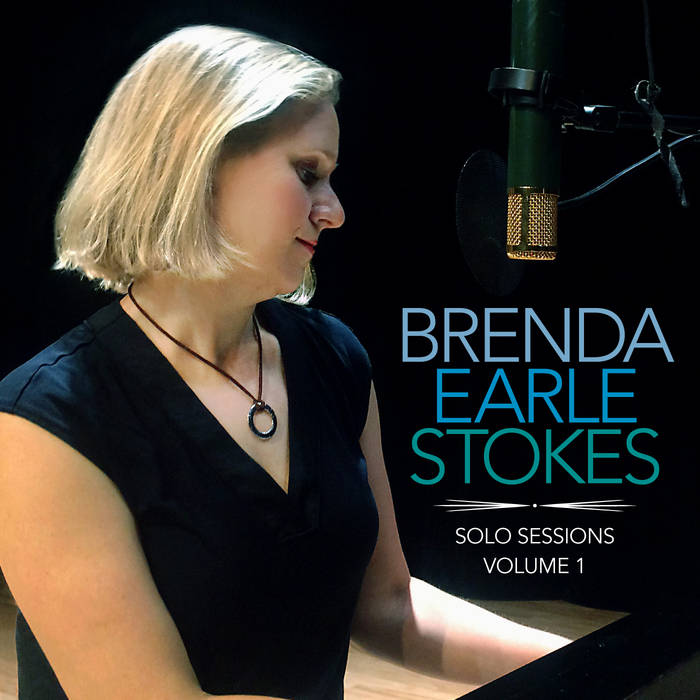
Brenda Earle Stokes - Solo Sessions, Vol. I(AllSheNeeds Music) - One can never know what will befall them when they move away from home. School, jobs, marriage, and children (and much more) change most people so that when they come home, they are changed. Vocalist-educator-pianist Brenda Earle Stokes was raised in Sarnia, Ontario, Canada, where she went to school, took piano lessons (from the age of four), where she performed, and became prepared to study further in the "Big City." She has performed on cruise ships, taught and performed in places and far-flung as Australia and New Zealand. Since 2002, Ms. Stokes has issued four albums that feature standards and originals backed by session men and friends. She is featured on piano on various tracks but the focus has always been on her voice.
Album #6 brings her home, right to the Sarnia Public Library into the performance room where she played as a young girl and participated in other events. This is not the first time she's recorded singing and playing the keys but it's the first time she has felt compelled to "go it alone" on record (she had done so in concert). No need to worry as the recording is a stone joy from the opening notes to the close. Along the way, Ms. Stokes explores songs from the Great American Songbook, from Brazil, from the years the she was growing up, and even back to a Leroy Carr blues (from the 1930s). That track, "How Long Blues", displays her chops with a blow to Memphis Slim. Another delightful surprise is the slinky version of "The Power of Love" (the Huey Lewis & The News tune from the 1985 movie "Back to the Future") – not only is the music deeply funky but there's a bit of gospel feel in there as well. There's a delightful version of Steve Swallow's "Ladies in Mercedes" (with lyrics by Norma Winstone) and a lovely take of Dave Brubeck's "Strange Meadowlark." That latter track appears on the pianist's classic 1959"Time Out" Lp; here, Ms. Stokes adds Iona Brubeck's lyrics and really digs into the piece.
There's plenty more so check out "Solo Sessions, Vol. 1" – revel in the music and the fact that there's more to come! Brenda Earle Stokes, whose voice has alway been appealing to these ears, shows just how fine a pianist she is as both an accompanist and soloist. Put on the music, sit back, and enjoy.
Here's Ms. Stokes's version of a song by the trio of Billy Steinberg, Rick Nowels, and Marie Claire D'ubaldo first recorded by K.D. Lang:
Champian Fulton can play piano, she can sing, she can swing, she can be sassy, and can be silky smooth. Over the past dozen years, she's had 10 albums as a leader or lead singer. Number 11 is a delightful live session recorded late February of this year in Vancouver, British Columbia, Canada, and featuring Ms. Fulton alongside tenor saxophonist Cory Weeds. "Dream a Little..." (Cellar Live Records) finds the duo exploring nine standards and one original over the course of an hour. It's quite a treat to hear Weeds weave his tenor lines around the piano on "Fly Me To The Moon" and carrying on a conversation with Ms. Fulton's vocal on "Darn That Dream". One can hear traces of Sarah Vaughan and Betty Carter on the latter track plus dig the Art Taum-esque piano solo on this most delightful ballad.
Mr. Weeds leads the way into "Tangerine": soon, the duo is off and running its respective way through the changes. Ms. Fulton is an excellent accompanist, giving her partner a lovely cushion of chords to play as well as a sprightly bass line. The pianist takes the lead on "I'd Give a Dollar for a Dime", pleading for the coin to play a one song on the juke box. Mr. Weeds plays an expansive blues-tinged counterpoint. The album closes with Buddy Johnson's "Save Your Love For Me". Using the Eddie "Lockjaw" Davis arrangement, the duo dogs in and swings the heck out of the piece. Pay attention to how the piano colors the background behind the expansive tenor solo. Make sure to check out the great piano solo that follows. A bit of Earl "Fatha" Hines, James P. Johnson, and Eubie Blake plus a whole bunch of Champian Fulton makes for a finger-snapping treat.
"Dream a Little..." is a lot of fine music in one dynamic duo package. Champian Fulton & Cory Weeds certainly had fun that night (check out the pianist's giddy response to the tenor solos) and you will as well once you surrender to the sweet sounds.
To paraphrase one of the more famous advertising phrases of early 20th Century (see here), "They smile when Laszlo Gardony sits at the piano, because they know, they're going to hear some great music before he stands back up." His new solo piano album, "La Marseillaise" (Sunnyside Records), was recorded live in March at the Berklee College of Music Keys Fest. While his small group has always been impressive, when he plays sans accompaniment, Gardony just seems more expressive. Plus his programs always combine originals, fully improvised pieces, standards, and pieces that mesh blues, gospel, New Orleans, and r'n'b into magical works. Every time I have seen Mr. Gardony play in concert, he's smiling and having the time of his life – even though this is a recording, that happiness comes through loud and clear on this album!
The opening track, "Revolution" (one of five original pieces), is based on the French Revolution-inspired song that gives the album its title. After the classical-style reading of the theme, the pianist's left hand gets into quite a boogie-woogie groove. Note the up-tempo rhythm the pianist gives "O Sole Mio" making the song feel more like Myra Melford than Elvis Presley "It's Now or Never"). In the middle of the program, the mood goes to introspection on Errol Garner's "Misty" – it's such a lovely reading, a bit bluesy yet always melodic. That's followed by a powerful performance of fellow pianist (and label mate) Denny Zeitlin's classic "Quiet Now." Also introspective in nature, Mr. Gardony plays so expressively that it seems like the piano is singing.
There are two fully improvised pieces. "Four Notes Given" is based on four notes suggested by the audience and the pianist elaborates on those tones. The resulting music has a hypnotic sound not unlike the solo piano work of Keith Jarrett. "On The Spot", an apt title, builds quickly from the initial melodic fragment; it's rapid pace and long flowing lines leaves the listener breathless.
"La Marseillaise" closes with another original, "Bourbon Street Blues", a piece first recorded in a small group setting. Played solo, the music has the feel of an Allen Toussiant composition right down to the dancing left hand and the rollicking melody lines. There is no way one can feel blue listening to the music. Laszlo Gardony plays with such verve, empathy, and downright ebullience tha one feels the urge to hit "repeat" each time the final applause dies down. As I write this, we're heading into the "darker" months of the year so let "La Marseillaise" carry you through the grey days and crisp, chilly, nights!
The current edition of the Branford Marsalis Quartet has been together for 20 years with the exception of the drummer Jason Faulkner who joined in 2009. Marsalis (tenor saxophone, soprano saxophone), Joey Calderazzo (piano), and Eric Revis (bass) have built up quite a rapport and Faulkner (who is just 27 years old) stepped right into his predecessor's Jeff "Tain" Watts's role with nary a dropped beat.
The BMQ's new album, "The Secret Between The Shadow and The Soul" (Okeh Records), is the first quartet disk in seven years. Five of the seven tunes are originals (two each by Calderazzo and Revis, one by Marsalis) with inspired readings of Andrew Hill's "Snake Hip Waltz" and Keith Jarrett's "The Windup". "....Waltz" (a piece Hill recorded twice in 1975, one with a quartet, the other as a piano solo) is a jaunty piece with playful yet powerful solos from the leader and the pianist plus splendid support from the rhythm section. Faulkner, in particular, sounds as if he is having such a fun time. Revis, who is such a melodic player, joins in on the fun especially on his solo. The Jarrett piece closes the program - if you remember the original with the pianist's "European Quartet" of Jan Garbarek (alto and soprano saxes), Palle Danielsson (bass), and Jon Christensen (drums), this version, once the band moves out of the theme, swings like mad. Calderazzo's solo is inspired from the get-go. Marsalis, on tenor, digs right into his solo, pushed hard by the rhythm section and he rides their powerful waves.
Of the original material, the program opens with Revis's "Dance of the Evil Toys" which scoots along on Faulkner's martial drumming and the composer's rapid-fire circular bass line. The piece changes pace several times, even going "out" for a quick moment, and features strong solos from tenor sax and piano. Revis also contributed "Nilaste", an intimate ballad that pulses with intense work from soprano saxophone and the interactions of the rhythm section. Calderazzo's ballad, "Conversation Among The Ruins" has a lovely full melody for the soprano sax plus strong solos from the composer and excellent brushwork from Faulkner. The pianist's "Cianna" also is a ballad, more uptempo but never rushed. "Life Filtering From the Water Flowers" has a mysterious opening for tenor saxophone before entering into the body of the song. One hears a classical influence in this piece, composed by the leader, especially in Calderazzo's lovely piano unaccompanied piano interlude. When the rhythm section (listen closely how they advance the music) enters, the music takes flight. Marsalis, on tenor sax here, creates a solo with rolling phrases, flowing lines, and powerful emotion.
"The Secret Between The Shadow and The Soul" is a delightful album. Lively, collaborative, at times powerful, other times sensual, the Branford Marsalis Quartet is at the top of its form. Recorded in Australia during a break of the group's 2018 world tour, the music shines and sings, dances and swings.
Pianists and composers Vijay Iyer and Craig Taborn, born a year apart (1971 and 1970 respectively), first recorded together in saxophonist - conceptualist Roscoe Mitchell's Note Factory in 2001. Later that decade, they started working as a duo. Both bring a wealth of experiences and musical knowledge as well as a sense of adventure. They have worked in both acoustic and electric groups but stick to the acoustic piano for their concerts and now for their debut album.
"The Transitory Poems" (ECM Records) was recorded in March of 2018 in the concert hall of the Franz Liszt Academy in Budapest, Hungary. All eight of the pieces on the album are credited to the duo (except for a section of the final track) and four are dedicated to three pianists (Cecil Taylor, Muhal Richard Abrams, and Ms. Geri Allen) plus artist Jack Whitten. All but Taylor had died before the recording was made (he passed in early April of 2018) but the tribute makes sense as he was an influence on both pianists.
Instead of trying to pull the album apart and guessing who played which solo, I would recommend digging in to each piece and listen for melody, harmony, the flow, the rhythms, how ideas are transmitted from one player to the other, and how you will hear more with each listen.
Photo: Monica Jane Frisell
The program opens and closes with the two longest performances. "Life Line (Seven Tensions)" (13:02), while not dedicated to Muhal Abrams, feels like one of his exploratory pieces. Changing tempos, moving from quick, skittering, phrases to rich chords and impressionistic movements, the music holds your attention by moving in unexpected directions, almost at the whim of the performers. The final track, "Meshwork/Libation/When Kabuya Dances" (12:49), is dedicated to Ms. Allen, with an exciting forward motion in the pianist's left hands as the phrases go from longer lines to pounding chords. There's no delineation between the three parts but one can hear subtle changes in the mood as the music shifts into a different modality. If you listen to Ms. Allen's song (played solo), from her 1984 trio Lp "The Printmakers", you can hear how her music informs this medley from the very beginning.
"Clear Monolith" is dedicated to Mr. Abrams - it is fascinating to hear the duo build the piece from its quiet beginning to the blues-soaked middle to the quiet, trance-like, section that follows, ending with an intense dialogue. Mr. Taylor is celebrated on "Luminous Brew." Opening with an ominous rumbling, a quiet melody emerges. Slowly, the intensity begins to pick up while the melody opens wider. A bass line emerges from one piano yet, before too long, both players are expanding the palette. The rolling piano lines come together before the pianists start to trade lines. Suddenly, the music explodes for a moment before coming down for a soft ending.
"The Transitory Poems" is a riveting program from start to finish. Vijay Iyer and Craig Taborn marry their individual styles and create music that is powerful, exploratory, challenging, and beyond category. Find the album and enjoy the journey these two fine pianists create.
When ECM puts the album officially on its website, one should be ablate listen to sound clips. In the meantime, there are a number of videos of the duo with fair-to-middling loud quality.
2018 is the year of pianist, composer, and arranger Satoko Fujii's 60th birthday. She's celebrating with her fans and new acquaintances by releasing an album every month. January's entry is "Solo" (Libra Records), recorded on the afternoon of July 9, 2017, in Yawatahama, Japan, approximately 530 miles to the southwest of Tokyo. As much as I enjoy Ms. Fuji's projects with her various large ensembles as well as her work with husband and trumpeter Natsuki Tamura (they share several projects), her solo piano outings are always fascinating and this album is no exception.
There are moments of great beauty and solemnity, there are moments of vigor and furious sounds - playing inside the piano, dampening the strings that certain notes sound like small bells ("Ninepin") and giving the high keys a more percussive sound ("Gen Himmel"), Ms. Fujii plays the entire piano. Listen to "Spring Storm" as the music dances up from the bass notes, imitating rain drops, swirling sounds out of the piano, until the low notes reluctantly give way to a lovely melody. The lines clash, come together, break apart, push at each other, until the storm picks up in intensity - now the phrases are spilling out of the piano but the listener need not take cover.
The final track is a whisper-thin reading of "Moonlight", a truly lovely ballad composed by the late reed master Jimmy Giuffre. The notes are so well articulated, so clear, one imagines standing on the back porch in the country, staring at the sky. Her left hand strumming inside the piano as the right plays a rippling melody, the music is suspended in the air and we are still, like the evening breeze, we are quiet, like the song birds sleeping in their nests, as the melody slowly comes to a close.
If you listen to a lot of the music that Satoko Fujii creates, "Solo" may surprise you. There is plenty of power in her percussive left hand on certain tracks but there are also many moments of tenderness. Yes, there is angularity in her melodies and solos but she also gives pieces where the rhythm carries you rapidly forward (all of that and more happens in nine+ minutes of "Geradeaus"). Approach this album with open ears and you will reap musical rewards.
Pianist and sonic adventurer Kris Davis inaugurated her Pyroclastic label in September of 2016 with the 2 CD "Duopoly", an album on which she played duets with reed players Tim Berne and Don Byron, drummers Billy Drummond and Marcus Gilmore, guitarists Bill Frisell and Julian Lage, and pianists Angelica Sanchez and Craig Taborn, a smaller version of Noah's Ark.
Her second album on the label, "Octopus", is also a duo album but this time it's her with Taborn. The pianists did a 12-city tour, each bringing new compositions (two for Ms. Davis, three for Taborn) plus one each from Carla Bley and Sun Ra, What stands out on th initial listening is how compatible and flexible the duo is. Since both are excellent improvisers, these pieces blend a sense of adventure with melodic freedom and rhythmic experiments.
This is one of those programs where you should just sit back and let the music wash over you. Pretend you are in the audience, watch the pianists, allow your mind to wander. Pieces such as the opening track "Interruptions One" (all three of Taborn's pieces share that title) flow out of the opening moments, moving in unexpected (for the listener and, probably, for the musicians) directions. The pianists are interacting, responding to musical cues, to the lines each one is playing, building off the intensity or the quiet, and then pushing the music towards a new area. Ms. Davis's "Ossining" has quite a pulse, one that shifts, morphs, continually moving forward. Through the first several minutes, it reminds this listener of the percussion pieces that Steve Reich has written, works that develop slowly but keep our attention because the rhythm is so pronounced. When you think it's over, the duo turns the piece inward on long, flowing, impressionistic melodic fragments and the closing moments are mesmerizing.
Every track is a highlight, from the aptly named "Chatterbox", an intense workout that does flag from the opening clusters, to the powerful reading of Carla Bley's "Sing Me Softly of the Blues" (first recorded by the Art Farmer Quartet in 1965 followed by Gary Burton Quartet in 1967) - the piece transforms into Taborn's "Interruptions Two", a dramatic ballad that moves away from its powerful chord towards a reflective interaction between the pianists. The album closes with a stunning performance of Sun Ra's "Love In Outer Space." There are a number of versions by the composer but none that have the luxurious opening of this two-piano reading. The piece builds slowly but surely to a powerful climax, a rolling, roiling, rhythmical drone that drops to a quiet finish.
"Octopus" is quite an artistic accomplishment. Two pianists, Kris Davis and Craig Taborn, each with an individual style, coming together and creating such fascinating music. Both have proven themselves to be intrepid experimenters, musicians who do not follow trends but follow their passions.
Many people know Lewis Porter from his excellent books on John Coltrane, Lester Young, and his various "Jazz Perspectives" books. Dr. Porter teaches at Rutgers University where he created the Masters in Jazz History and Research. In addition, he's also an accomplished composer and pianist with recordings that feature him with saxophonists Dave Liebman and Chris Kelsey and trio date with bassist Joris Teepe and drummer Rudy Royston.
This past month, pianist/composer Porter has released a Quartet date co-led by saxophonist Phil Scarff (on Whaling City Sound) and "Beauty & Mystery" (Altrusioni), a session that features bassist John Patitucci and drummer Terri Lyne Carrington plus saxophonist Tia Fuller (on two of the 10 tracks). It's the latter recording that is our focus.
With the exception of the opening "Prologue", which is a solo piano piece, the trio dives into a program that features originals, a piece by one of Porter's former students Ted Chubb, and two inspired covers. The dancing-on-air version of "Bye Bye Blackbird" illustrates how well the three musicians interact with the pianist and bassist playing off the melody and through the piano solo while Ms. Carrington's delightful brush work sizzles underneath. Patitucci moves into a brisk waking bass while Porter frolics atop the brisk rhythms. Curtis Mayfield's inspirational "People Get Ready" opens rather solemnly with the piano introducing the melody. The bassist takes over for the first verse before the pianist returns with a wonderful solo (especially the chordal work in the middle of the song). One is touched by the power, the hope, and the humanity in this performance. "1919", the piece by Chubb, is a lovely ballad that the composer/trumpeter first recorded on a 2009 CD he made with Mike Lee. It's a treat to hear three musicians listen to each other, support each other, and play with such emotion, emotion that does not feel forced or contrived.
Three of the original pieces have connections to John Coltrane. The uptempo "Birthplace" features Ms. Fuller on soprano sax sharing the main melody with bowed bass while the piano and drums build a fire underneath them. The saxophonist takes her cue from that powerful foundation and creates a stunning solo, her lines swooping, flying upwards as if freed from her earthly bounds. Porter also unleashes a powerful solo, he too feeding off the rollicking rhythm section. Ms. Fuller returns on "Blues for Trane and McCoy", this time on alto saxophone. Before she enters, the trio go on quite a romp with the pianist happily leading the way. The sax solo is no afterthought: the intensity level drops for her introduction (but pay attention to how Patitucci and Ms. Carrington support her) and she creates quite a delightful, exciting, solo. "From Giovanni to Jimmy" is a spotlight for the bassist and a nod to one of his most important influences, Jimmy Garrison. It's a handsome, medium-tempo, ballad with a fine, elongated, melody line (of the three Coltrane-related tracks, this is there only one where you can really hear the influence of MyCoy Tyner. The music also has a delightful flow, Ms. Carrington pushing the piece forward while the bass and piano interact, play counterpoint, and dig deeply into the bluesy chords that are the foundation of the music. The unaccompanied bass statement that closes the piece is stunning and heartfelt.
"Beauty & Mystery" is the perfect title for this album by Lewis Porter. The playing of the pianist with Terri Lyne Carrington, John Patitucci, and Tia Fuller, is creative music at its best. While the music pays tribute to several of Porter's influences (as well as his love for ragas), the results sound contemporary and alive. Find it, play it loud, and climb into these captivating sounds.
Busy week for live music and very busy week for new recordings. Here is, at least, one event that ties performance and CD together. Pianist and composer Kris Davis comes to New Haven this Friday to perform two sets with fellow pianist Craig Taborn in the acoustically delightful Firehouse 12, 45 Orange Street. On the same day and on her own label, Ms. Davis releases an album of duets titled "Duopoly" (Pyroclastic Records), that features the pianist in musical conversation with not only Mr. Taborn but also Bill Frisell (guitar), Julian Lage (guitar), Angelina Sanchez (piano), Billy Drummond (drums), Marcus Gilmore (drums), Tim Berne (alto saxophone), and Don Byron (clarinet). Sharp-eyed readers will realize how important "Two" is to the project in that 1) - it's an album of duos, 2) - she plays 2 pieces with each musician, and 3) - out of the 16 tracks, there are two that are "standards." More about that below.
This performance marks the fifth time Ms. Davis has appeared in the Elm City venue and the sixth for Mr. Taborn. Both are intelligent improvisors, without fear, and can follow any path at the drop of a beat. All of which says they are fearless. Both lead busy lives as band leaders - Ms. Davis with her trio as well as with Paradoxical Frog while Mr. Taborn also leads a trio - and both have impressive "sideman" credentials.
The Davis-Taborn duo will play two sets, with the first starting at 8:30 p.m., the second at 10 p.m. For ticket information, go to firehouse12.com or call 203-785-0468. To find out more about Ms. Davis and her musical endeavors, go to krisdavis.net.
"Duopoly" is an series of conversations between the musicians. Ms. Davis composed five of the initial duos with one each by Ms. Sanchez, Thelonious Monk, and Duke Ellington. The other eight tracks are improvisations, each with the title of the musician the pianist is paired with and, in a circular twist (if that's possible), goes in the opposite order as the composed performances (Bill Frisell plays on track #1 and #16, Julian Lage on #2 and #15, and so on). The project pairs Ms. Davis with musicians she had played with but never recorded with as well as with others she had, in her own words, "only admired".
The optimum approach to this music is to just sit back and listen. As knowledgable listeners, we have expectations of each musician on this album, all of whom have recorded in groups small and large. We cannot help but be judgmental yet the fun of the recording is not only the compositions that Ms. Davis creates for each person but also how they interact in the improvisations. For instance, Mr. Drummond sounds just a bit tentative as they move through the opening moments of Monk's "Eronel" but he gets into the spirit of the duo by first following the pianist's lead then pushing her forward. The duo's improvisation piece builds off Ms. Davis's left hand and Drummond's increasingly powerful floor tom rhythm pattern. Marcus Gilmore gets into the spirit quicker, perhaps from his experiences with Vijay Iyer. His improvisation with the pianist has more sizzle and power, seeming too short at 3:34. "Trip Dance For Tim" is one of the more powerful works in the program, the throbbing piano chords supporting Berne's pointillistic forays into the upper range of the alto sax. Their "improv" features the saxophonist creating a percussive pattern on the keys of the saxophone and a breathy lead-in to his squealing, mewling, solo in a fiery interaction.
The four tracks with Ms. Sanchez and Mr. Taborn cover a lot of territory with the former's "Beneath the Leaves" featuring a stubborn melody but a flowing yet angular solo. The quiet "improv" with the latter pianist stand out for its quiet poetry, a musical haiku in the midst of odes. "Surf Curl" combines a percussive, nervous, piano figure with the stately steel-string guitar of Lage. As the piece continues, he plays longer lines; listen as the piano figures moves from the lower half to the upper keys, the result being Lage occasionally strumming a chord. It's quite a treat to hear Bill Frisell in a "free-er" mode, hearkening back to his work with John Zorn and Paul Motian. Not that he goes wild but listen as he wraps his country-style riffs around the impressionistic circular piano phrase in the opening half of "Prairie Eyes" before the pianist moves into a more Americana mode. Their improv closes the album in a dream-like collection of single-note piano fills and long guitar tones, slowly easing to a quiet close.
Kris Davis and producer David Breskin also filmed the proceedings which is included in the CD package. Watching the musicians obviously gives you a better feel for their interactions and it's educational to observe the creative process. "Duopoly" is an aural adventure for the mind that gives one fresh insights into the ever-expanding imagination of its creator and her compatriots.
Meanwhile, The Side Door Jazz Club in Old Lyme continues its string of impressive weekends of music. On Friday (9/30), pianist and composer Hector Martignon comes to the Shore Line venue with his band, Foreign Affair. The Colombian-born leader has studied and recorded a number of different styles of music ranging from classical to Afro-Latin to Caribbean to Brazilian and more. The band he's bringing include two percussionist, Mino Cinelu and Samuel Torres, both amazing players, plus bassist Rudyck Vidal and vibraphonist Christos Rafalides.
October begins on Saturday night and what better way to usher in the new month than with the Jeremy Pelt New Quintet. Pelt, a trumpeter, composer, and educator (currently on the faculty at the University of Hartford/Hartt School,) remains one of the busiest musicians on the planet (go to his website and check out the "Appearances" page. His latest High Note CD, "#Jive Culture", is a return to acoustic jazz and features legendary bassist Ron Carter as well as pianist Danny Grissett and drummer Billy Drummond.
Mr. Pelt's new band includes the splendid bassist Vicente Archer, the fine young pianist Victor Gould, percussionist Jacqueline Acevedo, and Hartford-born drummer Jonathan Barber. One should expect that the uptempo pieces will crackle with excitement while the ballads will be emotionally strong. For ticket information and reservations, call 860-434-0886. To learn more about the trumpet player, go to jeremypelt.net.
Four years ago, Sam Sadigursky created a series of compositions that the acclaimed classical clarinetist Marianne Gythfeldt recorded as "25 Etudes for Solo Clarinet, Book 1." Issued on the reed player's Bandcamp page, the short pieces were created for advanced musicians. (He has since produced two additional books of compositions for clarinet.) Sadigursky, who is a member of numerous groups but most notably Darcy James Argue's Secret Society, has just issued (for download only) "Five Movements for Solo Clarinet" - this time, the composer plays his music and the five track/20-minute adventure moves from the Easter European flavored "Diasporas" with its combination of long and short tones, playful phrases mixed with series of "stops-and-goes" to the classically flavored "Short Stories" and its circular lines to the Baroque-feel of "Dance On" and its alluring melody. There are also two pieces under 1:25. "Express Train" is a rush of melody as is the rollicking "Jazz Hands", the latter being as close to "jump classical" (if that's a viable term) as one could get.
Sam Sadigursky may be best known for his various "Words Projects" plus his delightful 2015 "Follow The Stick" album but he's been seriously working on his composing for clarinet. "Five Movements for Solo Clarinet" won't cost you very much money - go to samsadigurskyclarinetetudes.bandcamp.com/album/5-movements-for-solo-clarinet to make your purchase. Let the music play all the way through and then listen again. There is much music, plenty of ideas and impressive melodies, in this 20-minute adventure. This is not just for clarinet aficionados (though they should enjoy the sounds) but also for people who savor music that is bold, thoughtful, and, at times, charming.
Guitarist and composer Gene Ess, a native of Tokyo, Japan, who is now a resident of New York City, has been an active musician for over three decades. After graduating from the Berklee College of Music, he began working with drummer Rashied Ali (with whom he recorded one album) and going on to work with bassists Lonnie Plaxico and Reggie Workman as well as with Archie Shepp. His first CD under his own name, "Sunrise Falling", was issued in 2003 on the ANP label. Since the 2005 release of "Sandbox and Sanctum", Ess has issuing his music on his own label, Simp Records. He has employed such great musicians as Donny McCaslin, Tyshawn Sorey, David Berkman, John Escreet, and vocalist Nicki Parrott.
His new recording, "Absurdist Theater", is his third collaboration with vocalist and librettist Thana Alexa and second with Clarence Penn on the drums. Rounding out the rhythm section is pianist Manuel Valera and bassist Yasushi Nakamura. Ms. Alexa is an excellent foil for the guitar not just for her lyrics to his original composition (this album has eight) but also for her wordless vocals that wend their way through several songs. Valera's rich solos and strong chordal backgrounds on tracks such as "Kunai" and "Out of the Ashes" really fill the sound spectrum yet leave room for Ess's flowing guitar solos. The pianist's bell-like electric piano tones introduce "Torii" which drops into a Santana-like romp with the guitarist and vocalist on the main melody. Both Ms. Alexa and the leader deliver powerful solos over the rampaging drums and thick electric bass lines. (see the video below). "Dejala Que Pasa" is a fascinating ballad, powerful drumming over rippling piano, synthesizer swells (played by Ess), and Ms. Alexa's lovely vocal which, despite the title, is all in English.
Among the highlights of this recording is the trio piece "Forkball (For Ornette)", which opens with just bass and drums before Penn joins during the opening statement of the theme. The piece changes tempo several times before dropping into a brisk "walking line" for the fine solo. The final track, "Upward and Onward", has a faster tempo and the quintet, pushed along by the splendid work of the rhythm section, concocts quite a heady brew.
"Absurdist Theater" is a fascinating recording, a continuation of the journey that Gene Ess, his guitar, and his ensembles have been taking since he set out on his own. It's grit, melody, swing, power, and the fine voice of Thana Alexa. The album is a journey adventurous audiences should enjoy.
In jazz, when friends get together to play, the results are often quite relaxed yet fun for the avid listener. "River Edge, New Jersey" (Azica Records) is the work...well, play, of the Bill Cunliffe Trio featuring pianist/composer Cunliffe with bassist Martin Wind and drummer Tim Horner. The pianist has known and worked with the rhythm section on numerous occasion in different settings since the 1990s. One listen to this CD, recorded in 2011 in Manfred Knoop's studio, located in the city that lends its name to the recording's title, and you can hear friends having great fun.
Cunliffe, who first came to notice as a pianist and arranger with the Buddy Rich Band before going on to play with Frank Sinatra, Freddie Hubbard and James Moody, is a facile pianist with an unerring penchant for melodies as well as being a rhythmical soloist. The program opens in a funky mood, with Horner and Wind leading the pianist into "Sweet Andy" - the result is an infectious jaunty romp. There are moments throughout the CD where Cunliffe rides atop the forward motion of the rhythm section. Harry Nilsson's "One (Is TheLoneliest Number" is another powerful tune, taking its cue from the Three Dog Night version. The pianist's two-handed attack is quite appealing. "All Is Full of Love", composed by Bjork for her 1999 "Homogenic" album, is a sweet ballad while Cunliffe's "For Wanda" has a more emotional feel, starting slowly and picking up in intensity (the melody is played by both bass and piano).
The 2 Brazilian numbers, the well-known "..Girl From Ipanema" and the pianist's own work, "Choro"(from "Nostalgia in Corcovado"), show the versatility of the Trio. The former moves away from the (expected) bossa nova rhythm into a more "open" feel in both the piano work and how the drummer controls the song. The latter is reprised from a 2009 recording that bears the name of the suite and was recorded with a sextet Cunliffe dubbed "Trimotif." It has a dizzying melody line and sprightly rhythms.
On the surface, "River Edge, New Jersey" may look like a typical piano trio recording but the spirited play of Bill Cunliffe, Martin Wind and Tim Horner lift this music far above the mundane. If I have one criticism, it's that there is a bass solo in just about every tune. The upside of that comment is Wind is such a melodic player, he acquits himself admirably throughout. Pour a glass of rose or pink lemonade, sit back and enjoy the ride. For more information, go to www.billcunliffe.com.
George Shearing (1919-2011) had a long and illustrious career, culminating in a Knighthood in 2007. The native of the Battersea area of London, England, moved to the United States in 1947 and went to record dozens of Lps and CDs, performing for Presidents, receiving numerous awards and honorariums, and winning several GRAMMYs.
In 1982, the pianist joined forces Canadian-born bassist DonThompson and they worked together for nearly 6 years. In January of the following year, the duo had a 6-week residency in a New York City club. Shearing lived in the City and his apartment had a lovely grand piano; he and Thompson would play in the afternoons before gigs. The bassist suggested they record their sessions - the result, 30+ years in the making, is "George Shearing At Home" (Proper Note/Jazzknight Records). Shearing always had wonderful technical skills but was also known for the intimacy of his ballad work. In the comfort of his own living room, the pianist had no reason to hurry, no one to please but himself, making this CD a welcome addition to his large discography.
The bulk of the material is standards but there are also an abundance of surprises. The bassist contributed "Ghoti", an uptempo blues that Shearing frolics through as he does on the duo reading of Charlie Parker's "Confirmation." They are also in complete sync on "Subconscious Lee" and take a pleasant jaunt through the traditional Scottish tune, "The Skye Boat Song." But, it is the ballads that takes one's breath away. The solo reading of "I Cover The Waterfront", the Johnny Green composition from 1933, is stunning, emotional, with bows to DeBussy and "Over The Rainbow." Shearing also goes it alone on "Laura", a song he probably performed dozens of times. Here, he caresses the melody, taking his time to both enjoy its lyrical nature and the colors he spontaneously contributes. The CD closes with "Beautiful Love", a song from 1931 that Thompson says in the liner notes, "I never heard him play it before and he never played it again." The performance is, in a word, stunning.
"George Shearing At Home" is not just for completists; in fact, this lovely disk can serve to introduce the pianist to a whole new generation. George Shearing and Don Thompson, in the privacy of the pianist's living room, struck gold - 30 years later, we are the lucky beneficiaries. No website to send you to for more information but you can check out the tracks at www.amazon.com/music/dp/B00B5NXBC0.
When one stops to think about solo piano music, especially as it relates to Black American Music and its international off-shoots, there are recordings you can listen to with a crowd of people (think Art Tatum, Meade Lux Lewis and Art Hodes) and others made for late at night by yourself. In the 1970s, Keith Jarrett began a series of solo piano recordings that set the standard (so to speak) for the late night crowd, introspective music that often included rolling rhythms but mostly stuck to slower tempi.
Born in Finland (where he still resides), Esa Helasvuo first studied classical music; it was his older brother who turned his attention to American music. By the age of 10, he has his own jazz trio and, by the early 1960s, he was playing interpretations of works by Thelonious Monk and Art Tatum. After high school, he did his compulsory military service and, at the end of that decade, was working as a dramaturg for the theatrical department of the Finnish Broadcasting Company, a gig that came him the opportunity to write and arrange music for productions. His influences changed, shifting to the afore-mentioned Jarrett and, surprise, Frank Zappa. In 1975, he joined the faculty of the Sibelius Academy in Helsinki where he stayed until his retirement in 2008. Along the way, he composed and performed music in a variety of ensembles, from small-group to chamber orchestra to arranging music for vocalists. Hevasulo also made numerous recordings, especially solo piano CDs but few, if any, are available in the United States (none on iTunes or in the eMusic.com catalog.)
"Stella Nova" (TUM Records) leans more to the Keith Jarrett style of solo piano. The majority of the 10 tracks are improvisations, several of which include themes that Hevasvuo has used in other pieces plus one composition by Finnish guitarist and composer of tangos, Unto Mononen (1930-1968). The program commences with the lovely "To Feel You Us To Love You"; to his credit (and our interest), this work is really a long melodic line. Thee is a darker shade can be heard to the title track, a long (9:14) improvisation that, in its opening few minutes, uses plenty of silence to set off the dramatic melody. When Hevasvuo drops into a rhythm, the music has the feel of an Indian raga as well as one of Jarrett's pieces that emphasizes the trance-like left hand. He follows that forceful work with the dream-like "Intimacy", its soft melodic lines suggesting a ballad sung by Sarah Vaughan or Billie Holiday yet also displays a classical side. The Mononen work, "Satumaa", has a handsome melody that Hevasuvo improvises upon without losing the emotional quality of the opening theme. The final track, "Blues Addiction", a lovely and loving coda to the program, a wistful recollection of the pianist's many years of listening, composing and playing.
TUM Records is doing a fine job of exposing Finnish improvising musicians to the international scene (not to forget the great releases by Billy Bang, Wadada Leo Smith, the splendid new CD by Barry Altschul and others). Listeners who enjoy internal monologues translated to piano should take the time to investigate "Stella Nova" and Esa Hevasvuo. For more information, go to www.tumrecords.com.

 Posts
Posts