Guitarist and composer Rez Abbasi, born in Pakistan and raised in Southern California, has been entrancing audiences the world over for nearly three decades with his blend of creative music from his native region as well as his adopted homeland. The results of his studies and experimentation is well-documented as he has released 14 albums as a leader or co-leader plus has appeared on many more.
In late 2019, Abbasi released two new albums, one a session co-led with French harpist Isabelle Olivier and the other a new soundtrack for a classic Indian silent film from 1929. Both albums are connected in their use of Eastern and Western instruments plus the multi-rhythmic diversity of the musicians.
Olivier Abbasi Sound in Sound, otherwise known as Oasis, features the harpist and guitarist in the studio with Prabhu Edouard (tabla, kanjira) and David Paycha (drums). The quartet's self-titled debut album (released on ENJA/ Yellowbird) covers a wide swath of musical territory with the program of six originals by the harpist, three by the guitarist, and a fascinating arrangement of of Richard Rodgers's "My Favorite Things." That last piece leads off the album and sets the tone; after a powerful opening, the quartet opens up over the raucous percussion and both Abbasi and Ms. Olivier pushing and prodding each other (shades of the classic John Coltrane version). The harpist's attack reminds me of the way McCoy Tyner played in the 1970s and beyond.
On the first few listens, the music often has the sound of the cooperative quartet Oregon, especially in the interactions of guitar and tablas. Abbasi's guitar provides both melody and rhythm while the tablas and trap drums bubble underneath. That's apparent on the guitarist's "Lemongrass" and on the harpist's "Road Movie." The former is quite melodic with sparkling guitar while the latter builds off the fire created by Edouard's blazing tablas. Ms. Olivier's "Dodeca" is an impressionistic musical painting opening with a guitar and harp statement that also features subtle electronics. The percussion is understated, the acoustic guitar and harp weave in and around each other never getting on the way.
Photo: Piero Ottavino
Beauty abounds on "Cherry Blossom"and never wavers from the opening guitar harmonics and percussion to the gentle melody Ms. Olivier composed and plays. Images of a Japanese garden merge with the soft drums and frame drum (kanjira). While the piece does pick up in intensity, the melody and improvisations create a hypnotic effect. Ms. Olivier's "Timeline" follows – it moves steadily forward on the percussive flow but note the harpist's use of tape delay and electronics that lead into a powerful electric guitar solo.
"Oasis" lives up to its name as it provides a wellspring of ideas and musical adventures. One hopes that this is just the first of numerous projects and concerts from Isabelle Olivier and Rez Abbasi, that they continue to blend the myriad influences that each bring to the collaboration.
Here's a short video to introduce you to the music and the musicians:
Rez Abbasi was approached in 2017 to create a new soundtrack for the classic Indian silent film "A Throw of Dice" - it's the third in a trilogy of movies created by German director Franz Osten (1876-1956) and is based on the Sanskrit classic "The Mahābhārata". Osten, enticed to India in 1924 by Himansu Rai, a European-educated businessman with a love of motion pictures. They made a series of silent films and then were in the forefront of "talkies" creating over three dozen movies in the 1930s to sate a growing audience. Osten returned to Germany as World War II began to rage across Europe; he never made another film but is still famous in India as one of the forefathers of "Bollywood".
For this project, Abbasi created a new quintet – The Silent Ensemble – that is composed of Pawan Benjamin (tenor and soprano saxophones bansuri and western flutes ), Jennifer Vincent (acoustic bass, cello), Rohan Khrishnamurthy (mridangam, ghatam, khanjira), and Jake Goldbas (drum set) with theleader on acoustic and electric guitars plus electric sitar-guitar). The group members bring a wealth of experience to this music. Benjamin has worked with Roscoe Mitchell, bassist Reggie Workman, and choreographer Bill T. Jones while Khrishnamurthy has worked with the Ragmala Dance Company and toured with trumpeter Amir ElSaffar. Miss Vincent has worked with Betty Carter, Abbey Lincoln, the Duke Ellington Orchestra, and Jazz at Lincoln Center while Goldbas has also worked with Bill T. Jones, Aretha Franklin, in Broadway pit orchestras for "The Color Purple" and "Dear Evan Hansen" plus is featured in composer-arranger Miho Hazama's large ensemble.
Because the music is written for a silent film, the results are fundamentally different than they would be for a "talkie." Abbasi takes his cues from the images, the actions of the characters, and the emotions he can see on the screen, thereby making the music "impressionistic" from the start. In interviews, the composer states that 30% of the music is improvised thereby making each performance unique. In fact, the soundtrack album (issued by Whirlwind Recordings) features a bit over 80% of the music composed for the film (go to the guitarist's website to watch the movie and hear all the music). That stated, the album stands out on its own merits. First and foremost, the music covers a lot of territory, from traditional to contemporary, from acoustic to electric and all combinations. Since the ensemble are all multi-instrumentalists (save for Goldbas), Abbasi is writing to so many sonic possibilities.
Opening with "Mystery Rising", the gentle melody rises out of the acoustic guitar and Benjamin's bansuri flute pushed forward by the Indian drums and trap set. Ms. Vincent's cello is used for both melody and counterpoint as well as rhythm. There's a "other-worldly" feel to the electric sitar opening of "Facing Truth"; dancing atop the insistent bass notes, Abbasi paints a picture that the tenor sax and percussion help to fill out. One hears a gentle ballad with a "rock" twist on "Blissful Moments" and a folkish twist of cello and acoustic guitar over the harder-edge drums on "Duplicity". "Moving Forward" starts as if the piece was going to hit hard but steps back for a bass solo while "Changing Worlds" uses a touch of dissonance in the guitar, a long flute and cello melody line, plus a blazing tenor sax solo to makes its point.
The best ways to listen to "A Throw of Dice" is to watch the movie from start to finish or sit down and listen to the recording all the way through. Rez Abbasi has created quite a set of musical images that work with or without the film because the music is so intelligent and The Silent Ensemble so gifted. It's quite a journey, one well worth taking!
Guitarist and composer Alex Goodman, a native of Canada now residing in New York City, is a busy musician. His collegiate studies began in Canada at McGill University and the University of Toronto and culminated in a Master's Degree in Jazz Performance at The Manhattan School of Music. Not only does he leads his own ensembles but also is an active sideman appearing and recording with artists such as Roxy Coss, drummer-composer Mareike Weining, saxophonist Remy Le Boeuf, violinist Tomoko Omura, and Manuel Valera. He's issued five albums as a leader plus one delightful solo album "Etudes." His music easily moves through classical influences as well as jazz and his sound is often clean with thoughtful solos and excellent background work
"Impressions in Blue and Red" (Outside In Music) is a 2-CD set built upon the artist's understanding that both music and understanding of color can, in his words, "..evokes a response that is processed with language." Goodman does not imply that he's a synesthete ( someone for whom sound waves create colors) but that his music in inspired by the colors certain painters use. For this collection of originals and other works, the guitarist assembled two different quartets. The "Blue" group includes Ben Van Gelder (alto saxophone), Martin Nevin (bass), and Jimmy Macbride (drums) while the "Red" features Alex LoRe (alto saxophone), Rick Rosato (bass), and Mark Ferber (drums). On both CDs, each musician gets a short solo improvisation that introduces a Goodman composition and both disks close with a standard ("I'll Never Be The Same" and "If I Loved You") played solo by the guitarist.
Photo: Desmond White
On initial listening, one cannot detect much difference between the "Blue" album and the "Red". Some pieces swing, several have a classical feel, and none are too long. It certainly feels as if Goodman played with both groups before recording them. There are seven originals and three solo improvs on the first and eight originals plus three solo improvs on the second but "Red" also includes three pieces from other composers (including the standard at the end). Herbie Hancock's "Toys" swings gently and features a delightful bass solo (Rosato), no alto saxophone, plus delightful drumming from Ferber. Goodman's introduction to Johann Rosenmuller's "Sonata No. 12 Adagio" reminds one of the guitarist's classical leanings while the arrangement of the quartet's interpretation of the original piece brings out its Baroque qualities (the composer lived from 1619-1684) with excellent contributions from LoRe (such a singing quality to his alto sax) and strong support from the rhythm section. There are pieces on both that blend classical and jazz. "Blue" has the delightful "Cobalt Blue" and the compelling "Still Life With Skull" (Macbride's percussion sparkles along with Nevin's powerful bass solos); meanwhile "Red" has the lovely medium tempo ballad "In Heaven Everything Is Fine." There are also moments on the second disk where LoRe's alto sounds like an an oboe (to my ears on "Like a Fire That Consumes All Before It").
"Impressions in Red and Blue" contains an impressive amount of music and impressive musicianship. Alex Goodman and his two quartets give the listener plenty to dig into or to let float through the room. There are moments when one hears a touch of the late John Abercrombie in his solos but, overall, this music sounds fresh and exciting.
For more information, go to www.alexgoodmanmusic.com. Goodman, along with Alex LoRe, Mark Ferber, and Martin Nevin, will play a CD Release Show on March 8, 2020 at The Owl in Brooklyn NY – check out the guitarist's website for more details.
Over the past several decades, guitarist and composer Rez Abbasi has been "fusing" sounds from India and his native Pakistan with the varied influences of Western Music, specifically jazz and blues. His 12th album as a leader, "Unfiltered Universe" (Whirlwind Recordings), features his long-time companions Vijay Iyer (piano), Rudresh Mahanthappa (alto saxophone), Johannes Weidenmueller (bass), and Dan Weiss (drums) and adds the cello of Elizabeth Mikael. Iyer, Weiss, Mahanthappa, and Weidenmueller appeared on 2011's "Suno Suno" and 2009's "Things to Come" and the leader sees this record as a third in a trilogy of recording that use South Asian music as touchstone for his compositions and the improvisations. The blend of alto sax, acoustic piano, and guitar with this highly active rhythm section makes for a winning combination.
John Rogers photo
"Propensity" opens the program and, right from the start, the listener should pay attention to the different components. The extended melody, the powerful combination of bass and drums, the vocal characteristic of Mahanthappa's alto sax, the way the arrangement includes the cello as counterpoint. and the excellent solos. The title track follows. This melody, played by the alto and guitar, has a lovely almost melancholy flavor especially when the cello enters shadowing the lines played by the piano. Notice the "freedom" yet structure in the rhythm section during the solos as well as Iyer's heavy chordal work. The rhythms slow down at the onset of the piano solo and one can really hear the articulated notes and how, slowly, surely, Iyer works in tandem with Weidenmueller and Weiss.
With exception of "Thoughts", a short (1:41) but rambunctious guitar solo, the songs stretch out but no piece is overdone. It's fun to hear how the tempos change within songs, how the different voices interact, how the power of the alto sax is matched by the guitar and piano but is not a "war" of virtuosi. The leader plays with great fire throughout yet there are moments of simple beauty as well. The longest track (11:54), "Turn of Events", take its time to get going but once the song hits a rhythmic stride, the musicians still don't hurry. The mysterious melody finally arrives, played by the guitar, sax, and cello and it's as if everything as fallen into the right places. Soon, Mahanthappa and Abbasi are soloing together as the pianist pulls the rhythm section forward. But, they drop for a piano solo framed by only the bass and drums yet you can hear how Iyer builds his powerful spot from the main melody and rhythm of the composition. Ms. Mikael steps out for a quick solo with Weidenmueller's bass as a counterpoint before the bass is by himself. Guitar and piano create a percussive dialogue before the sextet returns for the reprise of the opening theme.
"Unfiltered Universe" is structured yet has such a "free" feel at times it seems as if the musicians are spinning a magic story. While Rez Abbasi talks about the importance of carnatic music to this album, all the influences seems to have merged into an original sound. Give a listen and then another - this music all seduce you.
It was Peter Margasak in the Chicago Reader who hipped his readers to the "Flow", the new Delmark album from the Paul Gialorrenzo Trio. I went out and purchased the album on the power of his suggestion. Yes, it's a piano trio album, released at a time when one get lost easily in the plethora of piano trio recordings. But, I understand his enthusiasm. Pianist and composer Gialorrenzo, a native of Long Island, NY who now resides and works in Chicago, has crafted an album that may remind some of work of Herbie Nichols or Bud Powell or Thelonious Monk. He's not afraid of changing tempos in mid-phrase and is blessed to have the rhythm section of Joshua Abrams (bass) and Mikel Patrick Avery (drums) who not only follow his creative paths he creates but push, poke, prod, and "swing like mad" along the way.
Listen to how "Rolling" does just that, how it rolls along on the walking bass lines and ride cymbal and how the melody and solo dances atop it. Throughout the nine-song program, the emphasis is on melody, interplay, and the narrative Giallorenzo weaves into every track. Feet have to tap on "Flipd Scrip" and heads will lean in on the opening melody of "Interstice": with the entrance of bassist Abrams on the latter track, the piece moves in a "freer" direction but never goes all the way out. In fact, there's a section that is "deep" blues.
The two pieces that bookend the album, "A-Frolicking" and "A Way We Go", point to the playfulness of this music, the type of repertoire that make audiences sit up and smile. The Paul Giallorenzo Trio swings with glee, the music never feels forced, and you can see the musicians are paying close attention to each other. "Flow" is a delight from start to finish.
For more information about this fascinating musician, go to paulgiallorenzo.com.
Saxophonist Nick Hempton (alto and tenor) has issued four fine albums on Posi-Tone Records, mostly with his fine Quartet. With the release of "Trio Stonk: Live at Smalls" (SmallsLIVE), the Australian native has downsized but not to the detriment of his music. With his rhythm section - George DeLancey (bass) and long-time associate Dan Aran (drums) - Hempton moves his way through seven pieces, five of which are originals. Not hard to compare some of the pieces to the 1950s Trio work of Sonny Rollins - listen to the opening of "Dropping A Franklin" or the playful take of "When I Grow Too Old to Dream" and you can hear it in the way Hempton phrases and the gentle swing of the rhythm section. There are even a few Rollins quotes on the opening of "Not That Sort of Jazz That Stewart Likes", a delightful romp that has an easy groove.
The lovely take of the standard "Poor Butterfly" is a highlight, the alto sax dancing around the structural work of the bass and drums. The singing tone of the sax, the gentle brush work, and intelligent counterpoint from the bass, all combine for a sweet ballad. "A Whistling Blues" opens with just sax and bass playing a "down home" tune with the feel of David "Fathead" Newman supporting Ray Charles. The blues gets deeper when the drums enters to slowly push the tune forward.
Trio Stonk plays with verve, a sweet sense of humor, and the desire to entertain people who like jazz. Neither confrontational nor challenging, Nick Hempton and company make music that's filled with joy, soaked in the blues, not afraid to swing, and possessing a sense of humor. Relax and dig into these tasty sounds.
From the outset, the new album from guitarist and composer Rez Abbasi & Junction is a barn-burner. "Behind the Vibration" (Cuneiform Records) is an electric ensemble in so many ways. Joining Abbasi is Mark Shim (tenor saxophone, MIDI Wind Controller), Ben Stivers (keyboards, organ, Fender Rhodes), and Kenny Grohowski (drums) - this music has the passion of the guitarist's other bands, from the RA Acoustic Quartet to his Invocation Sextet with Vijay Iyer, Rudresh Mahanthappa, Dan Weiss and others. Abbasi plays expansive solos throughout, riffing like a saxophonist or shredding over the impressive drive of Grohowski (his work underneath solos has such a relentless feel) yet he leaves room for Shim's powerful tenor sax and Stivers' battery of keyboards (especially his excellent use of the organ).
Photo by John Rogers
Pieces such as "Inner Context" and "And I You" show the range of the quartet. The former opens with guitar and organ playing the two-part melody slowing building until the drums enter, then the tenor sax. Shim joins Abbasi in the melody while Stivers, on organ, plays counterpoint. They ease into the solos section with Abbasi playing in a restrained yet intense fashion before Stivers (on B-3 organ) plays a strong solo over his bass lines, the rhythm guitar, and the ever-intensifying drums. Shim gets the "out chorus" (the piece fades out on his spot), the most powerful of the solos. "And I You" features a droning organ, quiet sax, and, under the surface, quiet brush work. The guitarist gets the opening melody while the long middle section is organ chords over the drums. But, the piece ends with the melody, filled out by the tenor saxophone playing in unison (with a touch of harmony) landing on a quiet guitar chord.
John Rogers photo
There are moments when this music is reminiscent of Chick Corea's electric Return to Forever (but, happily, without the occasional bombast). The Fender Rhodes, the Wind Controller, and effects-laden guitar on "Self-Brewing" are pushed forward by Grohowski's active drums - his powerful work often sounds like Billy Cobham's work with the Mahavishnu Orchestra. Listen to how he responds to Abbasi and Shim as they solo on "Groundswell" and they to him. He and Shim (on Wind Controller) spar throughout the latter's solo on "New Ritual", then he challenges Stivers as the organist slams into his solo. The drummer lays back as Abbasi brings the intensity level down at the onset of his solo but the two, pushed by the organ and Wind Controller, are soon picking up the pace.
To my ears, "Behind the Vibration" is warm weather music (although the fiery pieces can certainly heat up a cold winter's night). The dynamic range of Rez Abbasi & Junction is quite impressive; for such electric music, there are a good number of times when the band deals with the interaction of space and silence. Best of all, there are well-developed melodies for the band members to build solos and for the interactions that are at the heart of this music. Rez Abbasi rarely, if ever, sits still and is always worth listening to.
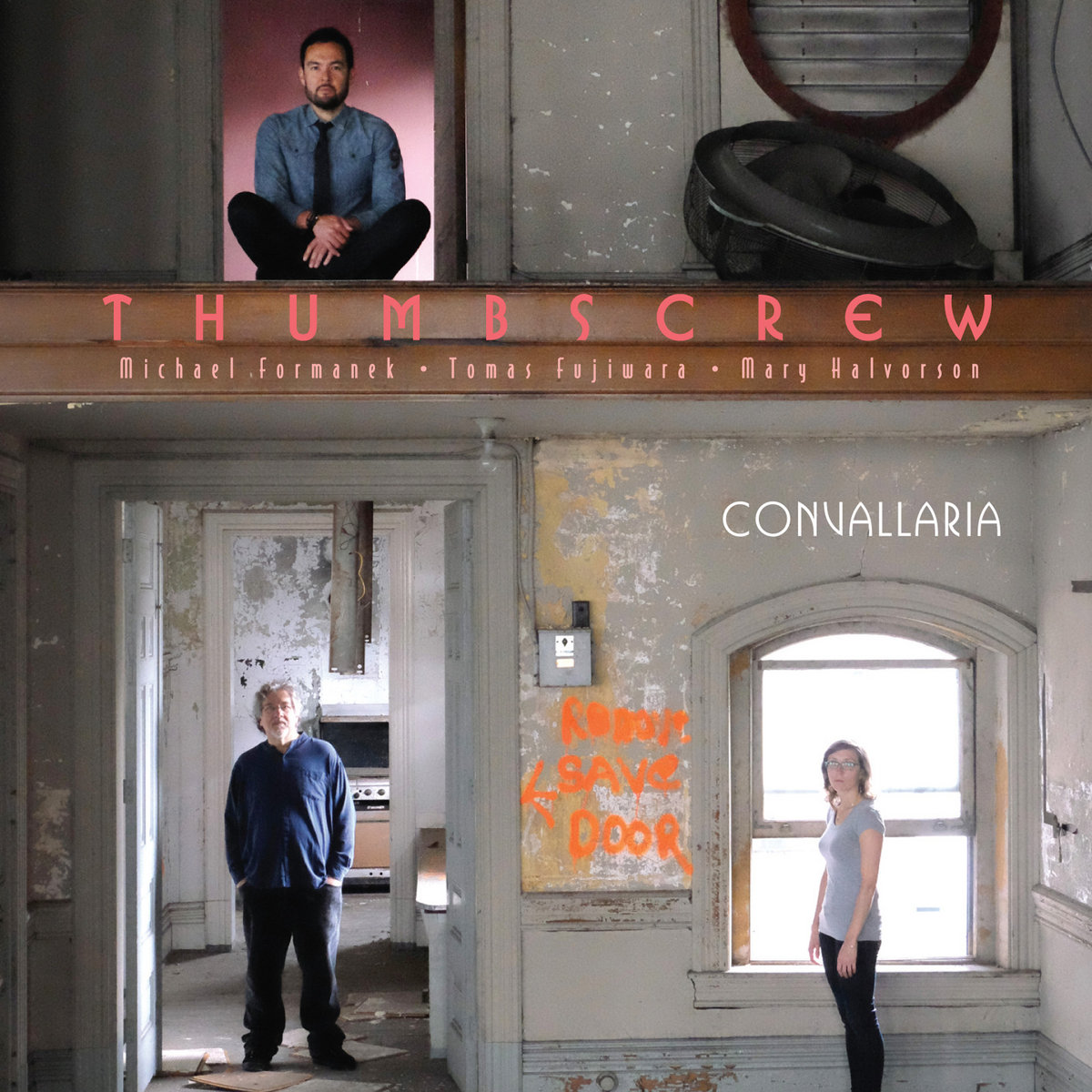
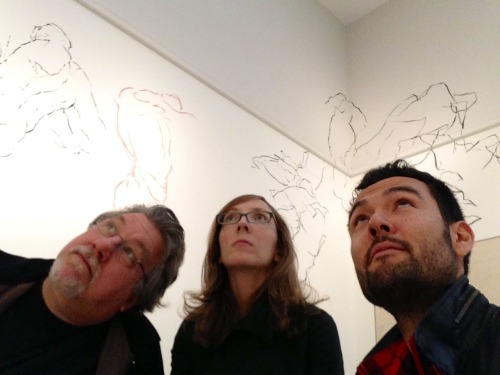
Thumbscrew, the trio of guitarist Mary Halvorson, bassist Michael Formanek, and drummer Tomas Fujiwara, first worked together in 2011 when the bassist subbed in cornetist Taylor Ho Bynum's Sextet. They hit it off from the beginning, first recording as a cooperative trio in 2013; both Ms. Halvorson and Mr. Fujiwara are now member of Mr. Formanek's Ensemble Kolossus (the 18-piece ensemble's new ECM recording is quite impressive).
The Trio's second CD, "Convallaria" (Cuneiform Records), is the result of a two week residency at City of Asylum, an impressive arts community in Pittsburgh, PA. For three such busy musicians - each leading his or her own ensembles - to have the opportunity to work, compose, improvise, and play together was crucial. In the words of Ms. Halvorson, "It really helped us to take the band to the next level."
The beneficial time spent together is in full evidence on this often-breath-taking collection of songs. With 11 tracks and a generous 73+ minutes of music, the album is impressive in its scope, its variety of sounds and rhythms as well as the intuitive interactions. For the most part, the trio keeps melody front-and-center - the album opener, "Cleome", which like the title of the session is named for a flower (cleome is best recognized as "spider flower" while convallaria is "lily of the valley"), builds off the power of Fujiwara's conversational drumming, Formanek's thick bass lines, and Ms. Halvorson heady combination of chords and single-note runs. The guitar solo buzzes as the drummer roils right alongside. "Convallaria" has quite the bounce in its step with both Ms. Halvorson and the bassist working off Fujiwara's rock-solid drive (he does have fun varying the tempo at times).
Those of you who know these three musicians as being involved with "free" music may be surprised how music of this music has steady rhythms. The songs don't swing per se but there are several tracks that absolutely rock out. "Barn Fire Slum Brew" opens with a funky stop-and-start before Formanek and Fujiwara propel the piece forward. After a subdued opening with the bass and guitar playing a handsome melody (excellent counterpoint from the bass), the trio moves "The Calendar and the Weathervane" in a "metal" direction with a hardy fuzzed-out solo from Ms. Halvorson. She and the rhythm section stop abruptly and, after a short silence, return to the peaceful tone of the opening section. The program closes with a medium-tempo ballad, "Inevitable", that includes a guitar solo which moves in and out of "bent" notes and chords while the bass lines move in and around the solo. Fujiwara illustrates how best to employ brushes with both forcefulness and gentleness.
Thumbscrew makes thoughtful music, songs and sounds that both challenges the listener and rewards him or her. It is easy to discern the comfort level that Mary Halvorson, Michael Formanek, and Tomas Fujiwara have each other, that they can be "themselves" in a cooperative trio while creating a "group" sound. "Convallaria" is engrossing music that bears repeated listening.

 Posts
Posts


 Rez Abbasi was approached in 2017 to create a new soundtrack for the classic Indian silent film "A Throw of Dice" - it's the third in a trilogy of movies created by German director Franz Osten (1876-1956) and is based on the Sanskrit classic "The Mahābhārata". Osten, enticed to India in 1924 by Himansu Rai, a European-educated businessman with a love of motion pictures. They made a series of silent films and then were in the forefront of "talkies" creating over three dozen movies in the 1930s to sate a growing audience. Osten returned to Germany as World War II began to rage across Europe; he never made another film but is still famous in India as one of the forefathers of "Bollywood".