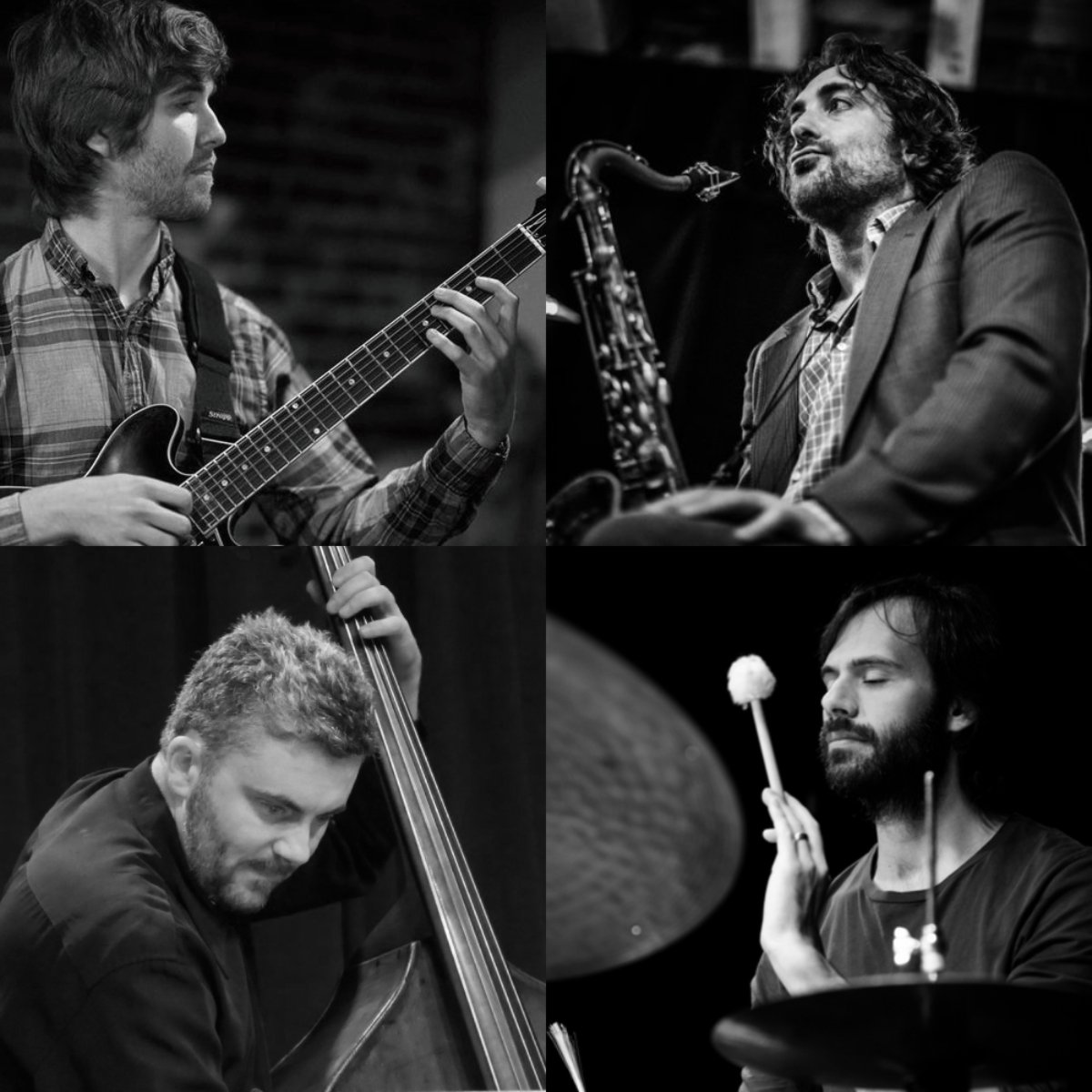
Although best known for his work in saxophonist Noah Preminger's Quartet, guitarist and composer Max Light is just now climbing into the spotlight. His debut album, "Herplusme" (Red Piano Records), was a trio date recorded in 2018 but not issued until February 2020, just a month before the COVID-19 Pandemic shut the door on touring musicians (and the rest of us). He'd already recorded two live albums with trumpeter Jason Palmer, two studio albums with Preminger's ensemble, and albums with Yong Lee, Kevin Sun, Chris McCarthy, and others. Last year, SteepleChase Records released "Songs We Love", a collection of 14 tunes (mostly standards old and new) performed by Preminger and Light––it's well worth seeking out for the delightful conversations the two musicians over the course of 65 minutes. When producer and label owner Nils Winther offered Light the opportunity to record his second album as a leader, it was obvious from the get-go the guitarist would reach out to Preminger.
In fact, the new album, "Henceforth", is the Noah Preminger Quartet (bassist Kim Cass and drummer Dan Weiss fill out the lineup) recording a program of Light originals save for the tenor saxophonist's "High or Booze" that closes the recording. One can hear that this is a "working ensemble" as the band has no trouble making each song sound fresh and alive. The album opens with "Barney and Sid", a medium piece that has a touch of funk in its rhythm and angular melodic lines. After an unaccompanied guitar opening statement, and feeding off the band plays through the theme and then into the tenor sax solo. Preminger has the time and the talent to truly develop his solo, working up a sweat over several minutes. Light is next, picking up on the energy of the previous solo and feeding off the insistent rhythms.
The title track is next. The rhythm lopes along giving the piece an "Americana" feel. As the four musicians move through the theme, the music picks up in intensity (pushed by the thrashing drums) before moving back to the gentle lope (listen below). Check out how both Cass and Weiss move in and out of the foundation as Light builds his intense solo. The bass solo is impressive for its power, its playfulness, and melodic flourishes. Later in the program, "Animals", originally composed as an assignment in college, is a mature ballad––the guitar solo flows like a mountain stream while the rhythm section offers gentle support (Weiss on brushes, Cass playing counterpoint). "Half Marathon", so named for the John Coltrane piece "26-2" that influenced it, gives Light the opportunity to strut his stuff before Preminger jumps into the high-speed dance.
"High or Booze" is the final track. It has a strong, well-developed, melody (no mere blues, this) that leaves room for an emotionally rich tenor sax solo and a fiery guitar spot (it's a joy listening to the rhythm section interact with the soloists and each other.
Listen to "Henceforth" several times before passing judgement. Max Light has created an excellent quartet recording filled with substantial melodies and spirited playing. Having listened to Noah Preminger live and onstage for the past 14 years, it's a joy to hear how he has matured as a musician to the point of possessing his own sound. Kim Cass and Dan Weiss are excellent throughout (no surprise there). A major step forward for young Mr. Light!
Newvelle Records, the American-French collaboration that has created an amazing series of modern jazz vinyl albums over the past six years, is just beginning to release some of those albums on their new digital label. Earlier in 2021, the label released three albums (two new) including the brilliant 61-track tribute to the late pianist Frank Kimbrough plus two duo albums, one by bassist Skúli Sverisson and guitarist Bill Frisell (which had been released on vinyl in 2018) as well as one by vocalist Becca Stevens with label co-owner/ pianist Elan Mehler.
Now, as the year closes, the label has chosen to release three more of the original vinyl albums in a digital format, one from each of their first three "seasons". Note that the musicians own the rights to the music after two years –– artists who the label has recorded have issued their Newvelle Lps on their own labels including bassist Ben Allison, saxophonist Tim Berne, and guitarist Lionel Loueke (in both a trio session and a duo date with pianist Kevin Hays).
Let me also state here that when you visit the label's website –– www.newvelle-records.com –– you'll also see that there are recordings of artists from New Orleans (among them, the late Ellis Marsalis as well as vocalist Irma Thomas) plus an "international artists" collection that includes vinyl releases by guitarist Gilad Hekselman (Israel) and trumpeter/flugelhornist Nadje Noordhuis (Australia).
The label's first vinyl release was "Meantime" featuring pianist Frank Kimbrough in a quartet/quintet setting with tenor saxophonist Andy Zimmerman, bassist Chris Van Vorst Van Beest, drummer R.J. Miller, and, on several tracks, trumpeter Riley Mulherkar. The program, expanded from nine to 12 tracks on the new release, features both new and older originals plus several standards. Zimmerman is a new voice for me –– he's been based in Chicago for several decades and made his debut as a leader on Newvelle in Season Three, a quartet setting with trumpeter Dave Douglas, pianist Kevin Hays, and bassist Matt Penman. The saxophonist and leader work well together really nicely (check out "Alabama Song" below), his subdued attack on the sax similar to the gentle explorations of Kimbrough. Adding Mulherkar to the mix, especially on the swing take of Andrew Hill's "Laverne", is a treat as the trumpeter gets to display his delightful bop chops. The rhythm section is responsive throughout while the pianist's inventiveness, as usual of his albums, shines brightly.
There's much more –– if you are a fan of Frank Kimbrough's music and did not spring for the vinyl (mea culpa), this is a very welcome addition to your collection. Go to https://newvellerecords.bandcamp.com/album/meantime and purchase this delightful album.
Here's the opening cut:
From Newvelle's second season comes "Cuban Nocturne", a solo piano release featuring the impressive Cuban-born now American artist Aruán Ortiz. The pianist, a native of Santiago de Cuba, started out on violin and viola as a youth but switched to the keyboard after moving to Havana in his late teens to attend school. He went on to study in Barcelona, Spain, before moving to the Berklee school in Boston, Ma, on a full scholarship. Ortiz has recorded nine albums as a leader or co-leader but "Cuban Nocturne" is his first program of classical Cuban music. Pieces from the composers Ignacio Cervantes (1847-1905), Antonio María Romeu (1876-1955), Ernesto Lecouna (1895-1963), and Catalan composer Federico Mompou (1893- 1987) plus the title track which Ortiz created for the 2015 movie "Sin Alas (Without Wings)" as well as two short original "Interludes". It's a stunning, delightfully impressionistic, 38+ minutes of splendid musicianship, lovely even stately melodies, and certainly well worth your time and money!
From Newvelle's third season comes "Charlie & Paul", an tribute to bassist Charlie Haden (1937-1914) and drummer Paul Motian (1931-2011) created by guitarist Steve Cardenas with a ensemble that features Loren Stillman (alto saxophone), bassist Thomas Morgan, and drummer Matt Wilson. The program includes five compositions from Motian (three of which are premiered on this album) and five from Haden (one of which, "There In a Dream", is not on the vinyl version). All four musicians had worked with one or both of the two Masters (Cardenas is the only one who played with both) and the listener can tell that by the way they dig into the material with love, passion, respect, and joy. The music runs the gamut from Country-rock ("Prairie Avenue Cowboy") to a Spanish-Latin feel ("La Passionara") to "freer" associations ("Riff Raff") to a gentle acoustic guitar driven folkish tune ("For Turiya") to "electric bebop ("For the Love of Sarah") and elsewhere. The music is a treat from start-to-finish and the digital sound quality is first class! The crisp, clean, tones of Cardenas's acoustic guitar as well as Morgan's soulful bass work stand out as do the delightful percussion play of Wilson and Stillman's melodic, cool, alto sax lines. Such an excellent ensemble, splendid material, and enchanting musicianship.
Toronto, Canada-based guitarist Ted Quinlan has had a successful and busy career spanning almost four decades. A graduate of Berklee College of Music in Boston, MA, the guitarist, composer, and educator has played with Chet Baker, Freddie Hubbard. organist Jimmy Smith, Dave Holland, and a slew of Canadian musicians. He's the longtime head of the Guitar Department at Humber College in Toronto. His debut album was issued in 1998 and followed that 11 years later with a trio recording. In 2010, he co-led a recording date with pianist Brian Dickinson; for the most part, Quinlan takes his time to plan his recordings. His discography shows a baker's dozen or more sideman dates over the past 20 years.
Late in Fall 2019, ADDO Records issued "Absolutely Dreaming", a nine-song program that features Quinlan's longtime friends and associates Kieran Overs (bass), Ted Warren (drums), and pianist Dickinson. On initial listen, it may remind some of the music John Abercrombie made on ECM with his quartets featuring pianists Richie Bierach and Marc Copland. Quinlan, like Abercrombie, has a warm electric sound and is very melodic. But, listen harder. Listen to how the other musicians support and move the music forward, how they engage in conversation with the leader and each other. Pieces like the opening "Cheticamp" (named for a town on Cape Breton) and the title track pull the listener along. This music is a soundtrack for colorful dreams, for long walks into the woods and back again, along the banks of rivers and lakes. It's far from soporific. Listen to the harder beat and thicker guitar tones of "X Marks The Spot", goosed higher by the raucous drumming. Dig the bluesy feel of "Twilight Sky" – the opening guitar tones bring Larry Carlton's sound to mind plus do not ignore the fine bass work, the splendid cymbal work, and Dickinson's rippling piano phrases. Even on the handsome ballad "Babylon" (named for the town on Long Island), the musicianship keeps one alert throughout,
Photo: Bill Beard
Quinlan strums an acoustic guitar to lead in the final track "La Bionda", a really lovely way to close an excellent program. "Absolutely Dreaming" is 62 minutes+ of music that will excite you, calm you, warm you, and make your day better. Intelligent, charming, and very musical, the album shows Ted Quinlan not only to be a fine guitarist but also an excellent composer and bandleader.
Bassist and composer Massimo Biolcati may be best known for his work with guitarist Lionel Loueke and drummer Ferenc Nemeth in the trio Gilfema (which morphed into the Lionel Loueke Trio when the guitarist signed with Blue Note Records). Biolcati met the other two musicians when all were in attendance at The Berklee College of Music; all three went to the Thelonious Monk Institute of Jazz in Los Angeles. By then, they are a working trio landing a contract in 2004 with ObliqSound Records where they recorded two albums (and Loueke issued his first solo album on which the other two appeared). Gilfema will issue a new album later this year. In the meantime, Biolcati has been busy as a sideman and producer. He's worked with the Hornē Electric Band, drummer Matt Slocum, and Luciana Souza (among others).
"Incontre" (Sounderscore) is Biolcati's first album as a leader since 2008's "Persona" (ObliqSound) and features Dayna Stephens (tenor and soprano saxophones), Sam Yahel (piano, organ), and Jongkuk Kim (drums). The nine-song program features four originals by the leader, four standards, and Dave Holland's "How's Never" (which the composer first recorded in 1995 with the Gateway trio). The album opens with Biolcati's "Hello, I Lied" which the composer with a circular bass line – the snap of Kim's drums, the melody "sung" by the tenor sax, and the sharp funk of Yahel's piano solo moves forward with delight. Stephens steps out into his solo with the bassist egging him on before the piano and drums kick back in. The saxophonist breaks down the melody into short, rhythmical, phrases before heading back to the main melody. The bassist takes the song out the way it began.
The next four tracks are the "standards." First up is Thelonious Monk's "Boo Boo's Birthday" which dances along on the bassist's active "walking" lines and Kim's delightful dancing snare drum. Charlie Chaplin's oft-recorded "Smile" finds Stephens on soprano sax and Yahel on organ. The piece has a funky feel with interactions between the front line and the rhythm section that keeps one alert. The quartet then moves into "Everybody Wants to Rule The World" (from Tears For Fears) and really have a great time playing around with the changing tempos. Listen to the dancing drums and bass beneath Yahel's piano solo; Kim then engages in a dialogues with Stephens during the sax solo while the pianist and bassist keep the song moving. Yahel goes back to organ for Charles Mingus's "Duke Ellington's Sound of Love" – the inherent blueness of the piece shines right through the slow shuffle beat while the organist moves through the melody. Stephens's muscular tenor solo brings Coleman Hawkins to mind.
Photo: Esther Cidoncha
The balance of the recording has three tunes from the bassist and the Holland piece. The title song is a handsome ballad with an emotionally rich melody and excellent solos from Stephens, Yahel, and Biolcati. "How's Never" rides forward on the snappy drums and bass with Yahel's organ sounds meshing nicely with Stephens's singing soprano sax. "Fellini" is another fine ballad piece with a nicely-sculpted melody line (first played by the tenor saxophonist). Yahel's acoustic piano solo creates a short yet finely painted portrait before Stephens takes over and creates his own strong audio painting. The album closes with "Birthday Song, Almost" – this melody is also well-formed, allowing the soloists to build intelligent solos and the rhythm section to take chances with the tempo, the accents, and the intensity. After Stephens's fine tenor solo, Kim takes over for a solo that raises the heat without over-baking the song. In fact, the tune and the album end on a high note.
"Incontre" is a delight from start to finish. All the musicians ask is that you listen with open ears and open minds. The material Massimo Biolcati chose for this session covers a lot of territory without getting mired in one genre. The intelligent musicianship and the bright sound quality both serve to remind the listener that creative music can be fun, exciting, contemplative, and rewarding for all involved.
Truth be told, nothing thrills this writer than receiving albums by artists whose music i have never heard and being very impressed by their efforts. Guitarist and composer Phil Schurger, a native of Indiana (now living in Fort Wayne), has just issued "The Waters Above", his second album in 12 months for the Chicago-based Ears & Eyes label. The recording features his regular band including alto saxophonist Greg Ward (vying for the 2018 Most Valuable Player as he had appeared on a series of albums this year), bassist Jeff Greene, and drummer Clif Wallace. The group has been together since 2012, working on a collection of Schurger originals he composed from 2006-2011.
Upon initial listens, I heard shades of John Abercrombie and Pat Metheny in the leader's guitar tone as well as his long-form compositions (two of the six track are under 10 minutes). There is an airiness to the group's sound and an intensity to the performances. The warmth of Ward's alto is a fine complement to the clear electric guitar tones. Greene and Wallace provide splendid support with both pushing the rhythms forward (listen to the bassist's melodic lines beneath the solos and how the cymbals splash all around). Schurger's favorite guitarist is the late Jerry Garcia and, if you listen closely on pieces such as "Motion" and "Scorpio", you might hear that influence on some of his phrases. Do pay attention to how Ward plays with such intensity yet never goes "out" or plays long stretches in the alto's higher ranges.
Photo: Tim Wright
Several of the songs have a meditative quality (the guitarist has written about how certain forms of meditation aid in his compositional process - read here) and rest easily in the ears and mind. "Anikulapo" moves forward on the rolling rhythms from the bass and drums, the melody lines expanding as the song goes from section to section. I could listen to "Inclusion", with its melody of longer notes over gentle rhythms, guitar chords, and thick bass tones, on an endless loop and hear something new each time. Ward's elegant sounds wrap one in a protective blanket and keeps your mind safe from daily distractions.
There is so much to enjoy on "The Waters Above", just don't expect an elongated "blowing" session. The music, the quartet, the composer want you to enter a different soundscape if you are willing to explore. If you are, Phil Schurger and his music will reward you generously.
Bassist and composer Evan Salvacion Levine, a native of New Jersey and now a resident of Chicago, issues his second album as leader this month. "Mestizo" (Shifting Paradigm Records) moves away from the piano trio of his 2016 debut "Unsolvable Problem" (although three tracks on that disk employed a guitarist) to a trio where the bassist enjoys the company of guitarist Matt Gold (SUN SPEAK, Makaya McCraven) and drummer Andrew Green (Twin Talk). Levine creates a program that blurs the lines between folk, jazz, blues, world, and rock musics, and that posits the the guitarist and drummer as equal members of the trio and not just the supporting cast.
The title refers to Levine's heritage as the son of a Filipino another and Father of mixed Irish and Russian descent. Nowadays, the meaning in much of the United States is of mixed Spanish and American Indian. This music does not really have a political agenda per se (only what you wish to read into the title and a tune named "Opposing Forces"). Instead what you hear plus you in on the strength of the fine melodies and musical interactions. Green is a powerful drummer with the ability to create dancing rhythms ("Highways") and kick-butt beats that roar out of the speakers ("Center of Gravity"). That latter tune finds Levine on electric bass where his thick sound and melodic lies benefit from the foundation the drummer creates. Also on that tune, Gold lays down a percussive line (along with the bassist) for Green create a forceful solo. Note how the piece shifts gears and volume levels several times in its 7:40 run. The title tune opens on a quieter note until the bass and drummer kick the piece in the direction of a serious groove. The guitarist holds back but soon is drawn into the rhythmic adventure. "Little Shells" finds Green using his hands to create the rhythms in the opening section of the tune (and adding rattles in the background). While the leader plays a sweet circular bass line, Green begins to prod the piece forward and Gold plays a lively melodic solo. The sound of the song may remind some of bassist Marc Johnson's Bass Desires - no matter what, it's a delightful summer groove.
There is a mature beauty to "The Best Things Never Change", the melody expressed by the guitarist while the bassist plays the counterpoint and the drummer keeps a quiet rhythm on his high-hat. Levine solos first - he's an articulate player and, if you listen closely, you'll hear how the drummer plays along. The trio interaction is so impressive on this ballad, the music moves forward so easily as if the trio was breathing as one. The drum solo near the finish raises the heat level as if the trio was about to move into another song but does not obliterate the gentle mood.
I do enjoy the sounds of guitar-bass-drums trio: whether it be the overwhelming attack of Cream or the subtle approach of Jim Hall, the combination is one with so many possibilities. Evan Salvacion Levine makes music that makes us listen with expanded ears, with open minds, and one imagines it's great to hear the trio live in a club setting. The word "Mestizo" refers to a mixture: the album "Mestizo" does just that, mixes influences and goes in many delightful directions.
The best way for me to help you understand just how attractive and seductive the music on "One Minute Later" is to me, don't read on yet just listen to the opening track.
This is the fifth album by guitarist and composer Diego Barber, the fourth to appear on Sunnyside Records, and each is a revelation. Barber, who hails from the Canary Islands (a Spanish archipelago off the northwestern coast of Africa), puts himself into musical situations that explore his fascination with sound, rhythm, and melody. For his new recording, he is joined in the studio by the rhythm section of Ben Williams (bass) and Eric Harland (drums) plus the amazing young percussionist Alejandro Coello who adds marimba, vibraphone, tympani, gongs, crotales, tam-tam and kalimba to the proceedings.
The clean, clear sound allows the listener to listen to how the musicians interact. Whether it's the "Mrs. Robinson"-like groove of "Dilar River" or the dancing grooves of "Big House", the music invites you in. Even though Barber plays acoustic guitar throughout the album, the intensity with which he leads the band stands out. Harland is such a "joyous" and, yes, "busy" (at times) drummer, his groove infectious that one can't help but smile. Williams is the foundation on the album; at times, he seems buried under the sound but, if you pay attention, his solid work helps push the music forward. There are moments throughout when it seems like the quartet is a percussion ensemble, rumbling along or steaming ahead. There's also pieces such as "Atlas" where the melody dances atop the powerful rhythms supplied by Harland and amplified by Coello's percussion array (one can hear marimba, vibes, crotales, and the tympani as the piece flows forward). Beauty exists here as well. The splendid solo guitar ballad that closes the album, "Elvira Maria", is a sound portrait of love, dedicated to the guitarist's girlfriend.
The music bears the inspiration of the Spanish province of Granada (southern Spain along the Mediterranean sea). Several of the tracks bear the name of mountains ("Mulhacen" and "Veletas's Peak") while the album title refers to a passage from the Federico Garcia Lorca's "Poet in New York." The music also bears witness to Diego Barber's intense search for expression through his music and his interactions. He is the leader of the group but is also a member; he doesn't play over Harland, Williams, and Coello but with them and, in the long run, that's what's so attractive about the recording for this listener. Getting lost in the music, putting aside the day-to-day annoyances as the morning sun streams in the windows, "One Minute Later" lifts the spirit ever-so-sweetly. Diego Barber is a technically impressive guitarist but its the heart in his music that really stands out. For more information and more sound clips, go to sunnysidezone.com/album/one-minute-later. Here's one more track to enjoy:
A glance at the cover of the new album from pianist, composer, and educator Laszlo Gardony tells you all you need to know. "Serious Play (Solo Piano)" is his 13th release as a leader and third solo album. If you have ever met the pianist and seen/heard him play, you know the intensity in which he brings to performance and music. That intense nature has a "fun" side, a leaning towards the blues as well as a powerful percussive attack that can leave listeners breathless, But Laszlo Gardony also has a gentle side, one that also exposes his loved for jazz, blues, and classical music. Sound engineer Paul Wickliffe captures that spirit, that power, wonderfully on this recording.
Opening with a powerful, gospel-inflected, reading of "Georgia On My Mind", the music easily draws one in. The power in the piece is in how Gardony gets to the emotional center of the music, gives the listener time to reflect on that, and then opens up, ever-so-gently. There are a few moments when this listener imagined the pianist hushing a crowd at a "rent party"with the "deep blues" feeling in his playing. Next up is John Coltrane's ballad "Naima" - even as Gardony caresses the melody, one can hear the power building in the chords coming from his left hand. As he enters the solo, one can hear the influence of McCoy Tyner in his performance. The "power" builds,, the rhythm of the music is suspended, the notes cascade from the speakers in torrents; at one point, I had to stop the CD to go answer the phone. I reentered the music at the place where the album stopped and, when it started up again, it felt as if I had been dropped into a Steve Reich performance, the percussive nature of the piano, the static bass notes, and the circular melody lines hinting of the composer's work from the 1970s and 80s. Before the piece comes its close, the pianist returns to the melody bathing it now in sounds not unlike the minimalism of Erik Satie.
Those two tracks take up over 33% of the 39-minute program. The title track comes next, a powerful original composition with chords that remind this listener, at times, of Peter Townsend's "Pinball Wizard" interpreted by Bruce Hornsby. And so, if you enjoy solo piano, I leave you to discover the rest for yourself. Laszlo Gardony is wonderfully imaginative, his music conjuring up images of busy urban thoroughfares, starry nights in the woods of New England, of hushed audiences in a concert hall, and so much more. The program closes with "Over The Rainbow", a song which one could see appealing to a young pianist sitting in a practice room in the Bela Bartok Conservatory in Budapest, Hungary, dreaming of new worlds to explore. "Serious Play" does in essence, in fact, and in deed, describe this lovely album down to its resonating final chord. For more information, go to www.lgjazz.com. Here's the title track:
Composer, arranger, and valve trombonist Bob Brookmeyer released his final album late in 2011. Titled "Standards", the recording featured the New Art Orchestra plus guest vocalist Fay Claassen. I had enthusiastically reviewed her 2010 release with the WDR Big Band Cologne ("Sing!"); Mr. Brookmeyer 's album came a year later and was even better (the version of "Love For Sale" is simply stunning).
"Luck Child" (Challenge Records) is her seventh release as a leader and the first time I have heard her sing with a small group (though not the first time she's recorded with one). The recording features pianist Olaf Polziehn, guitarist Peter Tiehuis, and bassist Ingmar Heller plus Ms. Claassen's husband Paul Heller (clarinet, bass clarinet, tenor saxophone on one track).
The repertoire is a smart mixture of standards, songs by contemporary songwriters, and a pair of tunes from her husband. Opening with the title track, a tune from guitarist Leni Stern with lyrics by Catriona O'Daly, it's a handsome melody (influenced by Jimmy Webb) with a stay-strong story. Ms. Claassen has a funky time with Paul Simon's "One Trick Pony" (excellent work from Tiehuis); good choice as it's one of the songwriter's least-covered tunes and is perfect for the vocalist's range. Paul McCartney's "Blackbird" has been covered dozens of times and Ms. Claassen's soulful version is one of the best. The musicians play it fairly straight yet it's the vocal that takes flight throughout.
Other highlights include Kenny Wheeler's "Fay" (written for the vocalist) with her splendid overdubbed vocals taking the parts of an instrumental front line and a deep blues-soaked reading of Duke Ellington's "In a Sentimental Mood" (her high notes are stunning, loud and clear). Her husband contributes "Miniature No. 7", a 60-second piece on which he overdubs a reed section which Ms. Claassen joins while the composer roars along on tenor sax. The other Heller song, "Finding You", is a contemporary love song with another soaring vocal and bright piano solo. Pianist Fred Hersch and vocalist Norma Winstone composed "Song of Life" for a duo album issued in 2003, recording it as a ballad. This version is faster with a rippling guitar solo that gives the piece a Bruce Hornsby feel (one hears that in the lovely choice of chords and releases).
Fay Claassen attempts to blend old and new, hard and soft, happy and sad, doing so in a trip setting that is both comfortable and challenging. There are musical surprises along the way (a sweet version of "Oh Shenandoah" and a good take of Burt Bacharach/ Hal David's melodramatic "A House Is Not a Home"); the vocalist is strong throughout and "Luck Child" succeeds on the strength of her performances, the musicians' interactions, and the variety of the material.
Saxophonist, bass clarinetist, educator, and composer Roxy Coss has a new album, her third as a leader and first for Posi-Tone Records. "Chasing the Unicorn" features six original pieces plus works by Joe Henderson, Wayne Shorter, Lionel Loueke, Lennon & McCartney, and Willie Nelson. With her regular band, composed of Alex Wintz (guitar), Glenn Zaleski (piano), Rick Rosato (bass), and Jimmy Macbride (drums), the sounds explode out of the speakers with great urgency and high spirits.
The title track opens the album with the leader on soprano sax but also overdubbed tenor sax and bass clarinet. That "full" sound plus strong solos from Ms. Coss, Wintz and Zaleski as well as the intelligent arrangement is rewarding for the listener. The tenor sax leads the way on another original "You're There", the music pushed along by Macbride's active drumming. Ms Coss's solo rides the percussive wave. Wintz and Zaleski offer good counterpoint as the solo continues. The melody of "Unwavering Optimism" moves upward throughout yet notice the step down as the band moves into the solo section.
As for the non-original pieces, Loueke's "Benny's Tune" brings back the bass clarinet in a supporting role as the band explores the rhythmic melody line. The interweaving of piano and tenor sax while Wintz joins the rhythm section catches the ear as does the guitarist's high-energy solo. When Ms. Coss re-enters for her tenor solo, she dances atop the bouncy rhythms. "Oh Darling" (from The Beatles "Abbey Road") maintains its bluesy feel but with a sophisticated touch, not unlike a David "Fathead" Newman approach to a "pop" tune. The Quintet darts through Joe Henderson's "A Shade of Jade" with Ms. Coss's tenor leading the way. Strong solos all around from the front line on the hard-bop track. Wayne Shorter's lovely ballad "Virgo" puts the bass clarinet up front, a classy move, and Ms. Coss's solo is quite impressive. But, pay close attention to the work of Zaleski, Rosato, and Macbride as they are quiet yet active in support. The album closes with Willie Nelson's "Crazy" - the tenor solo is reminiscent of both Coleman Hawkins and Ben Webster in tone and attack. Wintz's guitar solo stands out as well.
Photo by Anna Yatskevich
"Chasing The Unicorn" follows Ms. Coss's "Restless Idealism" (Origin Records) release by 15 months yet feels like a giant step in her career. One can hear in the maturity of the compositions, in her development on both the soprano sax and bass clarinet, and her work as a bandleader. This is a group you'll want to see and hear. Each member plays with strength and intelligence, adding to the songs in many different and often subtle ways. The faces of contemporary music are always changing, more young people are getting involved (even now, at a time when the business end of the "business" can be frustrating), and we are hearing news way to approach both tradition and change. Give a close listen to Roxy Coss and this ensemble.
I first met guitarist, composer, and educator Amanda Monaco when she played in my hometown early in the new Millenium as a member of The Lascivious Biddies, a quartet that combined witty lyrics, strong vocals, and sharp musicianship. Turned out that Ms. Monaco has grown up in nearby Wallingford CT and had been schoolmates with tenor saxophonist Wayne Escoffery and pianist Noah Baerman. After leaving the Biddies in the mid-2000s, she has led several ensembles, released four albums as a leader, and built upon her teaching career.
"Glitter" (Posi-Tone Records) is her fifth release and finds her leading an ensemble that features Lauren Sevian (baritone saxophone), Gary Versace (organ), and Matt Wilson (drums). Just looking at the lineup and several of the song titles ("Gremlin From the Kremlin", "Mimosa Blues", "The Mean Reds"), one gets the feeling the listener is in for a good time.
downtownmusic.net
And this truly is a good time. Opening with the swinging "Dry Clean Only", this band digs in and lets loose (yes, that's possible). Keeping the solos short, the song has an urgency that's hard to resist (plus, who swings harder than Matt Wilson?) Ms. Sevian is a versatile player whose solos really dance (as she does on "Mimosa Blues" and Tommy Flanagan's "Freight Trane"). Versace's roller-rink organ introduces "Gremlin..." (check out the martial drums as well) - the Eastern European-style melody and chord changes open up to playful solos sounding like a Lieber & Stoller tune from the late 1950s mixed with Micky Katz. "The Mean Reds" also could have come from the '50s, the organ splashes and "rocking" guitar riffs being pushed along by Wilson's splashy cymbals.
There is a serious side to this fun session. "Theme For Ernie", a Fred Lacey composition recorded by John Coltrane in his Prestige Records, is a lovely ballad (amazing how Wilson can play so softly and still be integral to the music) with lovely solos from baritone, guitar, and organ (although Versace does dance through his chorus).
Best advice about "Glitter" is to enjoy the ride - no doubt that these four musicians are having a blast. This is the best and "loosest" I have heard Amanda Monaco play. That's not a slam against her earlier work. This program works so well because of the temperament and talent of the ensemble as well as how the composer understands how to let her music "breathe." Play it loud and relax. Just maybe the world is not coming to an end.
One of the joys of listening to the music of saxophonist, composer, conceptualist, and producer David Binney is that you can always "expect the unexpected." You know that he always works with top-notch rhythm sections and pianists plus brings in people to join him on the front line who are leaders in their own right. The "unexpected" parts of this equation are his compositions, arrangements, and improvisations, all of which he does with great intelligence and passion.
His new album, "The Time Verses", is his ninth as a leader or co-leader to appear on the Criss Cross label (based in The Netherlands). This is the sixth Binney release on the label to feature drummer Dan Weiss, fourth to feature bassist Eyvind Opsvik, and third with pianist Jacob Sacks. These musicians, who appear together on Binney's 2010 "Aliso" album) are Binney's "regular" band and, on numerous Tuesdays over the past seven years, the ensemble that has played alongside him at New York City's 55 Bar. Like Duke Ellington, Miles Davis, John Coltrane, and other artists who maintained "working bands", Binney composes to the strengths of his musicians and knows they are up to the challenges he creates for them.
The recording is a suite of long pieces and short interludes that follows the composer through a "day in his life", a day that includes a gig at "Fifty Five" (celebrated in song near the end of the day and the program). The album opens with "Dawn", a short (.26 seconds) synthesizer "sound sculpture" that leads directly into "Walk" which puts into music a person's thoughts while walking through a city. The drums and bass set a good pace but soon the piece takes a turn, still moving forward on the strength of the melody line. A child's voice pops up during Opsvik's arco bass solo and the quartet then moves in a new direction for Binney's lengthy and fascinating solo.
Vocalist Jen Shyu joins the quartet for "Seen"; she sings her lyrics written for an instrumental that Binney composed years ago but had yet to record. It's a lovely ballad with solos from Opsvik (a very melodic bassist) and a powerfully emotional turn from the leader. The gentle vocal helps to calm the emotions as the music comes to rest. Later in the program, alto saxophonist Shai Golan adds his musical voice (for just a moment) to the thematic section of "Where Worlds Collide", a episodic composition with numerous time changes and shifts plus splendid solos from Binney and Sacks. But, make sure to listen to the melodic and powerful drumming of Weiss.
The music that one hears on "The Time Verses" contains many emotions, compositions that invite joyful interactions as well as thoughtful solos, and beautifully constructed melodies. Since his recording debut in 1989, David Binney has matured greatly as a person musician, composer, arranger, producer, and bandmate. Arguably, he is one of the finer contemporary composers in the creative music community. His albums bear repeated listenings , challenging the eager listener on multiples levels.
Speaking of sonic delights, one should partake in a deep drinking in of "Trickster", the new album from guitarist and composer Miles Okazaki and his first for Pi Recordings (although he has participated on numerous recordings for the label). On initial listen, you cannot help but hear the influence of saxophonist Steve Coleman, not only because the guitarist has worked with the MacArthur Fellow for the past eight years alongside the rhythm section of Anthony Tidd (electric bass) and Sean Rickman (drums) but also the majority of these original pieces, like his mentor's compositions, build their melodies off of the powerful rhythms. "Mischief" displays a Brazilian Bossa Nova influence while the fiery "Black Bolt" has the intensity of Ornette Coleman's electric music. The work of pianist Craig Taborn shines throughout, each of his solos goes in unexpected direction, and he also helps to create the foundation for the pieces. Listen to how he and Rickman lock in on the high-powered "The West."
NYTimes.com
Several of the pieces have a palpable tension; whether it's the gun-shot snare drums on "The Calendar" or the prog-rock funk of "Box In a Box", the music has an edge. The guitarist dances atop the bouncy rhythm section (at times, reggae-like) on the latter track. Also, check out how Taborn creates his solo off those serious rhythms. "Eating Earth" take its time to develop, the slow melody unfolding from guitar and piano lines with Tidd's deep bass notes setting an ominous tone. When the drummer enters, the bassist creates a thick yet nervous bass line for Taborn to slowly maneuver the melody, Okazaki's quiet plucking acting as a second percussionist.
The ultra-funky "Caduceus" close the program, dancing in on a bass line that would not sound out of place on a Bootsy Collins records followed by a funky guitar lick - the piano counterpoint opens the door for the drums and the quartet literally hurtle forward. The clarity of Tidd's notes mixed with the crackling work of Rickman gives Okazaki and Taborn a deep cushion to trade choruses.
"The Trickster", like the origami figures that grace the album cover art, has many folds and shapes, the music drawing from many influences. Play it loud, let the low notes of Anthony Tidd's bass rattle your speakers, the drums of Seth Rickman shakes the windows, Craig Taborn's piano notes fly around your head, and the percussive attack of Miles Okazaki dig into your chest. And, you can dance to it!
The Fall 2016 Concert Season at Firehouse 12 begins this Friday (9/16) with an appearance by the Ben Wendel Group. The tenor saxophonist, bassoonist, and composer may be best known for his work with Kneebody; he appeared at the Elm City venue three times including in a duet with pianist Dan Tepfer, as part of Linda Oh's Sun Pictures group, and with his friends in Kneebody. He's a busy musician and producer - I saw him recently subbing for Donny McCaslin in Maria Schneider's Orchestra and he fit in nicely with the ensemble.
Wendell is touring on the strength of his new album (just came out last week) "What We Bring", his debut on Motéma Music after three releases on SunnySide Records. The recording features Gerald Clayton (piano), Joe Sanders (bass), Henry Cole (drums, and, on two tracks, Nate Wood (percussion). Clayton and Sanders will be along for the New Haven gig while Wood will man the drum set.
What a delight the music is on the new album. Six originals and two fascinating covers, one of Miles Davis's "Solar" (which closes the recording) and a lovely reading of "Doubt" by the duo known as Wye Oak. From the opening moments of "Amian", the quartet (and, in this instance, Wood) are firing on all cylinders. Sanders and Cole (who is a member of Miguel Zenon's Quartet) set a throbbing rhythm while Clayton rumbles underneath. During Wendel's solo, the pianist is silent while the tenor flies above the fray. If you play close attention, you can hear the overdubbed reeds as well as the percussive piano. The melody of "Fall" rises over a funky beat. Clayton and Wendel share the melody and, at the end of the verse, they each take a quick solo turn. Clayton takes off into a rollicking, dancing, solo - when the tenor, one hears a section that is reminiscent of Keith Jarrett's European Quartet (Jan Garbarek, Jon Christiansen, and Palle Danielson) from the 1970s. One hears that in the opening of "Spring", in the sprightly melody line and how Clayton jumps into his solo over the active brushes and fundamental bass.
There's a hint of Caribbean rhythm on "Song Song" while the melody dances atop the bells and bouncing bass lines (acoustic bass and Clayton's left hand). "Soli" charges out of the gate thanks to the forceful drumming yet it's quite a pleasure to hear how the four musicians vary the dynamics. "Austin" is a such a pretty piece, the articulated piano lines and the breathy tenor create an atmosphere of gentle contemplation. Clayton is the perfect foil throughout the record, his choice of notes and chords serve the songs so well and his solos are so smart. Because Sanders and Cole are so adept at creating the foundation for ever song, both the pianist and saxophonist are free to explore.
The splendid interpretation of "Solar" brings the album to a close on a rousing rhythm. Just listen to how Cole pushes the piece away from its hard-bop roots and into new territory, one marked by the influence of hip hop. "What We Bring" is modern music, celebrating the tradition as it expands its territory. Ben Wendel has an expansive mind, attracting musicians to his vision who enjoy taking the music in unexpected and often exciting directions. This album is a delight from start to finish.
The Ben Wendel Group plays 2 sets at Firehouse 12 with the first at 8:30 p.m. and the second (separate admission) at 10 p.m. For more information, call 203-785-0468 or go to firehouse12.com.
As luck would have it, alto saxophonist, composer, and the newly appointed Director of Jazz at Princeton University, Rudresh Mahanthappa brings his Bird Calls quintet to The Side Door Jazz Club in Old Lyme on Friday night, performing his first set at the same time as Ben Wendel will be playing in New Haven. Joining him will be three of the four musicians who recorded the 2015 ACT CD that gives the band its name; they include pianist Matt Mitchell, bassist François Moutin, and the impressive young trumpeter Adam O'Farrill. Replacing drummer Rudy Royston will be Dan Weiss so there will be no loss in the powerful drive that propelled the band on the album. The music, based on the leader's study of the music of alto saxophonist Charlie "Yardbird" Parker (the subtitle of the CD is "The Charlie Parker Project"), does not sound like it comes from the 1940s or 50s but has a modern sensibility. Parker always created new songs off the chords of older ones (he loved "I Got Rhythm" for example) and Mahanthappa does the same. It's a smart approach, filled with great melodies and strong solos - this is quite a band.
Doors open at 7:30 p.m. and the first notes should resound at 8:30. For tickets and more information, go to thesidedoorjazz.com or call 860-434-0886. To learn more about Professor Mahanthappa, go to rudreshm.com.
Here's a short look at the album:
On Saturday night, The Side Door welcomes back the Clifton Anderson Sextet with saxophonist Antoine Roney. The trombonist, best known for his work with his uncle, saxophonist Sonny Rollins, has always maintained a career as a leader, moreso over the past several years since his former employer has stopped playing concerts.
The music starts at 8:30 p.m. Check the website for more information.
As the CDs pile up on my desk, one keeps rising to the top. "1954" (Tone Rogue Records) is the second album for guitarist and composer Ricardo Grilli. Grilli, a native of Sao Paulo, Brazil. moved to New York City to study at NYU in its Music and Performing Arts Department (after studying at the Berklee College of Music). He graduated in 2013, the same year he issued his debut album, "If On A Winter's Night A Traveler" (self-issued). He's worked with pianist Jon Cowherd, saxophonists Chris Cheek and Chris Potter, and drummer EJ Strickland. He's a melodic streak a mile wide and it's very evident on both his albums.
The new album features an impressive band including Aaron Parks (piano), Joe Martin (bass) and Eric Harland (drums). The guitarist has supplied with nine originals pieces and, while you may hear a hint of Pat Metheny and Kurt Rosenwinkel every now and then, these compositions are mature, thoughtful, and filled with wonderful melodies. Several of the cuts sound as if there should be a vocalist. Pieces such as "Rings" and the elegant samba "Breathe" are telling a story, one that the listener can get wrapped in. Gentle chords and simple yet effective hand drumming leads in "Rings" - nothing is rushed, the melodic bass lines underpinning the melody played by the leader and Parks, whose phrases rise over the guitar lines and loops. "Cosmonauts" has a classical feel with Martin's sweet solo right at the beginning as the piano plays quiet figures that lead into the melody, one that is effortless and poetic in nature. Harland helps to push the melody forward with his active work while his cymbals splash easily during the piano solo.
There are also moments when the music takes a harder turn. The opening track "Arcturus" (possibly named for the red-giant star in the Boötes constellation) has a strong 4/4 feel in Harland's drums, a pulsating drive that one might hear on a Jeff Beck track (not the guitar sound, though). "Vertigo" features a solid drum attack yet still has a well-turned melody. Harland keeps up the intensity during the piano solo but does not overpower Parks. Grilli feeds off the the drummer's energy and creates a ringing solo, filled with powerful phrases that rise and fall and rise again. There's a "prog-rock" feel to the drums on "Radiance", a tune on which the sustain of the guitar notes give the song a fuller sound. The program closes with "Pulse", a rapid-fire tune that has a hard-bop feel, flying on the scrambling drums and "running" bass lines. Parks digs into his solo, urged on the forceful rhythm section and chunky guitar chords.
Get a copy of "1954" (it's released in early October) and let the sounds and melodies wash over you. Don't look for influences, just listen and you'll hear a confident musician playing with a rhythm section that supports, pushes, and gives its all. Notice the melodies - the majority are truly intelligent, well-drawn, and not flashy guitar riffs that lead to long solos. Ricardo Grilli, remember that name. Judging by his 2 albums, he's a fine composer, a smart player, an excellent arranger, and, chances are good, he'll be making great music for a long time.
From the outset, the new album from guitarist and composer Rez Abbasi & Junction is a barn-burner. "Behind the Vibration" (Cuneiform Records) is an electric ensemble in so many ways. Joining Abbasi is Mark Shim (tenor saxophone, MIDI Wind Controller), Ben Stivers (keyboards, organ, Fender Rhodes), and Kenny Grohowski (drums) - this music has the passion of the guitarist's other bands, from the RA Acoustic Quartet to his Invocation Sextet with Vijay Iyer, Rudresh Mahanthappa, Dan Weiss and others. Abbasi plays expansive solos throughout, riffing like a saxophonist or shredding over the impressive drive of Grohowski (his work underneath solos has such a relentless feel) yet he leaves room for Shim's powerful tenor sax and Stivers' battery of keyboards (especially his excellent use of the organ).
Photo by John Rogers
Pieces such as "Inner Context" and "And I You" show the range of the quartet. The former opens with guitar and organ playing the two-part melody slowing building until the drums enter, then the tenor sax. Shim joins Abbasi in the melody while Stivers, on organ, plays counterpoint. They ease into the solos section with Abbasi playing in a restrained yet intense fashion before Stivers (on B-3 organ) plays a strong solo over his bass lines, the rhythm guitar, and the ever-intensifying drums. Shim gets the "out chorus" (the piece fades out on his spot), the most powerful of the solos. "And I You" features a droning organ, quiet sax, and, under the surface, quiet brush work. The guitarist gets the opening melody while the long middle section is organ chords over the drums. But, the piece ends with the melody, filled out by the tenor saxophone playing in unison (with a touch of harmony) landing on a quiet guitar chord.
John Rogers photo
There are moments when this music is reminiscent of Chick Corea's electric Return to Forever (but, happily, without the occasional bombast). The Fender Rhodes, the Wind Controller, and effects-laden guitar on "Self-Brewing" are pushed forward by Grohowski's active drums - his powerful work often sounds like Billy Cobham's work with the Mahavishnu Orchestra. Listen to how he responds to Abbasi and Shim as they solo on "Groundswell" and they to him. He and Shim (on Wind Controller) spar throughout the latter's solo on "New Ritual", then he challenges Stivers as the organist slams into his solo. The drummer lays back as Abbasi brings the intensity level down at the onset of his solo but the two, pushed by the organ and Wind Controller, are soon picking up the pace.
To my ears, "Behind the Vibration" is warm weather music (although the fiery pieces can certainly heat up a cold winter's night). The dynamic range of Rez Abbasi & Junction is quite impressive; for such electric music, there are a good number of times when the band deals with the interaction of space and silence. Best of all, there are well-developed melodies for the band members to build solos and for the interactions that are at the heart of this music. Rez Abbasi rarely, if ever, sits still and is always worth listening to.
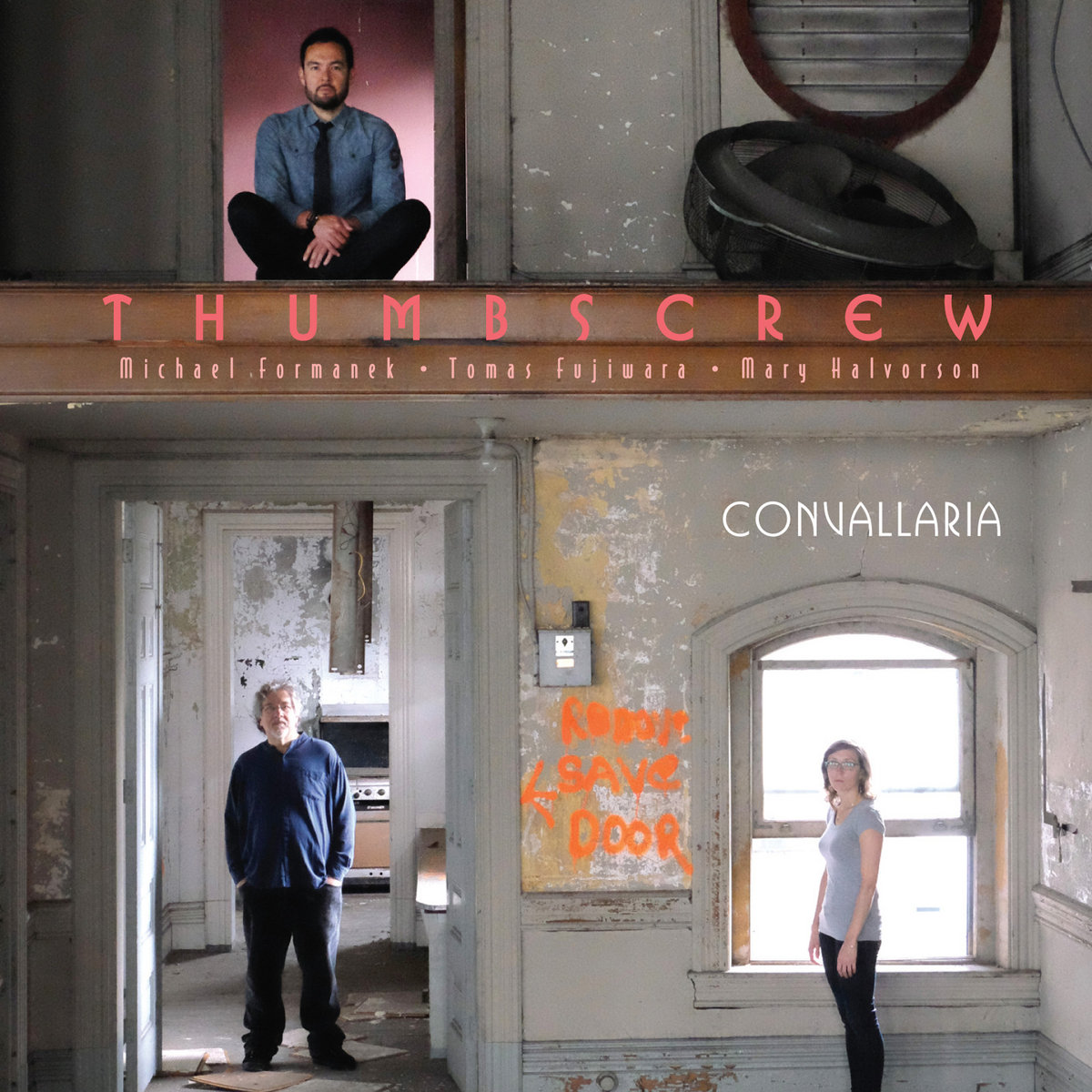
Thumbscrew, the trio of guitarist Mary Halvorson, bassist Michael Formanek, and drummer Tomas Fujiwara, first worked together in 2011 when the bassist subbed in cornetist Taylor Ho Bynum's Sextet. They hit it off from the beginning, first recording as a cooperative trio in 2013; both Ms. Halvorson and Mr. Fujiwara are now member of Mr. Formanek's Ensemble Kolossus (the 18-piece ensemble's new ECM recording is quite impressive).
The Trio's second CD, "Convallaria" (Cuneiform Records), is the result of a two week residency at City of Asylum, an impressive arts community in Pittsburgh, PA. For three such busy musicians - each leading his or her own ensembles - to have the opportunity to work, compose, improvise, and play together was crucial. In the words of Ms. Halvorson, "It really helped us to take the band to the next level."
The beneficial time spent together is in full evidence on this often-breath-taking collection of songs. With 11 tracks and a generous 73+ minutes of music, the album is impressive in its scope, its variety of sounds and rhythms as well as the intuitive interactions. For the most part, the trio keeps melody front-and-center - the album opener, "Cleome", which like the title of the session is named for a flower (cleome is best recognized as "spider flower" while convallaria is "lily of the valley"), builds off the power of Fujiwara's conversational drumming, Formanek's thick bass lines, and Ms. Halvorson heady combination of chords and single-note runs. The guitar solo buzzes as the drummer roils right alongside. "Convallaria" has quite the bounce in its step with both Ms. Halvorson and the bassist working off Fujiwara's rock-solid drive (he does have fun varying the tempo at times).
Those of you who know these three musicians as being involved with "free" music may be surprised how music of this music has steady rhythms. The songs don't swing per se but there are several tracks that absolutely rock out. "Barn Fire Slum Brew" opens with a funky stop-and-start before Formanek and Fujiwara propel the piece forward. After a subdued opening with the bass and guitar playing a handsome melody (excellent counterpoint from the bass), the trio moves "The Calendar and the Weathervane" in a "metal" direction with a hardy fuzzed-out solo from Ms. Halvorson. She and the rhythm section stop abruptly and, after a short silence, return to the peaceful tone of the opening section. The program closes with a medium-tempo ballad, "Inevitable", that includes a guitar solo which moves in and out of "bent" notes and chords while the bass lines move in and around the solo. Fujiwara illustrates how best to employ brushes with both forcefulness and gentleness.
Thumbscrew makes thoughtful music, songs and sounds that both challenges the listener and rewards him or her. It is easy to discern the comfort level that Mary Halvorson, Michael Formanek, and Tomas Fujiwara have each other, that they can be "themselves" in a cooperative trio while creating a "group" sound. "Convallaria" is engrossing music that bears repeated listening.

 Posts
Posts


.jpg)