Showing posts with label Frank Kimbrough. Show all posts

Monday, December 18, 2023

Gift Ideas of the Digital Variety

Not a very clever headline but both these new recordings are worth sharing with friends and fans of creative music!

Photo: Clara Pereira
Truth be told, I've known trumpeter, composer, and arranger Ron Horton for nearly three decades. I first heard his playing as a member of the Jazz Composer's Collective and absolutely loved his 2002 Fresh Sound New Talent recording "Subtextures" (still do––check it out, the sounds are timeless, exciting, and quite adventurous).  We've chatted a few times, most recently in 2021 upon the release of the Newvelle Records collection "Kimbrough", organized by label co-head Elan Mehler upon the death of his former teacher and friend, the pianist Frank Kimbrough.  Horton and Kimbrough were both charter members of the JCC as well as great friends.  Both musicians were aficionados of the music of Andrew Hill (1931-2007)––in fact, Horton helped the older man put together a sextet and material for "Dusk" which was released by Palmetto Records in 2000 as well as 2002's Big Band recording "A Beautiful Day", also on Palmetto. After Andrew Hill passed, Horton continued to play the composer's music in his various groups, including a Dectet and Sextet.

In 2016, the trumpeter brought the Sextet––pianist Kimbrough, alto saxophonist John O'Gallagher, tenor saxophonist Marc Mommaas, bassist Dean Johnson, and drummer Tim Horner (alto saxophoniust and bass clarinetist Marty Ehrlich replaces O'Gallagher on five of the 13 tracks)––into Systems Two studios in Brooklyn, NY.  Newvelle Records usually only releases albums that they record but after hearing this music, Mehler said 
he most definitely release this music.  "A Prayer for Andrew" is a two Lp-set (also available as a digital download) that features seven Hill pieces and six Horton originals.  If you love music that pushes at borders, that roils from the inside out at times or can gently put you in a positive frame of mind, this recording is for you.  It's so good to hear more music from Kimbrough who died suddenly on December 30, 2020.  Listen to how he rolls his solo on Horton's "Home" or how he sets such a torrid pace on Hill's "15-8".  

Photo: Jimmy Katz
Scroll down and listen to the band drive through "Venture Inward", first recorded in 1968 by Hill for his "Grass Roots" album (Blue Note).  The solos, while short, have such power without losing direction.  Andrew Hill's music often flirted with free tempi yet kept moving forward, looking ahead, seeking. Check out "Dusk", a tune with an irresistible bounce to hear how the composer (in this instance, Mr. Hill), plays with the listener's expectations, blending melody and solos in such a whimsical fashion.  The program closes with "Belleza #1" (off of Hill's  2002 Big Band date, a lovely ballad that opens with a fine bass solo that opens up to Marty Ehrlich's handsome bass clarinet spot followed by a lovely piano solo (much of it unaccompanied).  Mommaas leads the rhythm section back in with a breathy, emotional, tenor solo.  He continues to improvise while the rest of the group play the theme. Such a gentle finish to a splendid album.

"A Prayer For Andrew" is not considered a "tribute album" by Ron Horton or his collaborators. His various groups have not only played this music for many years, they also have lived inside it. The spirit of Andrew Hill can be felt strongly when the band plays these songs––it is music that defies genres whie it sings to all of us.

For more information and to purchase the album, go to https://www.newvelle-records.com/collections/shop-newvelle/products/ron-horton-a-prayer-for-andrew for vinyl and/or to https://newvellerecords.bandcamp.com/album/a-prayer-for-andrew for digital.

Listen to "Venture Inward":


Guitarist and composer Anthony Pirog is an ambitious musician who is one of the more adventurous musicians on the modern scene. He rarely if ever repeats himself and sets a new challenge with each project.  Several years ago, the guitarist reached out to fellow players and asked them to create an "ambient" track that he would then improvise over. Many he asked were friends but he also "reached" for and received music from Andy Summers (The Police) and Brandon Ross.  The results can be heard on "The Nepenthe Series: Volume I" (Otherly Love Records).  Even if you are familiar with the guitarist's earlier recordings, chances are good you'll be surprised by these nine tracks.  Because this is an ambient setting, the music is not concerned with "shredding" or technical proficiency; instead, Pirog and partners have created a soundtrack that stands apart from any you may have encountered.


Webster's Dictionary defines nepenthe as "a potion used by the ancients to induce forgetfulness of pain or sorrow" and "something capable of causing oblivion of grief or suffering"––still, this music challenges both the creators and the listener to pay attention and to get lost in the sounds. The program opens with "Aurora" created by John Frusciante (of The Red Hot Chili Peppers); the music floats atop a low-note drone with tones that swell and shrink and electronic "raindrops" back in the mix.  Summers contributes "Inflorescence". The handsome melody Pirog creates over the shimmering guitars and quiet chords has an emotional pull unlike anything else on the album.  In comparison, "Night Winds" (created by Wendy Eisenberg) has a thunderstorm of white noise and static plus a chilling melody line that never resolves. Pirog adds distorted guitar that maintains the mood.

Listen below "Ripples of Light", the track that closes the album. Nels Cline's drones serve as an antithesis to Ms. Eisenberg's darker music. In fact, this music often floats and you can't really separate what each guitarist brings to the music. Why should you?  Just sit back, close your eyes, be surprised, be calmed, and forget the craziness of the world around you.  Creativity takes many shapes on "The Nepenthe Series: Vol. I" so grab your headphones, dim the lights, and explore the possibilities.

For more information and to purchase the recording, go to https://anthony-pirog.bandcamp.com/album/anthony-pirog-the-nepenthe-series-vol-1.

Hear Anthony Pirog with Nels Cline on "Ripples of Light":


Tuesday, December 21, 2021

2021 - Music that Moved, Soothed, Educated, and Inspired (Part 1)

 One gets to a certain point in life, especially if one has been reviewing albums for over five decades, that you realize what it is that really moves you. 2021, and all the craziness that has occurred, the anger, the apathy, the bullshit, the miracles, the possibilities, has been filled with a ton of great music.  Impossible to pick one favorite, never mind 10.  This list is split into two parts: the first list contains the 10+ I chose for the Critics Poll. 

James Brandon Lewis/ Red Lily Quintet – "Jesup Wagon" (Tao Forms) – Great story, great playing, important message, JBL and cohorts (drummer Chad Taylor, bassist William Parker, cornettist Kirk Knuffke, and cellist Chris Hoffman) create sounds soaked in blues and country folk, post-bop and more, into one of the freshest programs of this or any year. 
JBL's new Intakt release, "Code of Being", is also worth your close attention but start here!


Various Artists – "Kimbrough" (Newvelle Records Digital only) –– It's been almost a year since pianist/ composer/ educator Frank Kimbrough passed on and the effects of his passing continue to reverberate through the music. To honor Kimbrough's accomplishments as a composer and educator, producer and Newvelle Records co-owner Evan Mehler (also a former student) gathered 65 musicians, many of whom had played and/or studied with FK. The producer and the musicians spent four days in May in the studio in various formations recording 60 of Kimbrough's composition (one song is recorded twice, one with a vocalist, the other time as an instrumental). Two months, Newvelle released the 61 tracks as a digital download and at a reduced price –– the music is well worth exploring, painting multiple portraits of a composer always looking to create new ways of expressing melody and emotion.


Ches Smith and We All Break – Path of Seven Colors (Pyroclastic Records) - Percussionist, composer, and experimenter Ches Smith first got involved playing Haitian Vodou music over two decades, first as an accompanist for dancers before forming his group and creating new music for a quartet (drums, percussion, and piano) he formed.  That group recorded in 2015 on a small label.  For his second album, We All Break has expanded to an octet, adding a female vocalist, a fourth percussionist, and the evocative alto saxophone of Miguel Zenón. The music is fascinating, hypnotic, the rhythms pouring out of the speakers pushed by the small army of percussionists and pianist Matt Mitchell. Great package (if you buy the CD), so colorful plus informative and you get the quartet album as well!


Kate McGarry & Keith Ganz Ensemble – "
What To Wear in the Dark" (Resilience Music) - Just what one needs in the midst of a dark year is music that teaches us about love, resilience, friendship, creativity, and more.  Ms. McGarry and Mr. Ganz reimagine a number of songs from artists such as The Beatles, Steely Dan, Leonard Cohen, Paul Simon, and others, creating a program that often lads the listener back to the possibility of hope. Not only is Ms. McGarry's voice in splendid shape but also the arrangements by Mr. Ganz stand out for their creativity and musicianship.

Go to https://katemcgarry.com/music/ for more information.


Julius Hemphill – "The Boyé Multi-National Crusade for Harmony: Archival Recordings 1977-2007" (New World Records) – As Historical Recordings/ Reissues go, this seven CD set of live and studio recordings from the late composer, saxophonist, and conceptualist Hemphill (1938-1995) is akin to finding a vein of gold running through your backyard.  Kudos to producer/ curator Marty Ehrlich for his tireless work going through Mr. Hemphill's archives of papers and tapes housed at the Fales Library & Special Collections of New York University.  If you're a fan of Mr. Hemphill's adventurous music, this collection is a must. If you don't know how important he was to Black American Music in the last 25 years of the 20th Century, this set is essential learning.


Steve Coleman and Five Elements – "Live at The Village Vanguard (MDW NTR)" (Pi Recordings) – This two-CD set from MacArthur Genius grant recipient and innovator Coleman's May 2018 three nights at the legendary New York City music venue continues an incredible of amazing music that the Chicago native has produced over the past three+ decades.  Mr. Coleman is his usual fiery self on alto saxophone surrounded by the stunning rhythm section of Anthony Tidd (bass) and Sean Rickman (drums) with the exploratory trumpet of Jonathan Finlayson and the brilliant vocal poetry of Kokayi. This music is relentless and once you start listening, you do not want to stop. 


Henry Threadgill ZOOID – "Poof" (Pi Recordings) - Mr. Threadgill is deep into his sixth decade of stretching the boundaries of Creative Music; ZOOID celebrated its 20th Anniversary this year showing no end to the creative adventures that the composer/ alto saxophonist/ flutist designs for them.  Some people call this music jazz, some classical, but it's so much more than that. This music is storytelling that reaches into both your brain and soul, exposing one to possibilities of melody, sound, interaction, and ideas that seem radical but once absorbed, become part of one's DNA.  And, it's always a treat when Mr. Threadgill plays with his band!


Wadada Leo Smith's Great Lakes Quartet – "The Chicago Symphonies" (TUM Records) – Wadada Leo Smith's music was ubiquitous in 2021 and believe me when I tell you it's hard to pick just one (in fact, all four of his TUM releases make my extended list (the entire list will be posted soon).  While the trumpeter/ composer/ conceptualist is not a Chicago native, his amazing musical vision began to find its shapes while working with various members of the AACM, coming to life as he played alongside Anthony Braxton, the late violinist Leroy Jenkins, and late drummer Steve McCall.  His Great Lake Quartet includes two Chicago stalwarts, Henry Threadgill and drummer Jack DeJohnette, plus long-time ally, bassist John Lindberg (saxophonist Jonathon Haffner replaces Mr. Threadgill on disk 4).  These four "Symphonies" focus on the people and ideas that Mr. Smith encountered in Chicago and the AACM people he encountered later in Paris, France, and New Haven, CT.  I spent the better part of two weeks almost exclusively listening to these disks and still hear new ideas and make new connections when I return to the albums.


Sonny Rollins – "Rollins in Holland: the 1967 Studio & Live Recordings" (Resonance Records) – As the psychedelic era of rock music enveloped the United States in its smoky haze, jazz masters were beginning to lose their places on the Hot 100 albums and many clubs were revising their music policy. Tenor sax master Sonny Rollins was about to on another sabbatical but before he did, he honored a number of outstanding performances. He landed in Holland in May of 1967, met his rhythm section, bassist Ruud Jacobs and drummer Han Bennink, played a radio show and a couple of club dates, then moved on.  The music on this two CD set features shorter pieces recorded for the noontime radio show plus a generous helping of longer cuts from the "live" dates.  The sound quality of the broadcasts are top-notch but the relative brevity of the tracks does not give the leader music room to stretch; he's also quite generous in giving solo time to his rhythm section. The longer live cuts have poorer sound quality but Mr. Rollins shines throughout! 


Chet Doxas - "You Can't Take It With You" (Whirlwind Recordings) – Tenor saxophonist Doxas in a trio setting with pianist Ethan Iverson and bassist Thomas Morgan playing a delightful and heartfelt program of standards and originals.  The intimacy of this trio sans drums pulls the listener in, seducing one with melodic interplay, thoughtful interpretations, intelligent solos, and a sense of calm.  Doxas can "blow" with the best but here he chooses melody over facility/ technique. It's music for early morning and long nights when one can soak in the sounds without engaging the rest of the world.  


Mario Pavone Dialects Trio + 1 – "Blue Vertical" (Out of Your Head Records) –  In my original list, I posted "Isabella", the album Mr Pavone recorded with his Tampa Quartet in late February of this year but, after going back and listening to both posthumous albums, this one stood out a bit more. Recorded four weeks later (and six weeks before cancer claimed his life), one is amazed by the depth of the compositions (plus the brilliant of trumpeter Dave Ballou) and Mr. Pavone's stellar musicianship. Pianist Matt Mitchell and Tyshawn Sorey fill out the band – this ensemble's  history with the bassist explains why the music feels so urgent but not rushed.  Though I knew Mario Pavone for almost five decades, heard him play countless times, this is not a sentimental favorite.  This album shines brightly!


Roy Brooks – "Understanding" (Reel-to-Real Records) – For a time in the late 1960s and 70s, Roy Brooks was the "drummer" from Detroit. Not only did he lead his own ensembles but he also played alongside Horace Silver, Yusef Lateef, Chet Baker, and in Max Roach's percussion ensemble  M'Boom. This "buried" treasure was recorded live in Baltimore, MD, on November 1, 1970 and features the amazing trumpet work of Woody Shaw, tenor saxophonist Carlos Garnett, pianist Harold Mabern, and bassist Cecil McBee.  The intensity level this quintet creates leaps out of the speakers (the interactions between Shaw and Brooks are reminiscent of those of John Coltrane and Elvin Jones – no prisoners!) Roy Brooks, who passed in 2005, had a tough life yet his flame shone brightly until his illnesses got the best of him.  


Glenn Close & Ted Nash – "Transformation" (Tiger Turn) – Ms. Close and Mr. Nash decided to work together after the actress hosted the Lincoln Center Jazz Orchestra (of which Mr. Nash is a charter member) after a concert near her summer home in Maine. They threw ideas around for a collaboration and settled on telling stories about people who have made life-changing decisions and the people those decisions affect.  The blend of Mr. Nash's original music with the stories of people such as the saxophonist's son Eli, actor/ comedian Wayne Brady, convicted murderer Judith Clarke, activist Matthew Stevenson, E.O Wilson, playwright Tony Kushner, and others, remind us how complex the world can be and how the simple acts of paying attention and acceptance can make such a difference.  

Go to https://tednash.com/.  

More to follow!  Everyone, be safe!


Saturday, December 11, 2021

From Vinyl to Digital


Newvelle Records, the American-French collaboration that has created an amazing series of modern jazz vinyl albums over the past six years, is just beginning to release some of those albums on their new digital label.  Earlier in 2021, the label released three albums (two new) including the brilliant 61-track tribute to the late pianist Frank Kimbrough plus two duo albums, one by bassist Skúli Sverisson and guitarist Bill Frisell (which had been released on vinyl in 2018) as well as one by vocalist Becca Stevens with label co-owner/ pianist Elan Mehler.

Now, as the year closes, the label has chosen to release three more of the original vinyl albums in a digital format, one from each of their first three "seasons".  Note that the musicians own the rights to the music after two years –– artists who the label has recorded have issued their Newvelle Lps on their own labels including bassist Ben Allison, saxophonist Tim Berne, and guitarist Lionel Loueke (in both a trio session and a duo date with pianist Kevin Hays). 

Let me also state here that when you visit the label's website –– www.newvelle-records.com –– you'll also see that there are recordings of artists from New Orleans (among them, the late Ellis Marsalis as well as vocalist Irma Thomas) plus an "international artists" collection that includes vinyl releases by guitarist Gilad Hekselman (Israel) and trumpeter/flugelhornist Nadje Noordhuis (Australia).

The label's first vinyl release was "Meantime" featuring pianist Frank Kimbrough in a quartet/quintet setting with tenor saxophonist Andy Zimmerman, bassist Chris Van Vorst Van Beest, drummer R.J. Miller, and, on several tracks, trumpeter Riley Mulherkar.  The program, expanded from nine to 12 tracks on the new release, features both new and older originals plus several standards.  Zimmerman is a new voice for me –– he's been based in Chicago for several decades and made his debut as a leader on Newvelle in Season Three, a quartet setting with trumpeter Dave Douglas, pianist Kevin Hays, and bassist Matt Penman.  The saxophonist and leader work well together really nicely (check out "Alabama Song" below), his subdued attack on the sax similar to the gentle explorations of Kimbrough. Adding Mulherkar to the mix, especially on the swing take of Andrew Hill's "Laverne", is a treat as the trumpeter gets to display his delightful bop chops. The rhythm section is responsive throughout while the pianist's inventiveness, as usual of his albums, shines brightly. 

There's much more –– if you are a fan of Frank Kimbrough's music and did not spring for the vinyl (mea culpa), this is a very welcome addition to your collection. Go to https://newvellerecords.bandcamp.com/album/meantime and purchase this delightful album.

Here's the opening cut:


From Newvelle's second season comes "Cuban Nocturne", a solo piano release featuring the impressive Cuban-born now American artist Aruán Ortiz.  The pianist, a native of Santiago de Cuba, started out on violin and viola as a youth but switched to the keyboard after moving to Havana in his late teens to attend school. He went on to study in Barcelona, Spain, before moving to the Berklee school in Boston, Ma, on a full scholarship.  Ortiz has recorded nine albums as a leader or co-leader but "Cuban Nocturne" is his first program of classical Cuban music.  Pieces from the composers Ignacio Cervantes (1847-1905), Antonio María Romeu (1876-1955), Ernesto Lecouna (1895-1963), and Catalan composer Federico Mompou  (1893- 1987) plus the title track which Ortiz created for the 2015 movie "Sin Alas (Without Wings)" as well as two short original "Interludes".  It's a stunning, delightfully impressionistic, 38+ minutes of splendid musicianship, lovely even stately melodies, and certainly well worth your time and money!

For more information about the album, go to www.newvelle-records.com/products/nv011lp-aruan-ortiz-cuban-nocturne. To hear more and to purchase the album, go to. https://newvellerecords.bandcamp.com/album/cuban-nocturne.

Here's the title track:


From Newvelle's third season comes "Charlie & Paul", an tribute to bassist Charlie Haden (1937-1914) and drummer Paul Motian (1931-2011) created by guitarist Steve Cardenas with a ensemble that features Loren Stillman (alto saxophone), bassist Thomas Morgan, and drummer Matt Wilson. The program includes five compositions from Motian (three of which are premiered on this album) and five from Haden (one of which, "There In a Dream", is not on the vinyl version). All four musicians had worked with one or both of the two Masters (Cardenas is the only one who played with both) and the listener can tell that by the way they dig into the material with love, passion, respect, and joy. The music runs the gamut from Country-rock ("Prairie Avenue Cowboy") to a Spanish-Latin feel ("La Passionara") to "freer" associations ("Riff Raff") to a gentle acoustic guitar driven folkish tune ("For Turiya") to "electric bebop ("For the Love of Sarah") and elsewhere. The music is a treat from start-to-finish and the digital sound quality is first class!  The crisp, clean, tones of Cardenas's acoustic guitar as well as Morgan's soulful bass work stand out as do the delightful percussion play of Wilson and Stillman's melodic, cool, alto sax lines.  Such an excellent ensemble, splendid material, and enchanting musicianship.


Saturday, September 11, 2021

Quiet Voices and Endless Pathways


As I write this, it's nine months since pianist, educator, and composer Frank Kimbrough passed.  In that time, he has been memorialized in magazines and blogs, feted by his peers and students as well having 60 of his compositions recorded by Newvelle Records, a digital-release only featuring 67 musicians in multiple groupings.   Kimbrough himself recorded in many smaller group settings, solo, duos, trios, quartets, plus sat in the piano chair of the Maria Schneider Orchestra for over 25 years, multiple tours, and eight albums.  The North Carolina-native always played with thought, wit, intelligence, and a subtle swing that supported his bandmates and kept the attention of the audience. He could play "out" without making one feel as if the music was spinning off into infinity.

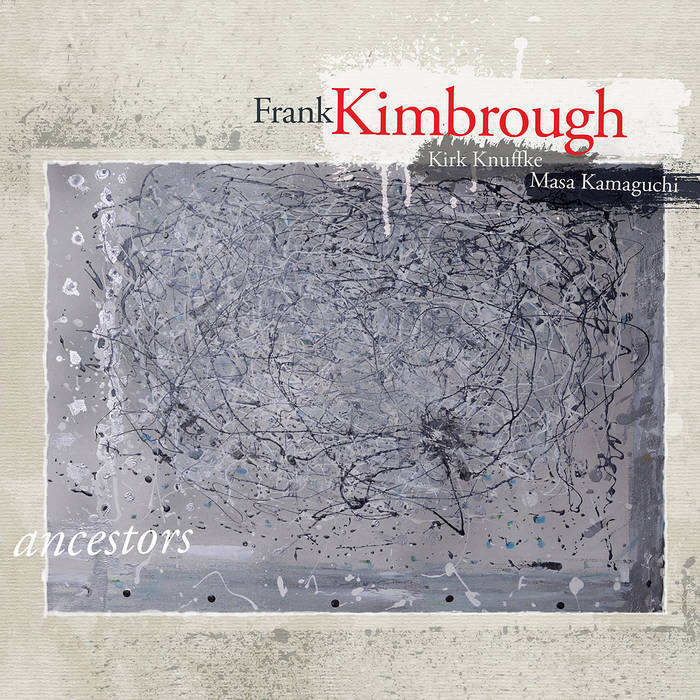
Sunnyside has just issued "Ancestors", a trio session recorded in 2017 featuring the pianist with cornetist Kirk Knuffke and bassist Masa Kamaguchi performing 11 pieces.  Seven are Kimbrough compositions, two are credited to the pianist and Knuffke, with one by the cornetist and Yamaguchi plus one by Kimbrough's wife Maryanne De Prophetis.  It's hard to be objective as I knew Frank for over two decades, having chatted with him on the phone, at gigs, and via email. He was always friendly, always willing to answer a question about the music.  Listening to him play solo was a treat; there were the pianistic influences of Paul Bley, Keith Jarrett, and a touch of Thelonious Monk yet he was not beholden to them, especially as his writing and playing matured. Kimbrough was never afraid to revisit his older compositions when he was playing with a new lineup.

Approach this music early in the morning when your defenses are down. Much of the music is contemplative, moving at a ballad tempo . For instance, "Air" moves at slow, slow, pace, Knuffke seemingly whispering out the melody as Kamaguchi plucks and plays short lines. Meanwhile, it's the piano that builds the foundation of the song. During his solo, Kimbrough uses space and the sustain pedal to create melodic lines that seem like clouds scattering across the sky. "Jimmy G" (dedicated to reed master Jimmy Giuffre) has the feel of Monk in the easy rolling piano lines as well as a bluesy, Chet Baker, feel from the cornet. The piano solo also mines the blues vein with just the right amount of grit before the bass solo kicks the heat up a notch.  Every piece is worth exploring again and again –– even the two+ minute corner-piano percussion duo "Eyes" stands out for Knuffke's playful improvisation over the percussive sound of Kimbrough thumping on the side of the piano.  

"Ancestors" can also be a worthwhile late evening spin, a musical after-dinner drink that soothes the wrinkles of the day. Frank Kimbrough is gone from this plane of existence but he left a strong musical legacy that will move you as well as entertain you.

For more information, go to www.juilliard.edu/news/148001/frank-kimbrough-1956-2020-memoriam. To hear more and to purchase the album, go to https://frankkimbrough.bandcamp.com/

Here's the title track:

Friday, July 16, 2021

Remembering Frank Kimbrough With Song & Much Love

 Look at this list:

Addison Frei, Alexa Tarantino, Alexis Cuadrado, Allan Chase, Allan Mednard 

Ben Allison, Ben Monder, Ben Rosenblum, Ben Wolfe, Billy Drummond

Clarence Penn, Craig Taborn

Dan Tepfer, Dave Douglas, Dave Treut , Dezron Douglas, Donny McCaslin, Douglas Marriner

Elan Mehler, Elio Villafranca, Evan Harris 

Francisco Mela, Fred Hersch 

Gary Versace, Glenn Zaleski 

Helen Sung

Immanuel Wilkins, Isaiah J. Thompson

Jacob Sacks, Jay Anderson, Jeff Cosgrove, Jeff Hirshfield, Jeff Williams, Jesse Neuman

Joe Lovano, Joel Wenhardt, John Hébert 

Kirk Knuffke

Martin Wind, Marty Jaffe, Matt Wilson, Micah Thomas, Michael Blake, Michael Formanek

Noah Halpern, Noah Preminger 

Olivia Chindamo

Patrick Cornelius

Rich Perry, Rich Rosenzweig, Riley Mulherkar, Rob Jost, Ron Horton, Rufus Reid

Ryan Keberle

Samora Pinderhughes, Satoshi Takeishi, Scott Robinson, Scott Spivak, Sean Mason

Steve Cardenas, Steve Wilson

Ted Nash, Tim Horner, Todd Neufeld, Tony Moreno, & Tony Scherr 

What do they have in common?

This person:

-


Pianist, composer, arranger, and educator Frank Kimbrough, who died on December 30, 2020, is who.  Kimbrough, who was born in North Carolina, settled in New York City in 1981 and slowly, steadily, built his career as a first-class soloist and accompanist, first came to critical exposure when he joined the Jazz Composers Collective in 1991 (co-founded by bassist Ben Allison with trumpeter Ron Horton, saxophonists Ted Nash and Michael Blake).  Two years later, Kimbrough took over the piano chair in  the Maria Schneider Orchestra, staying there until his untimely passing. 

(From the Press Release): (On July 16), Newvelle Records is releasing  "KIMBROUGH", a collection of 61 original compositions by jazz artist and educator Frank Kimbrough, who passed away in December 2020. Featuring tributes from 67 of Frank’s former bandmates, students, and friends across multiple generations, "KIMBROUGH" was recorded over three and a half days in New York as the musical world began reawakening in May 2021. All proceeds from this definitive collection of Frank’s music, available on high-quality digital download on Bandcamp, will benefit the Frank Kimbrough Jazz Scholarship at The Juilliard School.

“Frank was a genuine ‘musician’s musician’ whose talent as a player, composer, and teacher fueled generations of artists in the New York jazz community,” said Elan Mehler, cofounder and artistic director of Newvelle Records, and a student of Frank’s at New York University in the 1990s. “There is something miraculous about attracting 67 world-class artists together in a studio, just as the world began emerging from the pandemic. Only someone of Frank’s impact could inspire such an ambitious project.”

The album, available on Bandcamp for $20.00 and streaming everywhere, was recorded and mixed by Marc Urselli on May 10-14, 2021 at EastSide Sound, mastered by Colin Bryson at The Bunker Studios, and produced by Elan Mehler. All songs were written by Frank Kimbrough, Kimbrough Music BMI.  Executive produced by Maitland Jones, Jim Harvey, Steve Satterfield, Matt Steinfeld and JC Morisseau.

What's fascinating about this project is that, in several ways, the album mirrors one of Frank Kimbrough's final recording projects, "Monk Dreams: The Complete Compositions of Thelonious Sphere Monk" (Sunnyside Records).  The album features Scott Robinson, Rufus Reid, and Billy Drummond – those musicians all appear on the Newvelle recording and the program is all Frank Kimbrough songs. Go listen, pay tribute, and help support his teaching legacy.  

For more information, to listen and to purchase the album, go to  https://newvellerecords.bandcamp.com/album/kimbrough.

Here's the opening track, "The Call".  The musicians include Scott Robinson (tenor saxophone), Allan Chase (alto saxophone), Riley Mulherkar (trumpet), Ryan Keberle (trombone), Samora Pinderhughes (piano), Ben Wolfe (bass), and Jeff Hirschfield (drums).


Friday, January 15, 2021

Maria Schneider Writes for Frank Kimbrough

Fans of the pianist Frank Kimbrough and people who knew him, loved his music, appreciated his teaching as well as how he instantly made you feel at ease while talking to him (even if it was the first time, read this missive from Maria Schneider.

Photo: Dave Kaufman


With deepest sadness I’m writing you all to say that our beloved friend, pianist, collaborator, Frank Kimbrough, passed away on December 30th.  It’s been a shock to so many.  Critic Nate Chinen’s obituary described Frank’s mastery perfectly: "a pianist of unerring taste and touch, a composer drawn to flowing ethereality, and an improviser steeped in the art of epiphany.”


Many of you have experienced his transcendent improvised introductions in concert – every intro entirely unique with spellbinding beauty, creativity, assuredness and fearlessness.  His art thrived on that vulnerable razor edge of the moment.  Frank’s own gorgeous recordings include: Solstice, Play, Rumors, Air, and the astounding box set, Monk’s Dreams (recording every Monk tune).  You can purchase those CDs of his and more, and they are all available on Spotify as well.   


Frank didn’t own a cellphone.  He practiced music walking in the park.  He prioritized his life around the things he felt truly important.  He had a heart of gold.  I would like to be more like Frank.

A revered and devoted teacher at Juilliard, Frank loved his students – I mean LOVED his students. So, there’s no better way to keep his legacy alive than through "The Frank Kimbrough Jazz Scholarship" being instated at Juilliard.  If you’d wish to make a tax-deductible contribution it can be done in several ways:

1. Online contribution: Go to https://giving.juilliard.edu.  Select designation ‘Juilliard Scholarship Fund’ and make sure to note in the comments, “Frank Kimbrough Jazz Scholarship.” 
2. For credit card contributions by phone, simply call: 917-834-4552.
3. Mail contribution:  Checks payable to The Juilliard School (with “Frank Kimbrough Jazz Scholarship” written in the memo line) can be sent to: 
      The Juilliard School 
      Attn: Mary Yeatts, Associate Director of Major Gifts 
      60 Lincoln Center Plaza
      New York NY 10023
4. Contributions by bank transfer (securities and wire transfers) 
Contact: Mary Yeatts, Associate Director of Major Gifts, Development Department: 
      Email: myeatts@juilliard.edu 
      Phone: 917-834-4552
5. For any questions at all, contact Mary Yeatts, myeatts@juilliard.edu.  Again, it’s very important to make sure your gift is earmarked to the Frank Kimbrough Jazz Scholarship.

We’ve kept our special video up on the front page of www.mariaschneider.com that we made as we missed this year’s Jazz Standard Thanksgiving week.  There’s beautiful footage of Frank in the video.  Frank was the first person to tell me about the Jazz Standard when it opened way back when, and it was he who encouraged me to try to book the band there.  Covid circumstances have forced the Standard’s closing.  As memories from that room abound, so many of them have Frank at the center.  Those musical and very cherished moments of camaraderie are golden for me and for the band, and I know for so many of you as well.  After the club announced its closing, Frank wrote to me and to the band: “If there's anyone on Earth that can make this joint come back, it's Danny Meyer.  Let's be grateful for all the Standard did for us individually and as a band, and hope for the best going forward - never say die, say damn, and keep on keepin' on.  I love you all, and hope to see you soon - Best, FK.”  

We love you, Frank.

Love and good things to you all in this new year.  Keep on keepin’ on.  

Maria


Wednesday, December 30, 2020

Frank Kimbrough


Photo: William Semeraro
 I first met pianist Frank Kimbrough nearly 30 years ago when he was a member of the New York City-based Jazz Composers Collective.  Playing alongside bassist Ben Allison, trumpeter Ron Horton, saxophonists Ted Nash and Michael Blake, these musicians sponsored concerts of new original music, helped fellow musicians with grant applications, find venues to play, and more. He was also a member of the Herbie Nichols Project, an ensemble whose goal was expose the music of Nichols to a larger audience.  In 1993, the North Carolina native joined the Maria Schneider Orchestra and has since toured regularly with the large ensemble as well as recording eight albums with the composer-arranger.  He joined the faculty at the Juilliard School in 2008 after a stint at NYU plus continued to conduct workshops up until the pandemic struck.

Now, just as 2020 is about to come to a close, Frank Kimbrough has passed from this world.  Already, tributes are filling Facebook and Twitter, blogs, and, by morning, newspapers and websites.  In a year known for its numerous losses, especially in the arts community, the pianist's passing still seems cruel as he continued to be playing at a high level of creativity.  He was generous with this time for students, fellow musicians, and writers.  Other people will write about his influences, about his many fine albums, and seeing him concert where he would draw listeners in on the strength of his melodic creativity.  Many of us will miss Frank Kimbrough as a person, as a teacher, mentor, a messenger of joy and peace in both good times and dark days. Our thoughts and prayers go out to his wife Maryanne deProphetis.


Saturday, November 3, 2018

"Thelonious The Onliest"

I can't claim the sobriquet "Thelonious The Onliest" for my own creation (there are numerous references to where it came from) but it is certainly a fitting description.  Thelonious Sphere Monk (1917-1982) first came to critical notice in the mid-1940s during the birth of bebop and stayed popular through the 1960s.  The native of Rocky Mount, North Carolina, created a unique style with references to the "rent party" piano of James P. Johnson, the rollicking stye of Thomas "Fats" Waller, and others but, really, nobody sounded like Monk. His splintered lines and fractured rhythms stand beside his fascinating melodies as a touchstone for pianists and other instrumentalists over the past seven decades and there is no reason to think that influence will ever dissipate. He played and recorded in many settings, from solo to trio to quartet to large ensembles yet his musical style never wavered.  Songs such as "'Round Midnight", "Mistersioso", "Crepuscule With Nellie", "Well You Needn't" and so many more, show up on set lists every night in clubs and on stages from Chicago to Shanghai, New York City to New South Wales with musicians continually trying to decode his compositions.

2017 was Monk's "Centennial Year" and 2018 is shaping up to be the year where artists are making recordings of Monk's oeuvre.. Before the end of December, there will be three albums on the market.  First out of the gate in mid-August was "Work: The Complete Compositions of Thelonious Monk", a solo gem from guitarist Miles Okazaki.  The guitarist, who has worked and/or recorded with Jane Monheit, Steve Coleman, and Jonathan Finlayson plus many more, started the project in early 2017 and discovered he needed to learn a slew of the songs before he recorded.  The album is only a digital form, available through Bandcamp, but Okazaki's liner notes (found on his website at www.milesokazaki.com/albums/work-2018/) tells the tale of how he came to record this project and why, what guitar he used, and about the importance of fellow guitarist Liberty Ellman in bringing this project to fruition.

If you are a long-time fan of the man and his music, it's a delight to hear what Okazaki does with the composition.  It's important to note what he doesn't do, including any overdubbing, changing melodies or even key signatures, never utilizing different guitars, just his trusting Gibson Charlie Christian archtop guitar.  What he does do is allow the listener to soak in each and every melody as well as expose the public to less often recorded Monk tunes ("North of the Sun", "Stuffy Turkey", and "A Merrier Christmas"). There is no shortage of rhythm on the album and the guitarist's approach truly brings out the influence of the blues on Monk. Plus, dig the bossa nova influence on "Bye-Ya", the flamenco-like lines of the title track, and the emotionally strong take of "'Round Midnight."    There are moments you might think you're hearing Mary Halvorson or Howard Roberts but comparisons disappear after two or three listenings.

You can purchase "Work" as one large digital file or as six separate files of approximately 50 minutes.  Whatever you choose to do, Miles Okazaki will, at turns, charm you, make you laugh, and become wistful.  All that's there is the music of Thelonious Monk - just listen!

For more information, go to www.milesokazaki.com.

Take a listen:


In the summer of 2017, pianist Frank Kimbrough was invited to perform in a Monk Centennial program to take place later that year at The Jazz Standard in New York City. He assembled a band that featured multi-reed master Scott Robinson, bassist Rufus Reid, and drummer Billy Drummond.  After the concert, a long-time friend suggested that Kimbrough and company record the entire Thelonious Monk songbook. The pianist felt it was possible and, with the help of another good friend plus the head of Sunnyside Records François Zalacain, the project was put in motion.  The band (minus Robinson) played 15 songs in April 2018 one night at Jazz at Kitano's in NYC and then 15 more the next night (with Robinson). The ensemble them headed to engineer Matt Balistaris's Maggie's Farm recording studio and, over the span of six days (May 22-24 and May 28-30), recorded 68 tunes (Kimbrough returned in June to record the two piano solos).

The result, to be released by Sunnyside on November 23, is titled "Monk's Dreams: The Complete Compositions of Thelonious Sphere Monk" - the album comes as an entire six-album set and each CD has a subtitle. The music is delightful throughout not just for the interactions of this fine group but also for the fact that Robinson is featured on tenor and bass saxophones, trumpet, echo cornet (a cornet with a fourth valve and a detachable second bell), bass clarinet, and contrabass sarrusophone! Once the listener gets over the sound of the lower reeds, you hear just how masterful Robinson is and how he can swing on absolutely every instrument he plays.  He even plays trumpet and tenor sax on one track ("Thelonious"). It's no gimmick - it adds to the joyous sounds emanating from the speakers.

The quartet does not mess around with the songs, no radical departures but also no rote repetition of the originals. Besides the two solo pianist pieces, there is a splendid piano-tenor sax duo on "Something In Blue" where the stride piano influence on the composer comes shining through. also, dig the bass - bass saxophone duo on "Reflections" for just how sweet both instruments sound and work together to tell Monk's story.  Kudos to all involved, from the four musicians to the excellent work of Balistaris to engineer, edit, and mix.  The sound is so fine and clear, the low notes of the contrabass sarrusophone and bass saxophone rumble in your gut, Reid's class bass work stands out, Drummond's cymbals shimmer at the sides of the spectrum, and the piano tones ringing out.

I have had the opportunity to live with this music for the past month so, listening to four or five tracks each time I sit down (more on several occasions), and, if you buy "Monk's Dreams", you'll want to do the same (even though bingeing seems to be the "in thing").  I recommend you do purchase this album (as I do with the Miles Okazaki digital album) - you'll come away with an even greater appreciation of Thelonious Monk and be blown away by the brilliant musicianship!

For more information, go to home.earthlink.net/~fkimbrough/.

Take a taste here:


Frank Kimbrough, Rufus Reid, Billy Drummond, and Scott Robinson (and his instrument menagerie) appears on November 27 and 28 at the Jazz Standard, 116 E. 27th Street, New York City, NY - call them at 212-576-2232 or go to jazzstandard.com.

I did mention that there three recordings that will be released before the close of 2018. The last one to reach the public is the work of pianist Jed Distler - go here to read more.

Sunday, March 4, 2018

The Sounds of America's Past, Present, & Future

Owen Broder, saxophonist, clarinetist, flutist, and composer, has just released his first album as a solo artist.  "Heritage: The American Roots Project" (artistShare) is a fascinating and rewarding combination of different tunes from traditional American forms such as bluegrass, spirituals, early blues, and more with improvised music. Broder has assembled quite the octet of musicians; besides his woodwinds, there's the expressive violin of Sara Caswell, the formidable brass of Scott Wendholt (trumpet, flugelhorn) and Nick Finzer (trombone) as well as the rhythm section of James Shipp (vibraphone, percussion), pianist Frank Kimbrough, bassist Jay Anderson, and drummer Matt Wilson. Several tracks features the voices of Kate McGarry, Wendy Gilles, and Vuyo Sotashe. Composers include the leader, Miho Hazama, Ryan Truesdell (also the producer), and Aphonso Horne. Each composer supplied arrangements for their works while Ms. Hazama and Truesdell each arranged a traditional piece as did Jim McNeely and Bill Holman.

photo by Sasha Israel
The program is a treat from beginning to end.  Opening with Broder's "Goin' Up Home" with it's haunting melody that suggests a blend of bluegrass and an Appalachian folk song, the piece begins with, of all things, vibraphone before the violin and trombone introduce the melody.  The band enters and the melody is repeated yet listen to the hypnotic background created by the piano and vibes.  Shipp steps out for the first solo over a fiery hard-bop rhythm while the other instruments add harmonies and short counter-melodies.  Finzer solos over the droning violin with the vibes snd piano now adding counterpoint.  Holman's "Jambalaya" is a delight-filled deconstruction and reconstruction of the song that was a big hit for Hank Williams (who took credit for the song that was co-written with pianist Moon Mullican - the pianist had based his song on another piece which contained melodic elements of a 1937 song titled "Alons Kooche Kooche" composed by Julius "Papa Cairo" Lamperez. Click on this link to find out more). This rendition swings with a "cool" feel, featuring fine solos from Ms. Caswell and Wendholt.

Ms. McGarry and Ms. Gilles share the lead vocals on "Wayfaring Stranger" (arranged by Truesdell.  The opening is quite dramatic, the piano and bass leading the songs in while the bass clarinet moans quietly below.  The vocal harmonies  are lovely, with Ms. Gilles moving in and around the lead, at times singing in unison or either above and below Ms. McGarry's melody line.  The song also features a long, melodic, bass solo from Anderson.  Vuyo Sotashe takes the lead on Horne's "The People Could Fly": the melody is based on a line the composer heard from a storyteller, the rhythms delightfully South African, and the story an African American folktale. It's a rollicking good time.  The assembled voices (wordless) support the opening melody on the final track "A Wiser Man Than Me."  Broder's expressive baritone sax leads the way through this New Orleans-inspired gospel tune, a sweet coda to a fine program.  And don't those unaccompanied voices sound sweet closing out the piece.

"Heritage" the American Roots Project" comes at a time when young people's belief in the "American Experiment" is at its lowest ebb in years. This music serves as a reminder that we are truly a nation of immigrants, that artists and musicians are inspired by the various cultures encountered in their daily and working life, and that imagination and improvisation can help open eyes to new possibilities.

To learn more, go to www.americanrootsproject.com.

Here's the opening track:


Owen Broder is also a member of the quintet Cowboys And Frenchmen whose second album, "Bluer Than You Think" (Outside In Music) was issued in October 2017.  Broder plays alto and baritone saxophones and is joined in the front line by fellow alto saxophonist Ethan Helm (who doubles on soprano sax). They each contribute three of the seven tunes with one from friend, trombonist, and conceptual artist Chris Misch-Bloxdorf (whose work you can find under the nom-de-plume Artie do Good). The rhythm section includes pianist Chris Ziemba, bassist Ethan O'Reilly, and drummer Matt Honor. The band came together in 2014, taking its name from a short film by David Lynch ("Twin Peaks"), with the intent to blend "traditional American folk and pop music with elements of contemporary R&B and modern jazz"  (www.cowboysandfrenchmen.com). 


The music does defy expectations.  There's the tension-filled "Beasts" (with a Steve Reich-like rhythm and the feel of a piece by the Claudia Quintet), the funky, swaggering, "Companion Plan" (listen to how the bass, piano, and drums create an atmosphere that may remind some of Steely Dan, and "Wayfarer", the quintet take on "Wayfaring Stranger" (the baritone sax taking the lead here before it joins the alto sax for a hypnotic melody).  Ziemba's piano solo on the last track has elements of Jewish liturgical music as his lines sway and slither over the over the bass and drums.

"Clear Head", the song written by Misch-Bloxdorf, opens with the soprano and alto saxes playing a pleasing melody with support from drummer Honor. Then it drops into a rapid-fire beat, falling back to half-time and then rubato. There are several tempo variations as the soprano sax delivers a rousing solo.  Helm's ballad "Lilies Beneath a Bridge" has a handsome melody played by the alto saxes that are just slightly off-kilter creating a doppler effect.  Ziemba's sweet yet bittersweet piano solo is a highlight but so pay attention to the rhythm section supports and prods him forward.  


"Bluer Than You Think" is one of the more playful, diverse, surprising, and pleasing albums of the past year.  Tradition takes a back seat to invention and experimentation while most of the pieces have intelligent and lovely melodies.  Several of the tracks show the influence of The Bad Plus (especially the powerful "C&F Jam", though the piano solo has a lot of Keith Jarrett as well). All told, Cowboys And Frenchmen deserve your attention with its challenging and rewarding music. Here's a track to whet your appetite: